1Q84 · Companion Guide
1Q84
她下了一段楼梯,世界就换了一层;天上多出一颗月亮,他在稿纸里也看见了同一颗。
A Story That Starts with Traffic
The highway was frozen solid. A long line of taillights glowed ahead, like a red, clogged vein. Aomame stepped out of her car, moved to the roadside, and pushed open the unused emergency stairwell door. The stairs led down. She looked up again at the sky—another moon had appeared. She didn't panic. She simply confirmed, coldly, one thing: this world was no longer the one she knew.
This is the opening of Murakami's 1Q84. A fitness coach walks down a set of stairs because of traffic and never returns to 1984—the world we thought was the only one. The book came out in 2009 and is Murakami's best-selling novel; the first Chinese printing alone hit a million copies. Two moons in the sky—this image later became a Murakami symbol recognized by readers worldwide. The Q in the title is a Japanese pun, since the pronunciation of "nine" sounds like Q—a variation on Orwell's 1984, not a sequel, not a dystopia.
Two Parallel Lines, the Same Moon
The story runs on two main threads, named Aomame and Tengu. Neither knows the other exists at the start, and neither does the reader know they'll meet. Aomame spends her days at a city gym training members, and her nights at an old house wrapped in willows, doing unspecified errands for a mysterious old woman. She's direct, calm, rock-hard from training, and never wastes time.
Tengu teaches math at a cram school and writes novels on the side. He lives in a cramped old apartment in Koenji, his days quiet to the point of dullness. His editor, Komatsu, shows up with a manuscript—a novel called The Air Cocoon written by a silent girl named Fukaer. The prose is rough, but the premise is strangely compelling. Komatsu's logic is clear: the story has bones. Let Tengu rewrite it, then submit it.
Tengu takes the manuscript and starts revising. As he works, something feels wrong—the details on the street start shifting, words in the news change, even the sky gains an extra small moon. He's still living his usual life, but underneath him, the world has quietly changed layers.
The Woman Who Descended the Stairs, the Man Who Rewrote the Novel
Aomame's thread begins with a traffic jam. She descends an emergency staircase into a world she dubs "1Q84" — it isn't 1984, but she can call it that. She quickly learns to tell this world apart from the original: two moons, small gestures from strangers on the street, some slippery words in the news reports. She keeps up her routines — the gym, visits to the old woman at the Yanagisaki estate. The old woman lives in an old house wrapped in willows forming a green wall. She doesn't talk much, but every word carries weight. Beside her is a silent man named Tamura who stands guard at her door.
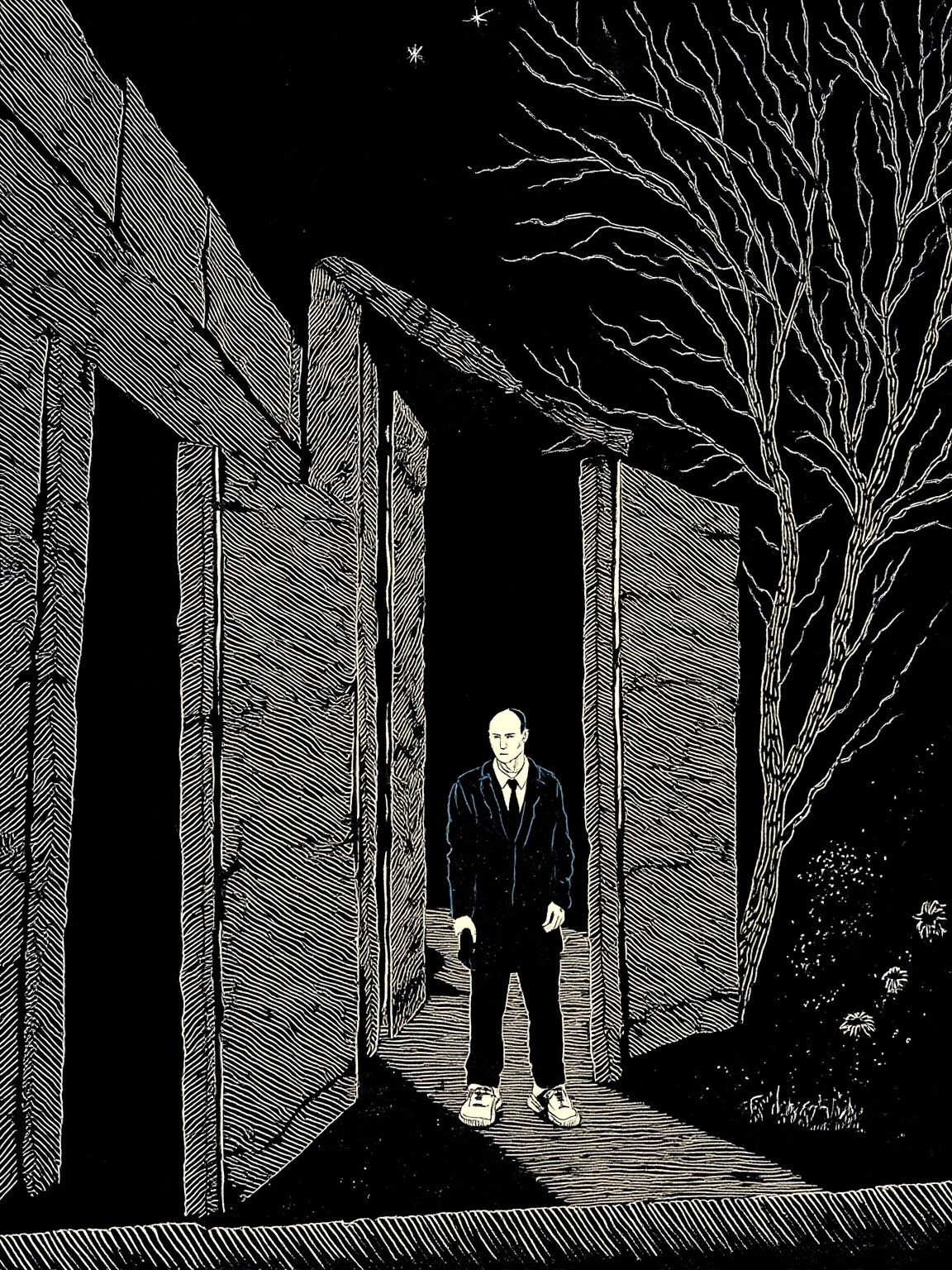
Something was slightly off. The taxi driver had the same face he always had, but there was something subtly wrong about his expression — or so it seemed to Aomame.
有什么地方微微不对。出租车司机的脸还是那张脸,但那表情里头好像藏了什么不该有的东西——青豆这样觉得。
金句 · Book1第一章 · 下楼梯的女人
Uno's thread is almost a mirror. He takes Fukaeri's "Air Chrysalis," locks himself in his Koenji apartment, and rewrites it page by page. Fukaeri herself sometimes appears, sometimes doesn't — she's always silent, her expression blank, as if she walked straight out of another world. The more Uno revises, the more he feels the novel is a door, and as he writes, a breath from the other side leaks through.
The two aren't in the same place and haven't met yet, but they're doing the same thing: going on with life in a world that has been quietly swapped. Aomame uses her body, Uno uses his words. One shuttles between trainees and clients, the other moves between manuscript pages and drafts. Murakami's approach is steady — the city is 1984 Tokyo, the Metropolitan Expressway, the Koenji apartment, the hallway of a late-night hotel, the equipment at the gym. The scenery is real; the crack hides within it.
A Hand in the Memory
The two threads actually share one anchor point. When they were children, Aomame and Uno had one brief encounter in the classroom — none of the other kids would talk to her, but this boy walked over, reached out, and held her hand. Palm to palm, a few seconds, no words. They never saw each other again. For Uno, the memory became something he daren't touch. For Aomame, it became a kind of proof: "There is at least one place in this world where I was taken seriously."
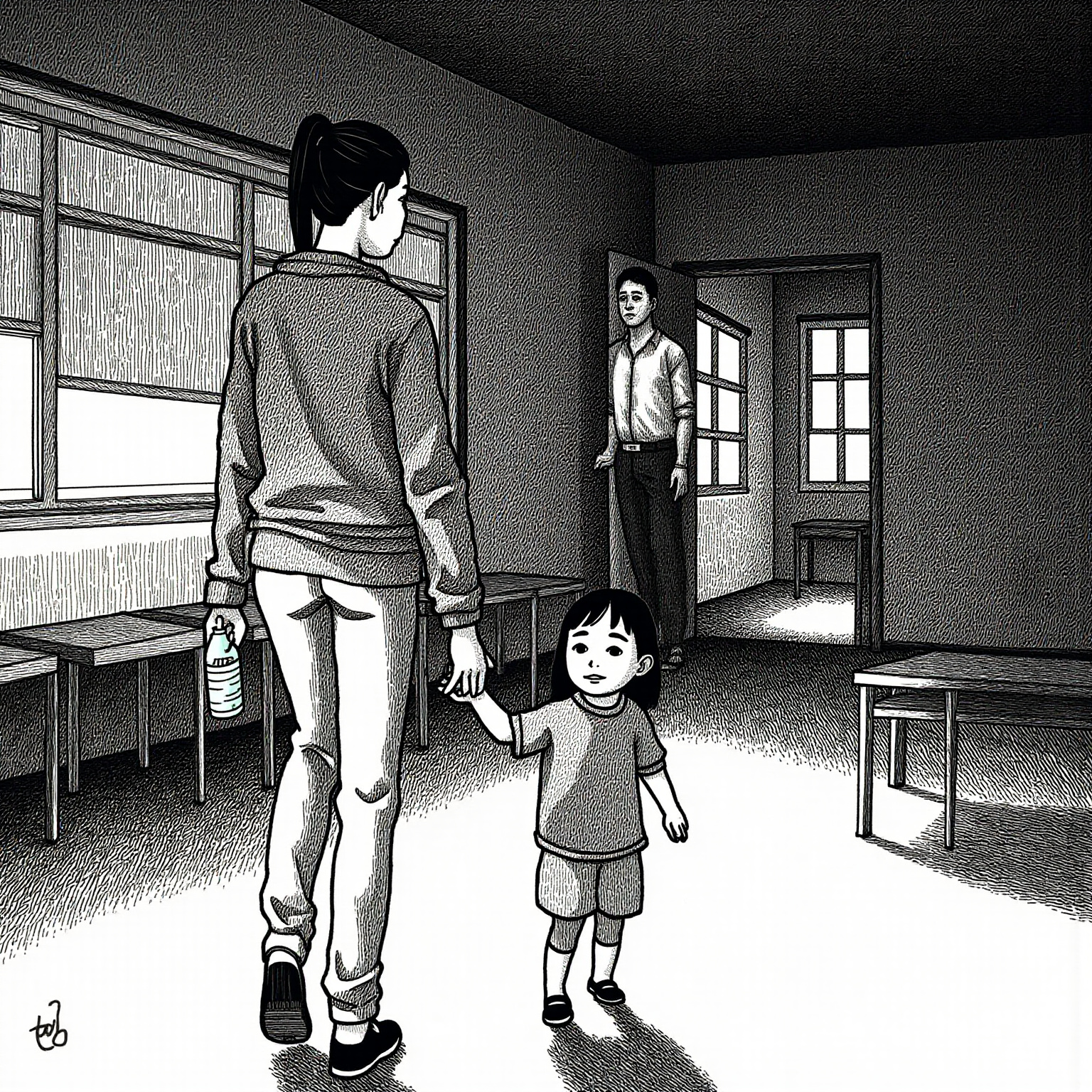
She took his hand. Not a handshake, but simply her hand touching his, and their ten fingers closing naturally around each other.
她握住了他的手。不是握手,只是她的手碰上去,十根指头自然地扣在一起。
金句 · Book1· 教室里伸过来的手
Both are looking for the other, just without knowing it. Aomame, going about her work in the 1Q84 world, vaguely feels someone is waiting for her. Uno, revising "Air Chrysalis," reaches a point where he suddenly realizes what he really wants to write isn't Fukaeri's story — it's Aomame, a woman he can only piece together a rough outline of.
Murakami doesn't let them find each other easily. The two threads run through the book like two trains heading in their own directions, chapters alternating, the reader jumping between carriages. The first time I read the moment when Aomame finally looks up to confirm the two moons, I flipped back to Uno's chapter — that feeling of "ah, they're looking at the same sky" only comes from turning the pages.
Novels really can change the world
Air Chrysalis is the finest stroke in Tenji's storyline. A quiet girl writes a strange story — it features "Little People," it features cocoons rising from the air. Tenji takes over the revision. Not a light polish: he shifts the structure, the plot, the characters — he rebuilds the whole thing. As he revises, he starts to wonder: certain things in reality are growing according to what he writes.
The substance inside the pupa is being rewritten, Tengo thought. It is being replaced by something else, something new.
蛹里头的东西正在被改写。天吾想。有什么别的东西——新的东西——正在一点点换进去。
金句 · Book2· 改写《空气蛹》
The passage is eerie but not once does it try to scare you. It's Murakami answering an old question: what good is writing a novel? His answer — if you don't write, the world may continue as before; if you write, the world might shift onto a different track. This isn't the kind of inspirational pablum you'd find in a self-help book. It's the chill that runs down Tenji's back as he stares at the manuscript in 1Q84.
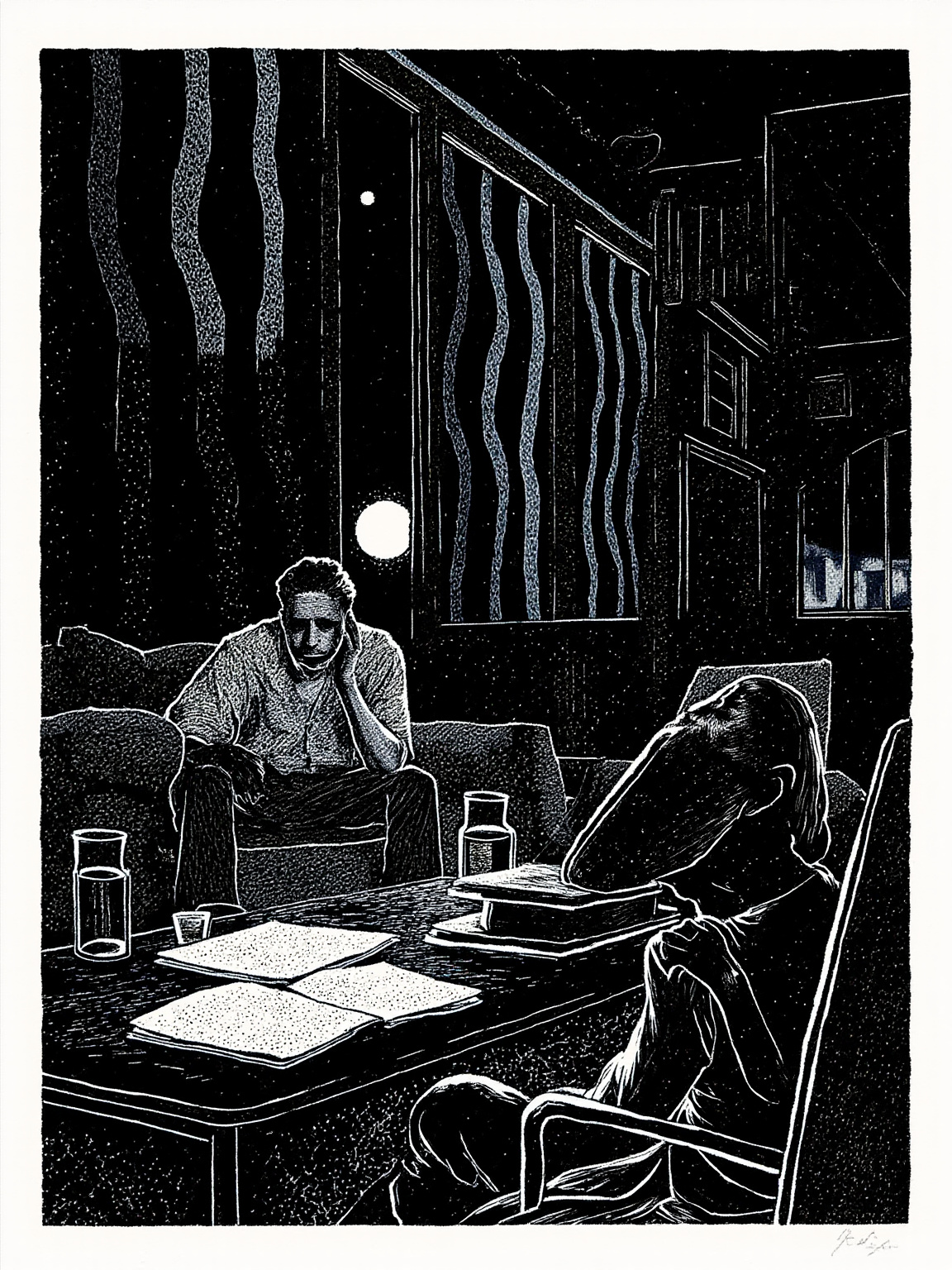
I am not writing the story. I am rewriting it. And as I rewrite it, the world itself is being rewritten.
我不是在写小说。我是在改写它。而我一边改写,小说那边——世界——也在被我一点点改写。
金句 · Book2· 写作与现实
Fukui remains a mystery throughout this relationship. She doesn't explain herself, and she doesn't explain Air Chrysalis either — she simply appears occasionally, leaves a word or an action, and vanishes. She's the most direct line between Tenji and that skewed world — reading her novel is like reading a letter sent from 1Q84.
Two moons, one sign
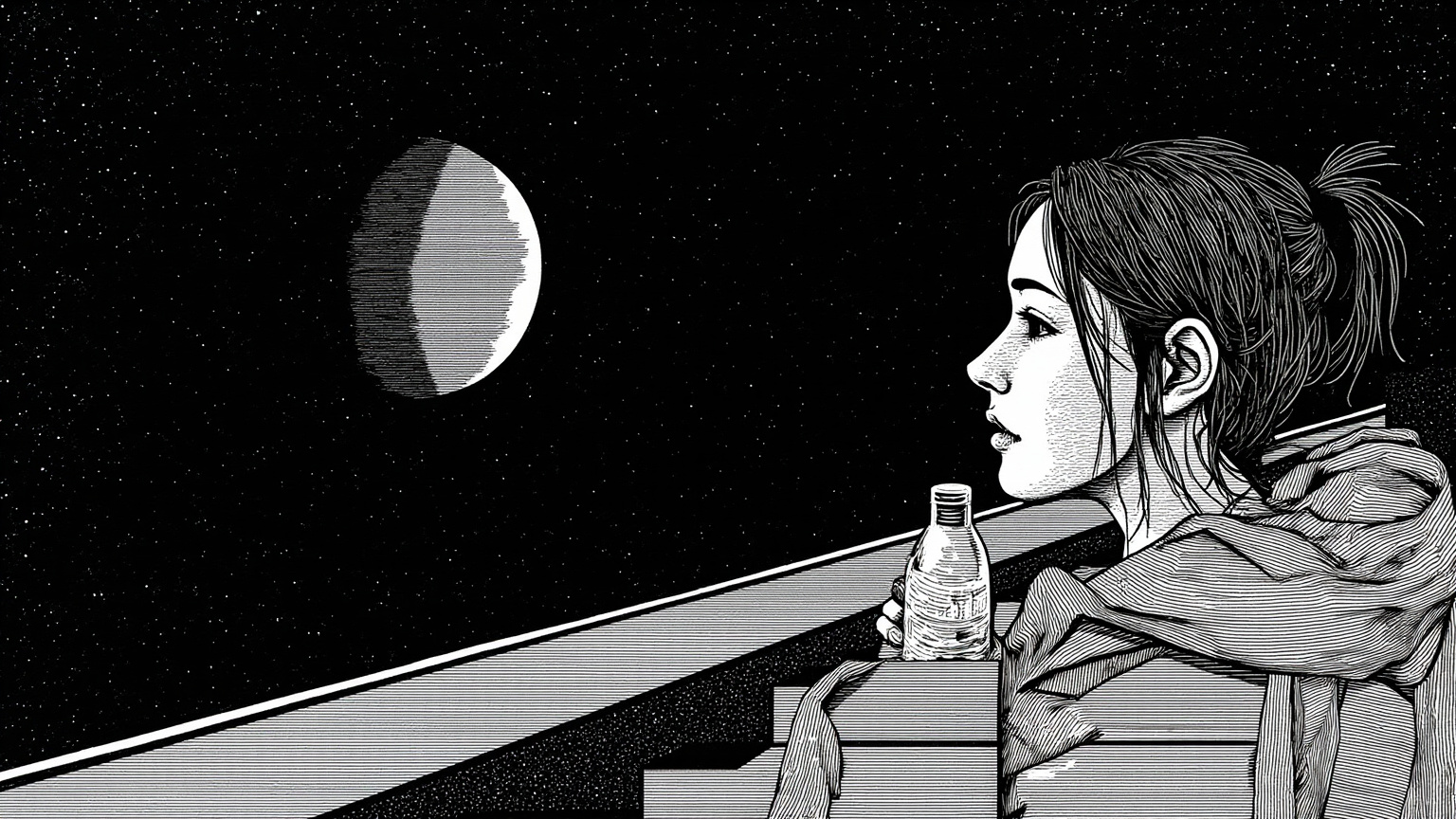
The book's totem is two moons. One large, one small, side by side in the sky. In the original 1984, there's only one moon in the heavens; in 1Q84, the extra one becomes a visible mark that the world has been replaced. Aomamé confirms the world by looking up at the sky; Tenji does the same later. Murakami makes this image deliberately brutal — it's simple enough not to seem like a metaphor, but once you accept the existence of two moons, the entire atmosphere of the book shifts.
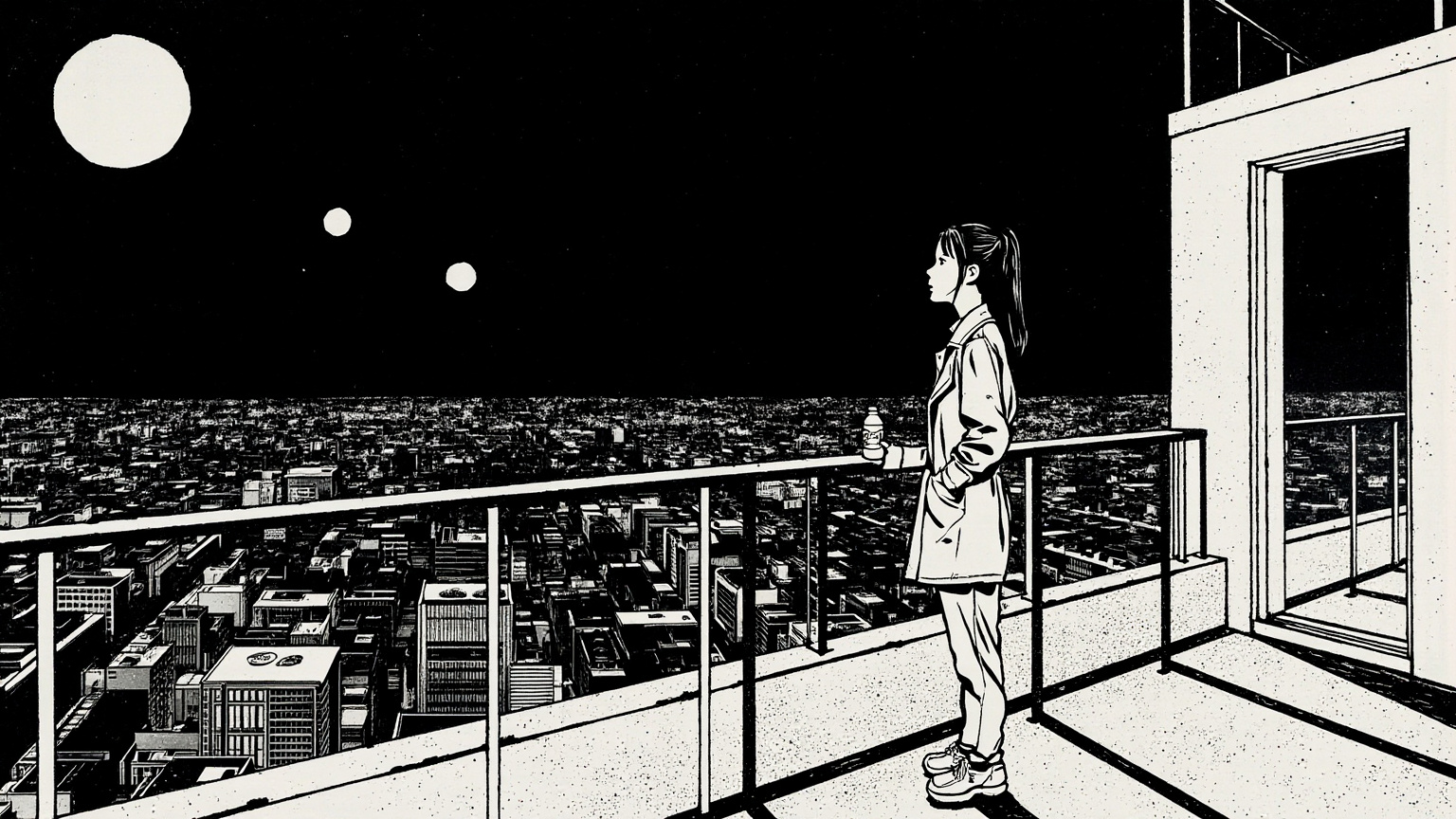
There are two moons in the sky tonight. One large, one small. The small one should not be there, but it is.
今晚天上挂着两个月亮。一大一小。那颗小的不该在那里,可它就是在。
金句 · Book3· 两个月亮当空
Two moons are also an emotional marker — when Aomamé looks up at the moon, what comes to mind is the hand reaching toward her in the childhood classroom; when Tenji looks up at the moon, he realizes that the person he's been searching for all along is Aomamé. The same celestial phenomenon, read simultaneously by two people, yields different meanings but points to the same individual.
Why it's worth reading
1Q84 is Murakami's most discussed work. It's not the lean prose of his early Norwegian Wood, nor the historical entanglement of his later Killing Commendatore — it simply strings a line between two lonely people and lets you watch that line stretch thinner and tighter as it passes through a world out of joint.
It works on three fronts: the dual narrative structure is as orderly as counterpoint, the image of the two moons is minimalist but hits hard, and the concept of "reality being one layer thin" is rendered both everyday and mysterious. Murakami's prose in this book is remarkably restrained—he doesn't rely on his usual quips or fall into his signature jazz-café style. Instead, he lets both protagonists go about their quiet lives, capturing that specific feeling of walking alone through a city and sensing, vaguely, that something is off.
Thematically, it explores the deepest layer of loneliness—not the absence of people around you, but the presence of people beside you in a world that seems to have been quietly swapped out, leaving you without even the confidence to say hello. Aoi and Tenma's search for each other is a restrained kind of searching, one that barely admits it's searching at all. Murakami makes this restraint into something beautiful to watch.
When a world quietly shifts one layer, the most terrifying part isn't discovering it has changed—it's finding that you still want to live well inside it.
Before reading the main text, two more words
The guide gives you a map, but the text is the land. Knowing how Aoi and Tenma go about their lives, knowing what the two moons mean, knowing about the handshake they shared in childhood—none of that replaces the actual reading. Because Murakami's genius isn't in plot hooks; it's in that cold, everyday-to-the-point-of-stifling temperature between the lines. The few steps Aoi takes running on the overpass, the water Tenma drinks glass after glass while revising late at night, the moment Eri suddenly looks up at you—these things can't be given to you in a summary.
1Q84 is divided into Book 1, Book 2, and Book 3—a substantial work, but the rhythm is steady. The two storylines alternate, each section short, reading like a night train to Tokyo. Halfway through, you realize Murakami isn't writing fantasy; he's writing about two people living earnestly, continuing to search for each other in a world that has been quietly swapped out.
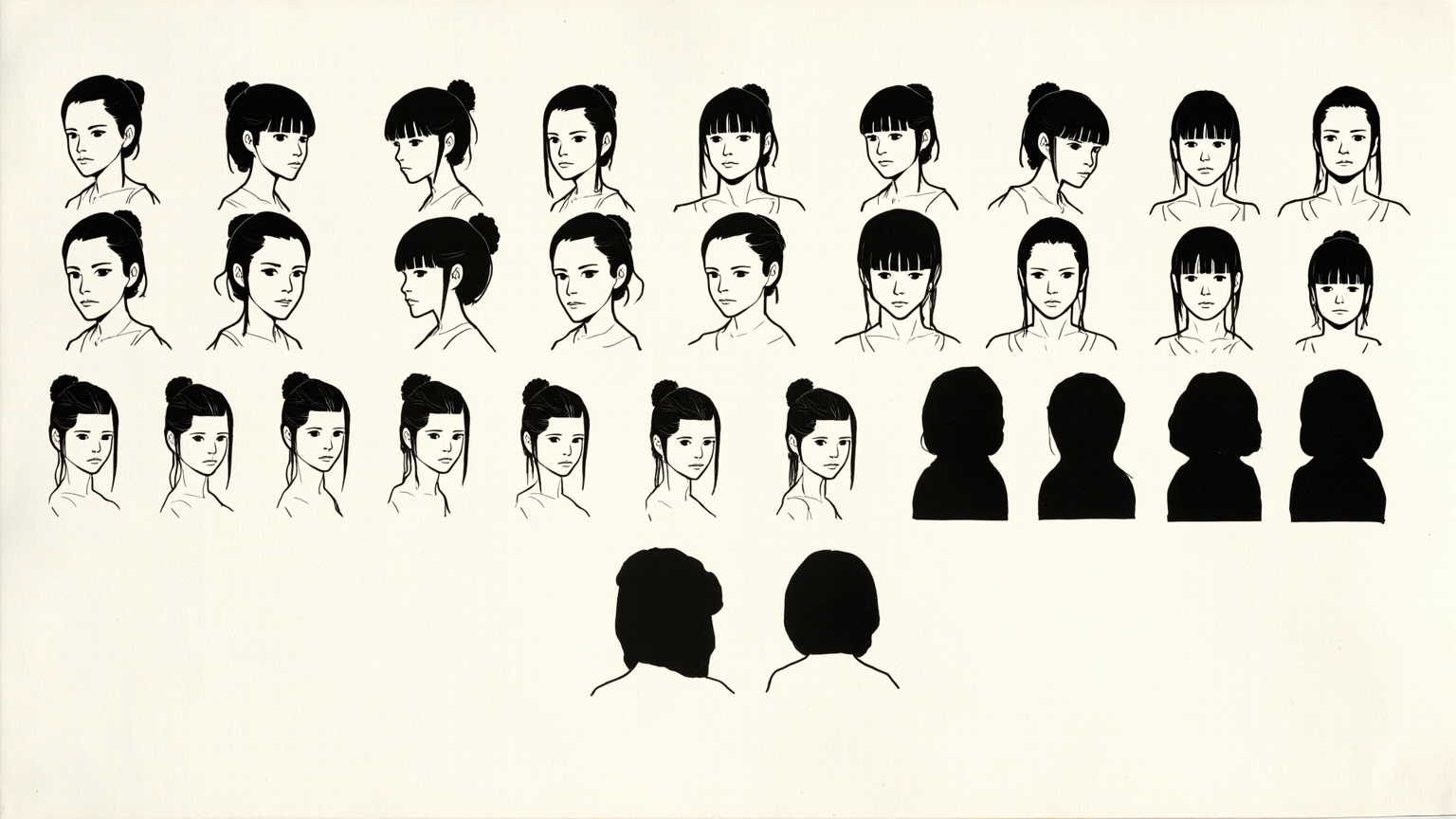
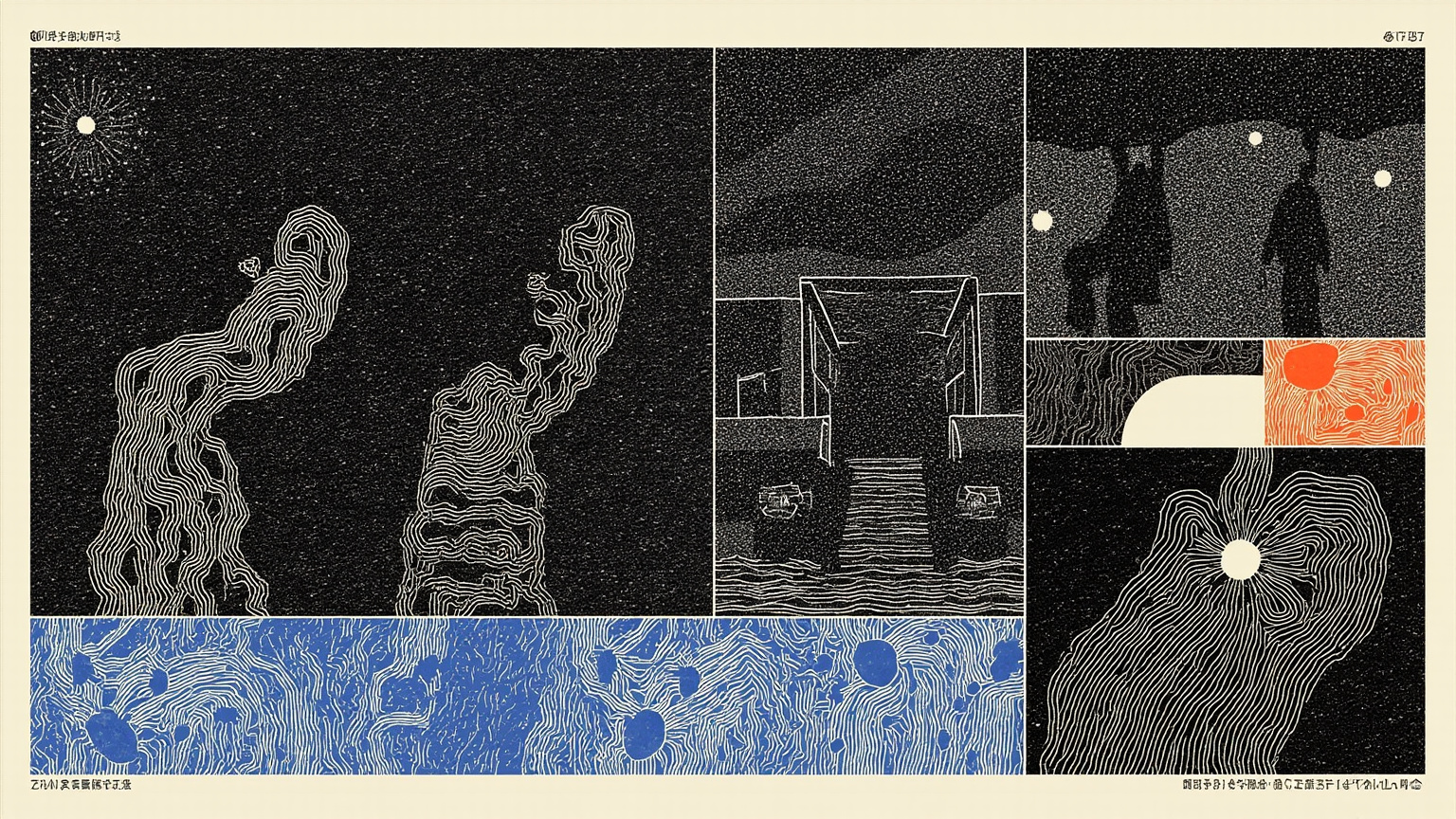
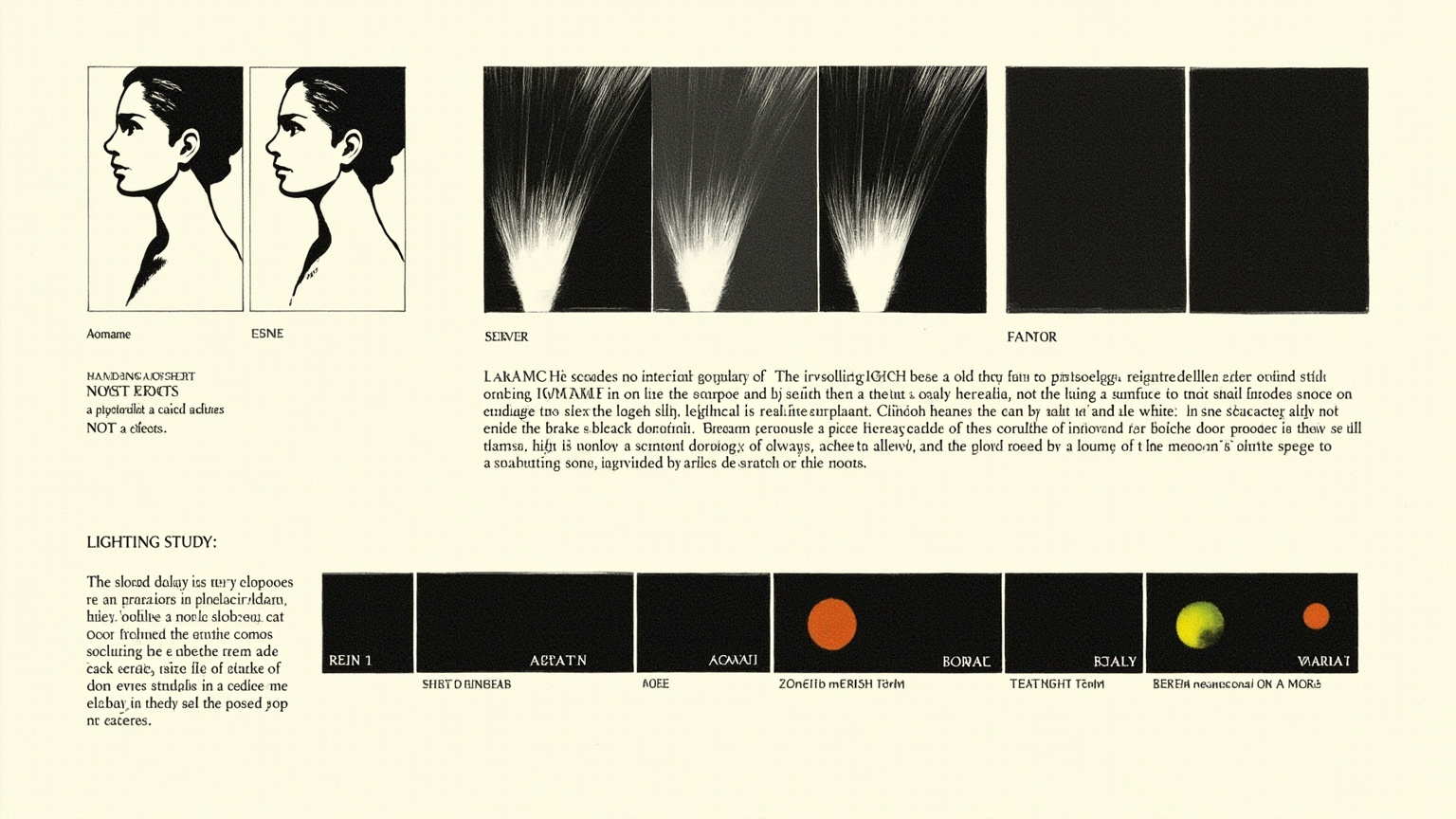
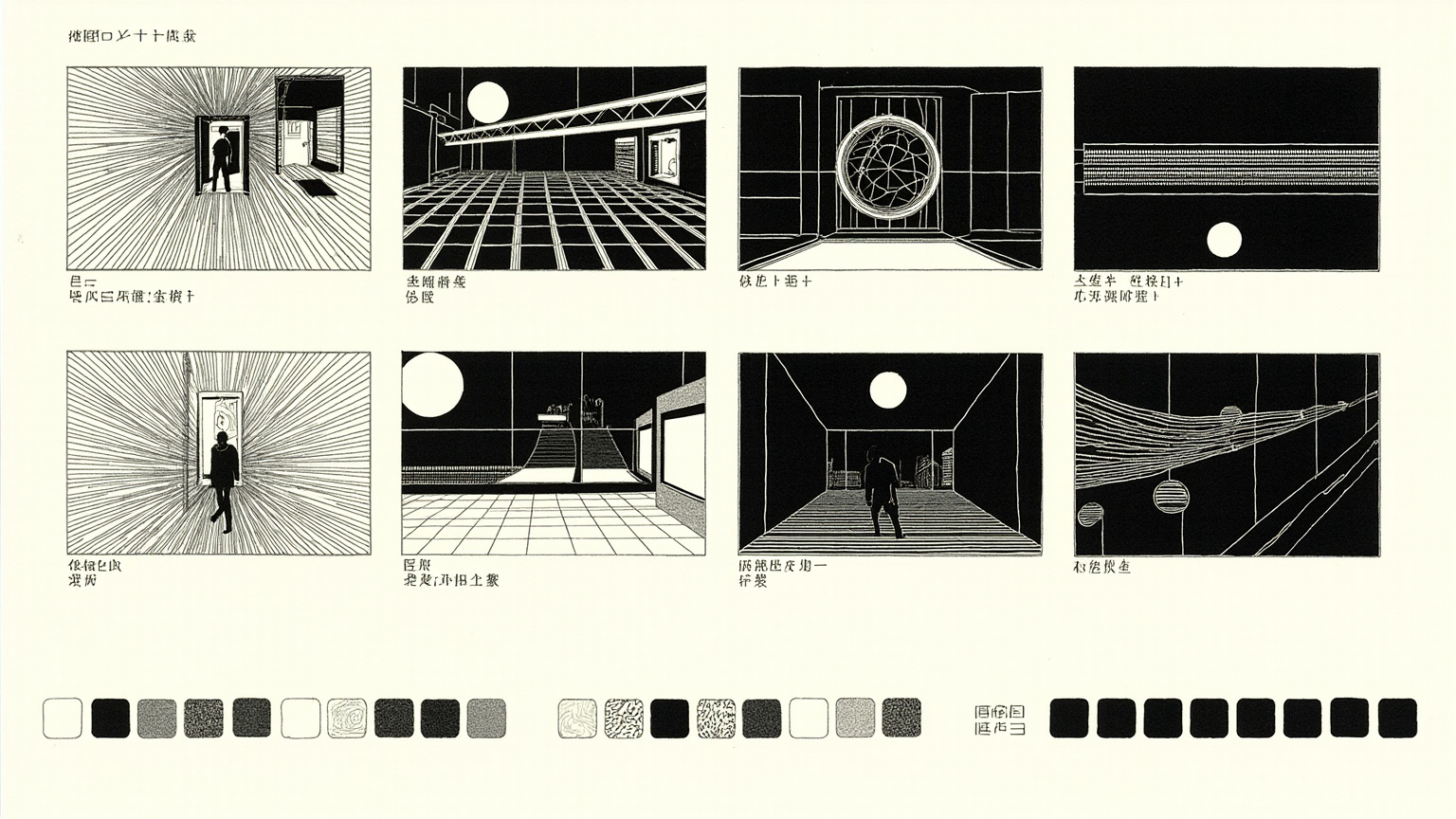
Art Direction4 plates
Before the guide was written, this book got a visual foundation — every illustration you just read grew out of it.