A Farewell to Arms · Companion Guide
永别了,武器
意大利前线,雨下个不停。一个美国救护车司机被迫击炮炸进医院,在护士怀里找到战争唯一的避难所。但溃败、枪决和逃亡之后,连这最后的温存也被产房里的死亡吞没——海明威冷得像雨,痛得像刀。
Opening
Rain falls all night. A man rows a small boat across a black lake, Italy's war behind him, the shadow of Switzerland's mountains ahead. Beside him sits a woman, already pregnant, and with every stroke of the oar the water turns cold as a blade.
This is the quietest, hardest scene in A Farewell to Arms: Hemingway takes two people fleeing the war and writes their escape as an elopement.
What Kind of Book Is This
A Farewell to Arms was written by Ernest Hemingway. Published in 1929, it tells the story of the Italian front in the First World War. It is one of the twentieth century's essential anti-war novels, and the clearest example of Hemingway's mature style — telegraphic short sentences that press the deepest pain under the lightest words, leaving the reader to dig it out.
Hemingway himself drove an ambulance in the First World War. He was wounded on the Italian front, spent time in hospital, and fell for a nurse there. The novel is semi-autobiographical, but its ending is far harsher than what actually happened to him.
Characters and World
The protagonist is Frederic Henry, an American who has joined the Italian army as an ambulance lieutenant. His lover, Catherine Barkley, is a British volunteer nurse who has just lost her fiancé and still wears black in mourning. The whole story turns on the two of them: the war is the backdrop, and each is the only thing the other has left in it.
The story splits in two. The first half plays out around the field hospital near Gorizia on the northern Italian front, and further back, the recovery hospital in Milan — shellfire and sickbeds are the whole of this half's world. The second half kicks straight into the Swiss mountains: first Stresa on Lake Maggiore, then a cabin near Montreux, and finally the delivery room in Lausanne. The world keeps shrinking, from an entire front line down to a single hospital room.
Beyond the two lovers, a few other figures move through the war's shadows. Rinaldi, the Italian army surgeon, is Henry's roommate, always joking, pouring their friendship straight into a wine bottle. The army chaplain comes from a farming family in the Abruzzi, his faith so pure it feels almost accidental. Miss Van Campen, the head nurse, is like a measuring tape, forever checking whether Henry is only pretending to be sick. Later, at Stresa, ninety-four-year-old Count Greffi plays billiards with Henry and talks about death, like an old ghost who has already seen through everything. These characters appear only briefly, but each time they do, the world of the war gets a little more solid.
How the Plot Moves
When the story opens, Henry is stationed on the northern Italian front. He meets Catherine by chance, while she is still mourning her dead fiancé. Their first exchanges look nothing like courtship; they play a game in the gaps between shelling, neither willing to be the first to fall for the other. He flirts, she pretends to be charmed, he sees through the pretending and says nothing. Back and forth, all of it on the surface, while underneath, something still holds them apart.
Not long after, a mortar shell explodes beside Henry. Shrapnel tears the skin from his leg, and he is sent back to a hospital in Milan to recover, where, as it happens, Catherine has just been transferred. That summer in Milan, he lies in a hospital bed while she feeds him, sits with him at night, talks in a lowered voice. Whatever had been holding them apart dissolves in the July heat and the smell of antiseptic.
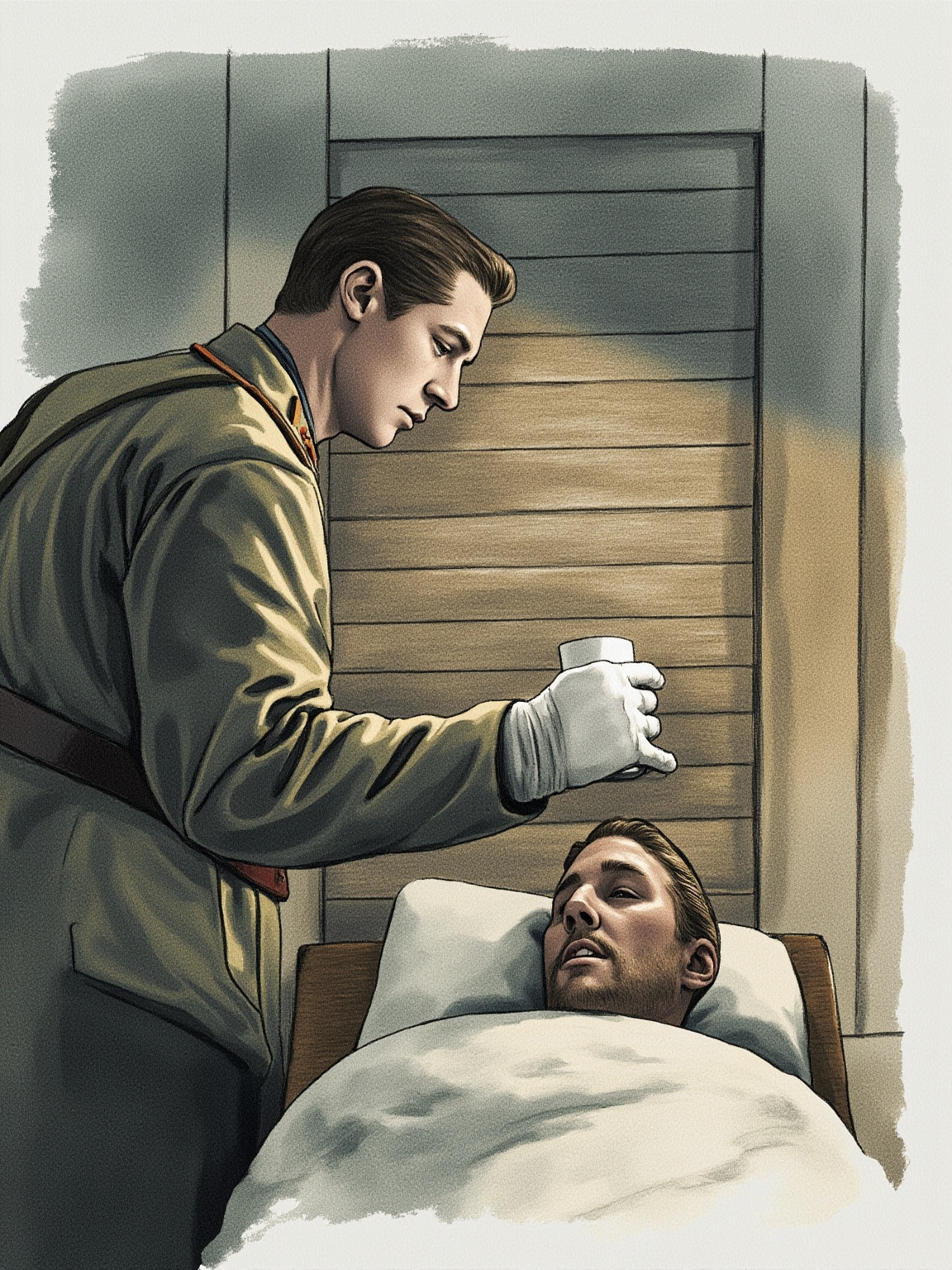
The light had been dim in the room and when the shutters were opened it was bright sunlight and I looked out on a balcony and beyond were the tile roofs of houses and chimneys.
房间里的光线原本昏暗,百叶窗一拉开,阳光猛地灌进来,我看见阳台外是层层叠叠的红瓦屋顶和烟囱。
原文金句 · 米兰医院
Once his leg heals, he returns to his unit. Within months, the Italian front collapses. In the autumn of 1917, the disaster at Caporetto sends hundreds of thousands of troops streaming back through the rain. Henry and his ambulance unit get swallowed into the mud, and the people around him vanish one by one: stragglers, men who drown, men shot by their own side. At a bridgehead, Italian battle police stop him. They don't ask who you are or what battalion you belong to; any officer separated from his unit is shot on the spot as a spy.
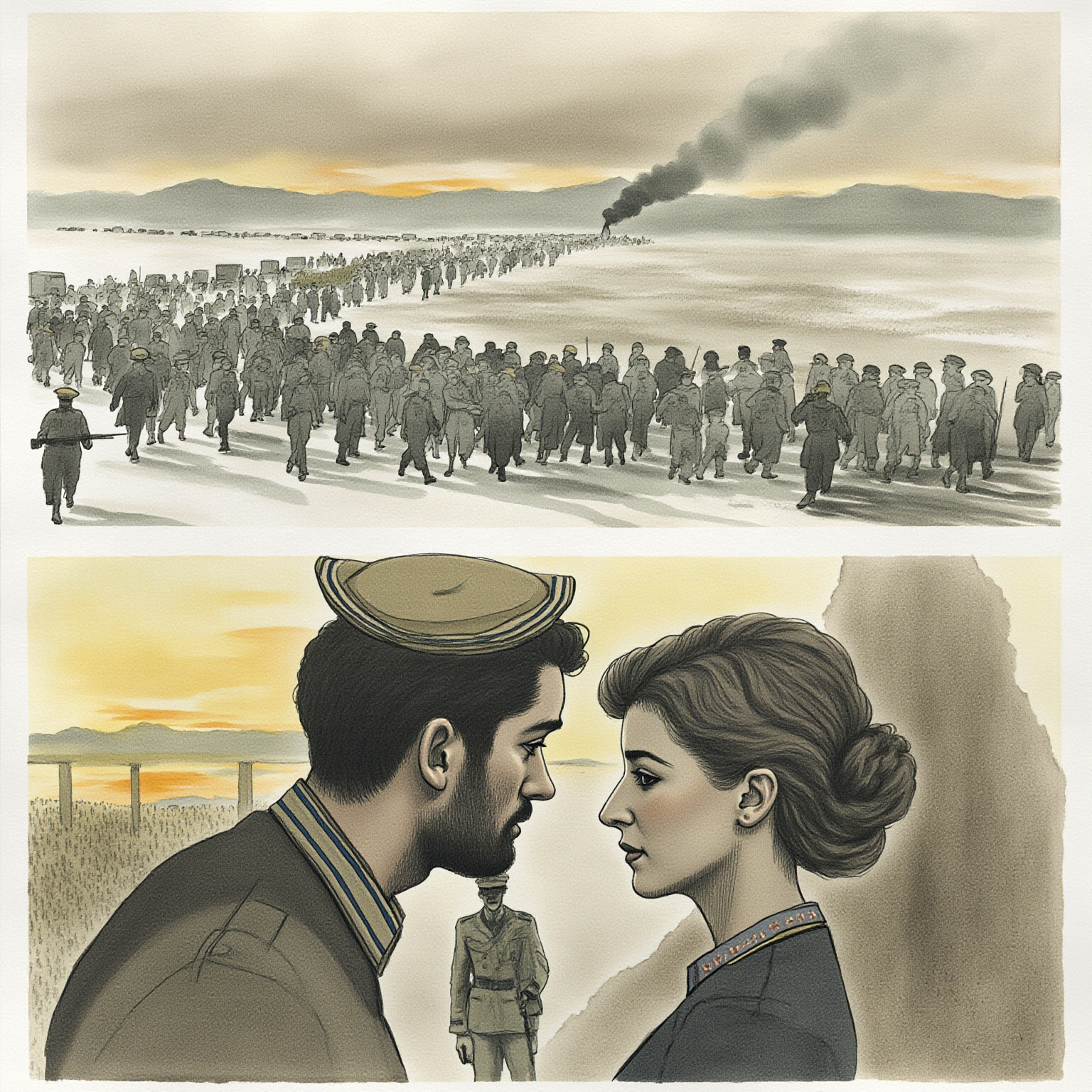
I was always embarrassed by the words sacred, glorious, and sacrifice and the expression in vain.
我总为‘神圣’‘光荣’‘牺牲’这些字眼和‘徒劳’这个词感到难堪。
原文金句 · 卡波雷托前线
With the rifle against him, Henry doesn't think anything heroic. He simply jumps into the Tagliamento River. The current is fast, the banks are high, and logs slam against him in the flood. The river carries him downstream, and he climbs out shaking uncontrollably. This is his separate peace with the war: he doesn't surrender, and he doesn't keep fighting. He just walks away from it.
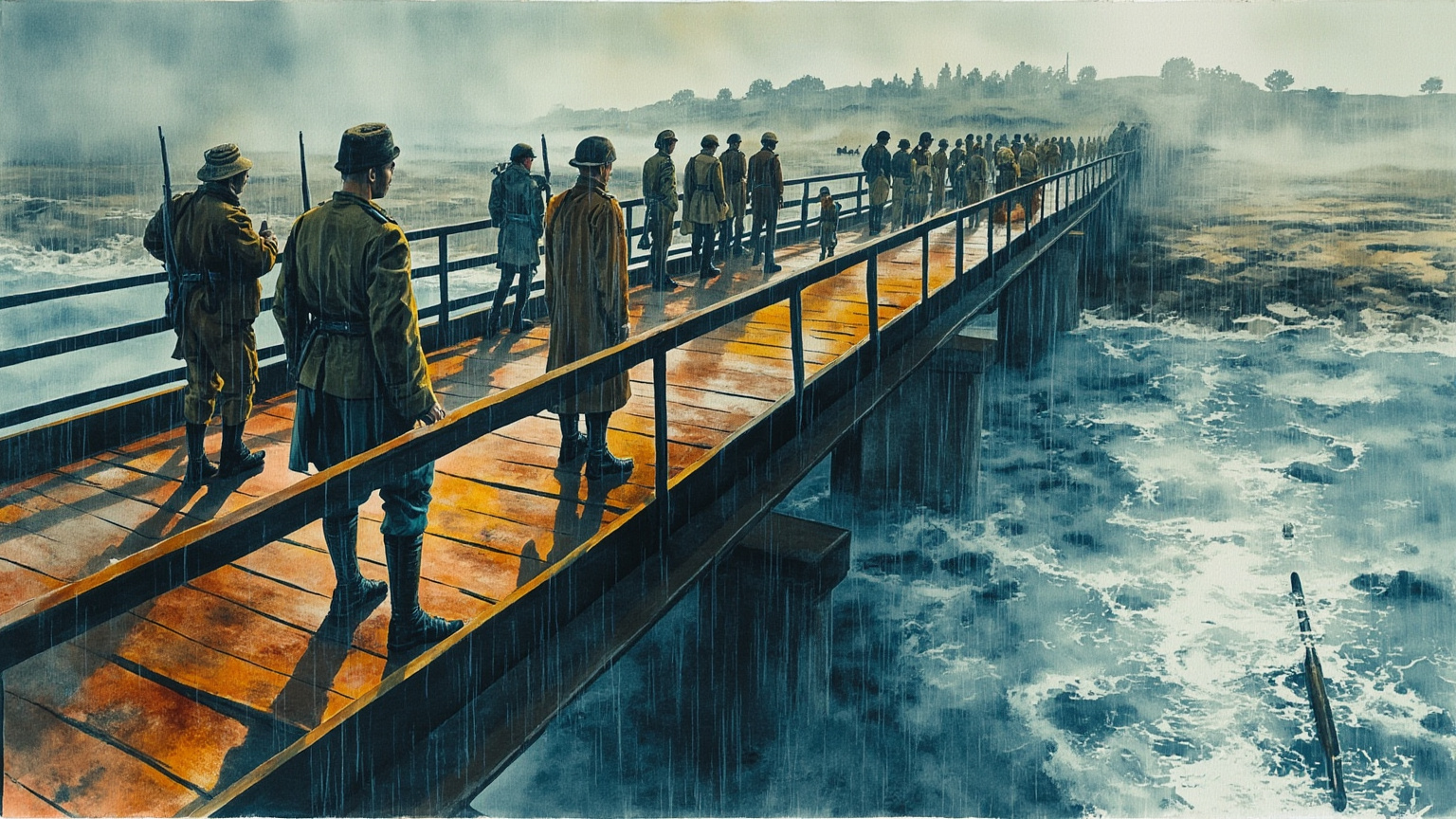
"It is you and such as you that have let the barbarians onto the sacred soil of the fatherland."
正是你和你这种人,把野蛮人放上了祖国神圣的领土。
原文金句 · 塔利亚门托河桥头
He makes his way to Stresa and finds Catherine again. It's a small town on Lake Maggiore, once a place where officers came on leave to soak in the hot springs — now the police are closing in, hunting deserters. Without much discussion, the two of them decide to run for Switzerland. One autumn night, they rent a small boat and row out onto the lake. The rain is so heavy they can't see the far shore. She sits wrapped in a shawl at the stern; he rows alone. All night long.
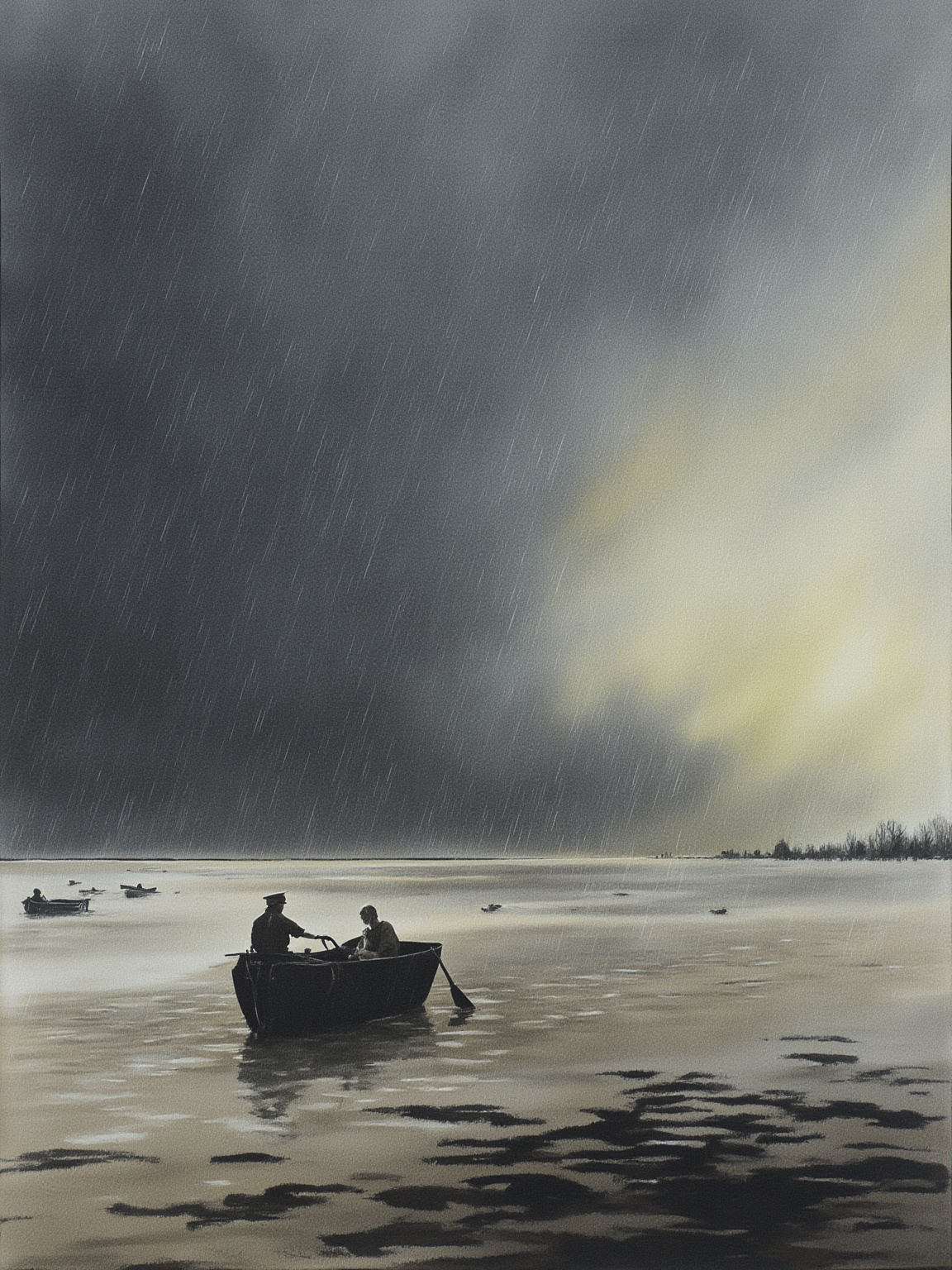
Often a man wishes to be alone and a girl wishes to be alone too and if they love each other they are jealous of that in each other, but I can truly say we never felt that.
一个人往往想独处,女孩也是。相爱的人都嫉妒对方的独处欲,可我们俩从不——这话我可以老实说。
原文金句 · 瑞士山间
Once they land in Switzerland, the mountain world goes suddenly quiet. They rent a cabin near Montreux, watch the snow, drink wine, and wait for the baby. These are the gentlest chapters in the book — no shellfire, no passwords, only a fire in the hearth and white slopes outside the window. But Hemingway won't let you settle in for long; underneath the word safety, a needle is already waiting.
Before the birth, they move to Lausanne. In the delivery room, everything goes wrong. The baby comes first, strangled by the umbilical cord, already dead. Then Catherine begins to hemorrhage, and it won't stop. Doctors and nurses shut Henry out of the room, then call him back in, over and over. He holds her hand and listens to her, half under anesthesia, telling him not to worry, telling him to wait for her. He keeps saying, you will, you'll be all right.
She doesn't make it through the night. Henry walks out of the hospital alone and back to their hotel. The rain hasn't stopped. He says a few words to the porter, takes his room key, walks in, and shuts the door.
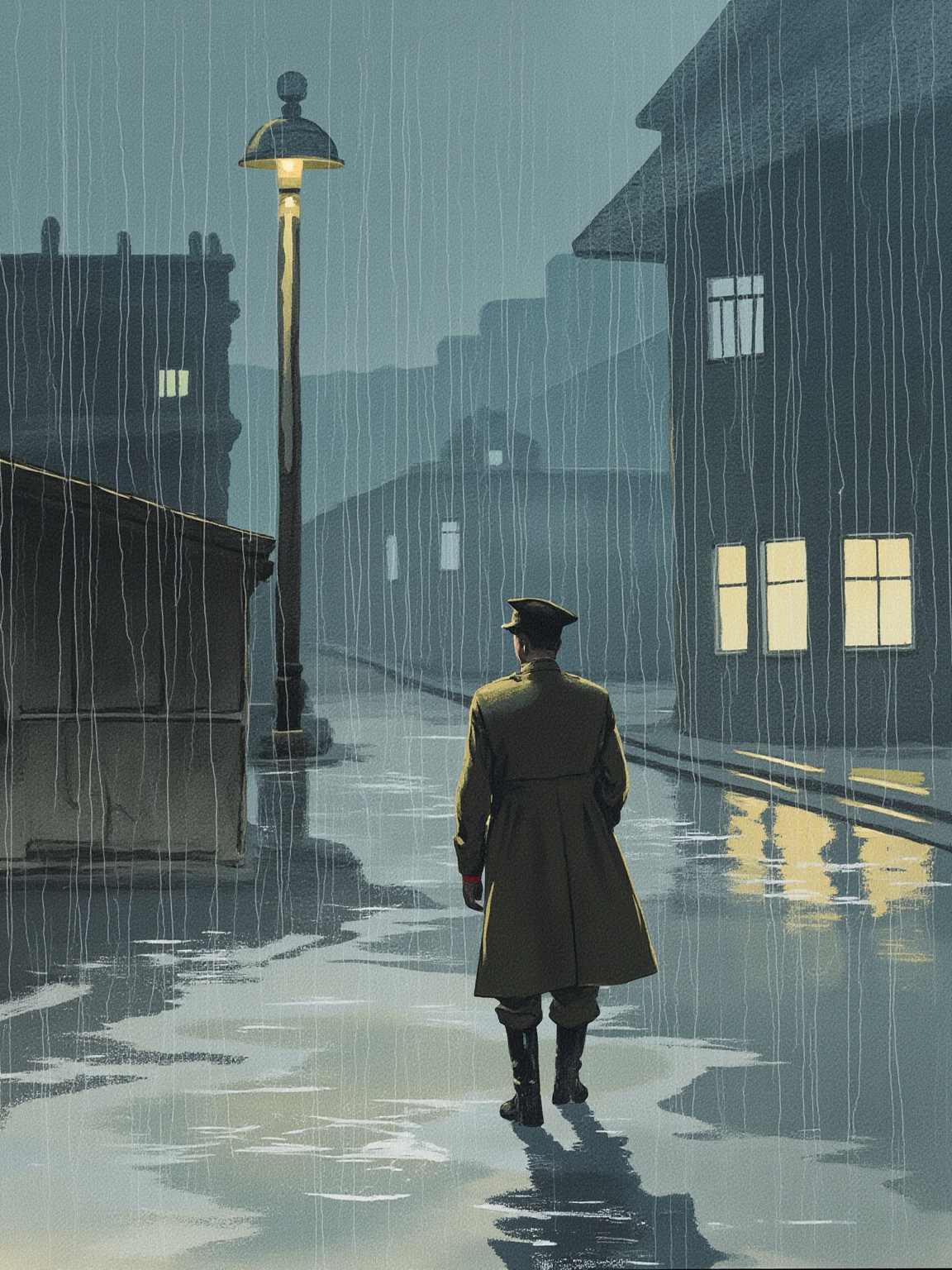
Hemingway gives you no tears. He gives you rain.
Themes and Craft
What the novel is really about is two things collapsing at once: a heroic idea of war, and a love affair stolen out of the middle of it. Hemingway takes big words like courage and glory and grinds them into the mud — courage is driving a truck over a shell crater, glory is not getting shot by your own side during a retreat. Catherine is the one clean thing in this filthy war, and the moment she enters the delivery room, the world takes that back too.
What makes Hemingway so effective is his iceberg principle — what's on the page is only an eighth of it; the rest sits below the waterline. Writing the collapse at Caporetto, he barely touches the big picture. He gives you one detail: a soldier's boot stuck in the mud, him struggling to pull his foot free. The reader fills in the rest of the collapsing front alone. That restraint hits harder than any outraged speech could: he turns the volume down to almost nothing, and every word lands like a stone.
Reading this book today, you run into a very old question: when the world stops making sense, does a person still have the right to walk away? Henry's jump into the river isn't cowardice — it's the clearest-eyed exit he can choose. He doesn't surrender, but he also refuses to die for anyone else's cause. In a machine that treats people as parts, that may be the most dignified way to live.
Why You Should Still Read It, Even Knowing How It Ends
The plot, laid out like this, looks like the whole book. But open Hemingway for yourself and you find the plot is only the skeleton. What makes this book extraordinary is its physical sense: the smell of antiseptic in the Milan hospital mixed with summer dust from the window, the rain on the boat's hull at Lake Maggiore like a small drum, the one-second pause in the Lausanne delivery room between I'm afraid and don't be afraid. None of that can be summarized in a paragraph. You have to go read it yourself.
The first time I read the Lausanne chapters, I went back and reread the Milan summer again. Set side by side, the warmth and the cold hit you at once — that's the craft of the novel, the kind of chill down your spine no companion guide can give you.
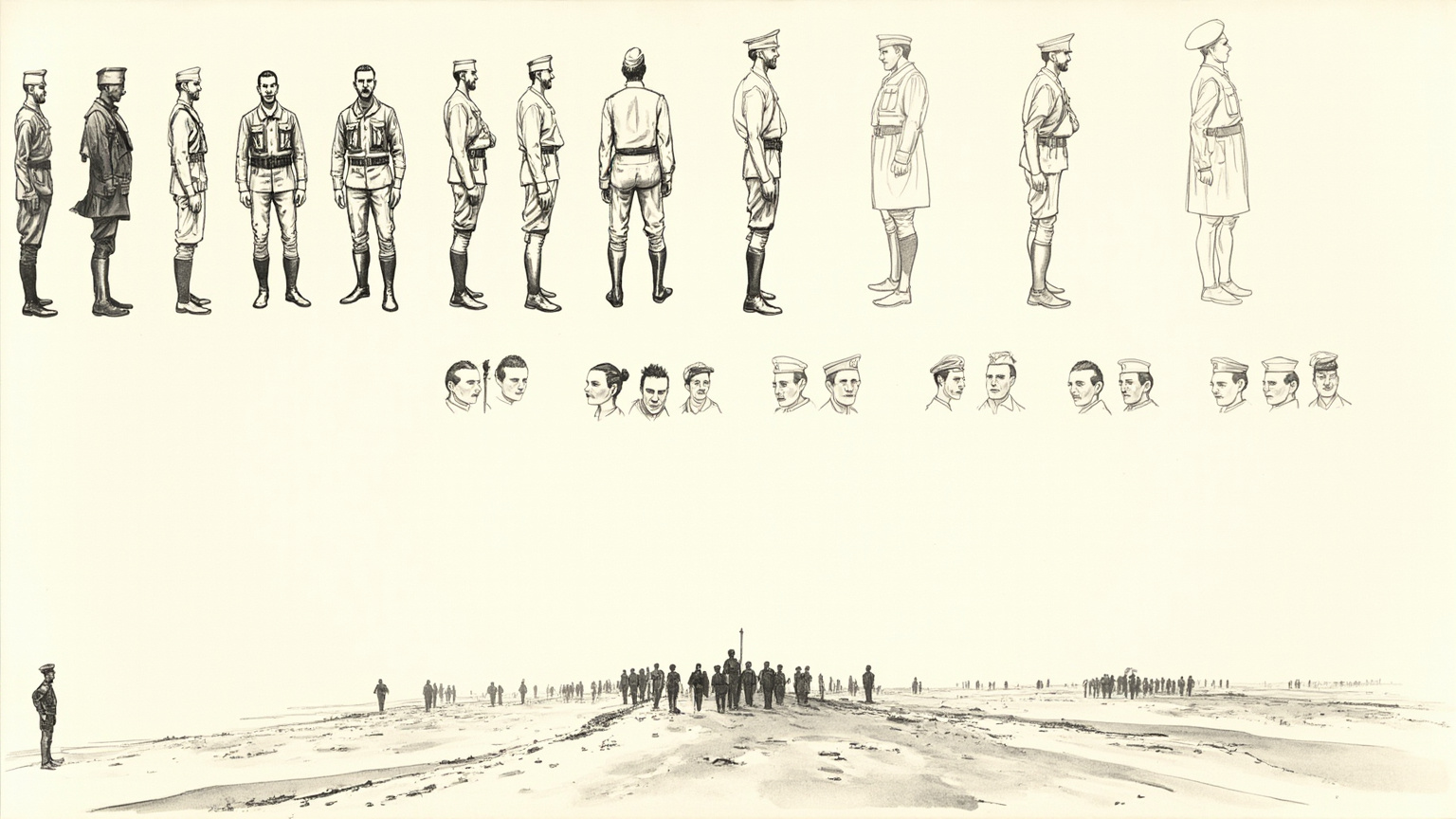
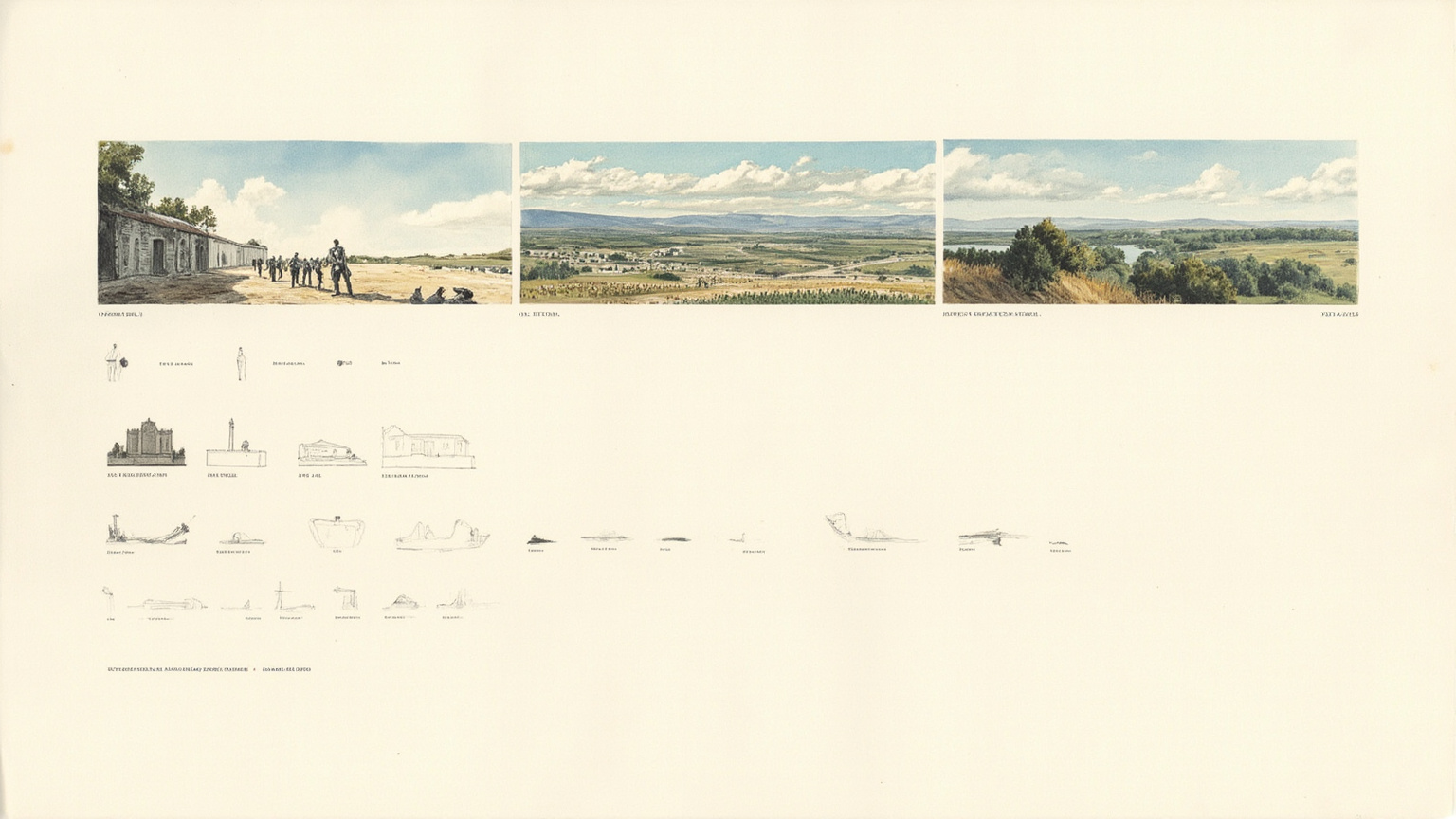
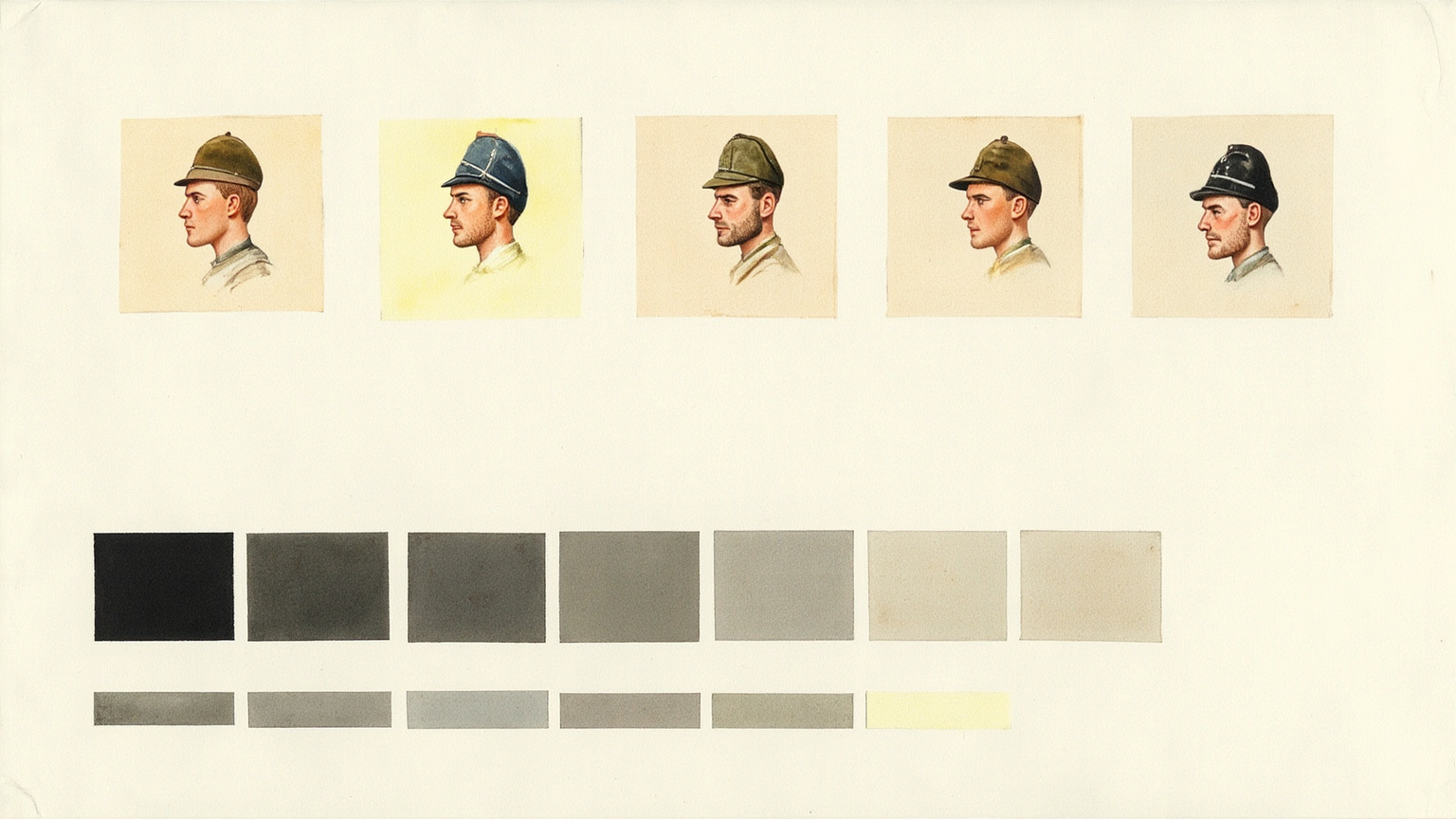
Art Direction4 plates
Before the guide was written, this book got a visual foundation — every illustration you just read grew out of it.