A Little Princess · Companion Guide
小公主
一个七岁的印度孤女,在伦敦的雾与阁楼里,证明皇冠是一种不戴在头上的东西。
A girl from India, and a crown no one else can see
Sara Crewe was seven when her father sent her from Calcutta to Miss Minchin's Select Seminary for Young Ladies in London. Black iron railings, a portico, corridors gray enough to feel cold: she walked through that door with someone carrying her trunk and someone else already making up her bed. Miss Minchin bent low, the wrinkles at her eyes folding into a smile: "My precious child, you have arrived." Captain Crewe, her father, ran a diamond mine in India, was rich, and loved his only daughter without reserve. He left with one request: treat her like a princess. Miss Minchin agreed faster than she would have signed any contract.
Sara was small and thin, black-haired, with large gray-green eyes and pale skin. She never showed off, but she loved to invent stories, about princesses, about magic, about a misunderstood girl proving herself. The other students called her "that young lady" at first, then "the little princess." Sara herself cared little for titles. What she cared about was a different question: am I a princess? Her answer was yes, whether or not anyone else could see it.
Overnight, the crown falls in the mud
Captain Crewe planned a party for the whole school for Sara's tenth birthday, and was on his way back to London when word reached him that his partner had fallen ill and the mine had failed. He turned back for India and never returned to London. He died in a cheap hotel bed in Calcutta, his last words a worry about whether his child would blame him. The news of his death and his ruin arrived at the school in the same letter. Miss Minchin's face changed that same afternoon: Sara's fine dresses went into a locked closet, her doll Emily was taken away, her private bedroom given up. Sara was put into the shabbiest clothes, the dirtiest chores, and the drafty attic room at the top of the house.
What's interesting isn't how far Sara fell, but how fast Miss Minchin turned. In the morning she was "my precious child"; by afternoon, "an ill-bred girl with no manners of her own." Snobbery is a precarious balancing act — it can only stand on the side of money, and the moment that side goes broke, the whole thing collapses. Miss Minchin's ugliness isn't that she was cruel to the poor. It's how suddenly she turned cruel on someone who had been rich only yesterday. That suddenness is where a class instinct hides.
The attic is the book's real second lead character. A slanted roof, a frosted-over skylight, drafts everywhere, a rat named Melchisedec running along the boards, floorboards that creak underfoot. The distance from princess to servant is exactly the distance from a carpeted bedroom downstairs to the stairs leading up to this room.
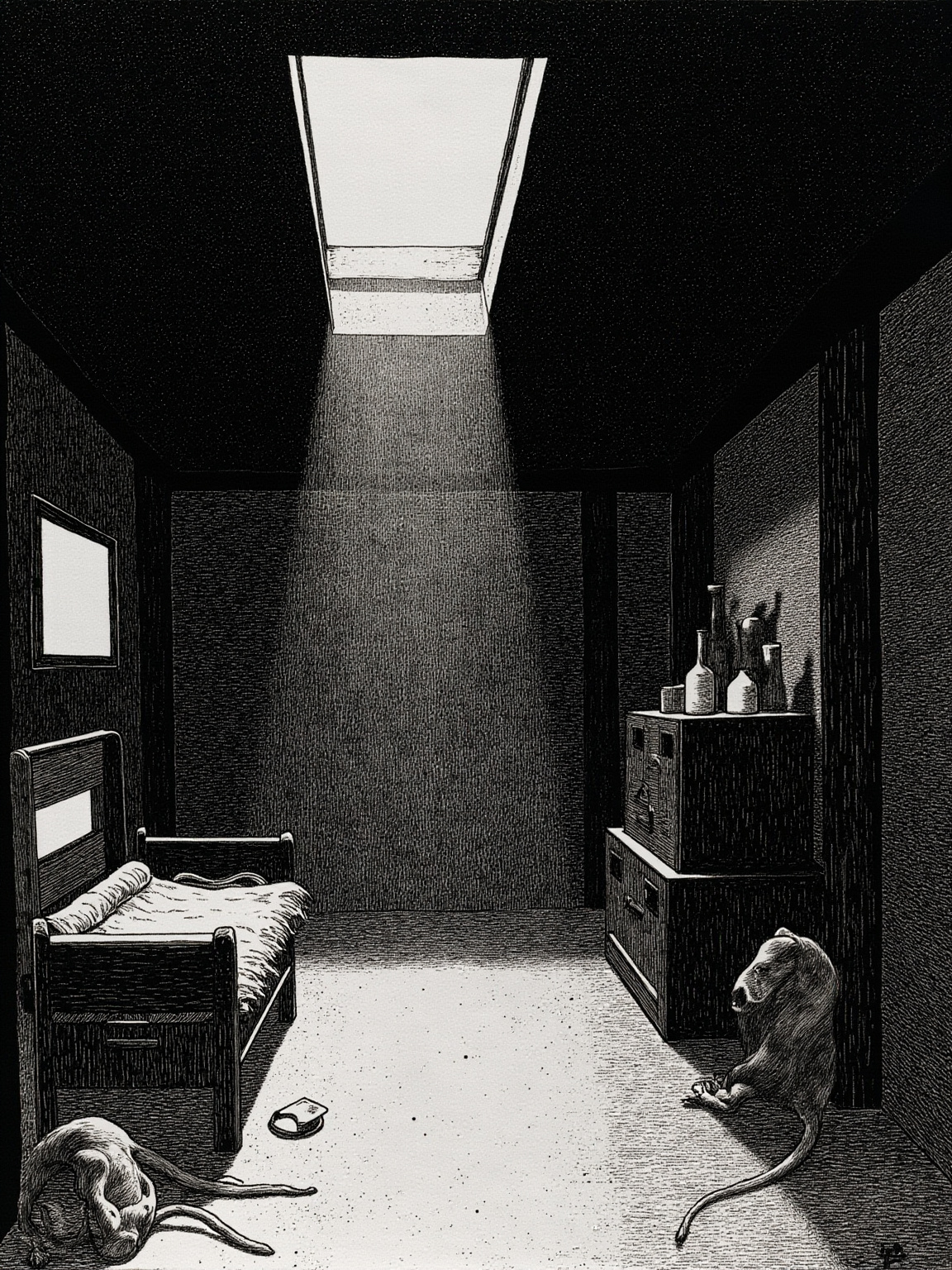
She was such a little thin thing, with her big eyes and her thin, eager face.
她是那么瘦小的一个孩子,大大的眼睛,一张瘦削的、专注的脸。
金句 · 第3章 · 萨拉·克鲁的诞生
A princess on an empty stomach
Life in the attic was made of hunger, hard labor, and Miss Minchin's cold remarks doled out every few days. Sara's hungriest day was her birthday. Her father was already dead, though she didn't know it yet, and the school gave her one cold roll and a cup of water. She ate it slowly, the way you'd eat something ceremonial.
Later, on the street, she met a beggar girl even hungrier than herself, Anne, huddled outside a bakery door. In her pocket was her last sixpence, all she had left from a shilling, and it had just bought four hot buns. She didn't hesitate. She handed over the whole bag, and her own stomach growled as she turned to walk away. She didn't look back. This moment is the book's central claim made concrete: a princess isn't someone dressed in silk. She's someone who has nothing but four buns in her hand — and still gives the whole bag away.
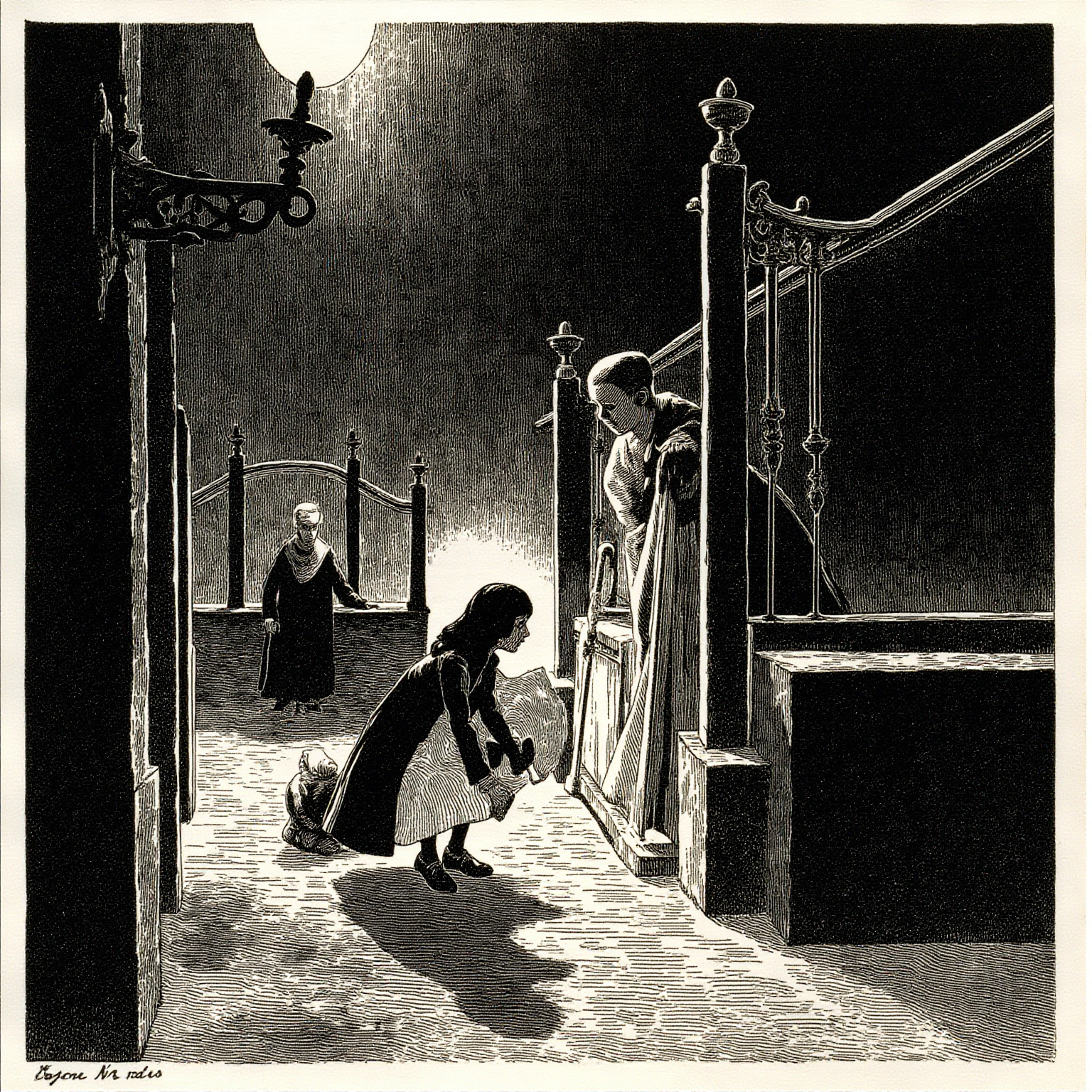
She was hungry, and she was a princess, and she had her four buns in a bag.
她饿了,她是一个公主,她的袋子里有四个热面包。
金句 · 第6章 · 阁楼里的面包
But Sara wasn't only sharing bread. She was spinning magic stories for Ermengarde — the plump, weepy girl who always struggled with her lessons and got scolded in front of everyone — and Ermengarde was the first live audience for the princess Sara carried inside her. In the attic, she talked to Melchisedec the rat: "He has a heart too." In her head she built a country larger than Miss Minchin's school, and its citizens were Becky, the old blanket Miss Amelia smuggled up to her, the rat in the corner who blinked back at her. Imagination here isn't escape. It's the fire that gets you through a cold night, a small flame, but one that never goes out.
Becky, a scullery maid, became her closest companion in the attic. The two of them would finish sweeping, hide their brooms up there to keep each other company, and split diced potatoes and half a loaf that Miss Amelia had secretly left behind. Miss Minchin's sister Amelia was soft-hearted and timid, and every time she slipped Sara some bread she did it like a thief. That kindness is the most heartbreaking kind in the whole book: the kind where doing something good still means hiding it from your own family.
The foggy night someone climbed in over the roof
The warmest night in the book happens during one of London's ordinary fogs. Next door lives a mysterious "Indian Gentleman," in fact Mr. Carrisford, Captain Crewe's old business partner, who has spent years searching for Sara. His Indian servant, Ram Dass, climbs quietly in through the attic window from the roof. Ram Dass can't read, but he understands dignity. In that freezing room he lays down a carpet, lights the fire, sets out a table of hot Indian food, and even "brings back to life" the doll Emily, sitting her up properly in her chair.
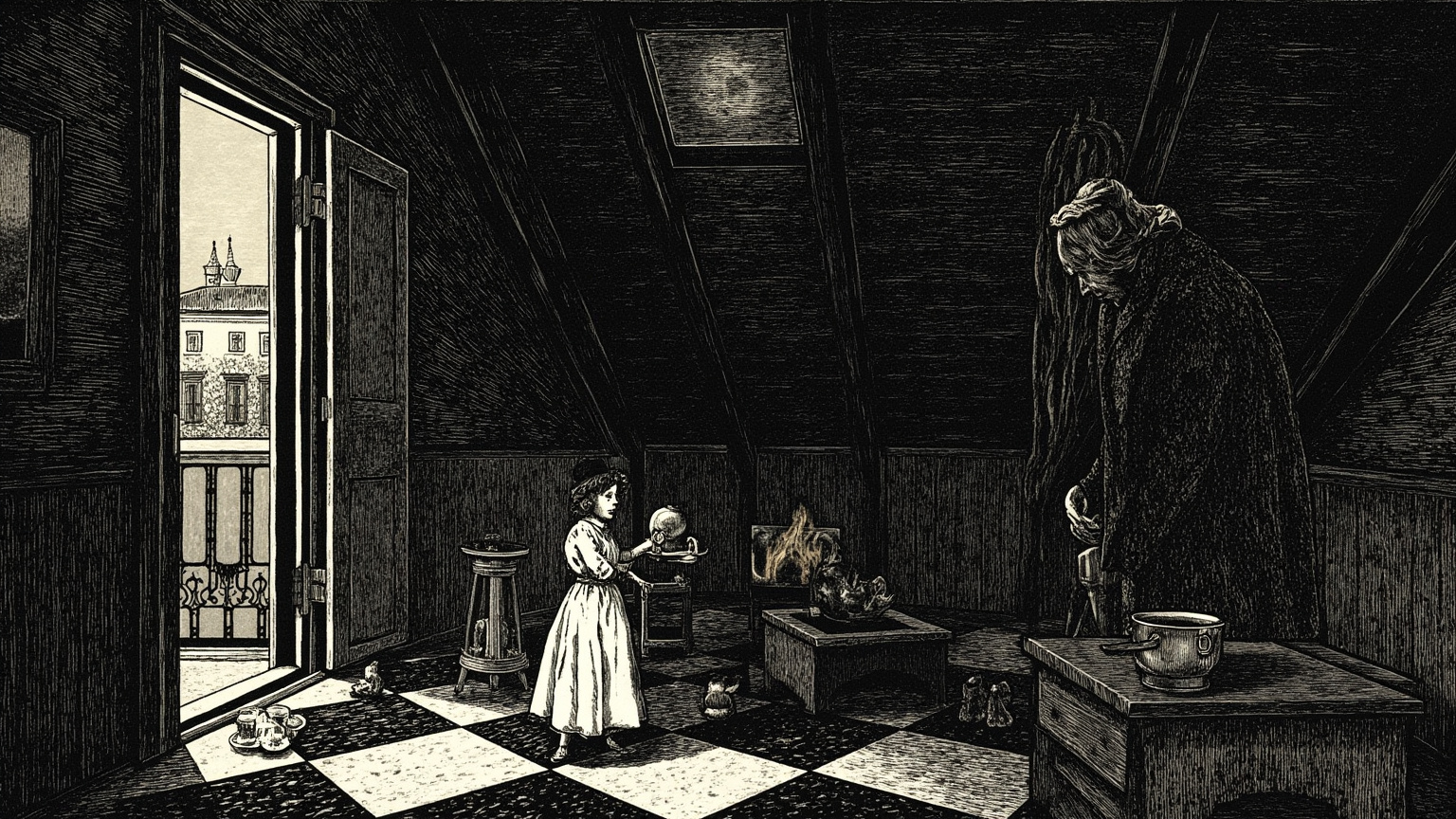
Something warm and glowing seemed to go all over her; it was like being wrapped in a great soft shawl.
一种温暖而发亮的东西似乎流遍了她的全身;像被一条又大又软的披肩裹了起来。
金句 · 第14章 · 拉姆·达斯
Overnight the attic turns from cold gray to warm orange. Sara doesn't ask who sent it. She does something better: she runs to invite Miss Laura, the woman upstairs everyone dismisses as "the mad old lady," down to share the meal. A lonely old gentlewoman, a cat in her arms, freezes for a moment at the knock, then bends down and says, "I had a child once too." It's the quietest dinner in the book, and the moment the story's real claim lights up: that everyone is a princess. The locked-away, the starved, the pointed-at, all sitting down to eat together, none of them above any other.
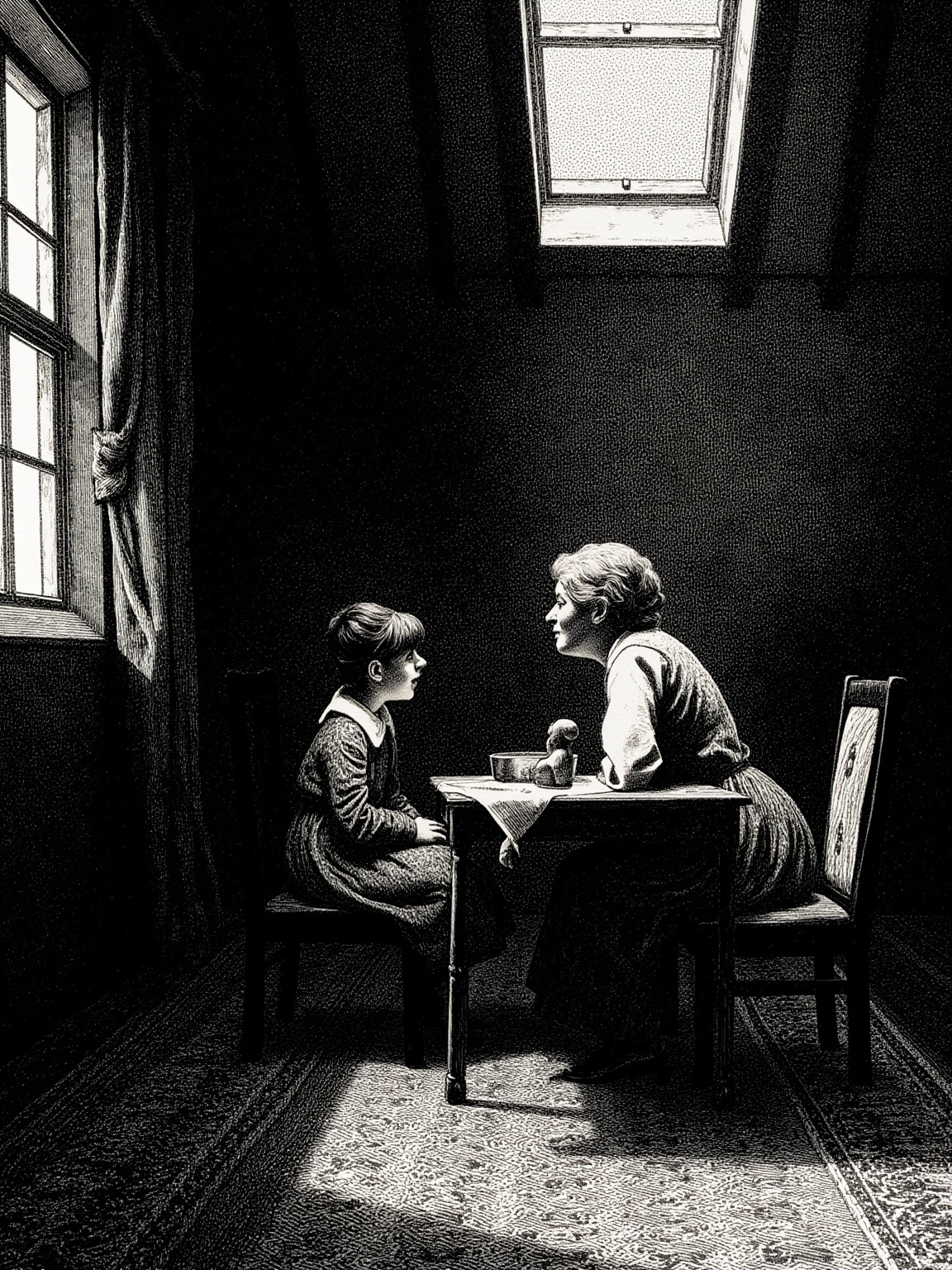
I was a princess once myself, my dear — a long time ago.
我自己也曾是一位公主,亲爱的——那是很久以前的事了。
金句 · 第15章 · 劳拉小姐的晚宴
It isn't a prince who comes back. It's a business partner.
Mr. Carrisford finally comes in person. He takes Sara's hand and walks into the school's main hall, exposing to the whole staff and student body how Miss Minchin has treated his late partner's orphaned daughter. Miss Minchin shrinks on the spot, cowering until she looks, for once, like a small girl herself. Sara comes into her inheritance again: servants up and down the stairs, people calling her "miss," someone carrying her trunk once more.
The first time I read this, I expected revenge next: Miss Minchin thrown out, the villain punished. But Burnett is more skilled than that. Sara isn't driven by hatred. Her response to Miss Minchin is generosity, not payback. She goes back up to the attic, pulls Becky up with her, wraps Miss Amelia in a gentle hug, sits little Lottie on her knee. Her kindness toward the people of the attic hasn't changed at all. "She became a little princess again" isn't the ending. "She was still the one who shares her bread" is.
As for Miss Minchin: Burnett never paints her as a grand villain. She's snobbish, sharp-tongued, cold, but her smallness in that final moment is the only size a snob ever has. She isn't punished so much as seen, calmly, by someone she once ground underfoot. Being seen like that is worse than any punishment.
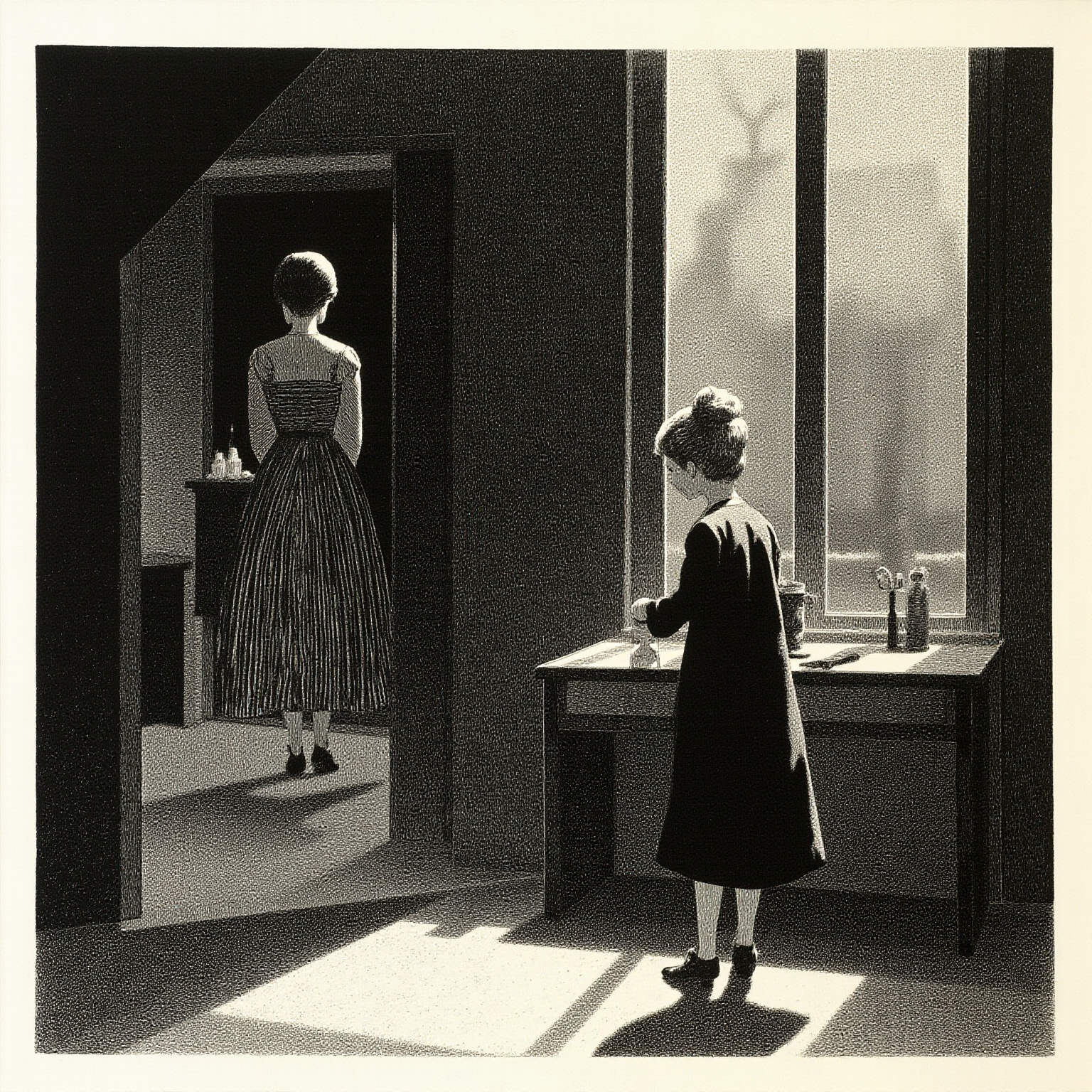
She was a princess by birth and right; and if she chose to forgive, she was more a princess than ever.
她天生便是公主,正因为她选择了宽恕,她比任何时候都更像一位公主。
金句 · 第19章 · 安妮
What this book is actually about
A Little Princess was first published in 1905, and a hundred and twenty years on, it is still being adapted, animated, and read by one generation of children after another. It hasn't been replaced because it asks a question every child asks sooner or later, and every adult ends up asking again: is who you are something given to you, or something you grow yourself?
Burnett's answer isn't a comforting slogan, "you're a princess if you feel like one in your heart." It's a concrete act: handing over the bread in your hand, lighting up the attic, treating an unwanted, homeless girl like a guest of honor. In this story, "princess" isn't a title. It's a verb. It means sharing, keeping faith, protecting, enduring. It has nothing to do with money or silk.
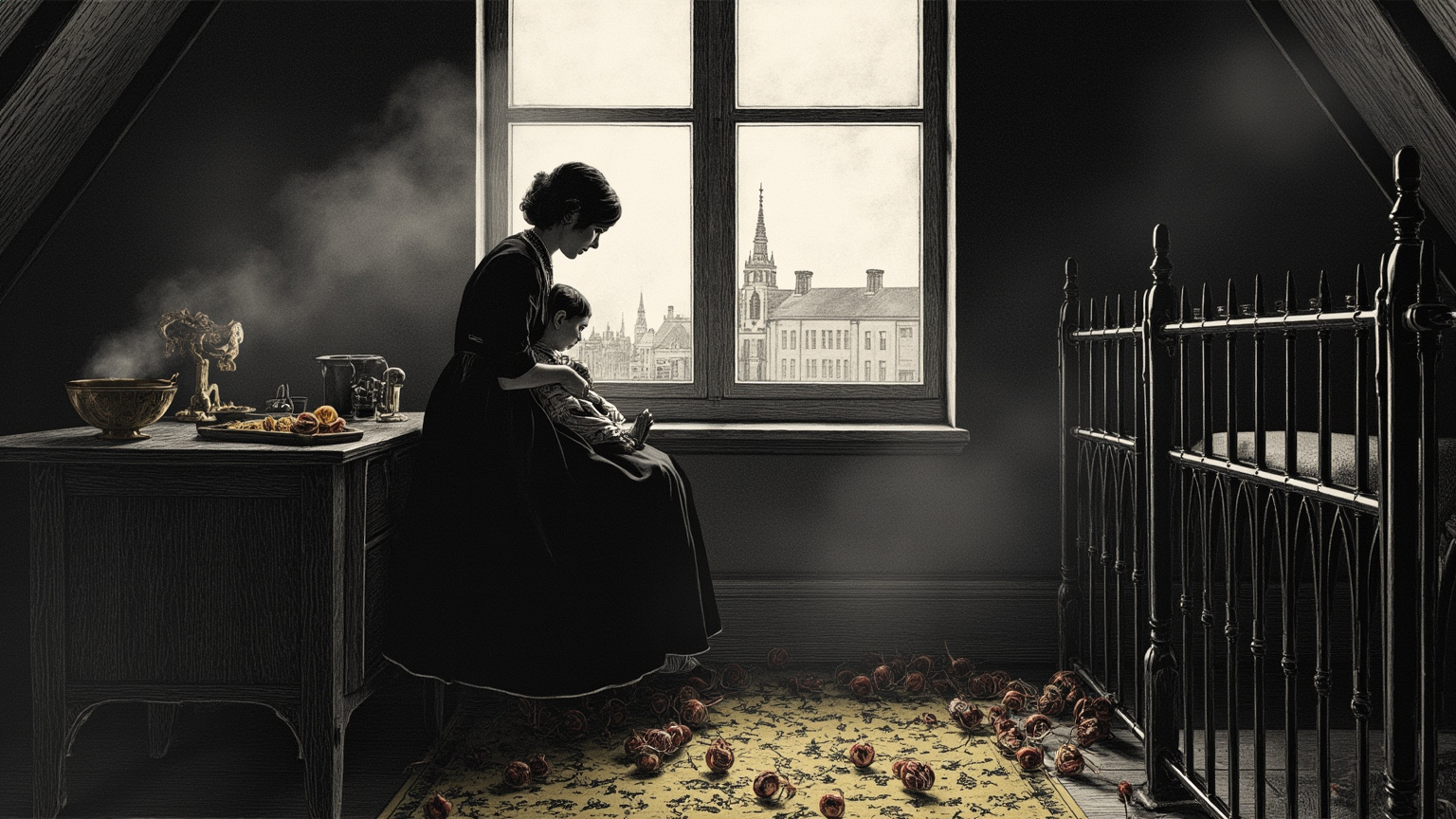
A crown on your head is just a hat — it blows off in the wind. A crown in your heart is a spine, and no wind touches that.
Why the story is worth reading even once you know how it ends
A summary can tell you that Sara shares her bread, that the fire gets lit, that she's found again in the end. What it can't give you is the tone she uses talking to the rat in the attic, half serious, half joking, part child and part small adult. It can't give you the magic stories themselves, the tales of princesses and castles and a misunderstood girl surviving on imagination, told chapter by chapter in the original, and no retelling wears as well. It can't give you the particular gray of a Victorian London boarding school, not today's gray, but the gray of an unlit fireplace, undrawn curtains, a coat that never quite dries. It can't give you the look on Ram Dass's face as he slips back out over the roof. He says nothing, but that look holds every ounce of dignity and restraint an Indian servant of his time was allowed. Once you know the plot and go back to read it anyway, you find the story is larger than what happens in it.
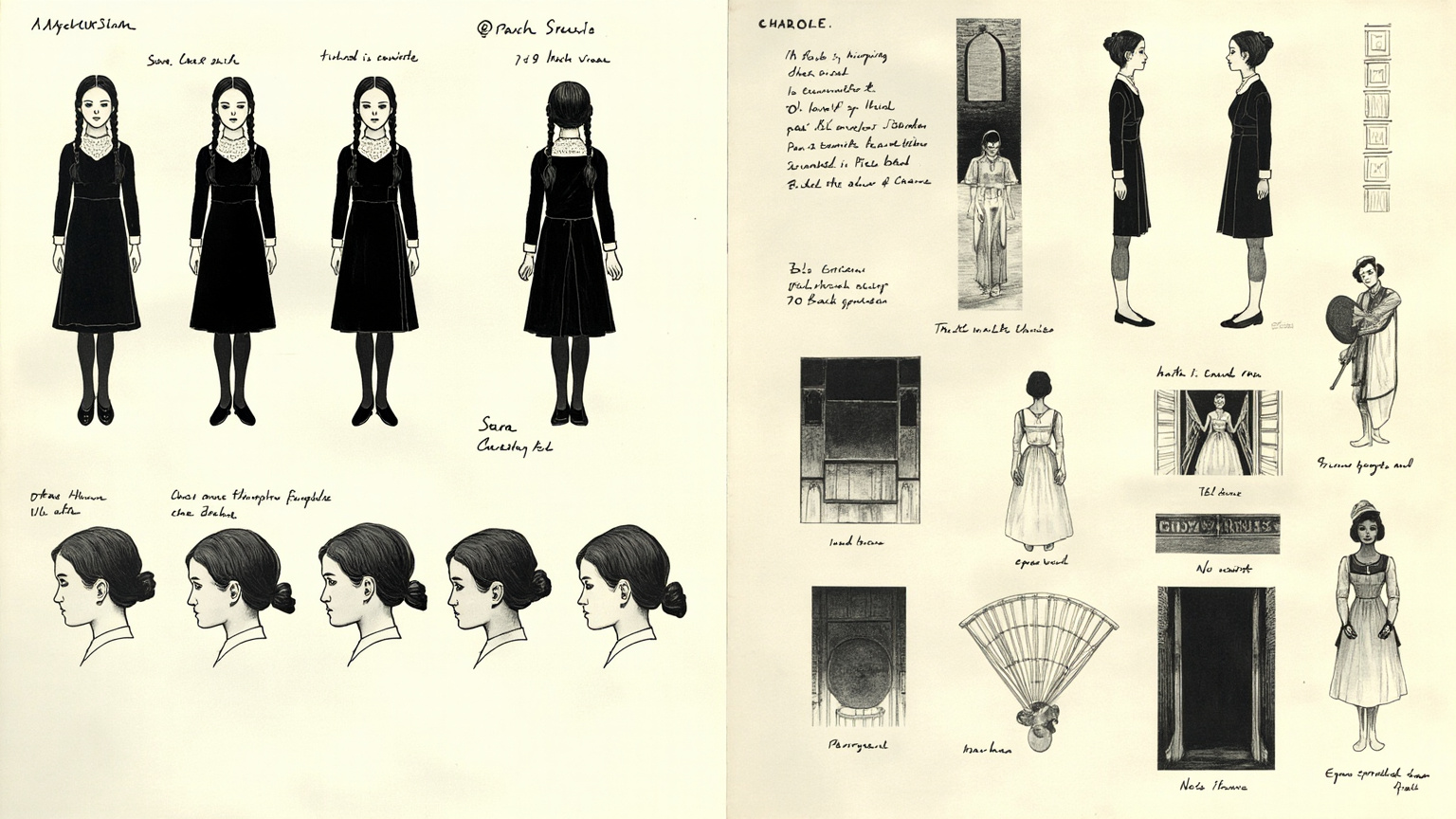
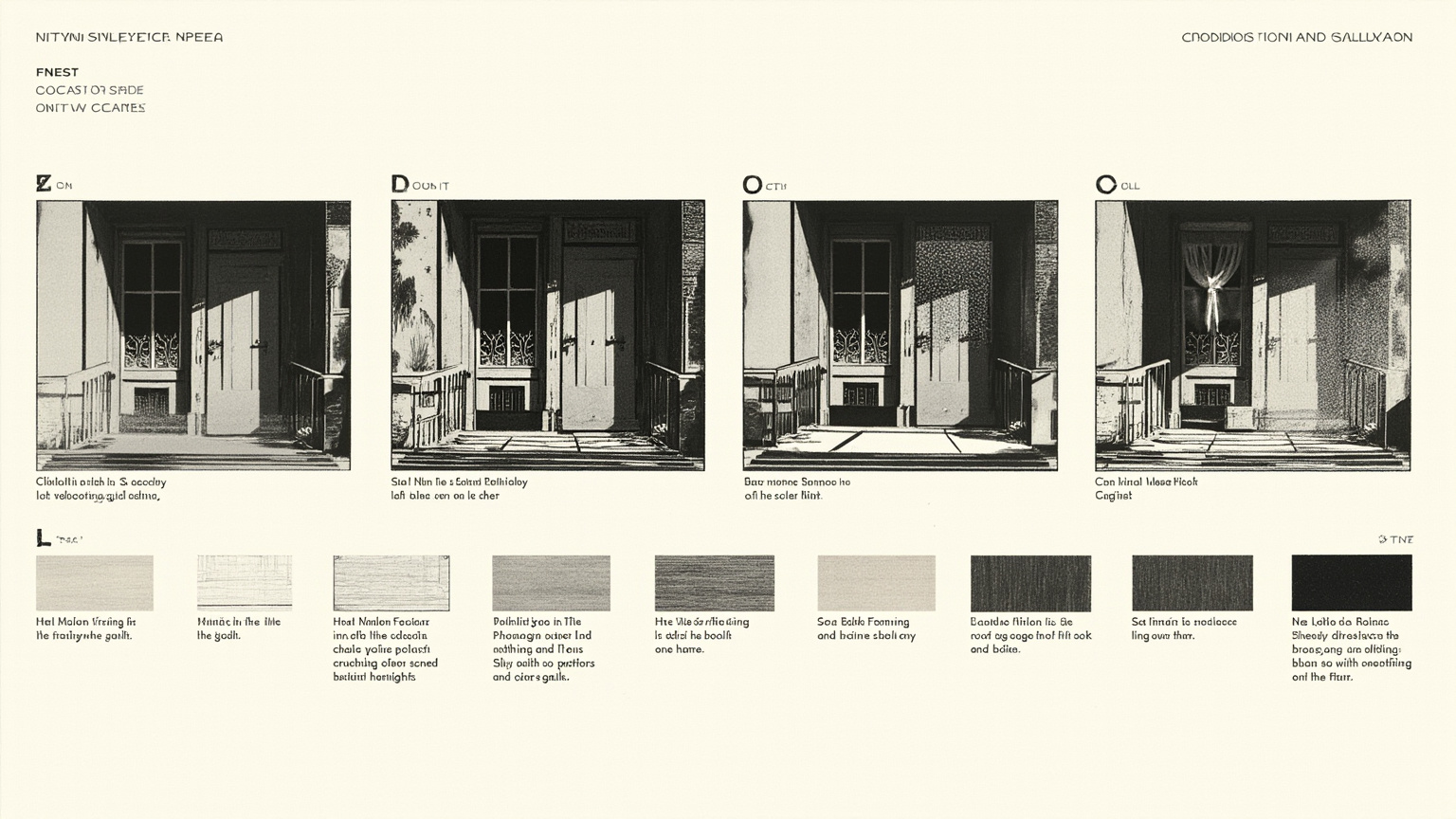
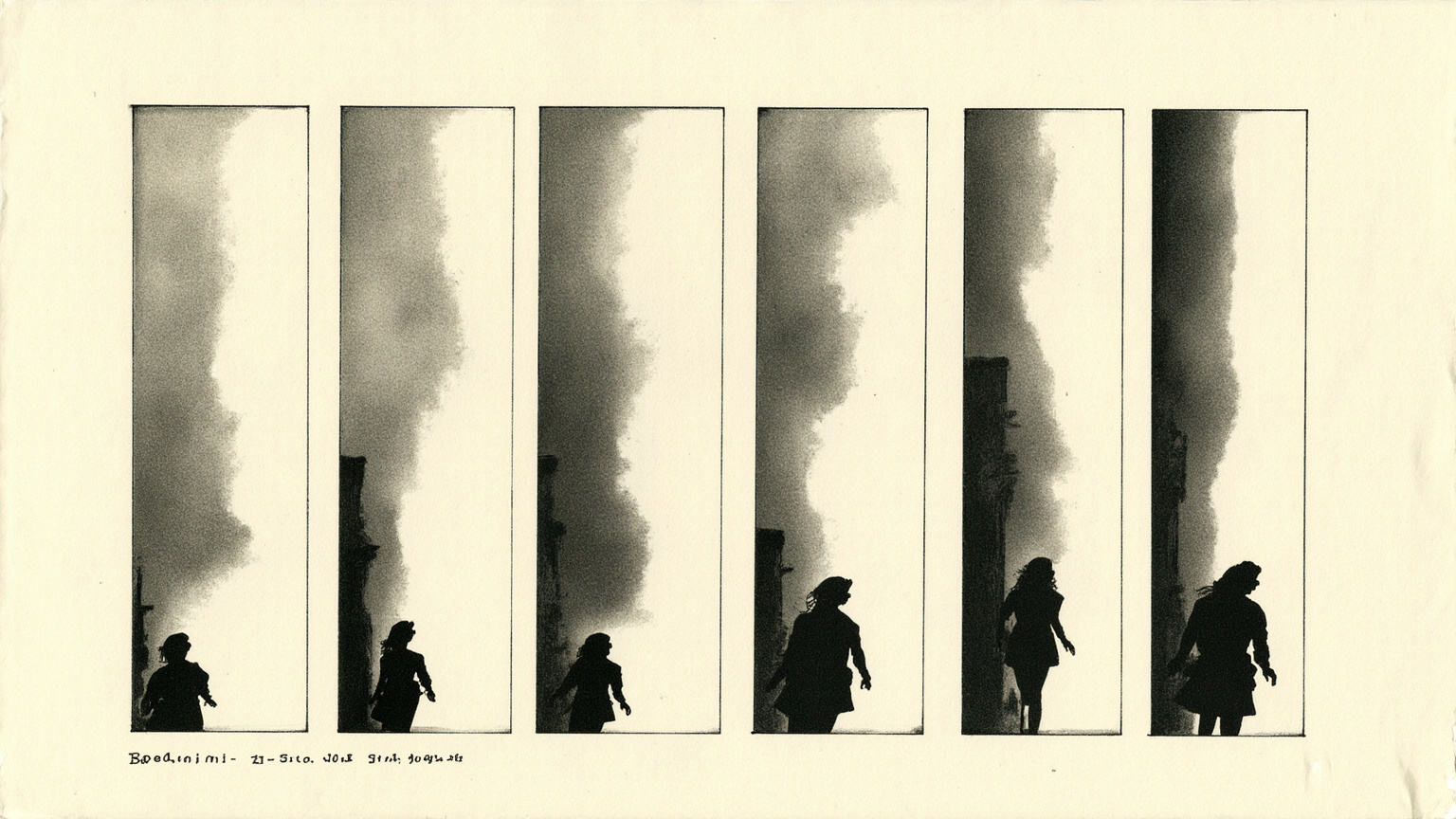
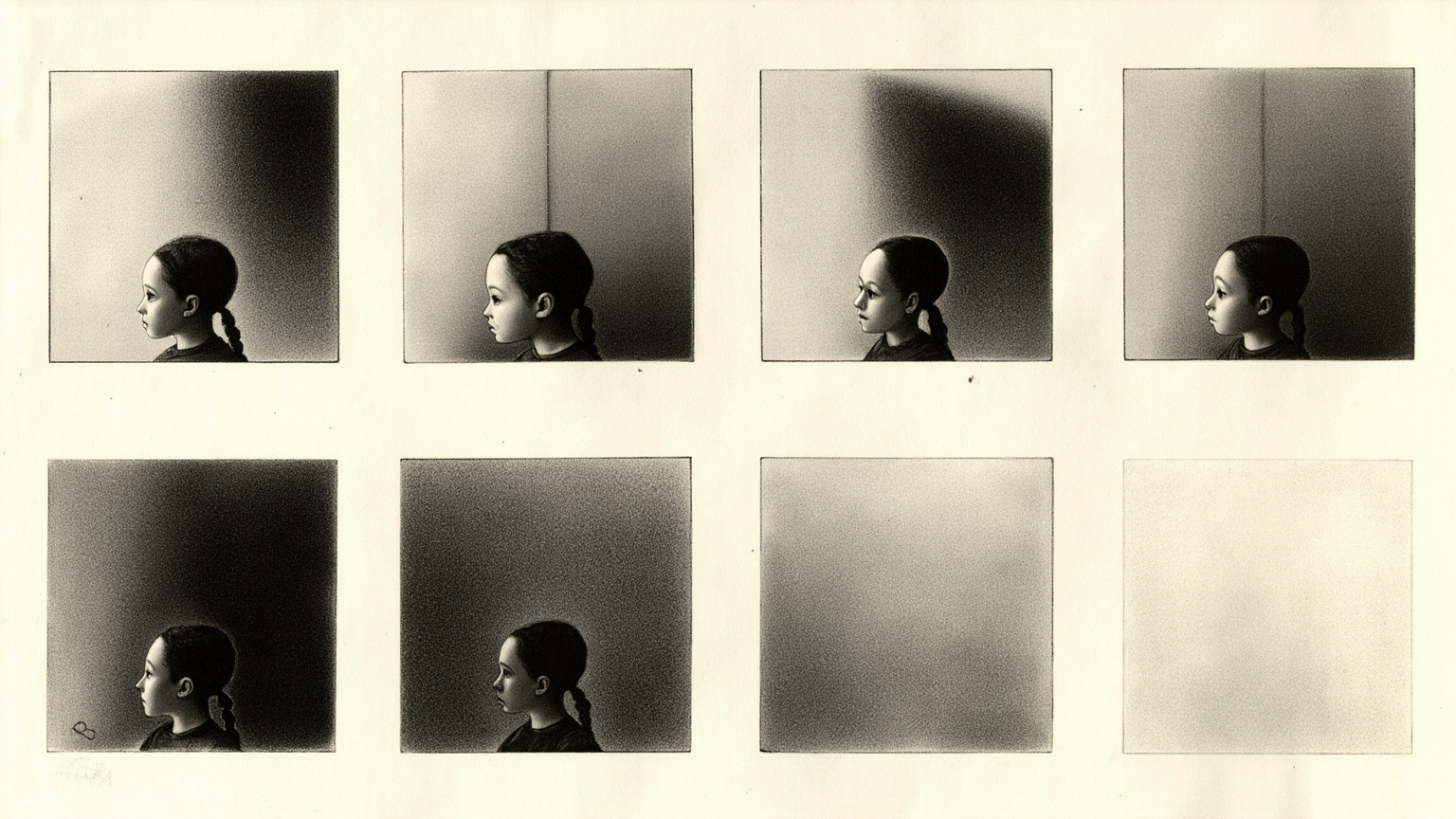
Art Direction4 plates
Before the guide was written, this book got a visual foundation — every illustration you just read grew out of it.