A Sportsman's Sketches (Notes of a Hunter / Записки охотника) · Companion Guide
猎人笔记
一个携枪游荡的贵族猎人,在白桦林与农舍间,记下那些在法律上只是财产的人——他们的理性、梦想、歌声与尊严。
An Opening You Almost Missed
A birch wood lies soaked in morning mist, and a nobleman in a worn old coat crosses the marshland with his dog and his gun. He isn't hunting -- or not only hunting. Every peasant, every household, every village girl he meets, he stops. Out comes the notebook, and he asks, and he listens, and he writes it down. How this man farms, how that woman sings, how a husband and wife quarrel, how someone has lain paralyzed in bed for years without a word of complaint -- he records all of it. This is the real engine of A Sportsman's Sketches: the hunting is the pretext; stopping to look at people is the point. Open the book expecting a rural travelogue, and what you get instead is a gallery of portraits of ordinary people.
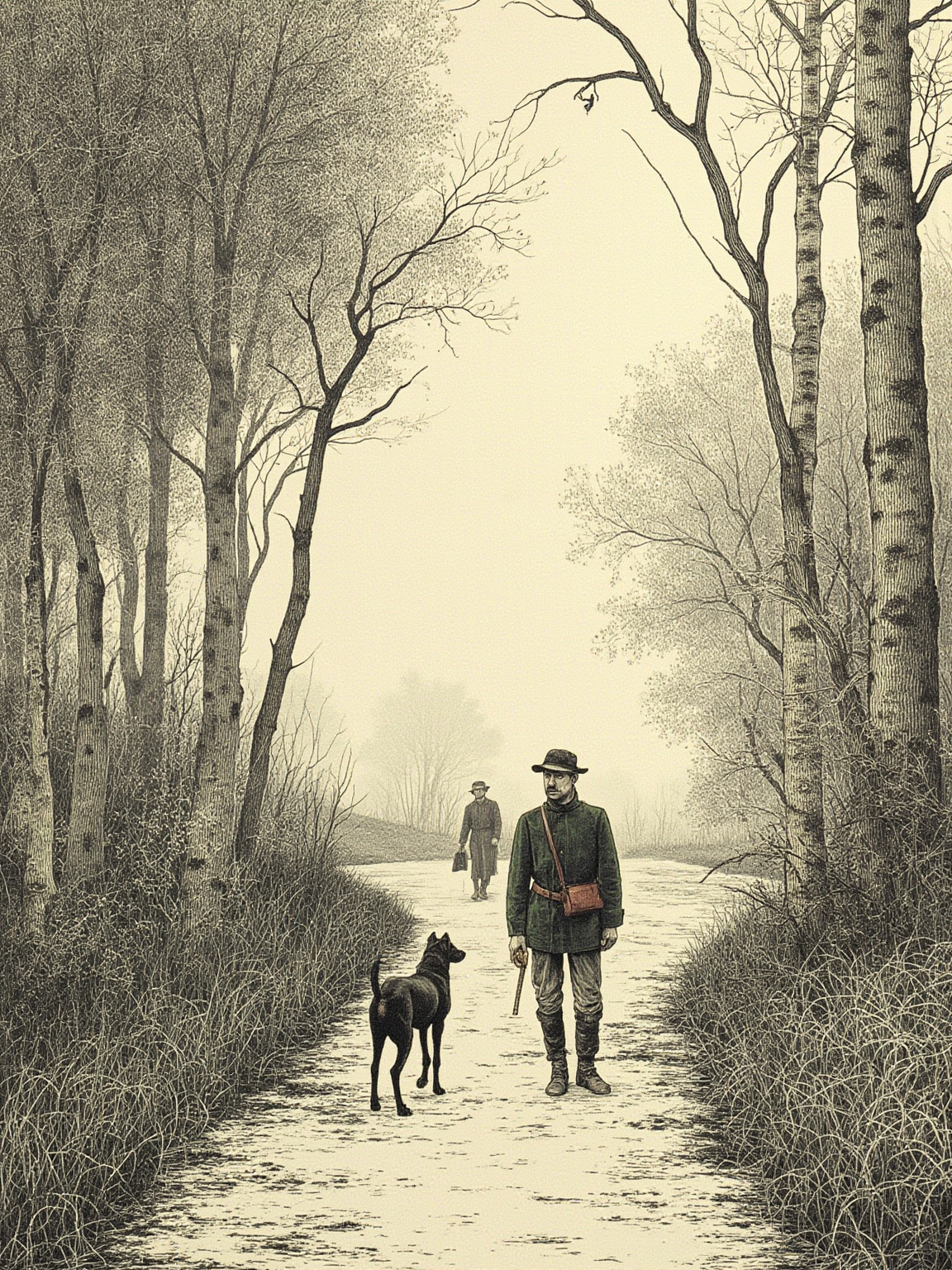
EPILOGUE: THE FOREST AND THE STEPPE XV TATYANA BORISSOVNA AND HER NEPHEW Give me your hand, gentle reader, and come along with me.
伸出你的手,温柔的读者,随我走吧。
原文金句 · 尾声 · 森林与草原
What Kind of Book Is This, Really
Turgenev, the mid-nineteenth-century Russian writer, finished this book in his thirties. It landed on the Russian literary scene in the early 1850s like a dull, heavy blow -- ahead of even the mature work of Dostoevsky and Tolstoy, it was the first time literature put serfs at the center of Russian fiction as people with full inner lives, not scenery. Its form is unusual too: not a novel, but some two dozen independent first-person sketches, each standing alone yet echoing the others, all strung together by the same hunter-narrator. It is remembered partly because Tsar Alexander II is said to have wept reading it, and the book was later credited as one of the literary forces behind the abolition of serfdom in the early 1860s -- that claim is a widely repeated piece of literary lore rather than settled history, but it says enough about how much weight the book carried at the time.
Who Is Speaking, and Who He Sees
There is only one voice in the whole book -- the unnamed nobleman hunter. He carries no obvious feeling, preaches nothing, judges no one; he talks to whoever he meets, and afterward sets that person down on the page with real care. Beside him, again and again, is a serf hunting companion named Yermolai, poor as a church mouse but a dead shot with a gun, and the two men's rambles hold the whole book together. Then there are the figures who flash past and never quite leave you -- Khor, shrewd as an independent small farmer; Kalinich, gentle as the forest itself; Yakov, whose voice in the tavern sounds like something not of this world; Lukerya, paralyzed in bed for years; Pavlusha, the boy who tells ghost stories at the night watch. These are not minor characters. They are the real protagonists of the book. The setting is Oryol province in mid-nineteenth-century Russia -- birch woods, oak groves, marshes, riverbanks, a landowner's estate here, a village of serf log huts there. People can still be bought and sold, marriages can still be broken up at a master's word, and all of it is still perfectly legal; the abolition of serfdom is roughly a decade away. This stretch of countryside is the book's only stage.
Chapter One: Two Equally Whole Men
Turgenev shows his hand right at the start. In "Khor and Kalinich," the hunter lodges with the same peasant household and meets two very different men. Khor is shrewd, practical, a born calculator, running his own household like a half-independent little estate -- even the Tsar, the story implies, would have to give him his due. Kalinich is the opposite: gentle, absorbed in nature, keeping bees, gathering herbs, believing in things half mystical, a man who seems to live just outside the ordinary world. The two are close friends. Turgenev's method here is restrained to the point of coldness: he never compares them, never says which one is better, just lays out the details of each man's day from morning to night and lets you arrive at the conclusion yourself -- these are two equally whole, equally worthy human beings. What's worth noticing in the craft: he never writes anything as blunt as "serfs are people too." He simply lets one character live through a full day.
Chapter Two: Lovers Torn Apart
The heaviest blow in the whole book is hidden inside the story of Yermolai, the hunter's companion. Poor as he is, Yermolai never blinks when he's hunting a fox, but he has never stopped thinking about a woman he once loved. They were meant for each other, but the landowner's wife found the girl too pretty and had her torn away from Yermolai, then sold off to a miller living far away. Years later the two run into each other by chance at the mill, each married to someone else by now, with nothing left to say. Turgenev writes the scene with almost no adjectives, no accusation, nothing but action and silence -- she sits down, then stands up again; he smokes, she coughs. This bare, unadorned restraint is the most devastating technique in the entire book.
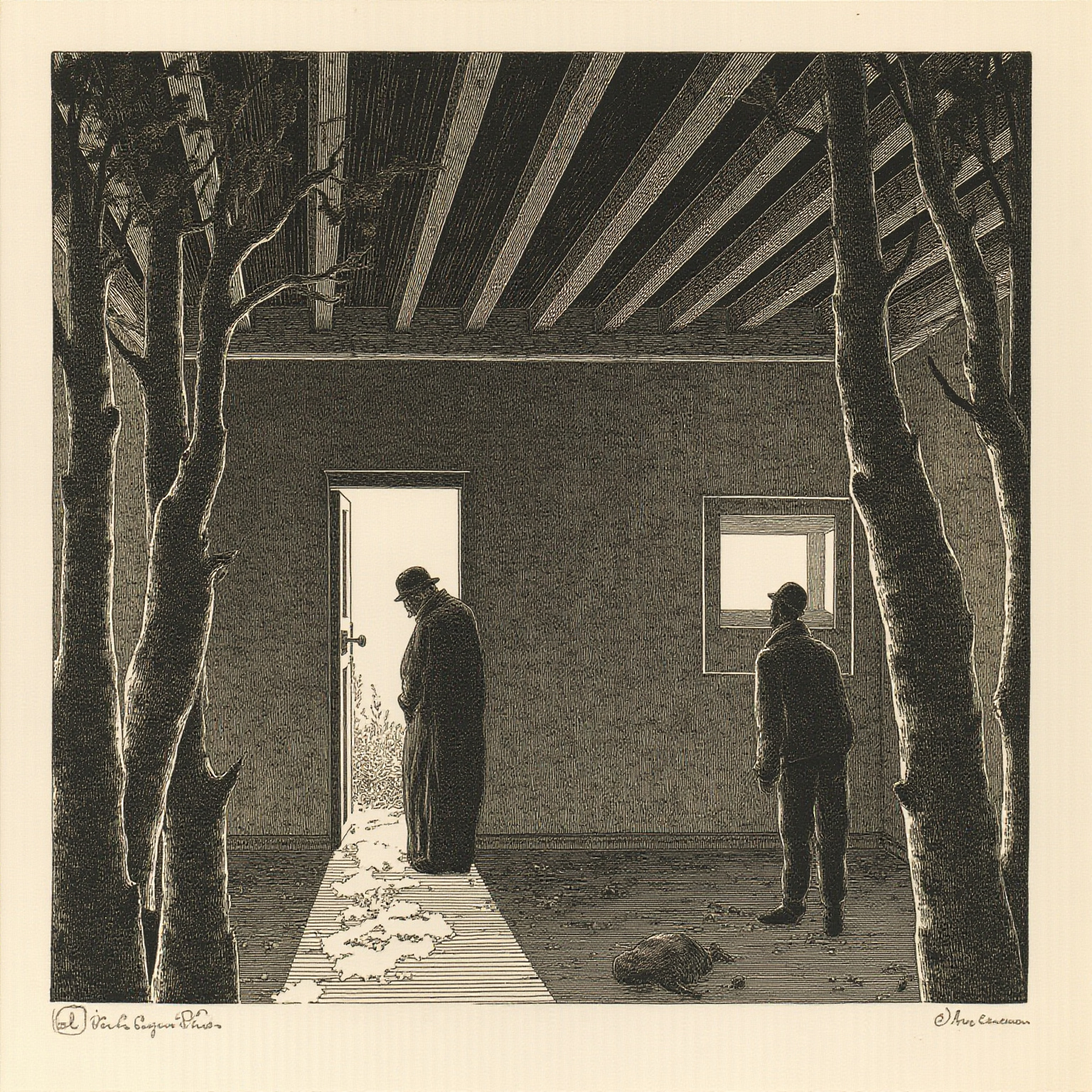
What especially struck me in him was the combination of a sort of inborn natural ferocity, with an equally inborn generosity--a combination I have never met in any other man.
他身上最让我惊异的是那种天生的原始凶悍与同样天生的豪爽合为一体——这样的组合我在任何人身上都不曾再见。
原文金句 · 叶尔莫莱与磨坊主妇
Chapter Three: The Singing Paper-Mill Worker
"The Singers" is the warmest piece in the whole collection. In a village tavern, a singing contest breaks out among the serfs, the prize a rooster and a silver ruble. One contestant, a man named Yakov, looks so shabby and beaten-down -- like a paper-mill hand who's taken one too many blows -- that nobody expects anything from him when he sits down. Then he opens his mouth to sing, and the whole room goes quiet. What he sings is a lament that holds a single high note from start to finish, and the rough, drinking, jeering crowd finds itself in tears without quite knowing when it happened. The contest ends, Yakov wins his silver ruble, walks straight out and trades it for drink, and by the next day he is that same shabby, luckless man again. Turgenev isn't writing this scene to prove some grand point about art rising from the common people -- he is putting right in front of you how badly that depth of soul fits the rags the man is wearing.
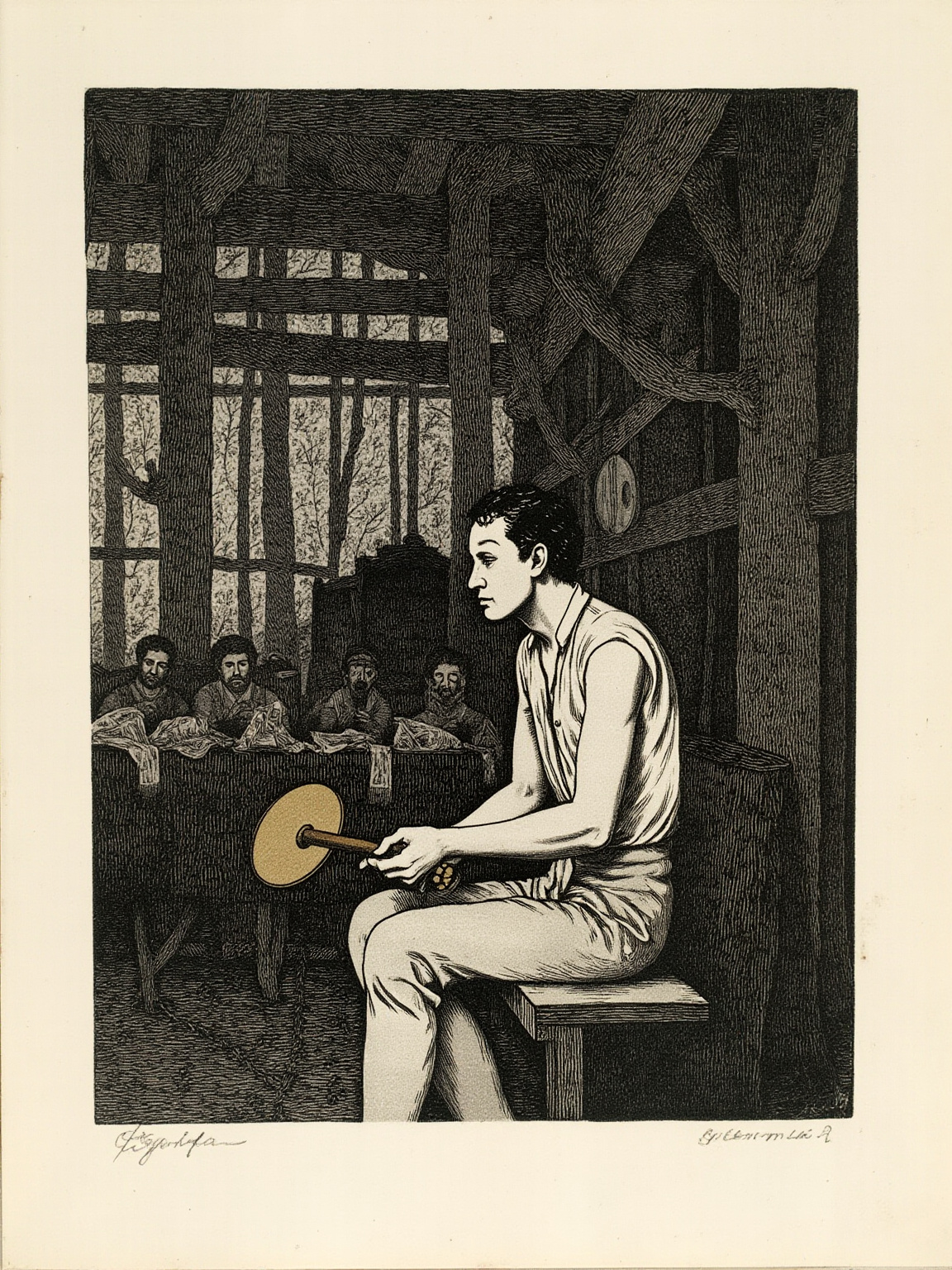
A spirit of truth and fire, a Russian spirit, was sounding and breathing in that voice, and it seemed to go straight to your heart, to go straight to all that was Russian in it.
一种真理与火焰的精神,一种俄罗斯精神,在那声音里响彻、呼吸,直入你的心底,直入你心底所有俄罗斯的东西。
原文金句 · 歌手
Chapter Four: The Tyrant in a Tailcoat
If "The Singers" is warmth, "The Bailiff" is a blade. A landowner named Penochkin lives on a handsome estate, wears a tailcoat, speaks French more fluently than Russian, and is unfailingly gracious to guests -- impeccably civilized. The hunter visits, and the dinner table is all pleasant company. The next morning, walking the grounds, the hunter sees Penochkin at a distance giving instructions to an overseer -- in a tone as flat as if he were discussing the weather -- ordering some serf dragged off and flogged. A few words, no anger in his face, no raised voice, as casual as ordering a dish off a menu. What makes Turgenev's writing here so chilling is that he never turns Penochkin into a villain. He simply shows you that there is no break at all between this man the night before and this man the next morning -- courtesy and cruelty are two sides of the same skin, and the man himself doesn't feel any contradiction in it.
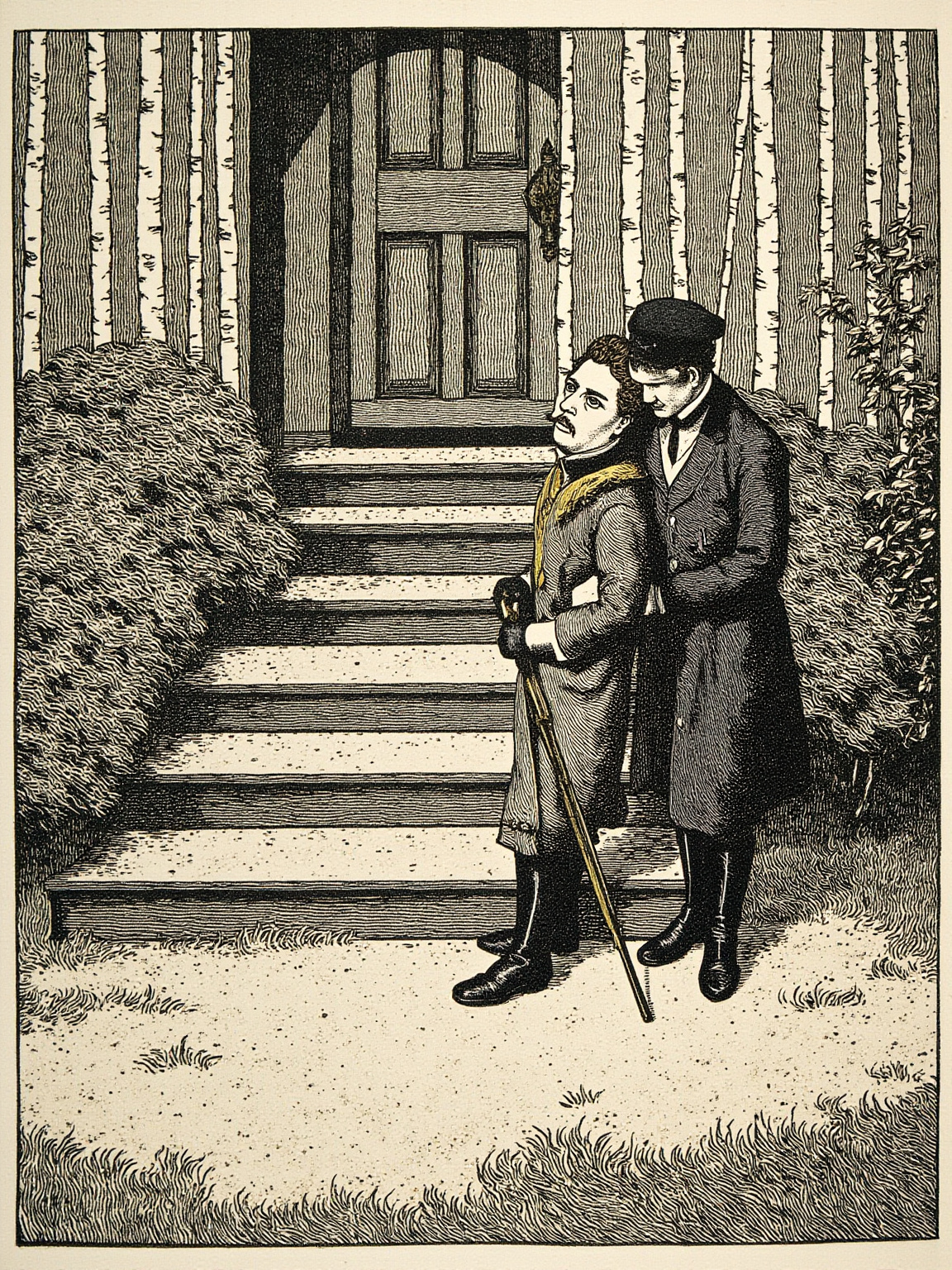
To be sure, you're not a fool--not altogether a mere rustic, so to say; and your mother, too, wasn't always a peasant.
说真的,你可不是个傻瓜——毕竟不完全是个乡下土包子;再说,你母亲也不是一直是农奴。
原文金句 · 总管
Chapter Five: The Woman Who Has Lain There for Years
"A Living Relic" is the quietest and heaviest piece in the book. Lukerya was once the prettiest girl in the village; after an accident she has been paralyzed for years, barely able to move, curled up on a bed in a small hut. The hunter comes to see her, and she doesn't complain, doesn't weep -- she simply talks, calmly, about the old days, about the weather, about the sister-in-law who looks after her. She is thin to the point of transparency, yet there is an uncanny brightness about her. What makes Turgenev's writing so devastating here is that he never gets angry on your behalf -- he simply makes you look at this woman, and gives you nowhere to look away to. It is the longest, steadiest gaze the book gives to the dignity of suffering.
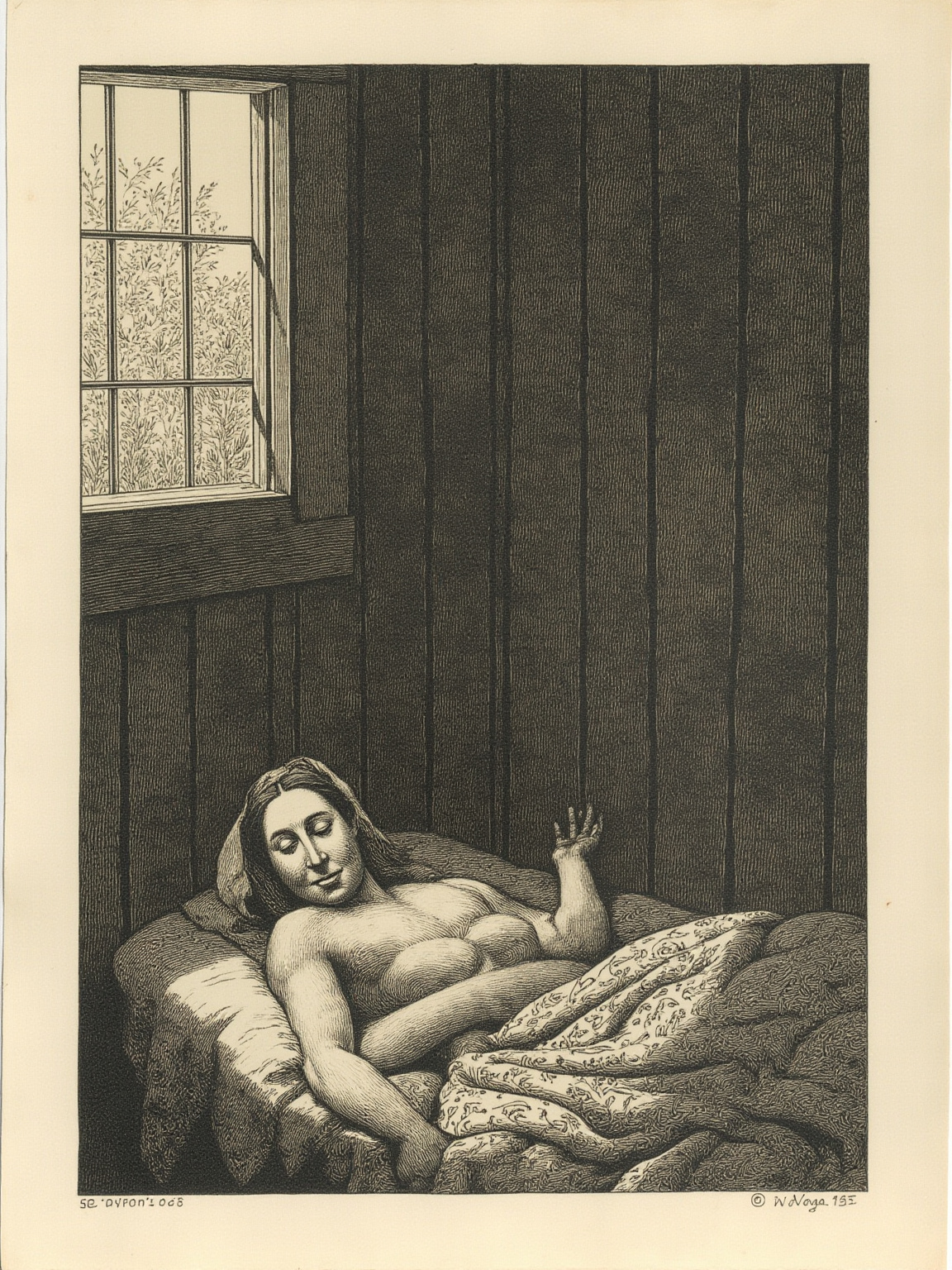
I was just about to get up and try my luck again when suddenly my eyes fell on a motionless human figure.
我正要起身再去碰碰运气,却忽然瞥见一个一动不动的人影。
原文金句 · 活尸
Chapter Six: The Boy by the Campfire
"Bezhin Meadow" feels, in mood, almost like a chapter from a different book -- none of the political edge of "The Bailiff," none of the grief of "A Living Relic," just one quiet summer night. The hunter, lost on a night hunt, wanders into an open meadow ringed with birches and comes upon a group of peasant boys keeping watch over the horses, gathered around a campfire trading country ghost stories. One of them, a boy named Pavlusha, is the steadiest of the group -- he tells his ghost stories without a trace of fear, which only makes the other boys hunch their shoulders as they listen. Then Turgenev does something he rarely does anywhere else in the book: in the story's final lines, in a few flat, calm sentences, he adds a postscript -- Pavlusha later fell from a horse and died. A boy who should have had a whole life ahead of him, dismissed in a single light stroke of the pen. It is the book's most direct note of grief for a child's fate.
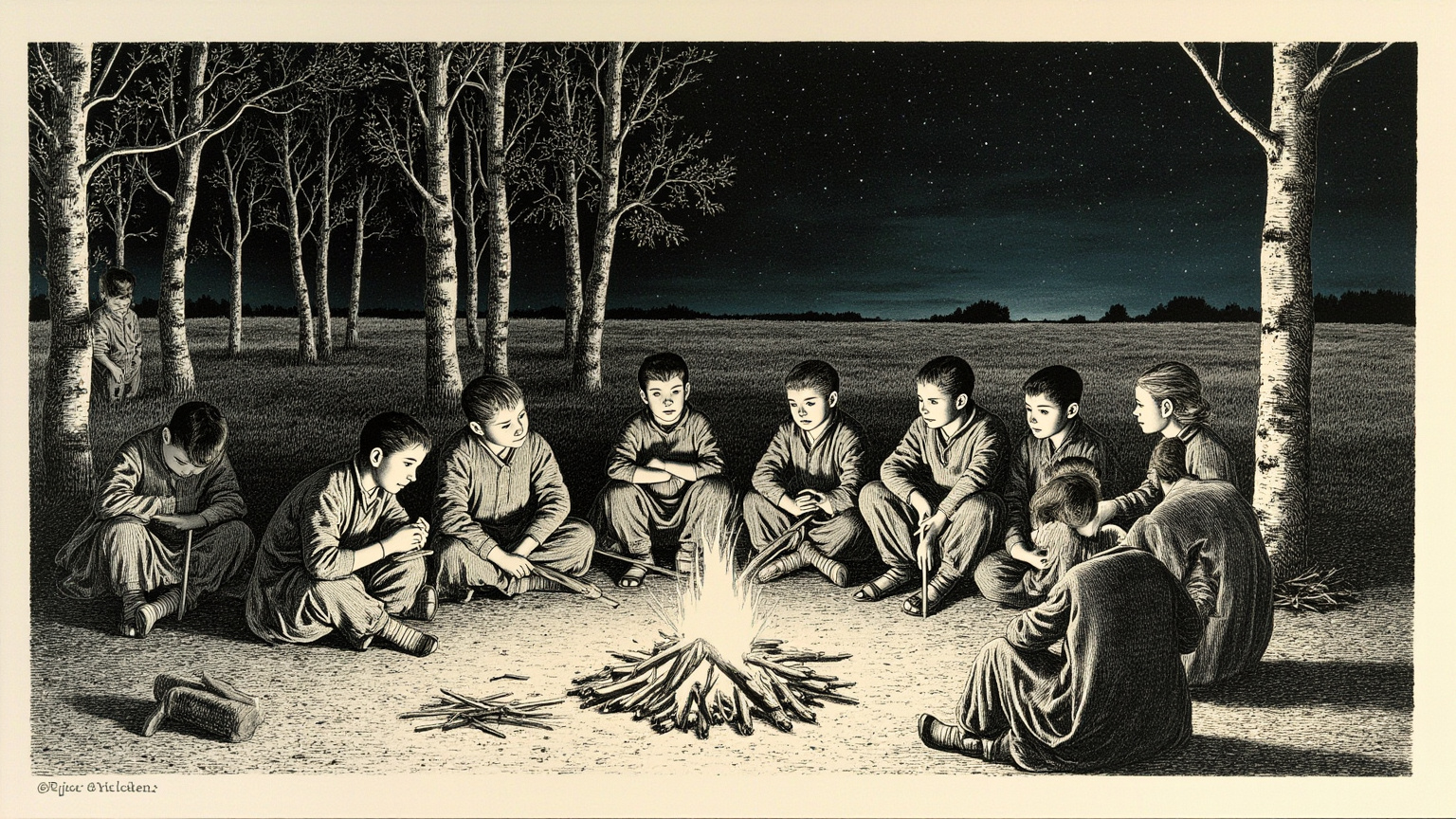
'And you're not sleepy either, are you?' 'I'm never sleepy.' 'How's that?' 'Oh!
“你也不困吗?”“我从来不困。”“那是怎么回事?”“唉!”
原文金句 · 白净草原
What This Book Is Really Saying
Taken together, the two dozen-odd sketches are doing something genuinely hard -- without ever raising a word of moral preaching, each piece writes a serf as a complete human being: Khor with his reason, Kalinich with his dreaming, Yakov with his artist's soul, Lukerya with her dignity, Pavlusha with a future that never came. In law these people are property; on Turgenev's page, each one is a distinct soul. That approach carries more force than any denunciation could, because it asks nothing of your pity -- it simply makes you admit they are your equals. As craft, the book more or less invented a form now called the linked short-story cycle: each piece stands on its own, yet together they echo one another like a scroll unrolling. The wandering hunter-narrator is the spine holding the whole thing together, and the moment he stops to really look at someone is the moment the book actually begins.
Why It's Still Worth Reading the Text Once You Know the Plot
The best reason to open the actual text is Turgenev's prose style, which is so unobtrusive it almost seems not to be there at all. Knowing the plot summary is one thing, but you still haven't smelled the mist rising off the marsh at dawn, haven't heard the silence that falls the instant Yakov opens his mouth in that tavern, haven't felt the cold run down your back with the night air as the hunter sits by the campfire listening to ghost stories. Turgenev writes every scene as a place you can actually walk into -- the morning light in the birch wood, the light falling across the window by the paralyzed woman's bed, the stifling propriety hanging over the flowers in the landowner's garden. None of that comes alive anywhere except in the actual prose.
Turgenev's sharpest move in this book is that he never once pleads a serf's case for them -- he simply looks at each one carefully, and writes them as specifically as your own neighbor.
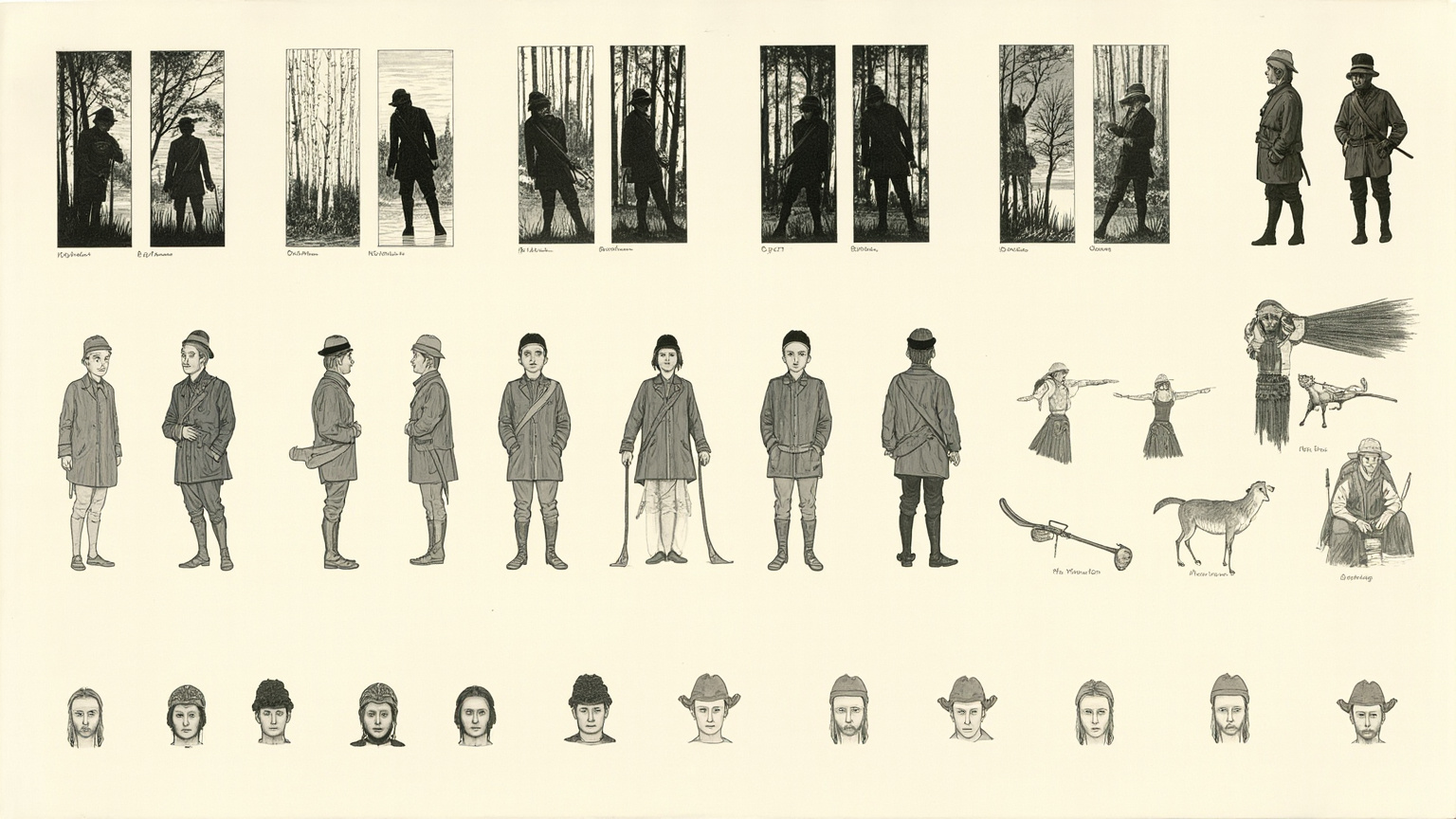
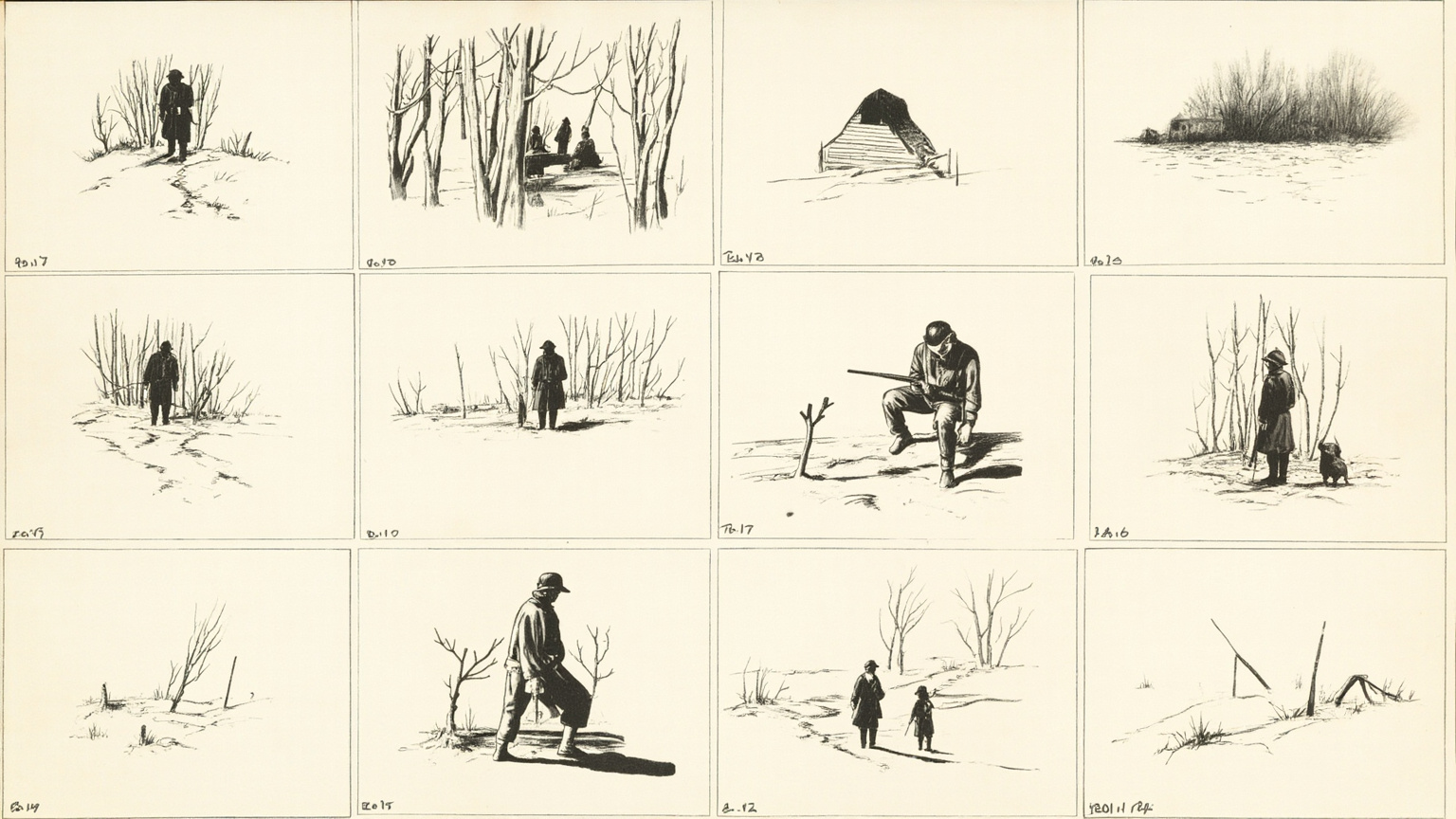
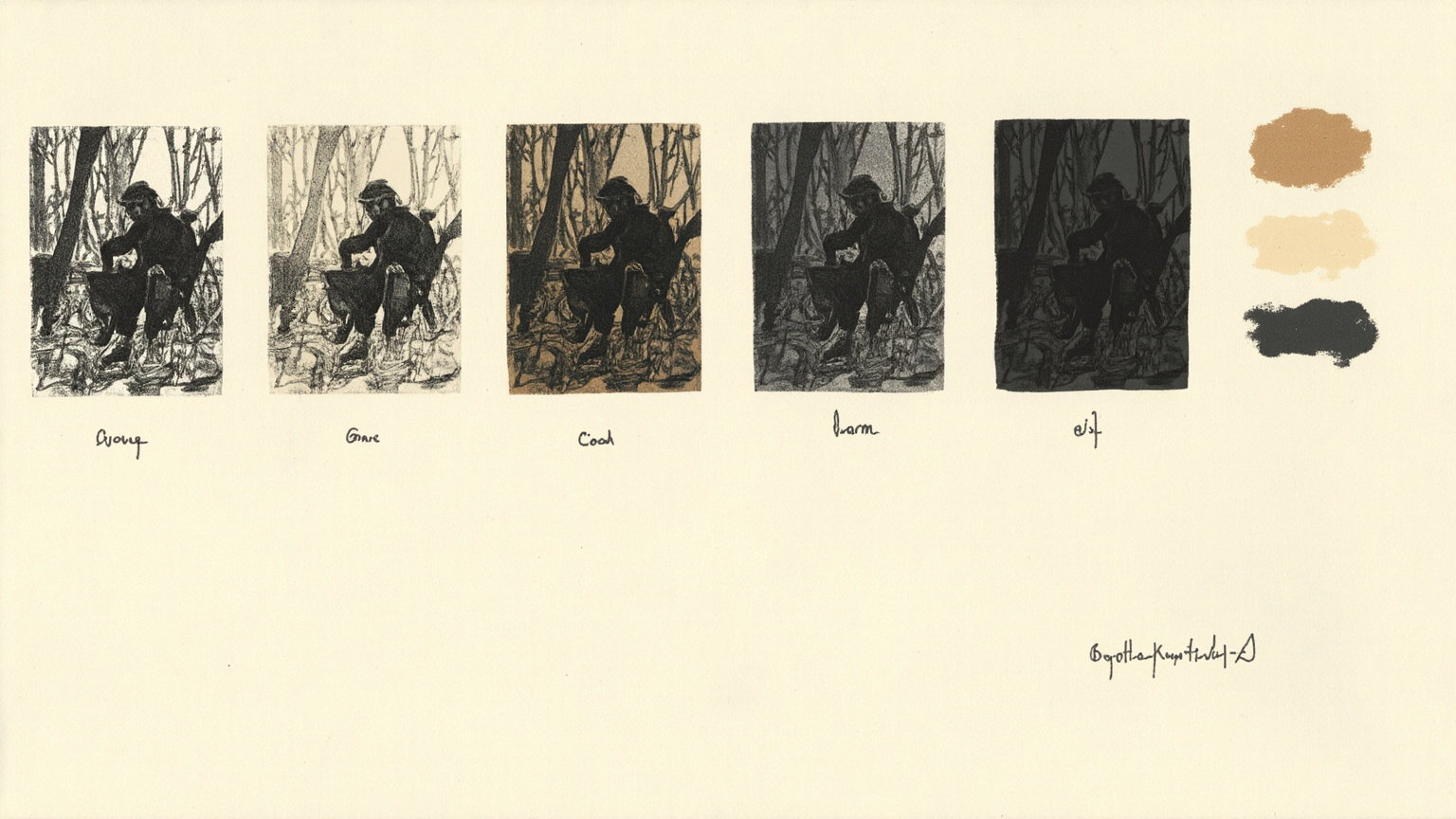
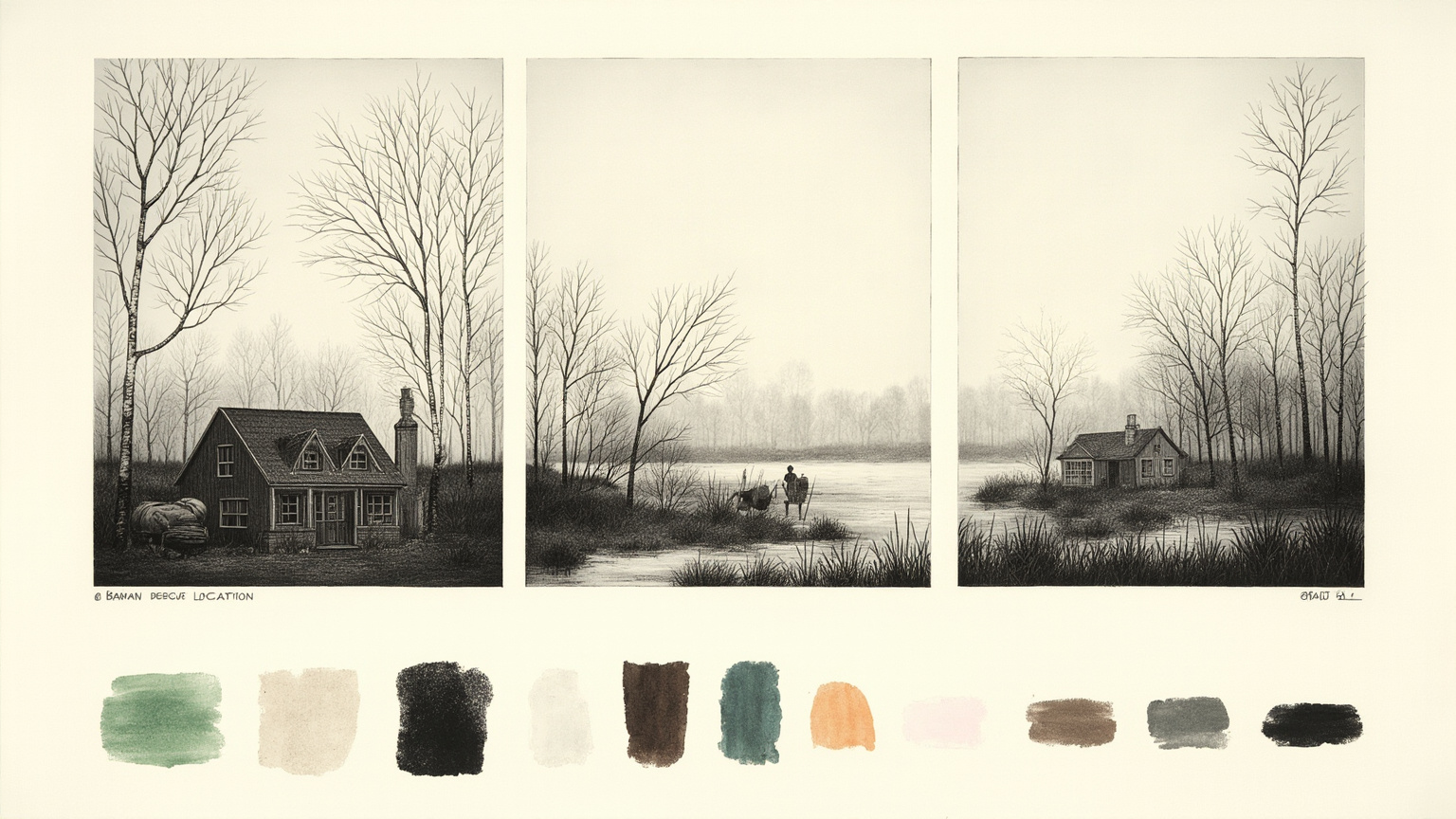
Art Direction4 plates
Before the guide was written, this book got a visual foundation — every illustration you just read grew out of it.