A Stone by the Wayside (Robo no Ishi) · Companion Guide
路傍之石
一个踢不倒的少年,攥着算盘与书,从小镇的杂货铺一路走到东京夜校的灯火里——路还没写完,但石头已经在动了。
The Stone by the Wayside
A dirt road, a few low houses, and by the roadside a dusty gray lump of stone. Kick it once and it rolls half a foot; kick it again and it rolls another half foot. That is the opening scene of Yamamoto Yūzō's A Stone by the Wayside — a boy of thirteen or fourteen stands at the roadside, staring at the stone nobody wants, and a thought surfaces: even a stone by the wayside gets kicked into motion.
What the Book Is Actually About
A Stone by the Wayside ran as a serial from 1937 to 1939, and it remains one of the most talked-about works in modern Japanese fiction for young readers. It follows a poor boy across the late Meiji and Taishō years, finding his own way through a shop, a print works, a Tokyo boardinghouse, and night school. The book has held a fixture's place in Japanese language textbooks for decades — nearly anyone who went through Japanese primary education has met the line about the stone by the wayside getting kicked into motion. Yamamoto Yūzō (1887-1974) had already built a career as a playwright and novelist and was past fifty when he wrote it; even at publication, this book for young readers stood out as a coming-of-age story that refused to sweeten anything for its audience.
The People and Their World
The protagonist is Goichi, a sharp, bookish boy from a poor family in a small town. His father had once kept the household afloat, but a gambling habit ate through whatever they had, and things tightened year by year. His mother is the kind of woman who holds on by sheer will, and sending her son away is what costs her most. At thirteen or fourteen, Goichi is apprenticed out — first sweeping floors, keeping accounts, and taking scoldings at the town's general store, then moving to a print works to haul type, wipe down machines, and stay up nights to make deadline. The print works' foreman is the old-school kind, loud, and certain that once you're through the door, you belong to the master. Later, the story sends Goichi alone by train to Tokyo, working by day and studying at night school. The rules of this world are simple: rank is everything, and family standing and master-apprentice ties are the real currency. A poor boy who wants to rise has to pawn himself first, to a shop or a workshop, and climb up from sweeping floors and pouring tea.
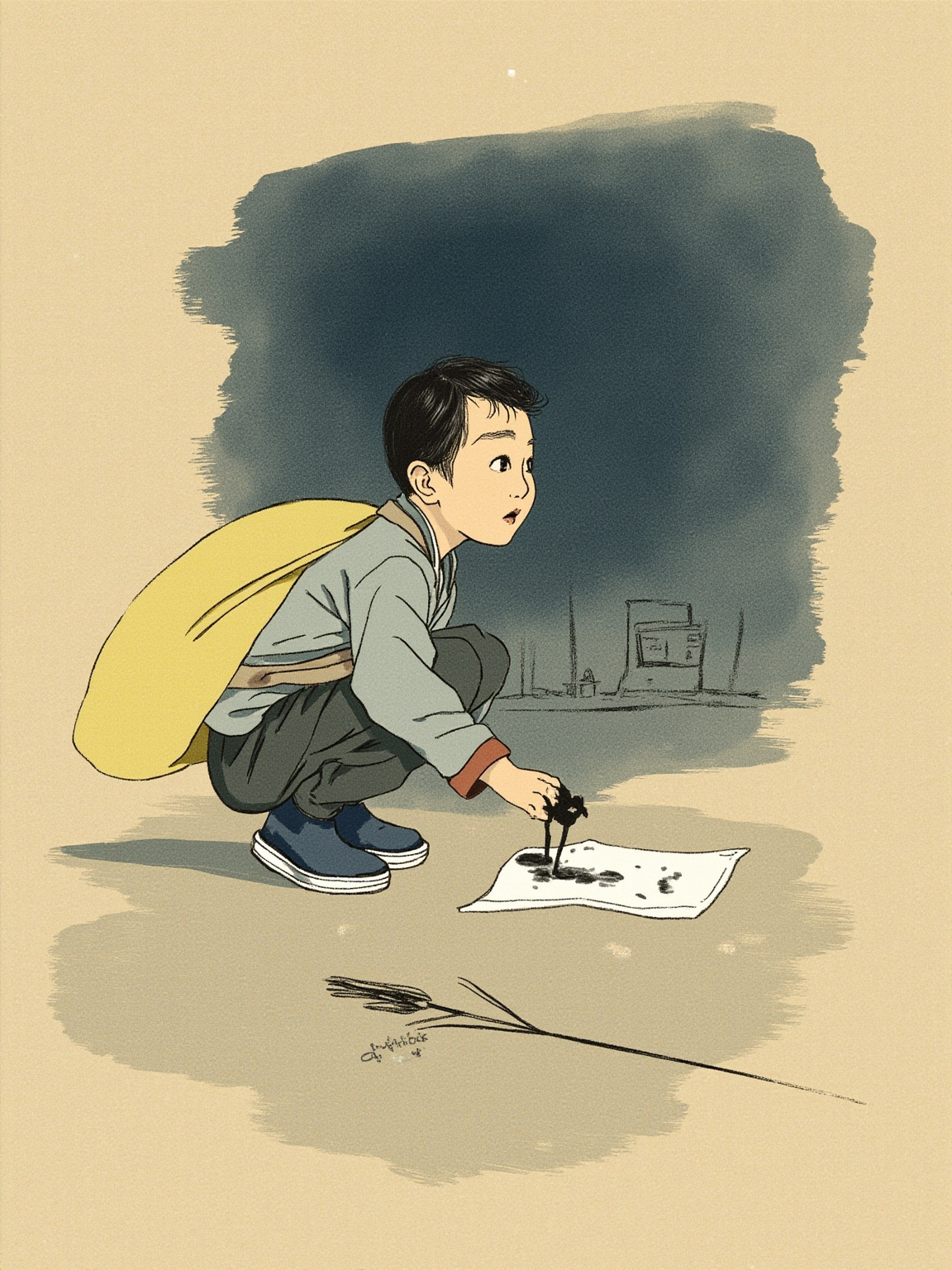
Even a stone by the wayside gets kicked now and then — and once kicked, it does move.
路傍之石,也会被人踢起。
金句 · 开篇第一章
A Stone Decides to Roll Itself
The book opens with that stone by the road. Goichi stands there staring at the gray lump, forgotten, moved only when someone passing by kicks it. Watching it, something unyielding rises in him: even a stone by the wayside gets kicked into motion. That is not a complaint, and it is not self-pity. It is a cold clarity, a boy seeing the shape of his own situation for the first time. Once his father's gambling took hold, the family slid from being somebody in town to being unable to hold on. Could he keep going to school? There was no money for it. His mother held out as long as she could, and in the end she sent Goichi off as an apprentice anyway, not for lack of love, but because she had nothing left to hold with. This is the first time Goichi is pawned away, and it is also the first time the stone rolls on its own.
Rules and Reckoning at the General Store
The town's general store is the first stop in Goichi's apprenticeship. Sweeping, bookkeeping, pouring tea, taking scoldings — day after day, under rules woven as tight as a net. The old-school master's creed is that once you're through the door, you belong to him: your time, your hands, your temper, all of it. Yamamoto writes this stretch with restraint. There is no lurid tale of a child abused, and no romance made out of poverty either, just a boy getting through one day at a time, swallowing his grievances, and building real skill with an abacus. I was a little surprised the first time I read this part: Yamamoto never sends some benefactor to discover Goichi at the store. What he writes instead is plain, unglamorous labor.
Ink and Type at the Print Works
The move to the print works brings a different kind of hardship. Hauling type, wiping down machines, staying up through the night to finish a print run — the work there demands not just muscle but endurance against sleep. The foreman is just as loud, and the apprentice is still expected to jump at every call. But the time isn't wasted: Goichi picks up real craft here, the groundwork for standing on his own later. More important, he never sets his books aside. He saves for them, studies in stolen minutes, and quietly grows sharper with both the abacus and the written word.
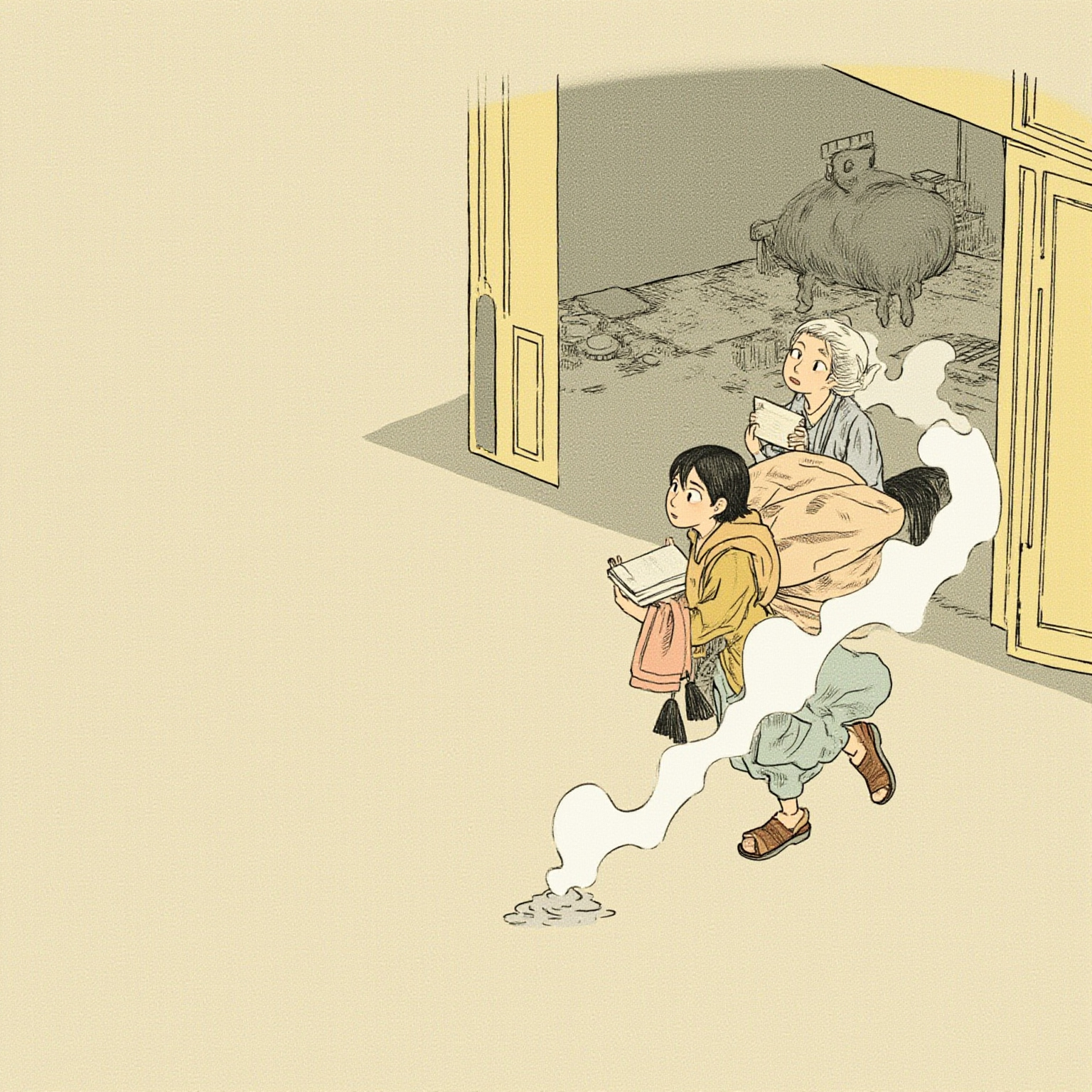
He carried the type boxes on shoulders still narrow as a boy's, and wiped the press until the oil blackened his palms — but his fingers, by lamplight, were learning to read.
搬活字的是少年的肩,擦机器的是发黑的掌心;可掌心里那盏灯底下,另有一双手正在学着认字。
金句 · 印刷厂章
A Train Carries Him to Tokyo
Neither the store nor the print works can hold him for good. He grits his teeth and makes a decision: to take a train to Tokyo alone. For a poor boy in that era, this is a rare and drastic move — no family money behind him, no connections, no one waiting at the other end. The train, trailing white steam, hauls him from his small town on Honshu all the way to an unfamiliar Tokyo, where he settles into a cramped boardinghouse, the kind where several men sleep to a room. He works by day and goes to night school after dark.
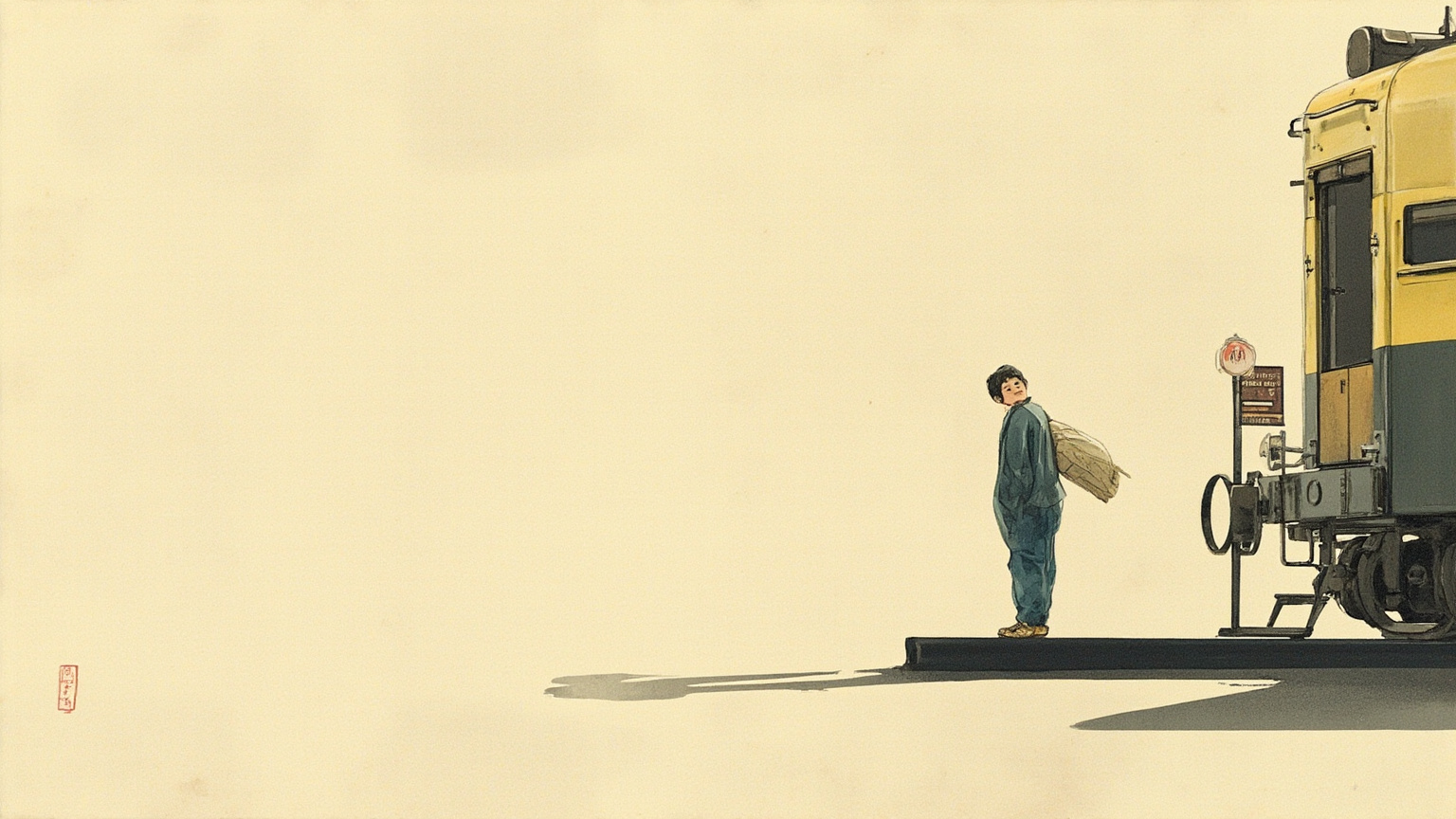
He boarded the train with nothing in his pockets but a few coins and a stubbornness no one at home could talk him out of.
他口袋里只剩几枚铜钱,和一份谁也劝不回的执拗,就这样上了火车。
金句 · 赴东京章
Another Way to Live, Found at Night School
The night school in Tokyo is the warmest light in the whole book. The teacher doesn't need to appear often — once or twice is enough — because he is the one who first shows Goichi that another way of living exists. In a world locked tight by family standing and master-apprentice bonds, this teacher opens a crack: reading is not wasted effort, and education is not an empty promise. For a boy shut out of formal schooling, night classes, self-study, and books are the one thing he can still earn for himself.
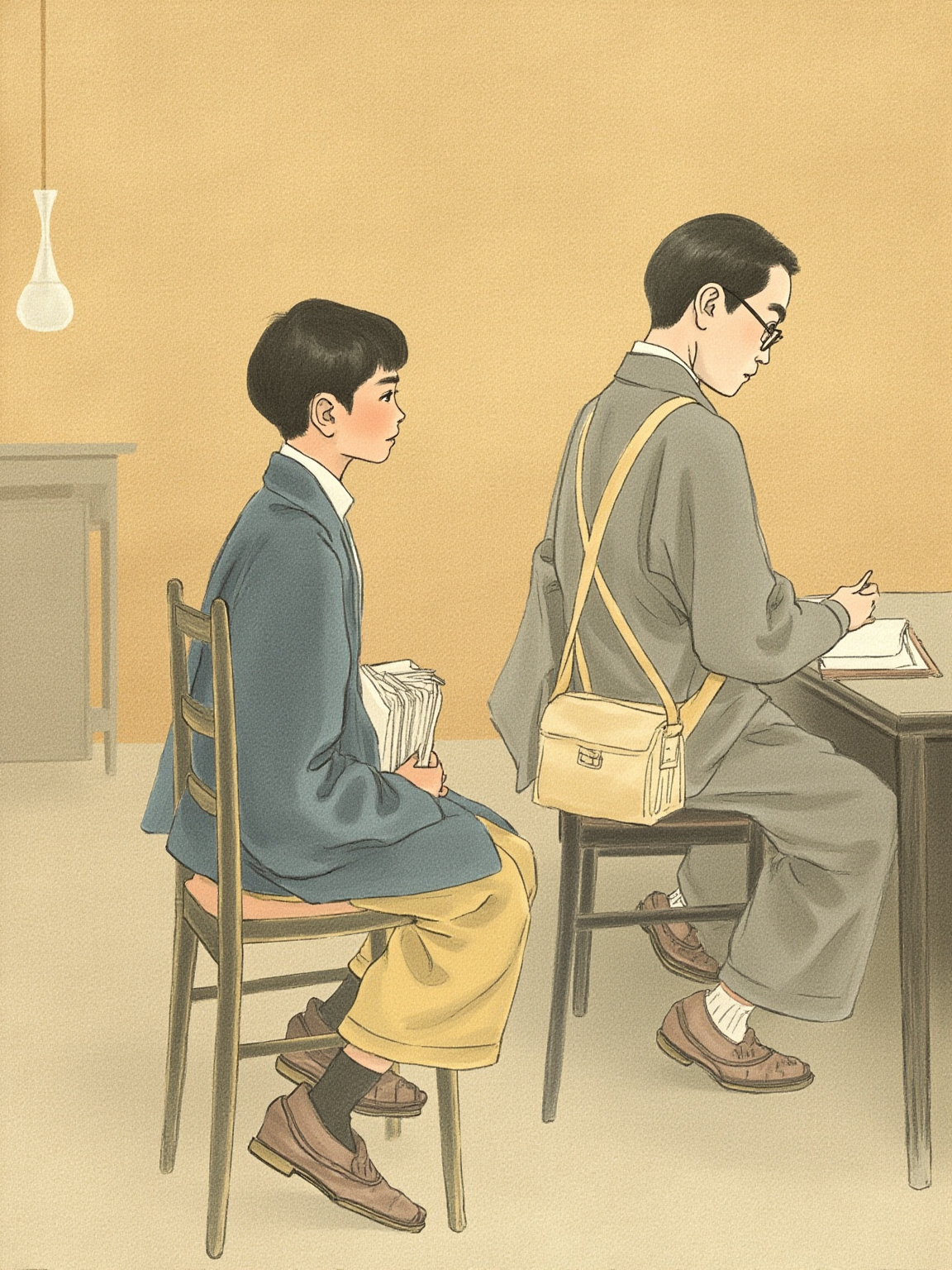
In that small classroom after dark, he learned for the first time that a man could live some other way than by being somebody else's apprentice.
在那间夜里的教室里,他才头一次知道:人,原不必一辈子做谁家的学徒。
金句 · 夜校章
Unfinished, and That Is the Point
The serialization ran into wartime censorship in 1939. Yamamoto refused to compromise, and he let the serial break off rather than rewrite it, so A Stone by the Wayside stops with Goichi still on the road, still moving forward. When it came out as a standalone volume in 1940, the ending still wasn't filled in. So what the reader is left with, at the end, is not a boy returning home in triumph, nor any tidy image of success. Just a stone still moving, still rolling on. That is the book's sharpest stroke: the road doesn't stop just because no one finished writing it.
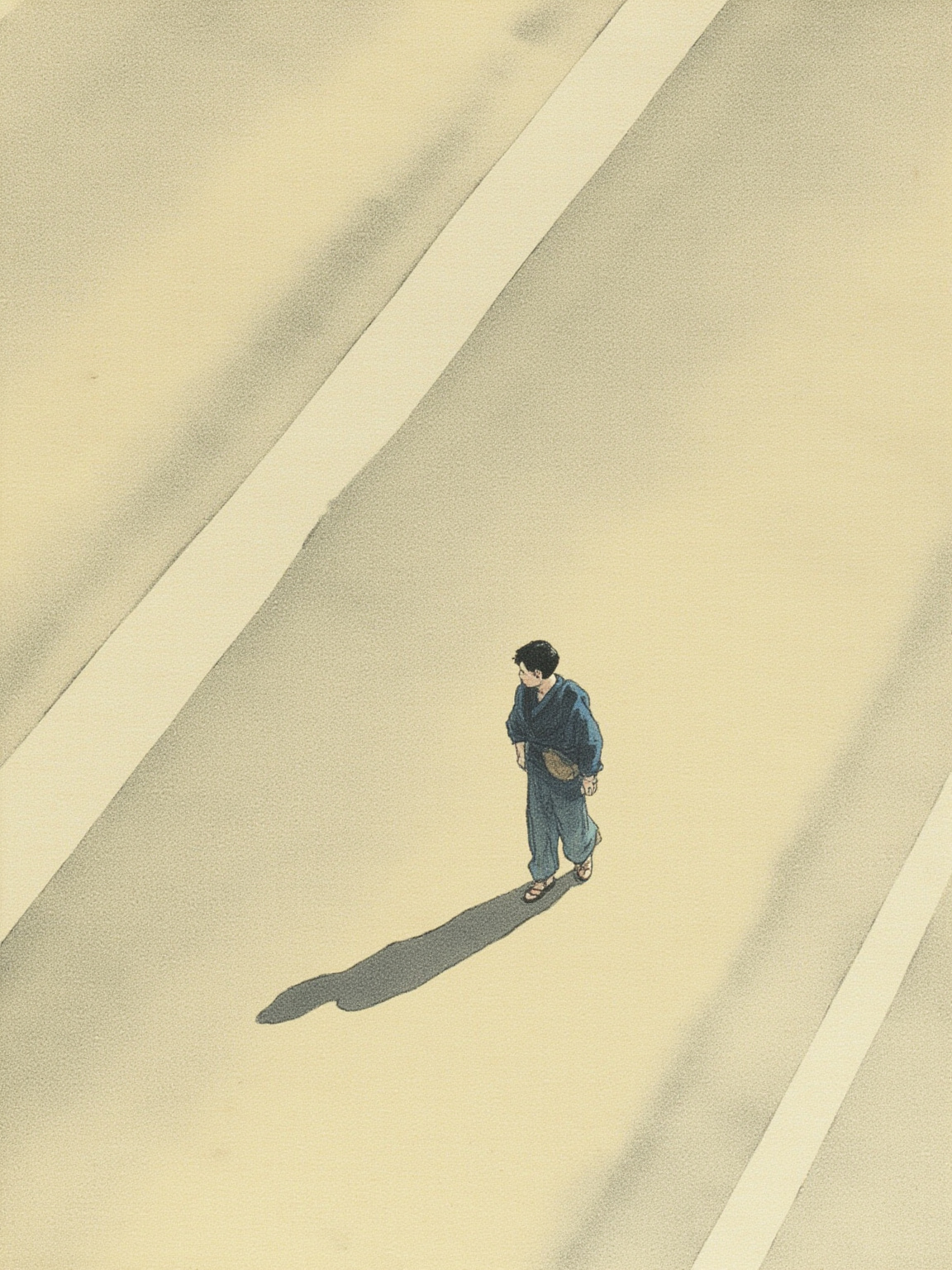
The road has not ended; the stone is still rolling. That is all the ending there is.
路没有尽头,石头还在往前走——这便是全部的结尾。
金句 · 末章 · 未完
What This Book Is Really Saying
The growth A Stone by the Wayside describes doesn't come from a fairy godmother or a well-placed patron. It comes from a stone by the road waking up cold and rolling itself. Yamamoto's restraint in writing poverty is the point: he doesn't turn hardship into scenery, and he doesn't turn it into shame either. Poverty here is the plain matter of getting fed, apprenticeship is plain labor, and Goichi's resistance is cool-headed rather than a complaint shouted at the world. That's exactly why this book keeps coming back into the conversation about Japanese fiction for young readers: it refuses to sweeten anything for its young audience, and hands over one cold line instead — no one rolls for you, you move yourself.
What makes this book so strong is admitting something most stories won't: that when a boy finally stands up, more often than not, no one is there to clap.
Why You Should Go Read the Real Thing
A guide is a map; the novel itself is the ground. Reading this piece tells you how Goichi turns from a stone into a stone that rolls itself, but only Yamamoto's original text lets you feel the temperature of that era: the smell of ink in the print works, the cold wind outside the night school windows in Tokyo, the boy's knuckles going white around his abacus. More than that is the unfinished ending: the story stops mid-road, with the stone still moving, and that sense of feeling complete without being finished is something no guide can carry over.
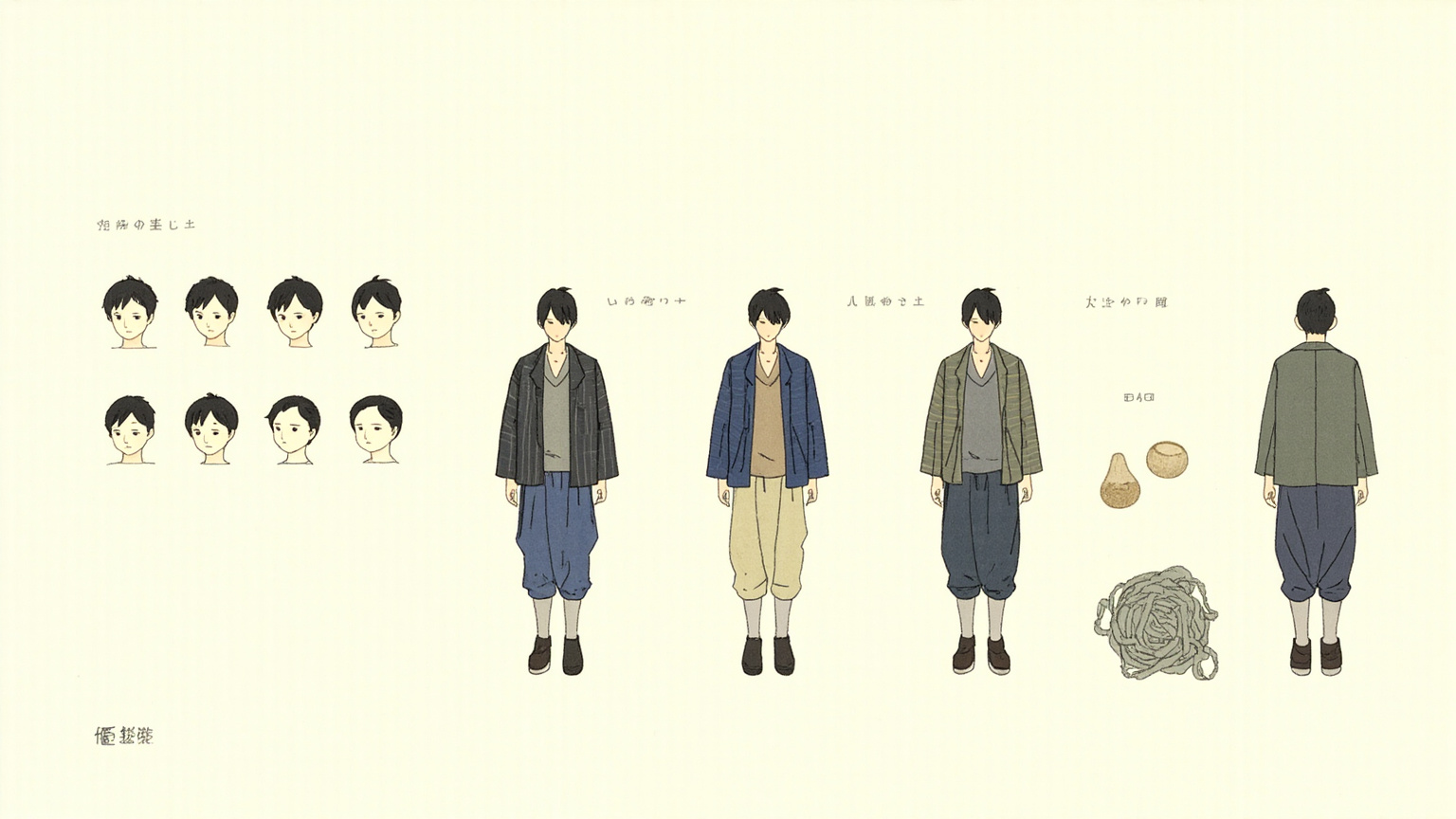
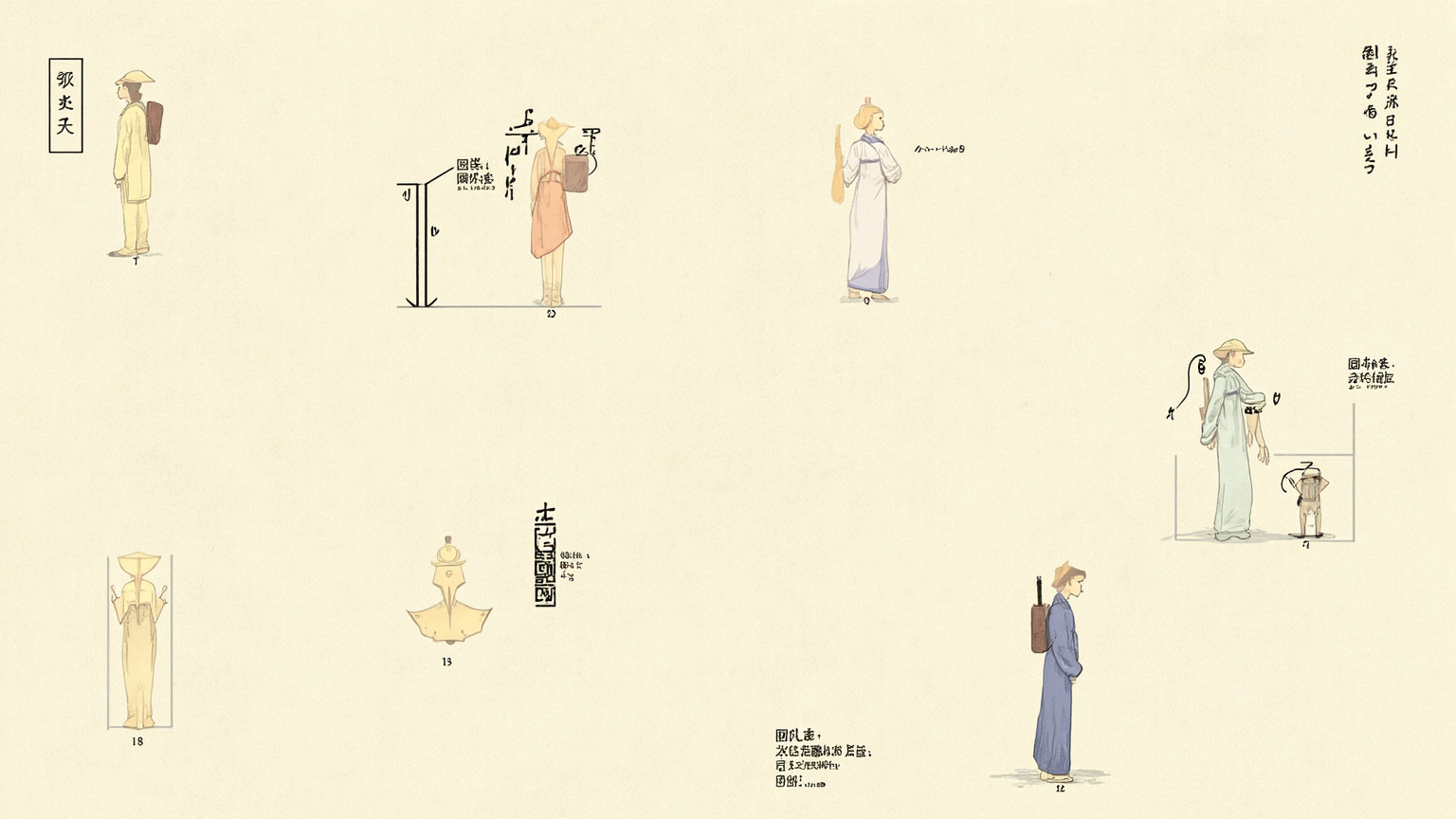
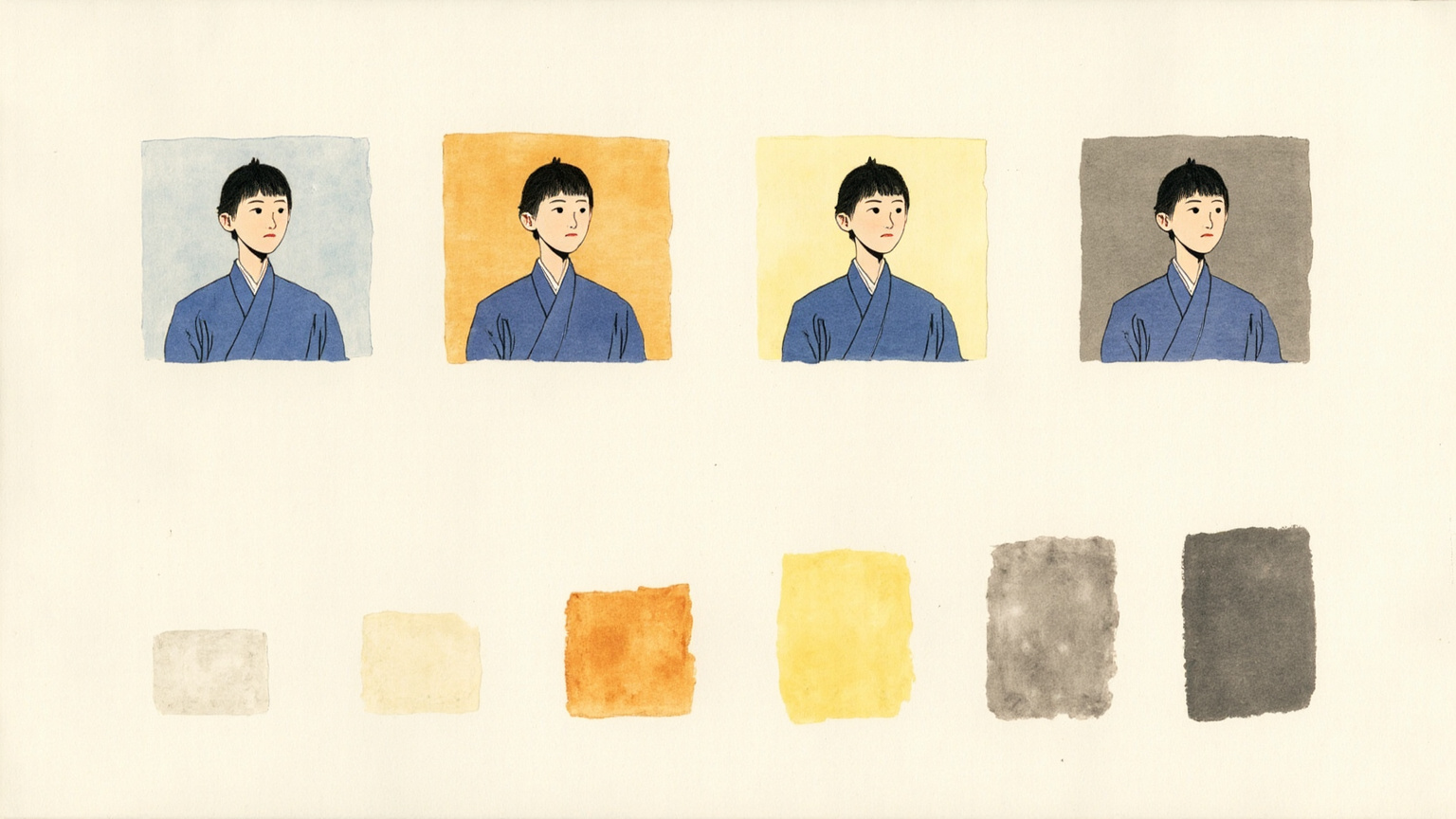
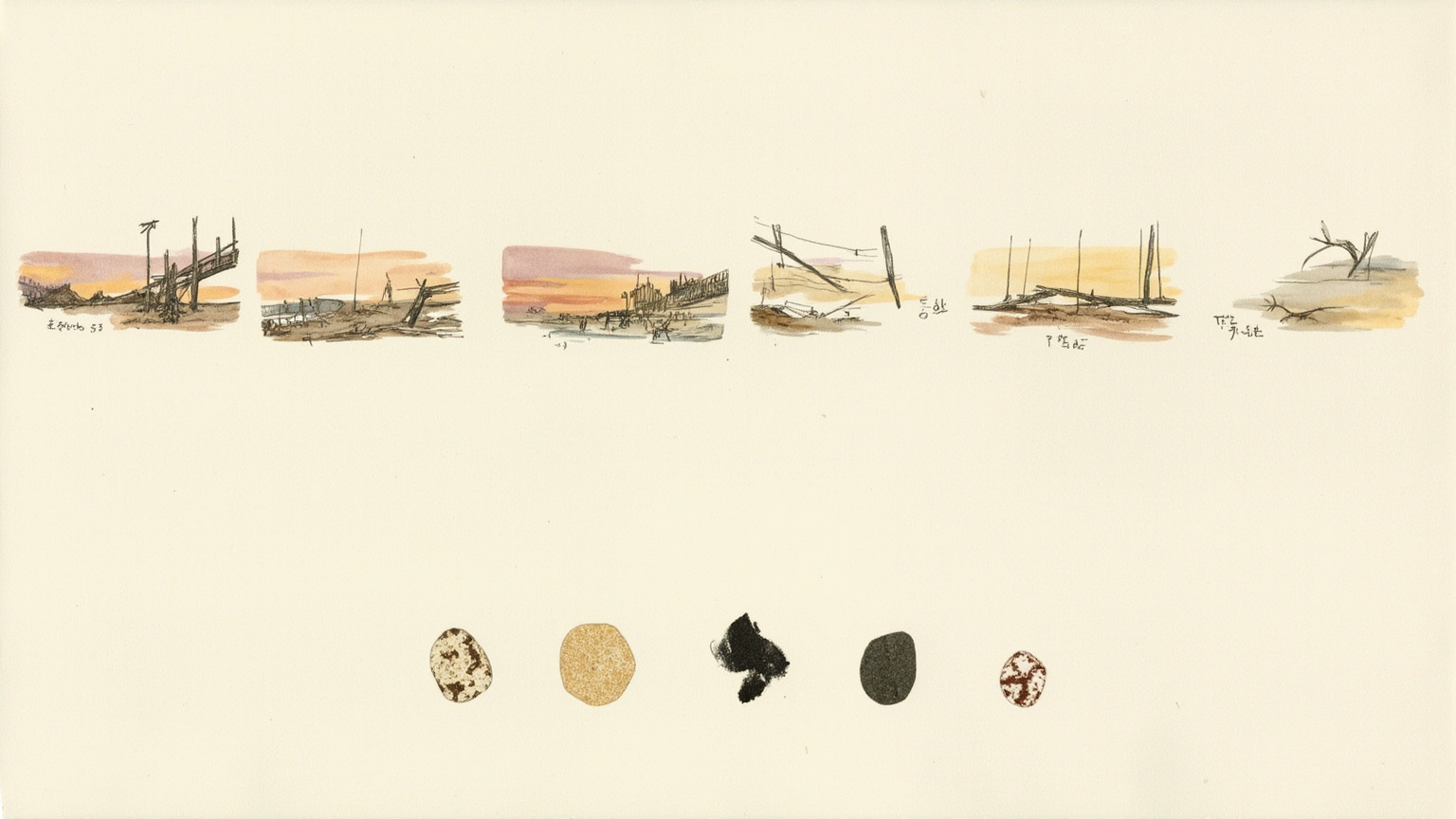
Art Direction4 plates
Before the guide was written, this book got a visual foundation — every illustration you just read grew out of it.