A Wizard of Earthsea · Companion GuideStories · Issue 00
A Wizard of Earthsea in 10 Minutes — A Goatherd's Shadow, and the Weight of One True Name
The 1968 fantasy with no war between good and evil, and a boy's lifelong pursuit of himself
Text and illustrations produced by the pipeline
ImaReadFolio 02 — 04
Prompt
Opening: The Shadow That Slipped Through the Door
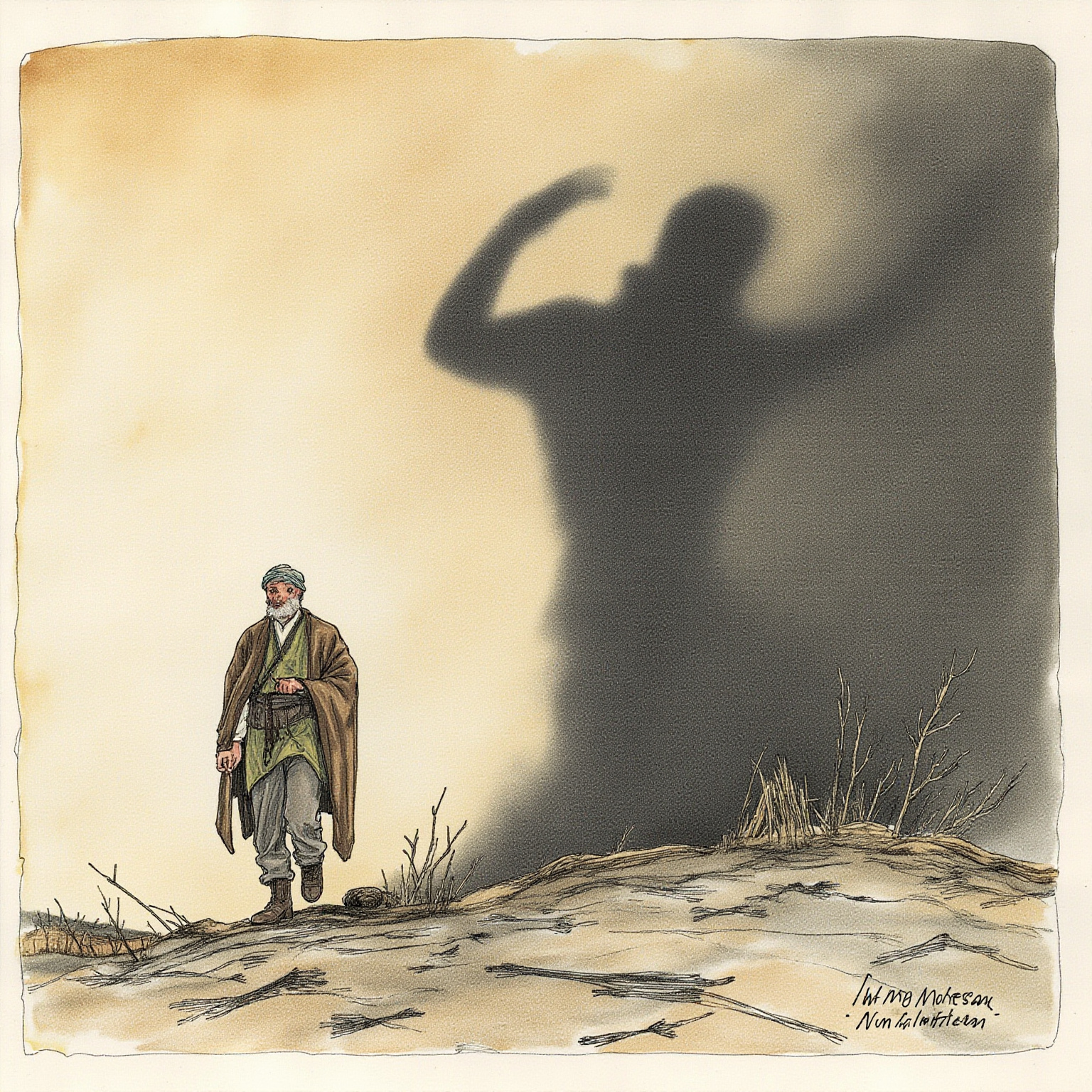
A shadow bolts out from between the doors. A goatherd boy called Sparrowhawk will spend half his life chasing it.
This is not a ghost story, and no dark lord arrives. The shadow has no fangs and no eyes — it is simply an absence of light and outline. It is a shred of Ged himself, leaked through the gap in the door of the dead that he tore open while showing off at Roke. It follows him from the school to the northern isles, from open water to his own bedside — the more he fears it, the larger it swells.
What Kind of Book Is This
Ursula K. Le Guin wrote A Wizard of Earthsea in the late 1960s. It stands with Tolkien and C.S. Lewis as a founding pillar of modern fantasy, yet of the three it reads least like fantasy: no war between good and evil, no glowing runes, and a magic system that is really a meditation on true names and balance. English-language fantasy readers return to it again and again; it is treated as the origin of every later school for wizards, and it is one of the few books of its year to make its hero dark-skinned without ever announcing it.
The book is short and the plot does not twist. What it has to say is simple: a man let a part of himself loose, and has to get it back.
ImaRead2
ImaReadFolio 03 — 04
Prompt
Prompt
ImaReadFolio 04 — 04
Prompt
Prompt
Art Direction4 plates
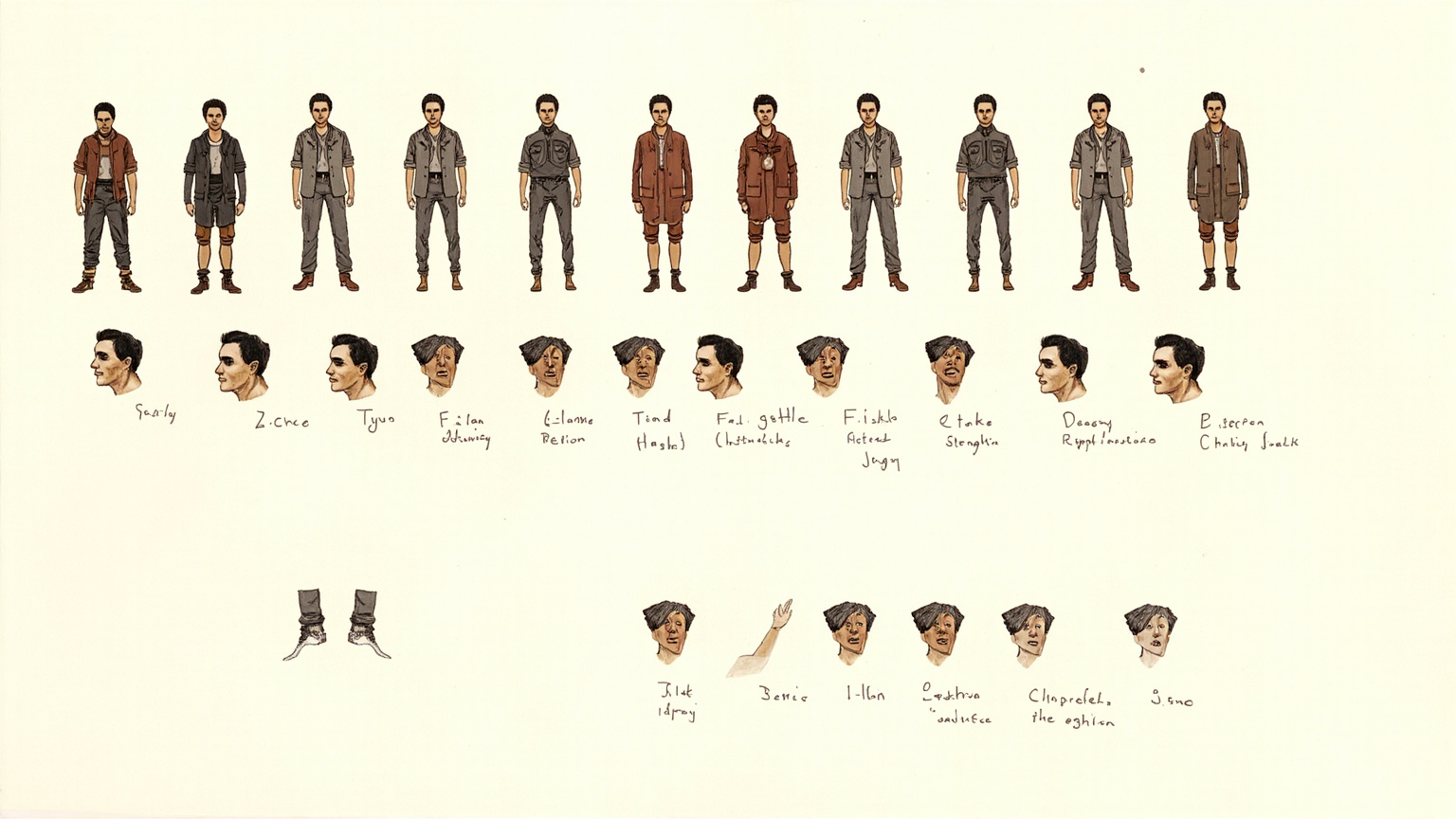
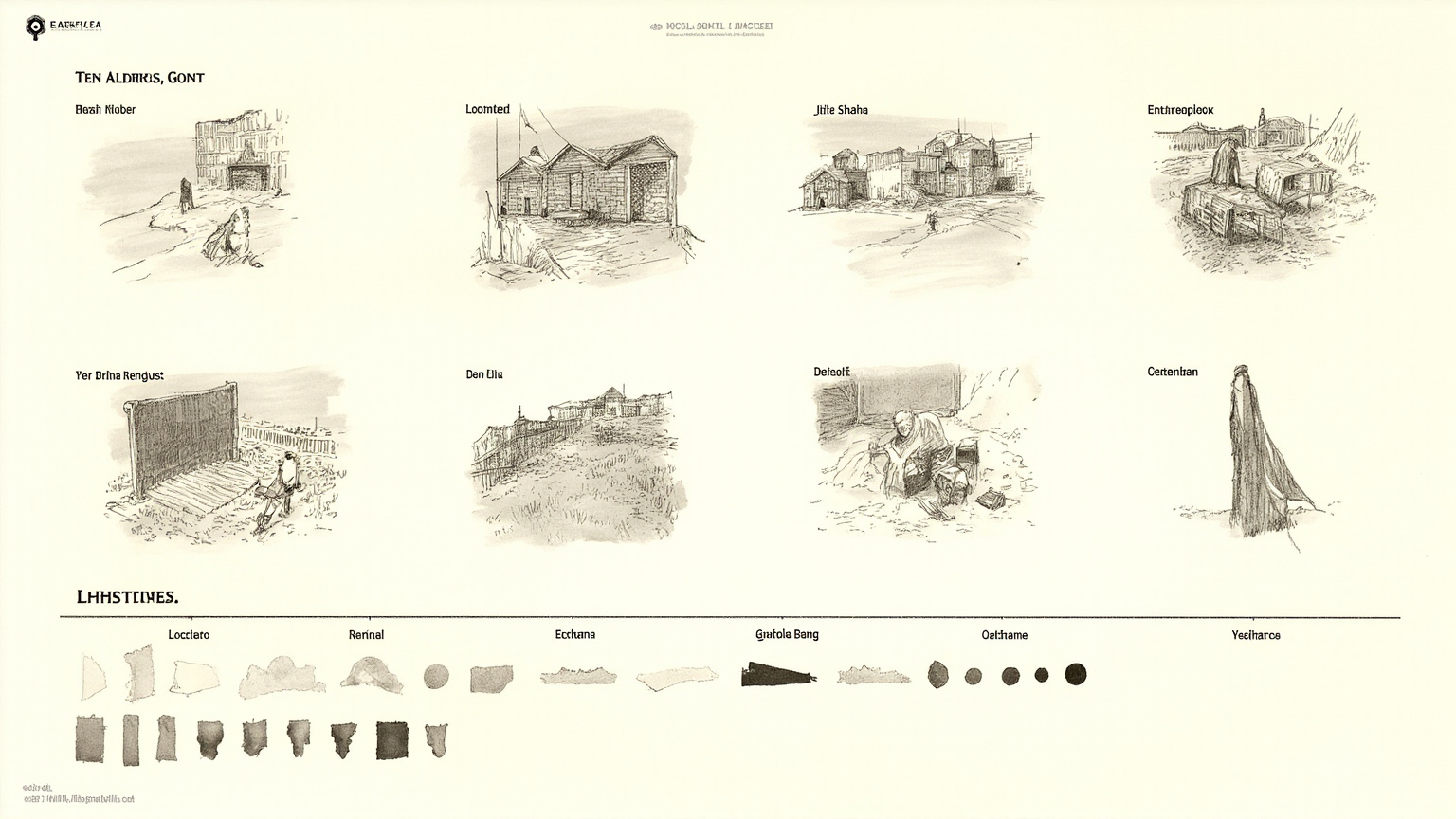
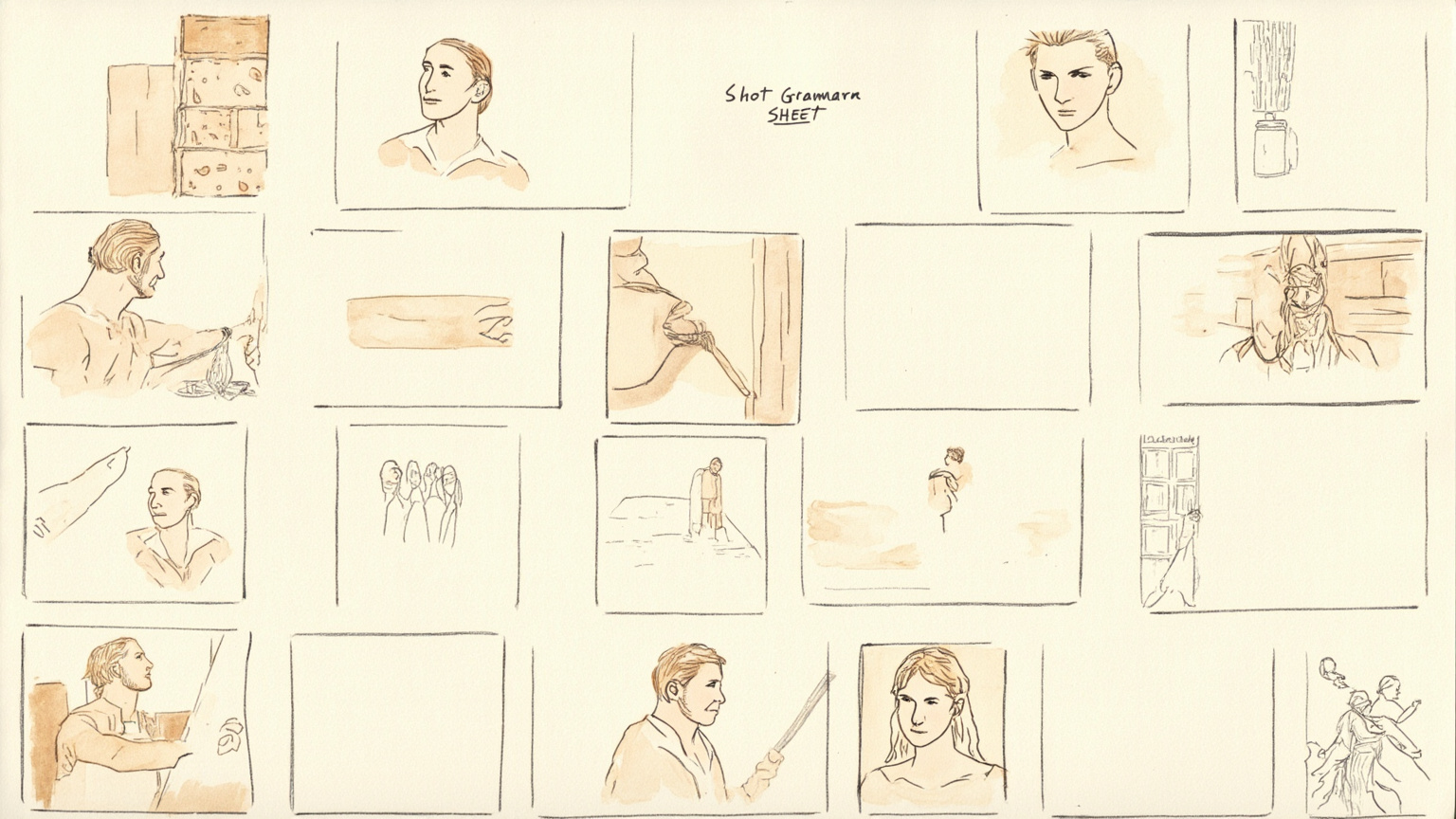
Before the guide was written, this book got a visual foundation — every illustration you just read grew out of it.
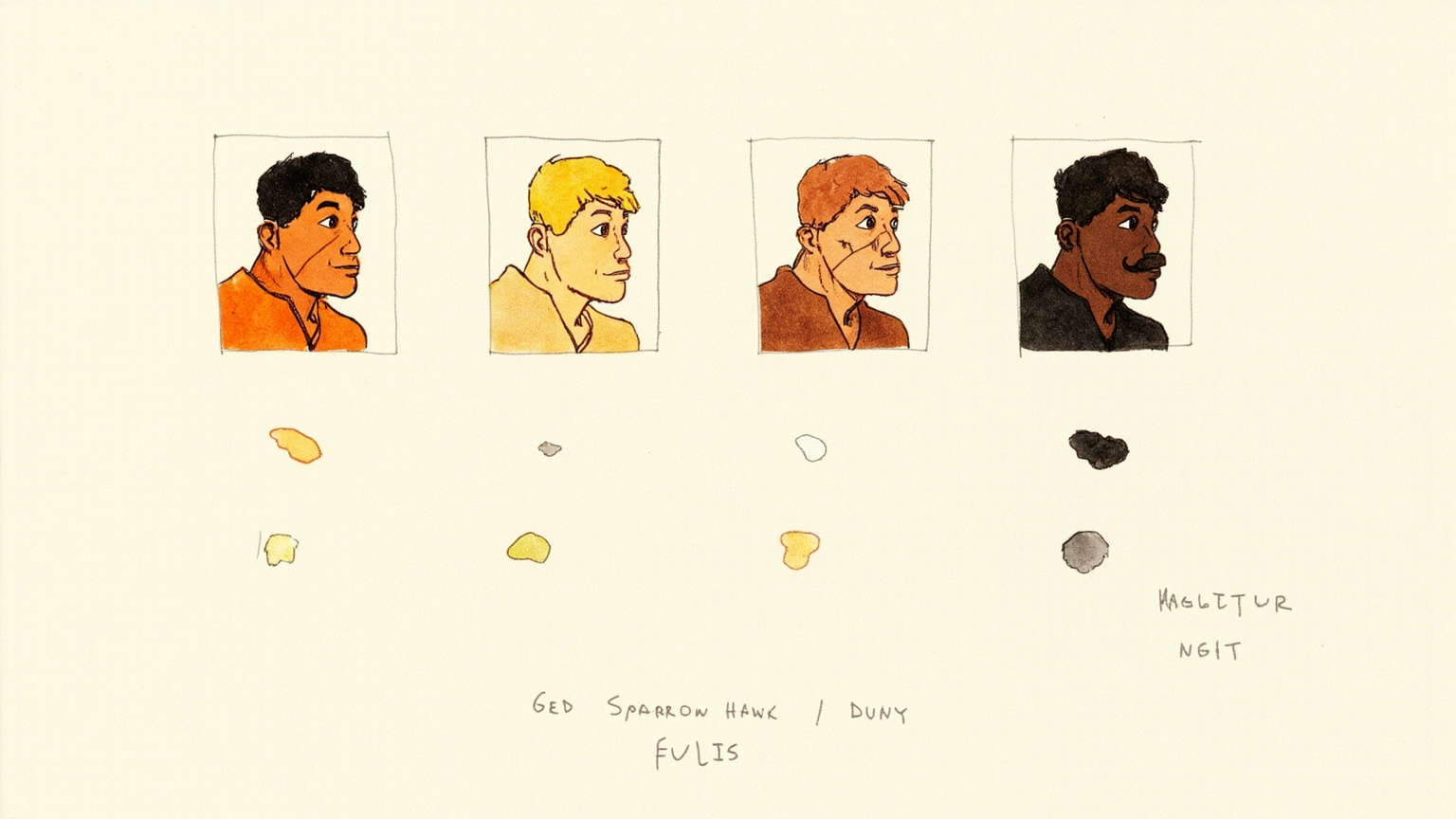
01Charactercharacter
People and World
Ged — Sparrowhawk in boyhood — is a goatherd out of Ten Alders village on Gont, a smith's son who lost his mother young and was taught in secret by a witch aunt. He was born with a fine voice and a stronger gift, and in his teens could turn back raiding barbarians with a spell. Ogion, the silent old mage of Re Albi on Gont, once held a great earthquake still by himself and is revered across the island; he takes Sparrowhawk as his apprentice, gives him his true name, Ged — and then watches the boy grow restless and leave. Jasper, an older classmate at Roke, is sharp-tongued and goads Ged into going too far. Vetch, Ged's steadiest friend at the school, dark-skinned, stays with him all the way to the end of the East Reach. Serret, a lady of the Court of Terrenon on Osskil, had used the same goading once before at Re Albi, pushing the young Ged toward the Terrenon stone — a stone that seals an ancient evil spirit and holds power without limit. Ged refused it.
Earthsea is a world of archipelagos and ocean: Gont, Roke, the Ninety Isles, Osskil, and the empty water at the far end of the East Reach. Everything has a true name, and knowing that name lets you command the thing in the Old Speech — the wind has its name, the island has its name, and so do you. But knowing a name is not the same as controlling it; understanding is. Ged reads that rule properly for the first time in the sky above the Ninety Isles, speaking an ancient dragon’s own name back to it.
How the Story Runs
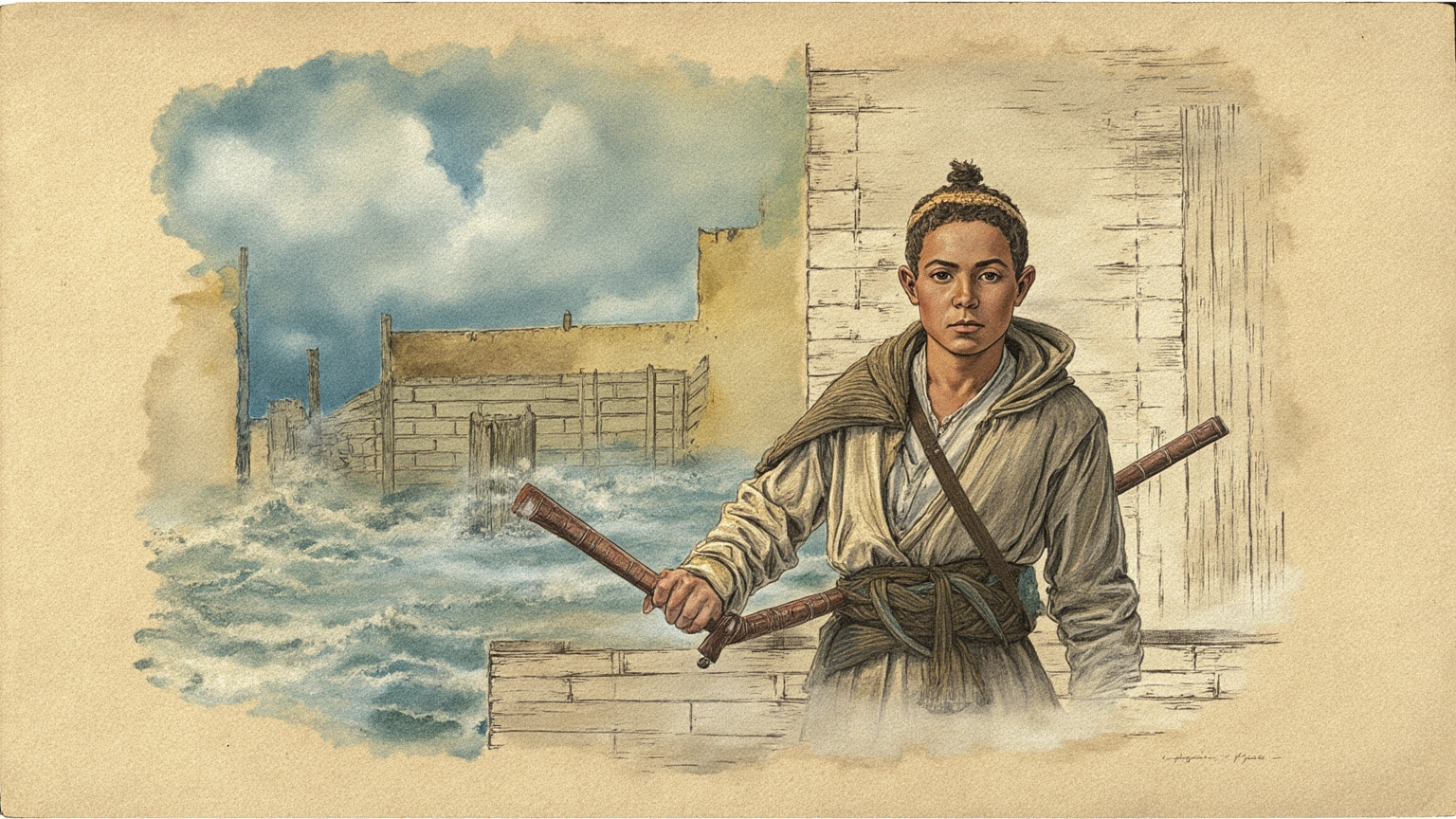
Sparrowhawk is an orphan herding goats in Ten Alders. On the night the raiders come he uses a spell his aunt had taught him in secret to call up a heavy fog, and the villagers turn the fight. A child's untrained voice reaching for power that was never his to touch — the fog boiling up out of the hollows and closing into a wall, holding the invaders off in the morning light. Word of it reached the old mage Ogion at Re Albi.
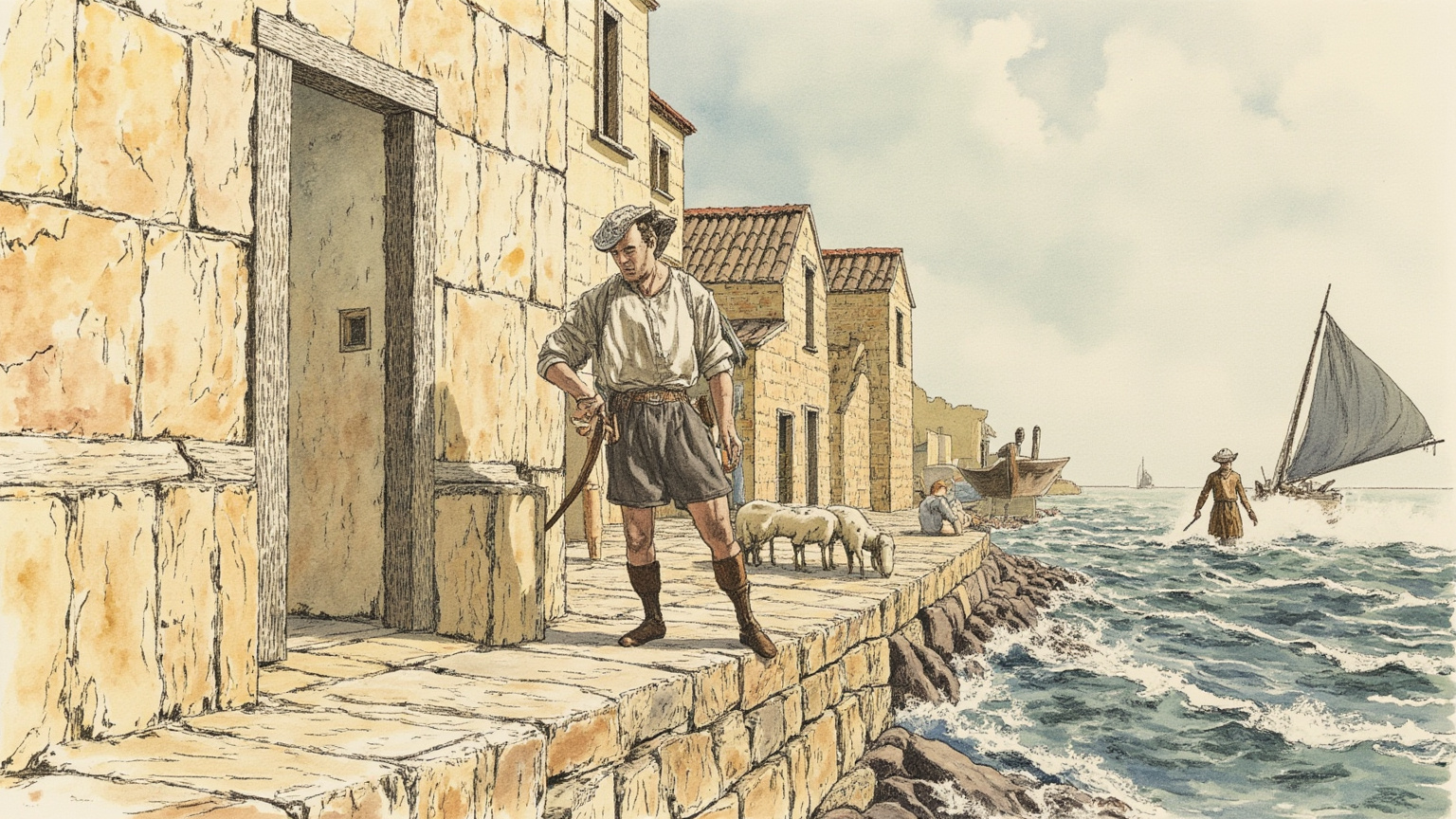
Ogion brings Sparrowhawk back to the town and gives him his true name, Ged; from then on he is no longer just the orphan with the goats. What Ogion teaches is slow work: silence, watching, restraint. Ged sits by the window of a low stone house in Re Albi copying out lists of true names, listening to an old man who will not say three sentences in a day. It is then that Serret — the lady of the Court of Terrenon on Osskil — comes at him with her goading, urging the boy tucked away beside an old man to go and see a darker kind of power. She points to the stone that seals the ancient evil spirit and tells him that breaking the balance will buy him power without limit. Ged does not take the bait; he can see what that power costs. But he really is out of patience — he cannot sit still inside Ogion's calm — so he leaves the town's slow teaching behind, closes the old book in his hands and sets it on the table, and walks toward the narrow morning light in the doorway. He is going to the wizards' school on Roke, to learn the higher art.
At Roke, Ged is the acknowledged prodigy. Jasper, the older student, does not spare him: you are nothing here but a savage up from the back of beyond. Ged cannot swallow it. They duel, calling up the dead to see who stands higher — and Ged really does let go. Something pours through the gap in the door, but what he has summoned is not a spirit of the dead: it is a shadow that throws itself at him. It nearly kills him on the spot; the candle flames flatten sideways in the pressure, and the sky beyond the great arched window is grey and white. He survives. The shadow does not disperse.
After the school, Ged is sent to the Ninety Isles as their warding wizard. The dragon of Pendor coiled there is an ancient enormity that has eaten islanders and wizards alike. Ged does not draw a sword. He speaks the dragon’s own name — no light in his hand, no fire, only his open mouth sounding the last syllable. The dragon goes down as though pinned through the spine, and obeys. It is the cleanest victory in the book — and the one plain demonstration of what the law of true names actually means.
But the dragon is not what Ged fears most. Through the northern winter nights the shadow swells, and he begins to run. He runs as far as the Court of Terrenon on Osskil — the same stone again, the same offer that breaking the balance buys power without limit. This time he nearly does not hold: the ancient dark presses in like water trying to fill him. He tears free, bites down on his own true name, Ged, and turns into a grey-brown falcon beating back to Gont with a lead-coloured sea beneath his wings.
ImaRead3
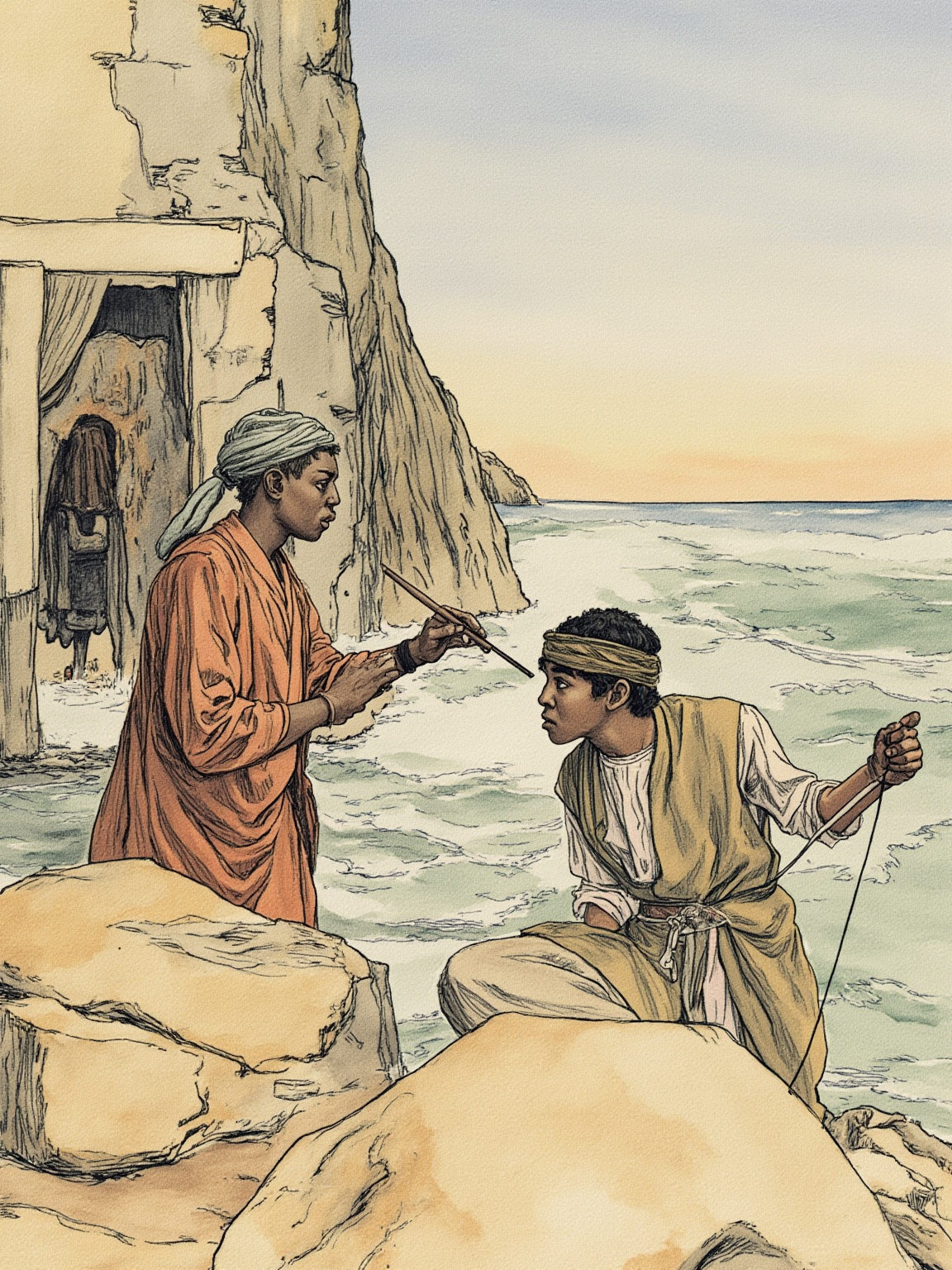
Back at Re Albi the old mage Ogion is failing and near his end, and calls the young man in from outside the door. The stone house is dim; the old man half-lies on a low couch and lifts a finger like a dry branch toward the young wizard in the doorway, where a patch of shadow darker than the night is sliding off his shoulder. Ogion gives him one word: turn. Ged stands there stunned — he is the one being hunted, and to turn means to walk into it. He has run so long, and it turns out he had it half wrong. When he truly plants his feet, the shadow takes a step back.
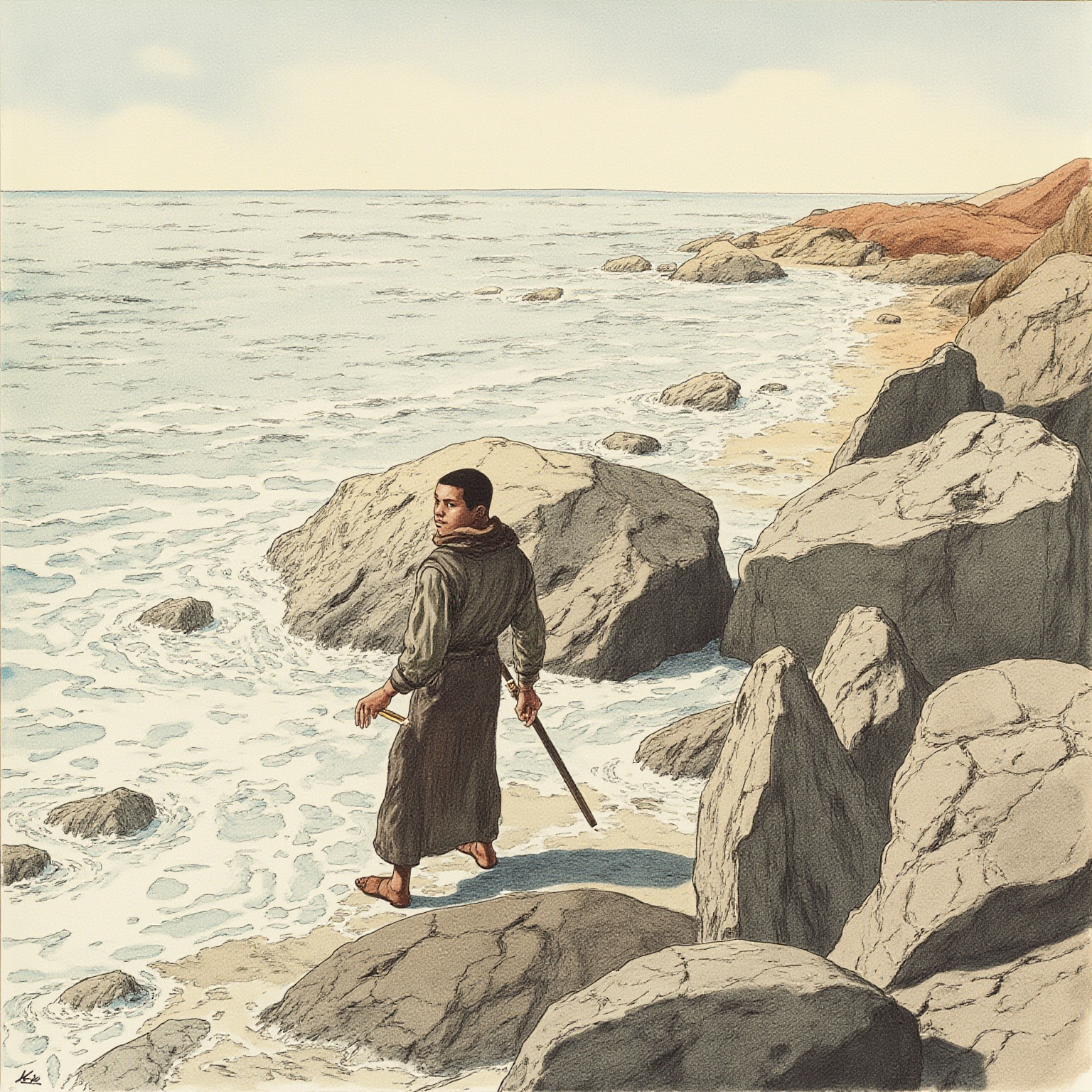
Now Ged does the hunting. His friend Vetch goes with him aboard a small open boat and they row east from Roke. The shadow ahead, the sea underfoot, until he runs it down at the far end of the East Reach — no island there, no shore, only the grey-white nothing where water meets sky. Ged finally speaks his own true name, calling the shadow to come and be one with him. It has no fangs. It never did. It is only himself.
Themes and Craft
Le Guin wrote magic as linguistics. A spell is not a power bar; a true name is complete understanding — understanding that a dragon, a wind, a stone is itself, which is the only way to speak to it on its own terms. Knowing a name is not commanding it; understanding is. That single move leaves behind every later fantasy’s wand-waving conjuring trick. There are no orbs of light in these pictures, no glowing sigils, no special effects — what carries the feeling is weather, sea surface and light.
The deeper layer is the shadow. What Ged chases was never a monster; it is the half of himself he struck loose in a fit of boyish pride. For half the book he is hunted, for half the book he hunts, and at the end the two become one where sea meets sky. That is the Taoist path of turning back upon oneself, and it is why Ogion teaches him nothing but silence from beginning to end. The book was published in 1968, exactly as modern fantasy was setting its rules, and she made her hero dark-skinned without ever saying so; later, in the sequels, she went back and took apart this world’s own structure of gender — and that act of self-revision became part of literary history in its own right.
This book turns the phrase "defeat yourself" into a boy chasing a shadow across open water. What he is chasing is not a monster. It is him.
Why Go Read It
A summary can hand you a map, and on that map you can draw the route, the islands, the outline of the dragon — but there is one thing it cannot draw: Le Guin writing the sea. The mountain fog over Ten Alders on Gont, the grey light beyond the high windows of Roke, the silence at the moment water meets sky in the East Reach — those you can only take in by turning to the pages and letting your eye walk across them slowly. And there is Ogion’s silence, which is not literally an old man who says little but a whole relationship between master and student built out of blank space, the thing any retelling loses. Even knowing how it ends, this book is worth reading.