The Days (Al-Ayyam) · Companion Guide
日子
一个上埃及的盲童,用指尖摸过村塾的门槛,摸过爱资哈尔的石柱,一直摸到巴黎的博士帽——三级台阶,三十年,一本书。
Opening: Eyes That Could Not See
A small hand finds the grain in a wooden doorframe. Light slants in from outside and lands on the boy's face — he cannot see it, only feels the warmth on his skin. He knows the way by his fingertips, knows people by their voices, knows home by its smell. This is a blind child in a mud-brick courtyard in Upper Egypt at the end of the nineteenth century, the same boy Taha Hussein would later call our friend. One book eventually earned him a monument in Arabic literature. All of it starts with a child who cannot see the light.
Volume one opens with these hands. The boy has been blind since infancy, and the village offers him only one path: the kuttab, where children memorize the Quran. He feels for the threshold, for the lime on the wall, and for the first door of an entire old system of learning.
What Kind of Book Is This
The Days comes in three volumes — Al-Ayyam in the original Arabic. The first was serialized in al-Hilal magazine starting in 1926 and published as a book in 1929. The second appeared between 1939 and 1940. The third began as a serial in a weekly called The Last Hour in 1955 and did not become a finished book until sometime between 1962 and 1967. Taha Hussein spent most of his life writing it, and it stands as one of the longest publication spans of any novel in modern Arabic literature.
It is Taha Hussein's autobiographical novel and the founding work of modern Arabic prose autobiography. Volume one appeared in English as An Egyptian Childhood, volume two as The Stream of Days, volume three as A Passage to France. One line of criticism has become close to a verdict: no other work of modern Arabic literature is so familiar to readers in both the Arab world and the West. By the early 1980s, volume one alone had gone through fifty-nine printings.
Three Steps, Three Volumes, One Man
The book's structure is plain: three steps. The first is a village kuttab in Minya Province, Upper Egypt, where he memorizes the Quran under the tutor Sidi and the monitor who oversees him. The second is Al-Azhar, Cairo's ancient Islamic seminary, where sheikhs in turbans and robes sit in circles under stone colonnades. The third is a modern university in Cairo, and then Paris — a doctorate, and a professorship back home. A blind child climbs from the lowest step to the highest, and the three volumes match the three steps exactly.
Only a handful of people move him upward the whole way. His older brother leads him from the village to Cairo and guides him through the middle step. The sheikhs at Al-Azhar stand for everything sluggish and hidebound in the old religious education — a wall he has to break through. The teachers in Paris give him the final push, toward democracy, science, and literary criticism. Taha Hussein, the man who wrote this book, went on to become a renowned scholar. And the blind boy who feels his way from a village kuttab all the way to Paris is Taha Hussein himself.
Volume One: Two Hands in the Village School
The boy at the center of the story is blind. He has never seen the Nile, but he knows the damp smell that rises off the mud-brick walls when the river floods. He has never seen a date palm, but he knows the roughness of its fruit against his fingertips. Taha Hussein's method is set from the first page: he rebuilds a world after blindness through sound, smell, and touch.
Through this section, the voice of the grown narrator presses down on the movements of the child — the sense that he knows what comes next never lets up. A grown man writing about the palm of his own hand at four or five years old: the tone stays light, and it never quite lifts.
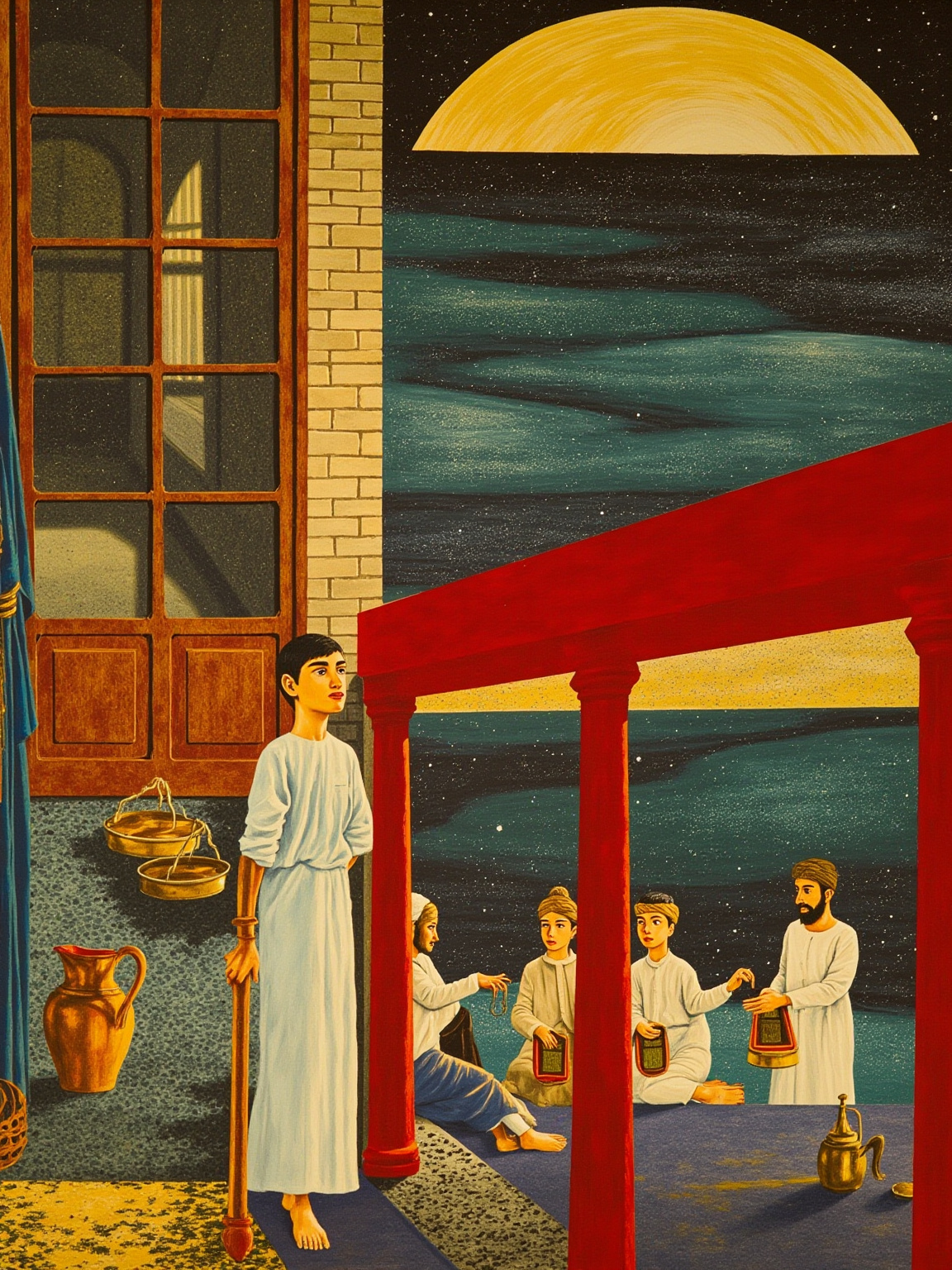
He had never seen the Nile, but he knew the damp smell of the mudbrick walls when the waters rose.
他从没见过尼罗河,可他知道河水涨时泥砖墙上的潮味。
金句 · 卷一 · 村庄的开篇
At the kuttab, the tutor Sidi and his assistant, the monitor, run their teaching on a single method: force. Children are forced to memorize the Quran by rote, and a wrong word earns a slap. The monitor steals food from the students besides, snatching a handful of beans from the boy's own bowl now and then. The boy moves from disgust toward rebellion.
Taha Hussein shows no mercy here. Sidi and the monitor are not cartoon villains — they are the old rural religious education itself, a method fixated on recitation and indifferent to the child doing the reciting. The boy's rebellion is not a heroic slamming of doors either; it is disgust swallowed again and again. The first step ends with his brother arriving to take him away.
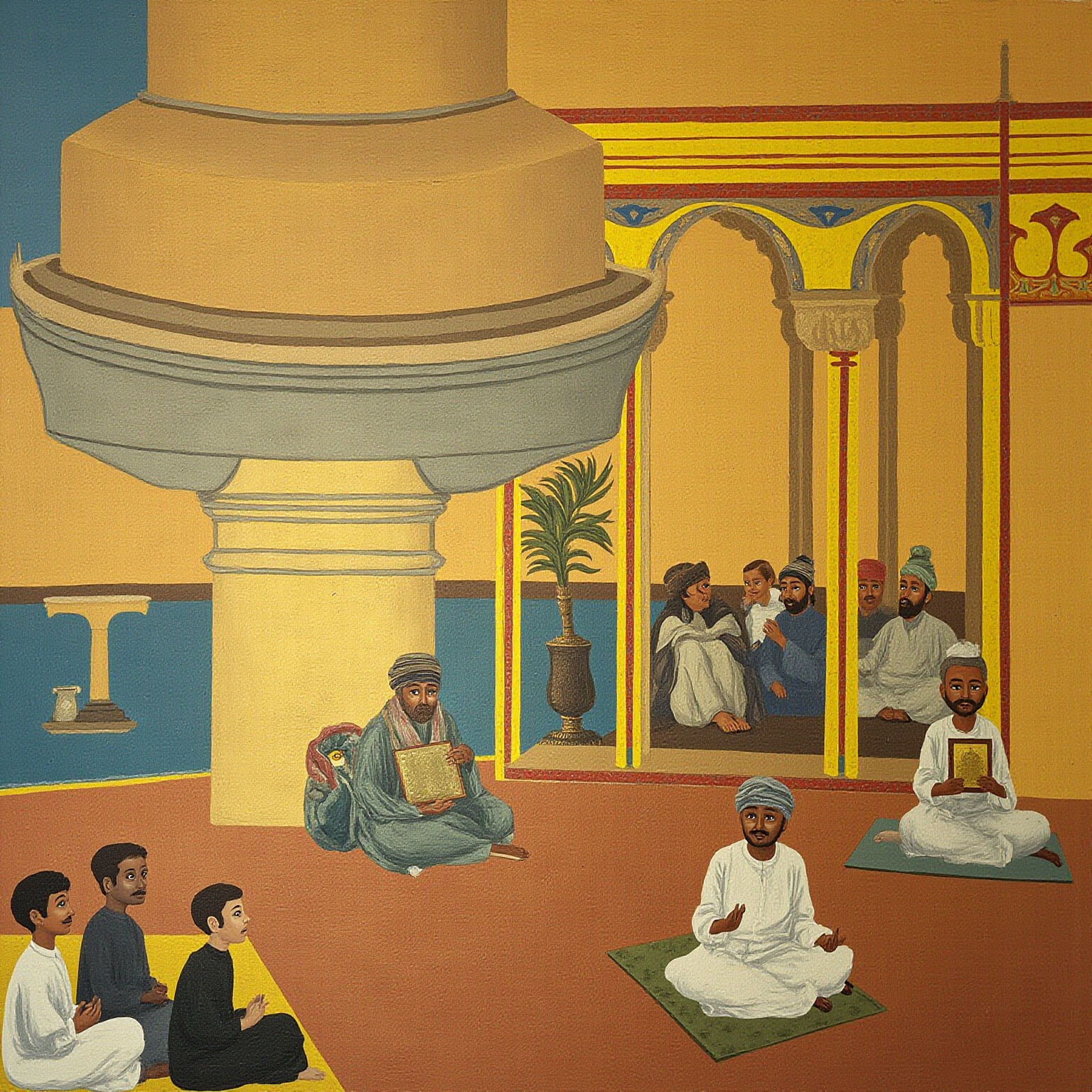
The shaykh and his assistant taught only one thing — to force the boy to memorize, a slap for each slip.
塾师与学长所教的只剩一字:逼。背错一字,便是一掌。
金句 · 卷一 · 村塾
Volume Two: The Colonnades of Al-Azhar
His brother brings him to Cairo and into Al-Azhar. Volume two opens on the cold of that vast old mosque — stone columns marching off into the dark, worn straw mats on the floor, sheikhs sitting in circles to teach. The boy feels the chill of the columns, smells the camphor in the robes, and listens to sentence after sentence he cannot understand.
He is blind, and he is a boy from the countryside besides. Al-Azhar is full of people with better birth and whole eyes. He has no friends there, and no place of his own. That cold hangs over the whole book, from the opening of volume two through its middle stretch.
Taha Hussein never says outright that Al-Azhar is stifling. Instead he writes the boy's hand going still on his knee after a sentence he cannot follow. He writes the sheikhs finishing a lesson and dispersing while the boy stays seated alone, waiting for his legs to go numb before he gets up to leave. This refusal to name the pressure, writing only the body's response to it, is one of the most rewarding things about the book.
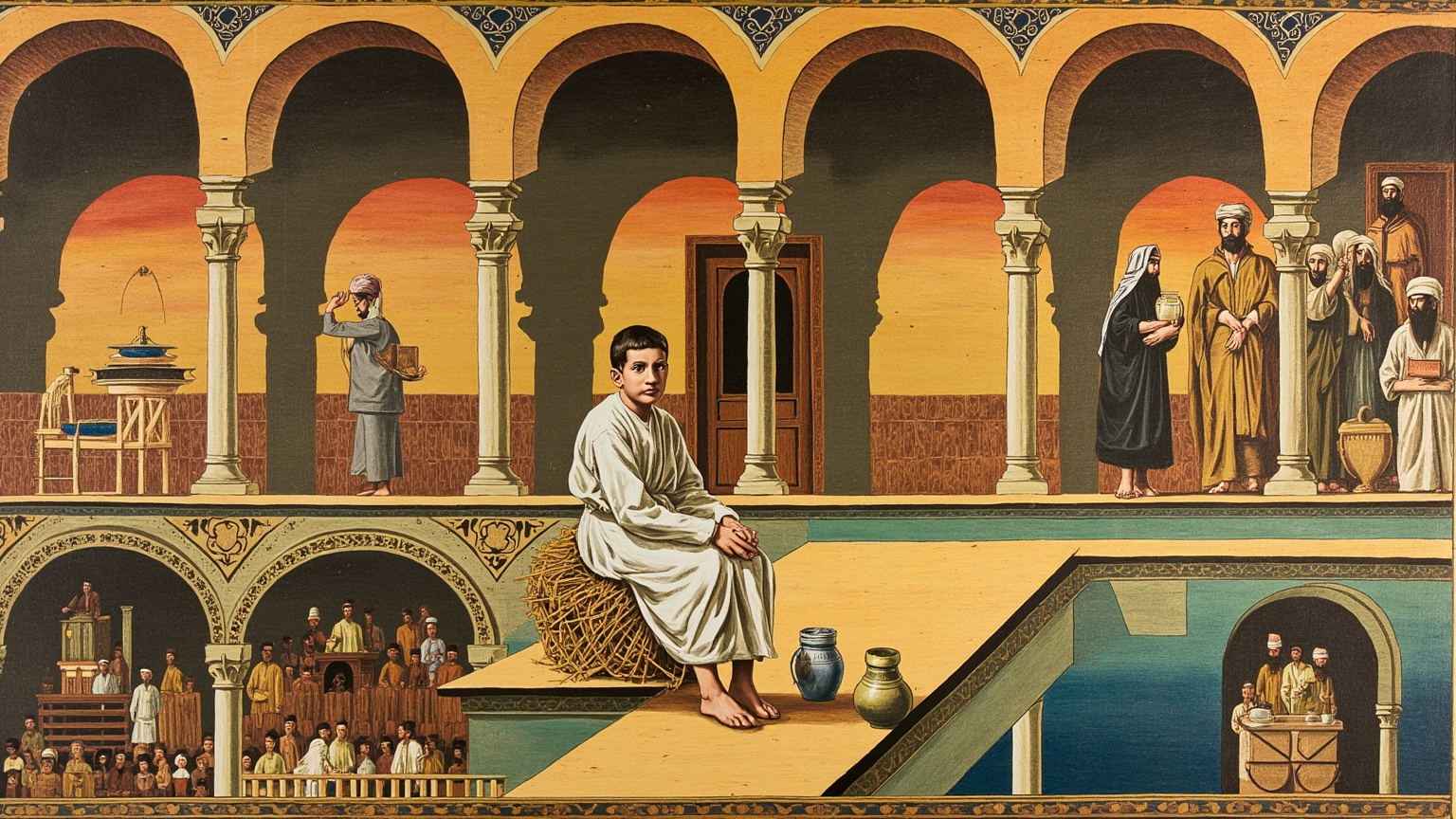
He sat still on the mat long after the circle had broken up, waiting until his feet went numb before he rose.
经学圈散了,他却久久坐在草席上不动,等两脚发麻才起身走。
金句 · 卷二 · 石柱廊
The sheikhs of Al-Azhar are slow, conservative, set in their ways. The boy moves from disappointment to a break with them — not one dramatic rupture, but the old ways carried out of him piece by piece. One scene in the book stands out: the first time he asks a question during the sheikhs' discussion of scripture, the answer he gets is laughter and evasion. It is a small thing, no bigger than a pinprick, but a pinprick still draws blood, and he never asks a second time.
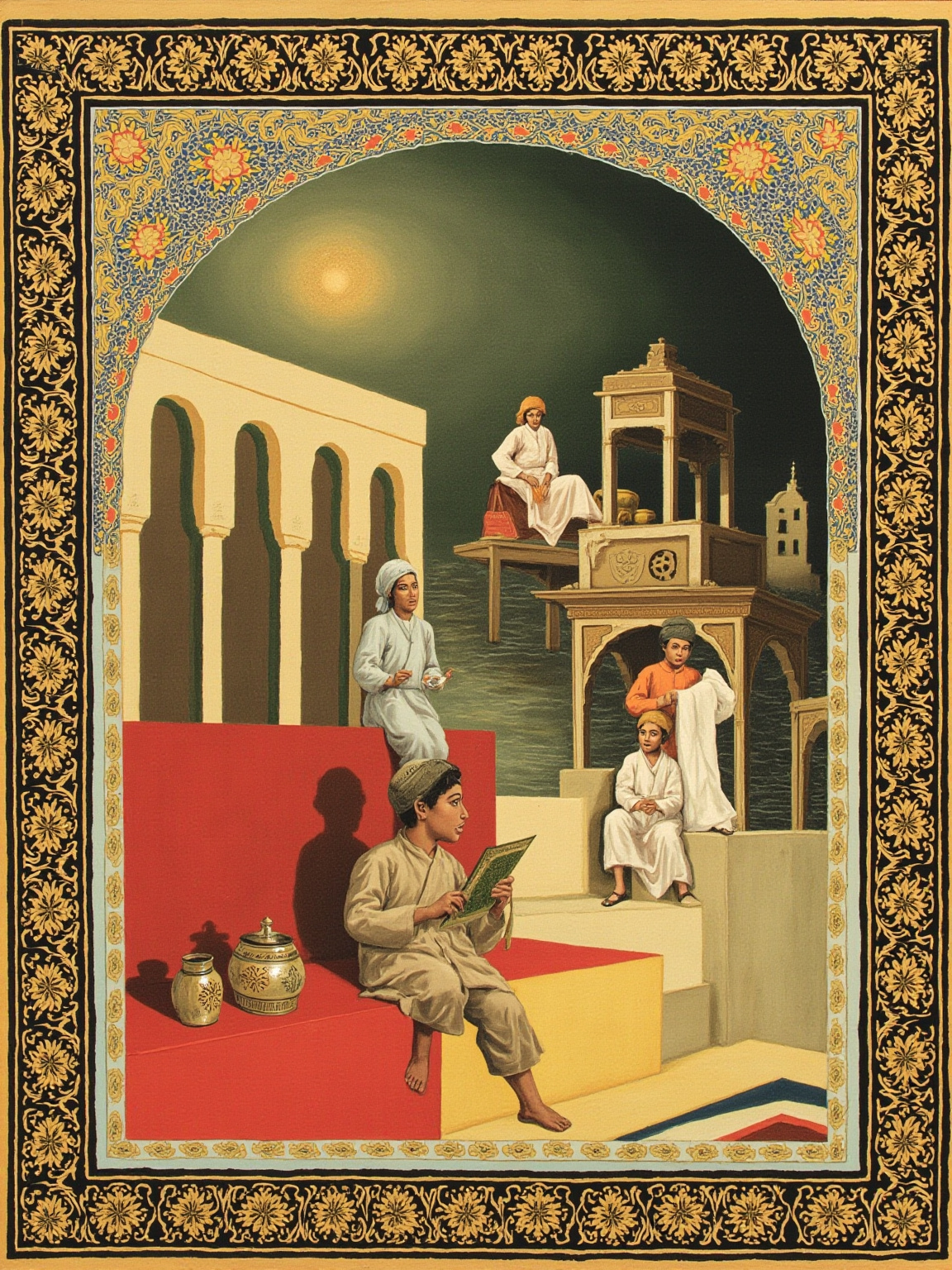
The first question he dared to ask was answered with a laugh and a shrug.
他第一次开口发问,得到的回响是一阵哄笑与一句搪塞。
金句 · 卷二 · 第一次提问
Volume Three: The Last Push, in Paris
His move to the modern university in Cairo is the first time in his life he changes from a reciter into a seeker of knowledge. The crossing to Paris after that is the final step.
Taha Hussein stays restrained through the Paris section — no cafes, no romance, none of the usual glamour of the Left Bank. He writes the classroom, the teachers, and the shock of a blind student out of Al-Azhar being allowed, for the first time, to ask a question. His European teachers give him one more push out of the grip of scholastic theology, toward democracy, science, and literary criticism.
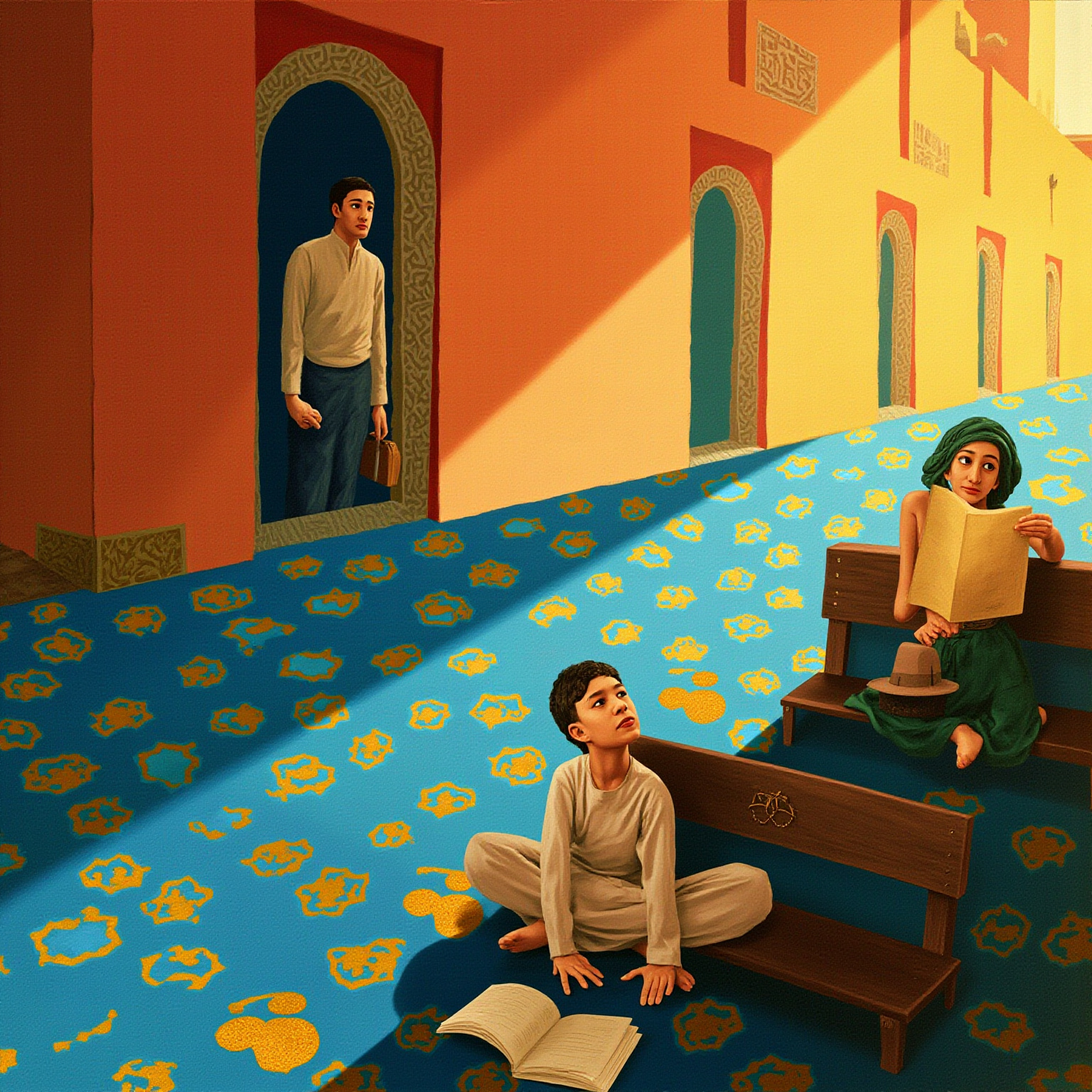
For the first time he was allowed to ask a question — and the room waited for his voice.
他第一次被允许发问,整间课堂都在等他的声音。
金句 · 卷三 · 巴黎的课堂
He earns his doctorate and returns home as a professor — the completed form of an awakening out of ignorance. The three steps are climbed.
What's striking is how long these three steps stretch out. Volume one covers childhood, volume two his youth, volume three his years abroad, and the writing of all three spans nearly forty years. An author spent most of a lifetime walking back over the steps he had already climbed, and the voice changes with each one, a child's voice in volume one, a mature scholar's voice in volume three. But the narrator remains our friend throughout, and that consistency is Taha Hussein's most distinctive stroke.
Writing Yourself in the Third Person: A Technique Arabic Literature Had Never Seen
What The Days most deserves to be remembered for is not the story of a blind man's success, but its strange narrating voice. Throughout the book, Taha Hussein calls his childhood self our friend in the third person, then breaks in with a first-person aside, sometimes calling straight out to the reader: Do you know... In the original Arabic, the effect is closer to an adult Taha turning to look back at the child Taha and reaching out a hand: this is how you were. Do you know it was such and such a date. You thought he hadn't seen — in fact he had heard everything.
This is not a story of blind triumph. It is a man standing on this side of time, looking across at the sightless self on the other side, and reaching out to find a hand.
This ironic dialogue between the child self and the adult self is where the book breaks new artistic ground. It turns autobiography from I remember my childhood into someone who already knows his own childhood, going back to know it again. Many later Arabic novels carry the mark of that hand.
Why Read It Today
As a book, The Days is the founding work of modern Arabic prose autobiography. It fuses personal coming-of-age, social realism, and the craft of the novel, and it has been called a pillar of Arabic literature. As a human story, a blind child who could not see light felt his way, step by step, from nineteenth-century Egypt to a doctoral cap in Paris — and that alone is a story that still holds up a hundred years later.
It is not a packaged tale of triumph over darkness — blindness is the book's baseline condition, not its selling point. Its real opponents are the old religious education and a society mired in ignorance: the circle of sluggish sheikhs under the colonnades of Al-Azhar, the hand that steals beans in the village school. What the boy wins is not his sight. It is the right to ask a question and get an answer. That is what The Days is actually about.
Go Read the Book Itself
An explainer gives you the map. The book itself is the ground. Some things here cannot be paraphrased: the small flinch of the boy's fingertips the first time he touches the cold of a stone column, that startle in the body; a morning when he hears his mother murmuring, in the courtyard, a verse he has recited a thousand times himself, that sense of home carried in a voice; the light, clinging tone Taha Hussein uses every time he says our friend. These only arrive when you turn to the original and read it page by page. Knowing the plot in advance makes the reading go deeper, not shallower — you will recognize the three steps, you will recognize our friend, and at the moment his hand hesitates, you will find yourself hesitating too.
He could not see the light, but with his hands he turned the dark into a book.
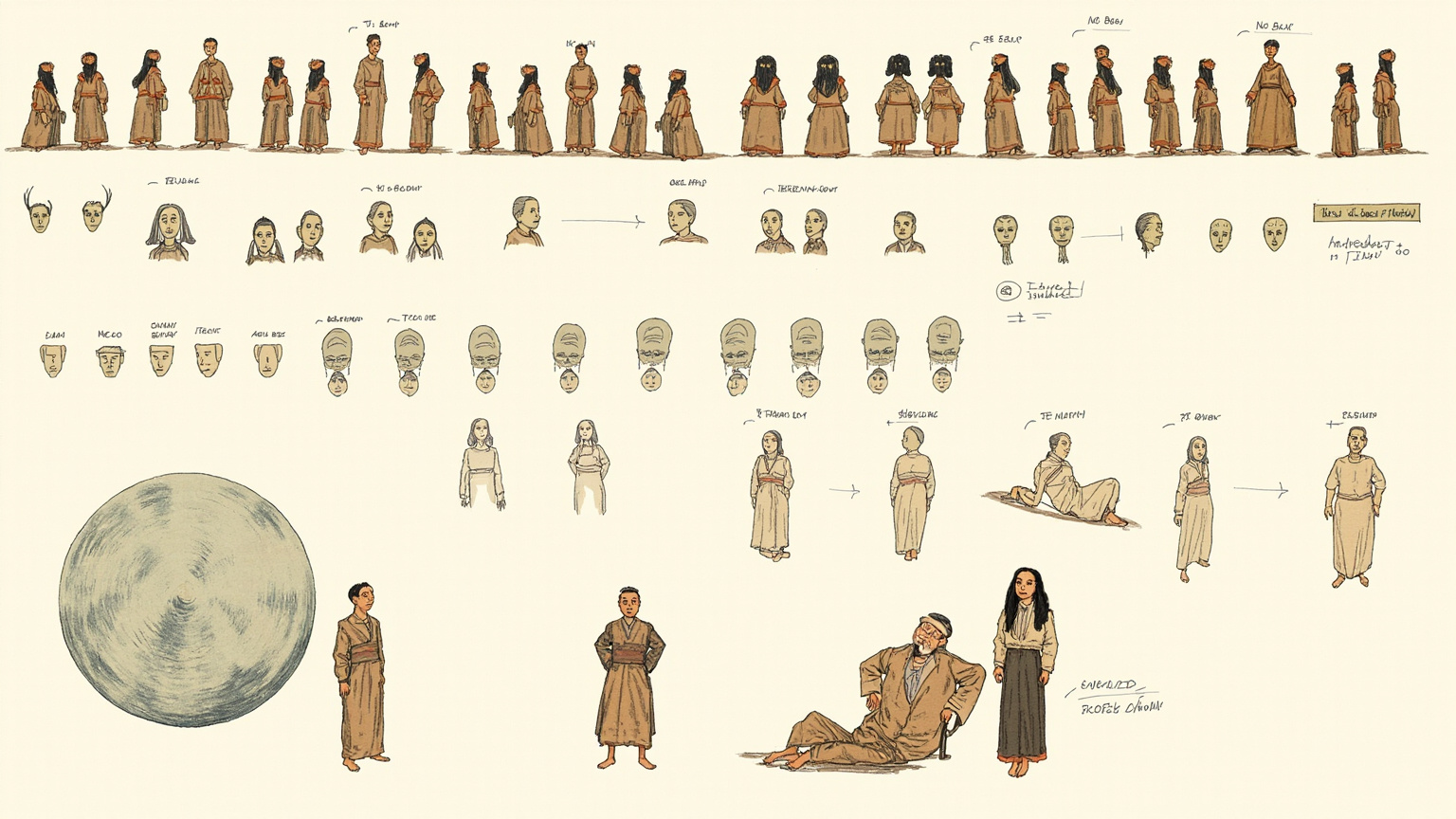
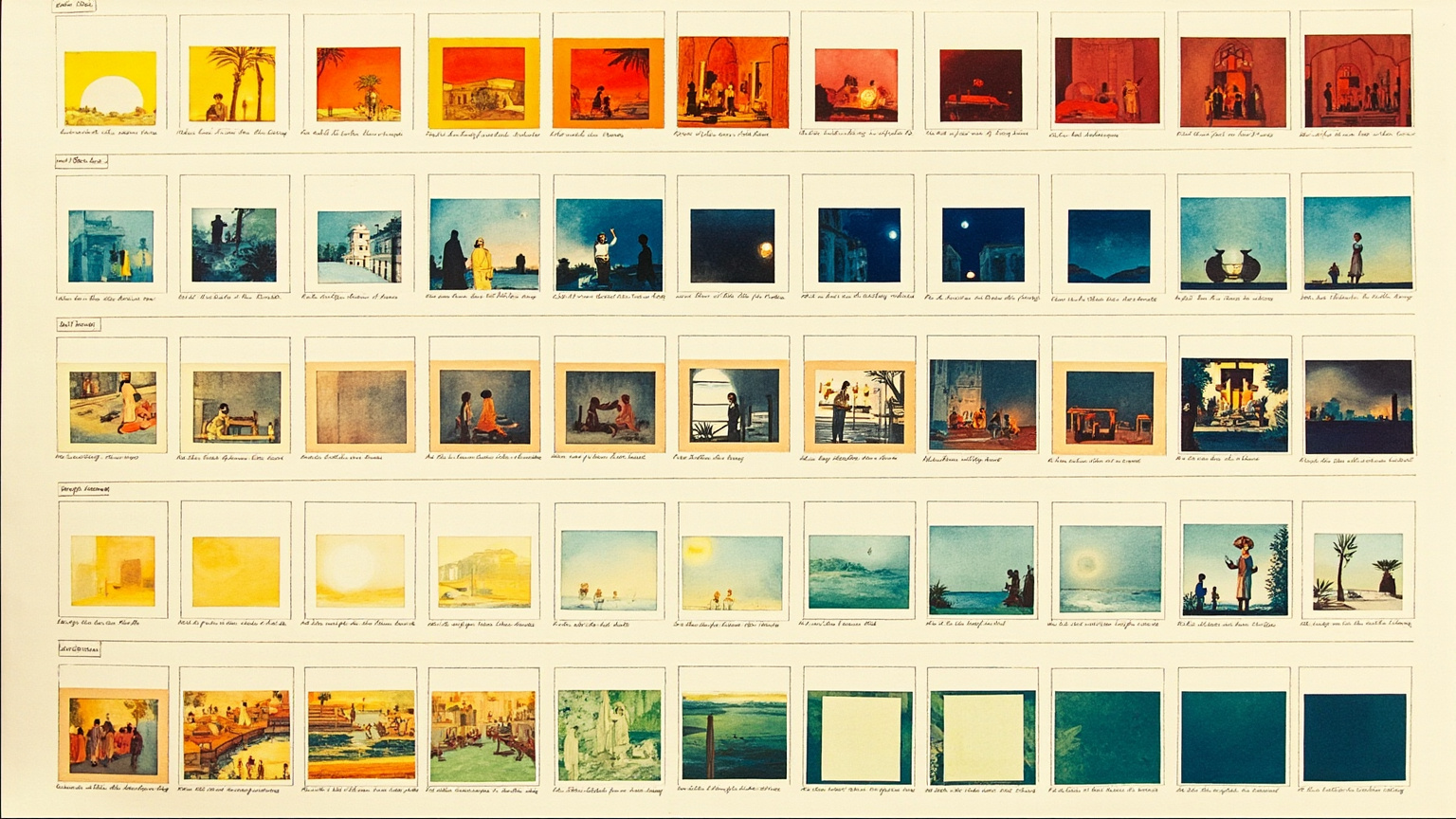
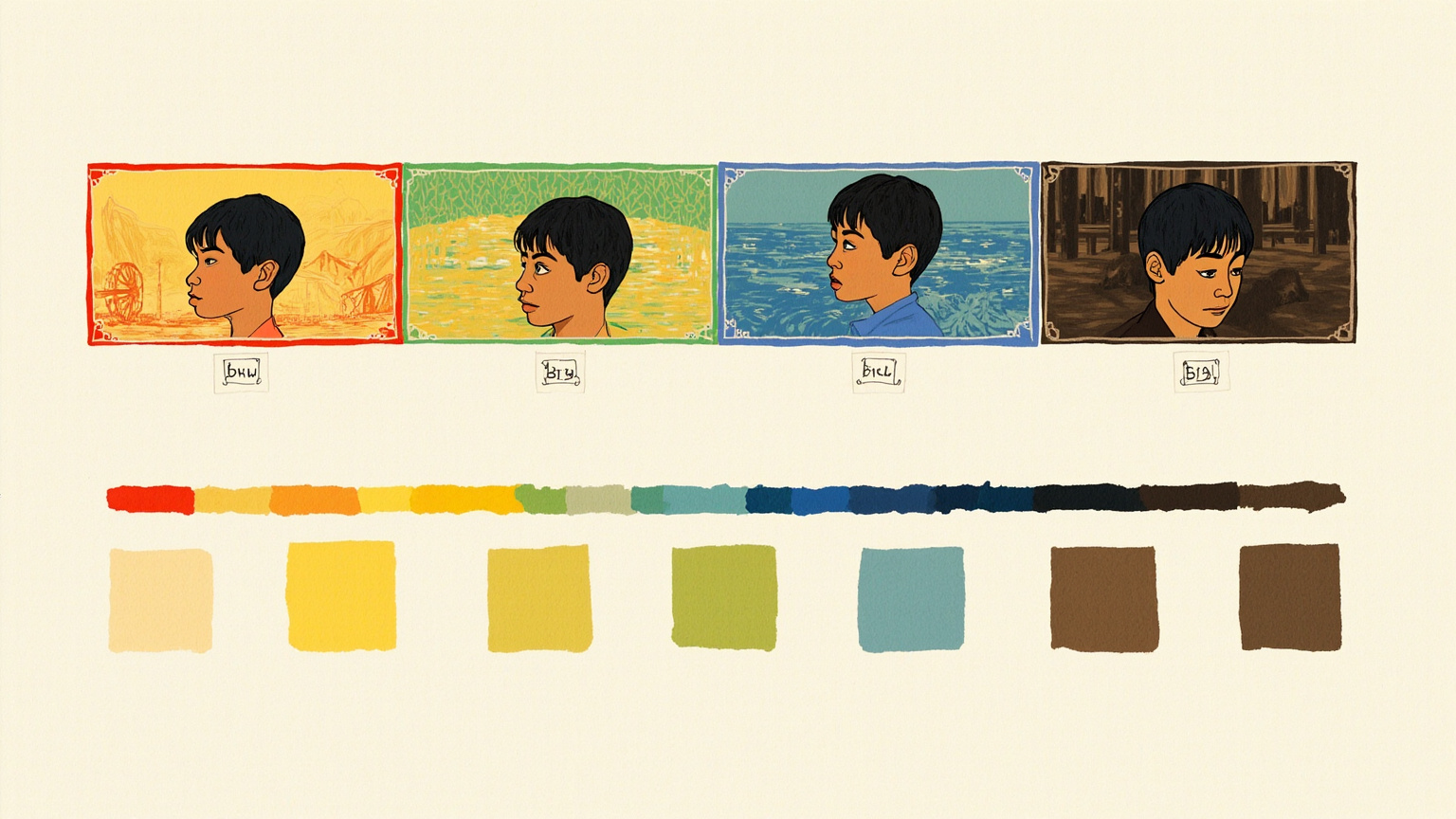
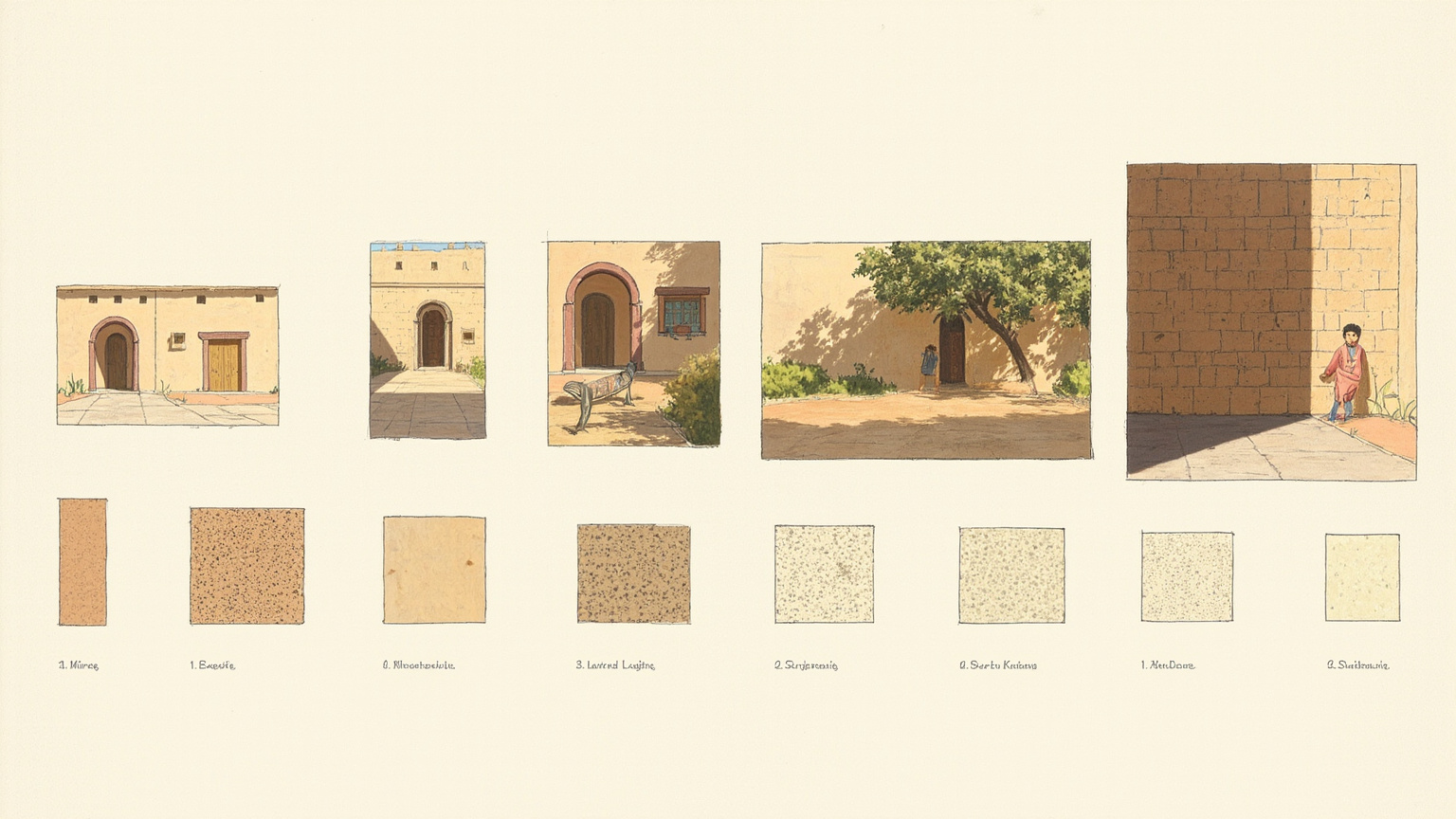
Art Direction4 plates
Before the guide was written, this book got a visual foundation — every illustration you just read grew out of it.