The Alchemy of Happiness · Companion Guide
幸福的炼金术
巴格达最高讲席上的明星教授,被自己的舌头赶下台,以苏菲之身流荡十一年,把灵魂锻成真金。
Baghdad, a lecture hall, the late eleventh century. The most revered professor in Islam is teaching. Then, mid-sentence, his voice stops. His tongue will not move, the sentence breaks off in the air, and he stands there — he will never take that podium again. His name is al-Ghazali, and before he stepped down, he had already reached the highest chair a Muslim scholar could hold.
What kind of book is this
The Alchemy of Happiness is a Persian spiritual handbook written in the early twelfth century. Its author, al-Ghazali, is the theologian later generations would call Hujjat al-Islam, the Proof of Islam. He had already written a vast Arabic summa, the Ihya Ulum al-Din — the Revival of the Religious Sciences — and here he took its spiritual core and rewrote it in Persian, not for scholars but for ordinary people. It holds its place in Islamic intellectual history because this is the book that folded Sufi mysticism back into orthodox theology, closing a standoff between scholars and ascetics that had run for years.
Who he was, what he wanted
At thirty-seven, al-Ghazali was already the star professor at the Nizamiyya in Baghdad, his lectures packed, sparring with a whole circle of scholastic theologians committed to reason and doctrine — men who looked down on Sufi ascetics as sloppy about ritual and prone to spiritual theatrics. Al-Ghazali stood between the two: he had spent his career defending scholastic theology, yet he found himself drawn to what he heard about Sufi direct insight. What did he actually want? He admits it later in his memoir, Deliverance from Error. He wanted truth. Not more argument, but the thing argument could no longer hold down.
The day his tongue went on strike
Sometime around 1095, in the middle of a lecture, his tongue simply stopped working. He did not push through it. He stopped, right there. He would later read it as a sign from God — that he could not go on speaking meant the language of the podium could no longer hold what needed saying. He resigned his post, gave up his salary, gave away his property to the poor, left Baghdad, and set out on the road as a Sufi novice. He was about thirty-seven.
The journey lasted eleven years. He did not shut himself away in a single retreat; he wandered, worn down, between the mosques of Damascus, the old city of Jerusalem, the crowds of pilgrims at Mecca, the harbor at Alexandria, finding a Sufi elder in each place, apprenticing himself, starting over with fasting, night prayer, the slow work of purifying the heart. He says this again and again in his own account: reason had taken him as far as it could, and the body had to make up those eleven years of coursework.
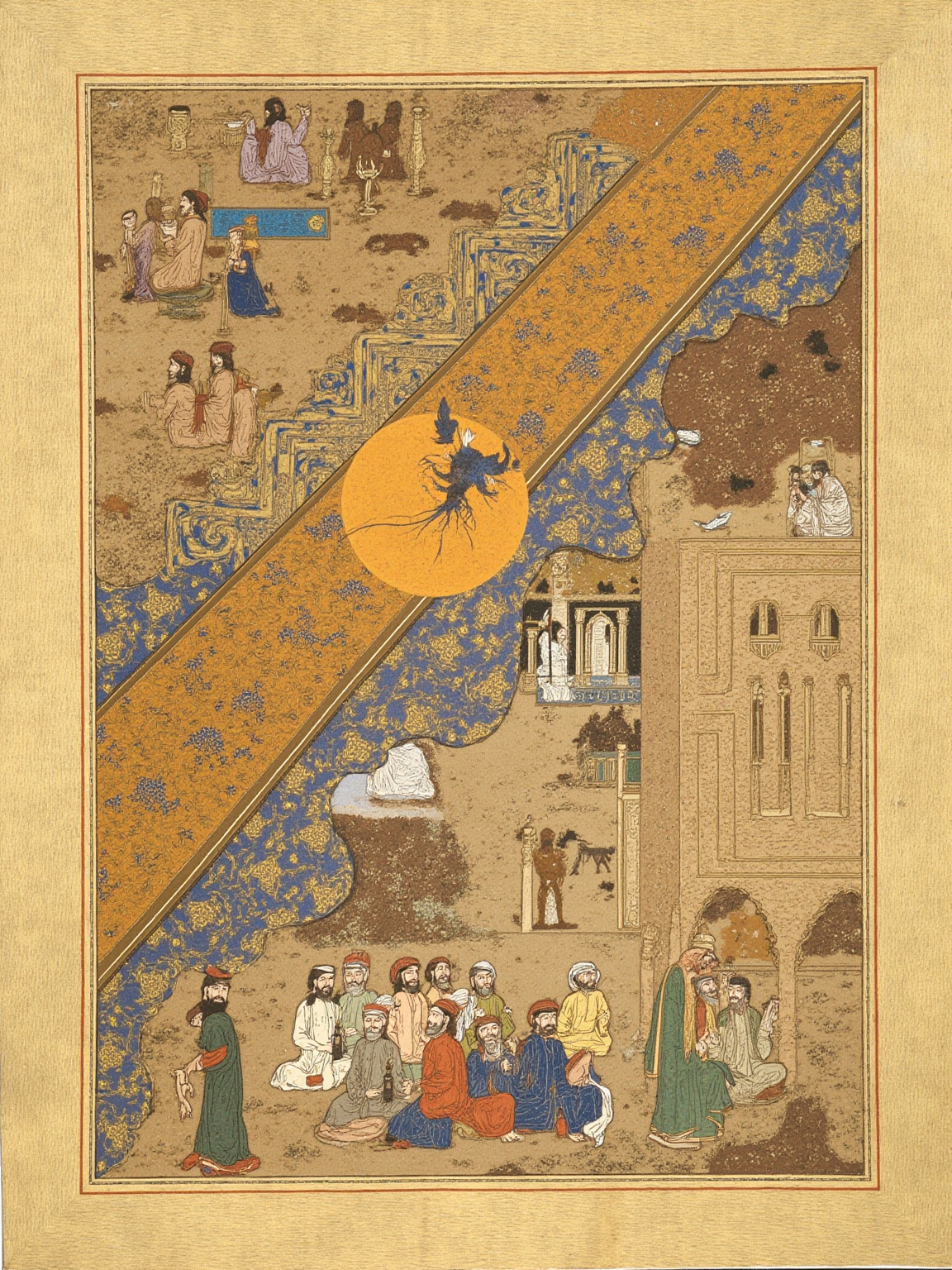
Whosoever knows his soul knows his Lord.
谁认识了自己的灵魂,谁就认识了他的主。
金句 · 第二卷 · 拯救之道
Two books, eleven years in the making
Somewhere in that wandering he wrote, in Arabic, the forty-volume Ihya Ulum al-Din, the summa of his theology. But one question kept pressing on him: this kind of learning belonged to scholars, not to ordinary believers. Around 1105 he settled back home in Tus and, this time in Persian — the common language of ordinary people across the eastern Islamic world — rewrote the spiritual heart of the Ihya. What came out is the book in your hands, The Alchemy of Happiness.
He was about forty-seven when he wrote it, at the height of his powers, a man who had held the highest chair in the land, suffered on the road, and come home, now writing for people who would never see Baghdad and could not read Arabic. The choice of Persian was itself an act of politics: it took Sufi practice out of the hands of scholars and put it back in the hands of believers.
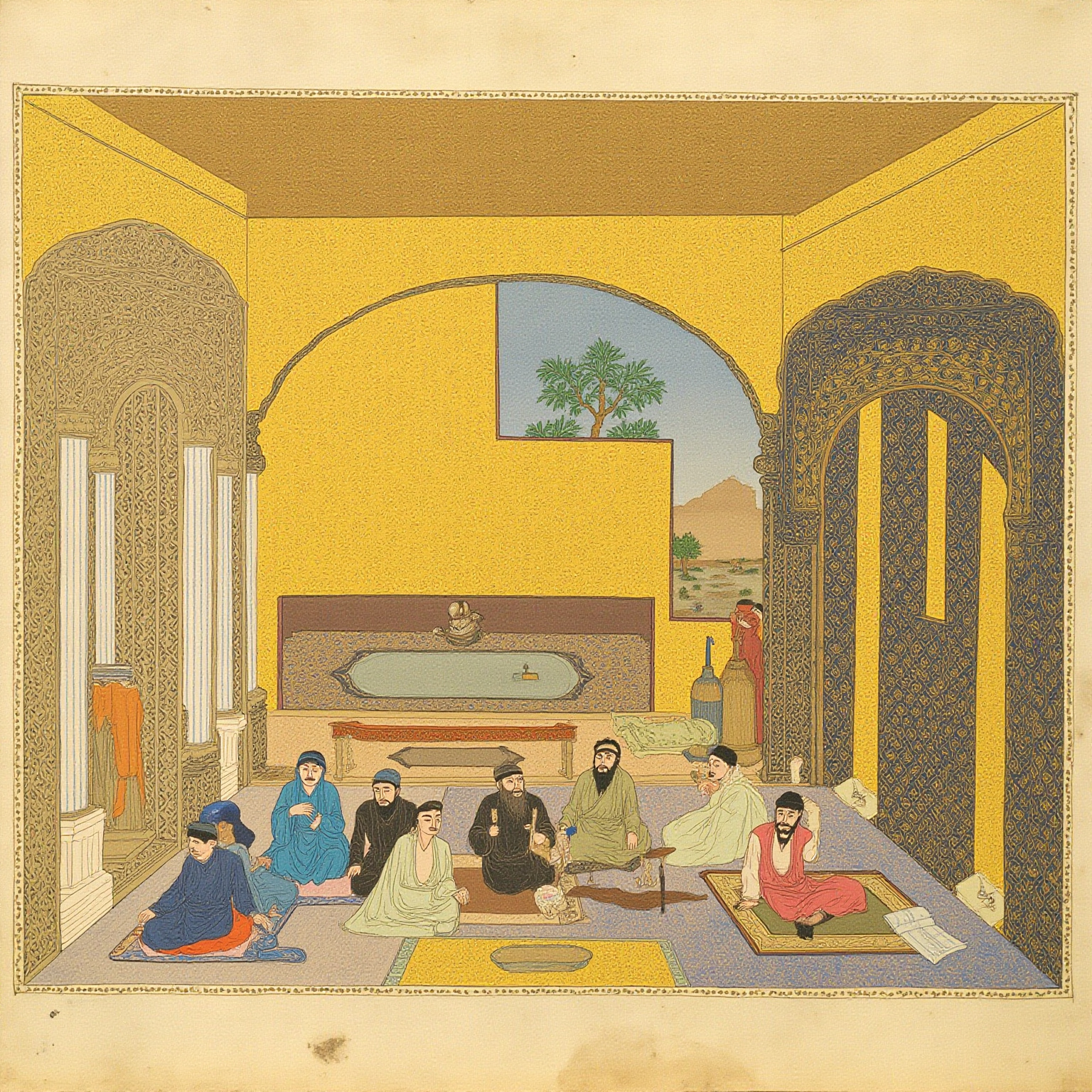
The knowledge that does not turn the soul away from this world is of no avail.
不能使灵魂超脱此世的学问,终究无益于人。
金句 · 序章 · 论知识之病
Four books, ten chapters of alchemy
The book runs four parts, ten chapters: Worship (belief and ritual), Salvation (purifying the heart), Relations with Others (ethics in the world), and Ruin (avoiding sin and repenting). The governing image is alchemy: the alchemist forges base metal into gold, and Islamic spiritual practice forges the nafs ammarah, the commanding self driven by appetite, into the nafs mutma'innah, the soul at peace. This is not the alchemy of a European flask. It is a cosmological metaphor, meaning that everything which exists is a manifestation of God's spirit, and the transformation of the soul is, at root, a return to that source. And happiness in the title is not worldly ease. It is the soul's ultimate homecoming once it has turned toward God.
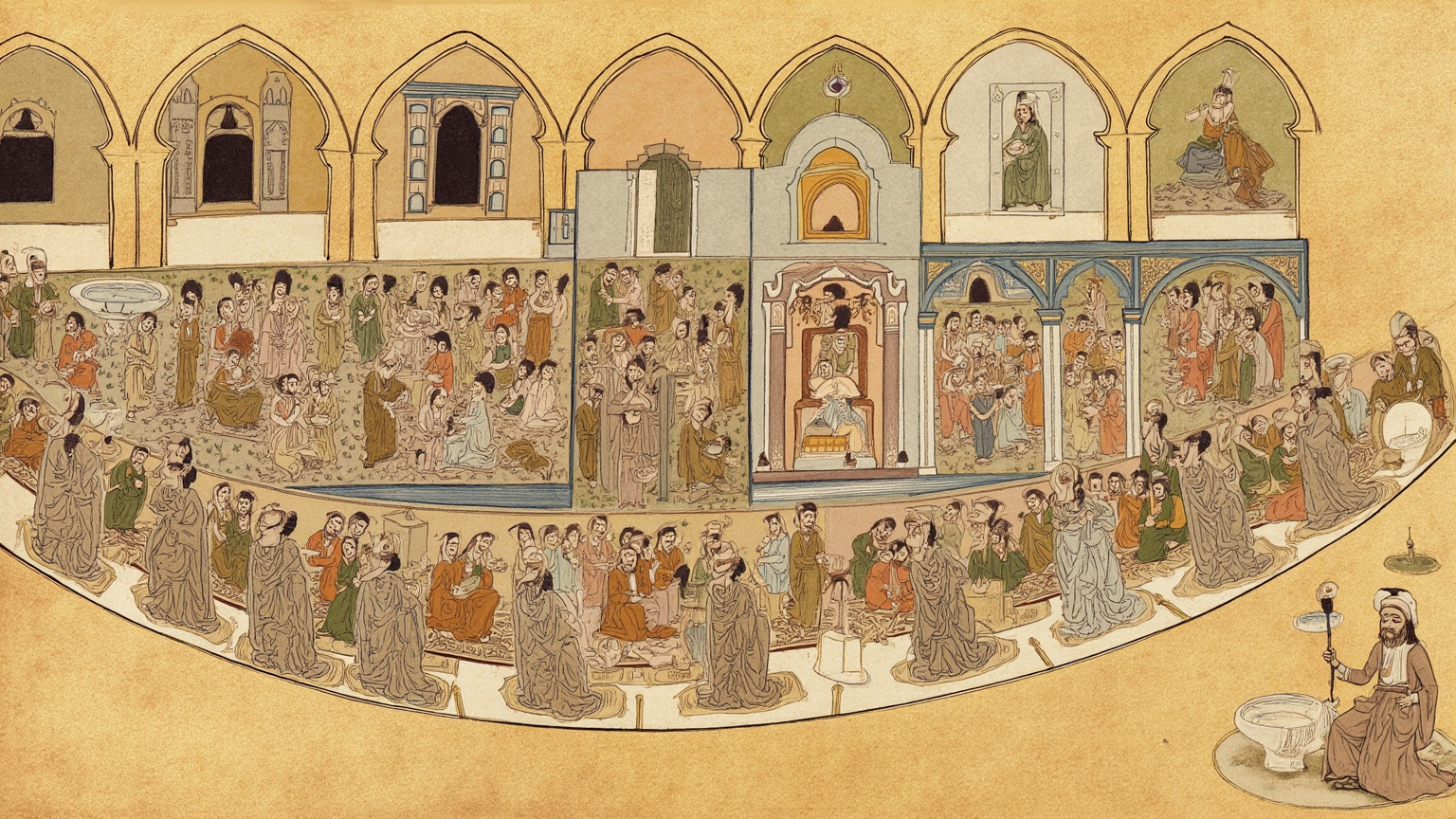
The world is a bridge: pass over it, but do not build upon it.
今世是一座桥——从上面走过便是,不要在上面造屋。
金句 · 第四卷 · 论避罪与悔过
There is a structural detail that gets overlooked: the theological discussion opening each of the four parts is where this popular Persian version departs furthest from the Arabic original, the Ihya. Al-Ghazali makes the case for the Sufis over and over — mystical experience cannot stand apart from religious law and ritual, and asceticism cannot substitute for prayer and fasting. That stance took the argument away from the Baghdad theologians who accused the Sufis of ignoring the rules, and let the ascetics stop practicing in the shadows.
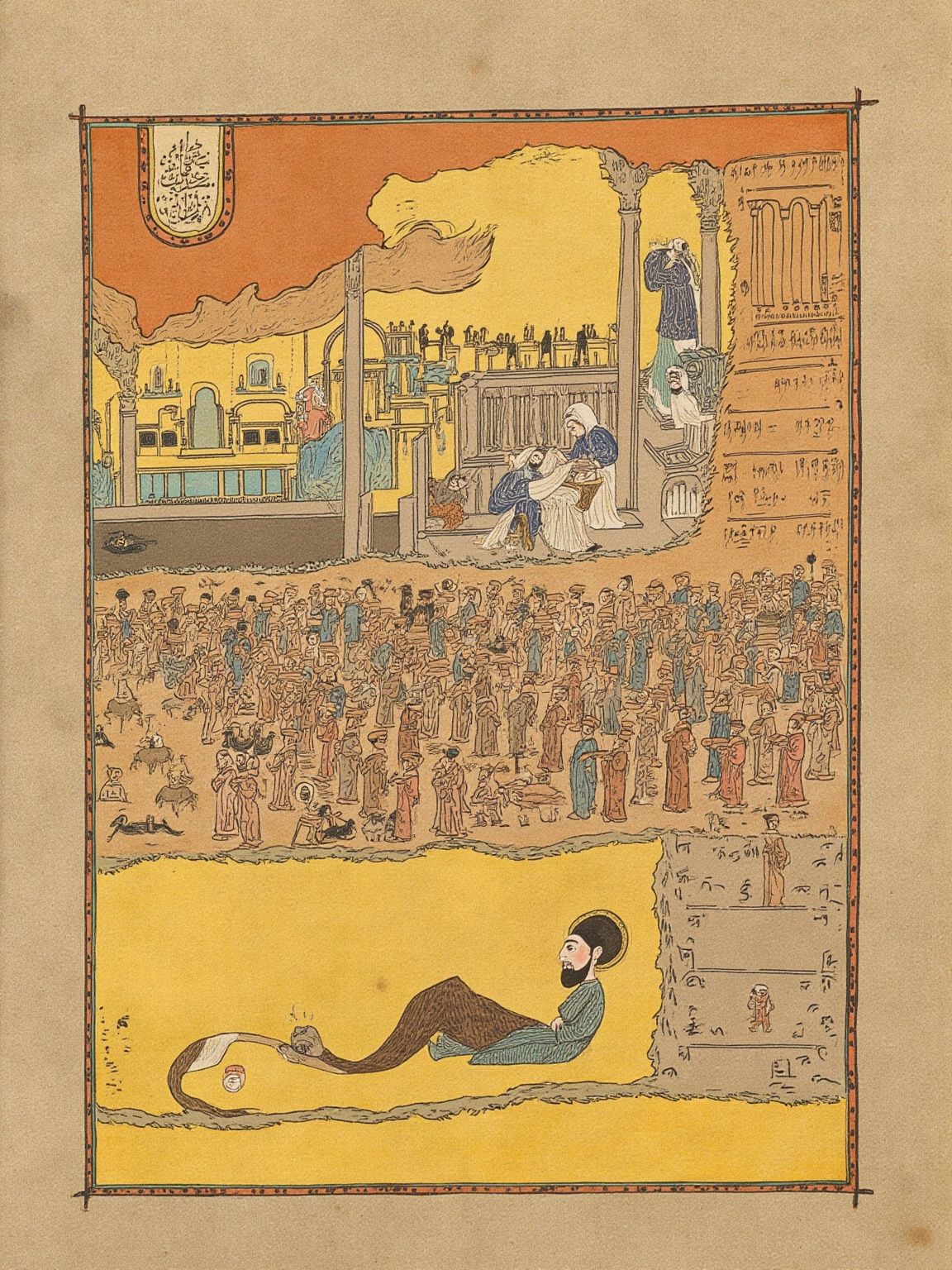
Desire is the raw ore; patience is the furnace; and God is the refiner.
欲望是原矿,忍耐是熔炉,而真主是那炼金的人。
金句 · 第二卷 · 论欲望之锻
Bringing three forces together
What makes this book formidable is that it brings three forces that had never much liked each other — scholastic reason, Islamic law, and Sufi direct insight — into one small volume. Al-Ghazali had already dealt Greek rationalism a heavy blow in The Incoherence of the Philosophers; this book is what came after, his turn toward the Sufis. He is not retreating into philosophy. He is giving theology, ritual, and mystical experience each a place under the single heading of spiritual practice. The effect has lasted to this day: Persian-speaking Islamic spiritual culture, from Iran through Central Asia to South Asia, draws its fire from this book almost across the board.
Even medieval Christian scholars read it — theologians of Thomas Aquinas's generation put it on their reading lists. It is one of the very few Islamic spiritual texts the whole of Western intellectual history has bothered to name.
The first time I read the passage about him losing his voice mid-lecture, I went back and read the previous page again. A star professor who could dismantle any opponent from the highest chair in the land, driven off the podium by his own tongue: this is not a literary flourish, it actually happened to him. He could not go on speaking because something argument could no longer hold down had already started to move.
The tongue of the learned is tied, that the heart of the seeker may be unloosed.
学者的舌头被束住,正是为让求道者的心松开。
金句 · 自传《迷途指归》 · 论失语与转向
Why it is still worth reading
Its physical texture — the feeling in the stomach after a fast, the ache in the knees at some particular bow during night prayer, the cool of wind moving between the columns of the Damascus courtyard and onto your face — none of that survives in a companion essay. Left as pure concept, the alchemy metaphor stays jargon forever; only by walking the road with him does the commanding self forged into the soul at peace turn from a figure of speech into something you can feel happening. There is also the rhythm of his Persian: a scholar writing for ordinary believers instinctively breaks long sentences into short ones and brings technical terms back down to everyday speech. That act of bending toward the reader is itself part of the book.
A reason to read the text itself
A companion essay gives you the map; the text itself is the ground. Knowing the outline — that he quit his post, wandered for eleven years, and came home to write this — still leaves the reading itself undone. You have to go read, for yourself, how he writes about the morning prayer, what he owes his neighbor, the fine grain of repentance. Those are the sentences pinned to his own life, and they are what actually carries the book's weight.
A man who could talk his way through anything was, in the end, driven off the podium by his own tongue. That alone is his entire footnote to the word happiness.
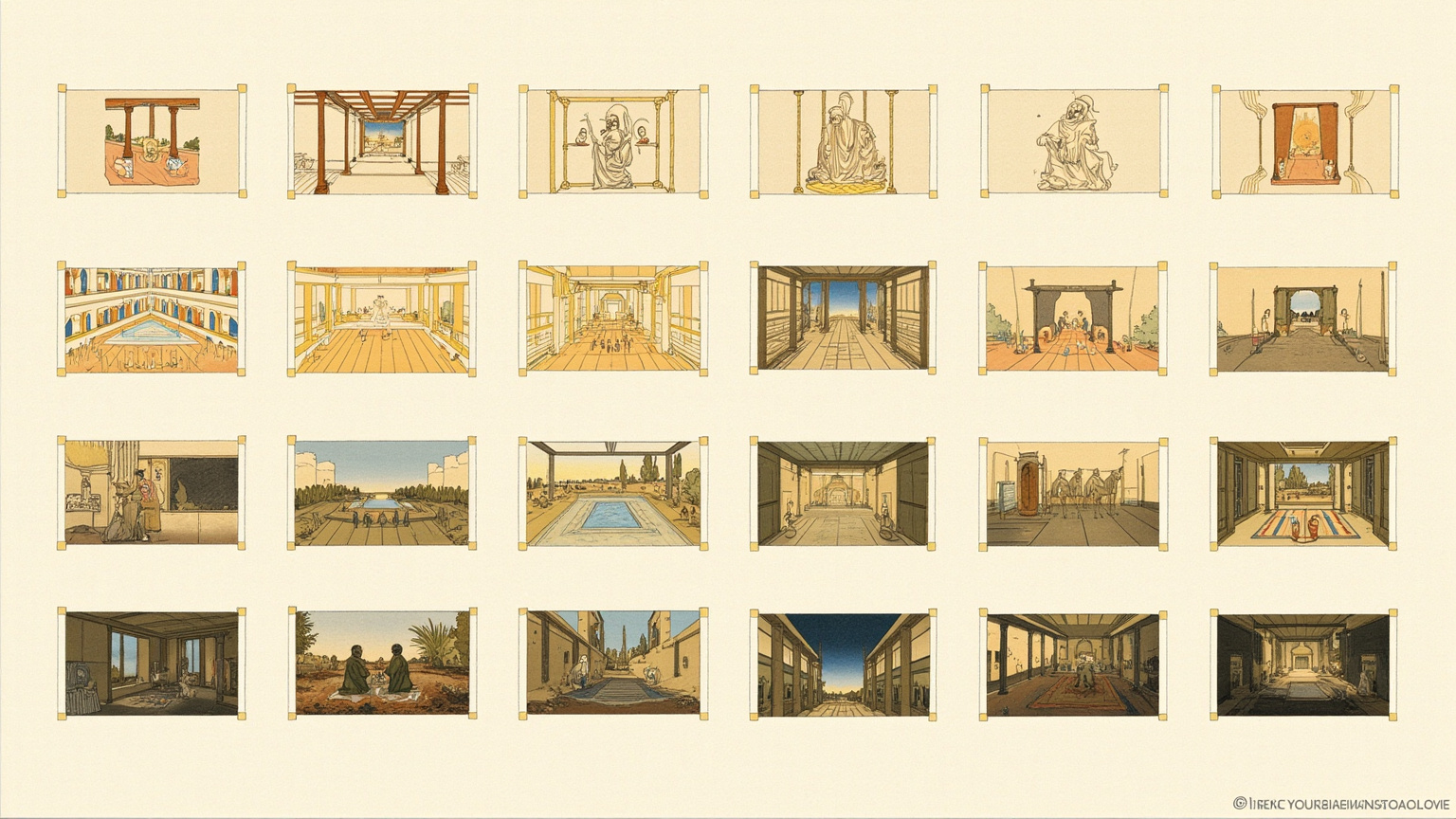
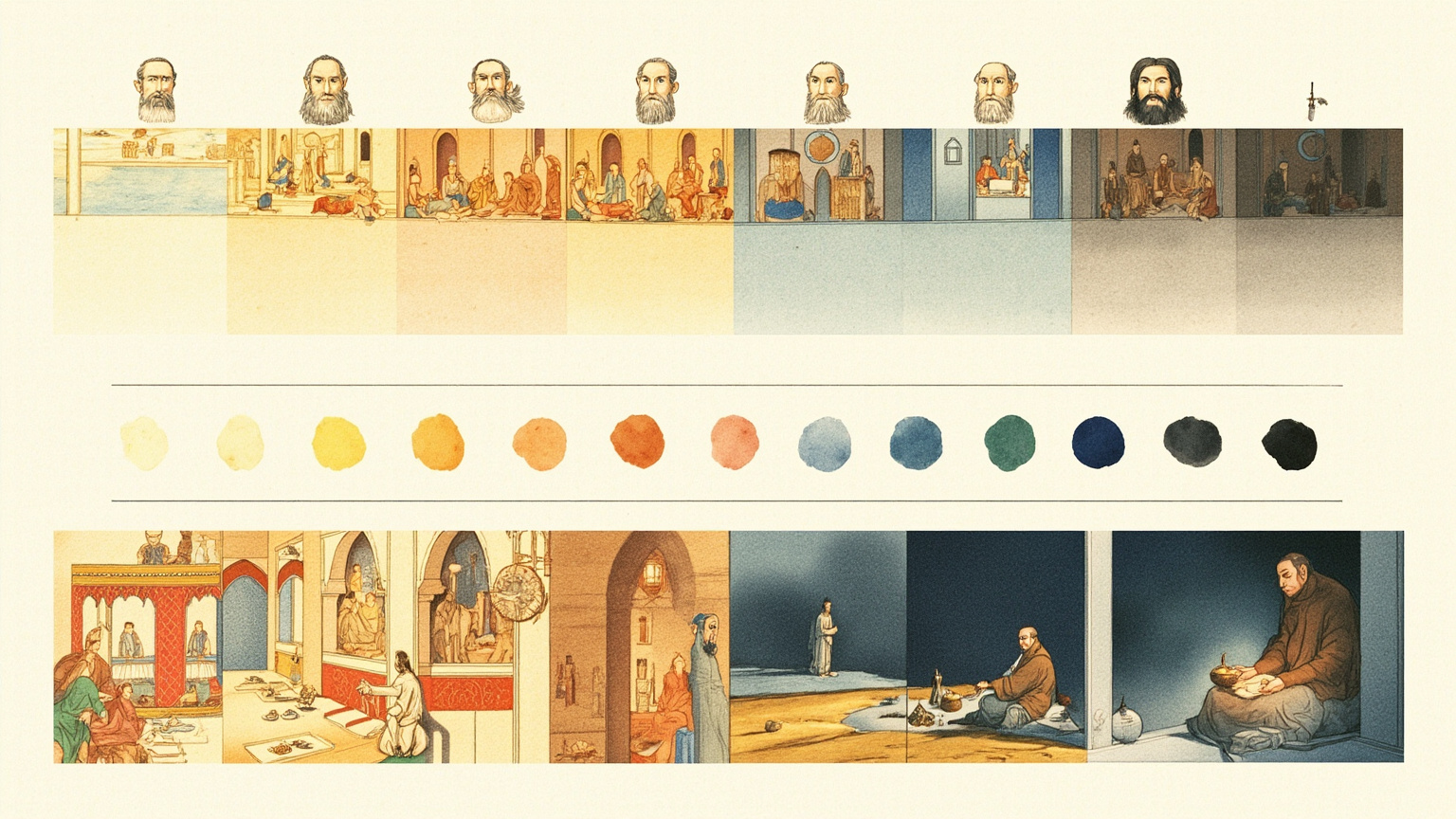
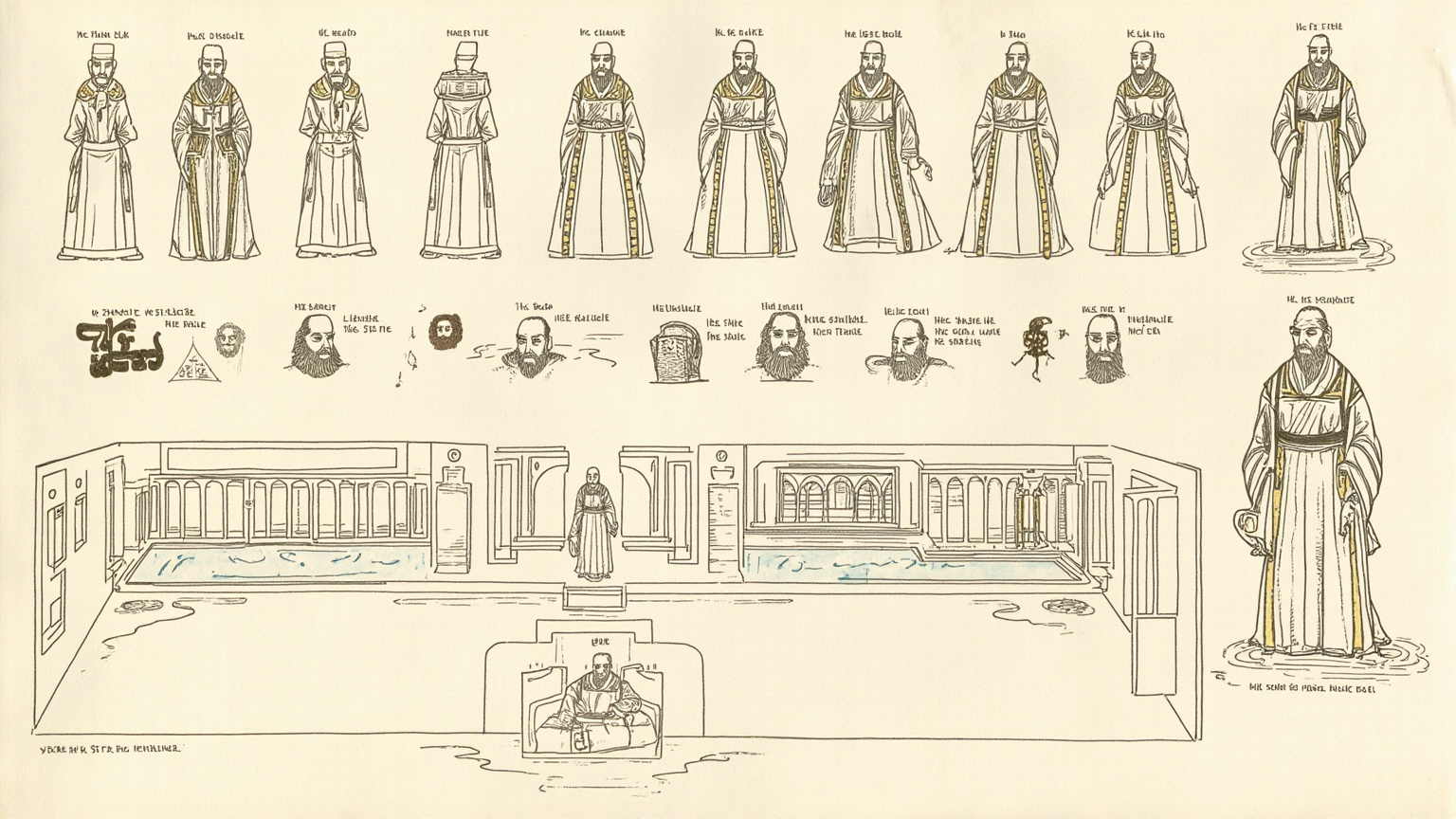
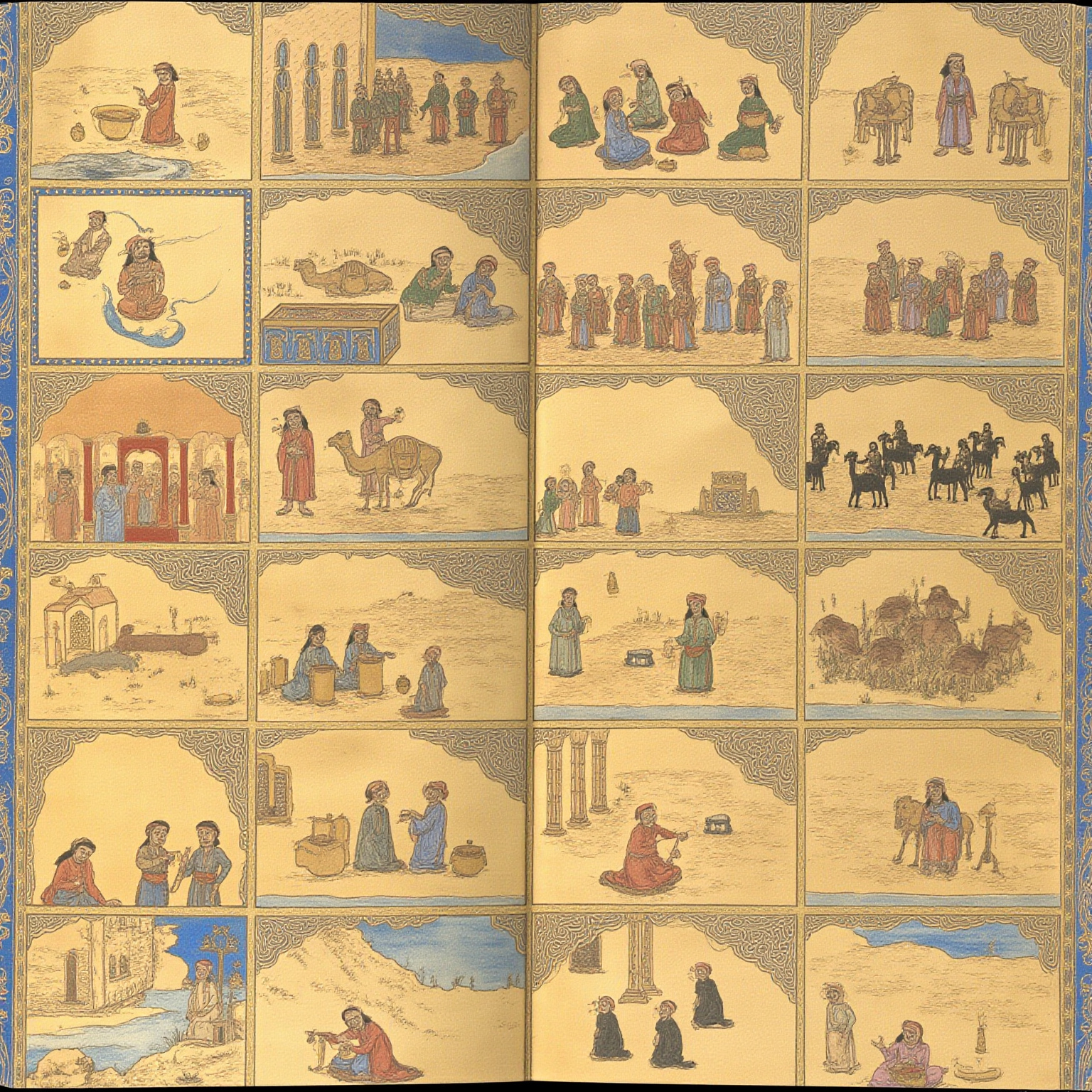
Art Direction4 plates
Before the guide was written, this book got a visual foundation — every illustration you just read grew out of it.