And Quiet Flows the Don (Tikhy Don / Тихий Дон) · Companion GuideStories · Issue 00
10 minutes to And Quiet Flows the Don — a Cossack ground down again and again between Reds and Whites
Before the war rolled over him, he wanted one woman. By the time it was done, he had buried her too.
Text and illustrations produced by the pipeline
ImaReadFolio 02 — 06
Opening: A Rifle on the Threshold
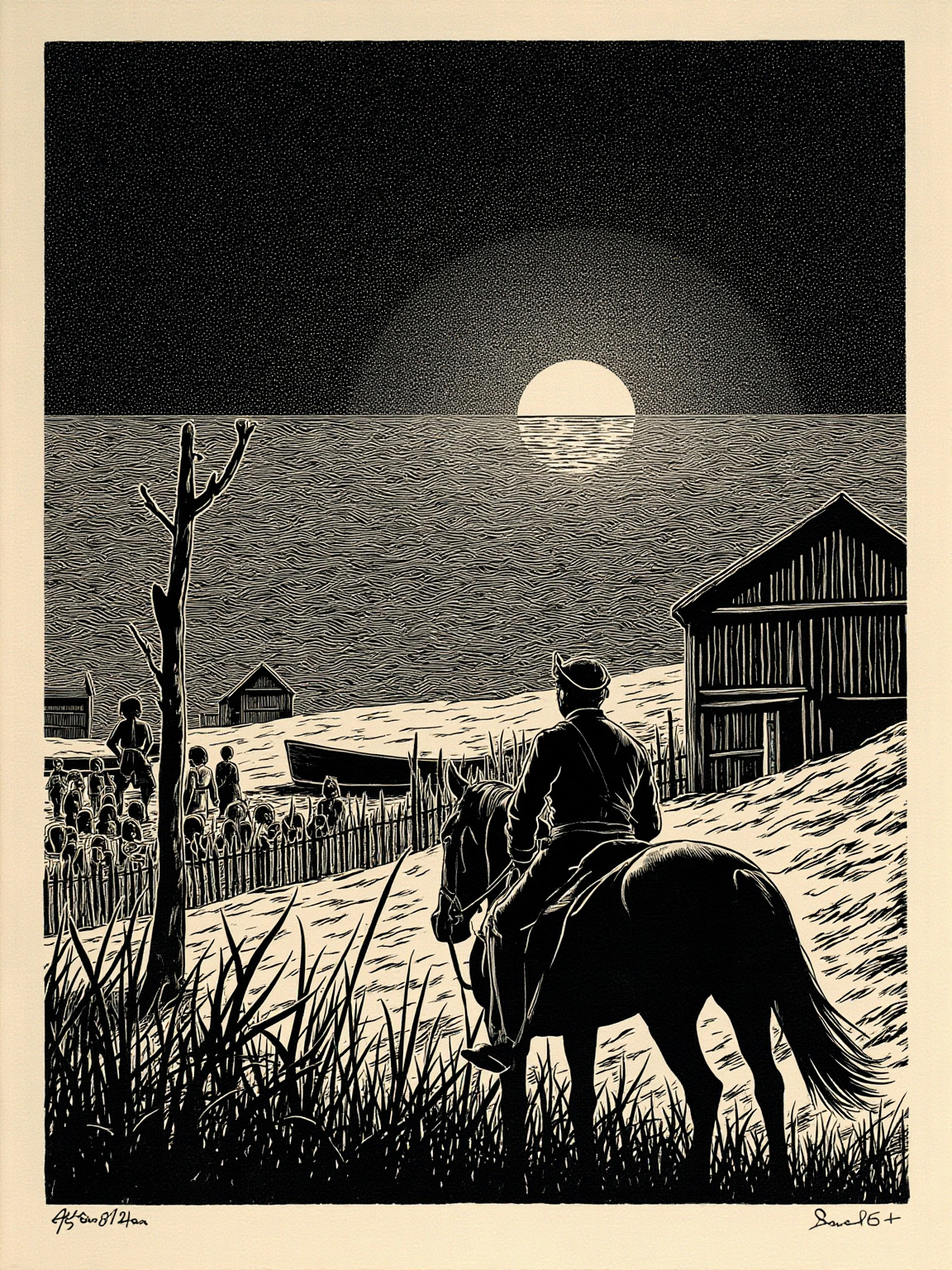
A rifle and two cartridge belts, set down at a door. The man who sets them down is Grigory Melekhov, a Cossack of Tatarsky on the Don, back from the last battle he lost in the civil war, having walked the whole way home from the south. No wife comes out to meet him — both women are dead. No parents either — his father limps, his mother's hair has gone white waiting. Only a small boy crouches behind the fence, watching this stranger who is his father. That is the last paragraph of the novel.
It took him ten years to reach that doorstep: through the mud of the First World War, through the cavalry of the Reds and the Whites, through two betrayals, two loves, a Cross of St. George, and finally the burial of a dead woman by a patch of wildflowers on the steppe. How much does a man have to live through before he stands at his own door and cannot make himself go in? That is the question And Quiet Flows the Don is actually asking.
What Kind of Book This Is
And Quiet Flows the Don is one of the great doorstop novels of twentieth-century Russian literature. Mikhail Sholokhov started writing it in his early twenties; the four volumes came out between the late 1920s and the early 1940s, and in 1965 the book won him the Soviet Union's Nobel Prize in Literature. It pulls the camera back from one village on the Don and sweeps through the First World War, the February Revolution, the October Revolution, and the Cossack uprisings against Soviet rule — nearly the whole history of the Russian Civil War in one book. It gets compared most often to Tolstoy's War and Peace, but Sholokhov's version is bleaker, dirtier, and far less forgiving.
It is remembered for another reason too: the sheer detail. How Cossacks cut hay, how women knead dough, how a horse gets reshod — reading it feels like leafing through a census of a way of life that is dissolving even as it is recorded, a way of life the revolution will grind to dust by the last page.
Three People, Two Kinds of Tearing in One Triangle
Start with the central triangle. Grigory, the protagonist, is a young man of Tatarsky with Turkish blood a few generations back — his black hair and hooked nose stand out among the fair, light-eyed Cossacks around him, which later becomes a political liability. Two women live in him at once: Aksinya, his neighbor Stepan's wife, hot as a struck match, and Natalya, married to him properly, through his family's arrangement — steady, stubborn. The ten years Grigory spends swinging between these two women are the same ten years he spends swinging between the Reds and the Whites. It is one and the same motion.
Why It's Worth Reading Even After You Know the Plot
What you have just read is only the skeleton and the main muscle. Sholokhov's real strength lies in details no summary can hand you — how the morning mist lifts off the Don, how a mud-brick wall cracks, how a straw of wheat works its way into a new bride's heel. He never writes the fighting itself; he writes how much mud is caked on a horse's hooves afterward. The mark of a real writer is that you can smell what is on a Cossack farmwife's hands as she kneads dough in 1912. No summary can give you that texture. Rereading it once you already know the ending, watching Grigory's younger self stumble toward all of it — that backward ache is the most valuable thing this novel has to give.
ImaRead6
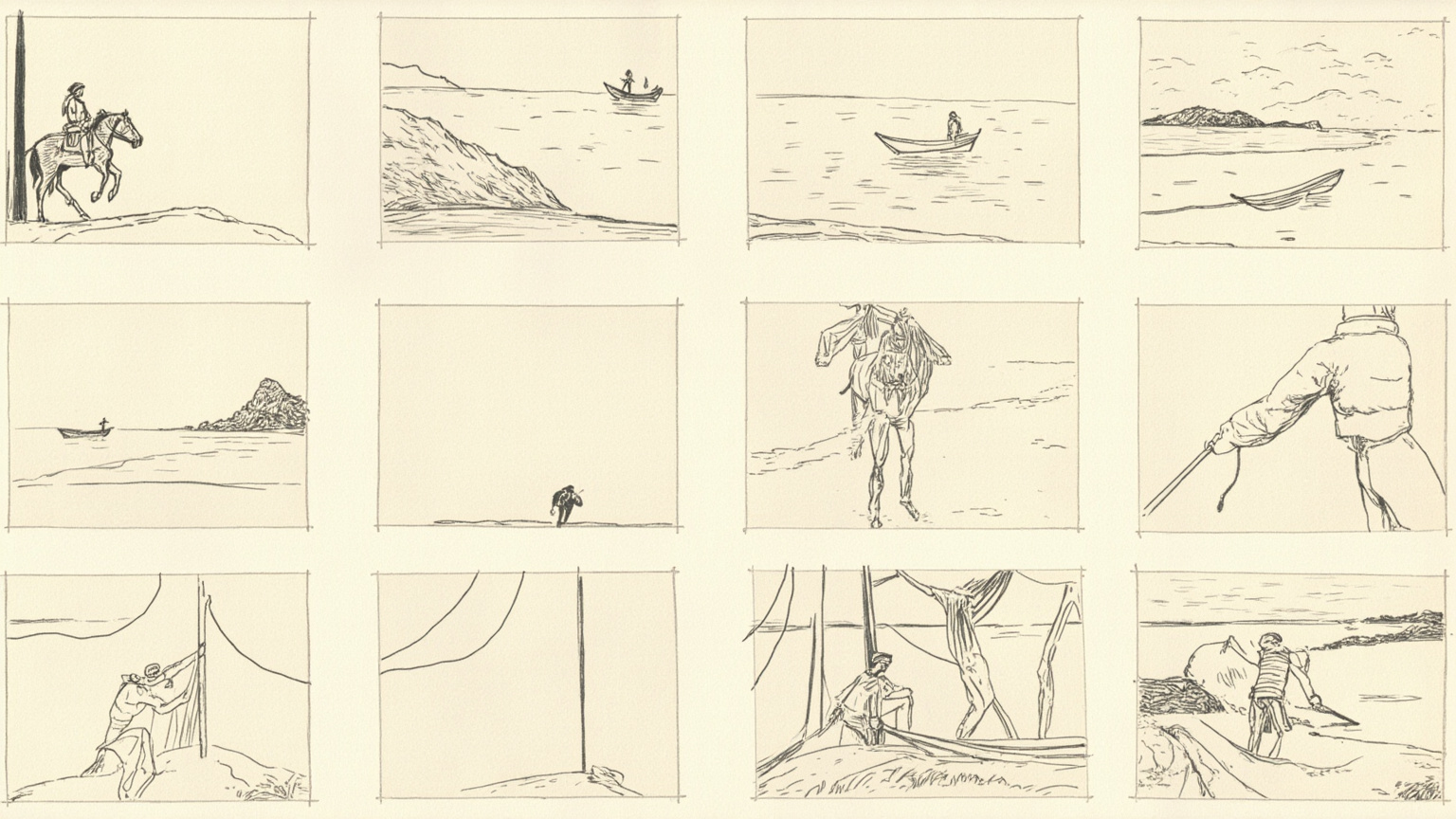
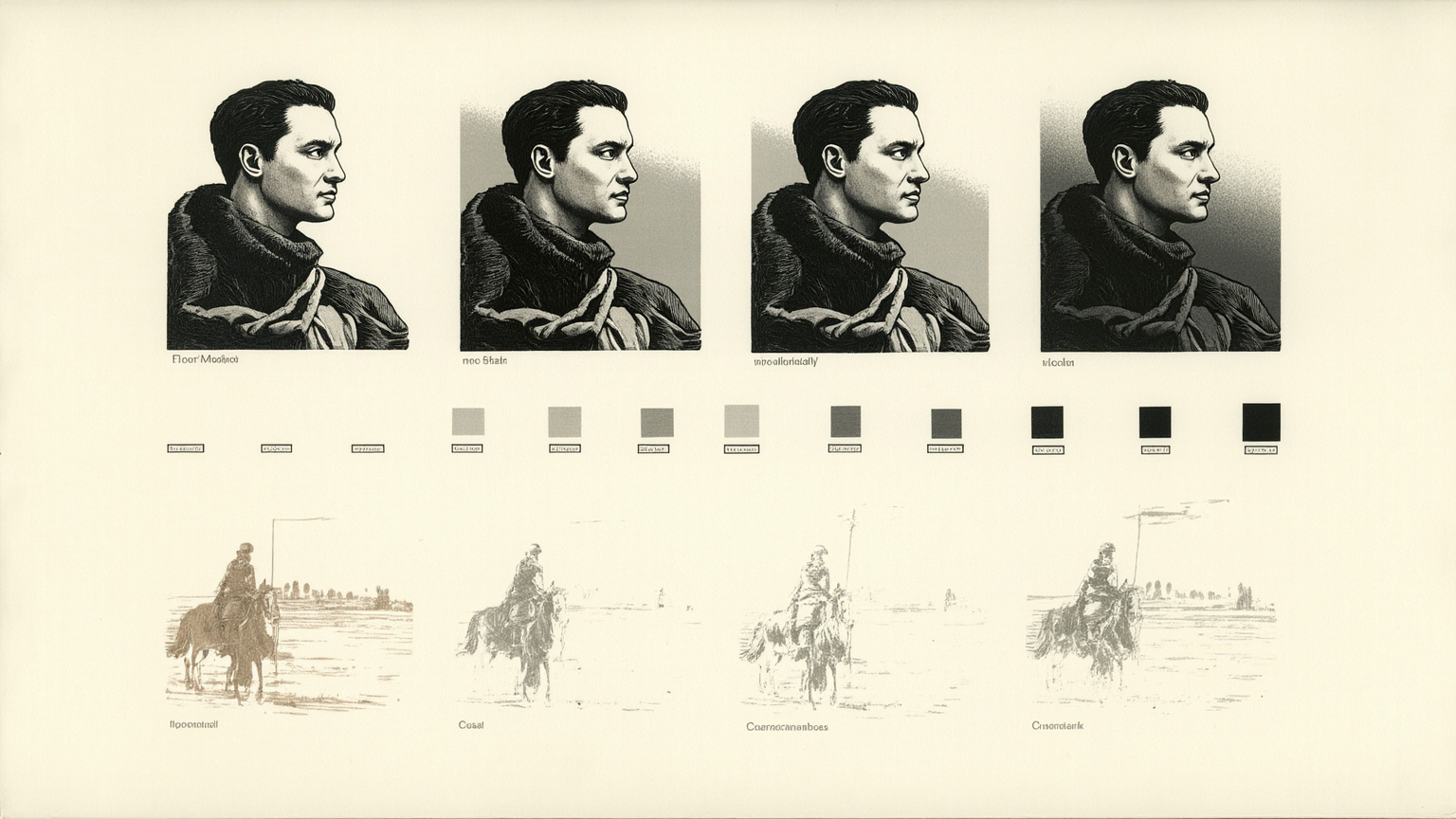
Art Direction4 plates
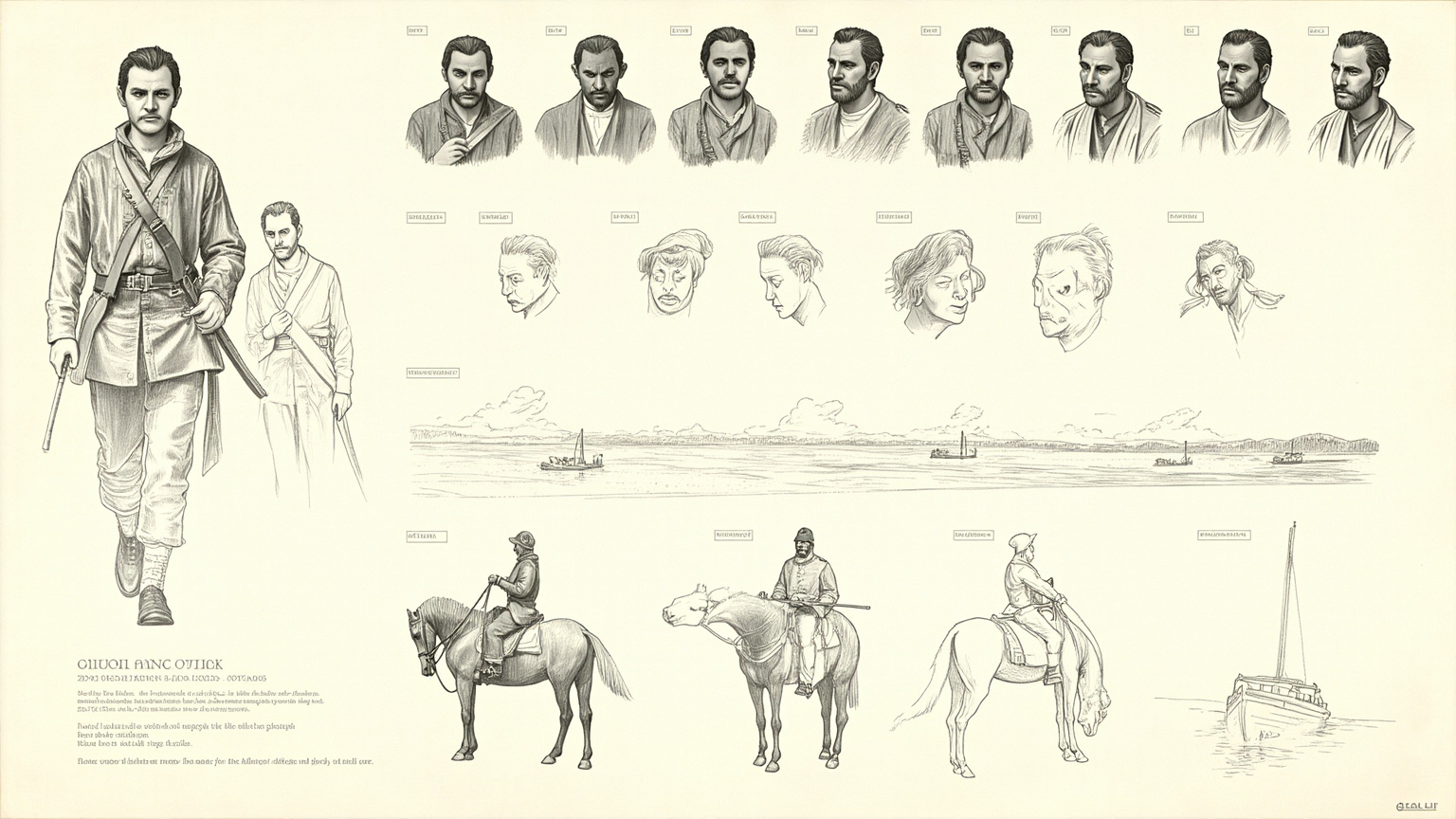
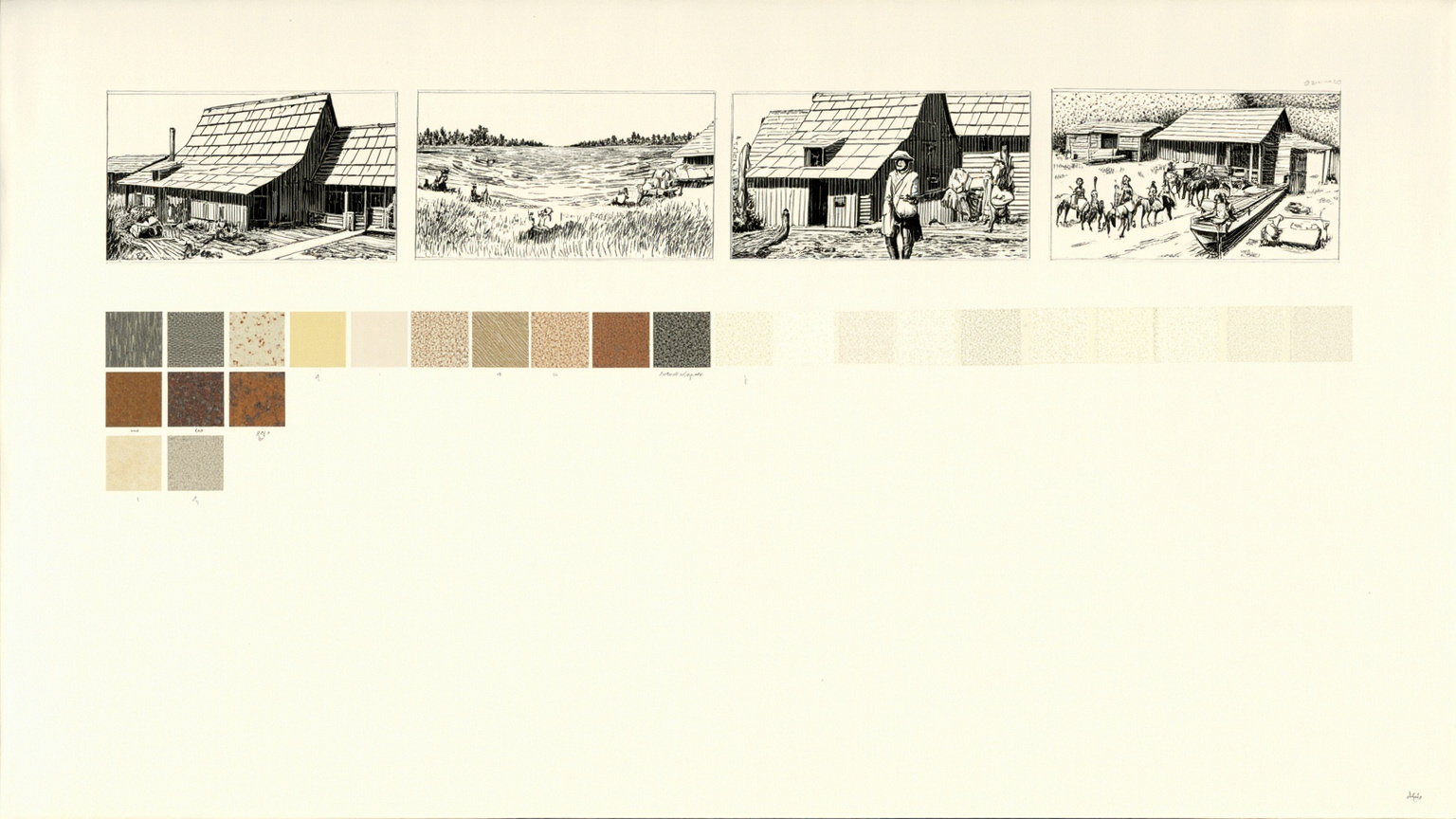
Before the guide was written, this book got a visual foundation — every illustration you just read grew out of it.
His father, Pantelei, is patriarchal Cossack order made flesh — a man with a lame leg and a temper that frightens the whole household. His mother, Ilyinichna, is the portrait of every Cossack mother: she sends her sons off to war again and again, waits at the edge of the village for news again and again, and carries the bodies of her son and her husband home. Behind every scene of battle in this novel stands a woman worn thin at the stove.
How the Story Gets to That Doorstep
The novel opens on a warm, pastoral scene. In Tatarsky on the Don, Grigory, the younger son of the Melekhov household, gets tangled up with Aksinya, his neighbor Stepan's wife. Following old Cossack custom, both families move quickly to arrange a marriage for Grigory, and he weds Natalya of the Korshunov family. The wedding is a loud, festive affair.
The honeymoon is not even over before Grigory bolts. He runs off with Aksinya and takes work as a groom on the estate of the landowner Listnitsky, whose son, an officer's boy of the old regime, quickly starts eyeing Aksinya himself. Natalya, left behind in the village, attempts suicide and survives; word of it reaches Grigory, and still he does not turn back. In the first two volumes Sholokhov already shows human nature at its ugliest working muscle: a man capable of abandoning a wife he has just married to chase a woman who already belongs to someone else. He is not a villain. He is simply being torn between desire, tradition, and family honor.
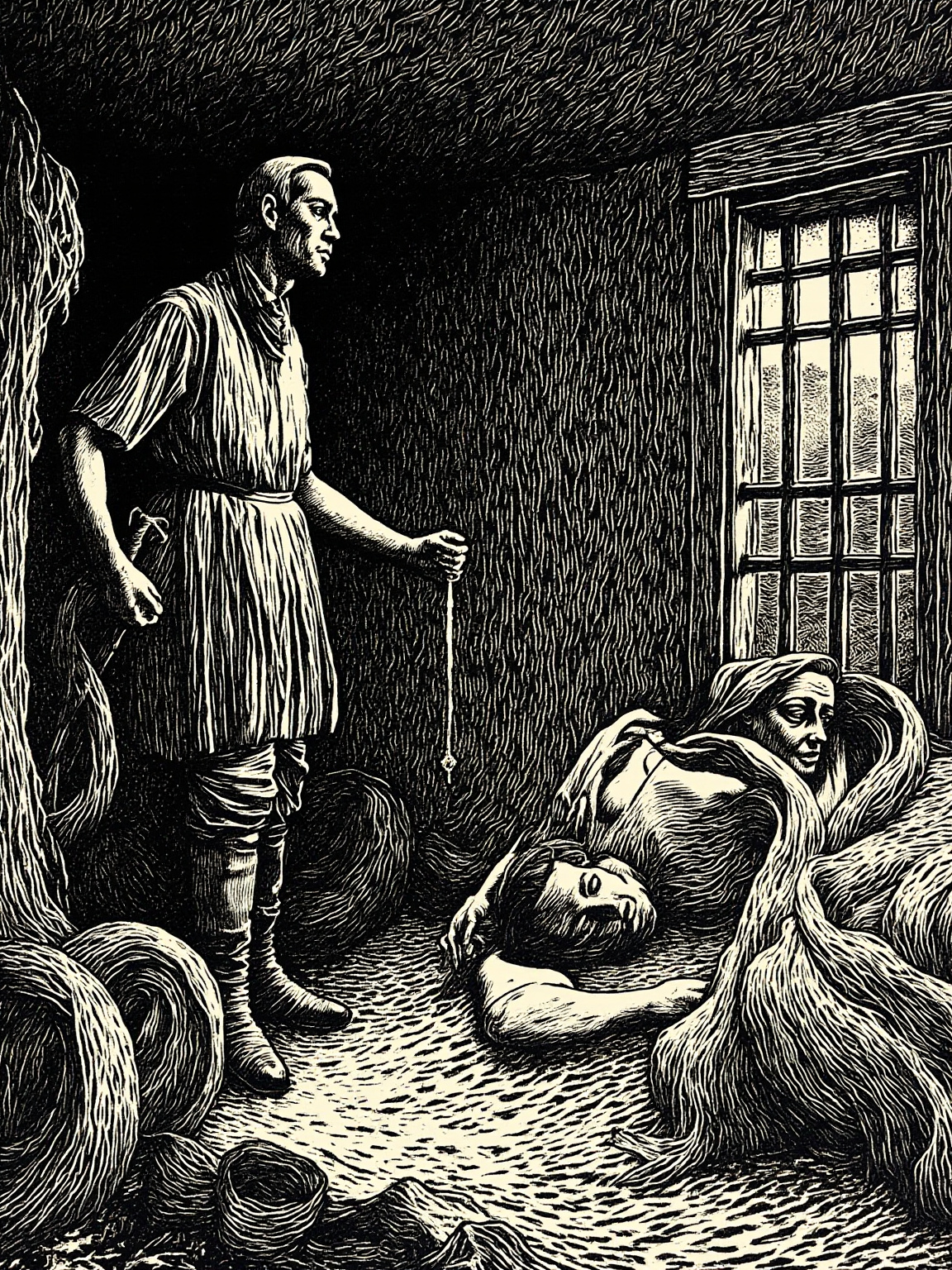
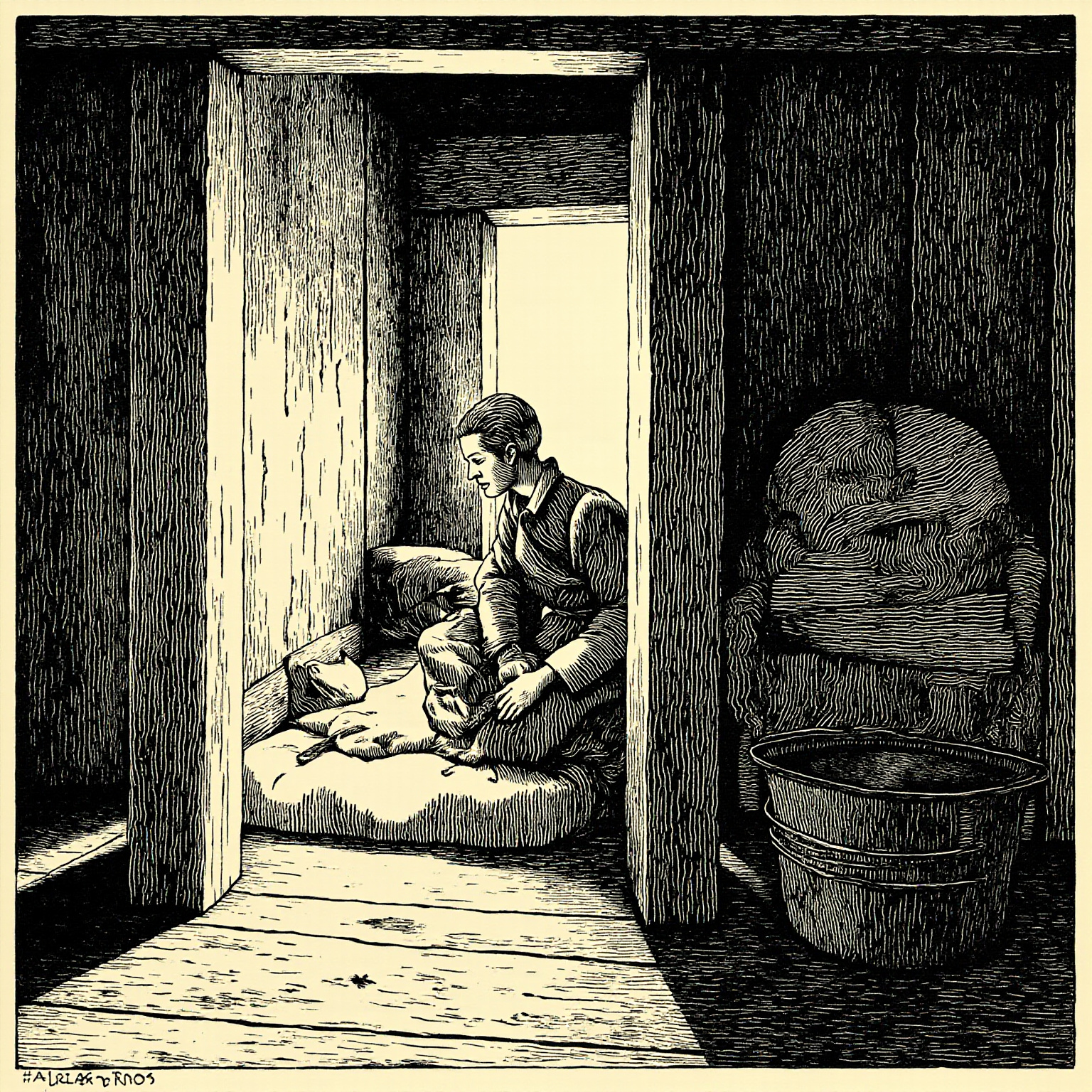
What makes Sholokhov's handling of this affair so good is that he never sits in judgment. He puts the two of them in a hay barn on the estate, cold air leaking through the boards, Aksinya's shoulder blades catching the moonlight, and he simply writes desire as it is — neither dressed up nor cut down. That plainness makes a brutal contrast with what the war later does to this body, to this love.
The War Tears the Whole Pastoral Scene in Two
ImaRead3
When the First World War breaks out, Grigory's whole generation of Cossack men is called up. Don Cossack cavalry had always been the Russian Empire's elite, and they charge for the Tsar on the eastern front. Grigory distinguishes himself in battle after battle and earns the Cross of St. George. But honor, in Sholokhov's hands, comes out cold: he drives his bayonet into a Polish boy's stomach and is decorated for it before the blood on his own hands has dried. What is chilling is not the killing itself. It is how fast pride and doubt grow in the same man, at the same rate.
What is the front, really? Revolutionary pamphlets passed around in the wounded men's barracks. The Bolshevik Bunchuk arguing land and labor to a knot of Cossacks. News of the Tsar's abdication, then the February Revolution, then the October Revolution, landing one after another like blows. Grigory goes home to recover from a wound, makes a brief peace with the pregnant Natalya, and even sets Aksinya aside for a while. But he is not the man he was. He has fought, he has killed, and he knows now that honor is one thing and staying alive is another. The Tatarsky he knew — old men, hired hands, the threshing floor, the sound of milking at dawn — is falling away, piece by piece, off the corpse of imperial Russia.
Between Red and White, a Man Who Cannot Find Ground to Stand On
The outbreak of civil war is the deepest pit in Grigory's life. Influenced by Bunchuk and others, he first joins the Red Cossacks, then quickly discovers that grain requisitioning, the purges, the killing of his own people are nothing like the Cossack way of life he knows. He switches to the Whites, and for a time is even pushed forward to lead the Cossack uprising in the upper Don. None of it comes from conviction, and none of it comes from opportunism. It is simply a man driven by the times, searching for the next direction that will not get him trampled.
This stretch of wavering is the hardest reading in the book, and the most valuable. Sholokhov refuses to make Grigory a hero or a traitor; he simply lets him grind through days where he belongs on neither side and is suspected by both. Grigory's tragedy is that there was never a side for him to stand on in the first place — the Cossacks fit neither the urban Bolsheviks' utopia nor the old world the exiled Whites wanted restored. He is an outsider to both. This is Sholokhov's portrait of the Cossack people as a whole: caught between two ages, always retreating, with nowhere left to retreat to.
How the Melekhov Family Gets Ground Down
The family is the first thing the war breaks. Grigory's older brother Pyotr is cut down by Red cavalry in a charge — the first life the Melekhov household gives up. Pyotr's wife Darya, already loose before his death, grows wilder after it, contracts a venereal disease, and drowns herself in the Don. Not killed by the enemy — drowned by her own hand. Sholokhov makes the distinction plain: this is what war looks like when it rots a person from the inside.
ImaRead4
The hardest to read is Natalya. She waits for Grigory to come back to her, and what finally reaches her is word that he has run back to Aksinya again. This time she does not attempt suicide. She tries to end her pregnancy herself, and bleeds to death at home. No one kills her. She drives herself to it. The most innocent, most patient person in the family is so often the one who dies quietest, at the hands of war.
A Burial on the Steppe, With No Ceremony
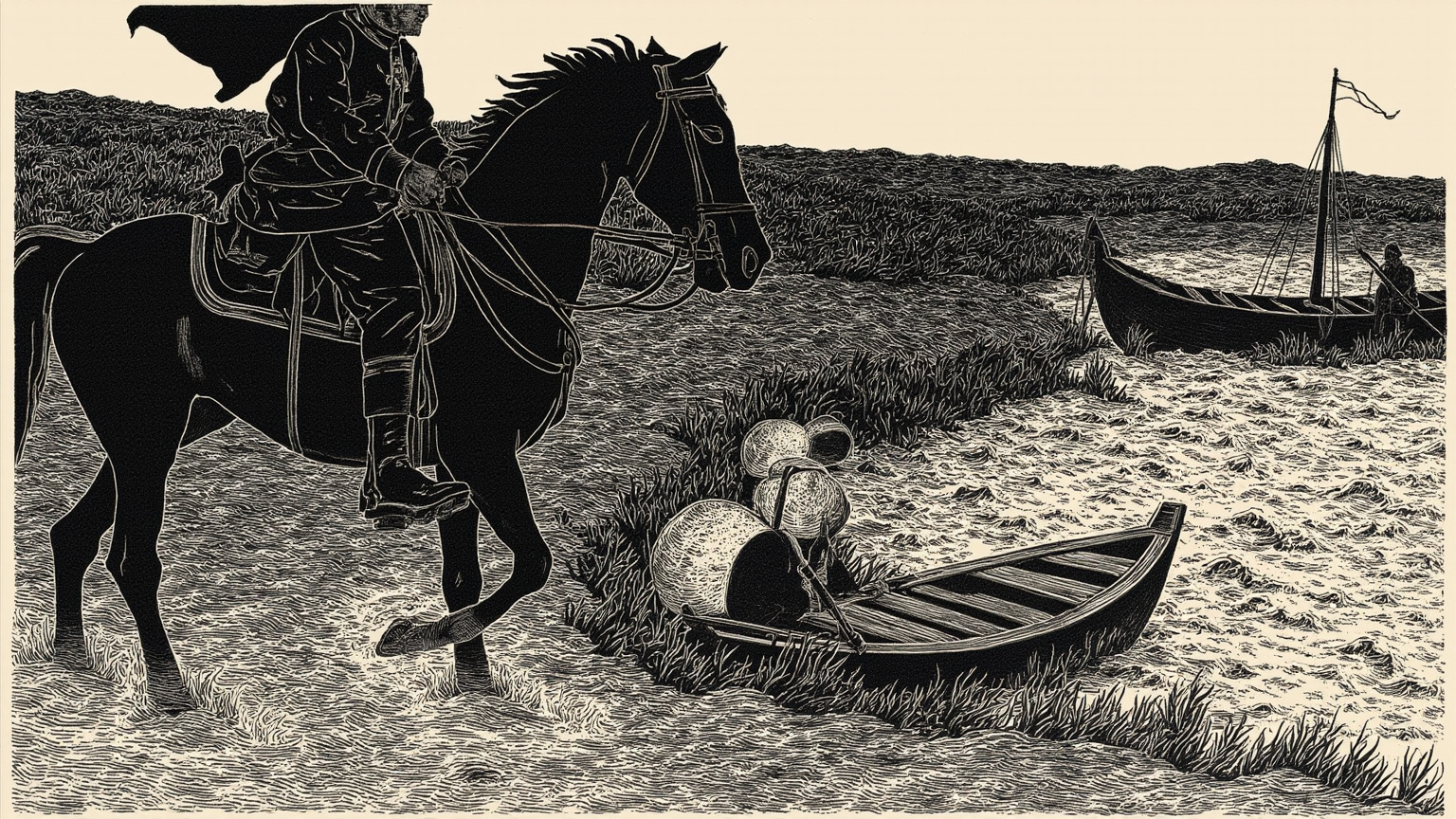
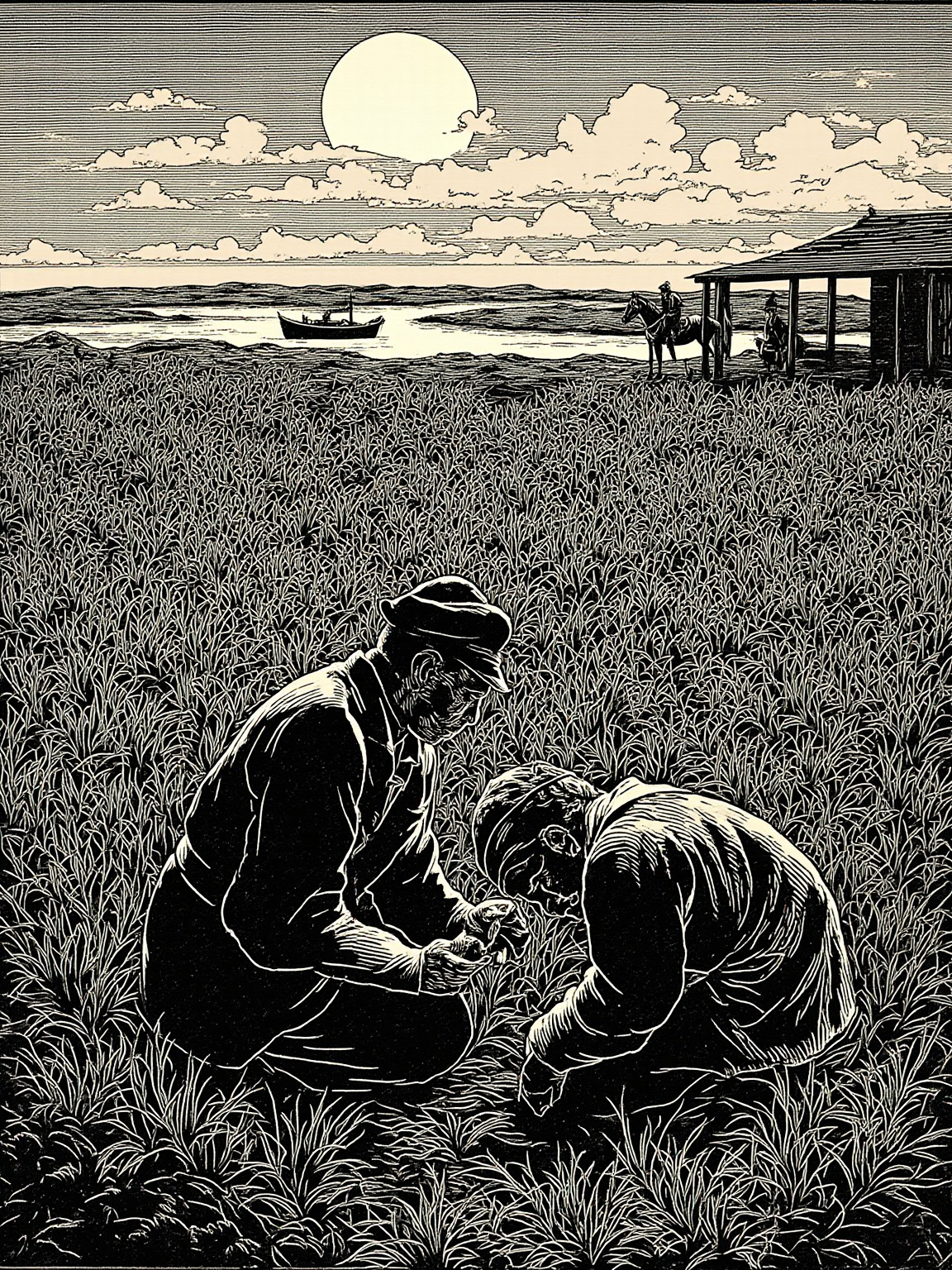
As the civil war winds down, the Cheka puts out a warrant for Grigory as a former White officer. He flees south with Aksinya and a few old comrades, trying to cross the border alive. On the road, Aksinya is hit — a stray bullet out of nowhere, out on the open steppe. Grigory digs a grave by hand at the side of the road and buries her there. Old Cossack custom does not allow a woman to be sent off so quickly, so plainly, but by then he has no room left to care.
The first time I reached this page, I sat still for a while. Ten years of running, ten years of loving, ten years of fighting, and in the end their bodies lie side by side while no one remembers how it started. Sholokhov does not flinch: the real tragedy of love is not that someone tears it apart, but that history's foot comes down on it, one step at a time, until it is flat.
The Don Says Nothing. It Only Flows.
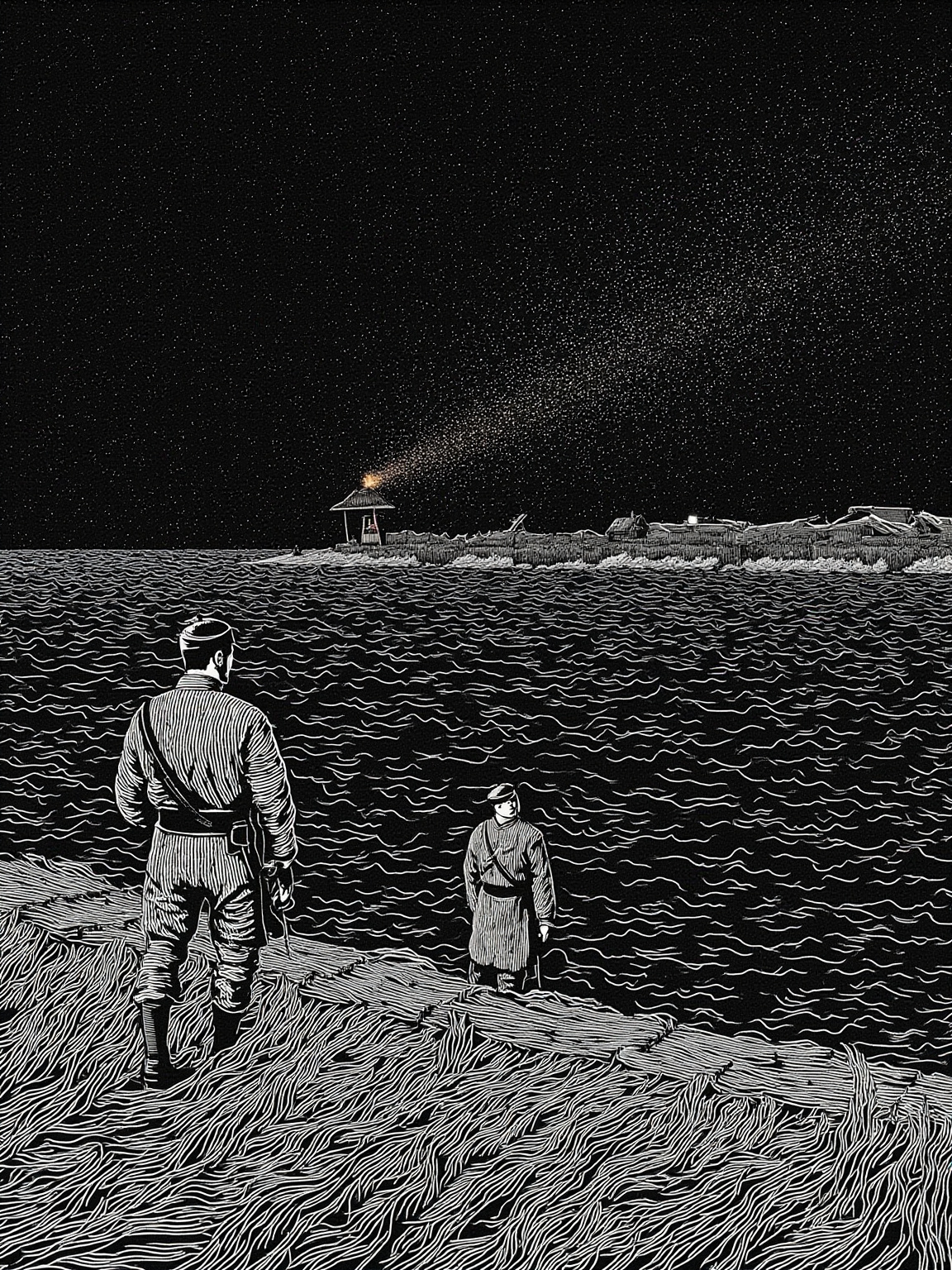
The river in the title is the novel's quietest and most lethal character. It watches Grigory born, in love, at war, killing, betraying and betrayed, and finally lying on its bank with a dead woman beside him — and it says nothing. It only flows. Wars and politics come and go, the blood of Cossack sons runs out uselessly across the steppe, and the water takes no side. Calling it And Quiet Flows the Don is itself an ironic elegy.
Why has literary history held onto it so tightly? Because it does everything a world-class novel is supposed to do: it turns sweeping history into a family you can touch, folds the whole ideological struggle into one man's pull between two women, and puts an entire nation's sense of weightlessness onto the shoulders of an ordinary person who is neither hero nor traitor. Grigory is one of the most complicated men who ever wavered in twentieth-century fiction. He belongs to no side — only to the generation that got ground down.
War does not finish people off on the battlefield. It kills the home they were waiting to return to, first.