Araba Sevdası (The Carriage Affair) · Companion Guide
马车之恋
他用法文香水和法式姿态把自己装进小说,却在别人的账本上变成一行数字。
Opening: an open carriage parked at the edge of the lawn
A jet-black open carriage sits at the edge of the lawn at Çamlıca. The young man inside doesn't get down. He just tips his hat brim a fraction lower, eyes scanning the crowd for the version of himself he wants seen today — and he himself is the one thing here most worth seeing.
His name is Bihruz Bey. He finds Turkish vulgar, his French is half-formed, and he knows French novels by heart — badly. The most famous joke among Istanbul's fashionable young men of more than a century ago is about to reach its punchline, right here on this carriage and this lawn.
What kind of book this is
The Carriage Affair was published at the end of the nineteenth century. Its author, Recaizade Mahmut Ekrem, was a man of letters from the late Ottoman period. Turkish literary history credits it as the first genuinely realist novel — the stories before it had circled the court and old legends, and this is the one where the pen finally turns on the city's own people, the ones straining to look modern. One thing worth holding onto before you start: the target isn't France. It's the posture of wearing France as a costume.
Characters and world: two people are enough to carry the whole scene
Only two people actually move this book. Bihruz Bey lives off the fortune his grandfather left him, holds a job in name only, and his one real talent is blending Turkish and French into something that sounds worldly — in his head he's living out the role of a Paris leading man, though his French can't even get a poem translated straight. Periveş is a courtesan who knows exactly what she wants, and exactly how loose this young man's purse strings are. There is no real love between them, only Bihruz's one-sided French daydream and Periveş taking whatever it offers her.
The story takes place in Istanbul at the close of the nineteenth century. The pleasure grounds on Çamlıca Hill, the crowds strolling the lawns, the wooden waterside mansions, the light on the Bosphorus, the idlers nursing coffee cups in the cafés — this is a city where the Ottoman Empire is busy modernizing, and every fashionable surface has piled up here. The carriage is more than transport. It's Bihruz's mobile dressing room: he sits inside it, sunlit, imagining himself a character who has stepped straight out of a novel.
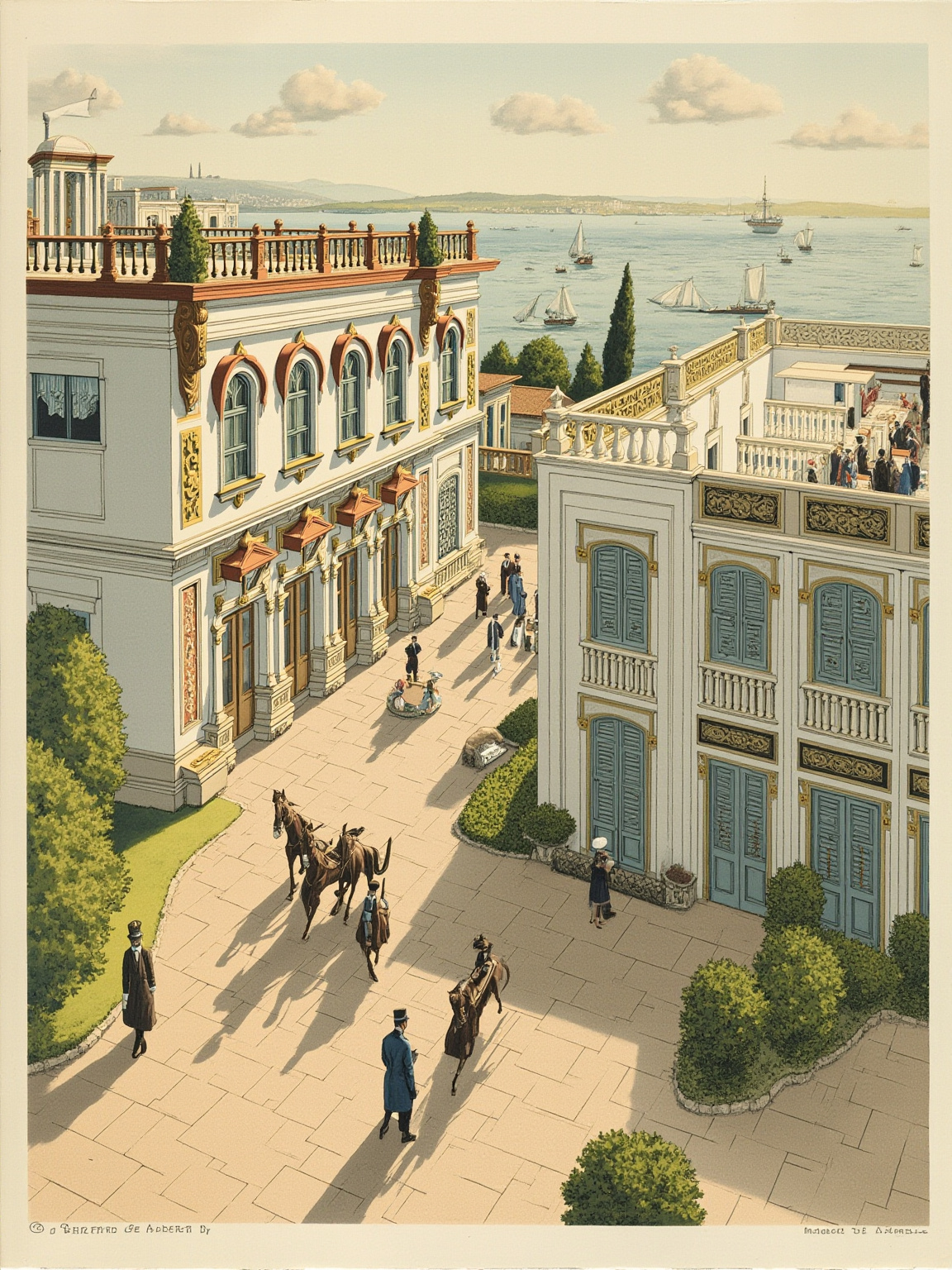
The Bosphorus lay before them in its pale pearl mist, and the yalı's wooden façades caught the noon light as if every shutter had been set there by a surveyor's hand.
海峡在淡珠白的水汽里铺开,木造洋房的百叶窗叶在正午侧光下一扇一扇交代清楚,仿佛是测绘师替每一片影子定了位。
金句 · 第一幕 · 恰姆勒贾的午光
How the plot moves: a young man talking himself into the ditch
Self-portrait. Bihruz is funny from the moment he appears. He despises Turkish and can't open his mouth without dropping in a few French words; his suit is the latest cut, and there's always a dog-eared French novel in his hand. He has never actually understood those books, but he lifts whole passages of their tone into everyday conversation — he isn't talking, he's performing an imagined version of himself. The harder he performs it, the more hollow it sounds.
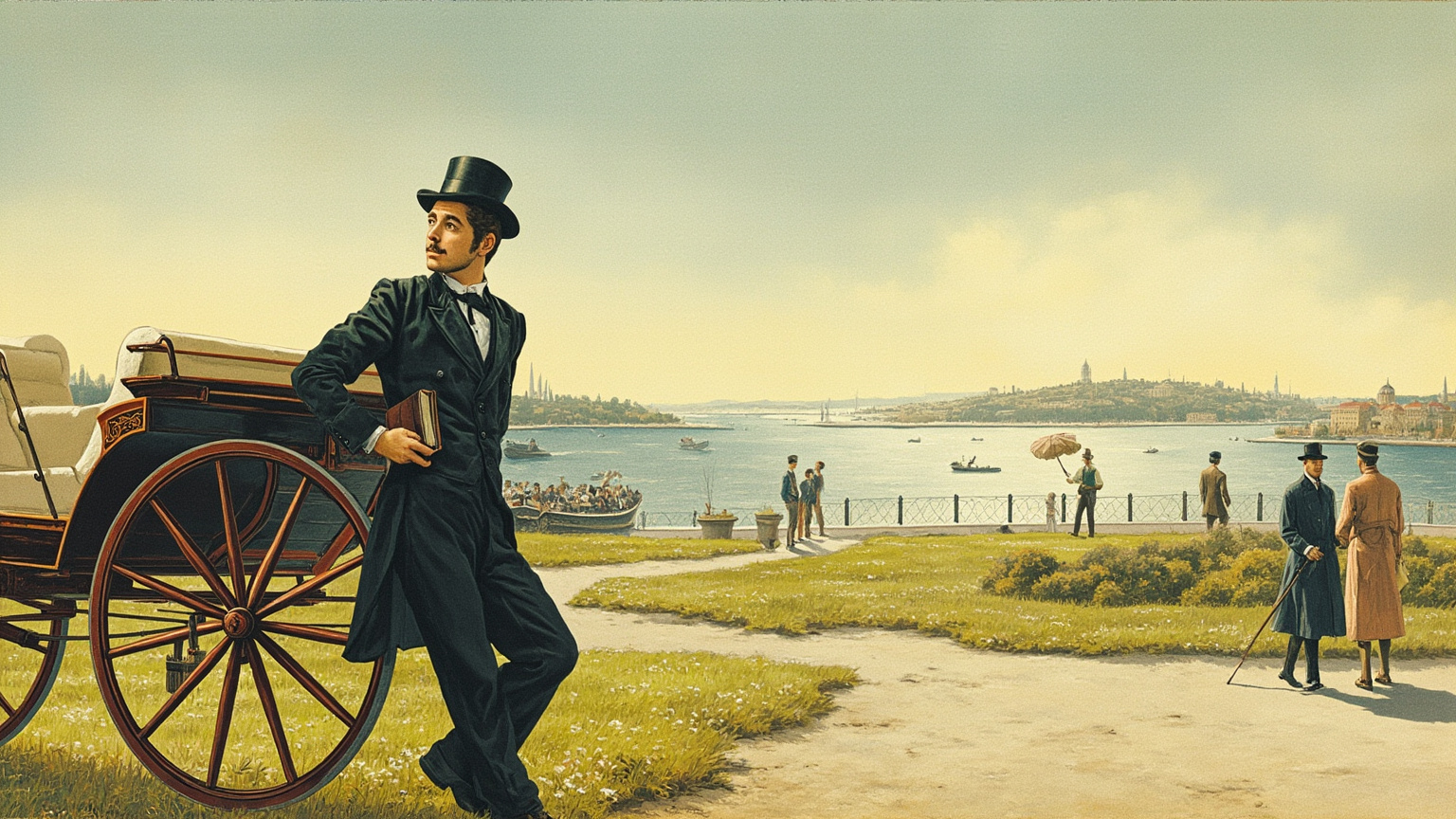
He did not speak Turkish; he did not truly speak French either — but he spoke of himself in a third language no one had ever heard, and the world politely called it fashion.
他不讲土耳其语,也并没能真正讲法语——他用一种世上无人听过的第三种语言谈论自己,而世人客客气气地管这叫时髦。
金句 · 第二幕 · 自我画像
The carriage and the pleasure grounds. Bihruz's world is small: the carriage, the café, the pleasure grounds, home. He doesn't go out each day to get anywhere — he goes out to be seen. In Ottoman Istanbul, a carriage is a rich man's badge, and sitting in his is the same as hanging himself in a shop window. The driver knows every fashionable route by heart; his only job is to deliver Bihruz to the next scene.
The mistaken sighting. It's on one such stroll through the pleasure grounds that he sees Periveş, or thinks he does. Reading too many French novels has a cost — he already carries a template of the ideal woman in his head, and the moment Periveş steps onto the lawn, he presses her into it. He never actually looks at her. He only recognizes the shape he'd already imagined.
The scheme begins. Periveş sizes him up fast: not aristocracy, just money; not a real connoisseur of France, just a good impression of one. She's in no hurry — she only has to echo his tone, drop the occasional hint that she understands him, and the money starts moving out of his pocket on its own. Every time Bihruz pays, he writes himself a new story to explain it: she has her reasons, she's not like other women, she's testing him. His wallet gets thinner while his romance gets longer.
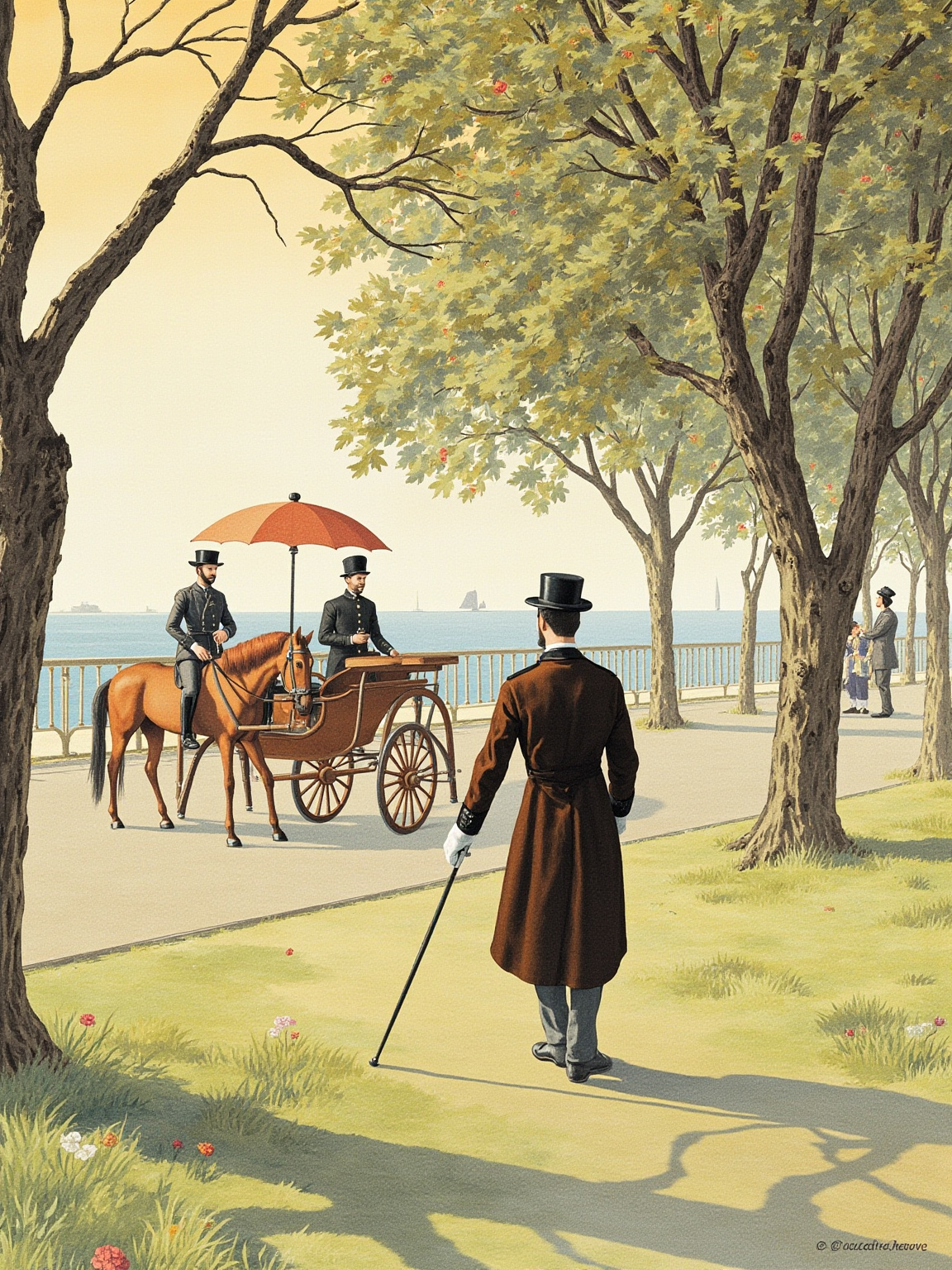
She had only to mirror back the shape of his longing, and the purse opened of its own accord; what he called love was, from the first, a transaction he refused to name.
她只需把他渴望的样子原样映回,钱袋便自己张了口。他口口声声说的爱,从头到尾不过是他拒绝说出口的一笔账。
金句 · 第三幕 · 骗局的开始
A craft note. The best trick here is that the author barely lets Bihruz speak. The whole stretch runs on his inner monologue: what did that smile just mean? has she already sensed I'm not like other men? The more he misreads her, the more ornate the monologue gets, and the more absurd reality looks by comparison. Setting this self-dramatizing voice against what is actually happening produces the cruelest kind of comedy there is, the kind where the man on stage never suspects he's performing.
The truth leaks out. The requests for money come more and more often. Bihruz's friends warn him, and he swallows the warning the moment he turns away, then tells himself the story of his spiritual love with Periveş all over again. It isn't that he doesn't sense something is wrong. He simply refuses to let the story he's built come down. By this point the house isn't being built for the girl anymore. It's being built for himself.
The end of the self-deception. By the close, he's both ridiculous and pitiable — ridiculous for the French airs he wraps around himself, pitiable because he was never anyone's leading man to begin with. He thought he was the hero of a novel; he was really just a line item in someone else's account book. The novel writes him as a young man hollowed out by his own vanity, and writes, alongside him, the cost an entire era paid for imitating a culture it never understood.
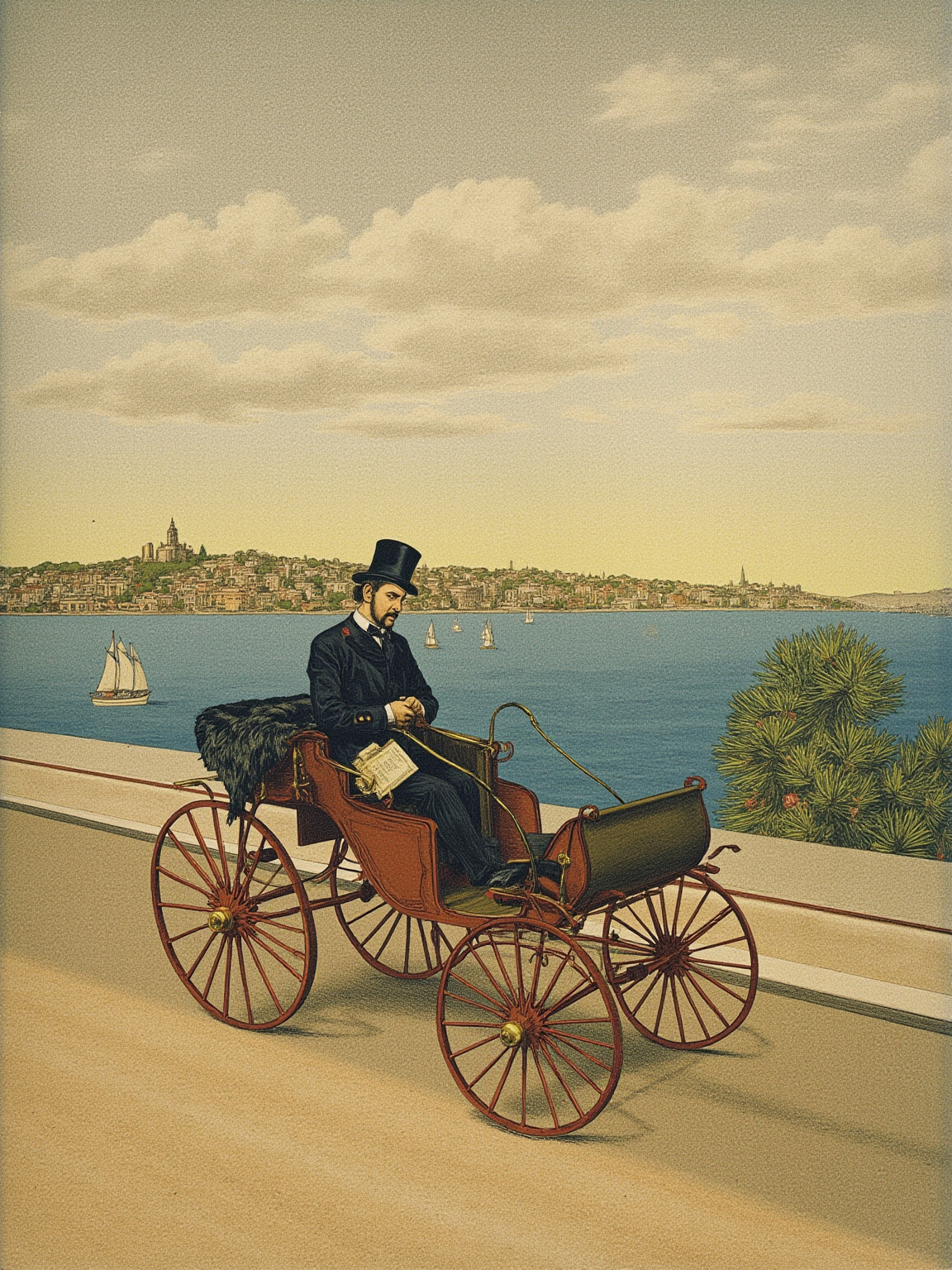
He had never been the hero of her story; he was, at most, a line item in a ledger kept by hands far steadier than his own.
他从来不是她那出戏里的男主角;至多,也不过是别人那本算得清清楚楚的账簿里的一行字。
金句 · 第四幕 · 自欺的收场
The final cut. The harshest stroke in the whole book comes at the end: the author never gives Bihruz a moment of turning around and waking up. He simply stops, still inside the play he wrote for himself, the same as he was in the café, on the lawn, in the carriage. The author lets the reader see the truth long before Bihruz does. That is realism, not a moral. A mirror, not a lesson.
Theme: what this book is actually saying
On the surface it's a joke about a young man drunk on the West. One layer in, it's an identity crisis. Ottoman intellectuals at the end of the nineteenth century were colliding head-on with modernization: some went to study in France, others just pasted French novels onto their own faces. Bihruz's tragedy isn't that he doesn't understand France. It's that he let does this look French enough stand in for who am I. Periveş's scheme is only the match. What actually catches fire is his own stack of French books, never understood but taken dead seriously.
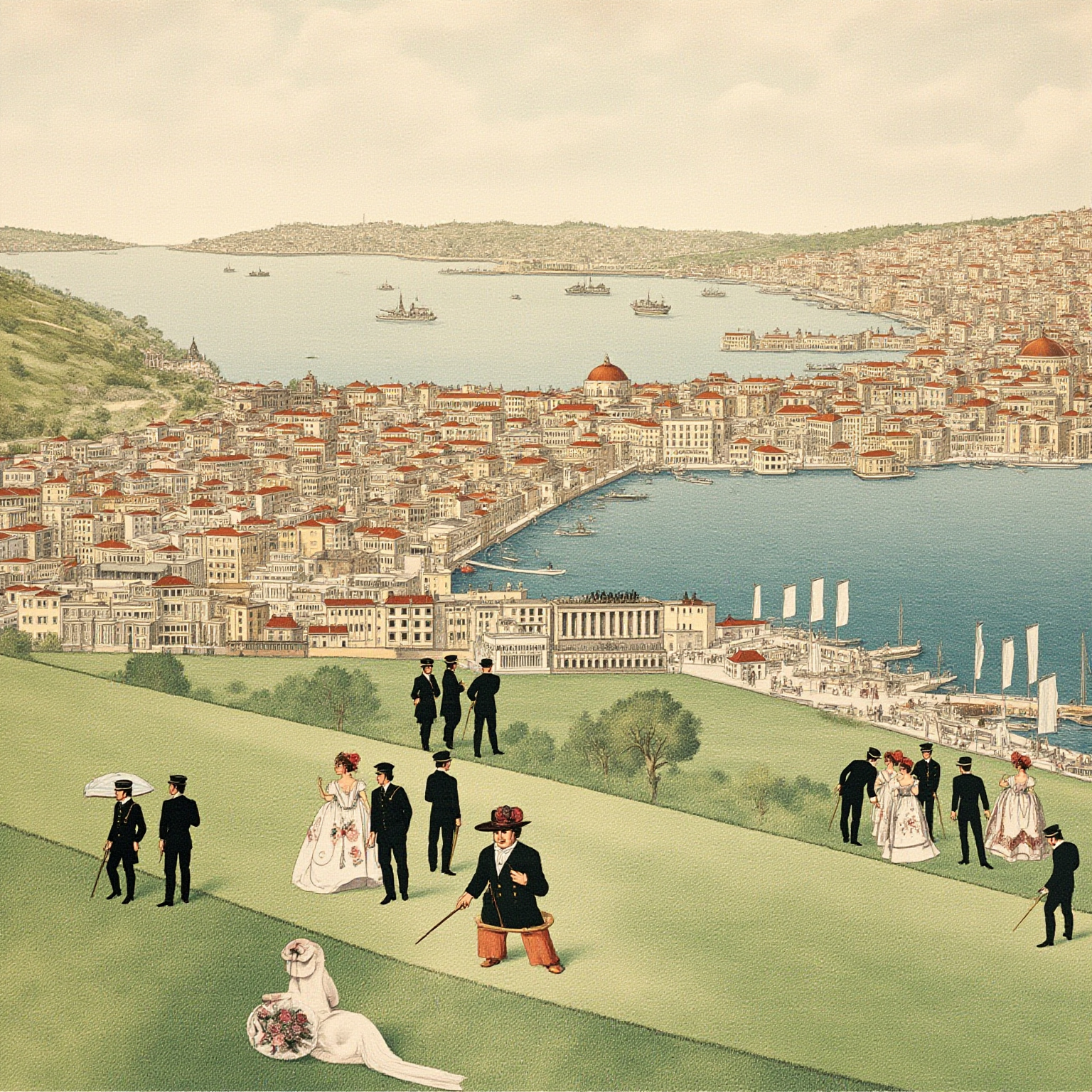
One layer deeper still, it's the awkwardness of language. Bihruz mixing Turkish and French isn't fashion, it's a fracture: the more worldly he tries to sound, the more clearly he shows he has no footing under him. The clumsy translations and misquoted French poems scattered through the book are exactly where this cultural mismatch turns comic. The first time I read one of those butchered quotations, I went back and checked it against the original poem, and laughed out loud — the author is running a physical exam on an entire class of people, and doing it without ever raising his voice.
Why does it matter? Because it never settles for calling the woman wicked, or lecturing the reader not to worship the West. Periveş isn't written simply as a con artist, and Bihruz isn't written simply as a fool. Together they build a mirror, and what it reflects is the author's own circle. In the history of modern Turkish literature, this willingness to cut into one's own people is where that kind of realism begins.
Why read the original: the layer no summary can give you
By now the skeleton of the story is clear. But if this is all you read, you'll miss half of what makes the book good. Bihruz's self-dramatizing monologues have to be read page by page for you to feel how he keeps pushing reality further away, closer and closer to fiction; that rhythm of talking himself into it is not something a summary can walk you through. The precise, small calibration in how Periveş asks for money each time, how little effort she spends keeping his fantasy alive, is visible only in the original. And then there's the sunlight, the dust, the sea mist, the sound of hooves in late nineteenth-century Istanbul — texture of light and air you can only get by walking through it yourself.
Bihruz wasn't conned by Periveş. He was dragged under by the French leading man he imagined himself to be.
The great tragedy of Istanbul's fashionable young men, more than a century ago, was living out someone else's opening chapter as the ending of their own lives.
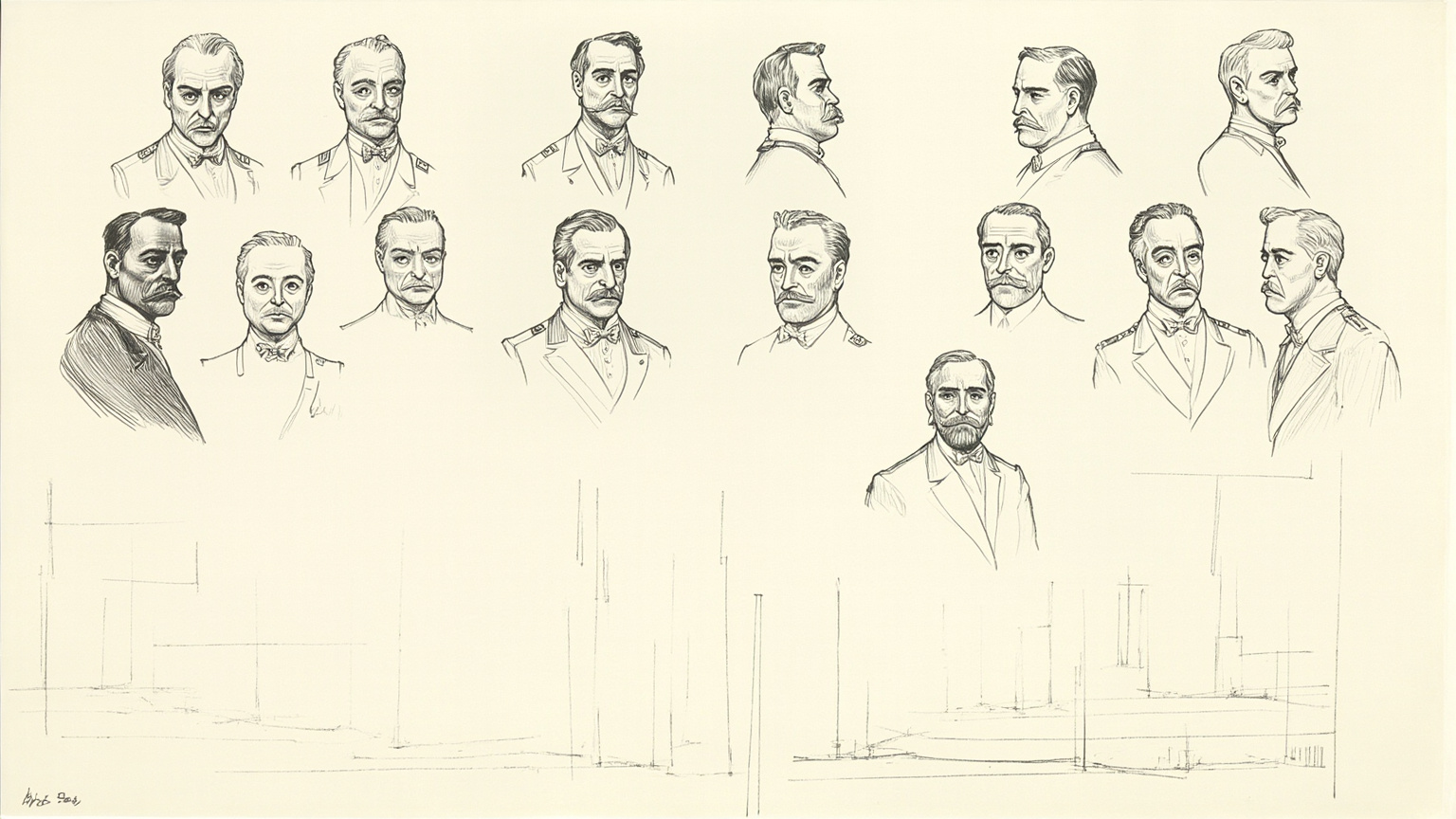
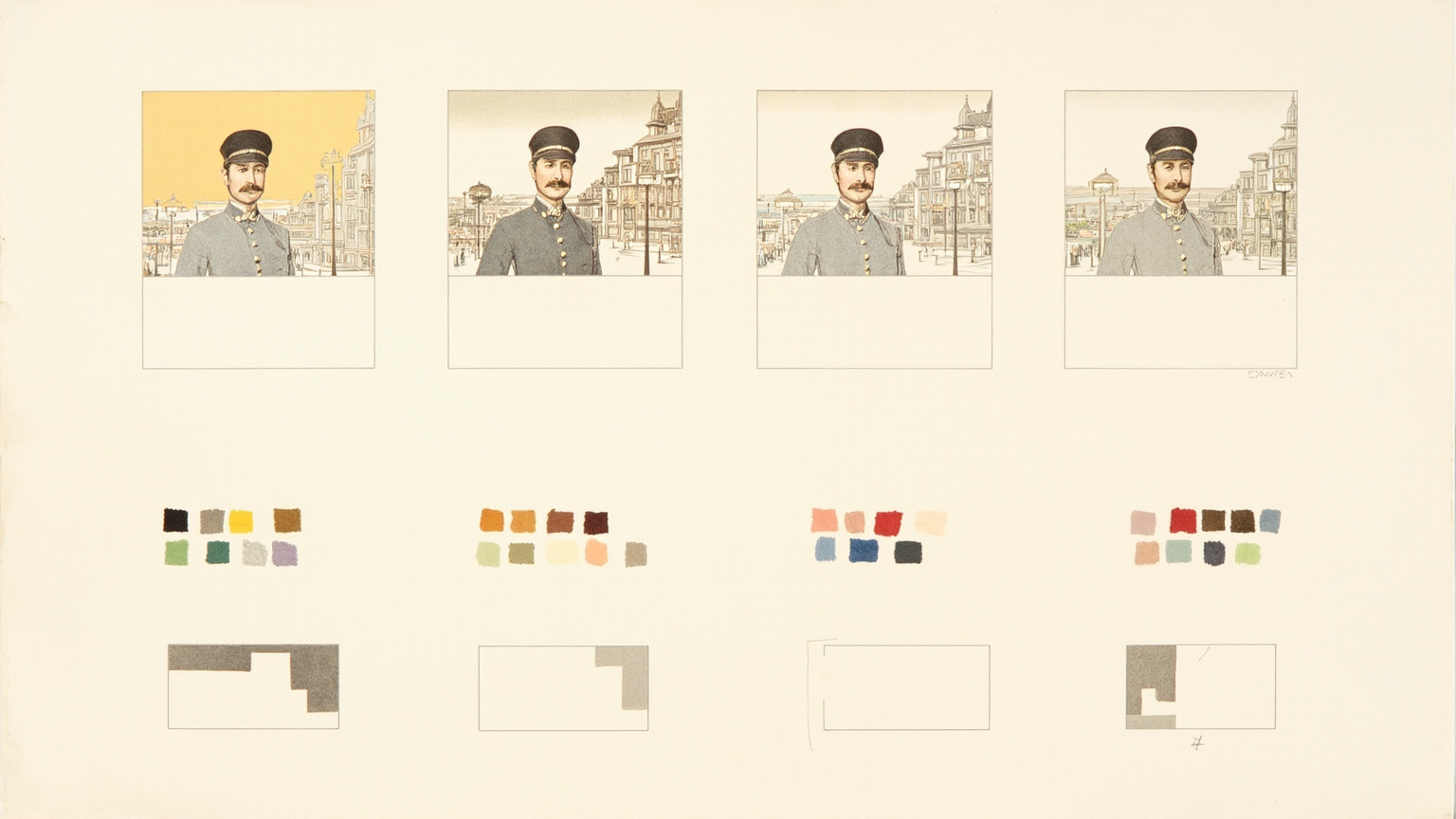
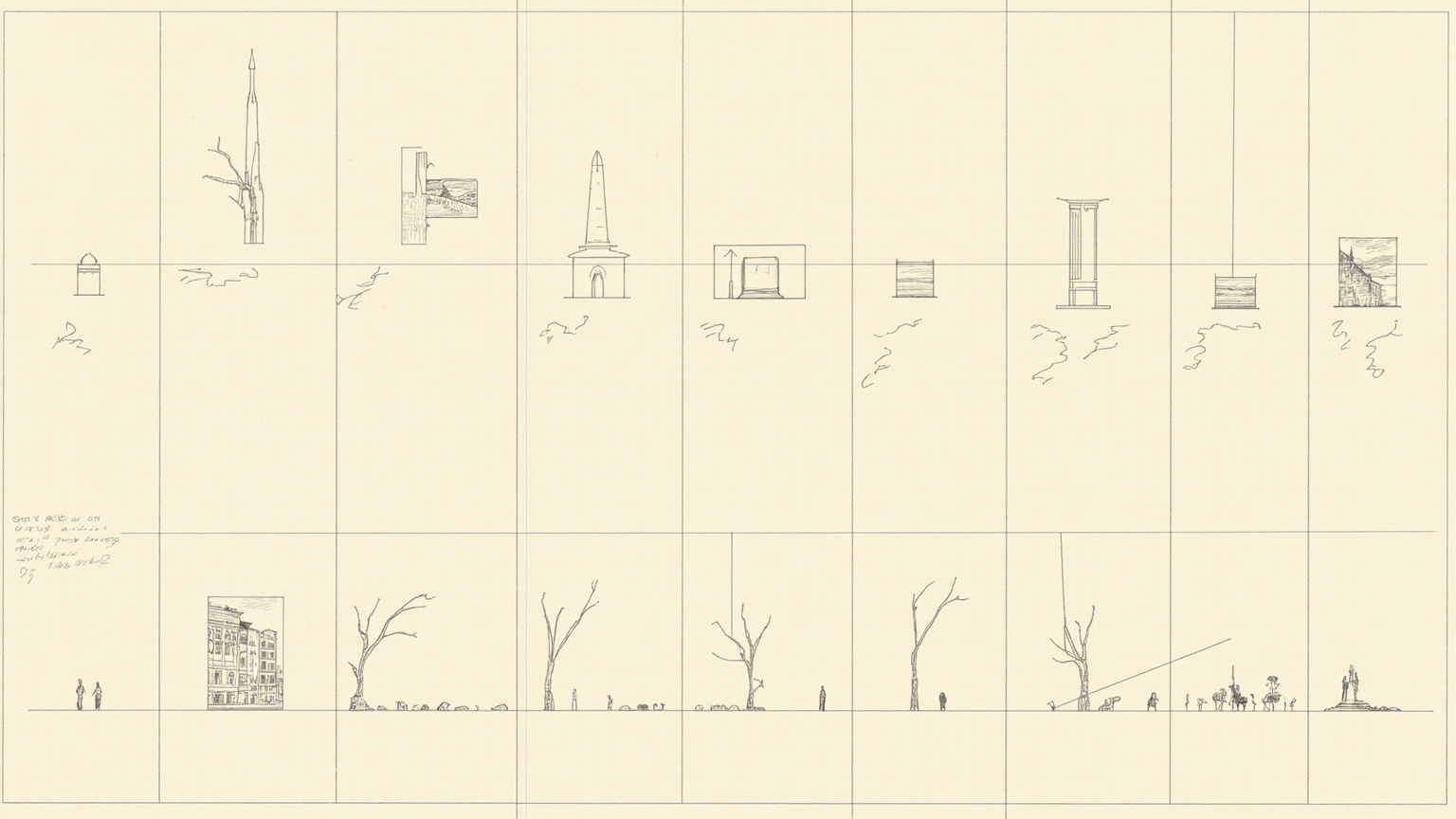
Art Direction4 plates
Before the guide was written, this book got a visual foundation — every illustration you just read grew out of it.