The book in which Chinese Daoism rewrote the search for immortality from prayer into engineering
Text and illustrations produced by the pipeline

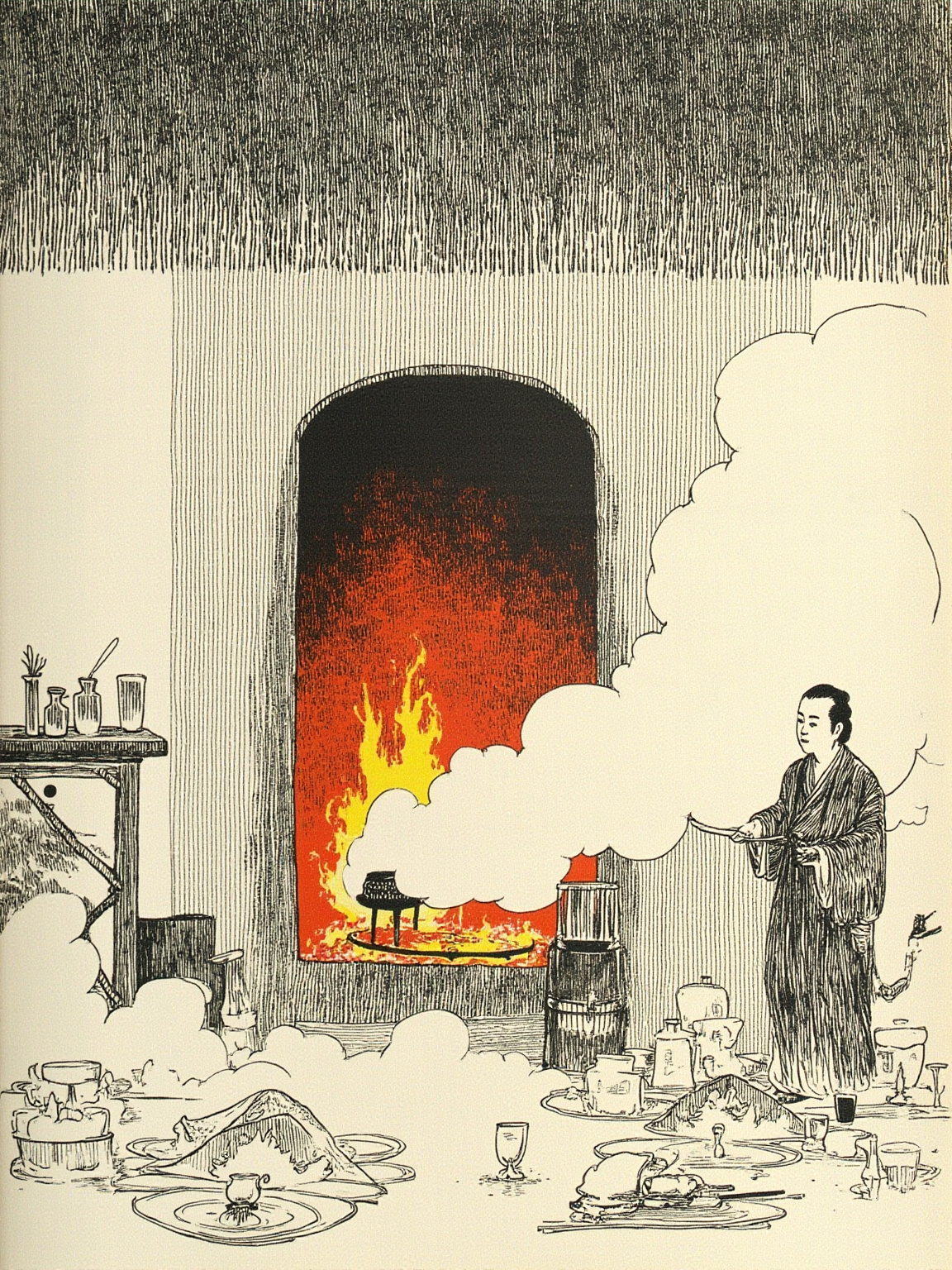
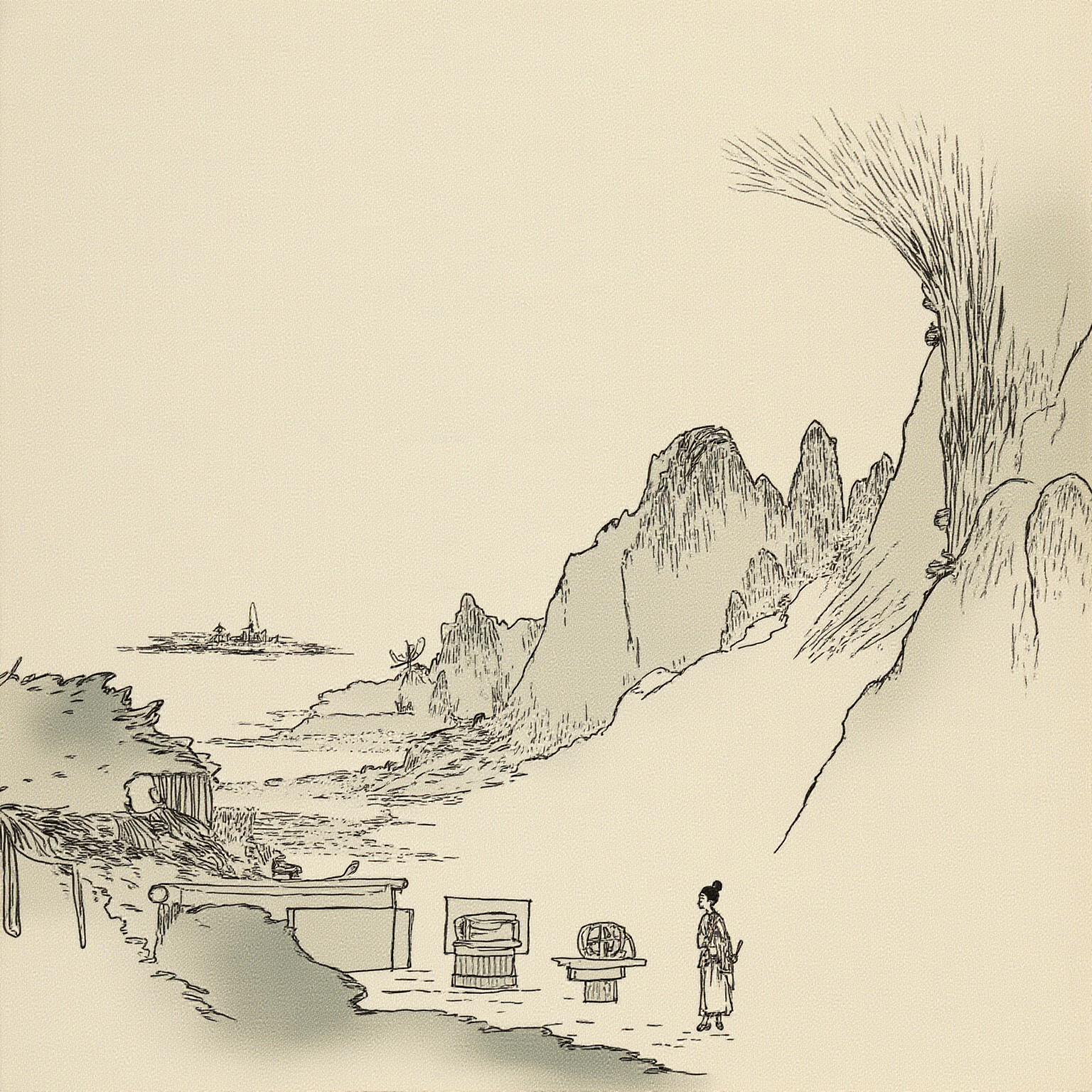
The furnace fire glows a three-legged bronze cauldron red-hot, and pale blue smoke rises from the clay seal at its mouth — this is the scene that repeats itself in Ge Hong's elixir chamber on Mount Luofu. He burns no incense, draws no talismans. He watches the cinnabar change inside the cauldron. Only one person in the history of Chinese thought turned this into a book: he wanted to pull the pursuit of immortality out of the hands of shamans and their prayers, and rewrite it as work a person could finish alone.
The Baopuzi's Inner Chapters was written in the early Eastern Jin, during Ge Hong's years in seclusion on Mount Luofu. It is the first work in the history of Chinese Daoism to argue, systematically, that immortality can be learned and attained — closing the gap between philosophical speculation and actual practice. Ge Hong was not writing a book of spells. He was doing something closer to argument: laying out evidence, answering objections, turning alchemical recipes and firing times into procedures another person could repeat. That method is exactly where the book's weight in Chinese intellectual history comes from.
Ge Hong is both the author and the narrator of his own book. He was famous for the breadth of his learning — Confucian classics and history, calendrics, medicine, divination, and, above all, alchemy and the ingestion of drugs for longevity. Around the age of seventeen, in Luoyang, he studied under Zheng Yin, working through elixir texts such as the Nine Elixirs, the Scripture of Gold and Silver Liquors, and the Great Purity Elixir Scripture; when Zheng Yin grew old, he passed on his Daoist texts, talismans, and alchemical secrets to Ge Hong. When the Western Jin collapsed into chaos, Ge Hong went south to Guangzhou and took a second teacher, Bao Jing, a former governor of Nanhai, receiving from him the Writ of the Three Sovereigns and the True Form Charts of the Five Sacred Peaks. He married Bao Jing's daughter, Bao Gu, who lived with him on Mount Luofu. She was a renowned physician in the far south, celebrated for her skill in moxibustion — one of the few women doctors that official history bothered to record.


The moment Ge Hong sat down before the furnace, immortality stepped out of poetry and into the world.
A companion guide gives you the map. The text itself is the ground. Open The Golden Elixir and watch him write it out: two ounces of cinnabar, three portions of realgar, seal the cauldron and fire it at the noon hour. A companion guide can only tell you this happened. The original lets you watch his hands move — which ingredient goes in first, which follows, how the sealing clay gets smoothed on, the exact moment the fire has to be raised. Ge Hong's stubbornness in writing down every change in the furnace, step by step, his patience in arguing his case by citing the ancients again and again, his contempt for charlatans and his severity toward himself — none of that survives anywhere except in those scrolls of bamboo strips. Knowing the plot is not a reason to skip the book. What is worth reading is not the outcome but that quiet, absorbed force of a man in the Eastern Jin, writing it all down in front of his fire.
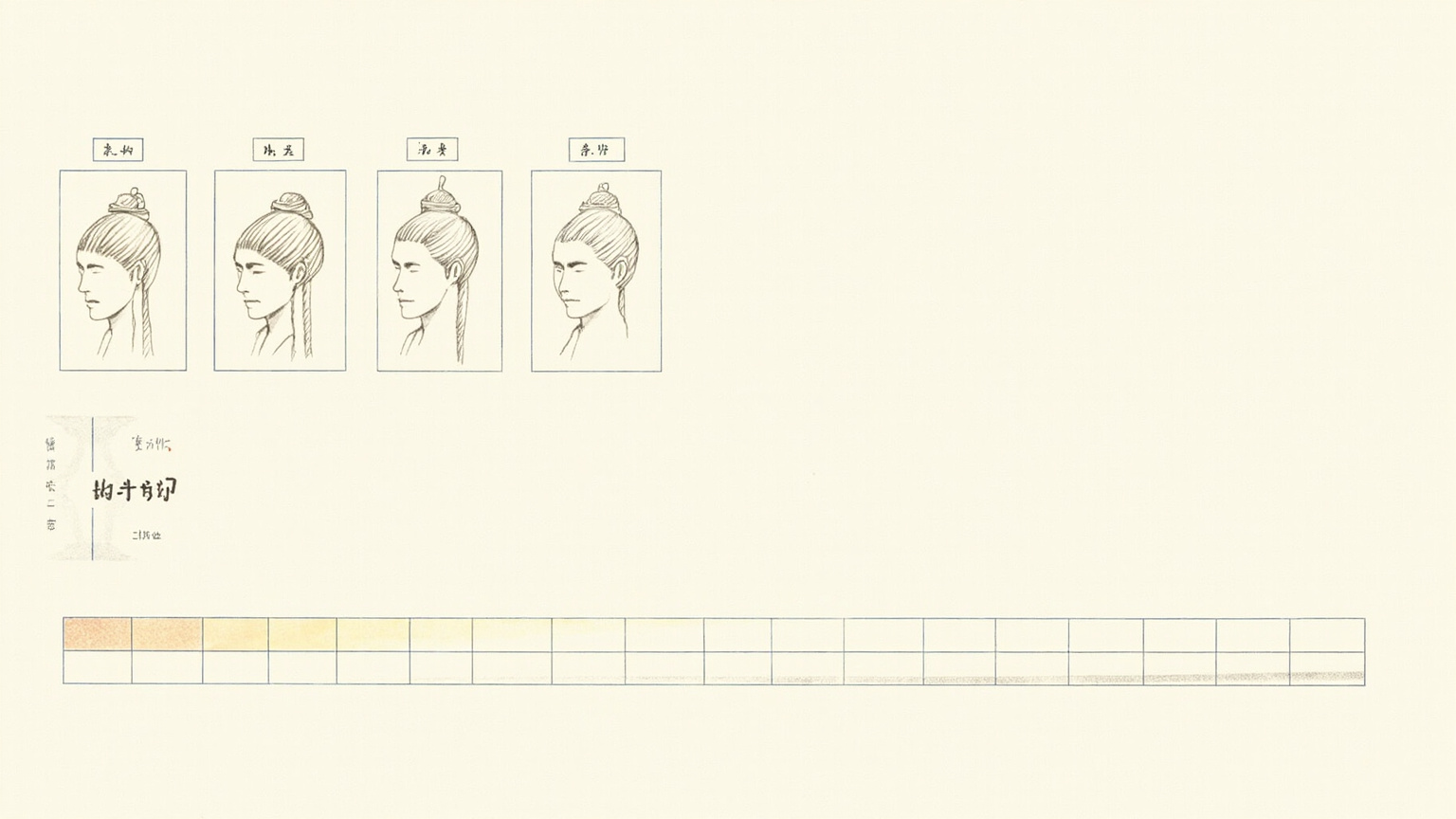
Before the guide was written, this book got a visual foundation — every illustration you just read grew out of it.
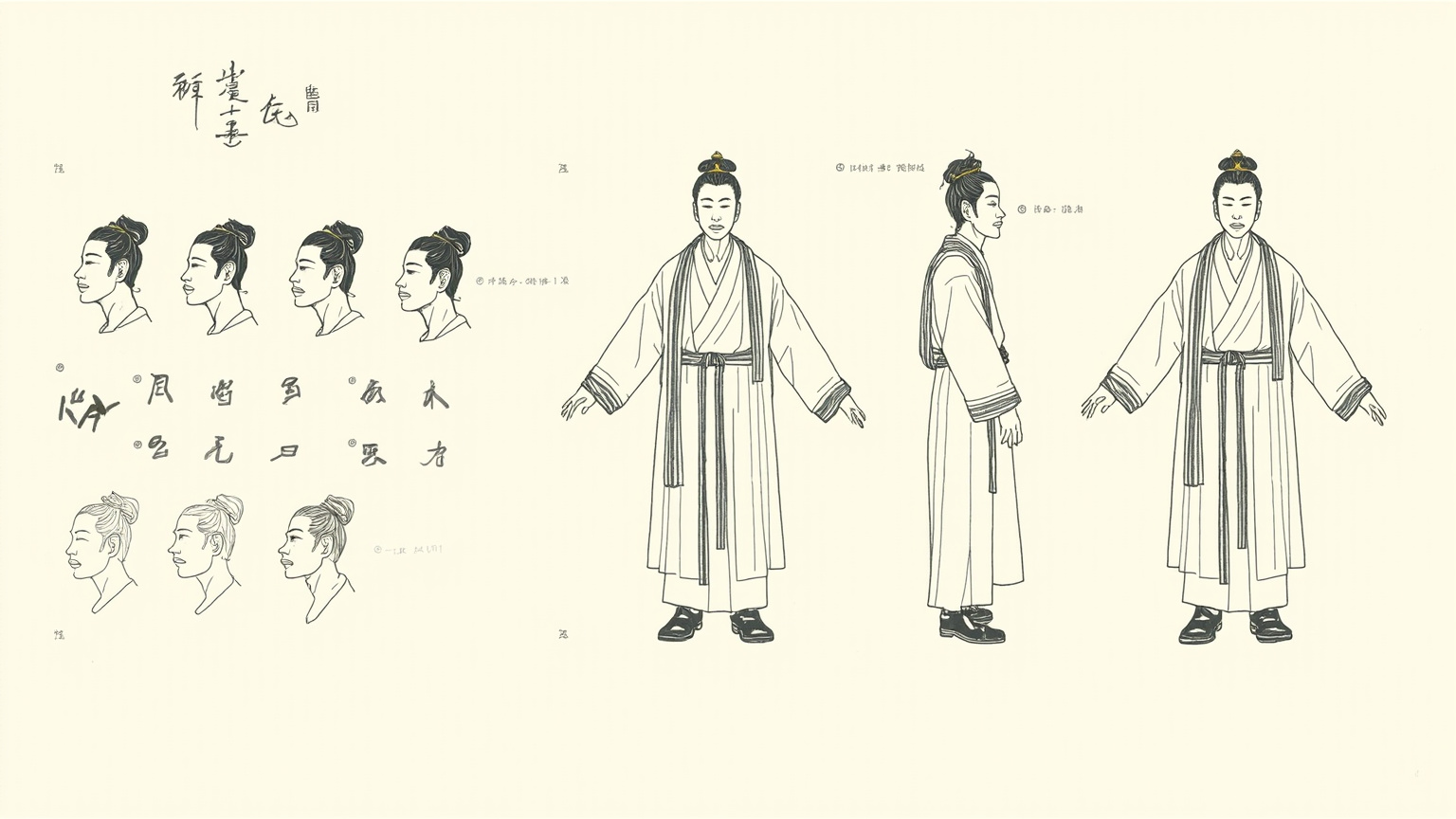
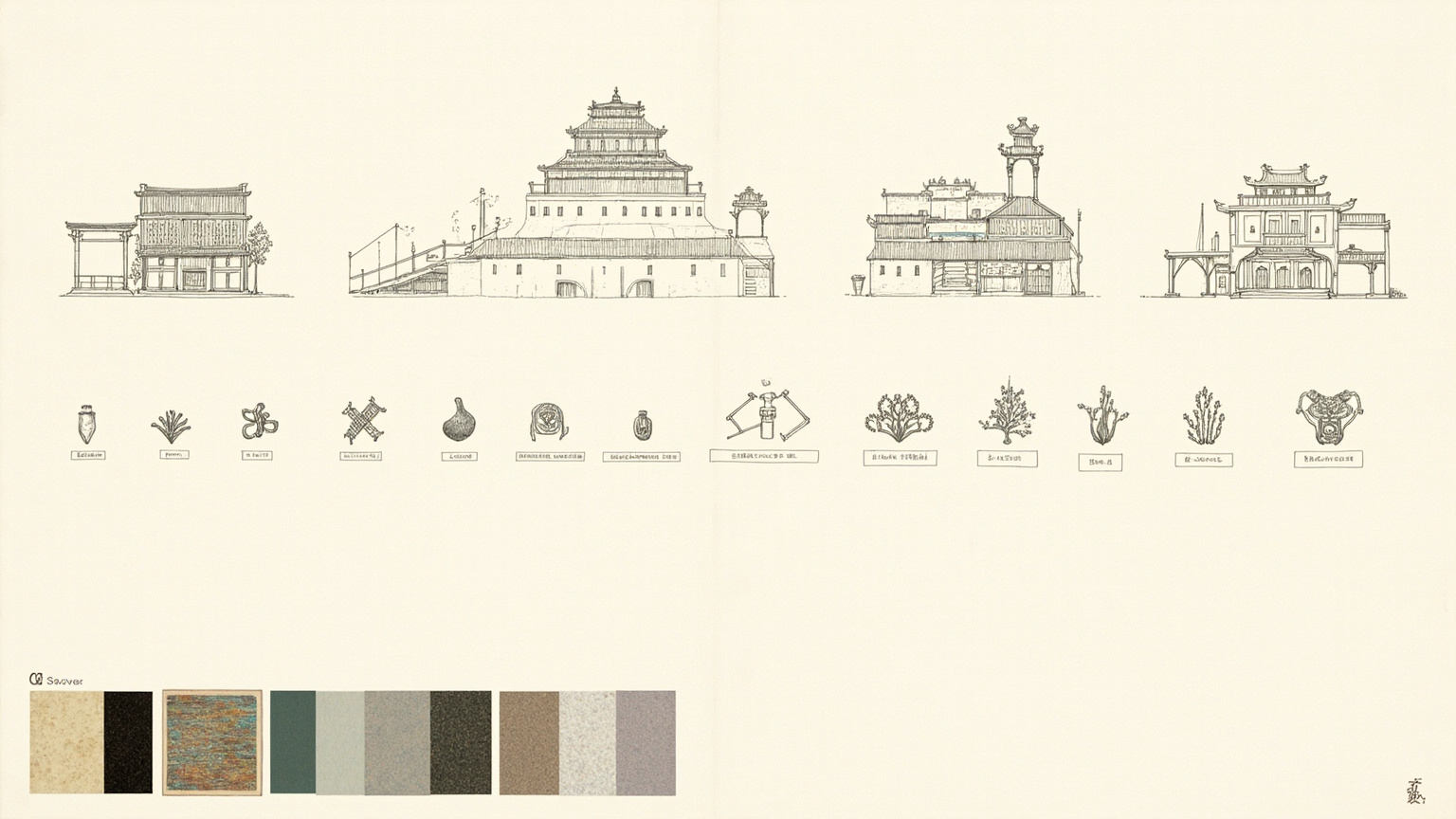
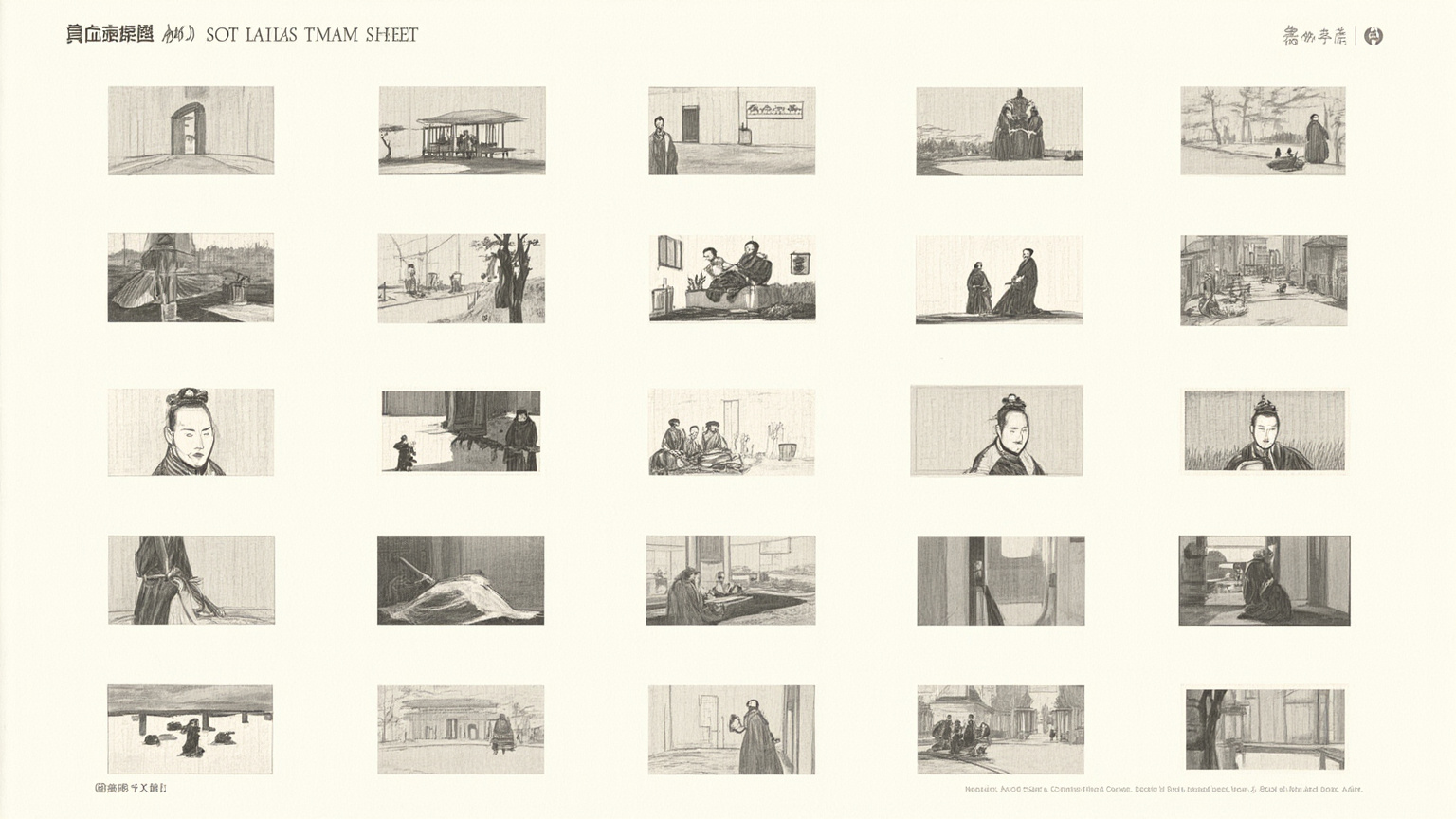
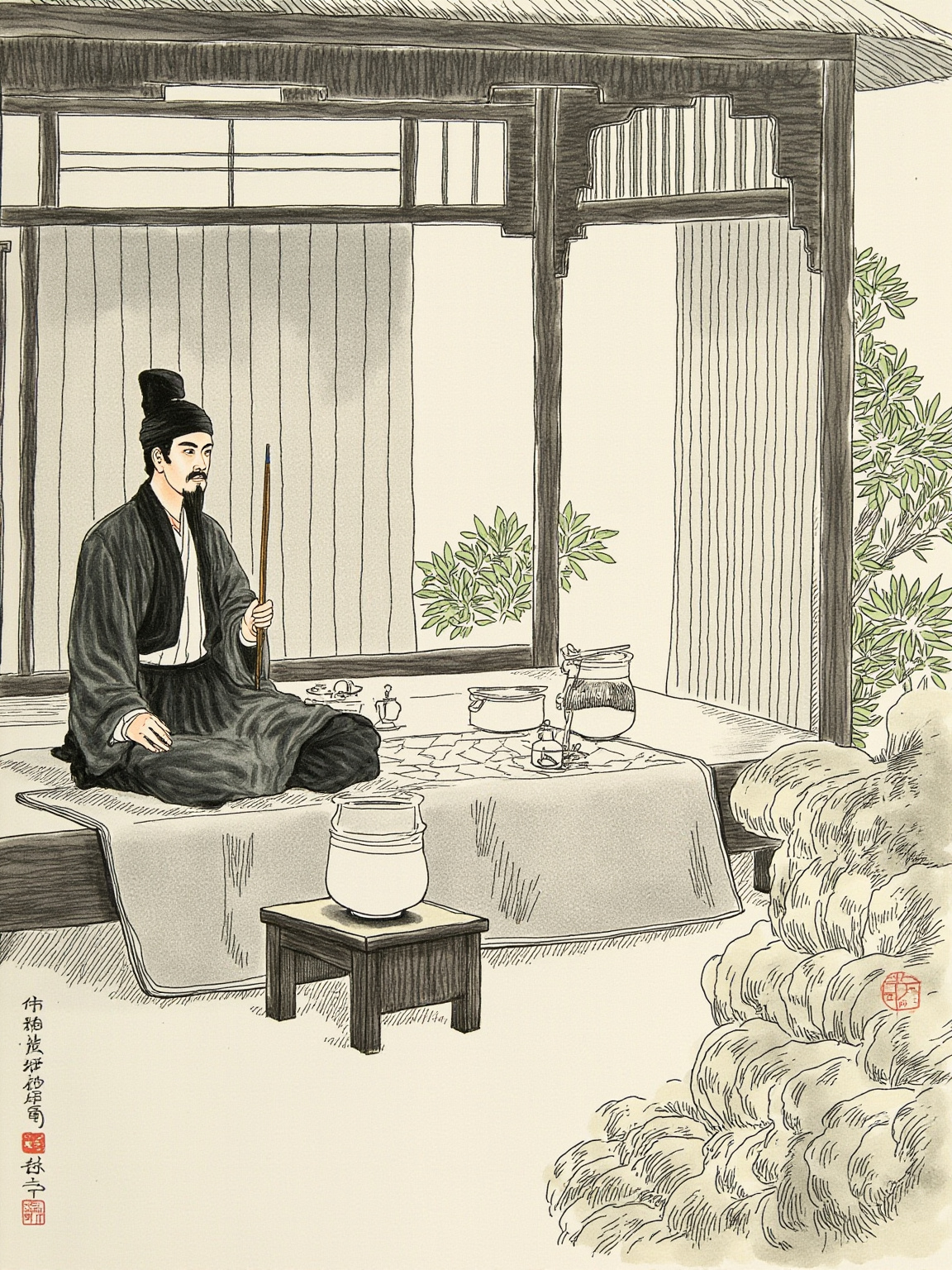
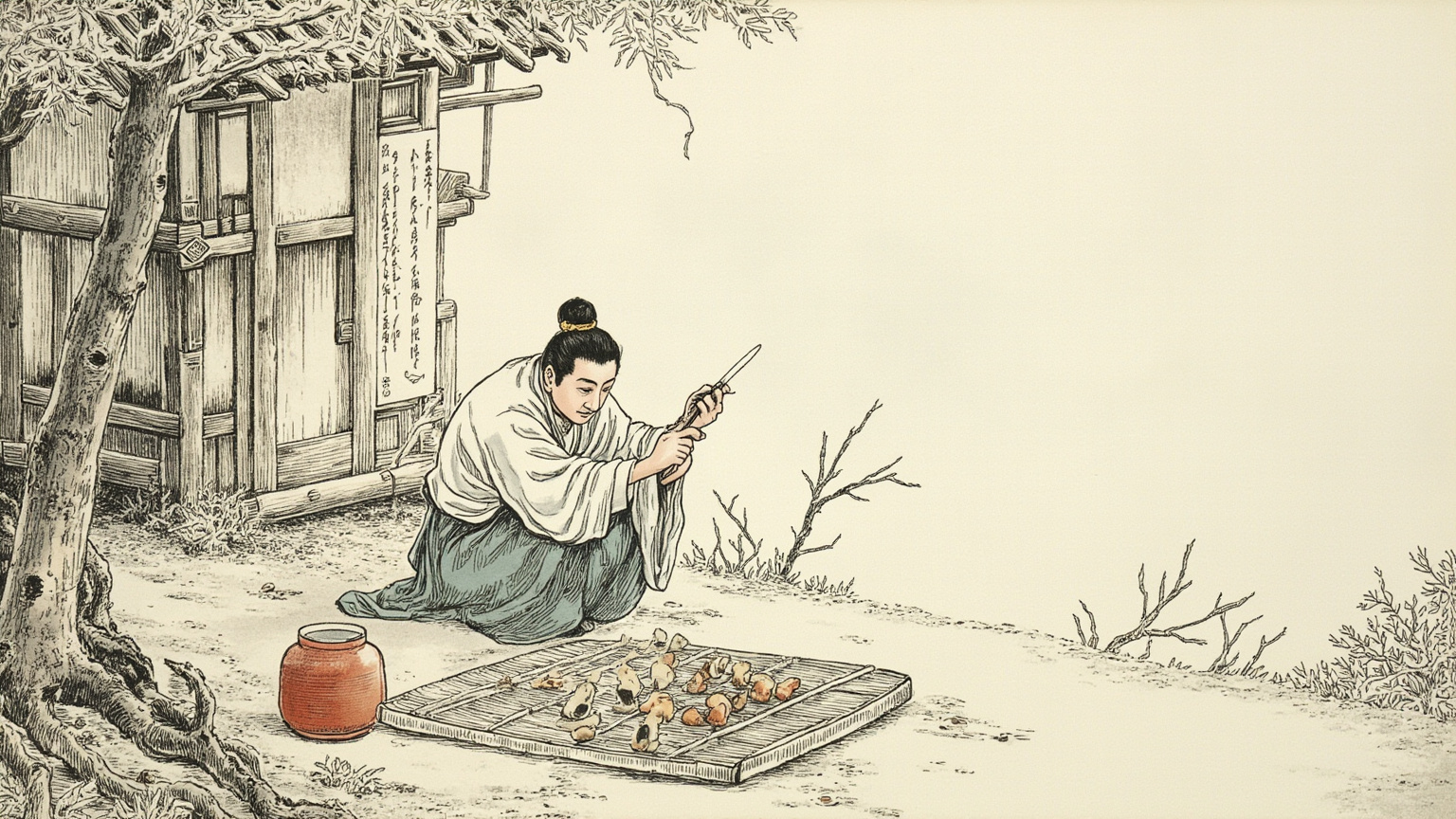
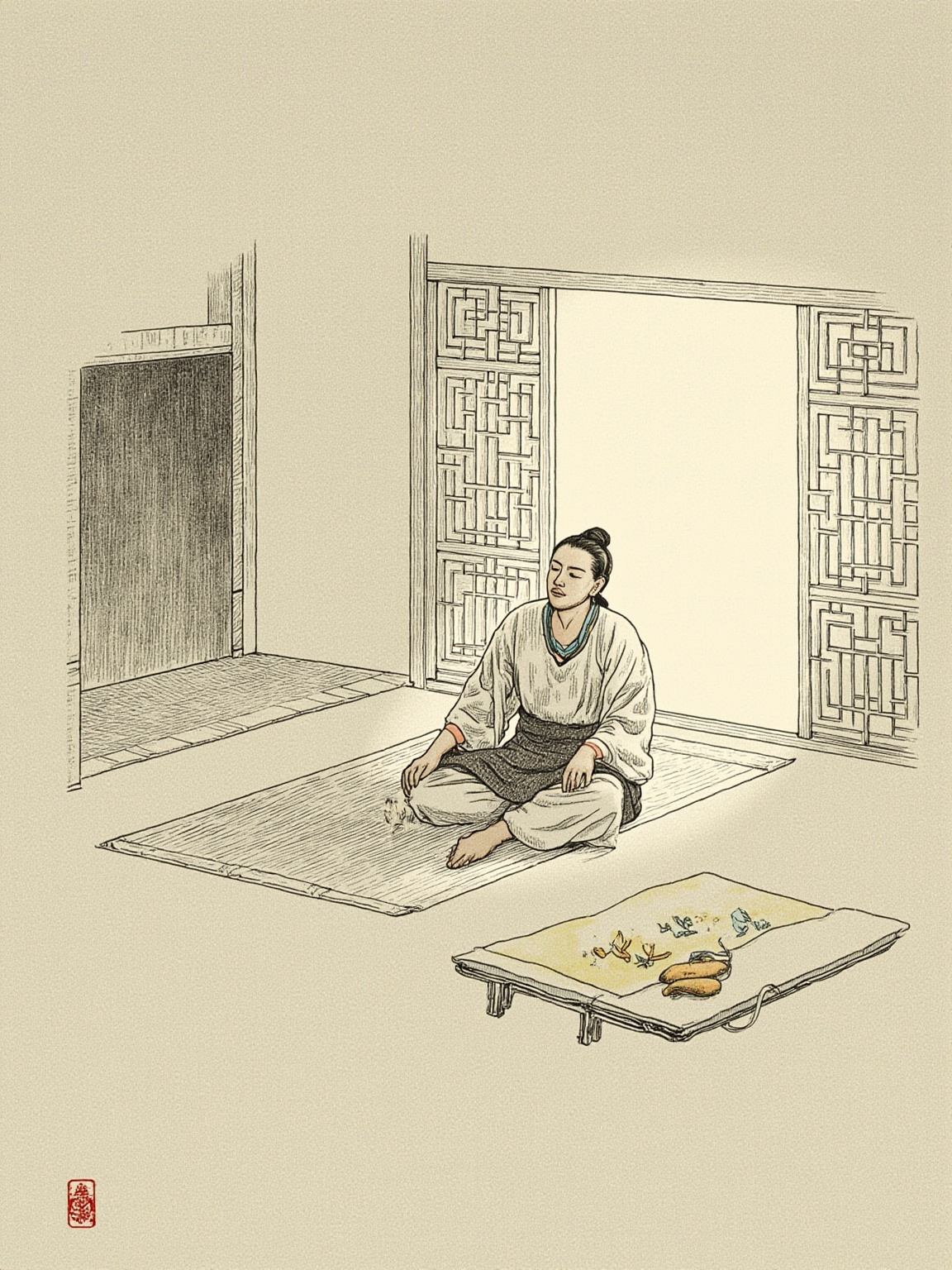
The book's world spans enormous distances — from Luoyang, the northern seat of learning, down to the Nanhai coast at Guangzhou, and finally to a thatched hut on Mount Luofu. But the images inside it stay narrow and close: a mountain hut, an herb garden, bamboo trays of medicine drying in the sun. In the elixir chamber, a furnace, a cauldron, crucibles, and sealing clay stand beside a study stacked with bamboo strips. Wet green, drifting mist, and the orange-red of the furnace fire as the only warm light in the frame. Objects come first here, people second, and everything is quiet and absorbed — this is the world Ge Hong drew around himself.
On Immortals and Against the Vulgar are the two sharpest chapters in the book. Ge Hong's target is not any one person but a whole type — the skeptics of the Wei-Jin era who deny the great fish because they have never seen the roc it becomes, who mock a king's fabled pearl because they cannot see what makes it precious, and who let plain common sense veto immortality outright. Against them Ge Hong marshals legendary figures as evidence — Zuo Ci, Peng Zu, Liu An the Prince of Huainan — and returns again and again to the same point: that you have never seen a thing is no proof it does not exist. The ancients saw it. No one now has simply finished the work.
The best move here is citing the ancients to prove the present — lifting the pursuit of the Dao out of shamanic prayer and into a register that history and philosophy can actually argue about. Ge Hong is not chanting spells; he is reasoning with people who do not believe him. On the Meaning of the Dao goes further still, taking immortality back out of the gods' hands with a declaration that would become one of Daoism's most famous lines: My fate is mine to make, not heaven's to give — the reverted elixir turns to gold and lasts ten thousand ages. A person's lifespan is not fixed by heaven but made through their own cultivation. The one in charge of fate is put back where it belongs: in the person.
The Golden Elixir and Yellow and White are the hardest chapters in the book, in every sense. Ge Hong records, in reproducible detail, how cinnabar, realgar, azurite, magnetite, lead, and mercury combine, sublimate, and react inside the furnace and cauldron. He is not performing a trick — he is trying to build a system that can be repeated, written down, and taught to someone else. It is one of the earliest documents anywhere in the world to systematically record the transformations of compounds like mercury sulfide and arsenic sulfide. Read as history of science, Ge Hong's alchemical notes are laboratory records, and they deserve to be separated from the mystical costume alchemy usually wears.
The first time I read this far I stopped short — alchemy was not only folk fantasy after all. Someone actually sat down and wrote out, step by step, exactly what happened inside the furnace. Ge Hong knew these minerals contained mercury, arsenic, lead — real and genuinely harmful substances. His achievement was turning the work into engineering, into a written record. Whether it was safe is a question he leaves for the reader of the history of science to answer alone.
Immortal Medicines folds ingestion into the same recordable, teachable system. Ge Hong lists what can be gathered and eaten — the Five Sacred Fungi, cinnabar, azurite, magnetite — and distinguishes where each grows, what it looks like, when to gather it, and how to prepare it. The pleasure of this chapter is its pacing. The Golden Elixir stayed inside the furnace; this one moves outdoors, into the hills, from the sealed elixir chamber to the damp undergrowth of the forest floor. The reader changes scenery right along with him.
Subtle Intentions, Resolving Doubts, Blocking Objections, Answering Questions, and The Final Word work out where practices like Guarding the One, breath circulation, guided exercise, bedchamber techniques, taboos, and talismans fit in the larger system. Ge Hong sets inner cultivation beside outer alchemy and argues that a practitioner needs both — inner cultivation is work done on the body, outer alchemy is work done on matter, and skipping either one means immortality stays out of reach. Bedchamber techniques appear here only as a named category; the book does not teach the practice itself.
What is worth noticing in this section is the order itself. Ge Hong places Guarding the One and breath circulation first, then works down through guided exercise, bedchamber techniques, and talismans. It looks like a flat list, but the sequence is doing an argument's work: bodily discipline outranks external technique, and technique with a real lineage outranks anything picked up from wandering peddlers of the arts. He wants the reader to see, just from the table of contents, exactly where cultivation ought to begin.
Miscellaneous Responses, Mountains and Rivers, Earthly Perfection, and A Wide Survey record specific techniques — grain avoidance, breath ingestion, ritual star-pacing, talismans for entering the mountains, summoning and interrogating spirits. Ge Hong writes all of this down, and in the same breath attacks the popular practice of the day: talisman water sold as medicine, the petty tricks of spirit mediums. He has no quarrel with talismans themselves. His quarrel is with people who turn them into a show. That distinction gets overlooked easily, but it is where Ge Hong's self-respect lives.
The book closes with Dispelling Delusions. Ge Hong recounts his own confrontations with charlatans who traded on the language of the Dao to swindle people, and describes exposing them to their faces. By the end, the book's whole argument has circled back to a single idea: the pursuit of the Dao is engineering. It is written down step by step and cooked batch by batch in a furnace — not performed for a crowd.
Ge Hong's weight comes in two layers. The first: this is the first work in the history of Chinese Daoism to argue, systematically, that immortality can be learned and attained. Before him, immortals were an image in poetry. After him, immortality was something that could be studied, pursued, and worked at like a project. The second layer belongs to the history of science — the book's record of how cinnabar, realgar, and lead behave inside a furnace and cauldron is one of the earliest documents anywhere to systematically record reactions of these compounds.
My fate is mine to make, not heaven's — one of Daoism's most famous declarations — moves the seat of fate from the gods back to the person. The line went on to become the emotional core of inner-alchemy practice, and it quietly connects to the same insistence on self-mastery that later Song-Ming Neo-Confucianism would make its own. Our shelf of Daoist classics currently holds only the Zhuangzi, the Daodejing, and the Liezi; this book fills in the missing step, where philosophy turns into practice, and the set becomes whole.