The Book of Enoch (1 Enoch) · Companion Guide
以诺书
族长被带上云端之上,天地两端的库房、门、山与谷被一一指认——堕落已发生,审判将临。
Opening: It Begins on Mount Hermon
Heaven took an oath. Two hundred Watchers, led by Semjaza, came down to earth and landed on the peak of Mount Hermon. They took human wives and fathered giants, and they pressed forbidden things into human hands — metalworking, gemstones, weapons, eye paint. It is the most mythic scene in the whole book, but the author does not linger on the marriages. What he actually wants you to see comes right after: the announcement that the end has arrived.
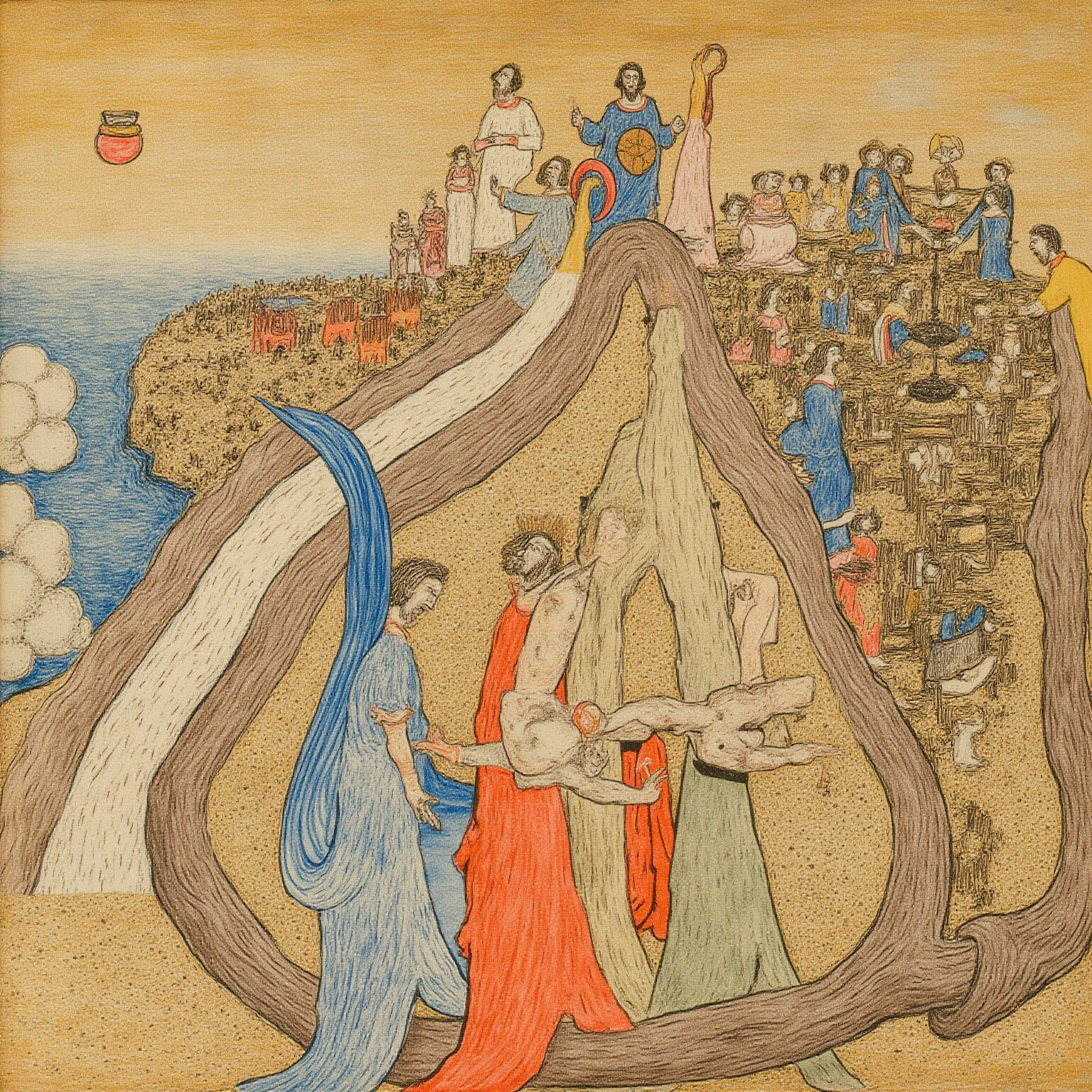
The archangel Uriel takes Enoch up into heaven, the sea of clouds falling away beneath his feet, layer by layer. He never sees God's face — the whole book is careful never to let the reader look directly at the one on the throne — but he is shown everything, point by point: the winds kept in seven storehouses, snow and hail and dew each with their own chambers, twelve gates where the sun and moon come and go, a river of fire ringing a dark abyss. This is a Second Temple Jew taking inventory of the structure of heaven and earth.
What Kind of Book Is This
The Book of Enoch is a composite work attributed to the antediluvian patriarch Enoch, written in stages by Jewish authors from roughly the third to the first century BCE. It never made it into the Bible — mainstream Western tradition left it out entirely — though the Ethiopian Orthodox Church still holds it as scripture. The New Testament's Epistle of Jude quotes its prophecy directly, and the whole later vocabulary of fallen angels, Watchers, and the Son of Man traces back to this one book.
Before the eighteenth century, the West did not know this book existed. It survived complete in manuscripts of classical Ethiopic — Ge'ez — and the explorer James Bruce carried a copy back to Europe in 1773. Richard Laurence published the first English translation in 1821, and R. H. Charles produced the scholarly standard edition at Oxford in 1917. It was not until the Aramaic fragments from the Qumran caves were published in 1976 that scholars could be certain: the book's various sections were already circulating in the Second Temple period, and its earliest parts predate even the Book of Daniel. This is not a later forgery. It is a complete body of thought that was lost whole, and recovered whole.
The Cast and the Cosmos
Enoch is the book's witness and its mouthpiece. Genesis disposes of him in a single line — he walked with God, and he was not, for God took him — and this book expands that into a man taken up to the heights and led on a tour of every quarter of the world, at once the surveyor of the cosmos and the intercessor for the earth. He pleads on behalf of the fallen angels and is told the plea will not be heard. He is also appointed to carry heaven's warning back to his own family: his son Methuselah, the longest-lived man in the human record, and his great-grandson Noah, are his anchors in the human world.
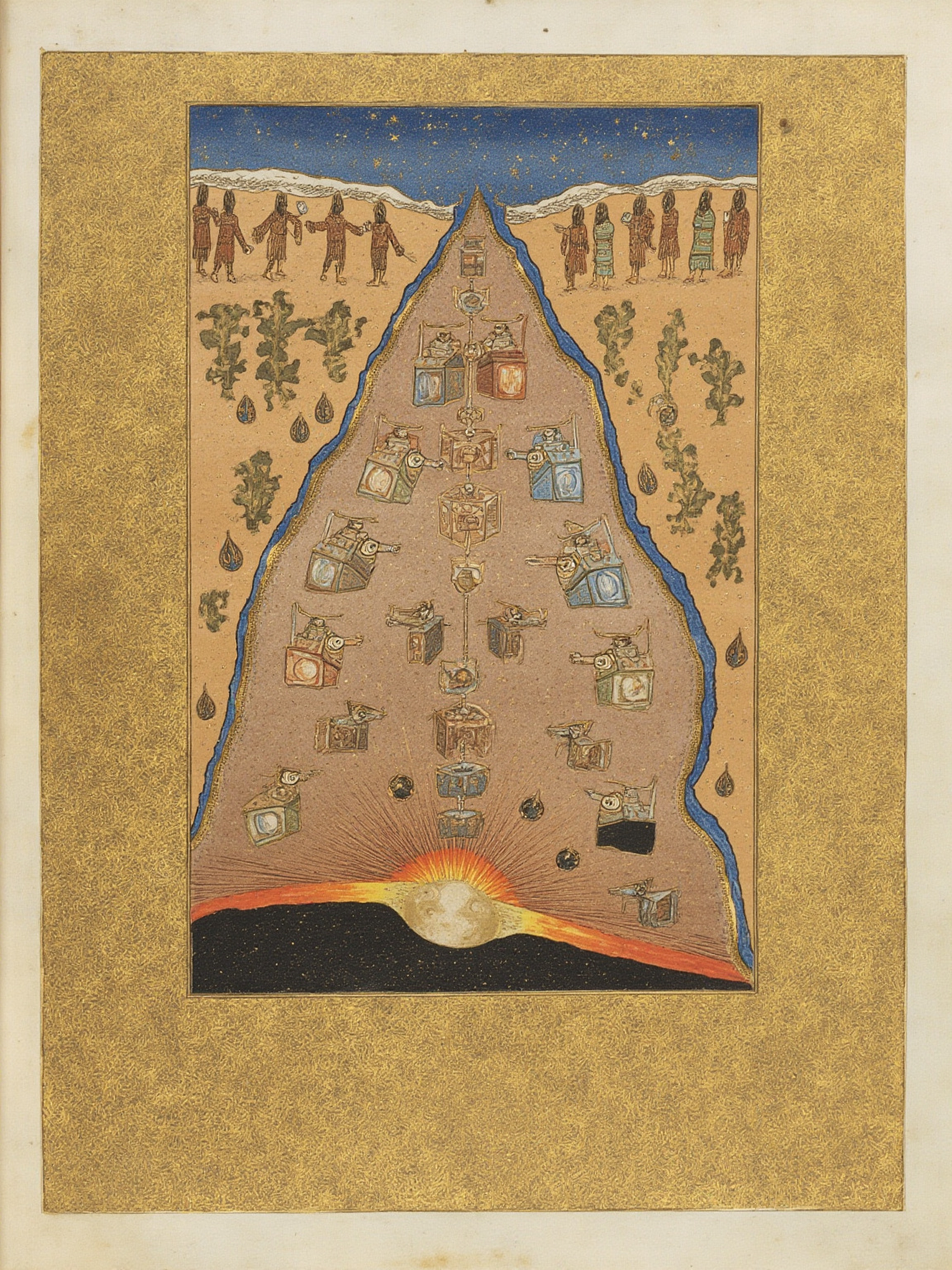
And they took wives of all which they chose, and there came forth great giants whose height was three thousand ells.
他们随意拣选妻子,所生的巨人有三千肘之高。
金句 · 第6章 · 黑门山下降
Heaven's order is divided among seven archangels: Uriel over the stars, Raphael over humankind, Michael over the heavenly host, Gabriel over paradise, Remiel over wrath, and so on, each with a charge. Earth's order starts to come apart the moment the Watchers fall. Semjaza is the ringleader, the first to bind the others to the oath before they descend; Azazel follows close behind, and it is he who hands humanity the forbidden things — for that he alone is singled out for eternal punishment. The world splits in two: heaven's purity, earth's defilement, and no reconciling the two.
The Fall of the Watchers, and What They Taught
The story opens with an oath in heaven. Semjaza binds his fellow Watchers first: 'We will go down and take wives among the daughters of men.' Two hundred of them land on the peak of Mount Hermon. Their children are giants, and the giants' violence is what makes the earth start to bleed. Right behind that comes the teaching of forbidden things: metalworking, swords, weapons, eye paint, the magic of roots, the reading of the stars — arts heaven had never meant for earth, handed over one by one.
The author never stops to dwell on the marriages, and he never gives the giants a close-up in blood — the whole business gets a line or two and no more. What he actually spends his effort on comes right after: God orders the archangel Uriel to announce to Enoch that the end has arrived. There is a line drawn here. The fall has already happened, and the door of grace is closing.
Enoch Pleads, and Is Refused
Once the Watchers understand what has happened to them, they send for Enoch. They fall down before him and beg him to carry their case to heaven. In a dream vision Enoch pleads on their behalf, humbly, and comes close to succeeding — then he is turned back. The answer is hard: those who abandoned their holy station in heaven for the love of women, and defiled themselves among the daughters of earth, will find no forgiveness on earth. The plea is denied.
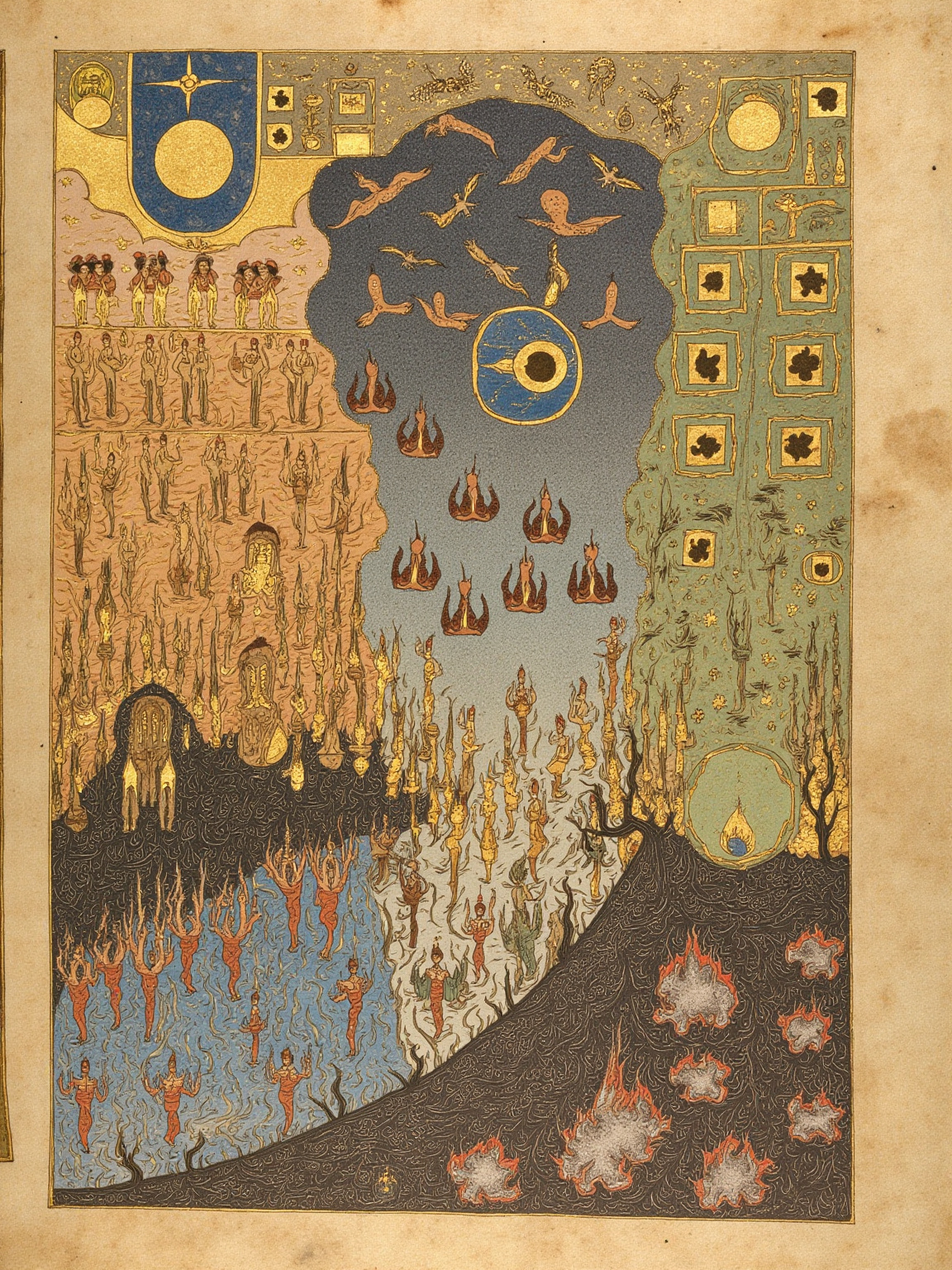
And the angels, the sons of heaven, saw them and desired them; and they said to one another: 'Come, let us choose us wives from among the children of men.'
天的众子看见人的女子美貌,就彼此说:来,让我们从人的女儿中为自己选取妻室。
金句 · 第6章 · 起誓下山
The sentence splits into two. Semjaza is punished along with the rest of his brothers, but Azazel is singled out for something worse — eternal fire in a desolate valley, his and his alone. The reason is spelled out: he is the one who put heaven's forbidden things into human hands. Instigation and complicity do not weigh the same. I stopped short the first time I read this passage — it turns out 'the leader of the fallen angels' is not one figure but two, and the book splits the guilt between them on purpose.
The Journey Through Heaven: An Inventory of the Cosmos
After the plea fails, Enoch is taken up to a higher station. He is not being punished — he is being shown the inventory. Every corner of heaven is walked past for him to see. The winds live in seven storehouses; snow, hail, and dew each have their own chambers; thunder and lightning each have their keepers. The sun and moon have twelve gates for coming and going, some in the east, some in the west — light passing through one gate makes morning, and falling into another makes night. A river of fire rings a dark abyss, the place kept ready for those who fall.
This is the part of the book modern readers are most likely to skip, and the part they least should. It is not theology — it is cartography. Fifteen hundred years ago, a Jewish author laid out, one plate at a time, everything he understood about the universe: how many layers heaven has, how the stars move, where the wind comes from, where sinners end up. It is a cosmic geography with a patriarch standing in as its eyewitness.
A Circuit of the Four Quarters of the Earth
With heaven inventoried, the earth comes next. Led by an archangel, Enoch makes a circuit of the four quarters: north, west, south, east. The north gets the most attention — seven mountains, all of them precious stone, fragrant trees among them, and the Tree of Life; the valley floor is where the accursed go, ground left desolate forever. The mountains, ravines, and streams around Jerusalem are named one by one, and at every stop the archangel tells him where the land comes from and who it belongs to.
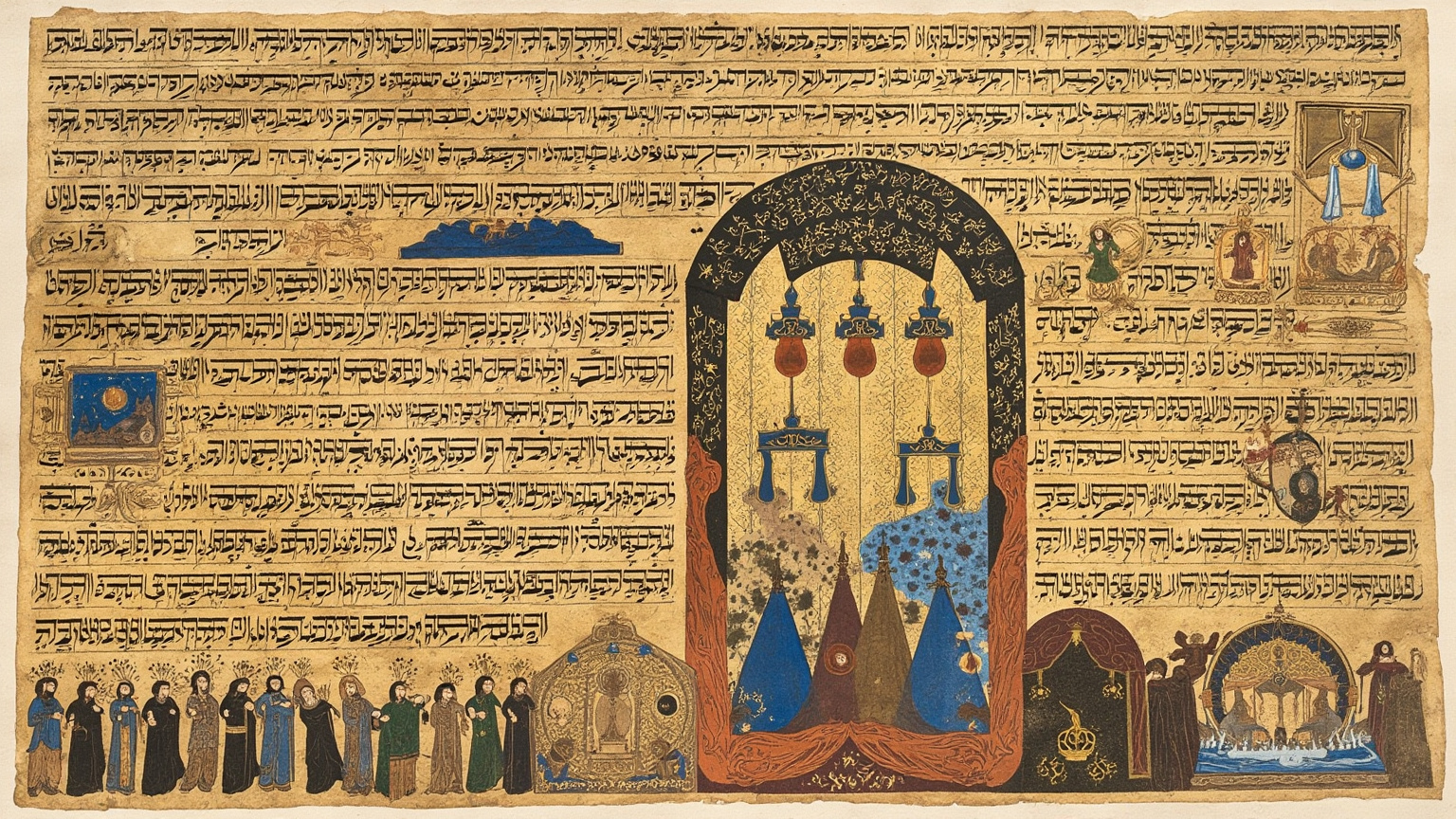
And I saw seven mountains full of precious stones and pearls, and three trees upon them of great height, beautiful, of fragrant smell.
我见七座山,满是宝石与珍珠,其上有三棵高大的树,美丽,并发馨香之气。
金句 · 第24章 · 北方七山
Geography here is not scenery — it is a moral terrain map. Where the righteous go, where sinners go, every mountain and every valley has a name. It turns the day of judgment from an abstraction into a place you can actually picture.
The Son of Man in the Book of Parables
By the time the book reaches this section, its focus narrows from the whole cosmos and earth down to a single figure. Enoch's vision fixes on a Son of Man, seated on a throne in the highest heaven, who on the day of earth's judgment will destroy the sinners of the kingdoms and vindicate the righteous. This Son of Man is not simply another name for the Messiah — he is the one who sits in heaven already holding the power to judge.
This figure is the single deepest contribution the Enoch literature makes to everything apocalyptic thought that follows. Nearly every use of 'Son of Man' in the New Testament borrows from right here. If the phrase 'the Son of Man coming' sounds familiar today, this is where it comes from.
The Animal Allegory and the Vision of Ten Weeks
The Book of Dreams pulls the camera back down from heaven into history. The second dream Enoch sees runs as a sequence of sheep and wild beasts — the flock stands for Israel, and wolves, jackals, and eagles for the foreign powers that prey on it. The Temple is carried off, the walls fall, the altar goes to ruin, and finally a horn grows on one of the sheep and fights its way to victory. The whole span of Second Temple history, from the Babylonian exile to the Maccabean Revolt, is folded into this one animal fable.
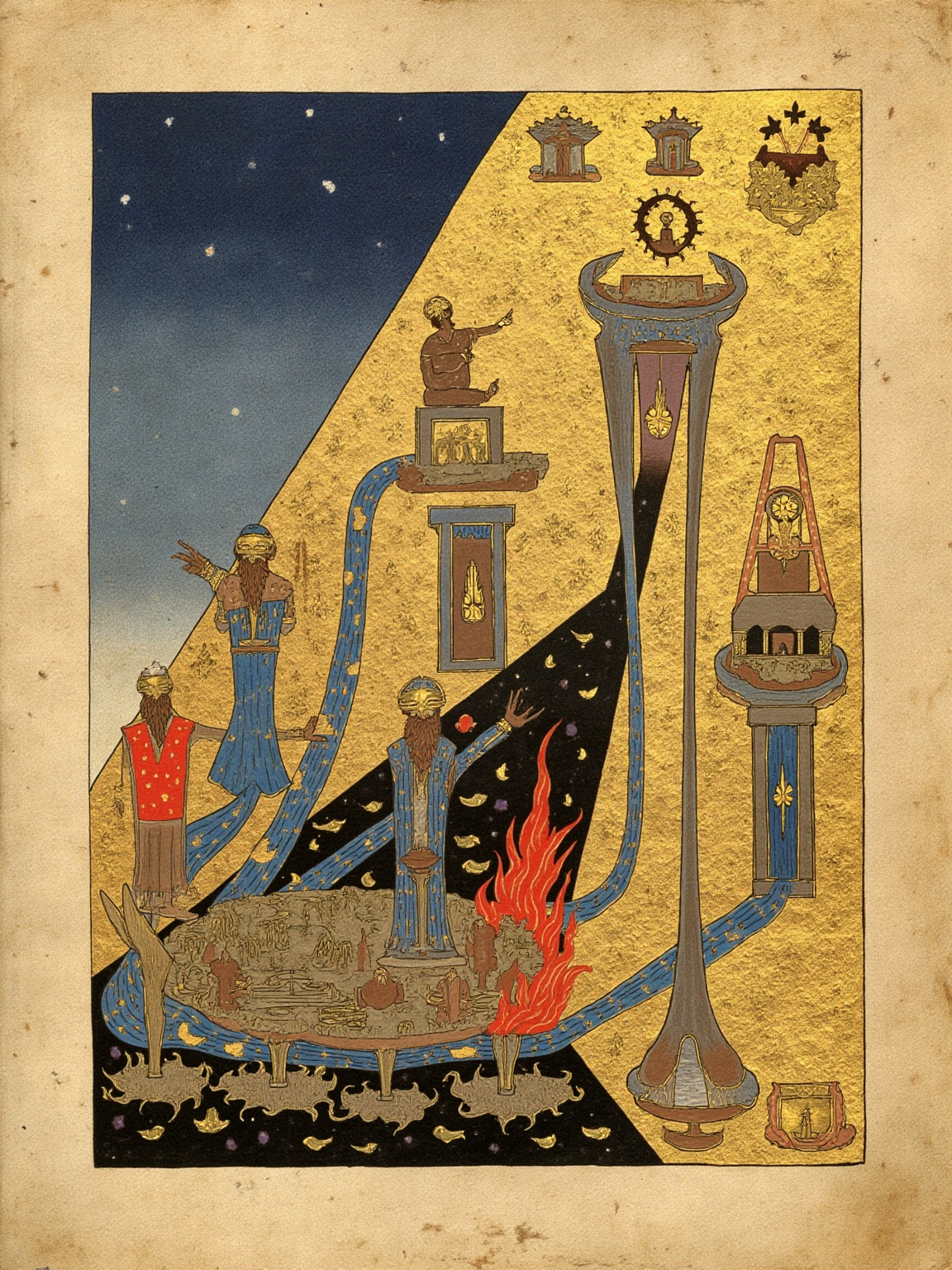
And behold there came a dream unto me, and visions fell upon me; and I saw the destructions of the sinners and the condemnation of the ungodly.
看哪,有梦临到我,异象落在我身上;我看见罪人的灭亡与不义之人的定罪。
金句 · 动物寓言 · 绵羊之梦
The Epistle of Enoch closes the book with the famous Apocalypse of Weeks — the whole of history sliced into ten weeks, counted from Adam, each with its own task and its own ending, the last of them bringing a new heaven and a new earth. Across the ten weeks, the righteous and the wicked are set against each other again and again, and the final reckoning is hammered home once more each time. This is not a timeline of predictions. It is a literary structure — a way of fitting a chaotic present into a frame that has a starting point.
Themes and Method
The most visible motif in the whole book is inventory. Winds are sorted into storehouses, light into gates, mountains into their compass points — a way of organizing an entire worldview with a patriarch as its eyewitness. It is the same impulse that later drives medieval Christianity to rank angels into choirs and stack hell into circles: use structure to hold chaos down.
The other motif is the clean split between heaven and earth. The Watchers' sin is not marrying and fathering children — it is abandoning their holy station. Get the position wrong, and the sin follows automatically. Another phrase keeps returning too: that day. In Enoch's mouth it tolls again and again, pulling the whole book's field of vision toward its endpoint. The reader is not just following a story — he is being reminded, over and over, that the day he is walking toward is the book's real ending.
As a model of apocalyptic literature, this book's value has nothing to do with whether its prophecies came true. What it demonstrates is a way of writing: taking the disorder of the present — a Temple destroyed, foreign occupation, disputes over the calendar — and writing it into one unbroken order that runs from heaven down to earth. For a reader today, it is a proposal for order sent from two thousand years back. You do not read it to find prophecies. You read it to see, again, how people draw maps out of chaos.
Reasons to Read the Text Itself
What a companion guide can give you is a map: the twelve gates of heaven, the seven jeweled mountains of the north, Mount Hermon where the Watchers swore their oath, the pasture where the sheep and the wolves face off. The names line up with the facts, and the summaries hold. But a map is not the ground it describes. What you only get from the text itself is the physical sensation that builds as you read — one name after another, one mountain after another, one verdict after another. Enoch is taken to the heights again and again, led on tour again and again, told again and again, look, this is X, this is Y — and the reader gets led right along with him.
There is one more thing a companion guide cannot give you. This book was forgotten by the wider world for close to a thousand years, and it survived intact only because a community carved churches out of Ethiopian highland rock and kept copying it for twenty centuries straight. When you land on a passage in the text that stops you, and then look up to find a note saying this line first surfaced in an Aramaic fragment pulled out of a Qumran cave — that jolt of this actually happened does not live in the summary. It lives in the original.
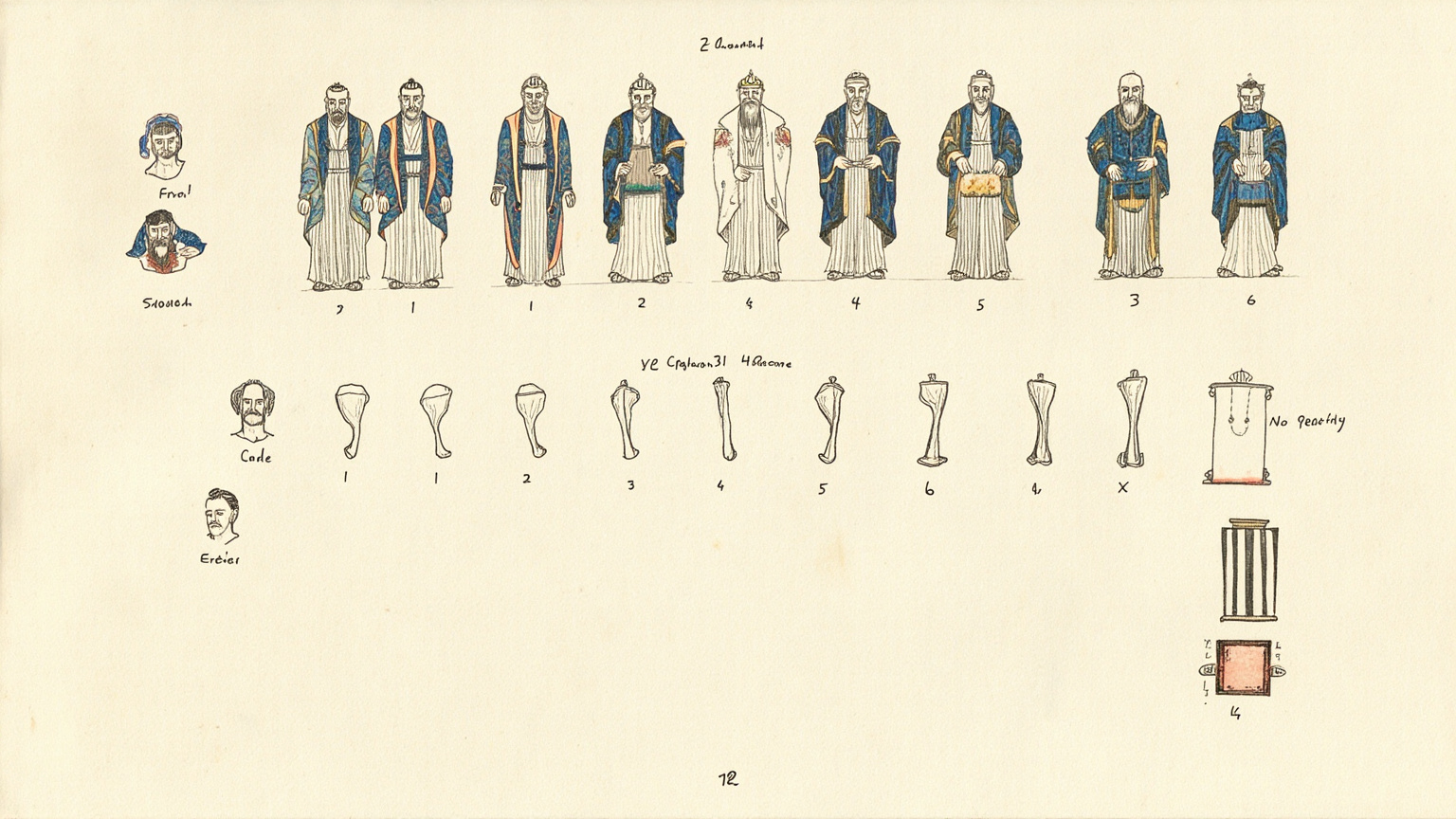
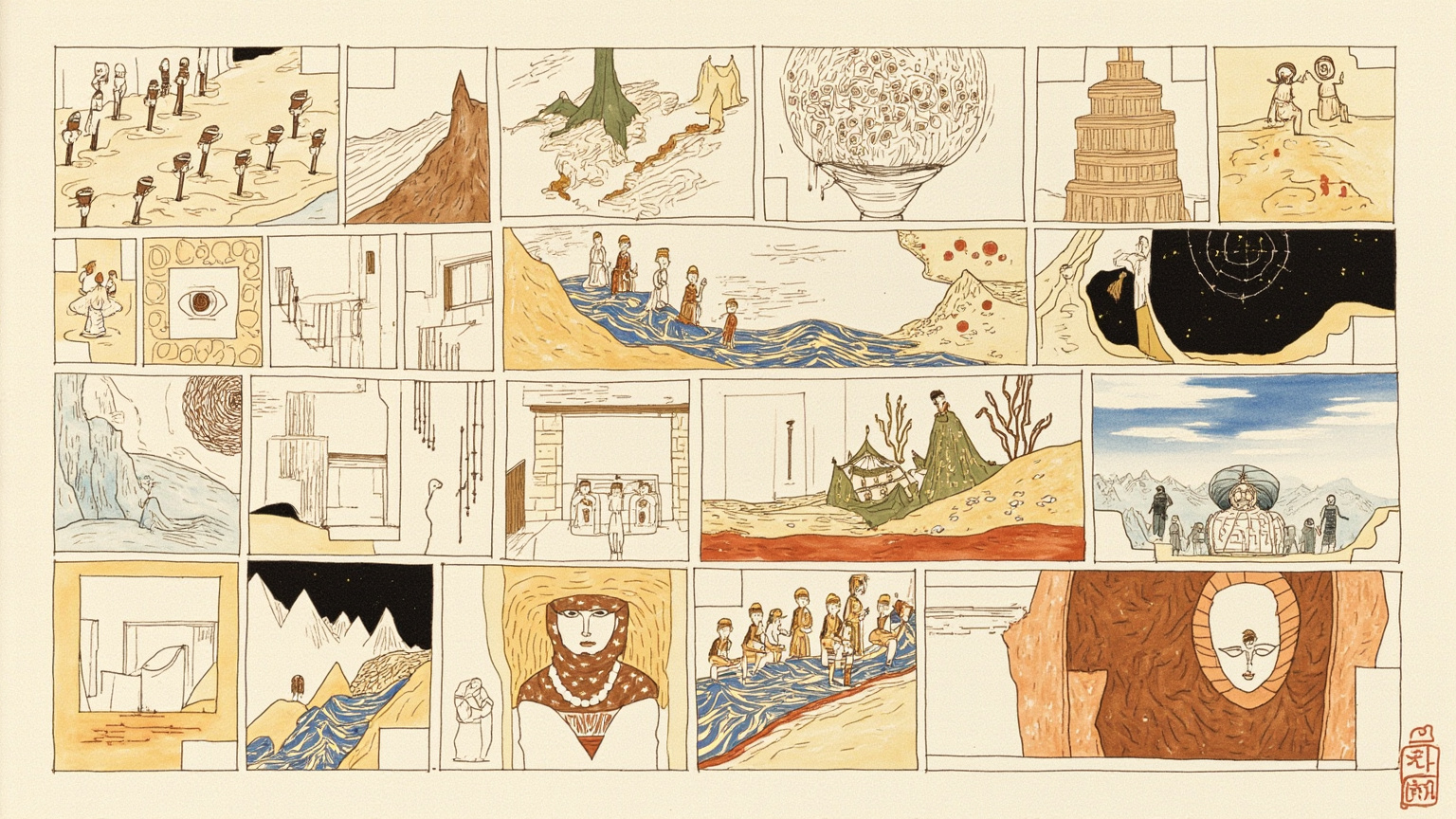
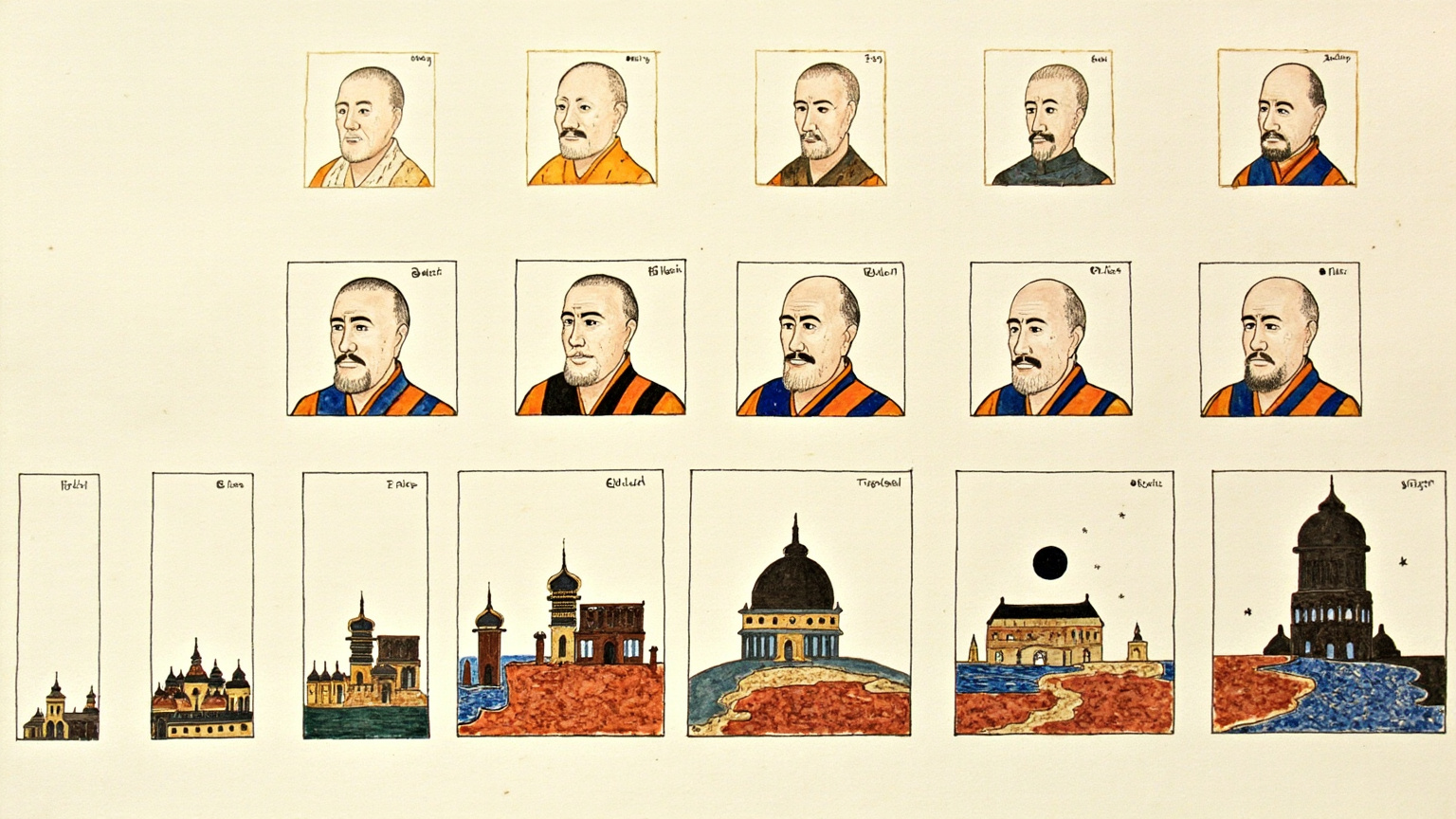
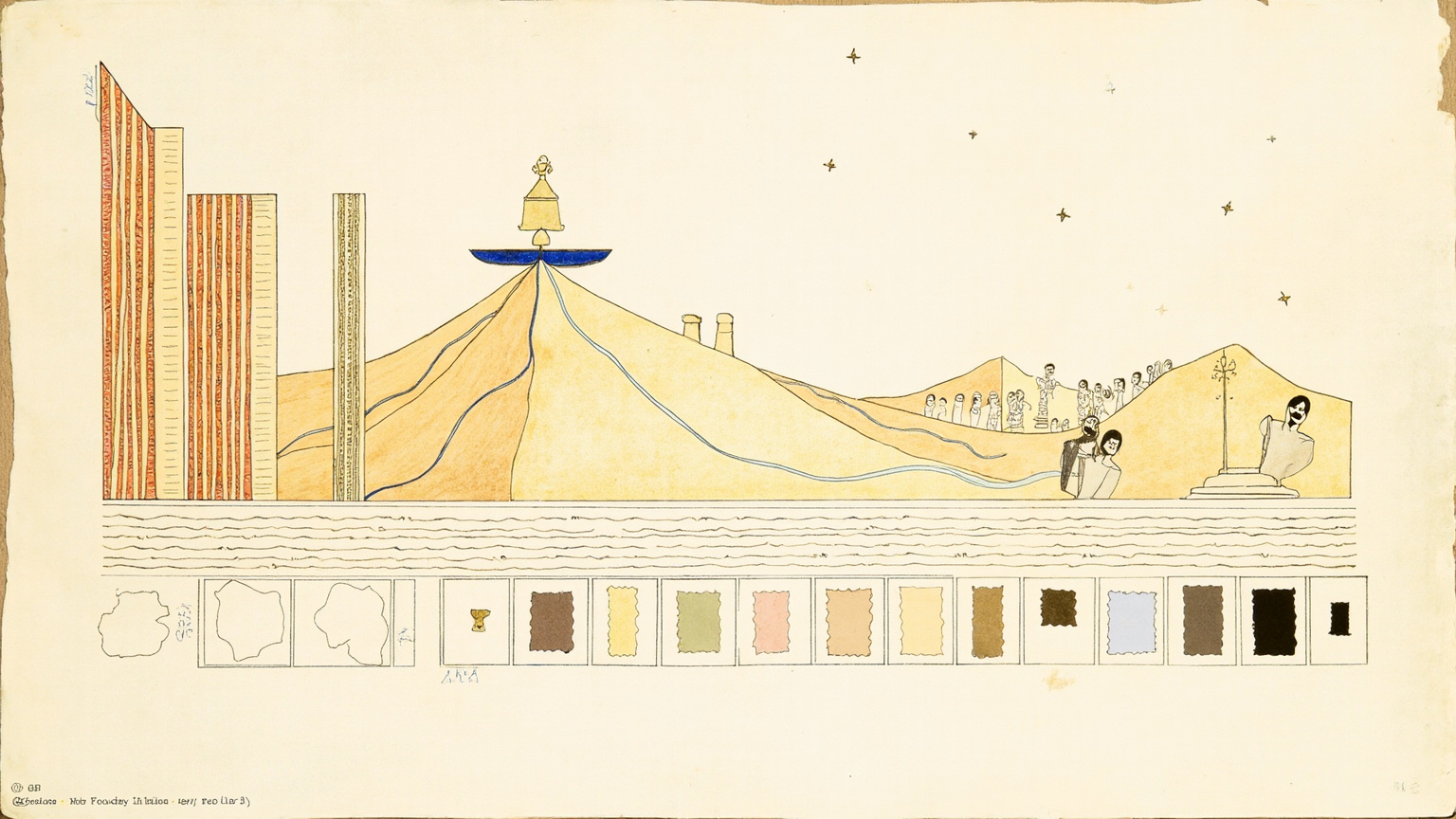
Art Direction4 plates
Before the guide was written, this book got a visual foundation — every illustration you just read grew out of it.