10 minutes to Brighton Rock — the teenage killer on the back of a seaside postcard
A seventeen-year-old Catholic gang boss, a marriage meant to silence a witness, and a record grooved with hate.
Text and illustrations produced by the pipeline
ImaReadFolio 02 — 06
The Opening Hook
A stick of rock, bitten from one end to the other, and the lettering running through it never breaks. Greene takes this cheap seaside souvenir from Brighton and turns it into a figure for a boy who never changes from first page to last: born too late for the good years under the old boss, he wraps his fear in coldness, and by seventeen he is a murderer.
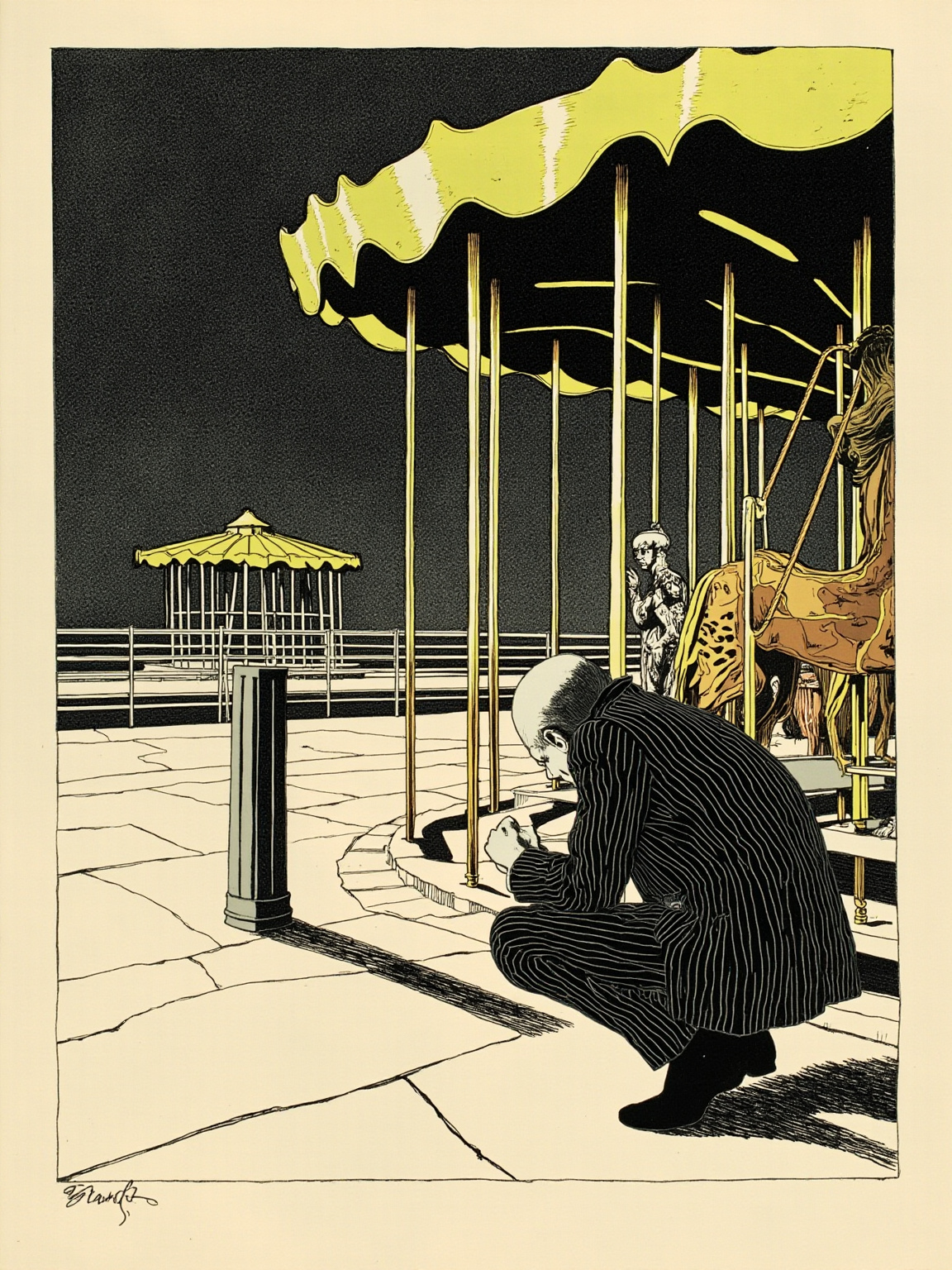
The story opens with a Kolley Kibber promotional card. A newspaper legman is hiding in a Brighton amusement arcade, shaking, knowing exactly whose debt he owes with his life. The man come to collect it is sitting in the recording booth out on the pier.
What Kind of Book This Is
Graham Greene wrote for a living, did a stint with British intelligence, and called this book a mere 'entertainment.' When it came out in 1938, critics took it at its word and read it as a crime novel. Decades on, readers looking back have recognized it as the first stone in what came to be discussed as his 'Catholic quartet' -- and one of the coldest stones in twentieth-century English fiction.
You do not need to know theology to read it. But keep one premise in mind: in the world Greene has built, hell is real, and damnation is real -- a moral universe on a different scale from any ordinary gangster novel.
Characters and World
Pinkie Brown: the seventeen-year-old boss of a small Brighton patch, with four or five men under him, up against the far richer Colleoni mob. He flinches from physical touch and is disgusted by anything to do with sex; he believes in the Catholic Church and knows, on instinct, that he has committed sins that damn him -- the two forces together wind him tight as a wire.
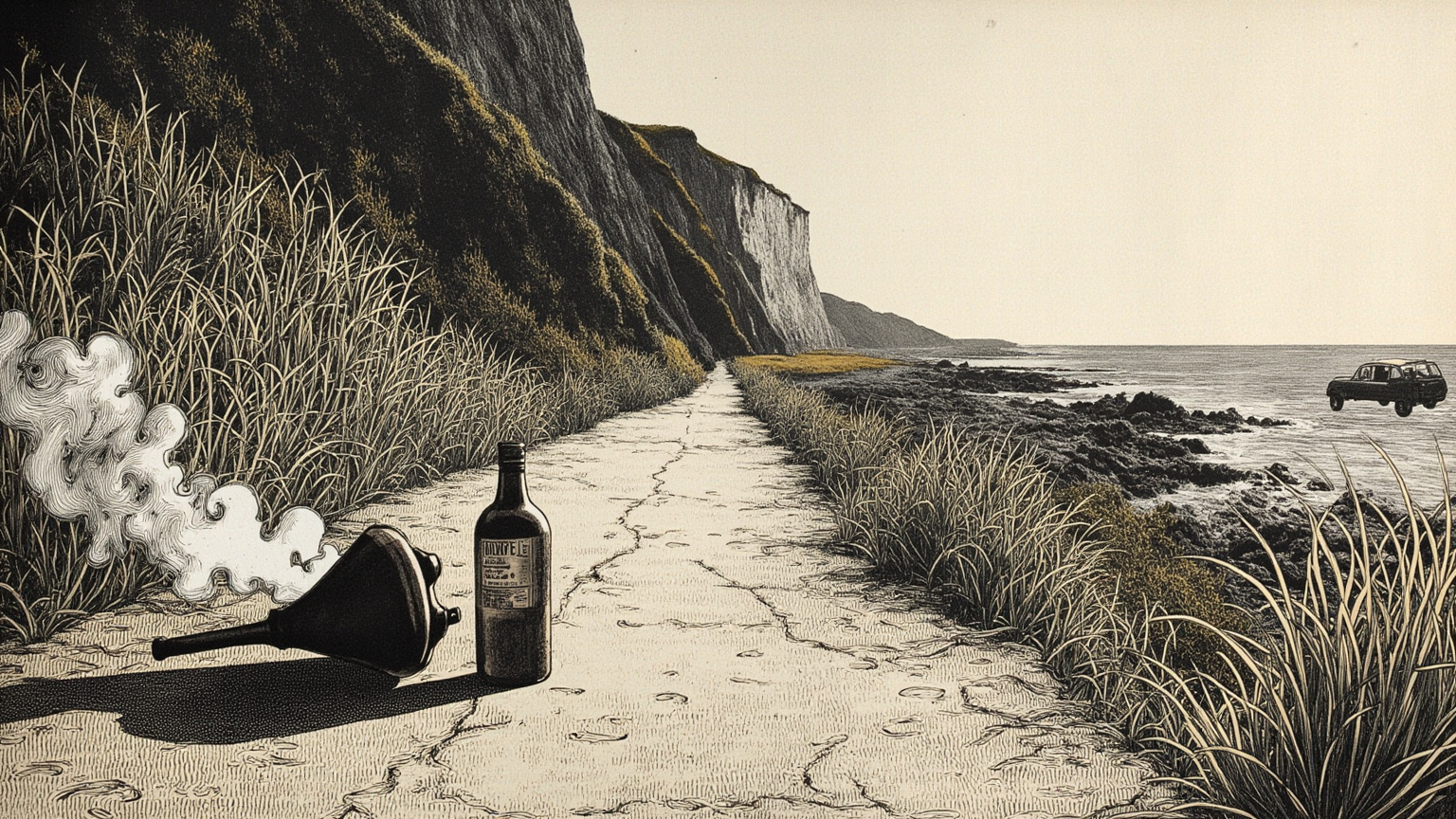
On the cliff, Ida and the police arrive in time. Rose does not die. Fleeing, Pinkie shatters the bottle of vitriol he had been carrying to use on someone else, blinds himself, and goes over the edge. Greene never shows the reader the fall -- only lets them hear a dull sound. It is the most restrained and the most terrifying stroke in the book: push the violence off the page, and it gets under the skin all the more.
The ending is the most famous scene in the book. Rose, carrying Pinkie's child, goes into the confessional of the Catholic church, and the priest tells her through the grille: the appalling strangeness of the mercy of God. She walks out with one thing on her mind -- going home to play the record Pinkie made for her, back at the pier's recording booth, which she believes is his declaration of love.
ImaReadFolio 06 — 06
Why Go Read the Book Itself
This guide has laid out the skeleton, but Greene's craft is the kind you can only taste in the original. How the neon light off the Palace Pier falls across that boy's face, how he writes the rain-slicked bottle of vitriol -- hearing it secondhand is like eating candy someone else has already chewed. The book is short and fast, but every inch of it runs warm. You can read it in one sitting, and afterward that record will keep playing in your head long after you close the cover.
Greene presses mercy and horror into the same stick of rock -- and from the first bite to the last inch, the lettering running through it never breaks.
ImaRead6
Art Direction4 plates
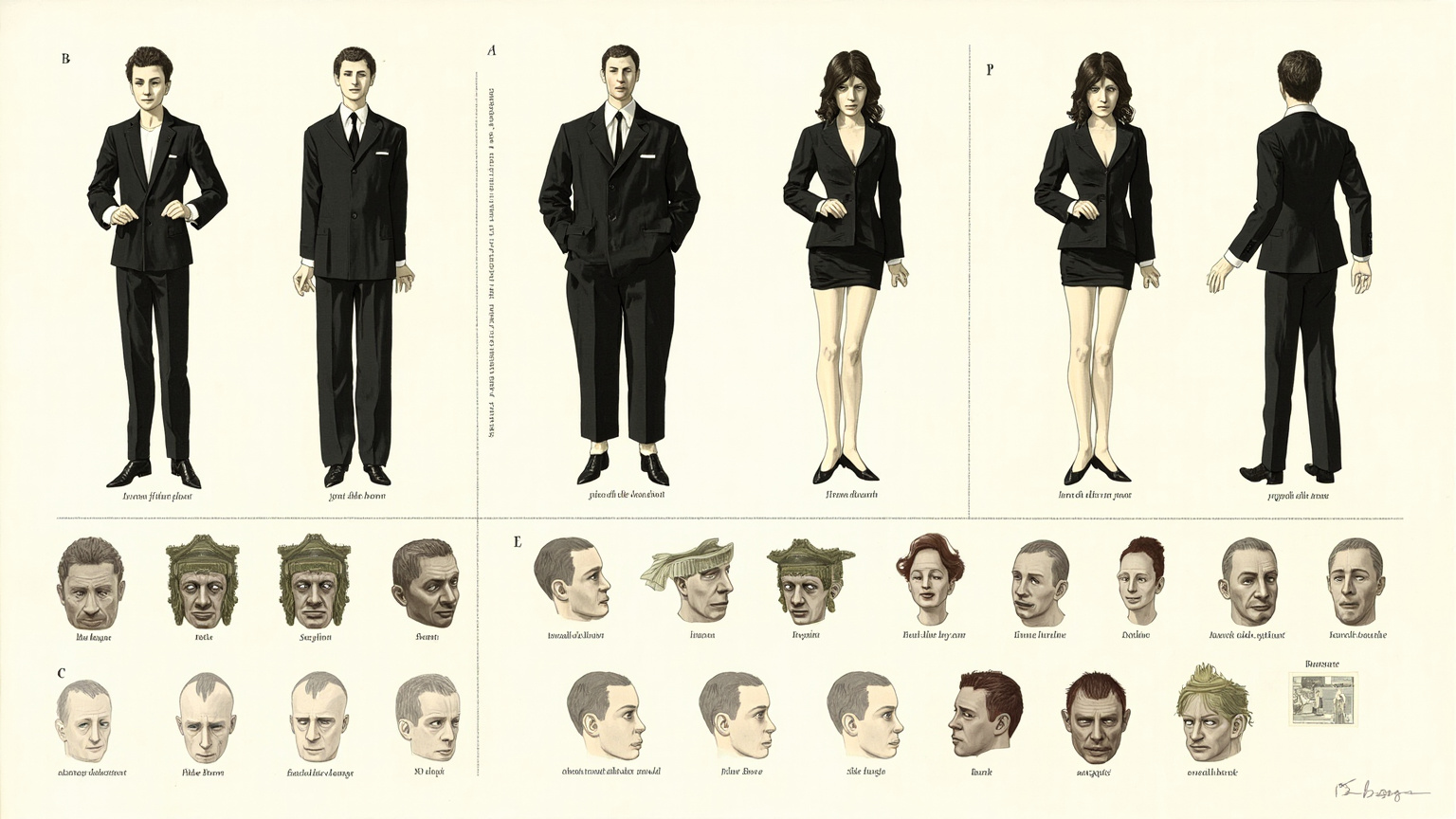
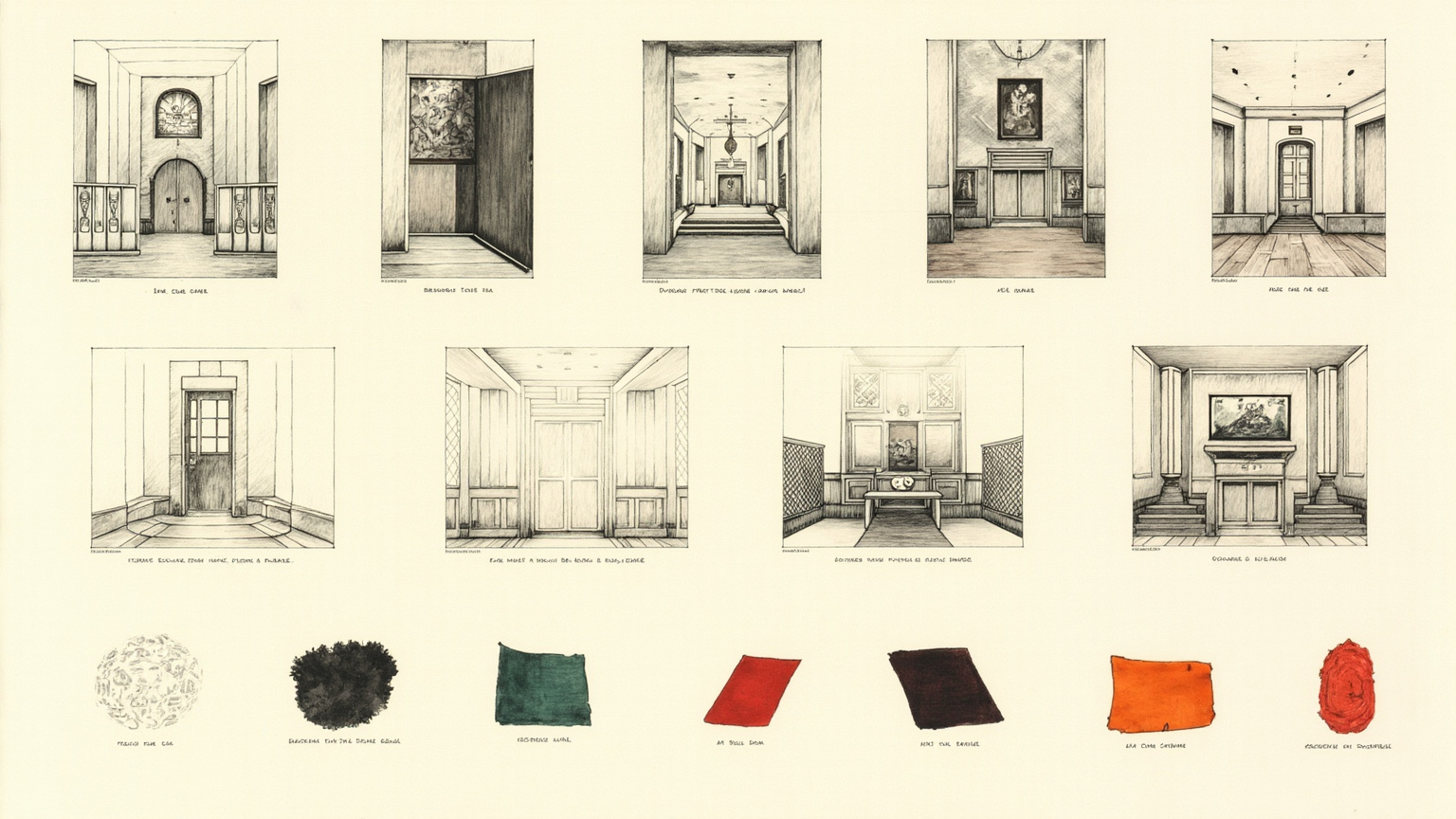
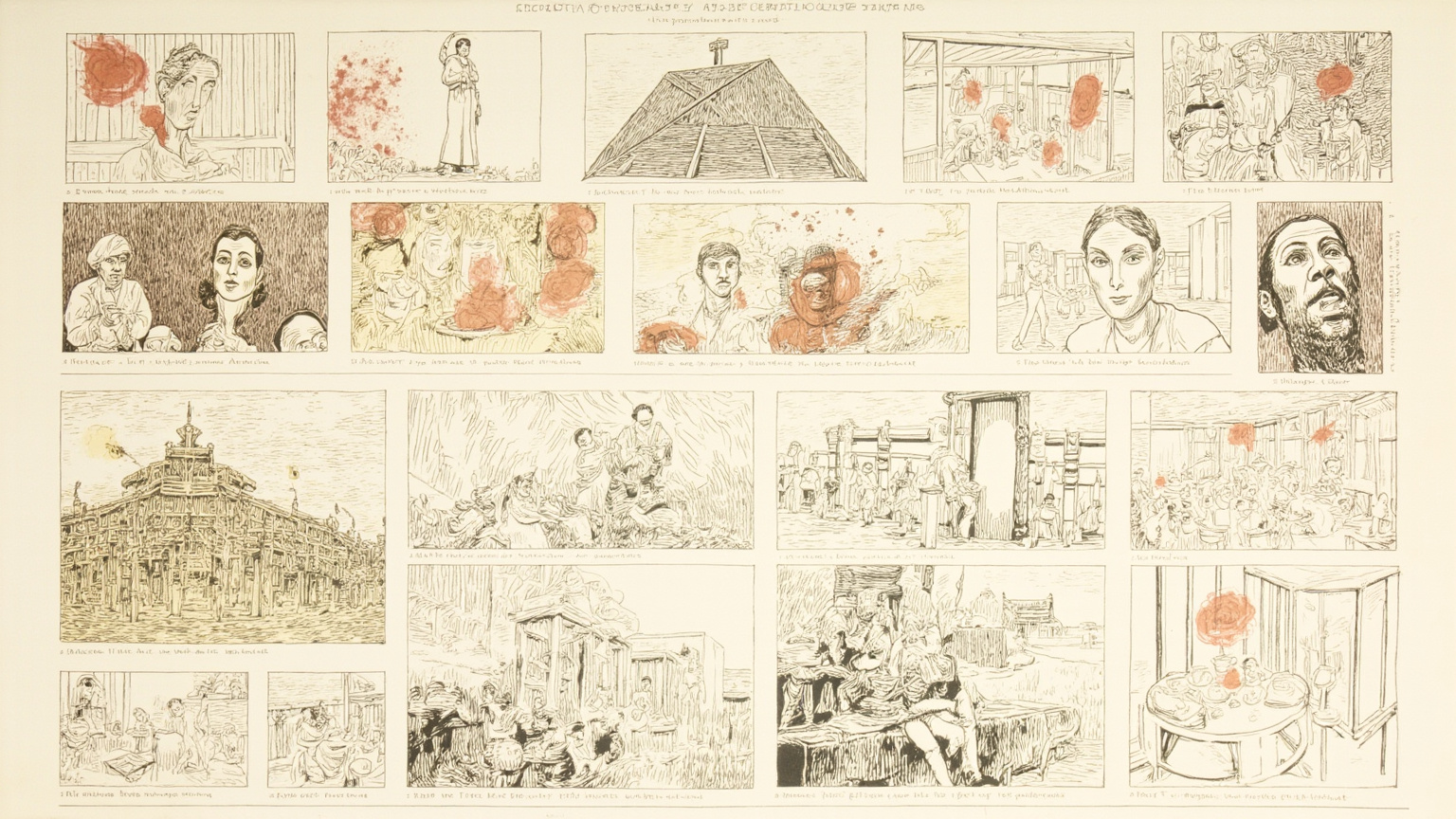
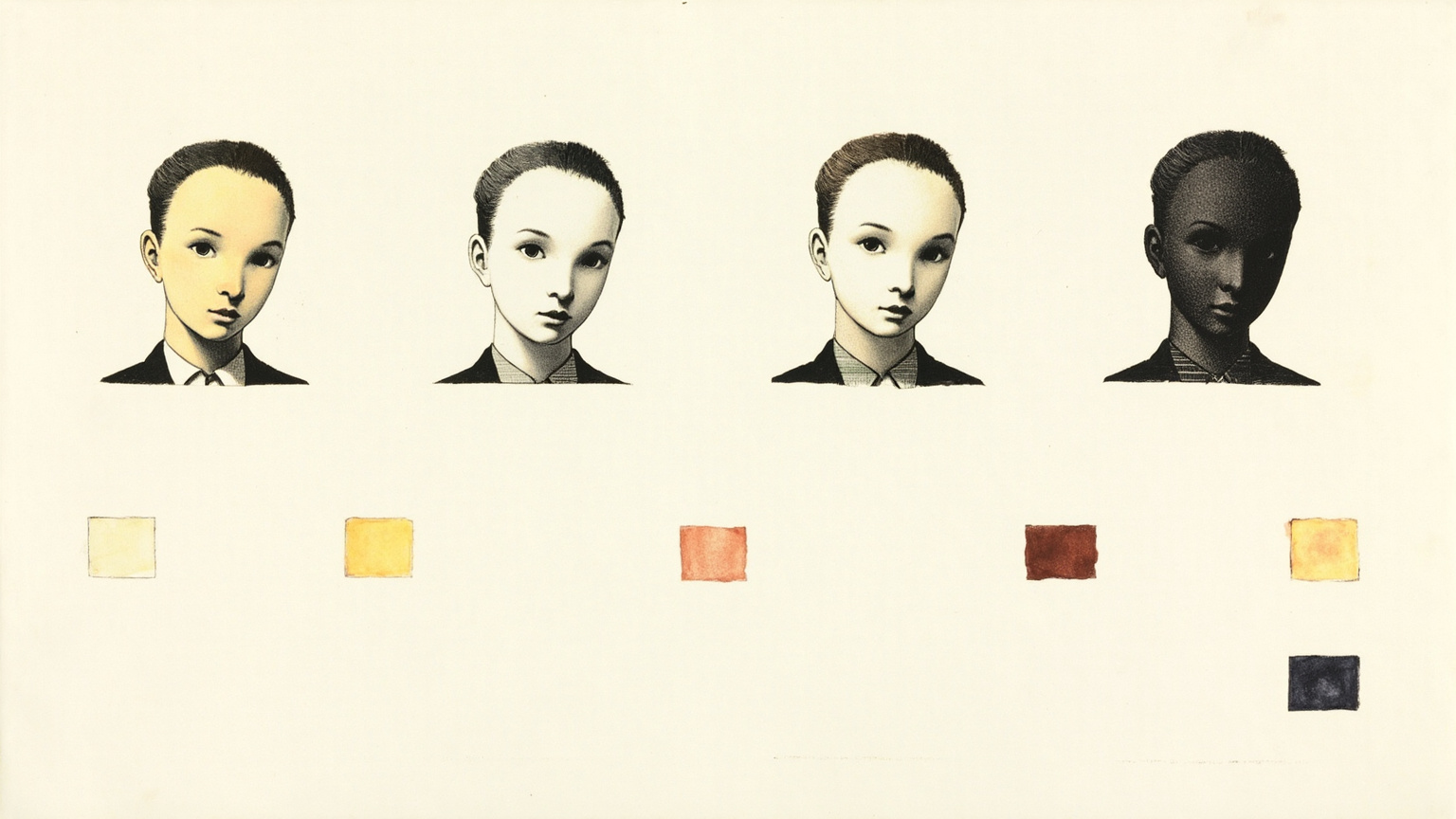
Before the guide was written, this book got a visual foundation — every illustration you just read grew out of it.
Rose: the sixteen-year-old waitress at Snow's, devoutly Catholic and poor. She stumbles into being the one witness who can break Pinkie's alibi, and he comes after her to silence her -- only to have her fall hopelessly in love with him.
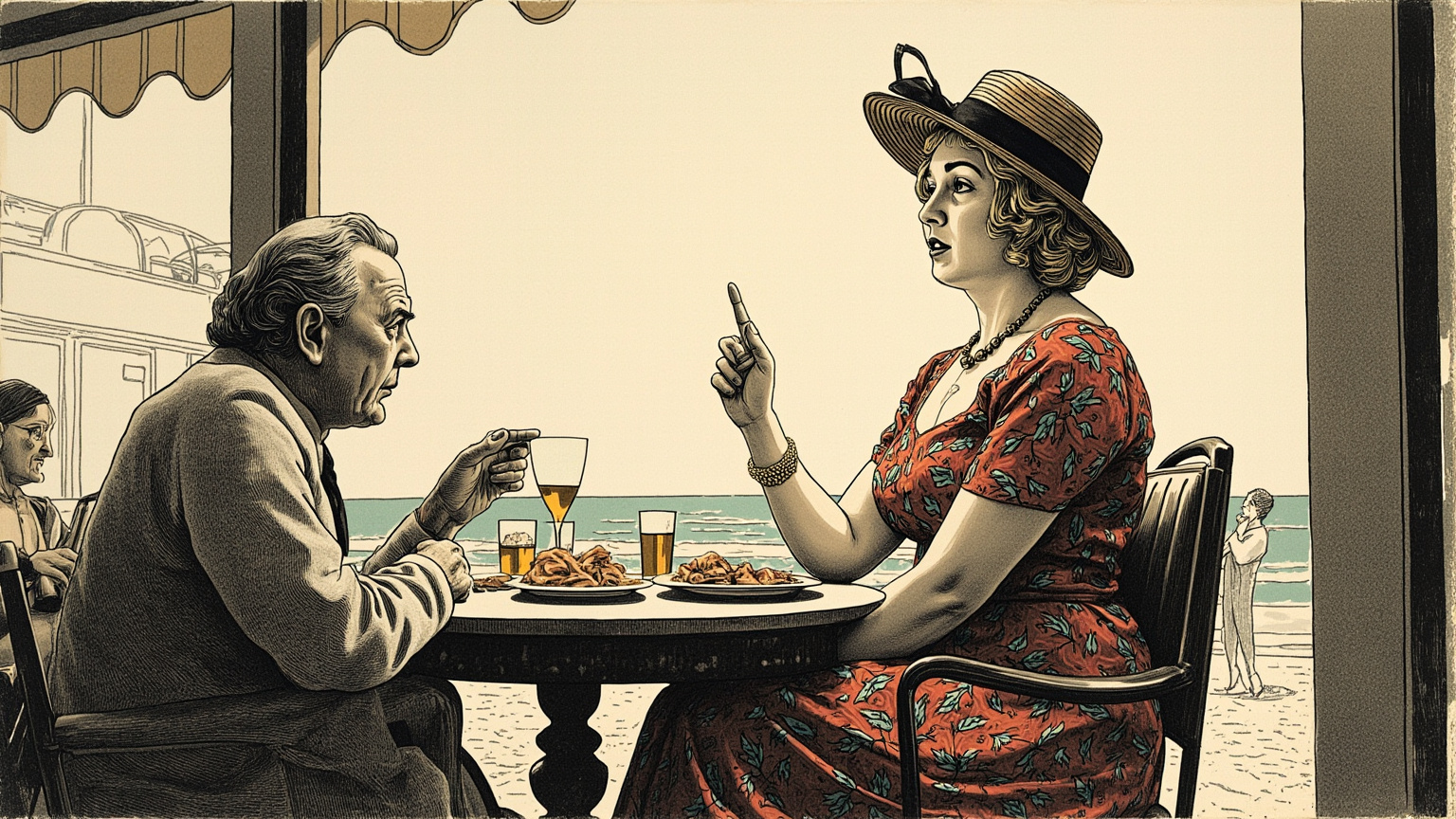
Ida Arnold: a big, easygoing middle-aged woman who believes in plain worldly justice -- right gets rewarded, wrong gets punished. Hale spent his last afternoon flirting and drinking with her, and she sets out, out of sheer stubbornness, to solve his death herself. She and Pinkie stand on two different moral maps: his is sin and damnation, hers is just deserts on this earth.
The setting is 1930s Brighton: the coin-operated recording booth on the Palace Pier, shabby rented rooms, the racecourse on bank holidays, the cliff road, and the confessional of a Catholic church. There is the postcard side that tourists see, and underneath it the dark side, where two gangs fight over protection money.
How the Plot Runs
Fred Hale, a newspaperman on the run, is dodging through Brighton. Years earlier he betrayed Kite, the old boss of the local mob, and Kite died at the hands of the rival Colleoni gang. Now Kite's successor, Pinkie, has come for him.
Pinkie's gang kills Hale in a way meant to pass as natural death -- not a knife, but a setup -- then fake the appearance that the dead man went on distributing his Kolley Kibber cards after the fact, building themselves an ironclad alibi. On the page, Greene shrinks the murder down to a few lines in a newspaper; by the time the reader hears of it, it is already over. That restraint is its own kind of dread.
Ida doesn't believe it was an accident. She laughs the loudest and eats the heartiest of anyone in the book, but she will not let the matter drop -- the least likely detective in the novel, because what drives her isn't a job, it's her plain conviction that the guilty never really get away.
The crack in the plan opens with Rose, the waitress at Snow's. Sorting change one day, she stumbles on the flaw in the last card -- it was not left by the dead man's own hand -- and without quite understanding what she has found, she becomes the one witness who could bring Pinkie's whole alibi down.
ImaRead3
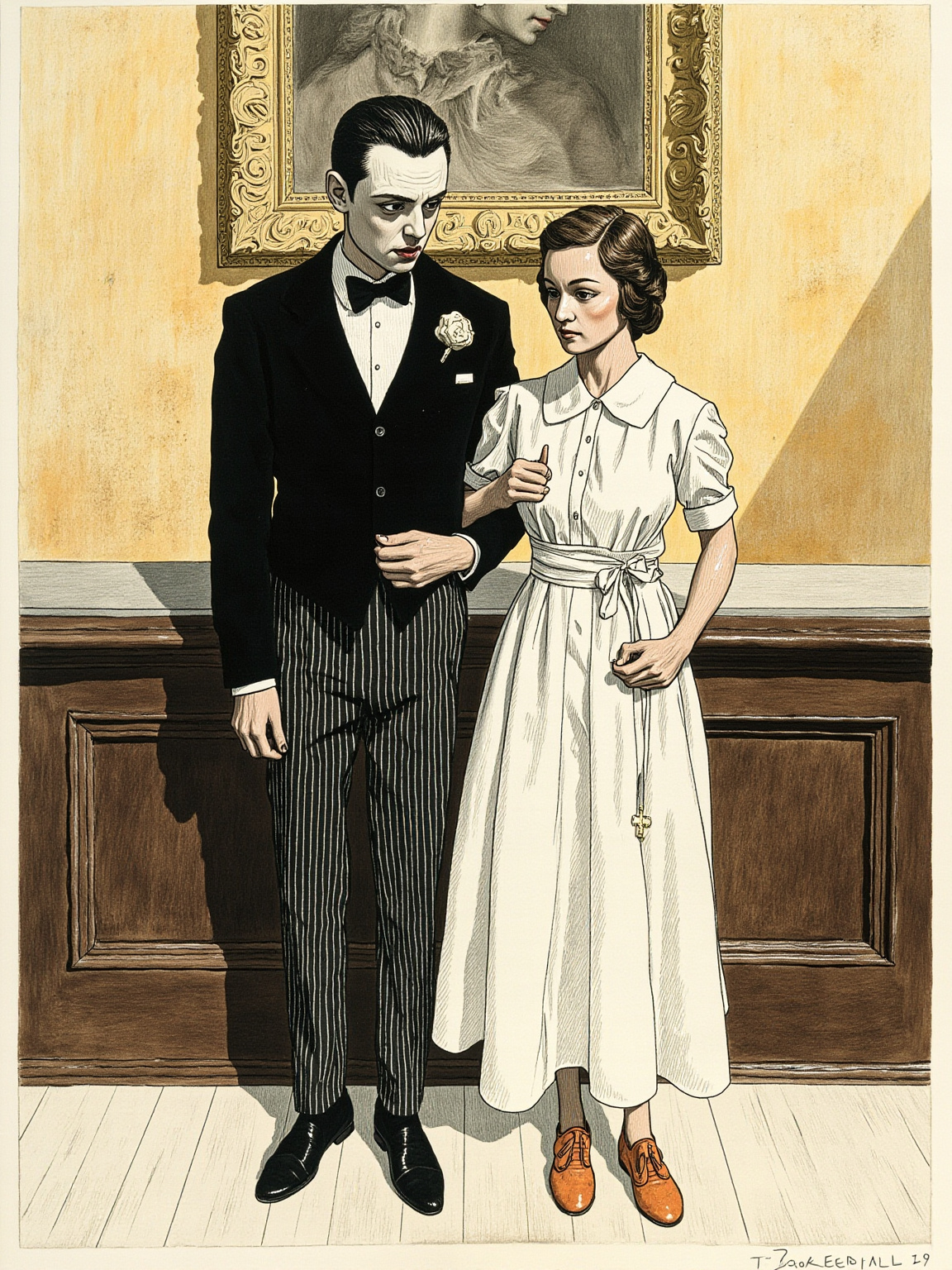
When Pinkie learns Rose is Catholic, he sees his opening: under English law, a spouse cannot testify against a spouse. He starts courting her, and she believes it is love. A marriage that should have happened in a church, in front of a priest, he pushes through instead at the register office -- two Catholics doing a thing their own faith counts as a sin in itself. He marries her only to shut her mouth.
Ida, meanwhile, pushes her way into Rose's life, determined to pull the girl free of Pinkie. Here her worldly sense of right and wrong runs head-on into the Catholic logic of sin and punishment for the first time -- to Ida, Pinkie is a murderer who belongs to the police; to Rose, he is a soul that needs to be prayed for and saved. Neither one can talk the other around.
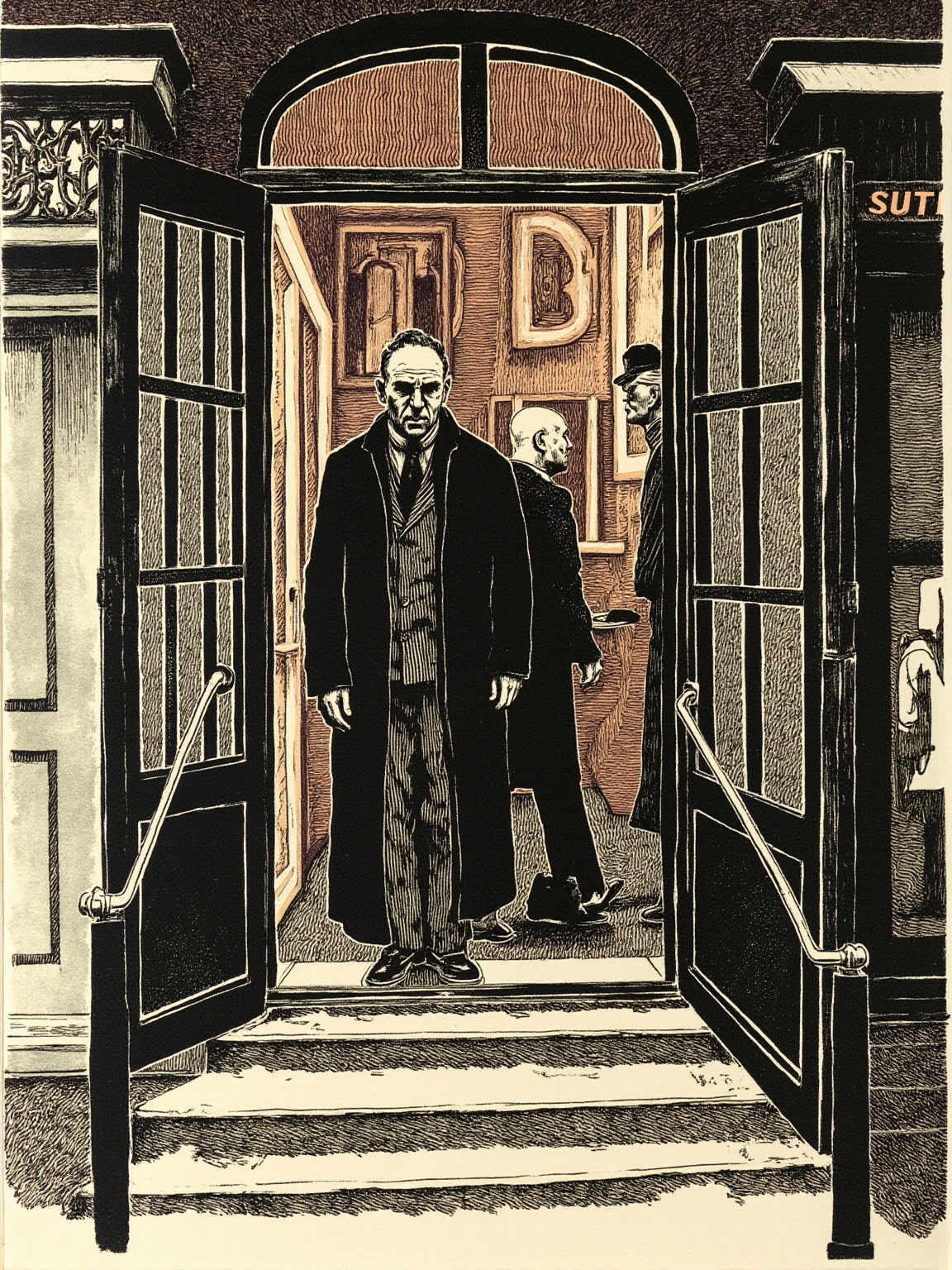
Pinkie's own days, meanwhile, are running out. The Colleoni mob keeps closing in, rich and shameless; inside his own gang, Spicer dies in a killing dressed up as an accident, and Cubitt reads the situation and switches sides. Only Dallow stays with him to the end. It is a small touch: Greene never spends a page mourning the abandonment -- he needs only the fact that one man is still there.
Cornered, Pinkie plans a suicide pact: he lets Rose believe he will pull the trigger alongside her. She agrees, because she genuinely loves him and genuinely believes heaven is waiting for them both. What he actually wants is for her, alone, to die.
ImaRead4
But the reader has already heard, earlier in the book, what is actually on that record: not words of love, but a curse against her. The story stops there. The lettering runs through the rock unbroken from end to end -- this man never loved her, not for one page of the book, and the hope the ending leaves her with is colder than despair.
Themes and Craft
The book is really arguing between two moralities. One is Ida's worldly kind -- good is rewarded, evil is punished, and the police and the law will catch up with the guilty eventually. The other is the old Catholic kind -- that a person can commit a sin that cannot be undone, a Sin rather than a mere wrong, punished by damnation rather than a sentence. The two keep colliding through the novel, and Greene never hands down a verdict. Instead he lets Pinkie, a living seventeen-year-old, act out what it is like to grow up in a world where hell is real.
The title, Brighton Rock, is the most economical figure in the whole book. Cut the stick of rock anywhere and the same letters show in the cross-section; that is Pinkie. Not that his surroundings shaped him into this -- he was set that way from the start. Greene refuses the cheap sympathy of environmental determinism, and that is both the coldest thing about this book and the most honest.
Greene grafted a religious novel onto the shell of a popular crime story -- nothing like it had been done in the thirties. There is a murder, a chase, a marriage staged to buy silence, gang violence in the streets. But close the book, and what stays with you isn't who killed whom -- it's the flicker of disgust that crosses a seventeen-year-old's face at being touched, and the terrible hope in a sixteen-year-old's eyes as she walks out of church.
My own read: the harshest thing Greene does in this book is refuse to feel sorry for Pinkie. That refusal is exactly what makes the character so frightening -- you cannot dismiss him with the easy explanation that he is just a victim.