The Bustan / The Orchard of Saadi · Companion Guide
果园
三十年漂泊者回到设拉子庭荫,把市声、荒原与客栈里攒下的一生,酿成一座只见德目不见英雄的韵文果园。
A Clay Bowl Beside the Canopy
A clay bowl sits beside a canopy of state. The bowl belongs to a dervish; the canopy belongs to a king. One holds a little water; the other shades a throne. One is light enough to carry away; the other stands for power no one can move. Saadi sets them side by side on purpose and leaves the reader to weigh them: which one comes closer to wealth?
The answer is folded into how the Bustan is written. There is no single hero; the poet himself is the only guide. He leads us through courts, inns, markets, and open wasteland, setting the people he meets in front of us one at a time, then polishing the lesson in paired Persian verses. Reading it feels like listening to a friend who has been through hard years: the lines fall in even couplets, but the sense drives straight into the world.
Ten Books of Virtue, Written After the Chaos
Saadi wrote the Bustan in Shiraz, finishing it in 1257. It runs to nearly eighteen hundred couplets of Persian verse, organized into ten books of virtue that carry its stories and arguments. Saadi was born around 1210 and died in 1291 or 1292; he was a poet, but also a narrator who had actually walked the roads he writes about. Nothing in this book was invented from an armchair.
It is often paired with Saadi's later Gulistan as the twin pillars of his work. The distinction is easy to hold onto: the Bustan is written entirely in verse, while the Gulistan mixes prose with poetry. Saadi left behind two different instruments this way, one that compresses experience into tight couplets, one that moves between anecdote, aphorism, and short verse. The first advances like a steady march; the second reads more like a conversation picked up by the roadside.
No Heroes, Only What Each Person Owes
The cast looks sprawling, but it comes down to a handful of contrasts. A just king shows how power can restrain itself. A rich man guards his purse and, with it, his pride. A beggar, old and destitute, looks up and puts his question to God. A dervish wears his coarse cloak and carries his bowl as badges of restraint. Merchants, farmers, sages, and travelers pass through as needed, each one carrying a single virtue for its chapter.
This world has a clear measure: power must be just, wealth must give, higher rank demands more humility, and hardship is no excuse to stop at complaint. Everyone answers for their own desires and choices, but dignity still has somewhere to stand. Saadi's Sufi ethics never drift off into abstract contemplation. They land in a meal given away, a debt forgiven, a prayer said, and in how a judge rules on a case.
Thirty Years of Wandering, Distilled Into an Orchard
The opening lines praise God. Saadi explains the title himself: this is not a real garden anywhere, but the fruit of a lifetime spent wandering. He had heard the noise of marketplaces and slept in ruined inns; he had crossed the desert between Arabia and Persia, and reached the colleges of Baghdad and the ports of North Africa and the Levant. None of those roads were wasted. They all became testimony in the poem.
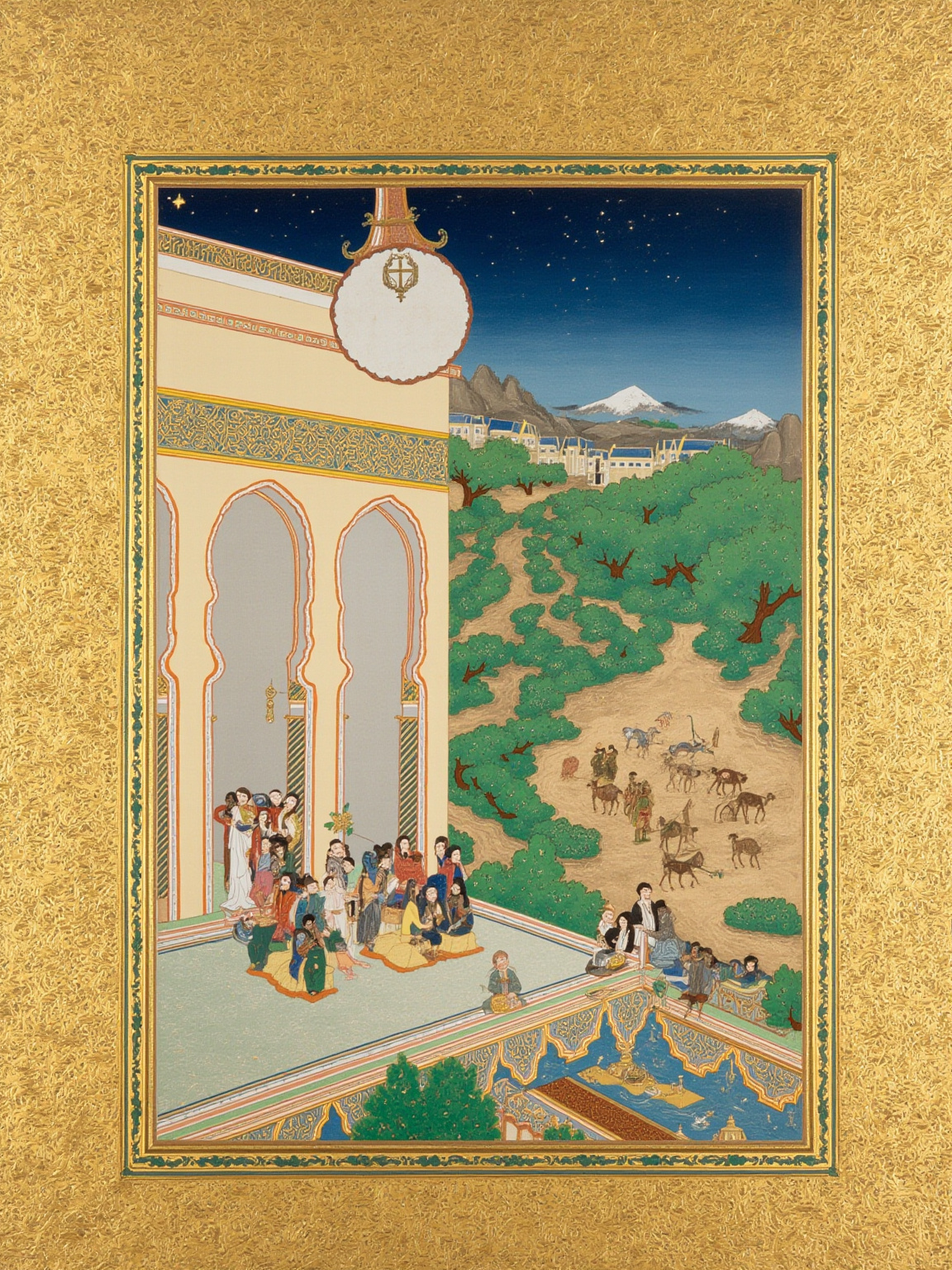
The orchard I have planted is not one of trees and water; it is the fruit of all that I have seen and suffered on the road.
我所栽的这座果园,并非哪一处有树有水的园林,乃是我半生流浪所见、所感的果实。
金句 · 序诗 · 果园之名的由来
By the time he wrote this, he had settled under the protection of the Salghurid dynasty. The fires of the Mongol advance had not gone out; city after city had fallen, and people were scattered. That he had a desk to write these lines at all carries its own irony: the stability the book asks for was exactly what real life did not have. Saadi dedicated the poem to the local atabeg, not to some conqueror from farther away, and that choice alone draws a line around what order meant to him.
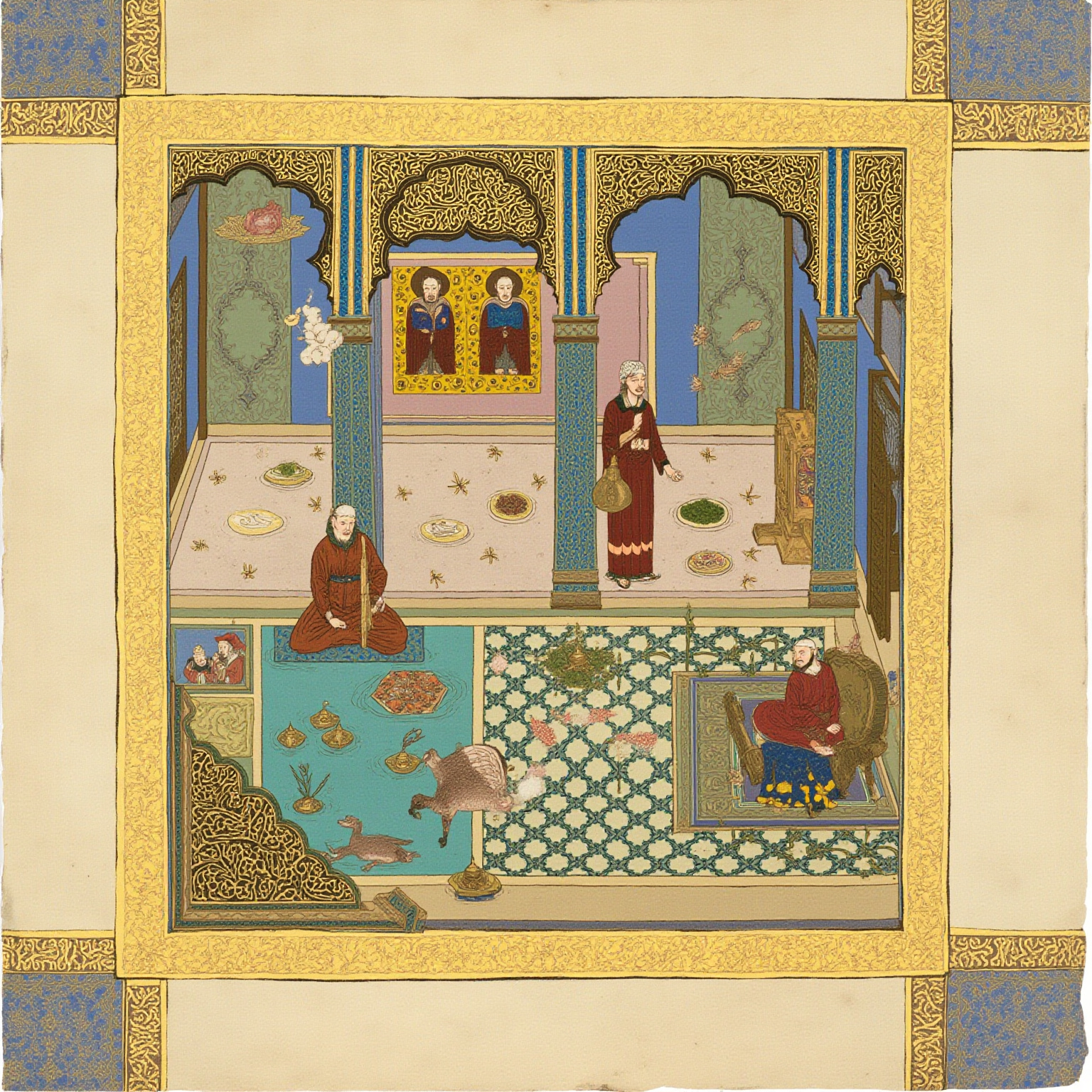
I have sat in the dust of ruin and walked among the scattered, and learned that verse alone keeps nothing standing.
我曾在倾覆的尘土中坐下,在流离的人群里走过,方知单凭诗句撑不住一座城池。
金句 · 序诗 · 献诗于阿塔贝格
A King Lowers His Sword, and Mercy Joins Justice
After the opening, the first book on governance starts at its most dangerous moment. A king pardons a man who tried to kill him; other stories of kings and judges recalibrate how power should be used. The point is not the violence itself but the judgment the ending delivers: a ruler who knows only punishment is still governed by fear. Only when mercy is folded into justice does the cycle of revenge have any chance of stopping.
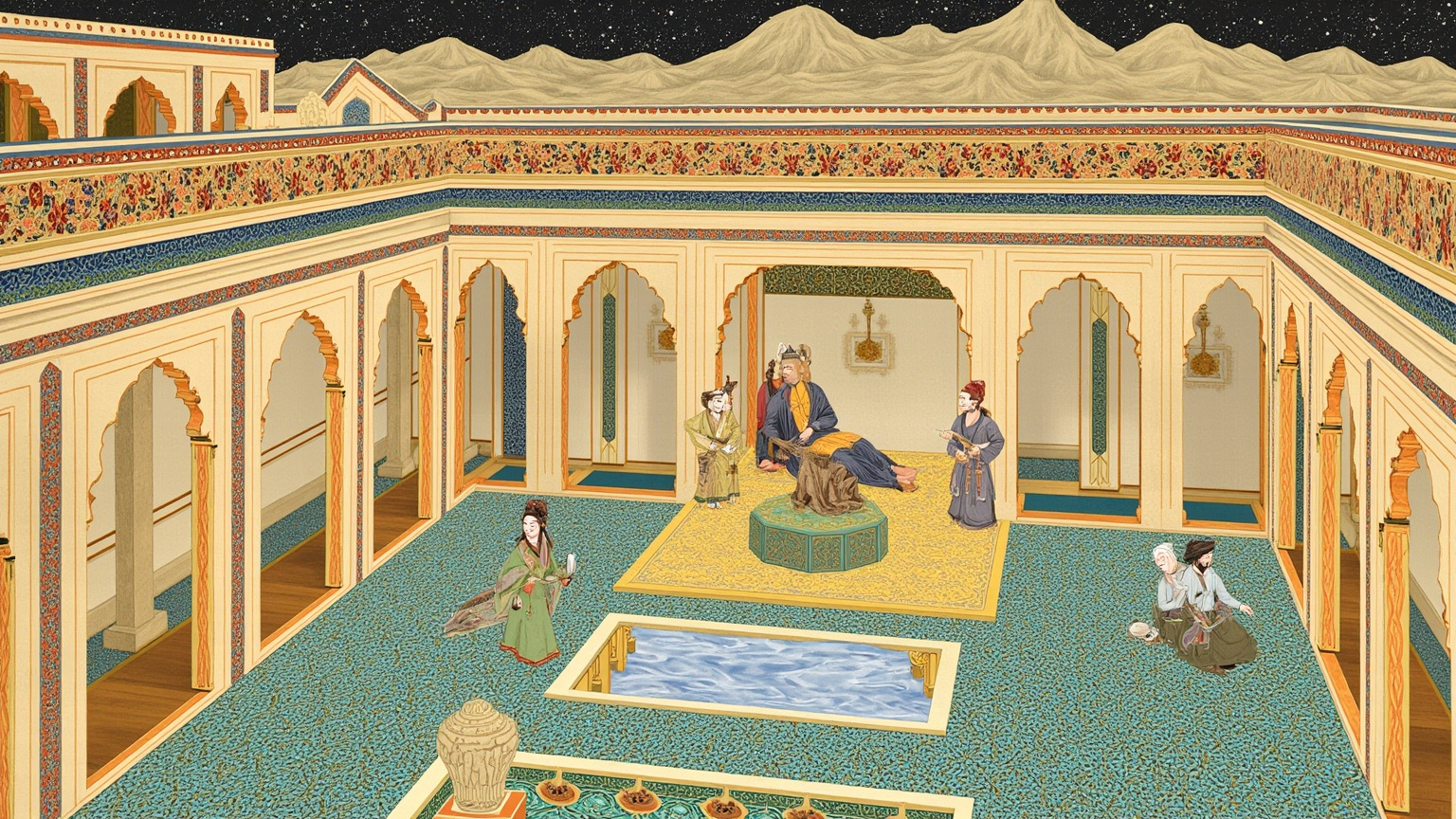
A king's worth is shown not in how he strikes, but in how he sheathes the sword against his own anger.
君王的价值,不在他如何挥刀,而在他如何把刀收回到自己的怒气之前。
金句 · 第一章 · 国王宽恕刺客
Saadi does not write his kings as naturally wise men. That is exactly the point of the example: justice is an institutional choice, and it has to be practiced again and again. Only when a ruler can master his own anger do his subjects get any reason to believe that order is not simply the property of whoever wins. The stories are short, but the responsibility falls on anyone who holds the power to judge.
The Purse Shuts the Door, the Beggar Looks to Heaven
The second book moves the scene from the throne to the doorstep. A poor man begs from a rich one and gets scorn, refusal, and an order to leave. Saadi keeps the conflict to words and a shove out the door, then cuts quickly to the harder scene: an old man in poverty looks up and asks God why the rich are always so harsh and cruel. Do they never fear that they too might one day have to beg?
These lines sting because the beggar is not pleading for the rich man to suddenly turn kind. He is handing the rich man's own conduct back to him. The poem then completes the turn by showing good and harm returning to their source; there is no need to pile on reward or punishment, because the reader has already seen the ending in the beggar's question. Money can shut a door, but it cannot shut out the consequences of what was done behind it.
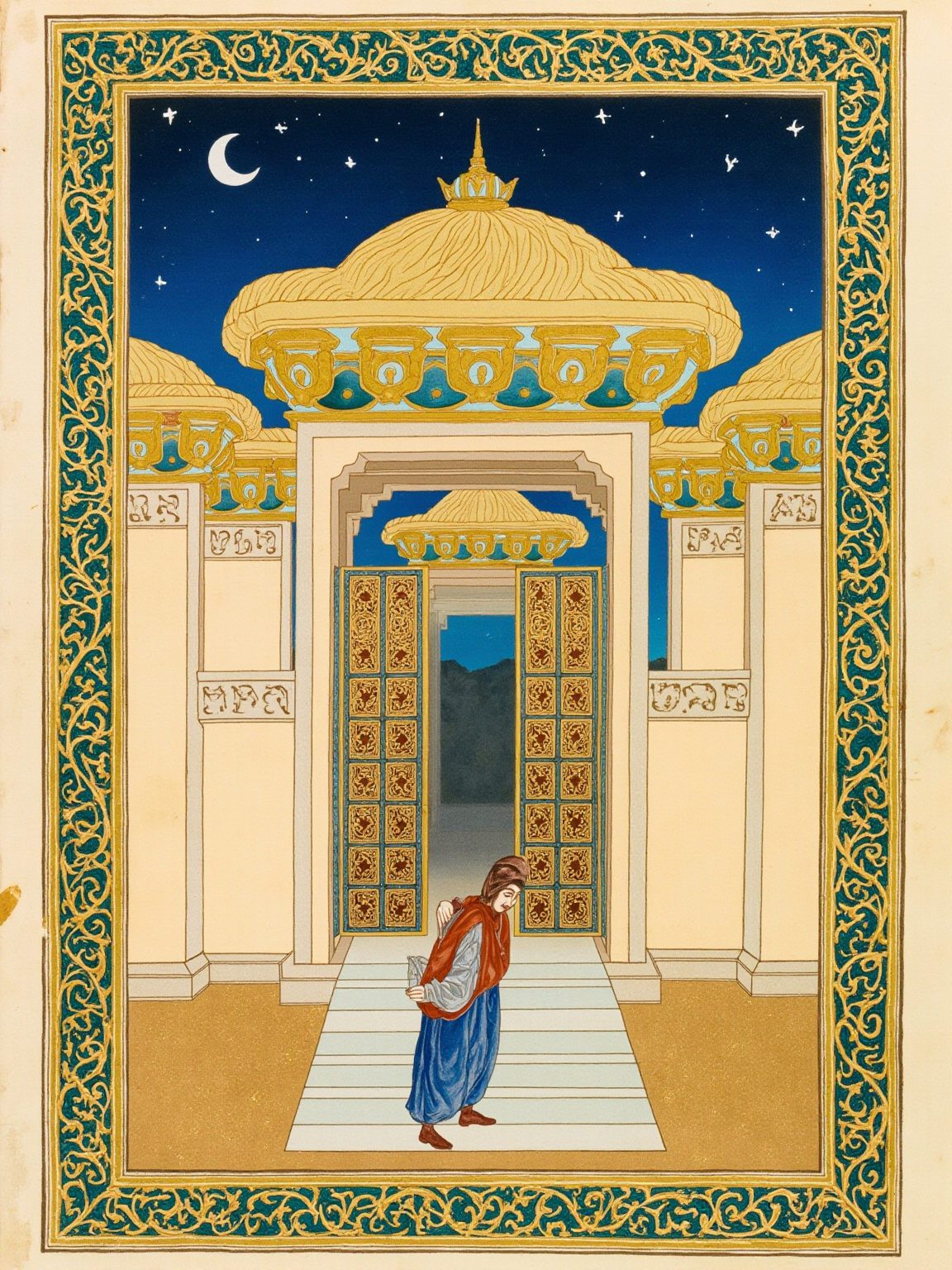
Have the rich no fear, that they stretch their hand so harshly against the poor, forgetting the day they too shall beg?
难道富人全不害怕,竟对穷人这般凶狠蛮横,忘了他日自己也要伸手向人乞讨。
金句 · 第二章 · 富豪与乞丐
The same book then turns to the virtue of the dervish. He wears coarse cloth and carries a bowl, claiming nothing, practicing the habit of asking for little. Saadi does not let poverty itself count automatically as nobility; what he watches is the choice. The rich man had the chance to give and chose stinginess; the dervish had the chance to take and chose restraint. Poverty and humility are kept separate this way, and doing good never comes down to handing over money alone. It also means lowering oneself.
The Canopy and the Bowl, Measuring Two Kinds of Wealth
The third book sets two lives on the same invisible scale. The king has his canopy, his rank, and a court that bows to him; the dervish has only a coarse cloak and a bowl. Saadi then swaps out the standard of measurement: if peace of mind, restraint, and contentment also count as wealth, the canopy is not necessarily the heavier side.
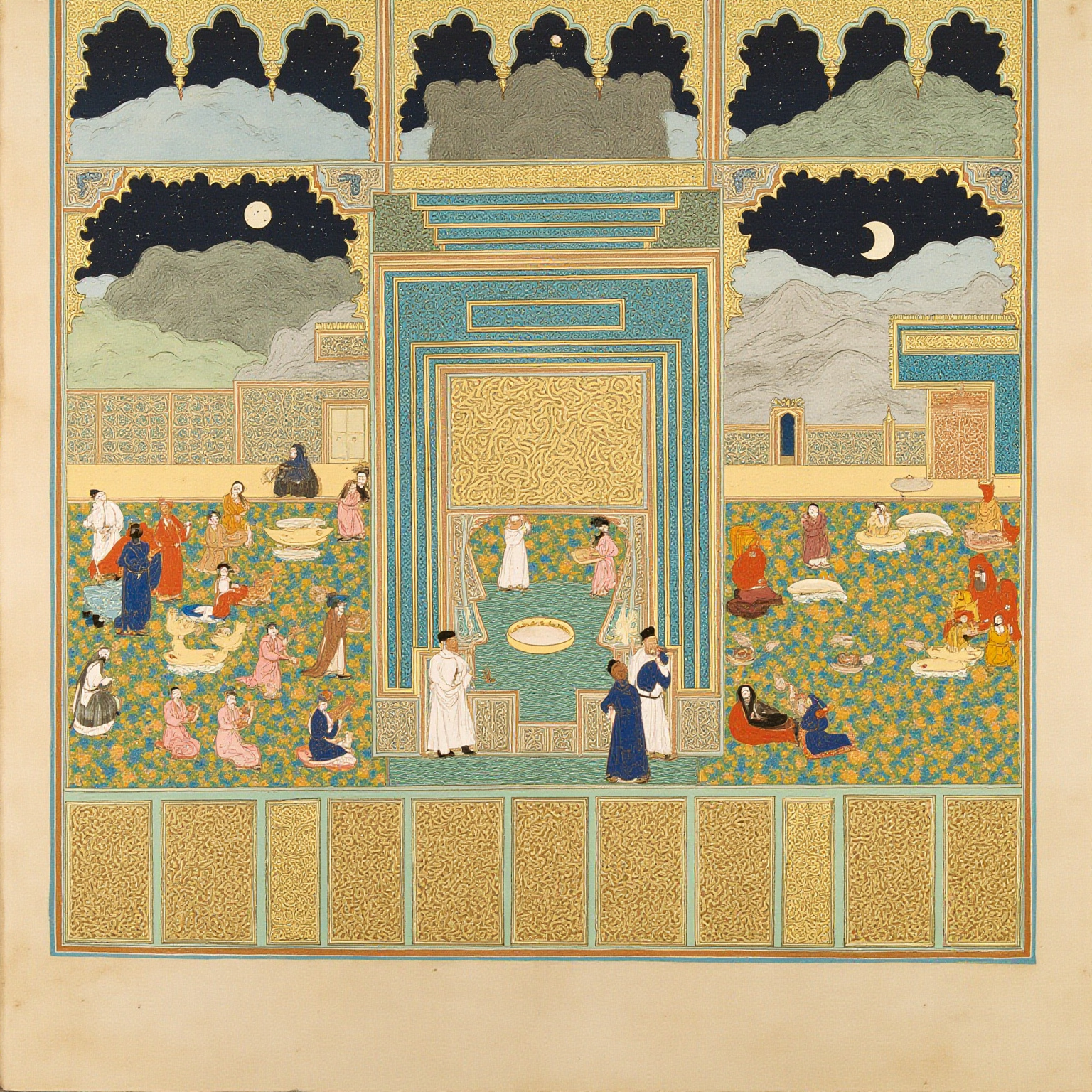
Place a dervish's bowl beside the king's canopy, and tell me which is the heavier vessel.
把托钵僧的钵摆在君王的华盖旁边,且告诉我,哪一只才是更重的器皿。
金句 · 第三章 · 知足的优越
I stopped here too the first time I read it, because what he calls superiority is not a call to refuse everything you need. It is a habit of chasing every desire all the way down to ask what it is really for. Own a little less, and there is that much more room inside that nothing can seize. This is not a formula for getting rich. It is closer to a ruler that keeps the eye from wandering too far.
Virtue Leaves the Cloister, Lands in Everyday Relationships
After the third book, Saadi keeps laying out contentment, humility, love and youth, and old age, but he does not stop at the dervish alone. By the seventh through ninth books, the virtues move out of inner discipline and into human relationships: how to choose friends, what education can actually change, why kindness needs gratitude in return. Practice is no longer a private matter inside a small cell; it has to hold up under daily company and public life.
The sage, the traveler, the merchant, and the farmer keep changing scenes across these books, but they serve the same purpose: give a single virtue a new face each time, and it never hardens into a slogan. Saadi cares especially about education; he does not treat people as fixed stone. A friend can pull you upward or drag you down. And a lesson only really belongs to you once it has changed how you act.
The Bustan cuts not with strange plots but with one relentless question: what kind of person does power, wealth, and learning finally make of you?
The Story Only Ends Once It Returns to Repentance
The tenth book lowers its voice. After governance, charity, restraint, friendship, education, and gratitude, Saadi does not hand out a certificate of completion. He writes of repentance and prayer, admitting that a person can still stumble, admitting that in the end there is nothing to lean on but God. The closing prayer answers the opening praise, and the whole book comes full circle.
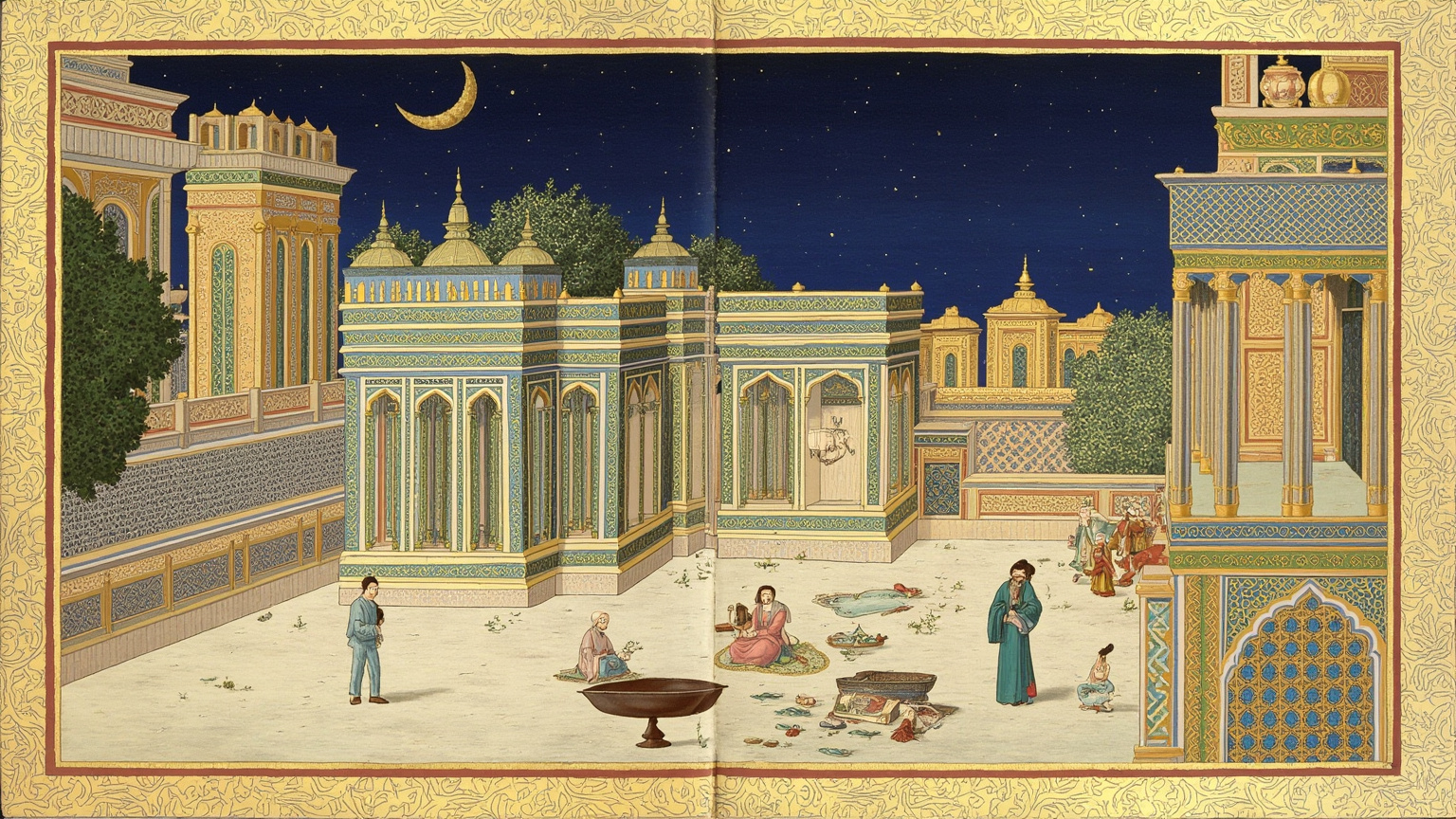
The work is not finished when a man knows his faults; it begins when he asks forgiveness and rises once more.
人认清了自己的过失,事情并未结束;要等他开口求恕,再重新站起来,才算真正开始。
金句 · 第十章 · 忏悔与祈愿
This thread is more honest than an inspirational story. Knowing you have been unjust, stingy, or vain is only the starting point; you still have to admit the failure, ask for pardon, and try to act differently tomorrow. The ending is not about anyone rising to a higher position. It is about someone finally willing to answer for their own life.
Why It Is Still Remembered Today
The Bustan stands as one of the two great pillars of Persian moral literature, and it set the model for the ten-book verse manual of virtue. It compresses nearly eighteen hundred couplets, a lifetime of wandering, a king's mercy, a beggar's question, and a dervish's restraint into a single orchard. Saadi's lines walked out of the lecture hall this way and into schoolrooms and proverbs across cultures for centuries after.
What makes it worth rereading is that morality never floats free of the world. Justice has to come down as a verdict, charity has to be handed across a doorstep, contentment has to resist actual desire, education has to change how people treat each other. For a reader today it works both as a reminder of conduct and as a piece of institutional criticism: private virtue kept for decoration does little on its own. Only when it enters power, money, and relationships does it stand a chance of doing less harm.
The poem keeps its Sufi undertone throughout, but it never sinks into pure theology. Praise of God, repentance, and reliance on Him set the direction; governance, charity, education, and friendship lay that direction down on the ground. This is why I value it: it does not care whether a person can recite fine principles. It cares whether they can make a more humane choice in a single verdict, a single door closed, a single hand extended.
One Layer the Guide Cannot Hand You
This guide can hand you the route: how Saadi sets his tone, how power learns to restrain itself, how wealth and poverty expose pride, how a dervish's clay bowl rewrites what wealth means, and finally how it settles into worldly relationships and repentance. But what actually pulls a reader through nearly eighteen hundred couplets is a physical momentum: two figures barely find their footing before the rhyme is already pushing the next scene onstage; a judgment that seems settled gets quietly nudged aside by the next face met on the road. Knowing the whole plot in advance does not spoil it, because how Saadi presses lived experience into couplets, and how he makes an old teaching glow again at every turn, is something only the full text can show you at its own pace.
Art Direction4 plates
Before the guide was written, this book got a visual foundation — every illustration you just read grew out of it.