Caigentan (Vegetable Roots Discourse / Tending the Roots of Wisdom) · Companion Guide
菜根谭
一位明代读书人在庭前石几旁,把三百六十则清言留给四百年后的案头——粗茶淡饭里修一颗宠辱不惊的心。
A Plate of Radish Root
A plate of radish root, a bowl of plain congee, set on the stone table in the courtyard. Morning light slants through the bamboo fence, catching the edges of the leaves and making them glow. No meat to go with the rice, no relish for the porridge. Bite down and you get a plain, earthy bitterness, still smelling faintly of soil. This image is the book's opening move. Every grand idea about self-cultivation that follows starts from this one coarse, chewable thing on the plate.
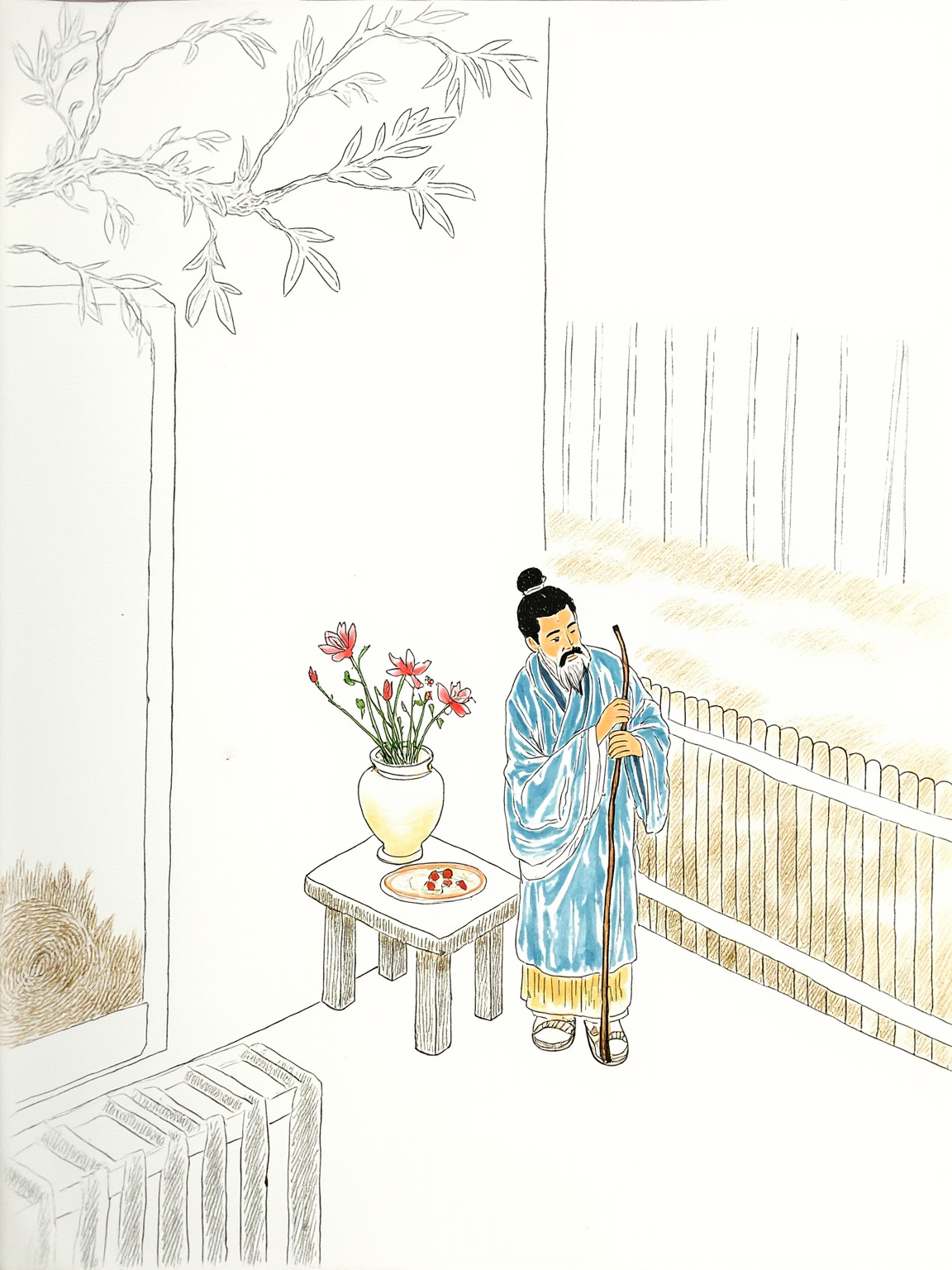
Those who can chew on the bitter roots of vegetables will find all tasks under heaven within their reach.
咬得菜根,百事可做。
金句 · 卷首 · 菜根谭
Not a Story. So What Is It?
It isn't a novel; there's no rising action, no climax. It isn't a book of sayings either, with Confucius holding forth from his mat. It is a book of maxims left by a scholar named Hong Yingming, writing in the late Wanli era of the Ming dynasty, arranged in three parts, a first collection, a second, and a sequel, roughly three hundred and sixty entries in all. Most run ten or twenty characters; a few stretch to thirty or forty. You set it on your desk and flip to whichever entry your hand lands on, the way you'd take a sip of cold tea. Each entry stands alone, to be read together or apart, and for centuries people have copied them into notebooks, pinned them to walls, tucked them into letters. In Japan the book has circulated for generations as a management text. That alone says its bones are sound. Nor are the three hundred and sixty entries thrown together at random. The first collection mostly concerns how to conduct oneself and cultivate the mind, its tone restrained, like an elder passing down the work of self-discipline and household order from beneath a teacup. The second collection turns toward worldly engagement and ambition, growing warmer as it goes, tracing advance and retreat amid the noise of the marketplace. The sequel settles into leisure and transcendence, arriving at the emptiness of morning bells and evening drums. Read straight through, it is like walking from your own courtyard wall into the depths of a pine forest, then back again to the kitchen stove. Nothing like a plot binds the three parts together, only a mind pulling itself further back with each one. The further in you go, the smaller the self, the wider the sky, the fainter the stakes.
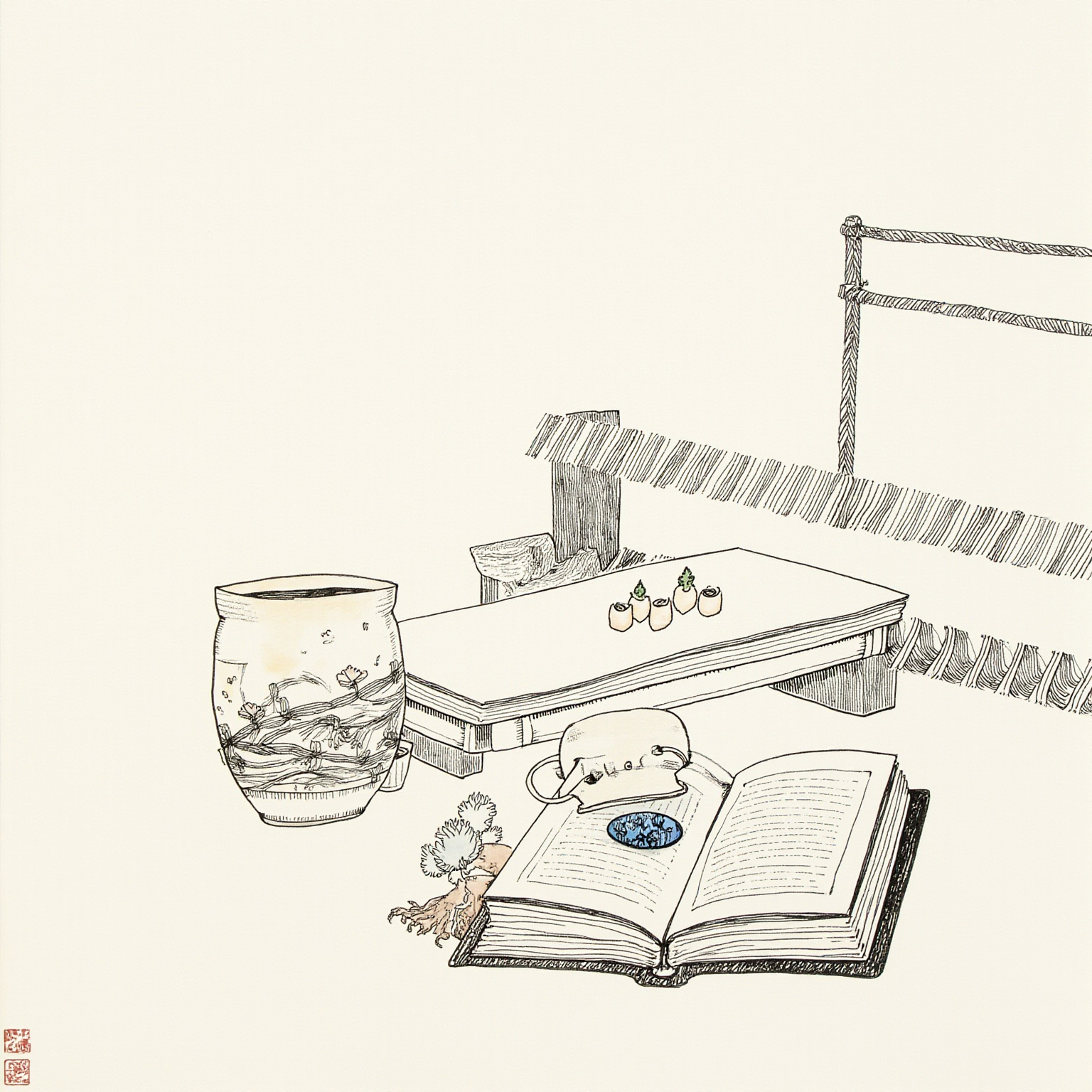
One Hidden Protagonist, Three Hundred and Sixty States of Mind
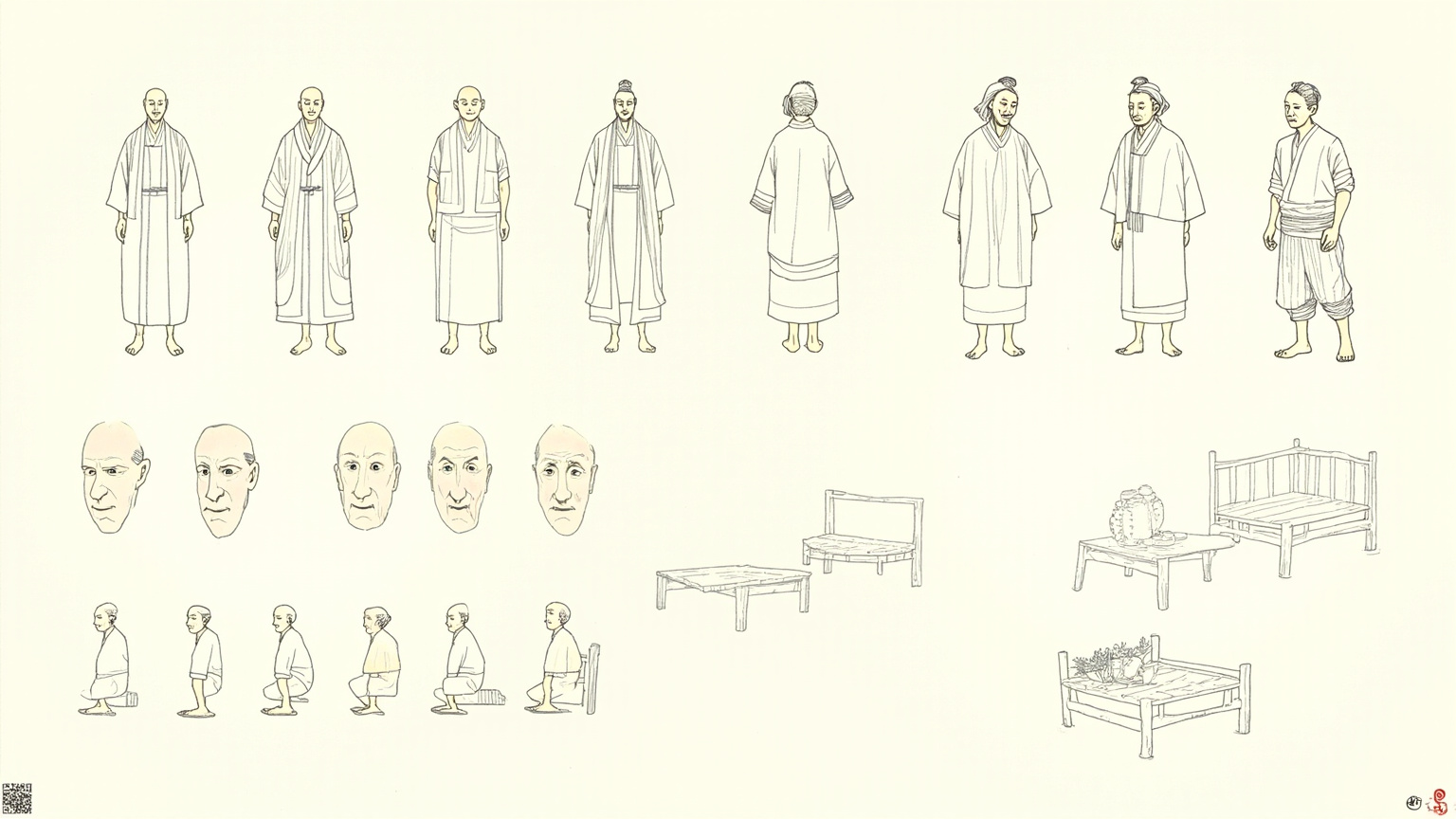
Running through the whole book is a figure Hong Yingming imagined into being: a Ming scholar retired to his courtyard, keeping company with bamboo, rock, and flowering trees. Unmoved by favor or disgrace, indifferent to staying or leaving, content with plain tea and coarse rice. This recluse is the book's unstated protagonist, and he splits into several guises. There is the old gardener turning soil and pulling radishes at dawn, who carries the plain, hard-won side of daily life. There is the mountain hermit boiling stones and circulating his breath in the pine wind, who carries the ease of Daoism. There is the old monk sweeping the floor and burning incense on his cushion, who carries the emptiness of Chan. And there is the young scholar still chasing office who slowly learns to watch idly instead, who carries the reader this book is working on. The guises are all one mind projected onto different settings. He is there in the clamor of the marketplace, there in the stillness of the pines, there pacing in the slanted light of morning and dusk. Open to any entry and this is the man you meet.
Chapter One: Biting into Root at Dawn
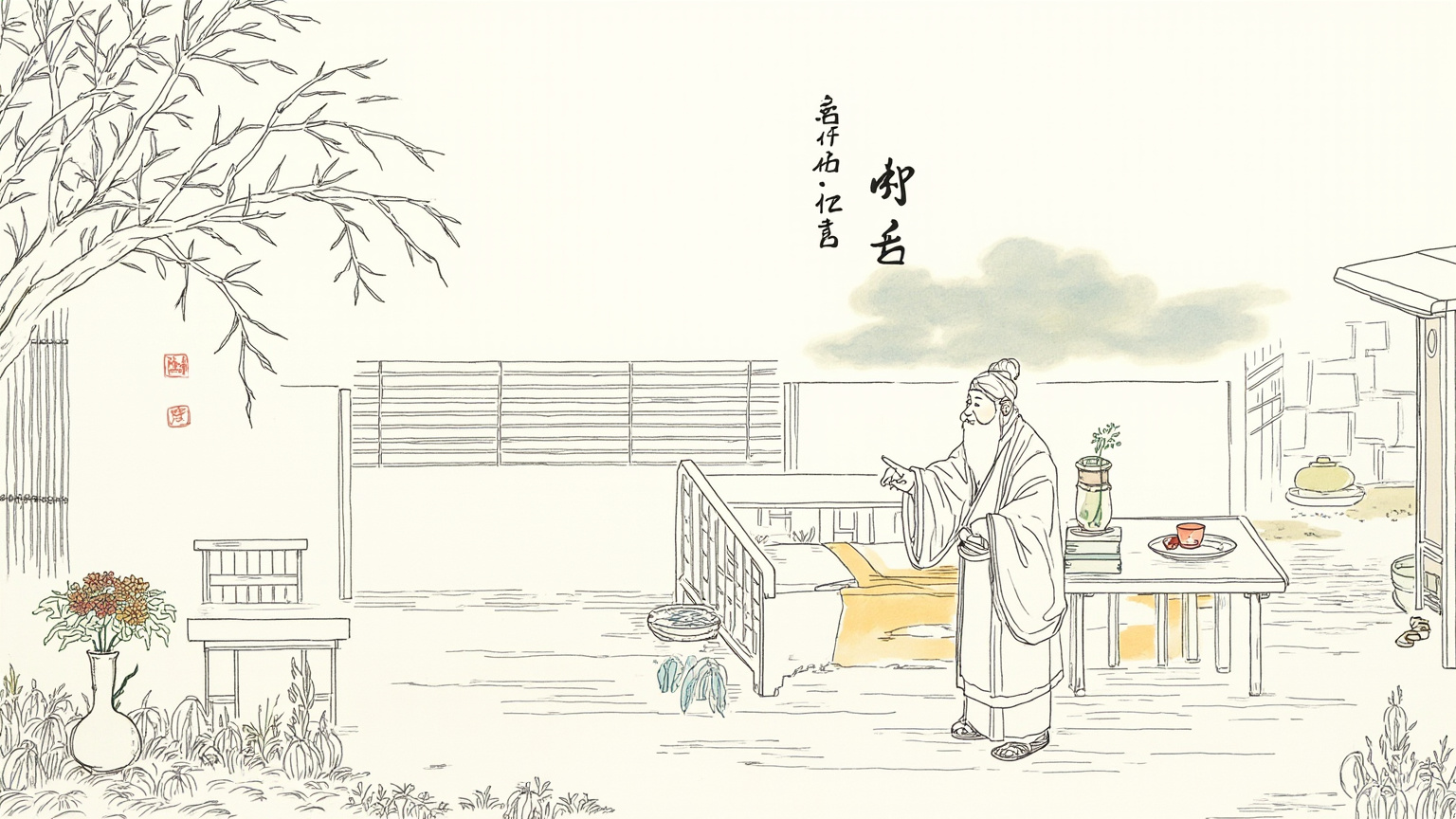
You don't have to read Caigentan cover to cover. Most people come to it stuck at some particular moment and pull out a single entry to clear their head. So this chapter begins where the book does: in the morning. Coarse tea and plain rice, cloth robes and straw sandals, a bowl of congee with radish root. This austere opening gets written and rewritten. Vegetable root means the root of anything coarse, radish or cabbage stem, it makes no difference which. If a person can chew through that bitterness, everything else follows from it. Hong Yingming isn't complaining here; he is laying down the book's baseline. Get past the root, and the rest of the world gets easier. Coarse tea and plain rice aren't the hardship of ascetic practice; they are the plainness of ordinary living. Cloth robes and straw sandals aren't worn through on purpose; they are simply not silk. Once that is clear, most of the lofty-sounding lines in Caigentan come back down to earth. The book isn't teaching people to leave the world. It is teaching them not to panic while they're in it. Panic comes from wanting; plainness comes from the mind settling. Fix that line first, and the whole book has ground to stand on.
Steep yourself in tea as you steep yourself in the ways of the world — both turn bitter-sweet with time.
茶不求精而壶亦不燥,酒不求冽而樽亦不空;古之学者,盖知此意。
金句 · 前集 · 修省篇
Chapter Two: Flowers Blooming and Falling Before the Courtyard
Morning light has slanted into the courtyard. The recluse sits at his stone table, watching the crabapple bloom and fall, fall and bloom again. That image hardens into the single most quoted line in the whole history of Chinese self-cultivation: unmoved by favor or disgrace, watch idly as flowers bloom and fall before the courtyard; indifferent to staying or leaving, drift along as clouds gather and scatter beyond the sky. Watch idly, drift along: two verbs that hold the entire posture. The flowers aren't yours to decide, and neither are the clouds. What you can do is loosen your gaze and let the self that once pounded its chest over a promotion go quiet. Set near the head of the book, this line is its signature state of mind. But the courtyard isn't a vacuum. In the afternoon there is still the sound of sweeping, a neighbor's child running past, a cat crossing the roof tiles. None of this needs chasing off or welcoming in. If the flowers and clouds can't be held onto, neither can footsteps or voices. Only once you can let that breath go does the first collection start to read smoothly: settle your own mind first, and only then can you actually see the flower when you look at it.
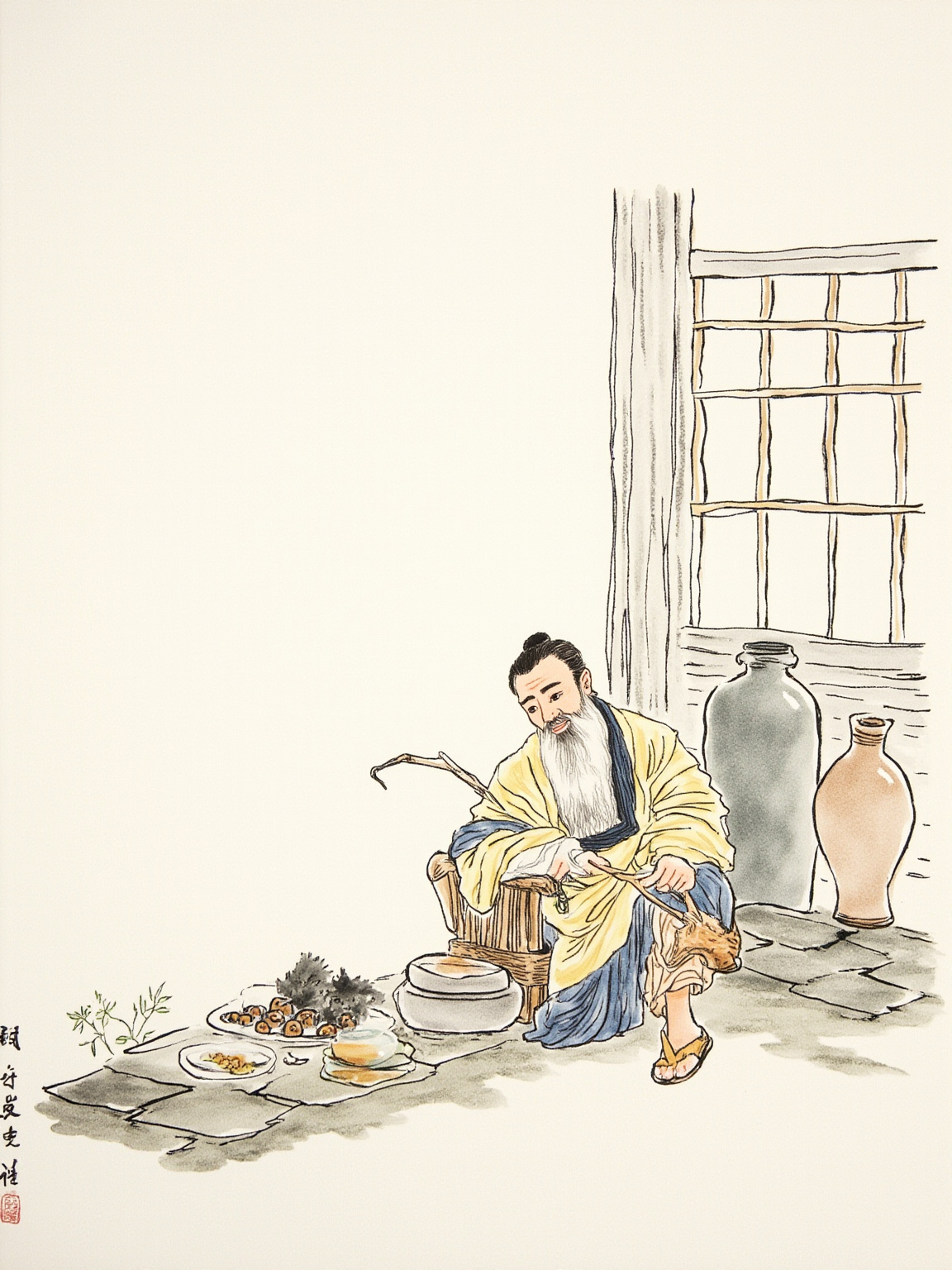
Unmoved by favor or disgrace, I idly watch the flowers bloom and fall before the court; heedless of parting or staying, I freely follow the clouds curl and uncurl beyond the sky.
宠辱不惊,闲看庭前花开花落;去留无意,漫随天外云卷云舒。
金句 · 前集 · 宠辱篇
Chapter Three: Into the Marketplace, Unstained
But a person can't stay home forever. The second collection grows warmer as it goes, writing more and more about advance and retreat amid the noise of the marketplace. You have to go out and make a living, trading greetings with officials and merchants. This is where Hong Yingming is at his best. He doesn't tell you to flee, and he doesn't tell you to stand your ground either. He teaches one principle: yield. Give the road a step, cut the seasoning by three parts. Step aside a little when you walk, salt a little less when you cook. On the surface it's about eating and dressing, ordinary household motions, but the point reaches past the stove. Restraint and blank space are the measure this book keeps hidden in its bones. Don't run to extremes, don't dig in your heels. Leave room for the world, and leave room for yourself. Come back from a trip through the marketplace with mud on your cloth shoes, knock it off twice on the stone step before you go in, and leave the dust outside the door. The courtyard is still the same courtyard. The flower in the clay vase has been swapped for another branch, and your mind doesn't need to move for it. Restraint isn't weakness. Give up three parts, and the world turns out wider for it.
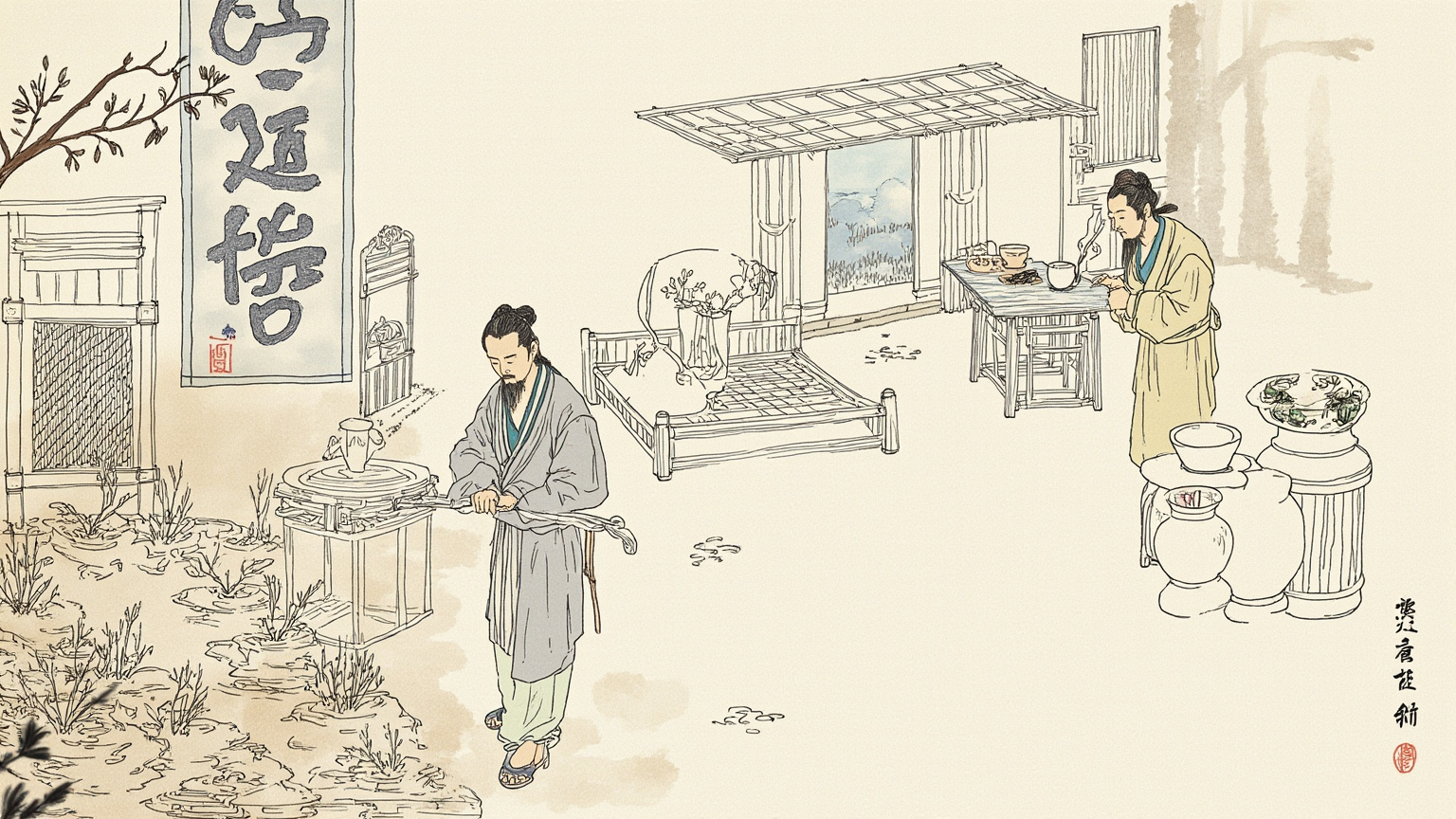
On the road, yield a step; in flavor, lessen a third — this is the art of leaving room for all things under heaven.
路要让一步,味须减三分。
金句 · 后集 · 让步篇
Chapter Four: Pine Wind and Cushion
Retreat further past the marketplace and you reach the mountains and forests. The second collection and the sequel bring in the ease of Daoism and the emptiness of Chan: the mountain hermit sitting alone in the pine wind, boiling stones, circulating his breath; the old Chan monk on his cushion morning and night, sweeping the floor, burning incense, setting no store by words. Together these two figures form the strand of pure cultivation running through Caigentan, the one that traces back to nothing at all. But the three teachings here aren't pasted together at random. The first collection leans toward Confucian restraint, the second collection folds in Daoist ease, and the sequel settles into Chan emptiness. By the time a reader reaches the final section, they have walked a path from a garden footpath through pine forest into an empty mountain. The path doesn't grow colder as it goes; it grows steadier. A mind that has settled hears the sound of the pines in the wind, sits firm on the cushion, and stands firm again once it's back in the marketplace. The three teachings melt into one furnace, and what melts isn't doctrine. It is the same mind holding steady across different settings.
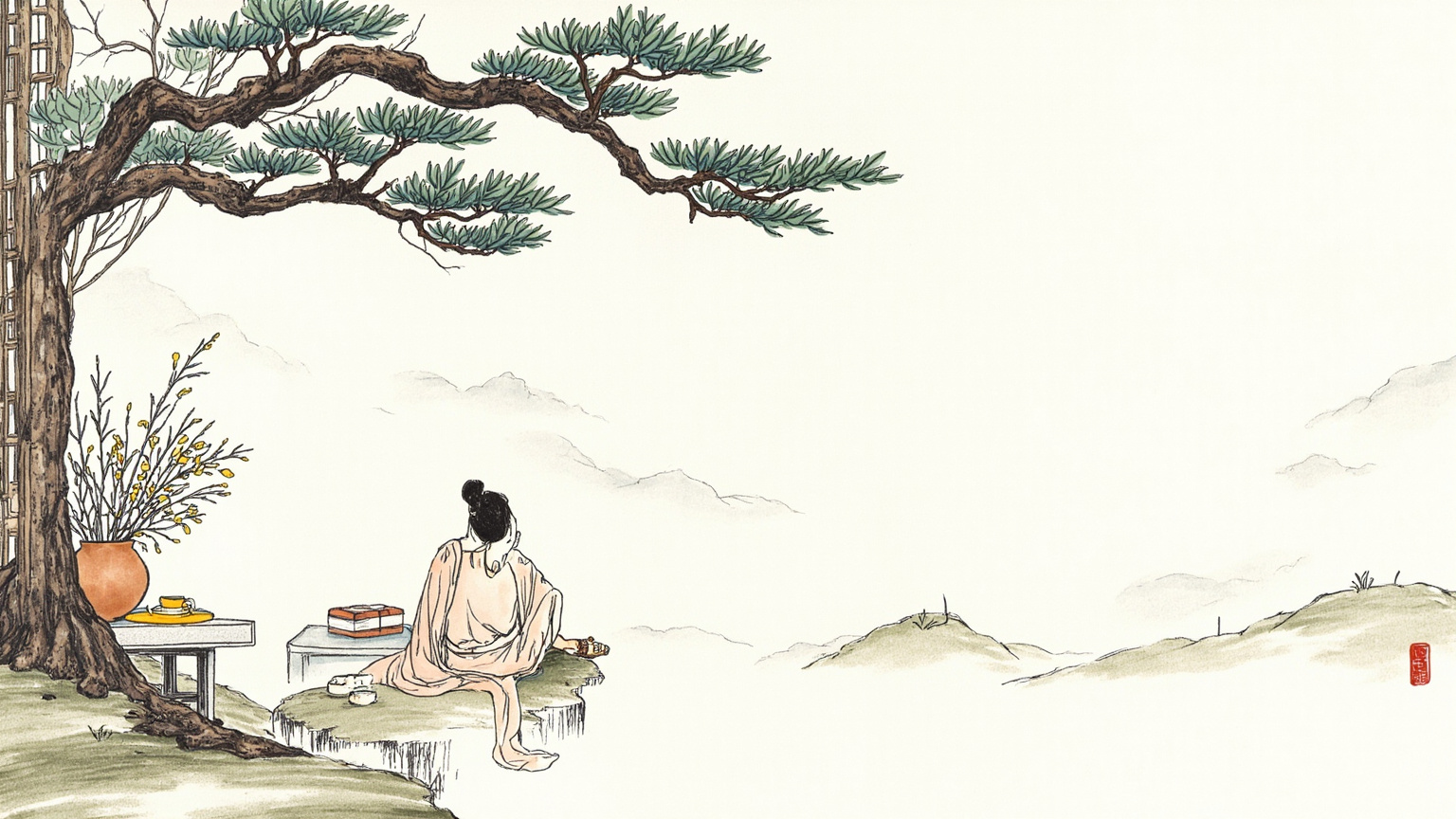
When the heart is empty, all things under heaven enter and lodge within it.
心空则万物自备于胸。
金句 · 续集 · 栖心篇
Before You Turn to the Text
Having said all that, it's worth quoting a line so you can feel its weight for yourself. The opening of Caigentan reads: unmoved by favor or disgrace, watch idly as flowers bloom and fall before the courtyard; indifferent to staying or leaving, drift along as clouds gather and scatter beyond the sky. Two lines, seven characters each, matched in careful parallel: favor and disgrace against staying and leaving, unmoved against indifferent, watch idly against drift along, flowers blooming and falling before the courtyard against clouds gathering and scattering beyond the sky. The first half of each line names a state of mind; the second half names a scene, and the scene only comes into view once the mind has let go. Read it aloud and the rhythm falls on the repetition of bloom and fall, the unfurling of gather and scatter, four characters to a beat, like breathing. Turn to this page at your desk and the paper is cool, the characters still, and whatever is stirring outside the window gets held back half a beat by these two lines before it reaches you. There are three hundred and fifty-nine more entries like it in the book. This isn't a book that sends you into hiding in the mountains. It's a book that lets you walk back out of the mountains and still stand steady. Coarse tea and plain rice, cloth robes and straw sandals, biting down on the root, and everything else follows. That is both the spiritual baseline of Caigentan and the reason it has stayed in print for four hundred years. Open to the text and don't rush to finish it. Find the one entry that makes you stop, stop there, and say the line over once in your head. Then get back to sweeping the floor if there's floor to sweep, drawing water if there's water to draw. Let the mind settle and the days go on as they were. That is this book's plainest instruction, and its hardest one to follow.
Drinking tea by a cliff edge, one drinks the whole spring; sweeping leaves beneath pine wind, the mind clears of worldly dust.
石崖高处,得一小庵,时来焚松花,烹石鼎,日日相对,忘言忘世。
金句 · 续集 · 清闲篇
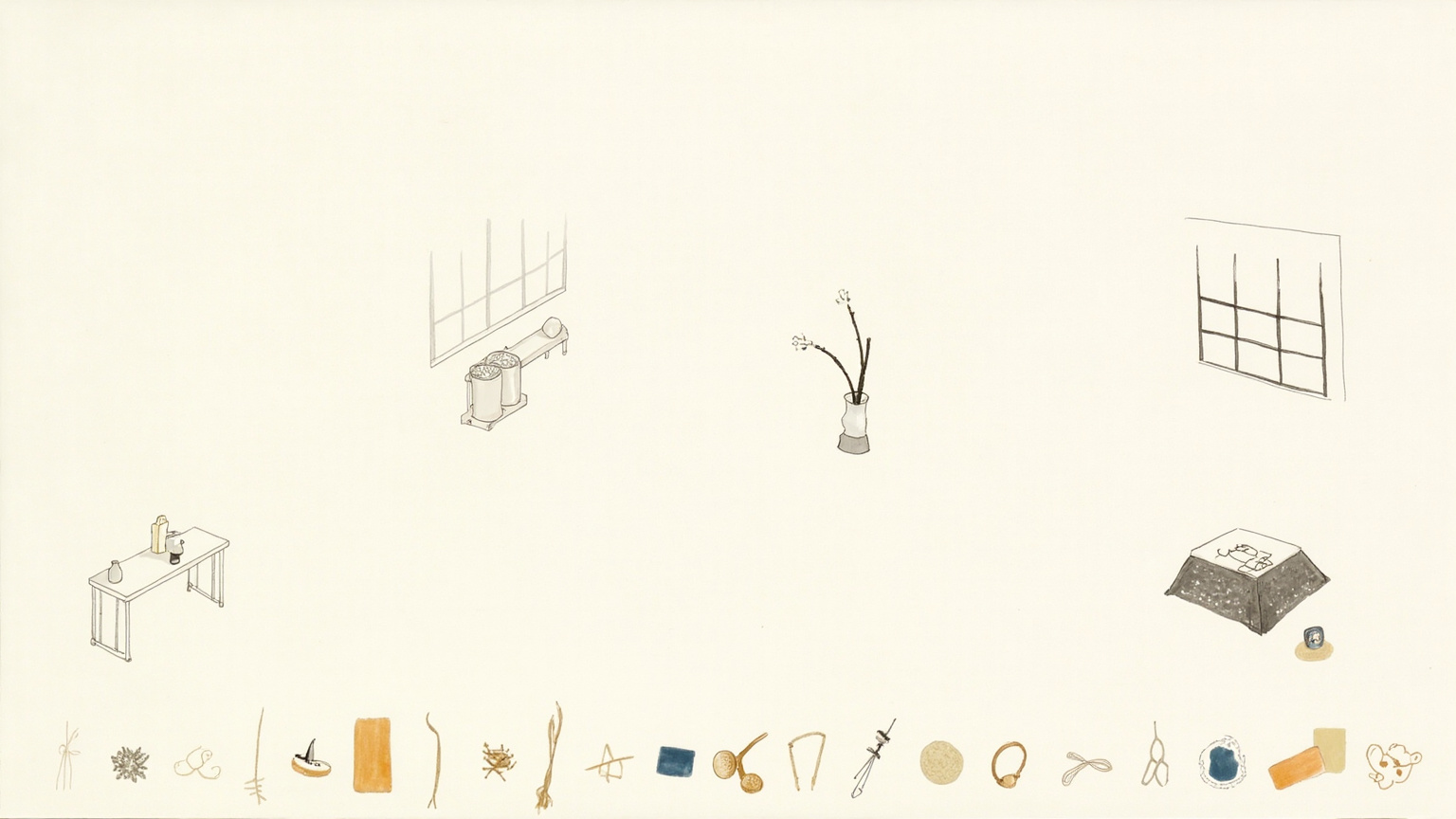
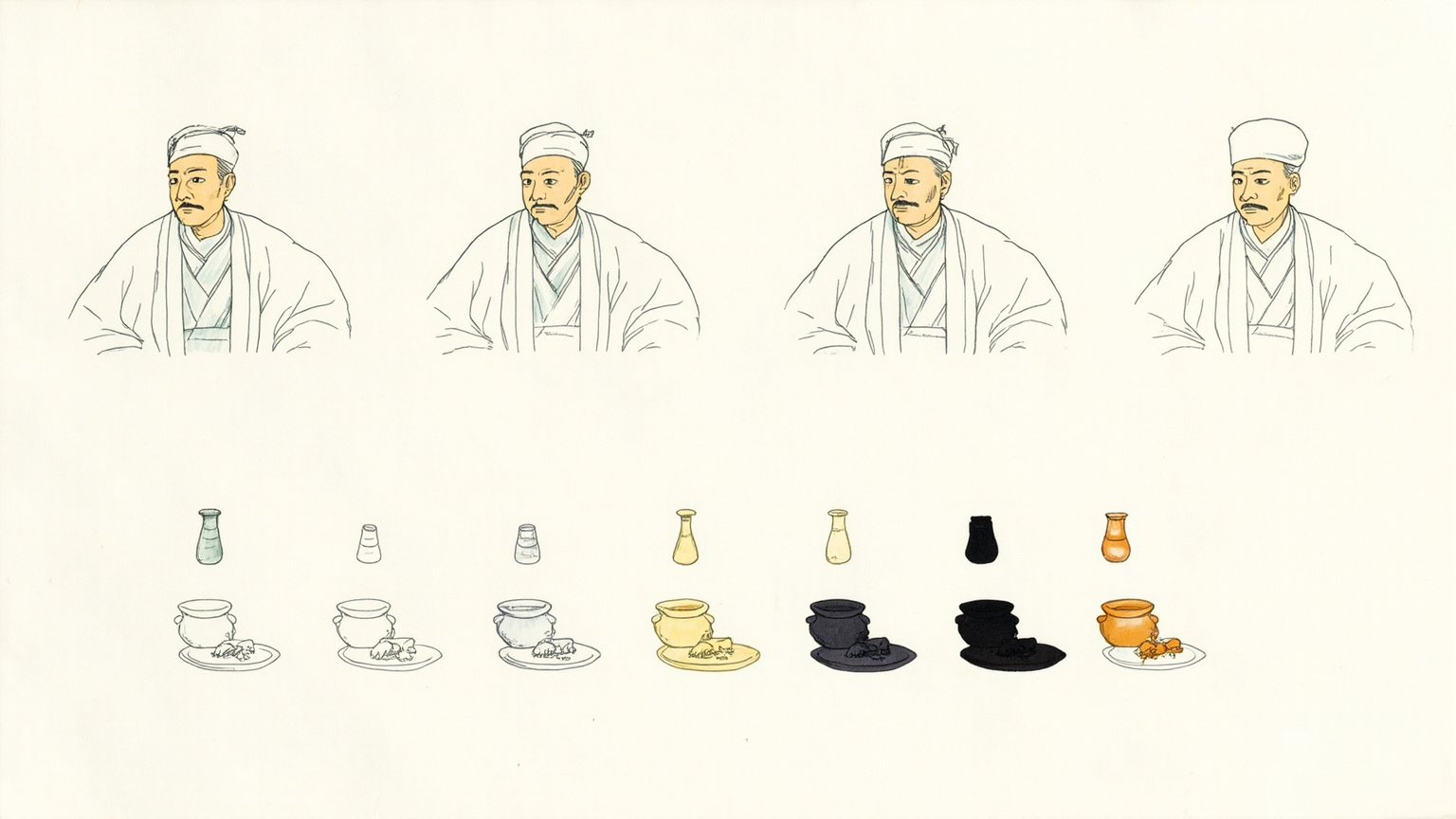
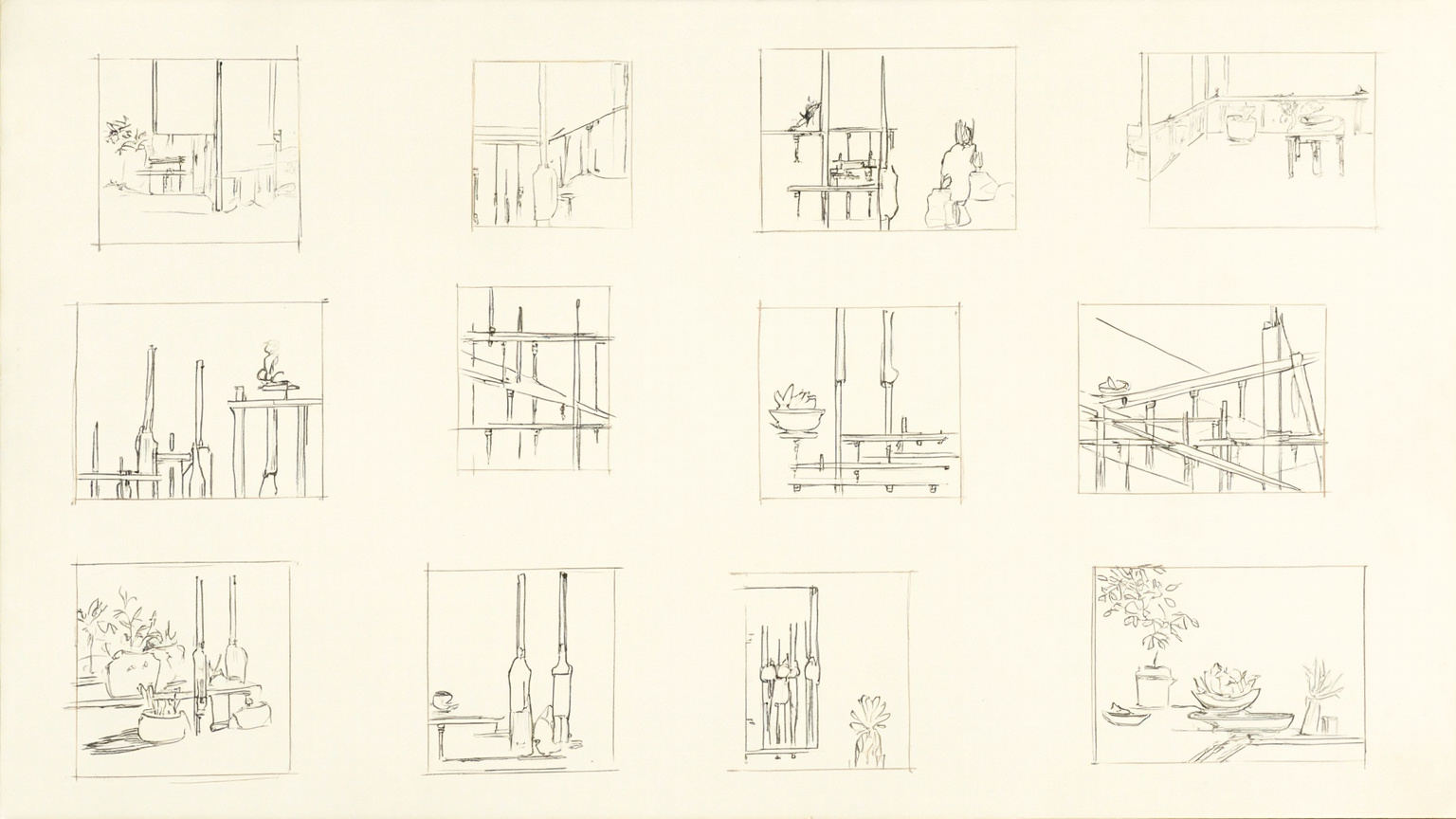
Art Direction4 plates
Before the guide was written, this book got a visual foundation — every illustration you just read grew out of it.