Captains Courageous · Companion Guide
怒海余生
一个怀揣二十五分硬币的阔少爷被大西洋没收,从晕船的铺位开始,学会用手腕、肩胛和盐渍把一条命重新钓上来。
The opening: a gold coin drops into the sea
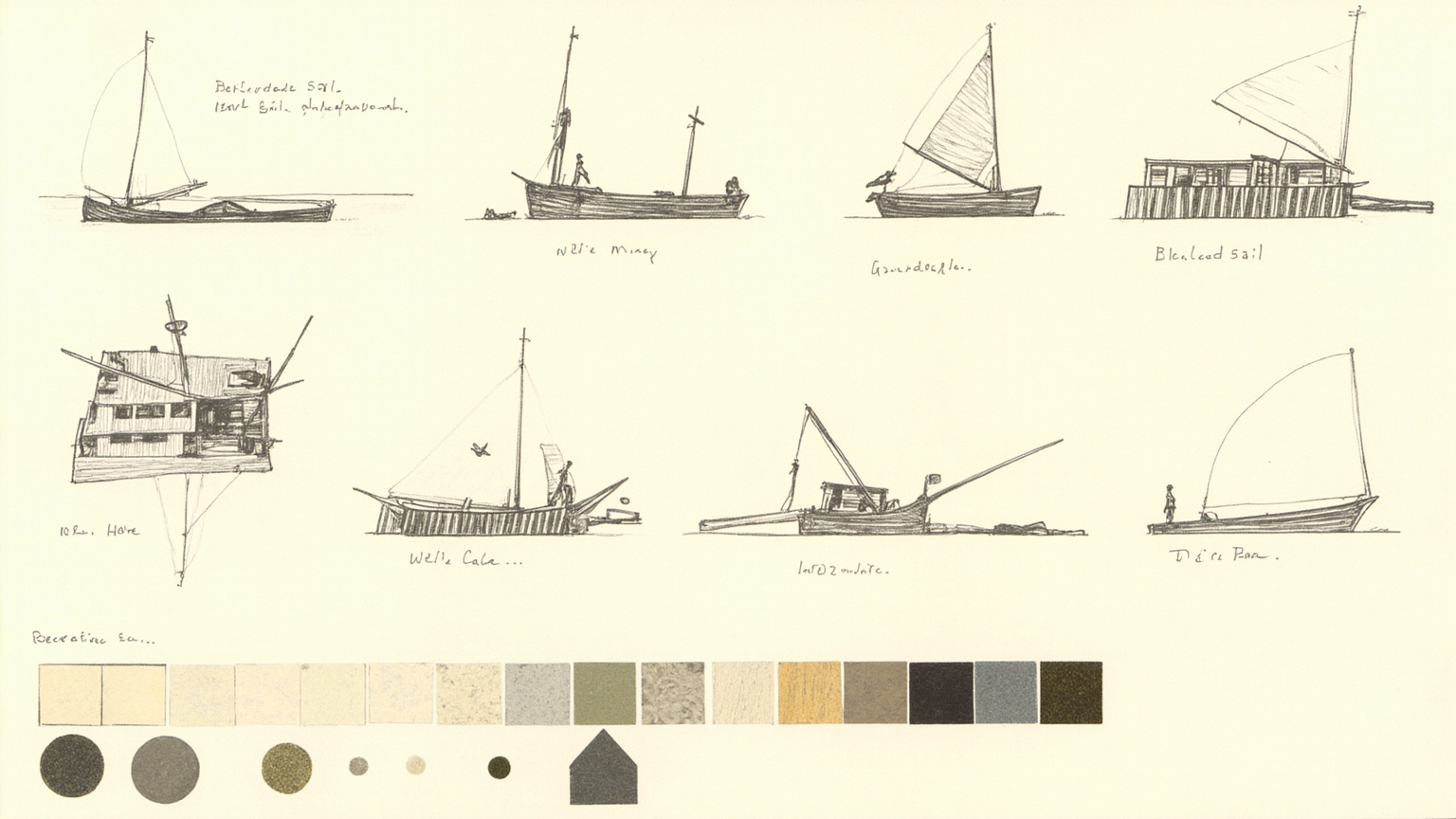
With his father's unlimited credit in his pocket, fifteen-year-old Harvey flips a quarter as a bet to a drifter on deck — and the next second he's the one pitched overboard, into the Atlantic. By the time a two-masted schooner called We're Here fishes him out, this Cape Cod, Massachusetts rich kid has nothing left but a soaked shirt, still bawling that his father has money to burn.
Nobody on board cares. The coin is gone, and so is the rich kid. Skipper Disko Troop plants him on a fisherman's bunk and tosses him an oilskin and a fish-gutting knife — starting tomorrow, he owes this boat for his food, and he'll pay it off with a season of cod.
Where this book comes from
Rudyard Kipling, the Englishman who picked up the era's top literary prize at the close of the nineteenth century, spent his career writing empire, jungle, and what a man ought to know how to do. Of his two most substantial books, one gave readers Mowgli, the wolf-boy of The Jungle Book; the other is this one, a Mowgli of the sea: a rich boy fished out of the water, stripped down to nothing, and built back up.
It first appeared at the end of the nineteenth century, when Kipling was not yet forty. Steamships were already swallowing the world of sail, and the railroad and telegraph had wired up the American East Coast — but out on the Grand Banks off Newfoundland, the stretch of ocean Kipling writes hardest about, nothing had changed in centuries: hand-lining, hand-gutting, hand-salting, hand-drying. He was writing about a country that industry had just finished rewriting, looking back for the one place it hadn't touched yet.
The crew
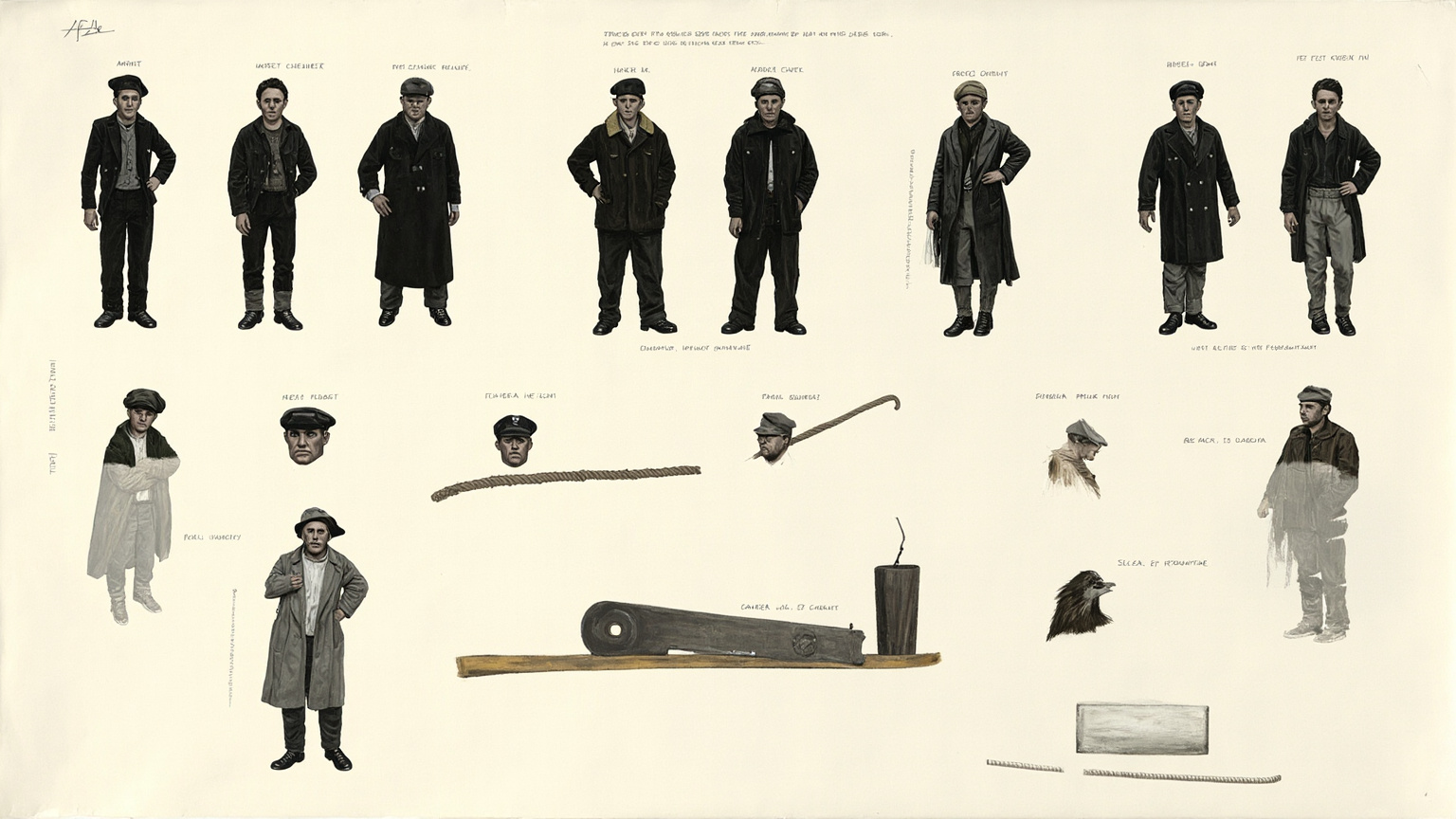
Leading the crew is Disko Troop, owner of We're Here, a lifetime on the Grand Banks behind him: silent, serious, no wasted words, one of the most seasoned skippers in the Newfoundland fishery. His brother Dan Troop is his second and engineer, saying even less, built even more solidly. Once a boat is in their hands, their two names are worth more than a bill of sale.
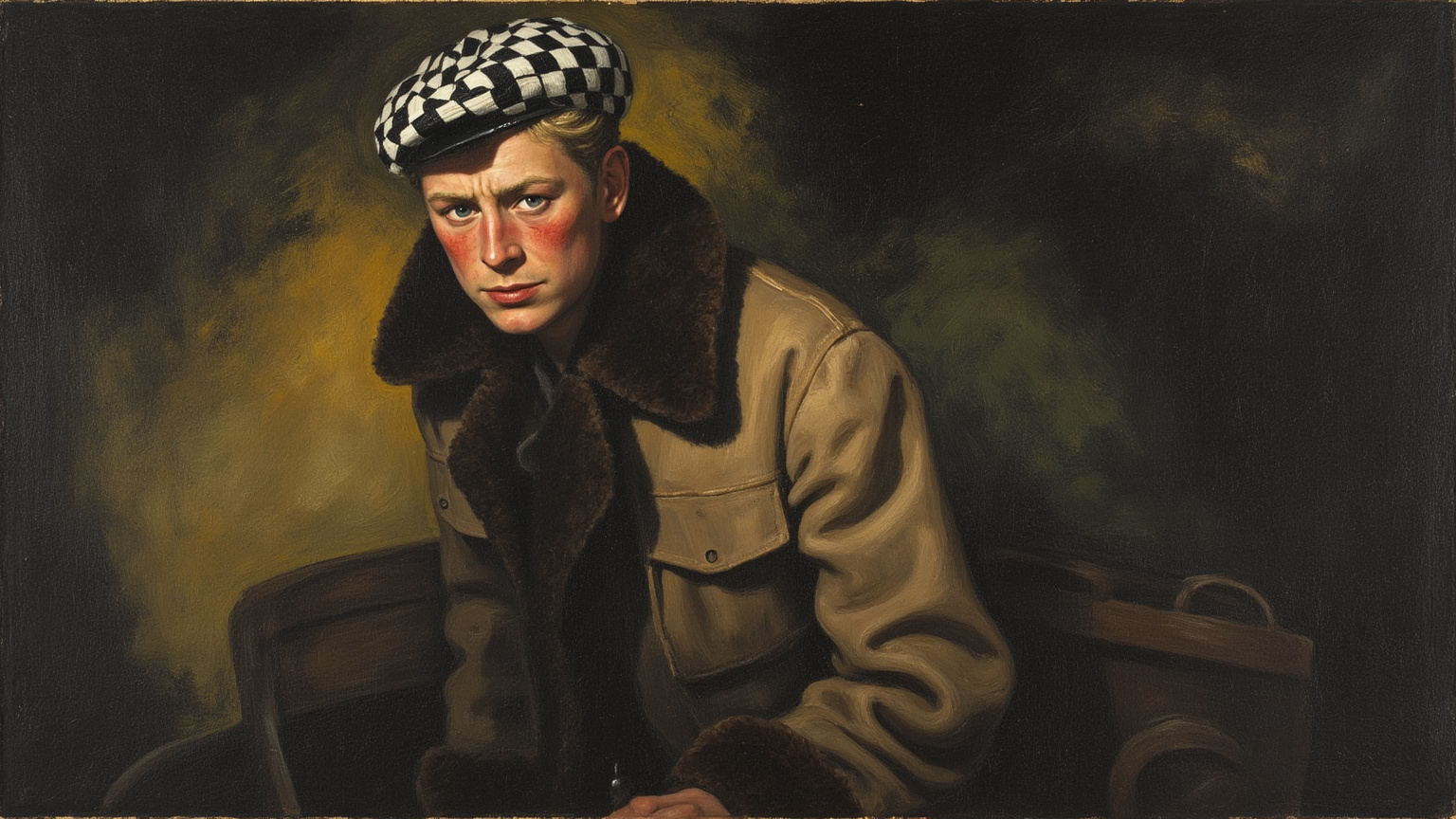
There was no hurry, for the fog was only just lifting, and the dories were not going out that day.
不必急,雾才刚要散,那天大划子本就不出海。
金句 · 第1章 · 雾中的纵帆船
The strongest hand on the foresail is Long Jack, one of the toughest workers on any Newfoundland boat — mild-tempered, low-voiced, but when he opens his mouth the whole deck hears it. The ship's walking almanac is Uncle Salters: tides, icebergs, whale roads, foghorns, which stretch of seabed still hides a rust-eaten anchor chain, he has it all by heart. Tom Platt, the old New England cook, is another kind of force on board, reeking of galley smoke, full of gossip, sitting on a bellyful of stories he won't share. At the very bottom are the Portuguese green hands, ordered around by everyone, and during Harvey's remaking he has to share their bunk, gnaw the same black bread, and take the same beating from the sea.
Back on shore, Harvey's father, old Mr. Cheyne, a Cape Cod railroad and mining magnate, is firing off telegrams up and down the East Coast, hunting for his missing son. Mrs. Penn is his mother, doting to the point of chaos. This is the story's other pole: a million-dollar house, money that fixes everything, a son who should never so much as get his shoes wet.
How a rich kid gets skinned
In the first few days, Harvey humiliates himself almost by the minute. He's so seasick he can barely stand at the rail, gets slapped awake by an old hand, retches into his bunk at night until there's nothing left to bring up. Disko has no time to coddle him: work, or go back over the side into the Atlantic. The sea doesn't feed idle hands, and neither does this boat.
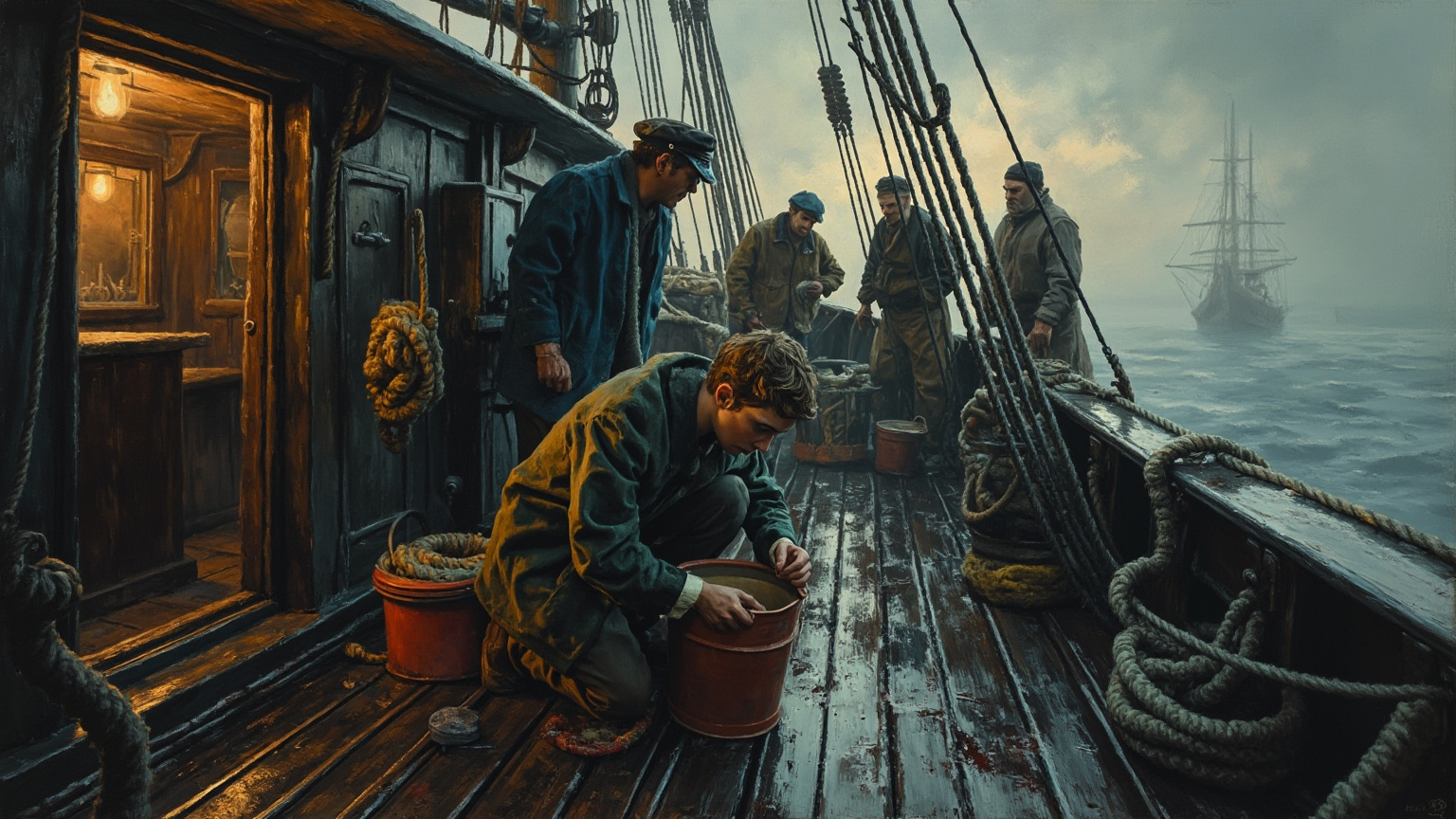
He learned to bait his own hook, and to pull without hurrying; and to throw the fish on the deck with a flip that did not stun them.
他学会了给自己挂饵,不急不徐地收线;学会了把鱼啪地甩上甲板,不击晕它们。
金句 · 第4章 · 学会手钓
The first time anyone treats him like a person is when he learns to hand-line cod from a dory, the small boat lowered off the mother ship. The line drops, the wrist snaps, and a fat cod slaps onto the deck boards, still flopping. One, two, ten. Hand, shoulder, wrist, rhythm — none of it can be bought on credit. For the first time, Harvey understands: his father's bank account cannot buy him a meal out here.
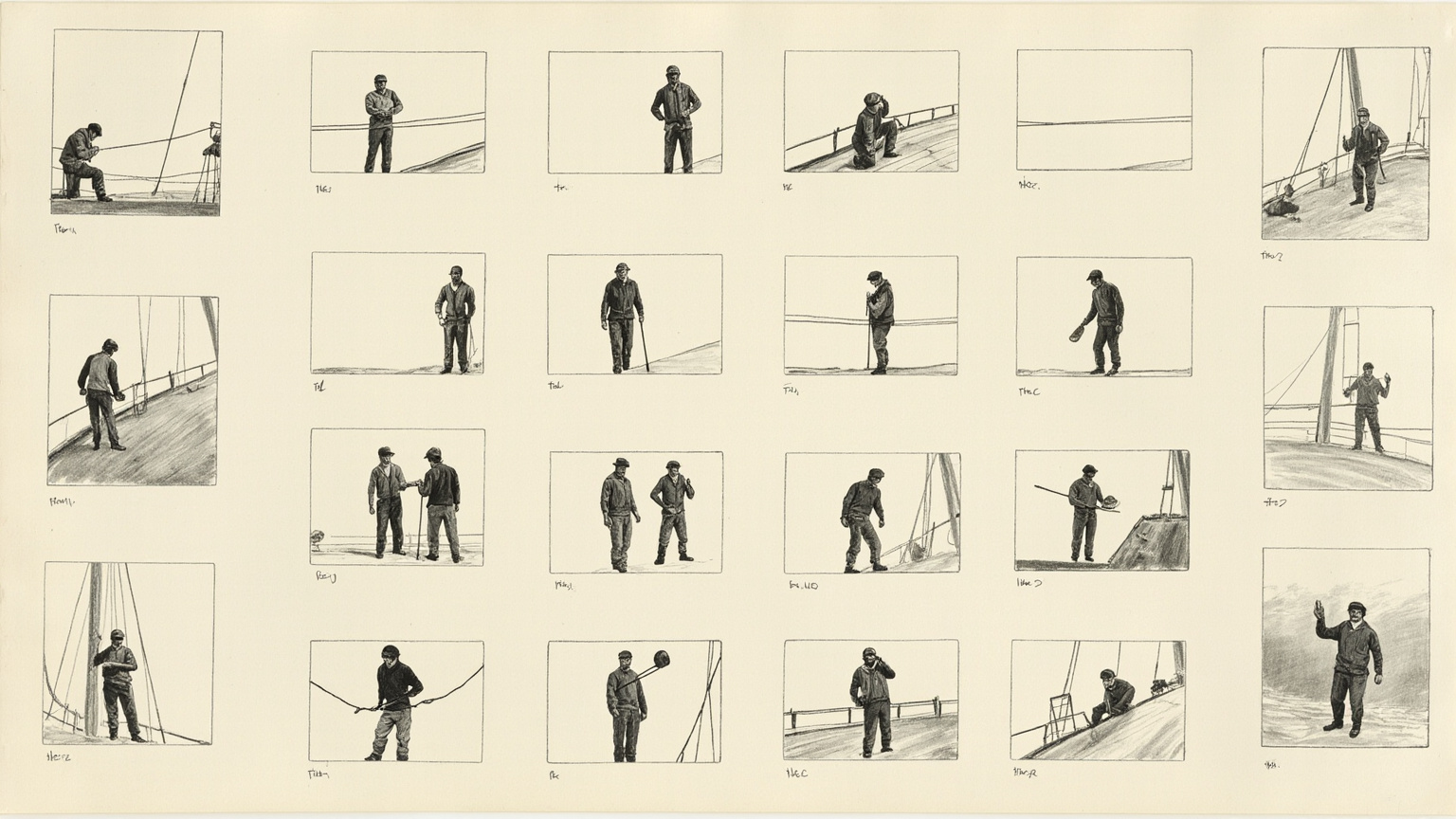
Then come the deckhand's lessons, one at a time: splitting and salting fish, rubbing salt into the flesh and packing it into the barrel; splitting kindling, crouching before the stove until his knees ache; climbing the mast to the topsail, scrambling up in the rain like a soaked cat. Uncle Salters calls out lessons behind him: wind direction, the state of the tide, the color of the fog, how low the cloud ceiling has dropped. Long Jack saves the heaviest work for the two of them to share, and when it's done, out of breath himself, he cracks a grin — on this boat, that's the highest form of kindness there is.
He bunks in the same quarters as the Portuguese green hands, eating the same salt-fish stew, taking the same driving rain. Nobody tears down the wall between the classes here; salt water and fish reek soak it apart, piece by piece. Kipling writes this crew with different accents, different jobs, different complaints, but they're tied to the same rope in the same wave, and none of them can get away from the rest. This is the best-written stretch in the book — not because Kipling feels sorry for anyone, but because he lets every one of these men stand on his own two feet.
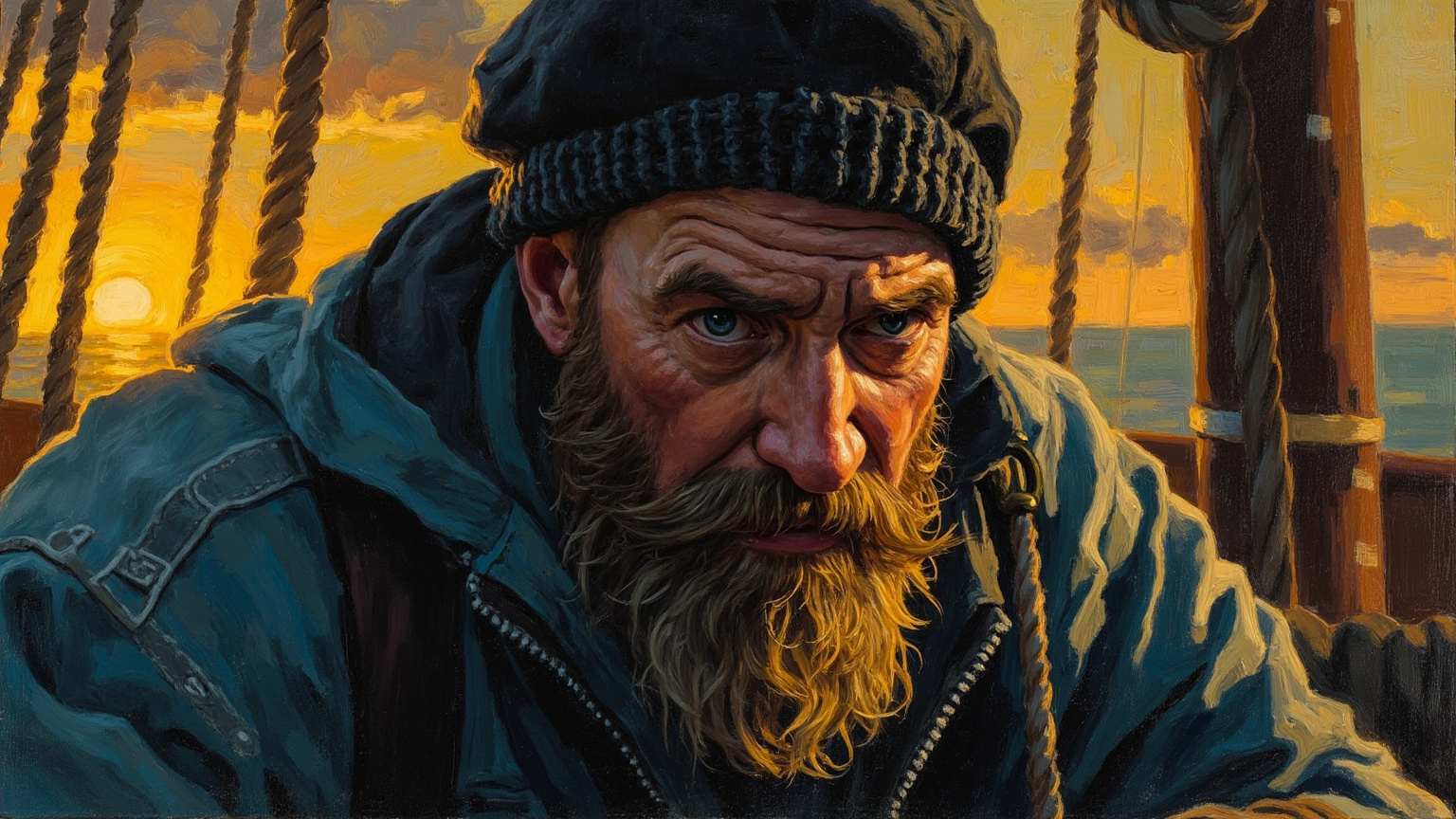
They were all in the same boat now; and the same salt water was soaking into their bones, and the same fog was round them.
他们如今同在一条船上,同一汪咸水正泡进他们的骨头,同一场雾正绕在彼此身旁。
金句 · 第7章 · 同一根缆绳
The real coming of age: a storm in the fog
In late summer, fog can drop over the Grand Banks without warning. Overnight, you can't see past a few steps, nothing left but the moan of the foghorn. That storm is the hardest test of We're Here's whole season: short, choppy seas, the shadow of an iceberg that could appear out of the fog at any moment, a handful of schooners out of the same home port answering each other with signal flags and horn blasts, banding together.
Harvey does something his father's money could never buy: in the crucial few minutes, he gets the signals right between the boats for Disko, which flag goes up, which horn call means what, which boat gives way to which. Nobody told him to do it; he simply steps up. By the time the fog lifts and the sea flattens out, the way Disko looks at him has changed — not the rich kid pitching in for a season, but a man he could put to sea with. This is the point in the book where I finally stop worrying about Harvey.
Kipling doesn't write growth as a moment of revelation. He writes it as flesh cut away, layer by layer, until new flesh grows back on its own.
Back on shore: the parents' story doesn't match
By autumn, the cod season is over, and We're Here rolls back into Gloucester harbor loaded with salt cod. Harvey's father chases a telegram down to the dock: he's spent months searching, braced to find a body, and instead finds a sunburned young man standing in front of him, hands calloused, able to rattle off headings and tide tables.
Old Mr. Cheyne spends money the way he always does: he buys Harvey a stake in We're Here outright, turning the whole boat and its crew into his son's standing partners, then sends Harvey back out to sea with them. In effect, he buys himself the most dignified way down off his own ladder — accepting that this son no longer belongs to him.
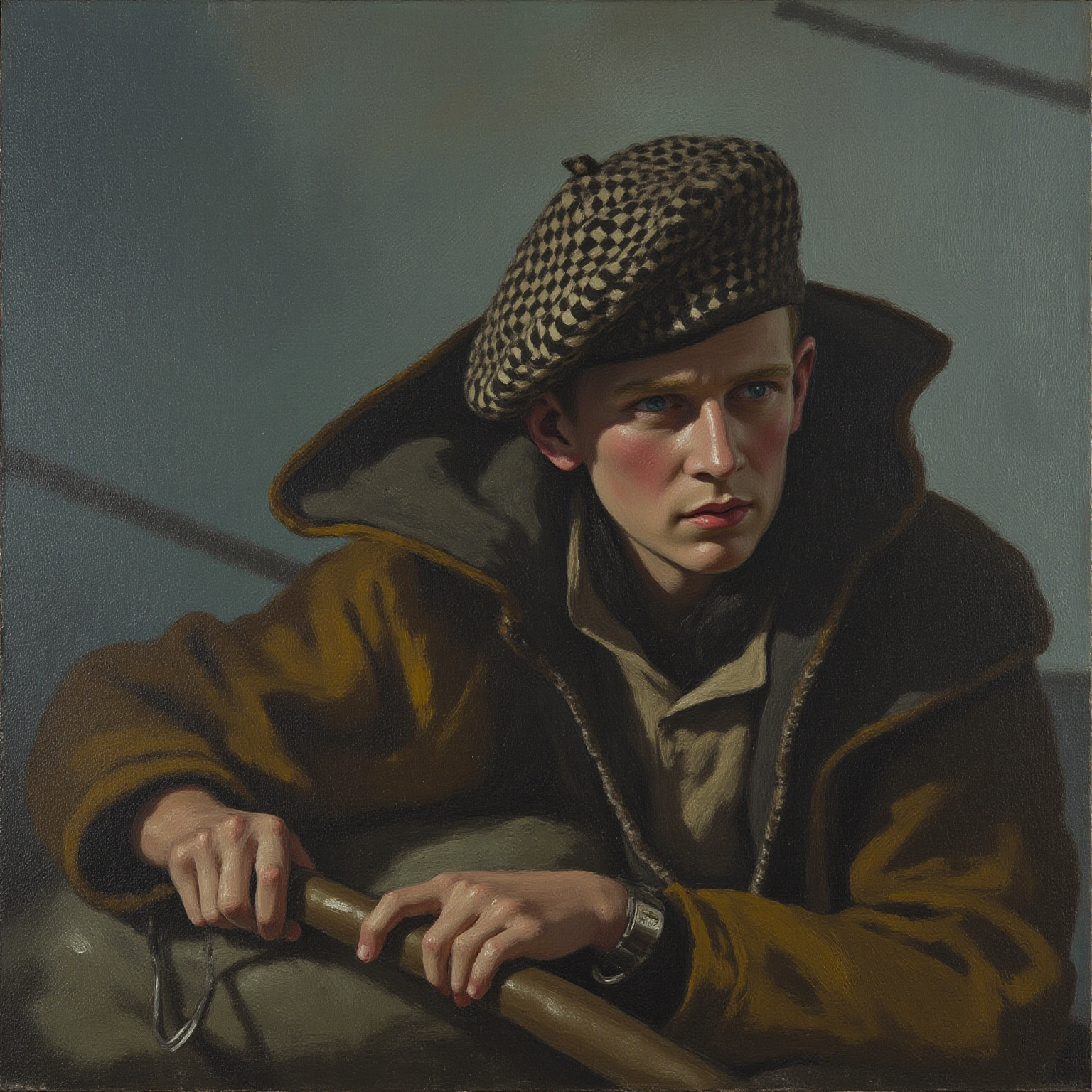
His father did not know him, and his mother knew him, and he knew them both.
父亲认不出他了,母亲认得他,而他,两边都认。
金句 · 第11章 · 码头相认
On the dock, Mrs. Penn arrives, drawn there by the telegrams and news off the transatlantic boats, and finds the son she smothered with her own hands already taken back by the sea. It hurts, and she accepts it. Kipling doesn't write this scene as tears: he writes a woman's hand touching a rough, sunburned, peeling face for the first time, pausing, not sure where to rest it.
The ending is short. As a member of We're Here, Harvey sets out again with the fleet for the Grand Banks. That's how the book formally hands an overindulged rich kid over to the sea. It doesn't explain itself — it just lets you hear the sails fill.
What it's really about: a country toughening up
On the surface, it's a boy becoming a man. Underneath, it's late-nineteenth-century America dosing itself with bitter medicine. When Kipling wrote this, the Gilded Age had just finished putting its roof on: railroads, telegraphs, trust companies had paved money into a highway, and everyone assumed money could fix anything. Kipling insists on taking a sailboat still fishing by hand and pinning a millionaire's son back down next to the fish barrel — telling him that out here, his father's bank account is worthless paper.
Its bones are all hard ones. The dignity of labor: hand, shoulder, wrist, rhythm — you only get a seat at the table if you can earn it. Class and shared hardship: the rich kid sleeps in a fisherman's bunk, gets slapped awake by an old hand, gnaws the same bread as the Portuguese green hands, and the rain wears the differences flat. Sea against land: on land, the telegraph and the million-dollar house are one clock, and it's winning; at sea, sail, compass, stars, and tide are another clock, and it hasn't lost yet. What makes this book formidable is that it never declares a winner: it lets both sides hold their ground long enough to leave you out of breath.
For today's reader, with a phone that always has signal and a swipe away from anything delivered to the door, this book works in reverse. The quarter Harvey drops into the Atlantic is the ticket to his old world, and the sea confiscates it. What's left to work with is a pair of hands, a pair of ears, and thick skin.
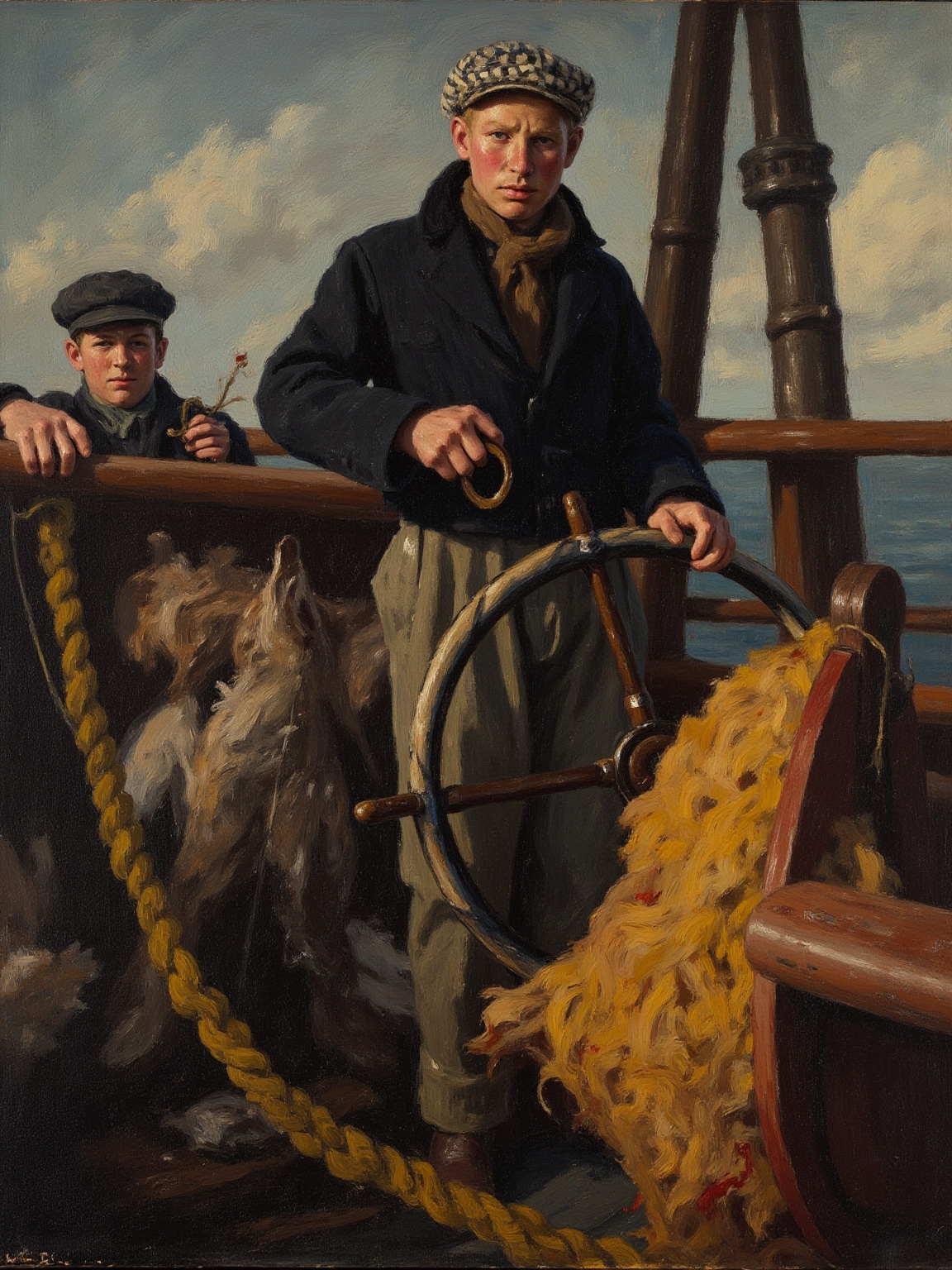
Why this piece isn't enough, and you need the real book
This piece can tell you that Harvey falls overboard, gets remade, and goes back to sea. What it cannot give you is the other thing Kipling spends most of the book doing: pinning the old world of the Newfoundland Grand Banks fishery onto the page like a documentary, complete with hand-lining, hand-gutting, hand-salting, hand-drying. Read it late into the night and you can smell the brine, hear Long Jack's low humming, watch the masthead lookouts of a few schooners come up pale out of the fog. None of it moves the plot forward, and that is exactly what sets this book apart from every other boy's adventure story.
Then there's how the characters talk. Disko never wastes a word, and every word lands on the beat; Tom Platt fries beans and curses in the same breath, and the cursing is what gets Harvey accepted among the fishermen; Uncle Salters tells iceberg stories like he's reading off a ship's log. You only hear these voices by soaking in the whole book.
It's worth reading even knowing how it ends, because the real drama here was never whether Harvey makes it home. It's how deep the sea strips him down in the storm.
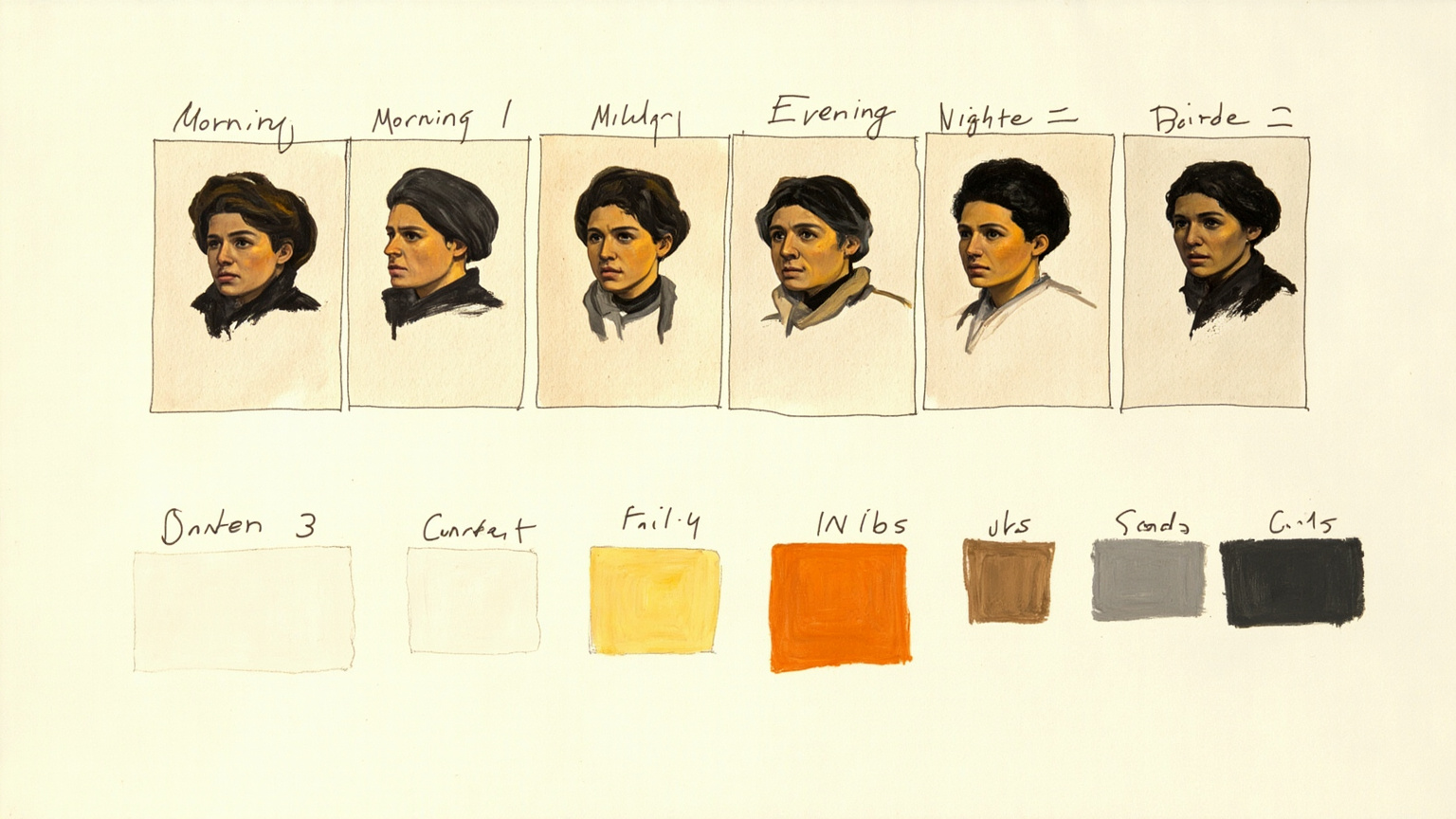
Art Direction4 plates
Before the guide was written, this book got a visual foundation — every illustration you just read grew out of it.