Chaka (Mofolo) · Companion Guide
恰卡(祖鲁王沙卡传)
一个私生子凭牛角阵锻成祖鲁之王,却被神谕反噬至以短矛殒于亲弟之手——预言借屠夫之手将自己应验。
Opening: A Blade Flash in the Thatched Kraal
A short spear passes from one brother's hand to another's. Outside the hut it is dusk in the dry season across Zululand; inside lies a man who once brought the whole of southern Africa to its knees — his name is Chaka. This is the book's final still life: two half-brothers, acting in the name of a prophecy, end the life of the man they had feared and hated most.
What Kind of Book This Is
This slim book first reached London in an English translation in 1925. Its author, Thomas Mofolo, was a Sotho writer from southern Africa, and he wrote it in Sesotho. It was lucky in one respect: Oxford picked it up early for its African literature series, and it became one of the first tragic epics from sub-Saharan Africa that the world's literary establishment took seriously, a full generation before Achebe and Soyinka. It is remembered because it made something happen that Western readers of the time found hard to credit: an African language carrying the full architecture of a world-class tragedy. Later critics have called it an African Macbeth, but Mofolo was not writing Shakespeare's story of ambition. He was writing about how prophecy and culture work together to push a genuinely great man, step by step, toward the one ending he least wanted.
Characters and World
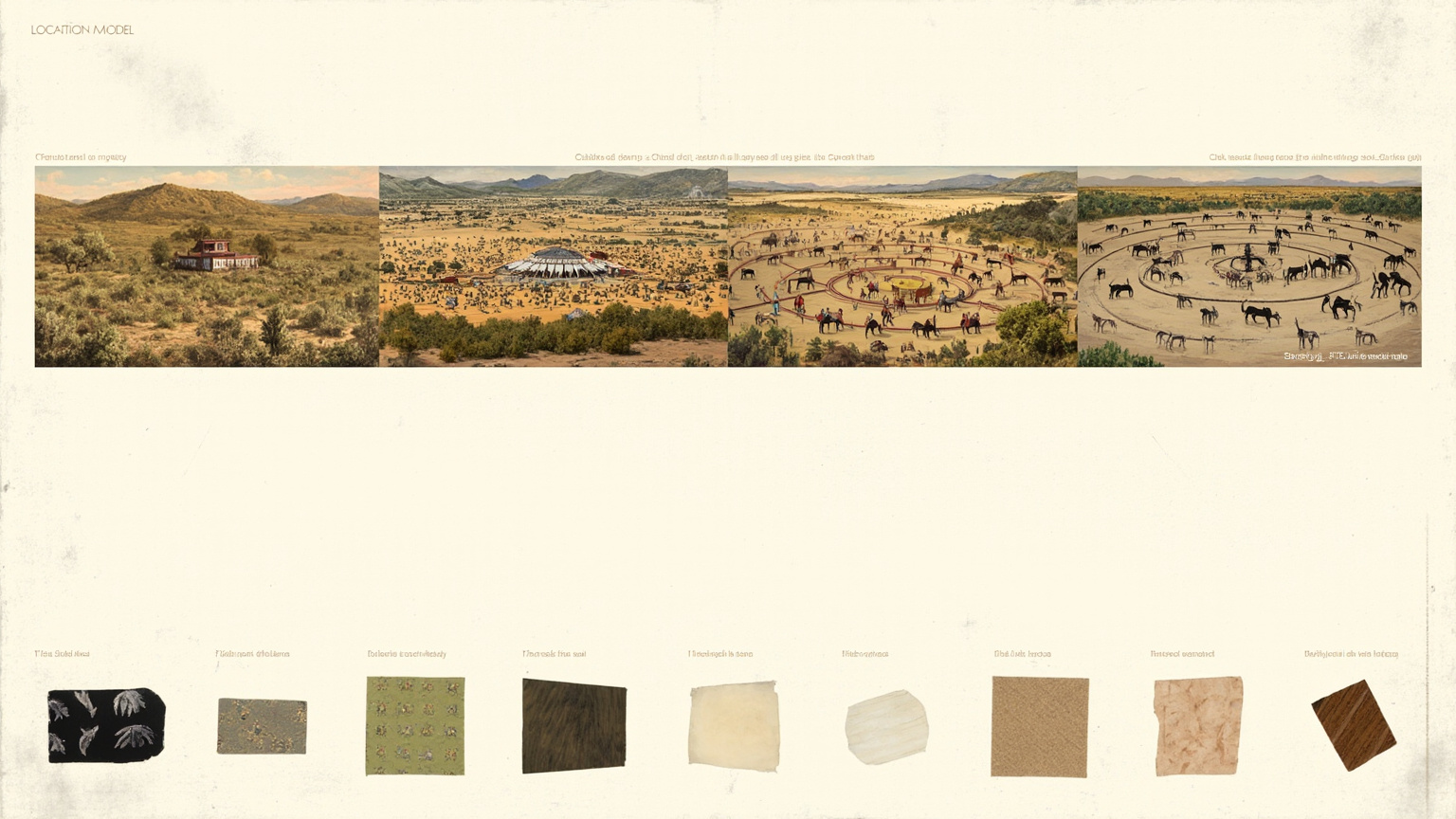
The story unfolds in Zululand in the early nineteenth century. When the dry season comes, the whole savanna turns yellow, the low acacia scrub shivers in the wind, and the sun seems ready to bake cattle dung into brick. Two settings recur. One is the royal kraal on the high ground: a ring of thatched round huts around a sand-packed meeting ground, with black-and-white cattle-tail tassels flying from the fence posts, power given physical shape. The other is a deep cave in the mountains of northern Zululand: the damp, cold den of the great diviner Isanusi, its rock walls hung with grass-rope charms and strings of snake bone, the place where fate goes to hide.
Chaka, the hero, is the illegitimate son of the former Zulu king Senzangakhona. His mother, Nandi, was a woman from outside the Sotho clan who conceived him without a proper marriage. While Chaka was still a child, his father's wives drove mother and son out of the royal kraal, and the two of them lived among the highland herders, enduring years of hunger and contempt. As a young man, Chaka sought out Dingiswayo, the powerful king of the Mthethwa, and it was there he learned the horns formation that would later let the Zulu sweep all before them. Riding on his foster-father's strength, he fought his way back to Zululand and seized the throne. Nearly every figure around him is a facet of his own fate cut into a separate face. Dingiswayo is father, master, benefactor, and ladder all at once. Soshangane is the enemy who kills his foster-father and forces him onto the stage before his time. The great diviner Isanusi appears only in Chaka's later years, a shadow operator who magnifies Chaka's own sickness and fear into prophecy. And his half-brothers, Dingane and Mhlangana, are the hands that finally drive in the spears.
An Illegitimate Son, Driven from the Royal Kraal
The book opens with a domestic quarrel. King Senzangakhona's principal wife would not tolerate Nandi and her son, and found a pretext to have them thrown out of the royal enclosure. Chaka was still a child, and he followed his mother, carrying a clay milk pail, wrapped in an animal-skin cloak, into the hill country of a foreign clan. By Zulu custom, the union that produced him was unclean, so Nandi was never made queen, and Chaka carried the taint of it from birth. Mofolo does not rush to dramatize the hatred. He simply gives the details: a hungry boy trailing his mother across yellowed dry-season grass, herder girls pointing and laughing from a distance that the prince's son has come to tend cattle. Once that groundwork is laid, every massacre Chaka commits later has a source. He needs to prove he belongs on that seat, prove he is not the thing that got cast out. The first time I reached this passage, it stopped me for a moment: the tyrant this book is famous for started out as a child raised under a cold, dismissive stare.
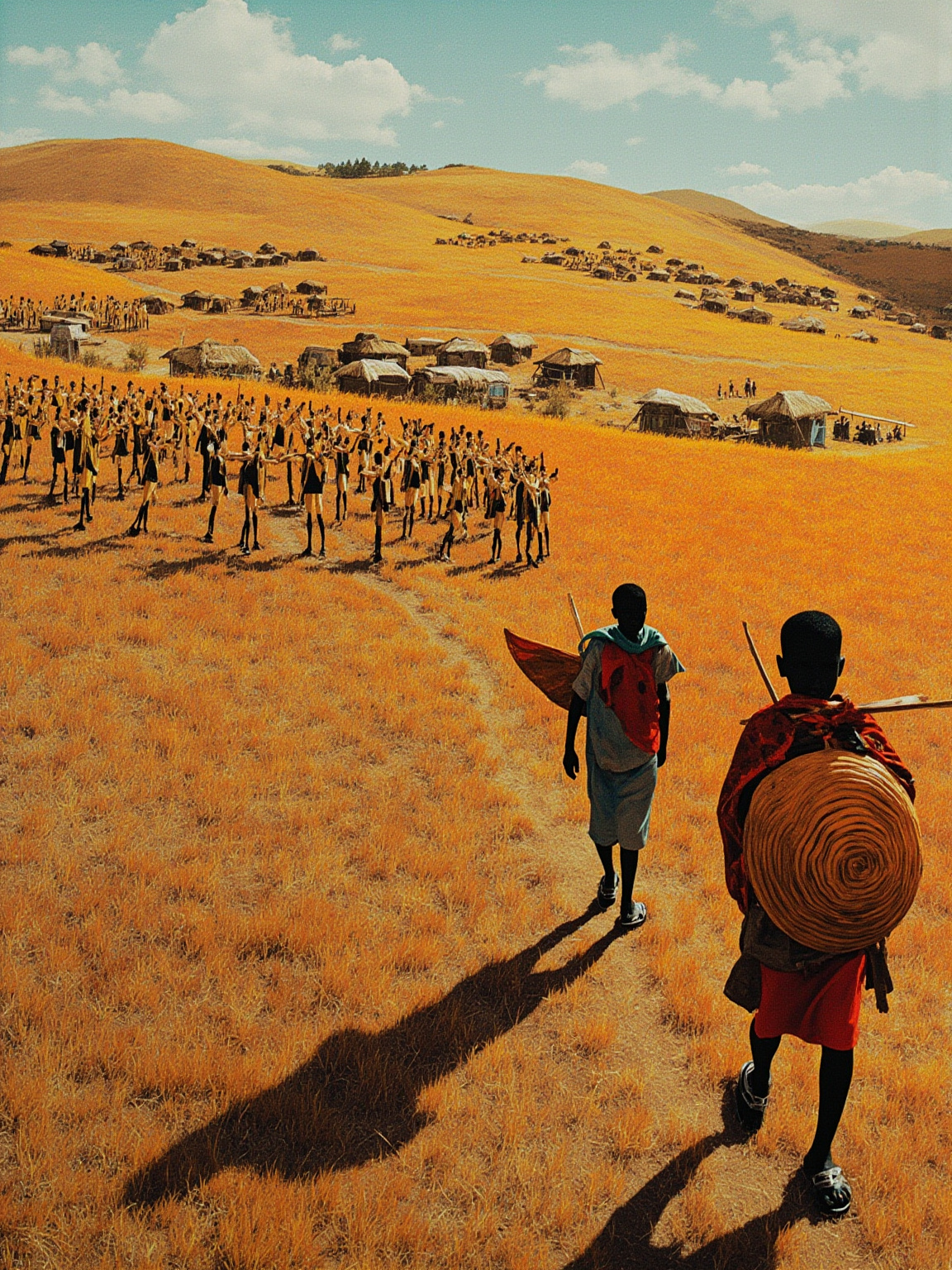
They went forth, he and his mother, taking with them the milk-pail and the kaross, while bitter shame burned in Nandi's heart.
母子二人出了门,带着奶桶和兽皮披肩,娜迪胸口里却烧着一团咽不下的羞耻。
金句 · 第一章 · 母子被逐出王帐
Forged into a Weapon Under Dingiswayo
Chaka drifted to the Mthethwa and was taken in by their king, Dingiswayo, who gave him a military command. Mofolo writes this stretch almost like a schooling: it is here that Chaka masters the tactic at the core of the Zulu rise, the horns formation, a central mass that holds the enemy while two flanking wings curl around like the horns of a bull to close the trap. The horns formation was not invented out of nothing; it forged a scattering of broken clans into a machine capable of sweeping across the land. What is worth noticing in the craft here is that Mofolo never lets Dingiswayo become a mere plot device. He gives this foster-father a steady, unhurried kind of fatherliness, and Chaka's loyalty to him runs deeper than any loyalty to his own father, which is exactly what makes the later betrayal cut so hard. When Dingiswayo is defeated and killed by Soshangane, king of the Ndwandwe in the north, Chaka leads the survivors back to Zululand, seizes his father's throne, and becomes king.
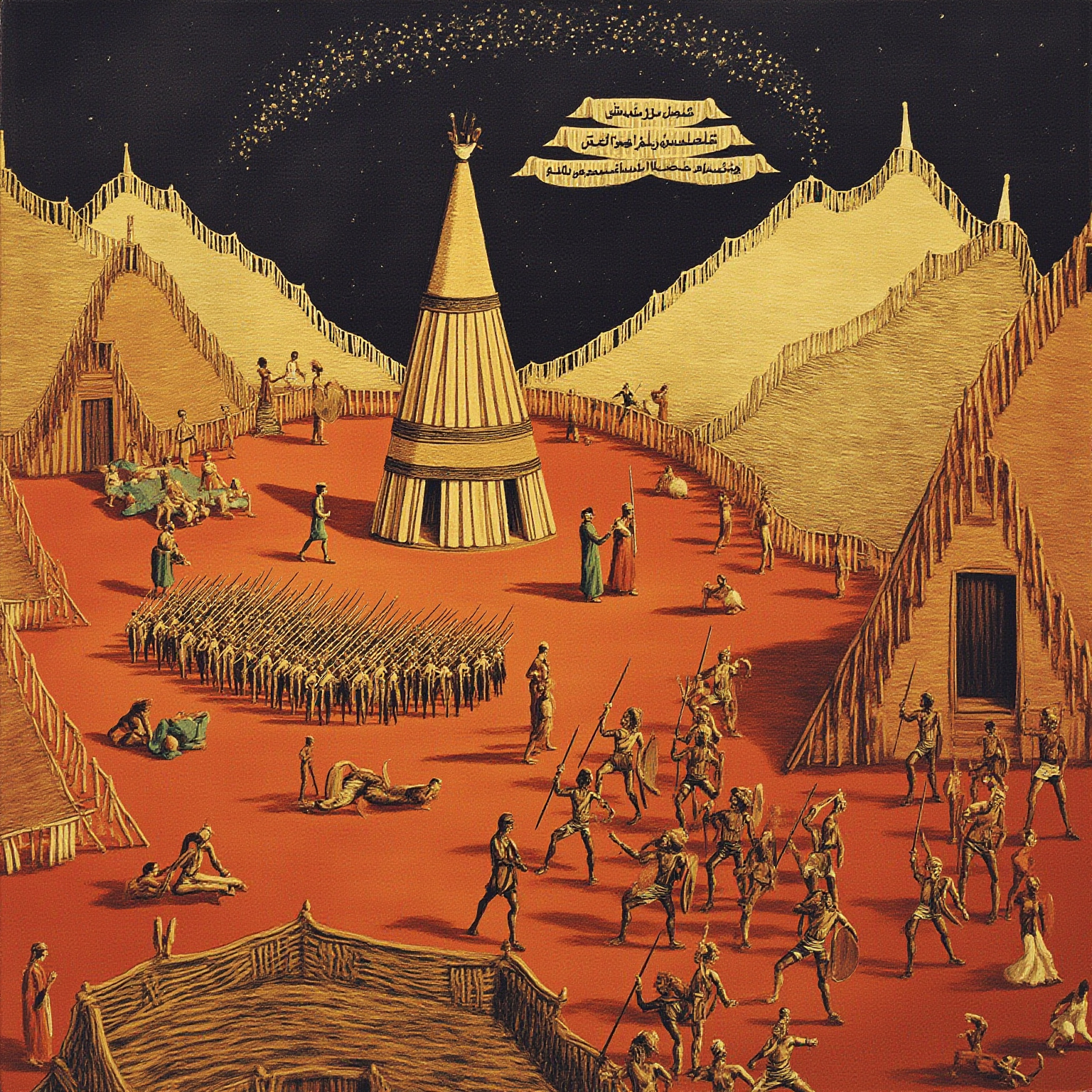
He learned there the order of the army, the discipline of the host, the horns of the beast that close upon the prey.
他在那里学到了军中的秩序、军阵的纪律,学到了那双一合拢便死死咬住猎物的牛角。
金句 · 第三章 · 沙卡在丁兹瓦约帐下
The Hill Where the Horns Formation Came of Age
The first thing Chaka does once he is king is avenge his foster-father and establish his own authority. He marches his army north to meet Soshangane on a hill, and Mofolo builds the book's visual climax around this battle: the central formation holds under punishing pressure, the two wings sweep out and around, and the enemy's main force is drawn tighter and tighter inside a closing, invisible horn, until nothing is left on the hilltop but low red earth and spears standing where they fell. In craft terms, this passage is written almost like a ritual. At the instant the horns close, Chaka stands motionless, as still as if he were standing at the center of a painting. This battle establishes Zulu supremacy, and it establishes Chaka's real place in history. Mofolo does not skirt around this achievement; he writes Chaka's greatness solidly and without hedging, which is exactly what makes the fall that follows so hard to sit with. How does a man with that much real ability end up devoured by a set of divinations and a few grass-rope charms?
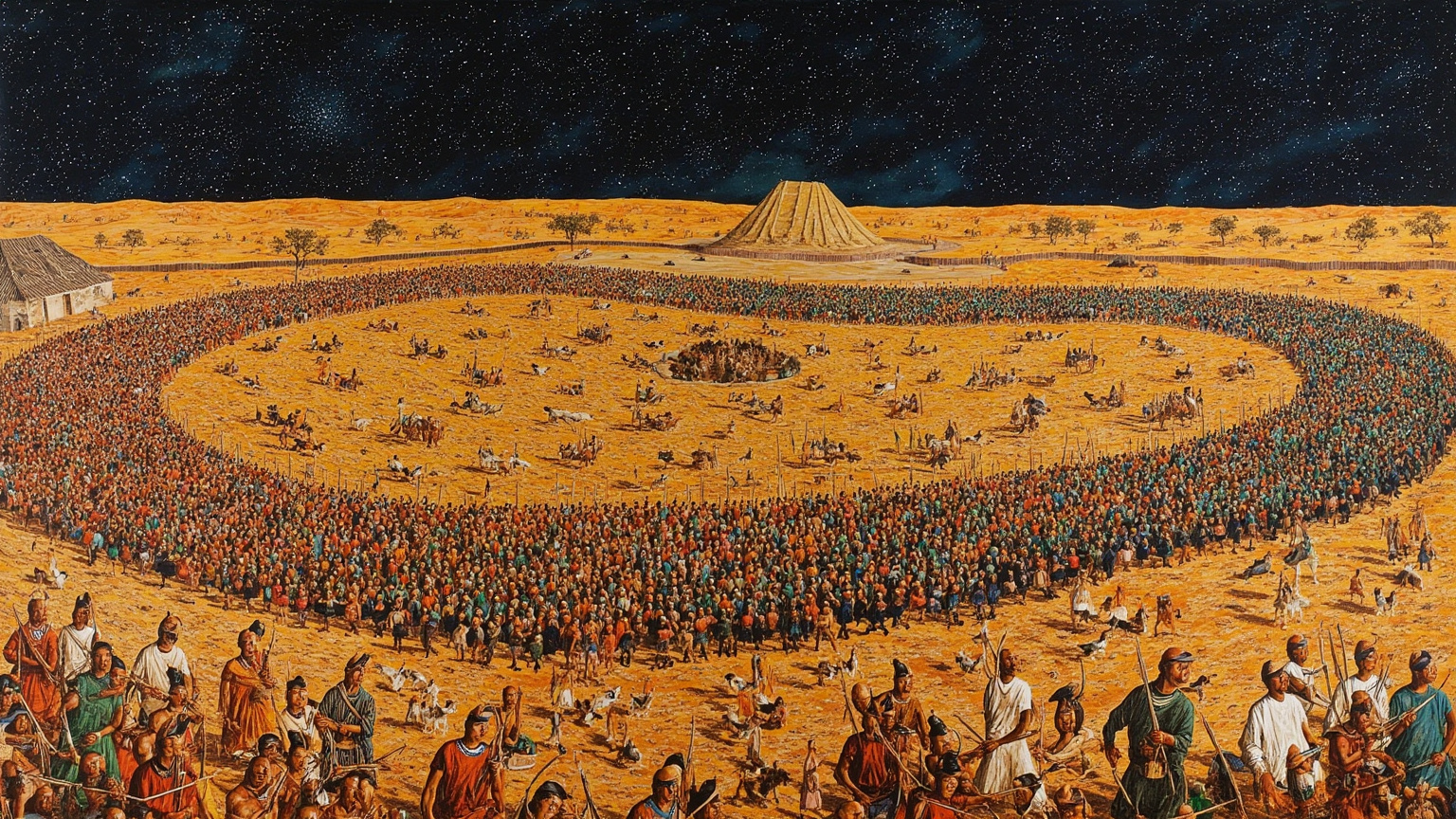
The regiments closed like the horns of an ox about the enemy, and there was no way out.
两翼如牛角般收拢,敌人四顾无路,唯余短兵相接。
金句 · 第五章 · 莫杜茨山之围
The Old Royal Line, Still Wet with Blood
Having beaten the outside enemy, Chaka turns on his own family. He uses harsh law to cut down every relative who might contend for the succession, and the old royal line is all but wiped out. Mofolo writes this passage with real coldness. He never shows Chaka giving the order, only the result: the kraal standing empty, and the meeting ground that was crowded by day left, after dark, with only a few orphans scraping food out of the mud. Chaka's logic is unyielding: he climbed to power over his own father's corpse as an illegitimate son, and he will not allow any half-brother the chance to do the same to him. What is interesting is the restraint in how it is written. The author never gives Chaka a long speech explaining why he had no choice. There is almost no interior monologue for Chaka anywhere in the book; every one of his had-no-choices stays hidden behind the action itself. That restraint is more brutal, not less. Reading on, you realize you have quietly ended up standing on the executioner's side.
The Great Diviner Isanusi Enters
Once the old royal line is exterminated, Chaka himself starts to break down. Severe nervous exhaustion and unnamed ailments close in on him together; he cannot eat, cannot sleep steadily, and even the sound of the cattle-tail tassels slapping against the royal hut in the wind makes him flinch. This is when the great diviner Isanusi arrives from the north. Isanusi's sorcery is not the dragons-and-fire kind of Western tales. He reads Chaka's own sickness and fear as omens, and declares that Chaka himself is marked for death, unless he carries out the blood sacrifices Isanusi names, in which case the whole kingdom will fall along with him. Then Isanusi adds one more line: a king will die at the hands of his own people. Mofolo's craft here is precise. He drives that prophecy in like a nail, one blow at a time, into a mind already riddled with holes. From this moment, Chaka looks at every one of his own blood relatives differently. One thing needs to be seen clearly here. A wicked sorcerer is not tricking a foolish king. A whole culture is working together: Zulu divination, mediums, and charms were already the operating system underneath this kind of politics. Prophecy and power feeding on each other is the real poison at the center of this book.
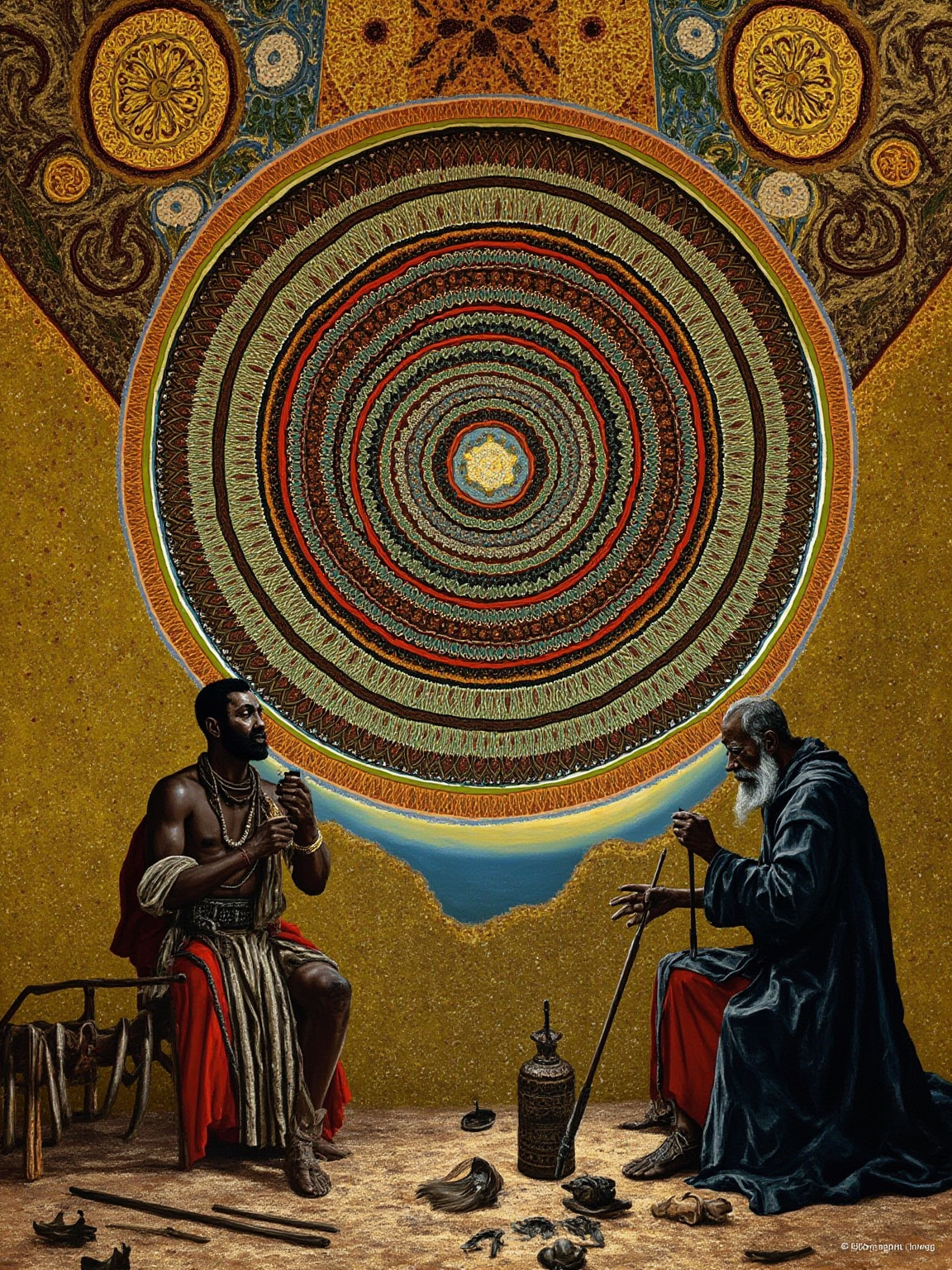
Isanusi declared: 'The omen is Chaka himself; he is the man who must die by the hand of his own.'
伊桑格努宣道:「此兆便是沙卡本人,他就是那位将死于己手的人。」
金句 · 第七章 · 大巫师宣谕
Killing His Mother: The Quietest, Hardest Page in the Book
The diviner's prophecy circles around and finally lands on Nandi. By the time Chaka became king he had long since brought his mother back into the royal household and named her queen mother; he knows this as well as anyone. But the prophecy bears down on him, and he does not dare gamble against it. The way Mofolo writes this passage is the most restrained I have read anywhere in African fiction. He never lets blood spill on the page. He writes mother and son facing each other in silence. He writes Nandi taking off the animal-skin cloak she has worn all her life and laying it across Chaka's knees, and the braided headband set gently on top of it. Then Chaka's order. Then the empty kraal. Then a shallow patch of red in the mud. No specific execution scene is ever drawn. That is exactly what makes this book so formidable: the author turns the killing of a mother into a ritual, and the horror of a ritual lies precisely in how unmoved its surface stays. It is worth knowing that the historical Chaka never actually ordered his mother's death; this is Mofolo's own invention, made to serve the shape of a tragedy. He was not writing chronicle. He was writing a fable.
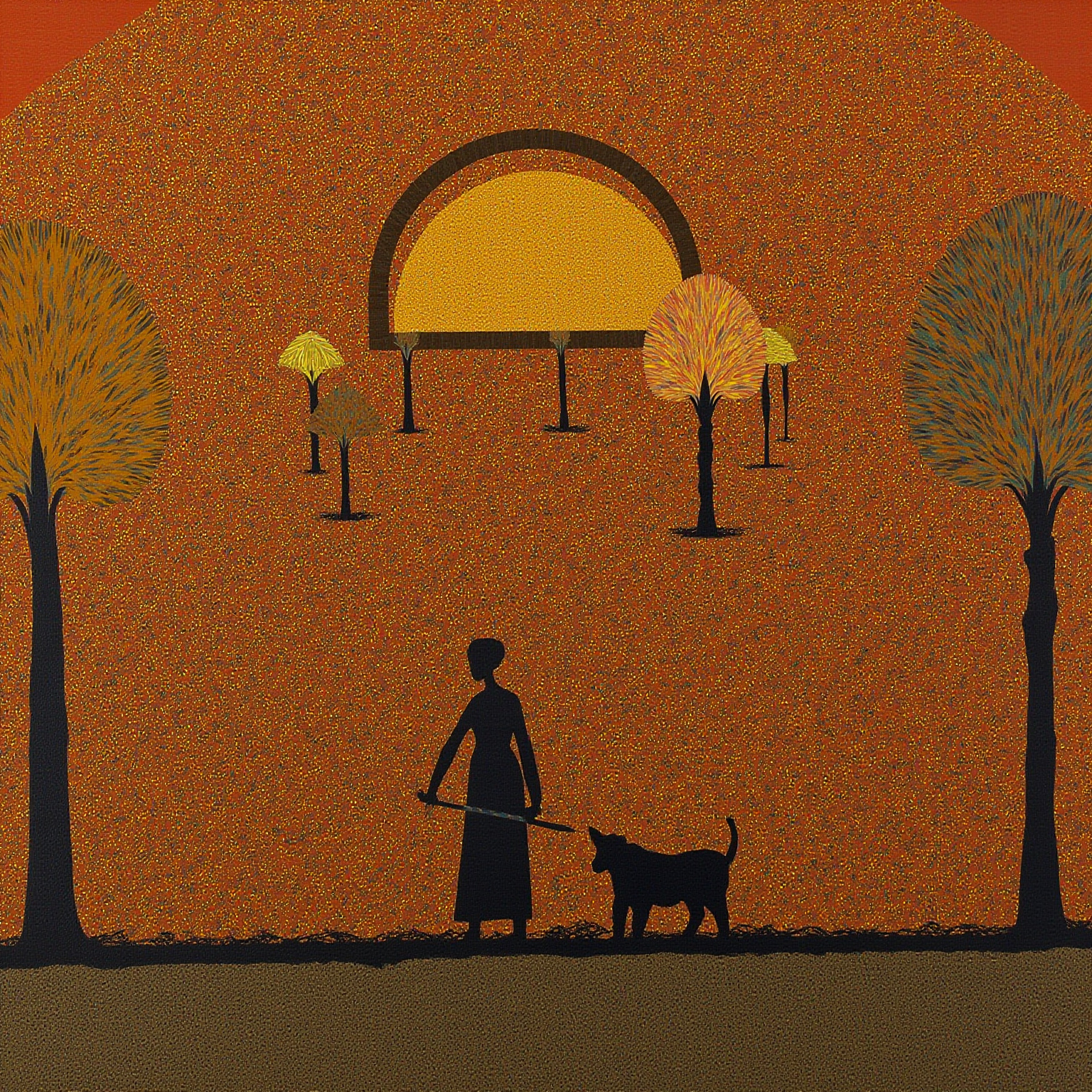
Two Short Spears in the Sickroom
The purge of his blood relatives has nearly run its course, leaving only the two brothers the diviner had once marked as untouchable, Dingane and Mhlangana. That immunity was reserved for them by the prophecy for a reason: they were being kept in readiness to end the story. Broken in body and mind, Chaka withdraws to a kraal to recover, and while he lies there ill, the two brothers act on exactly what the diviner foretold years before. Two short spears, one dull sound, and Chaka is stabbed to death inside his own royal hut. The Zulu power he built with his own hands collapses fast, in blood and mutual suspicion. The book closes a full circle: it began with a prophecy and it ends with one. Power and sorcery were cooked in the same pot from the start, and in the end they are poured back into it.
Themes and Craft: Why People Still Read This Book
What Chaka is really about is how power and prophecy become each other's poison. Chaka is at once the man the diviner marks for death and the instrument who carries the prophecy out. He does not kill because he is ambitious; he kills because he does not dare defy the prophecy, and the prophecy uses his own hands to make itself come true. That structure is colder than Shakespeare's. Macbeth at least drives himself forward out of ambition; Chaka is driven forward by an entire cultural logic he has no way of not believing.
A cycle of vengeance is the second main thread. Being cast out of the royal kraal as a child by his father's wife is the psychological root of the massacre Chaka carries out on the royal line as an adult, a private injustice magnified into a catastrophe for an entire family. Mofolo is honest about it: he never gives this thread a healing ending. It simply keeps turning, locked in place.
The horns formation and the founding of the age-regiments are where this book carries real historical weight. Chaka is not a tyrant who springs from nowhere; he is a genuine hero who forges scattered clans into a nation. That is exactly what makes his fall so hard to look away from: a man with that much real ability, finally devoured by a set of divinations and a few grass-rope charms.
Chaka does not die of ambition. He dies of a prophecy he had no way of not believing.
Why Read the Book Itself: A Guide Can Draw the Map, Not the Grass
A guide can hand you this main line, these characters, this battle, this killing of a mother, this assassination. What it cannot give you is the exact kind of heat that sun-baked, yellowed dry-season grass presses into your back, or the dull thud of cattle-tail tassels slapping against a thatched roof, or the way Mofolo needs only a few lines to make you feel an unaccountable chill on behalf of an executioner. That physical sense, what the eye sees, what the ear hears, what the skin feels, exists only in the original text, and no guide can stand in for it.
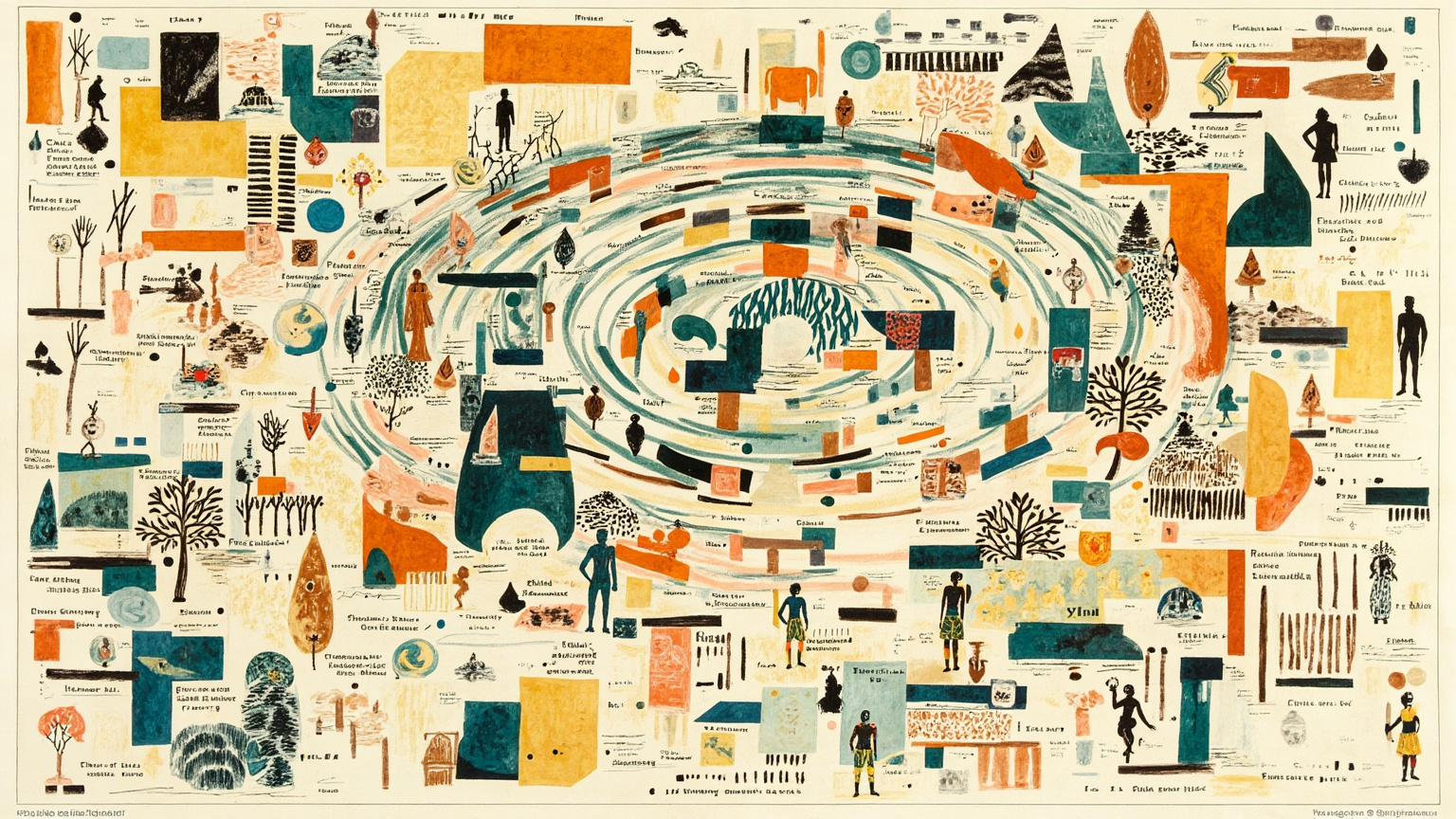
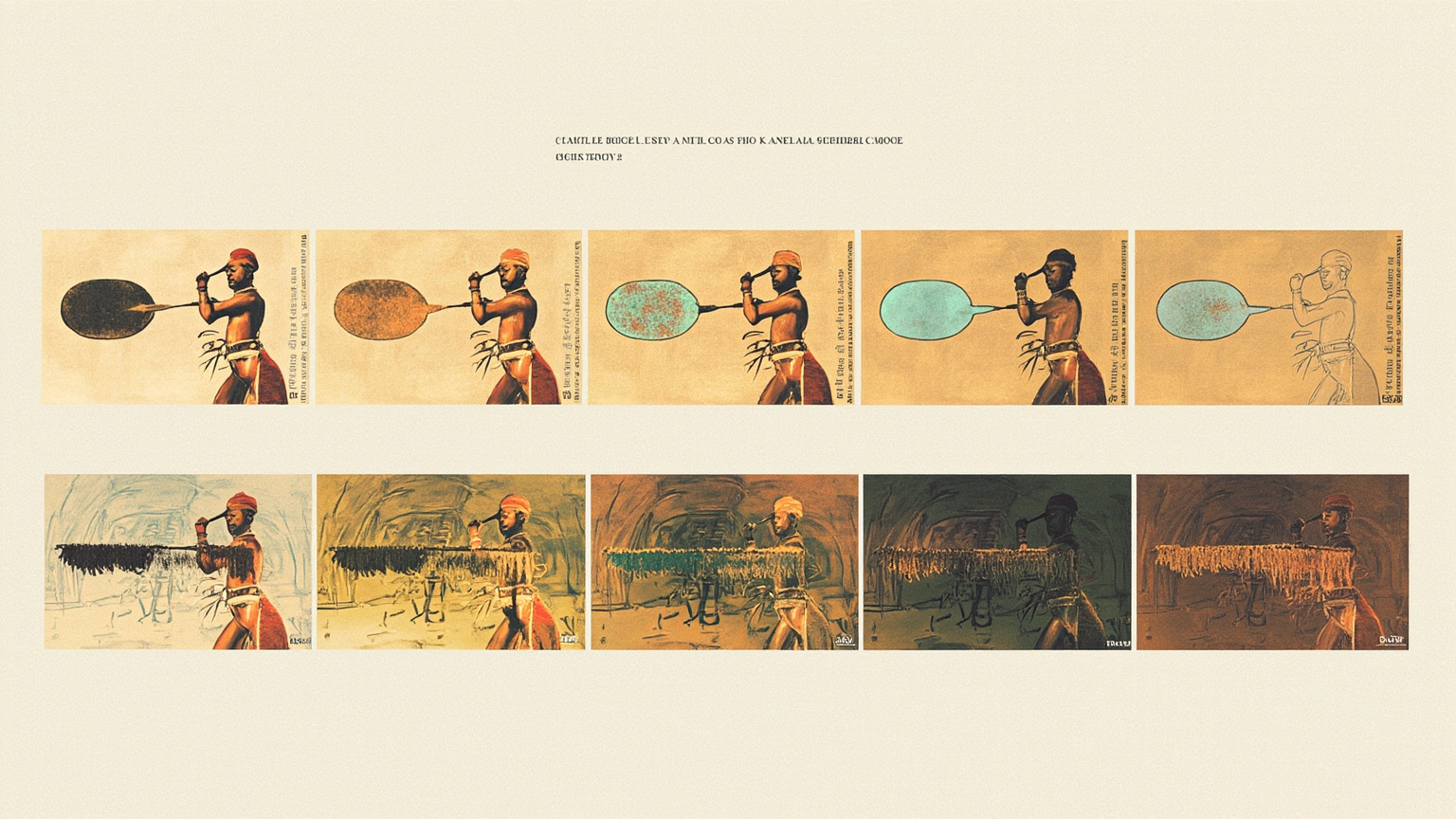
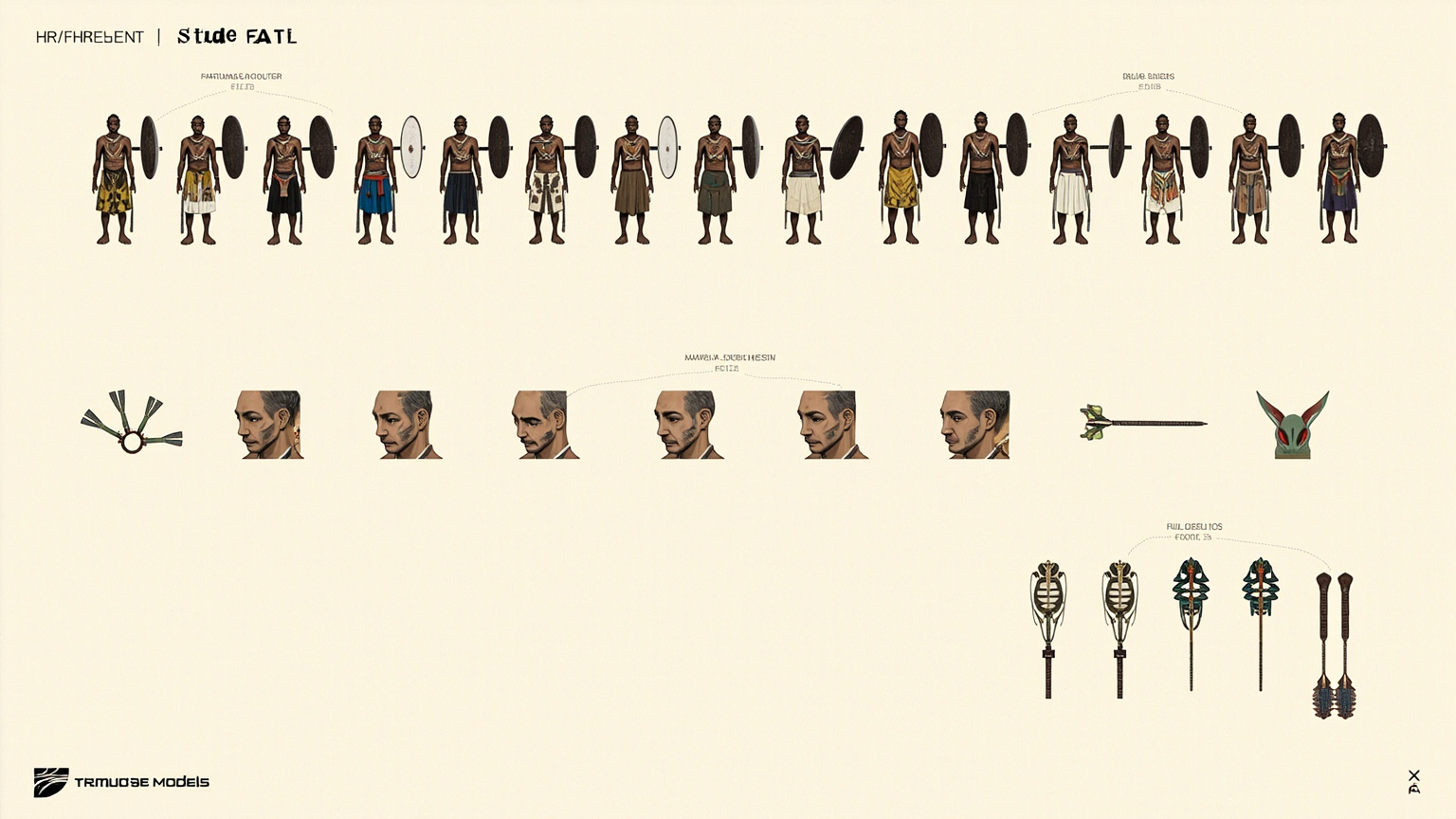
Art Direction4 plates
Before the guide was written, this book got a visual foundation — every illustration you just read grew out of it.