Childhood, Boyhood, Youth (Детство. Отрочество. Юность) · Companion Guide
童年·少年·青年
一个贵族少年在回忆里反复拆开自己:母亲缺席的暖光、父亲失信的榛树枝、莫斯科舞厅里那句写不出的完美。
Opening: An Empty Rocking Chair
A snowy night. The curtains are drawn. A rocking chair stands empty by the window, and no one sits in it anymore. A boy stands out in the snow, his back small in the dark — he is ten, and he has just lost his mother. This is the opening image of Tolstoy's Childhood, Boyhood, Youth: the mother never appears on the page. She lives only in the warm colors of memory, and her death is carried entirely by the empty chair, the drawn curtain, the small figure standing alone. It is the most restrained stroke in the whole book — Tolstoy simply refuses to let grief walk into the center of the frame.
What Kind of Book This Is
Three autobiographical novels of growing up, written when the author was barely into his twenties. Childhood, the first, appeared in 1852 and made him famous overnight, praised in one voice by Turgenev, Nekrasov, and Chernyshevsky. The trilogy runs Childhood (1852), Boyhood (1854), Youth (1857), though the combined edition Tolstoy himself approved was not printed until 1913. In Russian literature it is a point of origin: the first book to lift childhood out of memoir and custom and into philosophical interrogation, the first to take a boy's inner life apart, fold by fold, in the first person. Its current runs straight through to Dostoevsky's The Adolescent and Gorky's In the World. For a Chinese reader today it is the key to where Tolstoy's spiritual project begins — the merciless self-dissection of the later Confession has its roots right here.
People and World: Birch Woods, Morning Prayers, the Shadow of Voltaire
The hero, Nikolenka Irtenyev, is heir to a count's estate, and the narrative follows him from his mother's death at ten through his first steps into society as a young man. He is pulled between three worlds. One is his father's old-style estate — birch woods, avenues of larch, servants everywhere, and a father who fought Napoleon and carries himself with the generosity and severity of the old nobility. The second is the German-French Enlightenment schooling brought in by his tutor, Karl Ivanych. The third is the devout Orthodox household of his aunt Tatyana in Moscow. All three pull at the boy at once — the warmth of the old estate, the doubt of Enlightenment ideas, the guilt of religion. He is allergic to falseness, which means he is doomed to a hard time of it.
A handful of specific people walk this road with him. Karl Ivanych, the tutor with the comical German accent — kind and clumsy, gentle with the children, stern with the household staff, touchy about his own dignity to an almost tender degree; to the boy he is both endearing and faintly ridiculous at once. Natasha, the neighbor's daughter, his first love, gentle, well brought up, devout. Old Yakov, the servant who tucks the fur coat around him on the sleigh and runs a rough hand through his hair — the first flicker of the book's sympathy for those beneath the family. Then there is the Moscow aunt, an uncle full of Enlightenment ideas, his older brother Seryozha — together they make up the adult world as the boy sees it: some of it lovable, some of it grating, most of it simply something to question.
The Plot: From Snowbound Fields to the Ballroom
Childhood opens by laying out the memories of a ten-year-old. Mornings on the estate: father off hunting, mother by the window telling stories, the foreign tutor teaching in German, brothers and sisters bickering. All of it is soaked in the introspective gaze of an unusually sensitive boy. Karl Ivanych is the character who comes most fully alive — his clumsiness, his tenderness, his oversensitive pride in front of the household steward, all seen through a child's eyes. The boy feels for him and, at the same time, half-notices how ridiculous he is. It is the first time the boy is torn between pity and contempt.
After the mother dies, the warmth that colored childhood is cut off. Tolstoy never shows her death directly — the empty rocking chair, the drawn curtain, the small back in the snow are enough. The father sinks into gloom, and the house settles under a low cloud. But the real wound is still to come: Karl Ivanych is driven out of the house by the steward. It is the most painful humiliation in the whole of Childhood. A man who has always looked after you, kind and clumsy, is thrown out to his face by a servant you have feared since you were small, and slinks away. The boy stands in the doorway and understands, for the first time, that goodness is no passport in the world of adults.
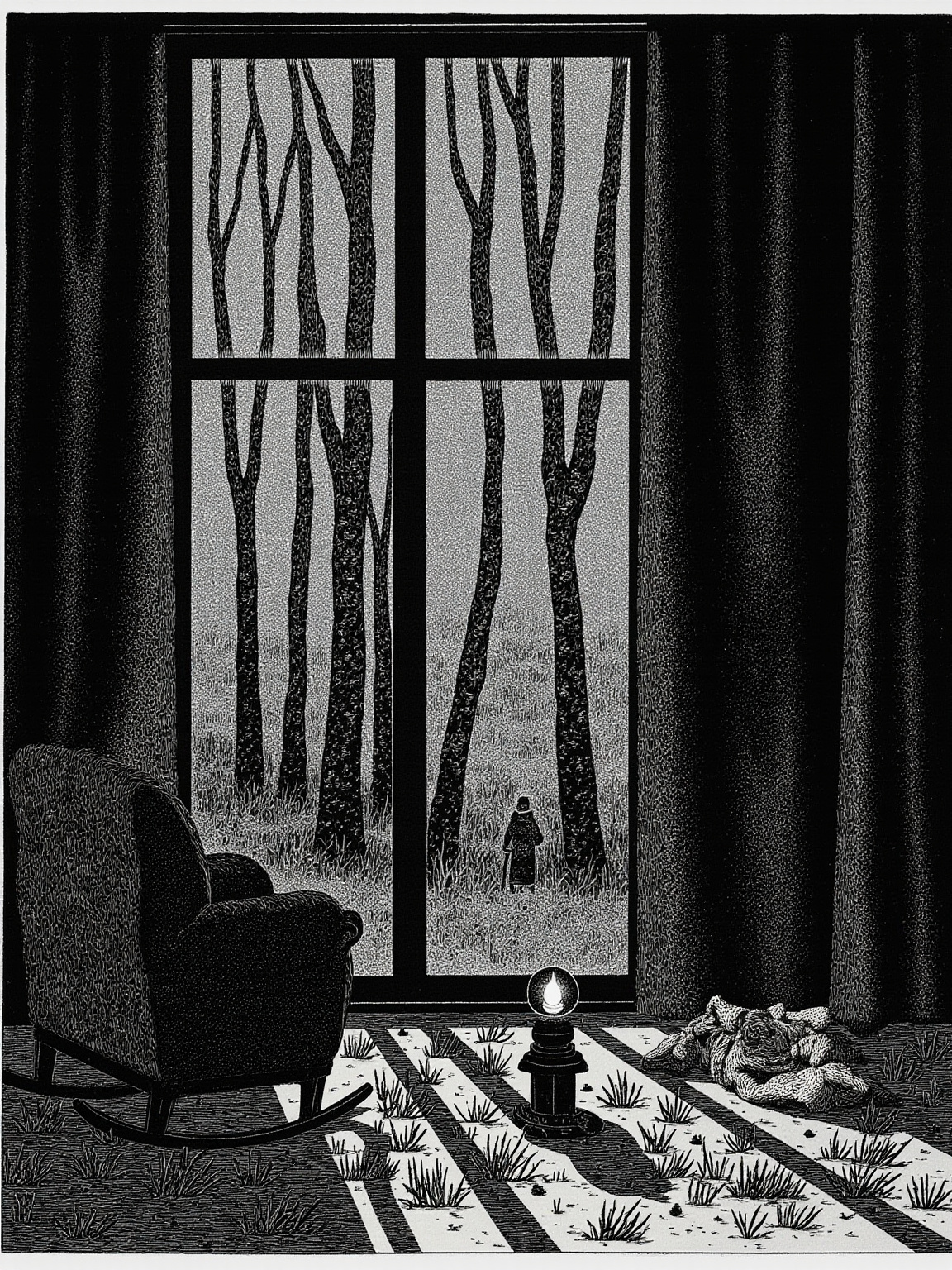
The chair stood empty by the curtained window, and the room was so still that the ticking of the clock seemed to hang in the air.
窗帘合拢,摇椅空在窗边,房间里静得连钟摆的滴答都像悬在半空。
金句 · 童年卷 · 母亲之死
Right after that comes the scene of guests visiting the house. They flatter the father to his face, then trade winks the moment he looks away. He notices nothing; the boy sees everything. It is the first moral crack in Childhood: it turns out adults do things they do not themselves believe in. The father — this figure both worshipped and feared — turns out to be only playing a part in the same performance. From this moment the boy's innocent faith in the adult world starts to come apart, piece by piece.
Childhood closes with the famous hazel-switch scene. Flush with good spirits, the father promises the boy anything he wants. Overjoyed, the boy asks for one thing: let Karl Ivanych stay, and don't let the steward torment him again. The father hesitates, then waves it off — the promise turns out to have been nothing more than a passing mood. Only then does the boy understand that a promise means something different in an adult's mouth. Innocent faith breaks apart completely in this instant, and Childhood ends there. I stopped short the first time I read this scene too — this is not a bad father. He is a real one, flawed, worn down by life. What the boy learns is not hatred. It is clear sight.

Father said yes, and then, when he was tired, he said no — and I understood for the first time what a promise is.
父亲先答应了,后来累了又说不行——我这才头一回懂得,什么叫做许诺。
金句 · 童年卷 · 榛树枝
Boyhood: Moscow, the Aunt, First Love
With his mother gone, his father sinking, and his sister married off, young Nikolenka is sent to live with his aunt in Moscow. The first figure to stand solid in this new world is his aunt, Tatyana Alexandrovna — an unmarried old woman bent under the weight of old-fashioned propriety and family duty, who pours everything she has into her nephew. She sets the moral spine of Boyhood: devotion, patience, a life lived cleanly. Around her the boy feels stability for the first time, and for the first time he also sees his own vanity clearly. Why can't I be like her?
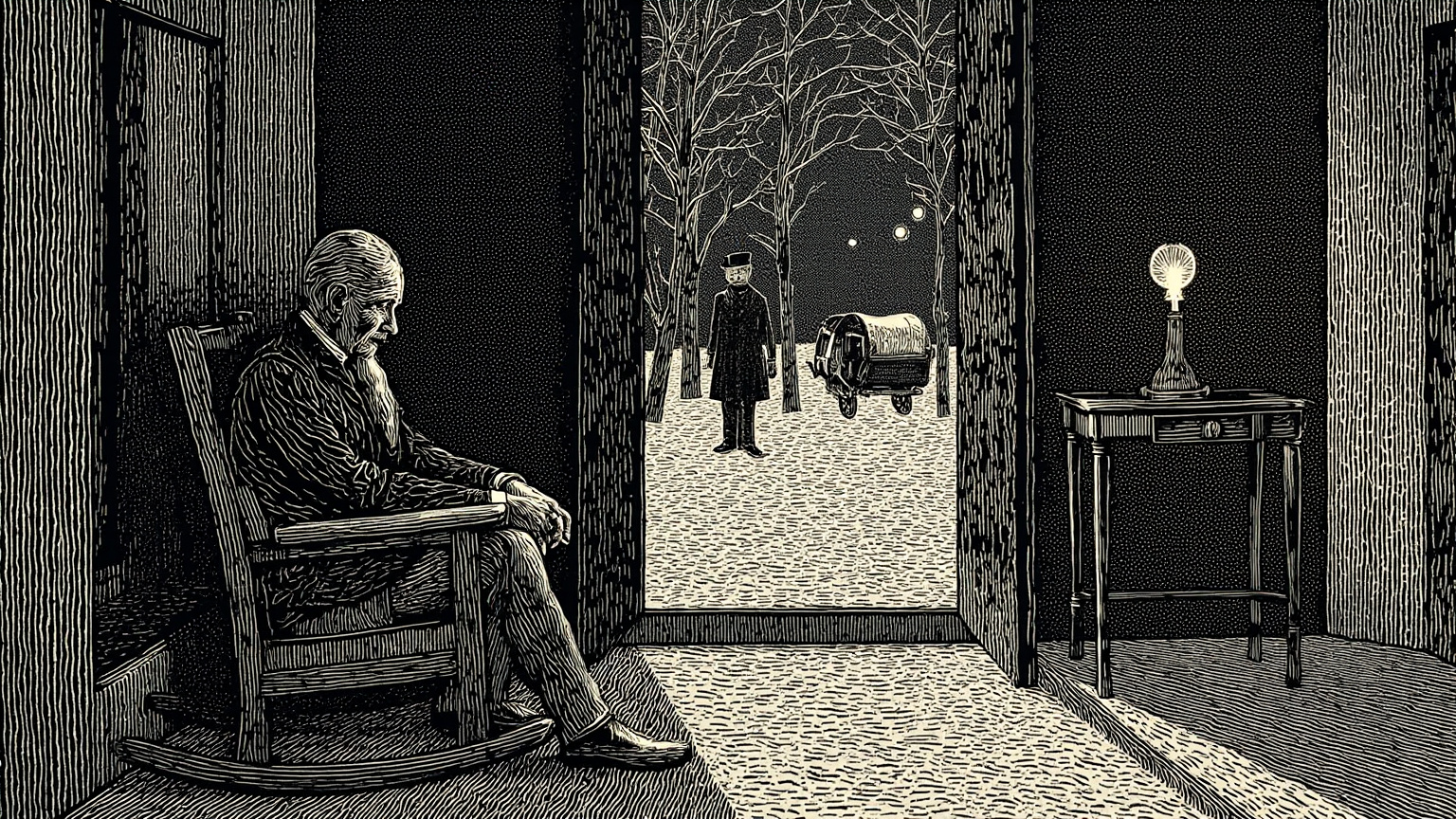
Aunt Tatyana Alexandrovna lived as though every hour of her life were a prayer, and she gave all her love to me.
塔吉雅娜·亚历山德罗夫娜姑母仿佛把每一时都当作祈祷来过,她把全部的爱都倾注到我身上。
金句 · 少年卷 · 姑母塔吉雅娜·亚历山德罗夫娜
The scene where Natasha, the girl next door, enters is the standard shape of first love on a Russian country estate: a June night, behind the bushes in the garden, the first sound of a girl's laughter. She is gentle, well brought up, devout. She is not only an object of love but a projection of the boy's moral ideal. Nikolenka's first religious doubt and his first stirring of desire tangle around the same person — his love for her comes wrapped in his own self-scrutiny.
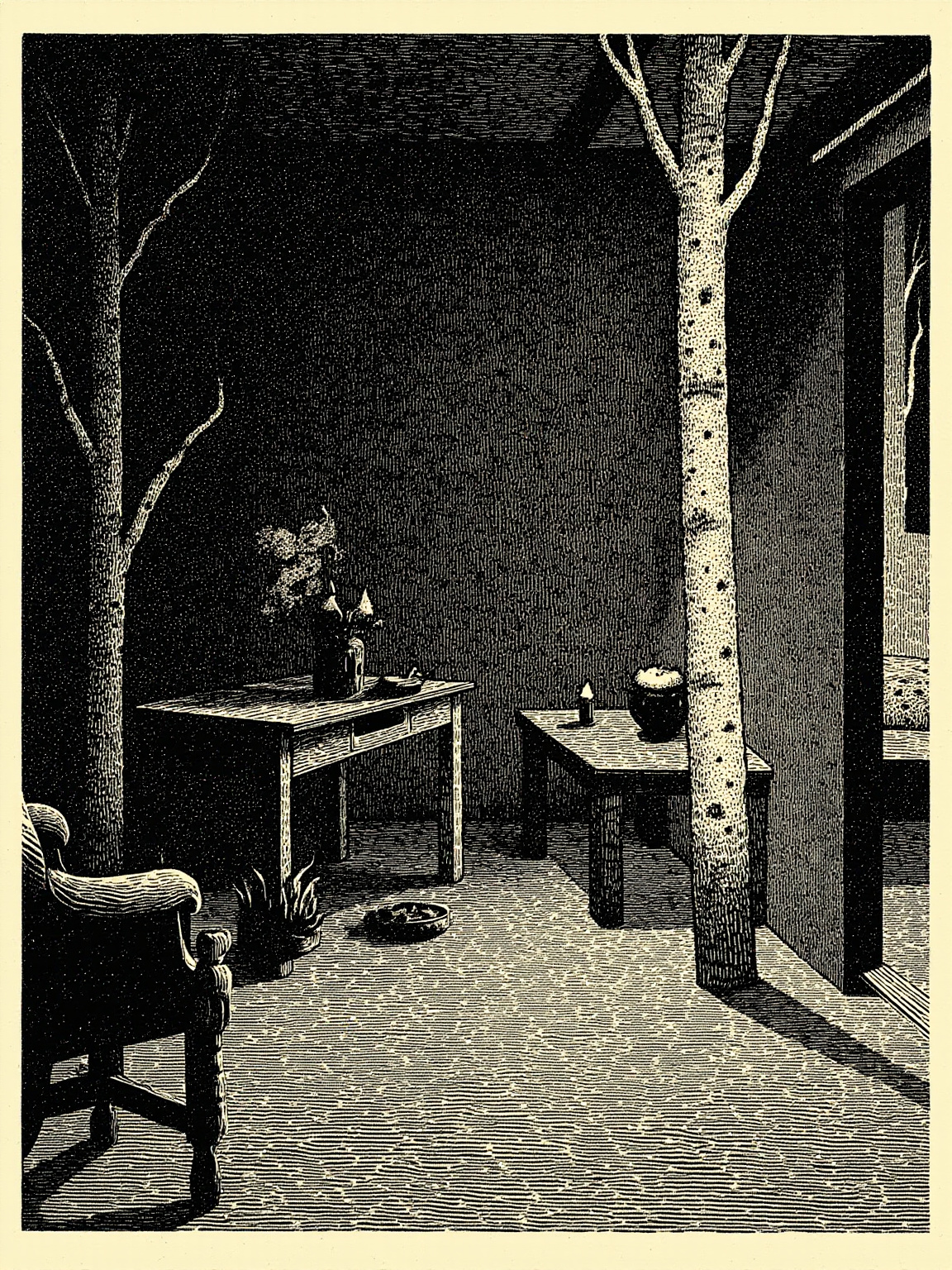
I heard her laugh in the dark garden behind the lilac bushes, and I felt that something entirely new was beginning in me.
丁香花丛后面,我头一回听见她的笑声,我觉得自己心里有一种全新的东西开始萌动。
金句 · 少年卷 · 初恋的六月夜
The moral axis of Boyhood is a line that keeps recurring in the diary: I will become a perfect person. He writes it again and again, and vanity undoes him again and again. He preens over a new coat, glows at a stray compliment, rehearses his expression before a dance — and dissects himself for every bit of it without mercy. What strikes me most about this book is that it never lets its hero off the moral hook. If a fifteen-year-old treats himself like this, what kind of man does he grow into? The answer is waiting in Tolstoy's later Confession.
Youth: Balls, Masks, an Unfinished Question
Nikolenka enters university preparatory classes and starts moving through the social world of young Moscow nobles. He plays cards, makes small talk, goes to balls with young aristocrats, and watches pride, vanity, and calculation in himself and everyone around him. At the balls, thinking about Natasha, about another girl, Sonechka, about the masks everyone wears in society, he keeps circling one question: how does a person live without lying to himself? The trilogy closes on that question, open and unanswered.

I wrote in my diary: I will be a perfect man — and the very next evening I was proud of a new coat.
我在日记里写道:我要做一个完美的人——可第二天晚上,我就为一件新外衣得意起来。
金句 · 青年卷 · 日记与自我解剖
Theme and Method: A Boy Who Takes Himself Apart
What this book is really about is how hard honesty is. A noble-born boy has every means to live respectably, and his greatest enemy is not poverty but himself — his vanity, his self-deception, his near-allergic sensitivity to what is true and what is false. Russian literature gained a whole current from this: confession, introspection, coming of age. Dostoevsky, Gorky, Korolenko all drew water from this same river later on.
As a technique, it opened a new stance: laying a child's interior life fully open in the first person. The mother's death is carried by absence, never shown directly. The guests' falseness is never spelled out, only tracked inch by inch through a child's eyes. The hazel-switch scene lets the father's exhaustion and the boy's disappointment sit in the same room, with neither one at fault, both of them wretched. This kind of restraint cuts far deeper than open sentiment ever could.
Childhood is not for nostalgia. It exists to ask a grown man one question: at what exact moment did you start becoming false?
Why Read the Book Itself
A companion guide gives you the map, not the ground. The specific things that live only in the original text — the ridiculous, heartbreaking German accent in Karl Ivanych's voice as he is thrown out; the almost self-punishing pleasure with which the diary-keeping boy nails himself to the stake of his own shame; the way chandelier light falling across a Moscow ballroom weaves through the questions in a young man's head — no summary can give you that texture. One more thing: the trilogy ends on a question with no answer, but the answer is there, in the rest of Tolstoy's writing life. So the most interesting reason to read this debut is not to learn the plot. It is to watch a twenty-three-year-old who has already turned himself into a question.
Art Direction4 plates
Before the guide was written, this book got a visual foundation — every illustration you just read grew out of it.