Chokher Bali (A Grain of Sand / Binodini) · Companion Guide
眼中沙
一位年轻寡妇走进富庶内宅,少爷的情欲、闺中的友谊与童婚妻子的天真,被压在同一方素白的纱丽底下,无人敢先说破。
The Opening Image
A white sari, no red border, no jewelry. A young widow crosses the courtyard of a grand Calcutta house with her eyes down, brought in to meet the family's new bride. The two women size each other up: one is Ashalata, newly married, an innocent girl with no education; the other is Binodini, recently widowed, convent-educated, something unyielding pressing behind her eyes. They take to each other instantly and start calling each other chokher bali — sand in the eye: something that irritates you and that you can't bring yourself to rub away. That grain of sand will go on to grind through the whole household's respectability.
What Kind of Book This Is
Rabindranath Tagore was born in 1861 and died in 1941, and most readers know him through The Crescent Moon and Stray Birds, as a gentle poet. In 1903 he published the novel Chokher Bali — the title means sand in the eye, and it still irritates a century later. He had already written poems, stories, and plays by then, but he said something later, to the effect that before this book he had only been telling stories; with this one he first cut into the human heart. Bengali critics have largely agreed on one point: this is the first true psychological novel in the Bengali language.
The Characters and Their World
The house truly belongs to Rajlakshmi, a wealthy widow whose husband is dead and whose son has just married Ashalata. She brings Binodini in to live with them, and calls it charity toward a fellow widow, but it is really supervision: a widow may not dress in color, may not remarry, must live out her life in plain white, and Rajlakshmi enforces the rule. Her son Mahendra — impulsive, self-absorbed, weak-willed — dotes on Ashalata when they first marry, but the moment Binodini arrives his eyes go elsewhere. Then there is Bihari, the one person who refuses to be pulled into any of it: Mahendra's closest friend, Rajlakshmi's foster son, trained as a doctor, quiet, rational, and bound to his own principles.
The world presses down through this set of rules: child marriage, enforced widow chastity, no education for women, the head of the family's word as law. This is British Bengal in the early 1900s, not long after the Partition of Bengal. Most of the story stays indoors, in courtyards, colonnades, and sitting rooms, light cut into strips by the curtains. When Binodini finally runs, the geography widens: first a stop in Allahabad, then Kashi on the banks of the Ganges — Varanasi, with its stone ghats, wooden boats, and oil-lamp bathing steps, one of the few places a widow is permitted to go.
A Widow Enters the House
Binodini's own history is worth pausing on. She is beautiful, convent-educated, strong-willed, and poor — her family could not even scrape together a dowry. Two medical students turned down proposals to marry her: one was Mahendra, who said he was not ready; the other was Bihari. She was finally married off to a sickly, penniless man, who died soon after the wedding. By custom she must now wear white for the rest of her life and never remarry — the world paints her over in white. She spends several months widowed in her village before Rajlakshmi hears of her and brings her to this house in Calcutta.
Inside the house she meets Ashalata first, a bride younger than herself, uneducated, still believing everything the way a child does. The two women become close friends and start calling each other chokher bali. Later film adaptations keep the nickname, and it becomes the book's central image: a grain of sand, irritating, and somehow impossible to give up.
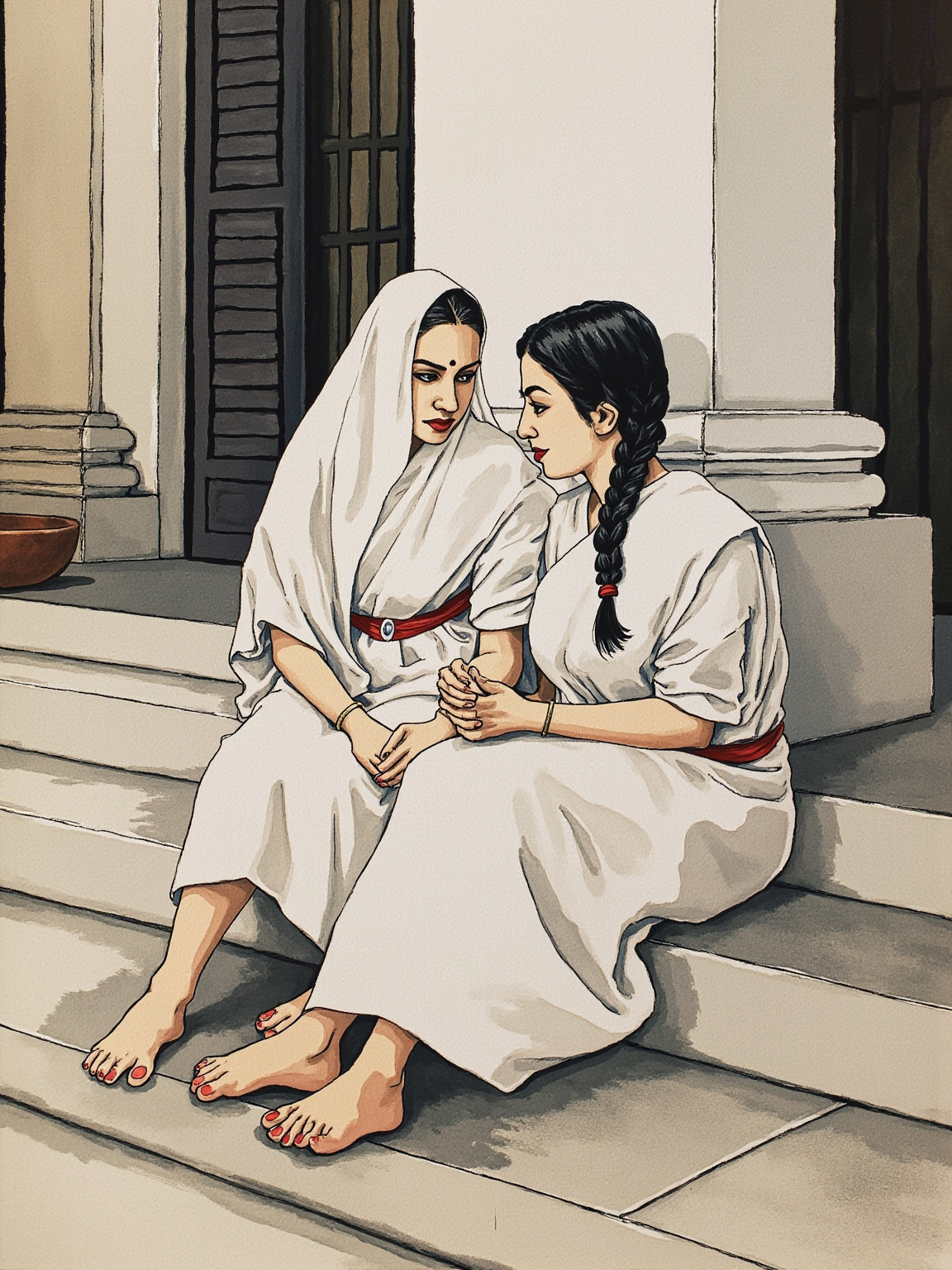
She came to us with no red border on her sari, no ornaments upon her, only the white of a widow.
她身上没有朱红的纱丽边,没有首饰,只剩一层寡妇的白。
金句 · 第1章 · 寡妇入宅
The Affair Takes Root
Mahendra had treated Ashalata as the center of his world. Once Binodini moves into the house, he cannot look away — an educated woman who can talk, with defiance held tight behind her eyes, next to a wife who still seems like a child. The pull is almost physical. Binodini, for her part, is drawn first to Bihari's stillness, but he will not respond; when Mahendra presses closer, she is pulled in half against her will.
How Tagore handles this is worth noticing. He does not write it as a scene of adultery caught in the act, but as something closer to suffocation: four people under one roof, each hiding something, each half-knowing something, none of them willing to say it out loud. Mahendra believes he is being romantic. Binodini is torn between desire, respect, and affection. Ashalata stays innocent, still calling Binodini her chokher bali, with no idea that the grain of sand is already grinding into her own marriage.
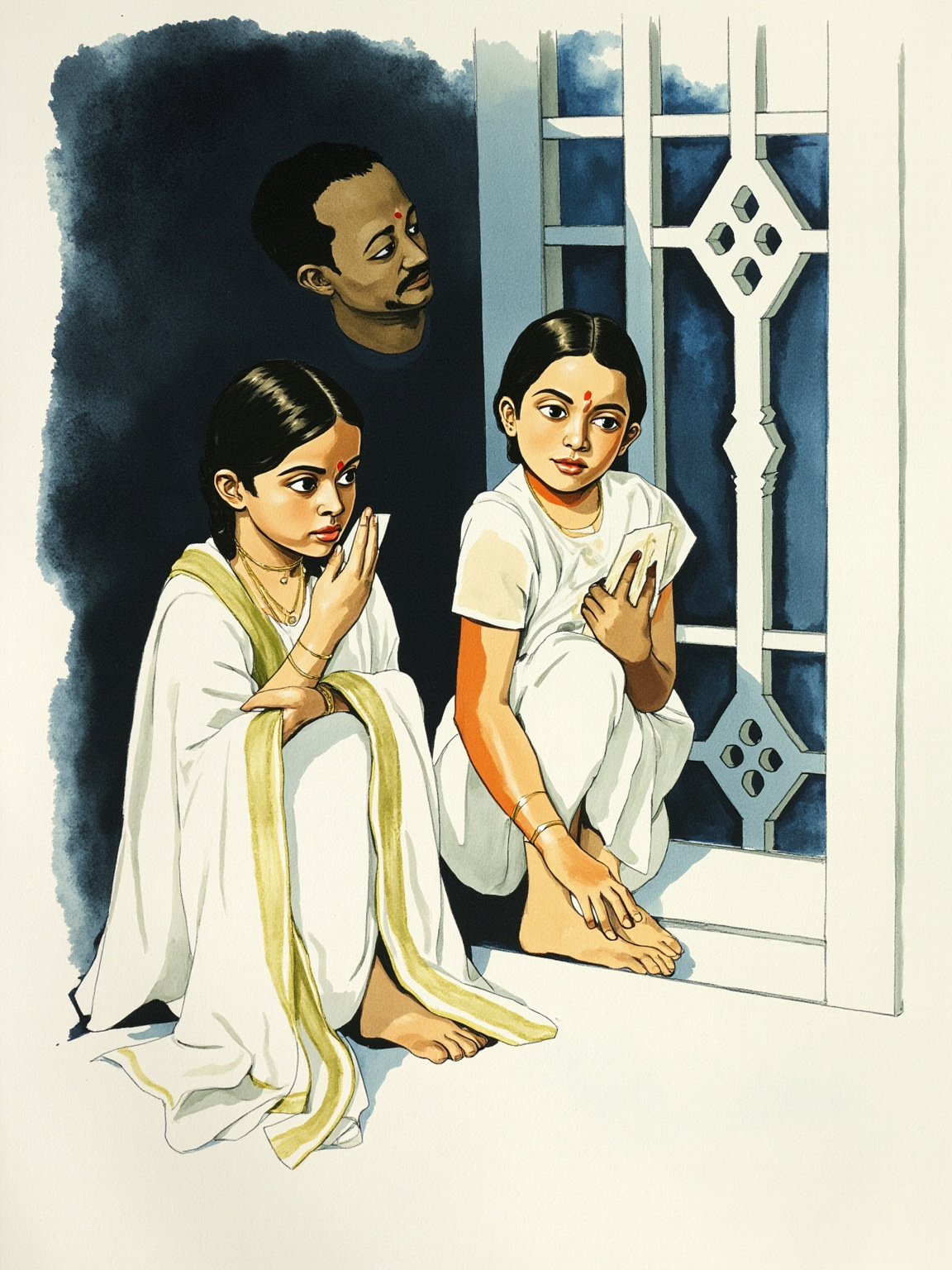
We call each other the sand in the eye — a thing that hurts, and yet one cannot do without.
我们管彼此叫眼中的沙——刺人,却又舍不得揉掉。
金句 · 第2章 · 私情暗生
Trust Breaks
The truth cannot stay hidden forever. At some point the affair surfaces, and Tagore skips the dramatic catching-in-the-act for something duller and more painful: Ashalata overhears a little, notices a little, cannot piece it together, and then suddenly can. She goes back to her parents' house wrongfully accused, pregnant without even knowing it herself. An uneducated girl, she does not even have the words to name what is being done to her.
This is what finally wakes Binodini up. She sees Mahendra for what he is: not devoted, just a young man ruled by his appetites and unwilling to face the consequences. She leaves the Mahendra household, goes to Bihari, and asks him directly to marry her. He refuses, not because she is a widow, but on principle — he will not take a friend's wife. The two of them never become lovers in this book, and her passion is never truly spoken aloud, the most private, most painful thread running through the whole novel.
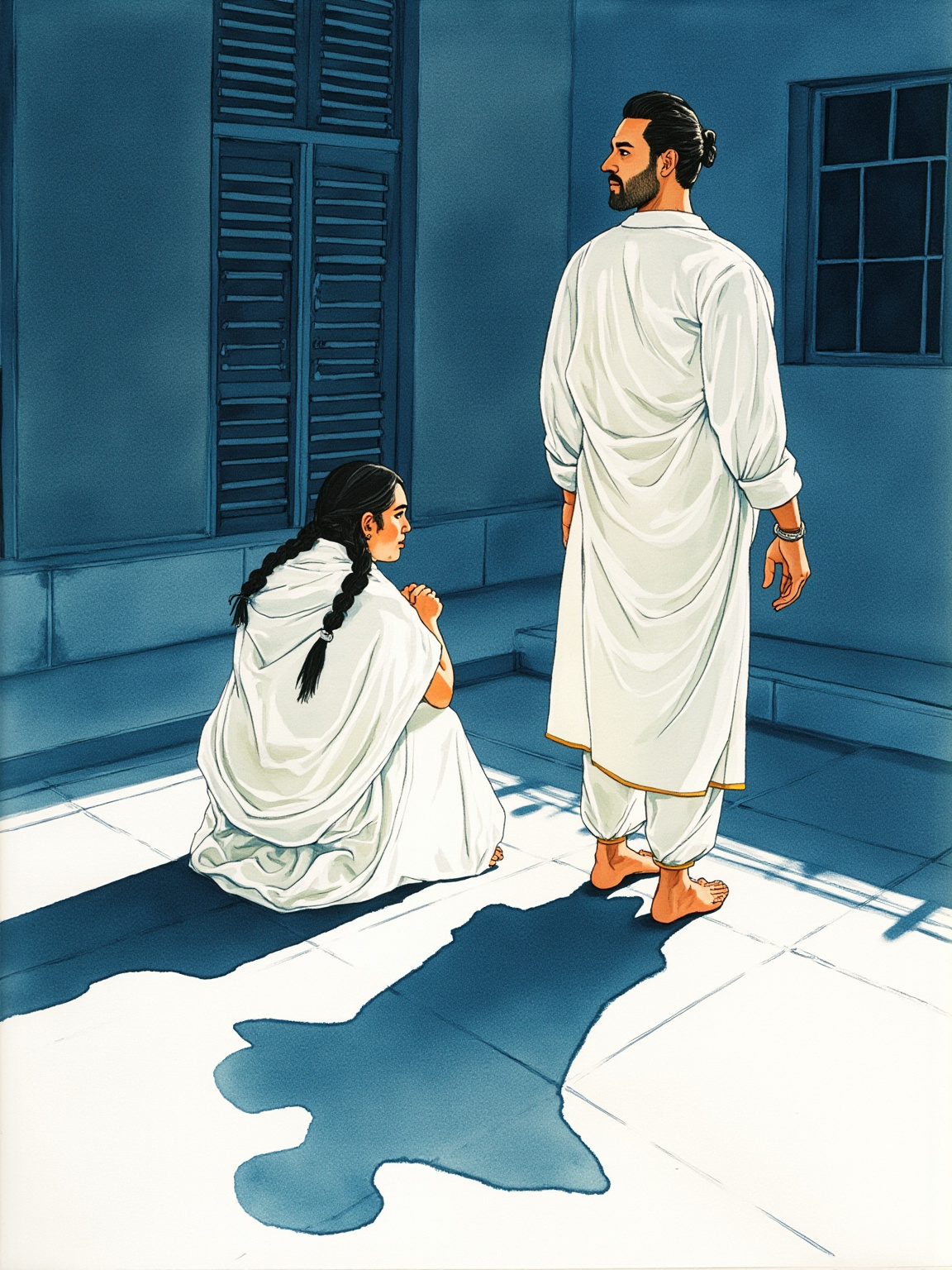
I saw him then as he was — a man devoured by his own longing, who could not bear the weight of what he had done.
那一刻我看清了他——不过是个被自己的欲烧空、又担不起后果的人。
金句 · 第3章 · 信任崩裂
Flight, and Being Brought Back
Mahendra comes asking to reconcile, and she refuses. Instead she names a condition: he must take her to Kashi to find Bihari. Mahendra agrees, confused, and then in his confusion takes her to Allahabad instead — an absurd flight, two people with entirely different intentions nailed together by the same affair. Bihari catches up with them and brings them both back to Calcutta. This is where the novel's real question finally shows itself: can a marriage broken by betrayal be repaired? Ashalata is waiting at her parents' house, carrying Mahendra's child.
I stopped short the first time I read this part. The flight is not an escape, it is a faster way down. Being brought back is not a rescue, it is the wound pushed back into place, unchanged.
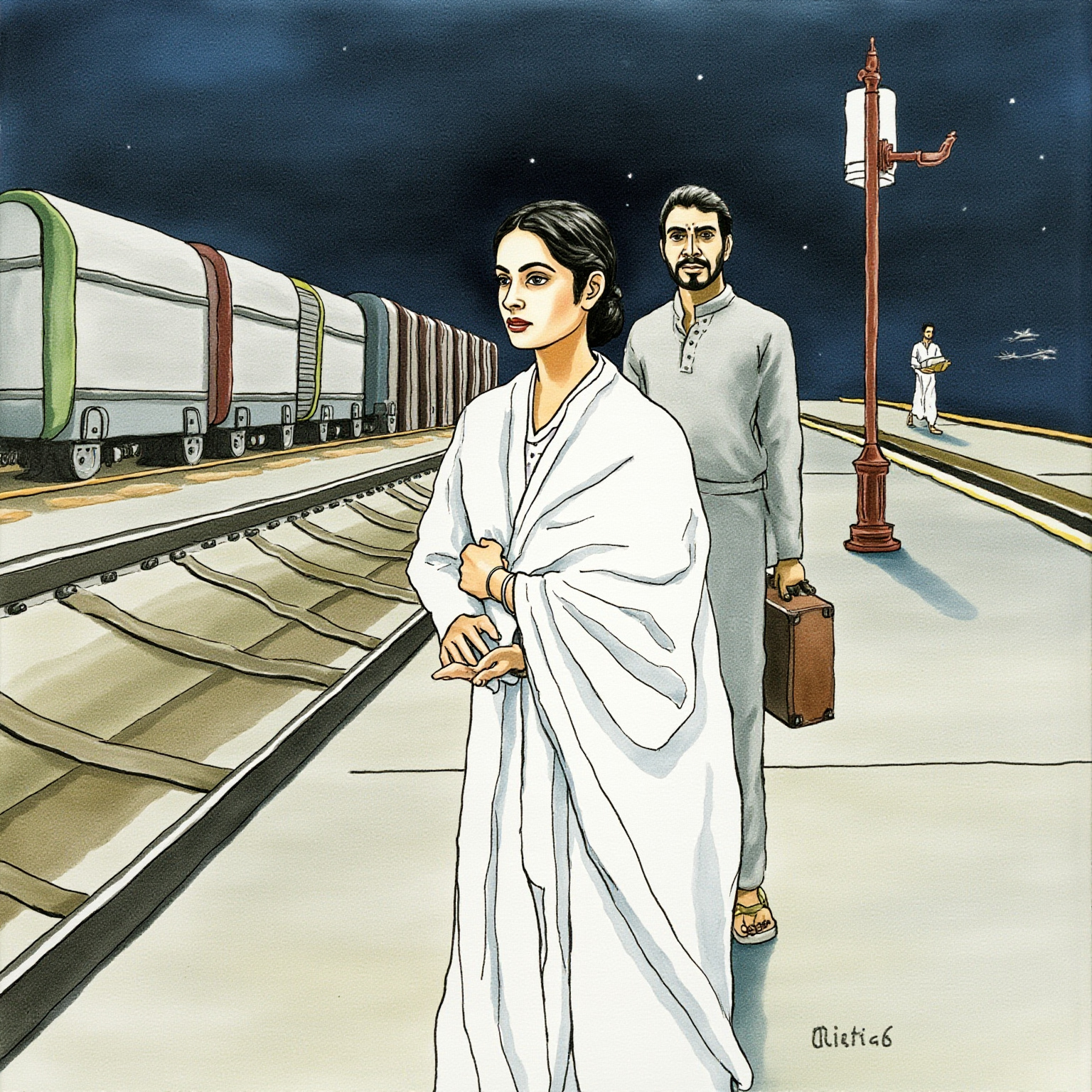
It was no flight we made, only the quicker sinking of a stone already fallen.
那不是出奔,是早已坠地的石头,又往下沉了一程。
金句 · 第4章 · 出奔与被追回
Kashi, and Disappearance
Binodini goes to Kashi alone, to the stone ghats along the Ganges, the oil lamps, the bathing steps — one of the places a widow is allowed to make a pilgrimage to. There she meets Bihari again, and the two of them finally agree to marry. She seems to want this marriage to save her from the white sari, from the life stripped away from her, from her desire for Mahendra and her guilt toward Ashalata.
On the day of the wedding she vanishes. She leaves only a letter for Ashalata. No one knows where she went, whether she married, whether she is even alive. Tagore himself admitted later that he always regretted this ending. The broken marriage is never mended, the affair never resolved, the friendship never restored, and even her unspoken passion for Bihari is left with nowhere to go. Everyone walks away carrying their own wound.
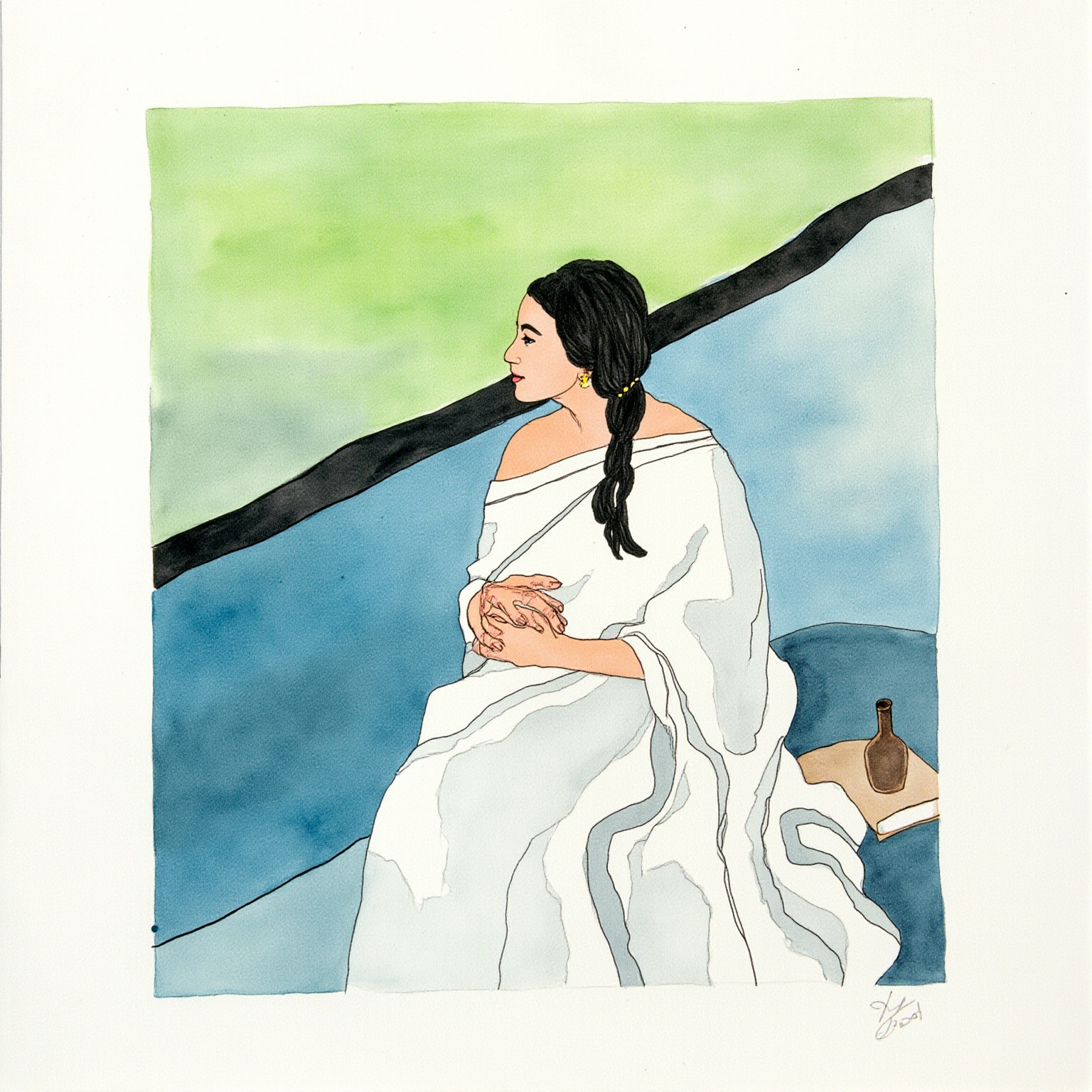
On the ghats of Kashi the lamps burn for those who have nowhere else to be remembered.
迦尸的石阶上,油灯为那些无处可归的人燃着。
金句 · 第5章 · 迦尸与消失
What This Book Is Actually About
On the surface this is a four-way entanglement; underneath, it is a cross-section of a sick society. Every setback Binodini suffers is nailed to the same institutional wound: widows stripped of the right to remarry, dressed in white, denied education and color. Ashalata is married off as a child bride before she is ever educated, and cannot even name her own betrayal — child marriage and patriarchy are exposed here without a word of commentary. Rajlakshmi's compassionate care turns out to be the enforcement arm of the whole system. Four women and one man, all pressed under the same set of rules, and none of them truly free.
Where Tagore really operates is psychology. He lays every character's internal conflict bare: Mahendra's impulsiveness and self-regard, Rajlakshmi's piety and control, Ashalata's fragility and helplessness, Bihari's silence and principle, Binodini's intensity, calculation, and refusal to accept her fate. Five people, five distinct textures, woven into a net so tight it is hard to breathe inside it. This is where what people call the modern psychological novel begins.
Why Read It Today
Tagore's poems and memoirs sit on plenty of shelves, but his novels rarely do. This book is the key way in past that blind spot. More than a century later, the questions it raises have not aged: can a marriage survive being broken by an affair? How does a person who has been trained into obedience take her own life back? Does an unspoken passion deserve to be named? None of this belongs only to the late nineteenth century.
He isn't telling a story. He is laying the human heart out on an operating table.
Why Read the Novel Itself
A guide like this gives you the map; the novel itself is the land. I can tell you what happens, who does what to whom, and who disappears at the end — what I cannot give you is the restraint Tagore builds into every sentence. He never states desire outright; he gives you a gesture, a pause, a hand clenched shut. To show Ashalata's innocence, he gives you the rhythm of her footsteps as she walks home to her parents, pregnant and wrongly accused, without knowing it herself. And the letter Binodini leaves behind carries a weight in the actual text that no summary can carry for it. None of that reaches you until you open the book and let it catch in your eye.
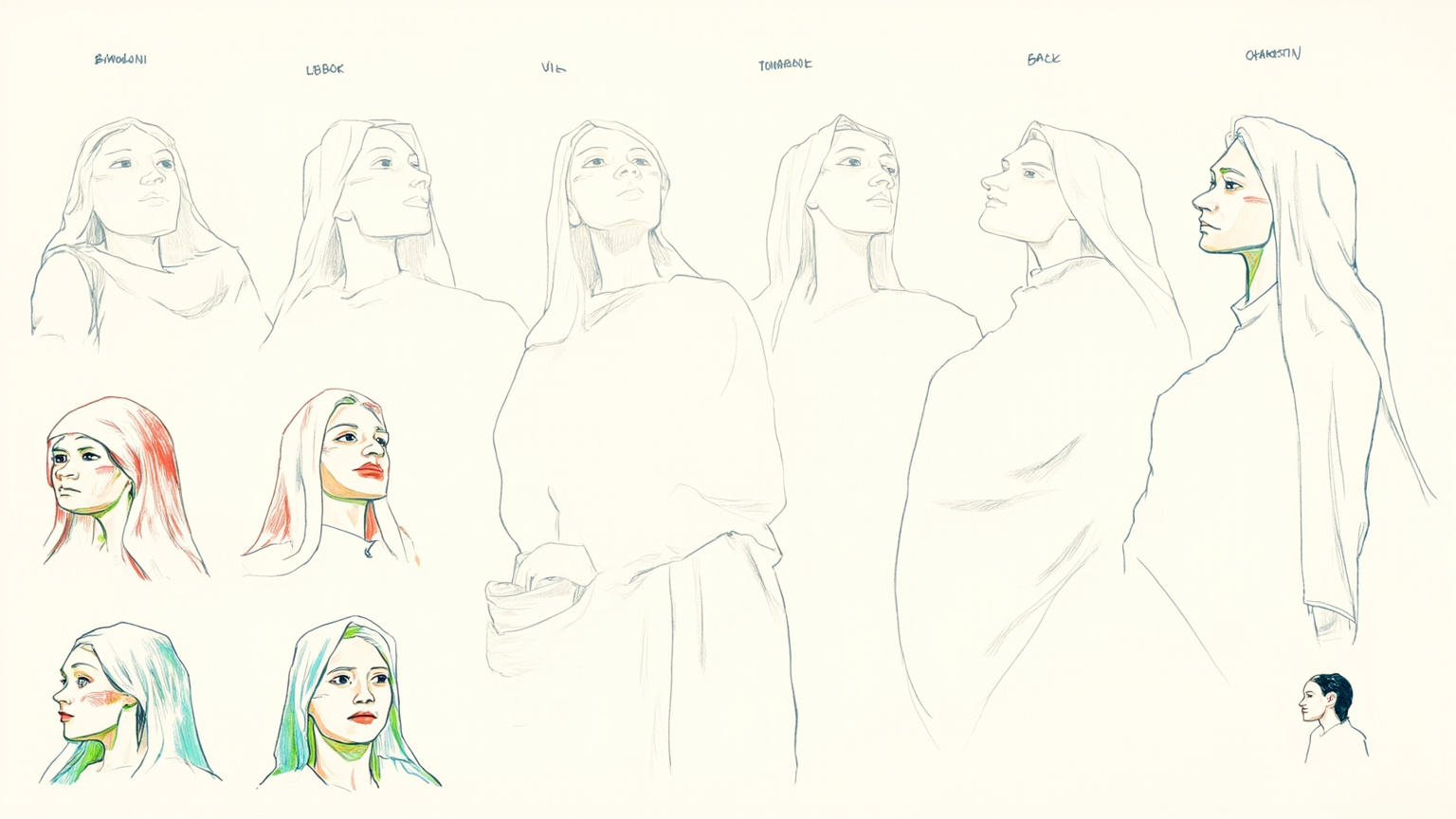
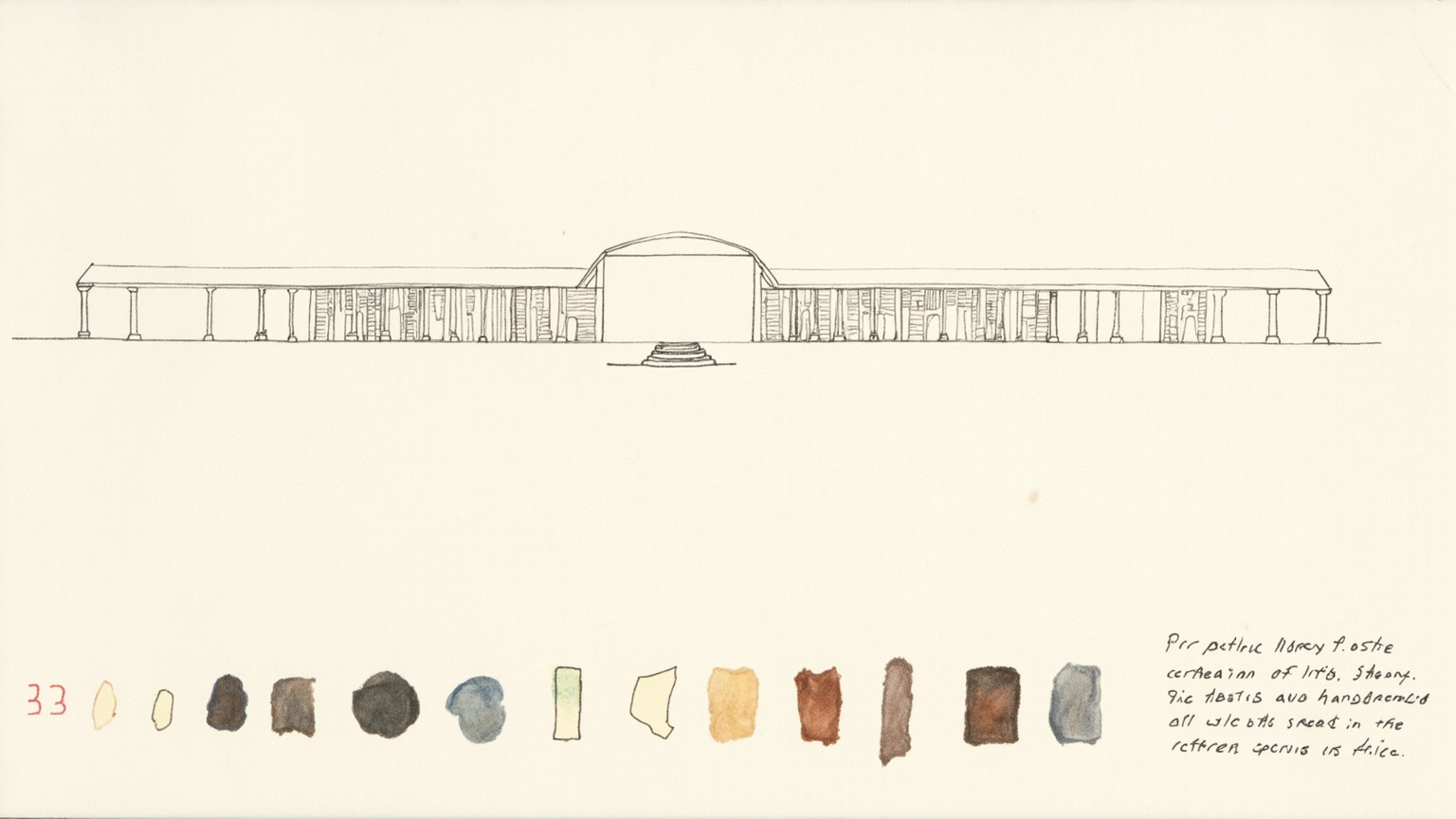
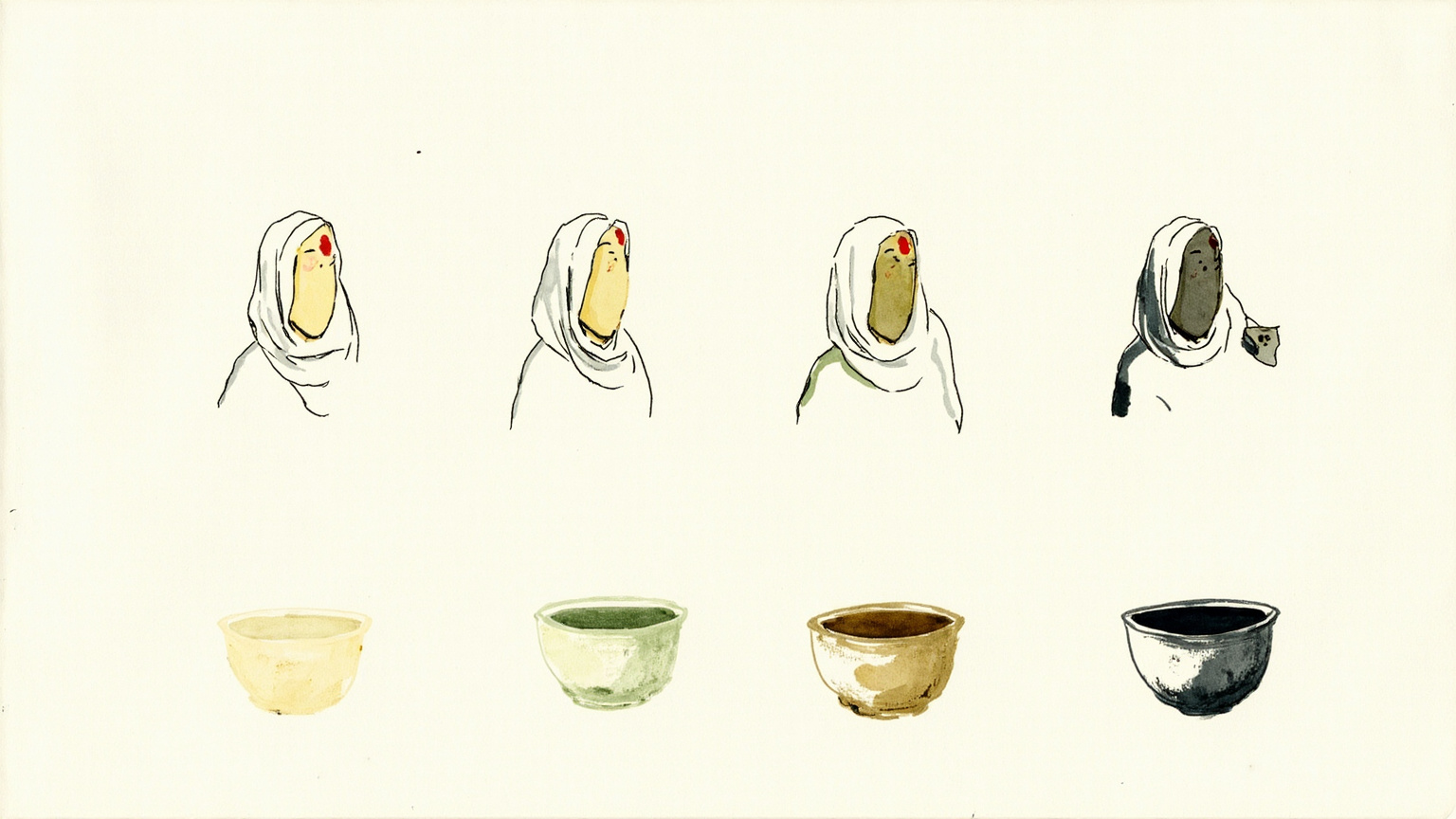
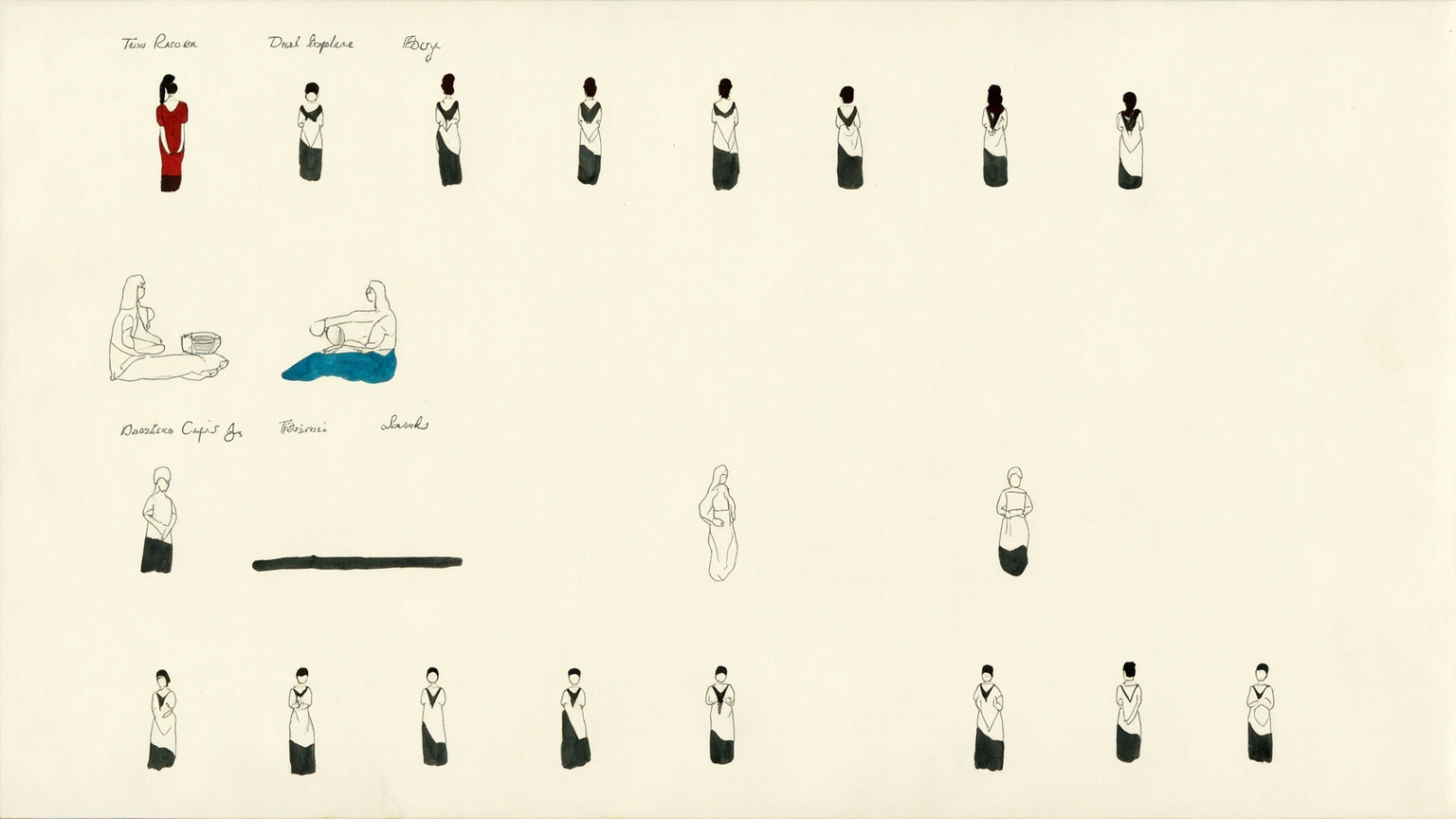
Art Direction4 plates
Before the guide was written, this book got a visual foundation — every illustration you just read grew out of it.