The Cold Mountain Poems of Han Shan · Companion Guide
寒山诗
一个没有履历的人,把六百首诗刻进浙东天台山,又被垮掉的一代从石壁里挖了出来。
The Man on the Rock Face
Words are carved into the rock face, but no one owns them completely. No name, no birth or death dates, no home village. What survives is a name, Hanshan, and the claim that he wrote more than six hundred poems, of which roughly three hundred remain today.
This isn't a mystery novel. Hanshan never intended to leave a tidy biography. He carved his lines into stone and let himself dissolve into the layered cliffs, white clouds, and cold streams of Mount Tiantai in eastern Zhejiang. The lines that lasted longest are exactly the ones no signature ever claimed.
What Kind of Poet Was He
Hanshan was active roughly in the middle to late Tang dynasty, part recluse, part Chan poet. His lines run from three characters to five to seven, and the language is as plain as someone talking to your face, a sharp break from the elegant, allusive style fashionable at the time.
Hu Shih later named him one of three vernacular poets of the Tang, and his work was eventually collected into the Complete Tang Poems. He's remembered not only for the Chan flavor but for daring to put everyday speech, rough mountain scenery, and biting social observation straight into verse. In his hands, a poem didn't need to get dressed up first.
His poems were compiled into three scrolls sometime around the Yuanhe era, though a good number were lost along the way. Most carry no title and were written straight onto rock; claims that he also inscribed trees and farmhouse walls don't hold up well, so don't mistake every surface for his notebook.
Few Characters, Clear Relationships
Hanshan is the only figure who stays on the page. He lived at Cold Cliff on Mount Tiantai, took the name Hanshan for himself, and wanted distance from other people, quiet, and freedom from the grip of fame and gain. There was nothing decorative about the reclusion; it was simply how he spent his days.
He'd come down the mountain now and then to Guoqing Temple, helping out in the kitchen. Shide was the young monk who did odd jobs there, Fenggan the Chan master; the three of them really did know each other, and later generations lumped them together as the Three Recluses of Guoqing. The poems themselves never put Shide on the page directly; the exchanges and legends of divine incarnation that circulate about him belong to a separate, later tradition.
Cold Cliff Is a State of Mind, Not a View
The lens settles on Hanshan first. Name and origin both left blank, just a gaunt old man walking into Cold Cliff on Mount Tiantai in eastern Zhejiang. Layered rock closes off the view; white clouds drift slowly away from the mountainside. The trick here is letting the setting write the character's biography: before he says a word, solitude has already moved into the cracks in the stone.
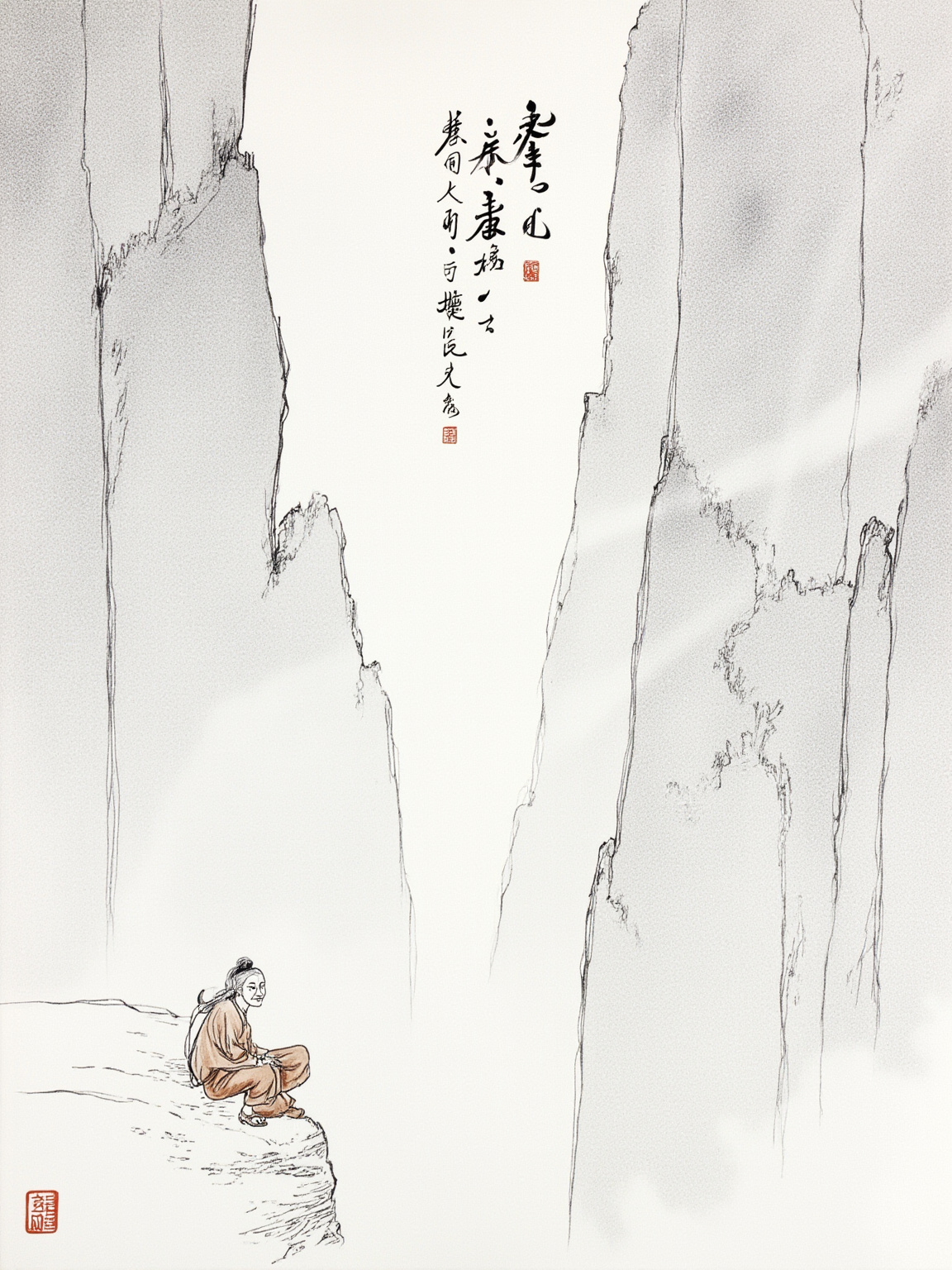
Cold Mountain is deep; it suits my heart. Pure white stone — never gold.
寒山深,称我心。纯白石,勿黄金。
金句 · 三字诗其四
Hanshan writes his poems right onto the rock, no signature, no title. The words go into the mountain almost casually, and then wind, moss, and time take over. It is a way of writing that pulls the poem out of the scroll: the work doesn't wait for some authority to vouch for it, the cut in the stone is proof enough that it existed.
When he writes the mountain's colors, he almost never reaches for heavy ink. White stone, the disc of the moon, dark pines, hanging vines, a cold stream: they appear one at a time, the palette staying cool throughout while the composition keeps emptying out. What makes Hanshan good is that he rarely announces a mood for us; he just lets the empty mountain clear a space where a mood could sit.
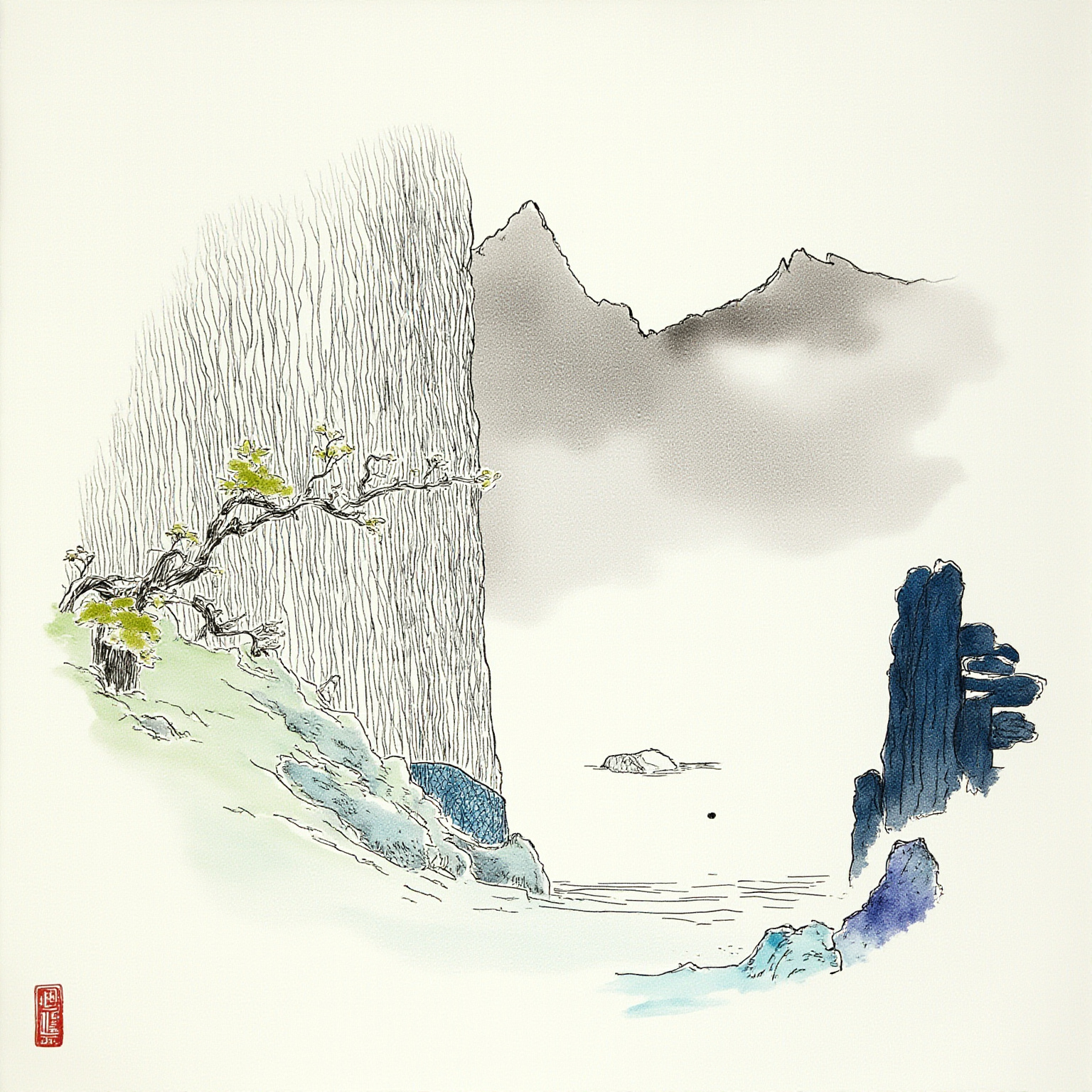
On the peak of Cold Moon the moon hangs alone; it lights up the empty sky and nothing at all.
寒山顶上月轮孤,照见晴空一物无。
金句 · 寒山诗
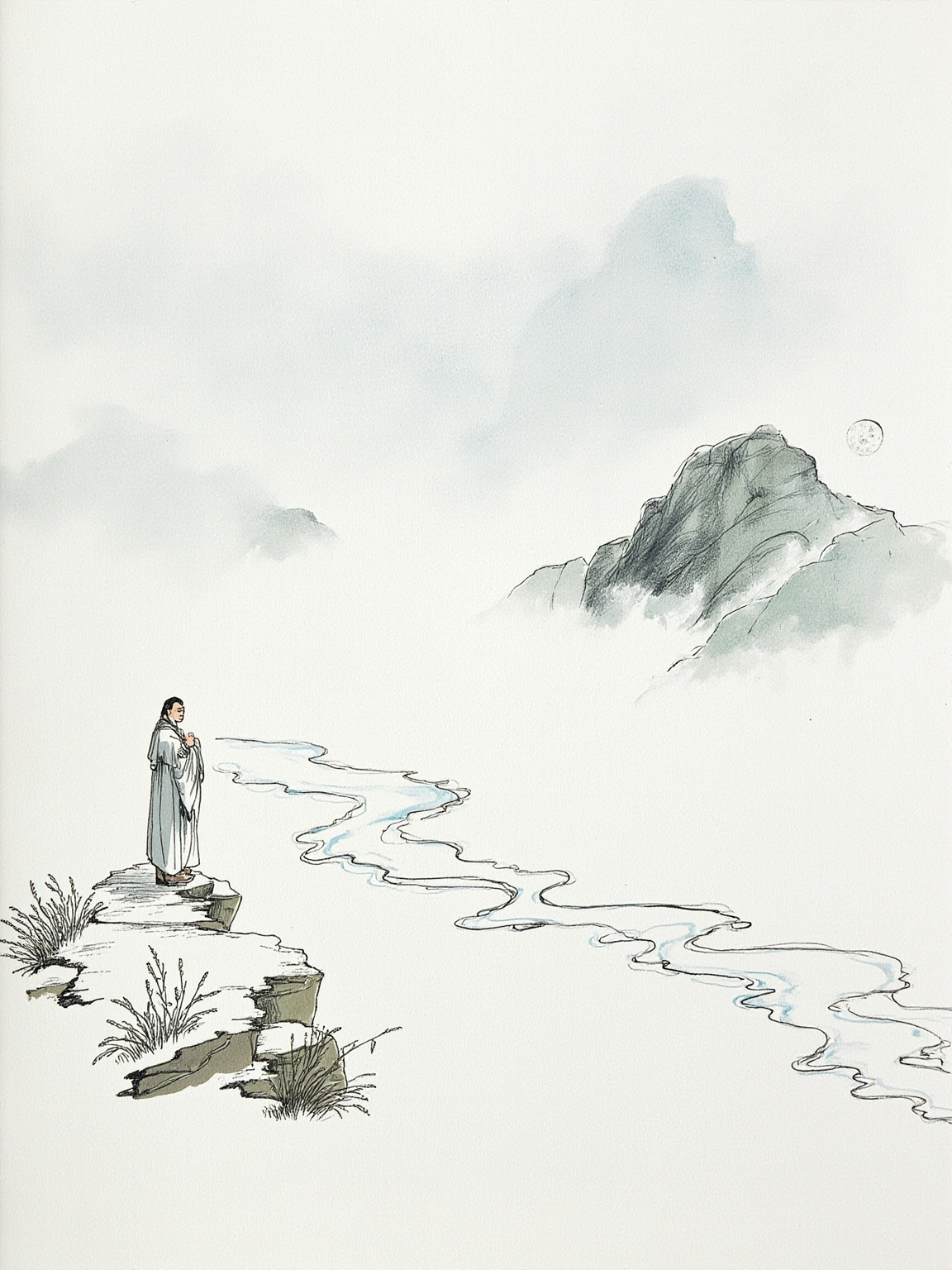
He sat at Cold Cliff for thirty years. In that time the characters cut into stone must have worn smooth more than once, pine bark split and closed over again, the moon crossed the empty mountain who knows how many times. Hanshan handed his time over to the mountain and became part of it himself: the man sitting motionless, the flaking moss, the half-buried carving, the three blur together until you can't say which one is doing the watching.
Turn Around, and the Valley Is Full of People Fighting Over Bones
The lens follows Hanshan's gaze back down the mountain. A poor scholar who failed the exams walks past a food stall, afraid to even look at it; a drifting student drags broken shoes along Zhuque Street; officials skim money, monks fake piety, and the crowd closes in like dogs around a bone. The satire lands hard, but it never scolds from a height.
He often starts from small, ordinary things. Rank, food, worn-out shoes, a bone, objects everyone has seen, and turns them over to expose the wanting underneath. The plain language reads easily, and it also pulls the rug out from under you: whatever you happen to be chasing, he sets it gently on the ground, and suddenly the whole room can see how absurd it looks.
I saw a pack of a hundred dogs, each branded, all snarling for the bone.
我见百十狗,标号争骨头。
金句 · 讥世诗
Hanshan's body stayed on the cliff, but his attention never left the world below. He mocks greed and delusion and also urges people to turn back, mixing a Confucian wish to reform society with a Buddhist and Daoist pull toward withdrawal. Withdrawal doesn't mean closing your eyes; what he writes is a pair of eyes that saw the murky world too clearly and simply turned away.
The Ice Melts. Is the Water Still There
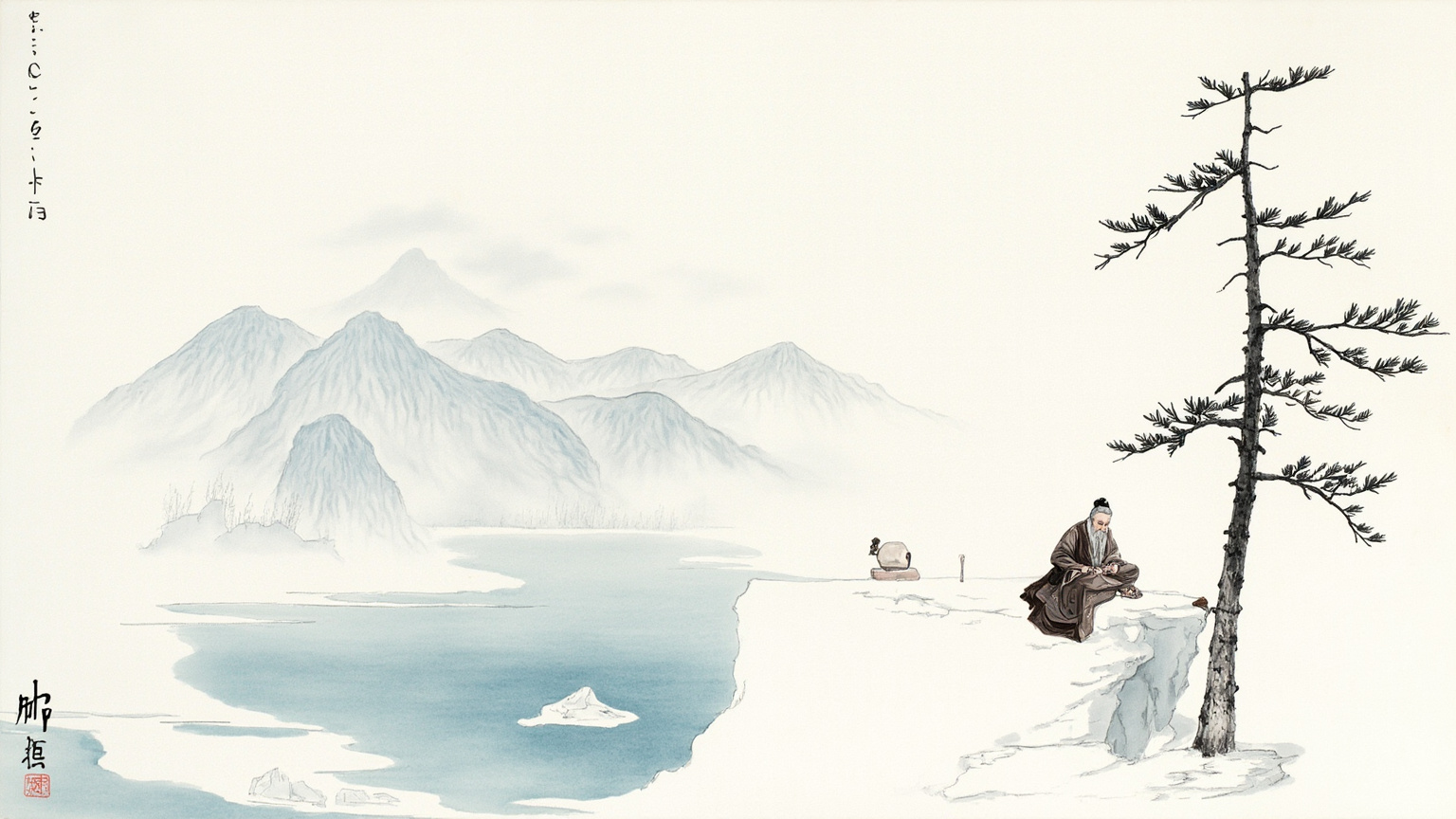
Once the mountain scenery has settled into place, the poems suddenly put life and death right in front of you. Hanshan compares it to water freezing into ice and ice melting back into water: the form keeps changing while the substance stays bound together. The point isn't mystical, but it's cold to the touch: cling to whatever state you're in right now, and that's usually where the suffering starts.
If you would know life and death, just compare them to water and ice. Water freezes and becomes ice; ice melts and again is water.
欲识生死譬,且将冰水比。水结即成冰,冰消返成水。
金句 · 水喻诗
Advice like this can drift away if it stays abstract. Hanshan insists on speaking through concrete change instead: water is water, ice is ice, and everyone has watched one turn into the other. He never paints impermanence as something to fear, and he won't let the reader sink into sadness either. More to the point, once you see clearly that everything is moving, you don't have to grip the temporary so hard.
His path to understanding never relies on mystical posturing. White stone, hunger and cold, sitting alone, ice and water: any of them can open a door to sudden insight. The Chan spirit sits in how he looks at things. The clearer the mountain gets, the less it's about how beautiful the world can look, and the more it's about leaving the mind's chasing noise nowhere left to hide.
From the Temple Kitchen to San Francisco
Hanshan didn't seal himself off on the mountain. He was a regular at the Guoqing Temple kitchen, keeping company with Fenggan and Shide, so solitude on the mountain and friendship down among people were never two separate pictures. They come from the same choice: staying close to a simple life while keeping distance from the machinery of rank and reputation.
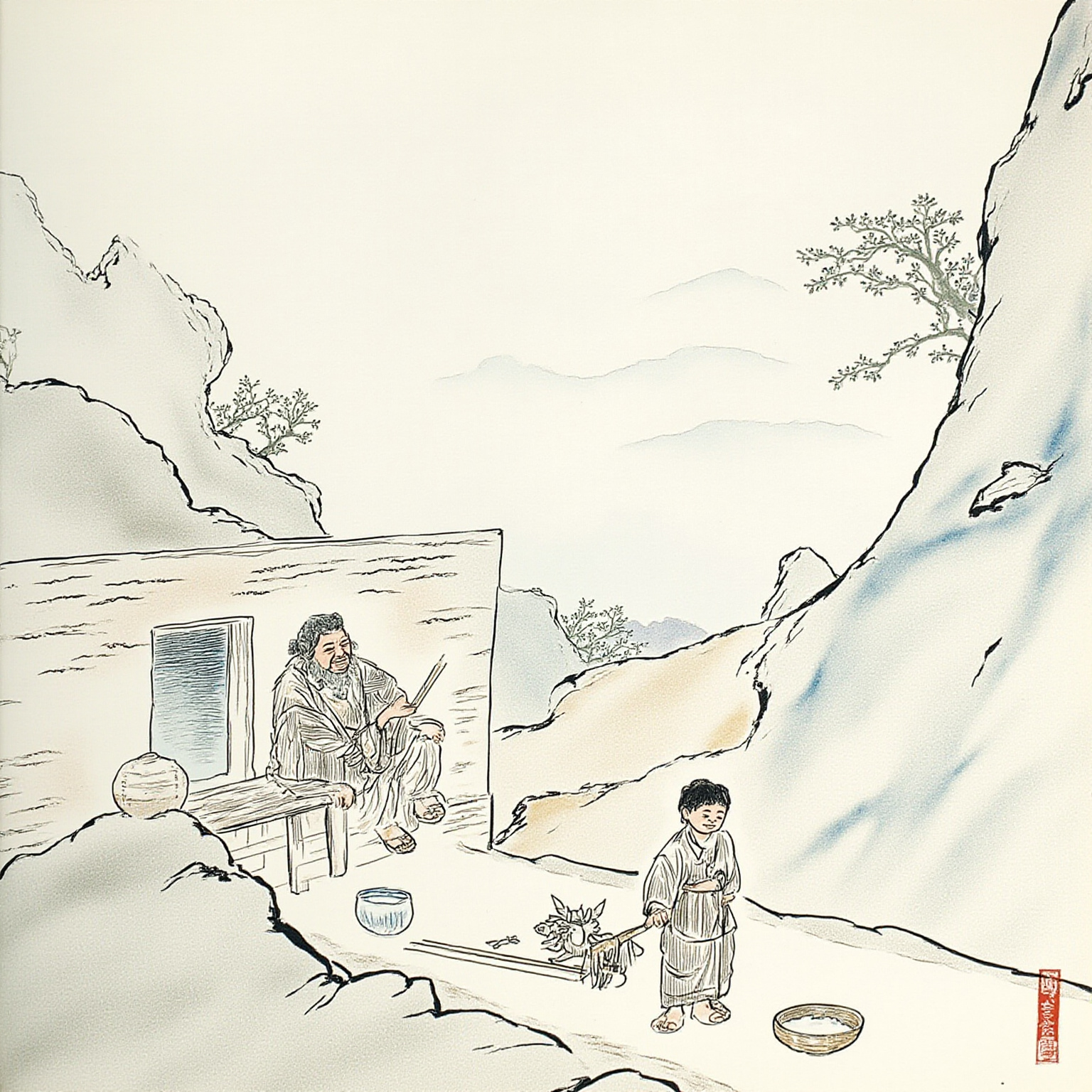
For thirty years I have kept my seat on Cold Mountain; once seated, I forgot the way home.
一向寒山坐,淹留三十年。
金句 · 寒山诗
Shide and Fenggan also keep later imagination in check. The three of them aren't interchangeable good-luck charms, and they're certainly not mad monks arranged for a painting. Hanshan is a specific, austere person, and his friendships were real, restrained, and left behind only a few brief lines.
These poems eventually crossed the language barrier. Gary Snyder's modern English translations, among others, carried Hanshan to Europe and America, and the Beat Generation recognized something of their own in him: a pull away from the crowd, a distrust of institutions, a hunger for freedom. A man who wrote on rock in the mountains ended up meeting San Francisco's Zen houses and the life of the open road.
Why He's Still Worth Reading Today
Hanshan first widened what vernacular poetry could do. He never leans on allusion to overpower the reader, never hides his meaning behind ornate diction. Plain is not the same as shallow: the lines are short and the action is clear, and that is exactly why the satire and the Chan insight land so solidly.
The other lesson he leaves behind is that the author can exit and the work doesn't have to follow him out. The emptier the name, the easier it is for a line to become the reader's own experience. Anyone still running today after certificates, titles, ratings, and the next thing to win will, stepping into these three hundred poems, run into a man who dared to want less.
Hanshan writes mountain life in rough, spoken language, but he never paints the mountain as a hideout. Cold Cliff is a place on the map and a state of mind at once; the world below is a magnifying glass for desire, shame, and greed. The two sides reflect each other, so what you get isn't just coolness, it comes with a small, clarifying sting.
Hanshan erased his own name, and left the door open for everyone who ever read him.
You Know the Story. Now What Should You Actually Read
A guide like this can hand you a route, but it can't replace the short, sudden turns inside the actual poems. Reading Hanshan, you'll hit a line that suddenly vaults over a cliff edge, and a jolt of language nearly too rough to call polished. The rock-face silences, the echo when a line lands, none of that stays with you unless you read the poems themselves, one at a time.
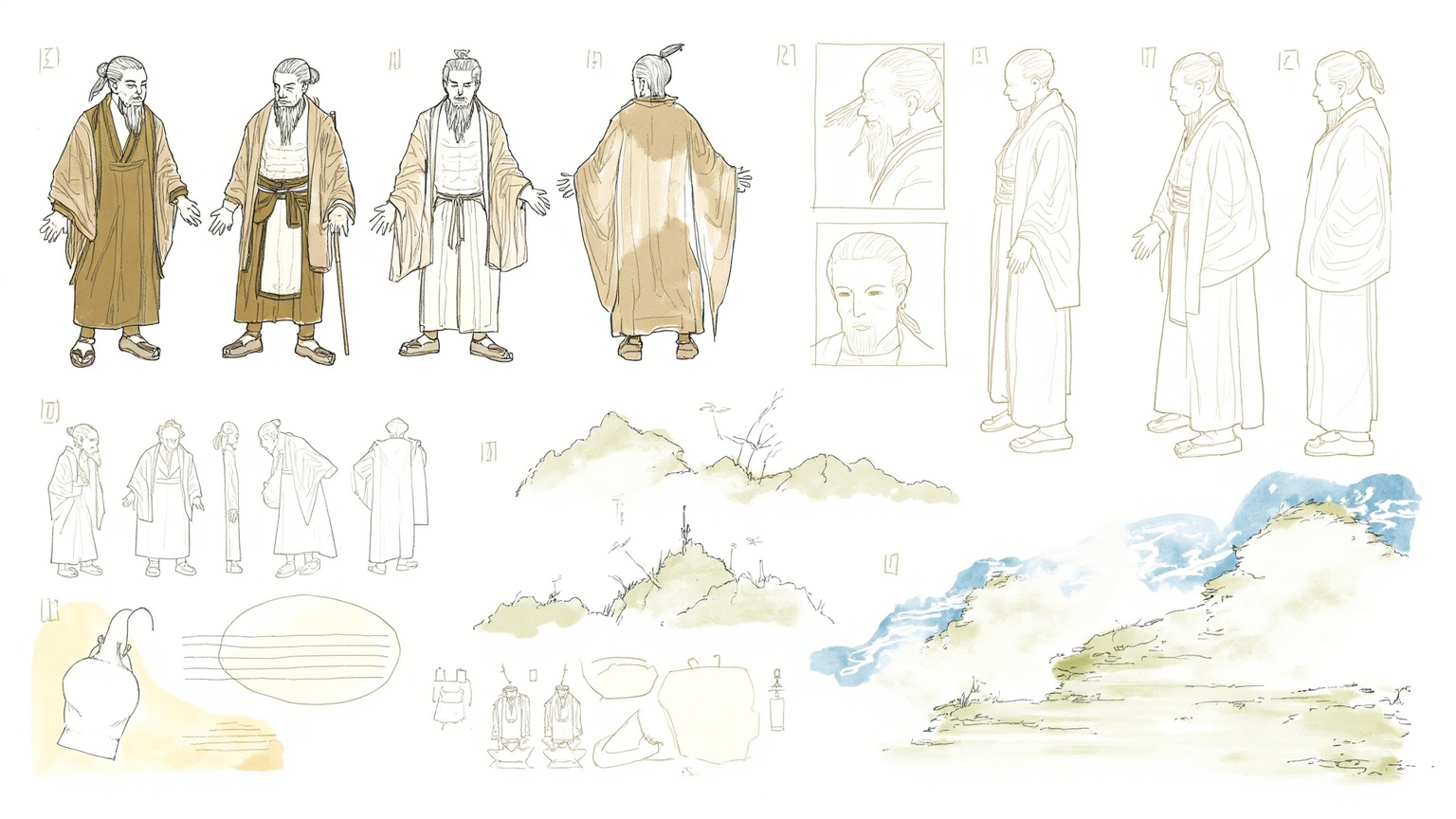
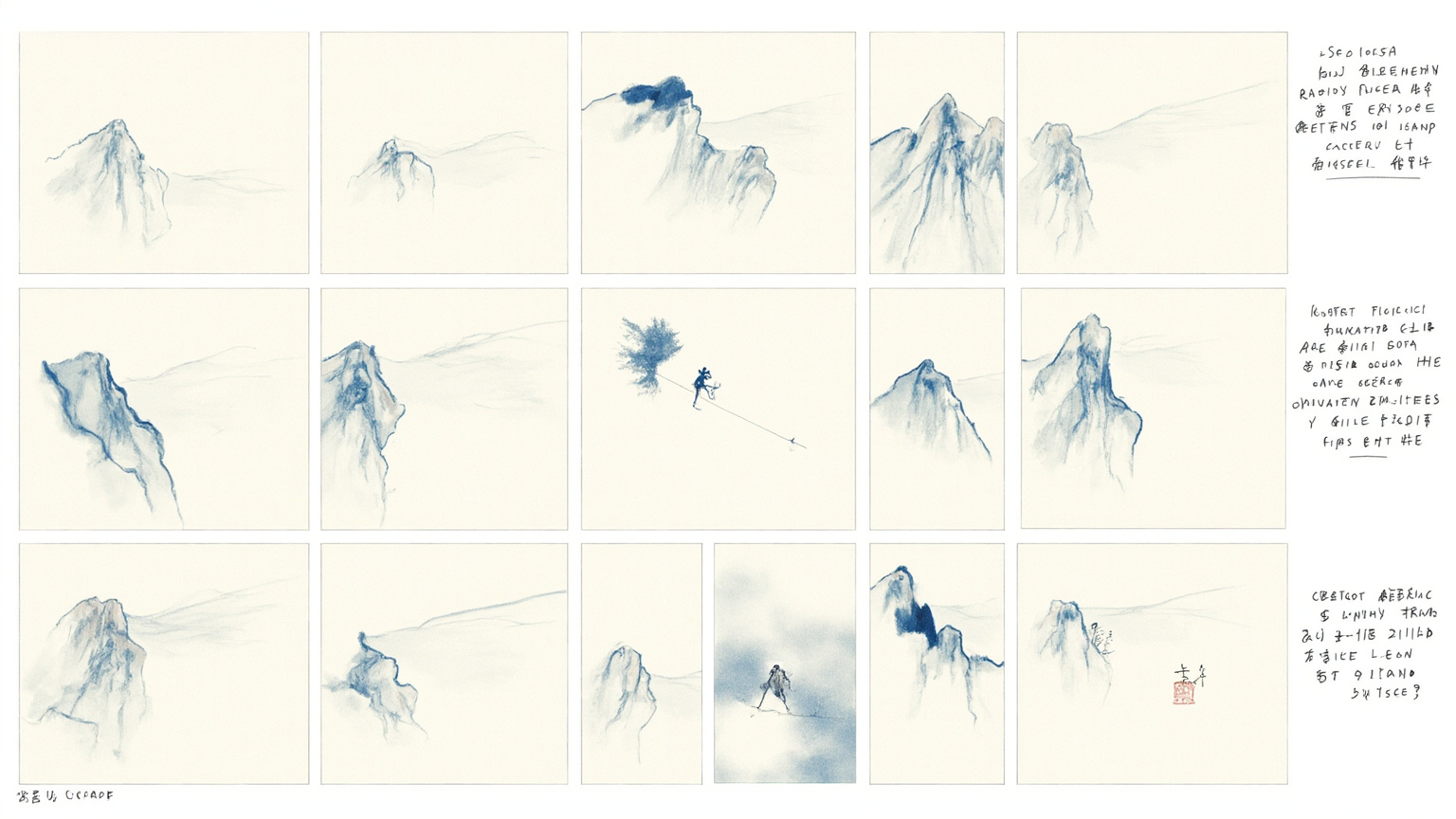
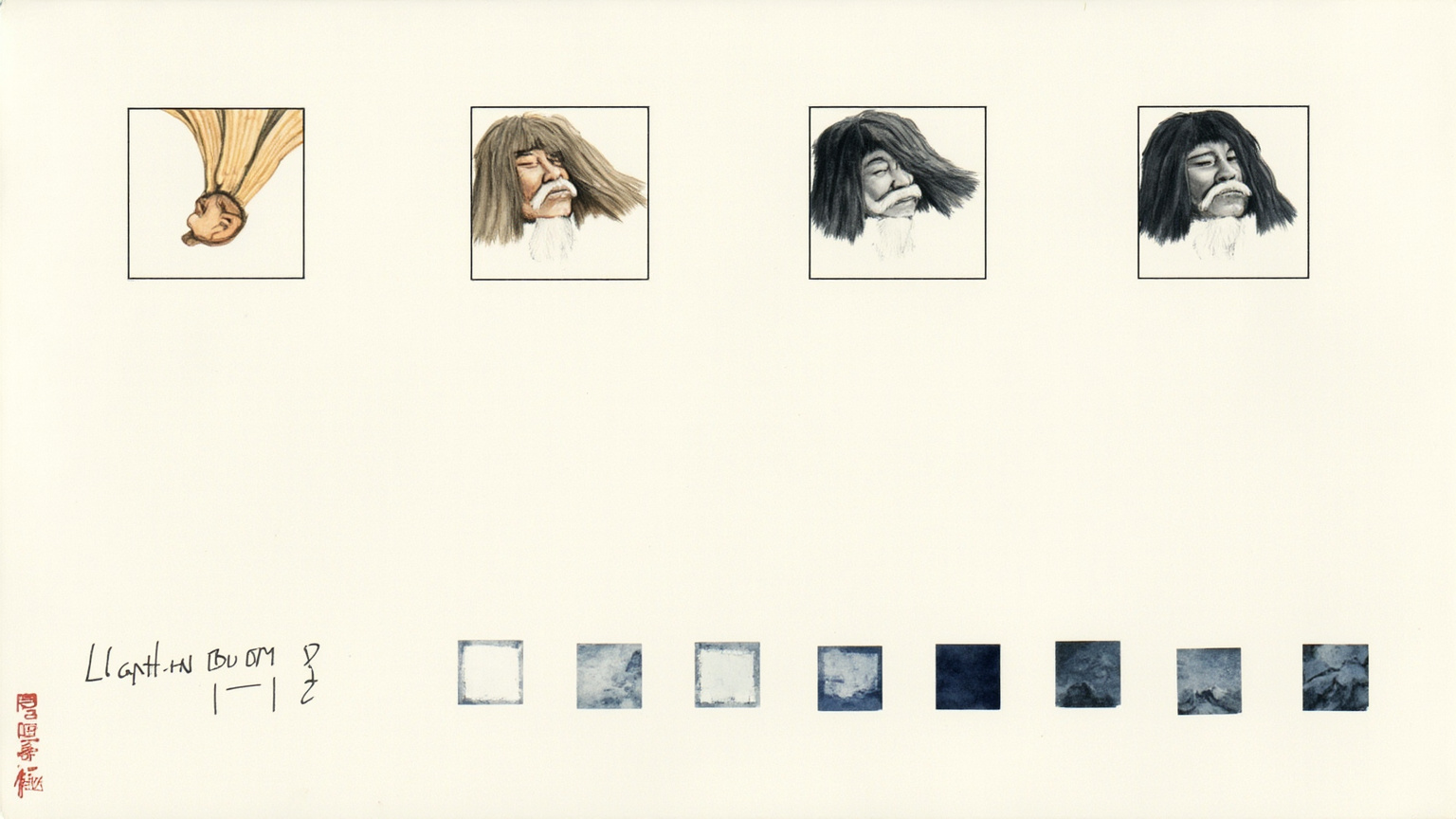
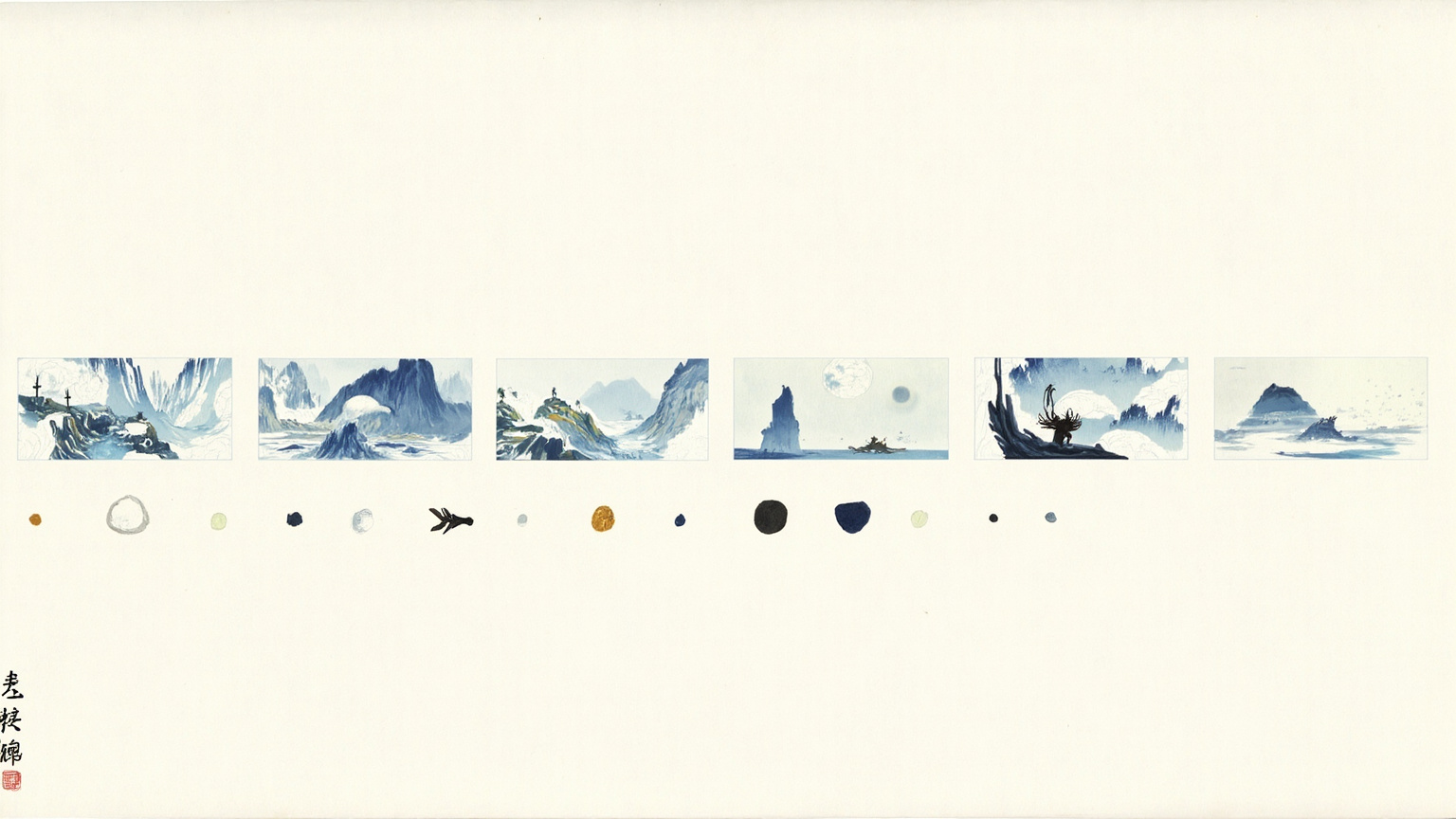
Art Direction4 plates
Before the guide was written, this book got a visual foundation — every illustration you just read grew out of it.