Historia verdadera de la conquista de la Nueva España (The True History of the Conquest of New Spain) · Companion Guide
征服新西班牙信史
一个八十四岁的老兵在烛下替那些被历史抹掉名字的普通士兵立传——同时写下一座再也回不去的湖上花园的挽歌
At eighty-four, he sat down at his desk
A city built on a lake, tied to the shore by three stone causeways and a handful of drawbridges. This is Tenochtitlan in 1521 — the Spaniards called it Mexico. Fifty years later, an old Spanish soldier sat at a table in Antigua, Guatemala, and wrote that name down with a shaking hand. He said he meant to record what he had seen with his own eyes. He was eighty-four.
What kind of book this is
A conquest memoir written from decades of memory by an ordinary Spanish soldier in the mid-sixteenth century. He finished the manuscript in 1568; it wasn't printed until 1632, half a century after his death. Bernal Díaz del Castillo was no commander, no friar, no royal envoy. From start to finish he was simply a soldier who marched with Cortés from the Gulf coast to the city on the lake. In short: this is where Latin American chronicle literature begins, and the only full-length eyewitness account of the conquest written straight through by a common soldier.
Why did he write it? Because Gómara, Cortés's personal biographer, wrote a history that handed all the glory to the commander and erased the soldiers who had done the fighting. Bernal couldn't stand it — he says outright that Cortés took all the credit and buried what the men had earned. Writing the book was his way of claiming, on behalf of the several hundred men who never got their names down anywhere, a share of what they had seen with their own eyes. The result carries a soldier's anger at his commander, and an old man's ache for his dead comrades, in equal measure.
Who's who, and who fought whom
On one side, the Spaniards. Commander Hernán Cortés led the expedition against the Aztecs starting in 1519. Doña Marina, an interpreter and guide of native birth, spoke for the Spaniards, drew their maps, and read the courts they walked into — Bernal singles her out, along with Gonzalo Guerrero, as one of the book's strange, memorable figures. On the other side, the Aztecs. Emperor Montezuma II, who took the throne in 1502, comes across in these pages as indecisive, a man caught flat-footed by strangers he didn't know how to handle. Cuauhtémoc, the last ruler to hold the city, was captured when it fell and tortured on Cortés's order before being executed, a decision Bernal condemns outright. And the narrator himself, Bernal, is the soldier who marched with the fleet from the Veracruz coast, crossed the three causeways, and stood at the end among the ruins of the city on the lake.
The world of the story is sixteenth-century Central America: the Yucatán coast, the humid jungles and volcanic slopes along the Gulf, and finally the Valley of Mexico, which from the surrounding hills looked like a sheet of blue-green water. At its center sat Tenochtitlan, tied to the mainland by causeways. Rooftops doubled as battle platforms, canoes crowded the canals, and pyramid temples caught the sun. It was a city the Spaniards had never imagined, and the one they were fated to destroy.
An old soldier picks up the pen: the man who wanted to write a true history
Bernal's opening reads less like a soldier's memoir than a declaration of war. He lists the campaigns he fought — Darién, Cuba, two expeditions to Yucatán — and then says: those who give Cortés all the credit have no right to speak for us. He means to set down what he and the others actually saw. A common soldier's first-person plural, we, plants itself right there on the page. Craft note: the book never once takes the commander's all-seeing view. It stays with the I who eats, marches, takes a blade, and grabs for gold alongside the rest of the column. That point of view is itself a political stance.
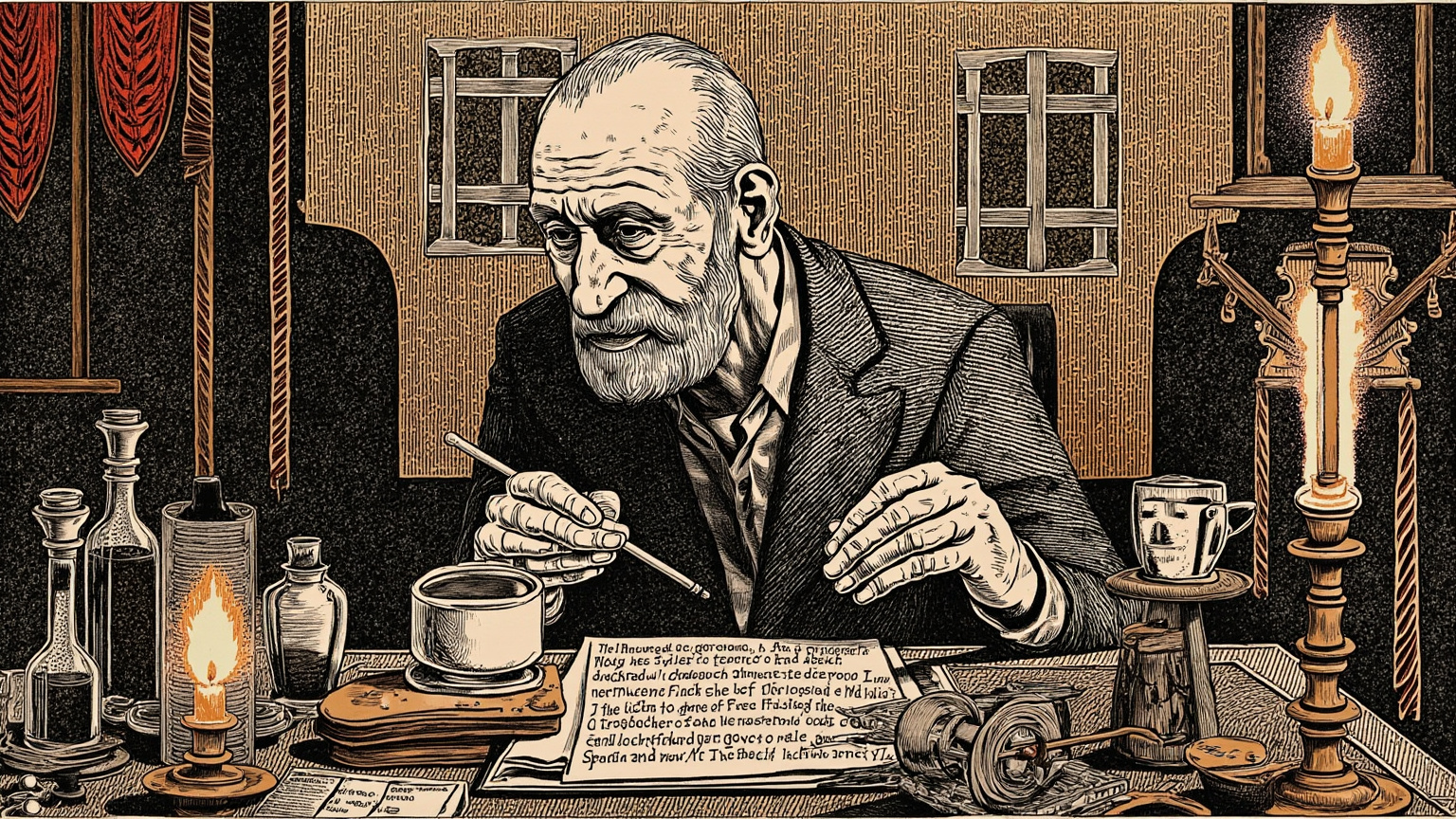
To Gómara's great pompous words, inflated to the right and the left, I answer with the truth of all that I saw with my own eyes.
我要用亲眼所见的一切真相,去回答戈马拉那些左右逢源的浮华大词。
金句 · 序章 · 老兵起笔
Two false starts: ill omens off the Yucatán coast
Córdoba's fleet in 1517 and Grijalva's in 1518 were the Spaniards' first two feelers along Mexico's eastern coast. Bernal sailed on both. Among the limestone cliffs and mangroves of the Yucatán, the Spaniards saw stone pyramids for the first time, were driven back for the first time by warriors in feathered war dress, took their first captives, and first heard the name Gonzalo Guerrero. This fellow Spaniard had been taken by the Indians years before, had married a local woman, had his ears pierced and his face tattooed, and had become, by every measure, a man of another people. Bernal drops this story into the book on its own, like a splinter, to remind later readers that conquest, from the very start, had men in it who chose to stay.
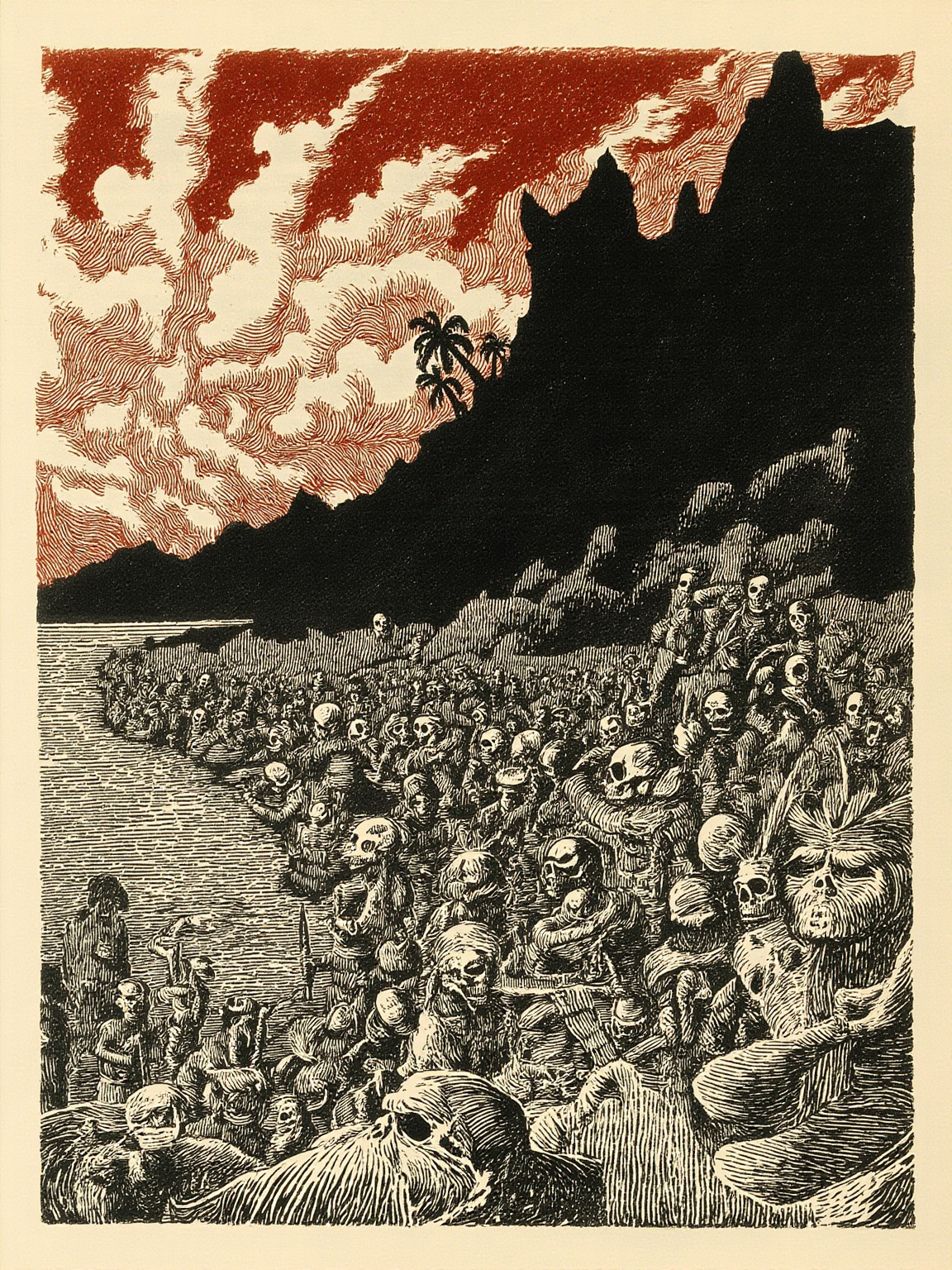
We all came to these lands with the sole desire to grow rich and win honor.
我们所有的人,都是为了寻找财富而来到这片疆土的。
金句 · 第3章 · 尤卡坦试航
Cortés arrives: scuttling ships, pushing west, gathering allies
Cortés's fleet reached the Veracruz coast on the Gulf of Mexico in 1519. The first thing he did was scuttle — or burn — his own ships, a detail Bernal records with a soldier's cold eye. With the retreat gone, the men had nowhere to go but forward. Craft note: Bernal doesn't dress Cortés up as a stroke-of-genius commander the way Gómara does; he writes the scuttling flat and almost chilling, the act of a man willing to strand several hundred others along with himself. Ships gone, the Spaniards pushed west along the coast and the mountain spine, allying along the way with peoples the Aztecs had bullied for years, riding old native grudges step by step toward the capital. Doña Marina was there for all of it, interpreter and guide — her mouth spoke for the Spaniards, her mind read the courts they were walking into.
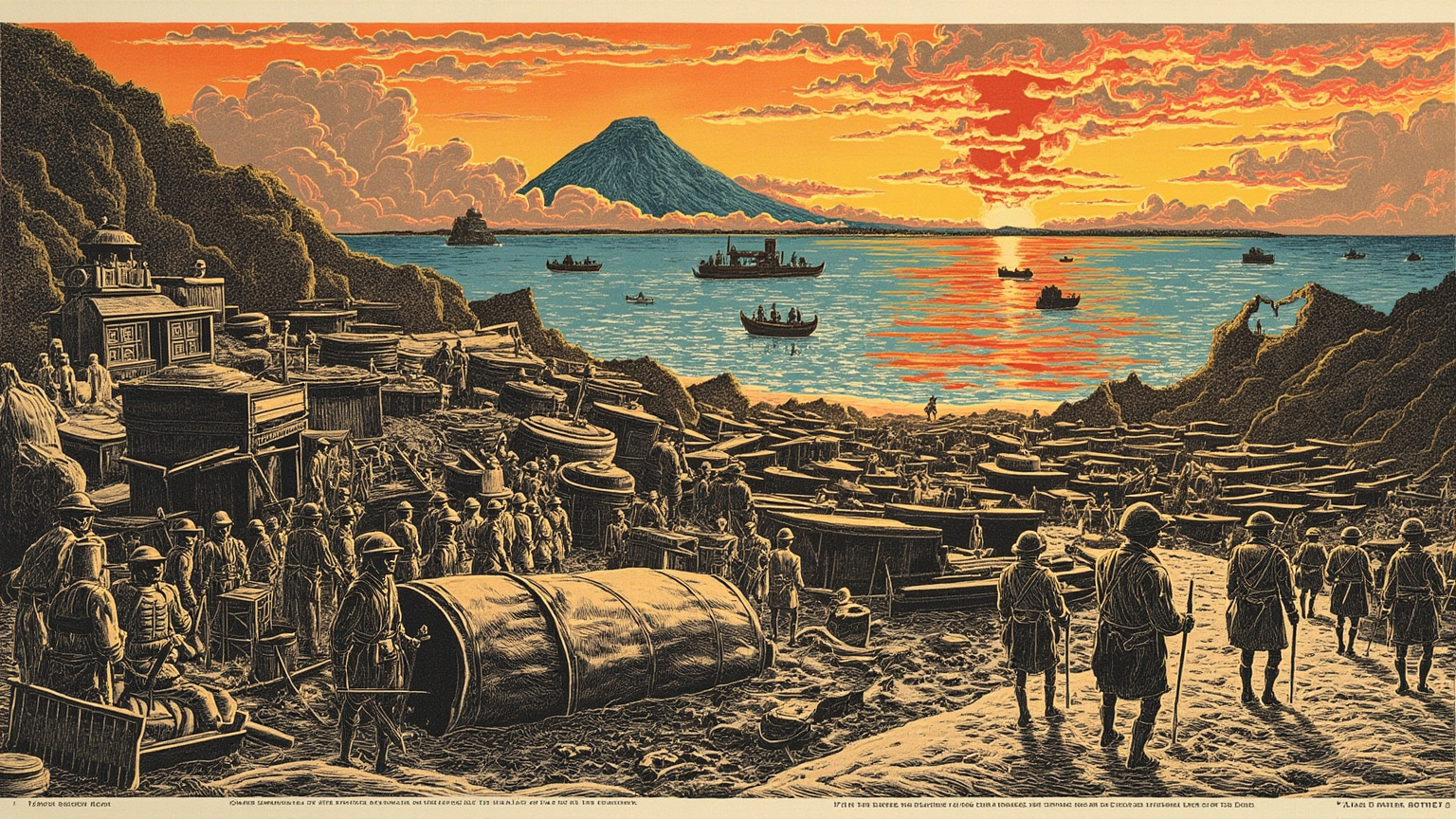
We scuttled the ships and committed ourselves to death or victory.
我们凿沉了舰队,不是死,就是赢。
金句 · 第7章 · 凿船与西进
The city on the lake: a garden of the world, and its emperor
Tenochtitlan left every Spaniard speechless. It sat in the middle of the lake, connected to shore by drawbridges, its causeways paved with stone and crowded with traffic, its rooftops fitted out as battle platforms, canoes threading the canals, market stalls piled with gold, feathers, cloth, cacao. Bernal calls it a garden of the world. Craft note: the wonder here runs two levels deep. On the surface, it's an old soldier who had never seen anything like it. Underneath, it's the vertigo of a man from the dry Spanish plateau meeting a city on a lake for the first time in his life. Montezuma II sits at the center of it all. Bernal writes him as a man who could neither hold his ground nor bring himself to fight: comets, crates washing up on the shore, one bad omen after another, and he neither turned the Spaniards back at his borders nor stopped them on the lake, and in the end walked them into his own palace.
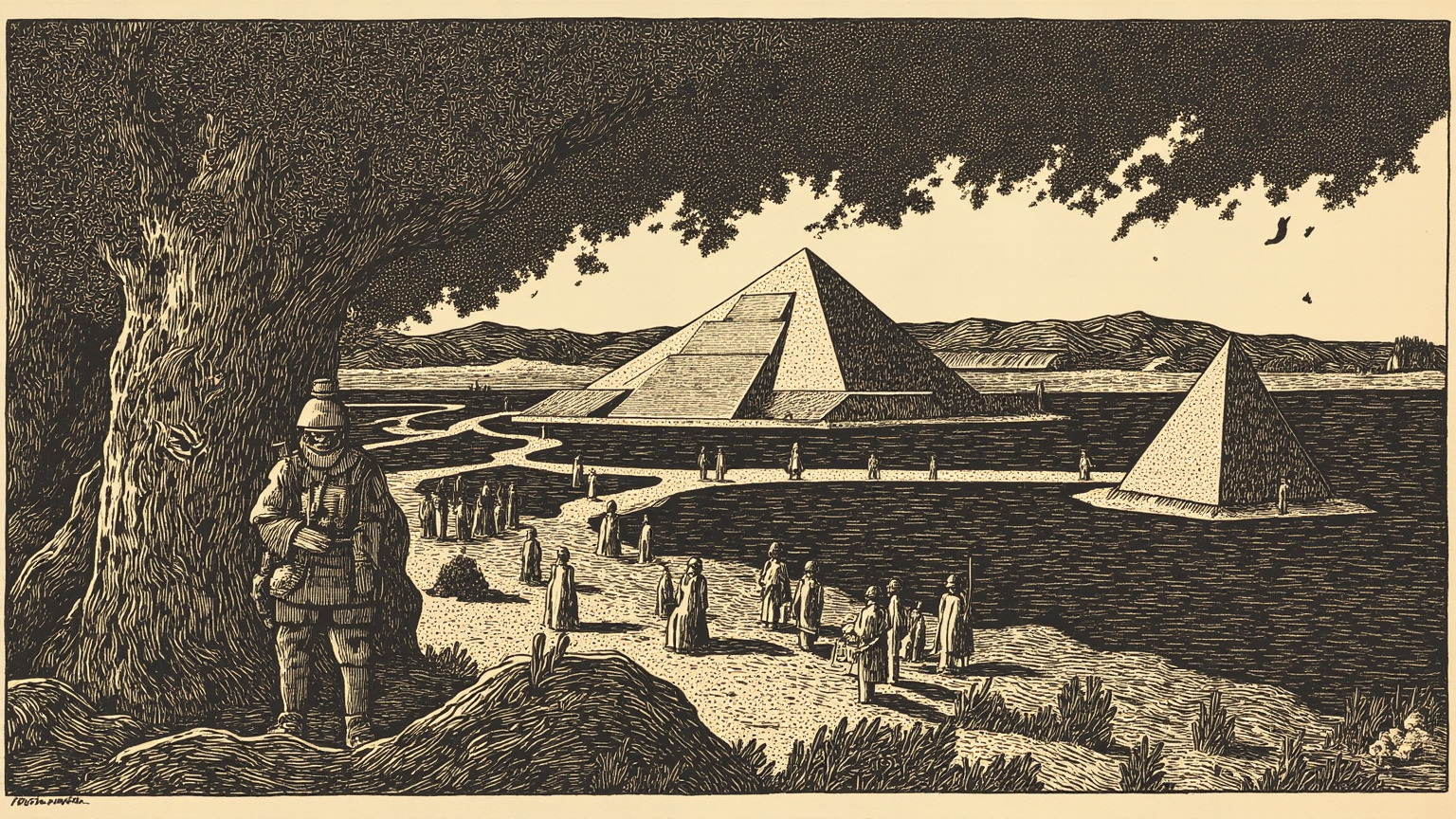
Gazing at all this splendor, we said it was like the enchanted things in the book of Amadís.
望着这一切奇景,我们都说,像极了阿马迪斯传奇里那些被魔法点化的景致。
金句 · 第13章 · 湖上都城
And in that same passage, Bernal writes another line: that they had all come to this land to seek riches, praising the city and confessing the motive in the same breath. This is what makes the book so hard to sit still with: wonder and greed are the same man's two eyes.
Retreat in the rain: the city turns
The situation turned overnight — accounts differ on exactly how, and Bernal's version doesn't quite match other sources, but the scene he sets down is clear enough: the Spaniards trapped inside the city on the lake, the palace's gold looted, blades flashing in the streets. On a rainy night, they fled the causeways in a scramble. Wet stone underfoot, war horns and pursuers behind them. Craft note: Bernal writes it with the immediacy of I was there, turning the retreat into a nightmare in the mud rather than the decisive-commander heroics Gómara would have made of it. This is how a soldier writes a defeat.
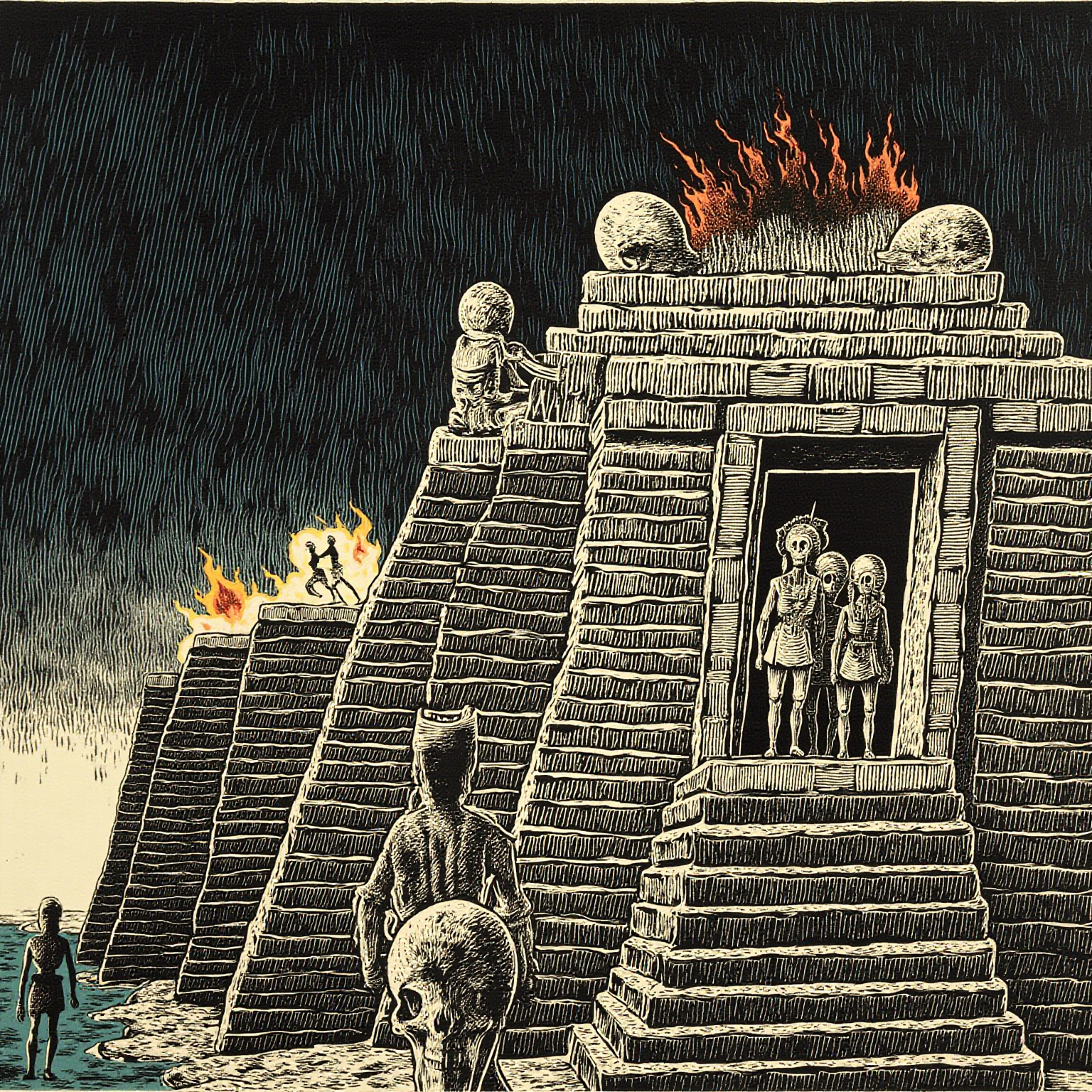
All that I saw with my own eyes — the garden of this world — none of it remains now.
我亲眼看见的一切,这座世界的花园,如今什么都不剩了。
金句 · 第17章 · 夜雨撤出
Siege and fall: rooftop platforms, canoes, ruins
The retreat was only halftime. The Spaniards came back with their native allies, this time for a siege. Causeways were cut, drawbridges raised, canoes intercepted anyone on the lake, and the rooftop platforms became a meat grinder. Bernal writes the siege with no commander's overview at all, just a soldier's view: three nights without sleep, corn cakes for food, flattened on a roof dodging arrows. Finally, on a day in 1521, Tenochtitlan fell. Cuauhtémoc, the last man to hold the city, was captured — Cortés had him tortured to force out the location of the treasury, and eventually executed. Bernal singles this out and condemns it in plain terms: this was the commander's own wrongdoing. It's the loudest no a soldier says to his commander anywhere in the book.
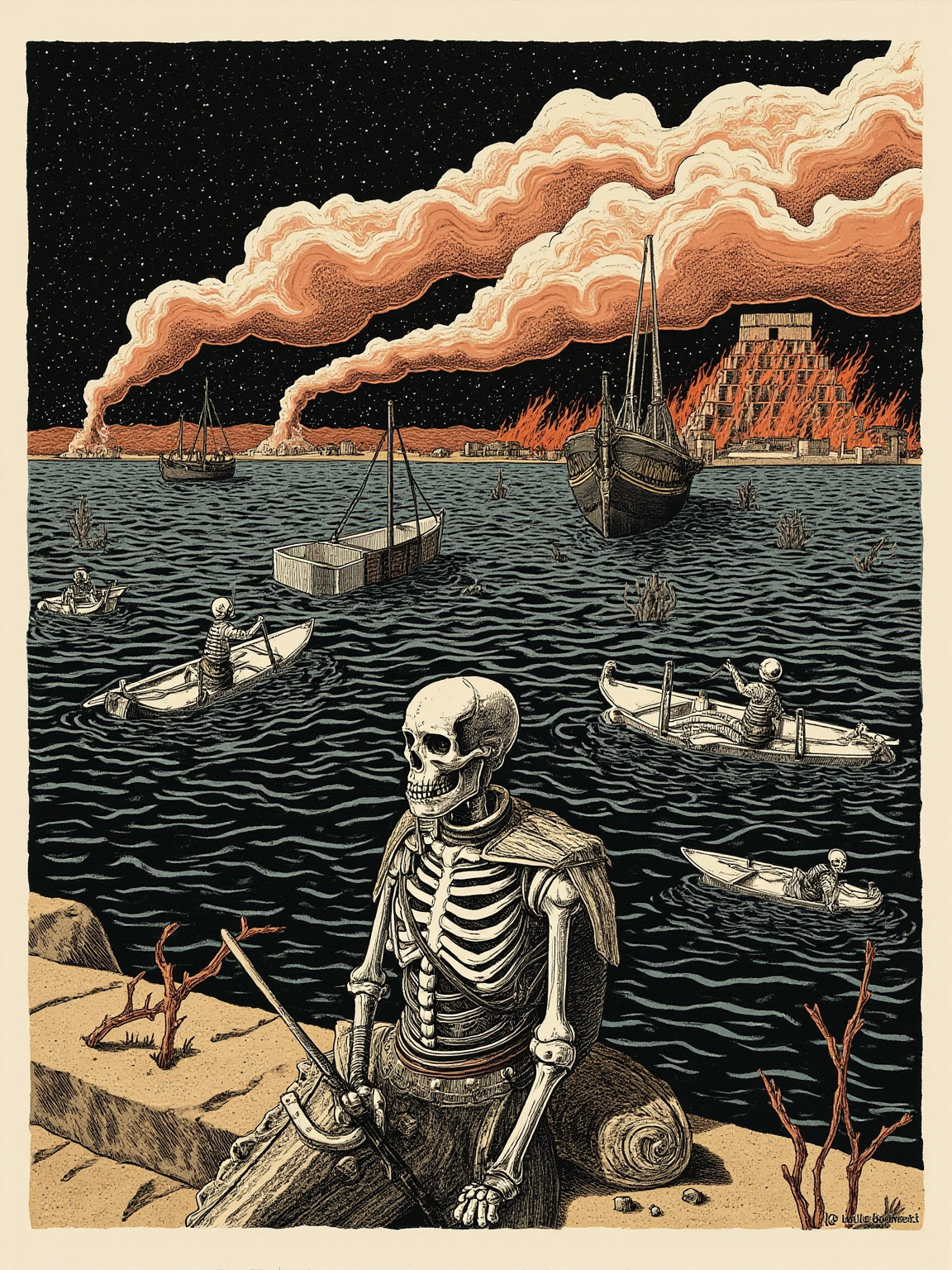
And even now, after writing this True History, I have no rest, for the night seems long.
就是写完了这部信史,我仍不得安歇——夜还长得很呢。
金句 · 第19章 · 围城陷落
After the fall, a kind of grief
The city was wrecked, the temples burned, the canoes scattered. Bernal writes that all of it, the garden of the world he had seen with his own eyes, was now gone entirely. Craft note: this from a man who had a hand in destroying it, writing fifty years on. There's a soldier's pride in it and an old man's grief in equal measure. By the end, this conquest memoir reads less like a victory book than like an old soldier standing in a battlefield he helped hollow out himself. It's a note Gómara's commander's biography could never strike.
What the book is really about
On the surface it's a history of conquest: how the Spaniards pushed inland from the Veracruz coast and took the city on the lake through alliance and betrayal. But its real subject is who has the right to tell the story. Bernal wrote the book to give a record to the several hundred common soldiers history had left nameless, and that choice is where Latin American chronicle writing first claims the eyewitness from within as its natural voice. In short: this is the soldier's true history rebelling against the commander's official one.
The book has a second face too. In Bernal's hands, Tenochtitlan's lake light, its causeways, its canoes and temples, come out written like a dream that can never be gone back to. Wonder and greed sit side by side in the same man without contradiction: he admits they had all come for gold, and he writes that the garden of the world now has nothing left of it. So the conquest account doubles as an elegy for a lost city. The first time I read that grief in the closing pages, I went back and reread the earlier chapters where he praises the lake — the same man, fifty years apart, writing about the same city.
In literary history, this book also opens the Latin American chronicle tradition: fresh, detailed narration, scenes built for readability, and deliberately inserted anecdotes — Gonzalo Guerrero, Doña Marina — all of it teaching later readers that the version of the conquest that lasts isn't found in a commander's dispatches. It's in a soldier's memory.
This book isn't a biography written for the commander. It's written for the several hundred men who marched behind the banner and never even got to keep their names.
Why read the book once you already know how it ends
Knowing the ending and the main line of events doesn't make the book redundant, because what it's actually worth reading for isn't what happened but how one common soldier remembered it. Bernal's sentences carry body heat: he writes about eating, about sleeping, about waking in the night to insect bites, about gambling for gold with men from his hometown, about lying flat on a rooftop platform dodging arrows. These small details, smelling of sweat and corn cake, are things no commander's biography would ever bother to include. Reading the book is sitting down across from that eighty-four-year-old man and listening to him, with a shaking hand, turn up one thing after another from fifty years before.
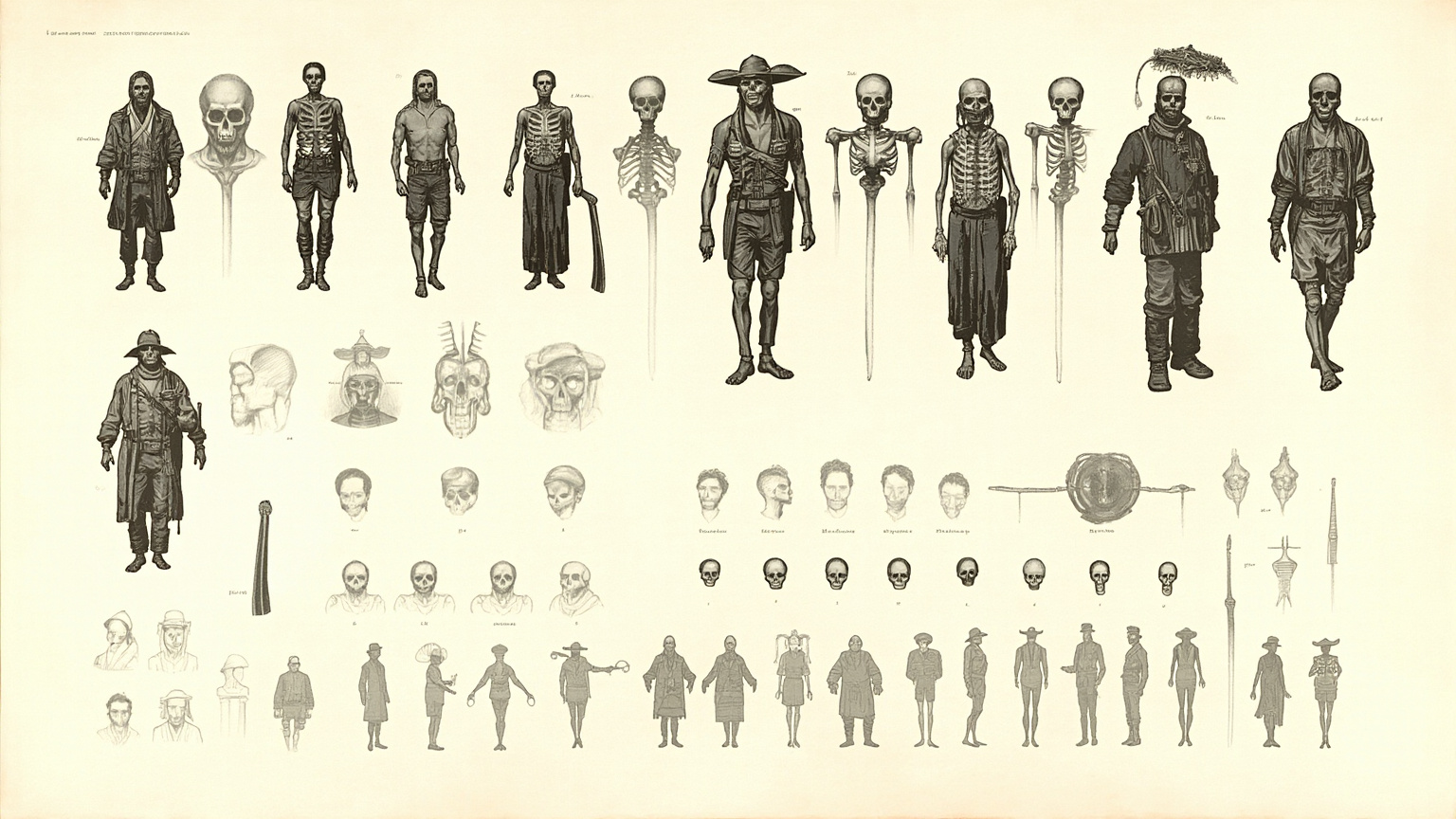
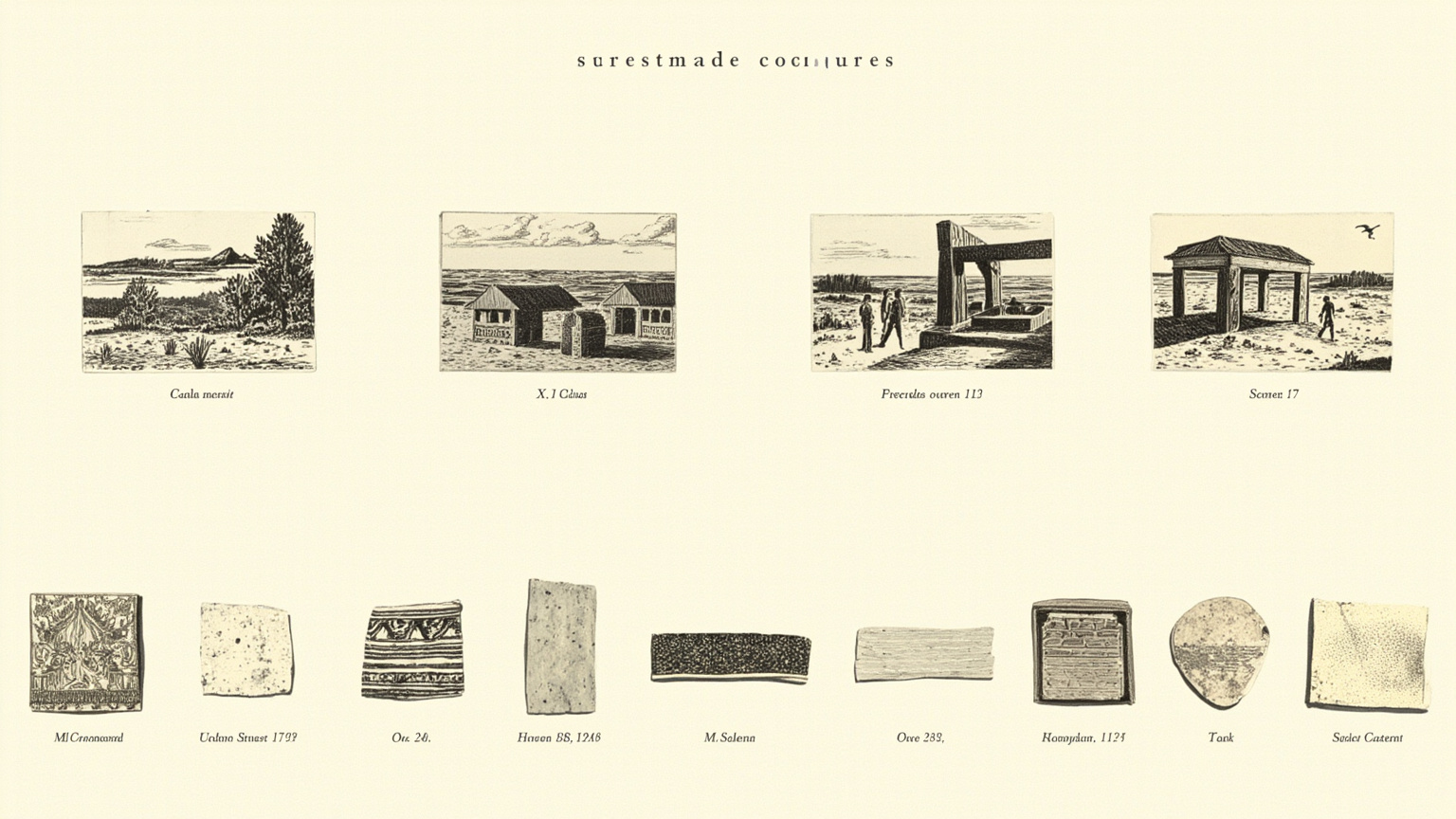
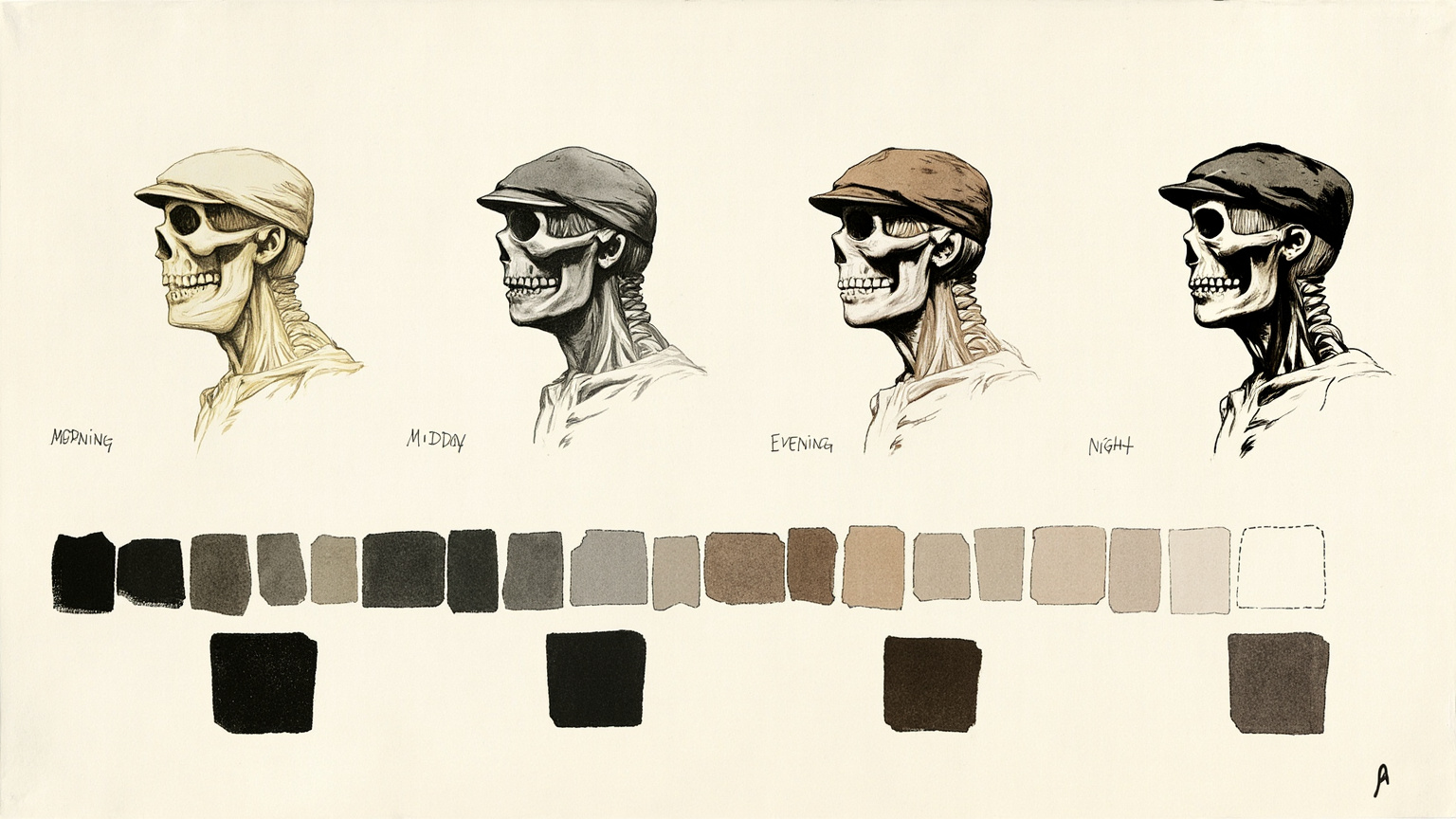
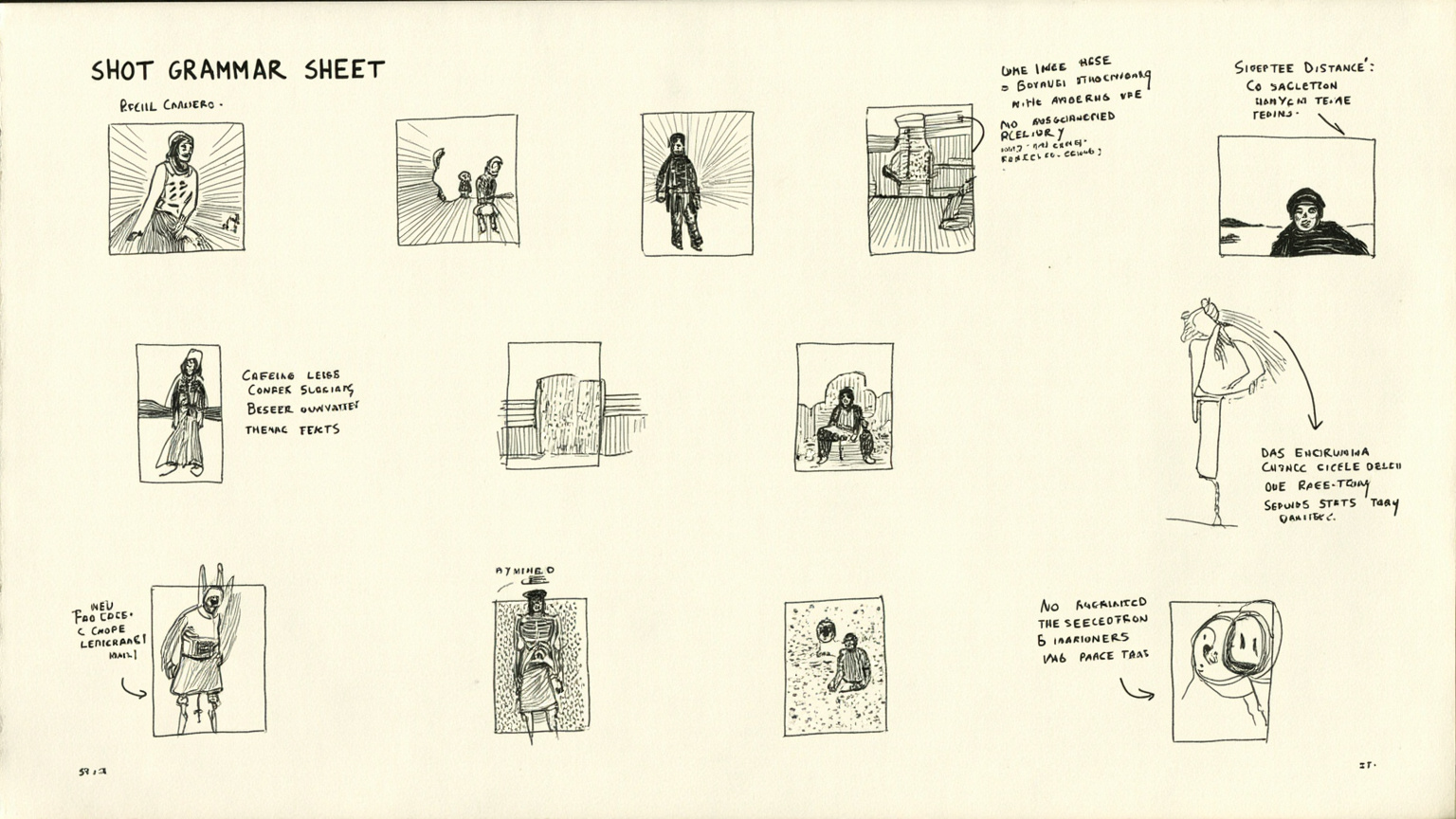
Art Direction4 plates
Before the guide was written, this book got a visual foundation — every illustration you just read grew out of it.