Cousin Bazilio (O Primo Basílio) · Companion Guide
巴济里奥表哥
在七月里斯本的暗室公寓里,一叠偷走的书信把旧日情欲、阶层怨恨与体面婚姻推向无可挽回的崩塌。
Opening
A bundle of letters, pushed under a mattress. Lisbon in July, and the air in the apartment sits like water-soaked cotton. Luísa, young and newly married, has just turned from the window after the tram bell that carried her husband off to work, and shut the door behind her. Down the back corridor the maid Juliana is scrubbing the floor, scrubbing, and then reaching, mid-stroke, into the dressing-table drawer. The bundle of love letters goes into the one place closest to her, the servant's own bed. From that moment the apartment, dim to begin with, becomes a well with the lid put back on.
What Kind of Book This Is
This is the major work of Portuguese writer Eça de Queirós, written in the late 1870s and generally credited as the founding text of Portuguese literary realism, born the same year as Flaubert's Madame Bovary. Readers have a ready-made comparison for it: the same tragedy of a wife's affair, except the French wife dies cornered by debt collectors, and the Portuguese wife dies over a bundle of love letters her own maid stole from her. The book fills in a corner of the Western European literary map that had stood empty for too long: Lisbon. Among the nineteenth century's handful of European marriage tragedies, this is the Portuguese one.
People and World
The story is boxed inside a middle-class apartment with an old carpet: lace curtains keep out the July sun, and a piano, a sewing machine, and a writing desk sit scattered through the rooms. Luísa's husband Jorge is a respectable engineer, forever posted off to oversee work elsewhere, rarely home from his trips. Cousin Bazilio is a rake back from studying in Paris, with a little borrowed French and a fashionable, showy city polish. The one who is actually frightening is not him. It is Juliana, a resentful, calculating maid scraping by at the bottom of the household. Add a talkative confessor, Father Sebastião, a cold and old-fashioned mother-in-law, Dona Vitória, and a smooth-talking lawyer friend, Leão, and they stack up brick by brick, sealing off every way out for Luísa.
How the Plot Moves
I. The Old Flame Returns
The story opens sticky with heat. Jorge is away, and Luísa keeps the empty apartment alone, flipping through books, playing the piano, trading gossip with the neighbors out of sheer boredom. Cousin Bazilio comes calling, strikes his Paris pose, and the old suppressed feeling climbs straight back out of the grave. In the husband's absence, the two of them start meeting in secret, inside his own house. Queirós's touch here is deft: he never writes the affair as bodies, only as sound, footsteps on the stairs, a laugh dropped low, two extra teacups left on the table, a shadow crossing behind the lace curtain. Watching it through glass like this keeps the whole affair suspended in midair; it never quite touches ground.
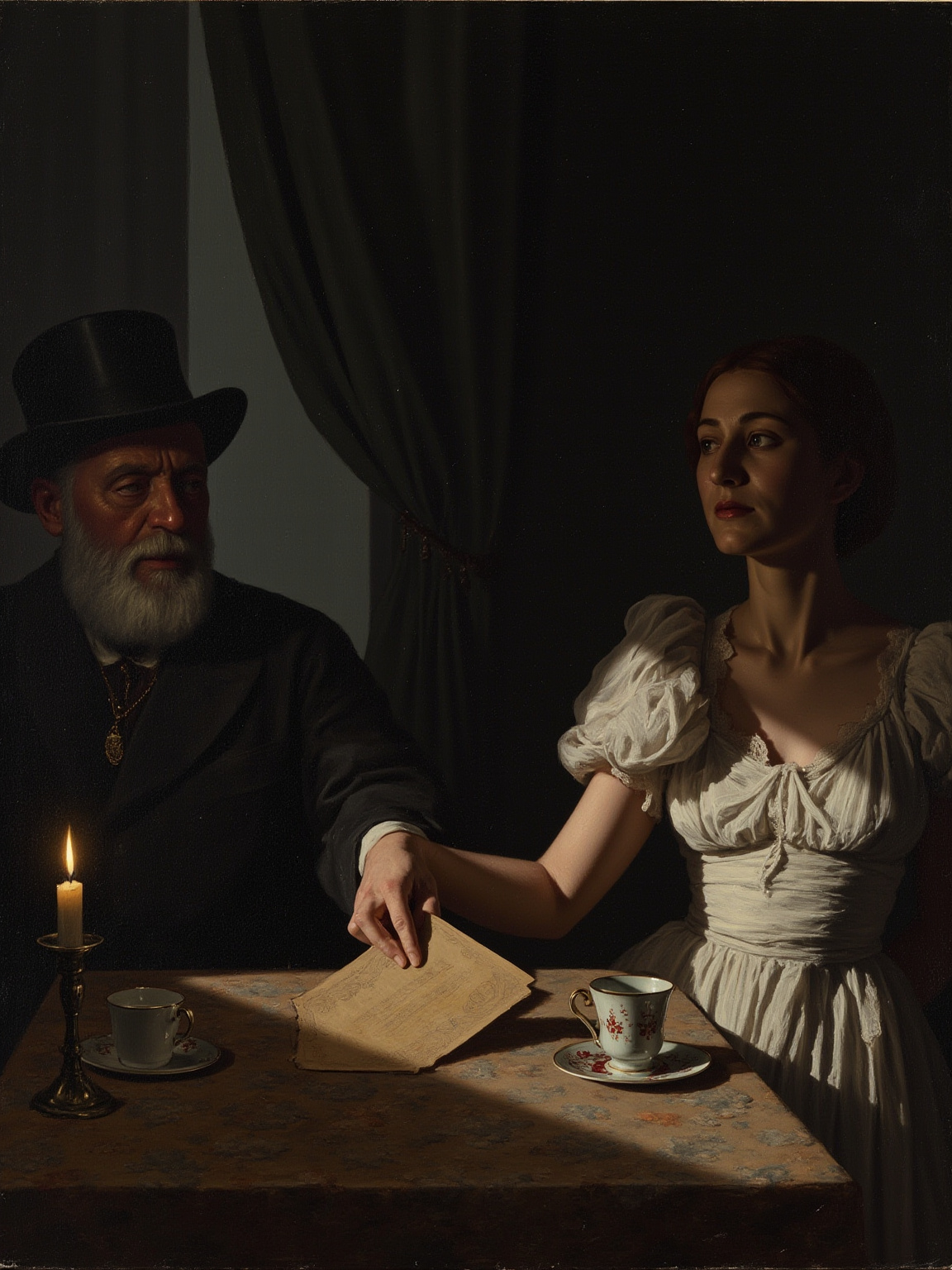
She had been so lonely, and the old tenderness awoke in her heart.
她太孤独了,旧日的情意便在她心里苏醒过来。
金句 · 第一部 · 旧情复燃
II. Stealing the Letters, Hiding the Letters
The hinge of the story turns. Tidying the room, Juliana stumbles onto the evidence and lifts Luísa's private letters to Bazilio straight out of the dressing-table drawer, tucking them under her own mattress. What is frightening about this is not the theft itself but the choice of hiding place: close to the body, always within reach, forever inside the range of her mistress's own hand. From this point the bundle of paper is an invisible knife, except the blade is not in Juliana's hand. It is in her timing, in whenever she decides to show it.
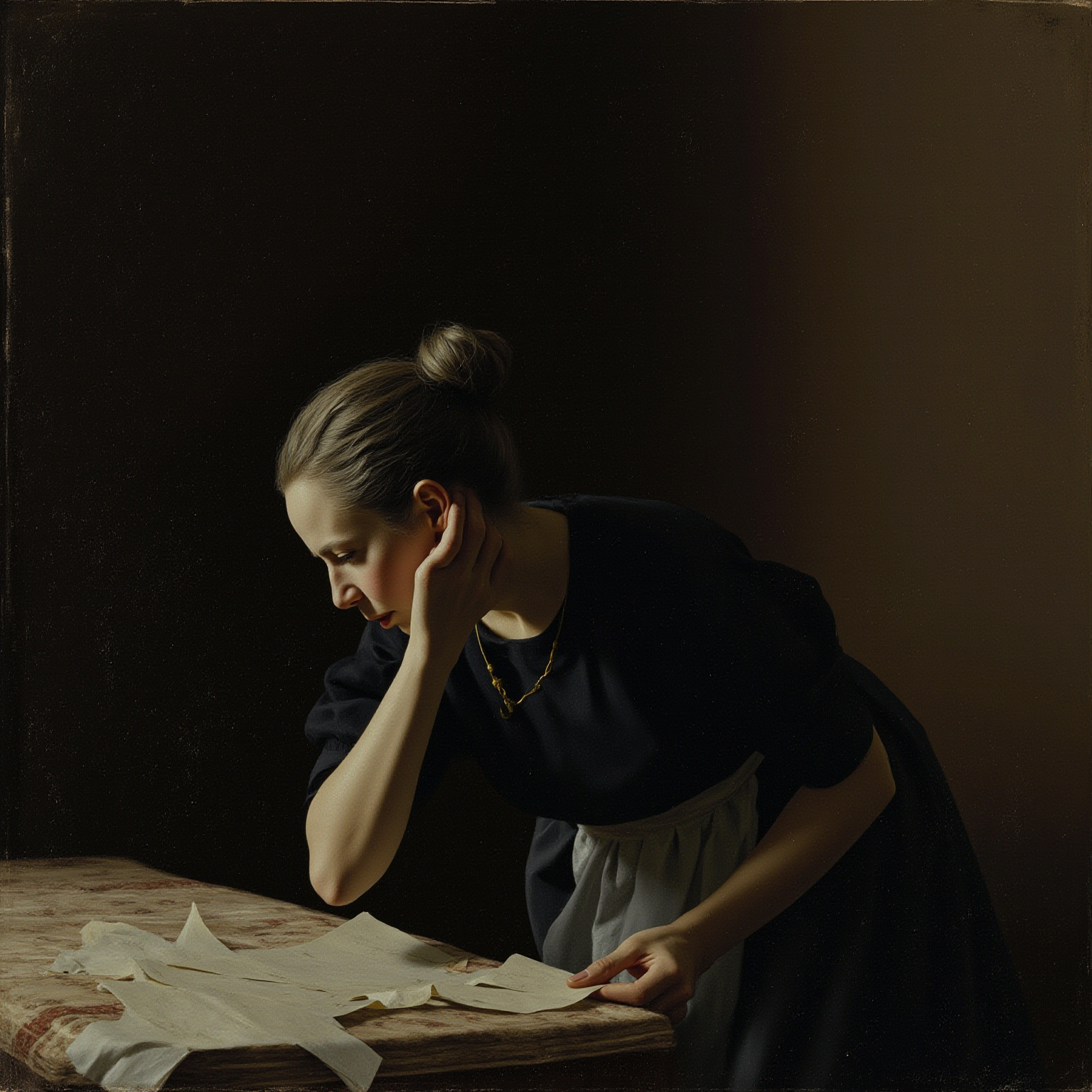
The letters were hidden beneath the mattress, close to the body and the secret.
那些信藏在床褥底下,离身体最近,也离秘密最近。
金句 · 第一部 · 偷信与藏信
III. Blackmail and Torment
A gap under a door, a drawer, a mattress, the servants' back corridor: every suspense image in the book strings together in this chapter. Juliana starts using exposure as leverage, closing in on Luísa a step at a time: first a raise, then gifts, and finally a straight demand for a large sum of hush money. Luísa's health breaks down in stages, insomnia, jittery panic, fevers that keep coming back. Inside her own apartment she becomes someone else, eyes darting, flinching at the sound of a door. Queirós turns unusually cruel here: he puts the two women, the young wife in the main bedroom, the maid in the servant's room, under one roof, close enough to hear each other breathe, and lets neither of them speak. Whoever moves first loses.
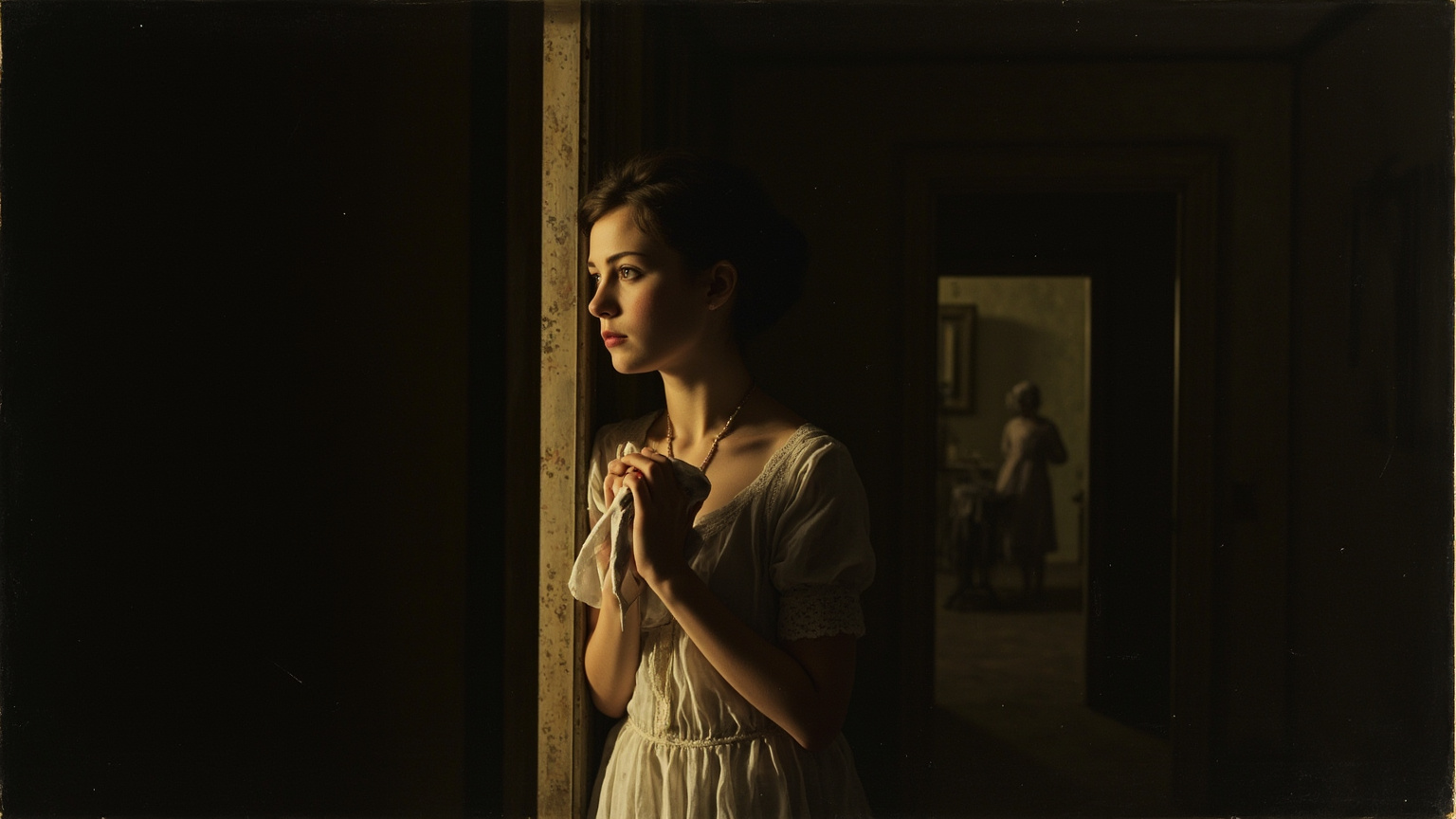
Every demand was a threat, and every threat entered the house like a nail.
每一次索取都是一道威胁,而每一道威胁都像一枚钉子钉进这所房子。
金句 · 第一部 · 勒索与煎熬
IV. The Priest's Denunciation
Cornered, Luísa kneels in the confessional and tells the talkative Father Sebastião everything. She thinks she is asking for absolution. What she gets is a time bomb. This priest, so sure of his own righteousness, goes behind her back and drafts a denunciation in his own hand, mailing it to Jorge out at his post overseeing the works. He believes he is carrying out justice; in fact he is crueler than Juliana. Juliana only wants money. He wants her life. The first time I read this chapter I stopped short: this is no priest. He is an informer wearing a coat of holy oil.
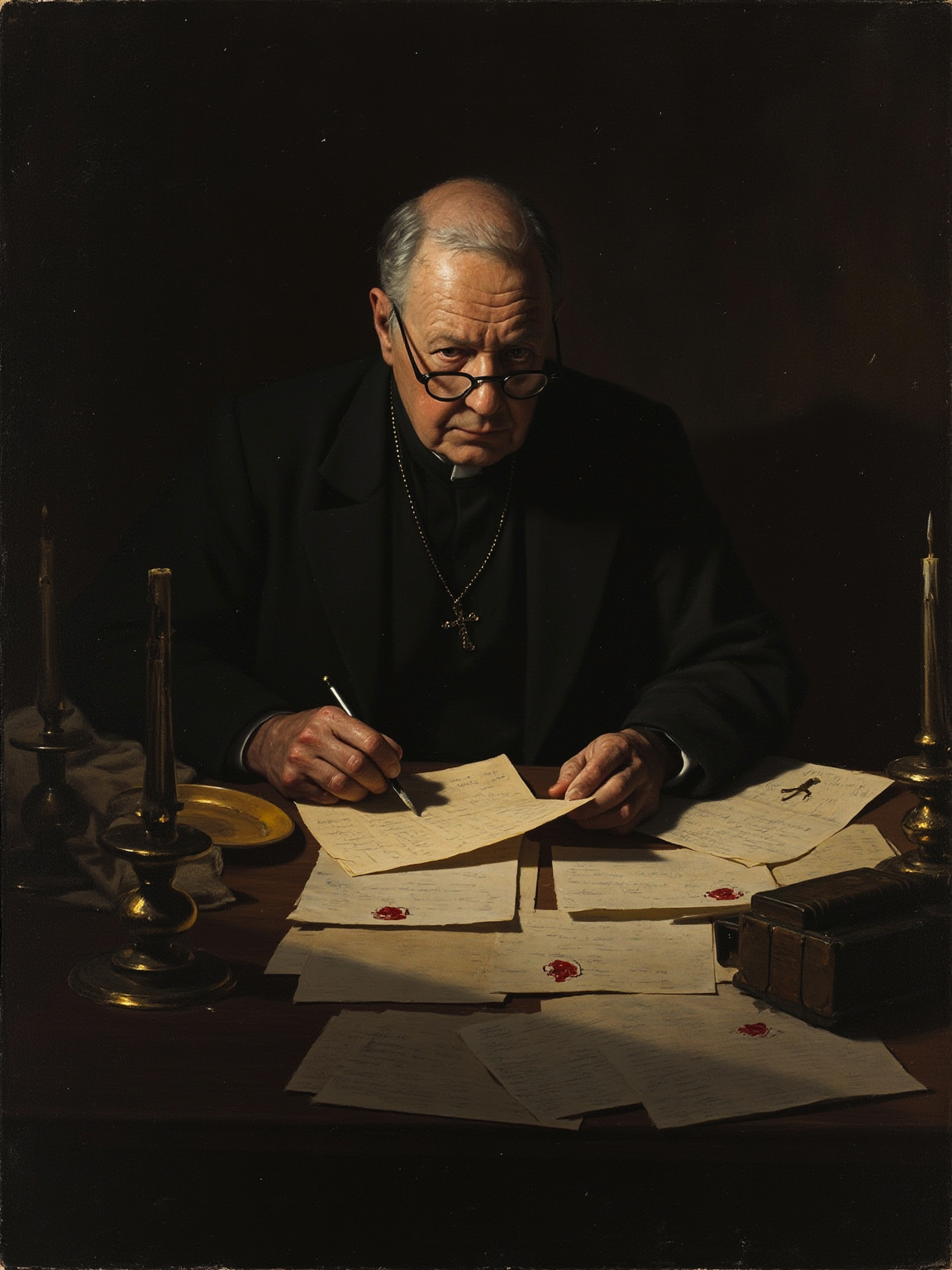
She had spoken in confession, and her confession had become an accusation.
她把秘密交进了忏悔室,却把告发也一同带了出来。
金句 · 第二部 · 忏悔与告发
V. The Husband Returns, and the Collapse
Jorge comes back to Lisbon early. His mother, Dona Vitória, pious, cold, the very picture of old-fashioned respectability, is already waiting on the telephone, and she will not wait longer. She pushes her son toward the cold, practical route, the respectable solution: buy back, or simply demand back, the letters from Juliana, then check them page by page against his wife's handwriting. Queirós writes this chapter almost cruelly. The reader watches an otherwise decent man recognize his wife's hand on page after page, her Dear cousin, the plain things she wrote, and then watches him go hollow and take to his bed. He is not angry. He is caving in.
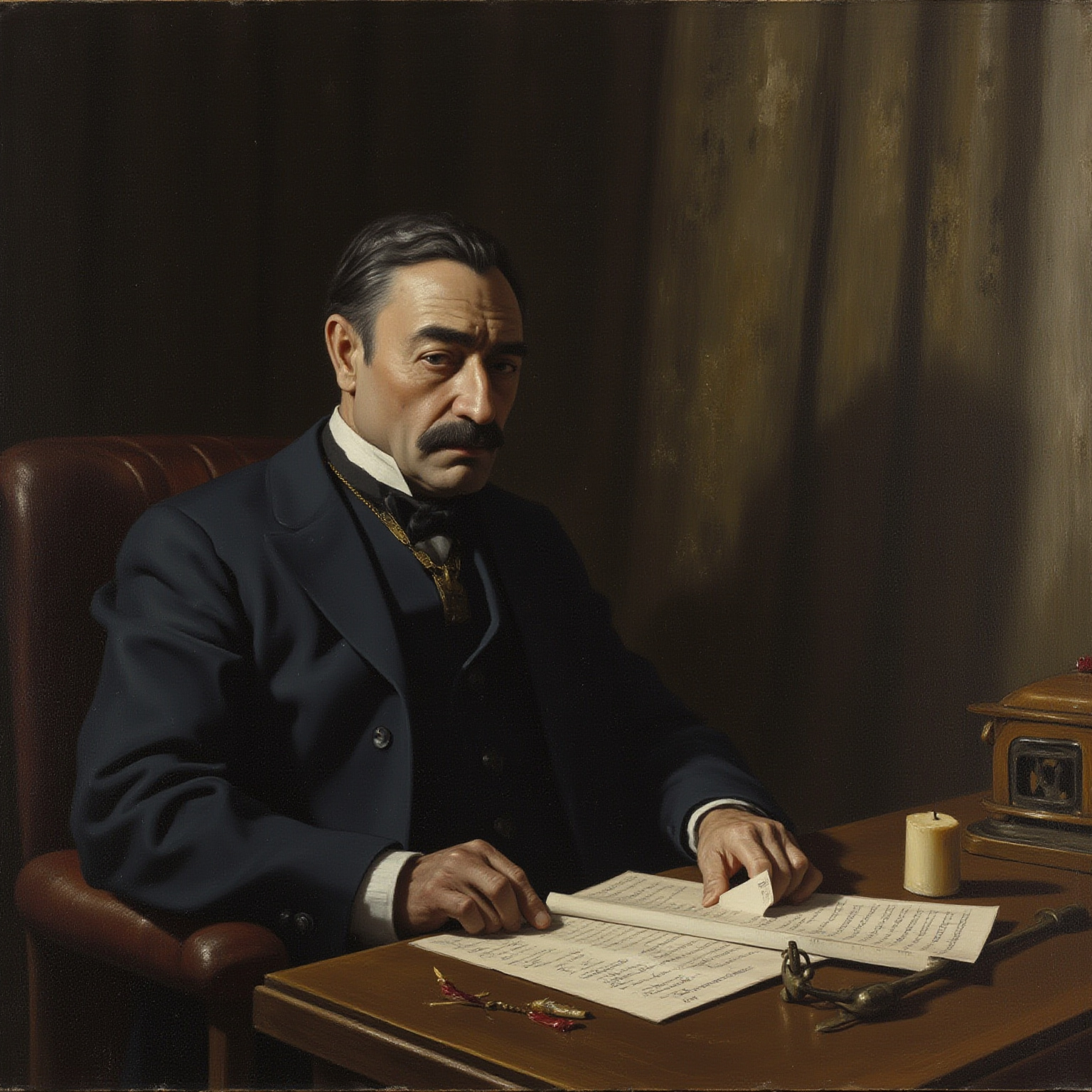
He compared the handwriting with the woman he had believed he knew.
他逐页辨认那笔迹,也逐页看见自己曾经相信的那个女人。
金句 · 第二部 · 丈夫归来
VI. Bazilio Flees, and Luísa Dies
Cousin Bazilio hears the news and slips away, guilty and unwilling to face it. He leaves the novel as lightly as he entered it, a dashing arrival, a weightless exit, arguably the least responsible leading man in the history of the novel. Luísa is left behind, and nobody comes to take her anywhere. Loneliness, illness, and shame grind her down together, and she goes out little by little. Not murdered, not a suicide, she simply stops breathing, behind curtains drawn shut in her own apartment. Queirós lets no one lay a hand on her. This kind of death is colder than murder; there is not even a killer to name. Juliana's blackmail fails with it: the money she wanted, her mistress is no longer alive to pay.
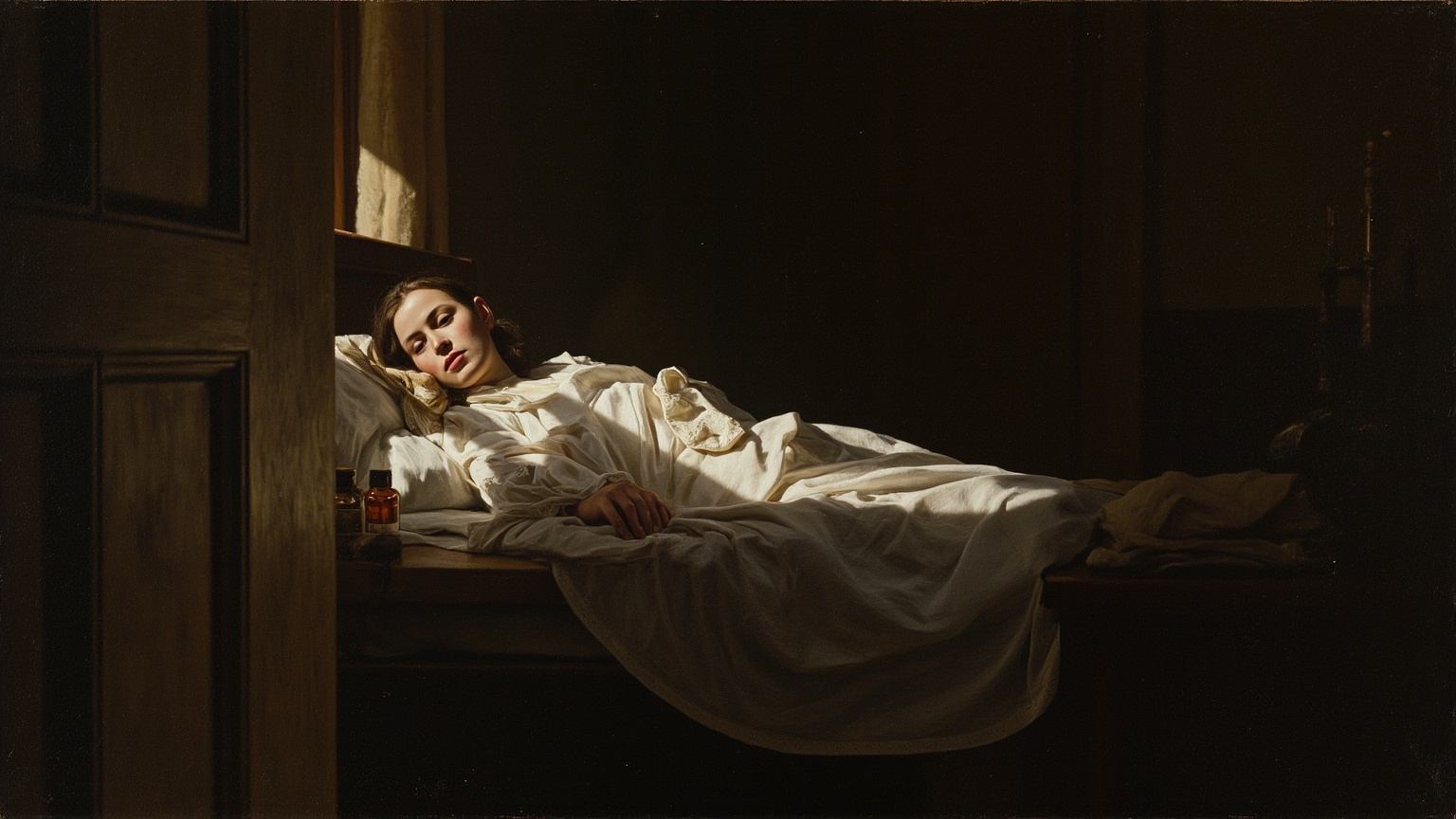
Basilio disappeared, and the abandoned house closed over her.
巴济里奥走了,只留下那所房子,一寸一寸合拢在她周围。
金句 · 第二部 · 潜逃与死亡
VII. A Respectable Ending
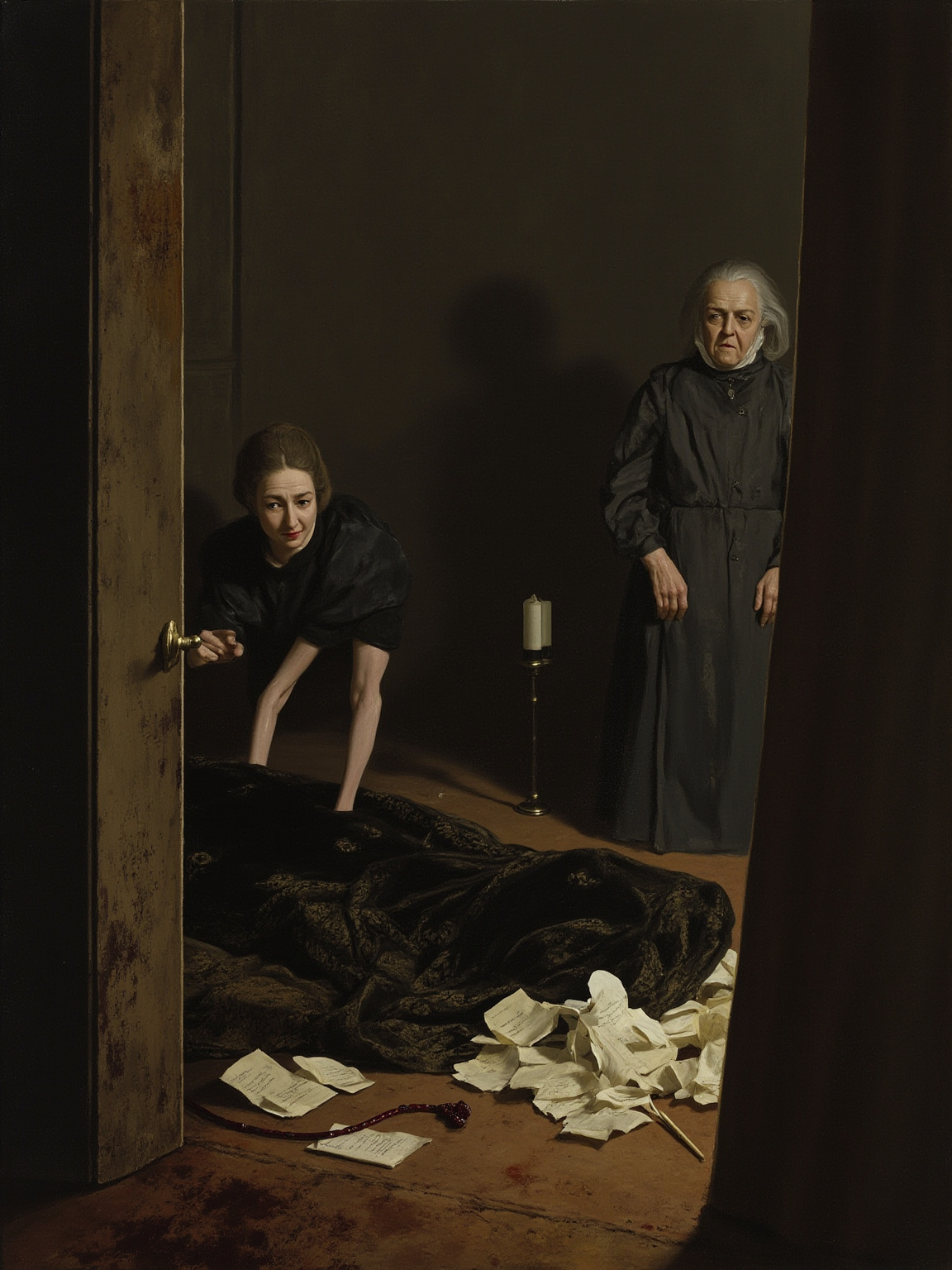
The lawyer Leão brokers a settlement, Juliana walks out with her severance pay, and the apartment is left to the widower Jorge, his cold-faced mother, and a bed draped in black cloth. The household holds a solemn funeral, the kind any respectable Lisbon family throws, and the neighbors come by as always to pay respects and ask after everyone's health. Every one of them polishes the scandal clean, the way you would polish silver. The lid goes back on. The table can still be set for tea.
Theme and Craft
What this novel is actually about is not the affair. It is about a suffocation wrapped in respectability: the pious mother-in-law, the talkative priest, the clever lawyer, the considerate husband. Every one of them claims to be saving Luísa. Every one of them pushes her another step down the well. Juliana's blackmail, Sebastião's denunciation, Vitória's respectable solution: three ropes twisted into one, tightened around the same neck. It also demonstrates a rare kind of craft: taking a nineteenth-century domestic scandal and shutting it inside a dim apartment, so the reader grows stuffy along with it, short of breath along with it, guilty at the sound of a door along with it. Set against the open French countryside of Madame Bovary, Queirós shrinks the stage, smaller, closer, damper. It is an Iberian kind of suffocation, one with a convent's echo built in.
The letters never once left that bed. The person did.
Beyond the Theme: Why Read It Today
Following the plot only gets you through the door. What this novel actually has to offer, in the text itself, is a few things no summary can hand you. One is the sheer close heat of the rooms: Queirós writes the air of a July apartment in Lisbon until it feels like it has weight. Another is Juliana's chain of suspense images, the door gap, the drawer, the mattress, which goes cold the moment you just retell it. A third is the whole psychological descent Luísa makes, from idle boredom to collapse, a slow and irreversible going-out that only comes through in the rhythm of the original prose, breath by breath. Knowing how it ends is exactly why you should read it, because Queirós's cruelty lives in what he leaves unsaid on every page, not in what happens.
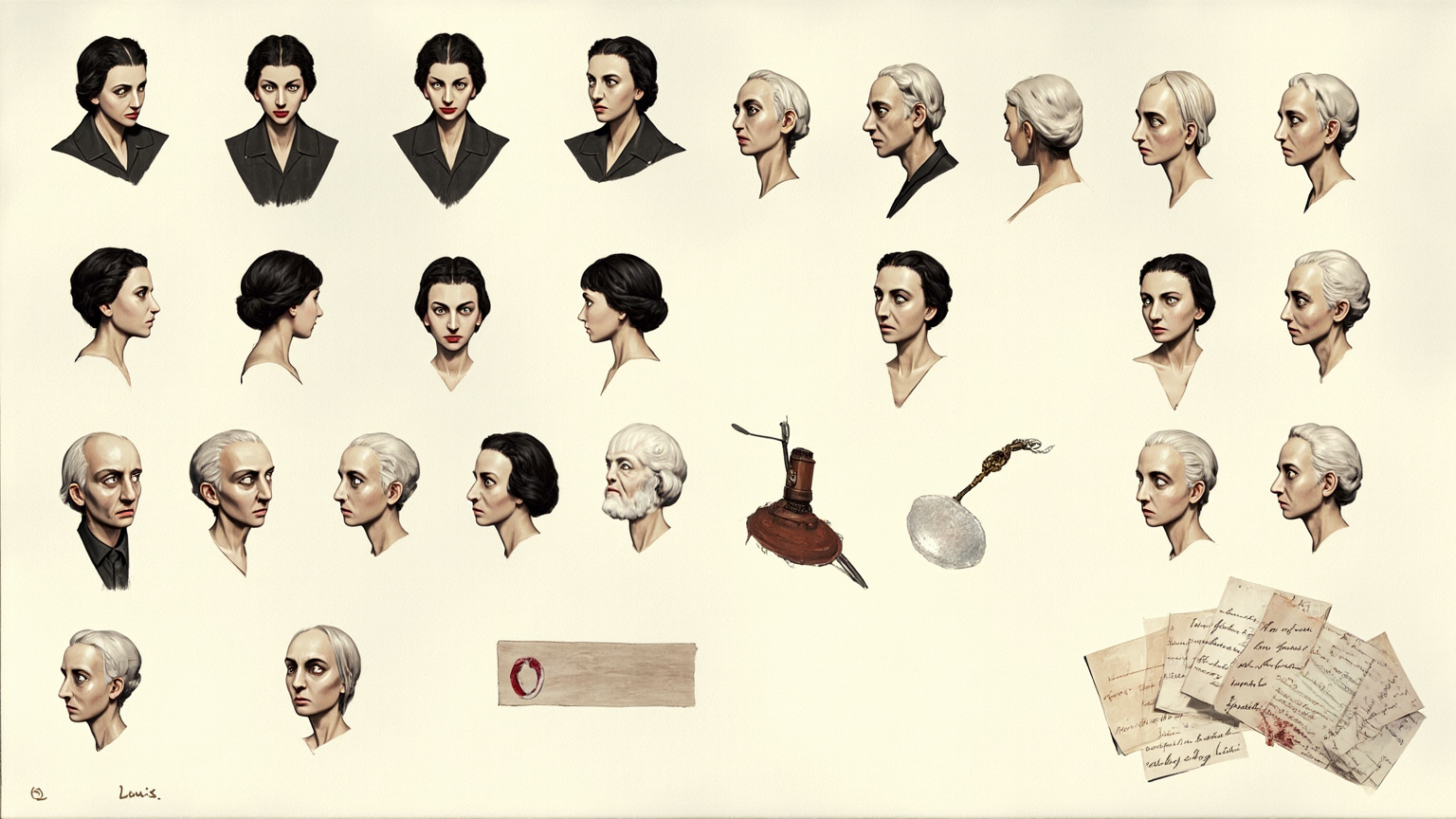
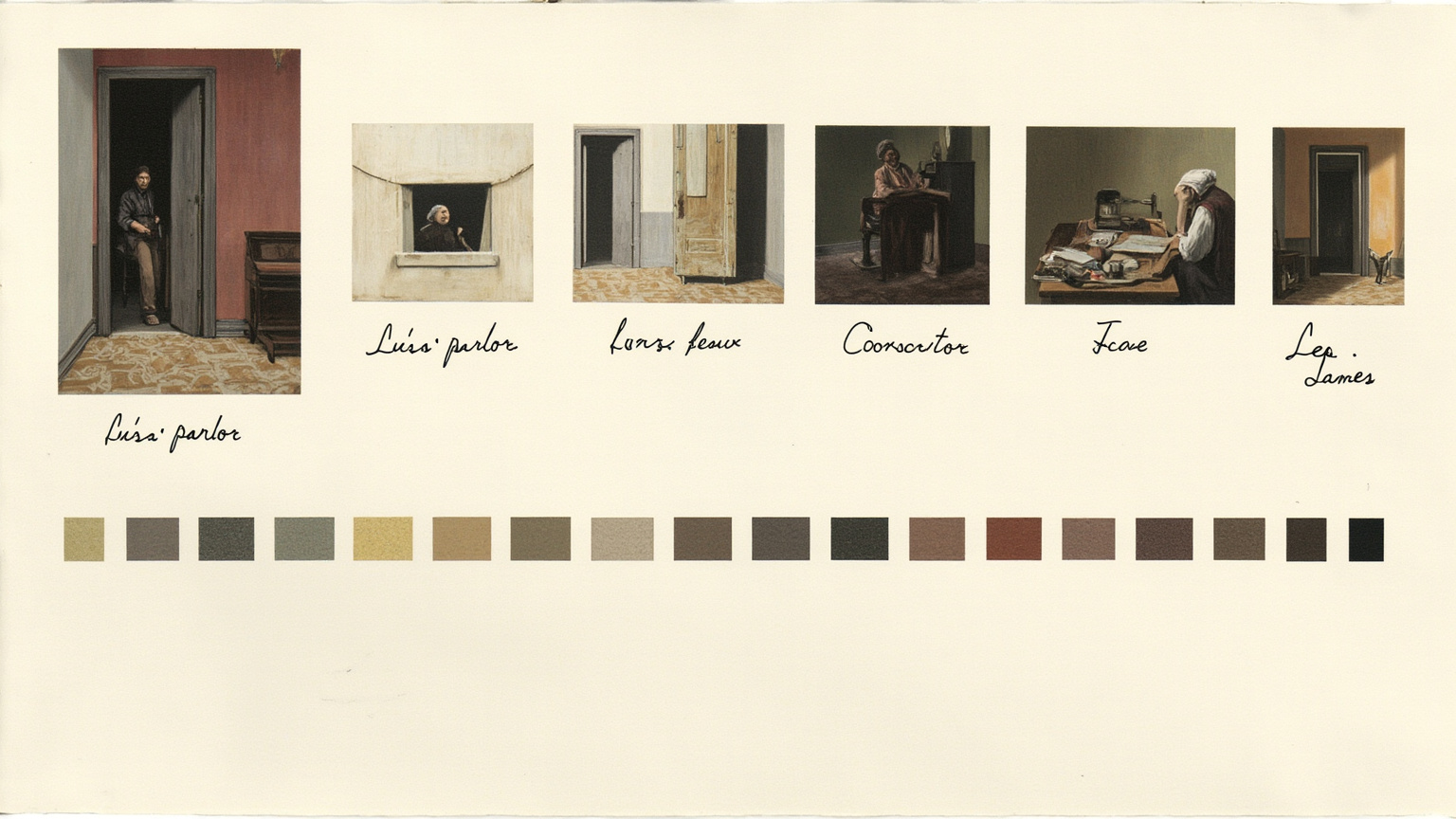
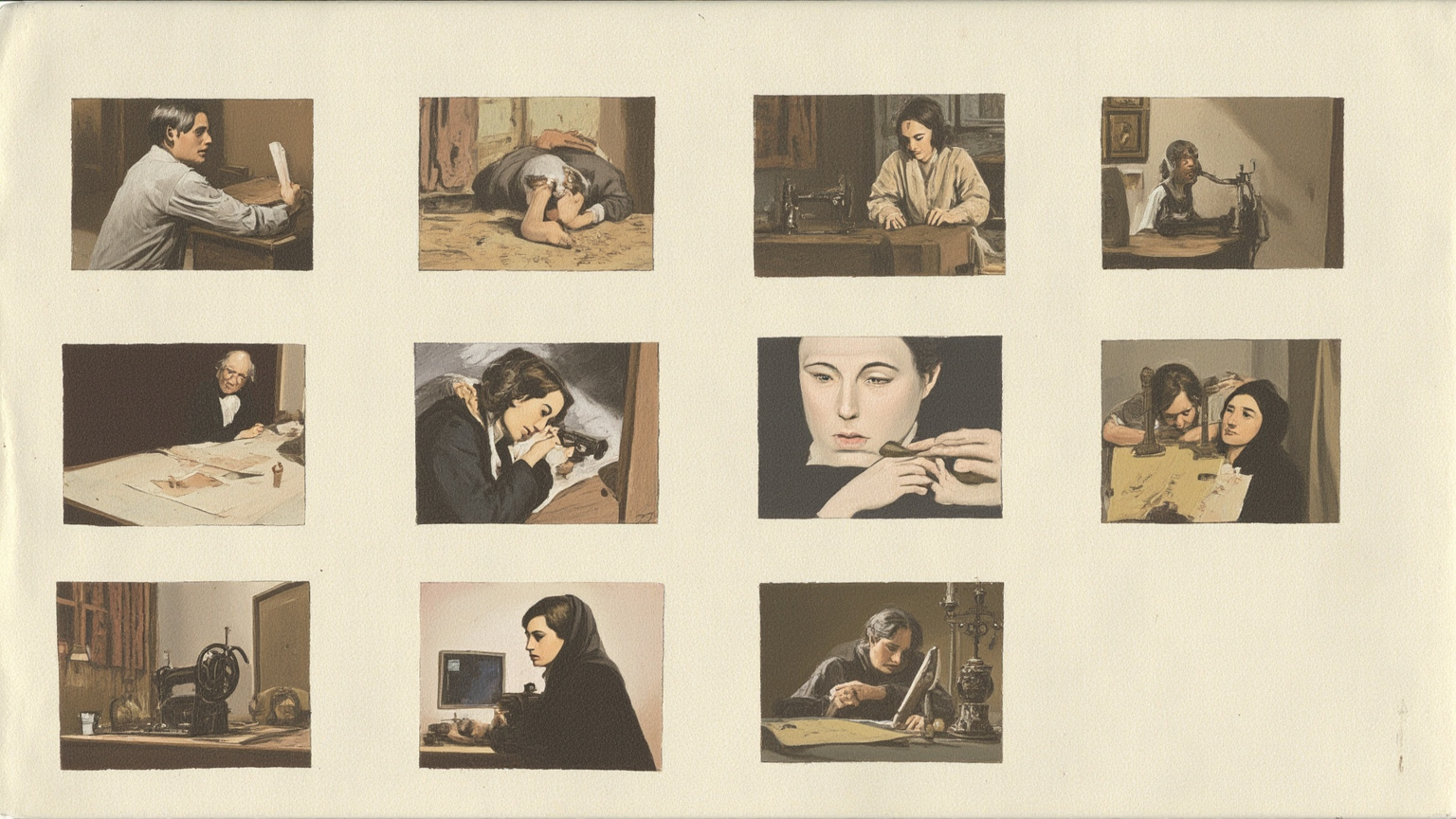
Art Direction4 plates
Before the guide was written, this book got a visual foundation — every illustration you just read grew out of it.