Cranford · Companion Guide
克兰福德
一群把下午茶守成宪法的老太太,把贫穷守成了体面,把体面活成了一门快没人说的母语。
A Flannel Coat
A cow was losing its hair badly, so the neighbors pooled their money and sewed it a grey flannel coat. The story sounds absurd, and it is absurdly warm. It comes from Elizabeth Gaskell's novella Cranford, one of the gentlest small-town comedies of the Victorian age. The book's most famous detail is that coat: scraps of cloth, fine stitching, sewn by a circle of women well past fifty gathered around a single sewing table. Dressing livestock is farce anywhere else. In Cranford, it is a small ceremony of collective dignity.
These women were poor, and they would rather die than let it show. Silver teapots gleamed from polishing. Lace gloves were mended stitch by stitch. A dead husband's watch went to the pawnshop, but only in secret. In their world, appearances outweighed the purse.
What Kind of Book Is This
Cranford is a mid-nineteenth-century work by Elizabeth Gaskell, first serialized in Household Words, the magazine Charles Dickens edited, and later collected into a book. Critics usually place it in the same line as Jane Austen: small towns, manners, a handful of respectable women who refuse to bend to fashion. Gaskell's version runs warmer, and sadder, with something wet at the corner of its eye. Readers rarely come back for the plot. They come back for a vanishing English town, held together stitch by stitch.
Women Who Guarded Afternoon Tea Like a Constitution
The story is narrated in the first person by Mary Smith, an unmarried woman who visits often but does not quite belong. She lives elsewhere and returns every so often to see her father, and it is that outsider's distance that lets her see the town's oddities and its charm at once. The Cranford she describes runs almost entirely on middle-aged and elderly women, unmarried or widowed. The men are dead, gone, or simply never invited into the parlor. House rules, calling etiquette, the correct way to lay a tea table: all of it is decided by these matriarchs.
The most commanding of them are the Jenkyns sisters. The elder, Miss Deborah Jenkyns, quotes Samuel Johnson at every opportunity, that grand old man of eighteenth-century English letters, and lectures the town on his authority alone, down to how to receive a caller and how to lay out the knives and forks. Her younger sister, Miss Matty, is far gentler, and it is Miss Matty who proposes the coat for the cow. Then there is Mrs. Matthews, the last surviving member of the Jenkyns sisters' mother's generation, whose means shrink year by year while her silver tea service stays spotless. There is also Miss Pole, who gossips and embroiders every story she hears, and Mrs. Thomson, who married into the town's money and likes to boast about her own ham at the tea table. Put these women together and you have Cranford.
Tea, Cards, Calls, and a Cow in a Coat
A day in Cranford runs on calls, tea, card games, gossip about every small thing a neighbor does, and a sedan chair that was already outdated when the story begins. The Jenkyns sisters serve as the town's supreme court of manners: no household's way of receiving guests, no ill-fitting dress, escapes their notice. The elder sister quotes Johnson to scold; Miss Matty follows behind, smoothing things over. Readers laugh out loud at these exchanges. The sisters are not absurd. They are simply that earnest, and the earnestness is what makes them lovable.
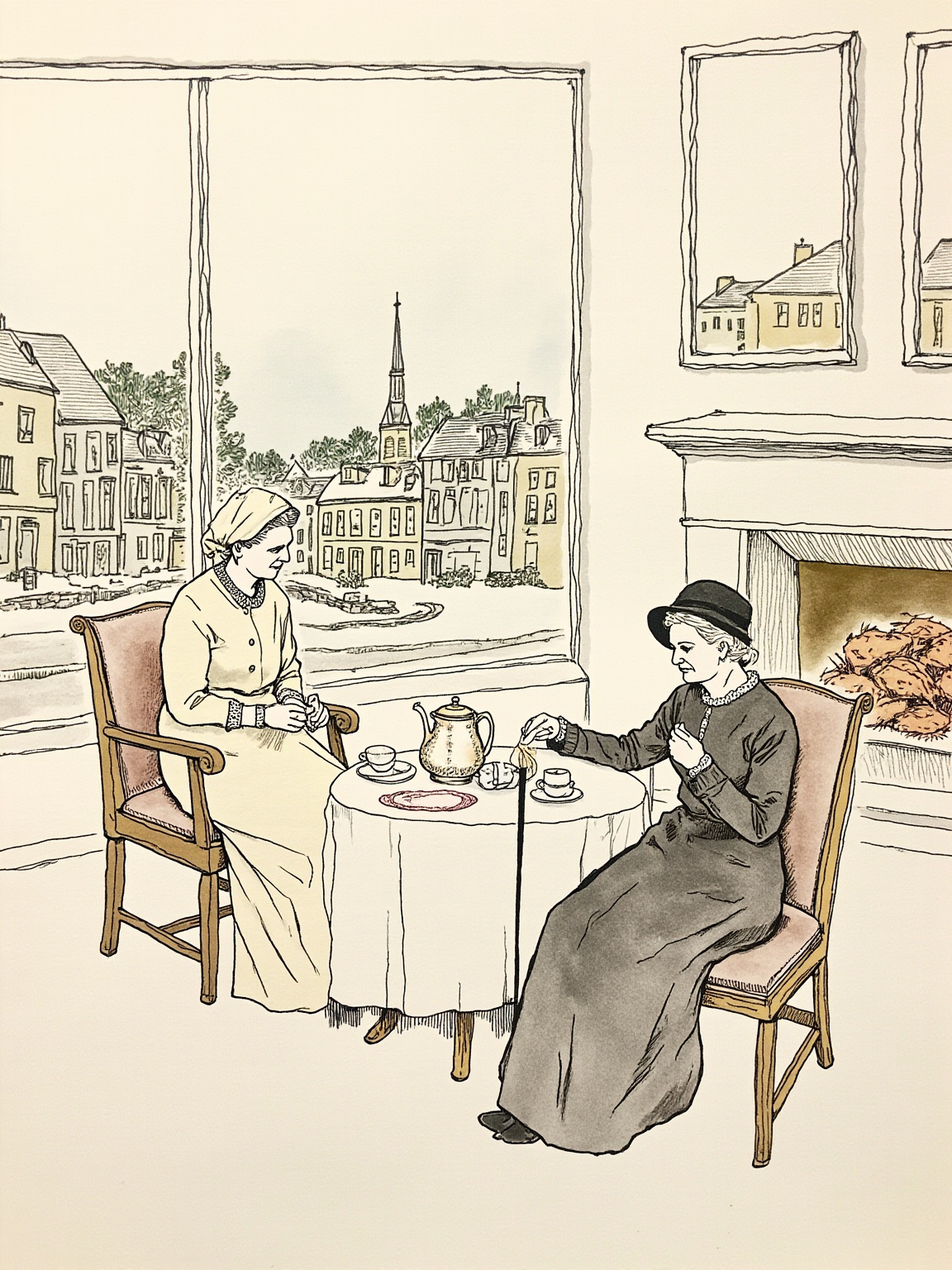
In Cranford, the ladies hold their heads higher, the poorer they are.
克兰福德的太太们越是囊中空空,脑袋便扬得越高。
金句 · 第一章 · 我们的社会
A Coat for the Cow
The book's most famous scene is Miss Matty proposing a flannel coat for that shedding cow. The animal was her pet, its hair coming out in patches, and she worried it would freeze come winter. The neighbors chipped in, a few pennies each, from women who could barely feed themselves. They gathered around a sewing table and pieced the scraps together, stitch by stitch. The image is absurd past the point of reason, and it still catches you in the throat. A group of women who could hardly keep themselves fed made a properly fitted coat for a cow. That is what dignity meant to them: even livestock deserved a decent winter.
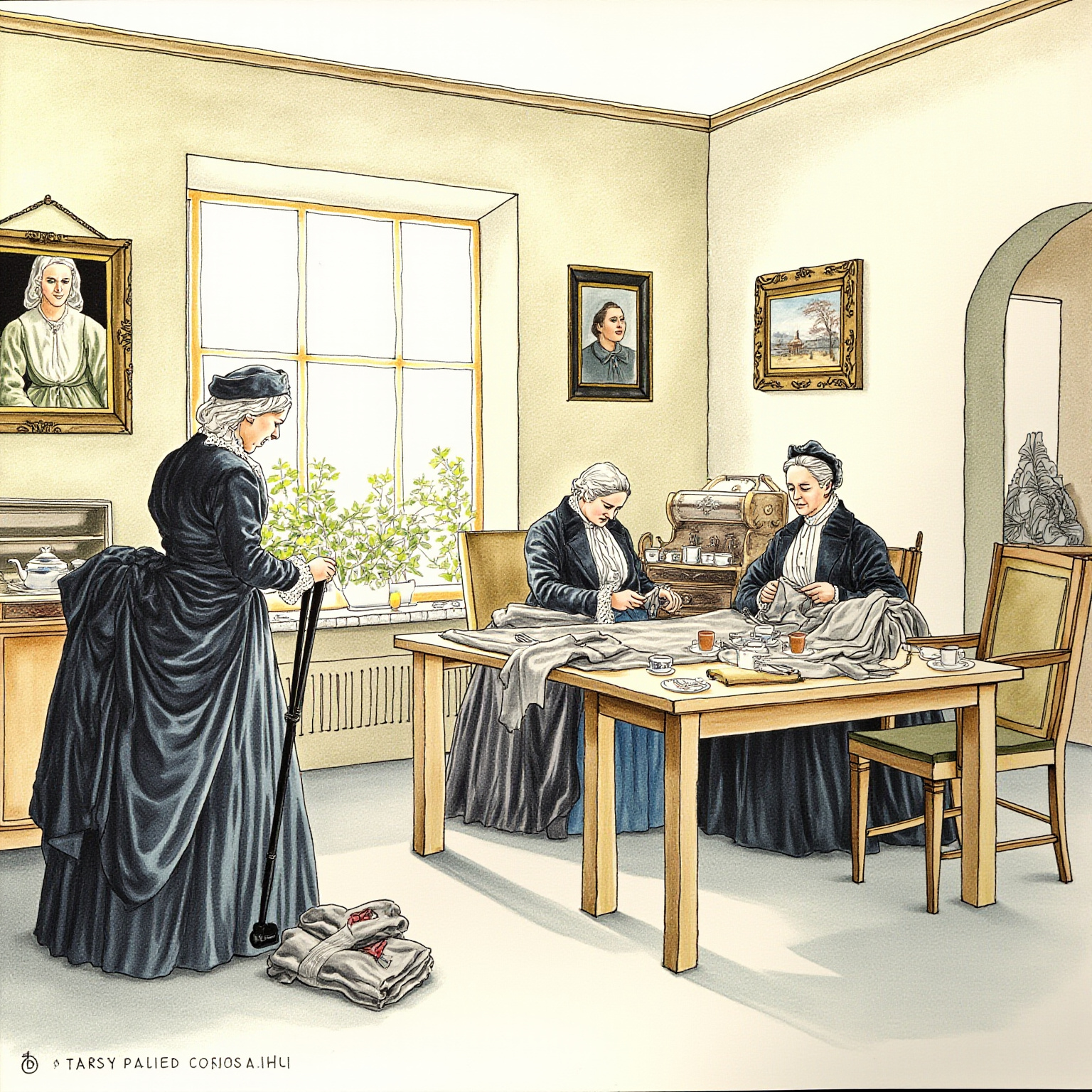
An old maid's flannel for a cow is the height of Cranford economy.
给一头奶牛缝件法兰绒外套,便是克兰福德式的节俭登峰造极。
金句 · 第三章 · 给牛穿外套的那桩旧事
The first time I read this scene, I laughed, and then I went quiet. A coat for a cow, and Gaskell had written the whole book's argument into it: dignity outranks money, and even bone-poor, you do not let a cow shiver bare in the cold.
Pawning a Watch
Mrs. Matthews is the most heartbreaking of the group. She was born to better standing than most of the town, and her husband left her comfortable when he was alive. After he died, the money thinned a little more every year. Her tea silver still shone. Her lace gloves were still mended without a stray thread. But the purse itself was empty. One day she quietly took her dead husband's watch to the pawnshop. Walking out of that shop was probably the most humiliating moment of her life.
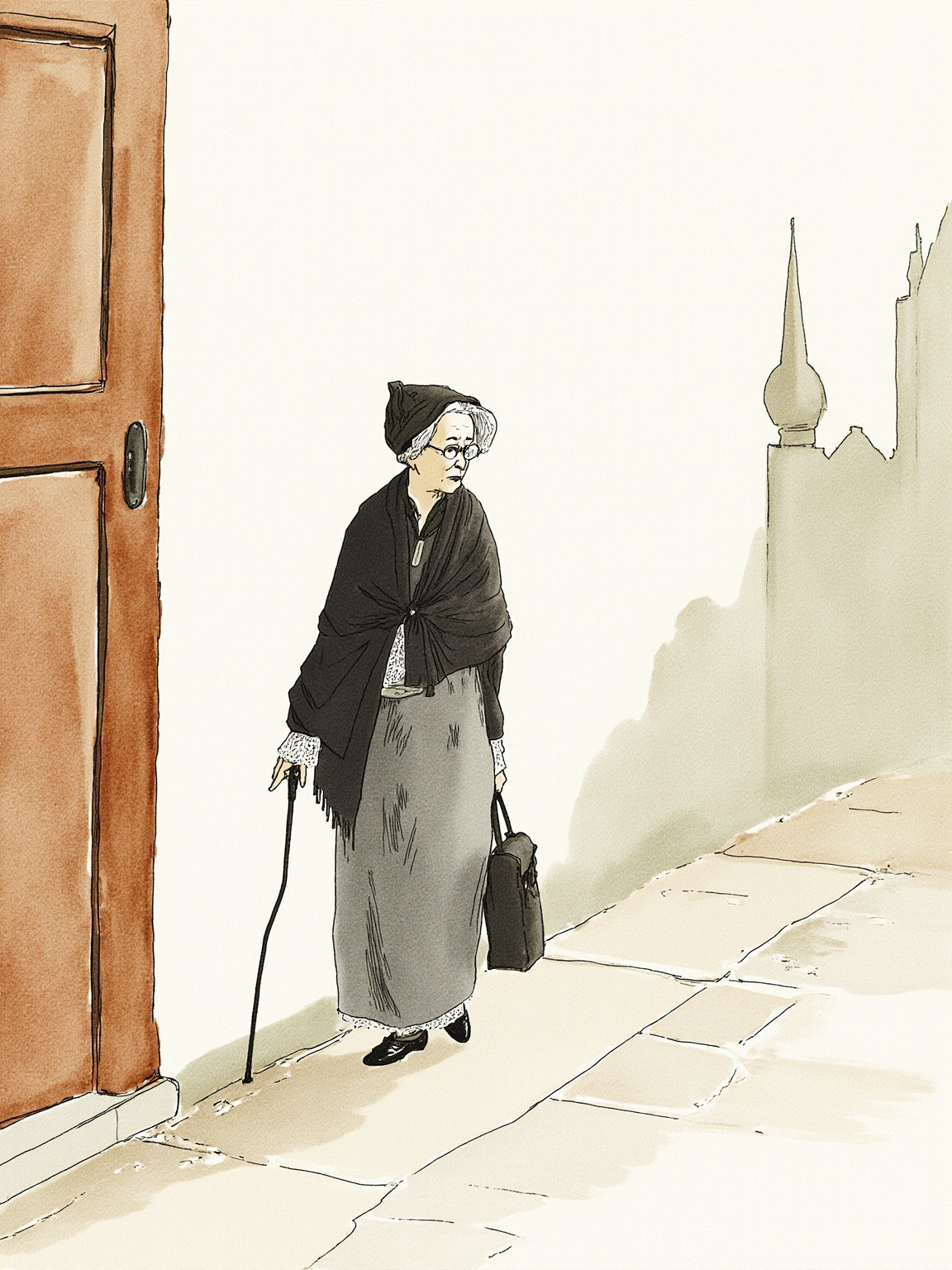
What she did not expect was that, not long after, an anonymous old friend began sending twenty pounds a month. She never learned who it was. The purse recovered. The silver teapot came back to the table. The lace gloves were mended again, carefully. But the watch never came back. This is Gaskell's version of genteel poverty: invisible from outside, and nearly empty within.
A Naval Officer's Departure
A retired naval officer named Brown moved to town, rough around the edges. He and Miss Jenkyns, the elder sister, disliked each other on sight. She found him uncouth. He found her pretentious. But over time he became a regular fixture, one of the few active male characters in the whole book, a splash of a different color in this world of ladies. Then one day an ox cart ran him over by accident, and he died.
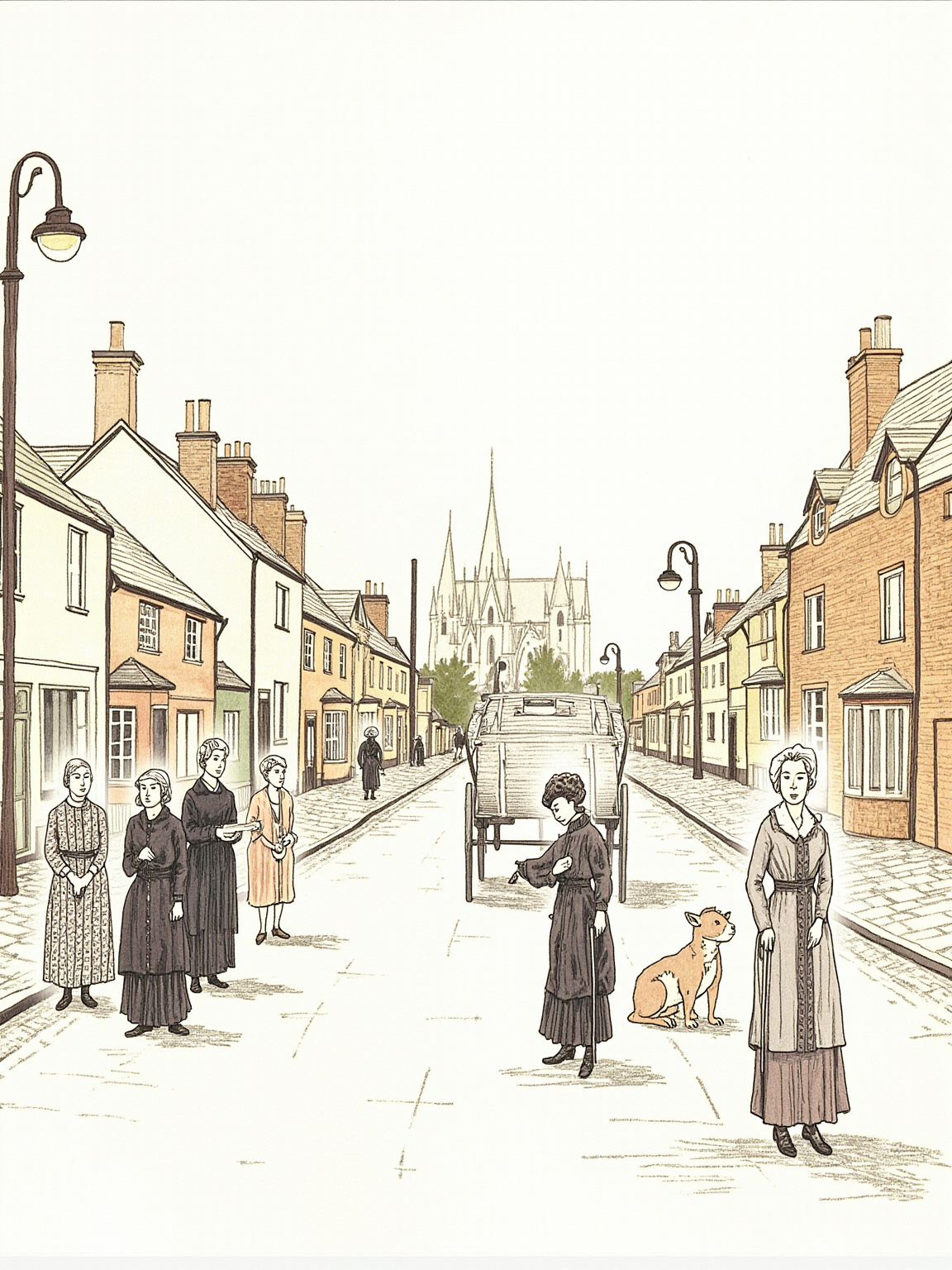
He was a man of whom we had all been a little afraid; but we were sorry for him now.
我们都曾有点怕这个人,可此刻我们都为他难过了。
金句 · 第六章 · 彼得先生的马车
It is the only 'major event' in the whole book. An older supporting character is gone, with no warning at all. Gaskell does not write it as tragedy. There is no wailing. She simply has the neighbors pass the news door to door, close their shutters, and swap the red bows on their curtains for something plainer. What she is really writing is how a small town absorbs a death, not through tears, but through ritual.
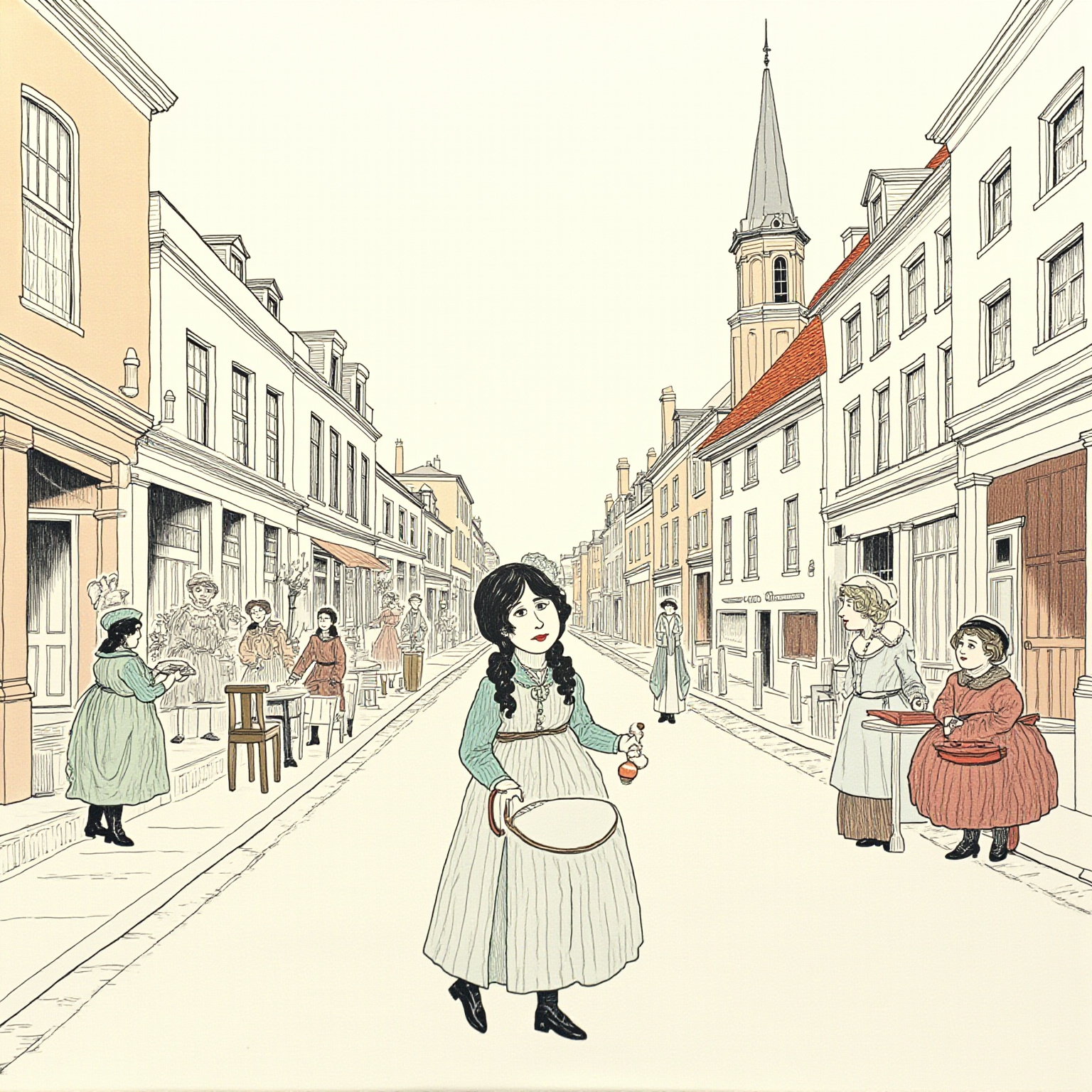
The Cranford ladies have their rules for everything; and they are not to be broken.
克兰福德的太太们为万事都立下了规矩,且不容违拗。
金句 · 第十二章 · 永远的克兰福德
Mary Stays, and Then Leaves
Mary starts out as a bystander, visiting Cranford for holidays to see her father. Then her father dies in the town, and she stays behind to sit with Mrs. Matthews, now alone, through a winter night. She sits by the fire with her, wrapped in a blanket, listening to stories from Mrs. Matthews's youth. It is the quietest chapter in the book: no big event, only a young woman and an old one keeping a fire company. Slowly, Mary stops being an outsider and becomes one of them.
Then Mary marries and leaves Cranford. When she goes, the town carries on exactly as before: tea is still poured, cards are still played, calls are still made. Nobody's departure stops the town for even a day. It is the gentlest ending Gaskell could have written. An age's sense of decency has been stitched into the page, one line at a time, and once the record is finished, so is the story.
Why This Book Is Remembered
Gaskell's touch is very light. The railway arrives. New shops open. The town's young men keep thinning out, and newcomers keep moving in. She never writes a word of protest. She simply lets the old ladies keep polishing their silver, keep quoting Johnson, keep arguing over the tea table about whether the curtains need replacing. Add the details up and you get an era being gently walked to the door.
Cranford isn't a story. It's an accent — decency kept alive as a native tongue, long after almost everyone else stopped speaking it.
It is remembered because it never strains for effect. With tea, calls, cards, a coat for a cow, a pawned watch, it writes the gentlest page in the whole Victorian gallery of small-town women. You laugh at them and you ache for them at once. That is Gaskell's particular gift.
Why Still Read the Original
A companion guide gives you a map. The novel itself is the town. When the elder Miss Jenkyns quotes Johnson to lecture someone, that eighteenth-century man-of-letters cadence has a real sound to it: measured, clipped word by word, as though she had swallowed his voice whole and now spoke in it herself. When Miss Matty hears it, she lowers her eyes for a moment, and that brief silence says more about her mixture of respect and deference than anything she could say aloud. Every time Mrs. Matthews finishes polishing the silver teapot, she runs a fingertip once more along the rim, and that finger sometimes trembles, slightly, in a way she knows and no outsider ever sees. None of this survives being retold. You have to turn the pages yourself. And the cow: you have to see, on the actual page, that flannel coat being stitched together one thread at a time, before you can really laugh, and really want to cry.
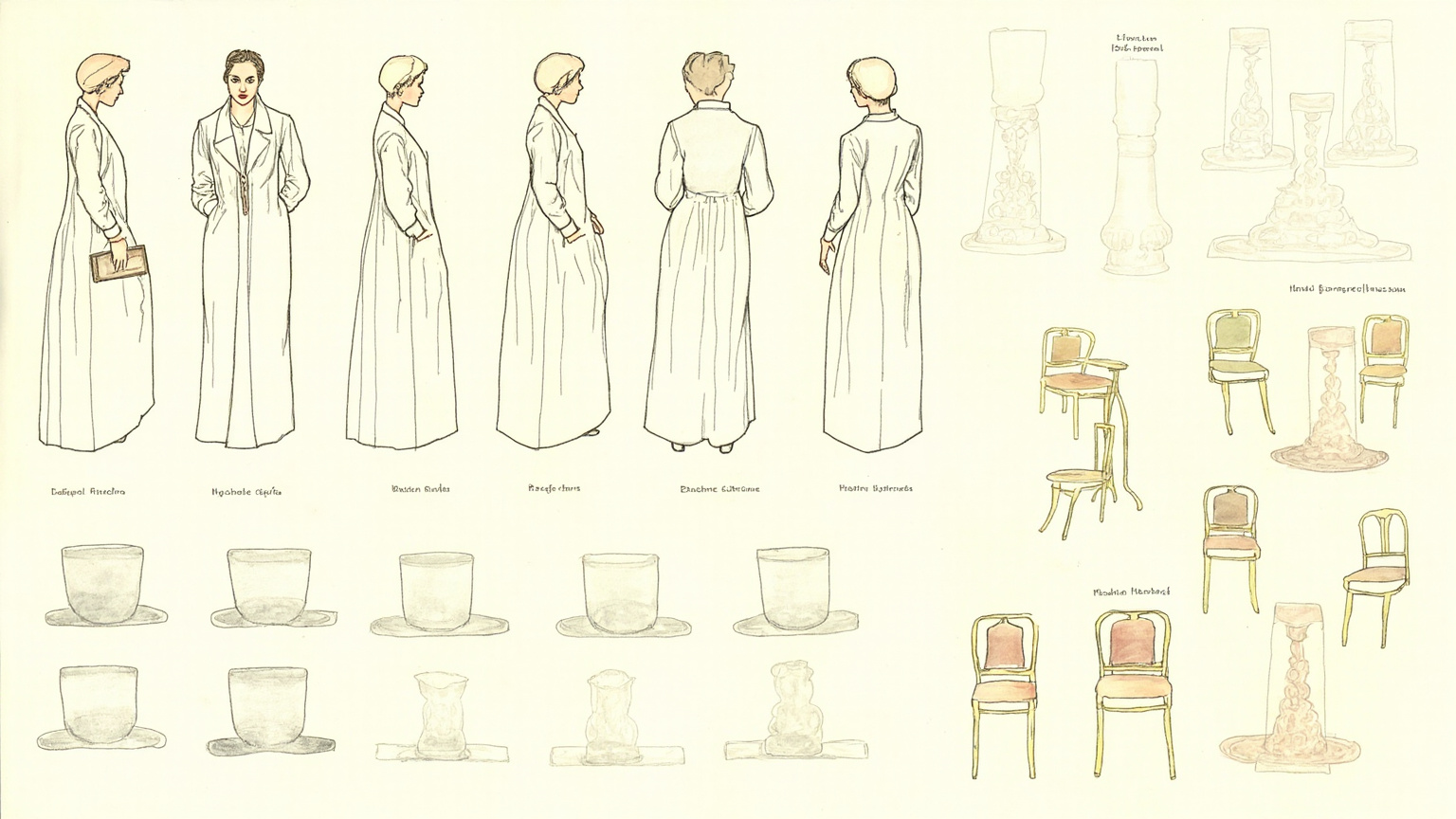
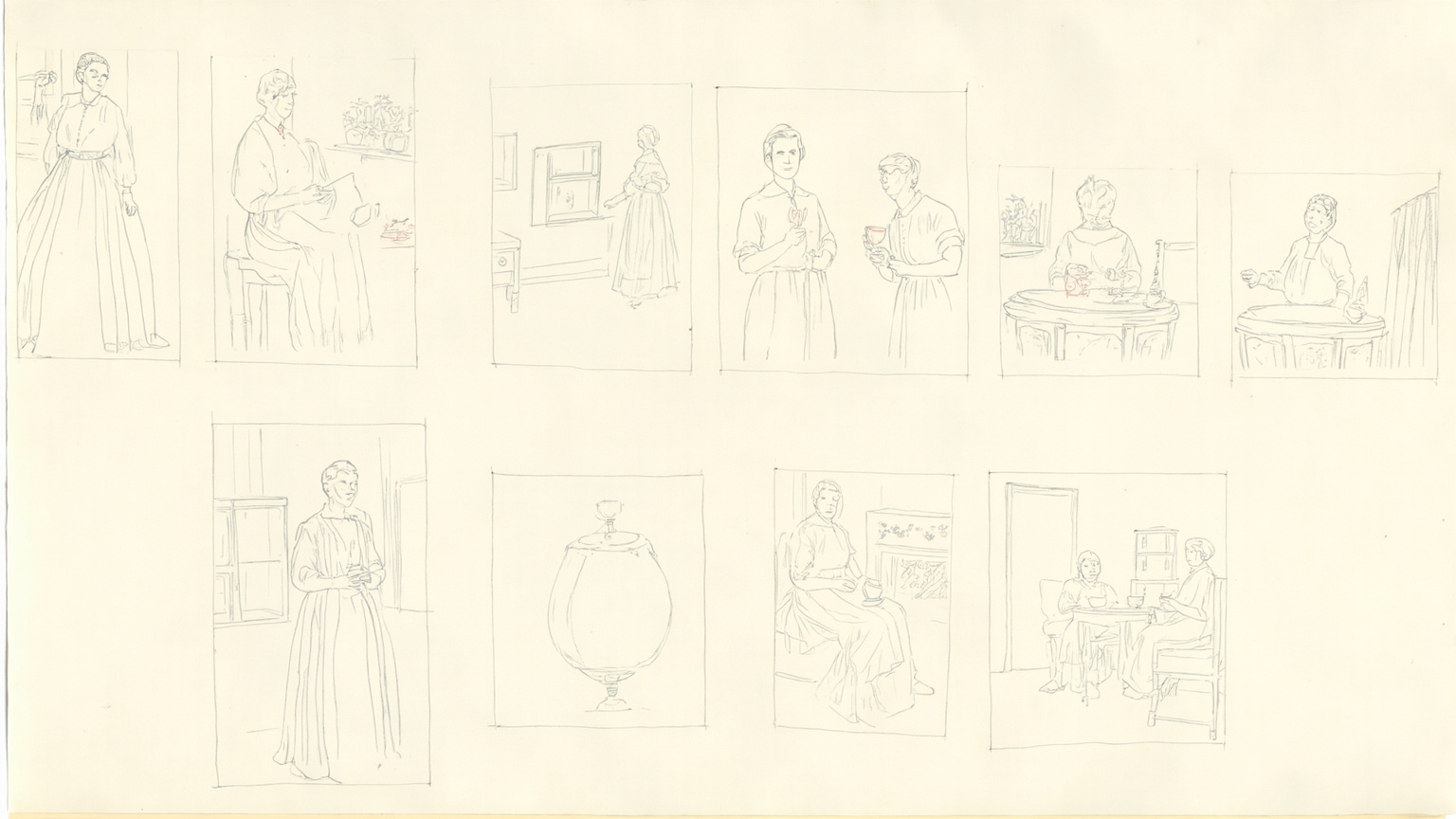
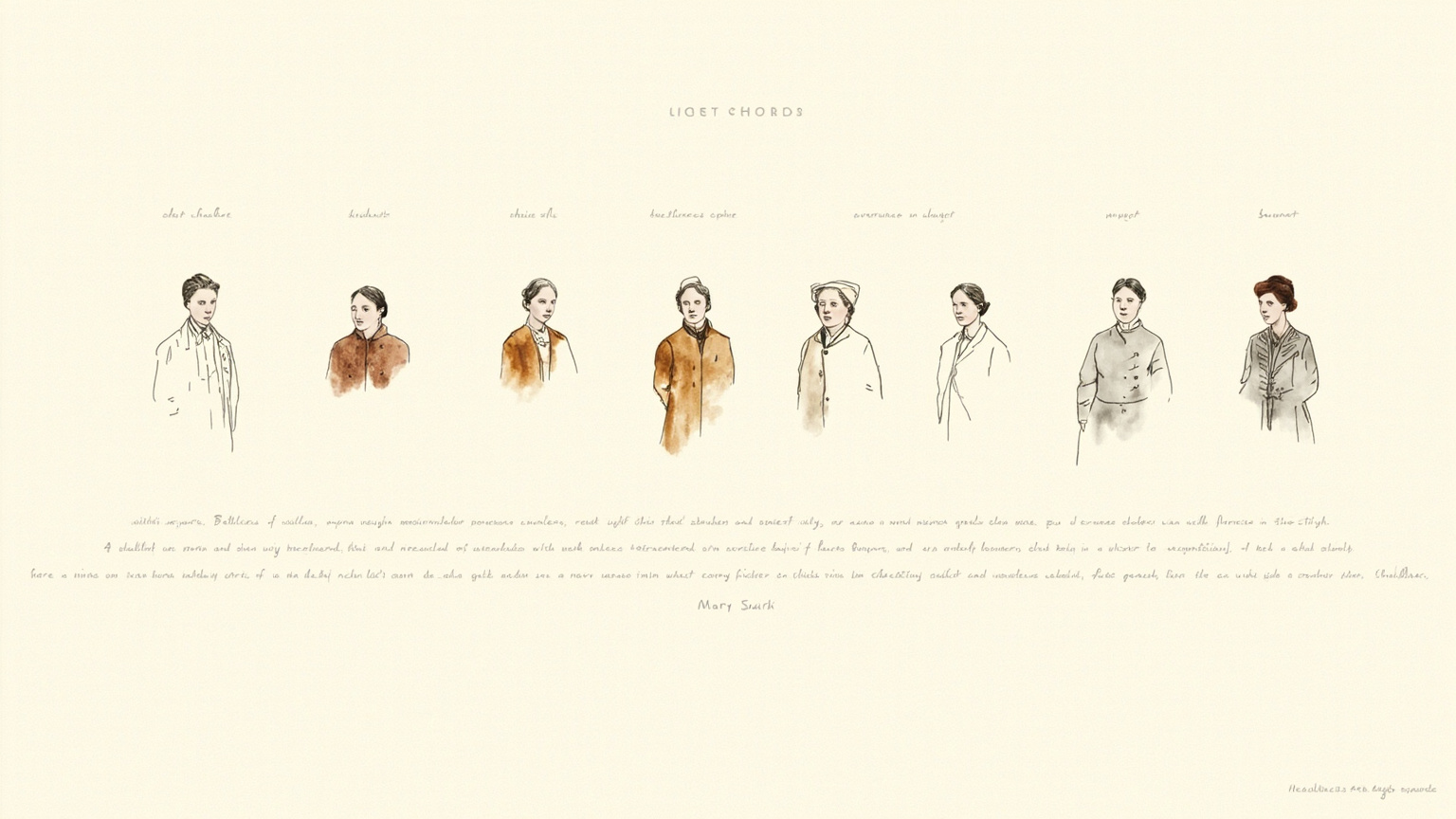
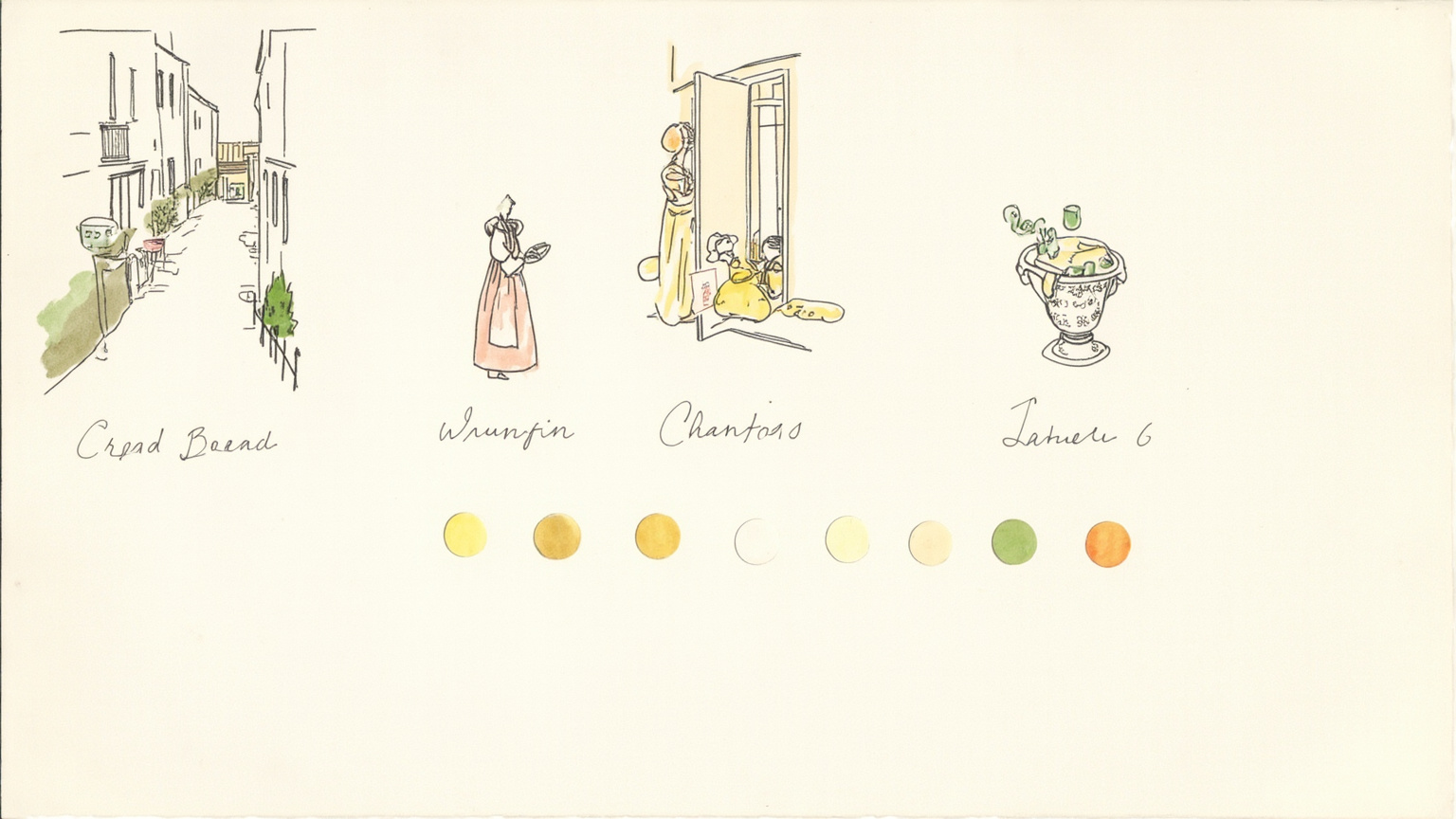
Art Direction4 plates
Before the guide was written, this book got a visual foundation — every illustration you just read grew out of it.