Death Comes for the Archbishop · Companion Guide
大主教之死
两个法国神父骑着骡子,把罗马的秩序带到新墨西哥的红岩台地上;结果他们反被这片土地教会了什么叫放手。
Opening: A Mule Train Comes Down the Mesa
A string of mules picks its way down from the edge of the mesa. The men leading them wear long black cassocks, hat brims pulled low. In the distance, the white wall of an adobe church throws back the afternoon light. This is the New Mexico Willa Cather wrote — not the dust-blown Hollywood West, but a highland of ochre red, ochre yellow, and sky blue, worn smooth by wind and light over centuries. A French bishop and the friend of his youth have been weeks on the road from the Missouri River, and Santa Fe is finally in sight.
They have not come to fight, and they have not come for gold. They have come to take over a forgotten diocese: adobe churches left by seventeenth-century Spanish Franciscans, most of them fallen half to ruin, a handful of local priests each guarding his own patch, newly arrived Anglo settlers pushing in, and the Pueblo people crowded to the margins. This is the picture the novel, published in 1927, opens with: one stretch of land, several layers of history stacked on top of each other, and two men walking in.
What Kind of Book This Is
Cather is one of the key figures of early-twentieth-century American modernism, though readers know her better for her prairie novels, O Pioneers! and My Ántonia — grassland, young women, immigrants putting down roots. But she said herself that Death Comes for the Archbishop was the book she valued most. It has held a place on one serious list after another of the hundred greatest American novels, and not for its plot. It attempts something almost no one else had tried: a long novel with no conventional climax, where space itself, not event, carries the story. It is a novel of mood, a work of religious contemplation, and a requiem for everyone who carried the memory of an old world while putting down roots in a new one.
The Two Leads and Their World
Bishop Latour comes from Auvergne, in his early forties, quiet, spare, walking as though he is always taking the measure of the landscape. He carries the hills of Auvergne inside him and studies New Mexico's red mesas as he goes, as if hunting for some spiritual correspondence between the two places. His old friend Father Vaillant is shorter, stockier, fond of meat and of laughing, with a gait like a pony's — less a man of contemplation than a missionary who keeps both feet on the ground. What each of them comes to feel about this land is where the book's real tension takes shape: one learns, slowly, how to leave it; the other never will.
The world they walk into has three layers of history stacked one on the other. At the base, thousands of years of Pueblo farming settlements, their tiered adobe houses stacked like honeycombs atop cliffs such as Acoma's. In the middle, the stone churches and vestments left behind by seventeenth-century Spanish missionaries. On top, the newly arrived French episcopal hierarchy and the world of American settlers. What Cather does well is give all three layers real weight — none of them is left standing around as backdrop.
On the Road: The First Year
The story opens in 1851. Latour and Vaillant set out from Ohio, travel up the Missouri River, then turn onto the Santa Fe Trail and head southwest. By the time their boots hit the dirt streets of Santa Fe, months have passed. The town is then an old capital with a Mexican and Indian flavor all its own, low adobe walls and wooden balconies lining the streets. The two priests settle in and quickly find there is far more to do than they expected: parishes to rebuild, local priests to bring into line, relations with the Native peoples to work out from scratch. All three land on their shoulders at once.
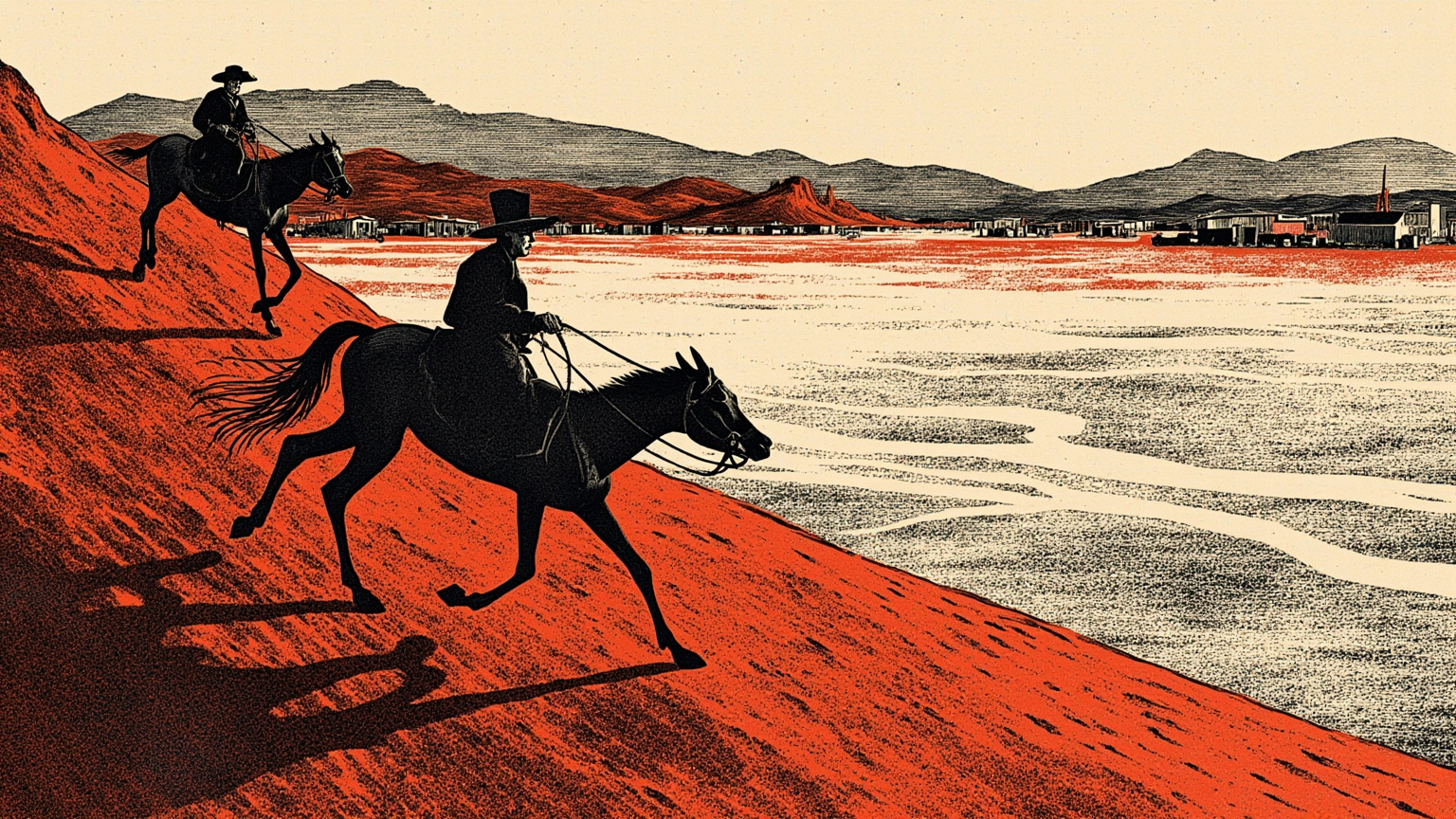
But the Bishop, who was very tired, sat still and watched the sun set behind the Sandia Mountains.
可是主教实在太累了,他一动不动地坐着,看着太阳落到桑迪亚山脉的背后去。
金句 · 第1章 · 一位主教的一生
Cather does not write the discomfort of new arrivals. She writes something slower — light moving across red rock, the heat an adobe wall holds through the afternoon, the smell of the air by lamplight at night. Before the characters have said much of anything, the land has already spoken for them.
The Skeleton of a Journey
Almost every chapter that follows unfolds on the road. The two priests ride mule-back from stop to stop with Indian guides, and each chapter reads like a station along the way, trading one stretch of light for another, one stone, one person. They build new parishes, patch up adobe churches half fallen to ruin, sit down to negotiate terms with local priests, baptize children in Pueblo villages, hear confession in the blowing sand. There is no climax in the ordinary sense — no villain, no showdown, no suspense. What stays with the reader is not what happens but the churches, one after another, their facades worn by wind.
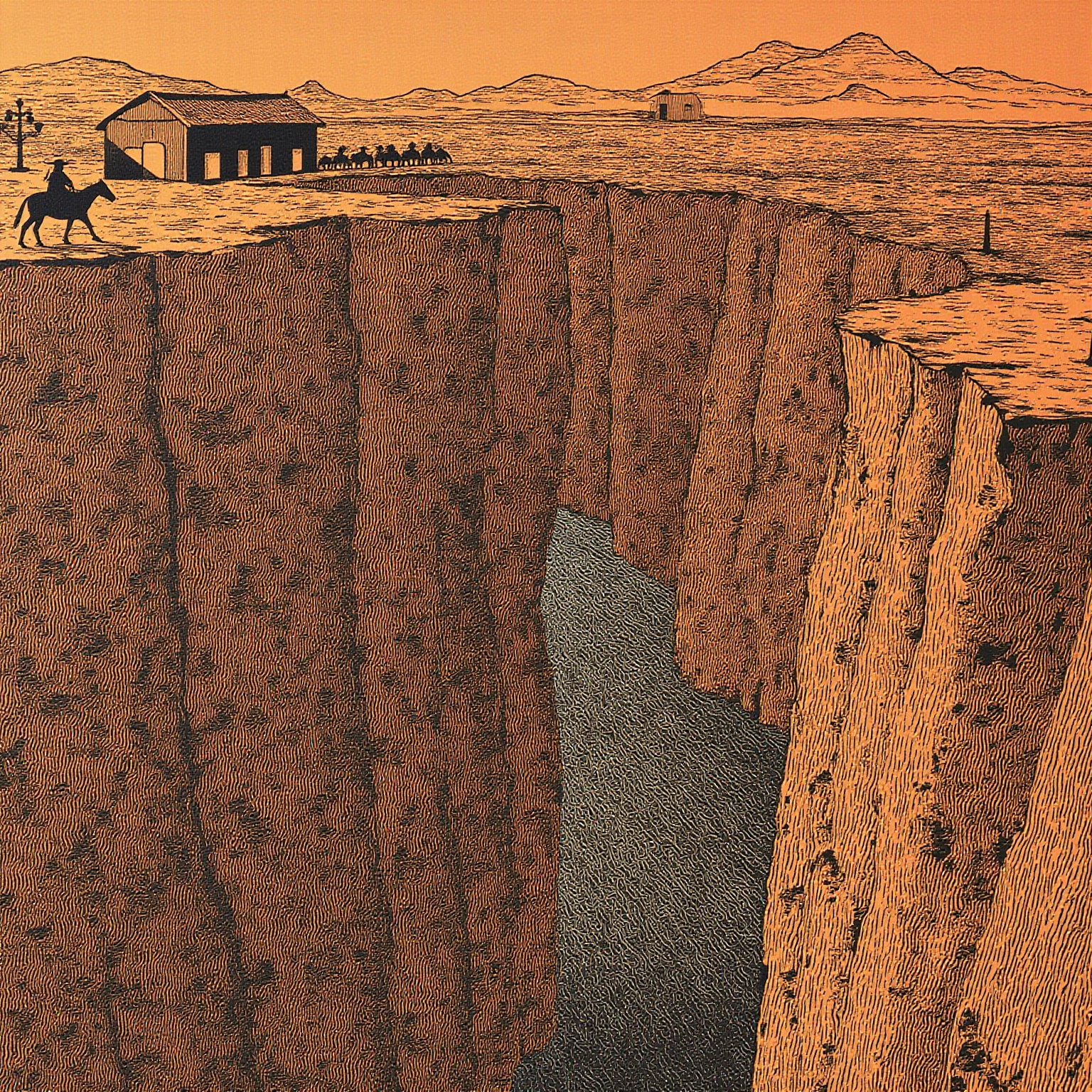
Each chapter of his life was a stage of the journey; every one brought its own light and its own shadows.
他生命里的每一节都是路上的一段驿程;每一段自会带来它自己的光,和它自己的阴影。
金句 · 第3章 · 沿途的驿站
In 1927 this approach ran nearly opposite to the grain. American fiction of the day favored big plots and hard conflict; Cather instead kept her reader on a mule's back and let landscape, objects, and conversation slow everything down. That choice is a large part of why the book later came to stand as one of the founding works of American modernism.
The Clash with Padre Martínez
The new episcopal system has barely arrived when it meets its first real obstacle — not terrain, but a man. Padre Martínez is an old Spanish-descended priest, native to New Mexico, who has held his parish for decades and keeps church property, land, and his network of parishioners firmly in his own hands. He stands for something older, more worldly, more political — the kind of tension that pulls between an Old World church and the reforming pressures coming up from North America. Latour never breaks openly with him, but there is no warmth between them either. Their several rounds of sparring bring the real question — who actually has the right to govern this land — out into the open.
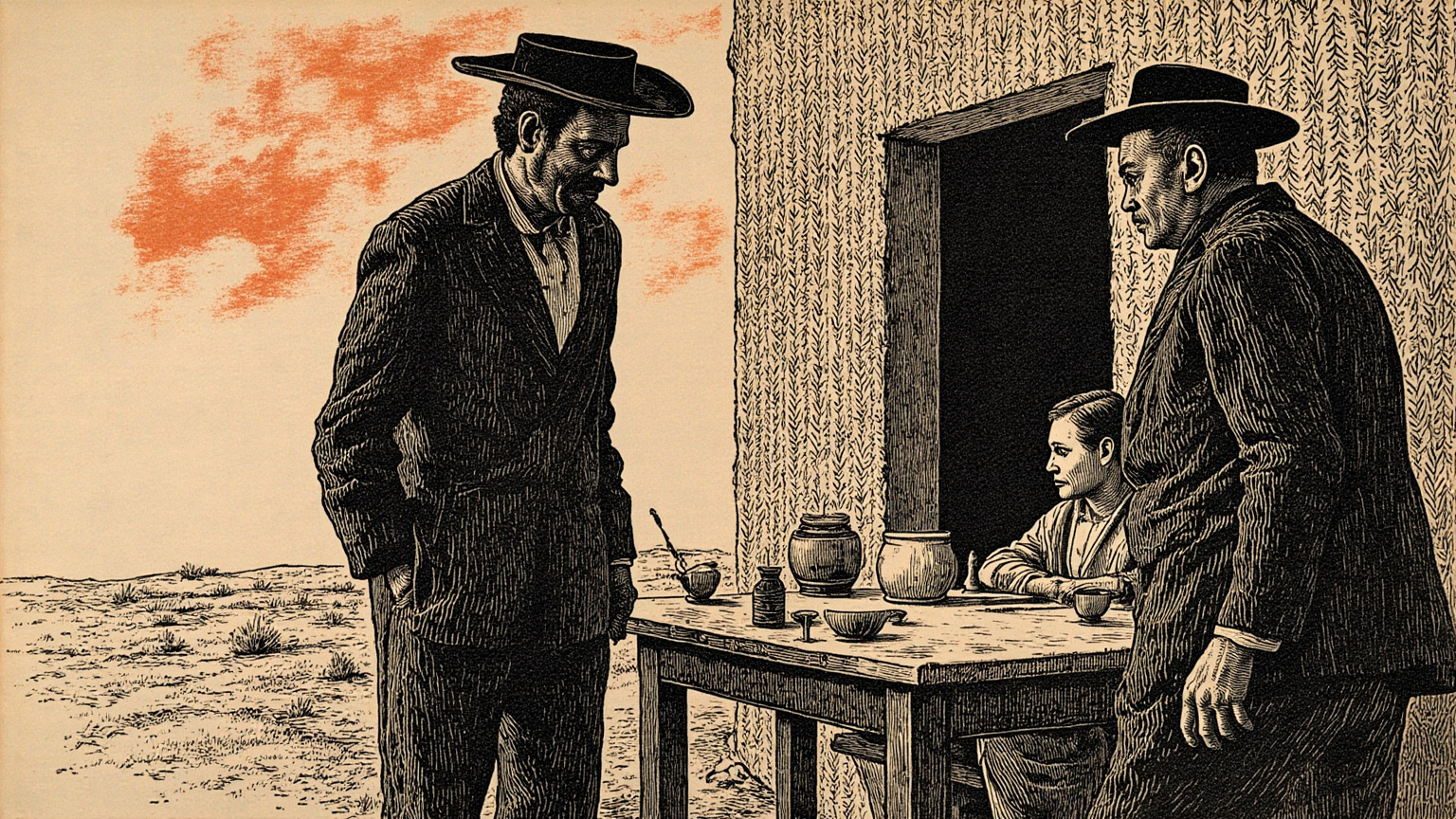
Father Martinez was an old man and had been a priest longer than the Bishop had been alive.
马丁内斯神甫已经老了,他做神父的年头,比主教活过的年头还长。
金句 · 第4章 · 与旧秩序的交锋
Cather never takes sides in writing this clash. Martínez is not a villain — he has his reasons. And Latour has not come to liberate anyone; he has simply brought a set of rules from Rome and means to make them stand on this ground.
Acoma: Relics Beneath the Sky City
One of the book's high points is Acoma, the Pueblo known as the Sky City. Latour climbs the mesa and comes upon the ruins of the mission church of San Esteban del Rey, raised by seventeenth-century Spanish missionaries at the foot of the cliffs — the walls still standing, half the vault fallen in. He walks into the ruin and his hand finds a vestment whose pattern has been worn smooth by wind and sand, a rusted iron candlestick, a saint's image cut into stone. Object by object, without a word, they tell the story of an entire generation of missionaries — who came, who stayed, who never made it home.
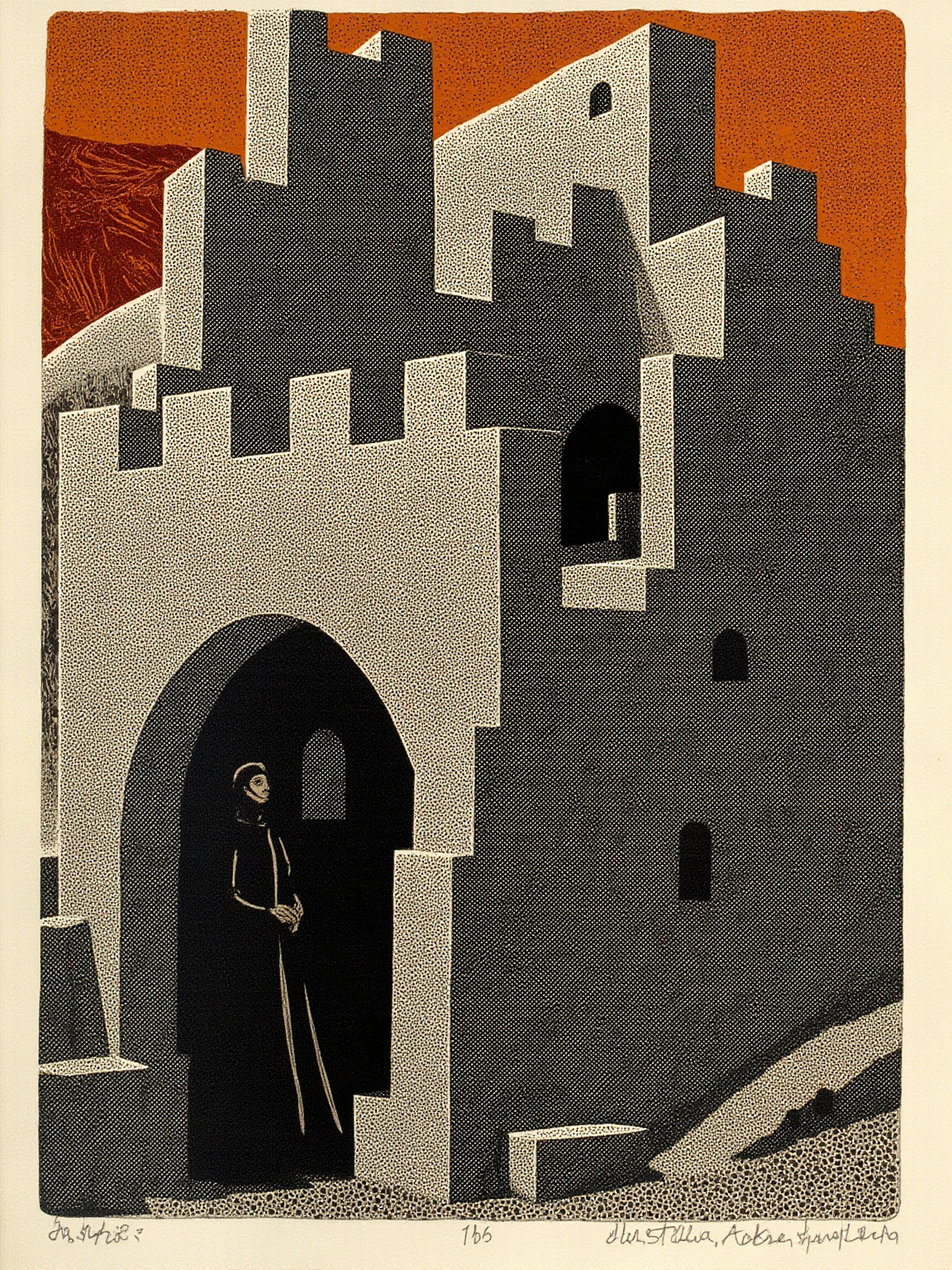
The old bell-rope hung down from the belfry, frayed and swaying in the wind, but no hand had pulled it for a hundred years.
那条老旧的钟绳从钟楼垂下来,纤维散着,在风里轻轻摆,可已经有一百年没有谁的手拽过它。
金句 · 第5章 · Acoma 圣埃斯特万
This chapter is the clearest demonstration of Cather's method in the whole book. She does not write that Latour is moved. She has his fingers touch the stone and leaves the reader to feel, unassisted, the weight of the century and more that separates them. Faith here works through the fingertips, not the sermon.
Sitting with the Old Pueblo Chief
In another village, an old Pueblo chief receives the new bishop. At the moment the two men sit down, Cather lets neither one outweigh the other. The old chief carries a spiritual order that has held together through siege and rewritten history — his understanding of this land is whole, running from religion to the planting calendar to the stars. Latour makes no attempt to instruct him. He simply sits and listens. That sitting is the turning point of the book's whole argument: for the first time, a white missionary admits that another civilization, whole and deep, already stands on this ground.
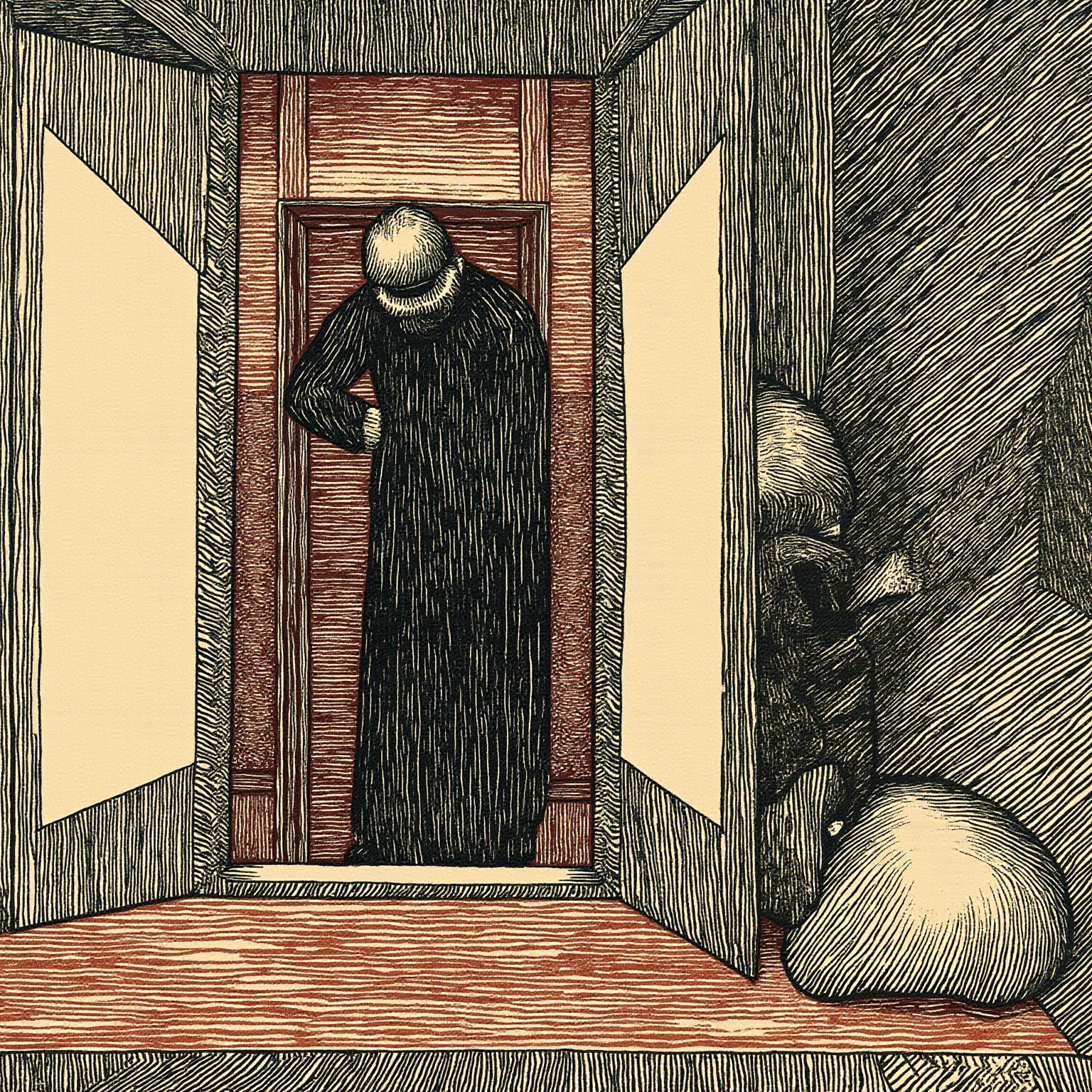
The old Indian sat as still as the mesa itself, and his silence was older than any church.
那位印第安老人坐着不动,像脚下那片台地一样沉默,而他的沉默比任何一座教堂都要古老。
金句 · 第7章 · 与普韦布洛老族长对坐
Cather's restraint here is total. She never lets the meeting swell into a dramatic moment of revelation — she simply lets two old men sit together for an afternoon. That choice carries more weight than any adjective could.
Learning to Leave, Learning to Stay
Years of riding the desert wear Latour down — poor food, illness, health spent past its limit. He eventually steps down and moves east to serve as an assistant bishop. Vaillant, the short priest who never would leave, stays behind to carry the whole territory's parish work alone. Their parting has no long speeches. They quietly divide their things and finish saying what needs saying. One learning to leave, one learning to stay, becomes the book's silent counterpoint.
The split between them is not a betrayal — it is the same calling completed two different ways. Latour believes he owes it to the work to step aside and let someone new take over. Vaillant believes that as long as he can still walk, he still belongs on the road.
Vaillant's Night in the Snow
Years later, deep winter. Vaillant sets out again, this time to see to Christmas duties at a Pueblo village. Snow, bitter wind, a long road, exhaustion past bearing. He goes down in the small plain church there and does not get up again. Cather writes his death without ornament, without lament — a few details only: fatigue, the quiet of a corner of the church, a window half caked with snow. She writes Vaillant's death as a completion, not a defeat.
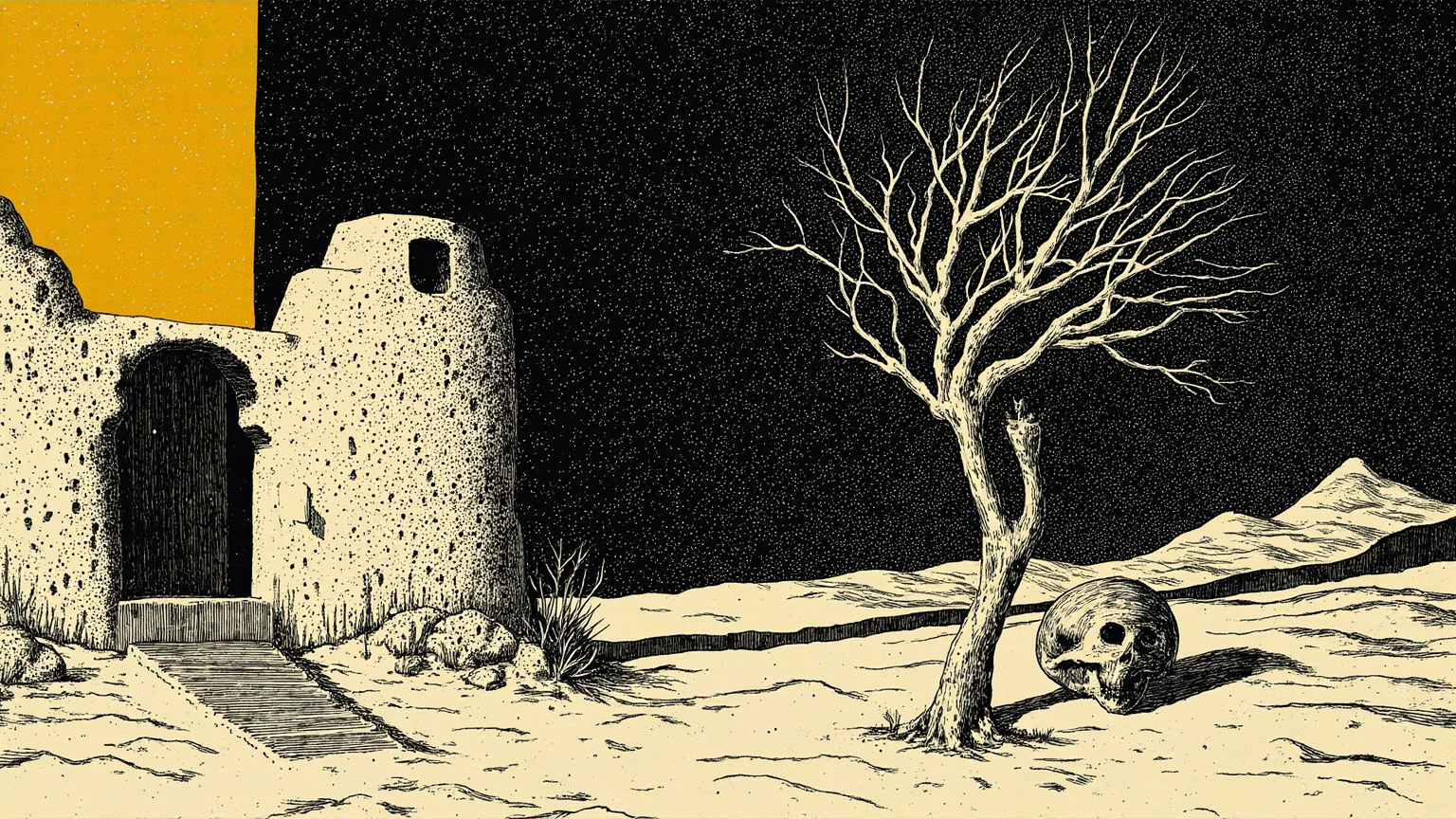
He died as he had lived, on the road, with the snow falling outside and no one to hold his hand.
他死的时候正是他活着的样子——在路上,外头雪在下,身边没有一只手。
金句 · 第9章 · 瓦兰的雪夜
I stopped short the first time I got here myself — the book barely sets it up, and Vaillant is simply gone. It took a while to understand that this is exactly what Cather means: finishing is finishing, and it needs no long passage of grief tacked on after it.
The subject here is not a man's death but how a calling gets carried to its end.
Is It Still Worth Reading Today
It is remembered for reasons that have nothing to do with the label American Western novel. It manages three things that still look hard, even now, looking back. First, it turns landscape into a forge for the spirit rather than a backdrop. Second, it lets objects — a church, a vestment, an iron candlestick — carry the story like protagonists. Third, it writes a life with no climax and asks the reader to walk it slowly, and that slowness is exactly what lets you in. It was written for every immigrant who carried the memory of an old world while putting down roots in a new one, and it is written just as much for anyone today slowly finding their footing on unfamiliar ground.
If you already know Cather's prairie novels, this one will crack your sense of her wide open — the same writer working on an entirely different scale. If you have never read Cather, this is the steadiest place to start. It asks nothing of you in advance. You only have to be willing to follow the mule train in.
Why Go Read the Novel Itself
This guide gives you the skeleton. The novel gives you the light lying over it — the vestment at the foot of Acoma's cliffs, its pattern worn away by wind and sand, Vaillant's last breath in the snow, the bleached white of the desert at dawn along the Santa Fe Trail, and the particular force with which Cather can write a sentence so it feels dug straight out of the ground. No summary can hand you any of that. Knowing the plot in advance actually helps — it frees your eyes to watch the light, the cracks in an adobe wall, two priests sitting across a table from each other for a whole afternoon. The book is not long, but you will ride it to the end on the two priests' mule-backs.
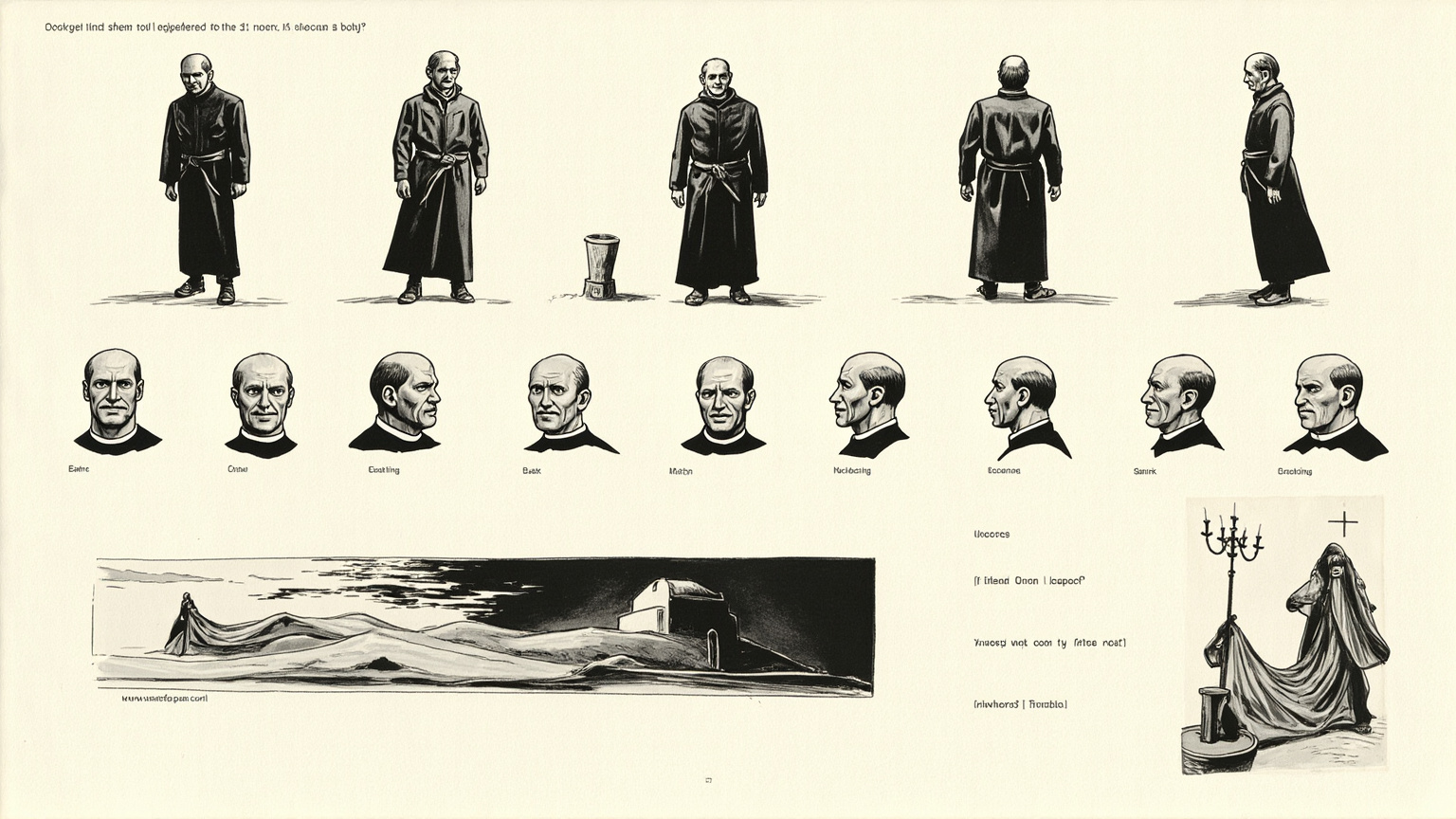
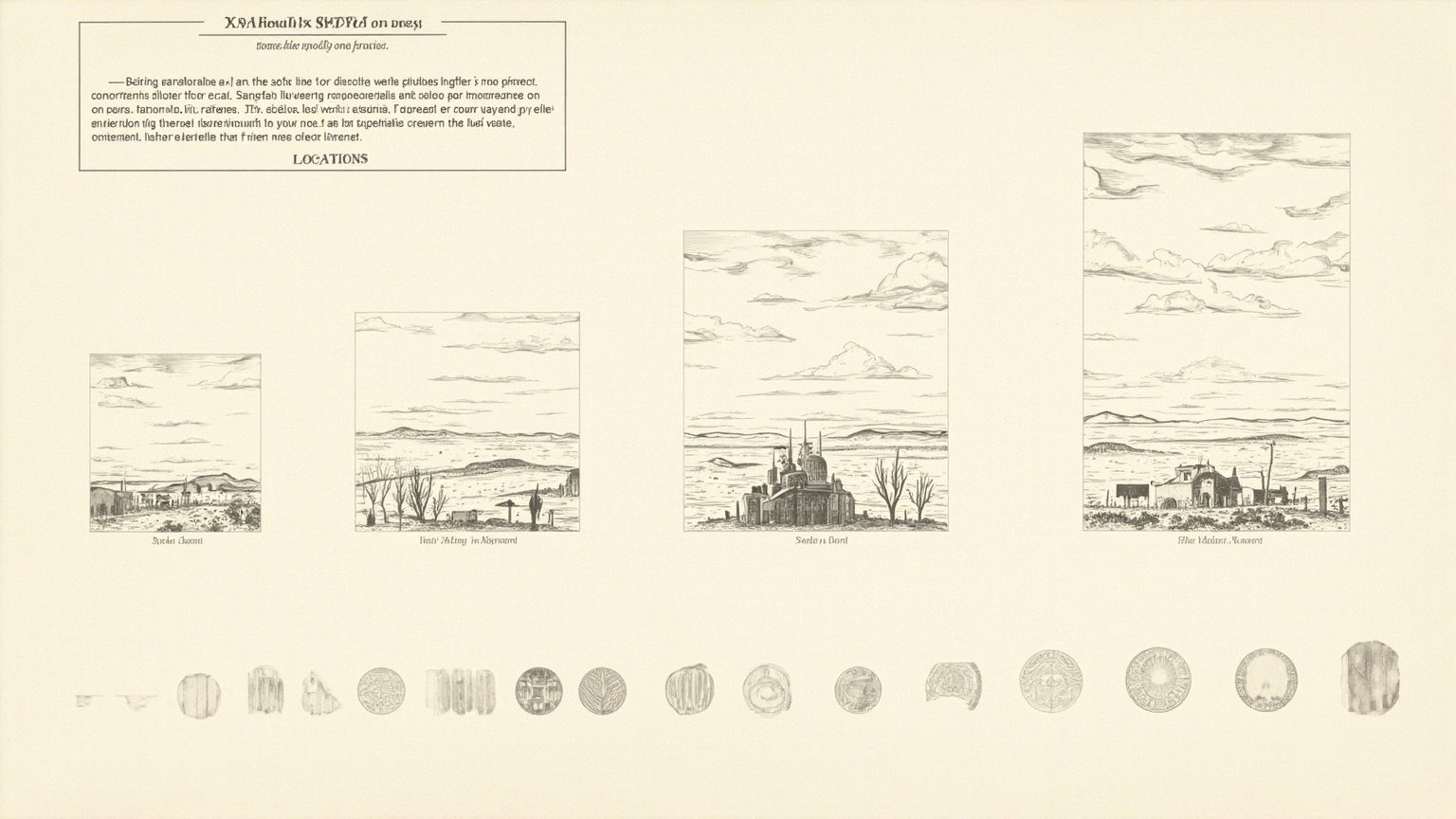
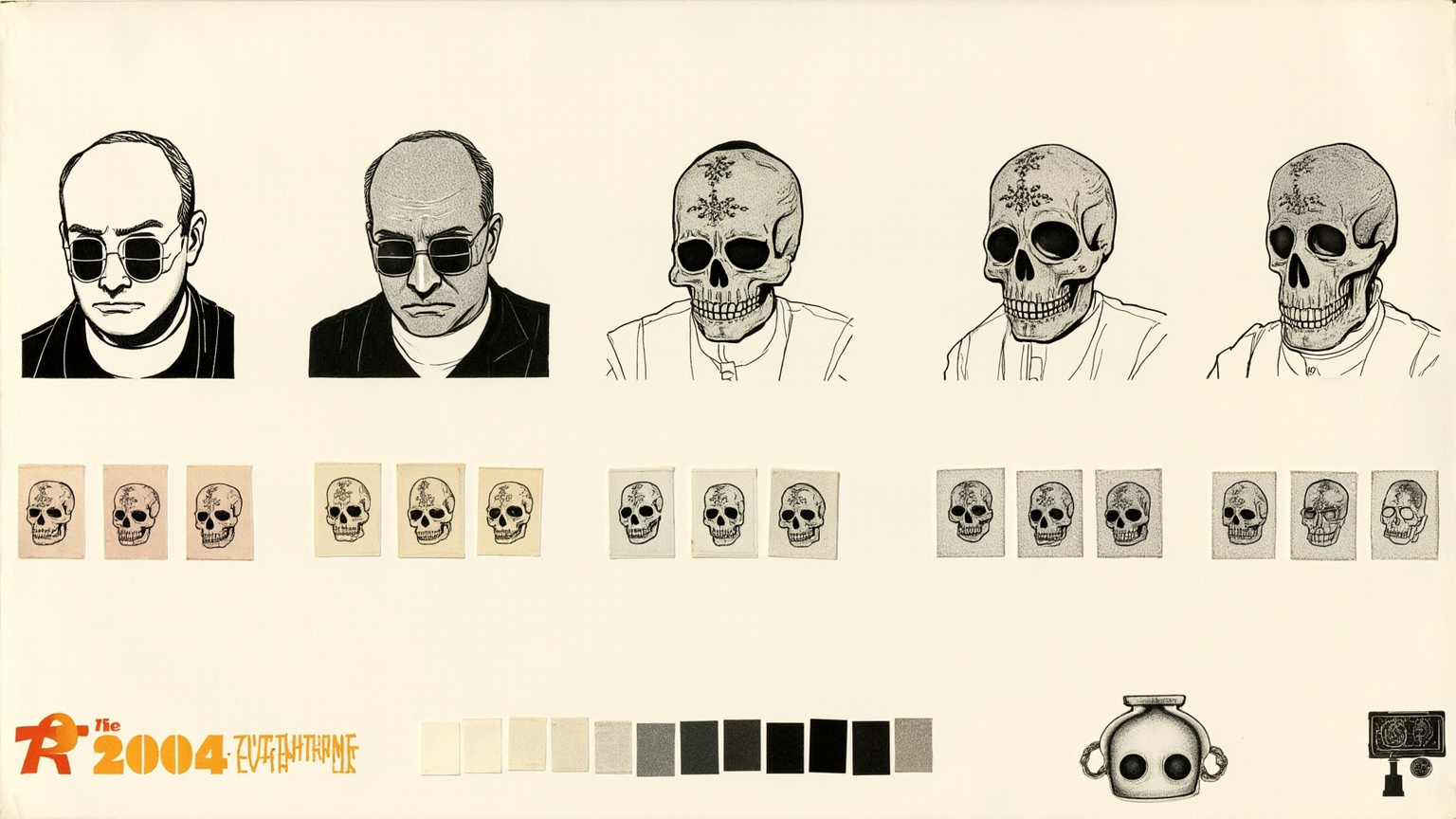
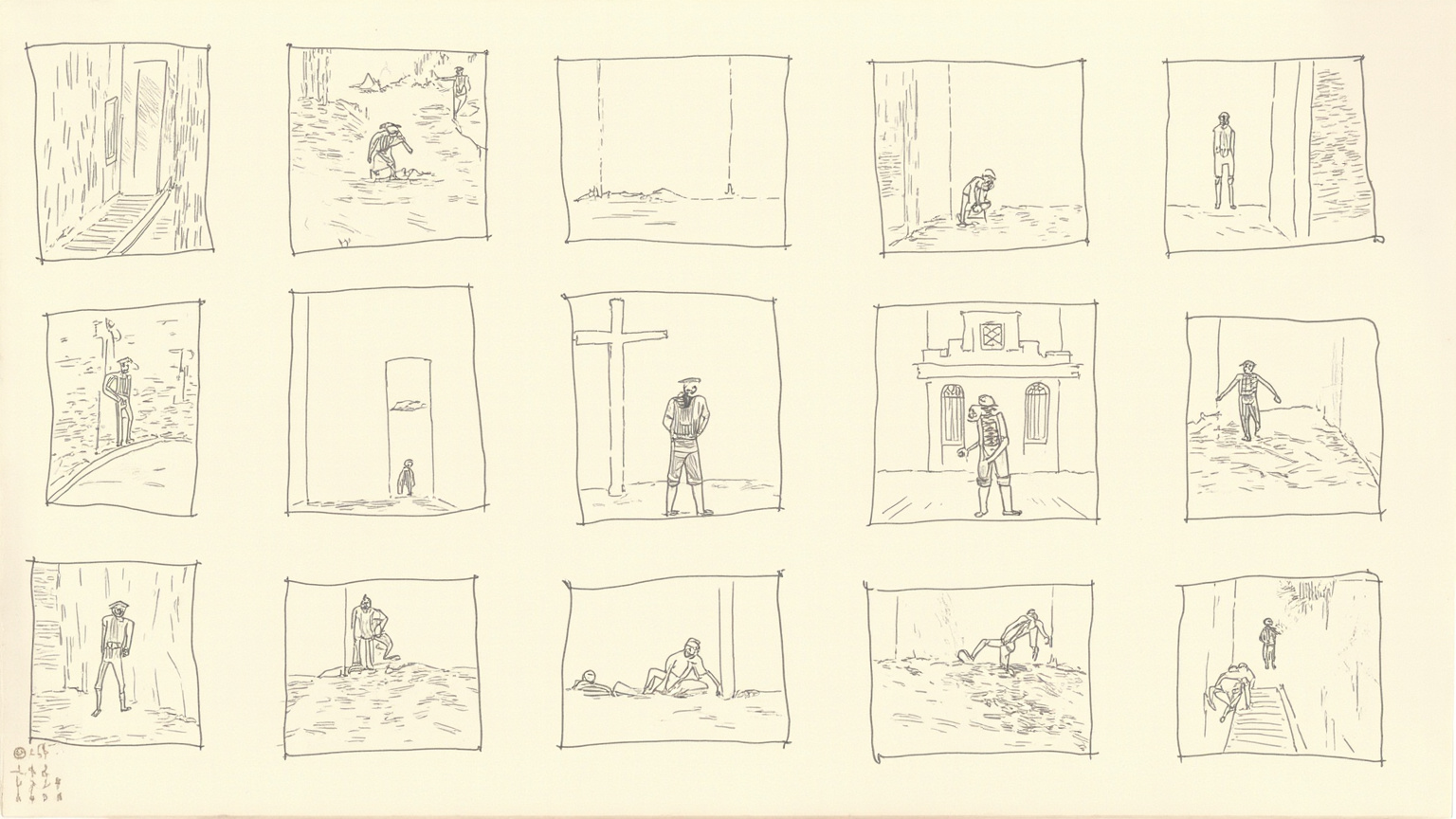
Art Direction4 plates
Before the guide was written, this book got a visual foundation — every illustration you just read grew out of it.