Diary of a Madman · Companion Guide
狂人日记
一个看清字缝吃人的读书人,被合上书页的人群叫作疯子——日记翻完,只剩一声救救孩子。
The Opening: Something Wrong with the Moonlight
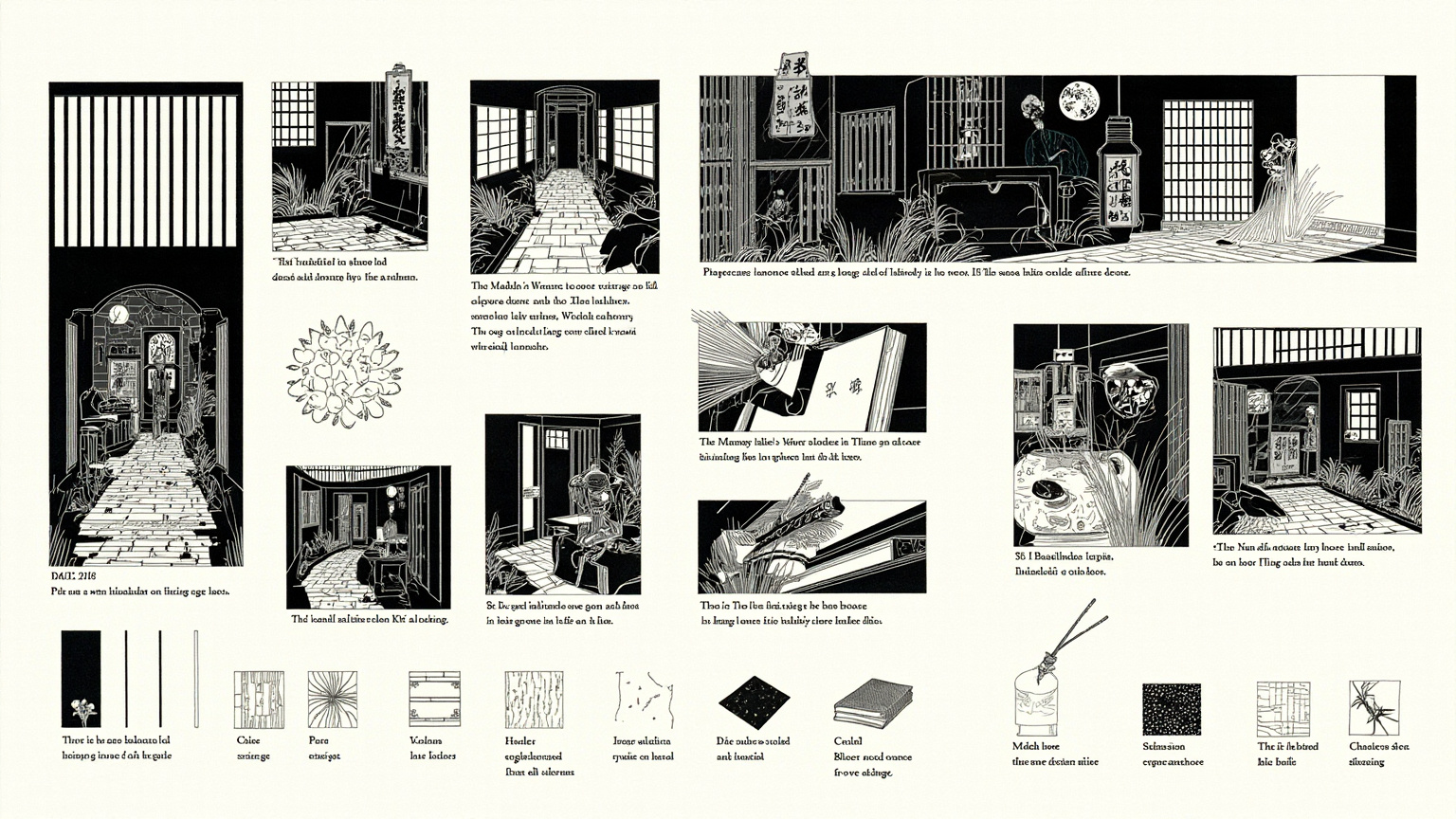
The first entry opens on moonlight. A young man sits in the old family house and looks up to find tonight's moonlight strangely bright — bright enough to raise the hairs on his neck. He turns back to a book and finds the pages crowded with talk of benevolence and morality, but between the lines — he swears he isn't seeing things — two words are hidden: eat people.
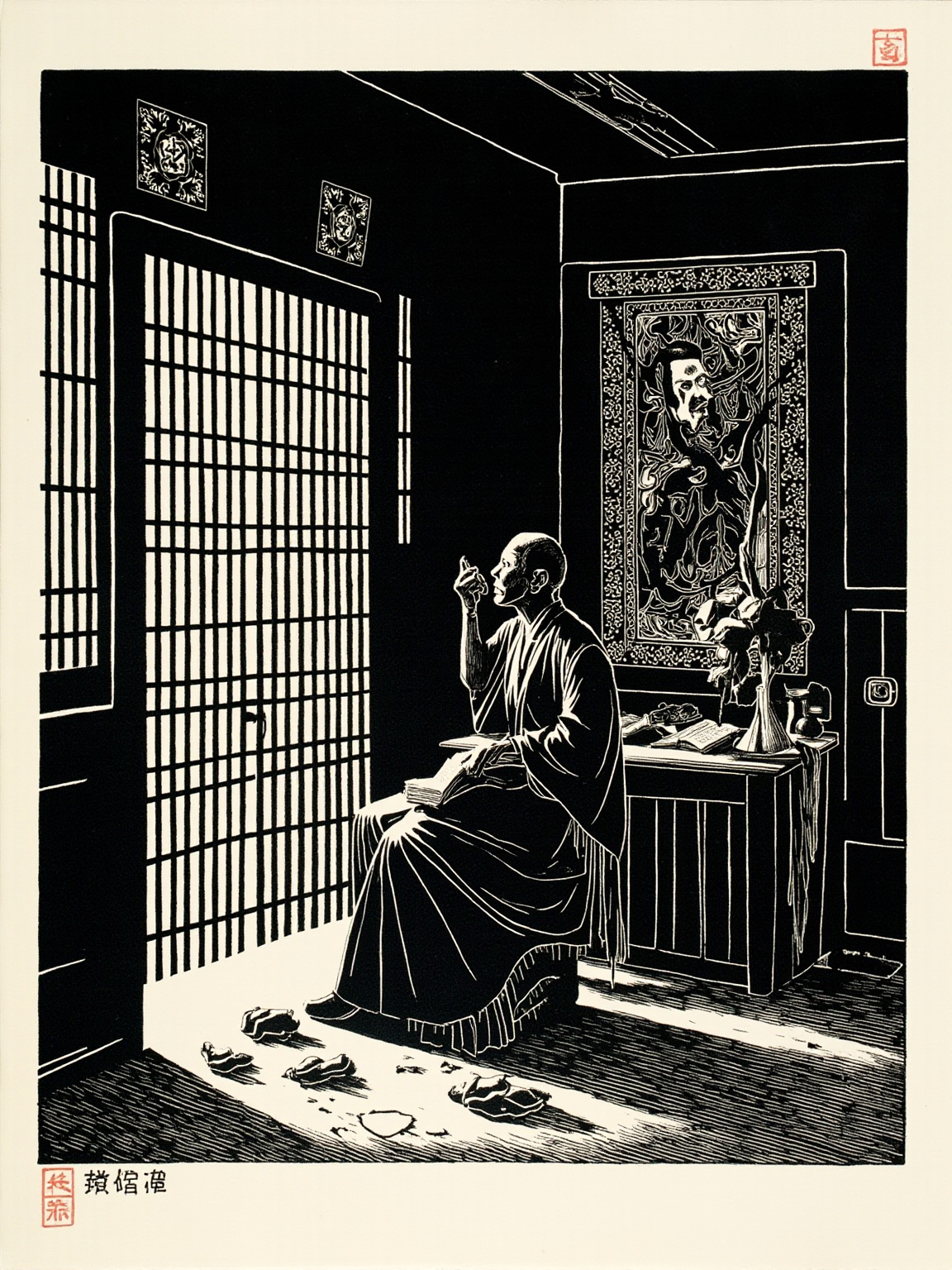
Tonight the moonlight is very bright. I have not seen it for over thirty years; tonight I saw it clearly.
今天晚上,很好的月光。我不见他已是三十多年;今天见了,精神分外爽快。
金句 · 第一则 · 月光开篇
What Kind of Book Is This
Lu Xun published it in New Youth in May 1918, the first Chinese short story written in vernacular Chinese. Before it, fiction spoke in classical Chinese; after it, the vernacular finally had legs to stand on. The story is absurdly short, thirteen diary entries, fewer than five thousand words in all, and yet no account of the New Culture Movement can get around those five thousand words. Wind the clock back a little: the late Qing had just collapsed, the Republic hadn't yet found its footing, and the old gentry's clan rules still ran the streets. What Lu Xun set out to write was daily life under those rules — dressed up as benevolence and morality, but running on an order that eats people. He hands the job of tearing through that facade to a young man everyone else has already written off as mad.
Characters and World
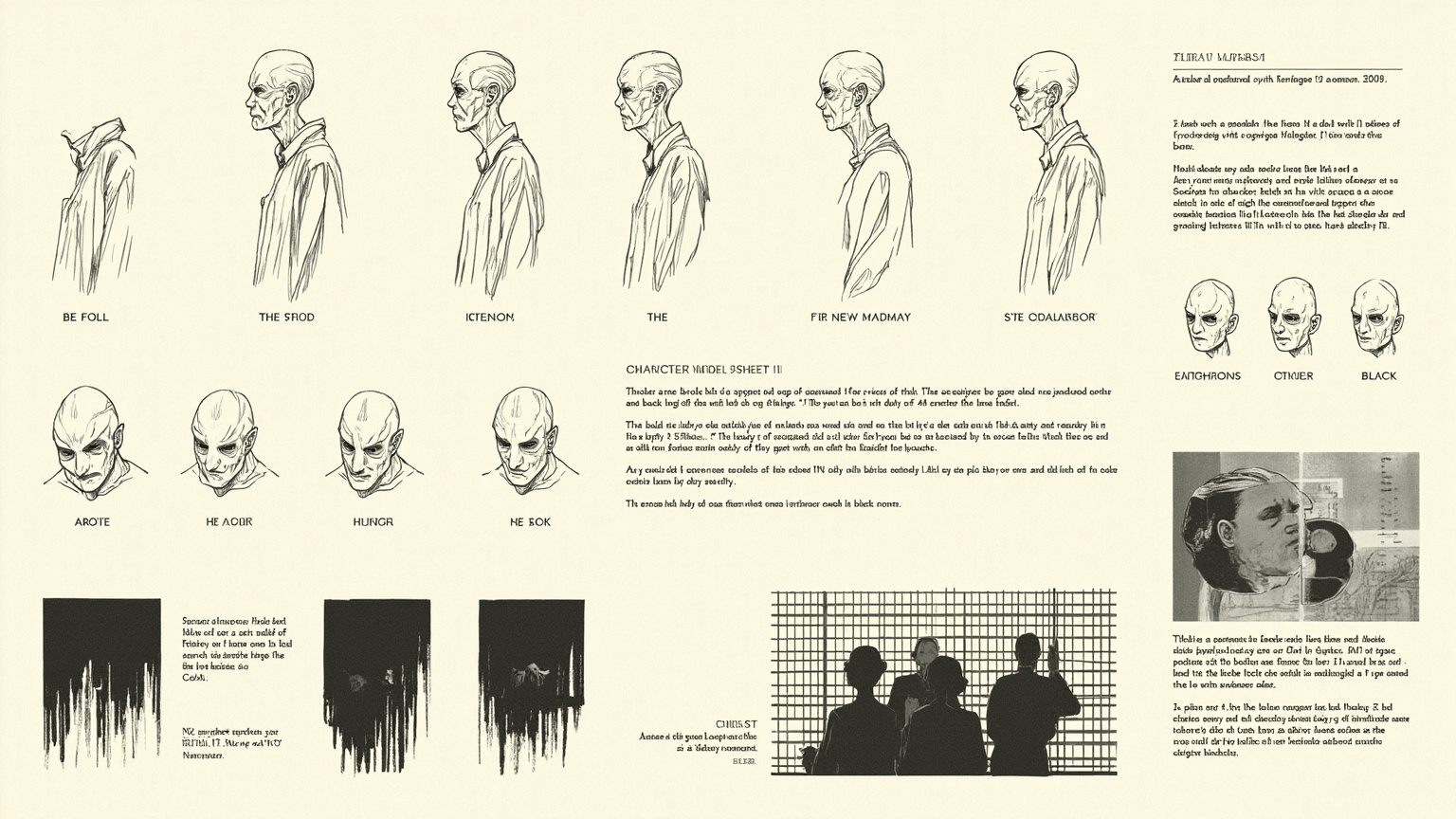
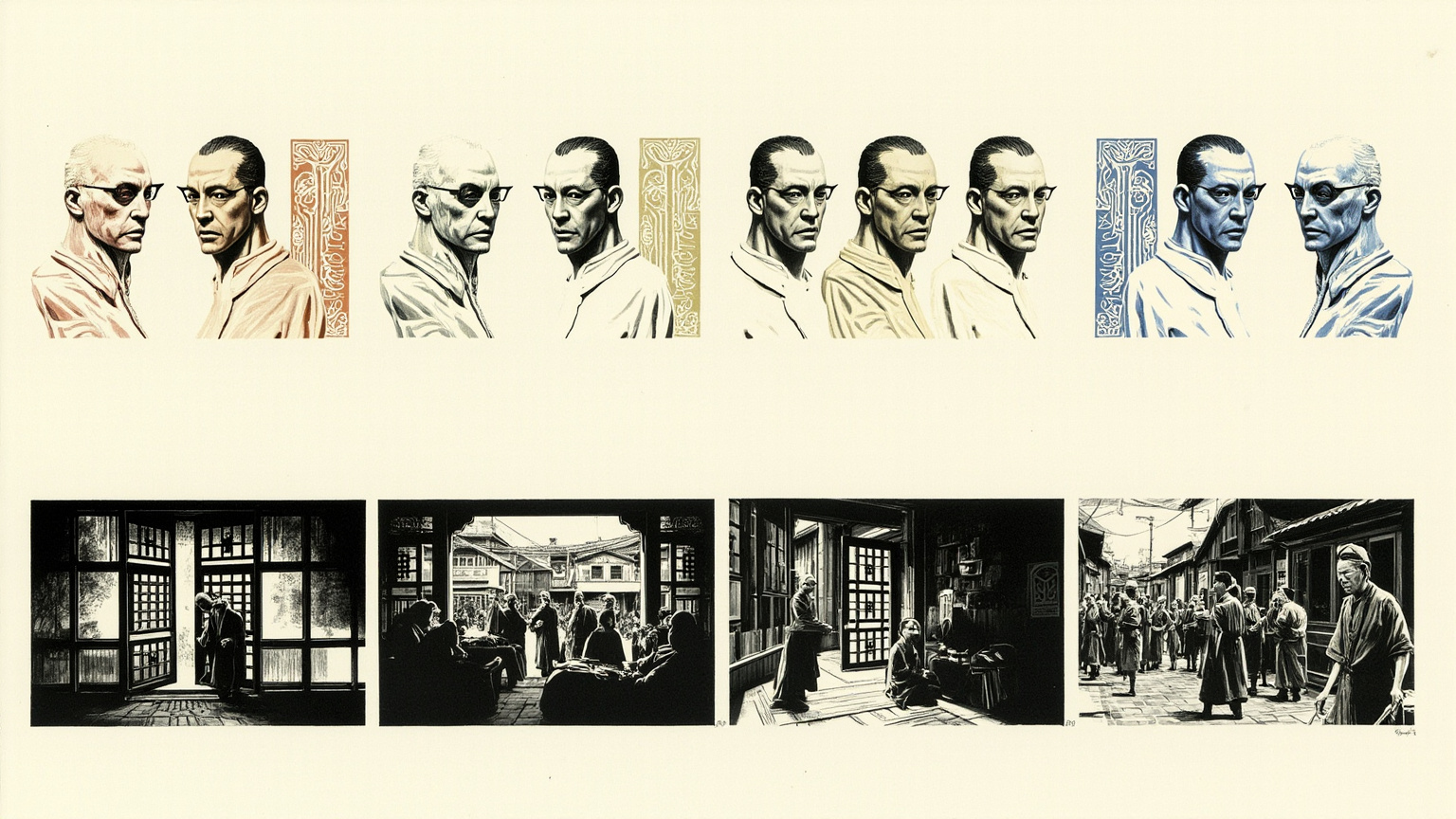
Every character in the book would fit around one small table. The narrator writes the diary. The village calls him the Madman; he believes he sees more clearly than anyone. He is a young scholar, thin, living in his brother's old house, watched constantly by family and neighbors alike. The brother is the old-style head of the household, whose every sentence boils down to eat up, quick — he has swallowed the whole code of propriety himself and wants his younger brother to choke it down too. One ring further out stand the neighbors: Mr. Gujiu next door, Squire Zhao in the village, Chen the Fifth in town. They aren't really separate people so much as one set of eyes, pooled together, that sees straight through him. Beyond them are tenants, neighbors, bystanders, lumped together as they. And at the very end there is a child, standing in the street, whom the Madman happens on and pins his last hope to. The world is small: one dim old house, one lane in a Jiangnan town. There is exactly one rule — whatever your elders say, goes. Benevolence and morality are the storefront of propriety; eating people is what's in the back room.
Reading History: What He Sees
From the second entry on, the more the Madman reads, the less sense the world makes. He opens an old history and starts from four characters: exchange children and eat them, an allusion from Mencius, describing fathers in a time of chaos who cannot bear to eat their own children and trade with their neighbors instead. He keeps reading down the page and finds people eating people in dynasty after dynasty, the method changing, the substance never. He finally reaches a verdict on his own world: the place he lives is a society that eats people.
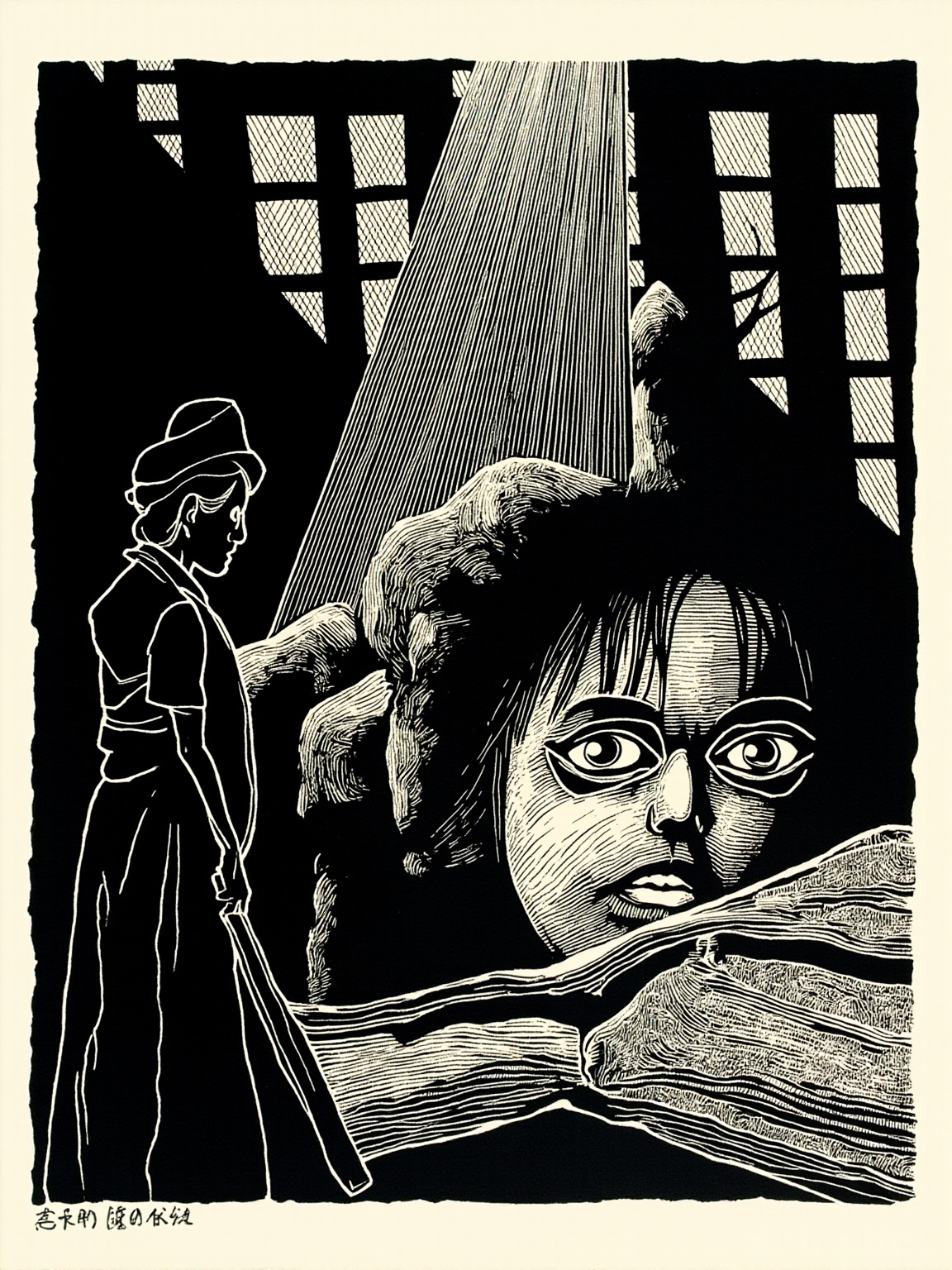
I opened the book right through from cover to cover, and saw written on every page, between the lines, in letters of blood: EAT PEOPLE.
我翻开历史一查……满本都写着两个字是吃人。
金句 · 第四则 · 翻史见字缝
The Net of Stares: They're All Trying to Eat Him
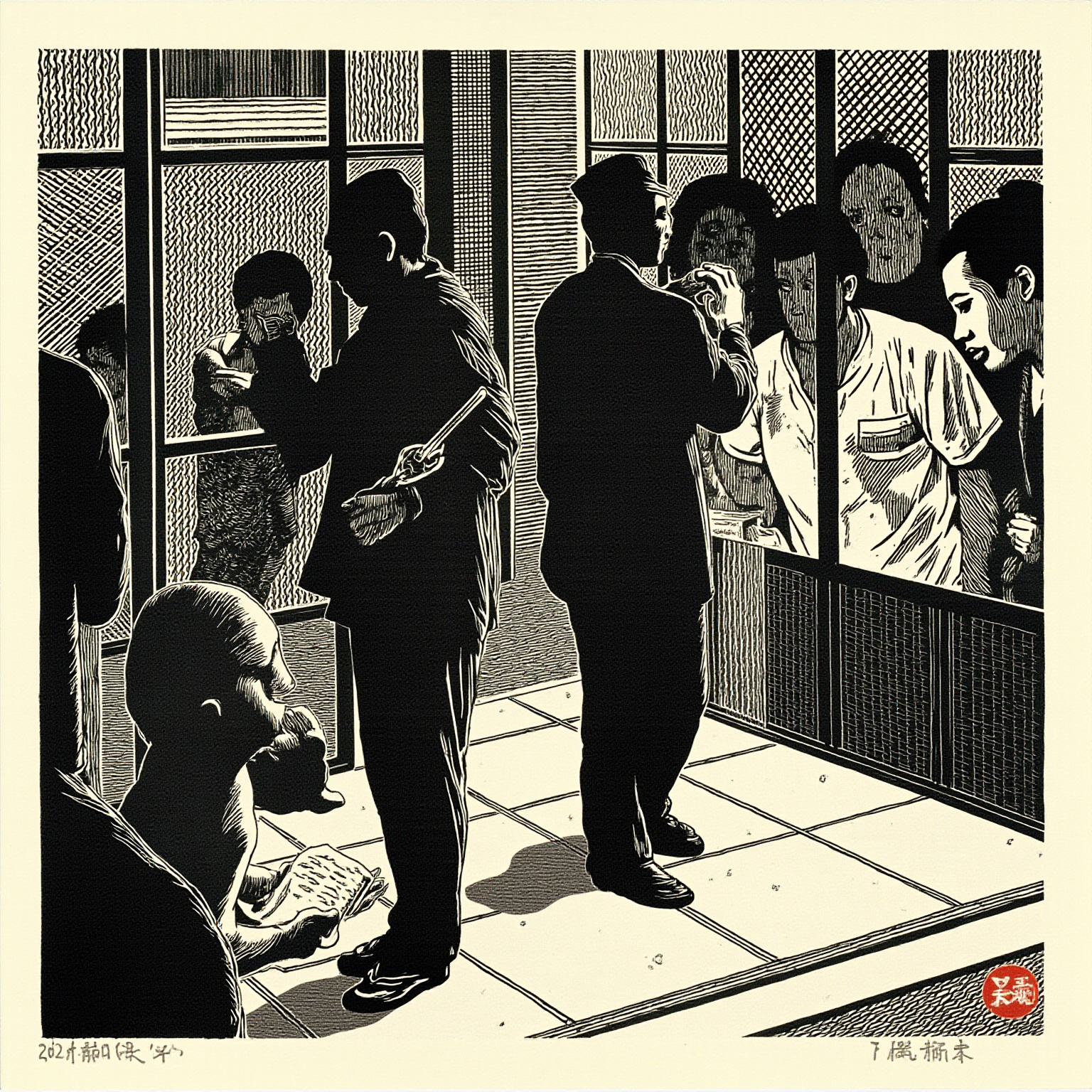
His brother brings in a bowl and tells him to eat, quick. The Madman stares back into his brother's eyes and something is wrong — what's in that look isn't concern, it's hunger. Out on the corner, the village trades whispers: Mr. Gujiu, Chen the Fifth, Squire Zhao each wear a different face, but every pair of eyes points the same way. For the first time he understands what it means to be watched: to be watched is to be eaten. Lu Xun writes this passage with almost nothing, not one adjective for horror, only stare after stare. Nobody has laid a hand on him yet. The looking alone is enough to swallow him alive.
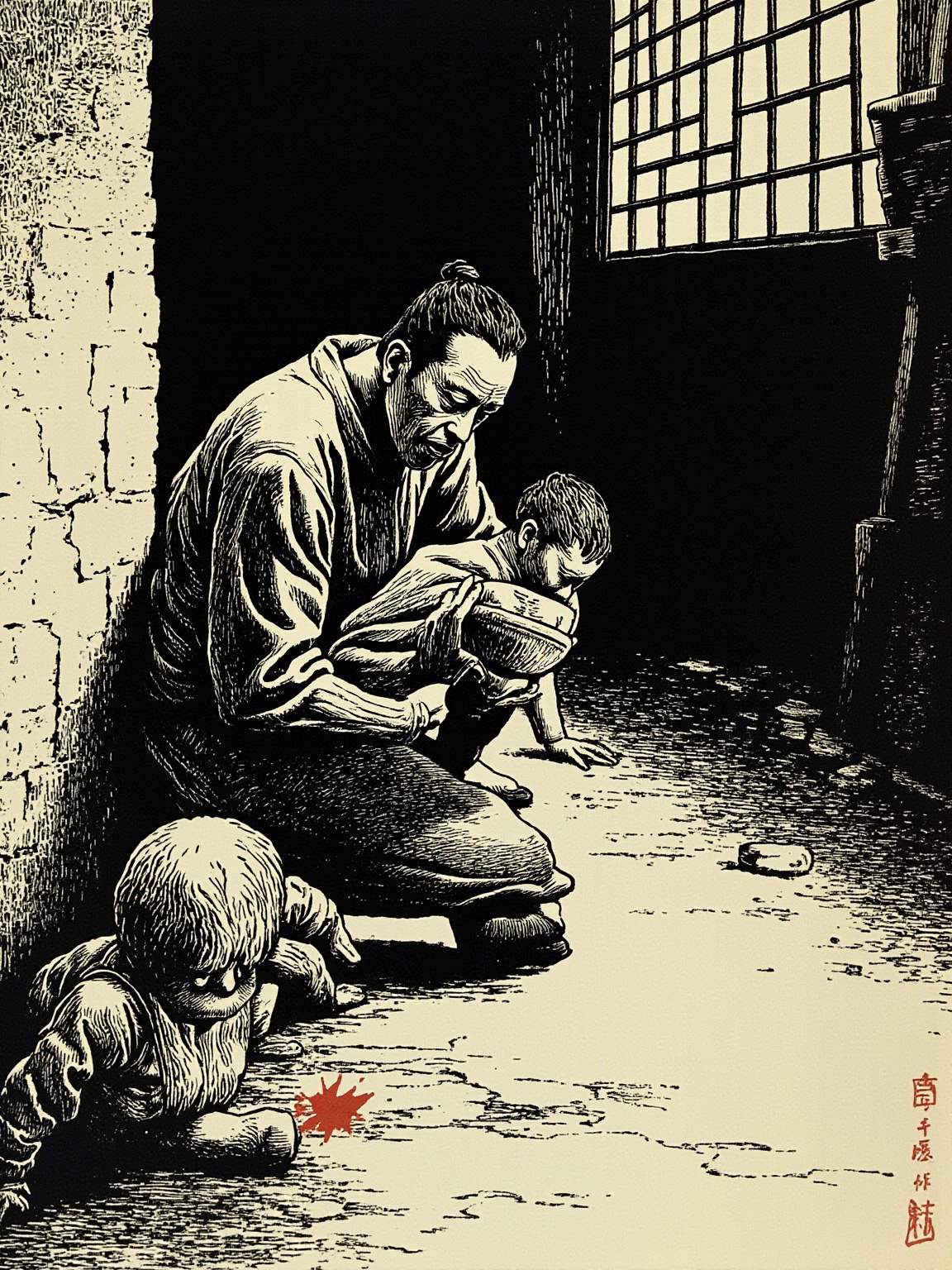
Their eyes are not the eyes of human beings. Yet I, too, walk among them — am I a beast, or am I a man?
他们的眼睛,全不像正常人的眼睛,他们的眼睛里似乎还有那种东西——我也是人,他们想要吃我了!
金句 · 第三则 · 众人之眼
Self-Doubt and Persuasion: His Own Hands Aren't Clean
From the third entry on, the Madman starts pleading his case. He tells his brother he could change the family name from this day on, meaning: stop being part of a family that eats people. He begs them to spare the children, meaning: don't feed the next generation in too. Nobody budges. His brother's face just changes, and he gets filed away as a lunatic instead — nobody bothers arguing with a sane man, but a madman's words get him into real trouble. The sharpest cut lands in the eleventh entry. The Madman suddenly turns the question on himself: hadn't he, without quite meaning to, eaten a few slices of his own sister's flesh? Nobody forced this confession out of him. He dug up the old ledger himself and admitted he had once been a working part of this same order that eats people. For the clearest-eyed man in the story to find his own hands unclean is worse than being eaten by the village.
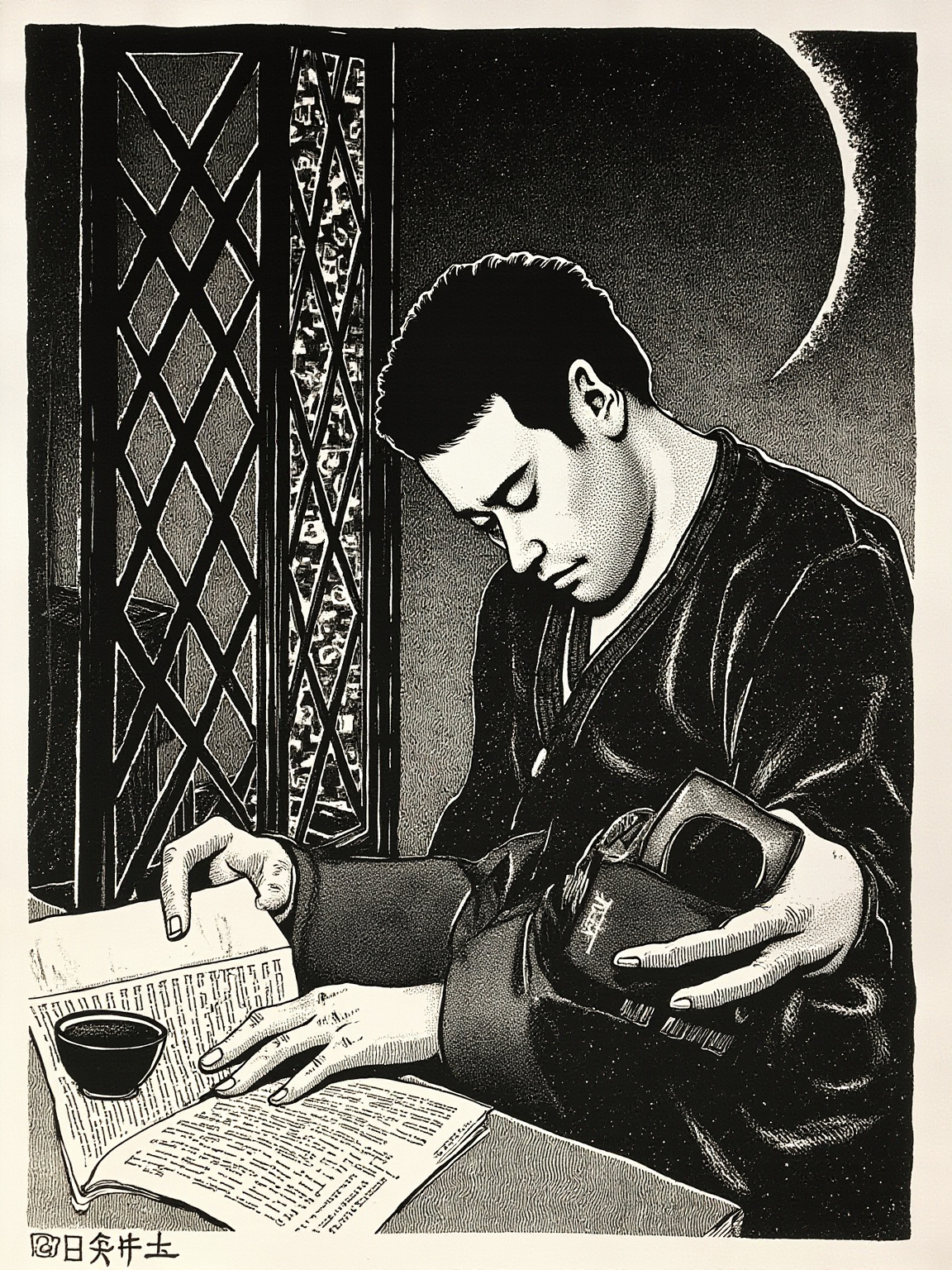
Perhaps I have unwittingly eaten a piece of my sister's flesh, bit by bit, without knowing what I was doing.
我未必无意之中,不吃了我妹子的几片肉……我自己未必无意之中,格外算一个吃人的人。
金句 · 第十则 · 无意食妹
Truth Turned Upside Down: Who Is Actually Mad
This is the coldest cut in the whole book. The people who eat people call themselves normal. The one man who sees it happen gets called mad. Lu Xun never explains, never comments; he just lets those two words collide over and over across thirteen entries. The more certain the village grows of its own sanity, the madder the Madman looks; the louder he shouts, the more certain the village grows that he's mad. Lu Xun doesn't raise his voice here, doesn't even sigh. He just sets the absurdity down in plain strokes and lets it sit. The chill arrives on its own, in the reader, and that chill does more damage than any line accusing anyone of eating people ever could.
The Outcry: Change or Don't
In the twelfth entry, the Madman stops pleading with individuals and starts shouting at the whole world. He calls out to the entire people-eating society in his diary, telling them to change, truly and from the heart, or there will be no place left for people who eat people. He knows the truth of it even as he writes: saying this to a crowd already convinced he's insane is the same as saying it to a wall.
Save the Children
In the final entry, he goes out into the street. A knot of people is gathered on the corner looking at something. He pushes closer: it's a child. The child looks back at him, eyes not yet stained by propriety. He writes down this line: children who haven't eaten people, are there perhaps still some? Perhaps still — he isn't even sure himself. Those two words ache more than any confident hope could. Then comes the line that has been quoted for a hundred years since: Save the children...
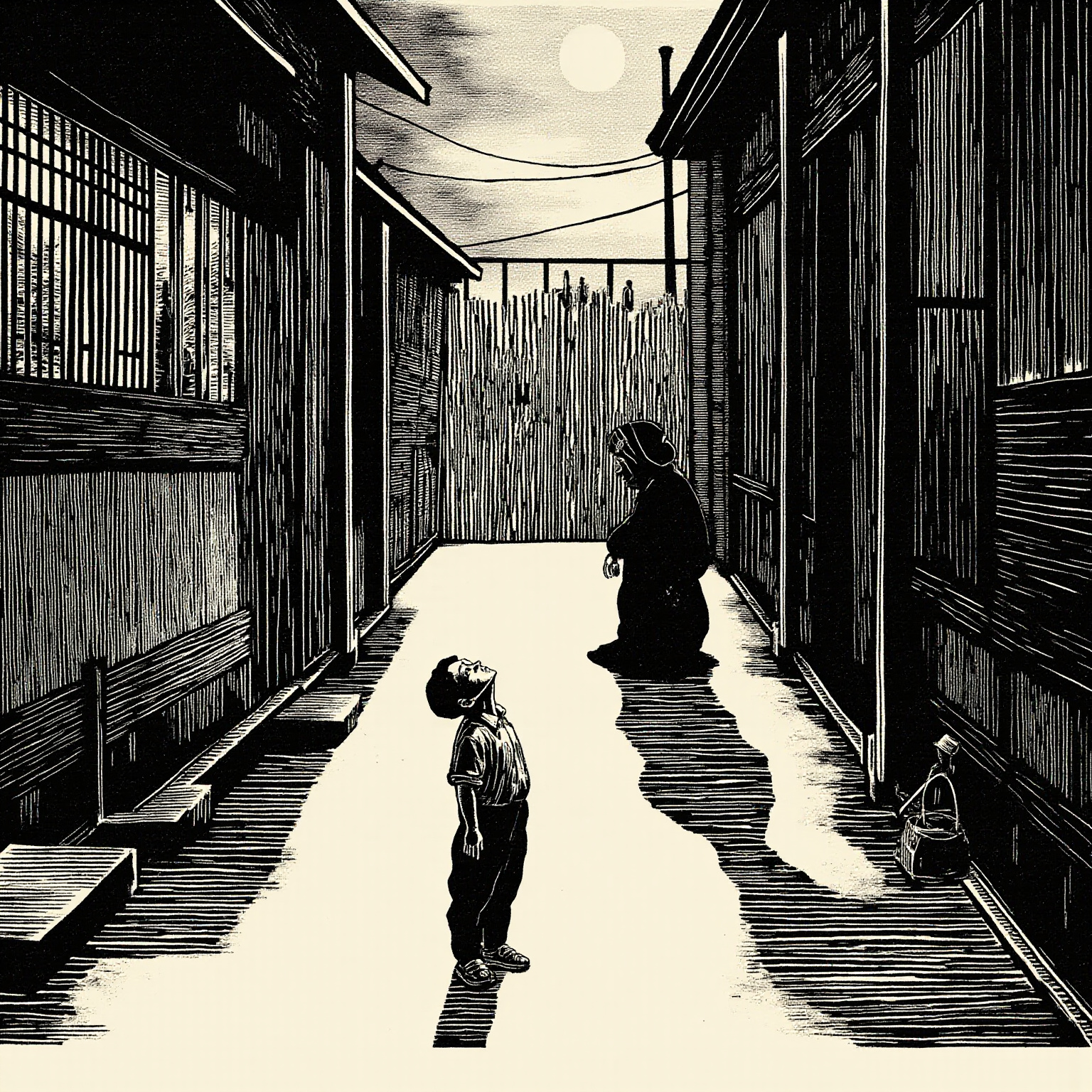
There may yet be children who have never eaten people. Save the children…
没有吃过人的孩子,或者还有?救救孩子……
金句 · 第十三则 · 末声呼喊
What It's Actually Saying
Eating people isn't literal here. Lu Xun never shows an inch of flesh or blood, never lets a single tooth actually sink in. He does it with eyes, with lines that bite like teeth marks between the words, with the ring of whispering figures at the village crossing, and that's how eat people got carved into the mind of every Chinese reader for the whole twentieth century. What the book is actually about is how propriety turns people into parts: one family, one set of rules; one neighborhood, one shared look. A child learns to keep its mouth shut before it learns to walk. The Madman is mad only because he can see what everyone else pretends not to. The people who eat people are normal only because they've had the practice.
Why This Book Can't Be Skipped
The clearest-eyed man gets called mad, and the people eating him call themselves normal — in fewer than five thousand words, Lu Xun nailed that absurdity into the public language of twentieth-century Chinese.
Go Read the Original: What a Guide Can't Give You
A guide can tell you what the Madman sees. It cannot read that opening line of moonlight for you. The novella is thin enough to finish in one sitting, and yet Lu Xun deliberately cuts it into thirteen entries, each one a fresh page, the rhythm broken up on purpose. The reader, like the Madman, sees a little more each day, and that trickle builds slowly into the bone-deep chill of finding eat people hidden between the lines. That chill only reaches you if you turn the pages yourself, one at a time. And Lu Xun's horror was never in the plot to begin with. It lives in the plain, short sentences. In the first entry he kicks over some old ledger book at Mr. Gujiu's house, then panics that someone saw him do it, and spends the rest of the entry second-guessing himself like a genuinely unwell man — that whole tangle of guilt, self-mockery, and rising unease isn't a plot turn. It's a few minutes you spend breathing alongside him in a cramped room. A guide can point to where that chill builds, layer on layer. It cannot make you feel it land.
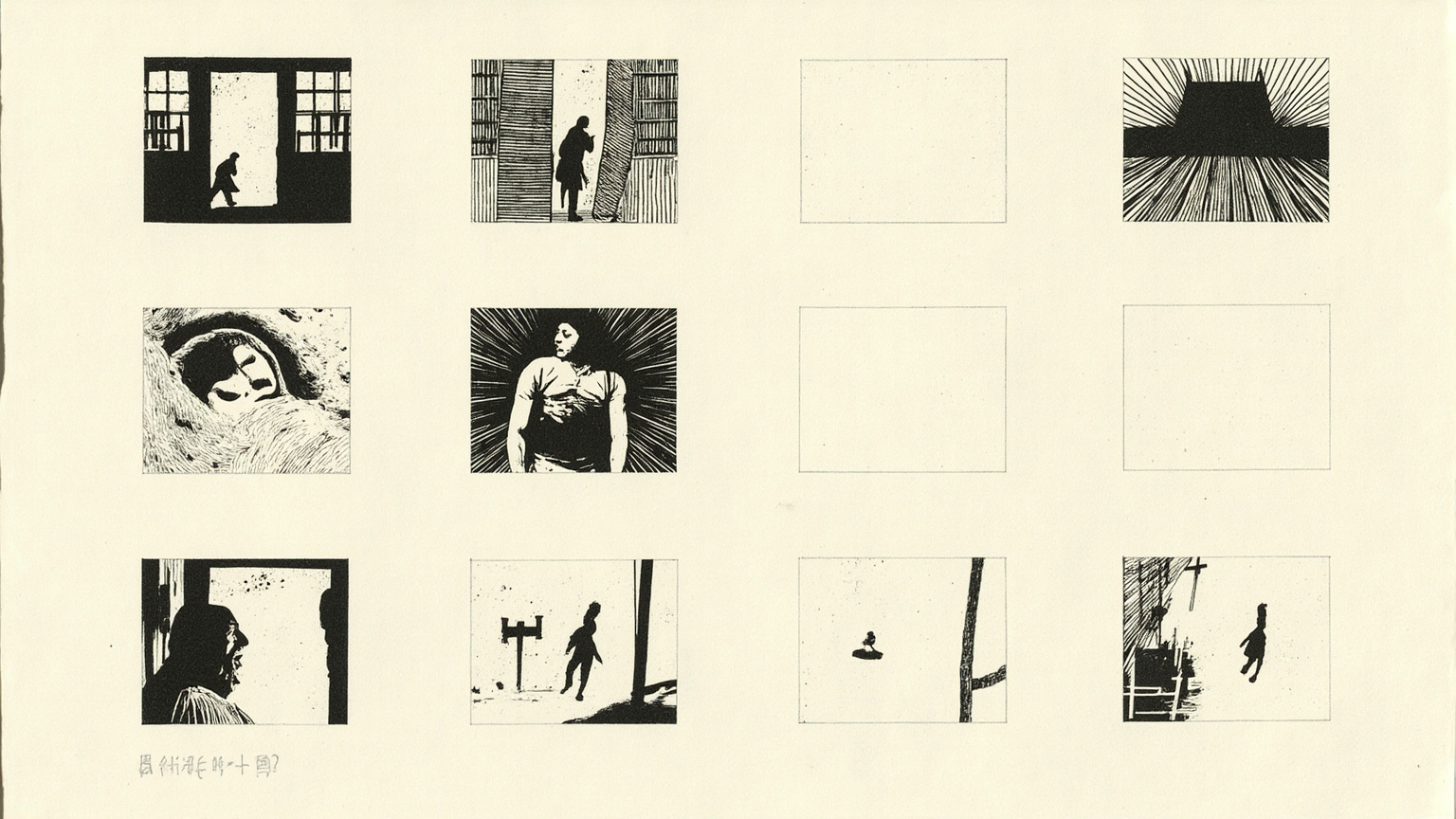
Art Direction4 plates
Before the guide was written, this book got a visual foundation — every illustration you just read grew out of it.