The Tragical History of the Life and Death of Doctor Faustus · Companion Guide
浮士德博士的悲剧
一个学者用血签下二十四年,赌的是灵魂;终场钟楼敲响时,他连悔改的力气都让骄傲先垫走了。
Opening Hook
Midnight. Candlelight gutters in the study, a signed hand pressed flat against unrolled parchment — not a thesis, but a twenty-four-year contract written in his own blood. A knock sounds, once, twice, the clock tower's hands lock together. Then comes the sound of flesh torn from bone.
When the scholars burst in, all that's left in the room are scattered limbs and that single sheet of paper. It is the coldest frame Marlowe ever left us: knowledge did not fail from want of learning, but from the inability to stop.
What Kind of Book Is This
Christopher Marlowe — the loudest name and the shortest life on the Elizabethan London stage — died in his early thirties from a knife wound outside a London tavern, and left this play to survive him. He already had Tamburlaine and The Jew of Malta behind him, and had turned blank verse into a hammer that actually worked. Doctor Faustus comes down to us in a quarto printed in the early seventeenth century, and it's the first version to put that old folk legend — a scholar who sells his soul to the devil — solidly on the English stage. Goethe's Faust, written two centuries later, is a German Romantic philosophical epic with an entirely different temperament; Thomas Mann's twentieth-century novel of the same name is another matter again. Treat Marlowe's as the earliest and most authentic version, and that's all you need.
Characters and World
The story is set around the University of Wittenberg in Germany — at the time, the intellectual capital of the Protestant Reformation, and one of its least tolerant university towns when it came to heresy. The stage isn't only crowded with scholars and priests; there's a Pope, a pregnant French knight, witches from the Harz Mountains, and Helen of Troy, dead a thousand years and summoned back. This is the border country where the Renaissance meets folk magic — where the planets have spirits, alchemy is a respectable discipline, and the devil can read and write.
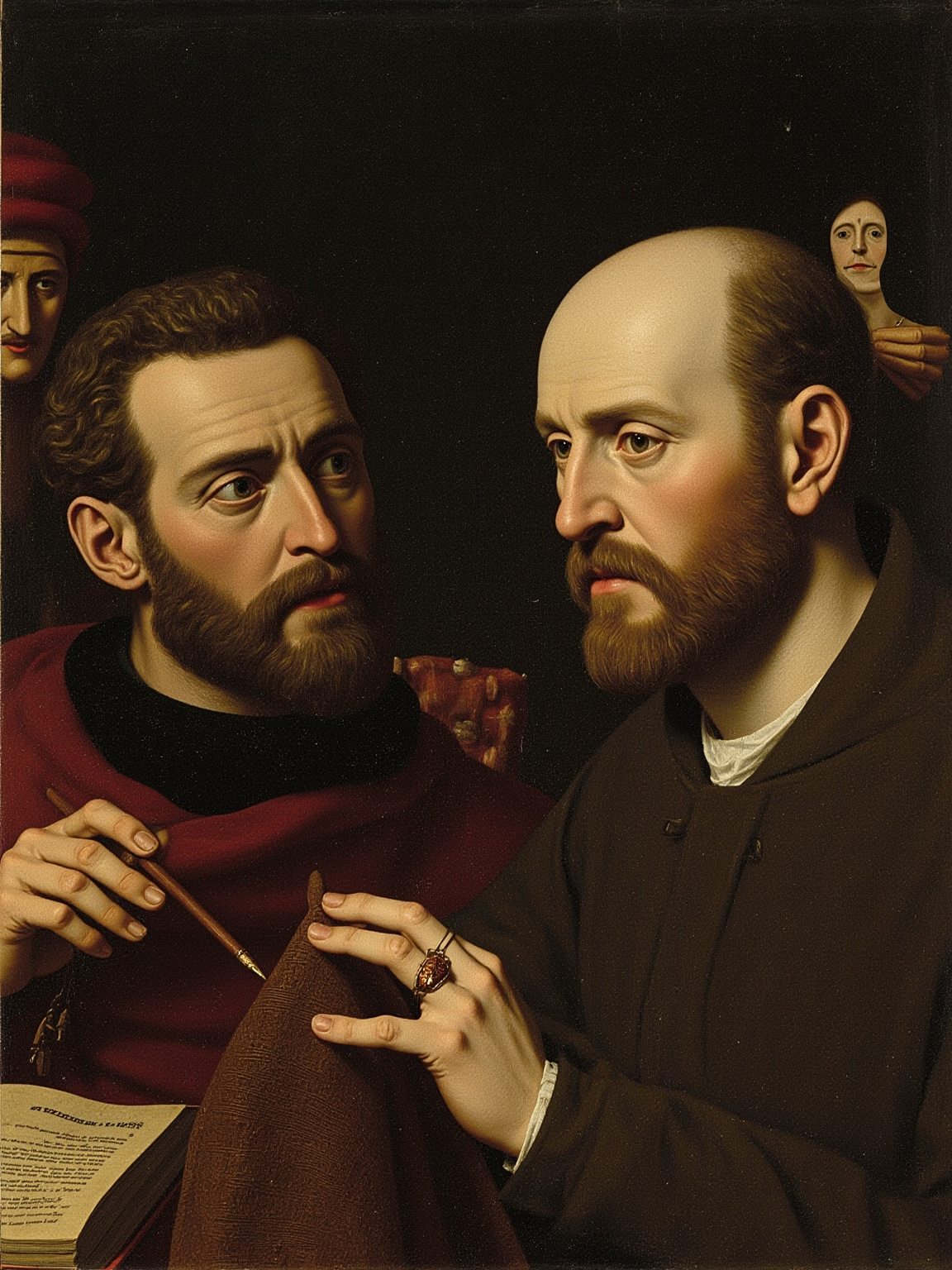
These wings attain not as the mind: the mind is overwrought with study, where the body hath received the benefit of rest.
此生之翼不及于思,思反为学所焚;唯有肉身,方得歇息。
金句 · 开场 Chorus 独白 · 学者的越界自白
Faustus, our protagonist, is a doctor of divinity at Wittenberg, and he opens the play boasting that he is the very model of a man at the height of learning. Divinity, law, medicine, philosophy — all four roads have run out under his feet, and no one has ever walked past where he's standing. So he picks a different road. Mephistopheles is the devil he summons with his own blood — not a servant, but an adversary who shows up to the meeting dressed like a fellow scholar. The Good Angel and the Evil Angel perch on his shoulders, arguing over which way he should go, and the Evil Angel wins almost every round. Then there's a handful of Wittenberg colleagues, scholars who stand for the other path — the right way to seek knowledge, through God and not through the devil.
Opening: When Learning Runs Out, He Turns to the Devil
The Chorus — that classical stand-in for an onlooker — opens the play with a monologue that lays Faustus's whole life bare: humble birth, a gifted mind since childhood, a doctorate at Wittenberg, holy orders conferred on him, and still not satisfied. What he has learned runs out; what he wants has no end — that's the entire case for his fall, and nearly the entire motive. Not ignorance. Excess. Marlowe's choice to hand this backstory to the Chorus rather than let Faustus deliver it himself is a shrewd piece of craft: a detached observer vouching for an already swollen ego is more convincing than the man bragging about himself.
The Blood Pact in the Study
Faustus summons Mephistopheles in his own private study. The scene is written with restraint — no thunder, no lightning — and the first thing Faustus asks isn't what can you give me but who made the world and where is hell. Mephistopheles answers him seriously. He doesn't lie and say hell is some place underfoot; he tells Faustus that hell isn't below him, it's inside him. The line reads like the hottest answer the same body of knowledge could possibly produce.
The contract is dense with clauses, and the harshest one isn't the twenty-four years — it's the line Faustus adds himself: that if he breaks his word, everything granted him in those twenty-four years is forfeit. He seals off his own escape route before he's even finished writing it. He signs in blood. This is the point where Marlowe finally moves him out of pride and into physical action — picking up the knife, cutting the finger, pressing the paper down — and from here he stops being an abstract scholar.
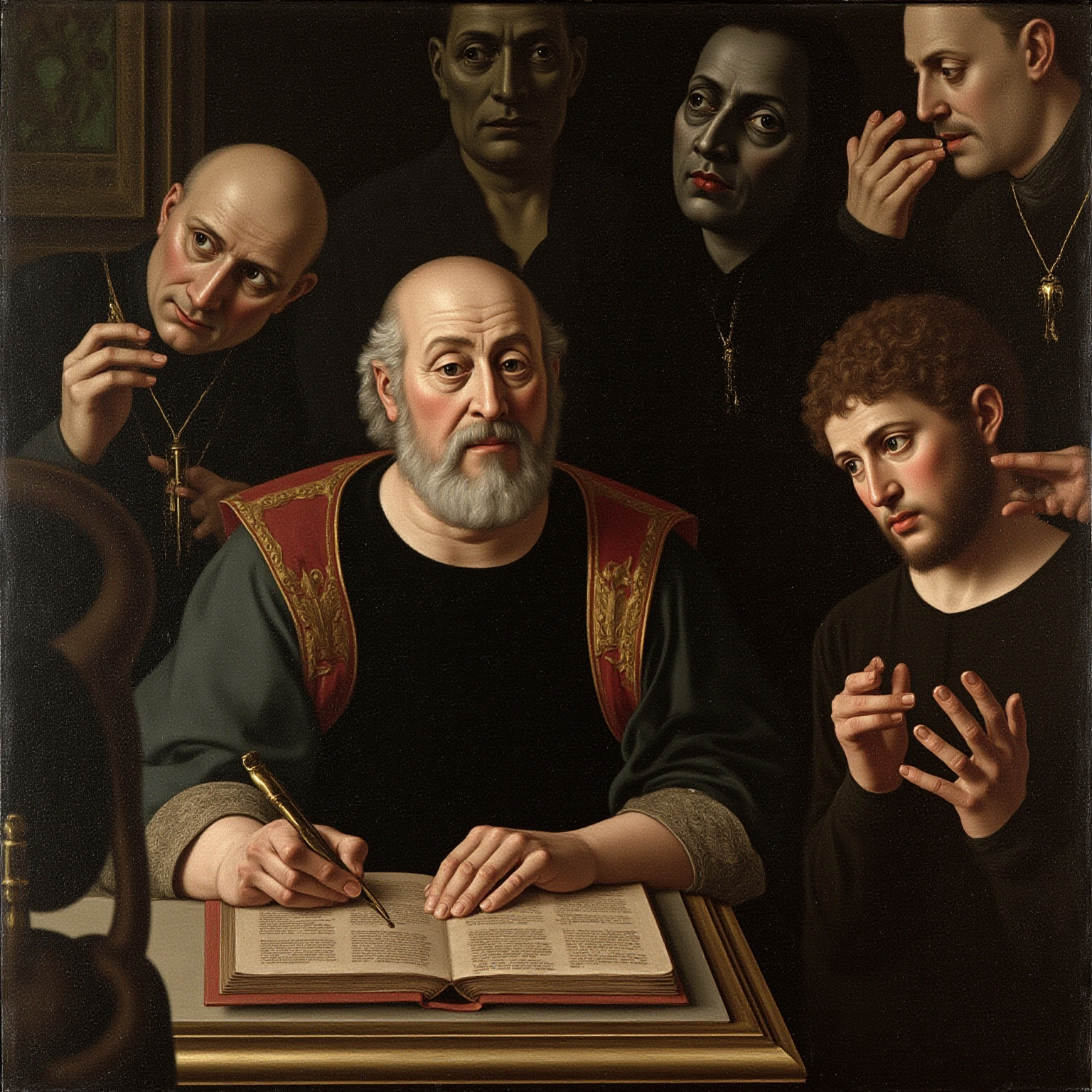
I was the prince of heaven, and the glorious hierarchies: an angel fell with me, and fell with Lucifer.
我曾是天堂的王子,与众荣光的天使同列;我与路西法一同坠落。
金句 · 书斋血契 · 靡菲斯特自述堕天
Grand Tour and Court Farce
The ink is barely dry when Mephistopheles carries him flying across Europe. He rides on the devil's back, ambushes the Pope's dinner table, conjures the ghosts of Alexander the Great and his mistress to make a fool of a pregnant French knight — this stretch reads almost as farce, the roaming-comedy rhythm typical of Elizabethan theater. Marlowe makes the magic a little ridiculous here on purpose, so the audience laughs while also registering that what Faustus has gotten so far is only the satisfaction of getting what he asked for, not what he actually wants.
The sharpest jab Mephistopheles lands on his master comes mid-play, when Faustus starts asking philosophical questions and Mephistopheles turns it back on him: do you want these twenty-four years before you die, or eternity after? Faustus says nothing. That silence is the beat right before the Seven Deadly Sins take the stage.
Parade of the Seven Deadly Sins
Faustus is bored stiff, so Mephistopheles conjures the Seven Deadly Sins to entertain him — in the order Marlowe brings them on: Pride, Gluttony, Lechery, Envy, Sloth, Covetousness, Wrath — one after another, each introducing itself. Marlowe doesn't give them much to say, but each one has a costume and a way of moving that the audience would recognize on sight. It's one of the earliest ensemble sketches in English drama, and the most visually obvious stretch of the whole play to stage as a procession of silhouettes.
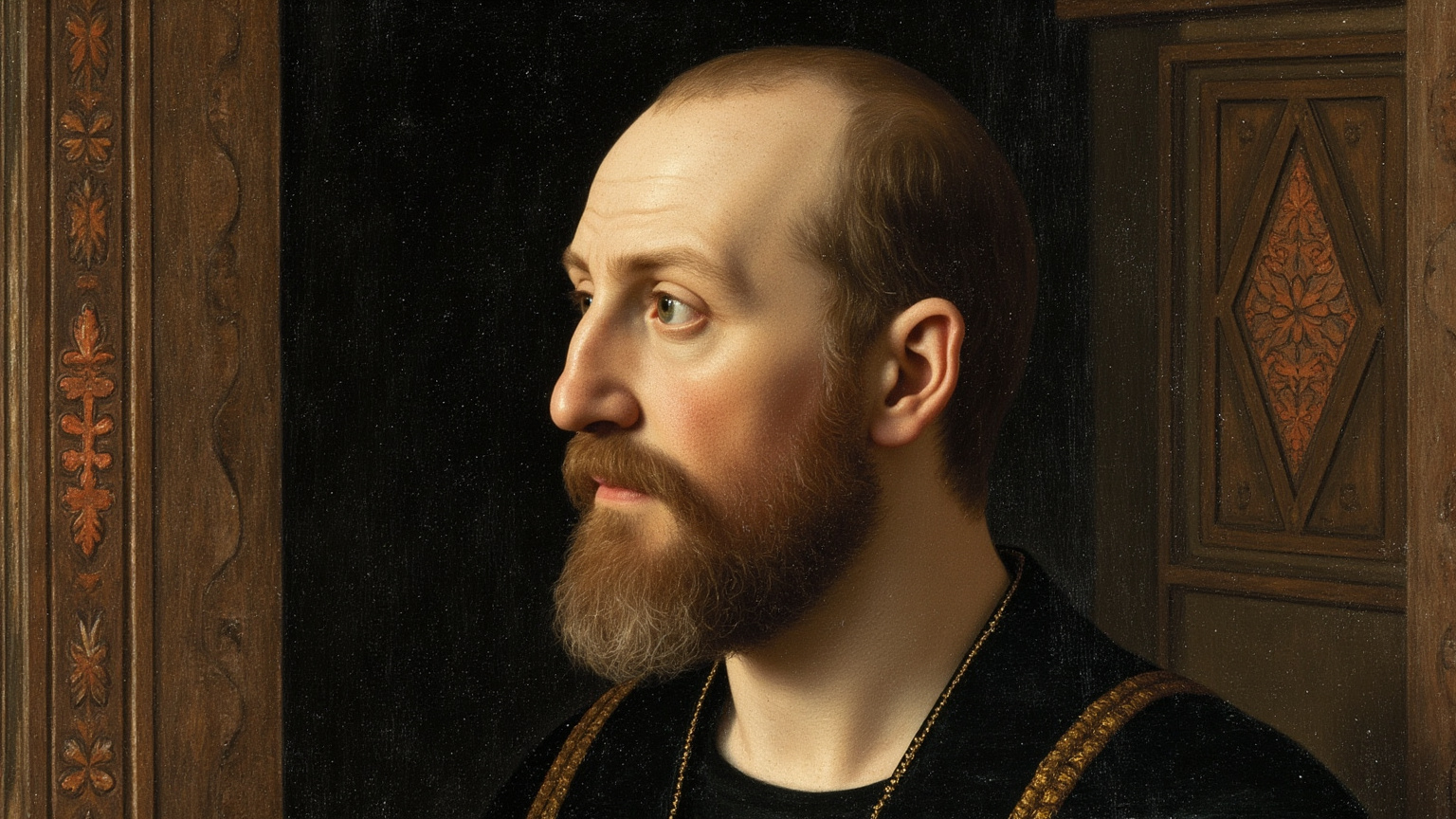
Was this the face that launch'd a thousand ships, and burnt the topless towers of Ilium?
这便是那张令千帆齐发、烧尽伊利昂云霄之塔的脸庞么?
金句 · 海伦一幕 · 地窖召出亡魂
The first time I read this scene I laughed out loud — then stopped. He's bored, so he watches his own sins as entertainment. That's what self-awareness looks like once it has calcified all the way through.
The Helen Scene
In the eighteenth year of the pact, Faustus finally asks Mephistopheles for the thing he's waited years to ask: give me the most beautiful woman who ever lived. One Latin incantation, and Helen's ghost rises in the cellar. He holds her face in his hands and asks the most famous line in the play — was this the face that launched a thousand ships?
It's one of the most quoted lines in English literature — pinning a thousand years of the Trojan War onto the face of a ghost a medieval scholar has just summoned in his cellar, and the language lands with its own force. From here Faustus splits himself in two: his soul pledged to Christ, his body mortgaged to Epicurus and Venus. This isn't a sophomore's inner conflict — it's a doctorate-level divided self, split clean through by one line. In the text as printed, Helen dies again on his lips at the very end — a scene scholars still argue over whether Marlowe actually wrote.
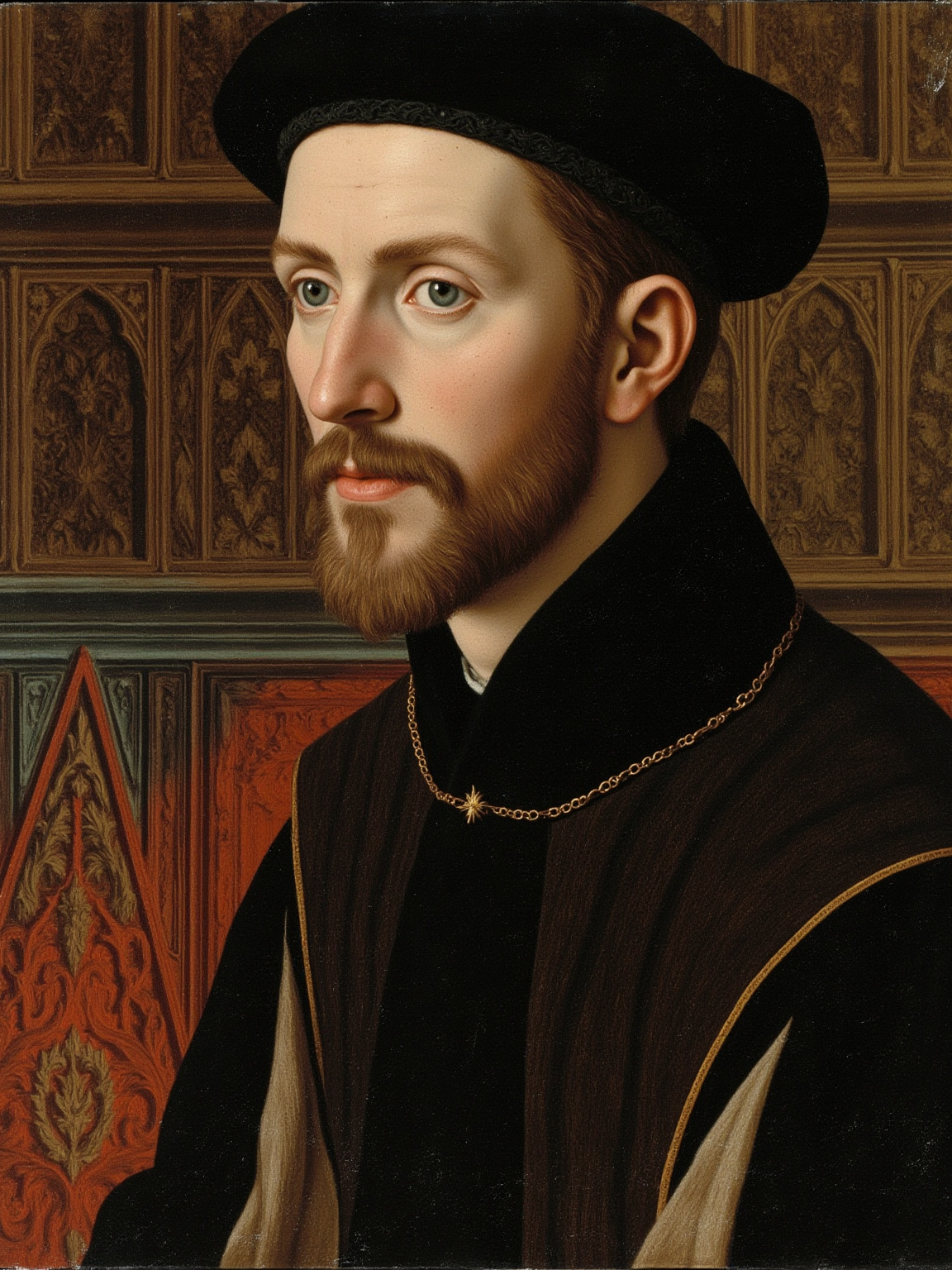
My soul is pledged to Christ, and this my body to the service of Epicurus and Venus.
我把灵魂押给基督,把肉身抵押给伊壁鸠鲁与维纳斯。
金句 · 海伦一幕 · 学者分裂自我
Final Choice and the Midnight Bell
The twenty-four years are almost up. An old man with no lines of his own comes to urge repentance, and the Good Angel presses him to turn back — Faustus agrees, out loud. Then the Evil Angel steps in: repent, and you give up all the power you're so proud of. That finishes him off. This is where Marlowe pulls off something Elizabethan stagecraft rarely manages: repentance isn't impossible for Faustus, it's pride that won't let him. Marlowe never writes Faustus as a bad man. He writes him as a man who cannot stop.
The bells at eleven, at midnight, at one in the morning carry the heaviest rhythm in the whole play. Faustus runs through the study, tears through the contract, begs, mocks — for the first and only time in the play, he pleads for mercy. The last thing the scholars hear him say is: Ah, Faustus, stay, stay! No, Faustus! It's one in the morning, and he's calling out to himself. The clock tower's hands lock together.
The Scholars' Closing
When his colleagues break the door down, all that's left in the room are scattered limbs and the open parchment contract. Marlowe never stages the dismemberment itself — he lets it come to us secondhand, and that restraint is exactly why the horror only fully sinks in a day later. The scholars close with a cool line: he died a fearful death, and no friend could save him. Learning's sweetness, taken past its measure, turns to poison drawn from the deep. The Chorus ends the play warning the audience not to follow Faustus's example — Marlowe's own moral frame bolted onto the play. It never quite holds the man at its center, the one who couldn't stop.
Theme and Craft
What this play is really about is crossing the line. Wittenberg is a city of learning and a city of faith at once, and where scholarship runs out, magic begins — Marlowe draws that boundary clearly, but he has no intention of preaching from the safe side of it. Faustus's tragedy isn't ignorance, it's excess; his downfall isn't a shortage of learning, it's taking one more step after learning has run out. That excess is itself the temperament of the Renaissance — reaching upward and bringing back a bill no mortal can pay.
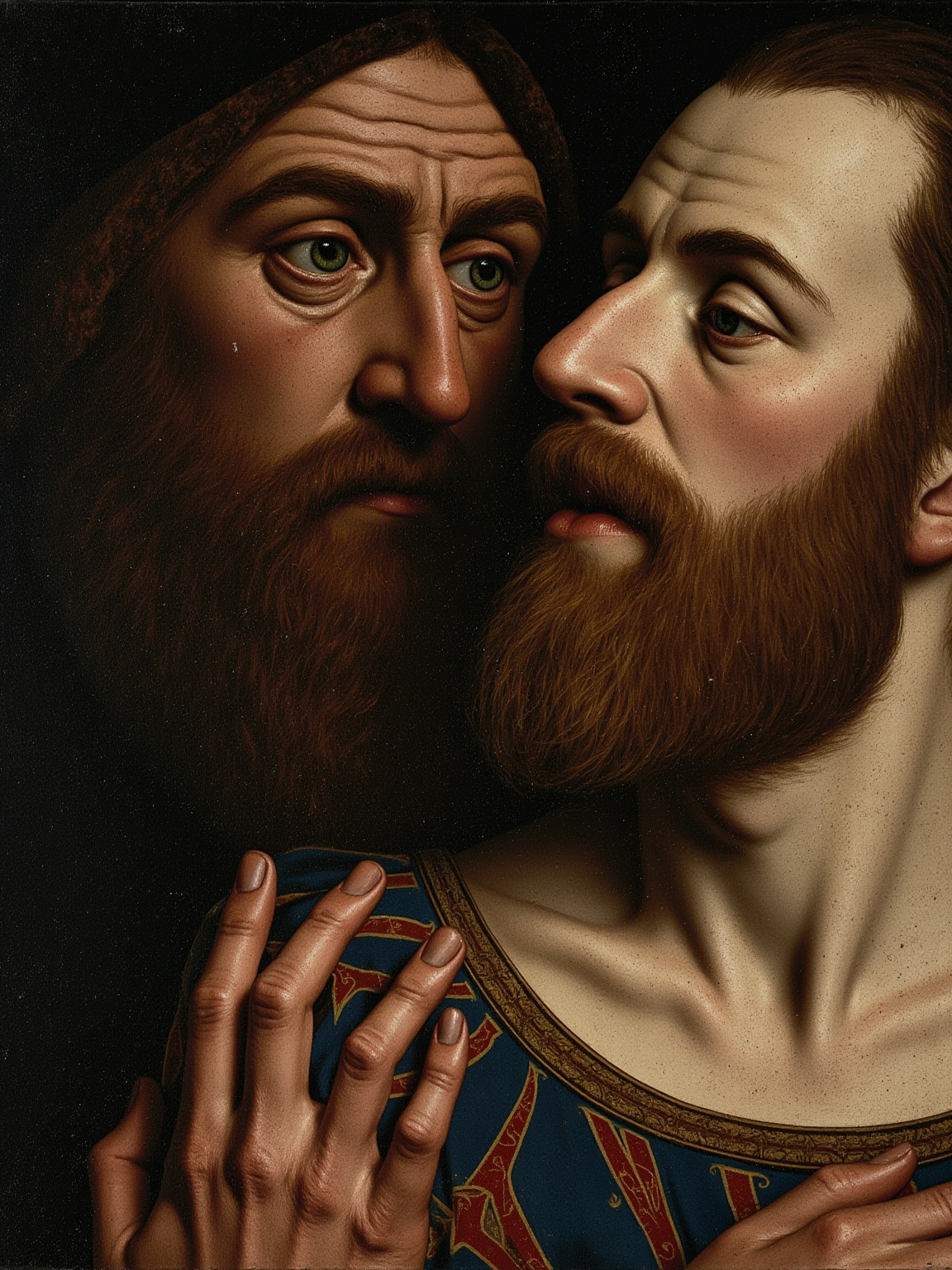
He that loves pleasure must for his pleasure fall: cut is the branch that bore the fruit of knowledge.
溺于欢愉者,必因欢愉而倾覆;那结知识之果的枝,已被砍下。
金句 · 学者收场 · 道德剧结语
Marlowe has two moves he plays hard here. One is blank verse honed steady, precise, and springy — a line of craft that fed directly into Shakespeare. The other is stuffing a morality-play structure with dark comic clowning, then calling every joke back in at the end to answer to the bell. There's an hourglass running the entire length of the play — a witches' sabbath, the years left on the contract, the ancient Greek world Helen lingers in, the midnight clock tower — and every comic bit and every vision gets nailed down by that ticking. This is a play that writes the clock itself as the villain.
He isn't beaten by a lack of learning. He's beaten by not knowing how to stop. By the time the twenty-four years run out, pride has already spent even the strength he needed to repent.
The Hook to Send You to the Text
A guide can hand you a map. It can't hand you the land. If you want to know the exact rhythm of Mephistopheles's speech on where hell is, and why it leaves you feeling a chill on Faustus's behalf rather than his own; if you want to know exactly when the string snaps, the instant Faustus calls Helen up out of the dark; if you want to hear what weight those bells at eleven, at midnight, at one carry when they land inside the verse itself — none of that comes from a summary. Go to the text. Rereading Faustus's boast at the opening after finishing the play, I found that Marlowe had already buried every word of his downfall inside the very lines where he was busy praising himself.
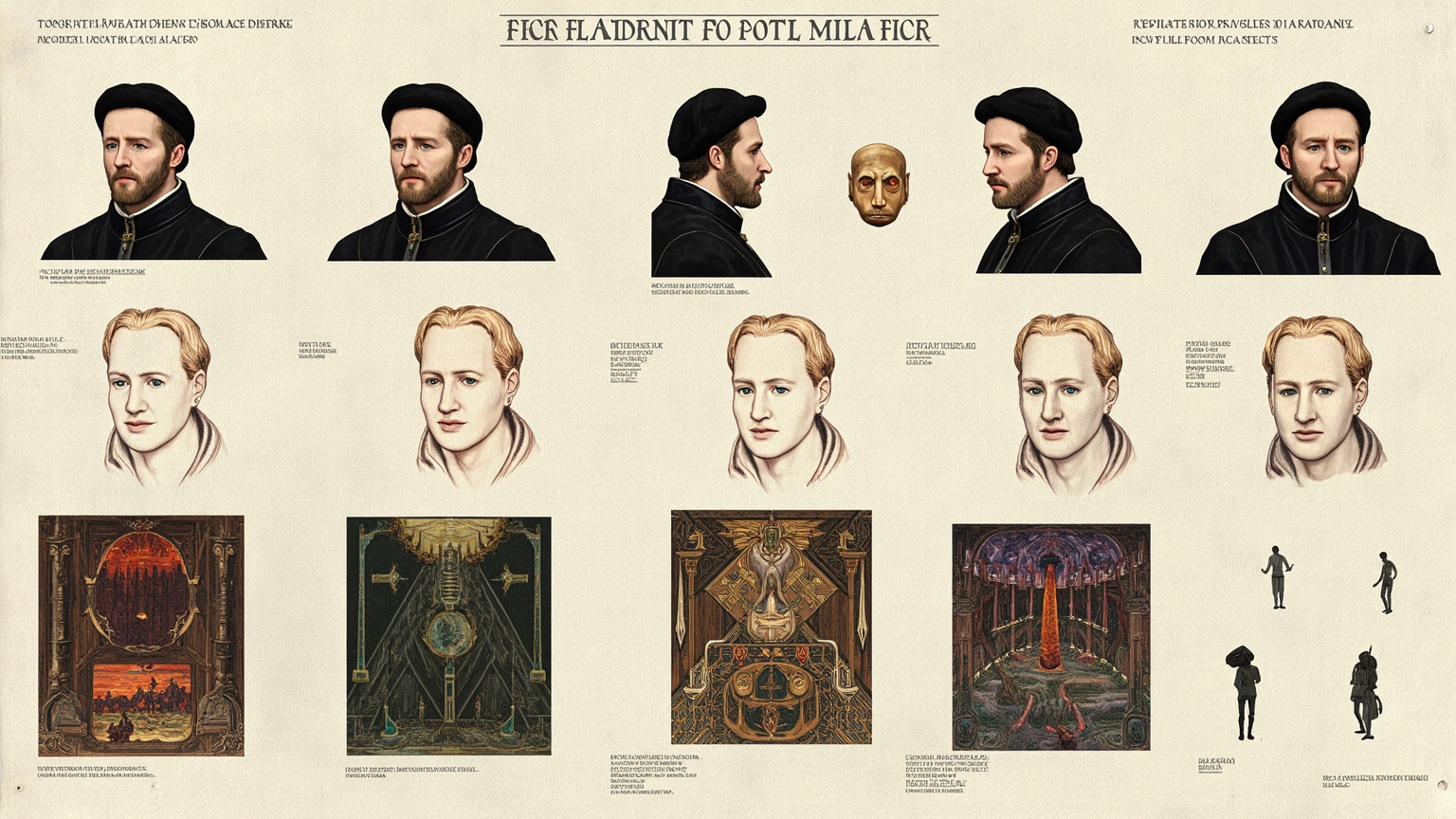
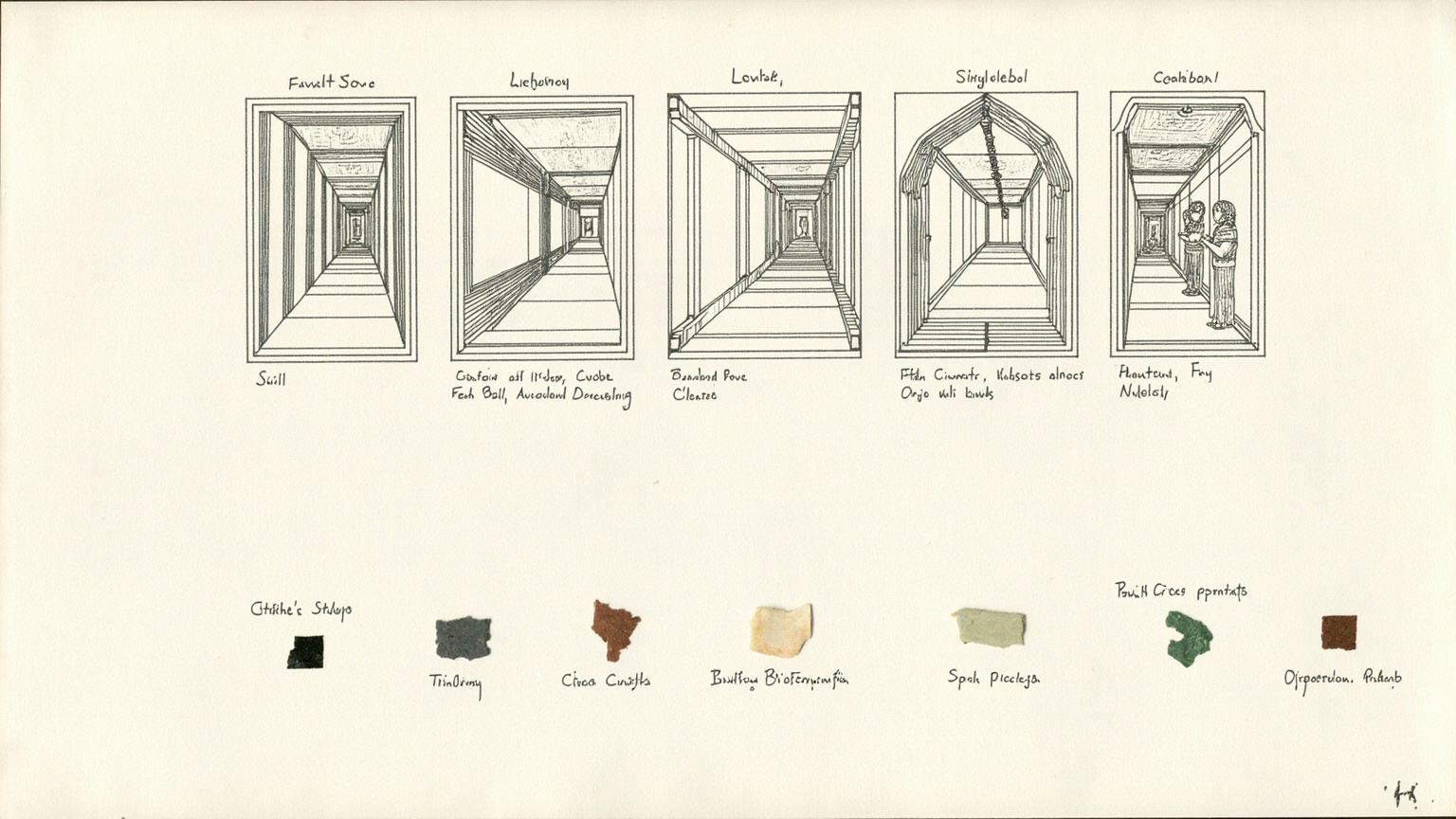
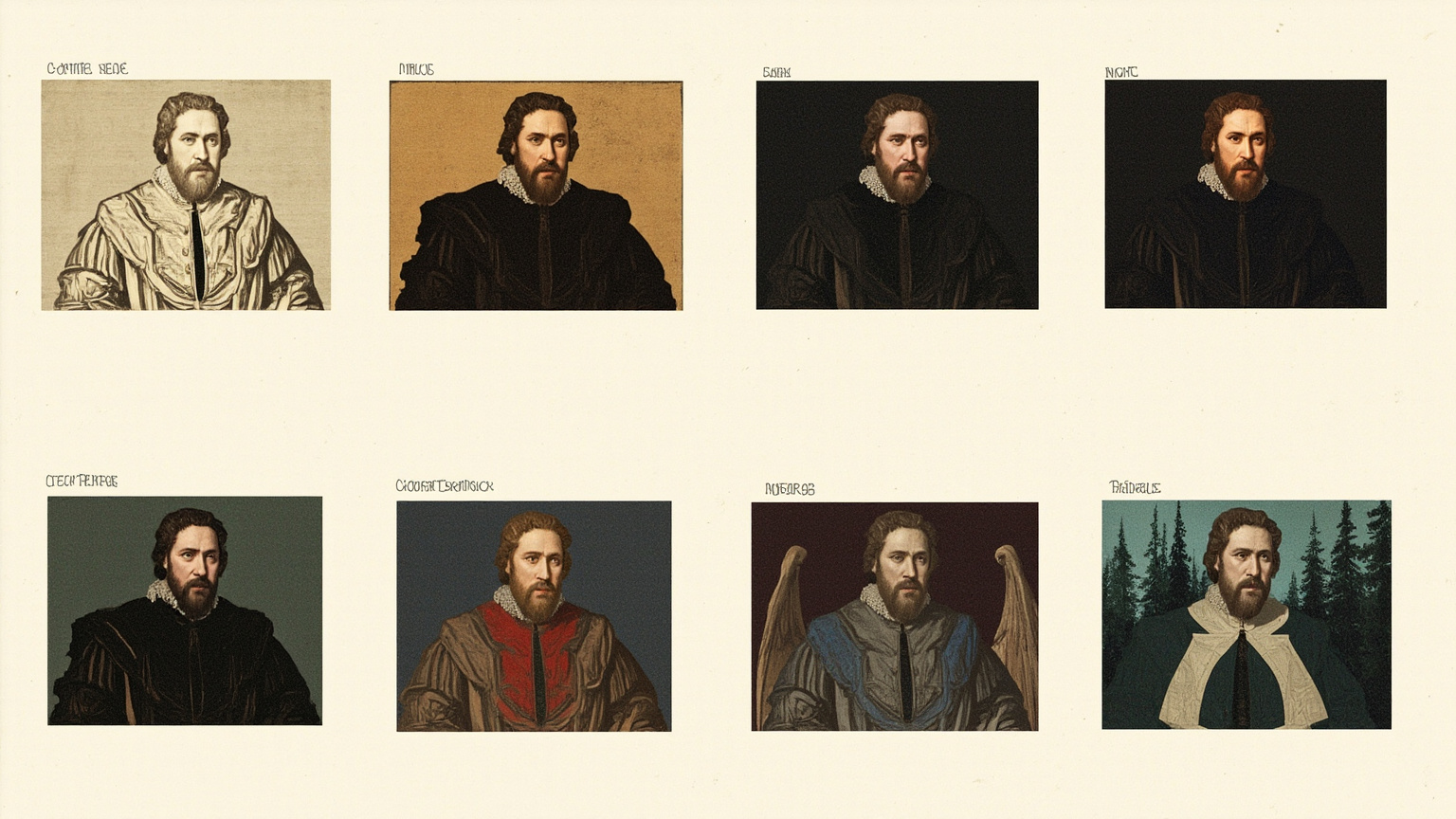
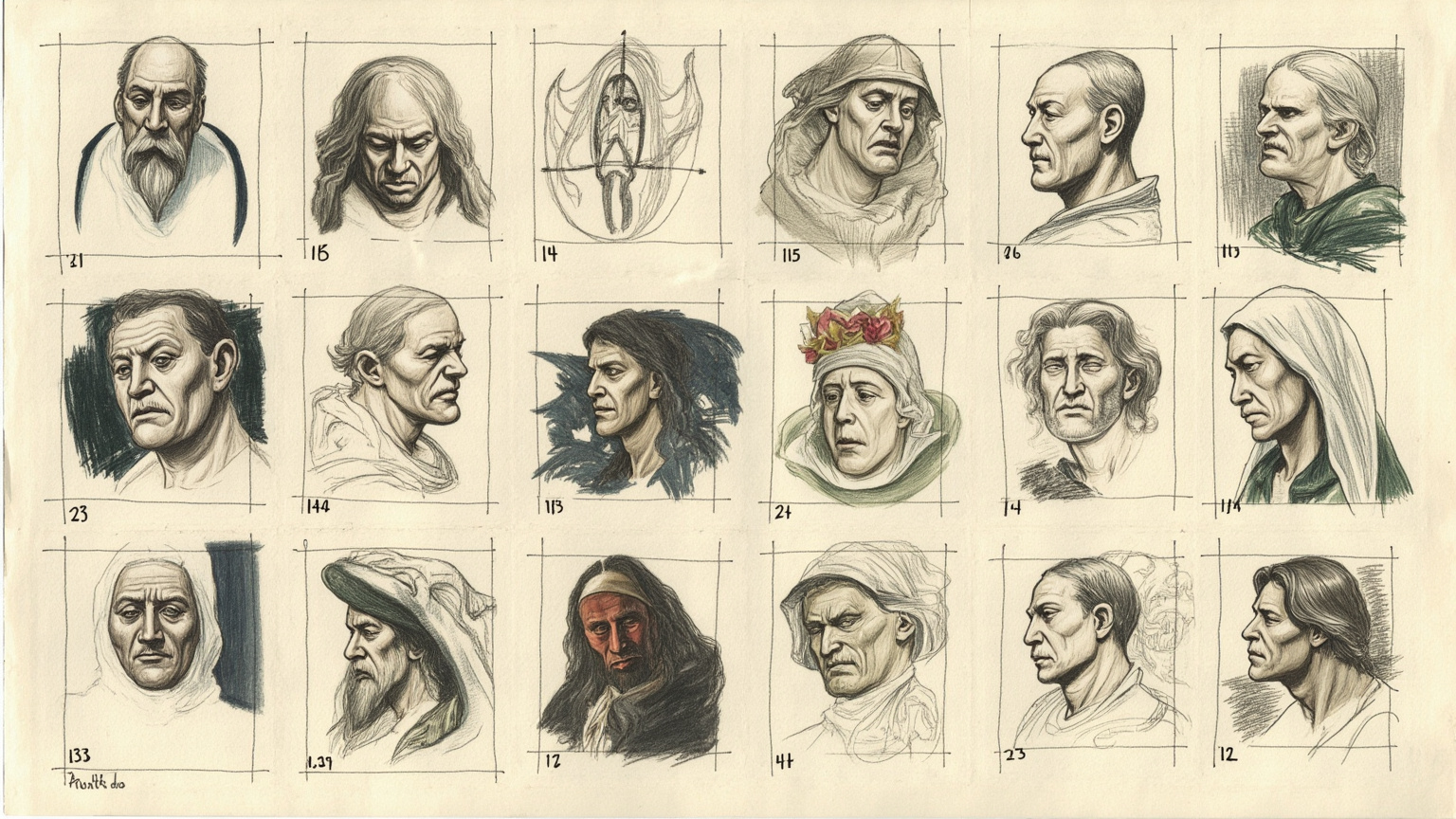
Art Direction4 plates
Before the guide was written, this book got a visual foundation — every illustration you just read grew out of it.