Doctor Zhivago (Доктор Живаго) · Companion GuideStories · Issue 00
Doctor Zhivago in 10 Minutes: Can a Private Life Survive When the Snow Seals the Door
A doctor and poet, run over again and again by revolution and by love.
Text and illustrations produced by the pipeline
ImaReadFolio 02 — 06
Opening: A Knock Beyond the Frosted Window
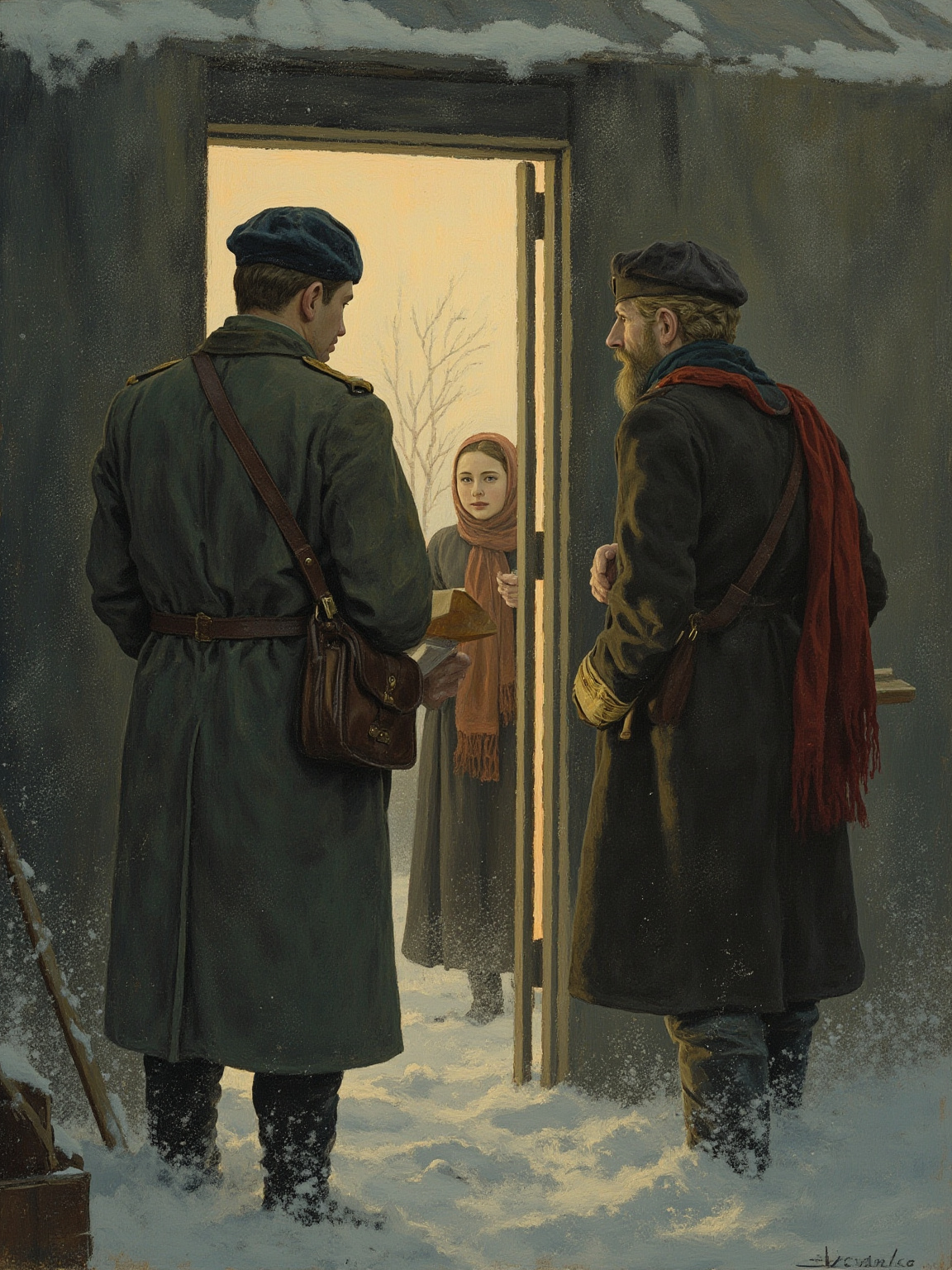
Winter in the Urals, and the log house's window glass has frozen thick with frost. Doctor Zhivago has just settled a pregnant woman inside when someone knocks at the door — bringing in the cold of gunfire not yet gone quiet, and the shadow of old Moscow with it. Outside is Russia in 1918, deep in civil war. Inside is a man about to say three goodbyes in a single night.
The novel's story pulls outward from that night in both directions — back into a Moscow drawing room at the start of the century, forward to a Moscow street on the eve of the Second World War. Its question isn't whether the revolution was right. It's how an ordinary person keeps living once the revolution has turned the whole country over — how you write a letter, deliver a child, keep writing poems in a log house buried in pine forest.
What Kind of Book Is This
Doctor Zhivago was written by the Russian poet Boris Pasternak. He finished it in 1957; it first appeared in an Italian translation, and won the Nobel Prize in Literature the following year. Soviet authorities forced him to publicly refuse the prize, and the novel stayed banned in his own country for decades. A novel banned at home but published abroad before it ever reached its own readers — behind that fact sits one of the fiercest collisions of literature and politics the Cold War produced.
It's remembered because it never took the revolution's side of the story. It keeps the camera on one man — a doctor, a poet — and watches his love, his medicine, his poems get torn out by the roots again and again as revolution, war, and regime replace one another. The novel closes with a complete collection, The Poems of Yuri Zhivago, poetry and prose confirming each other — the rare structure of a poet writing a novel that carries a whole book of poems inside it.
Characters and World
The protagonist is Yuri Andreyevich Zhivago. Orphaned as a child, he's raised first by his uncle Nikolai Vedenyapin, a laicized theologian, then taken in by the Moscow professor's family, the Gromekos, and grows up to marry their daughter Tonya — the closest thing he has to a foster sister. He carries two identities: doctor and poet. The first keeps him fed through the chaos. The second guarantees he'll never belong to any side.
The novel isn't interested in arguing whether the revolution was right. What it cares about is smaller and harder: whether private life — a letter home, a sentence left unfinished, a child being born — can survive underneath the machinery of history. Zhivago the doctor treats the body's wounds. Zhivago the poet records the heart's. In the end he saves neither. What outlasts him is the book of poems he leaves behind.
It doesn't hand out much judgment either. Pasha turns from a sincere young man into an iron-fisted commander; Mikulitsyn kills in good conscience; and exactly what Komarovsky is really after when he rescues Lara, the author deliberately leaves unclear. Zhivago lets his wife's family go into exile without him, then urges Lara to leave with another man — neither decision reduces to simple right or wrong. He is simply living in an age that keeps breaking people, over and over.
Why It's Still Worth Reading the Book, Even Knowing the Plot
The plot can be told. The other half of this book can't be — its language. This is a novel written by a poet, and its sentences breathe on their own: how snow comes down off a pine branch, how a kerosene lamp burns down inch by inch, why the ruts a sleigh cuts through the snow run so long. The Poems of Yuri Zhivago at the end is another book folded inside the novel — it can't be summarized, only read. And there's one more thing no companion guide can hand you: the particular exhaustion and tenderness inside Zhivago as history grinds over him, carried across languages and still making you feel he's standing right beside you. Once you know how he and Lara meet, how they part, how it ends, reading the actual text isn't reading plot anymore. It's reading the man himself.
ImaRead6
Art Direction4 plates
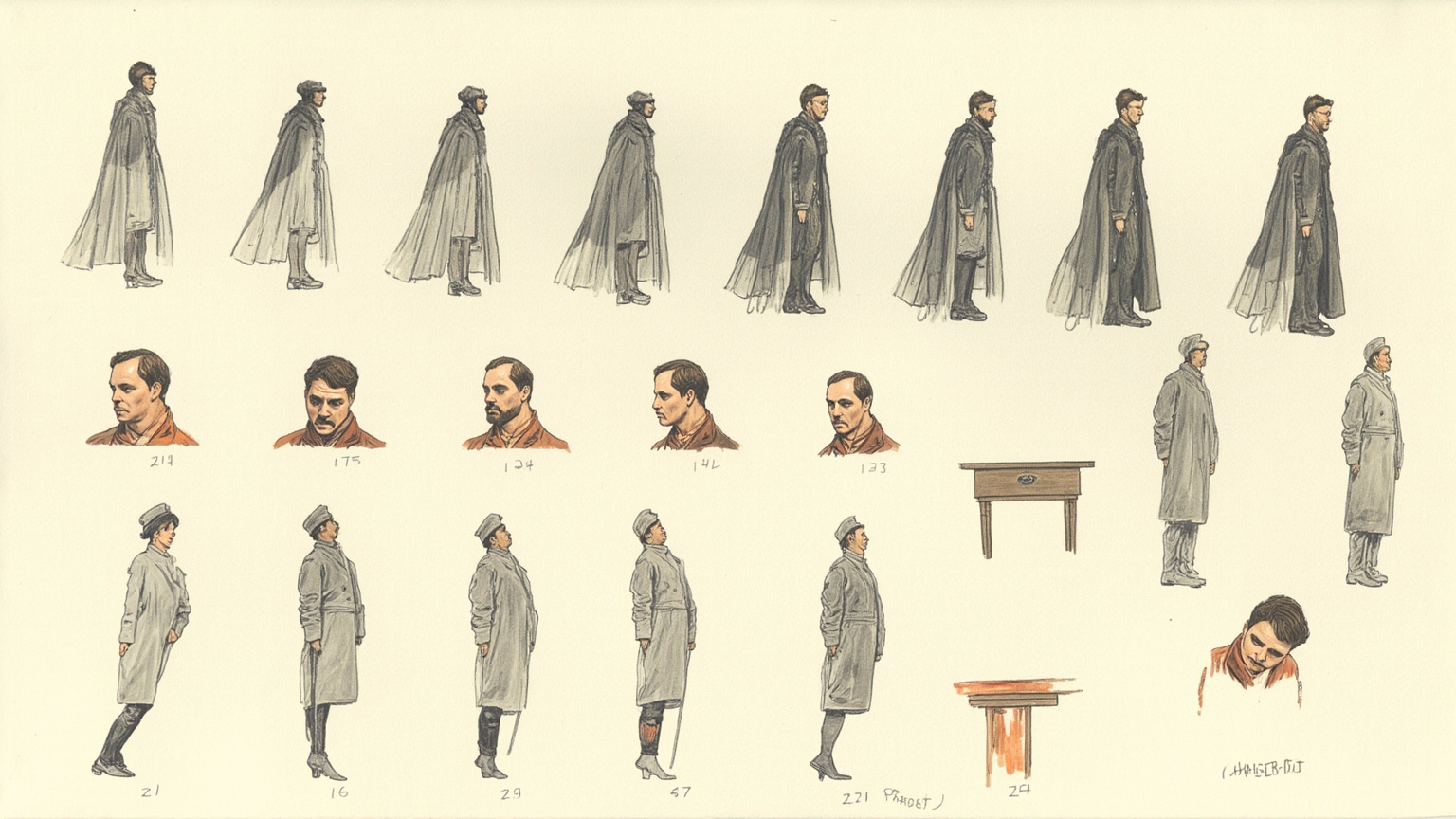
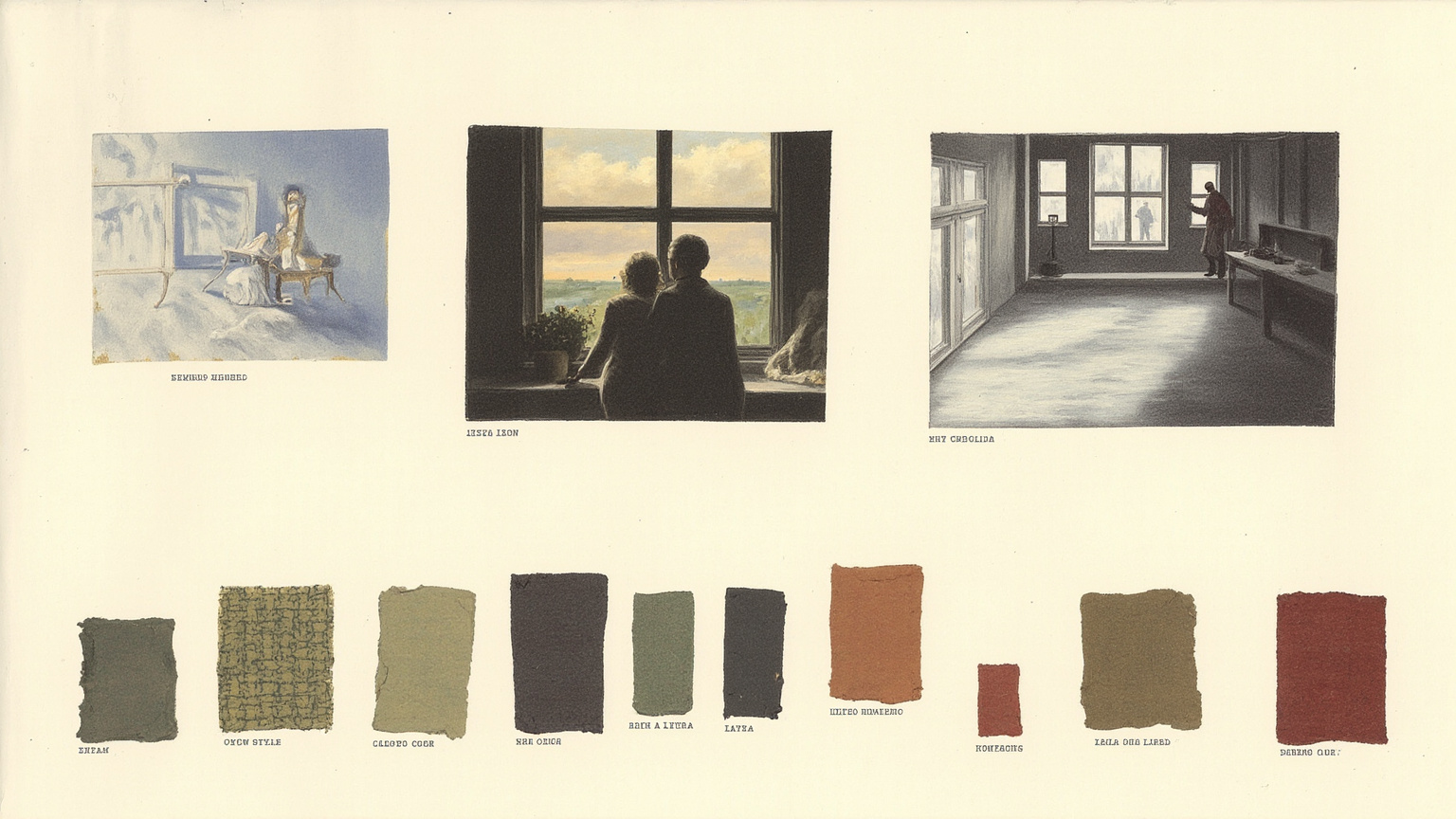
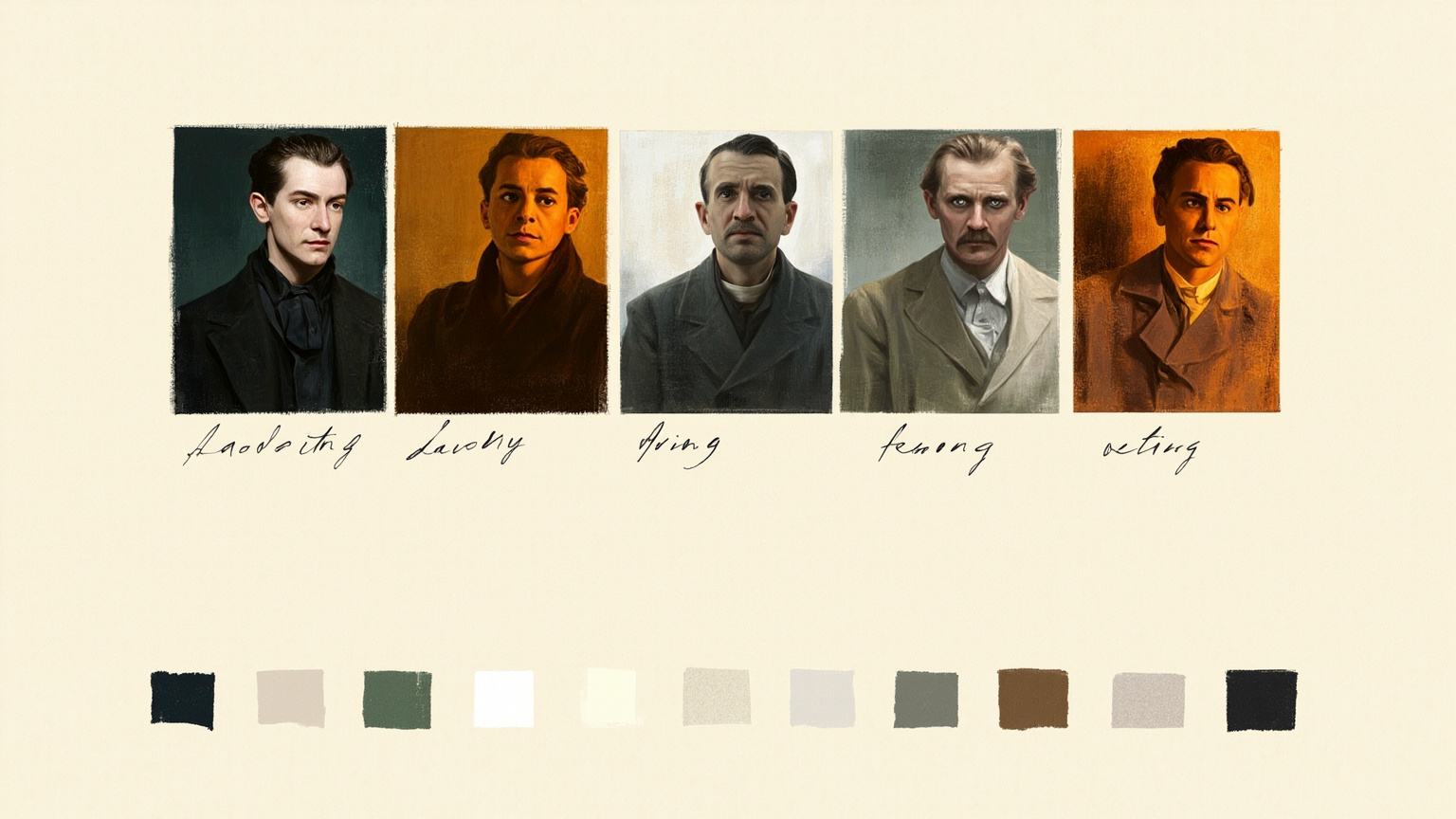
Before the guide was written, this book got a visual foundation — every illustration you just read grew out of it.
The emotional core of the book is Lara. A dressmaker's daughter, she's seduced as a girl by the older lawyer Komarovsky, a wound that never fully closes; later she marries Pasha Antipov, a sincere young revolutionary, hoping to start clean. The First World War sends her husband to the front, and she follows as a volunteer nurse — it's at the field hospital that she meets Zhivago for the first time. They pass close by each other and go back to their separate marriages.
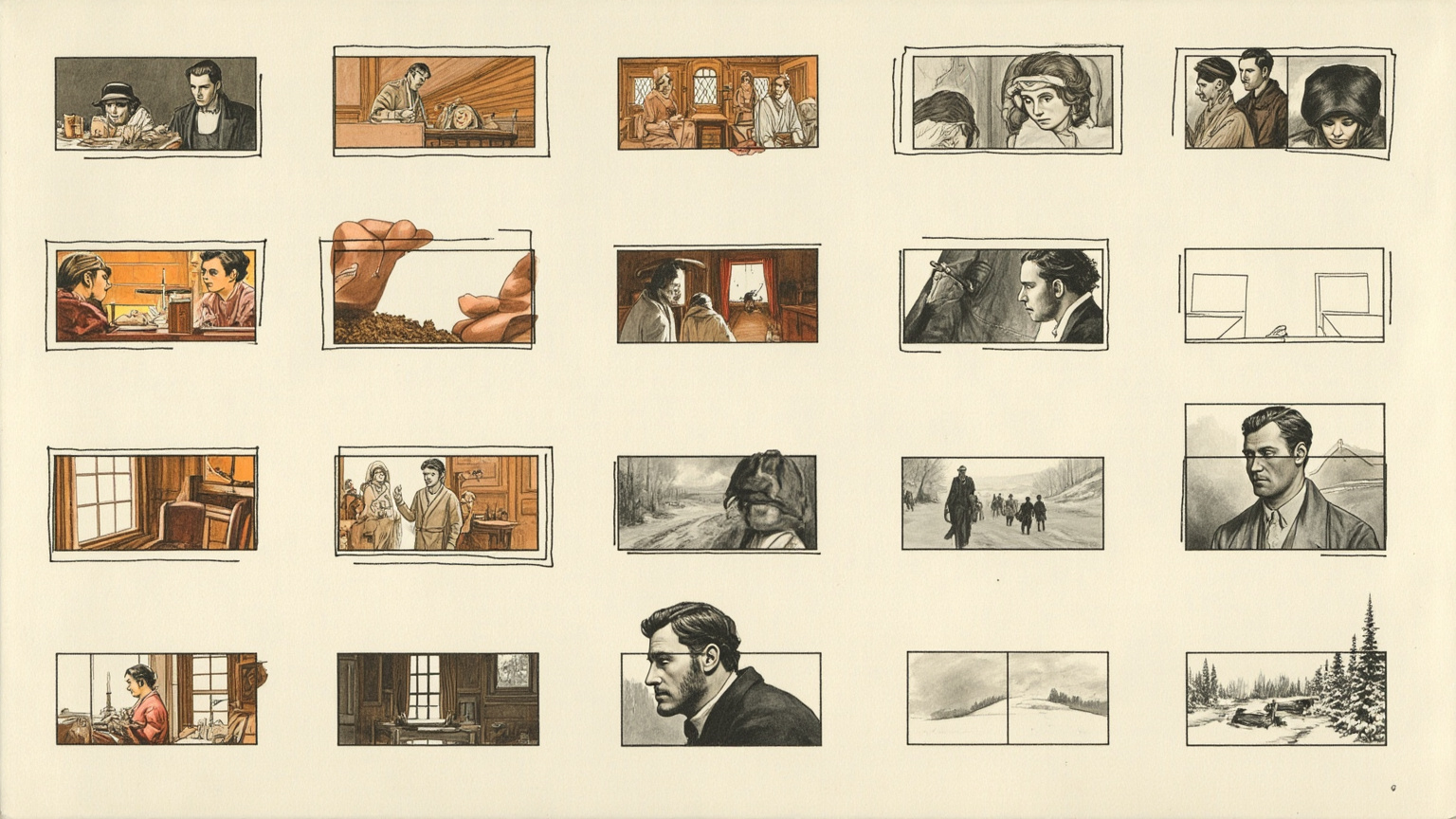
The rule of this world is simple: revolution and war are the backdrop. What actually moves across the page is Moscow snow, the pine forests of the Urals, a frosted-over log house, a kerosene lamp running low. History roars in the background; in the foreground are a handful of people breathing, hesitating, writing letters, delivering babies.
The Field Hospital: Two Married People, Passing
On the Eastern Front of the First World War, Zhivago puts on a uniform as an army doctor, and Lara follows from the rear, searching for her missing husband. They end up working the same hospital — he writes the prescriptions, she changes the dressings. Both know they're married, and neither crosses that line. Reading this far, you'd guess it's just an encounter the war lights up briefly before it goes dark again for both of them.
The trick is that Pasternak doesn't let either of them fall for the other — or rather, both of them do, and both hold it down under the weight of the marriage waiting at home. The restraint here isn't setup for a later explosion. It's there so you understand something specific: when this fire reignites in the Urals later, it isn't recklessness. It's the same thing, pressed down once already, back at the field hospital.
Reunion in the Urals: Varykino and Yuriatin
After the October Revolution, Moscow falls apart — food and fuel both run out. Zhivago takes Tonya, their child, and his father-in-law east, all the way to the small Ural town of Yuriatin and the Varykino estate, the old property of Tonya's family. A house buried in snow, frosted windows, pine forest as far as the hills go, Red partisans moving through the trees — they think they can wait it out here.
It's in this small town that Zhivago and Lara meet again. Lara has stayed in Yuriatin too, with her daughter, and the two of them start crossing paths across town — it doesn't take long before they're in it together. At the same time, they hear something that turns the blood cold: Lara's husband Pasha isn't dead. Under the name Strelnikov, he's become one of the Red Army's most ruthless commanders — a man who kills without counting, whose name alone spreads fear.
ImaRead3
This thread is written without mercy: Pasha and Strelnikov aren't two people, they're two faces on the same man. The sincere young idealist he used to be has been ground down by the civil war into someone else, someone who wouldn't recognize himself, let alone his wife. Zhivago's feeling toward him, which the reader shares, is cold — cold to the bone, but never quite hatred.
The Forest Brotherhood: A Conscripted Doctor
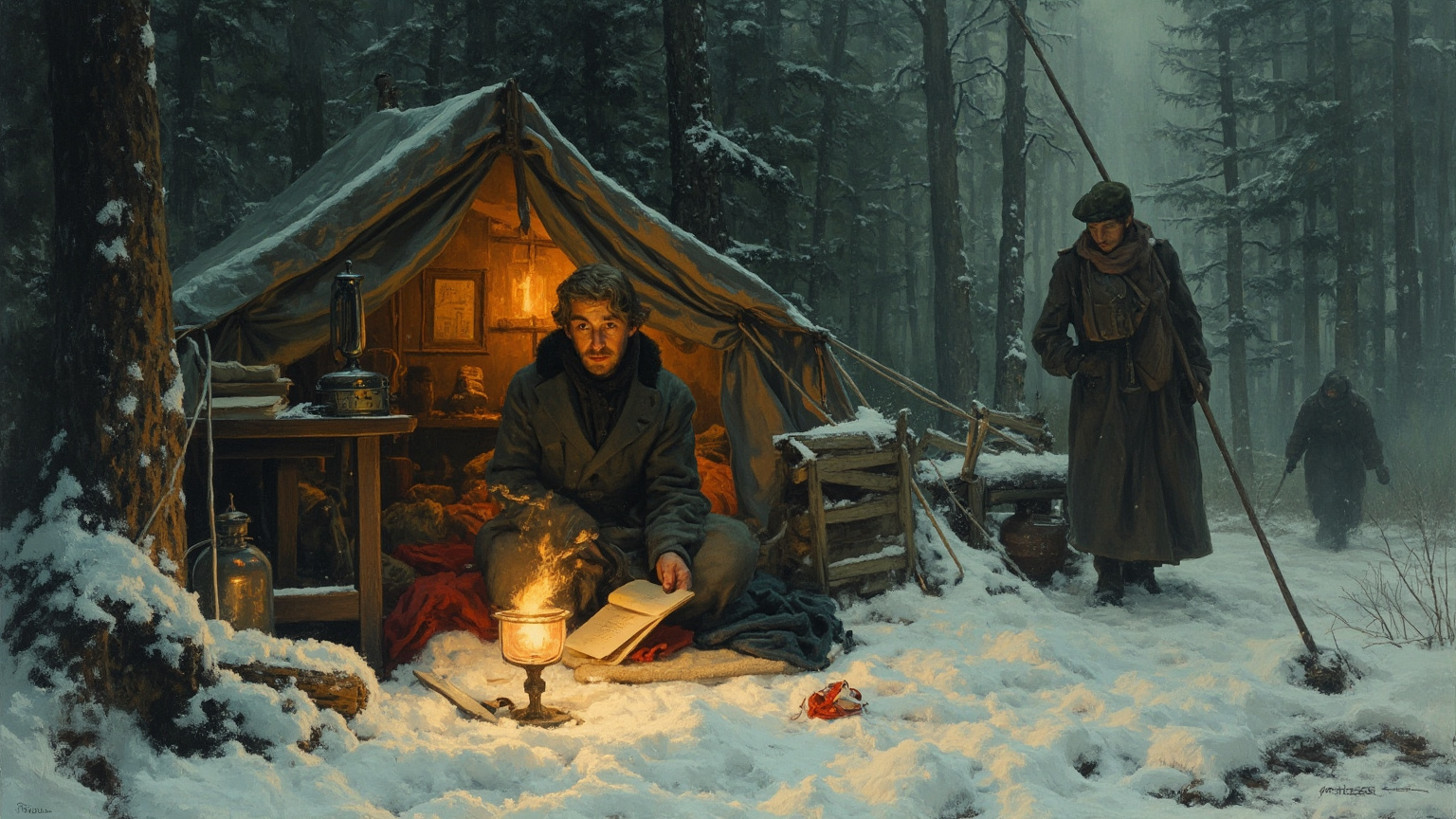
Riding back to Varykino from Yuriatin, Zhivago is stopped halfway by a Red partisan unit. Their commander, Liberius Mikulitsyn, is the kind of man who lives as a slogan made flesh — fervent, single-minded, immovable. They need a doctor, and Zhivago is held for nearly a year as the unit's field physician, seeing the war and its wounded for exactly what they are.
This is the closest the novel gets to war itself. It sets aside the generals' maps and their calculations and writes instead the blood in the tents, the sabers, the wolves howling somewhere in the trees. Mikulitsyn isn't a villain — he simply believes the revolution has a price, and that someone else should pay it. Watching all this from inside the camp, even Zhivago loses track, for a while, of what exactly the fighting is for.
Nearly a year passes before Mikulitsyn lets him go. The ride back to Varykino is written cold, almost bare — what he's racing toward is his own family.
The Snowbound House and Three Goodbyes
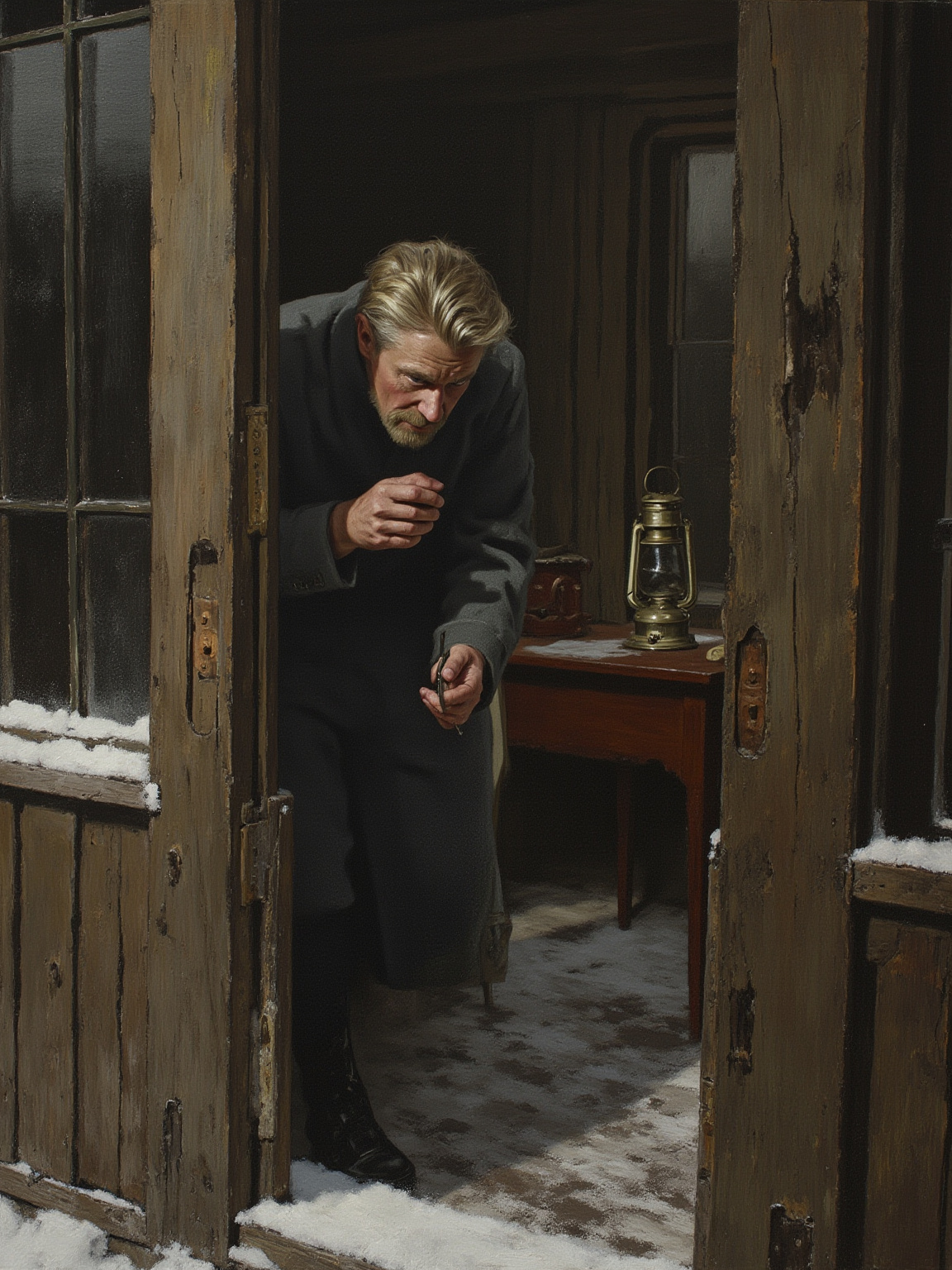
He pushes open the door at Varykino, and no one's there. Tonya, the child, her father — all of them branded "bourgeois" and expelled, exiled to Paris. He stands in the empty house knowing he will never see his wife again.
Lara, at least, is still in Yuriatin. The two of them retreat to the now-empty house at Varykino and live together for a short, burning stretch of time. Outside the window: pine forest and heavy snow. Inside: a man and a woman who both know this time is stolen.
ImaRead4
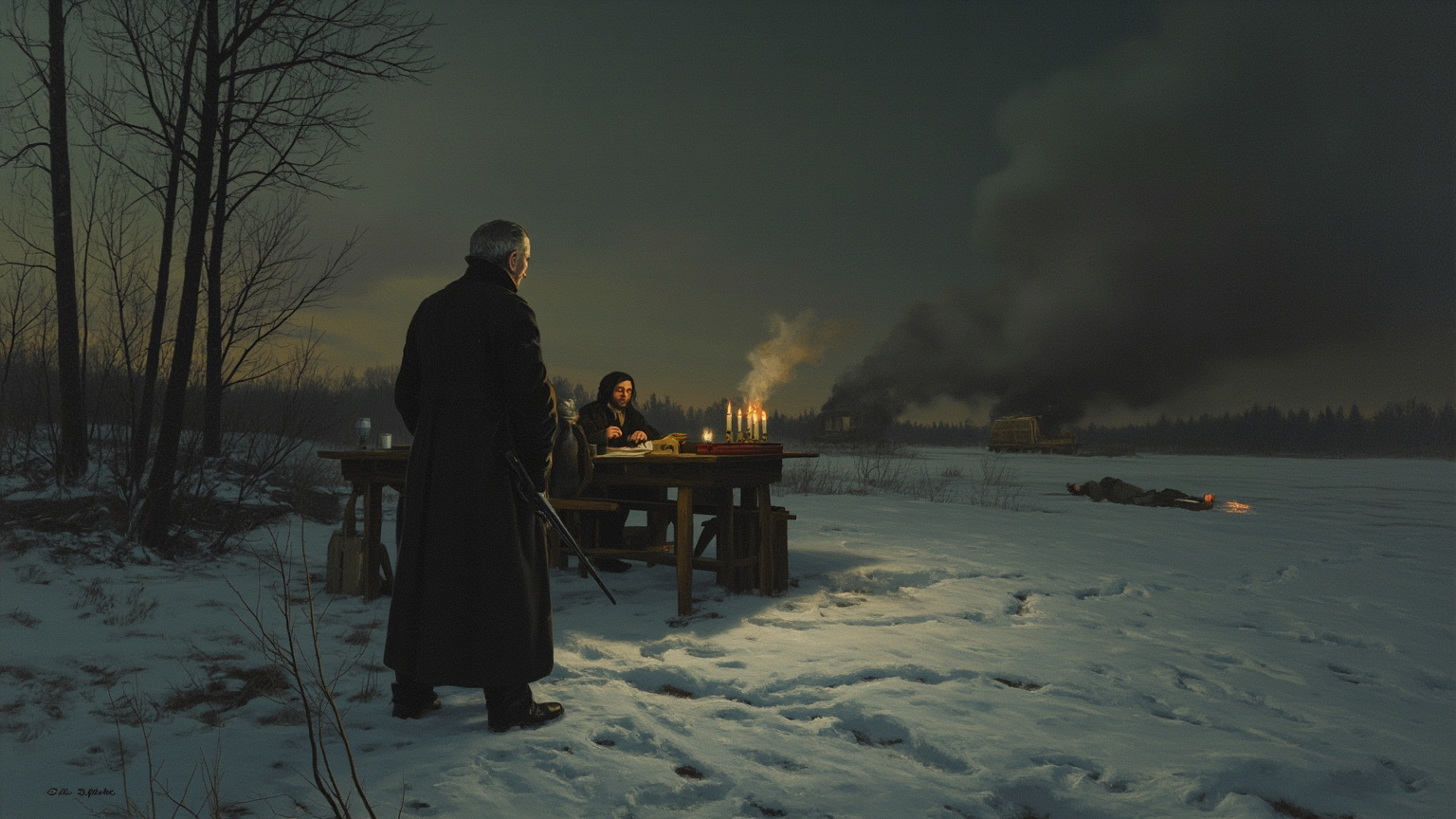
Nearly the same night, three things happen. First, Pasha — Strelnikov — with nowhere left to run, slips back to Varykino hoping for one more look at his wife and daughter, but can't bring himself to knock. The next morning Zhivago finds him in the snow, having shot himself — a private suicide, not an execution. Then Komarovsky, the lawyer who seduced Lara years earlier, turns up again, insisting that evacuating east is the only safe way out. To protect Lara, who is pregnant, Zhivago urges her to go with Komarovsky, promising to follow soon after.
Lara leaves. Zhivago doesn't follow. He breaks his word, stays behind at Varykino, and eventually goes back to Moscow. This section is written with a restraint that borders on cruelty — none of the three of them is a bad person, each one makes the only choice available to him, and together those choices pull two people permanently apart. History throws Tonya to Paris, Pasha dies in the snow, and Lara is talked onto a road she has no way to refuse. What's left for Zhivago is an empty bed and a pen that still works.
Late Moscow Years, and a Sudden Death
Zhivago returns to Moscow, his health and his spirit both giving way. He forms a common-law marriage with a woman named Marina — the daughter of an old servant, plain and capable, who holds up what's left of his life.
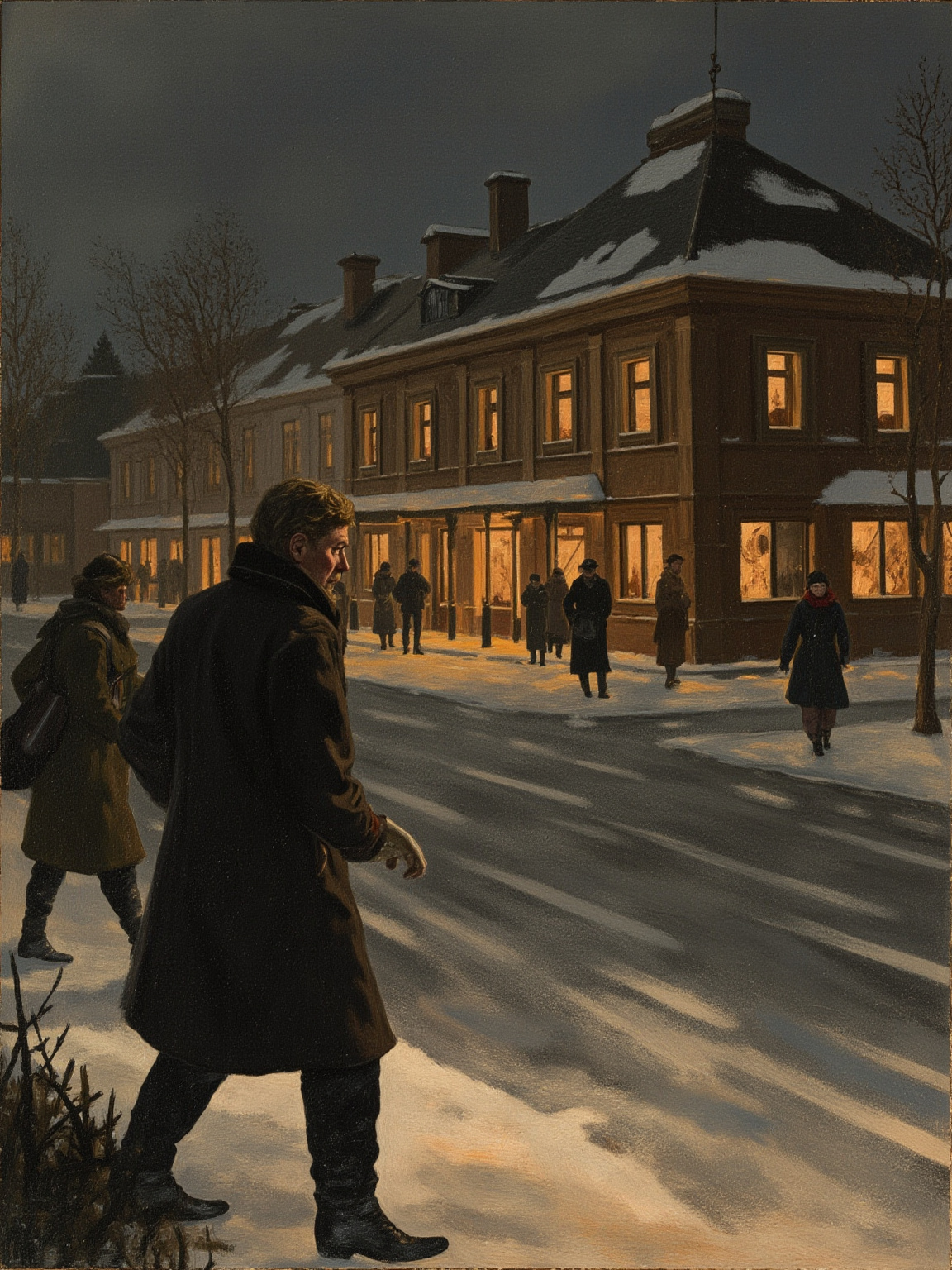
Years later, on an ordinary evening, he's walking a Moscow street when he spots, in the distance, a figure who might be Lara. He hurries after her, his heart gives out, and he collapses and dies in the street. Not shot, not a suicide — just a man whose heart had already failed him, going down suddenly in a crowd.
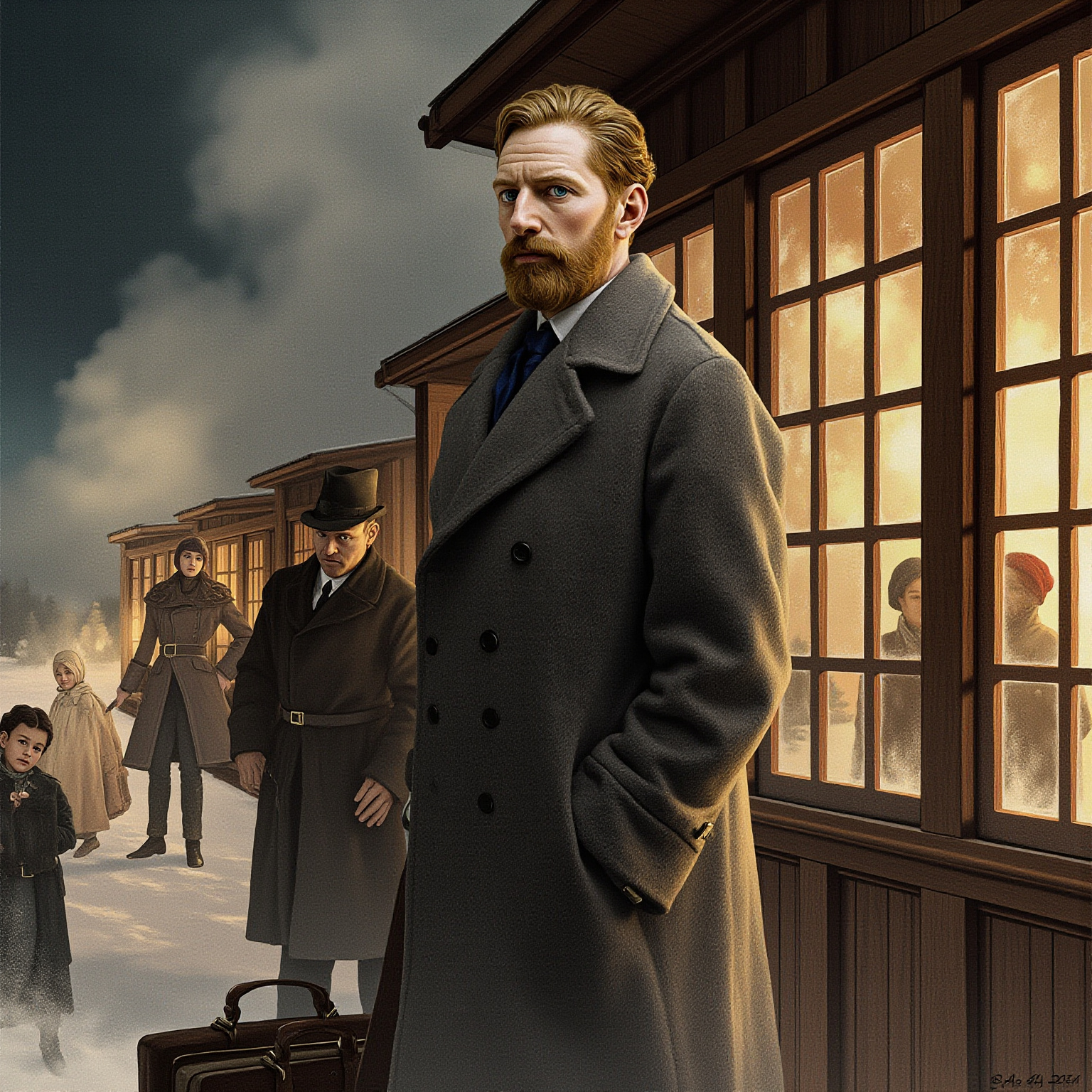
Lara comes to grieve him. She stays only a little while, then vanishes one day — most likely she dies in some unnamed labor camp, though the novel never shows her death directly. It's a scar the author leaves for the reader to carry. The story then jumps forward more than a decade, to a winter day on the eve of the Second World War, when Zhivago's half-brother Yevgraf — a man of mysterious standing and real power — meets a laundry worker named Tanya. In her, he recognizes traces of Zhivago and Lara. Everyone from the earlier story is gone. What survives is this young woman who doesn't yet know whose child she is.
When the great narrative rolls over everything, the small one holds on with nothing but a frosted window and a letter never sent.