Dom Casmurro · Companion Guide
堂卡斯穆罗
一个里约老律师用回忆重写一生,三双斜眼成了他唯一的法庭证物——读者始终无法分辨这是嫉妒,还是真相。
Opening: A Pair of Slanted Eyes
A pair of cat's eyes glances sideways. An old lawyer in Rio sits in his family's aging house, turning that gaze over in his mind for a lifetime, then recognizes the same look on another man's face, then a third time on his grown son's — and on that basis declares his wife unfaithful and the boy not his own. His name is Bento Santiago, and everyone calls him Dom Casmurro, roughly "the sullen old master." The evidence? There is none. Only the eyes. The whole novel is a case built on three pairs of matching eyes.
This is the most unsettling novel in Brazilian literature, and one of the earliest classics of the unreliable narrator anywhere — six years ahead of Henry James's The Turn of the Screw. Open it and you fall straight into one man's head, a head busy rewriting his own life through memory.
What Kind of Book This Is
The author, Machado de Assis, was the most respected name in nineteenth-century Brazilian letters. He lived nearly seventy years, writing poems, plays, and criticism, and saved this novel for the turn of the century — serialized in a Rio magazine in 1899, then published as a book the same year. It doesn't win you over with plot. It wins you over with cold: cold like a scalpel, laying a man's jealousy out on the table, when that man happens to be the only one holding the blade.
Long before the Latin American Boom put García Márquez, Borges, and Vargas Llosa on Chinese bookshelves, Portuguese-speaking America already had its own cornerstone: Dom Casmurro. Western fiction has no shortage of novels about jealousy, from Othello to Madame Bovary. But for turning jealousy into a man's own defense in his own courtroom, with the judge doubling as the accused, this is the coldest model there is.
Three Key Figures
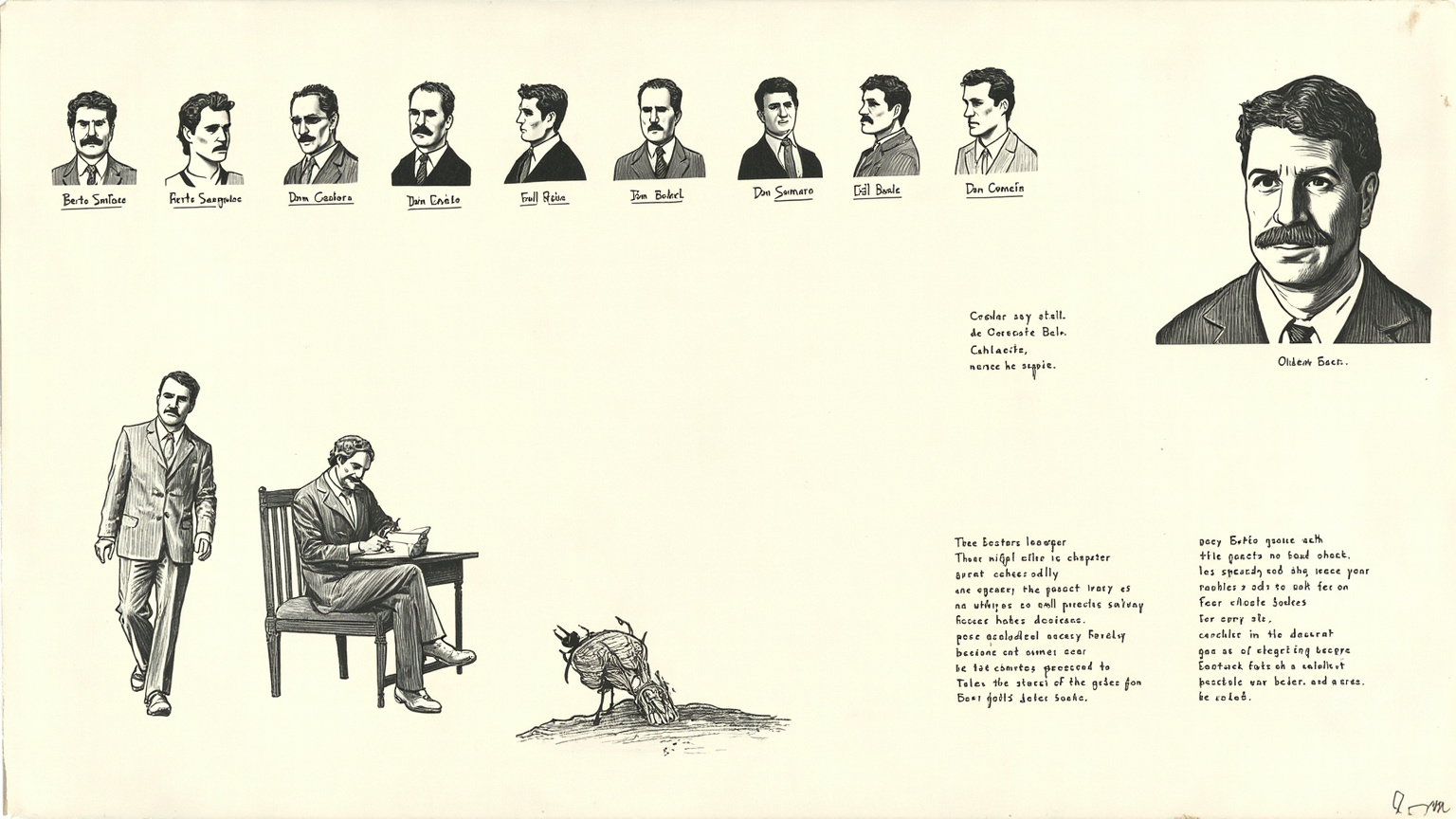
Bento, a Rio lawyer in his fifties, wears a pointed beard, gold pince-nez, and a long black frock coat. As an adult, people call him Dom Casmurro — a stubborn, closed-off old man who splits hairs and dwells on the past. He came up as new bourgeoisie out of the old colonial planter class, watching the Empire fall and the Republic rise, aging from boy to old lawyer along the way. Everything in the book comes through him alone.
Capitu, the girl next door who grew up across the street, daughter of a retired colonel, has green eyes — "the slanting eyes of a cat" (olhinhos de gato oblíquo). She is the source of that gaze. Bento marries her, and she bears him a son, Ezequiel; Bento then uses those same eyes as evidence and drives her out of the house. What she actually thinks, the reader never once hears.
Escobar, Bento's closest friend from seminary days, later becomes his business partner. He too has slanting eyes — green, tilted, identical to Capitu's. In the year the Brazilian Empire falls, 1889, the book has him drown when his ship goes down on the return leg of a pilgrimage to a holy city — a death timed with perfect cruelty, cracking open Bento's jealous delusion at its most dramatic possible moment.
Childhood: Across the Street, Slanted Eyes
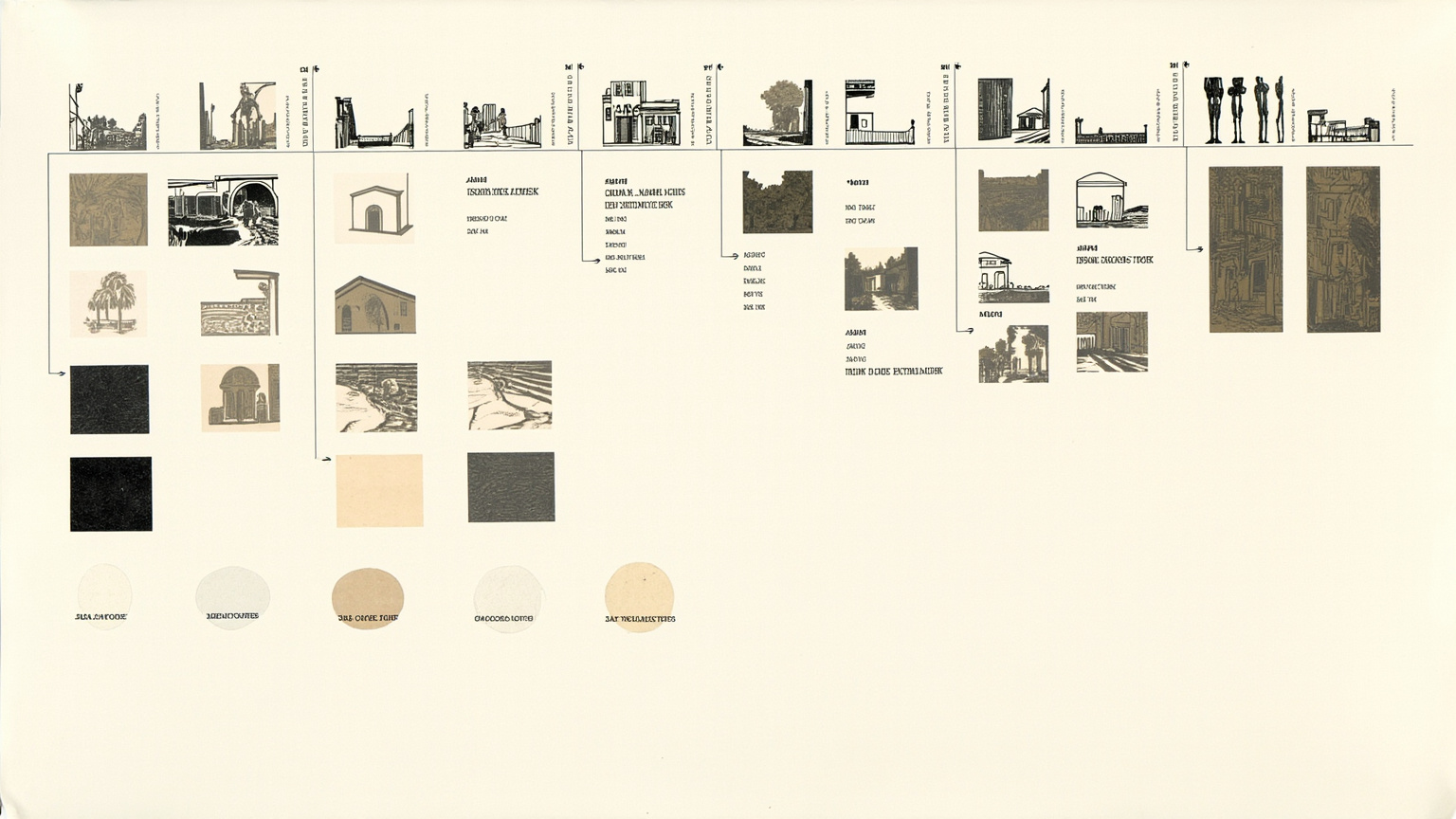
The story rewinds to Rua de Matacavalos in Rio, mid-nineteenth century. Two households sit catty-corner across the street: Bento's on one side, where his mother, the pious and gentle Dona Glória, keeps house; Capitu's on the other, where her mother, the thrifty and sharp-eyed Dona Fortunata, runs things. The two children shout taunts at each other over the garden wall — Bento boasts he has more slaves than she does, and Capitu fires back that her family's slaves would beat his half to death. This is where the novel's whole case for love freely chosen begins: a boy and a girl, a wall between their yards since childhood, each picking the other on their own.
It's in this same childhood that Capitu's slanting green eyes first lodge themselves in Bento's memory. She glances at him sideways, with a challenge in it, a precocity, a certainty he never manages to see through in all the years that follow. Those eyes will come back again and again, held up for comparison, turned into hard proof each time Bento needs to convince himself of something — but for now they are only the look of the girl across the street, the seed of a trouble still to come.
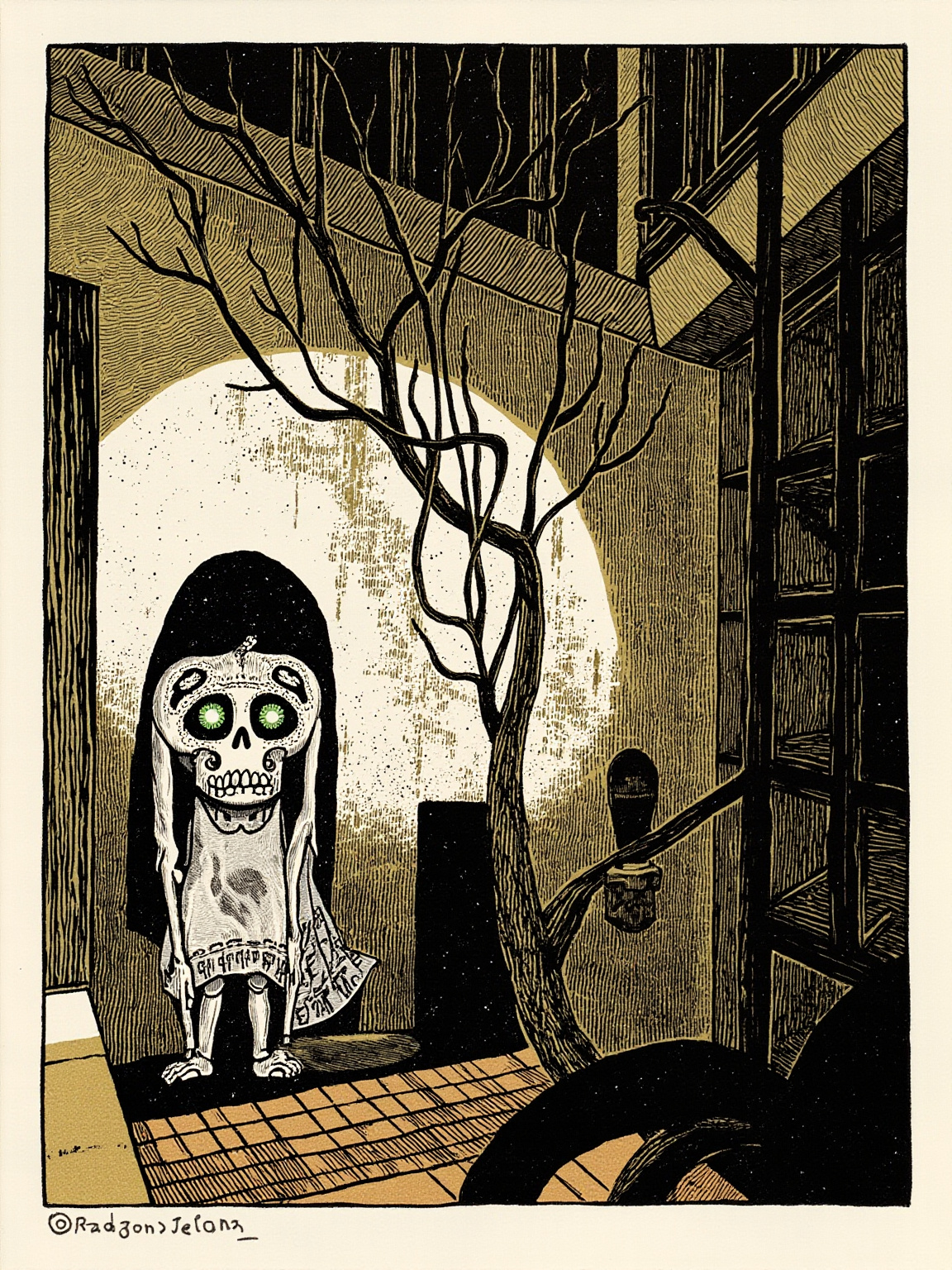
Capitu had eyes that were oblique and green, like a cat's; they were the gaze of a question I never knew how to answer.
卡皮图的眼睛是斜的,绿的,像猫的眼——那是一种目光,我这辈子都没能读懂。
金句 · 第3章 · 斜对门的童年
The Seminary: Three Pairs of Eyes Overlap for the First Time
As a teenager, Bento is sent to board at the seminary. Escobar, a boy from across the street, becomes his classmate and closest friend. Capitu visits often. The three of them sit talking on wooden benches in the seminary corridor, and Bento feels, for the first time, a prick he can't name: the way Capitu looks at Escobar, the way Escobar looks at Capitu, the way Capitu looks at him — all the same tilt. One pair of cat's eyes, worn by three faces.
This is the most important moment in the whole book. The long seminary corridor, the stone walls, the drone of Latin recitation — it all sets the scene like a painting: three teenagers, three similar pairs of eyes, and in the middle of it a boy who has no idea he is about to spend the rest of his life pinned to the word "similar." The author never once editorializes. That single word does all the work, burying decades of paranoia inside it.
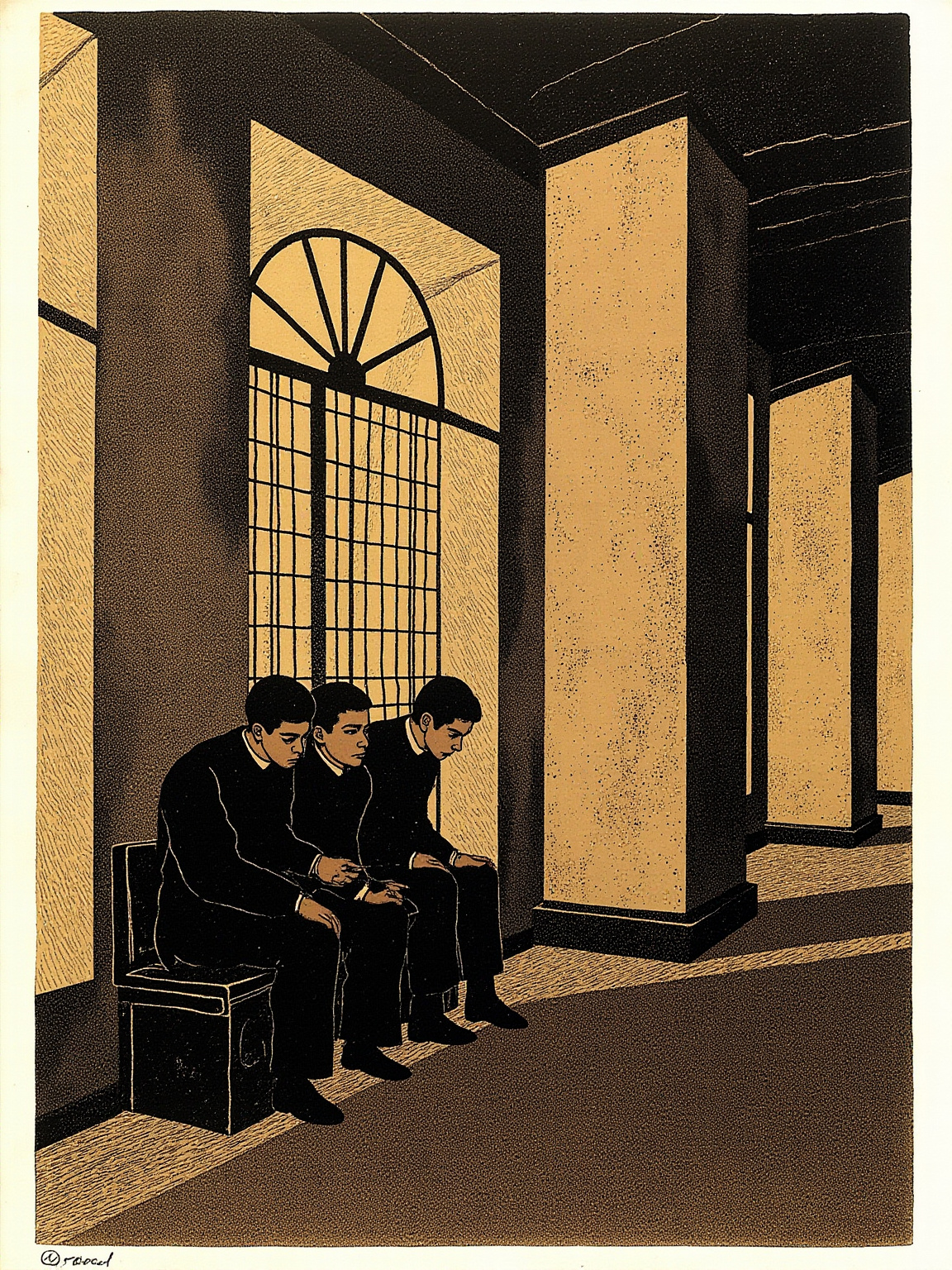
I cannot say that I saw, nor that I merely thought I saw; the truth is that the resemblance struck me like a nail driven into the wood.
我不敢说我真的看见了,也不敢说只是以为看见了——事实是,那种相像像一枚钉子,钉进了我的木头里。
金句 · 第6章 · 神学院走廊
Marriage and Partner: A Chain of Evidence
Bento and Capitu marry for love — a fashionable notion at the time, and one of the first attempts in Brazilian fiction to build a whole novel around a marriage the couple chose for themselves. After the wedding, Escobar becomes Bento's business partner, and the three of them move together through Rio's drawing rooms and salons. Bento claims that in these settings he quietly observes something between Capitu and Escobar.
What does "observe" mean here? A glance that crosses another glance. A chance arrival a few minutes late. An offhand greeting. Bento gathers every scrap into his private notebook and calls the sum a chain of evidence. A reader gets to this passage and laughs — this is evidence? Yes, apparently it is. It's the sharpest trick a novel of marital suspicion can pull: take the ordinary crossed glances any two people exchange and blow them up into proof; take a careless gesture and twist it into a confession. And the narrator happens to be a lawyer — he applies courtroom logic to the trial of his own wife.
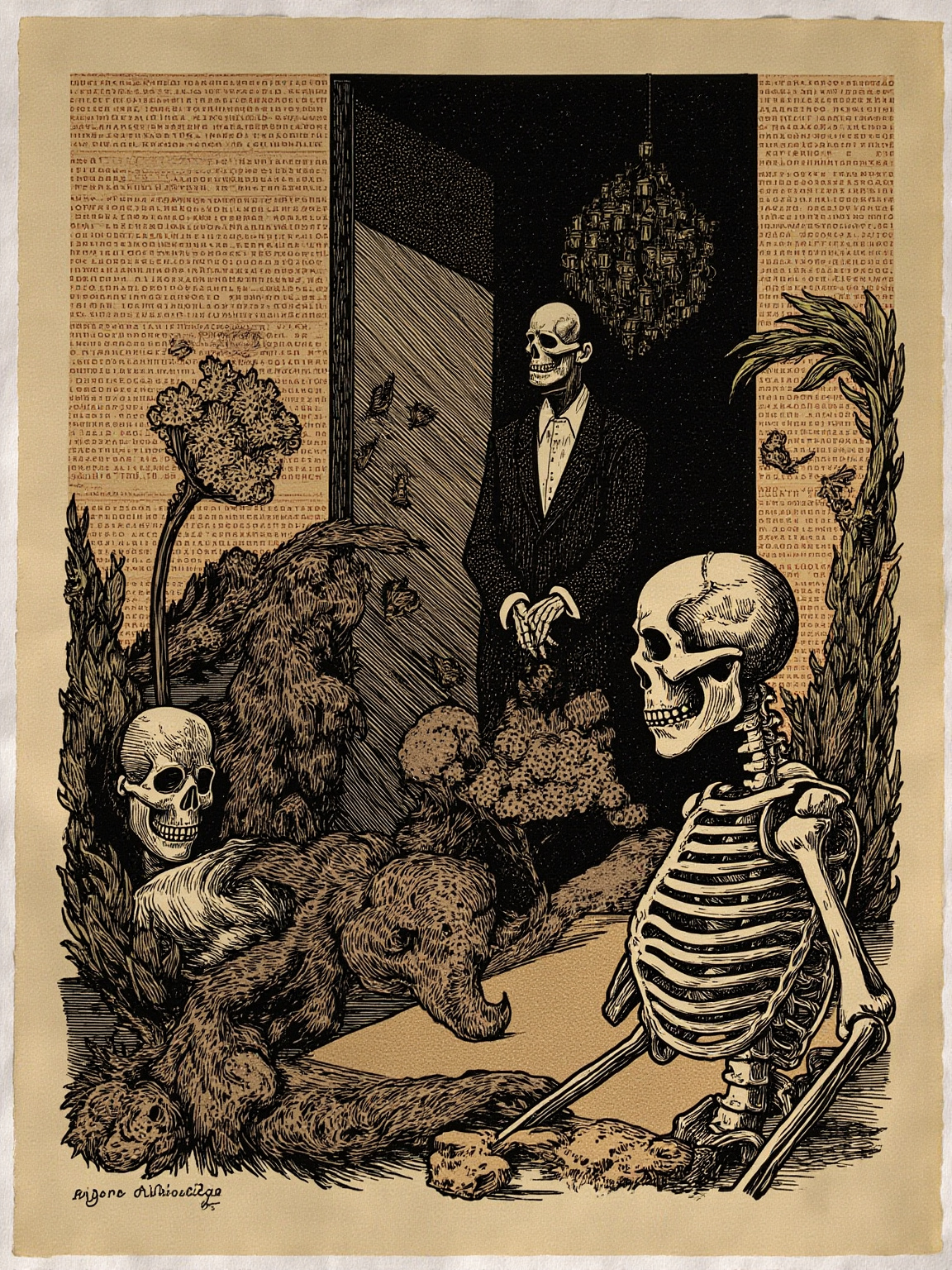
They exchanged a glance; it lasted a moment, but a moment is enough to build a suspicion, and suspicion is enough to build a life.
他们交换了一个眼神;只一瞬,但一瞬够砌起一次猜疑,一次猜疑够砌起一生。
金句 · 第9章 · 证据链
1889: Shipwreck and Drowning
In the year the Brazilian Empire falls, Bento takes Capitu and Escobar on a pilgrimage to a holy city — Sinimbu, a small coastal pilgrimage town. On the return crossing the ferry capsizes and Escobar drowns. A death timed with the neatness of a martyrdom, the dramatic vanishing of the very man Bento is jealous of — except jealousy, of all things, has never once stopped just because its object died.
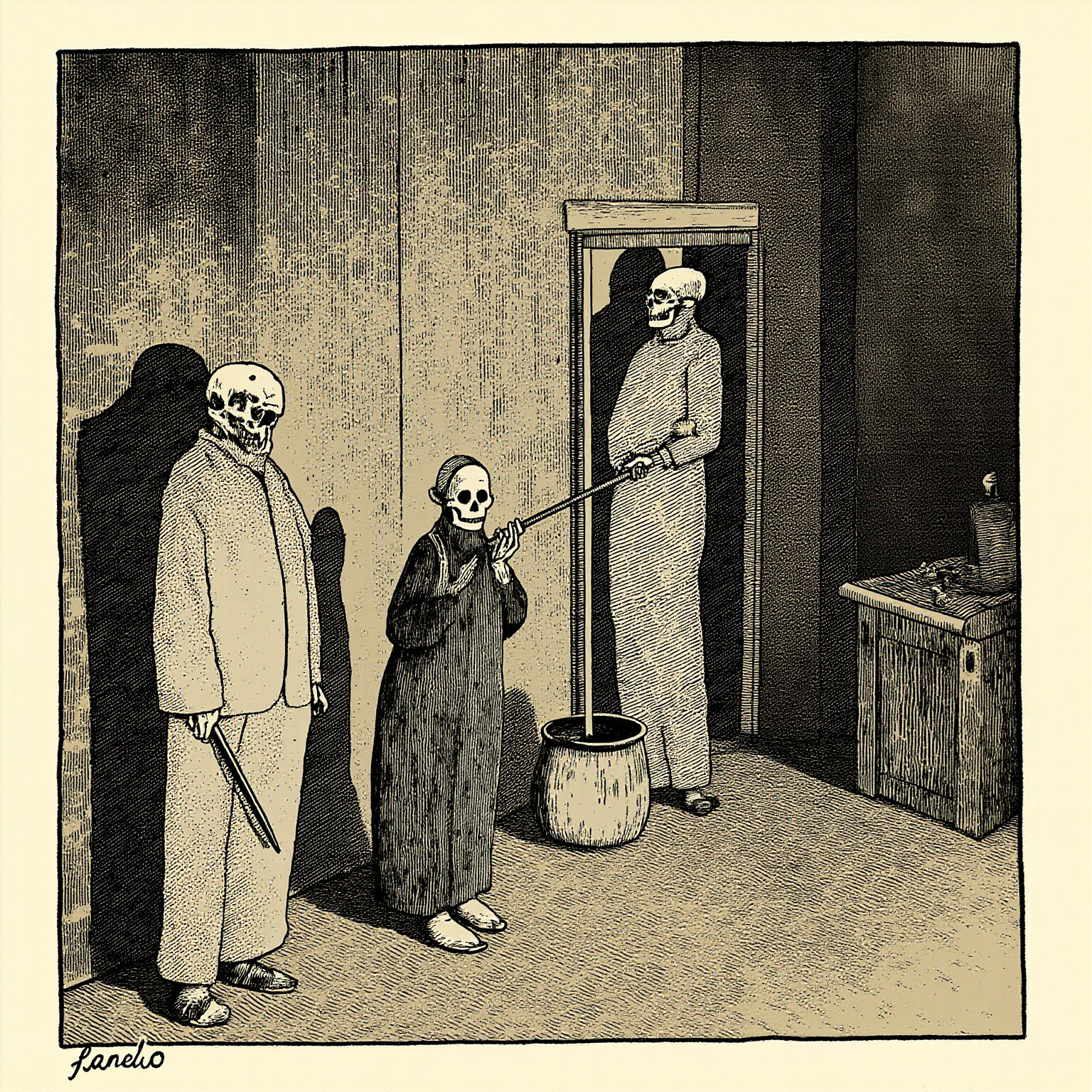
Between sleep and waking I saw myself push him into the water; whether I dreamed it or truly did it, I have never been able to decide.
在睡与不睡之间,我看见自己把他推进水里——是梦见了,还是真做了,我这辈子也断不清。
金句 · 第12章 · 沉船之夜
The night the ferry goes down, Bento dreams, somewhere between sleep and waking, that his own hands pushed Escobar into the water. He wakes and says nothing. He then "sees" Capitu lying beside the dead man — a vision, of course, nothing more, the peak eruption of a paranoid mind arriving hard on the heels of a funeral. A drowning as clean as this one leaves behind a jealousy that can never be buried. After that night, Bento never again lets go of the thread he pulled, still warm, from a dead man's hand, and has held in his own fist ever since.
The Son: One Last Cut of Inherited Eyes
The son Capitu bears Bento is named Ezequiel. As Ezequiel grows, his eyes "turn slanted too" — the very image of Escobar, the very image of Capitu. It's the last straw Bento spends his whole life waiting for. The irony is that Ezequiel has boarded at the seminary since he was small and has barely spent a handful of days with his father; but the shape of his eyes, in his father's, is a verdict all on its own.
In the novel's final chapter, Bento announces, in front of others, that Ezequiel is Escobar's illegitimate son and not his own. Capitu hears him out and leaves in fury. The cruelty here isn't in the fact itself — there is no way to verify it either way — it's that a father, a lawyer, a man who treats his own memory as a courtroom, is willing to use it as evidence at all. Slanted eyes, in this book, become a paternity test. Nothing could be more absurd.
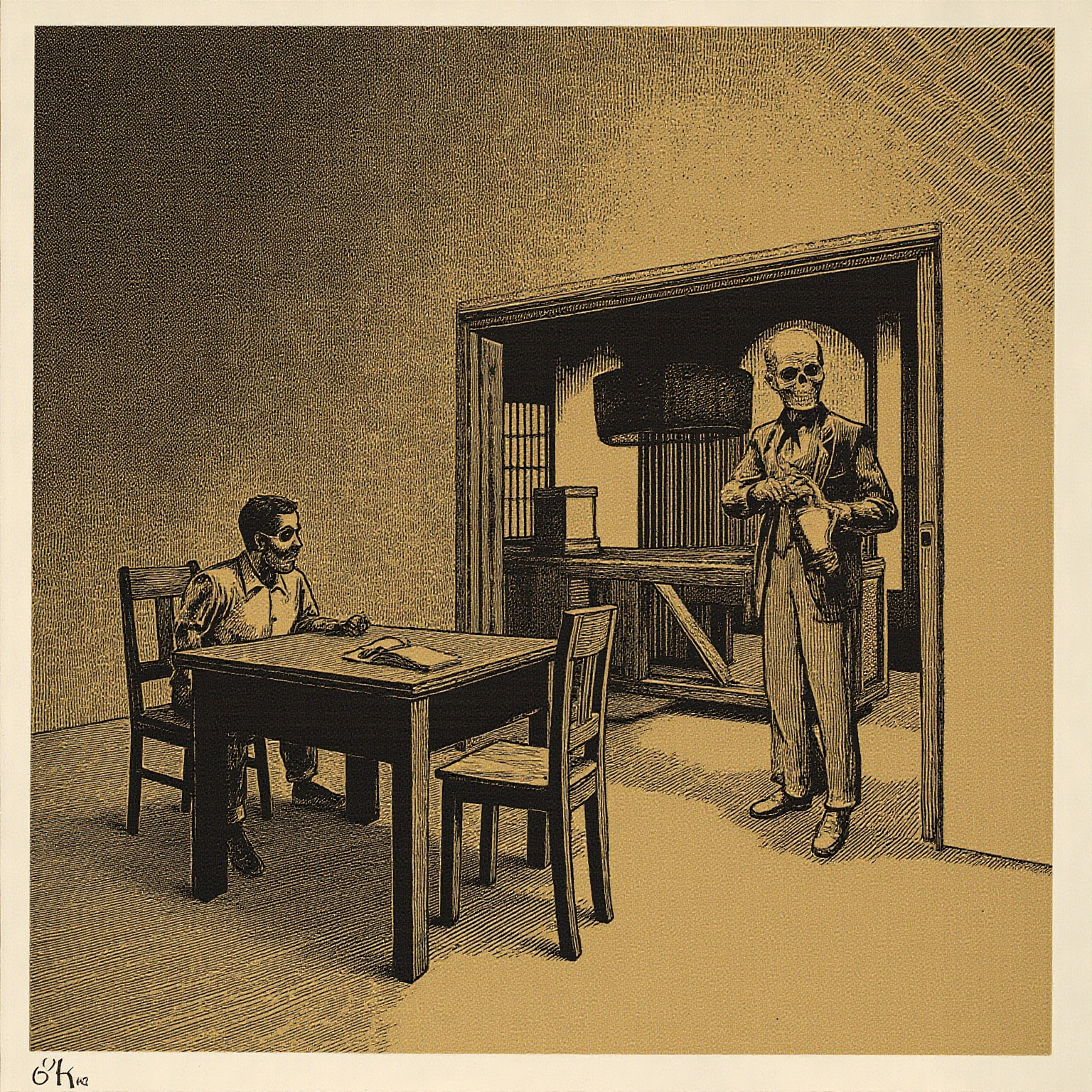
He was not my son. The eyes said it before I did; the eyes, those same oblique green eyes that have haunted me since boyhood.
他不是我的儿子。这话还没出口,眼睛先替我说了——那双斜斜的、绿绿的、跟了我一辈子的眼睛。
金句 · 第15章 · 终审判决
Why This Novel Is So Good
In not very many pages, it manages one thing: it lets a man addicted to jealousy serve as his own judge, his own witness, and his own court clerk — the reader sees everything through his eyes alone, and those eyes are already stained through with paranoia about a certain slant. This is more than the usual unreliable narrator. It's a working model of jealousy as a mental illness, the delusional kind psychologists would later name Othello syndrome, and Machado de Assis had already dissected it, in novel form, in 1899.
It is also a mirror held up to Rio at the close of the nineteenth century: slavery just abolished, the Empire just fallen, the Republic just declared, the old colonial houses across the street from each other still standing alongside the new bourgeoisie's drawing rooms. A middle-class lawyer left behind by all that change has only memory left to build himself a whole world — and his own jealousy wrecks that memory too. The man pining for the past is both its victim and its executioner.
What Else You Get from Reading It
Machado de Assis's prose is its own animal — not García Márquez's tide of the marvelous, not Borges's metaphysical labyrinth, but cold, cold to the point of irony. He plants a needle in nearly every paragraph: Bento boasts, "I love her," and the very next line is, "Of course, she loves me too — if she didn't, that would be ingratitude." Bento denounces Capitu's "betrayal," and the next line is, "Of course, I may have seen it wrong — but I didn't." Let the sentence run on long enough and the author's smirk is sitting right there inside it.
What's more interesting is the structure. There is no objective camera anywhere in this book — everything is Bento's first-person memory, and memory can always be rewritten. He states, on such a date, in such a place, that he witnessed such a thing, and you believe him without thinking, because he sounds so certain. Turn the page and he says maybe he didn't see it clearly, but he believes he did — and now you feel him wavering. Back and forth like that, and the reader is pulled straight into the room where he is suing himself. This is the deepest thing an unreliable narrator can do: not that he lies, but that he himself no longer knows whether he's lying.
Worth Reading Even When You Know the Plot
What a companion guide gives you is the map. What the text gives you is the ground itself. The map can tell you the street across the way, the seminary, the shipwreck, the walking-out — the fixed points. What no guide can give you is the self-justifying note in Bento's voice every time he says, "I suspected it even then," or the way Bento has already translated Capitu's words for her before she ever gets to speak them.
Somewhere in the text a line like this is waiting for you — Bento describing Capitu's eyes, swearing to his own certainty and undercutting it in the same breath: "Those eyes of hers, green, slanting, seemed to say I don't know, when really they were saying I won't say — though it's possible, quite possible, that she said nothing at all." A narrator who has just sentenced his own wife, and in the next breath, with his own hand, knocks over the witness stand. You have to open the book yourself to feel that grinder turning in his head.
And this book will change how you read novels afterward. You stop taking any first-person "I" at face value ever again. That's the biggest thing it left me with.
A man addicted to jealousy writes his whole life as a trial — the reader is the jury, and the only evidence is three pairs of slanted eyes.
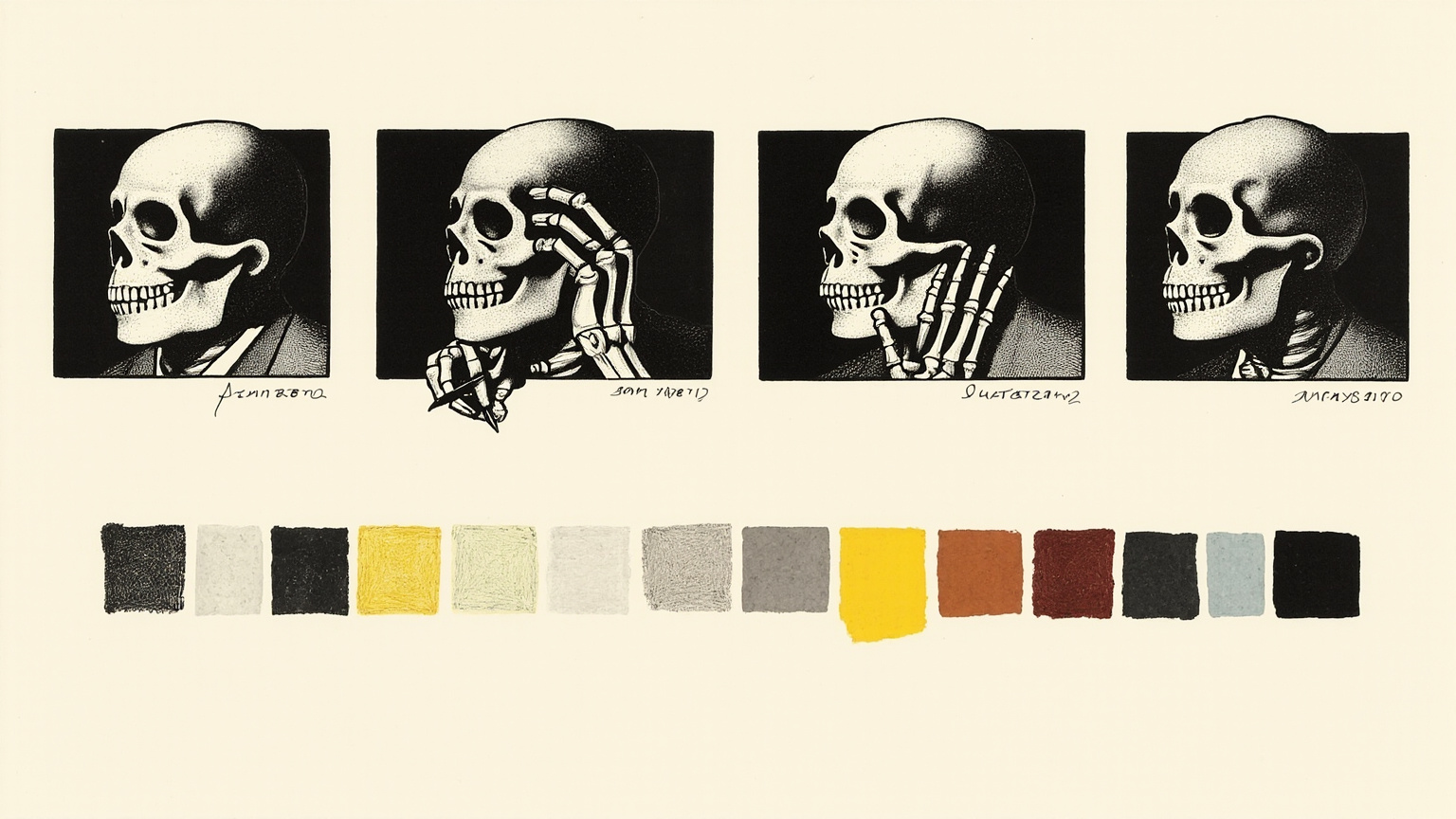
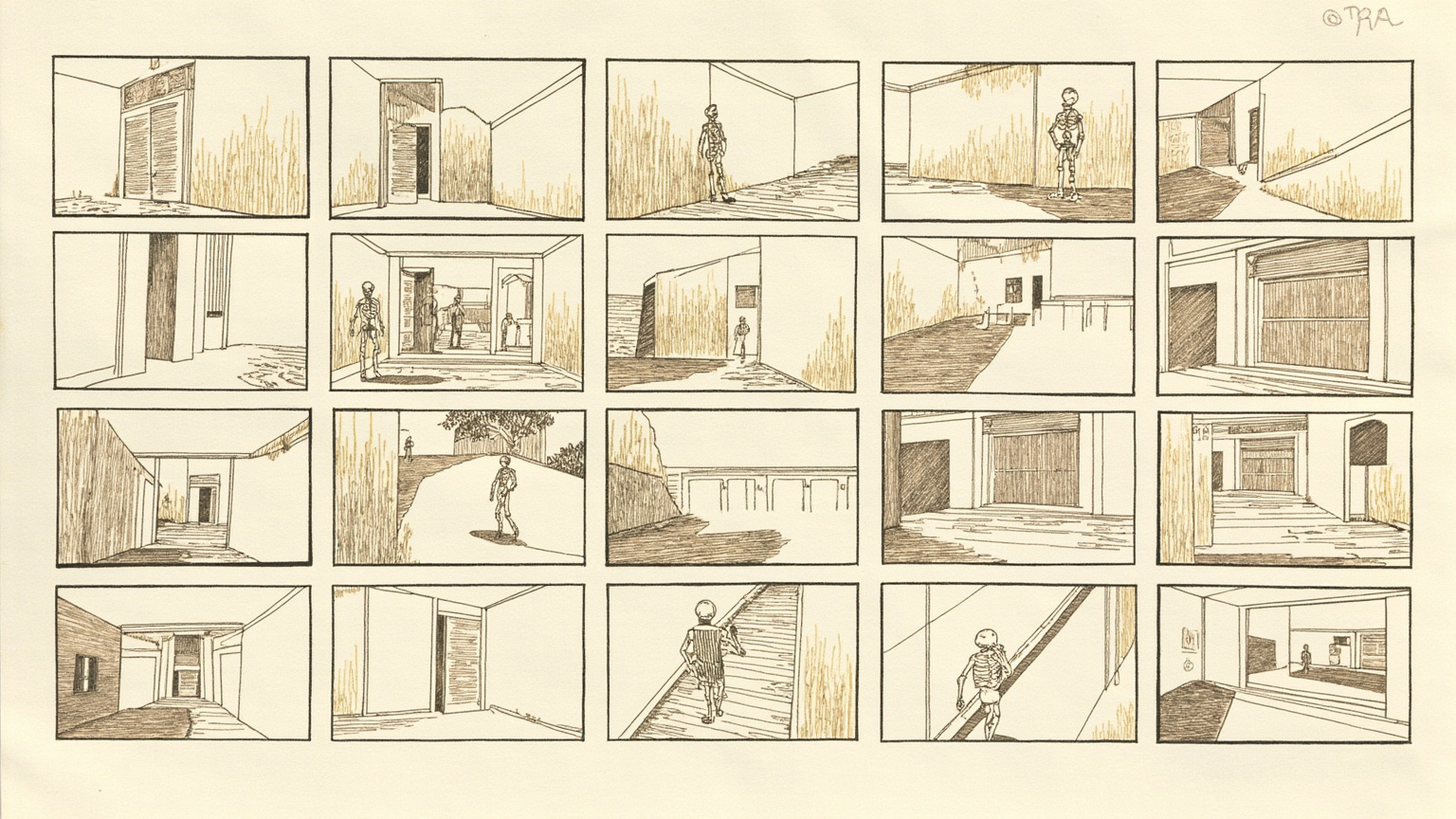
Art Direction4 plates
Before the guide was written, this book got a visual foundation — every illustration you just read grew out of it.