Ecclesiastes (Kohelet / Qoheleth) · Companion Guide
传道书
一个没有名字的召集者,在日光之下一样一样把日子过完,最后告诉你——全是捕风。
A Voice in Jerusalem Says: Chasing Wind
The chalk hills bake white, and the rope at the wellhead creaks against the pulley. In Jerusalem, a king sitting under his vine arbor, really just a man who calls himself king (we can't even be sure of his name), sets down his cup and speaks the book's first line: Vanity of vanities, vanity of vanities, all is vanity. That sentence has hung from the ceiling of Western literature ever since, and no one has managed to take it down.
He sets out to do one thing to the reader: live through every kind of life possible under the sun, one after another, and then tell you: all of it is chasing wind.
What Is This Twelve-Page Book of the Old Testament, Really
Tradition hangs this book on Solomon, the Israelite king who built across Jerusalem, hoarded gold and silver, and married foreign princesses. Most modern scholars don't buy it; they date it to around the third century BCE, written by an anonymous author borrowing Solomon's voice for a long philosophical essay. In the Hebrew canon it sits on the Wisdom Literature shelf, next to Job and Proverbs, but it runs colder than Job and bleaker than Proverbs — the least religious-sounding book the wisdom tradition has to offer.
What later ages remembered was mostly that one line, vanity of vanities. Hemingway pulled the title of The Sun Also Rises straight from this book; Camus wrote The Myth of Sisyphus in its wake; Bob Dylan folded its lines into his lyrics. That existentialist scent running through Western literature was already drifting over the dry ground of Jerusalem two thousand years earlier.
The Teacher: the Only Voice, a Man With No Name
Only one person speaks in the whole book: the Teacher, whose Hebrew name, Kohelet, means something like the assembler, or the one who addresses the assembly. He shifts the voice of I back and forth: in chapters 1 and 2 he is a king, claiming to have ruled in Jerusalem, denying his eyes nothing they wanted and his heart nothing that pleased it; by chapters 7 and 12 he has stepped outside himself, calling himself the Teacher in the third person, like an old man standing two paces back to comment on his own life.
He has no protagonist across from him, no antagonist — only a handful of mirrors. The fool, who ends up forgotten just as he does. The king, another kind of ruler, this one serving the fields. The laborer, backs bent under stone walls in the full heat of the sun. And his own old age, the silver cord snapped, the golden bowl broken. Nothing happens between these figures; it all happens inside the Teacher's head. He turned his own life into an experiment.
Under the Sun: a Cyclical View of Time
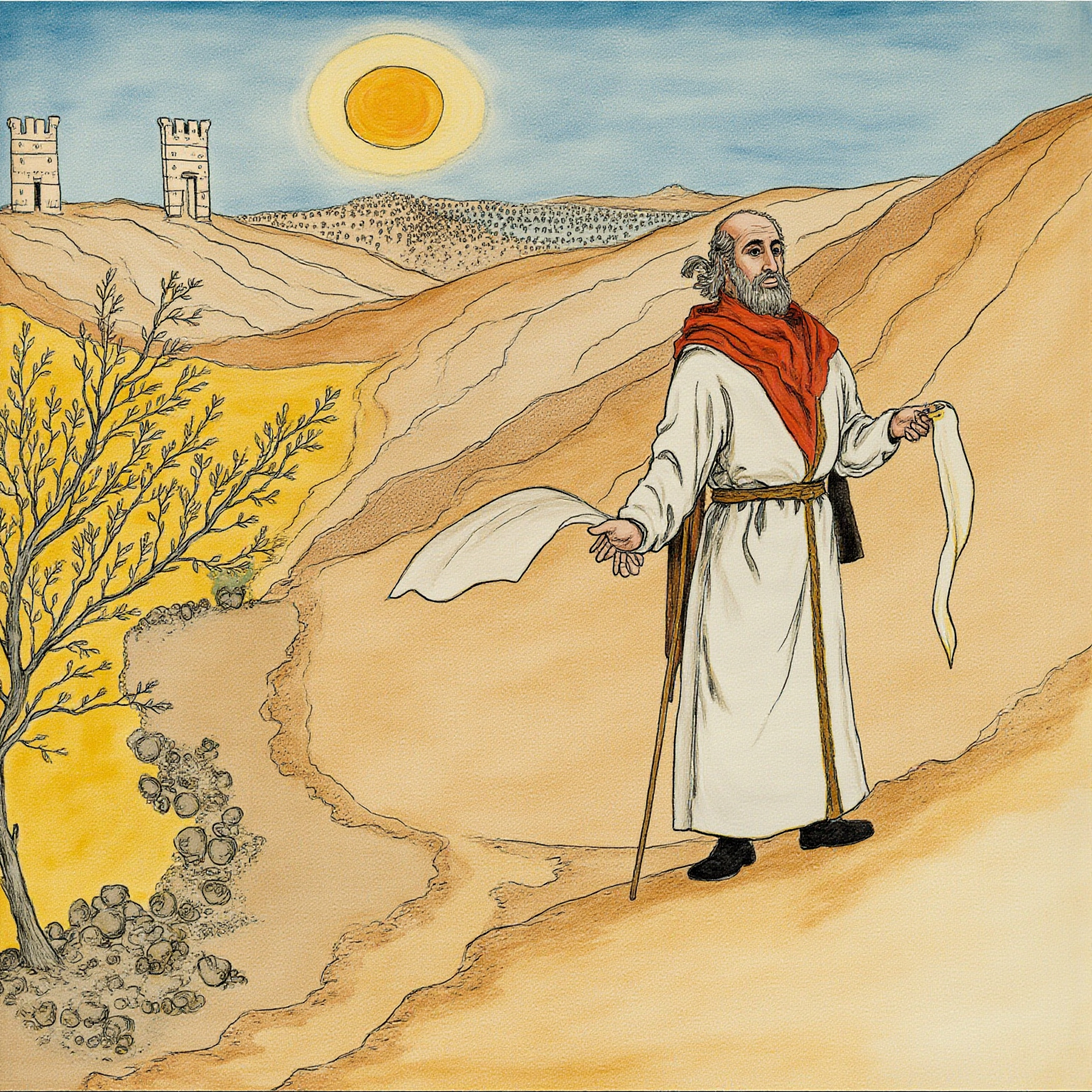
There is no dynasty here, no battle, no history of salvation. The backdrop is whatever a king's eye could reach: the walls of Jerusalem, olive groves bleached white by the Near Eastern dry season, the cisterns where water was drawn, the furrows where the oppressed wept and sighed with no one to comfort them. The rivers still run east to the sea, and the sea is never full; the sun rushes up and rushes back to the place it rose from; one generation passes and another comes. This is cyclical time, not linear: the history of salvation is suspended here, and past and future wear the same face.
What can happen inside a loop like that? The Teacher's answer is that everything has already happened, and everything will happen again.
The King's Experiment: Living Every Kind of Day
In the book's second section, the Teacher speaks for himself: he threw himself into building, raised houses, planted vineyards, laid out gardens and parks, dug pools, bought slaves and servants, and piled up silver and gold. He refused his eyes nothing they asked for, and denied his heart no pleasure it wanted.
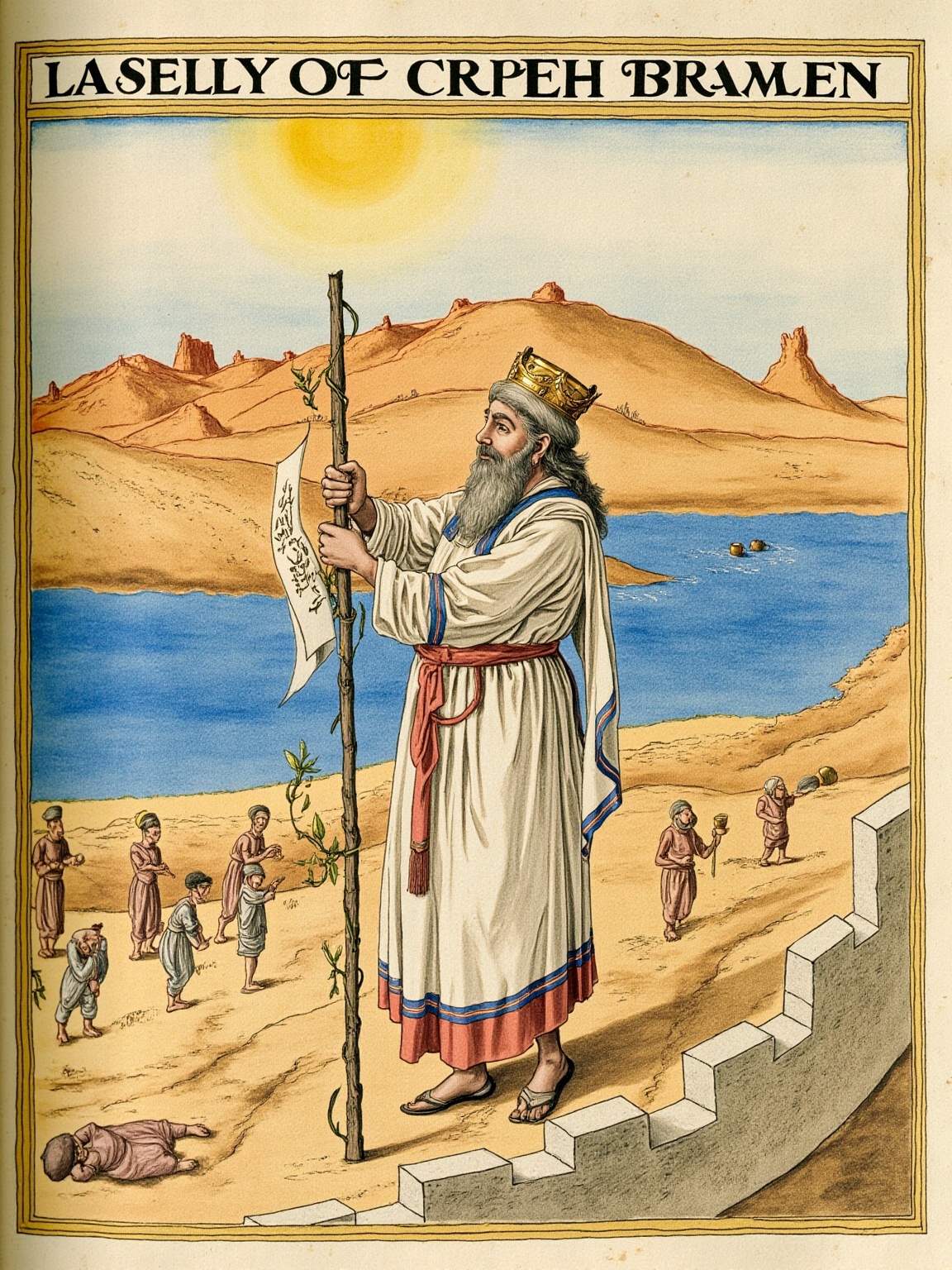
I made great works: I built houses, I planted vineyards, I made gardens and pools, and I withheld nothing my eyes desired.
我为自己动大工程:建造房屋,栽种葡萄园,修造园囿,挖造水池——我眼中所求的,我都不抑制。
金句 · 第2章 · 王的工程清单
It reads like a ledger, the year-end inventory of a man counting his stock. Wisdom, pleasure, wealth, labor: he tried each in turn, then turned around and found that all of it was vanity and a chasing after wind, of no profit under the sun. I stalled the first time I read this passage too. A man who turns a good life into an experiment has a harder time writing anything true than a man who never got the good life at all, and yet the Teacher managed it.
A Time for Everything: the Most Quoted Lines in the Book
He suddenly changes register, stepping out of his own story to write a poem: a time to be born and a time to die, a time to plant and a time to uproot, a time to kill and a time to heal, a time to weep and a time to laugh. It runs fourteen lines, each one paired against its opposite, like two bells struck at once.
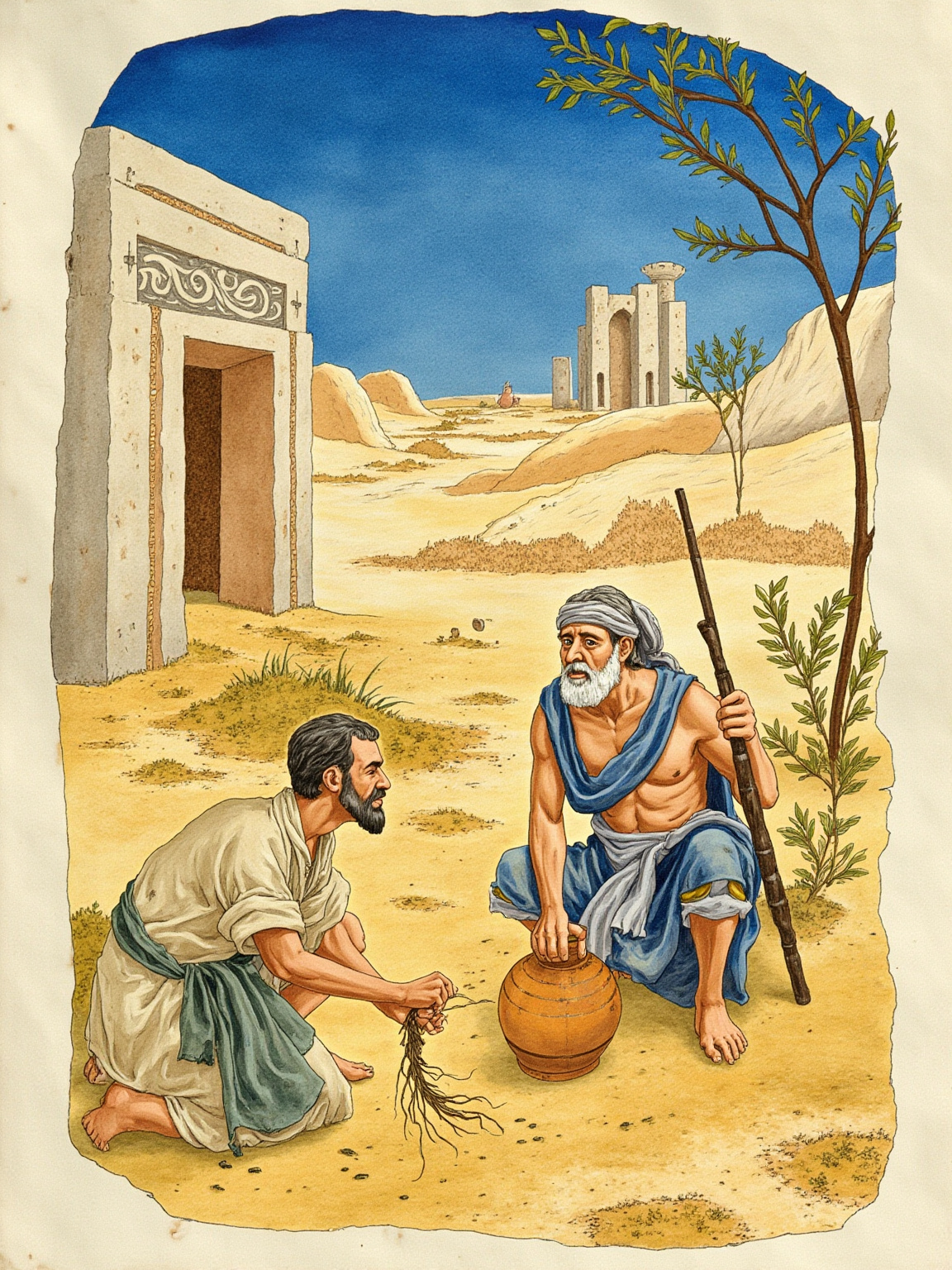
A time to be born, and a time to die; a time to plant, and a time to pluck up what is planted.
生有时,死有时;栽种有时,拔出所栽种的也有时。
金句 · 第3章 · 凡事有定期
This is the mother text behind nearly every time poem the West has produced. The line further on, a time to keep silence and a time to speak, is one of the roots behind every later discussion of the art of silence, though the Teacher wasn't writing it to encourage anyone. He was telling the reader that the pendulum of time doesn't ask your permission.
Wise and Foolish, the Same Death: No One Escapes
He drags out a scale. The wise man and the fool stand together on the pan, and when death arrives, both go down: the wise man, like the fool, will be forgotten. This overturns the Solomonic view of wisdom at the root. That school believed wisdom let a man live with clear eyes; the Teacher answers, coldly, so what if you see clearly?
Next he puts the king on the scale too. A new king rises and the crowd flocks to him, but the old king dies and another rises to take his place soon enough. Power turns out to be just another shape of chasing wind. He tosses the laborer on the pile as well: a man might father two hundred children and live for many years, and still his soul is never satisfied. The wise man, the fool, the king, the laborer: four figures standing on the same dry ground, scattered in the end by the same wind.
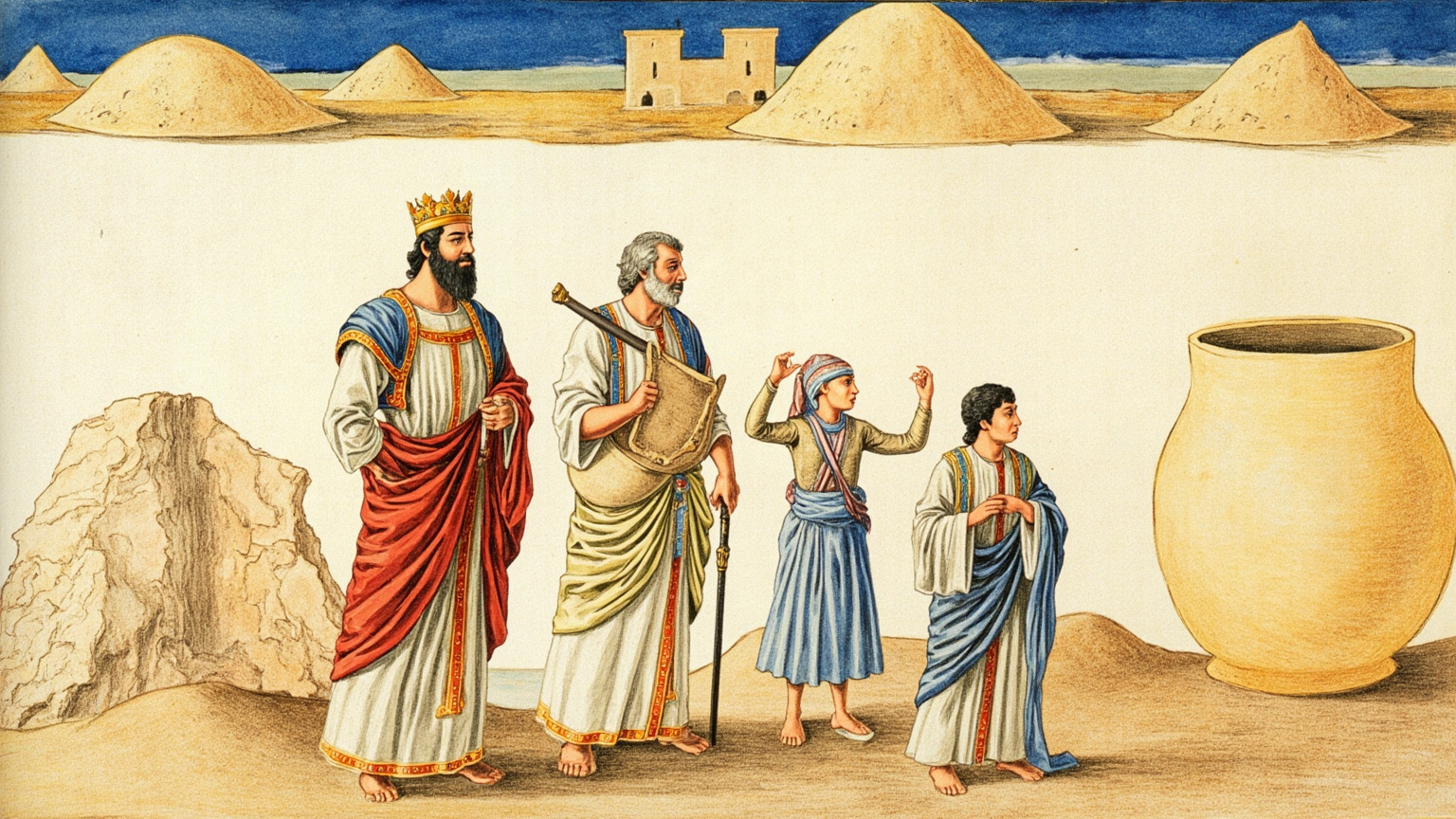
The wise man has eyes in his head, but the fool walks in darkness; yet I perceived that the same fate comes to all.
智慧人眼中有光,愚昧人在黑暗里走;可我知道,他们所遭遇的都是一样的。
金句 · 第2章 · 智愚同死
Eating and Drinking: a Handful of Sand Inside the Vanity
After all that vanity, he suddenly loosens his grip. The day God gives is the day you have; eating and drinking off your own labor, there is nothing better for a man under the sun, and that, too, is a gift from God's hand. Later readers turned this passage into the founding text of small-pleasures ethics, but in the Teacher's own terms it isn't comfort food. It's the one concession he makes to the vanity: if you can't hold onto the big meaning, eat the meal in front of you.
This concession keeps coming back, as if he's reminding himself as much as comforting whoever has read this far: don't try to grab hold of meaning yet, just get this meal down first.
Gone Gray: the Silver Cord Snapped, the Golden Bowl Broken
The book's final chapter is its darkest and most concrete. He writes old age through a set of broken objects: the silver cord snapped, the golden bowl broken, the pitcher shattered at the fountain, the wheel broken at the well, and then, the clouds return after the rain, and man goes to his eternal home. This is no longer just an old man. It is an inventory of a body being taken apart, piece by piece, inside time.
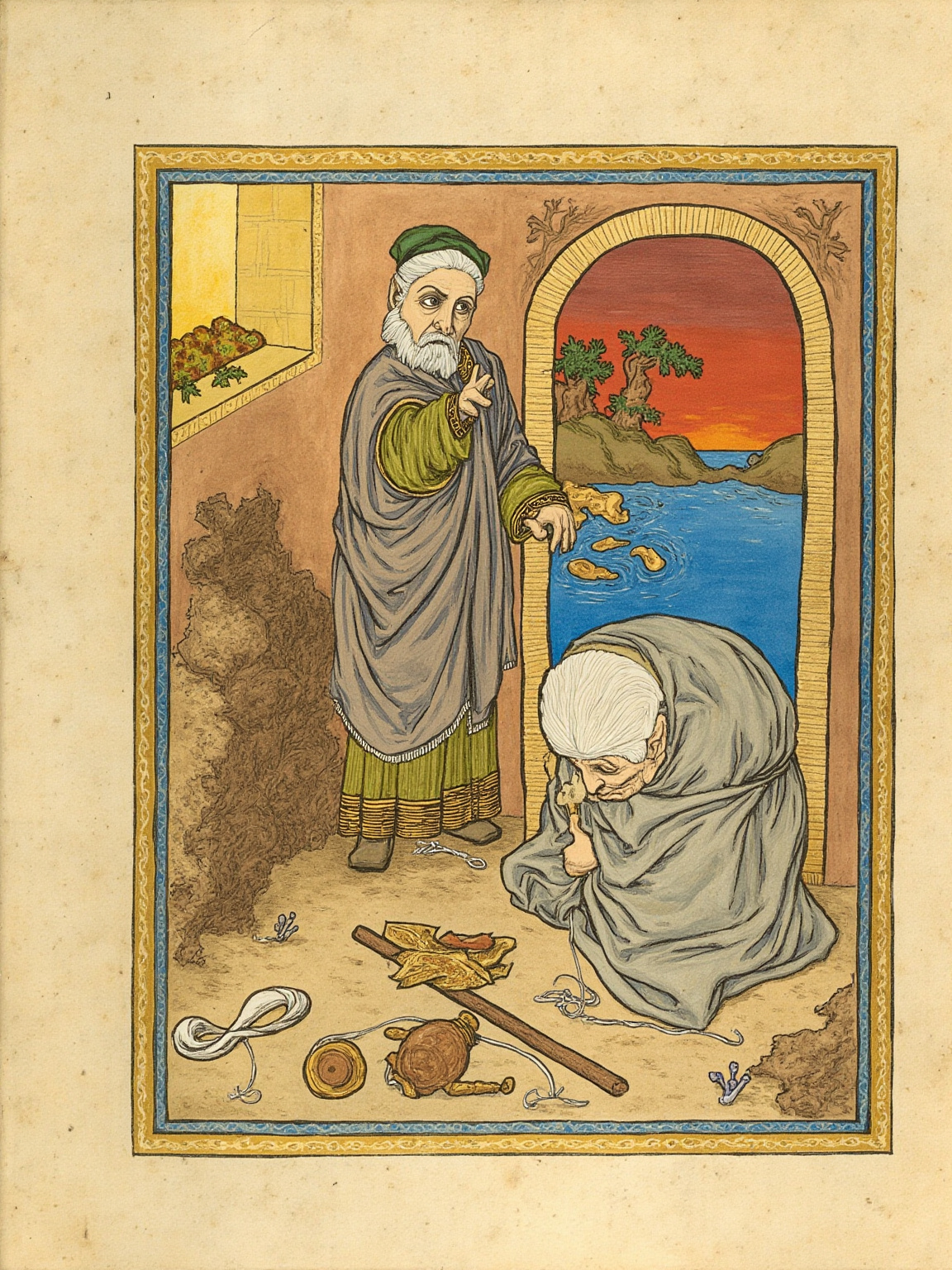
Remember also your Creator in the days of your youth, before the silver cord is snapped and the golden bowl is broken.
你趁着年幼,衰败的日子尚未来到,当纪念造你的主——在银链折断、金罐破裂之前。
金句 · 第12章 · 银链折断
Then he gives an order: Remember your Creator in the days of your youth, before the days of trouble come. It is the only imperative in the entire book, and it lands like something a father slips into your pocket on his way out the door.
Vanity of Vanities, Landing Back on a Commandment
The ending has troubled generations of readers. After an entire book insisting that everything is vanity, everything is chasing wind, the closing line pulls back to fear God and keep his commandments, for this is the whole duty of man. That closing turn is what has kept the Hebrew canon from reading it as pure nihilism.
This is the book's deepest tension. My own sense, reaching this point, is that he circles the whole way around only to land back on a plain commandment, and it's precisely because a full book of vanity came before it that this one plain line lands heavier than any thunderclap command in Deuteronomy.
The end of the matter; all has been heard: fear God and keep his commandments, for this is the whole duty of man.
这些事都已听见了,總意就是:敬畏神,谨守他的诫命,这是人所当尽的本分。
金句 · 第12章 · 落回诫命
Why It Has Lasted Two Thousand Years
Job asks why the innocent suffer. Ecclesiastes asks what any of it is for. Those two questions form the two wings of Hebrew wisdom literature. Ecclesiastes weighs everything under the sun in its hand, wisdom, labor, power, love, and finds it all hevel, the Hebrew word for vapor, breath, the thing that slips through your fingers the moment you close them. Vanity is too light a translation for it; nihilism is too heavy.
Two thousand years before modern existentialism, it had already turned nothingness into verse. Every later reader who felt the ground slipping under them, from Hemingway to Camus to Dylan, found an echo of themselves in it.
Ecclesiastes doesn't teach you to give up. It teaches you to admit your hand is empty first. Only then can you see what God actually put in it.
Knowing the Plot, Why the Original Is Still Worth Reading
The plot fits in a few sentences, but no summary can give you the rhythm of the Hebrew itself. A time to be born, a time to die runs six syllables in Hebrew, circling back on itself, and read aloud it swings like a pendulum. Vanity of vanities doubles a single word for emphasis in the original, and spoken aloud it carries more weight than saying vanity twice in English ever could. Add to that the string of concrete Near Eastern objects, verse after verse: cisterns, gardens, vineyards, a laborer bent under the sun, a golden bowl with its silver cord snapped, and they read like a set of still-life paintings from a dry country. Reading the words on a page and hearing them read aloud are two entirely different experiences.
Then there's the turn at the end. Read it once you already know the plot, and you'll notice that all that vanity, vanity earlier wasn't there to push you off a cliff. It was digging a hole deep enough for the final line, fear God, to land in. The catch in your breath when you hit that line is something no summary can hand you. You only run into it by turning the pages yourself.
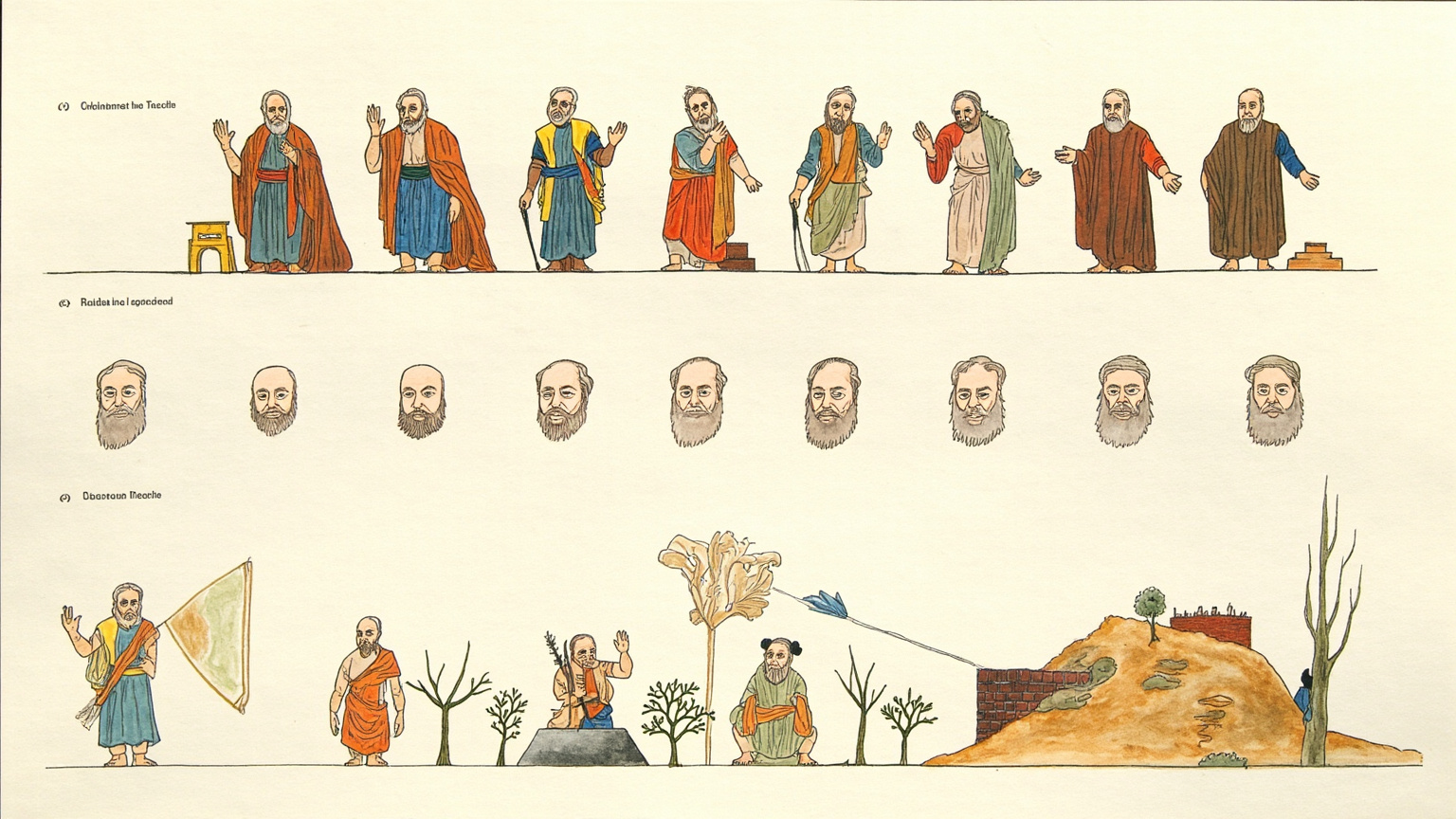
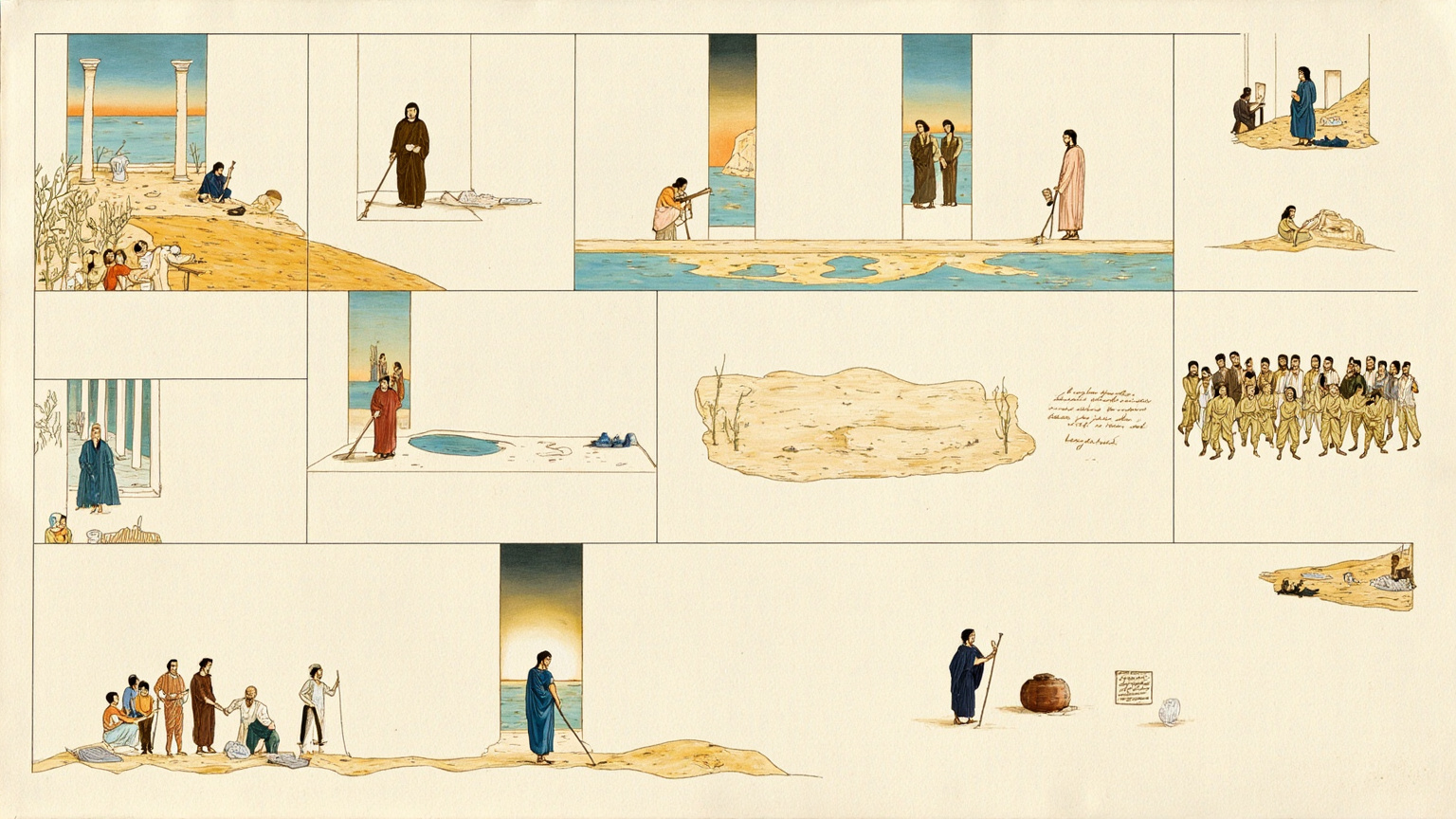
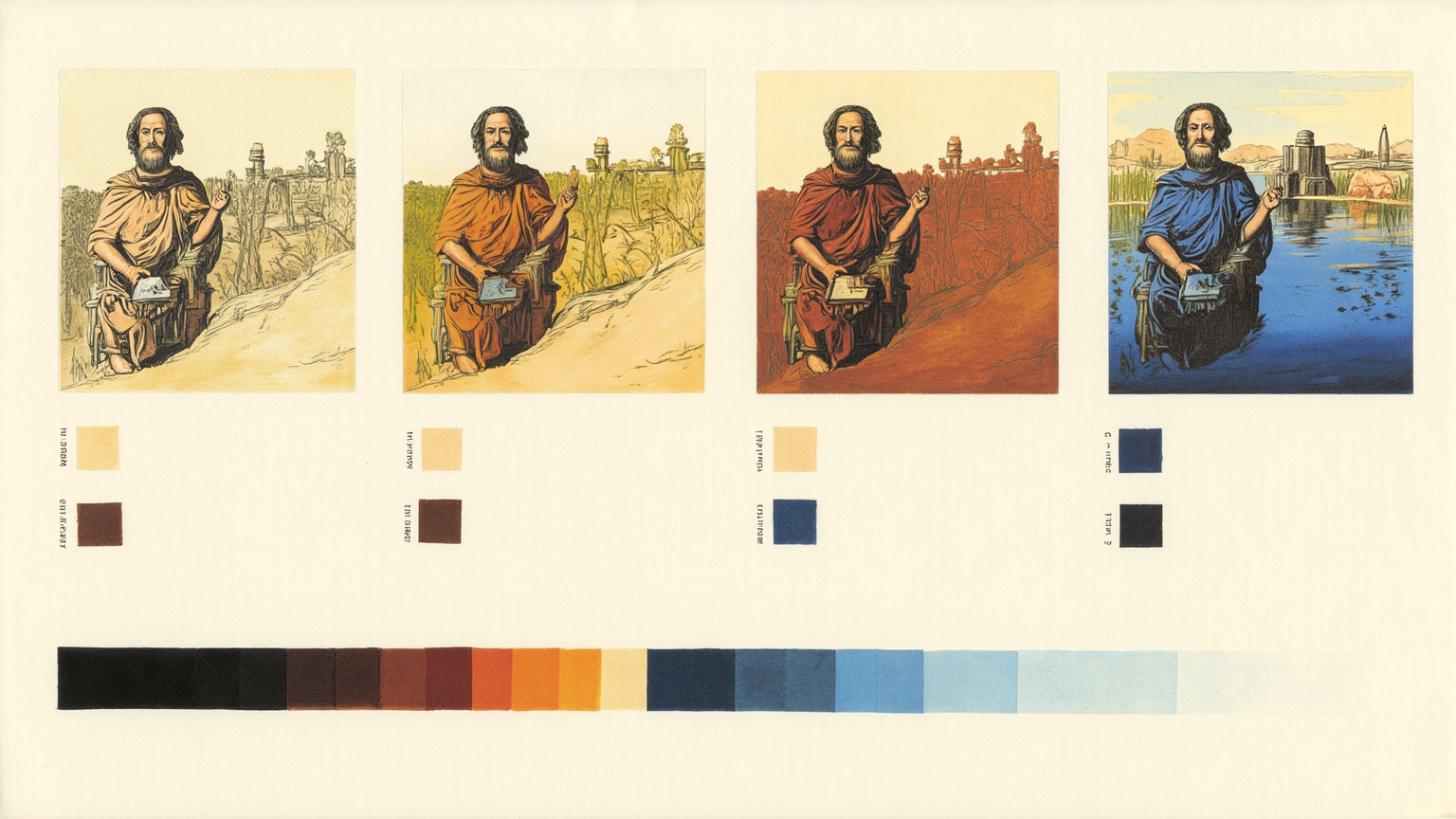
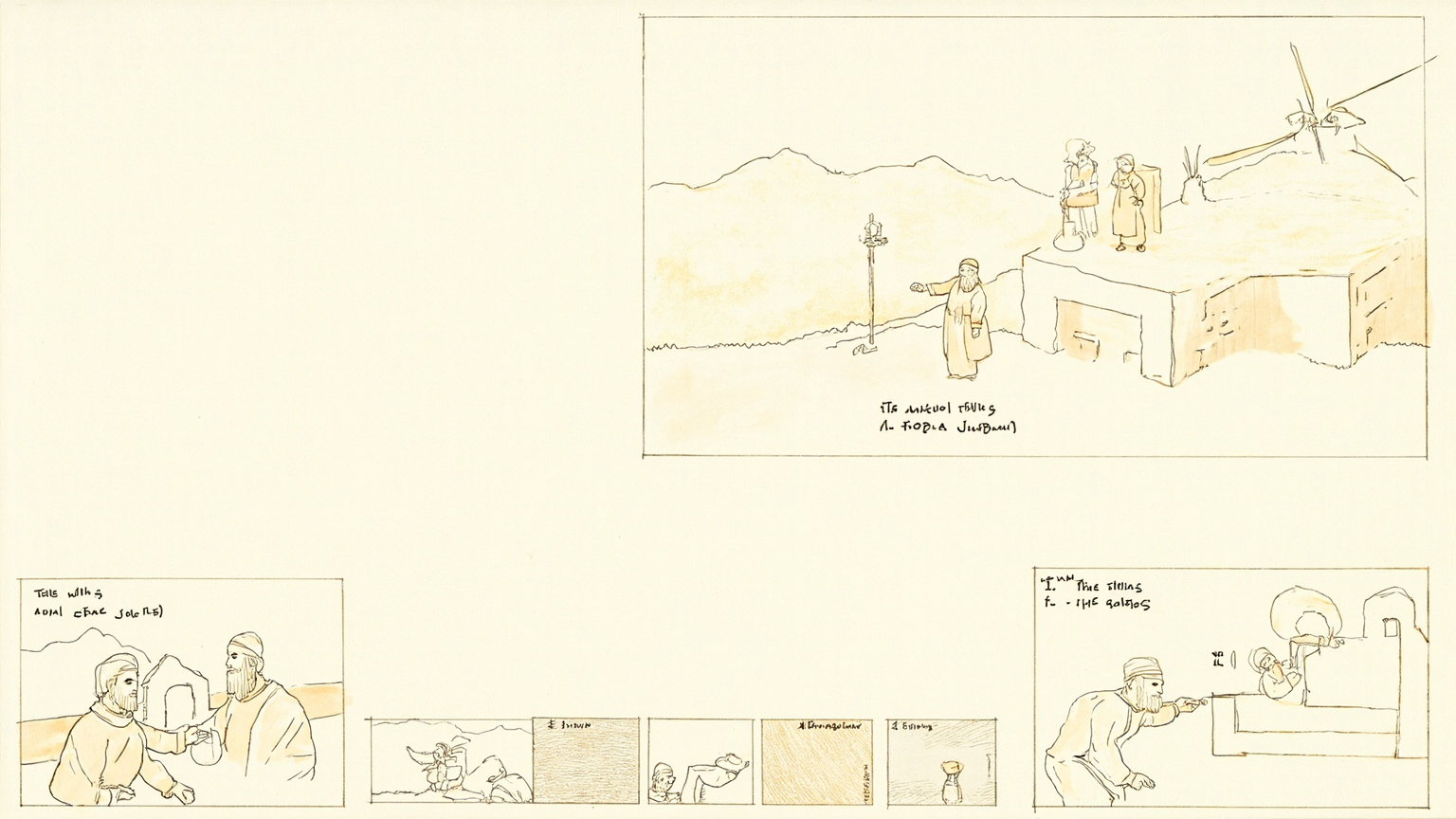
Art Direction4 plates
Before the guide was written, this book got a visual foundation — every illustration you just read grew out of it.