1929: a twelve-year-old chases a thief across half of Berlin with a bicycle and a telephone
Text and illustrations produced by the pipeline
The train pulls into Berlin, and the boy reaches into his hat, and the envelope is empty. One hundred forty marks, saved bill by bill by his mother at the ironing board in her own kitchen, meant for his grandmother. A man in a top hat had eased him away from the window with a polite lie, something about a shop display worth seeing, then got off partway with the money still in his pocket. By the time the boy comes to his senses, the train has already stopped at Berlin Zoo Station, and the city in front of him is one he has never seen in his life.
You read that right. Twelve years old, carrying an empty envelope, and what got stolen was not pocket money but his mother's savings. This slim little book, from the moment that hand comes up empty from the hat, stops being a trip to grandmother's house. It becomes a chase across Berlin.
Erich Kästner was in his early thirties that year when he handed the manuscript to a Berlin publisher. Emil and the Detectives went out in a print run of a few thousand copies, and nobody expected it to still be read today. It is widely credited as one of the starting points of modern German children's literature, and for one reason: it set the story down whole inside the actual Berlin of 1929. Trams, the elevated railway, bank counters, phone booths, newsboys, courtyards in Neukölln. The hero has no forest or castle to adventure in. He stands at a traffic light and works the problem with his own head.
Before this, the villains in children's books were witches and the heroes were princes. Here, the villain is a respectable middle-aged con man in a top hat and a three-piece suit, and the hero is the son of a single mother who washes and irons other people's laundry in a working-class district. Kästner trusted that children could follow money, crime, responsibility, and consequence. That trust was new that year.
Emil Tischbein, twelve, a small-town boy, honest and quick on his feet, and his mother trusts him, which is exactly why he has to bring every mark of it back. Gustav, called Gusti, is the street-smart ringleader of the Neukölln kids, glib and sharp and streetwise, and he is the one who actually holds the improvised detective squad together. Then there is Pony Hütchen, called Pony by her friends, the only girl in the group, and it turns out that the single most dramatic move in the whole book belongs to her outstretched hand.


Set inside the Berlin of 1929, this is a child written, for the first time, as a citizen of a real city. Move forward four years to May 10, 1933, and Kästner himself is standing in the crowd outside the Berlin State Opera, watching his own books burned in public. That fact alone explains why this book cannot be replaced in German literary history. It has survived because it dared, from the start, to treat a child as a person.
For a reader today, there is another layer to it. German children's literature in 1929 was already willing to write trams, telephones, and bank counters into a story, to make a working-class kid the hero, to let a specific sum of money like one hundred forty marks carry the moral weight of the whole plot. Plenty of children's books are still learning to do that.
What this guide gives you is the thread of the chase, the map of 1929 Berlin. What it cannot give you is the voice on the page itself, witty, gentle, an adult talking to a child as an equal. Kästner writes the moment the mother hands over the money, the exact first line the man in the top hat uses on the train, the way Pony Hütchen's hair flies as she catches up to the phone booth door, and none of that texture reaches you except by turning the pages one at a time. Read it after you already know how it ends, and you'll find the best thing about this book was never the ending. It's that it never let you skip a single stop along the way.
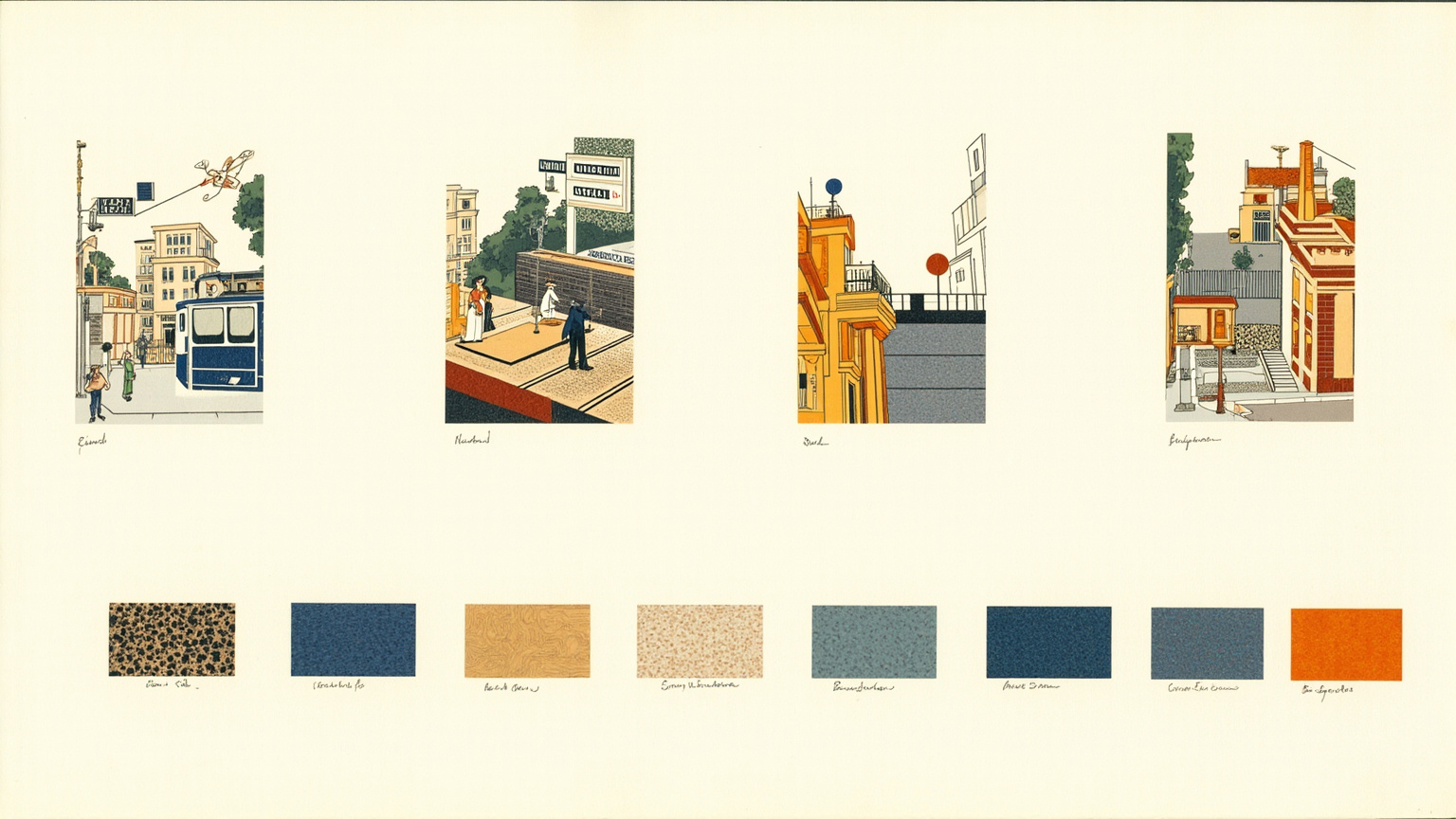
Before the guide was written, this book got a visual foundation — every illustration you just read grew out of it.
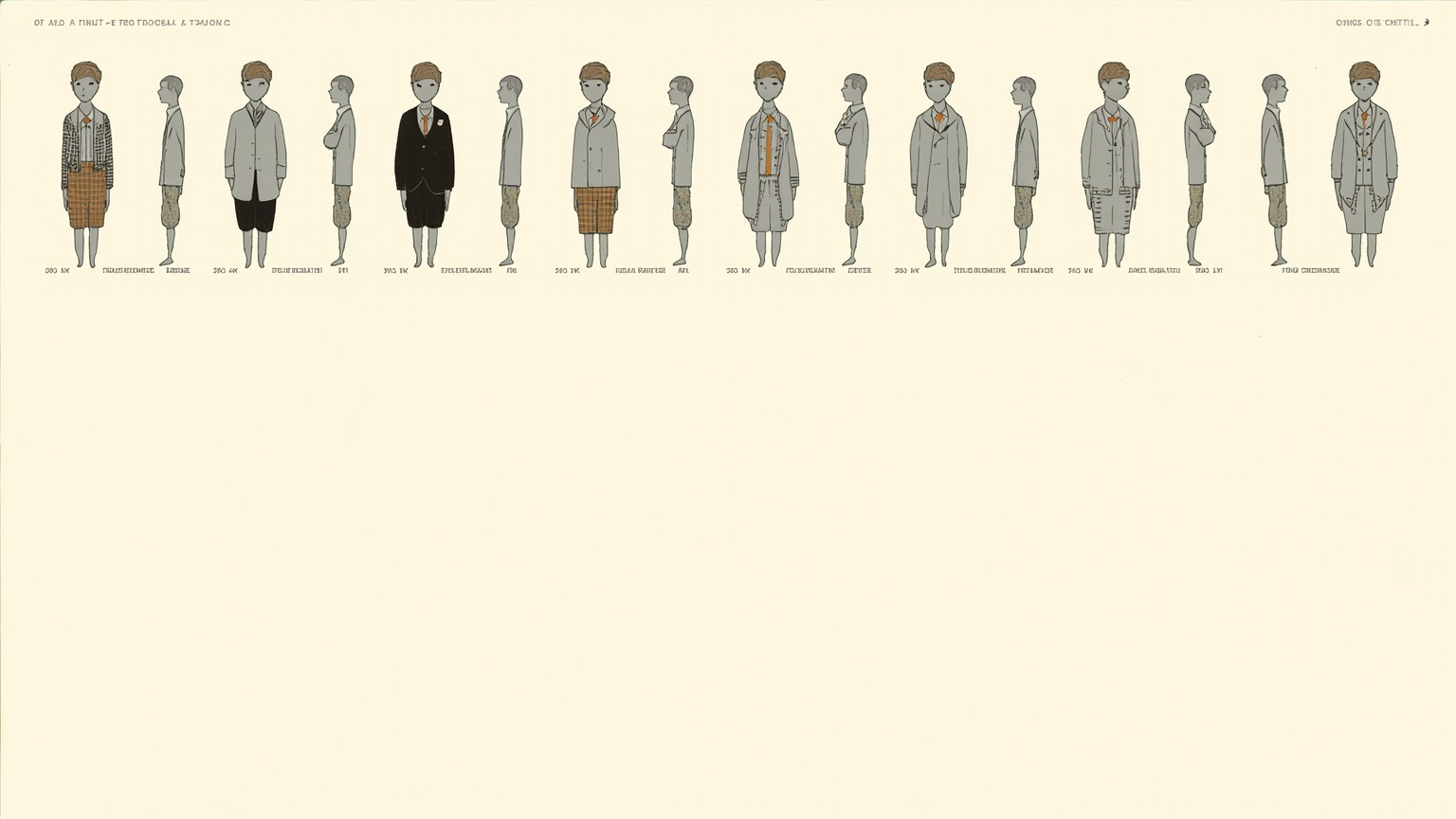
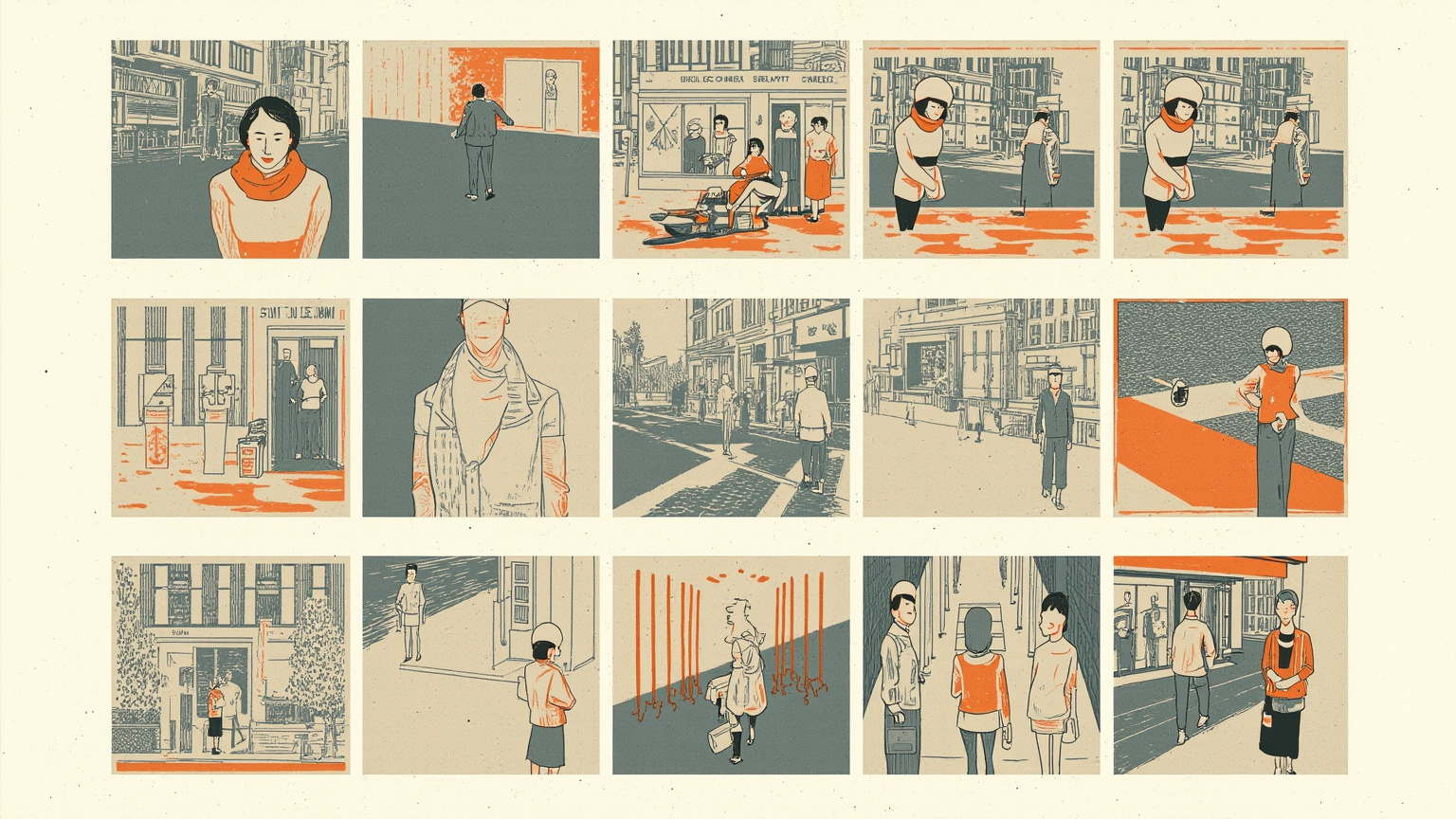
The man on the other side is Herr Grundeis, top hat, impeccable manners, the kind of man who can talk a child away from a window with nothing more than a shop display. Kästner never writes him as a cartoon villain, and that is exactly what makes the character work. He looks like any respectable middle-aged man who might nod and smile at you on a platform. You can measure how good this book is by that one choice: it refuses to give young readers an obvious crook. It gives them someone who should never have been trusted in the first place.
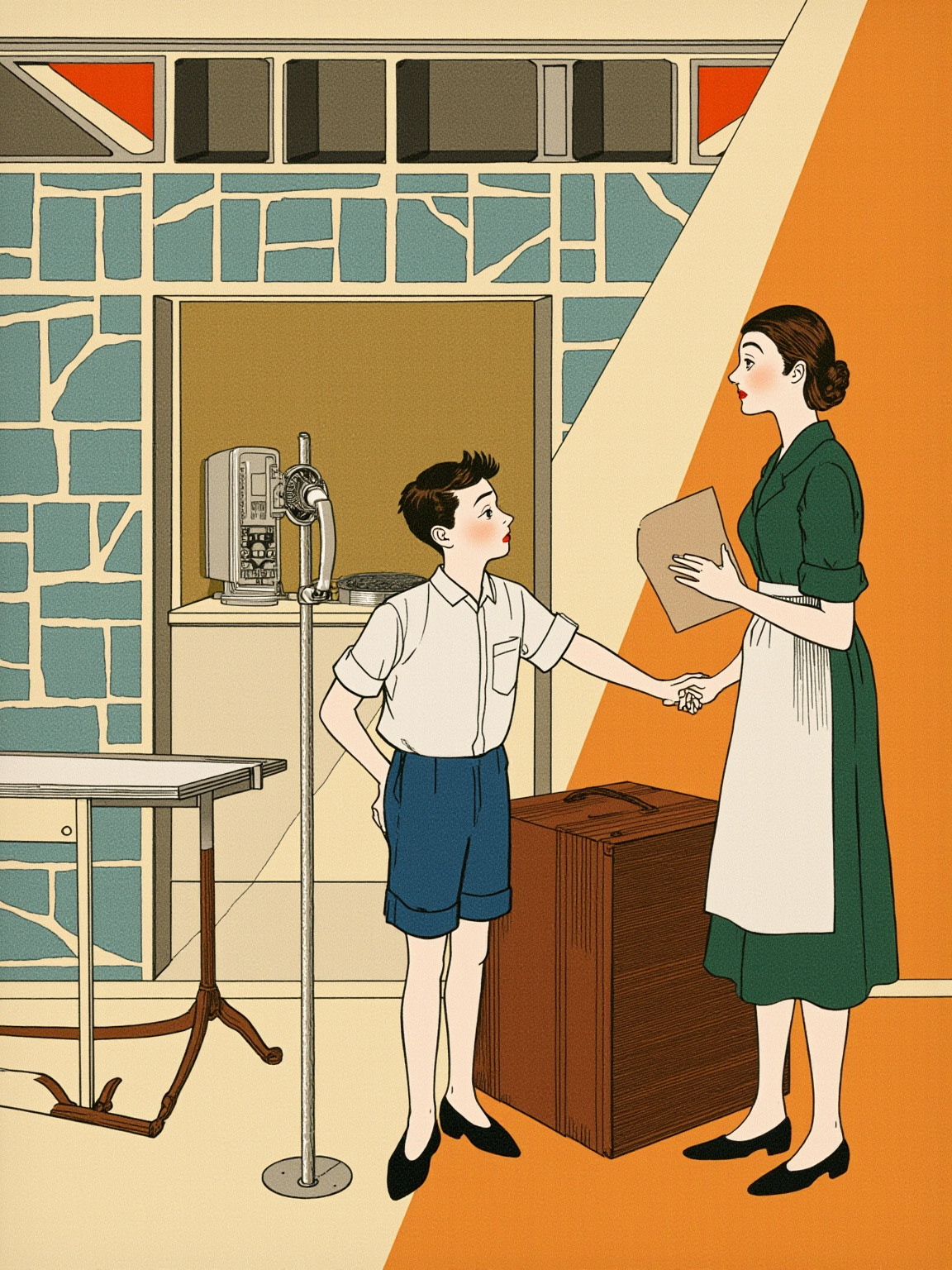
The story starts in Emil's home. His mother packs the money in the kitchen, sealed in an envelope and wrapped again in paper, while she tells her son exactly which carriage to sit in and how to find his way once he gets off. This is a grown woman's life savings, handed to a child. One hundred forty marks is the entire stake of the story, and Emil cannot fail, not because he is a hero, but because he gave his word.
Kästner keeps it restrained. He never turns handing a child this much responsibility into something tragic. An envelope, a warning to travel safely, a kiss. That is all it takes. Every ounce of tension in everything that follows is set down right here, on that kitchen counter.
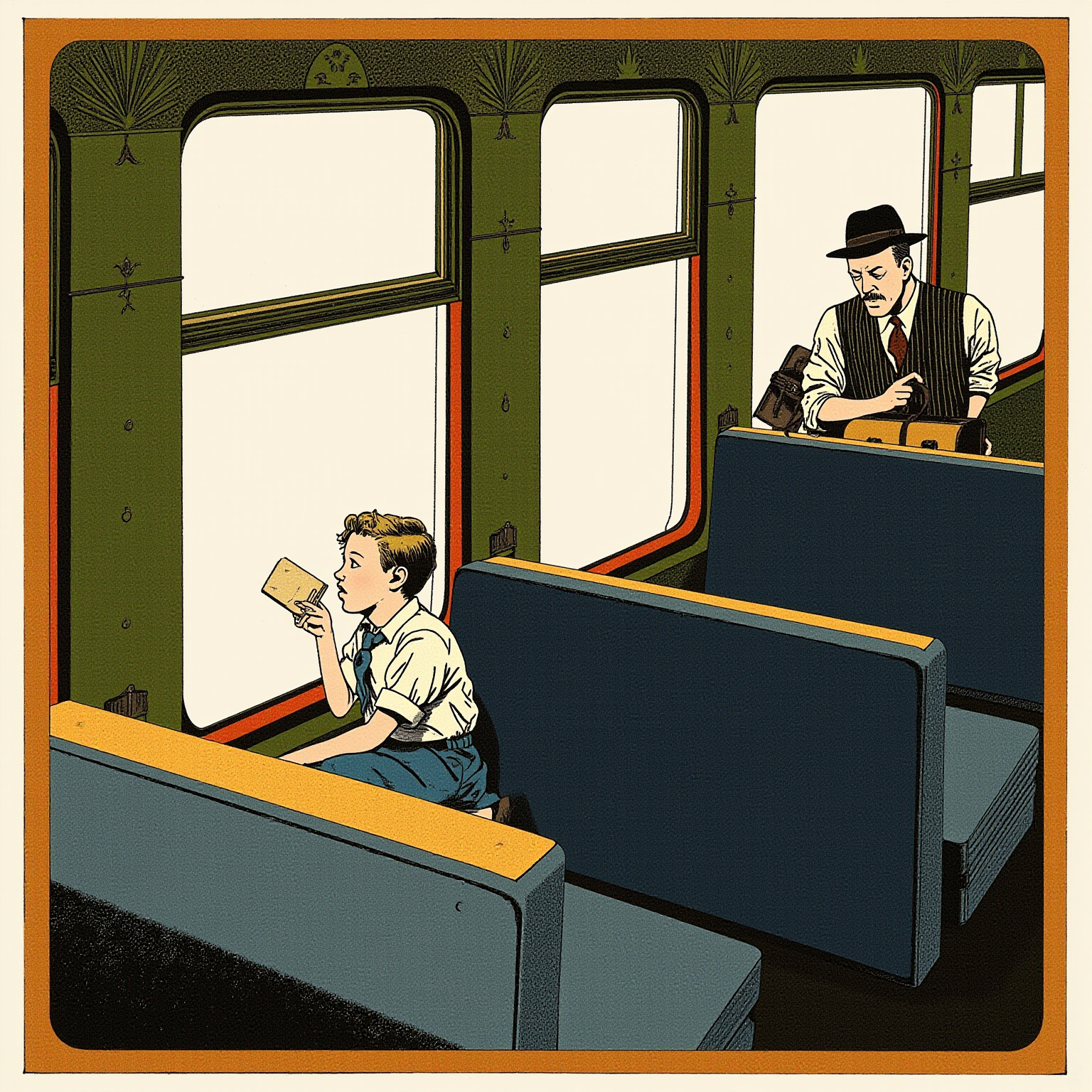
In the compartment, Grundeis sits across from Emil, offers him candy, then points him toward a shop window worth seeing outside. The moment the boy turns his head, Grundeis slides the envelope out of the hat and gets off at Nuremberg, taking the money with him. By the time Emil comes to, the cash is already in another city, and Grundeis has already caught the next train back north to Berlin.
The scene is written clean, with not a single word spent dramatizing how awful the con is. It is just one motion, one turned head, one closing door, laid out like an arithmetic problem: he turns back around, and the seat across from him is empty. A twelve-year-old reading this will probably check their own pocket without thinking. It is the reason I flipped back a page after finishing the chapter.
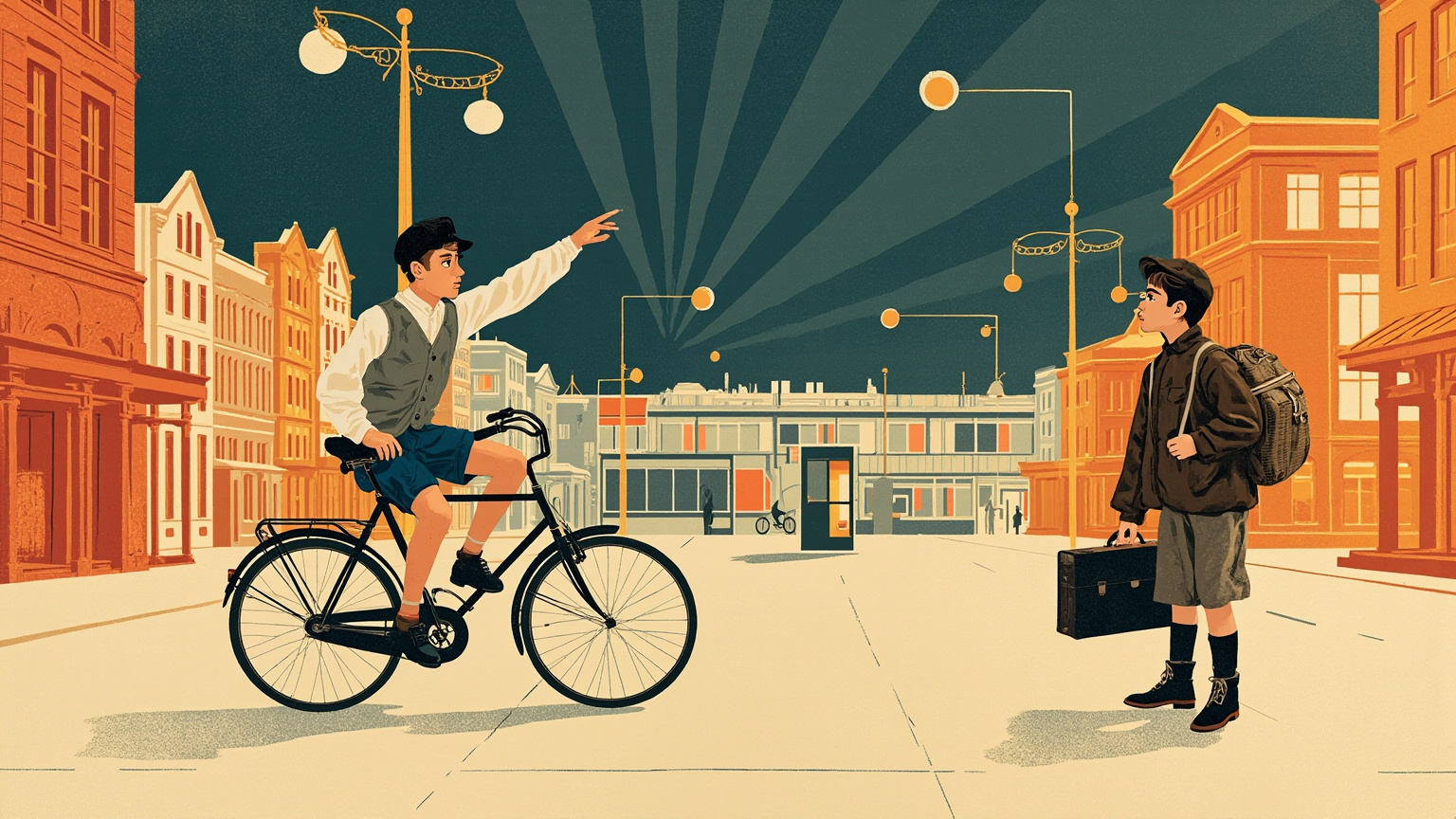
Emil does not go home, and he does not call the police. A twelve-year-old boy sees the man in the top hat step out of Zoo Station and jumps on a tram to follow him. By the time the chase reaches a square in Neukölln, he stops in front of a boy on a bicycle at the curb: Gusti. Gusti recognizes the hat on sight, the man wearing it already has a record with the police.
It takes Kästner only a few lines to have two strangers decide, inside three minutes, to take on something this big together. Gusti is fully formed the moment he shows up: street smarts, loyalty, no questions about where you're from. Emil goes from an outsider to someone this whole crowd of kids will fight for, and that single turn is what starts the story's engine.
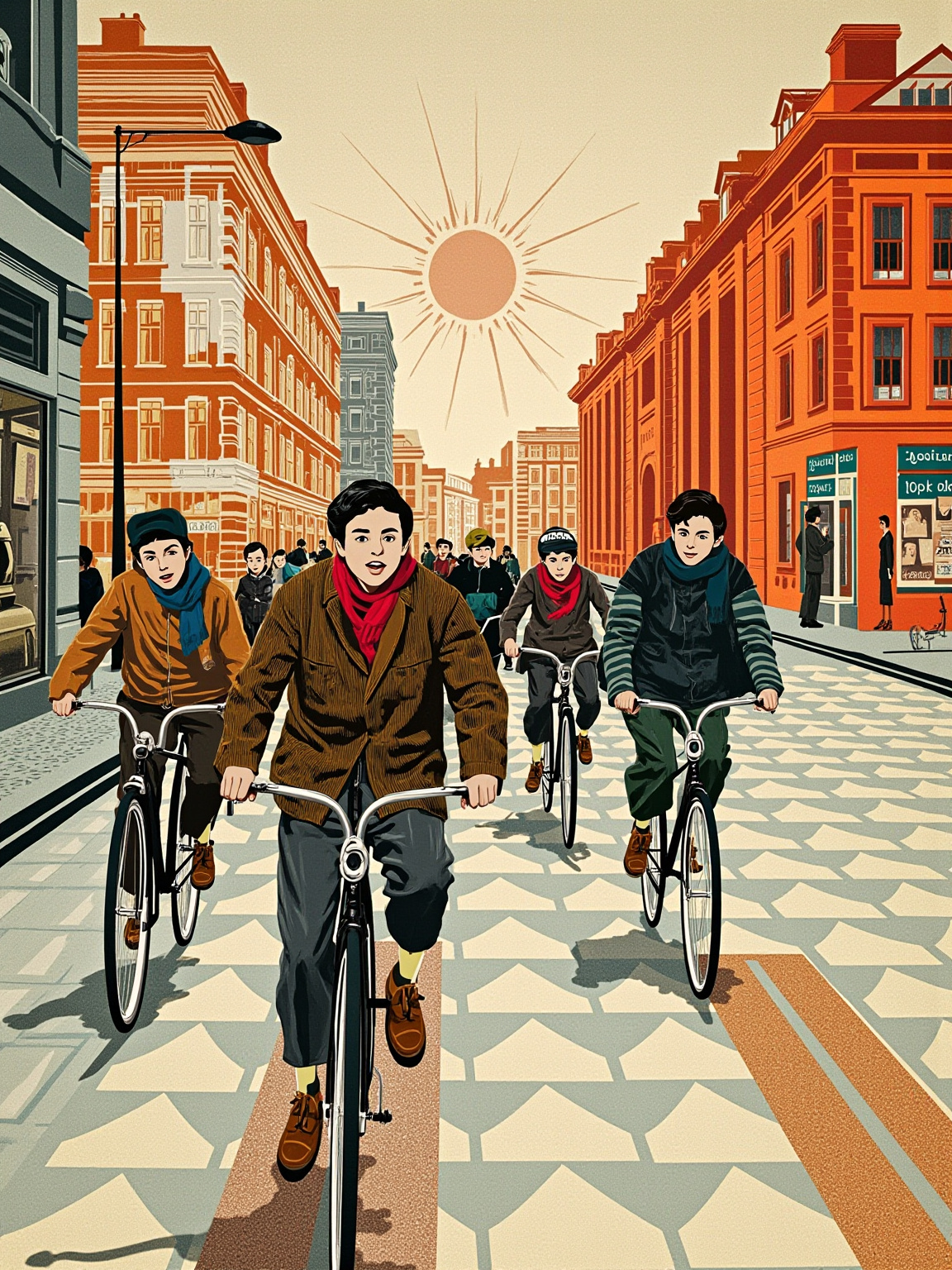
Gusti's gift is not fighting, it is organizing. He pedals off after the man, then stops the kids along the street one by one, a newsboy, a girl at a flower stand, a few kids loitering by a phone booth, and tells each one what has happened and what their part of the job is. A detective squad dozens strong gets assembled on the spot out of the Neukölln streets, running on bicycles, phone calls, and word passed hand to hand, and it sets out to track that one top hat across the whole city.
This is one of the most famous city chases in children's literature. It is famous not for a single fight, no child throws a punch anywhere in the book, but for something children's books rarely write about: strangers trusting each other on the spot. Kästner convinces his young readers that kids on the street can pull this off by themselves. In 1929, that was the first time German literature handed children that much trust.
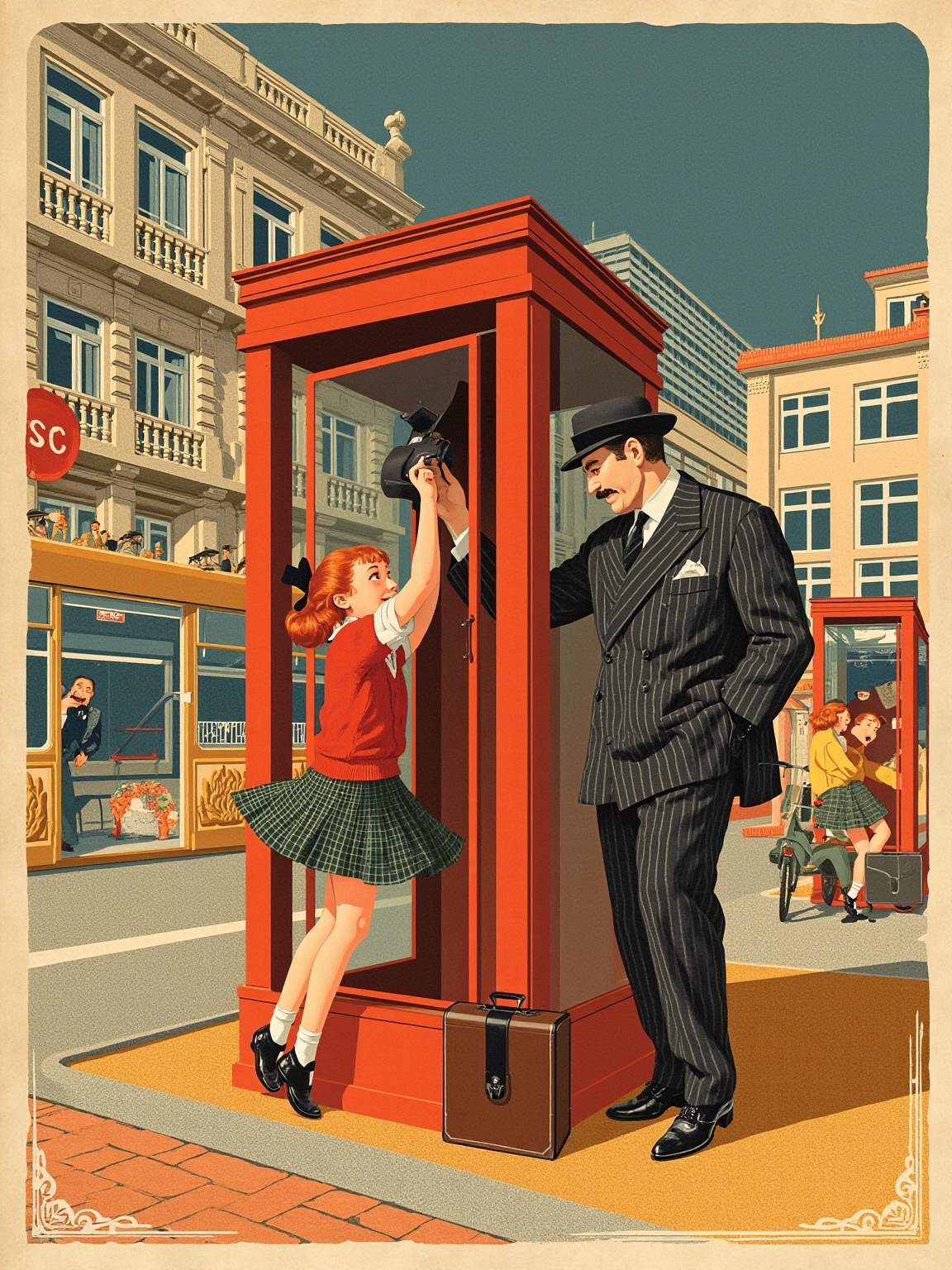
Grundeis ducks into a phone booth to cover himself, and Pony Hütchen catches up outside the glass door and snatches the top hat right off his head. She is the only girl in the group, hair flying, gripping the felt hat behind her back like a flag.
This is the hinge of the whole book. Once the hat is in a child's hands, the man wearing it can no longer disappear into a crowd. Every kid who chases him down the street after this, cuts him off on a bridge, blocks him at a school gate, is going by the hat, not the face. That one grab of Pony's turns the chase from I know him into he can't get rid of himself. You can feel Kästner smiling as he writes it.
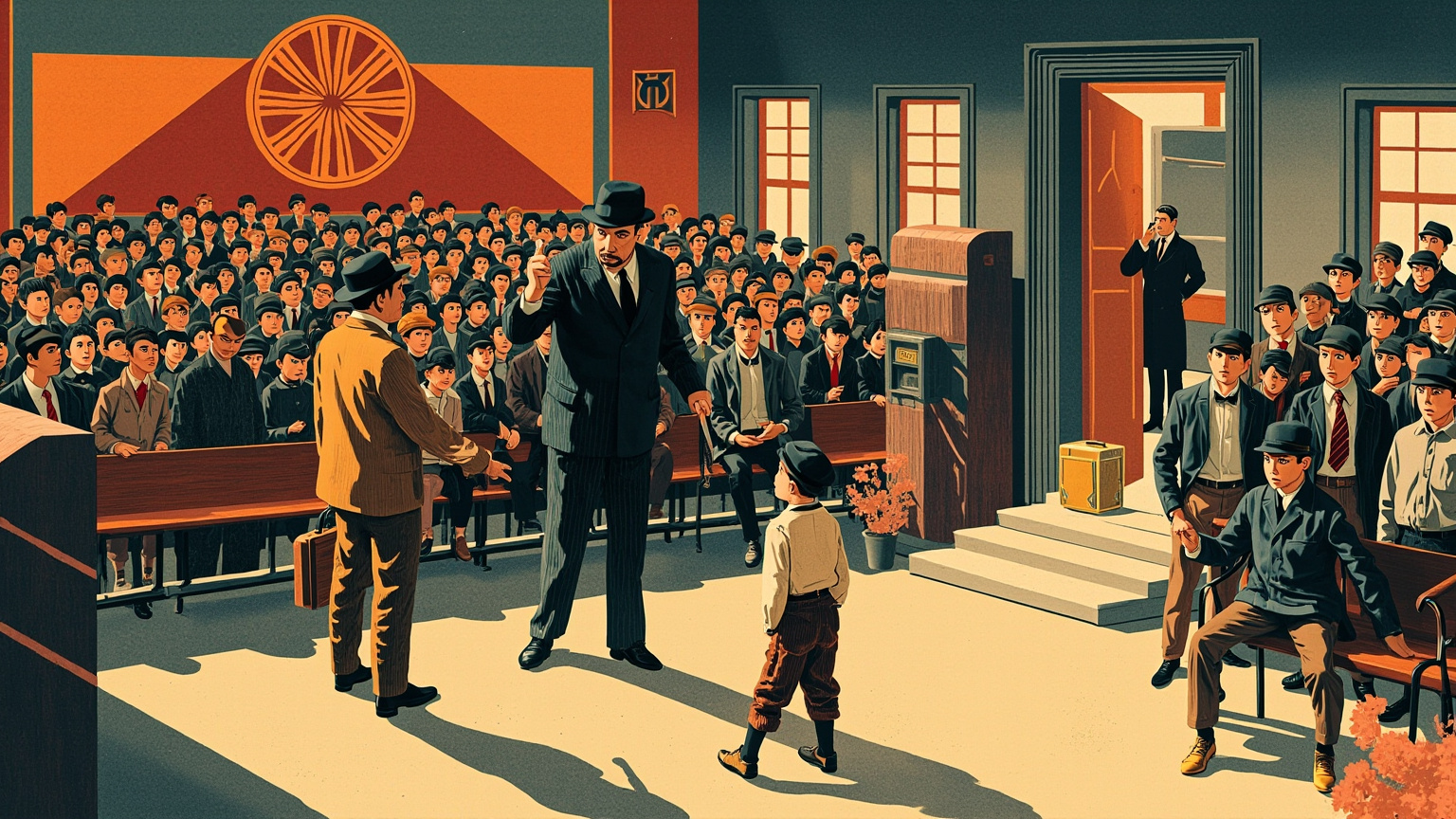
The assembly hall of a Neukölln primary school. The man in the top hat is surrounded by children, not to be beaten but to be boxed in, held in place while they wait for the police. He tries to draw a gun and it jams. By the time the police arrive, there is nothing left for him to do but give himself up. All one hundred forty marks come back, down to the last coin.
By today's standards, this ending is almost an anticlimax. Nobody knocks the villain down, no hero throws a punch, and the police get the last word. Kästner's ethic for children is that they can handle real things without having to play god. He lets this group of kids win on numbers and brains, not on miracles. The gunshot that never comes is the quietest victory in the whole book.
This book let a child stand at a traffic light for the first time and solve it alone, the most extravagant trust German children's literature offered in 1929.
At the police station, at his grandmother's house, and again on the train home, Emil tells the whole story over from the start. What he has learned is simple: an ordinary working-class kid can get something done with his own head and a street full of other kids. Kästner refuses to sentimentalize it. He never puts Emil on a platform to reflect on what he's learned. He just has the grandmother take the envelope, count the money, and ask if he's hungry. That is the highest respect Kästner pays his young readers: he never sums it up for them.