Ethan Frome · Companion Guide
伊坦·弗洛美
三个人的困局,一场没有刹车的雪夜,与半生不死的余生。
Opening
A hillside, an old elm, a sled. New England winters go dark early, and two people who cannot bear to part aim the sled at the trunk and let it fly — this is the ending, and it is also where the book actually begins.
What kind of book this is
This is the short novel Edith Wharton published in 1911. By then she had already written The House of Mirth and The Age of Innocence — but this time she pulls the lens in on Starkfield, New England's bleakest town, and looks back, through the eyes of an outside engineer, at a snowy night more than twenty years gone. She doesn't embellish, doesn't wax lyrical; the whole book is like the snow outside the window — it keeps falling until it reaches your bones.
Three people, one kitchen
The story's central scene is a single kitchen. Twenty-eight-year-old Ethan Frome has chopped wood there, carried in cups of medicine; his wife, Zeena Frome, has complained there about her own ailments and about her husband's silence; Mattie Silver, Zeena's young cousin, an orphan taken in to help with the housework, is the one who lit up the dead-quiet house. The three of them crowd under the same lamp, and its light cuts the snow outside in two — inside is the human world, outside is wasteland.
One doesn't love, one shouldn't be loved, one loves anyway. Ethan settled for Zeena out of loneliness when he was young; older than him by a few years, she has spent the marriage sunk in hypochondria, sharp-tongued and cold. Mattie's arrival was meant to be a kindness between relatives, but she gave Ethan his first taste of actually being alive — he fell for her, and held it in for a whole winter without saying a word.
A snowscape that crushes them all
Wharton's Starkfield isn't a backdrop, it's a cage. Played-out farms, debts never paid off, roads sealed shut all winter — even Denis Eady, the storekeeper's son, seems to belong to another species. He's young and has money, he owns a fast sleigh, he makes Mattie laugh at the dance, and that laugh only sharpens how poor Ethan feels. Denis's sleigh means freedom. Ethan's sleigh only slides toward death.
The person he wants to keep, he cannot keep
Zeena senses something. A husband growing more silent by the day, a house where he no longer sits with her over her sewing but relaxes only around Mattie — she decides to send Mattie away and hire another girl, determined to put that light out for good.
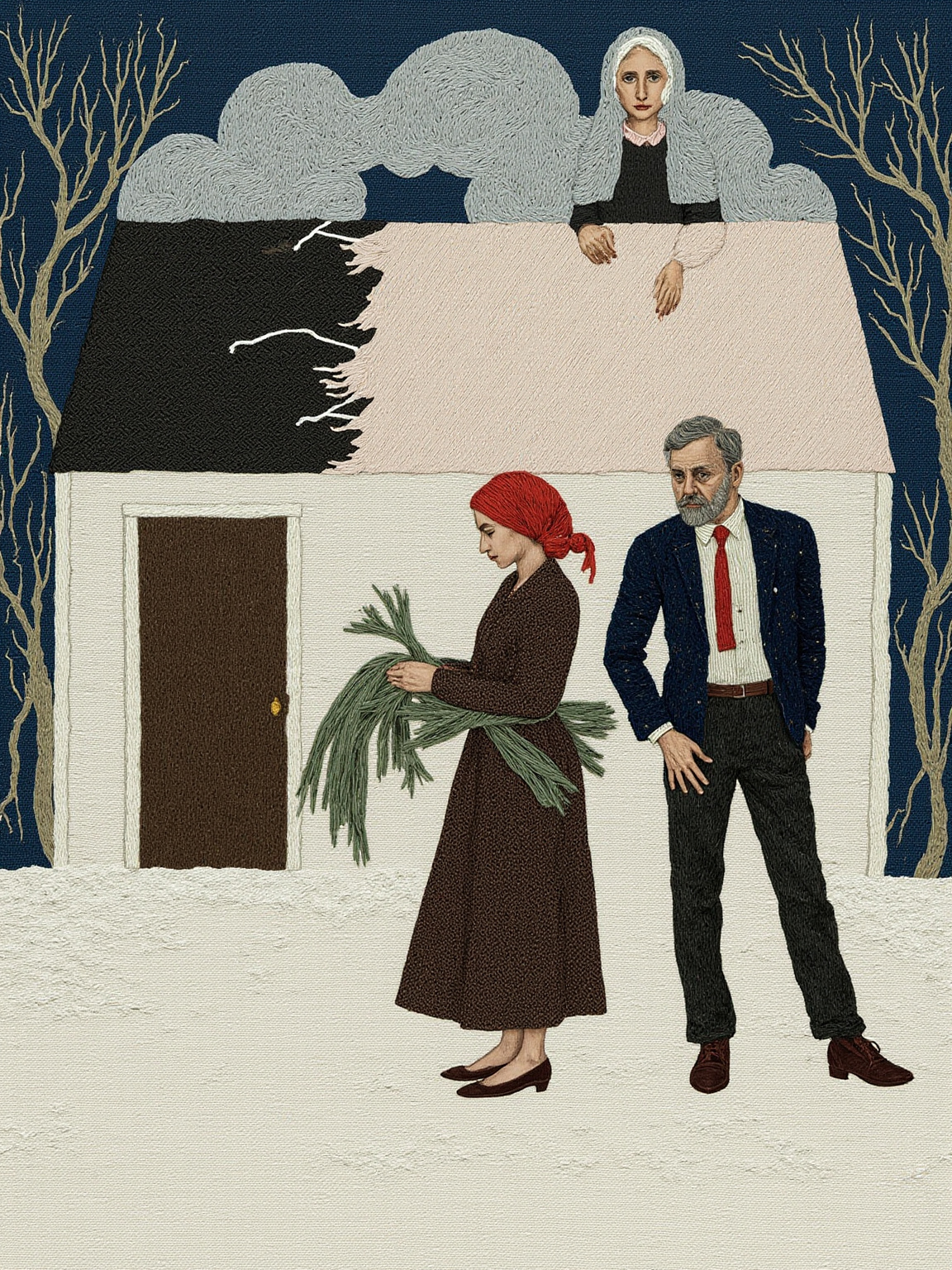
"If I'd 'a' listened to folks, you'd 'a' gone before now, and this wouldn't 'a' happened,"
我要是早听了人家的劝,早就该把你打发走了,哪会有今日这事。
原文金句 · 第7章 · 泡菜碟碎裂
Ethan's only counter-move is money. He walks into the office of Andrew Hale, the town builder, and forces himself to ask for an advance on a lumber payment — enough to keep Mattie through the rest of the winter, through the rest of the year. Halfway through the ledger, his request doesn't get a ready yes. On the walk home it's snowing, and he doesn't say a word.
That snowy night
On the way to take Mattie to the train station, the two of them detour to the hill behind the church — the slope they used to sled down together, the one place where Mattie would laugh out loud and Ethan would stop feeling like a machine built only for work. Tonight there won't be another chance.
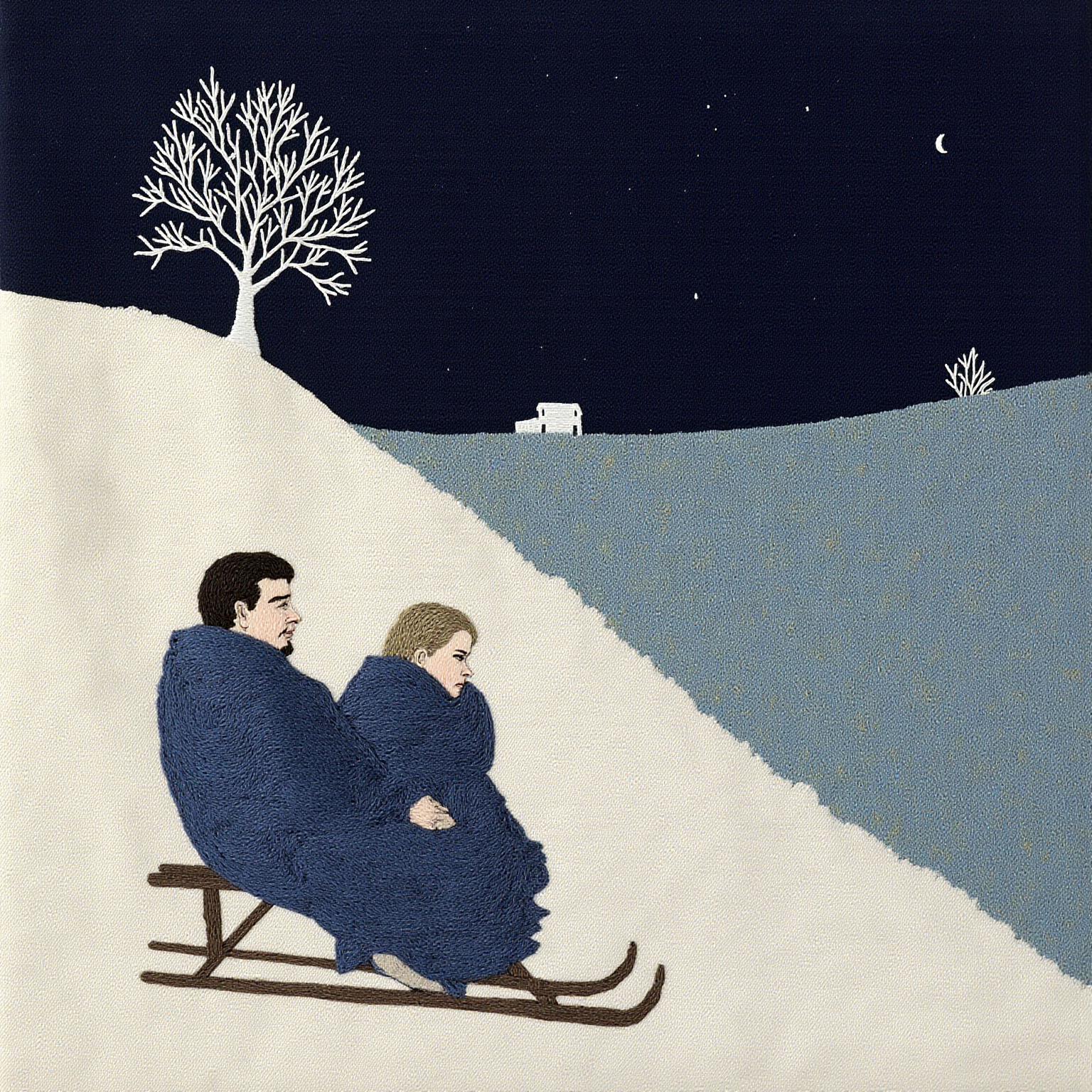
"Would you be scared to go down the Corbury road with me on a night like this?"
这样的夜里,跟我一道滑下考伯里路,你怕不怕?
原文金句 · 第6章 · 雪夜提议
The sled shoots down the hill. Neither of them brakes. A few feet from the trunk, Mattie buries her face in Ethan's coat — Wharton renders this moment with total restraint, one gesture standing in for everything unsaid. Then wood splinters, bodies tumble, and the snow gives a dull, muffled thud.
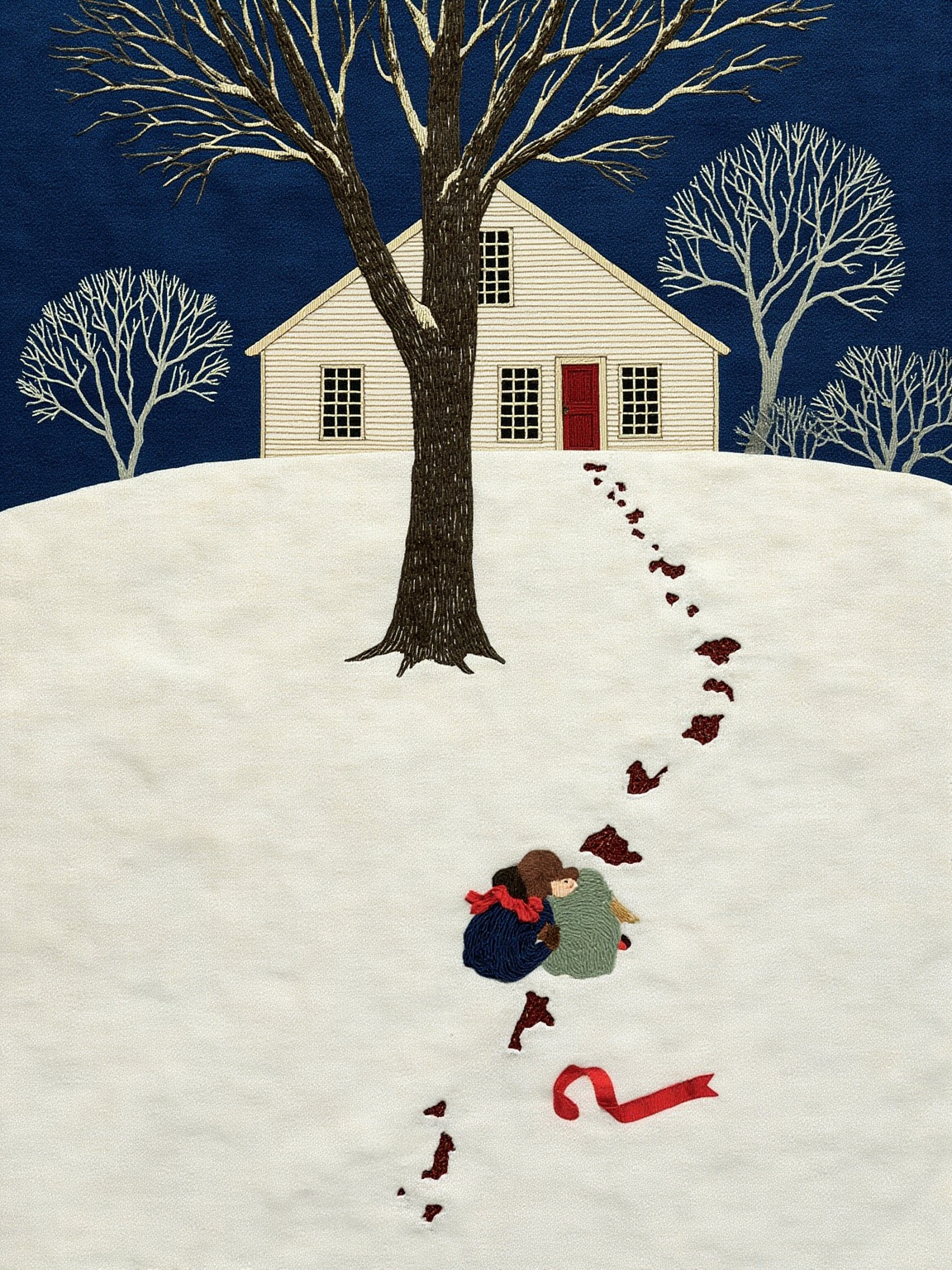
"I've been in a dream, and this is the only evening we'll ever have together."
我一直在做梦,这是我们能在一起的唯一一个晚上了。
原文金句 · 第6章 · 梦醒时分
Not dying is the real punishment
Both of them wake up in their own house. Ethan is left lame and disfigured for life; Mattie's spine is broken, and she never walks again. This is where Wharton is truly cruel — they wanted death and didn't get it, and now they have to spend decades in that same kitchen, with Zeena.
Three under one roof
The irony lands at its coldest point. Zeena, who was supposed to be the invalid, gets up on her feet — she doesn't die, she becomes the only one holding the household together. Day after day she carries medicine, carries meals, lifts the paralyzed Mattie from bed to chair, steadies the lame Ethan through the door. A caretaker for more than twenty years straight, who forgets even to catch her breath.
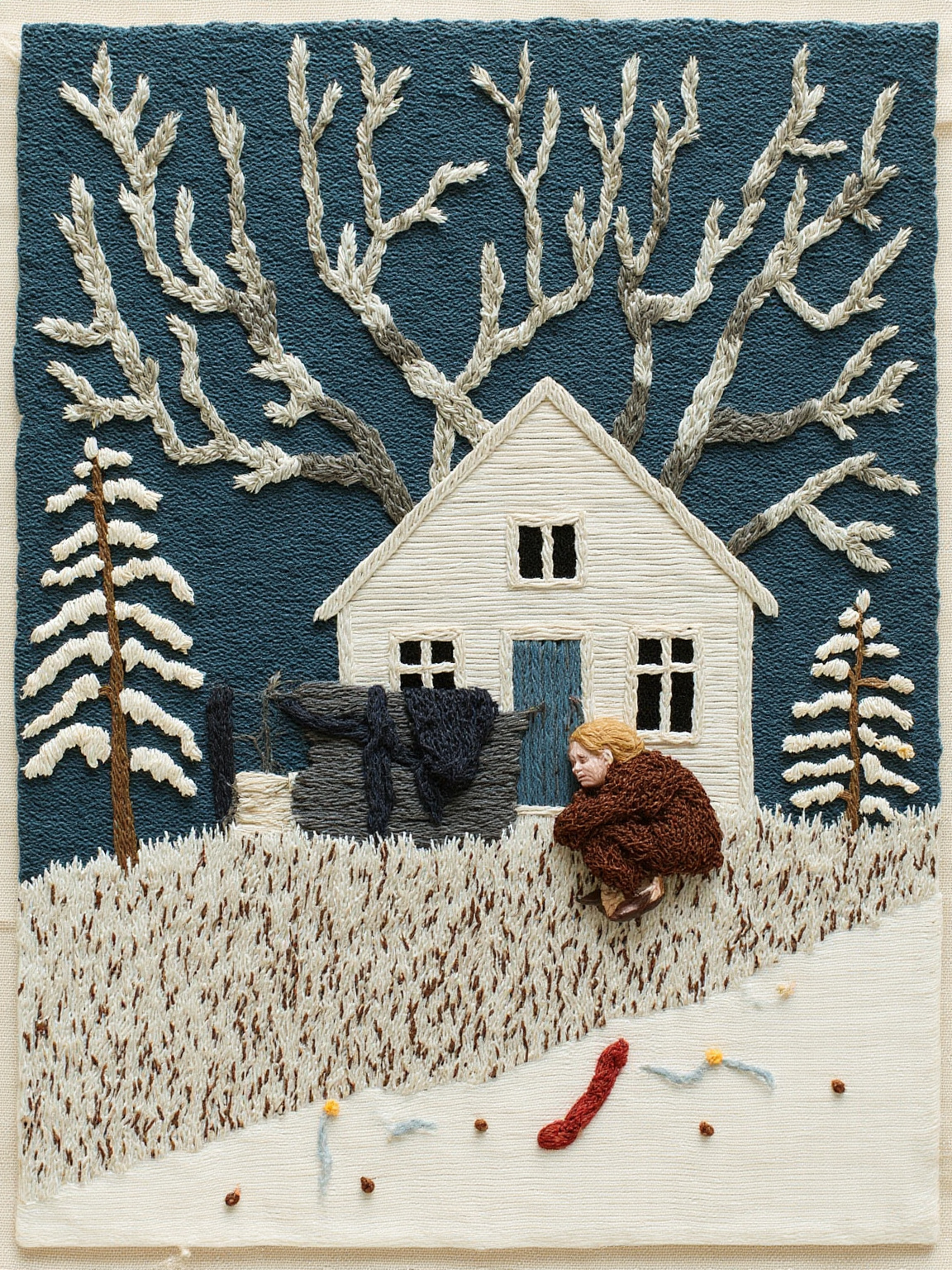
"Oh, as to that: I guess it's always Ethan done the caring."
依我看,一向都是伊坦在照应别人。
原文金句 · 第1章 · 开场闲话
And Mattie, the girl who once let light into that dead farmhouse, turns into another Zeena — sharp-tongued, quick to anger, suspicious of everyone. Her young liveliness curdles into a bitterness that just sits there, and the cherry-red ribbon never finds its way back into her hair.
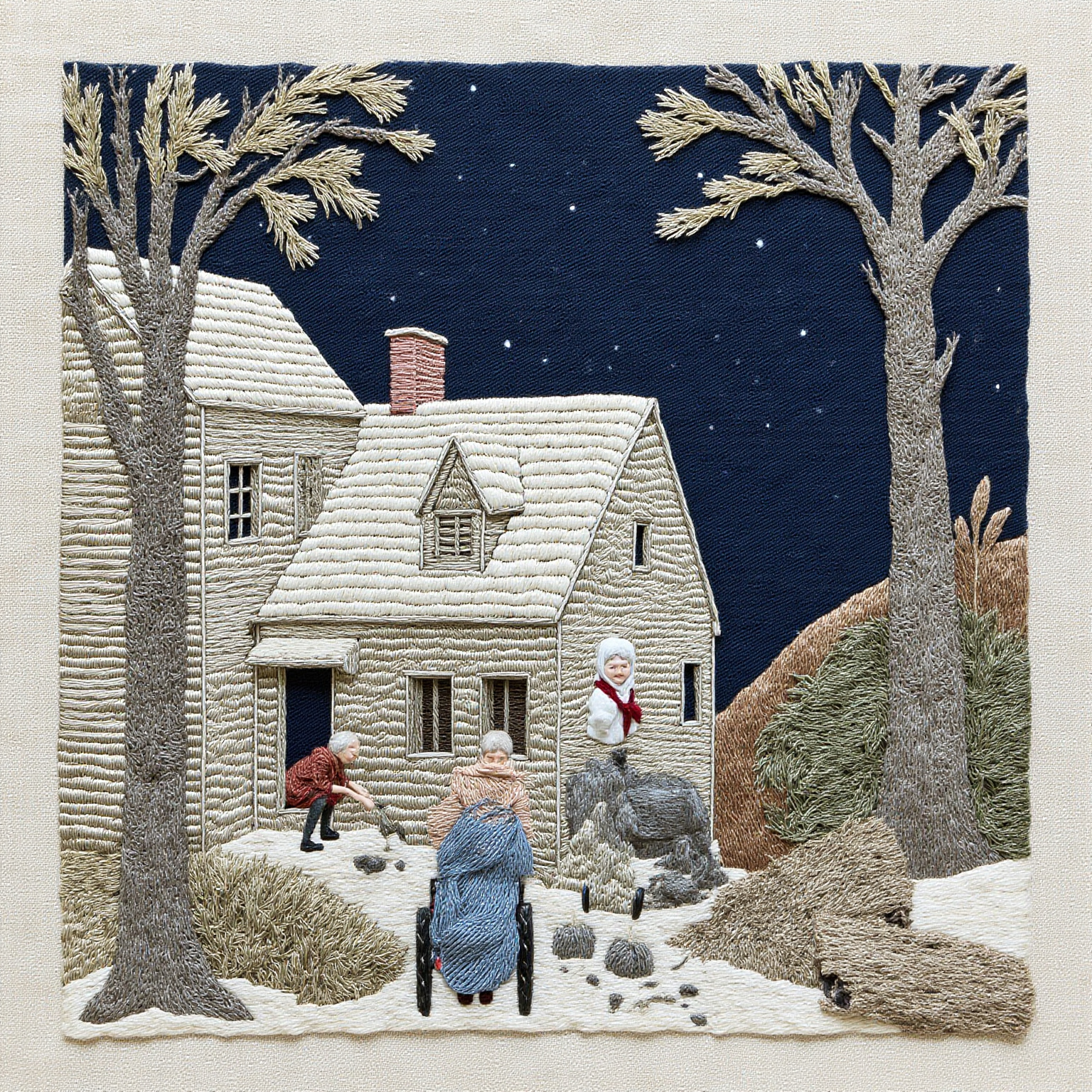
But one phrase stuck in my memory and served as the nucleus about which I grouped my subsequent inferences: "Guess he's been in Starkfield too many winters."
怕是他在斯塔克菲尔德熬过的冬天太多了。
原文金句 · 第1章 · 冬天的宿命
Why an outsider tells it
The ending returns to the frame story's present. An engineer, put up for a night at Ethan's farmhouse by a snowstorm, pieces together the last fragment of that snowy night afterward, from neighbors like Ruth Varnum. What he hears isn't the truth itself — it's the shape the story has taken as it passed through the town, and the shape it left behind in everyone's silence.
This frame isn't decoration. The whole tragedy went unstopped precisely because everyone in Starkfield saw it and no one said anything — Zeena caught them, Ethan didn't deny it when confronted, and the neighbors sighed behind their backs and let it go. Wharton uses this outer shell to tell you something: sometimes the deepest tragedy isn't the moment of the crash, but everything that led up to it, already agreed to, in silence, by everyone involved.
Theme: what the shackles look like
What this book is really about isn't love. Ethan tries to break free three times. The first is the dream of studying engineering when he's young, cut off by his father's death and the burden of the family farm. The second is asking Hale for an advance, turned back by the ledger and his own pride. The third is driving straight at the tree, blocked by the sheer fact of staying alive. Three layers of shackles — money, obligation, Puritan silence — each one closer to the skin than the last.
Wharton made her name writing about old New York money, but her tragedy of rural poverty never shows off its research — she doesn't lean on ornament, she leans on objects: a red pickle dish passed back and forth between Zeena and Mattie, the cherry-red ribbon in Mattie's hair that vanishes the night of the crash. The feeling is never stated outright, it's all hidden in things. That's why there isn't a single line of protest in the whole book, and yet finishing it feels like being held face-down in the snow.
The cruelty of this book isn't the instant of the crash — it's the decades after, three people still sitting under the same lamp, none of them able to leave.
You know the ending. So why read it?
A guide like this gives you the map. The novel itself is the snow that never stops falling. You already know they drive at the tree, but how Wharton renders the light of that morning, how the ribbon slips out of Mattie's hair, how the door closes when Ethan walks into Hale's office — that you have to see for yourself, line by line. In a book this thin, she nails an entire winter to that one tree. That's a cold that only reaches your bones once you've read the original.
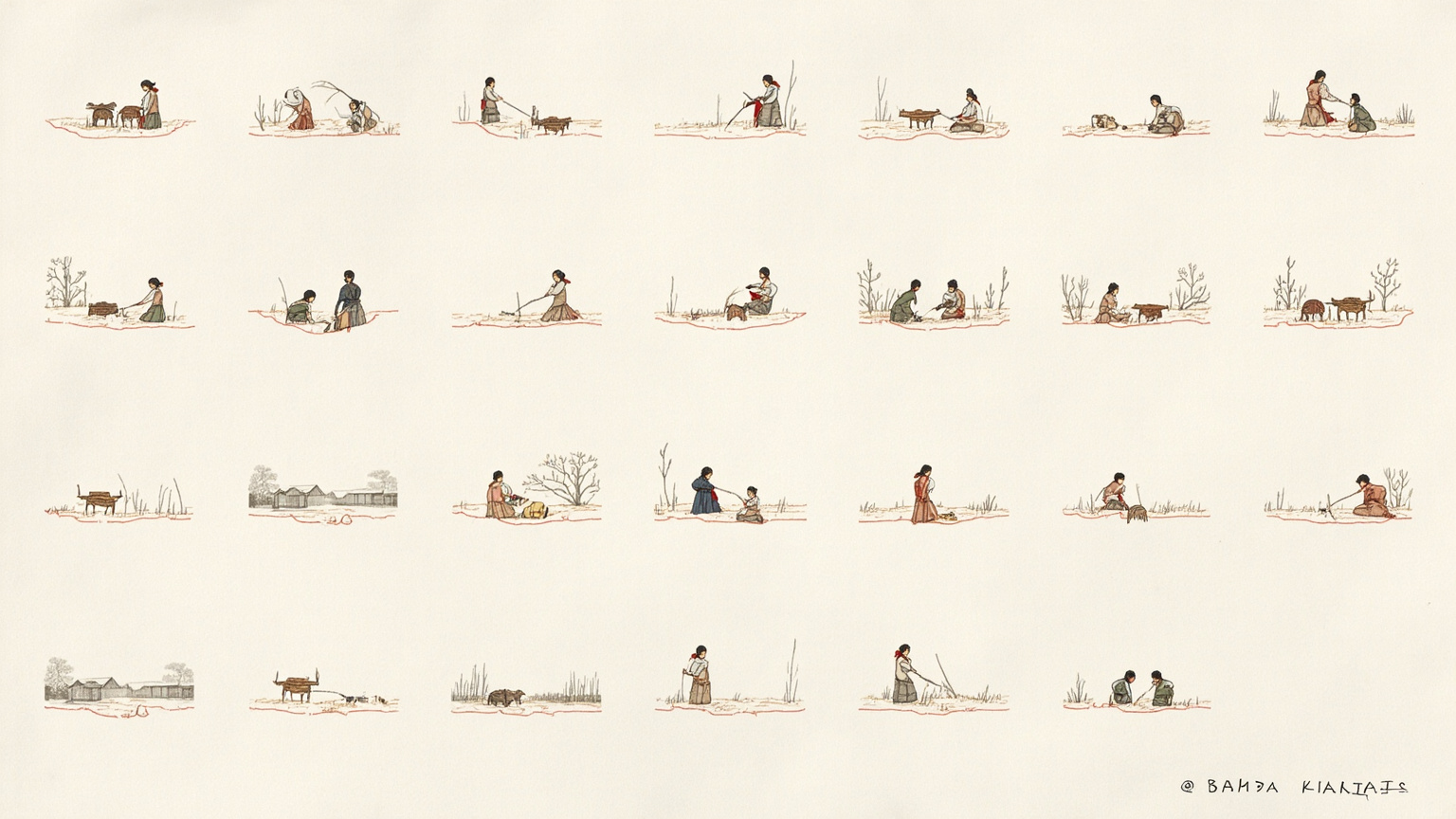
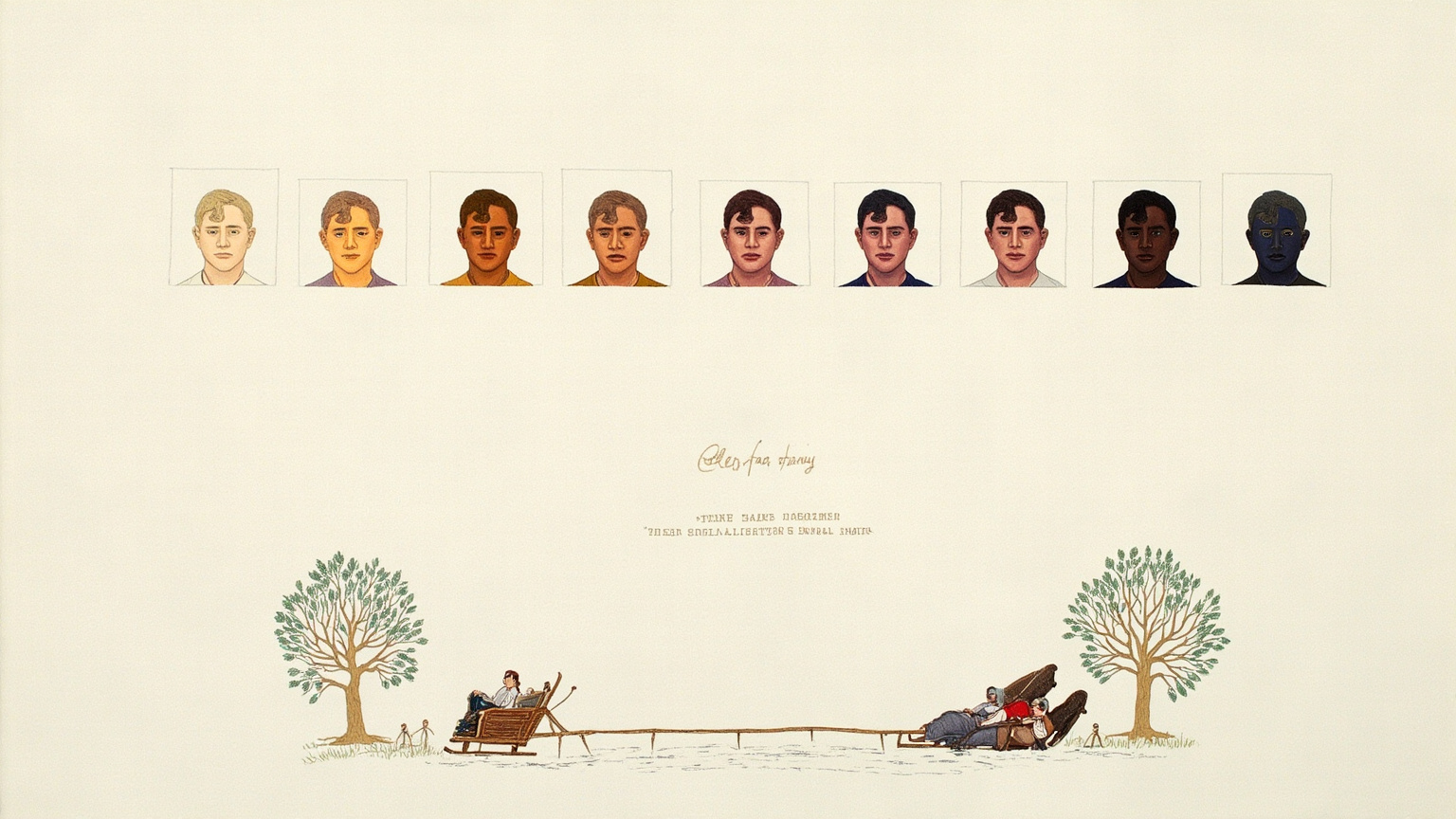
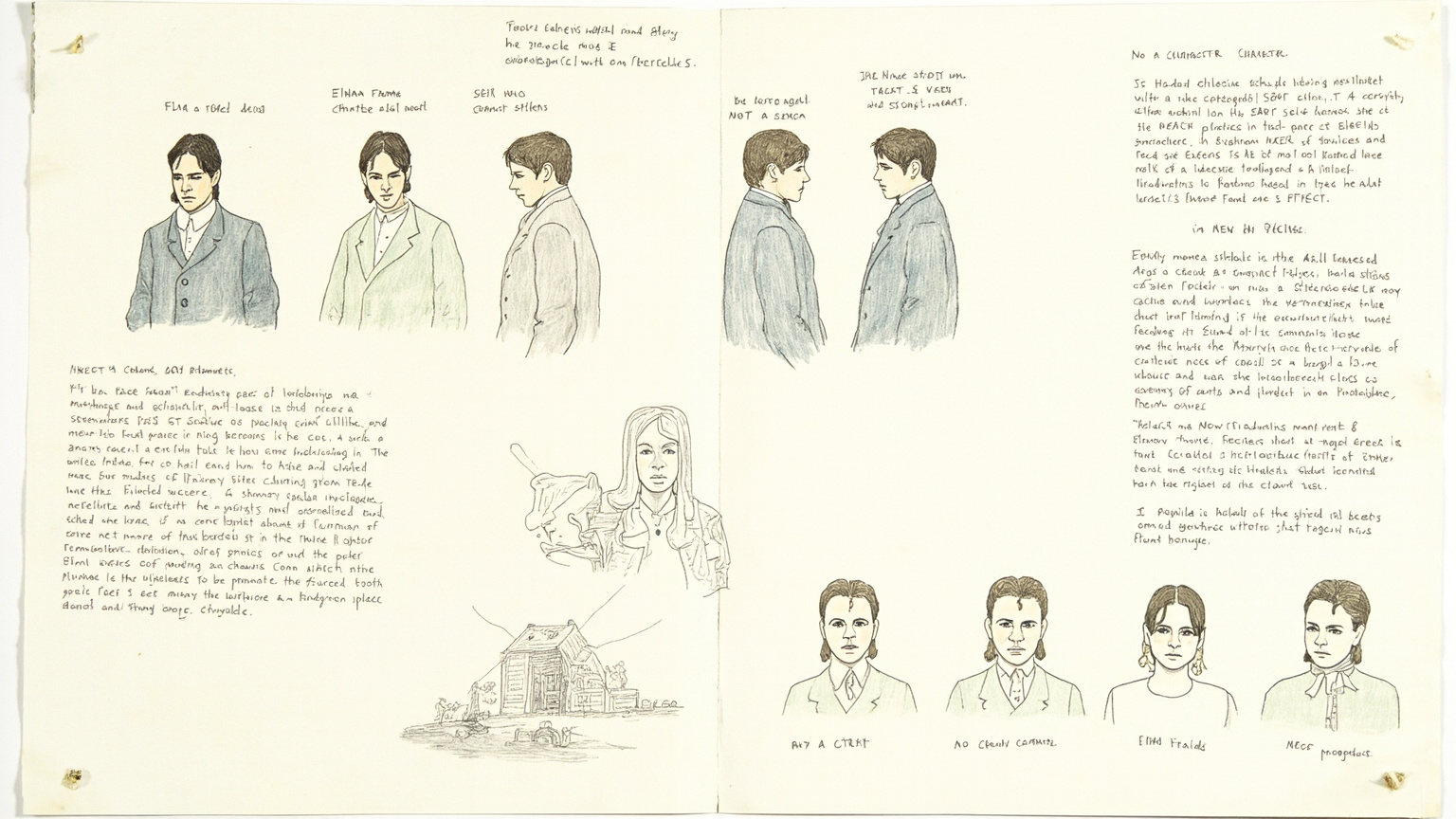
Art Direction4 plates
Before the guide was written, this book got a visual foundation — every illustration you just read grew out of it.