Fabre's Book of Insects (Souvenirs Entomologiques) · Companion Guide
昆虫记
一个法国乡村教师,一块被遗忘的荒地,怎样颠覆我们对昆虫的全部想象?
I. A Wasteland Nobody Wanted
It is high noon in Provence in midsummer, and the sun has baked the flagstones hot enough to fry an egg. A man in a worn coat crouches on the stony ground, eyes fixed on a lump of cow dung hardened by the sun — he is watching a beetle roll it into a ball. His name is Jean-Henri Fabre, no longer young, and he has just spent a lifetime's savings from teaching to buy this patch of land nobody else wanted. At last he can stay outside all day and live among the insects.
That is how Fabre's Book of Insects opens: not a bespectacled professor in a study, but a man out in the sun on bare ground. Fabre bought this land in 1879, at fifty-five. The original French work, Souvenirs Entomologiques, grew from that year until 1907 into ten volumes. This book is a 1921 retelling for young readers, in which Mrs. Rodolph Stawell selected the classic passages from Alexander Teixeira de Mattos's English translation and paired them with E. J. Detmold's black-and-white illustrations. Victor Hugo called him "the Homer of the insect world," and Darwin put it more plainly, calling him "an inimitable observer" — yet this inimitable observer never held a proper academic post in France, and was never elected to the Academy.
II. The Harmas Was a Laboratory, and a Home
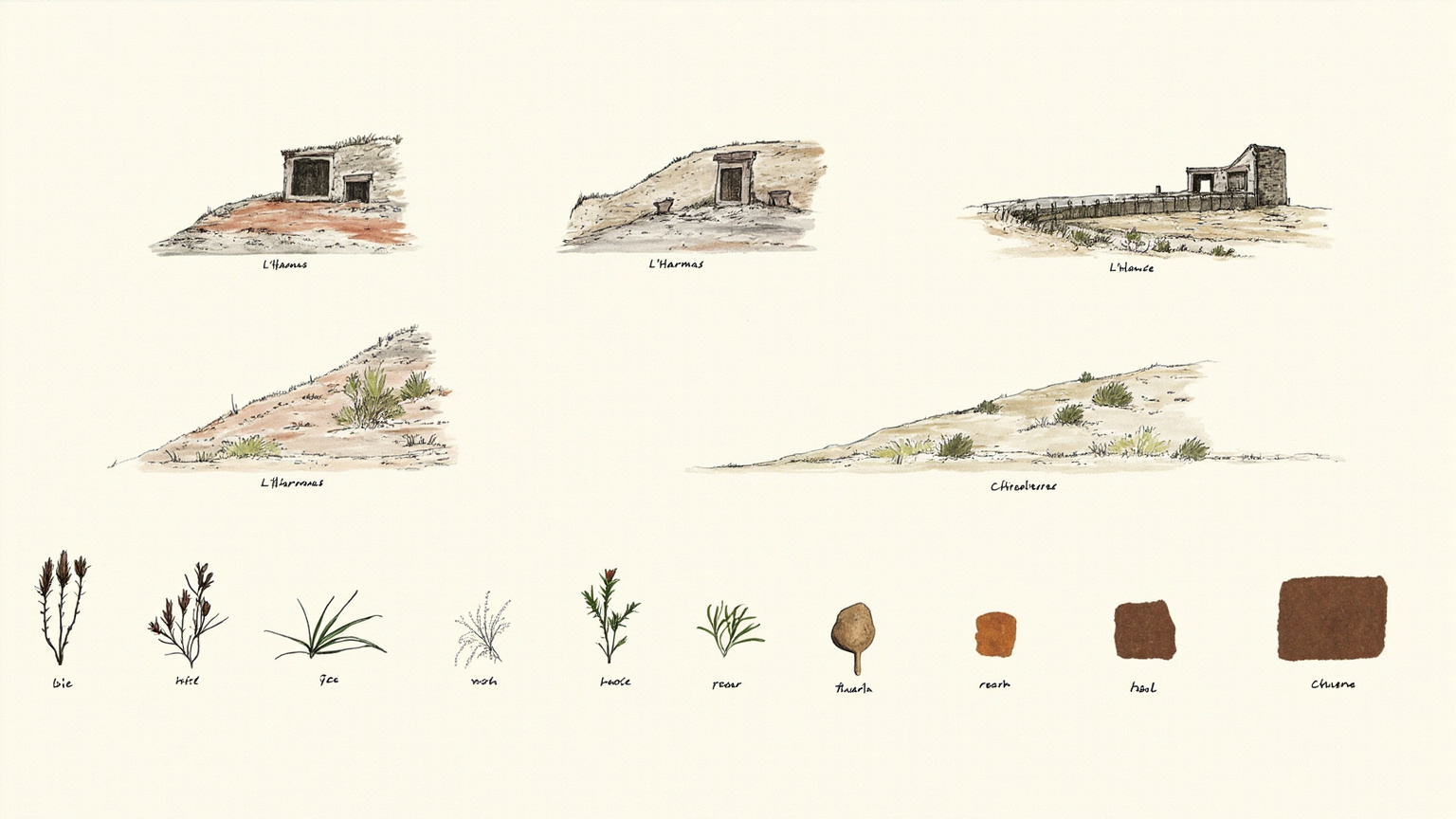
Fabre named the place L'Harmas, which translates roughly as a stony wasteland — a dry, rocky slope overrun with rosemary and thyme, the Mediterranean scrub baked limp by the sun, where you could step on a scorpion within a few paces. To the academy this was worthless ground. To him it was the most expensive laboratory in the world. No microscope bench, no cabinet of specimens, just a pair of aging eyes and inexhaustible patience. His method of improving the place was blunt: pile up a few stones to make somewhere to sit and watch, put up some wire-mesh cages, then wait.
Waiting is the hidden protagonist of this book. Fabre's method comes down to one sentence: do not classify pinned specimens in a study, but crouch in the living insect's own ground and write down what it actually does. One man, one magnifying glass, one patch of Mediterranean waste ground — and out of that came ten volumes of field notes. For more than a century since, anyone who wanted to write about what insects actually do, rather than what they look like, has had to come back to this same stretch of ground for a starting point.
III. The First Reversal: The Scarab's Dung Ball Is No Holy Relic
For his opening subject Fabre picked the most ordinary dung beetle in the Mediterranean — the one ancient Egyptians carved onto amulets and revered as the scarab, believing it conjured itself out of nothing from its own dung ball. Ancient naturalists went along with the story, claiming the ball was its egg, and that the young beetle simply hatched out of the dung.
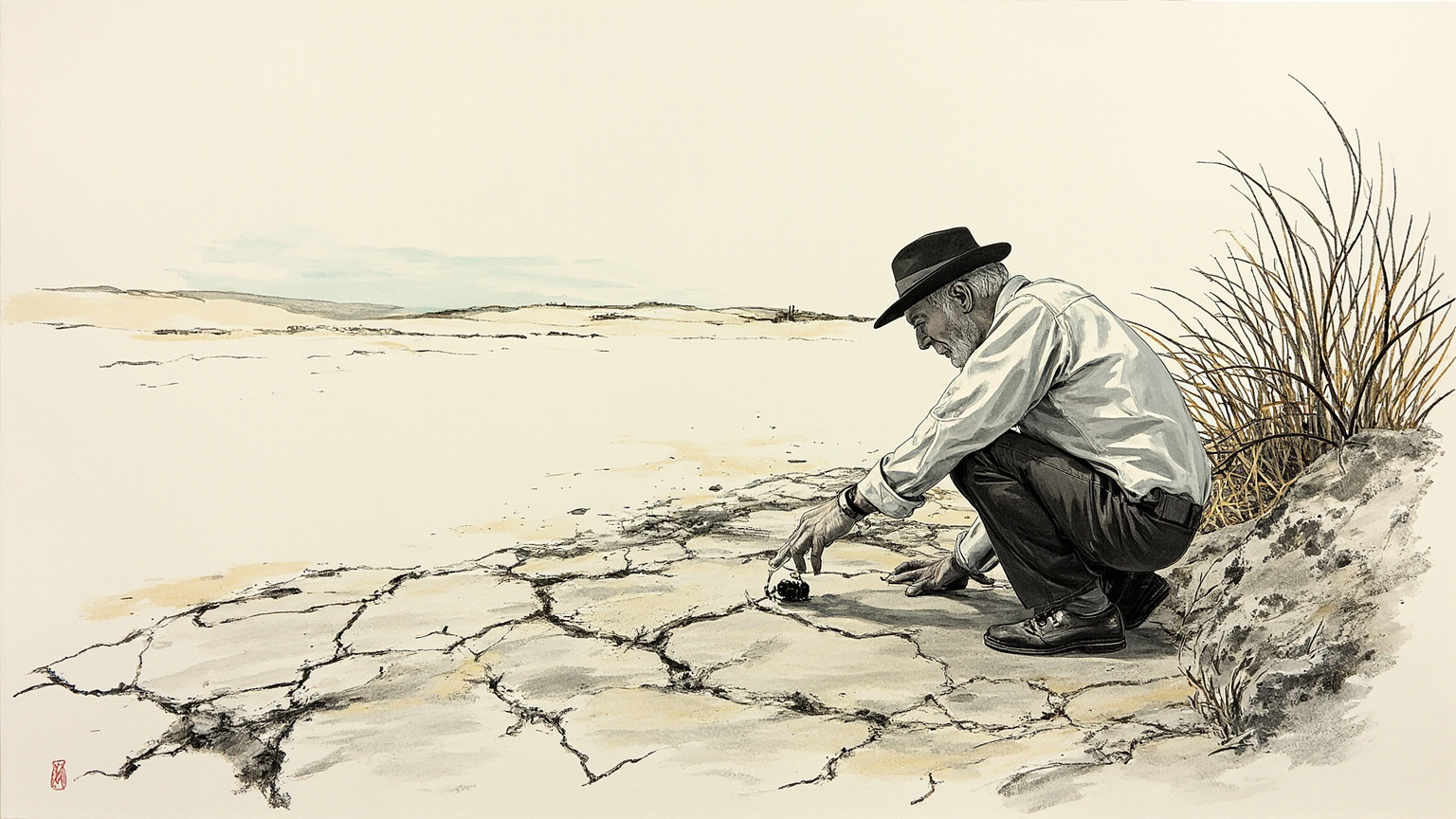
Without masters, without guides, often without books, I have gone forward with one aim always before me: to add a few pages to the history of insects.
我没有导师,没有指引,常常连书本也没有,只是独自前行,心中始终怀着一个目标——为昆虫的历史添上几页。
原文金句 · 序章 · 荒石园的誓言
He spent countless afternoons stripping that myth away layer by layer. He watched the scarab pick through fresh cow dung for the best material, shape the lump into a flawless sphere with its forelegs and head, walk backward pushing the ball with its hind legs, and finally bury it in the right spot as food. None of it was self-hatching — it was simply eating, and stocking a pantry for its young. The myth collapsed on the spot, against a plain record of a living animal. Fabre's method here is exemplary: he replaces a lazy claim like "it is clever" with the concrete details — which leg does the pushing, where it pushes to, how slowly it moves.
IV. Overturning Aesop: The Ant Is the Thief
Next he takes on a story everyone grows up hearing — Aesop's fable of the cicada and the ant, in which the cicada sings all summer, then knocks on the ant's door in winter with nothing to eat and gets turned away. For thousands of years children have been taught to admire the industrious ant and look down on the idle cicada. After decades of watching cicadas in Provence, Fabre says the fable has it backward.
He crouched under trees and tallied out the cicada's whole life: the nymph lives underground for years feeding on root sap, then emerges and molts into an adult with barely a month left to live — a month whose entire business is calling and mating, and then it dies. It never lives to see a winter, let alone go begging at an ant's door. What Fabre actually saw on the tree trunk was this: the cicada bores a small well into the bark with its mouthparts, and sap keeps welling up from it; the ant is the freeloader that shows up to drink the sap, and sometimes climbs onto the cicada's back to drive it off. The fable's lazybones and its model worker trade places entirely.
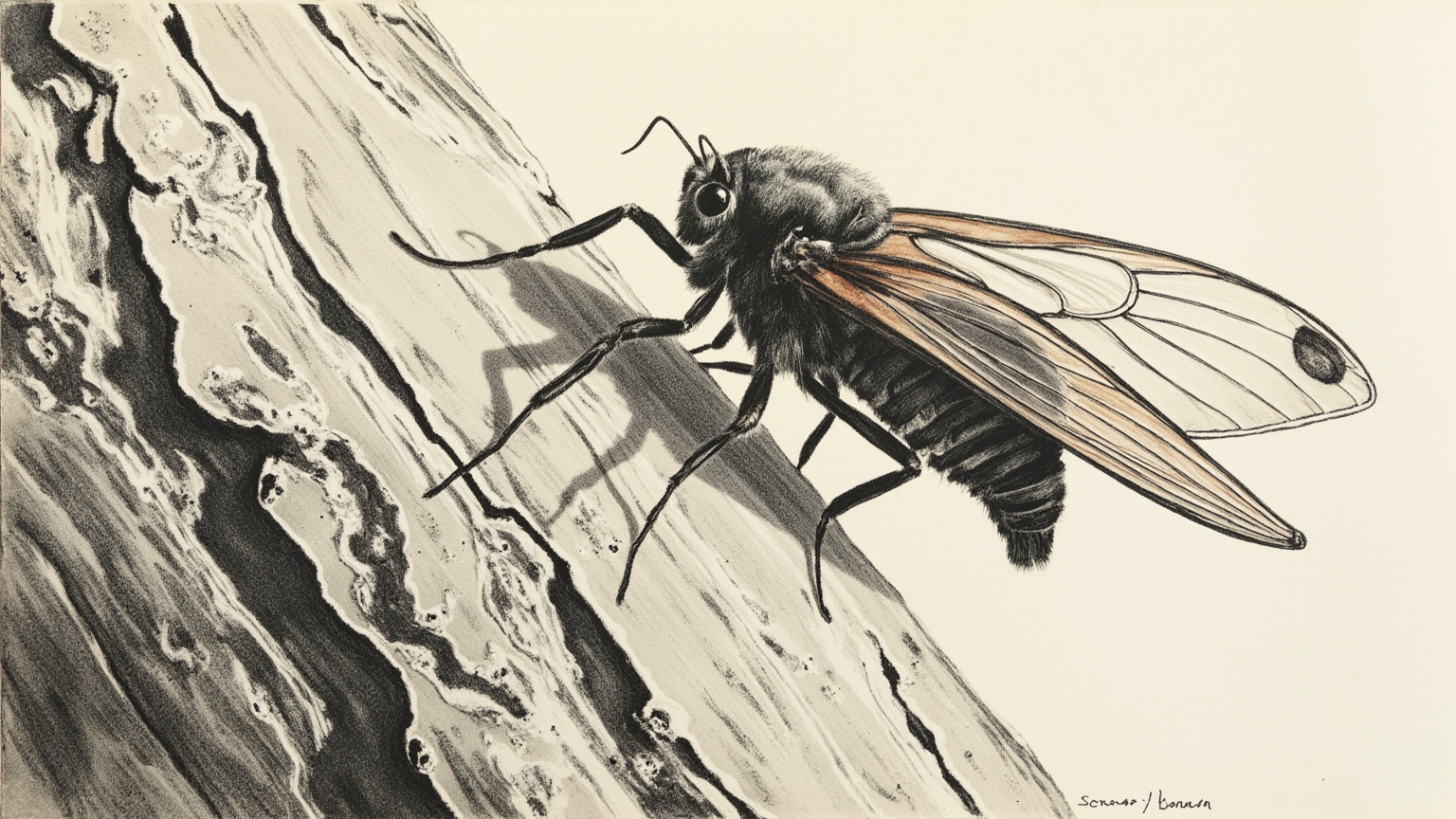
Once a bold robber, before my very eyes, caught hold of a Cicada's sucker and tried to pull it out.
就在我眼前,一个胆大包天的强盗,竟一把抓住蝉的吸管,想把它从树皮里拔出来。
原文金句 · 蝉与蚂蚁 · 翻案现场
This kind of reversal is where the book is most satisfying to read. Fabre does not lecture you — he pins Aesop's conclusion to the ground and erases it line by line with his field notes. Nor does he pretend to be neutral: he takes sides on the page, speaks up for the cicada, and calls the ant a scoundrel. This is a science book with a temper.
V. The Hunting Wasp: A Surgeon Among Insects
If you only read one chapter of Fabre, make it the one on hunting wasps. It defies common sense: the digger wasp catches a weevil or a cricket, and instead of killing it, drives its sting straight into a specific nerve cluster of the prey — precisely enough to paralyze only its movement, without killing it or letting it rot. Then it drags this living, half-paralyzed prey back to a mud-built cell, seals the entrance, and leaves it as fresh delivery for a larva that has not yet hatched.
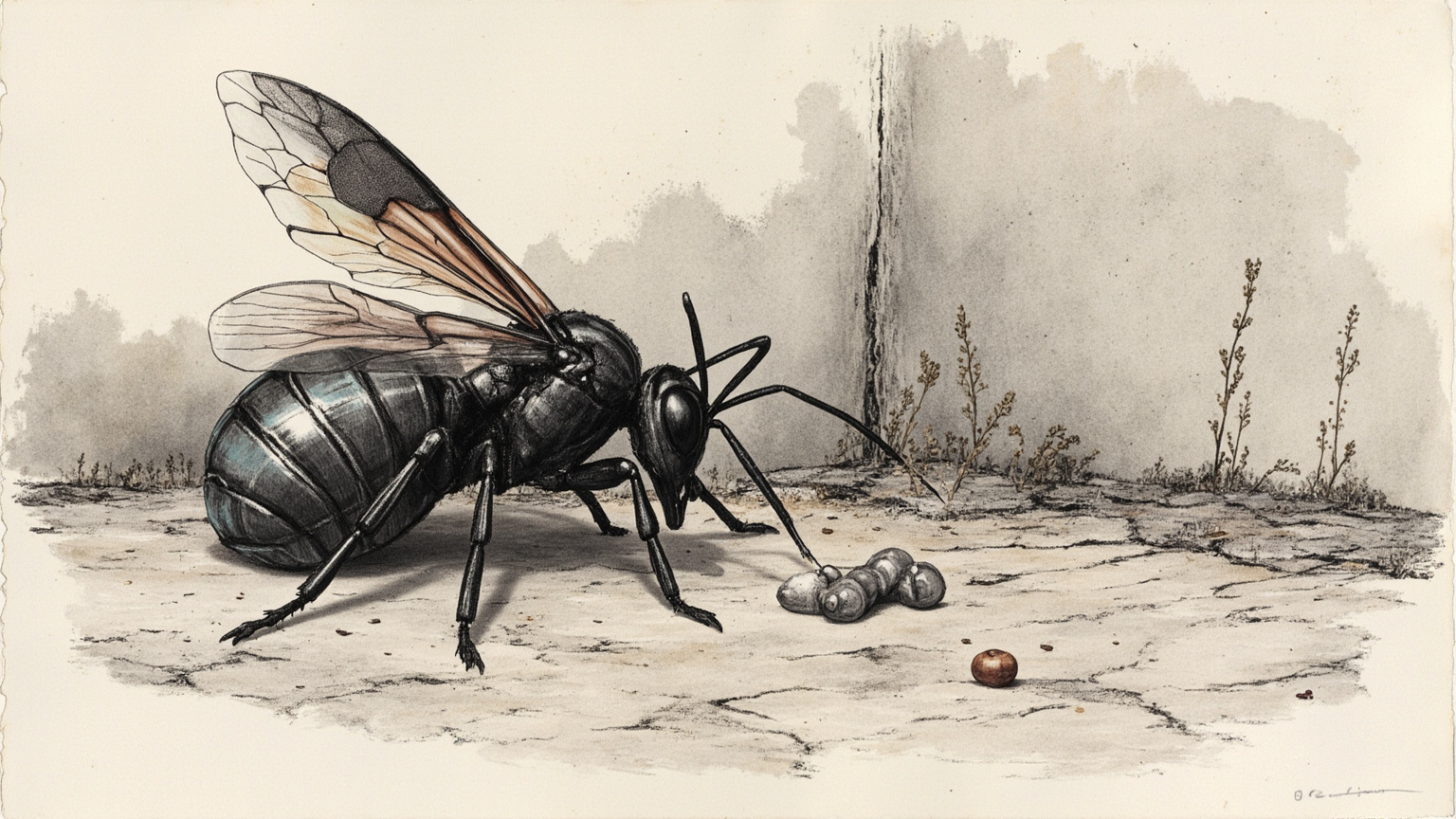
And after all, a swelling on one's hand, even if it does smart, is not much to pay for an idea.
说到底,手上肿个包,就算火辣辣地疼,比起换回一个想法,这代价实在不算什么。
原文金句 · 狩猎蜂 · 以疼痛换取真相
Fabre calls this an instinct on the level of surgery. I stopped reading here and asked myself: how does it know exactly where to strike? It never took an anatomy class. Fabre offers no final answer — he admits plainly that he does not know either — but through dozens of controlled observations, varying the prey, the target site, the duration of the paralysis, how soon the larva began to feed, he draws the boundaries of this mystery of instinct with real precision. The word pheromone did not exist yet at the end of the nineteenth century, and DNA was further off still, so all he had was the slowest and most reliable method there is: crouch down and watch.
VI. The Night of the Great Peacock Moth: The First Pheromone Experiment
The most dramatic scene in the whole book happens on a single summer night. That afternoon Fabre had brought home a female great peacock moth, freshly emerged from her cocoon — the largest moth in Europe — and set her in a wire cage in his study, with a lamp on the table. He sat down and waited. That night he watched male after male fly in through the open window, one after another, dozens of them within a few hours. The next day, checking around the house, he found more males still beating against neighbors' windowsills and the trees in the garden.
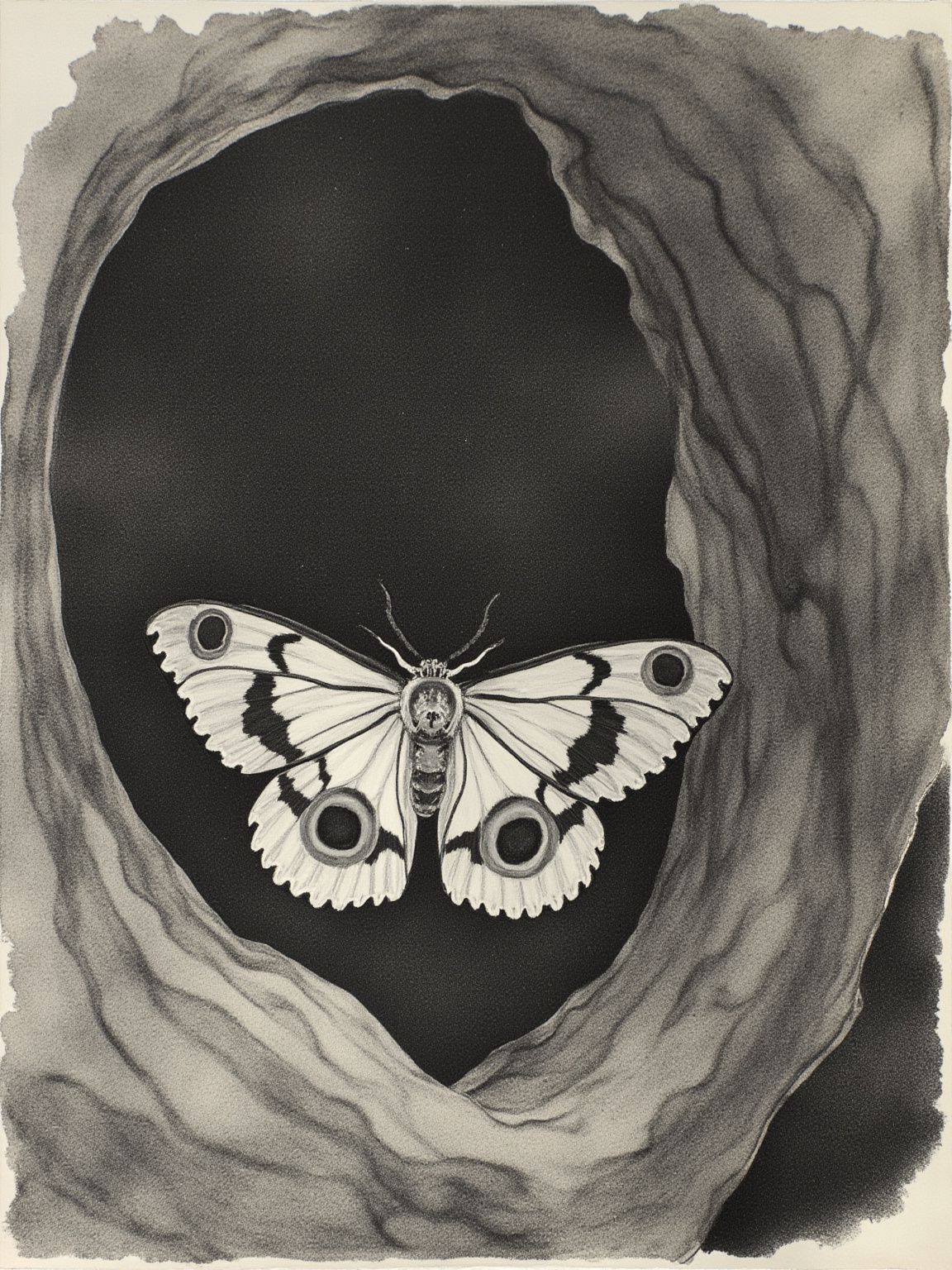
Never again, in the forty years that followed, was my fireplace honoured with such a visit.
此后四十年里,我的壁炉再未有过那样的荣幸,接纳那样一场朝圣般的造访。
原文金句 · 大孔雀蛾之夜 · 不谢的奇迹
Every one of them had come from far away. Shut inside, silent, dark, motionless, this one female had summoned males across that whole distance using nothing but some scent humans of the time could not smell or name — what we would call, a century later, a pheromone. Fabre's achievement is not that he skipped the chemical formula; it is that he was the first to pin down this long-distance signal with a clean experiment. The episode is still the textbook example cited over and over in behavioral ecology today.
VII. Seven Days and Nights of the Processionary Caterpillars: An Experiment in Stupidity
The story of the processionary caterpillars reads like a joke. Fabre led a line of them onto the rim of a flowerpot until they formed a closed loop, each one following the silk thread left by the one ahead. The caterpillars started walking — around once, then twice, then a third time — because the lead caterpillar simply followed the silk trail left by the one behind it, and the path never changed, the direction never changed, the loop never broke. They walked for seven days and seven nights. By the time Fabre managed to lure the column down off the rim with fresh food, many of them were exhausted.
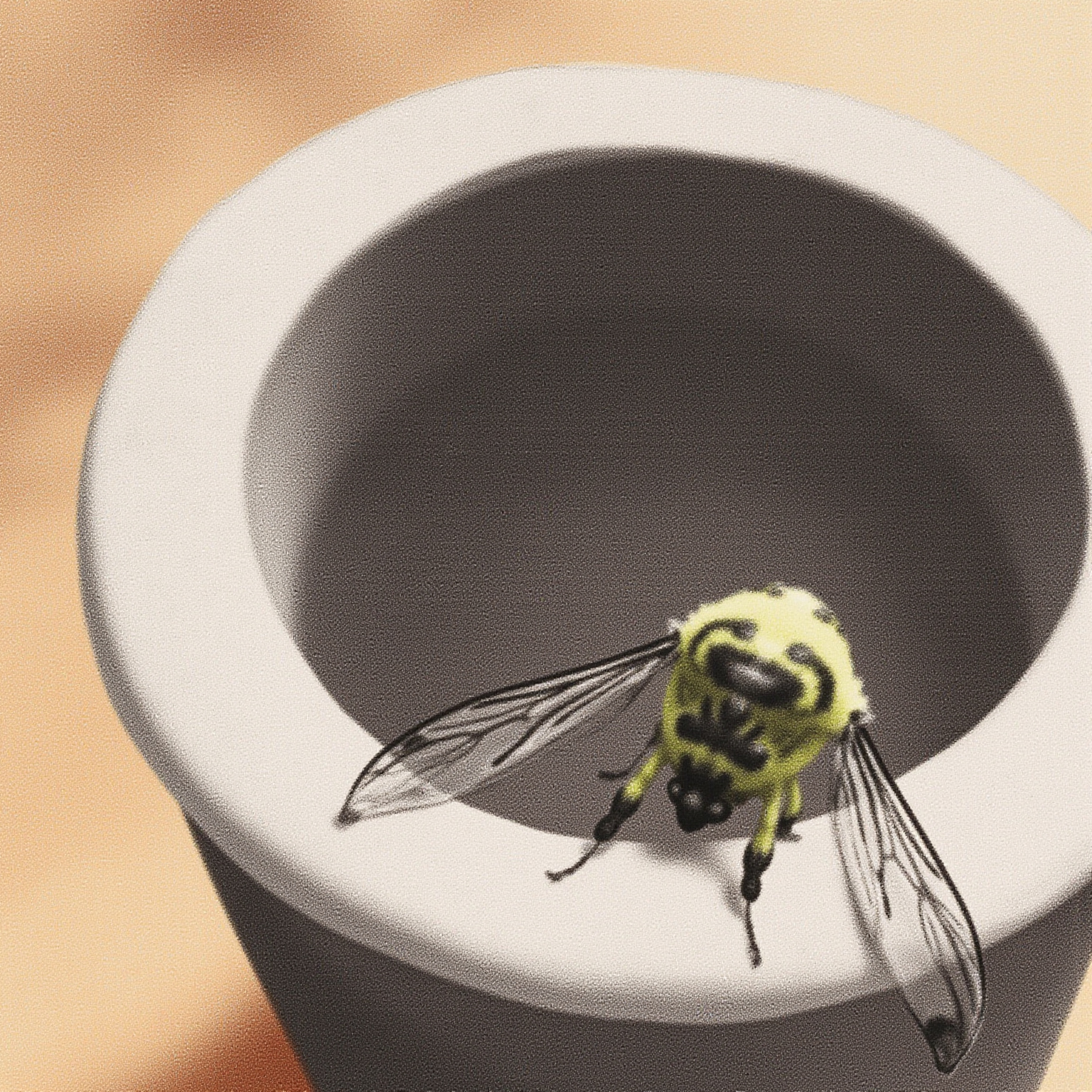
Finding them ready to accept any vegetable matter that was dry and light, I next tried them with animal and mineral substances.
我发现它们什么都接受,只要是干燥轻巧的植物碎屑;接下来,我又试了动物和矿物的东西。
原文金句 · 松毛虫 · 固执的路径
This is no joke — it is a knife through the whole idea of animal intelligence. The caterpillars are not incapable of walking in a circle; walking in a circle is all they can do. With an experiment simple enough for a schoolchild to repeat, Fabre pins the word instinct to the table: even the most elaborate behavior may be nothing but a fixed program, one that loops forever when the trigger conditions are met and fails outright when they are not. That much lines up with the grand evolutionary claim that natural selection shaped instinct, but Fabre's doubt comes through clearly too: he is not convinced any single explanation covers every detail. So he writes no grand conclusion, only seven days of tracks.
VIII. The Mantis at Prayer, the Ant at the Well
In the mantis chapter, Fabre does not turn the female eating the male into the book's signature image, endlessly restaged — that is a gimmick later illustrators loved. What holds his attention is a different scene: the mantis standing still, forelegs folded against its chest, looking from a distance like hands clasped in prayer. A fly passes by, the praying pair of blades snap open, the fly is caught, and the meal begins. The disguise is clean, quiet, and effective. Fabre's writing here is as restrained as his observation — he knows there is more than one story to tell, but what is worth setting down is how the insect lives, not its gossip.
By now the shape of the book should be clear: Fabre's Book of Insects is not an encyclopedia of insects, it is a stack of field notes kept on a patch of Mediterranean waste ground. The scarab, the cicada, the hunting wasp, the great peacock moth, the processionary caterpillars, the mantis — each chapter is its own experiment, hours or even days spent crouched on the ground. Fabre gathered all of it into ten volumes, and volume by volume it worked its way into readers' childhoods. In China it is just as familiar a book for young readers — for most people, the idea of an insect starts on some page of this one.
Two threads run under the whole book. One is method: do not pin specimens, watch living ones; do not think it through in a study, wait for it on the ground. The other is doubt: is instinct really a precise program we are born with, or something we simply do not have a name for yet? Fabre never hands down an answer from on high — he lays the questions out one by one and leaves them for the reader to keep turning over. That willingness to leave things open is what keeps a book written at the end of the nineteenth century feeling fresh today.
What makes Fabre remarkable is not that he knew the answers, but that he could make you see the question without one.
IX. Why It's Still Worth Reading the Original
By now you know roughly what Fabre's Book of Insects covers, which insects it follows, and how it works. Knowing the plot first does not spoil it — because what the book actually sells is not plot, it is the prose itself. Fabre writes in a style that is entirely his own, verbs chosen with precision, a pace as patient as a walk, and he can spend as many pages describing a beetle pushing a dung ball three meters across gravel one August afternoon as a web serial today spends on a whole chapter. That slowness has a purpose: slow down, or you miss what the animal is actually doing.
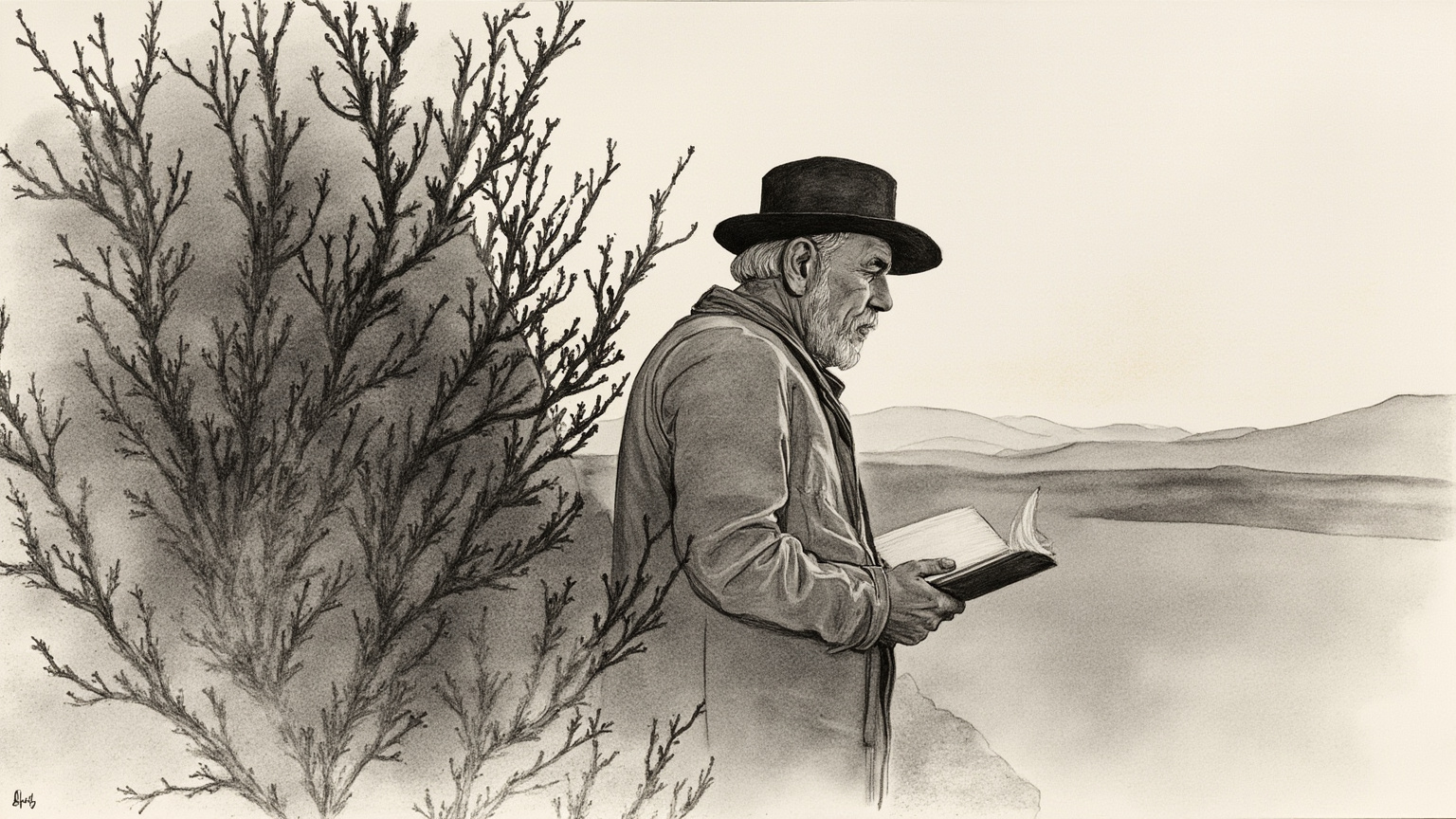
A vain wish has often come to me in my dreams: to be able to think, for a few minutes, with the brain of my Dog, or to see the world with the eyes of a Gnat.
我梦里常浮现一个无望的心愿:哪怕只有几分钟,让我用狗的脑子去思考,或者用一只蚊蚋的眼睛去看世界。
原文金句 · 终章 · 他者的目光
There is also something no summary can give you: the sense of being there in the body. Reading the scarab section, you can smell the dung. Reading the great peacock moth, you can feel the night air coming through the window into that study in 1921. Fabre belonged to the last generation of naturalists who ran their experiments by eye, by hand, by whatever was at hand, and he spent whole summers pinned to that waste ground — and that presence is something only the original text can give you. Knowing the plot and then reading it anyway, you will not find the book thin; you will find this small book thicker than you expected.
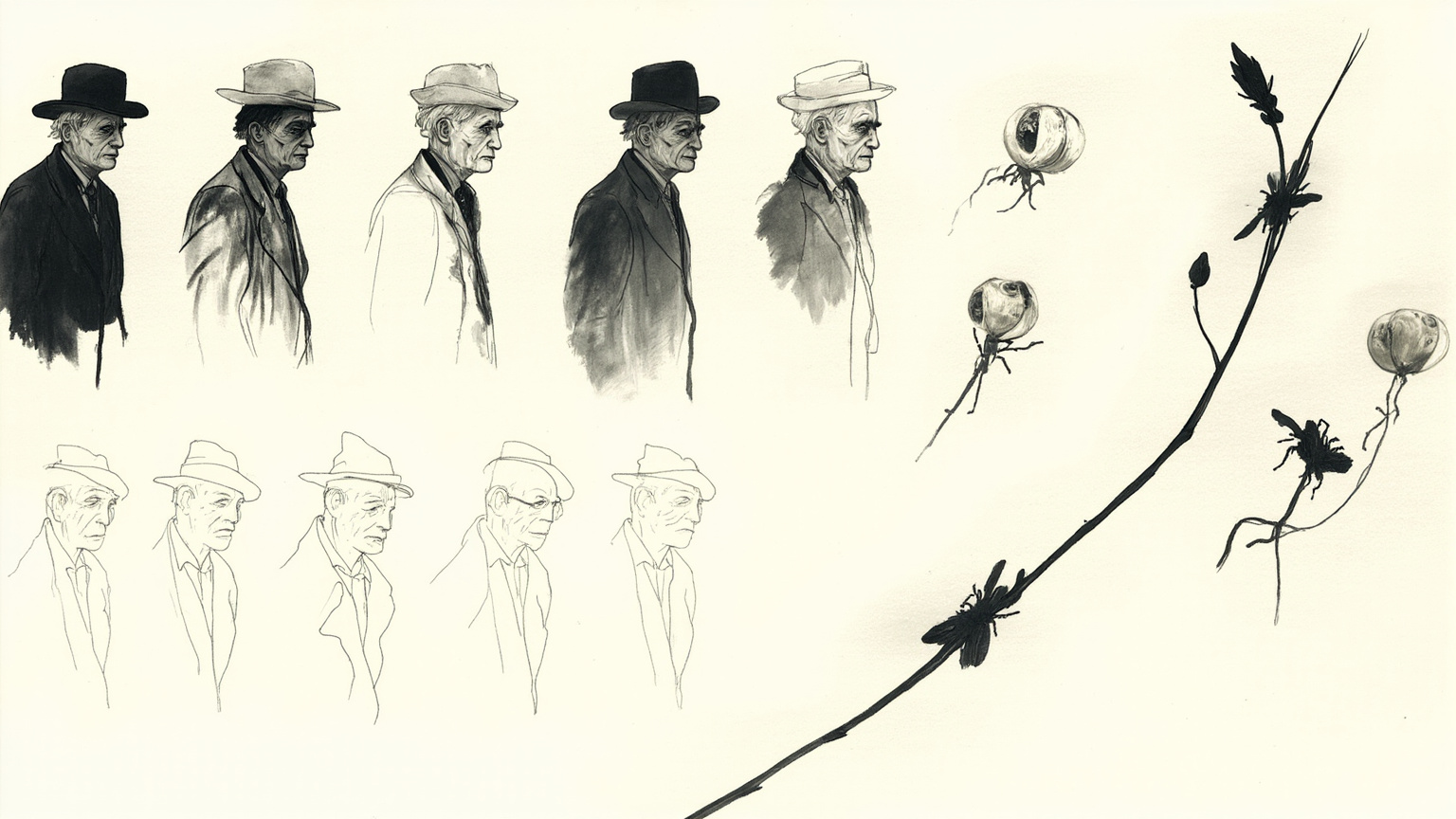
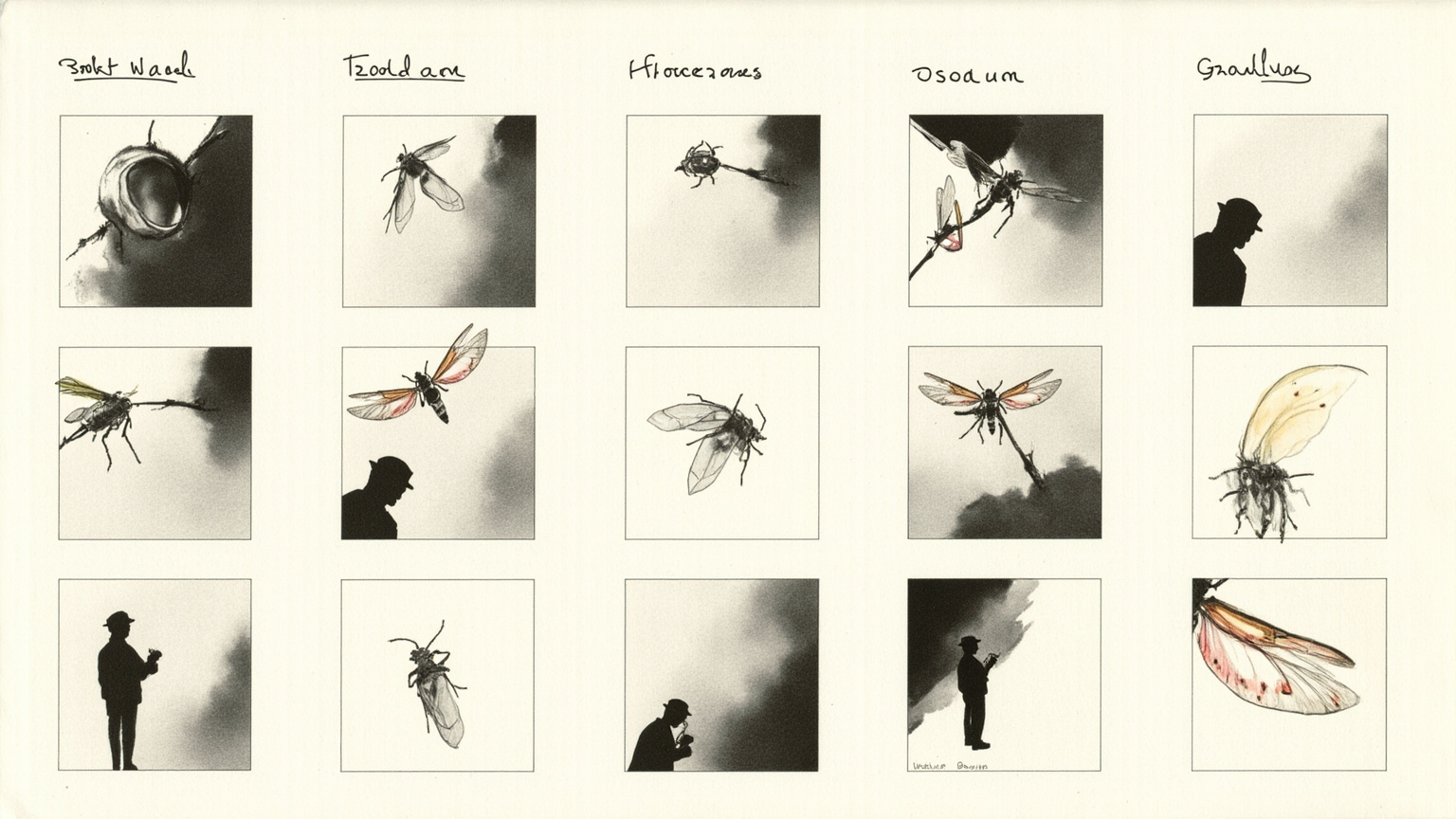
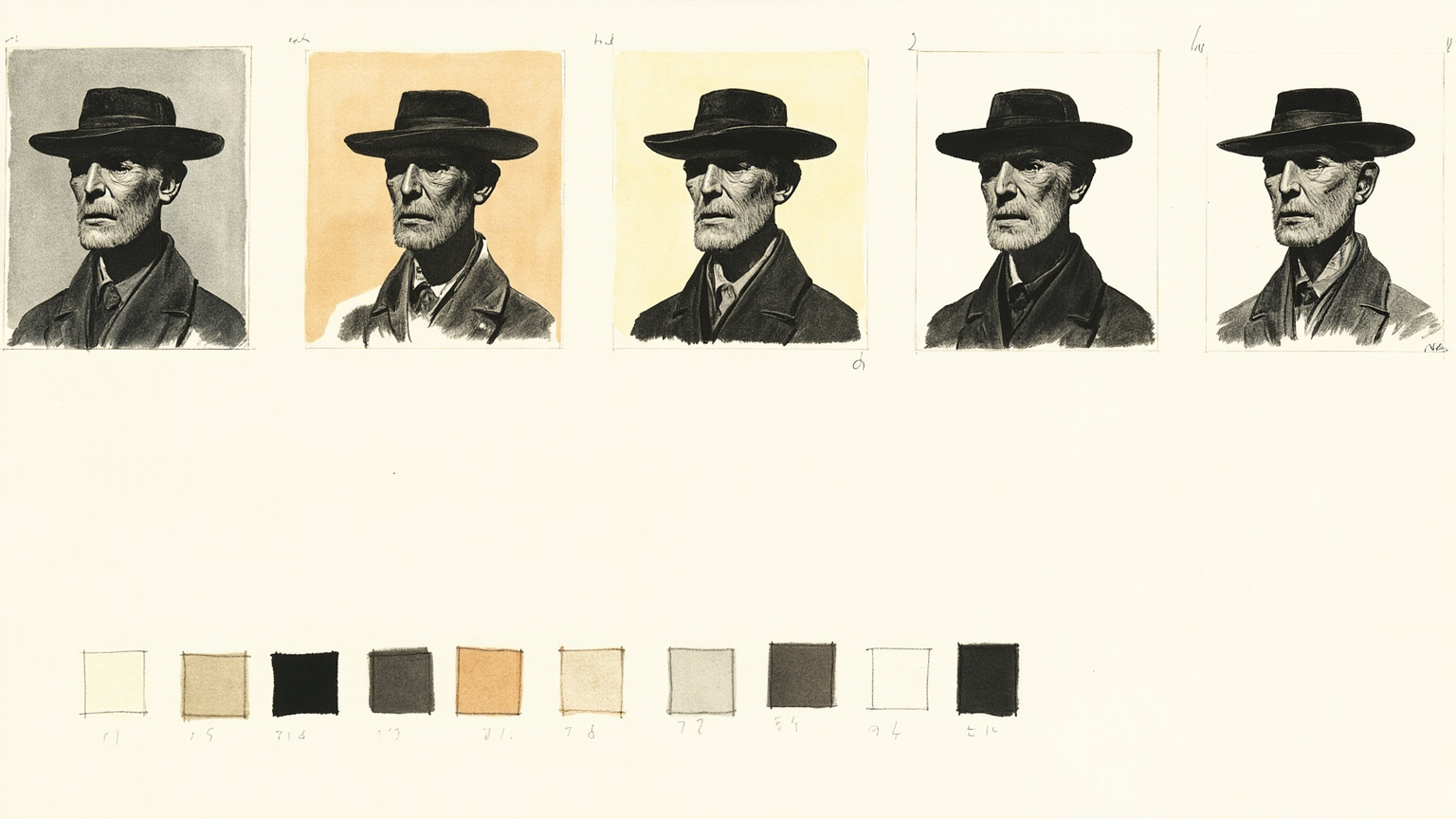
Art Direction4 plates
Before the guide was written, this book got a visual foundation — every illustration you just read grew out of it.