Fathers and Sons (Отцы и дети) · Companion Guide
Fathers and Sons
In a provincial Russian parlor in 1859, a young man who believes in nothing sits across from his elders and argues — until love and a bout of typhus strip his creed away, inch by inch.
The Opening: A Thinker Brought Down by Typhus
Let me start with an image — not the beginning, but the end. In a low farmhouse on a small estate, candlelight flickering, a young doctor lies in a bed his mother has just made up with clean sheets, delirious with fever. He has just told his parents, in so many words, that he is dying. His parents — a retired army doctor and a devout country woman — kneel by the bed in tears. He tells them to go, says he needs to sleep; they don't dare go far, and wait outside the door listening to his breathing. This man is Yevgeny Bazarov, the protagonist of this novel — a man who claims to believe in nothing, worship nothing, and trust only chemistry and experience. Turgenev has a man like this die of the least philosophically dignified illness imaginable: typhus. He catches it from a peasant's corpse, without even the most basic antiseptic precautions. He doesn't fall in a duel, doesn't fall to a conspiracy — he falls doing the plainest work a country doctor does. The whole force of the book lies in that contrast: the man of ideas, defeated in the end by dirt and the body.
What Kind of Book This Is: A Novel That Detonated an Era in the Drawing Room
Fathers and Sons is a Russian novel Turgenev wrote in the mid-nineteenth century; the original title, Отцы и дети, translates literally as Fathers and Children. It matters for two reasons. First, it is the cleanest example in Russian literature of a novel built around the fault line between two generations' ways of thinking — mild, liberal fathers set against radical, materialist sons who reject all authority. Second, and more famously: this book put a word into every European language — nihilist. The word feels natural to you today, but more than a century ago, it was Turgenev who turned a medical student's pet phrase into the label for an entire generation. When he finished the book, he was attacked from both sides: the young thought he was caricaturing them, the old guard thought he was flattering them. That he pleased neither side is exactly the proof that he got it right.
The story takes place in the summer of 1859, in the Russian provinces. The emancipation of the serfs is still two years off; the whole old order is creaking but has not yet fallen. The setting is not Petersburg, not Moscow, but the drawing rooms, furrows, and gardens of a few declining country estates. Every argument, every collapse, every death happens in these country evenings and over these tea tables — a war of ideas fought entirely in drawing rooms, at dinner tables, and along garden paths.
The Cast: Two Fathers, Two Sons, Two Women
Seven people are all you need to understand this book. The Kirsanov brothers: the younger, Nikolai, a gentle landowner who reads Pushkin, plays the cello, and has had a child with Fenichka, a peasant woman on his own estate; the elder, Pavel, a retired officer and a living specimen of the old aristocracy — impeccably dressed, scrupulously correct, and holding the family's honor dearer than his own life. Nikolai's son Arkady has just graduated from university, a gentle young man who brings his university friend Bazarov home to the estate as a guest. Bazarov is the book's protagonist: a medical student who calls himself a nihilist — a believer in nothing but science, someone who rejects any authority, tradition, art, or romantic love that hasn't been proven by experiment. Bazarov and Arkady form a matched pair of 'sons': one radical to the bone, the other mild at heart and destined, in the end, to return to the land.
On the women's side: Odintsova, a young widow and wealthy landowner — composed, self-possessed, beautiful, restrained — the 'fate' Bazarov runs headlong into himself. Her younger sister Katya is quiet, loves music, and ends up marrying Arkady. Fenichka stands at the real border between the old order and the new — an ordinary peasant woman who was nothing more than a servant in the old order and becomes a recognized partner in the new one. Every man in this book talks about ideas; she simply lives.
The Plot: One Summer, Seven Scenes
Act one: Bazarov arrives. Arkady brings his university friend home to his father Nikolai's estate at Maryino. Bazarov makes people uncomfortable the moment he walks in — he shakes the steward's hand, talks about himself in the third person, mocks the whole emotional apparatus of serfdom, mocks the romantic poets. Uncle Pavel can bear him even less. Two 'fathers' plus Nikolai's new-style companion Fenichka — into this old estate at dusk, suddenly, walks a man who denies everything. The craft of this scene is worth noticing: Turgenev deliberately makes Bazarov ugly — coarse, arrogant, a cigarette dangling from his mouth — but by the end you realize ugly does not mean wrong; every one of his cutting remarks lands on a real weak spot in the old order. Turgenev's evenhandedness starts right here, in act one.
Act two: the battle of ideas in the drawing room. Whenever Bazarov and Uncle Pavel share a room, they fight. About what? Authority, tradition, art, Russia's future, whether the nobility is good for anything at all, what landowners are supposed to do once the serfs are freed. Pavel stands for the idealist aristocrats of the 1840s: honor, principle, reverence for beauty. Bazarov stands for the new men of the 1860s: experience, utility, contempt for anything that can't be put to use. What Turgenev does best here is refuse to let you pick a side — you sympathize with Bazarov, because he punctures the hypocrisy of the old order; you sympathize with Pavel too, because his elegance and his awkwardness are equally real. He isn't a villain — he simply belongs to a century that is being phased out.
Act three: Odintsova. The two young men go into town and meet this composed young widow, and are invited to visit her estate at Nikolskoye. The moment Bazarov meets her, her stillness hits him hard — this from a man who had just been mocking romantic love. Over the following weeks he does something he doesn't believe in himself: he falls into unrequited love. He seeks her out, sits beside her unable to settle, and finally confesses. She is moved, but refuses him — she is afraid of losing her own peace of mind.
This is the book's first real irony, and Turgenev's sharpest cut: a man who has declared romance nonsense is struck down, defenseless, by his own passion. His creed has cracked, but he can't say so, because to admit love is to admit he was talking nonsense all along. So he grows colder, harder, more cutting. This is the standard posture of every true believer when life hits home: the harder the hit, the more resolute the performance.
Act four: home to his parents. After Odintsova refuses him, Bazarov goes back to his parents' small farmstead. The old couple are humble, devout, plain to the bone — a retired army doctor and a religious mother who regard their only son as their entire world. But Bazarov cannot stay in this house: his parents' love is too concrete, too warm, too unscientific, and he can't bear it. He stays restlessly for a few days, then leaves again. Turgenev writes this scene more quietly, and more cruelly, than any other — there is no quarrel here, no drama, between a son and his parents, only the whole gulf of an era: you can see their love, and see that it cannot reach into his world.
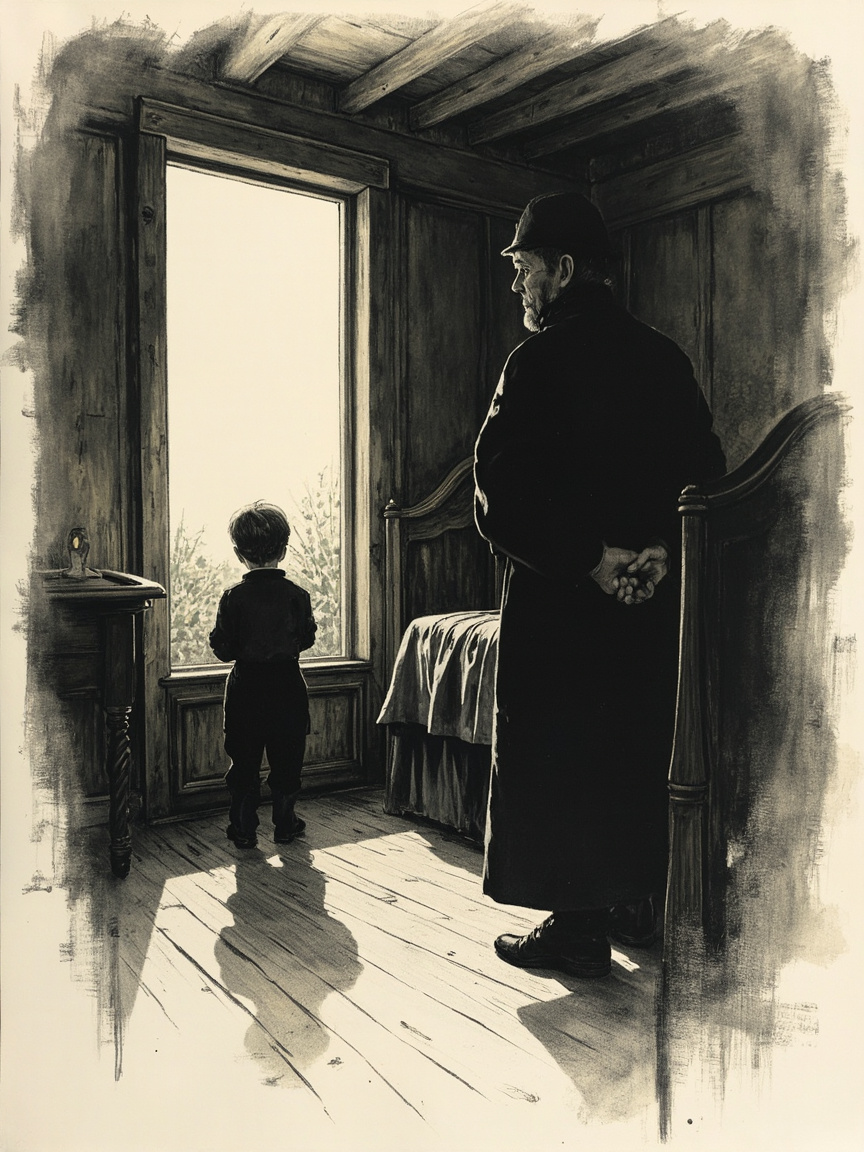
The tiny space I occupy is so infinitely small in comparison with the rest of space, in which I am not
我所占的这一丁点空间,和那没有我的无边空间相比,小得几乎不存在。
Original line · Chapter 21 · Beneath the haystack at his parents' house
Act five: the famous duel. Back at Maryino, Bazarov runs into Fenichka in the garden and kisses her on an impulse — and Uncle Pavel catches him at it. The old aristocrat's honor is wounded; a duel follows. The next morning the two men face each other with pistols. Bazarov wounds Pavel in the leg, then bandages the wound himself — both men survive. This is Turgenev's most ironic piece of staging: old-style honor and new-style utility, set side by side in absurdity, wounding each other and bandaging each other, with neither man truly winning.
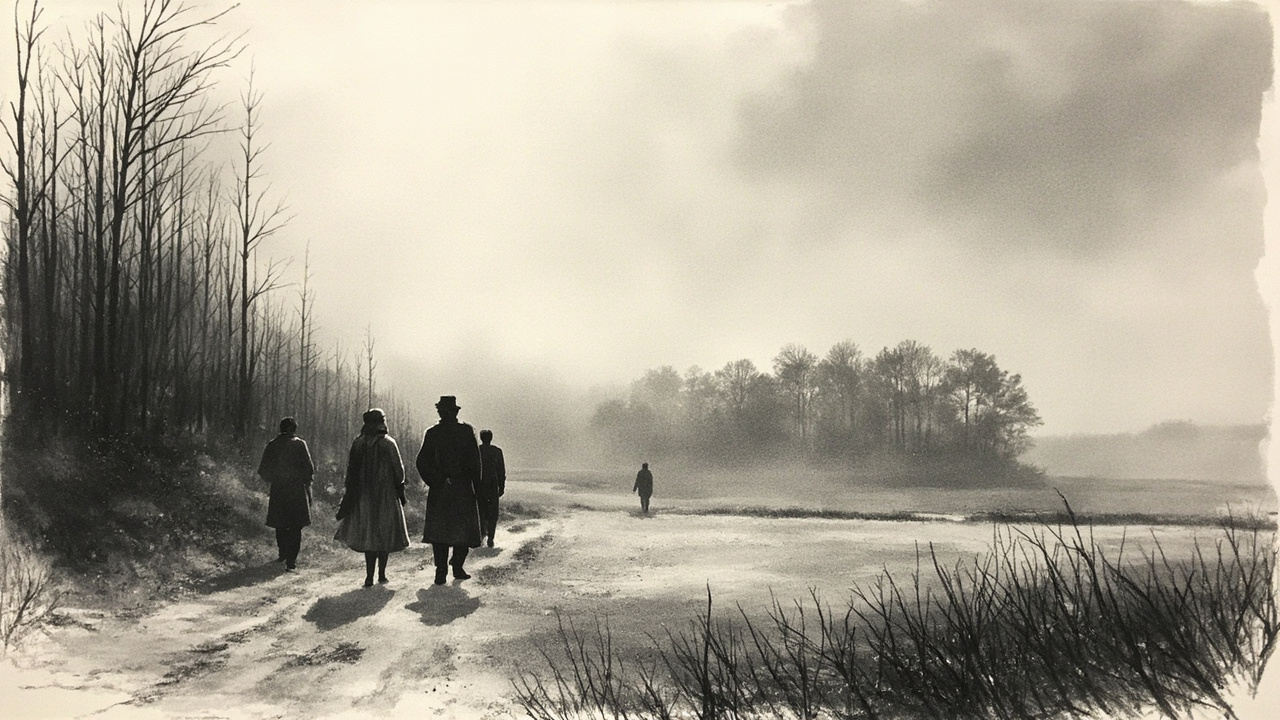
from the theoretical standpoint, duelling is absurd; from the practical standpoint, now--it's quite a different matter.
从理论上说,决斗是荒谬的;可从实际上说——那就完全是另一回事了。
Original line · Chapter 24 · Bazarov accepts Pavel's challenge to a duel
Act six: death by typhus. After the duel, Bazarov stays with his father, helping him on his country rounds. A peasant dies of typhus; while dissecting the body, Bazarov cuts his finger and fails to disinfect it in time — and that is how he contracts the disease. In that era, in that village, the sharpest irony is that he himself is a doctor. This is Turgenev's cruelest piece of symbolism: the man of ideas goes down, in the end, in the plainest, most practical field he claimed to have mastered.
Act seven: the sickbed, and the close. Bazarov's fever leaves him alternately delirious and lucid. He has Odintsova sent for — she comes, and what he offers her is a calm farewell, not a plea for her to stay. His parents keep watch at the bedside; he sends them out, wanting to die alone. The novel's final section is a wedding — Arkady marries Katya, Nikolai and Fenichka are formally married, and the old order carries on in reconciliation. Only Bazarov's parents, already old, keep watch beside a fresh grave in the country churchyard. That is the shape of this novel: summer begins, summer ends, one radical pair is dead, and two mild pairs are married.
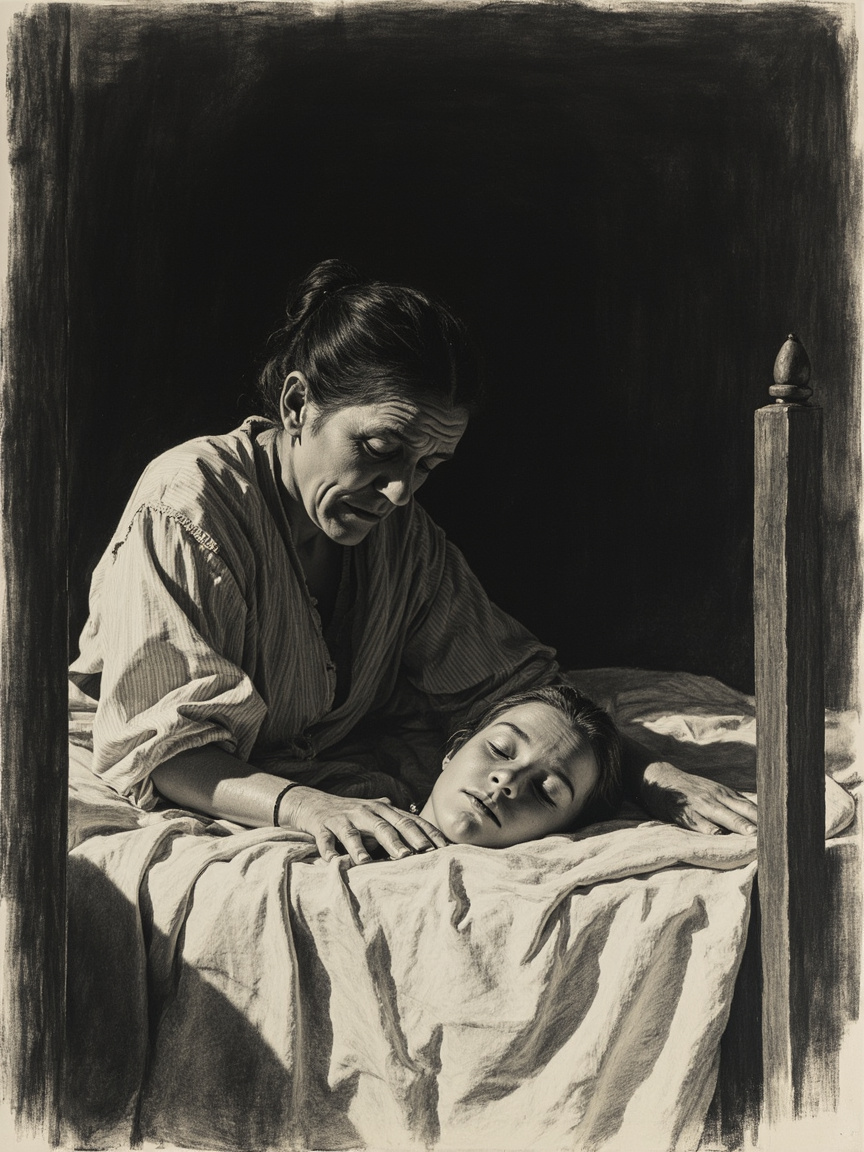
Breathe on the dying lamp, and let it go out
吹一吹这盏将熄的灯,让它灭了吧。
Original line · Chapter 27 · On his deathbed, a farewell to Odintsova
What Turgenev Is Actually Saying
There are three layers of theme here. The most obvious: generational conflict. The fathers are the idealist liberals of the 1840s; the sons are the materialist, radical nihilists of the 1860s who reject all authority. Turgenev compresses the entire spiritual rupture of pre-reform Russia into the drawing room of one country estate. The second layer concerns the limits of creed: a person can arm himself with a theory that denies everything, but love, death, family feeling, and the body all refuse to be theorized away. The third layer concerns land and tenderness: radical ideas look sharp, but what actually lets generation after generation live and settle is the furrow, the child, the ordinary household — and this is the real reason Turgenev was attacked by progressives and conservatives alike. He stands on neither the winning side of the drawing-room debate nor the losing side of the soil; he lays both side by side and makes you see them both.
Why is it still worth reading today? Because the theme of fathers and sons has never gone out of date. Every ten years, a new generation declares the previous generation's values null and void, and every ten years the older generation laments how much the young have changed. Turgenev told you, more than a century in advance, the true shape of this: it isn't a fight to the death, it's the same table, with the two of you talking over each other; the sharpest person may be the first to fall; the gentlest may be the one who lives to the end; neither side will ever fully convince the other, but neither side can ever fully stop caring about the other. This book is not a manifesto. It's a diagnosis.
Why It's Still Worth Reading the Original, Even Once You Know the Plot
I can tell you how Bazarov enters, how he falls in love, how he dies, but I can't give you the wind that moves through the estate garden on a summer evening in Turgenev's prose, the burble of the samovar in a Russian provincial drawing room, the half-second in which his gaze softens behind his own harsh words. You have to turn the pages yourself and see the man who claims to believe in nothing, on his deathbed on a peasant's stove-bed, still telling his father exactly which medicine to give the sick. Only there do you understand that Bazarov was never the man Turgenev meant to condemn — Turgenev was writing a portrait of how a person can deny everything and still remain, all the while, a creature of flesh and blood. No summary can give you that. That is the reason to go read the text itself.
Turgenev takes no side in either generation — he sets both of them down at the same table and serves them to the reader. That is the immortal secret of this book, and the reason it still stings two centuries later.
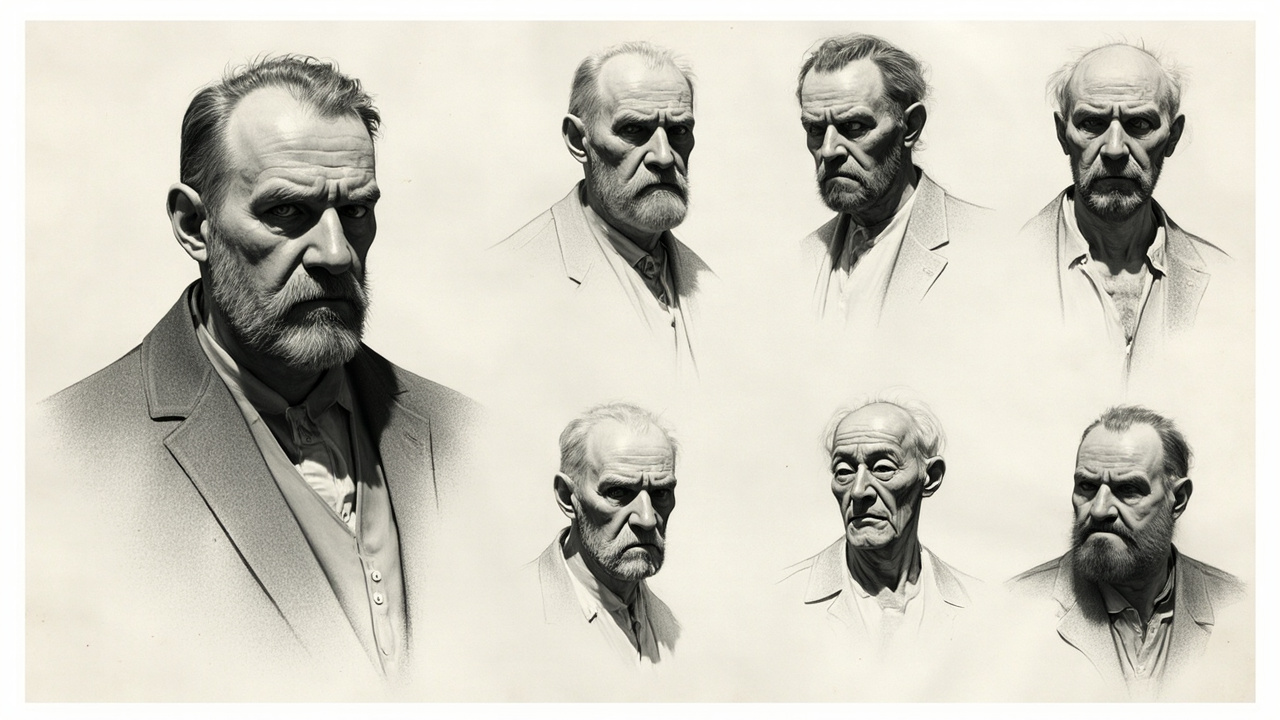
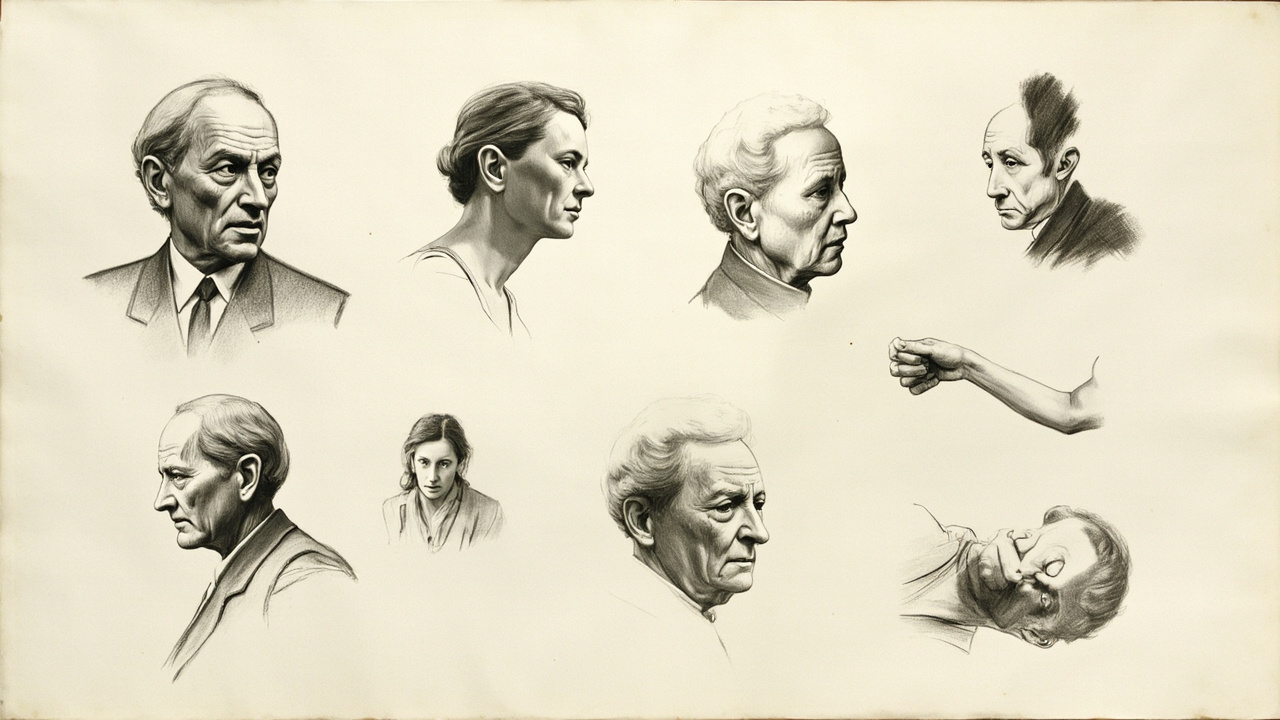
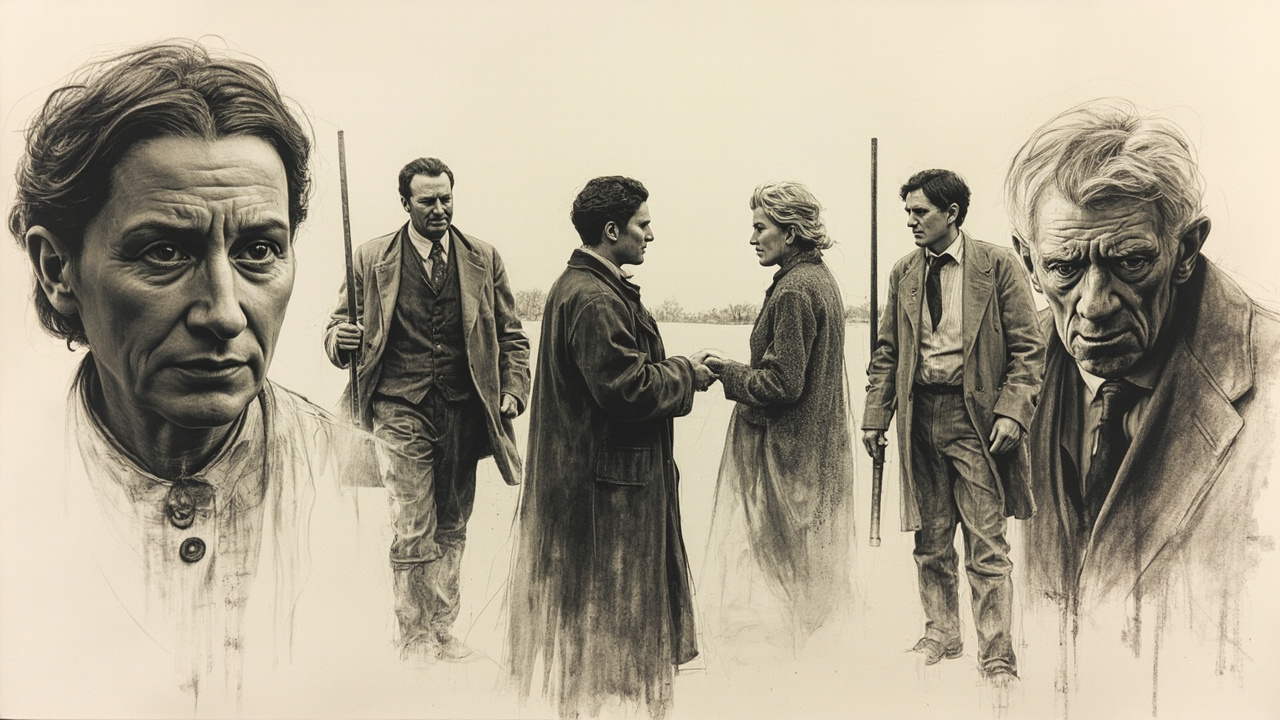
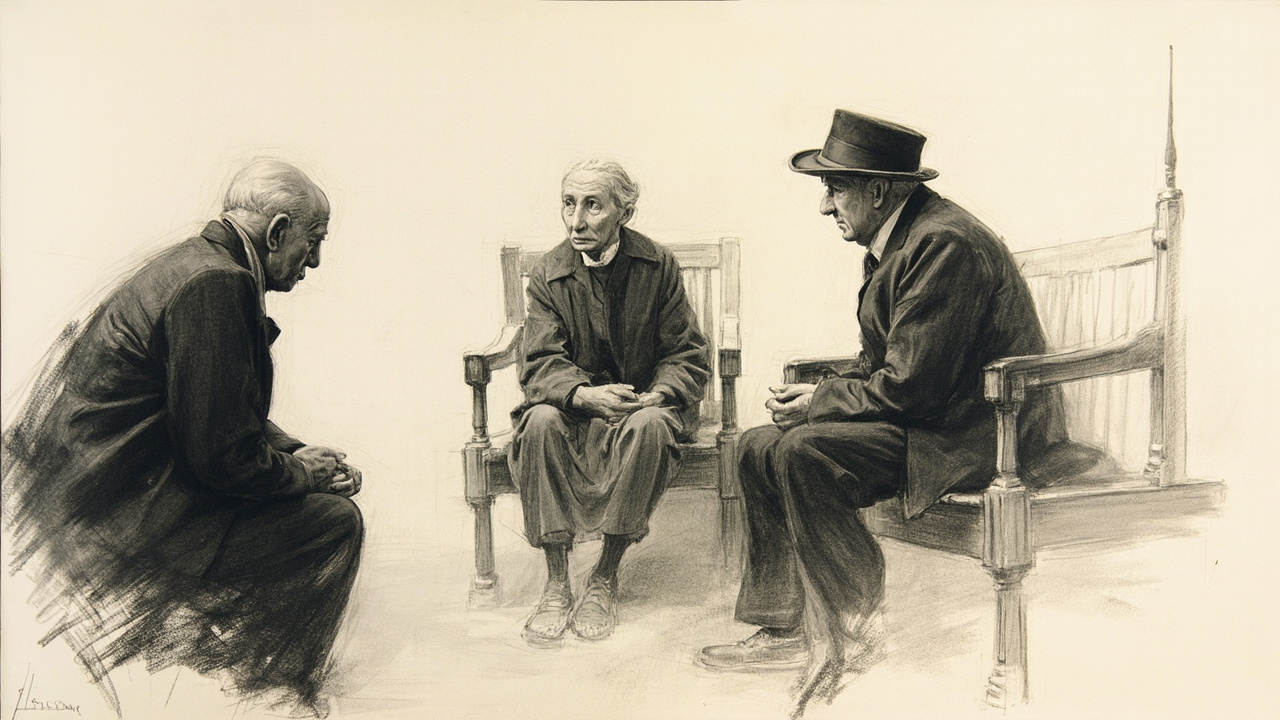
Art Direction4 plates
Before the guide was written, this book got a visual foundation — every illustration you just read grew out of it.