Flatland: A Romance of Many Dimensions · Companion Guide
平面国
一个正方形绅士的世界被一圈凭空长大的圆刺穿——他看见第三维,却因此被自己的国家终身囚禁。
Opening: A Circle Grows Out of Nothing
A square is sitting in his own drawing room when a point appears out of nowhere at its center. The point becomes a circle. The circle keeps growing, wider and wider, until it spans the width of his house, then it starts to shrink, back to a point, and vanishes.
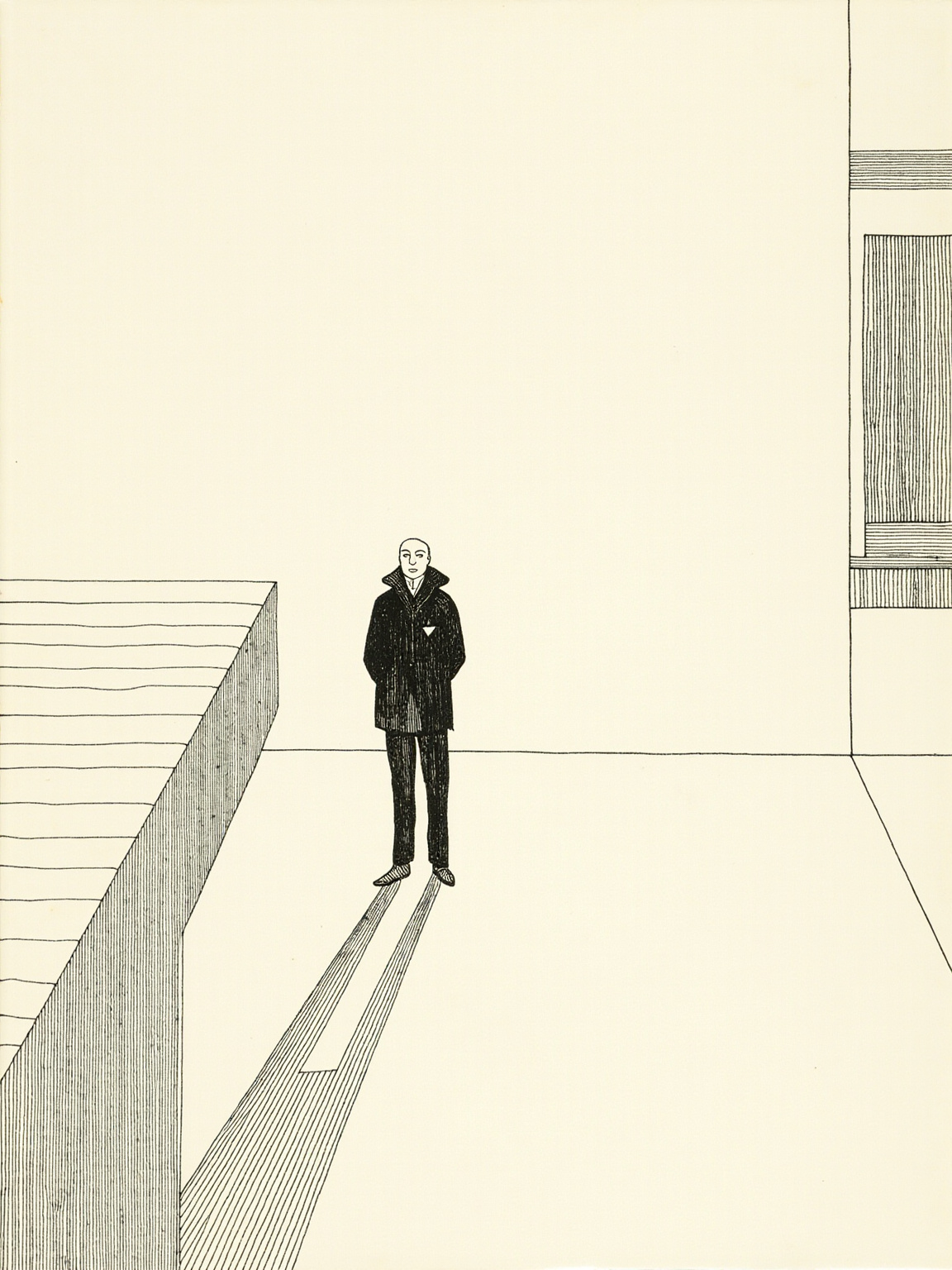
I call our world Flatland, not because we call it so, but to make its nature clearer to you, my happy readers, who are privileged to live in Space.
我称我们的世界为平面国,不是因为我们这样叫它,而是为了让你们——有幸栖身于空间的读者——更清楚地看见它的本性。
金句 · 序言 · 致空间国读者
It isn't a trick. It's the cross-section left behind as a sphere, descending from the third dimension, passes through his plane. This is the book's quietest moment and its most explosive one: a circle growing from nothing, then shrinking back to nothing, and the entire argument about higher dimensions is hiding inside that one shape changing size. A hundred and forty years later, almost every popular-science video about dimensions still opens with this exact scene.
What Kind of Book This Is
Flatland was published in England in 1884. Its author, Edwin Abbott, was the headmaster of a London school, not a mathematician or a physicist, and that matters: this was never meant as a textbook. It calls itself 'A Romance of Many Dimensions,' but it is actually a Victorian social satire wearing a geometry fable as its disguise. For over a century it has circulated among mathematicians and physicists: Carl Sagan recommended it in Cosmos, it found a second wave of readers after Einstein, and it now sits on nearly every high school math reading list. But its real identity is a fable about perception, one that gets you laughing while you admit you are a citizen of your own Flatland too.
Characters and World
The narrator is A Square, an ordinary two-dimensional middle-class gentleman living on an endless sheet of paper. Everyone in this world is a geometric figure, and status rises with the number of sides. Workers and soldiers are isosceles triangles, the poorest of them narrowed almost to a line; the middle class are squares and pentagons; the professions start at the regular hexagon; the more sides you have, the higher you stand, and the highest priests are circles so regular they are almost perfect. Women are degraded to straight line segments across the board, because a line is all edge, capable of stabbing and demolishing a house, so the law and custom keep them locked indoors. The narrator's own wife is one such line, a nagging one, who once nearly broke down a door.
Abbott built this whole gender-and-class system, dressed up as nature, on purpose, and the punchline lands on the Victorian habit of calling convenience natural, not on the narrator who believes it.
The Plot: Five Escalating Movements
The novel runs four parts plus an epilogue, and the structure itself is an escalation: a calm account of the society, then a calm account of its customs, then the calling-up into a higher dimension, then arrest and imprisonment. It moves from satirizing society, to writing about perception itself, to writing about the price of power.
The first cut lands on the idea that your number of sides is your identity. A Square tells you, as calmly as a travel guide, that in Flatland geometry is bloodline and reproduction is state policy. If the lower orders produce a child with equal sides, the bloodline moves up and out of its place, so the law keeps isosceles triangles fixed at unequal angles to hold the bottom down. It is geometric language nailing Victorian eugenic talk of nature and destiny to the wall. The trick of the writing is that the narrator accepts this whole system without question. He lays out the absurd machinery of it and then goes home to oppress his wife and his social inferiors in exactly the same spirit. He is carrying the satirical nail himself.
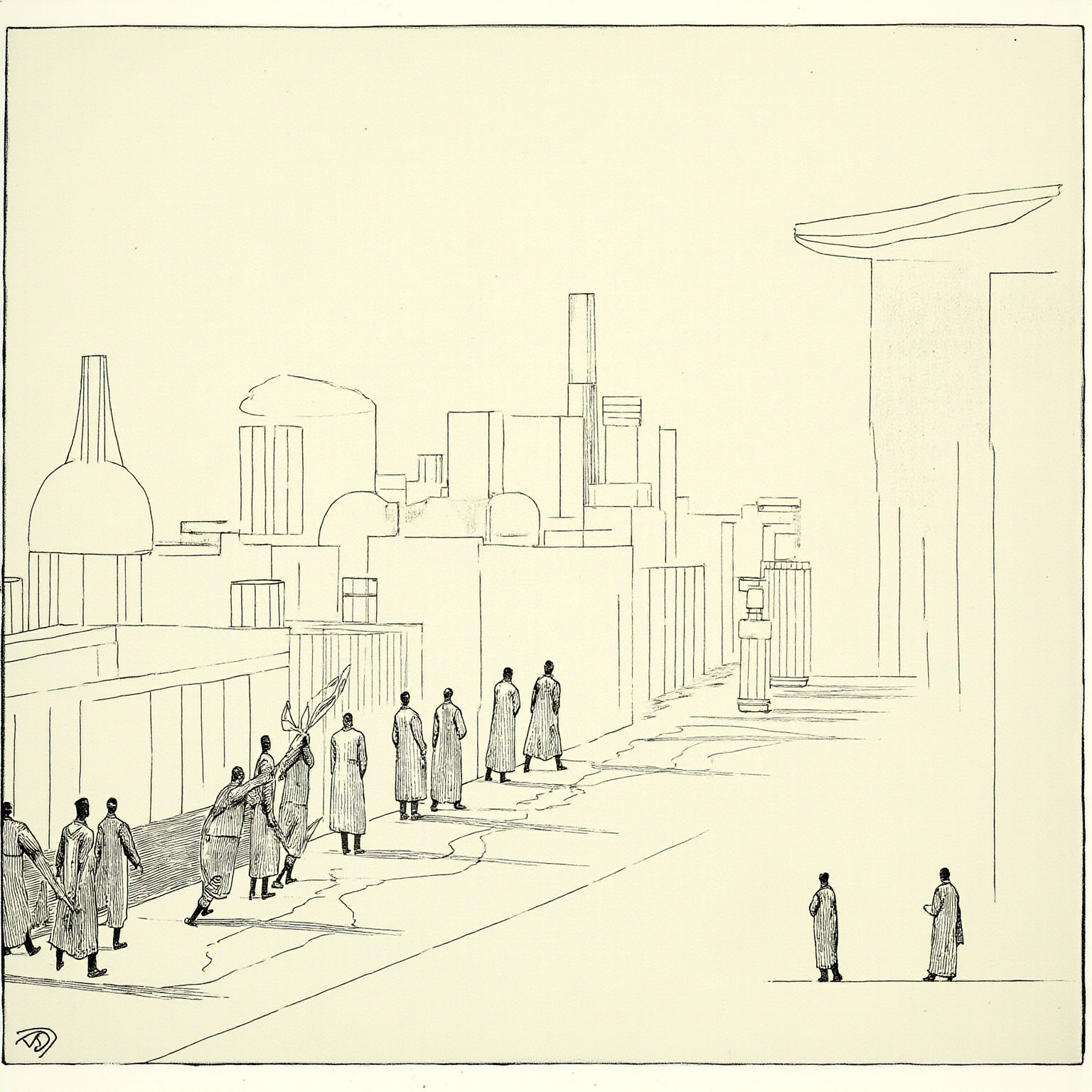
Nature herself ordains that the offspring of every couple shall be one degree more polygonal than either of its parents.
自然本身规定:每一对配偶所生的孩子,必比父母任一方多出一只角来。
金句 · 第一部分 · 论平面国的本质
The second cut turns toward higher dimensions. It starts with a dream: the narrator wanders into Pointland, a zero-dimensional world, and meets a Point who calls himself everything. He is the entire universe, and any mention of an 'other' just gets swallowed into his self-regard. This is self-centeredness pushed to its most absurd extreme: how do you explain 'other' to a being who is nothing but himself? Abbott wrote it to make you laugh out loud, not to score points for any particular creed.
He wakes to find himself in Lineland, ruled by a long line-segment king. He tries to explain 'plane' to this one-dimensional monarch: what left and right mean, what area means. The king cannot grasp it and answers with anger and threats. It is the book's first satire of a higher dimension colliding with a deafer authority, and A Square gets his first glimpse of how ridiculous he himself must look, though he cannot laugh at it yet.
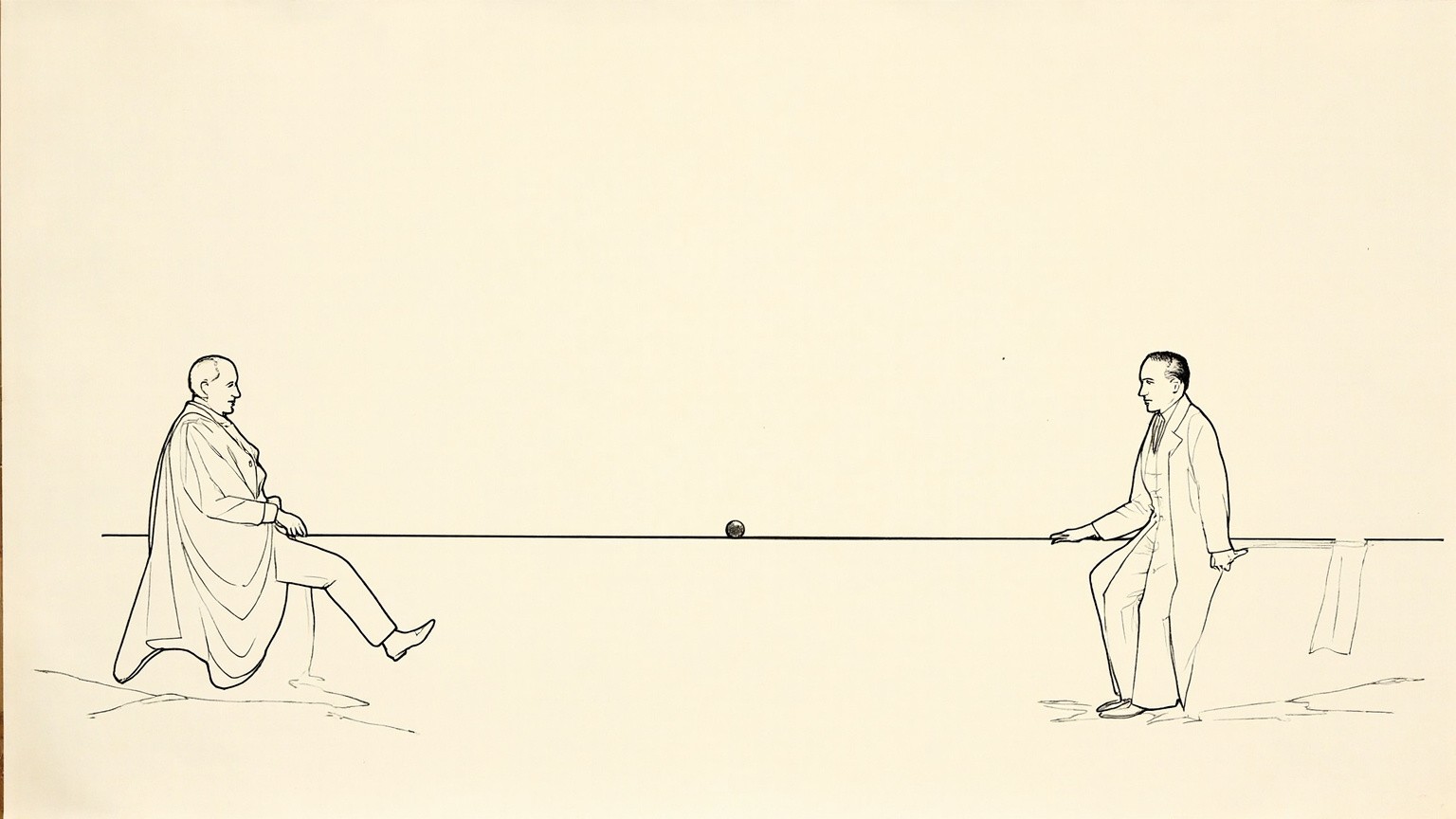
I am in very truth not a plane Figure, but a Solid. I am a Sphere — many Circles in one.
我其实并非平面上的图形,而是立体。我是球体——是许多个圆叠合而成的一个。
金句 · 第十五章 · 球体的自陈
The third cut is the core of the book: the Sphere arrives. That is the night A Square is sitting in the middle of his drawing room and sees a circle appear from nothing, grow, reach its largest size, then shrink back to nothing. The moment he cries out that he has seen it, a voice from the third dimension speaks over his head. The Sphere lifts him briefly out of the plane, and for the first time A Square sees how thin he really is: sees his own house as a roofless open box, sees his own wife as a walking line.
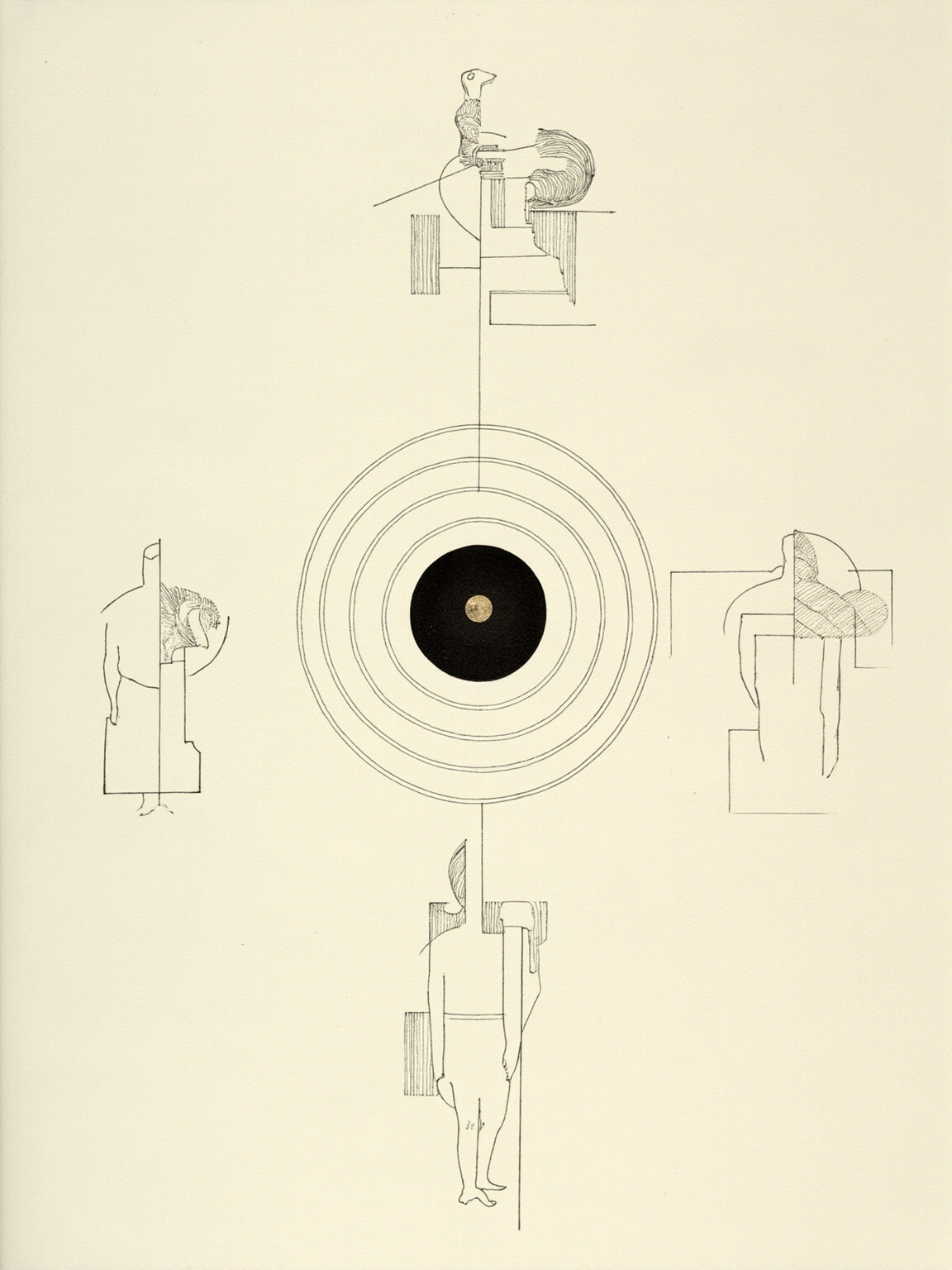
Upward, not Northward: even that is more than I can make him understand.
我说的是『向上』,不是『向北』——单这一点,我已经无法让他明白。
金句 · 第十一章 · 向直线国国王传讲
Inside the Sphere's own space, the Sphere tells him: 'I am not a figure. I am a solid, many circles stacked.' This is the core intuition behind every explanation of higher dimensions ever since: a higher dimension is just the same sense and the same concept pushed one notch further out. The Sphere even predicts that one day a being of the fourth dimension will come to preach an even higher truth. This is the brightest the book's ascent ever gets.
The fourth cut slaps that light right back out. A Square returns to the plane, burning to preach what he has seen, and goes straight to the highest priest, the nearly perfect circle. The priest hears out his story of the third dimension and, in return, has him locked in a circular prison. There is no door; under the dome he can only watch, helpless, as the Sphere sighs outside. This is where the satire of how ordinary people treat higher truth closes its circle: the priest is just another Lineland king, except this one has instruments of punishment.
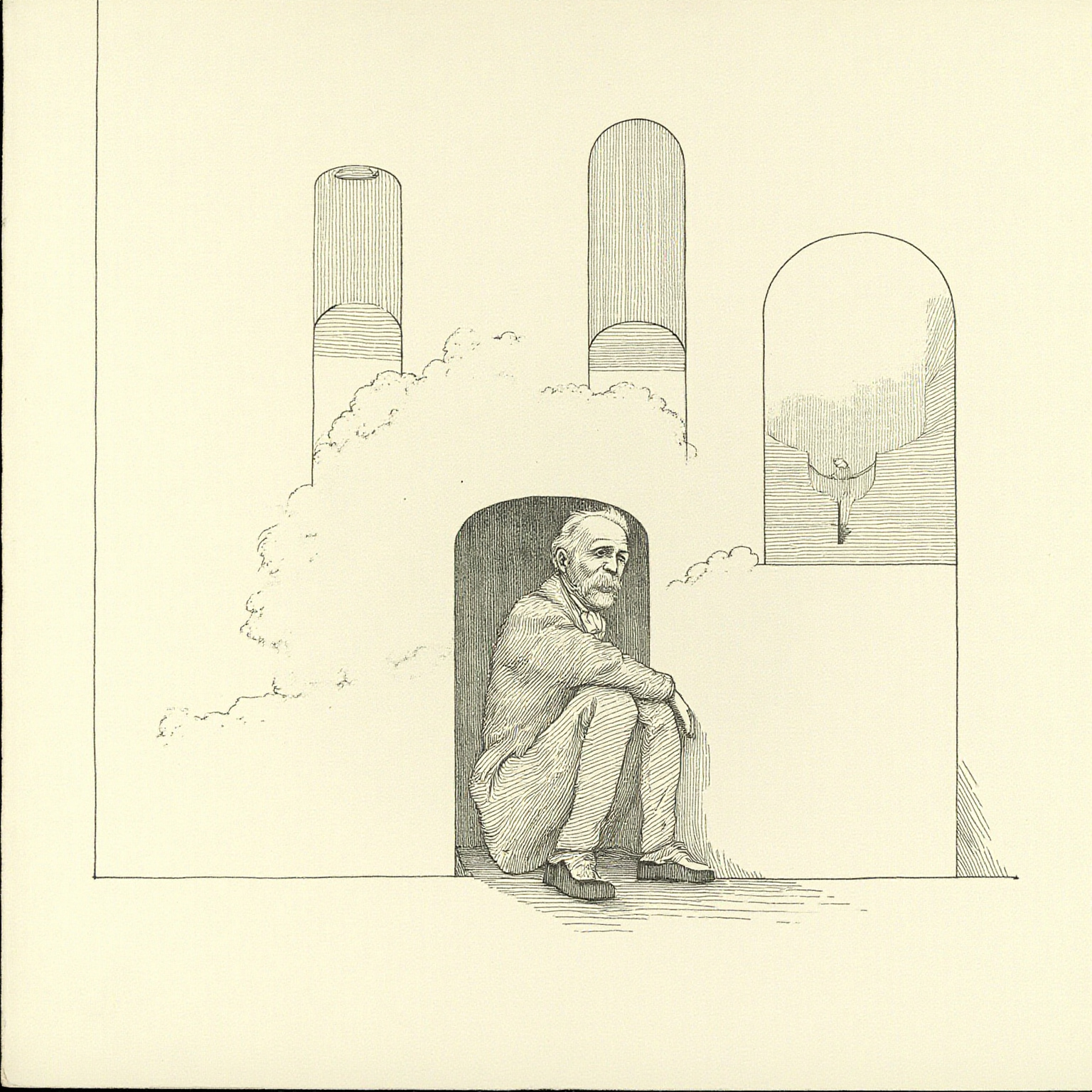
Yet I exist, and shall exist, and shall write — though the very paper should turn to flame in my hand.
然而我存在,并将存在,并将写下去——哪怕我手中的纸就此烧成灰烬。
金句 · 第二十二章 · 狱中独白
The fifth cut ends on something quieter. In prison, the narrator decides to stop speaking and start writing. He will set down this memoir, leave it behind, let the next generation read it. It is the cleanest kind of optimism an enlightenment fable can offer: preaching is usually futile, but writing something down and leaving it behind passes the torch.
Theme and Craft: Who the Joke Is On
The book is really saying only one thing: dimension is perspective. Everything a person can see is entirely determined by the dimension they occupy: the visible is the touchable is the thinkable is the debatable. Abbott wants the reader laughing while admitting they are citizens of some Flatland of their own, mistaking their own single dimension for the whole of reality and treating any wider view as heresy. It is a fable of self-warning, not a brief for any particular side.
As craft, the book runs on a few clean reversals. The narrator oppresses his wife and his inferiors at home, following Flatland's rules exactly, and only after the Sphere lifts him up and he looks back down at his own roofless box of a house and his own thin line of a wife does he see, for the first time, how absurd his household really is. A narrator carrying the satirical nail himself is rare in fables about science. It does not defend the people being mocked; it puts the reader in the joke right alongside the narrator.
A Hook Back to the Text
This guide gives you the map; the text is the actual ground, and Abbott's plot of ground is thin enough to cross in a few hours. Do not read it only as a math fable. Go find the moment the narrator first sees how thin he really is: that is not a science lesson landing on him, it is a humiliation. Knowing what is coming only makes that moment's restraint and its sting land harder. And save a few minutes for the Point of Pointland and the King of Lineland: they are worth laughing at, right up until you realize you are nailed to the same wall.
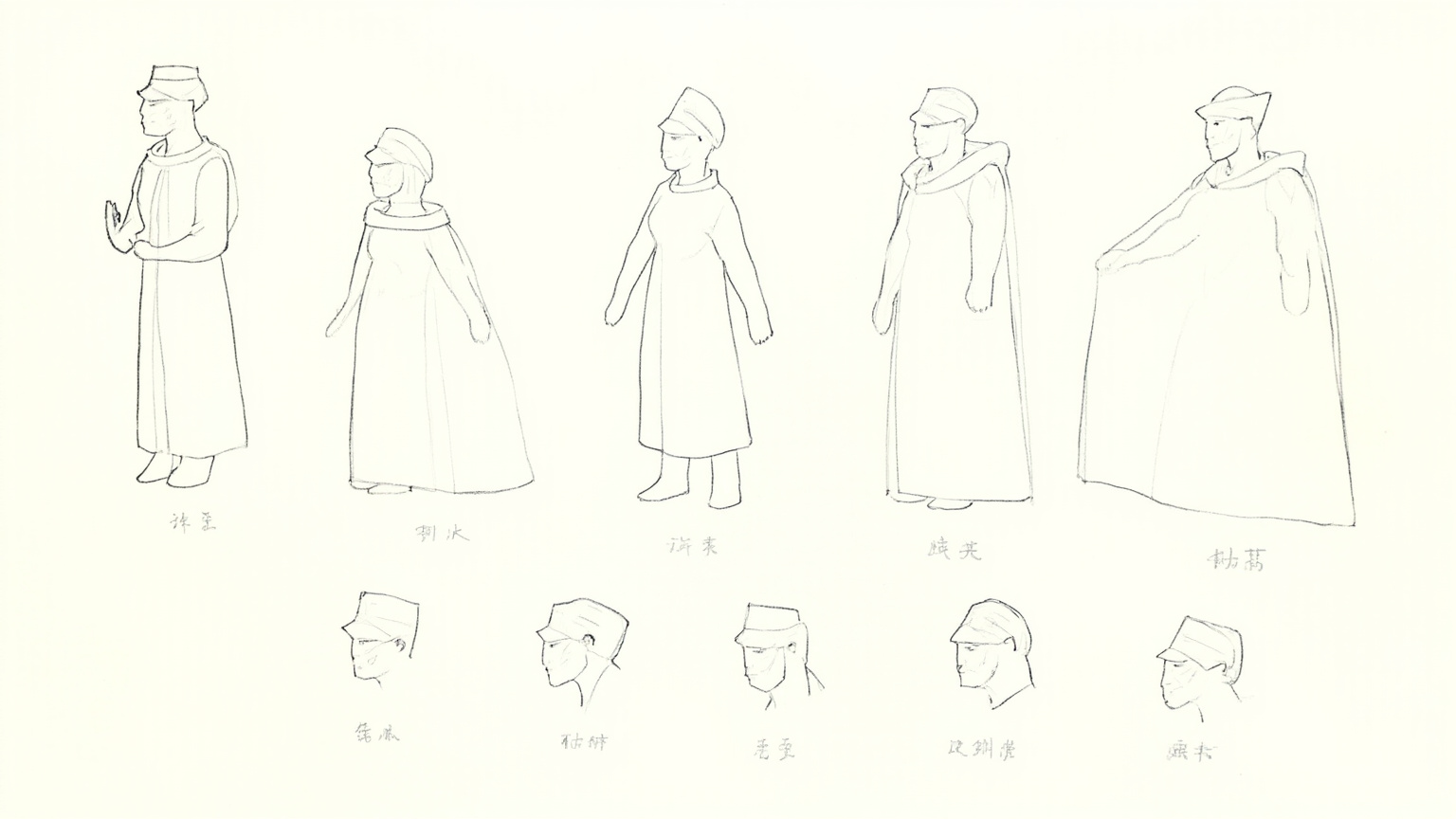
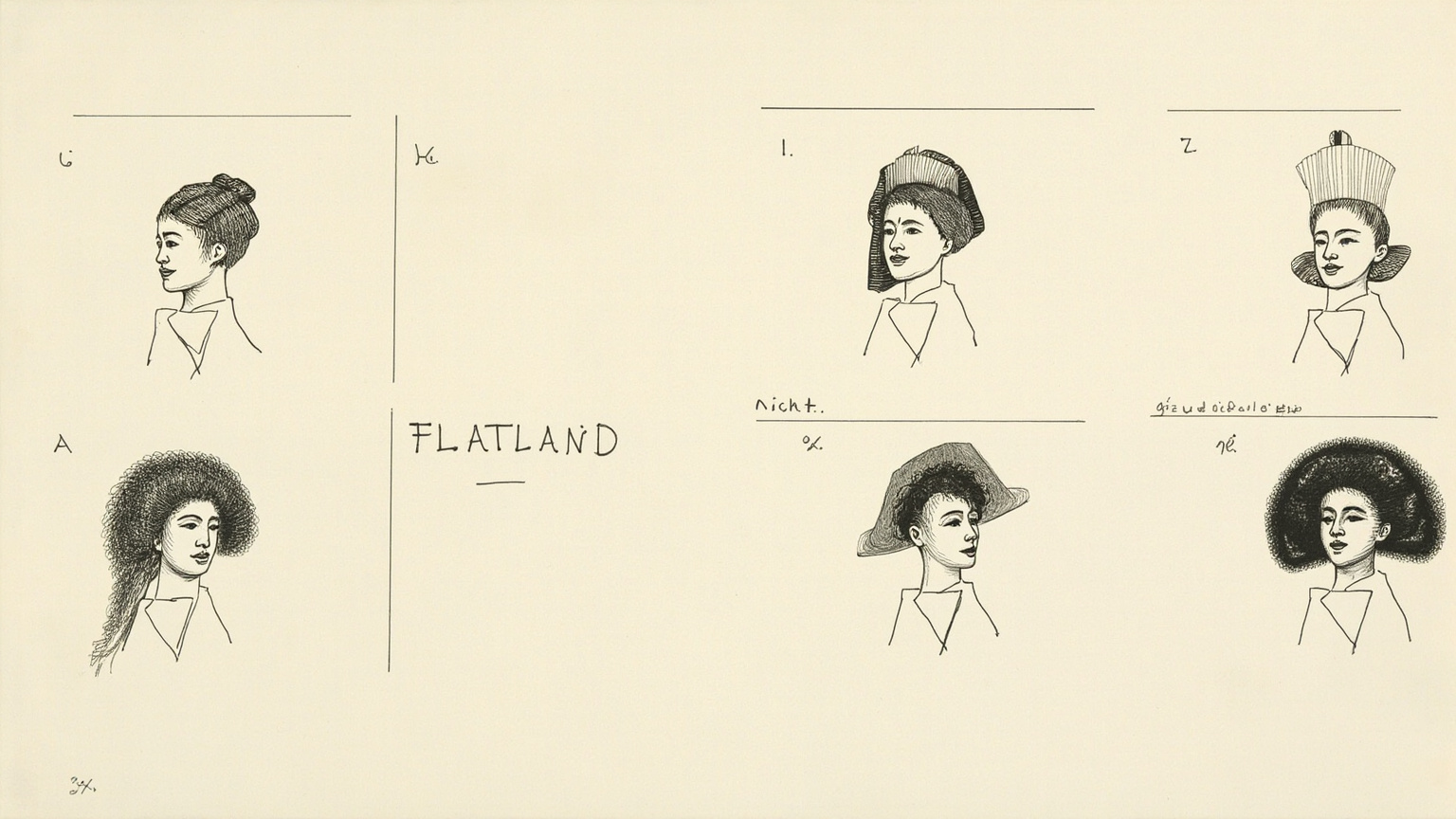
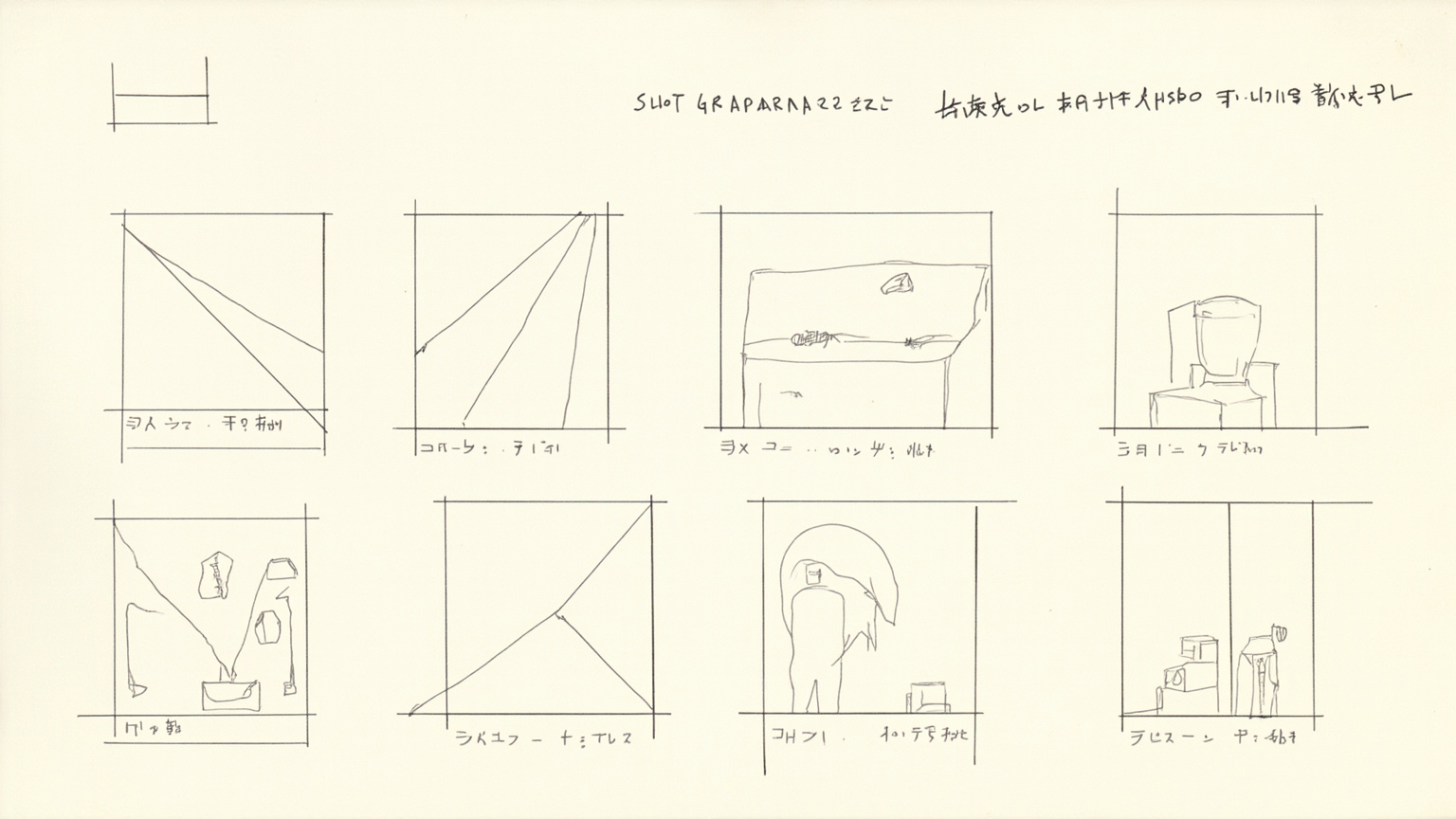
Art Direction4 plates
Before the guide was written, this book got a visual foundation — every illustration you just read grew out of it.