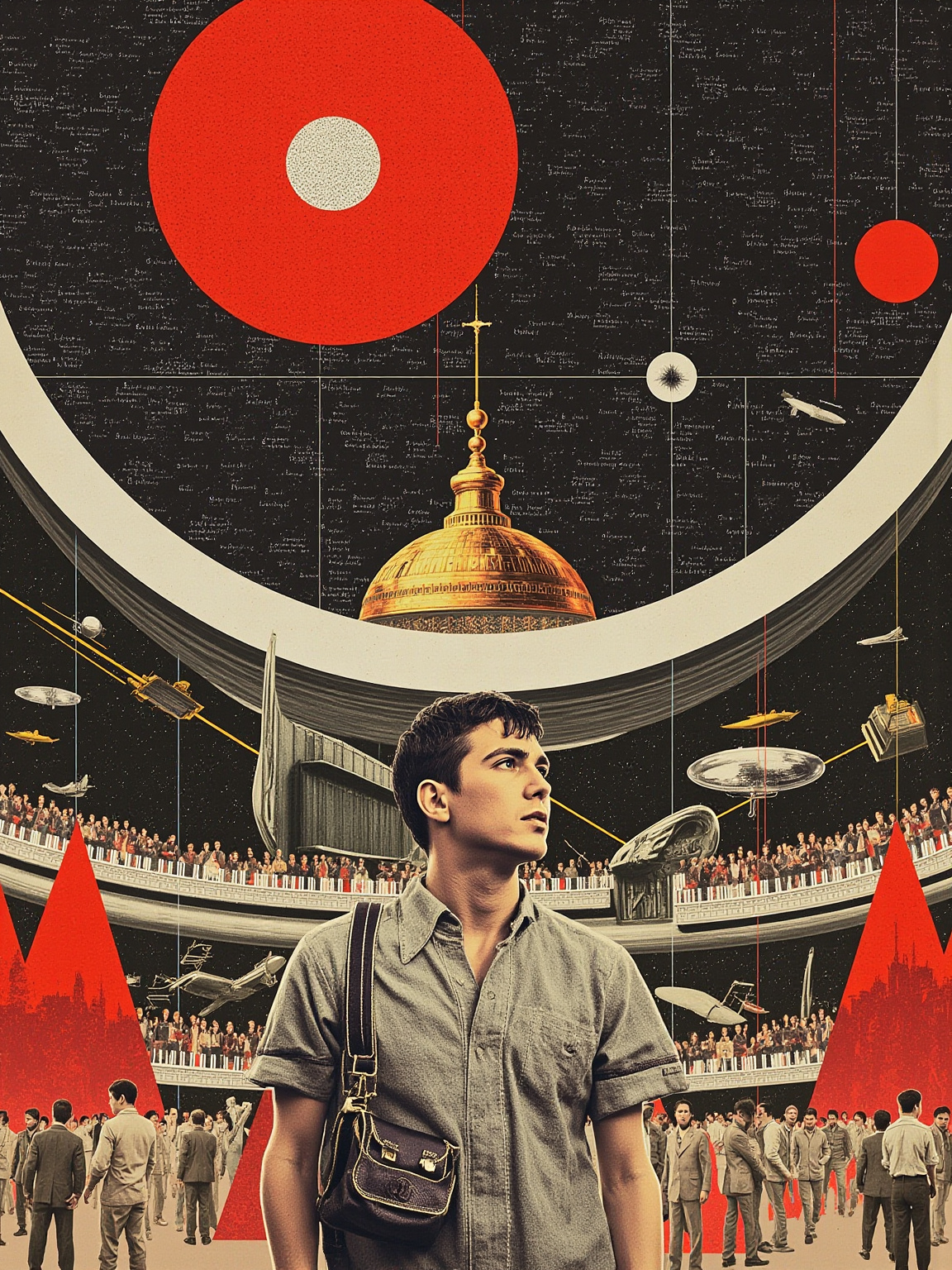
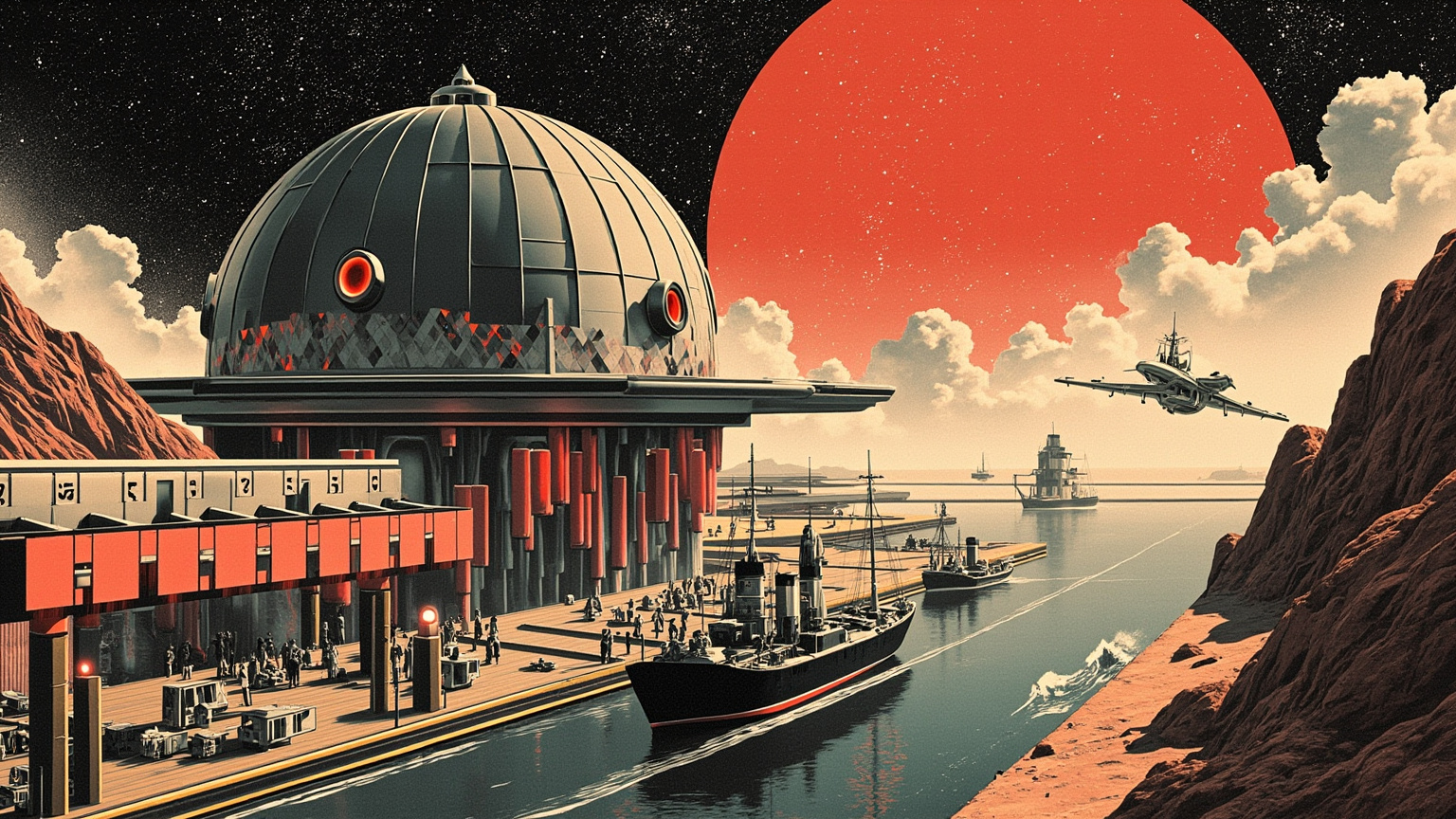
The first act unfolds on a planet where you can never see the sky. It is called Trantor, sealed under an unbroken metal dome, without a foot of open soil or a single ray of direct sunlight anywhere on its surface. Tens of trillions of people breathe, queue, work, and dream inside its steel cities under that dome, feeding a galactic empire that has already run for twelve thousand years and keeping it docile from within. The reader arrives with a young man from another world stepping onto the planet for the first time, and when he looks up, what meets him is not sky but artificial light thrown down from the inside of the dome, tuned to look like noon.
The young man's name is Gaal Dornick. He has come to Trantor because of one name: Hari Seldon, an old mathematician hauled before the Imperial court for calculating that the Empire is doomed.
What Kind of Book This Is
Foundation is the novel Isaac Asimov published in 1951, stitched together from four stories he had written in his early twenties plus a new opening piece written for the book. Why it is remembered comes down to one thing: it put the idea of predicting history with mathematics dead center on the science fiction stage, and told the rise and fall of a civilization in something close to political allegory. In 1966 the Hugo Awards gave it a prize handed out exactly once in the genre's history, Best All-Time Series. More than half a century later, it is still one of the first few titles on any list of where to start with science fiction.
The last stretch of the story belongs to Hober Mallow, the sharpest trader the Foundation has. His job is to find out why the Republic of Korell, a small state that has never gotten along with the Foundation, has advanced weapons that clearly belong to neither the Foundation's technology nor the Four Kingdoms'. The trail leads back to the dying Empire's remnants: the Empire is not fully dead yet, and it is reaching out from the shadows to try to strangle Seldon's still-growing plan. Mallow's answer is still not force. He launches a precisely targeted trade embargo against Korell, timed to cut its economy off cold at an exact moment of his choosing. Then he lifts the embargo, and Korell comes obediently back to the table. The Foundation crowns Mallow its first Merchant Prince, and from then on Terminus's title changes from a city of scholars to a trading empire.
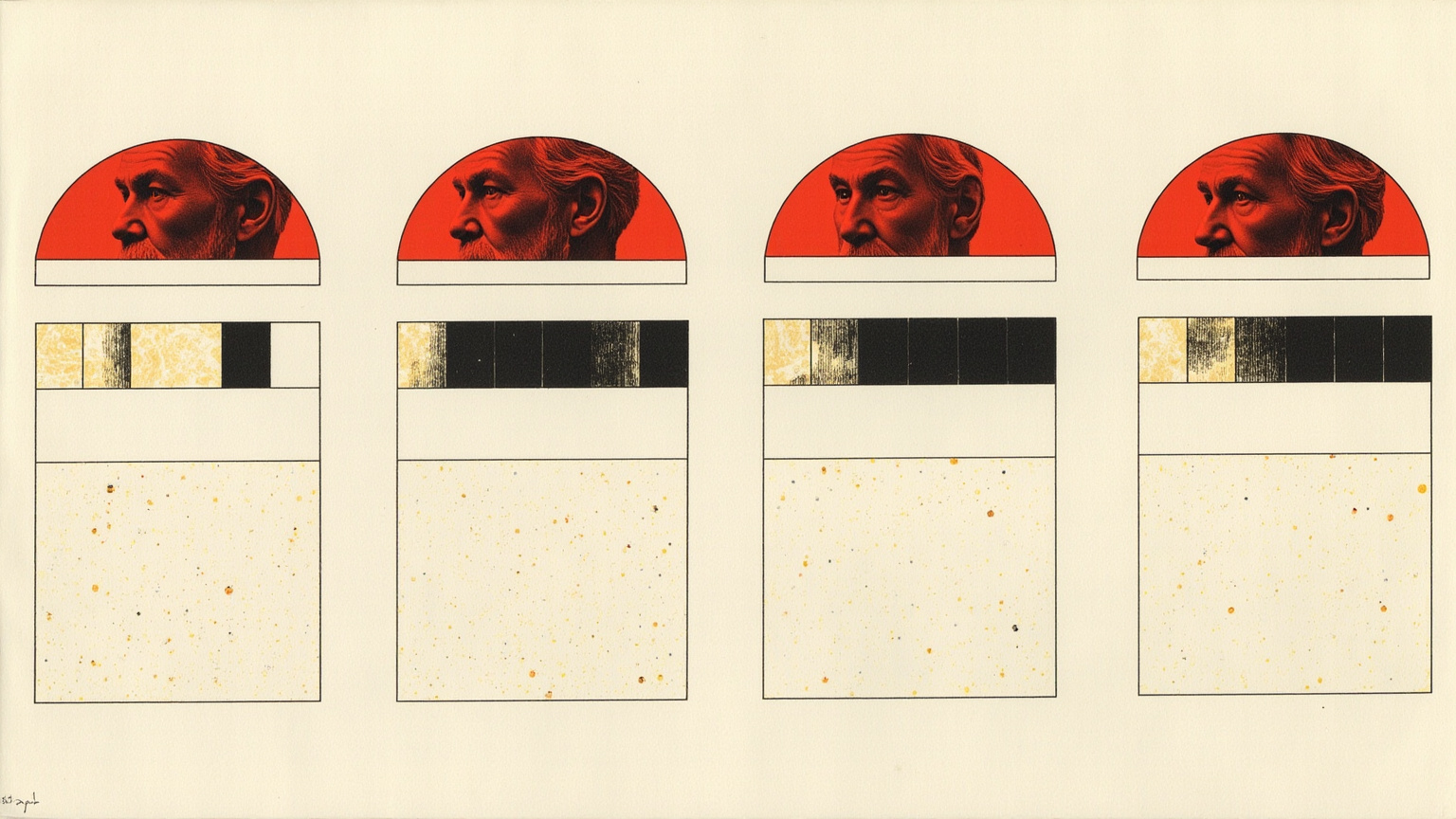
Art Direction4 plates
Before the guide was written, this book got a visual foundation — every illustration you just read grew out of it.
Characters and World: Five Protagonists Carry a Century and a Half in Relay
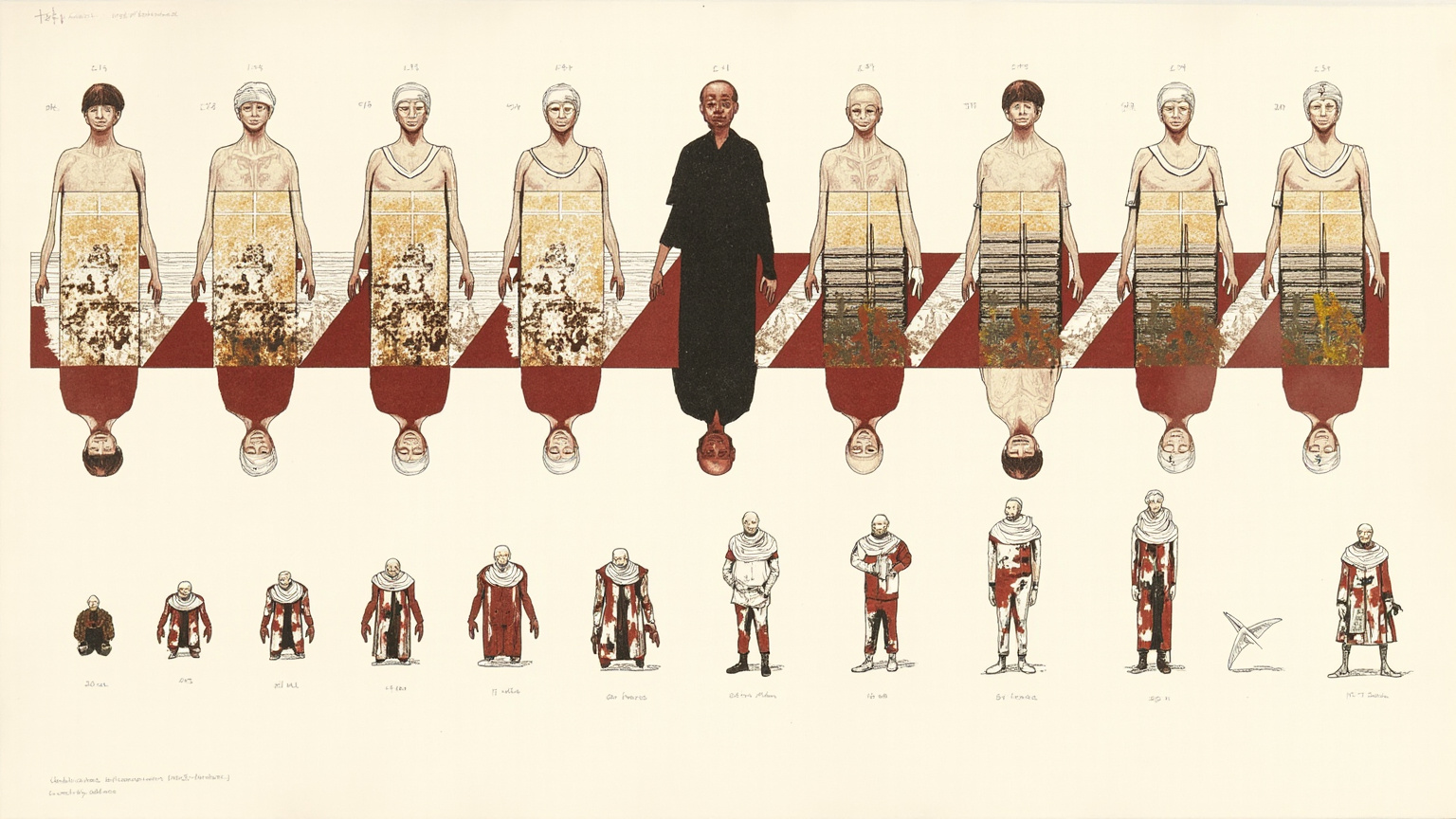
The most counterintuitive thing about reading Foundation is that it is not one person's story. The whole book is stitched from five sections set decades apart, and the point-of-view character gets passed on like a relay baton. Dornick carries the reader onto Trantor; Hari Seldon appears briefly at the start and then steps offstage; Salvor Hardin takes over and turns the Foundation from a room of bookish scholars into a political entity that can fight, or better, win without fighting; by the time Limmar Ponyets shows up, the Foundation's whole game has shifted to trade; and last comes Hober Mallow, who wins a trade war outright against a small state backed by the Empire's remnants and gets carried into the chair of Merchant Prince. Each generation's protagonist gets exactly one section, and then the next section hands the story to someone new, jumping the era forward with them.
Seldon acted only once while he was alive: he exiled himself. Then, across the decades after his death, through every right step someone else took in his place, he compressed thirty thousand years of darkness into one thousand.
The Plot Line: How One Lonely Star on the Rim Brings Down a Galactic Empire
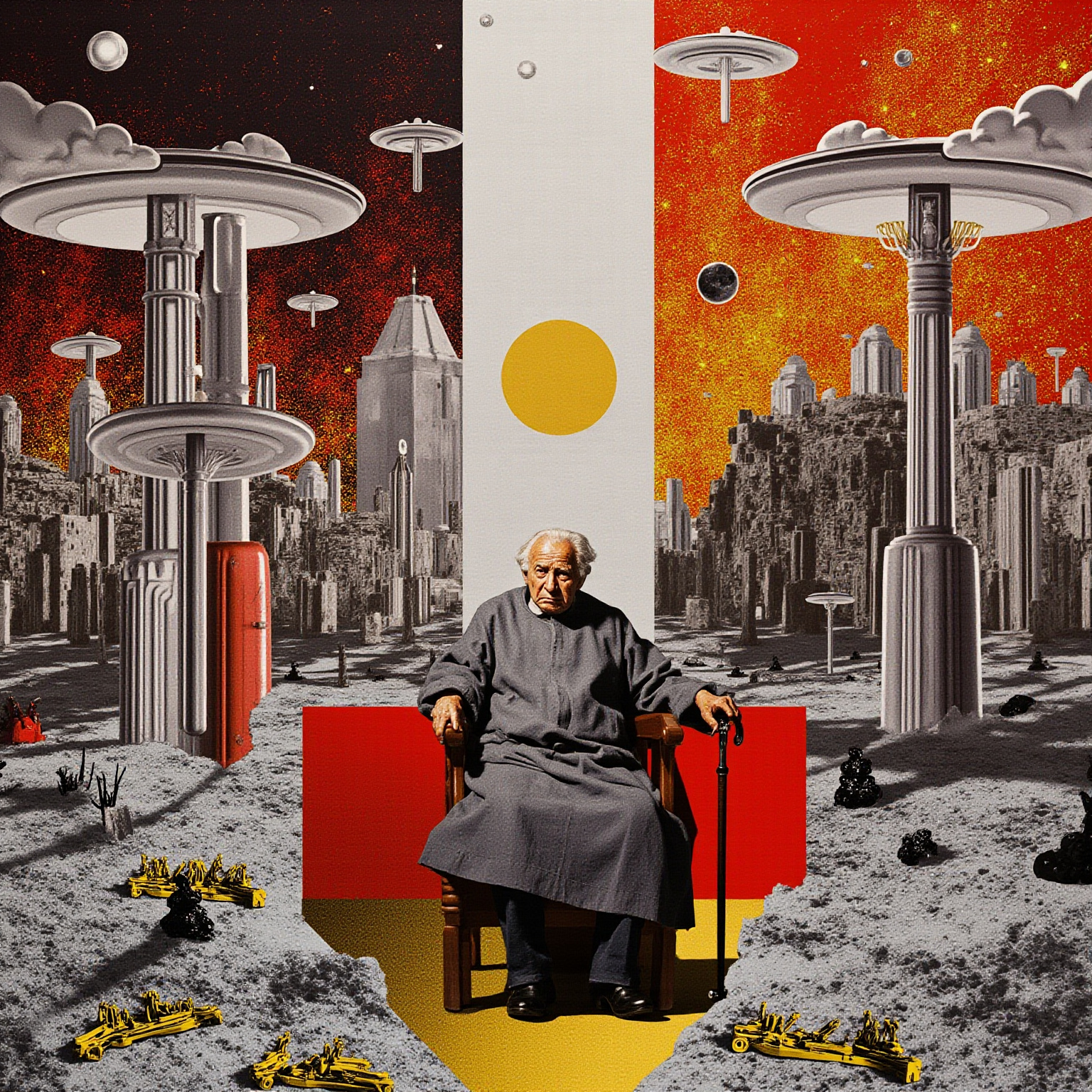
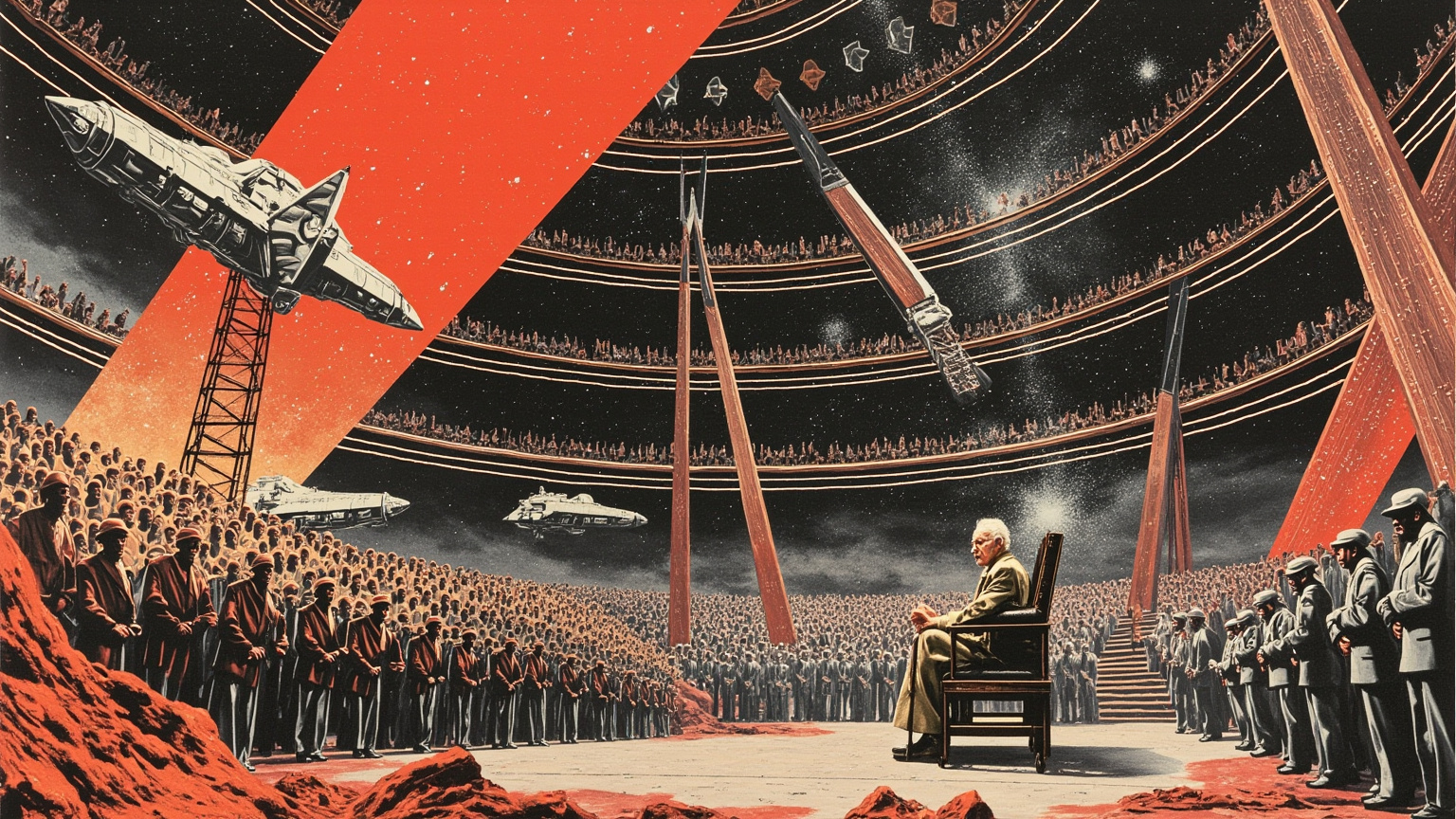
The first stop is still Trantor. Hari Seldon stands before the Imperial court, charged with undermining confidence in the Empire through prediction. The tool he uses to predict the future is called psychohistory, which sounds like fortune-telling but is not: it treats the collective behavior of vast populations as a statistical sample, and what it yields is a trend, not whether some particular person trips tomorrow. The court has no patience for any of this and sentences him to exile. Seldon does not fight it. Instead he strikes a bargain with the Empire: he will go willingly to Terminus, a barren, isolated planet at the galaxy's edge with almost no heavy-metal resources, on condition that he takes a group of scholars with him to compile an Encyclopedia Galactica. The Empire thinks it is banishing a madman. Seldon knows it is the only corner where psychohistory can actually be put to the test.
Decades later, the scholars on Terminus really are compiling the encyclopedia. The trouble is that the surrounding Four Kingdoms, which have slid back to pre-atomic technology, are squeezing the Foundation into a corner step by step, while the people running the Foundation are still a bunch of old scholars who only know how to organize documents. Lewis Pirenne, chairman of the Board of Trustees, insists their only mission is scholarship and that they should stay out of politics. This is when Salvor Hardin enters, a politician who has never written a paper in his life, and he moves straight in to take the real power away from the Board. The scholars resist, and Hardin settles the matter in one line: the point of compiling an encyclopedia is to save human knowledge, but what good is knowledge to the dead? Staying alive comes first.
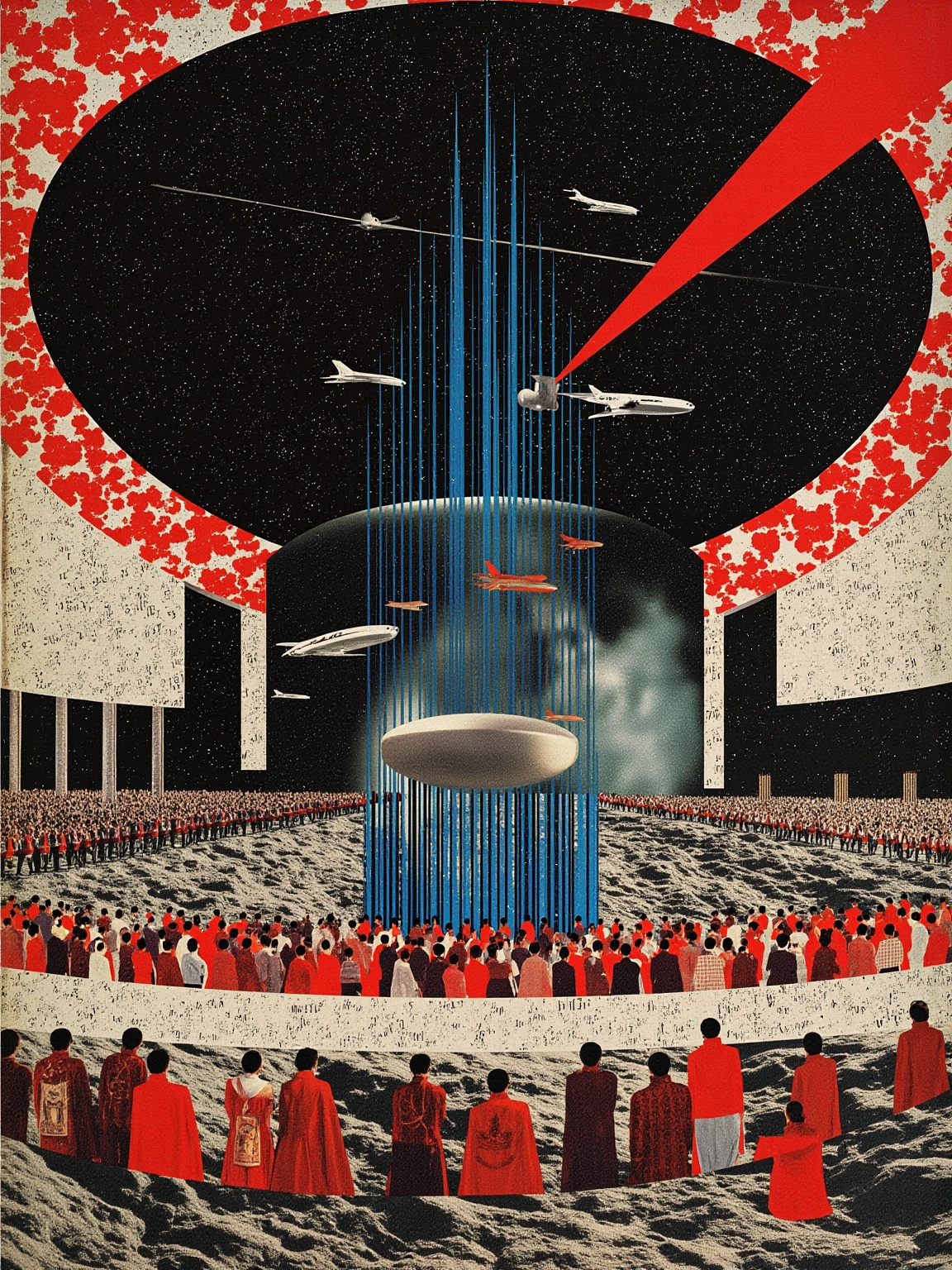
What comes next is the coldest move in the whole book. The Foundation's real trump card is the atomic technology it brought from Trantor and that the Four Kingdoms have long since forgotten how to build; the encyclopedia was only ever a cover. Hardin has the engineers dress this technology up as a religion of science: priests in robes the Foundation prescribes run the reactors through a fixed ritual without understanding a word of the science behind it, the reactor lights up, and the people kneel and bow. A modern physics laboratory gets turned, by main force, into a temple. When Wienis, the Prince Regent of Anacreon and the most restless of the Four Kingdoms, sharpens his knives to swallow Terminus whole, Hardin does not even call up troops. He simply lets the prince discover that the priests he thought were loyal to him have already gone over to the Foundation's god. Wienis is abandoned by everyone around him and finishes himself off. This is the moment that produces the line science fiction readers have repeated ever since: violence is the last refuge of the incompetent.
Push the timeline forward another generation and the crutch of religion is starting to fail: the new kings and generals have seen too many miracles and are beginning to wonder what exactly that priesthood is hiding. By the time Limmar Ponyets takes the stage, the tool in the Foundation's hand has quietly changed. He is sent to rescue a missionary imprisoned on Askone, a kingdom that bans all Foundation technology outright. Ponyets breaks the deadlock with a device that turns iron into gold. He does not use it as a weapon; he hands it to the local prince like a gift and lets him choose: gold, or his life. The prince chooses gold. Quietly, this tells you the Foundation's tool of expansion has begun sliding from religion toward trade.
ImaRead3
Asimov lets Seldon die in the first chapter, and only then does the book start moving: a living man who can calculate everything would ruin every story that follows.
Themes and Craft: Why It Is Still Read More Than Half a Century Later
What Foundation is really arguing is a method: how a small, marginal state beats a dying giant. The Empire's tragedy is not that it is weak, but that it still believes itself strong: it goes on holding its balls, keeping up twelve thousand years of appearances, and exiling its most dangerous man to compile an encyclopedia. The Foundation's edge is that it is small, poor, and looked down on by everyone, which forces it to think. Every Seldon Crisis is built as a narrow door with exactly one way through, and in every generation the people in charge do not know the answer going in. They have to walk the path to its end themselves, and only when they turn around do they find Seldon's holographic image already waiting for them in the vault. Individual will matters, but only inside the crack history has left open. The book keeps circling back to how narrow that crack is, and how necessary.
A few choices in the craft are why this book has not been forgotten in over half a century. First, it planted the idea of predicting history through mathematics squarely on the science fiction stage for the first time, and nearly every later fantasy of big history, civilizational rise and fall, and data-driven prediction of society traces back to this book. Second, its structure runs almost against the bestseller grain: there is no single protagonist carrying the whole story, just five relay sections covering a century and a half, each one swapping in a new lead and a new era, dragging the reader through on pacing alone rather than a character arc. Third, and the point most easily missed, is that the book has almost no head-on battle scenes at all. Every crisis gets resolved bloodlessly through political maneuvering, religious packaging, trade embargoes, and other gray-zone tactics. A science fiction classic built on brains, not fists.
Reasons to Read the Text Itself
A companion guide can tell you how each crisis gets won, how Seldon's holographic image lights up, and in what order the five generations of protagonists hand the story off. But there is one thing it cannot give you: the closeness of Trantor's dome pressing down overhead, the stillness the instant the light beam ignites in the vault, and the sweat slowly beading in each protagonist's palm as he feels his way out of a dead end. The specific gestures, the specific objects, the specific light Asimov gives these scenes only come alive when you turn to that page and read that passage yourself. Knowing the plot is still no reason to skip the text, because the pleasure of this novel was never in what happens next, but in how it gets written.