A dying minister's letter to his seven-year-old son carries three generations of American faith inside it.
Text and illustrations produced by the pipeline
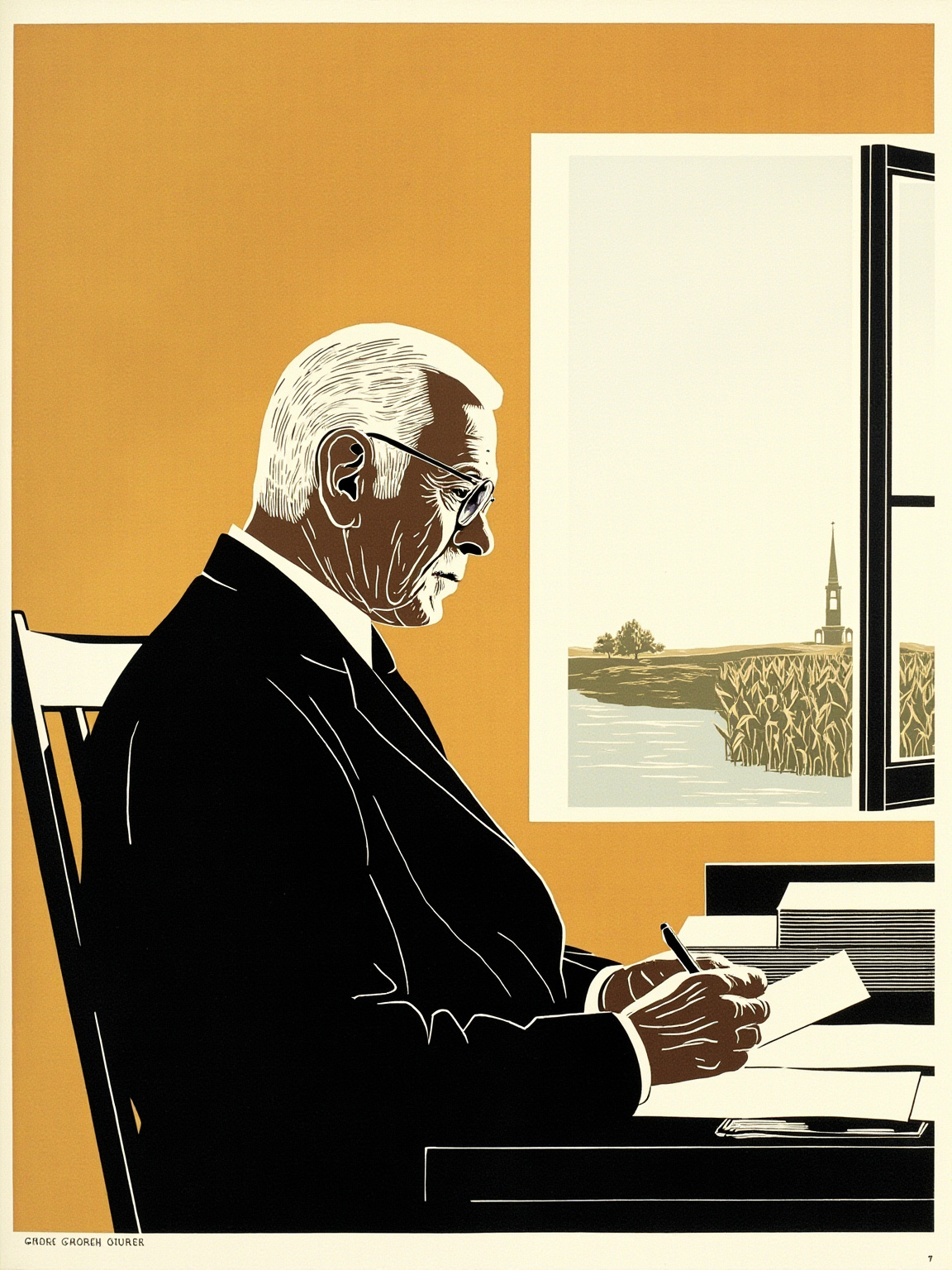
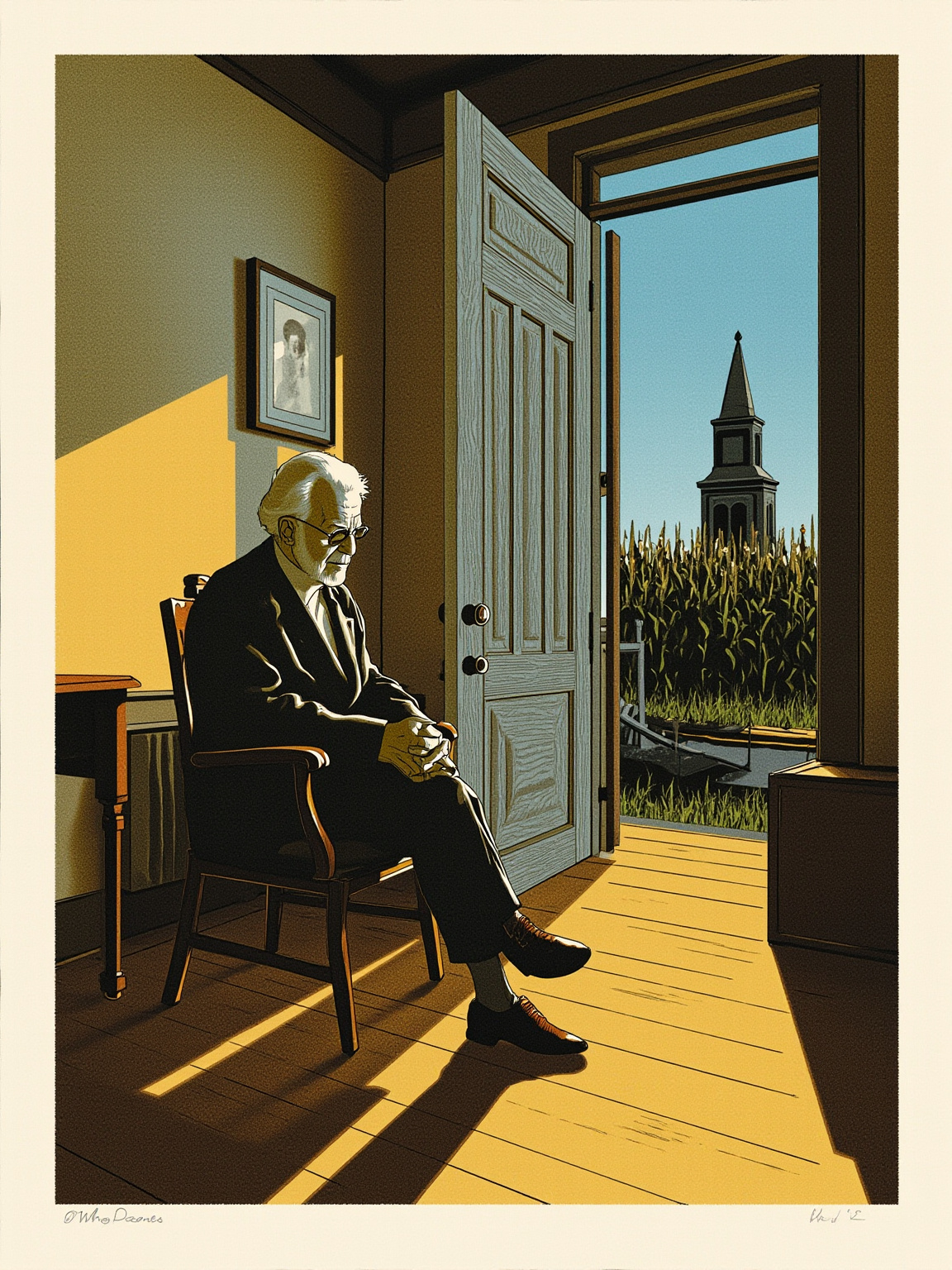
A long letter. An old man who knows he is dying sits in a study surrounded by cornfields in Iowa, writing to a seven-year-old boy who cannot yet read it. The letter will wait until the boy is grown before it reaches his hands.
This is not a will, and it is not a confession. The old man is John Ames, the Congregationalist minister of the small town of Gilead, who has just been told his heart will not hold out much longer. Into this letter to his young son he folds everything he never said aloud: a lifetime of feeling, the inheritance of faith left by three generations of ministers, and the debts hidden behind the town's claim to being progressive. Outside the window are the cornfields; on the desk, a glass of tea gone cold. He is talking to a son too young to understand him yet, and he is talking to himself.
This is Gilead, the novel by Marilynne Robinson, published in the early 2000s and awarded the Pulitzer Prize for Fiction the following year. She went on to write Home, Lila, and Jack, and Gilead opened that series. The story is set in Iowa in 1956: seventy-six-year-old John Ames, just told his heart is failing, begins a long letter to the son he will not live to see grow up, meant to be read once the boy is a man. The book is slim, but this family letter carries the echo of the abolitionist struggle in the Civil War, three generations of ministers answering the question of what real faith looks like, and a love that could not be spoken of because of the color of one partner's skin. Serious contemporary fiction rarely takes a minister's meditations this seriously, or writes about faith this straight, without irony.
The letter-writer, John Ames, is an old minister who lived alone for nearly fifty years before marrying and fathering a child late in life. His wife Lila drifted for years before walking into his church one rainy day; she became the greatest grace of his old age. Their young son is never named, appearing only as "you" throughout the book. The letter is addressed to him, and it also holds, in trust for him, his father's last words.
Ames's old friend Robert Boughton is the town's Presbyterian minister, a man who has spent his life worrying over his son. That son, Jack Boughton, full name John Ames Boughton, his godson, baptized with the old minister's own name, is Gilead's known prodigal. As a young man he abandoned a poor girl and the child he'd had with her; years later he drifts back into town looking dissolute, though what weighs on him runs far deeper than it looks.
An old man writes to his seven-year-old son, addressing the world the boy will grow into, betting that decades from now, someone will still be willing to sit still and read a letter this slowly.
A guide can give you the map, not the land. Where Gilead sits, who Ames is, what secret Jack carries home: this piece gives you all of that. But what makes Robinson remarkable is the prose itself. The way light falls on a glass, on writing paper, on a porch swing, is exactly what any retelling wears away. It's slow, it's soft, it breathes like a hymn, and only sitting there reading it line by line will let that patient grace take hold of you. The letter was written for a son decades in the future. In a way, it was written for you too, if you're willing to slow down and finish it.
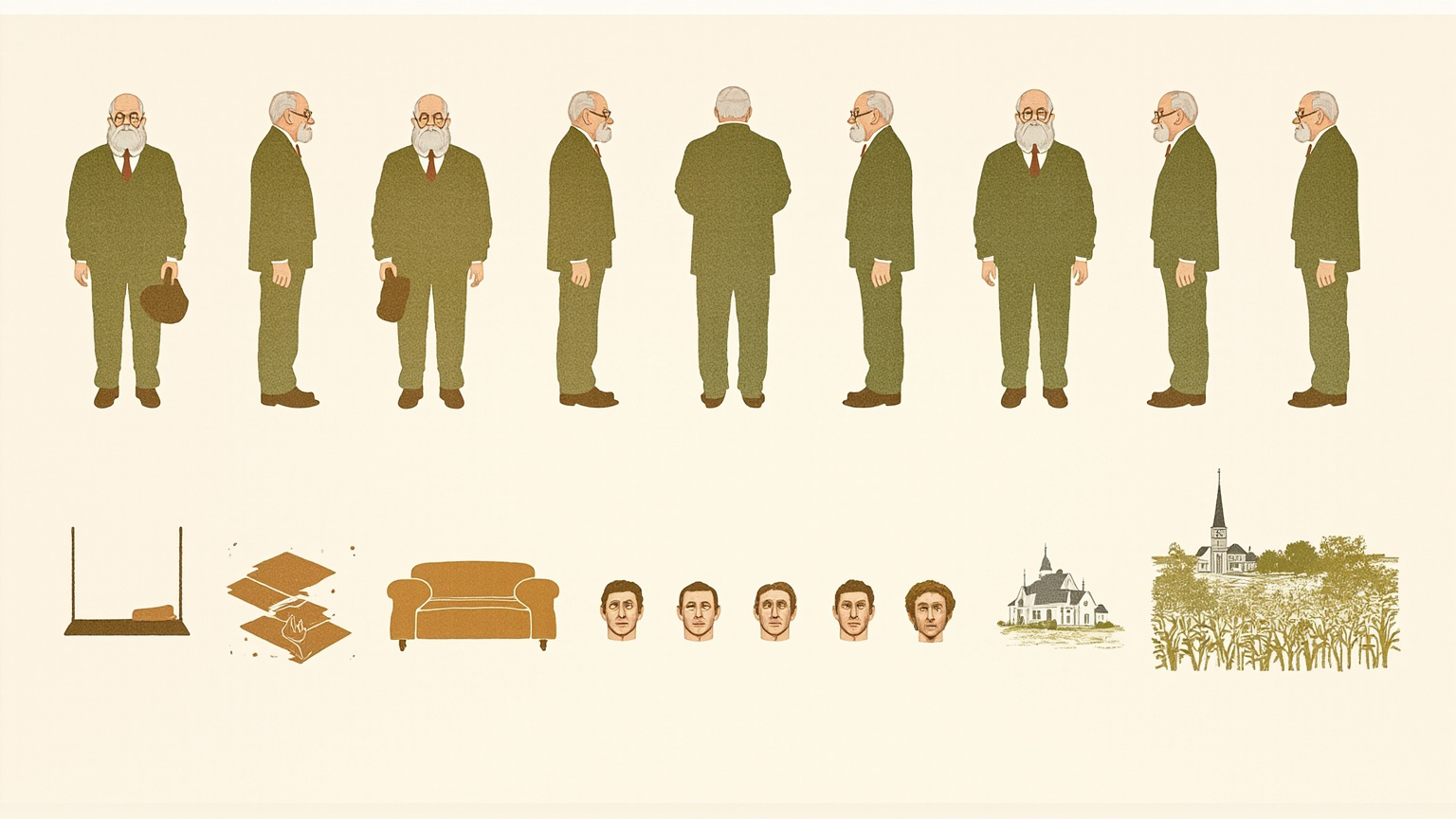
Before the guide was written, this book got a visual foundation — every illustration you just read grew out of it.
Ames's grandfather, old Reverend Ames, was a fiery abolitionist preacher who lost an eye in the Civil War and ran with John Brown's circle. He was known to preach in a bloodstained shirt with a pistol at his belt. He later walked out on the family and died in Kansas, far from home. Ames's father was a minister too, but a devout pacifist who broke with his own father over the question of violence. Three generations, three different answers to what faith means.
The story opens on a morning in 1956. Ames sits in his study, sunlight on the windowsill. The doctor has just told him his heart won't hold out much longer. He doesn't rush to write a will. He spreads out writing paper instead, for a letter that will wait until his son is grown enough to read it. As he writes, he rambles: what he had for breakfast, Lila's shadow on the porch swing, the score of the town's baseball game. He writes these ordinary, almost trivial things as though they were nearly sacred.
The most notable thing about the writing is this habit of treating small things like sacraments. Watering a plant, a baseball game, light falling into a glass, a name: Robinson never has Ames declare anything. She just lets the light fall on objects and lets grace seep out through the cracks of ordinary life. It is the most striking thing about the book's style, and the reason the Gilead novels keep getting singled out for their prose.
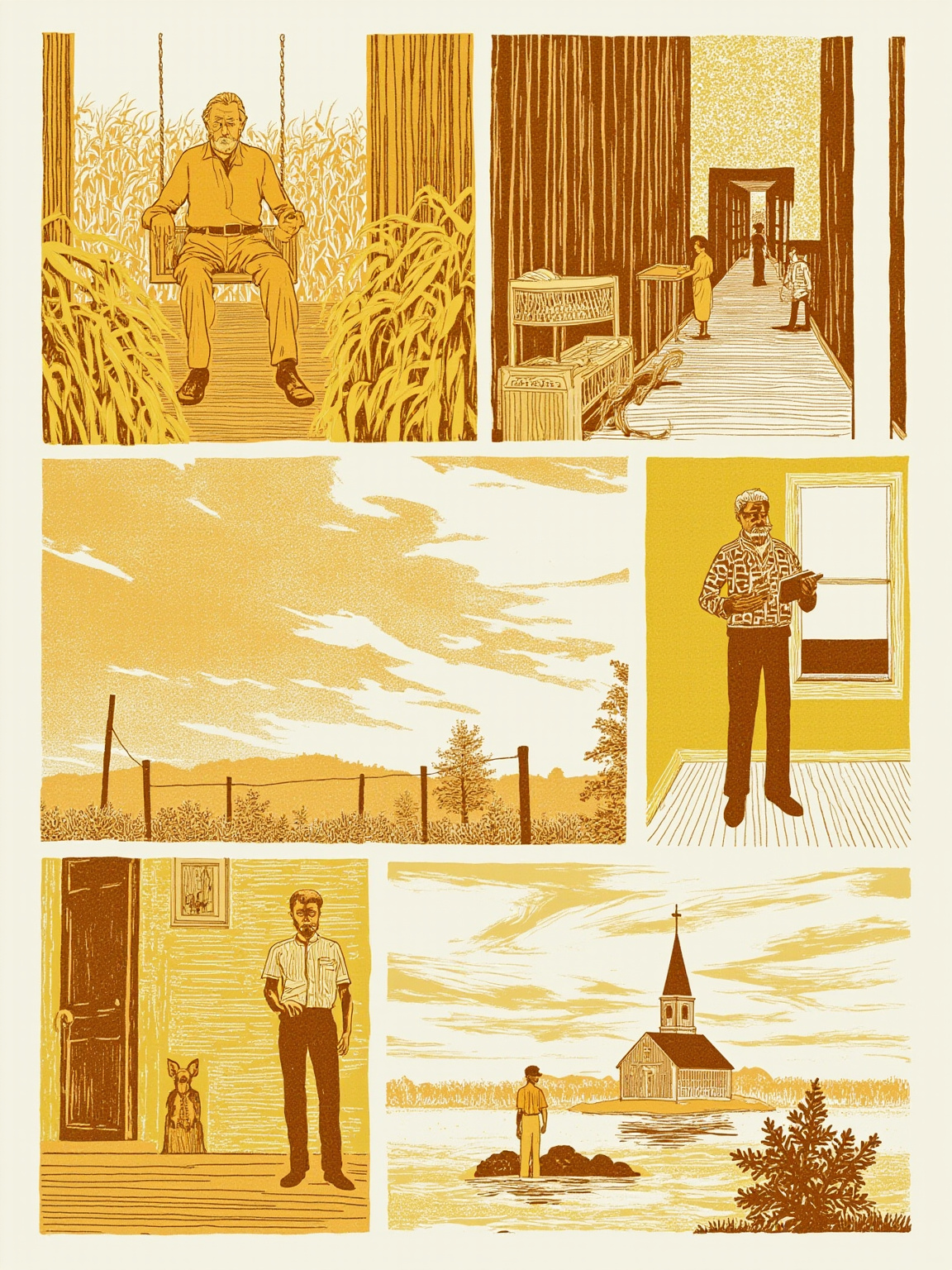
Deeper into the letter, Ames turns to family history. His grandfather's generation lived through the Civil War at its height. The grandfather was a radical abolitionist preacher who marched with the army and preached from the pulpit in a bloodstained shirt with a pistol at his belt. He ran with John Brown's circle and would not compromise on anything; he eventually left the family and died in Kansas without even a proper grave. As a boy, Ames once walked to Kansas with his father to find it.
His father's generation went the other way. The grandfather was fire; the father was water. Both were ministers, but the father opposed violence and radicalism so firmly that he broke with his own father over it, a rift between father and son that wasn't unusual in preaching families of that era. Ames grew up caught between these two temperaments, one blazing and one restrained. He never had his grandfather's nerve to overturn the world, nor his father's near-timid retreat from it. He simply kept his church in Gilead for a lifetime, quietly, steadily.
Three generations gave three different answers to what real faith requires. This is Robinson at her best, writing the spiritual history of America through one family's history. A private letter and the echo of the Civil War's abolitionist struggle end up layered on top of each other in Ames's own hand.
One passage in the letter is the softest light in Ames's life. He'd had a first wife, Louisa, years before; she died in childbirth, and their daughter Rebecca didn't survive either. Ames lived alone after that for nearly fifty years, with nothing in his study but old photographs and old sermons.
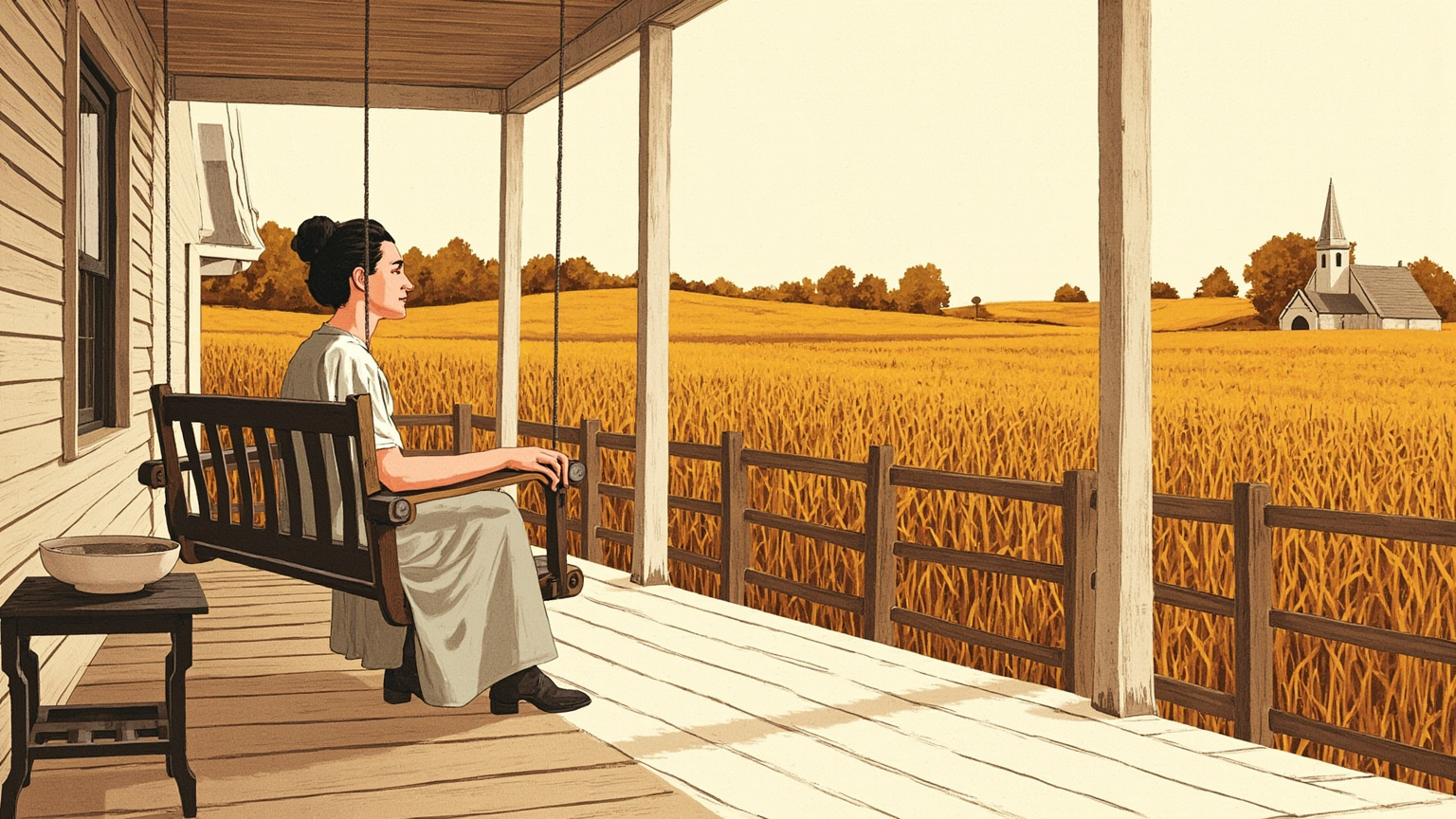
Then, on a rainy day, young Lila walked into his church. They married, and he became a father late in life, so late he'll barely live to see the boy grow up. Ames doesn't write it as a miracle. He writes Lila leaning against the porch swing, looking out at the cornfields with the wariness of someone who has drifted for years, and he writes himself watching her, feeling for the first time in his life that he has been blessed.
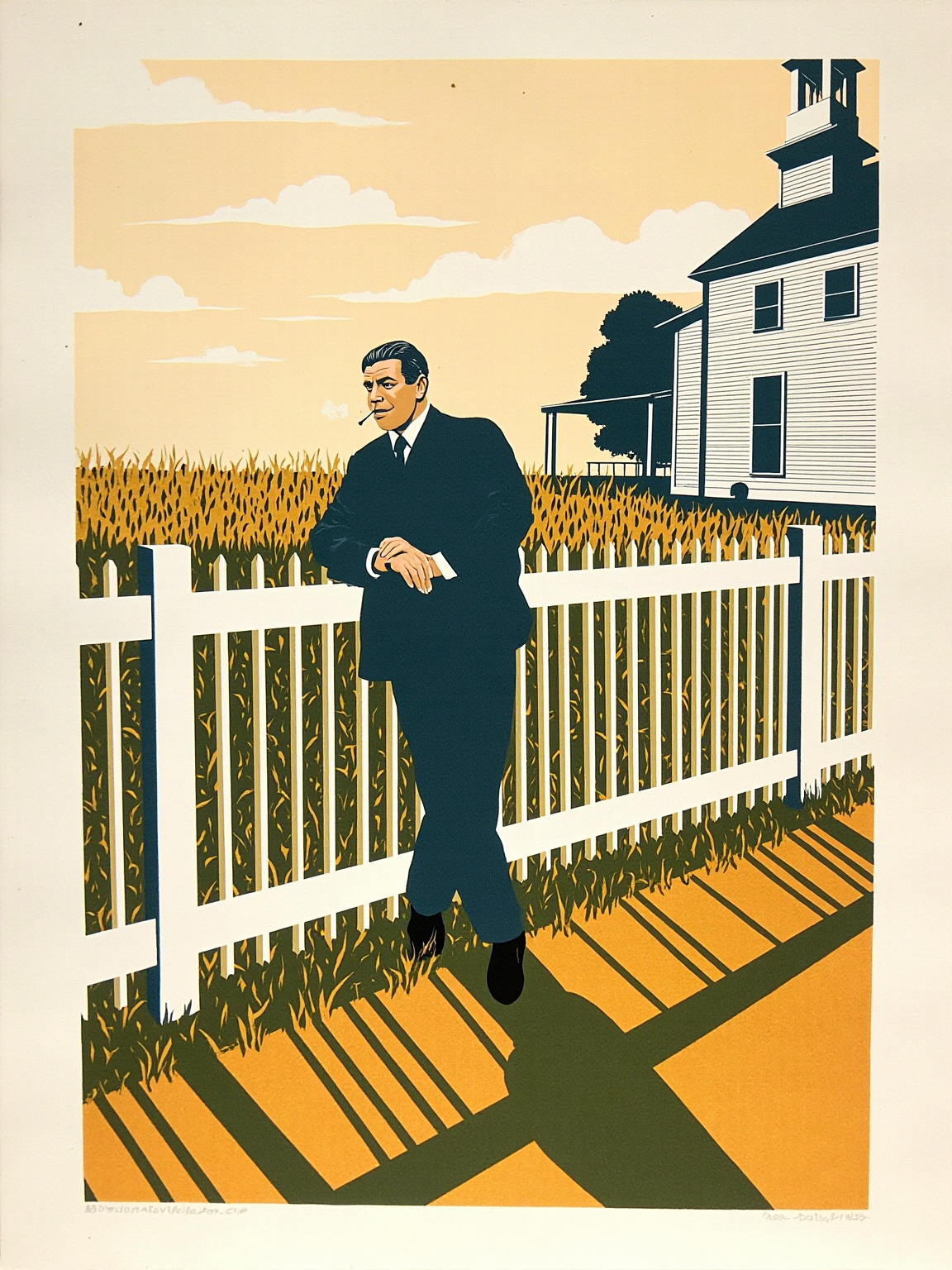
That summer, his old friend's son, Jack Boughton, comes home. He's Gilead's known prodigal, disgraced since he was young for abandoning a poor girl and the child he'd had with her. Now he's back at his father Robert's side, still looking like the same drifting, dissolute man.
Ames's feelings about Jack are complicated. Jack is his godson, baptized with his own name. He watched the boy grow up, and watched him fall. Jack shows an odd tenderness toward Lila and the boy, and it stirs up old disappointment and unease in Ames: is this prodigal drawing close to his family? The jealousy is real, and so is the unease. Ames can't lie to his son in this letter, so he writes down that sourness too.
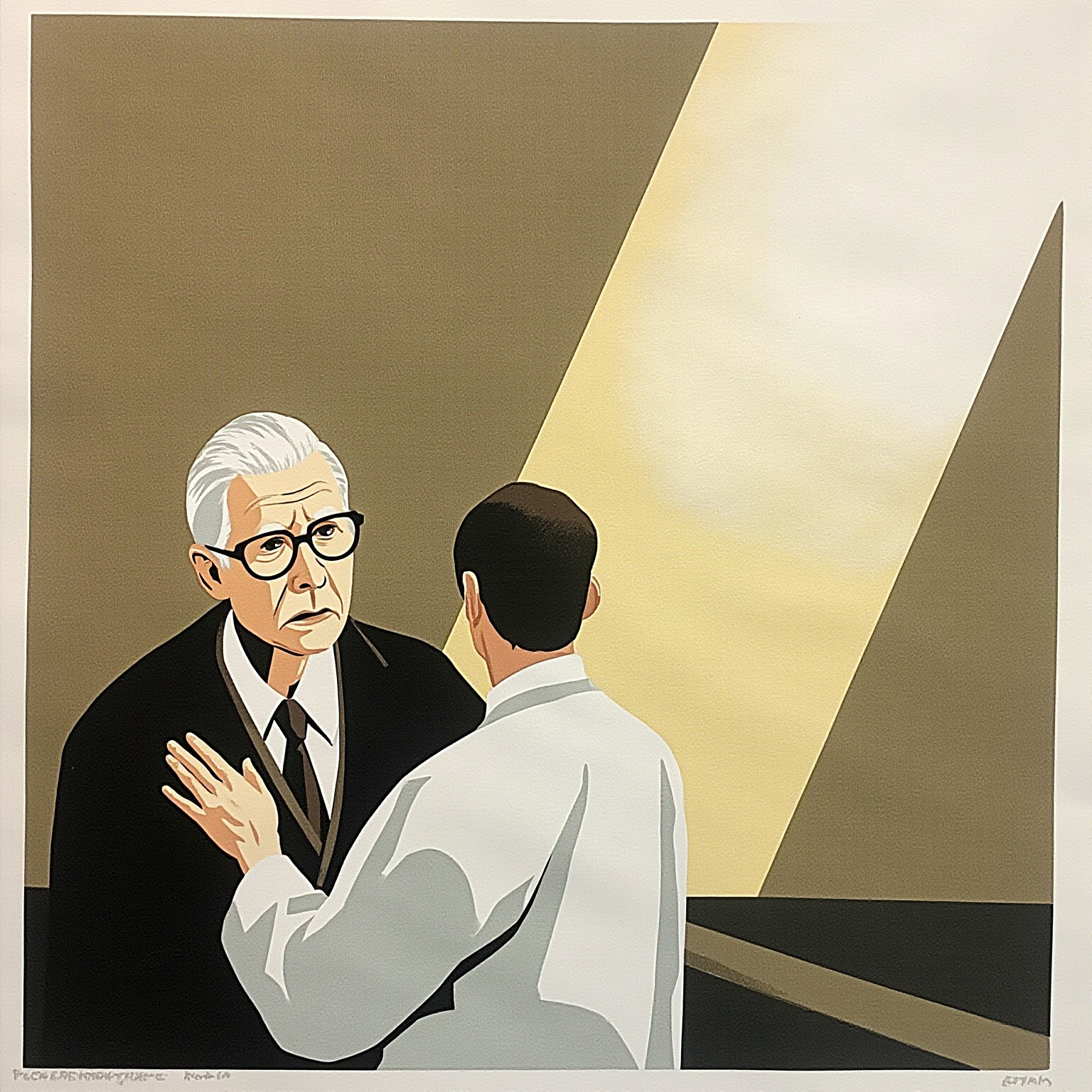
Jack finally speaks. He hasn't come home dissolute out of any new fall from grace. He's been living in St. Louis for years with a Black woman named Della, as husband and wife, and they have a son together. Interracial relationships were illegal in much of America then, and reviled everywhere, so he couldn't make it public. He came home in secret instead, and ended up at his father's bedside. The only thing he carries with him is a small photograph of Della and the boy.
Hearing this, Ames goes still. He remembers another piece of Gilead's history: this town, founded by abolitionist pioneers, once had a Black church that was burned down, its congregation scattered, and no one tried to keep them. The gap between the town's name on the plaque and what it actually did is stark enough to be frightening. Jack's story and the town's old scar reflect each other, and this is the sharpest piece of social criticism in the book.
I stopped short the first time I read this passage too. The prodigal son is an old parable about falling and repenting. Robinson turns it inside out: Jack isn't a fallen man come back to change; he's a man forced to play the prodigal because he fell in love with someone he wasn't allowed to love. The test isn't whether he can reform. It's whether Ames and Gilead can offer real forgiveness.
Near the end of the letter, Ames makes a decision, as a minister, and as a man. He sets down years of suspicion and jealousy and gives Jack a solemn blessing. It isn't absolution, because Jack committed no sin. It's Ames folding a lifetime of his own failings, his shame over the town's old wound, and his fear of his own son one day setting out alone into the world, into that single blessing.
The book ends on that blessing. Ames doesn't die within its pages; he's still alive. Death was only the fact at the beginning that made him pick up the pen in the first place. The letter is the last thing he'll leave behind. The novel deliberately doesn't show us what happens after. For Ames, everything that needed saying has already been said.
On the surface, Gilead is an old man's deathbed letter to his son. Underneath, it is a confession and a blessing arriving too late to matter and mattering anyway. It is about grace, and not the cheap kind: the sort you notice in the smallest things, light in dishwater, a shadow on a porch swing, a name a seven-year-old cannot spell yet. It is about fathers and sons, three generations of ministers answering the same question with fire, with water, and with silence. It is about forgiveness: the prodigal son story turned inside out, so the one who truly needs to turn back is the town that thought itself righteous. It is about race: a plaque honoring abolitionist founders that cannot cover up a church that was burned to the ground.
Read it today and the prose is what stops you cold. Robinson's sentences are slow, soft, lit from within. Every paragraph feels like sitting on a church pew, listening to an old man talk. Its straight, sincere treatment of faith is close to unique in contemporary serious fiction: no mockery, no sentimentality, just a careful reckoning with everything a dying man turned over in his mind.