Godaan (The Gift of a Cow) · Companion Guide
戈丹
一个北方邦婆罗门佃农一辈子想给家里献一头牛,到死牛也没牵进院门。
One Cow, One Lifetime
A wooden door, half open, on a mud hut. Outside, a lane trampled into mud. Inside, a man lies on a straw mat, gasping, one hand reaching toward the doorway — the cow he wanted was never led into this yard. That is the final image of Godaan. The whole novel turns on this cow, on a poor Brahmin tenant farmer named Hori in rural northern India, and on the money he never once managed to save.
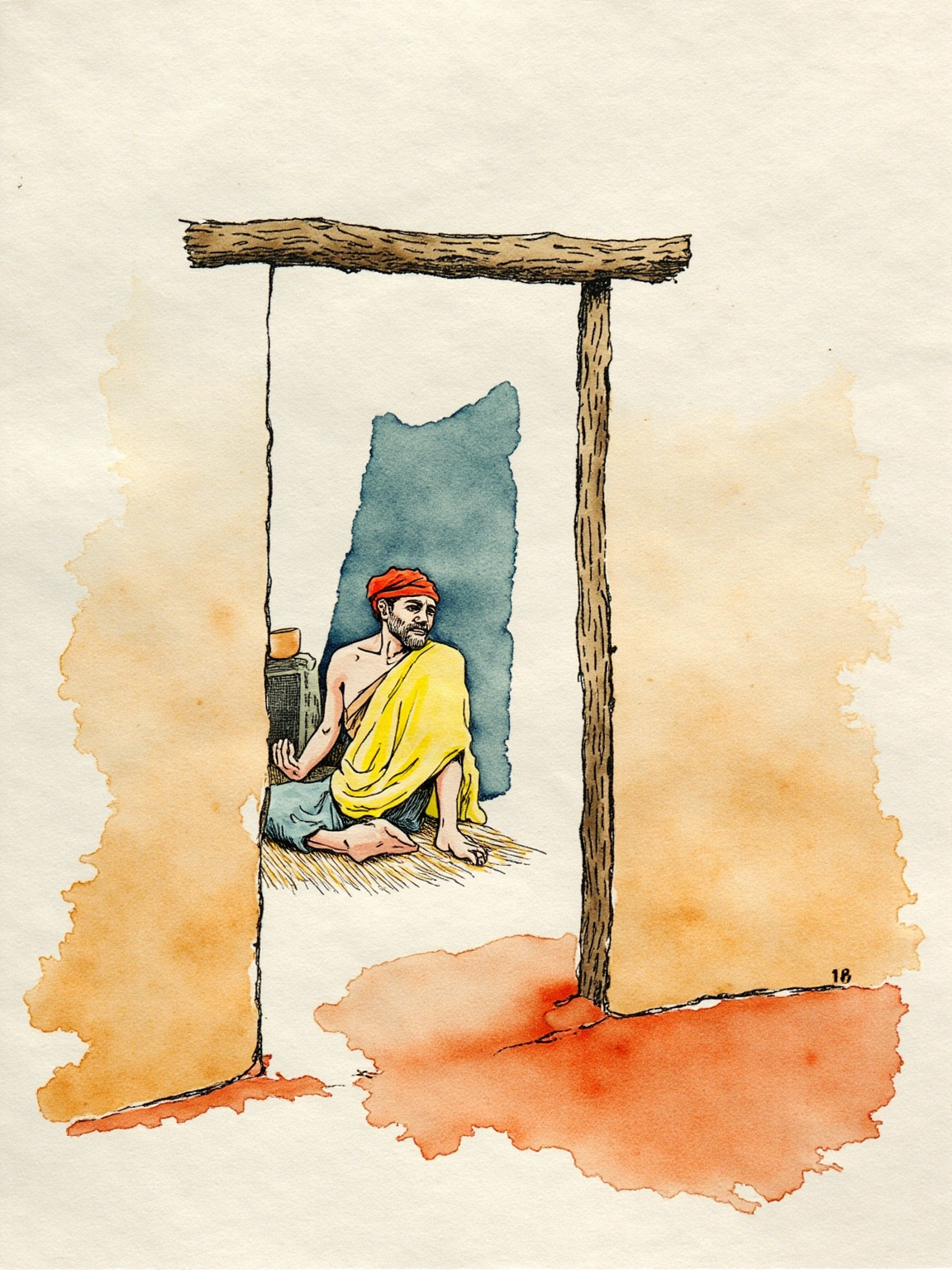
He lay on his mat, reaching toward the door with one hand — but the cow he had spent his life longing for never once came inside that gate.
他歪在草席上,一只手朝门口够去——可他这辈子想换来的那头牛,从来没踏进过这院门半步。
金句 · 尾声 · 那头没牵进来的牛
What This Book Is
Godaan is a Hindi novel by the Indian writer Premchand — a pen name; he was born Dhanpat Rai Srivastava in 1880 and died in 1936 — published in 1936. Its place in modern Indian literature is a singular one. Critics routinely rank it as the founding work of the modern Hindi novel, the fullest account ever put to paper of what rural India actually looked like in the first half of the twentieth century.
Premchand wrote it in a single continuous stretch and died the year it came out. Inside India it is the kind of book assigned in high school and college, printed on posters, a fixture of the national canon — yet among newer readers its name carries far less weight than it should. Anyone trying to understand a century of structural poverty in the Indian countryside cannot get around it.
Who's Here, Who Can't Make It
Hori is just past forty, a Brahmin by caste, which in his small village of Belari, in Uttar Pradesh, ought to make him a man of standing. It doesn't, because he is poor — poor enough that he farms land rented from the town landlord, Mehta, and every harvest goes the same way: rent first, then debt, then the village priest, Salas, chipping away at what's left with gift money, sacrificial fees, and social obligations, recorded one line at a time. His wife, Dhaniya, is a rough, sharp-tongued farm woman who fights with him over an extra pound of ghee, over whether the milk goes to a neighbor to be made into curd or stays home for the family's own cooking oil. She is the one actually holding the household together.
Their only son, Gobar, is soft-natured. He has moved in with Jhunia, his widowed sister-in-law, unmarried, and she is already carrying his child. The village explodes — a widow living with her husband's younger brother, unmarried and pregnant, is precisely the line the village's code treats as fatal to cross. A second young couple trips a different wire: a poor young Brahmin, Matadin, has secretly fallen for Siliya, a girl of the untouchable Chamar caste. Once it comes out, both families push him into a public purification ritual to atone before the whole village.
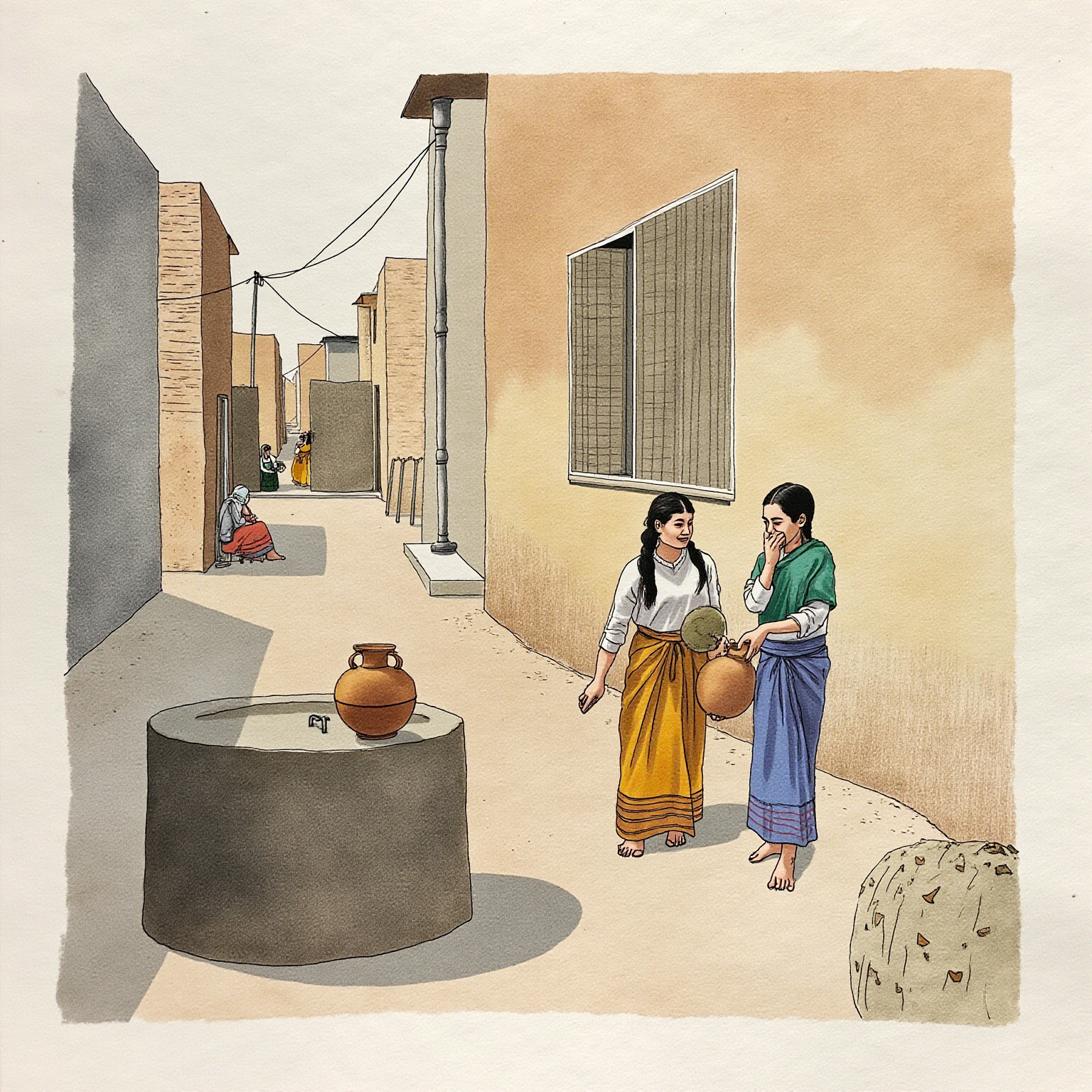
He was a Brahmin, and by every right should have been one of the village's honored men — but poverty had stripped him of every dignity save the name.
他姓婆罗门,按理该是村里头一份体面人;可穷字当头,体面剥到最后一层,只剩个姓。
金句 · 第一部 · 霍里出场
Story One: The Cow Hori Wanted
Hori carries two wishes through his whole life: to stop owing money, and to save enough, someday, to buy a milk cow. The cow isn't meant for work. It's a deathbed gift — in Hindu practice, giving away a cow as you die is called godaan, and it buys the family a measure of dignity and the dying man's soul a decent passage onward. In this village, a household without that cow to give doesn't get to die at peace.
The trouble is that Hori's harvest, each season, is just enough to keep starving at bay. Rent, interest, gift money, obligations, sacrifices — the list goes item by item, and by the time he's carried his grain to market the money is gone before it's had time to warm his pocket. Early in the novel the book runs the actual arithmetic: Hori pledges a season's grain, and Salas's household deducts its gift money before he even gets home. He comes back with empty pockets, sits down by the broom, and fights with Dhaniya half the night.
Story Two: Gobar and Jhunia Are Driven Out
Word gets out about Gobar and his widowed sister-in-law. A panchayat — the customary council of five elders — convenes, and the two of them are stood before the elders and interrogated, lectured, cursed: a widow remarrying breaks custom, and carrying a child unmarried breaks it worse. When the lecture ends, Gobar and Jhunia are declared outcastes in front of the whole village. The scene cuts away halfway through, refusing to zoom in on the two people being shamed — which is where the book shows its real strength. It stages the humiliation as a collective ceremony and holds the camera instead on seven or eight faces in the crowd, so the reader reads the scene off the audience, not off the accused.
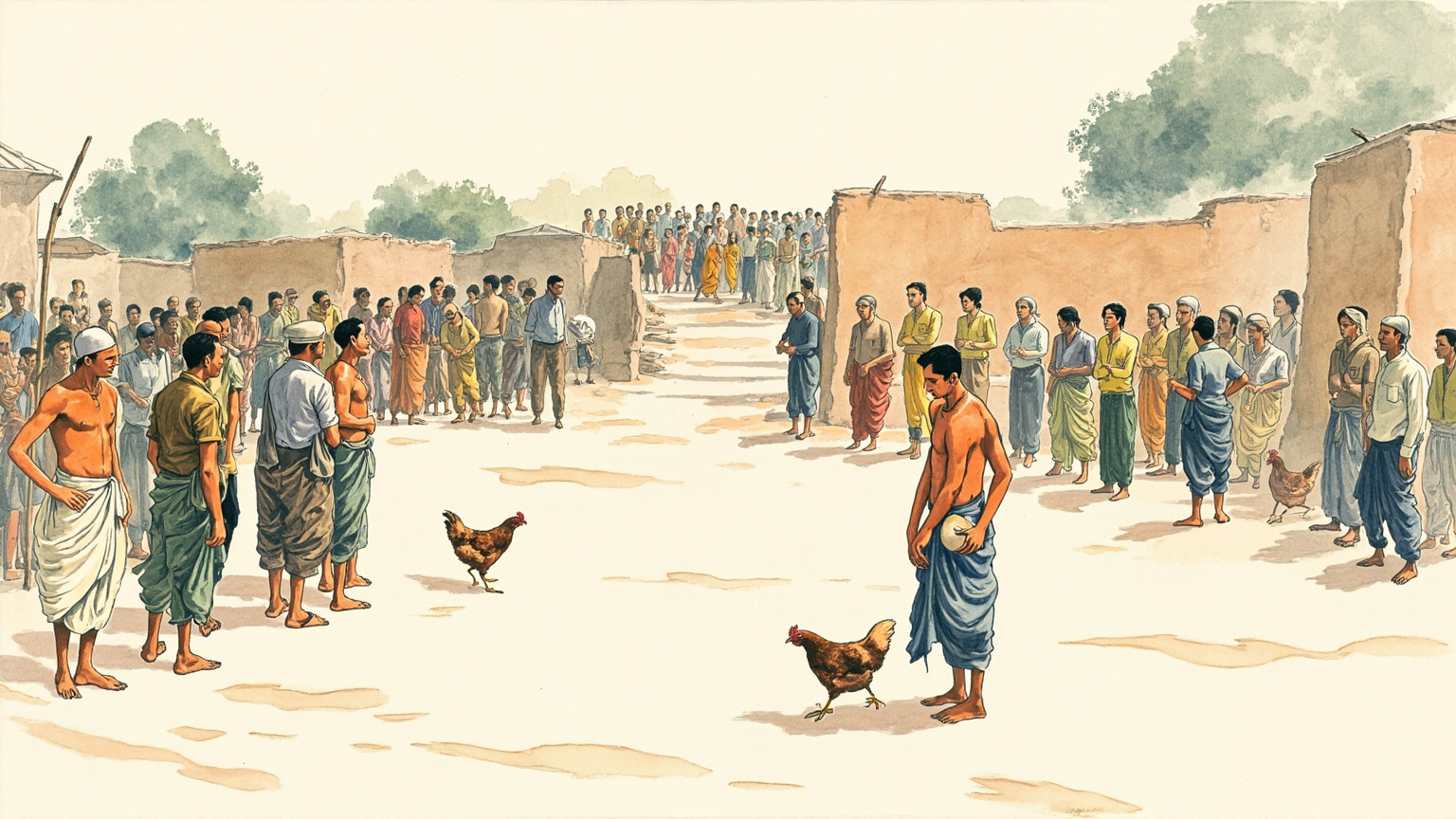
They set the boy and the woman down in the middle of the panchayat, and the village watched — that was the whole of the punishment.
把人往长老会中间一摁,念完训词,全村人盯着看完了事——这就是罚的全部。
金句 · 第二部 · 逐出教门
Story Three: Hori Goes to Town, Into Another Net
Gobar and Jhunia flee to Lucknow to make a living. Hori, for his part, makes another trip to town — he still means to borrow from Mehta to buy his cow. Mehta is a city Brahmin landlord who wears a suit, rides in a car, and keeps white porcelain chairs and English chandeliers in his house. He talks Gandhism, the liberation of untouchables, and Indian independence all day, and collects every last rupee of rent regardless. Hori is shown into Mehta's drawing room, where a circle of cultured men — a Bengali Brahmin scholar, a Hindi writer, a few intellectuals with nominal standing in the non-cooperation movement — hold forth on Gandhi, the salt laws, civil disobedience, and the emancipation of untouchables.
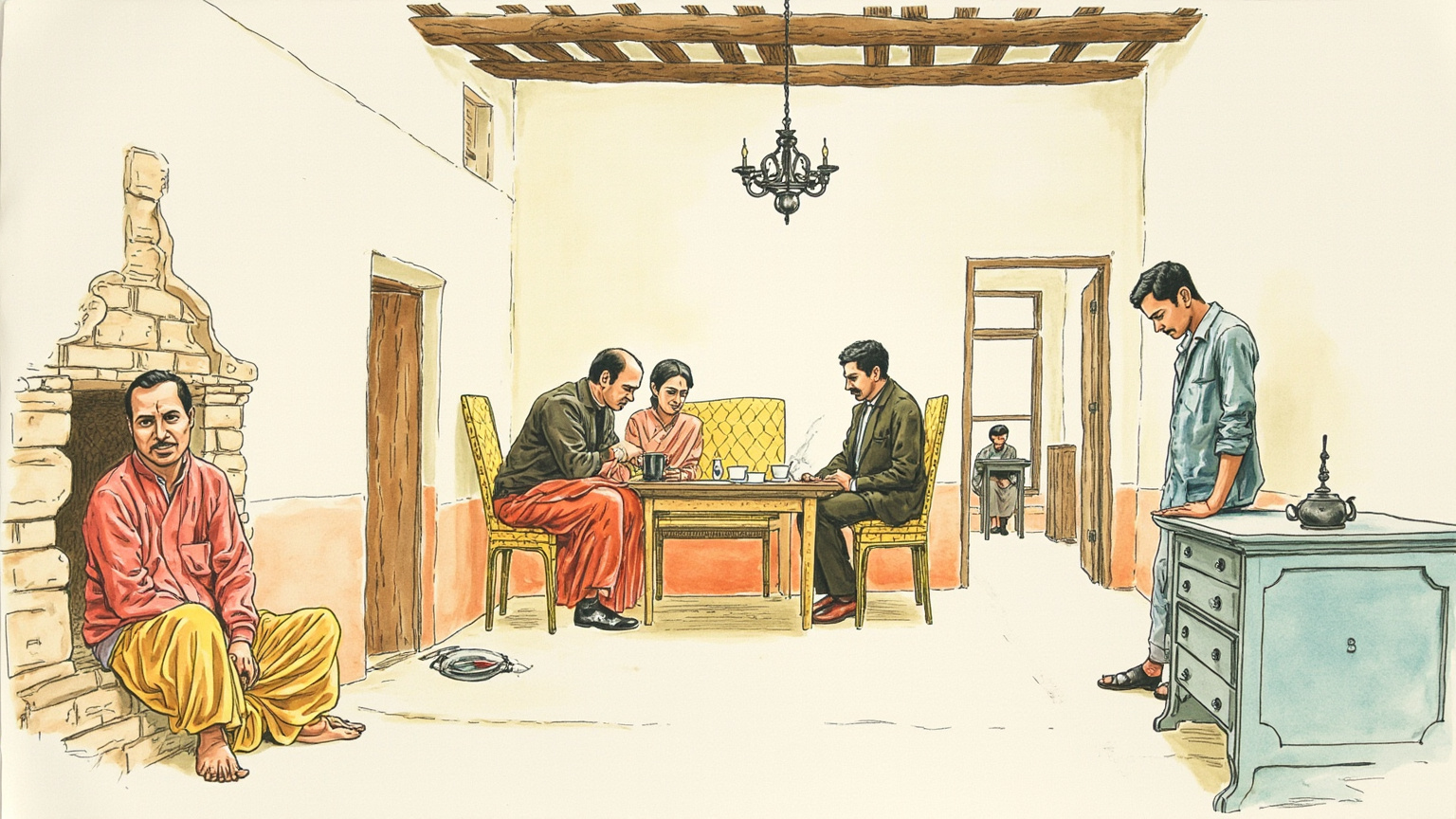
They spoke of Gandhi and of the untouchables and of India's freedom, and he sat listening in that cool drawing-room, his back colder than his own house.
他们谈甘地,谈贱民,谈独立——他坐在那间凉飕飕的客厅里听着,后背倒比自己那间茅屋还冷。
金句 · 第三部 · 勒克瑙沙龙
The coldest thing in this scene is that Hori understands every word they're using, and understands, just as clearly, that none of it will ever land on his own field. He can't join the conversation, and he can't stay silent either — a man asking for a loan has to keep talking. Sitting in that cool drawing room, his back feels colder than his own house ever does.
Story Four: Matadin's Sordid Ritual
The other fire in the village is one Matadin starts himself. Somehow he and Siliya have fallen for each other, and no sooner does his family find out than both families pin him down for a public act of penance. It isn't Siliya paraded before the crowd — it's Matadin who goes through the prayaschitta: reciting scripture in public, drinking some bitter concoction, walking through the crowd with a humiliating collar around his neck. Premchand never writes what's going on inside Matadin's head. He writes only the faces of the old Brahmin men watching, the particular calm of men who feel they have cleaned someone.
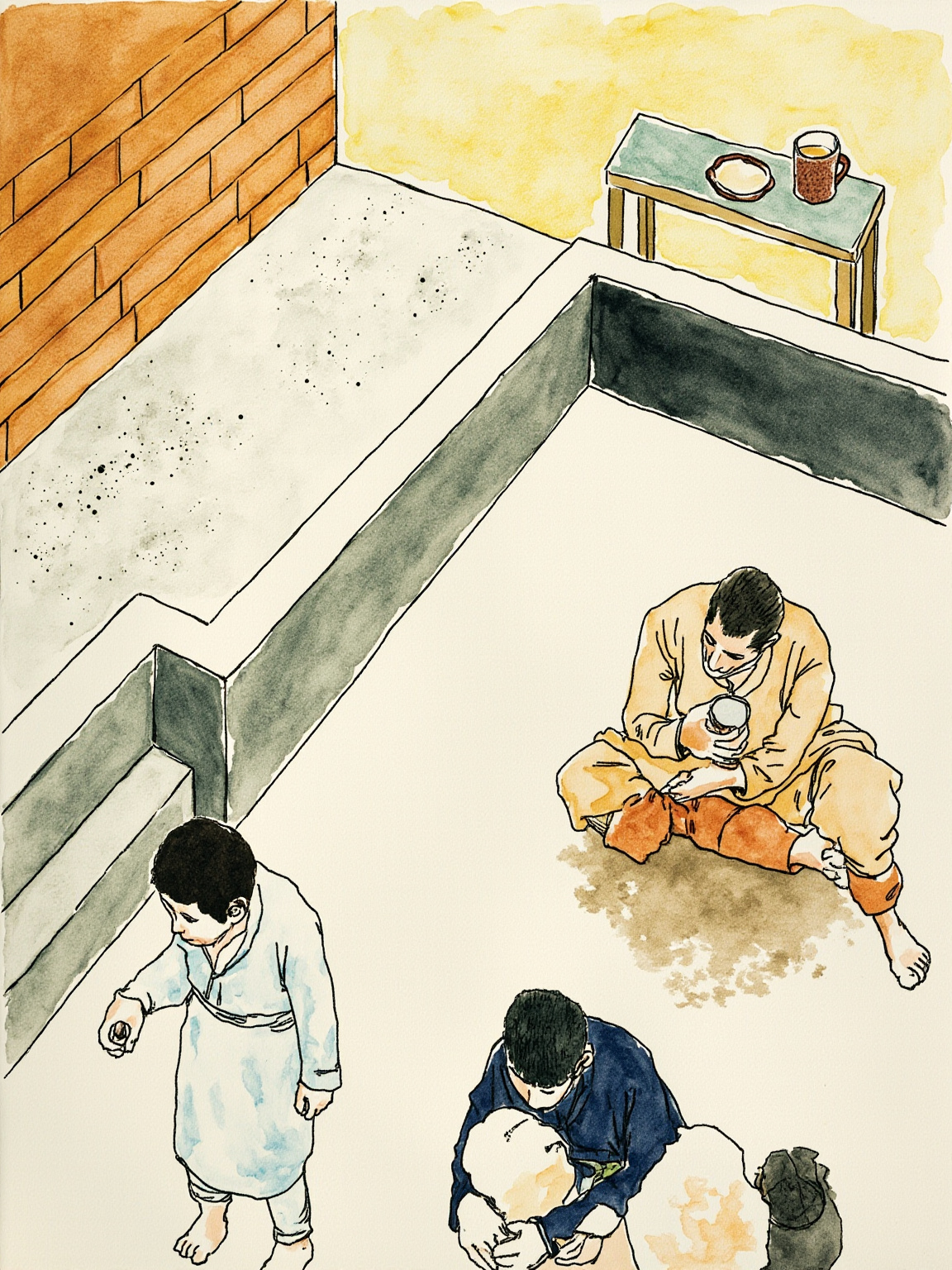
Both of these smaller threads are doing explanatory work for the main story: caste rules are not something a family argues out behind closed doors. They are a ritual staged in front of a mirror for the whole village to watch — and what the ritual wants is not the pain of the person being punished, but the relief it produces in everyone watching.
Story Five: Hori Falls Ill, and the Cow Money Becomes Medicine Money
On the way back to the village, Hori eats something unclean — the novel specifies well water fouled by a leaking latrine pit — and within days he is vomiting and purging. Cholera. The village first takes it for malaria, and only carries him to the rural clinic once his lips have gone blue. Gobar comes home to lift him onto the cart. The little money in Hori's pocket, barely enough for a milk cow, turns into medicine, clinic fees, a bottle on a drip.
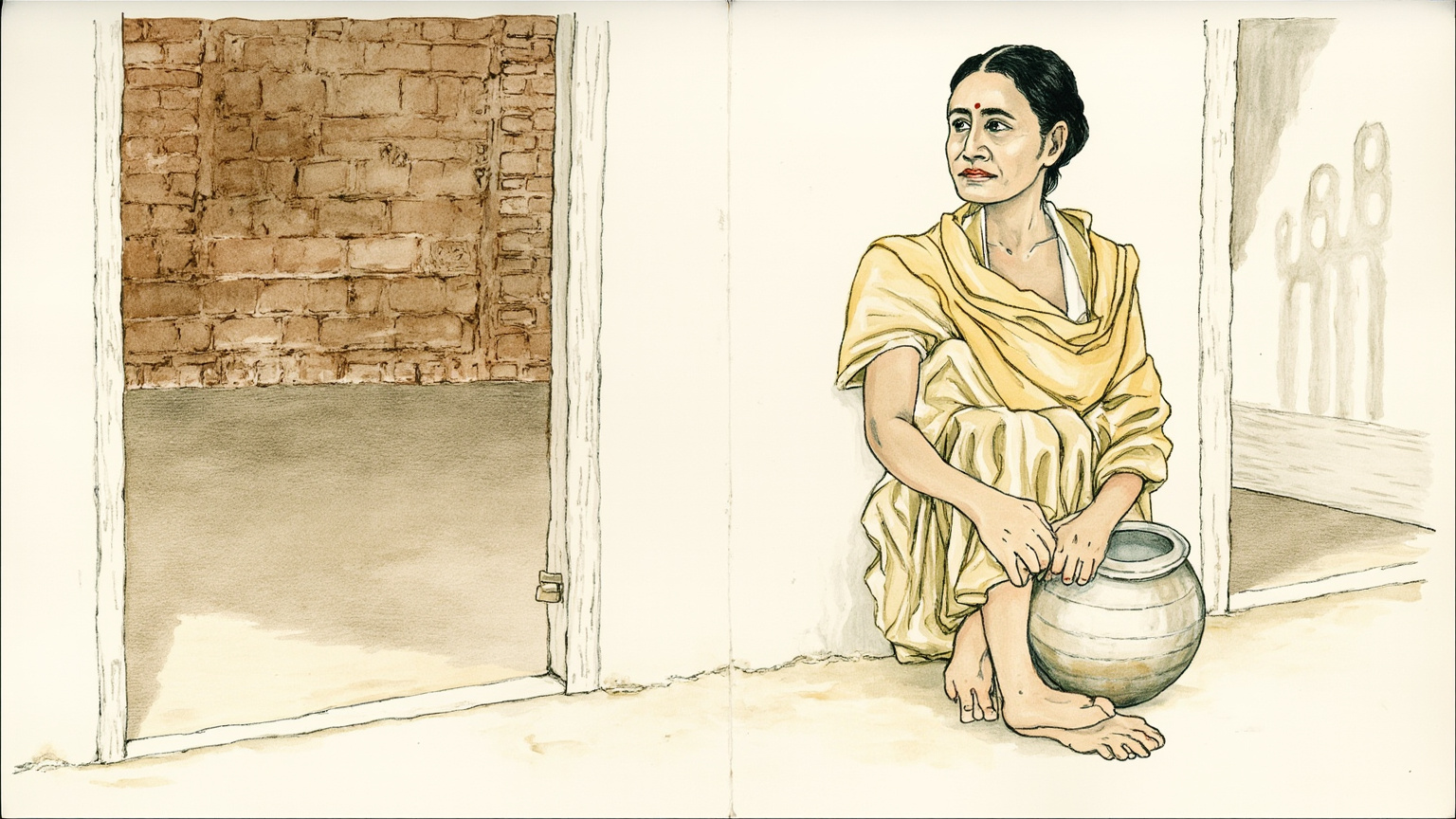
All his life he had saved to buy the family a cow; in the end he bought his own life with that money instead.
他一辈子攒钱想给家里换一头牛;临了,反倒用自己的命把那笔钱换走了。
金句 · 倒数第二章 · 救命钱
He spent a lifetime trying to trade for a cow, and in the end traded his life for the money it would have cost.
Story Six: An Ending, and the Cycle Unbroken
When Hori dies, his daughter Rota rushes back from wherever she has been living to see him one last time; he no longer has the strength to hold her. Gobar and Jhunia come back from Lucknow with their newborn and settle again in the village. Dhaniya stays by the hearth, cooking the porridge that needs cooking, as if the household will simply carry on to the next generation.
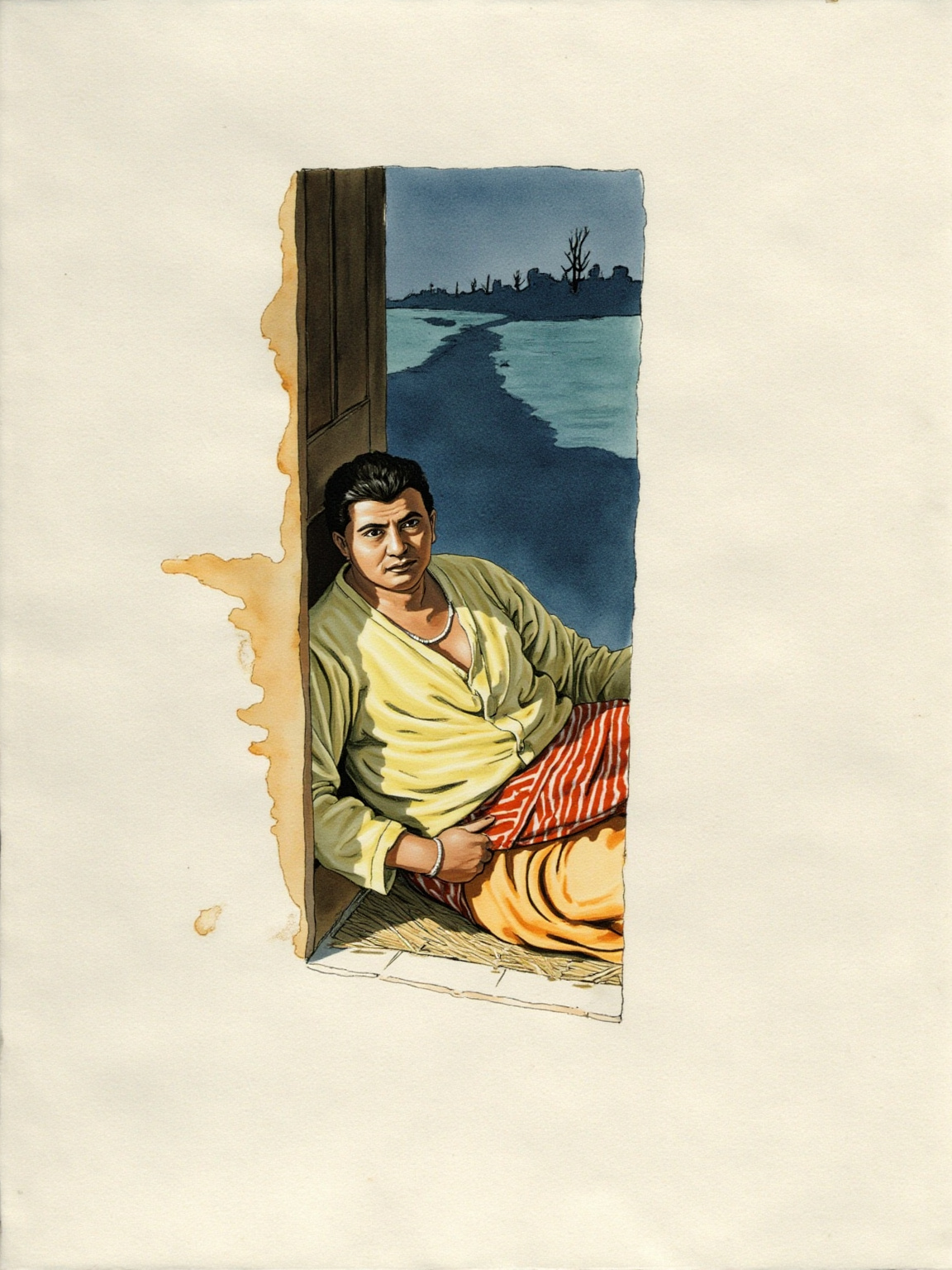
Dhania sat by the hearth, stirring the pot — as though the household meant to go on a little further yet.
丹妮娅守在灶边,慢慢搅着锅——像这家,还打算再往下传一代似的。
金句 · 尾声 · 灶边的丹妮娅
Premchand hands the ending back to the same door the book opened on. The cow is still outside it. It was never once led in.
What This Book Is Actually Saying
On the surface this is a story about a cow that never gets bought. Underneath it is a net. There's no single villain — it's the moneylender, the village's gift-money customs, the priest's ledger, the city landlord's rent, the pretty talk of city intellectuals, one layer laid over Hori after another. What consumes him is the logic of debt itself, not any single debt.
Go one layer deeper and the real question the book is asking is whether Hinduism's old promise about godaan — that a single cow buys you a clean passage into the next life — still holds in a 1930s village. From birth to death Hori never manages to produce that cow, and by then he is a full generation removed from the path to salvation his ancestors believed in. This isn't an anti-religious book. It's tallying up, before God, the account of a hundred million peasants.
Why It's Good
Premchand does something almost nobody had done before him: in his novel, the South Asian peasant is not scenery, not a martyr's portrait, not an object of moral instruction. He writes Hori as irritable, stubborn, a man sinking in debt who still secretly wants his cow, a man who fights with his wife over dinner. Hori — perpetually unable to get his head above water, worried-faced, a little sly — is the first character in modern Indian literature allowed to live as a complete person.
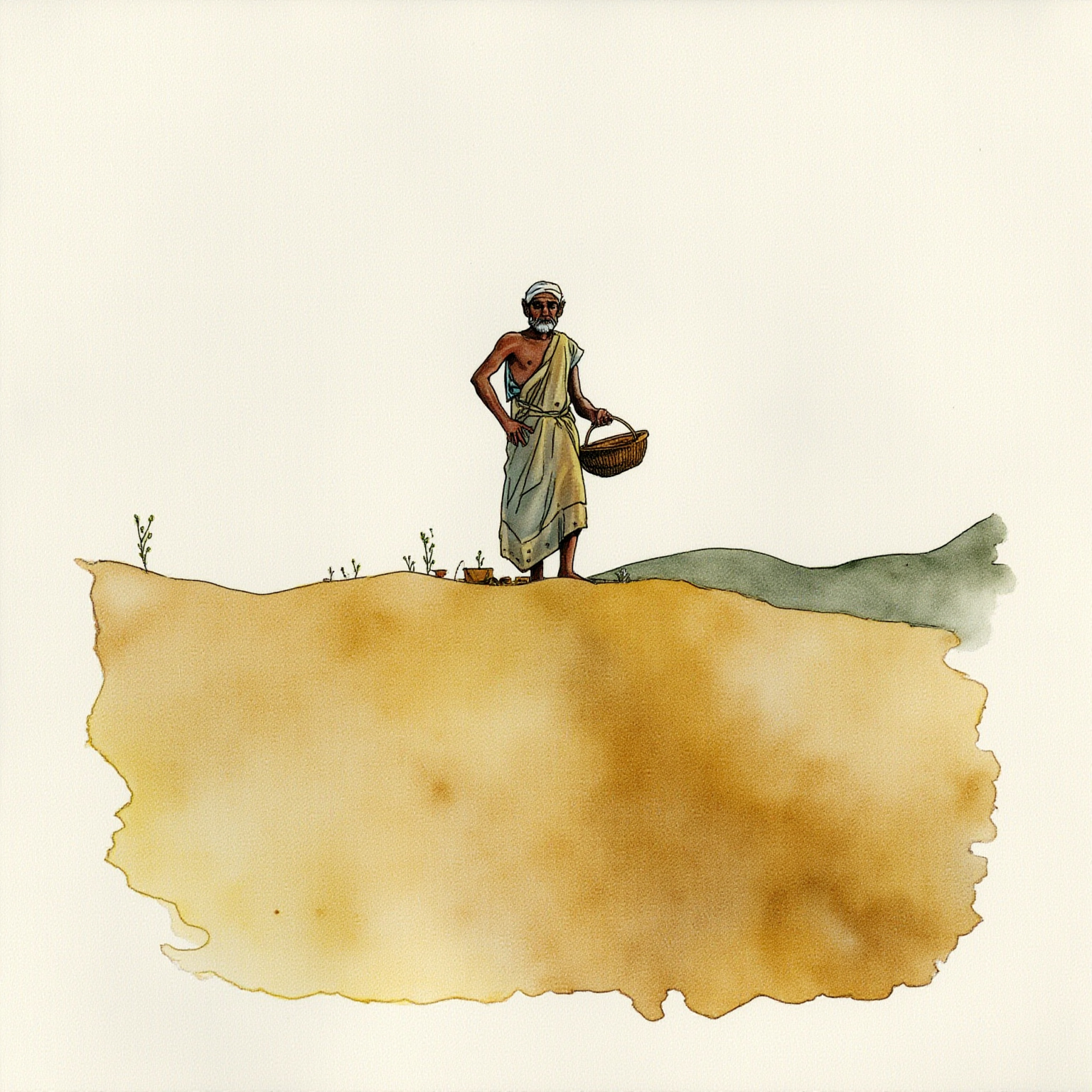
The tragedy isn't in any one debt — it's the whole net. It isn't that any one person is bad — it's that when everyone simply follows their own rules, the peasant is the one who gets taken.
Why Read the Book Itself
However you count it, the real value of this book was never in what a plot summary can tell you — it's in the barely-spoken cadences specific to the spoken language of rural northern India. Premchand wrote in Hindi, and the way Hori curses at his wife, the sound of the Brahmin priest clearing his throat, the single glance the women trade at the well — no summary, mine included, can carry any of that intact. Then there's Dhaniya. She fights with Hori until both their mouths have calluses, then turns around and slips extra food to her son anyway. She isn't a victim — she's the one actually holding the family up. Read the novel itself and you'll find she's tougher than Hori, and lonelier too. An explainer can only hand you a map. This map has no mark for the strength in Hori's hand as it closes and opens again, no mark for what Dhaniya says crouched by the hearth, no mark for those few cold seconds in the Lucknow drawing room. That ground belongs to the text itself.
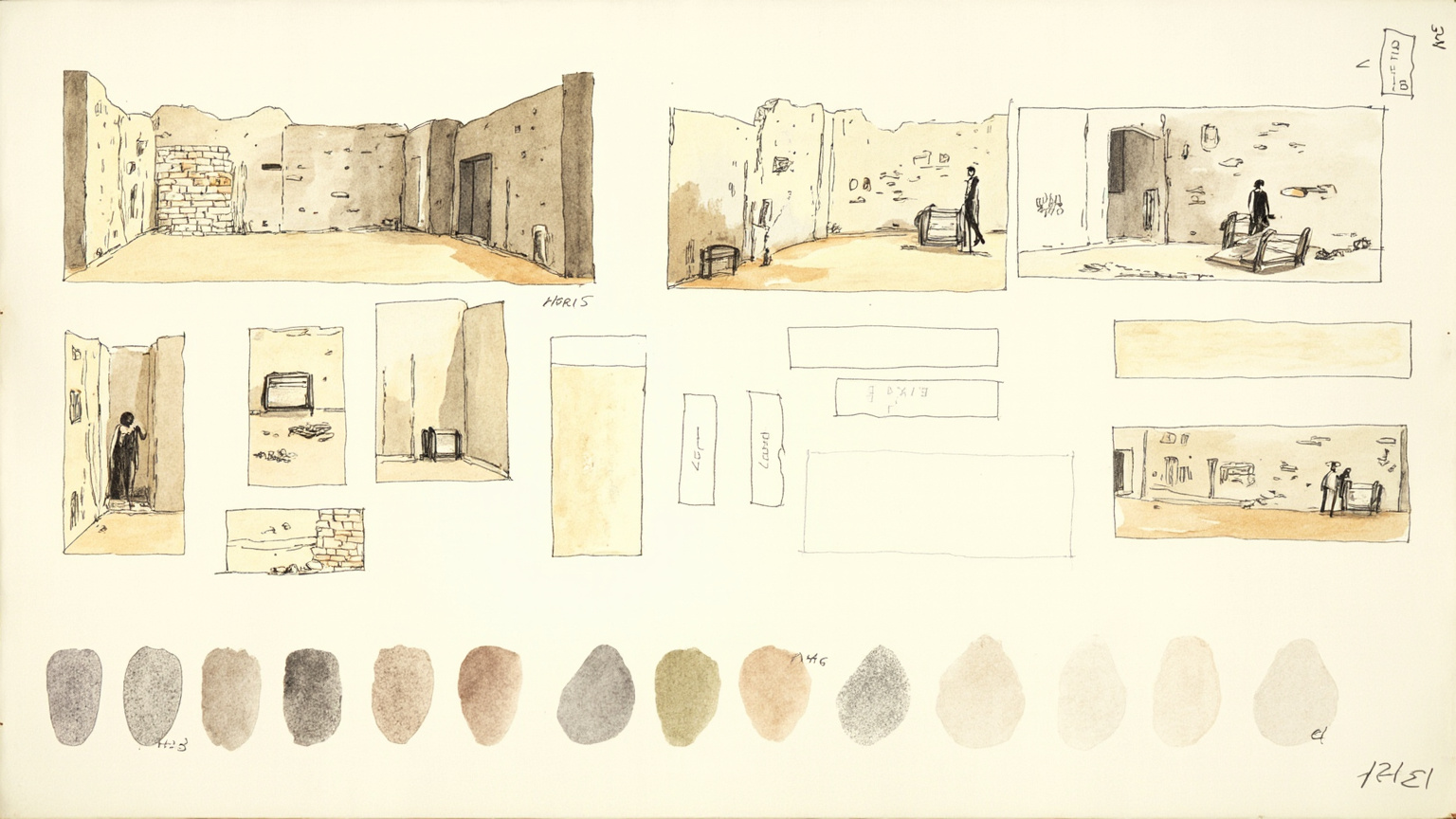
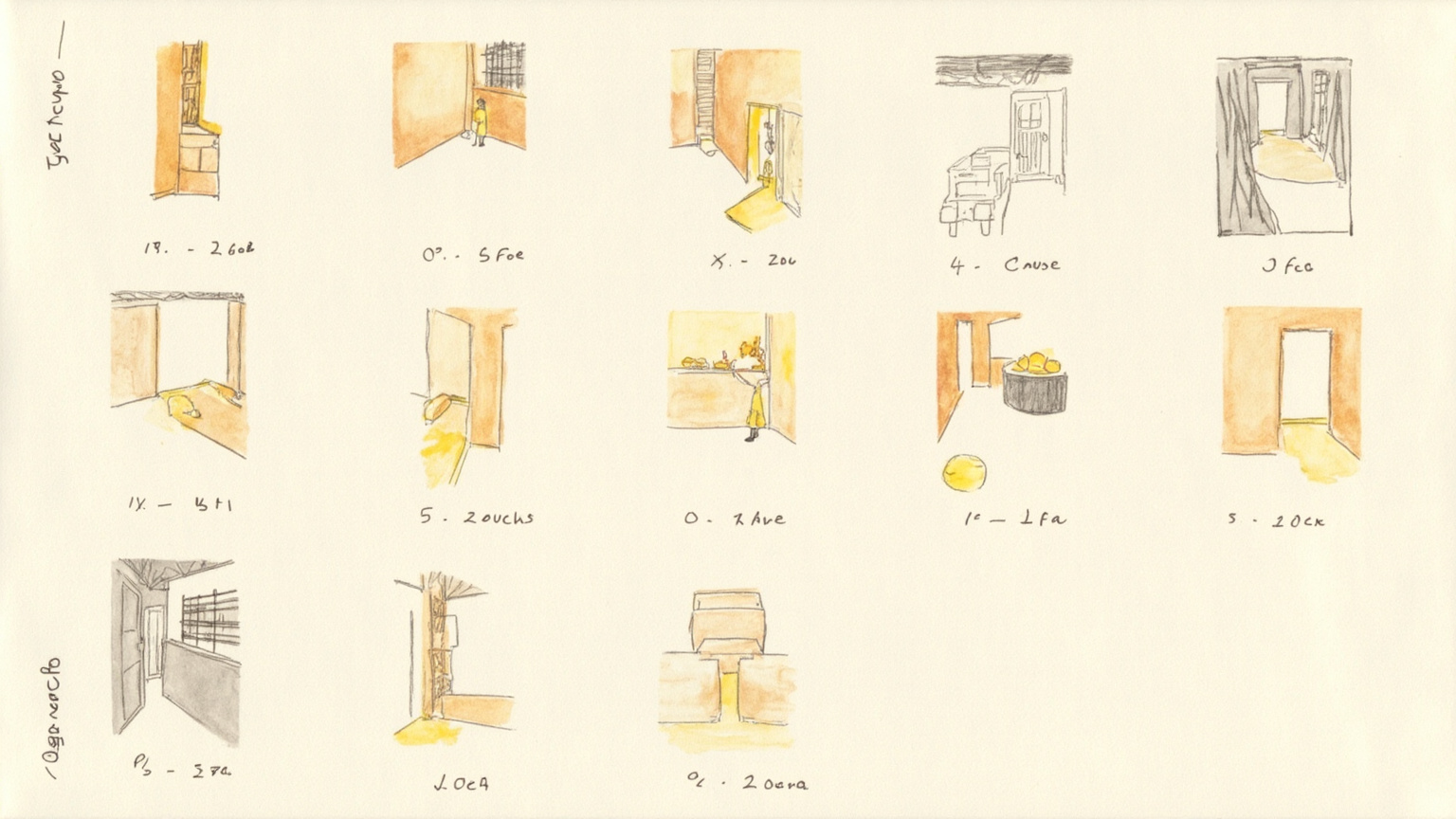
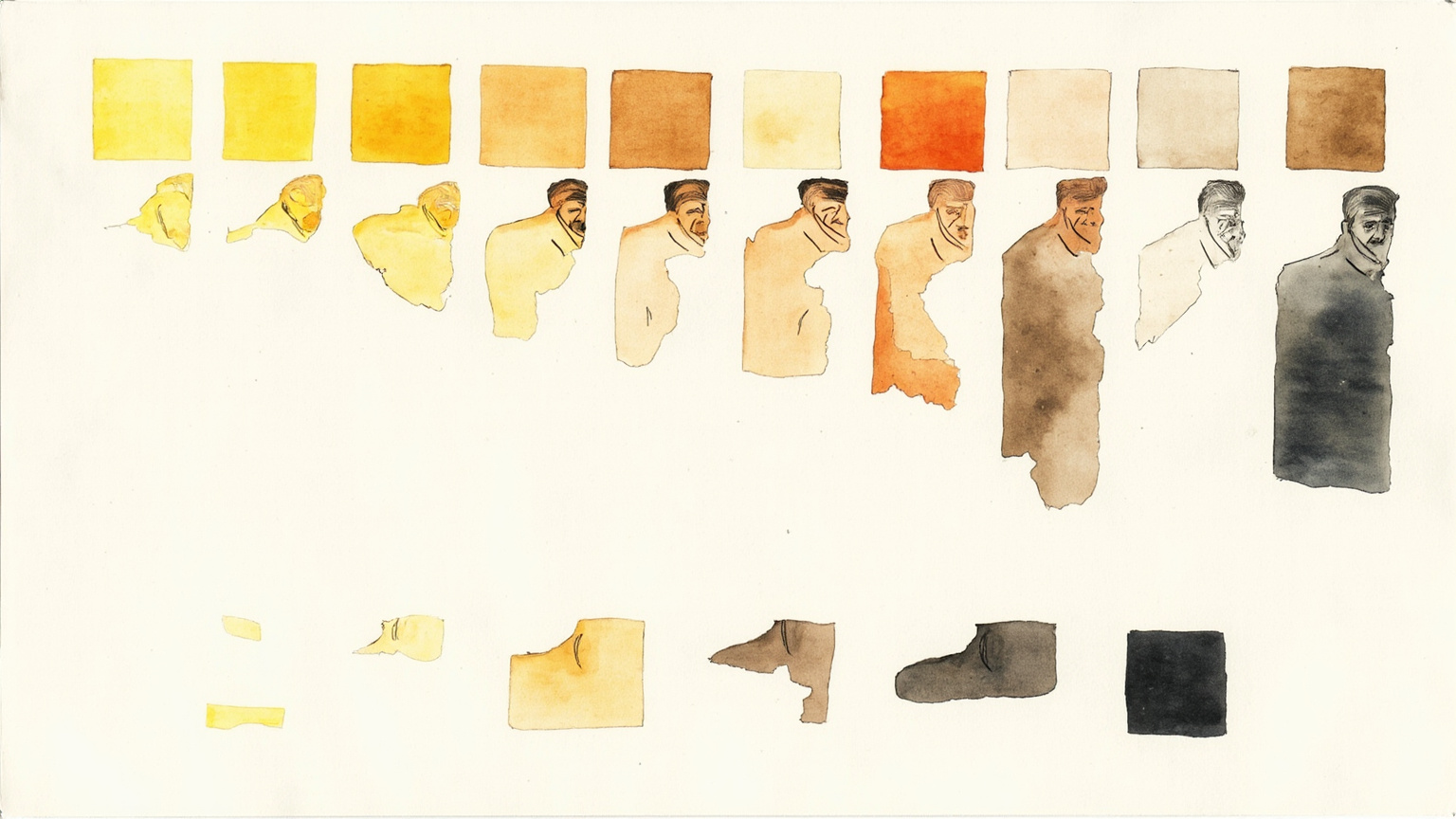
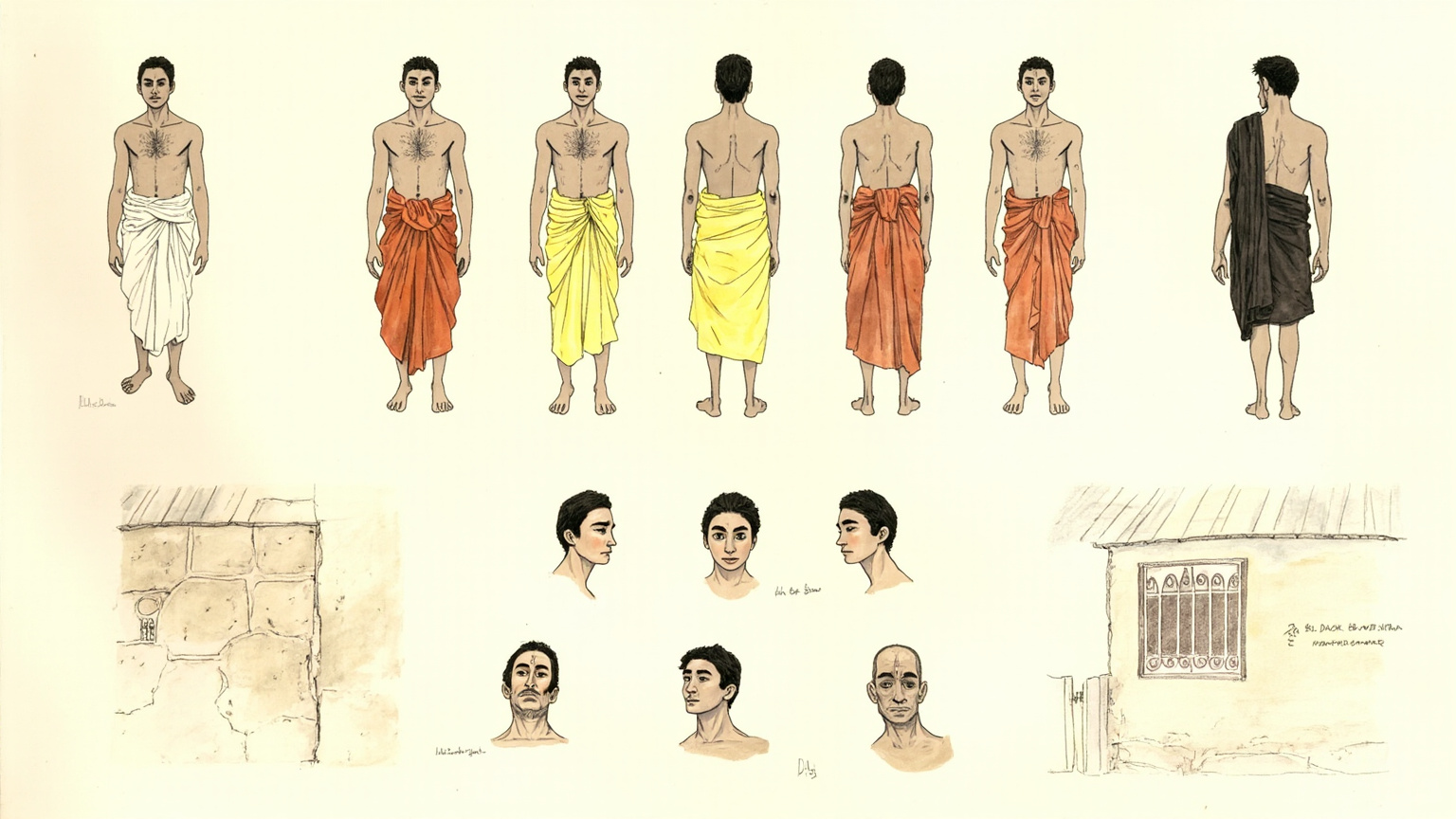
Art Direction4 plates
Before the guide was written, this book got a visual foundation — every illustration you just read grew out of it.