Gora · Companion Guide
戈拉
一个最纯粹的印度教青年,在二十岁那一年发现自己不是印度人——所有的牺牲、争吵与爱,忽然失去了原来的名字。
Opening: A Bowl of Rice from His Mother
The food is set on the table, and he will not eat it. Not because it is bad — because the servant who cooked it is a Christian. A mother brings her son the meal she made with her own hands, and he refuses to sit down to it, citing doctrine. This is Gora: in his early twenties, powerfully built, fair-skinned, loud-voiced, president of a Hindu nationalist association, and convinced he is the purest of Brahmins. At home he touches his elders' feet in the ritual gesture of respect, will not drink water handed to him by an infidel, and wears orthodoxy like armor. The first person it wounds is Anandamoyi, the woman who raised him.
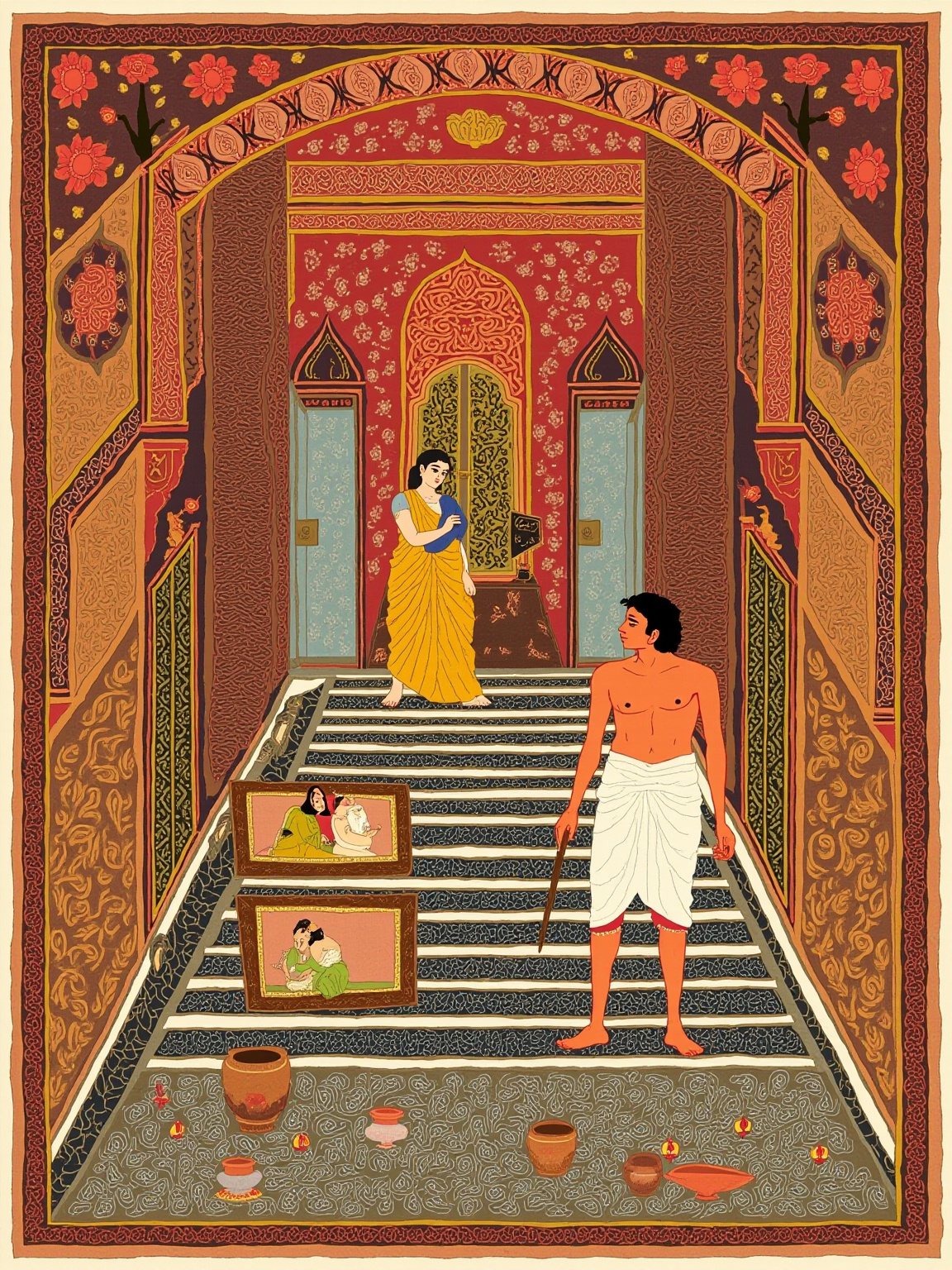
When a mother sets food before her child, the child refuses to sit beside her and eat — for the cook is a Christian.
母亲把饭端到儿子面前,儿子却不肯与她同桌就食——只因做饭的侍女是基督徒。
金句 · 卷首母题 · 餐桌上的拒绝
What Kind of Book This Is
Gora is Rabindranath Tagore's longest novel and the one generally reckoned his most important, published in Bengali in 1910 and set in Calcutta and the Bengal countryside under British rule. Georg Lukács once put it alongside War and Peace. Its place in the history of the Indian novel is a peculiar one — Tagore's name is mostly attached to Gitanjali, Stray Birds, The Crescent Moon, and the one thing missing was a novel heavy enough to anchor a body of work. Gora fills that gap. More to the point, it cuts along the sharpest line available: the central rift in colonial-era Calcutta's intellectual life, the argument between Hindu orthodoxy and Brahmo Samaj reform, and it drives that whole argument into a single young man, then makes him spend his life running into it.
People and World
Gora and Binoy grew up together. Binoy lost his mother young and was raised by Anandamoyi, Gora's adoptive mother, so the two boys are not just friends but something closer to brothers — a bond his doctrine will later tear apart in the ugliest way possible. Binoy is gentle, good-looking, and more open-minded than Gora, one of the few people in this story whose eyes doctrine never manages to close.
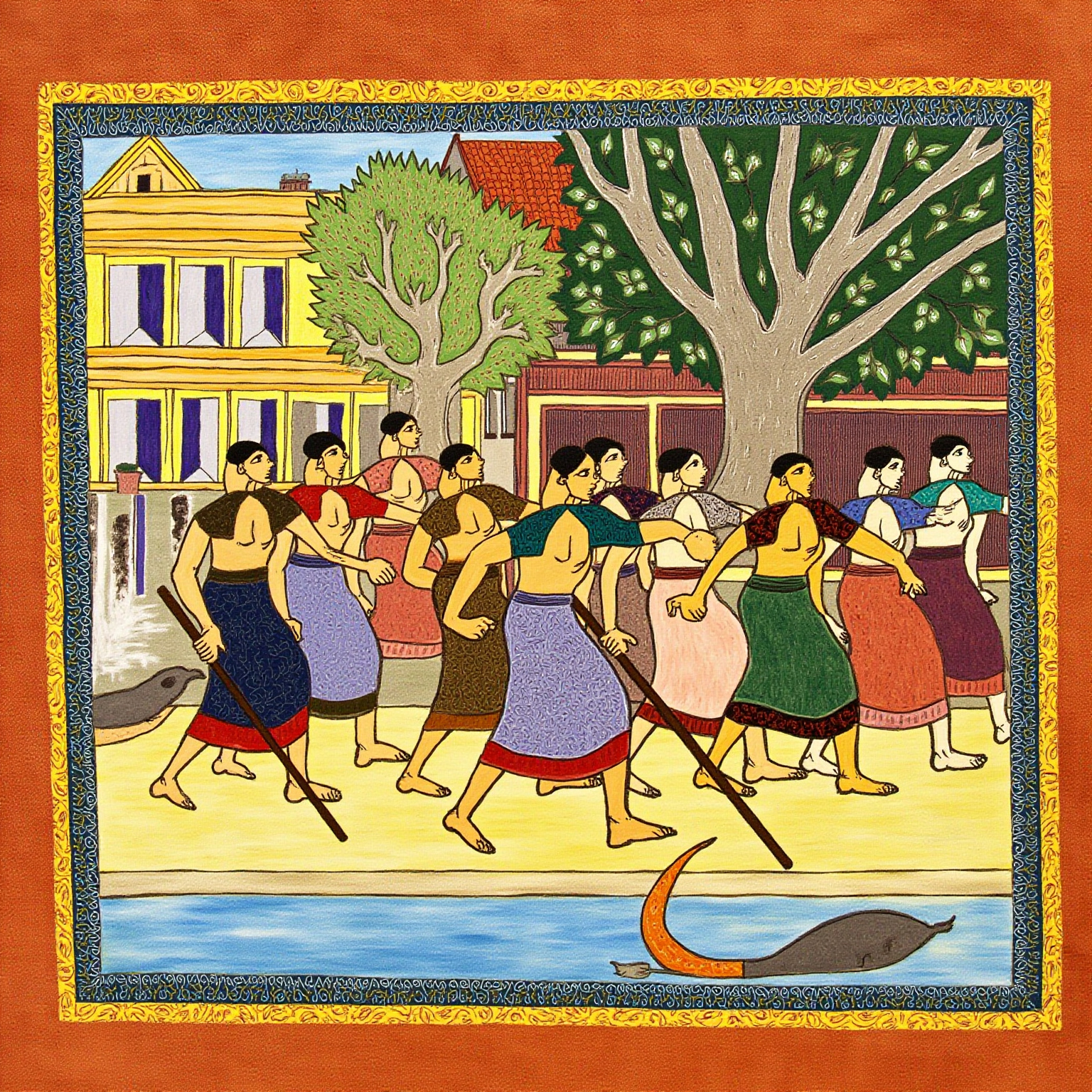
They were more than friends — they were like brothers, brought up together under the same roof.
他们不只是朋友,而是同一屋檐下长大的兄弟。
金句 · 第二章 · 同宅兄弟
On the other side stands the Paresh household. Paresh Babu is a liberal Brahmo Samaj member — one of the "Westernized traitors" in Gora's vocabulary — and his house has kept a prayer hall and a Western-style drawing room side by side for years. Two daughters live there: Sucharita, his adopted daughter, level-headed and clear-eyed, the woman Gora will fall for; and Lolita, his own daughter, the braver of the two, who later marries Binoy across the religious line dividing their families. Two couples, one on each side of the orthodoxy-versus-reform line — the novel has its powder keg laid before a single scene plays out.
How the Plot Moves
It all starts with an overturned Brahmo carriage. Binoy happens to be passing, helps the people inside, and through them gets to know the Paresh household, growing closer to them by degrees. Gora's first response, when he finds out, is to forbid it: as a die-hard Hindu, he will not have his brother consorting with "Westernized traitors." The two of them break over it — the novel's first cut, and it lands on their friendship.
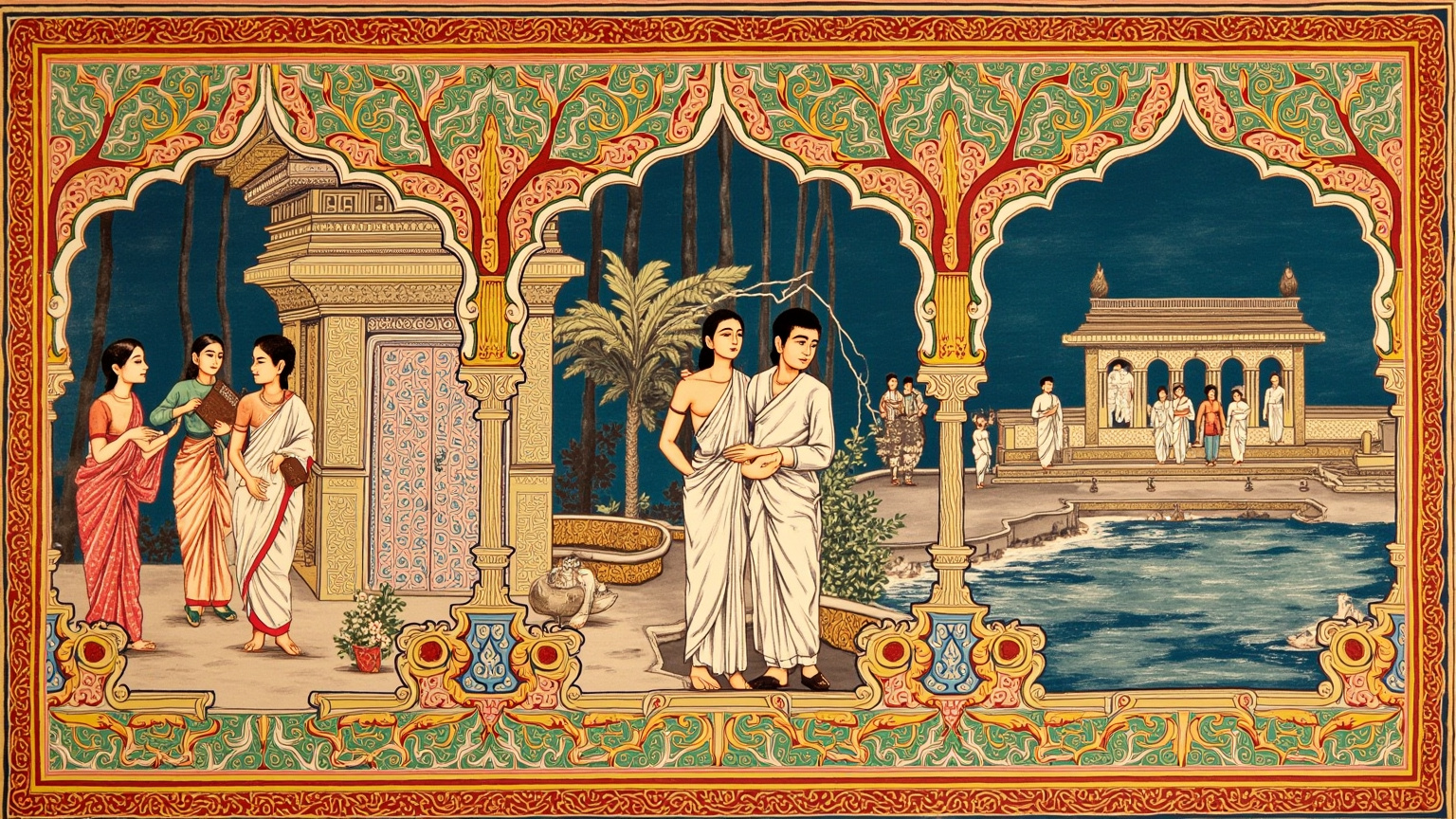
I will not have you visiting that house again — the door I have opened to no man, I open to none.
我不许你再踏进那家人的门——我的门已不向任何人开,便也再不为你开。
金句 · 第四章 · 决裂之夜
Krishnadayal, Gora's adoptive father and an old friend of Paresh Babu's, urges Gora to pay the family a visit. It's meant as a tentative overture, and it turns into another collision. The moment Gora walks into the Paresh drawing room he runs into Haran, a Brahmo Samaj orator known as Panu Babu, and the two of them go at each other in front of everyone. Haran is Bengali but carries a particular fondness for the British, which sets Gora off on the spot. In the middle of it, Sucharita declines to back Haran up, and Gora notices her for it — then takes all his anger out on Binoy instead.
Not long after, Gora goes back to the Paresh house, and this time his feelings are fully awake. He discovers he has fallen for a girl from the very camp he calls Westernized traitors. A hard-line Hindu nationalist in love with the adopted daughter of a Brahmo Samaj family — there is no clean answer to that equation. Gora picks the cruelest one available: in the name of Hindu purity, he decides to kill the feeling with his own hands, and his friendship with Binoy along with it. A man strangling the two things he cares about most, for the sake of a principle, is ten times uglier than an ordinary broken heart.
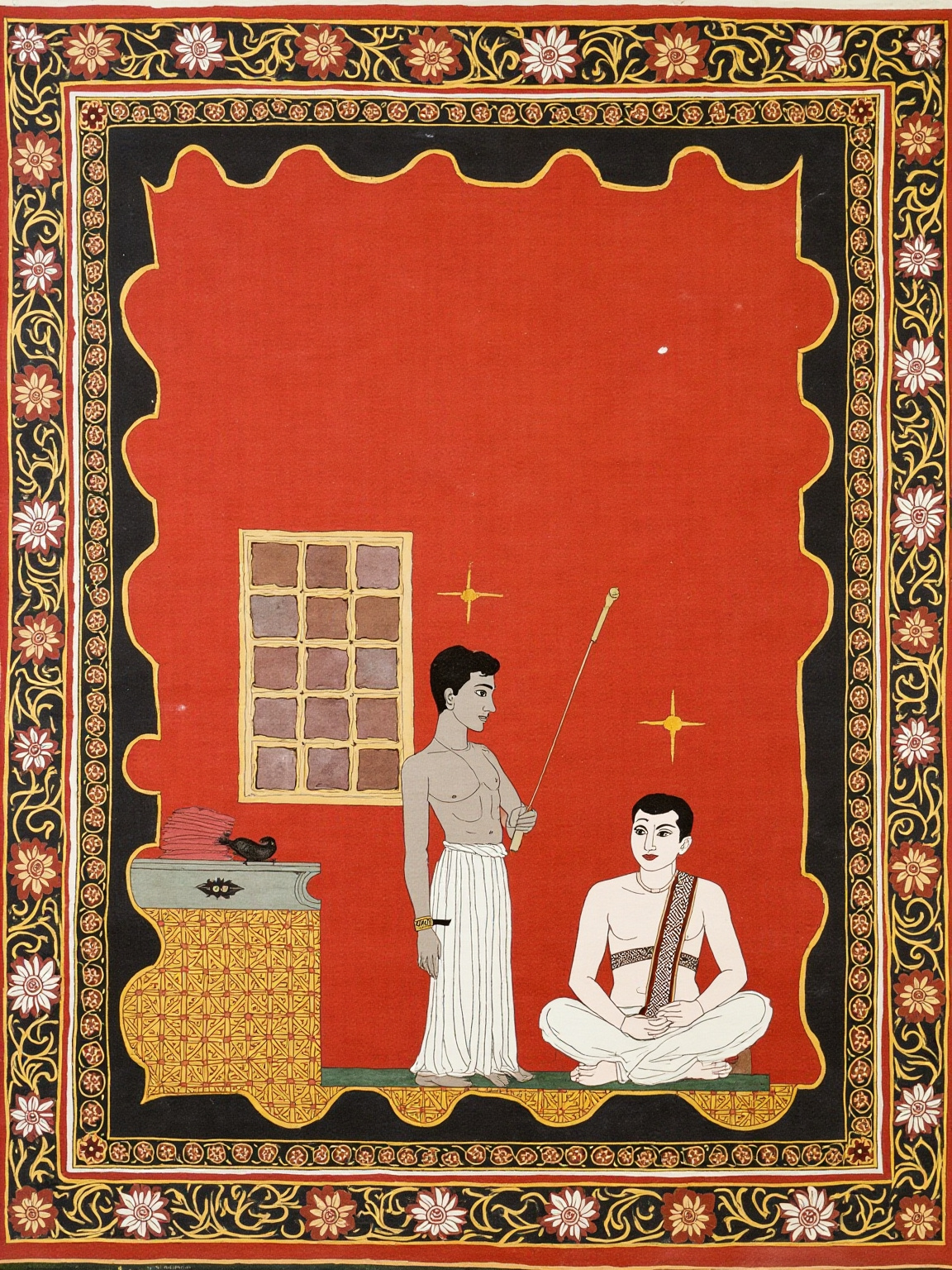
He loved her — and yet the very name of her house was a wound to his faith.
他爱上她——而她那家人的姓氏,对他正是一道信仰的伤口。
金句 · 第七章 · 帕勒席客厅
Meanwhile Binoy and Lolita go through with their marriage across the religious divide — to Gora's notion of Hindu purity, this is the one provocation he cannot forgive. Before that fire is even out, family pressure pushes Gora out into the countryside. He walks through muddy markets, ponds, and coconut groves in rural Bengal and watches laborers set aside their sectarian differences and stand together against colonial rule — and sees that the banner of "Hindu orthodoxy" he has spent his life waving has been quietly stepped around, in the mud, by the very people he thought he was speaking for. His self-deceiving fantasy of Hindu chauvinism starts coming apart from this point on, piece by piece.
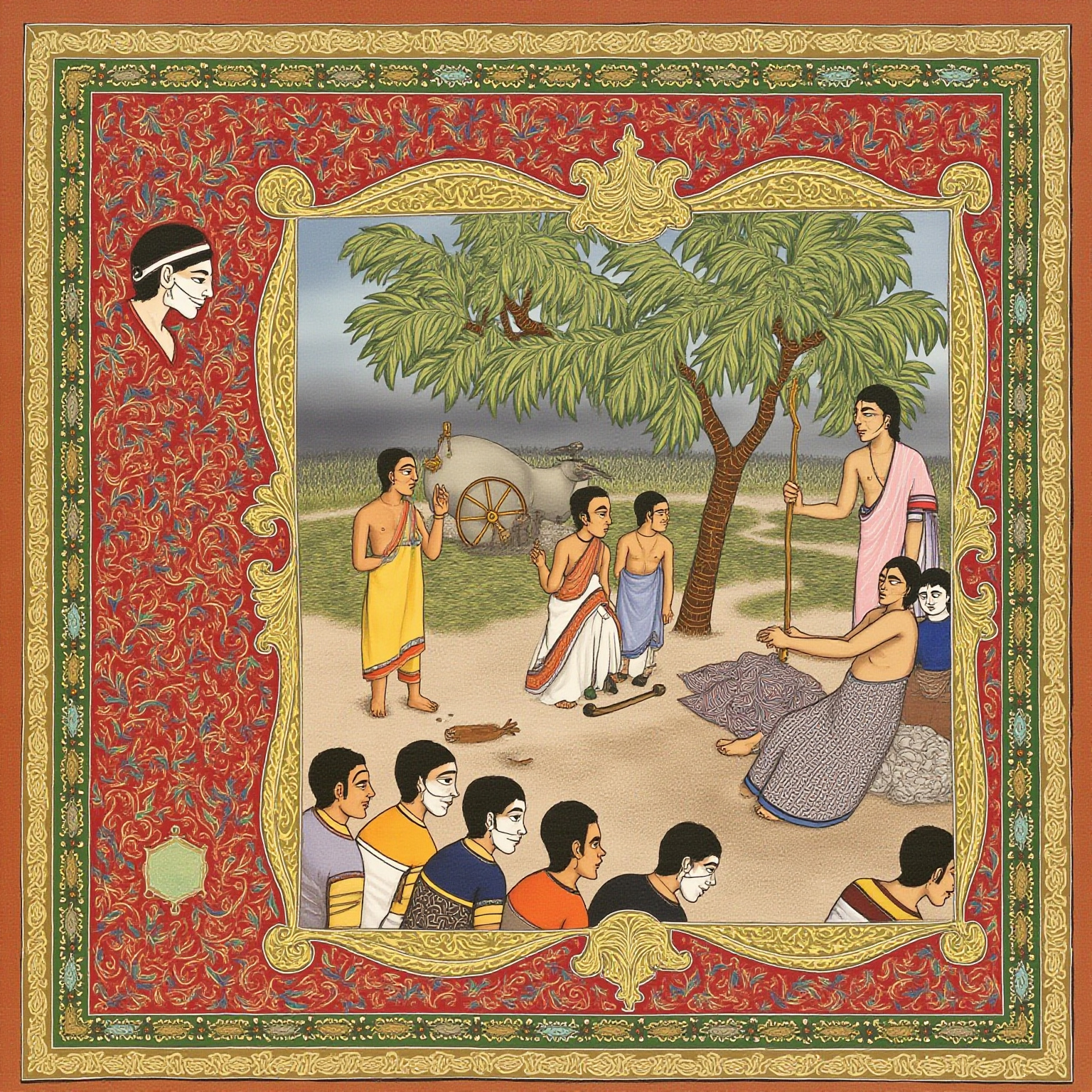
The real knife is saved for the end. Gora is preparing to undergo the ancient Hindu purification rite that will make him the purest kind of Brahmin ascetic — the high point of years of preparation. And it's at exactly this moment that he learns he is not Indian at all. He is the orphaned son of Irish parents: his father was killed during the Sepoy Mutiny of 1857, his mother died giving birth to him, and he was raised from infancy by a Hindu Brahmin family. Gora means "fair-skinned" in Bengali, and the title carries the pun the whole novel is built on — the tension between a fair-skinned young man who believes himself a Brahmin and the revelation that he is Irish sits inside that single word.
Every sacrifice he made for "Hindu principle" — his mother's love, his friendship, the love for Sucharita he never spoke aloud — suddenly has no ground left to stand on. He is not a Brahmin, belongs to no Indian caste, does not even qualify as a Hindu. Every label of identity is stripped off him in a single night, and Gora, of all things, finally lets out a breath.
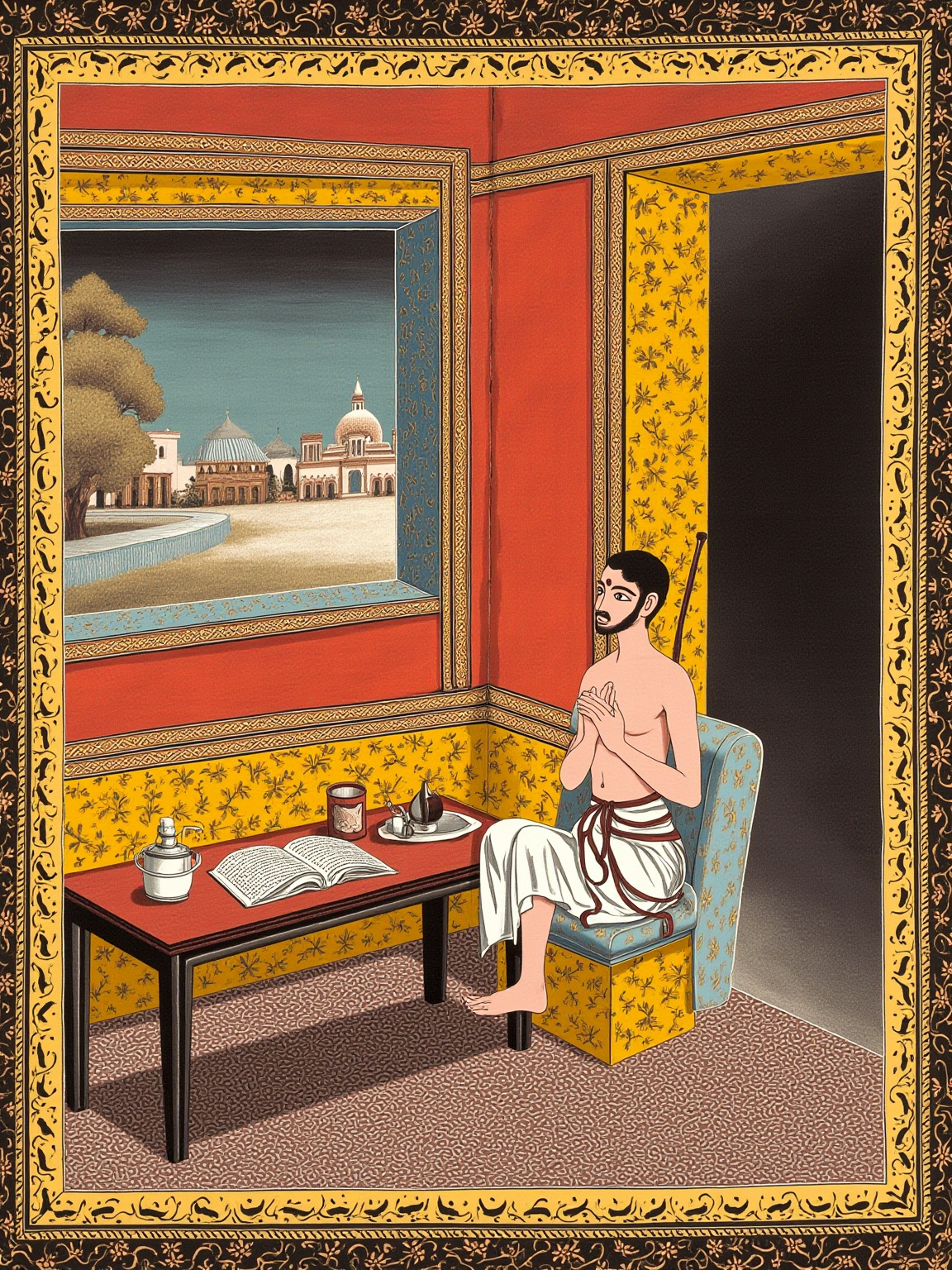
I am not of your caste; I have no caste. I am not even of your country.
我不属于你们的种姓,我没有种姓;我甚至不属于你们的国家。
金句 · 尾声 · 涤罪礼之前
Theme and Method
Stripped down this far, the novel finally says what it actually means to say. Tagore is not writing about Hinduism, and he is not writing about the Brahmo Samaj — he is writing about identity itself. A person can be packaged into any category at all by skin color, bloodline, doctrine, flag, or nationality — but once those labels are pulled away, who is he? The question got asked in a Calcutta drawing room in the 1880s, and it gets asked again today on any social network that has already tagged you with an algorithm.
Structurally the novel runs on two parallel tracks: the young men's arguments in the city drive the first half, and the laborers' anti-colonial solidarity in the countryside grounds the second. Tagore doesn't win the reader over with plot twists — he wins through the sheer density of the argument itself. The same drawing room, the same question, and people holding different positions keep colliding with it until the reader starts weighing it too. The identity reveal at the end is the sharpest cut in the entire twentieth-century Indian novel: identity is not a matter of blood, it is a matter of choice.
Why Read the Book Itself
A guide like this one hands you a map. The novel is the actual ground. This particular book rewards reading firsthand more than most — the thing it can never give you secondhand is the feeling of breath returning after every label has been stripped away. Tagore doesn't reach for a long interior monologue or a scene of weeping when Gora learns the truth. He writes something much lighter, almost purely physical: a release. A man who has clenched his fist for twenty years lets go, and his shoulders react before his eyes do. No summary can reconstruct that kind of physical sense. Then there are the long arguments in the drawing room — the moment Sucharita refuses to back Haran up, the halting silence when Gora's feelings for her first stir — the rhythm of it lives between the sentences, and you only catch it by walking through them yourself, line by line.
A person can be packaged into any category at all by skin color, bloodline, doctrine, or flag — but once those labels are pulled away, who is he?
Art Direction4 plates
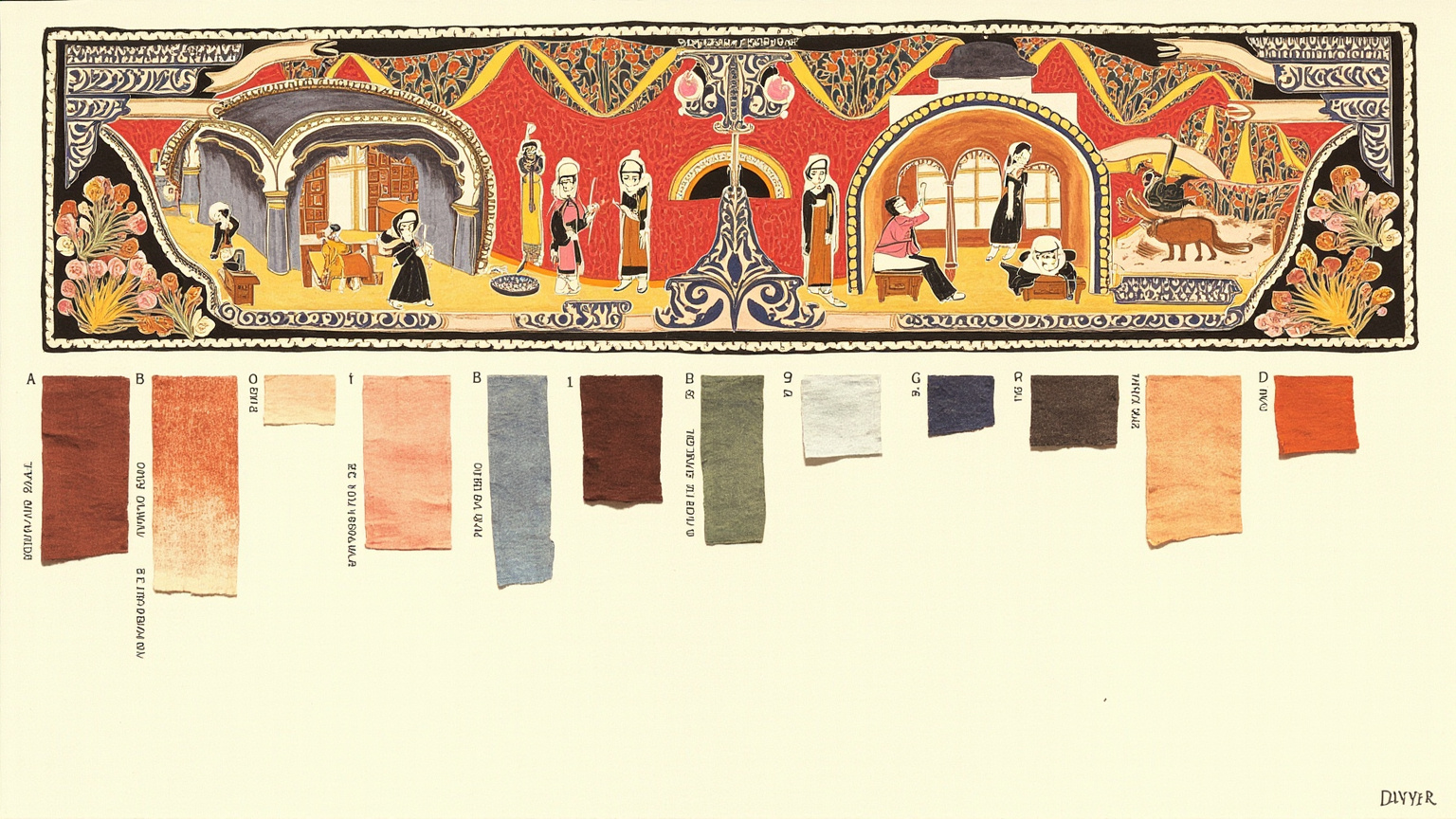
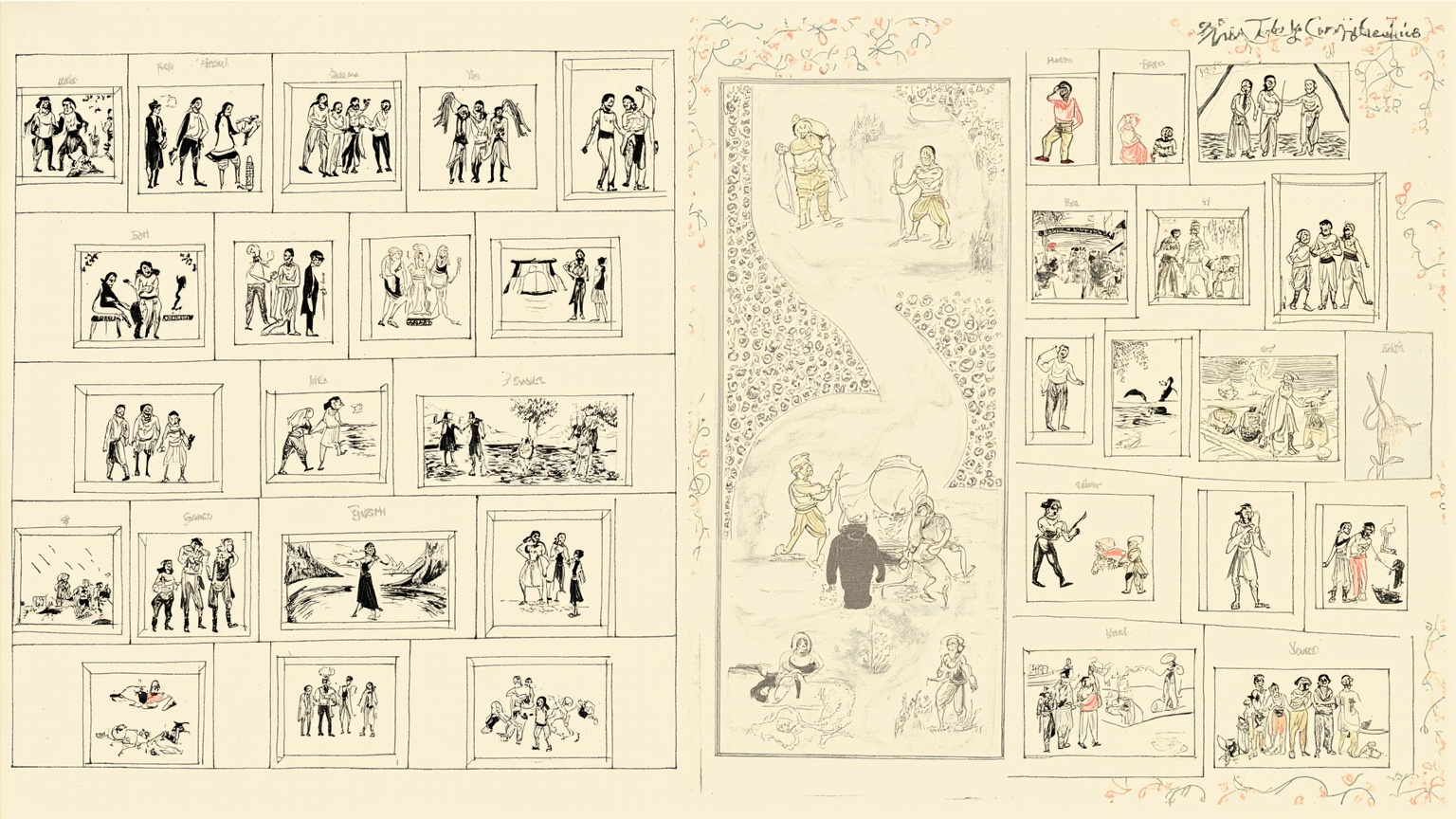
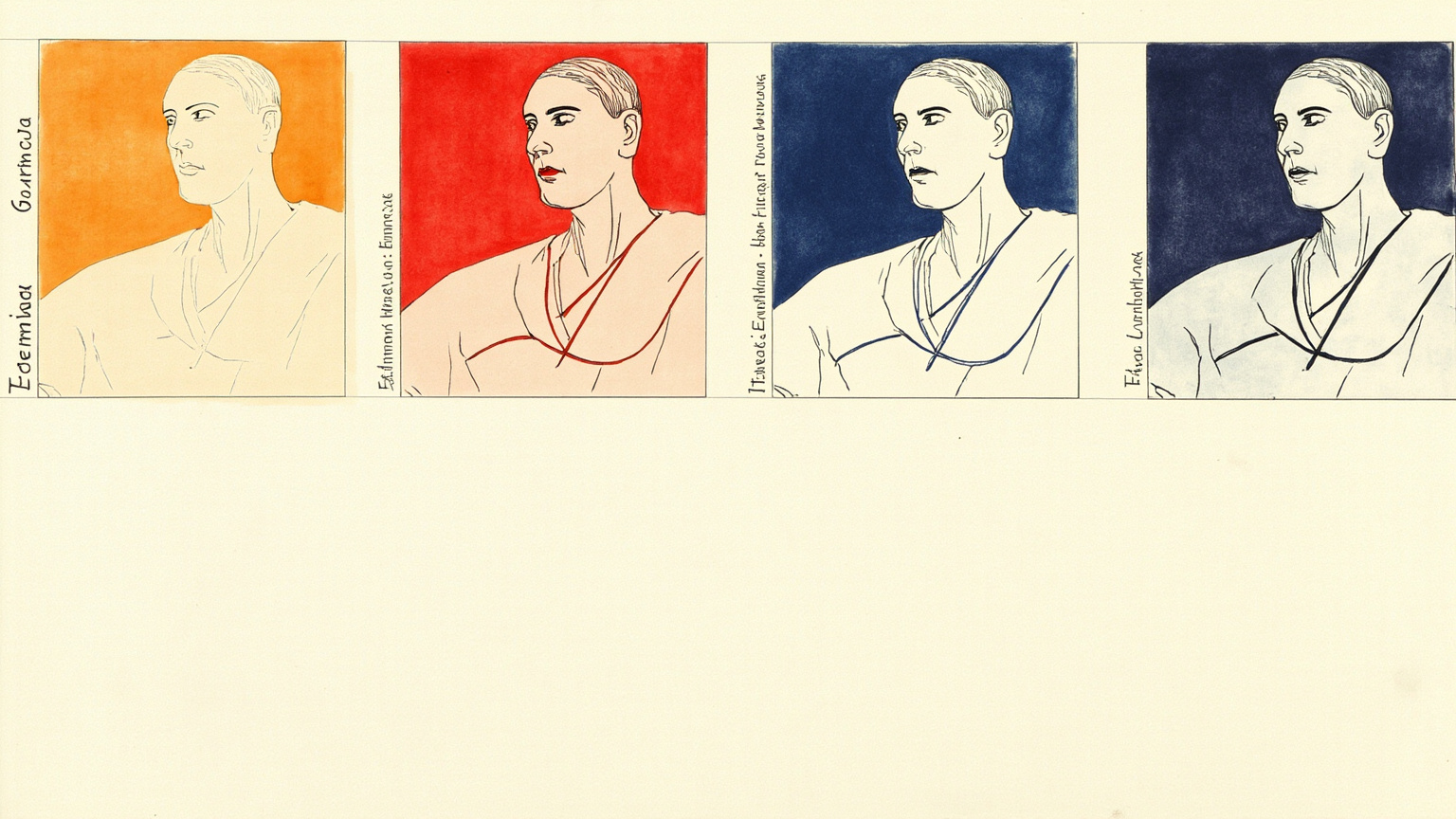
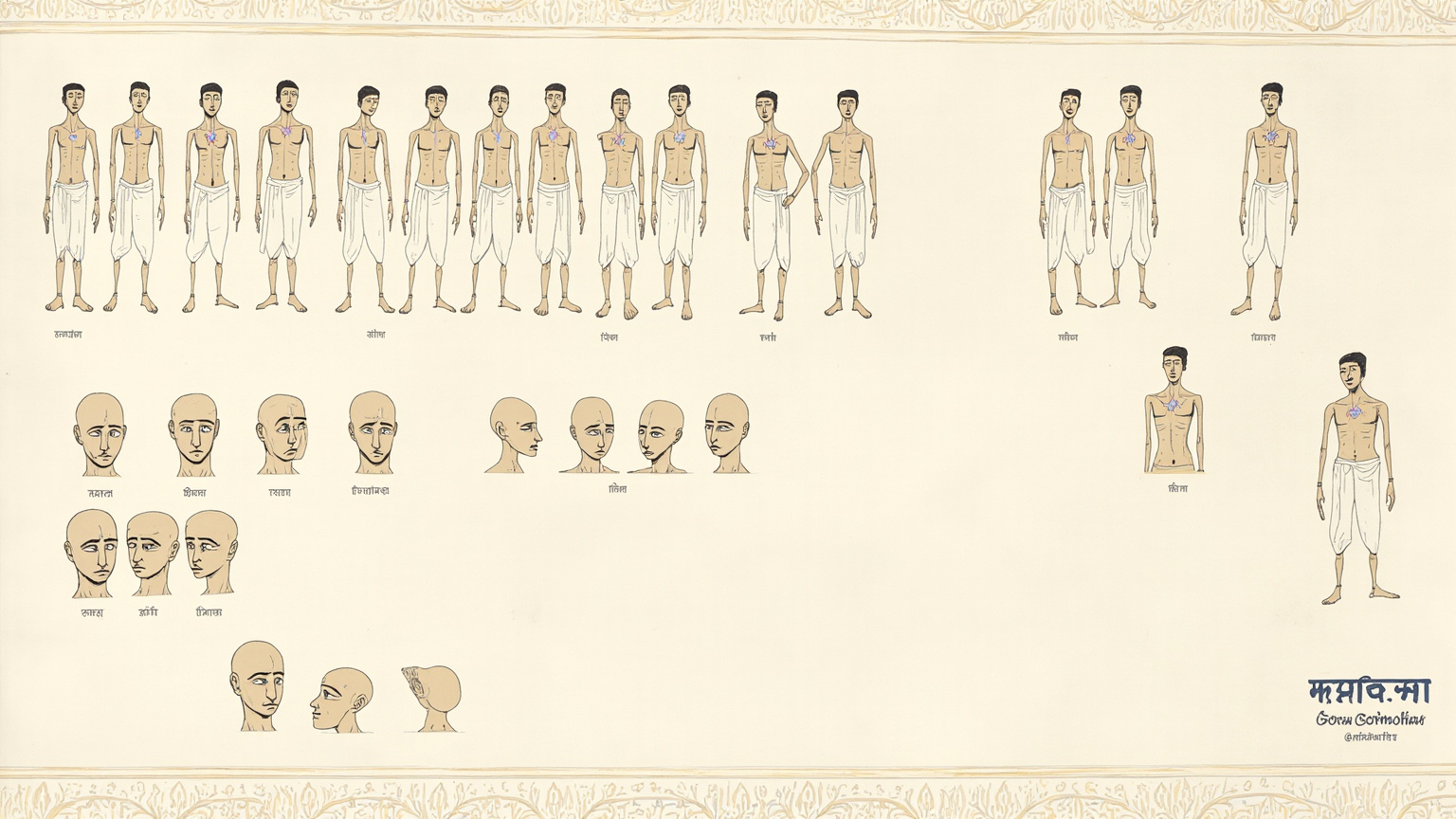
Before the guide was written, this book got a visual foundation — every illustration you just read grew out of it.