Green Mansions: A Romance of the Tropical Forest · Companion Guide
绿厦
一场失败的政治密谋将他抛入原始雨林,在那里,他遇见了通晓百鸟语言的森林少女——爱与毁灭,自此同时降临。
Opening hook: a rainforest execution by fire
At the foot of a towering rainforest tree, firewood is stacked waist-high, and flames are already licking up the bark. At the top of the canopy stands a girl wrapped in gauze, while hunters below wave torches and shout. She has not been chased there by an animal, and she has not slipped and fallen — her own neighbors drove her up. What waits for her below is not rescue. It is fire. This is the page in an old book that the English writer W. H. Hudson makes almost unbearable to turn, and it is his elegy for a rainforest.
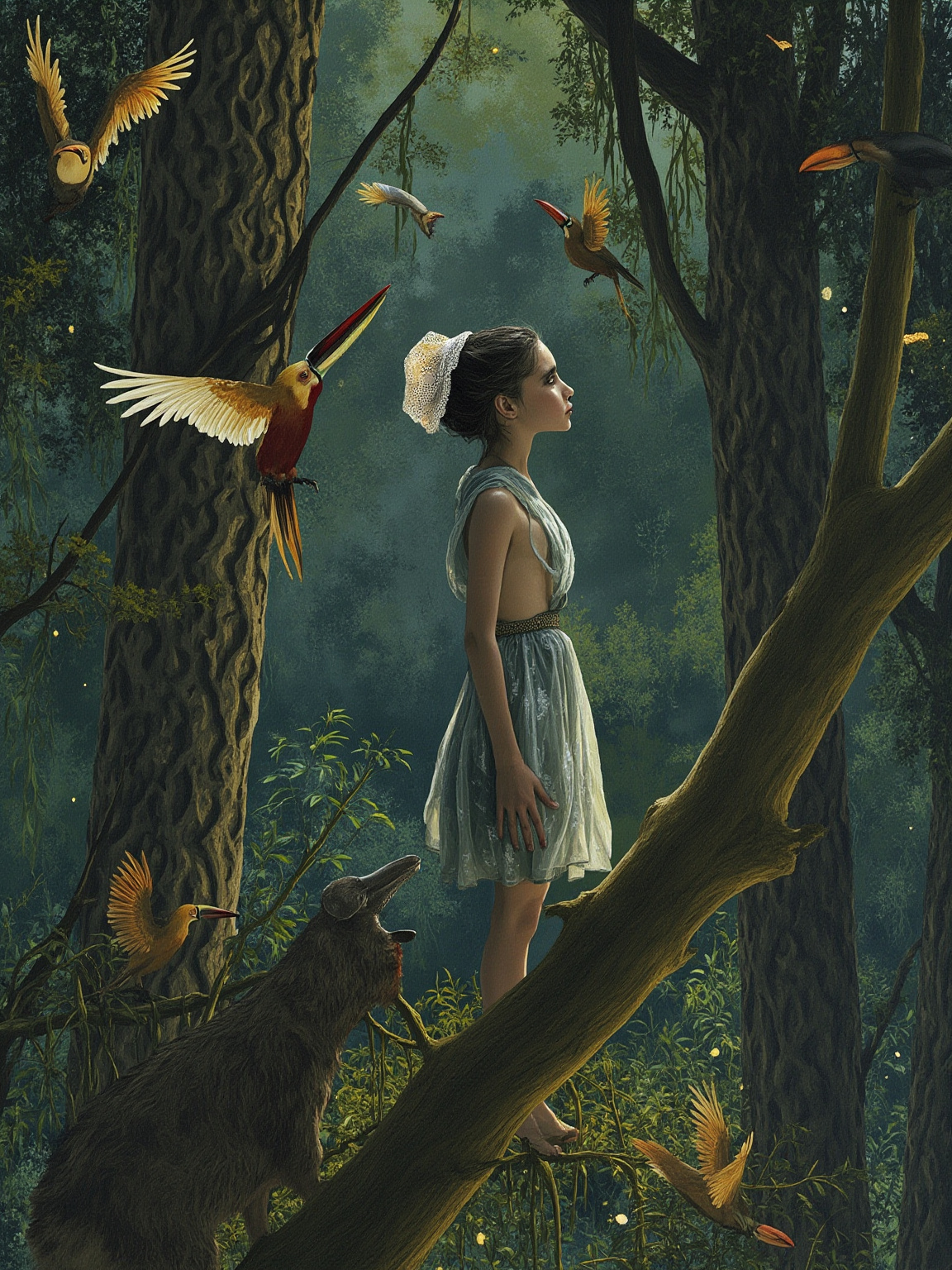
Led by this wandering tricksy being, I came to a spot where the trees were very large and the damp dark ground almost free from undergrowth; and here the voice ceased to be heard.
我被那个游移不定的精灵引着,来到一片巨木参天、幽暗潮湿、几乎不见林下灌木的地方;歌声也在此停了。
原文金句 · 第一章 · 林间魅影
What kind of book is this
Green Mansions came out in 1904. Its author, W. H. Hudson, was an interesting oddity: born in Argentina, raised on the pampas, he made his living as a naturalist, spent his life studying South American birds and butterflies, and only took British citizenship late in life. He was not a novelist inventing scenery from a desk; he had actually crouched in the rainforest and watched. So the book runs on two registers at once, a naturalist's precise notes braided with mythic romance, and together they produced Rima, the earliest and most famous forest spirit in English literature.
Characters and world: a man fleeing into Eden
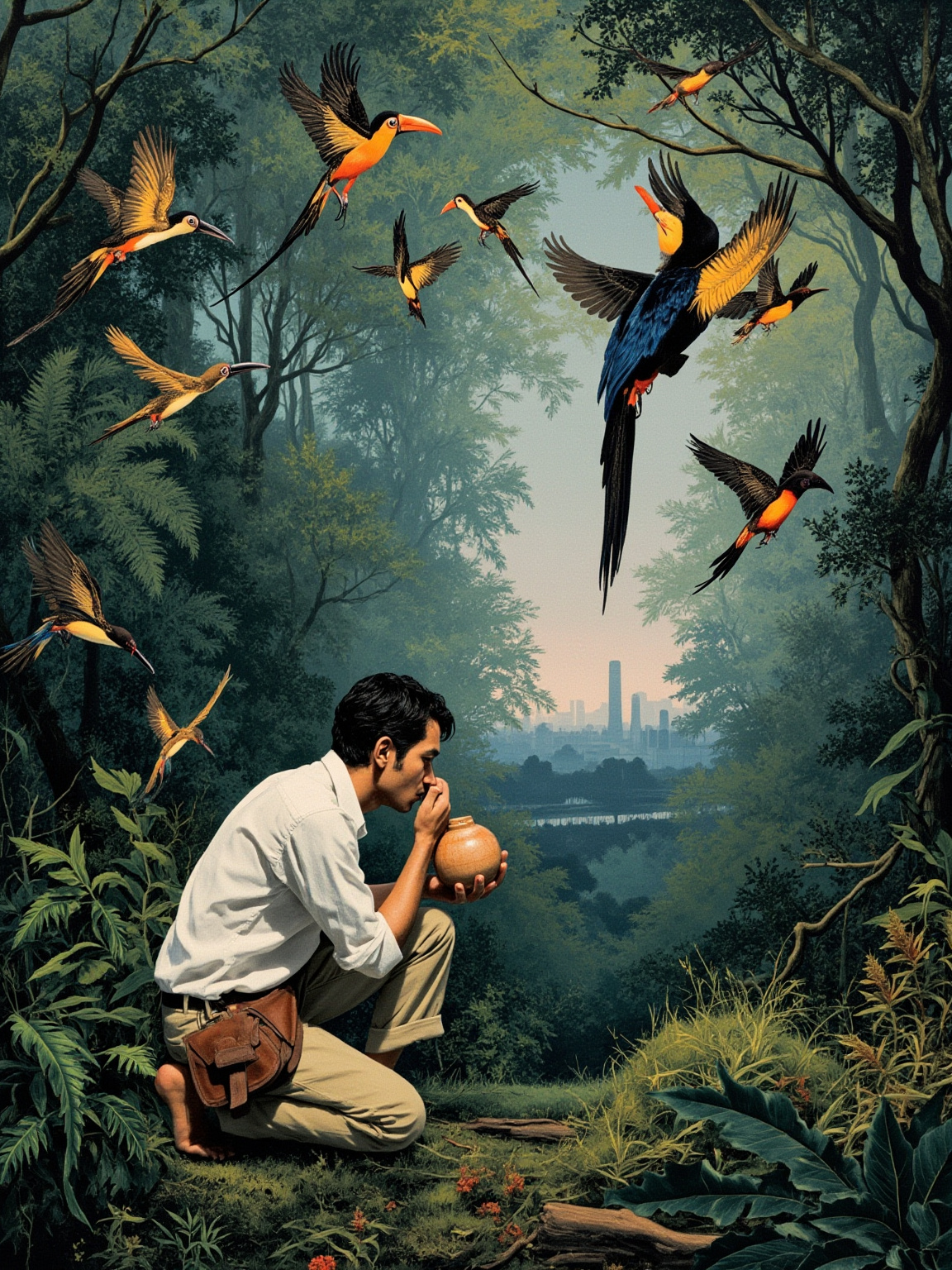
The story opens with a young Venezuelan named Abel. He gets caught up in a political conspiracy in Caracas, it fails, and he has to run. Run where? Into the untouched interior rainforest of Guayana, to hide among the tribe of an Indian chief named Runi. With nothing to do in the village, he plays a little guitar and tags along with the young hunters — the days drag by, as if civilization had expelled him and dumped him at the edge of the world. The tribe warns him again and again: the dense forest past the village is forbidden ground, home to an evil spirit called Didi, and no one who meets it lives. Abel goes in anyway. He is a man in exile; taboos hold little power over him. He took on politics itself, so why would he flinch at a forest legend?
A song in the forest: meeting Rima
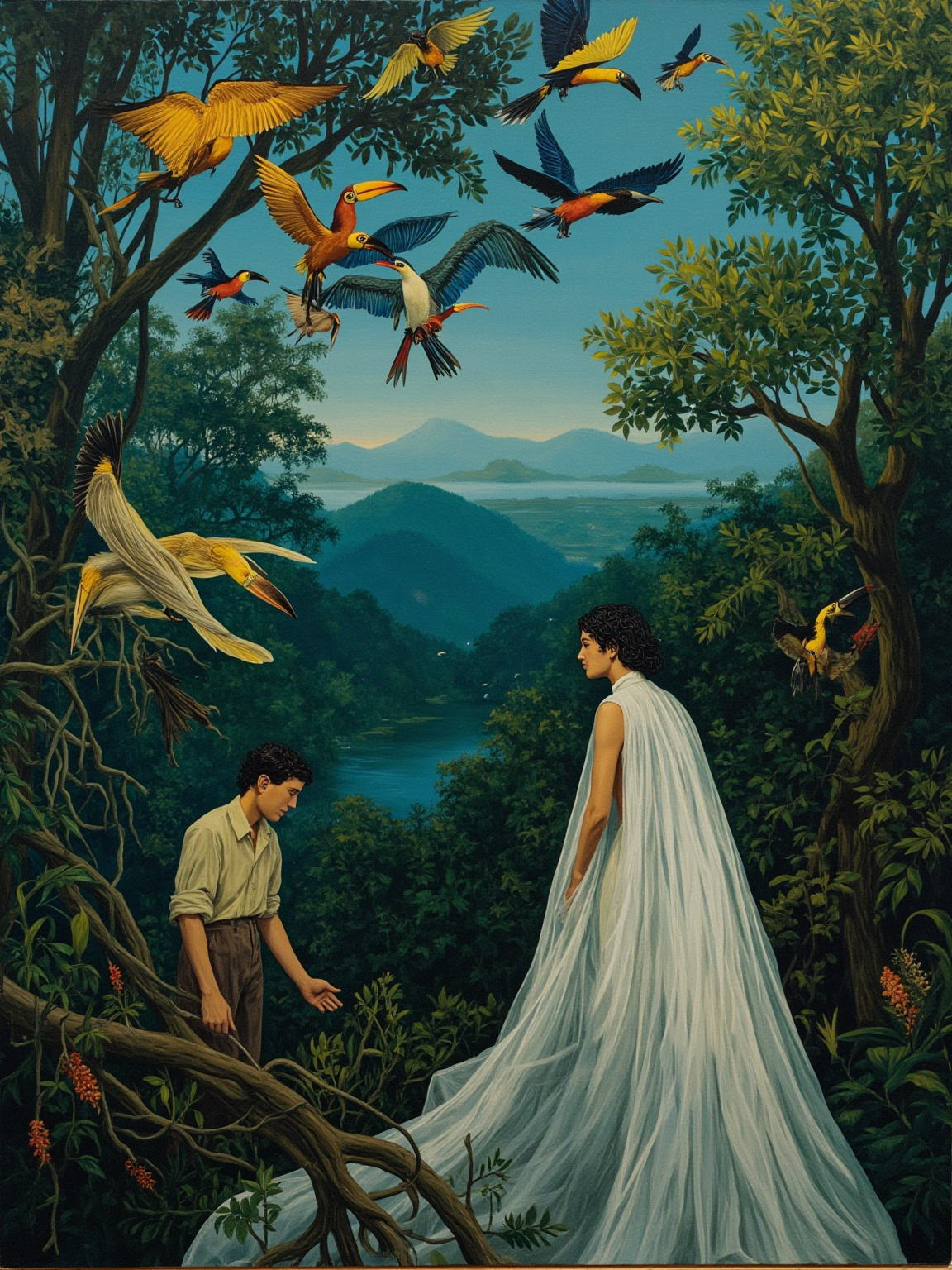
He hears a human voice woven into birdsong. He follows it and finds a girl wrapped in gauze as fine as spider silk, standing barefoot on the moss, trading calls with a flock of forest birds. Her name is Rima, seventeen years old, the darling of the whole rainforest — birds land on her shoulders, squirrels eat from her palm, even snakes give her a wide path. The tribe has turned her into legend, daughter of Didi, a man-eating spirit, but standing in front of Abel she looks like nothing more than a child fallen out of a fairy tale. Rima takes the wounded intruder back to where she lives, a plain hut deep in the forest, shared with the old man who raised her, Nuflo. Over the days it takes him to heal, the two of them move from curiosity to closeness, to a reluctance to look away from each other. She opens her palm, and a hummingbird drops out of the canopy and settles into it without a tremor. Hudson is not writing a person here. He is writing a small animal just learning to trust a stranger.
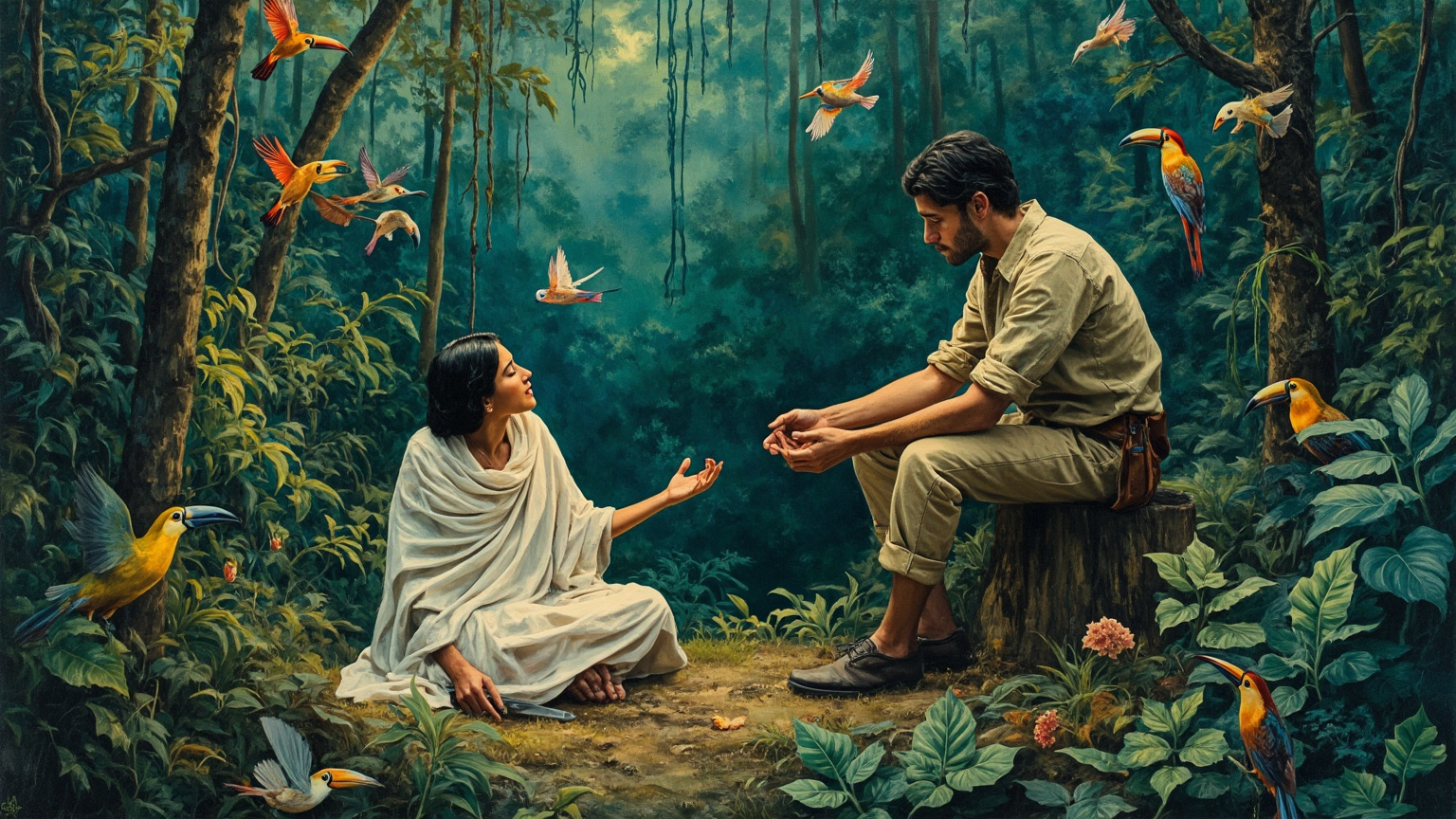
At once I threw it from me, and instantly there was a change; the resentment had vanished, and a tender radiance lit her face like a smile.
我立刻将石头扔开;霎时间,那怨恨便消散了,一片温柔的光亮起来,仿佛微笑般映在她脸上。
原文金句 · 第二章 · 扔开的石子
A history pried loose: Nuflo's old crime
Even Rima does not fully know her own history. One word keeps surfacing in her mouth: Riolama, a legendary sacred mountain her mother spoke of again and again while she was alive. Rima invokes her dead mother's name to force Nuflo to talk, and the old man finally stammers out a story from seventeen years back: in his younger days he was a bandit who robbed and killed, and once, in a cave at Riolama, he saved a badly wounded woman of some other people, a woman who spoke a language like birdsong. She was Rima's mother. She gave birth to Rima and died on the spot, and Nuflo carried the infant down the mountain and never spoke of it again. A killer raised an orphan for seventeen years, and by now guilt and devotion are so knotted together that no one, not even Nuflo, can pull them apart.
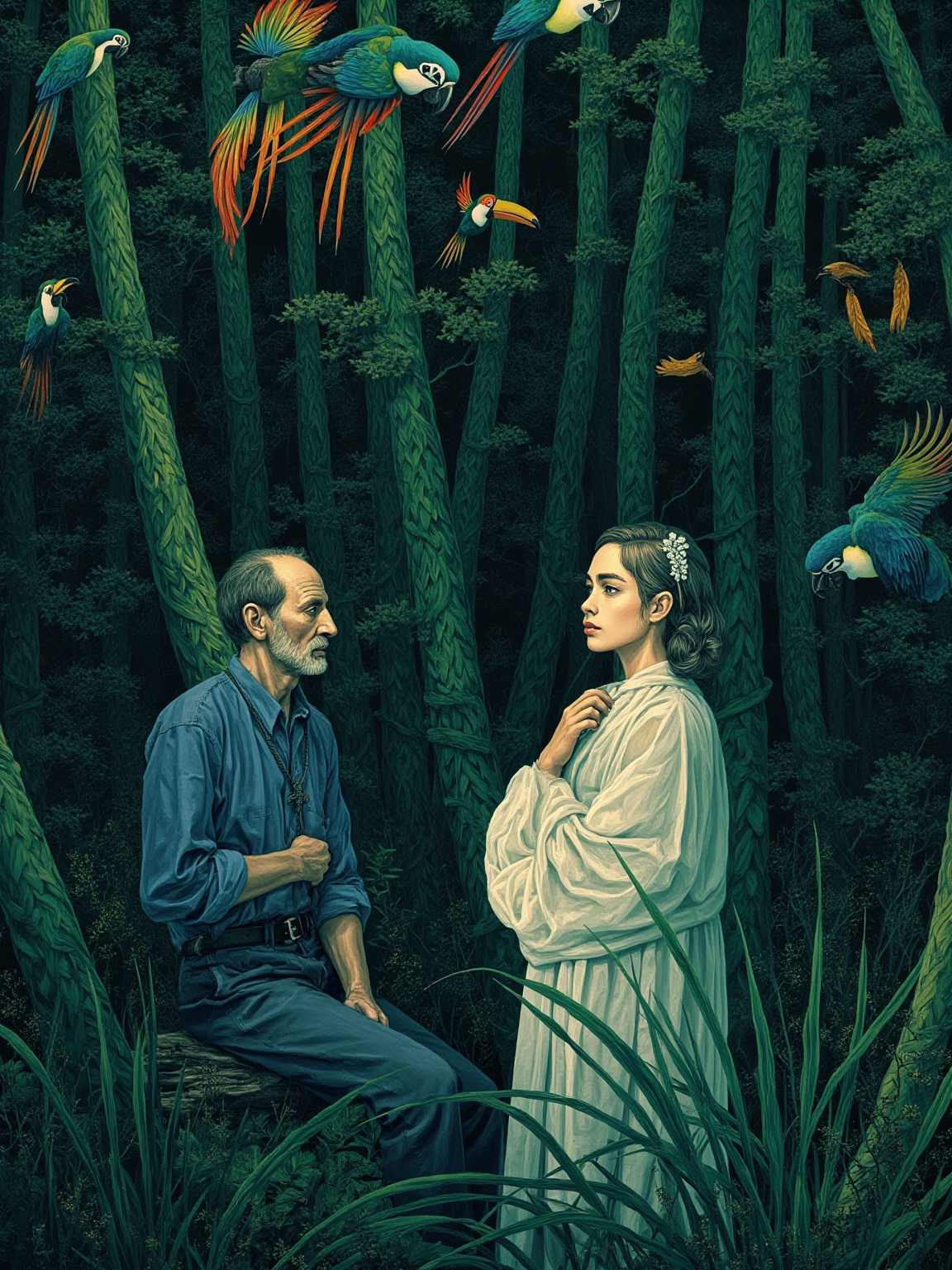
I returned, "your story explains why she can call a wild bird to her hand, and touch a venomous serpent with her bare foot and receive no harm."
你的话正好解释,为什么她能把野鸟叫到手上,用赤脚触碰毒蛇而毫发无伤。
原文金句 · 第六章 · 森林之女
The journey to Riolama: the last of her kind
The three of them set out. After days of trekking through the rainforest they reach Riolama. The mountain is real; what they find on it is not comforting: a few collapsed grass huts, a scatter of bleached bones. Rima's people, a gentle tribe that never made war, had already been wiped out by plague and by the tribes around them. She has not come home to find family. She has come to gather remains. She kneels beside the bones without speaking, and Abel cannot find one word of comfort worth saying. Hudson does not let Rima wail, and he does not let her curse the sky. She simply understands: from now on, there is no one left alive who speaks her language. She is the only copy, the last line of a genealogy that has been cut off.
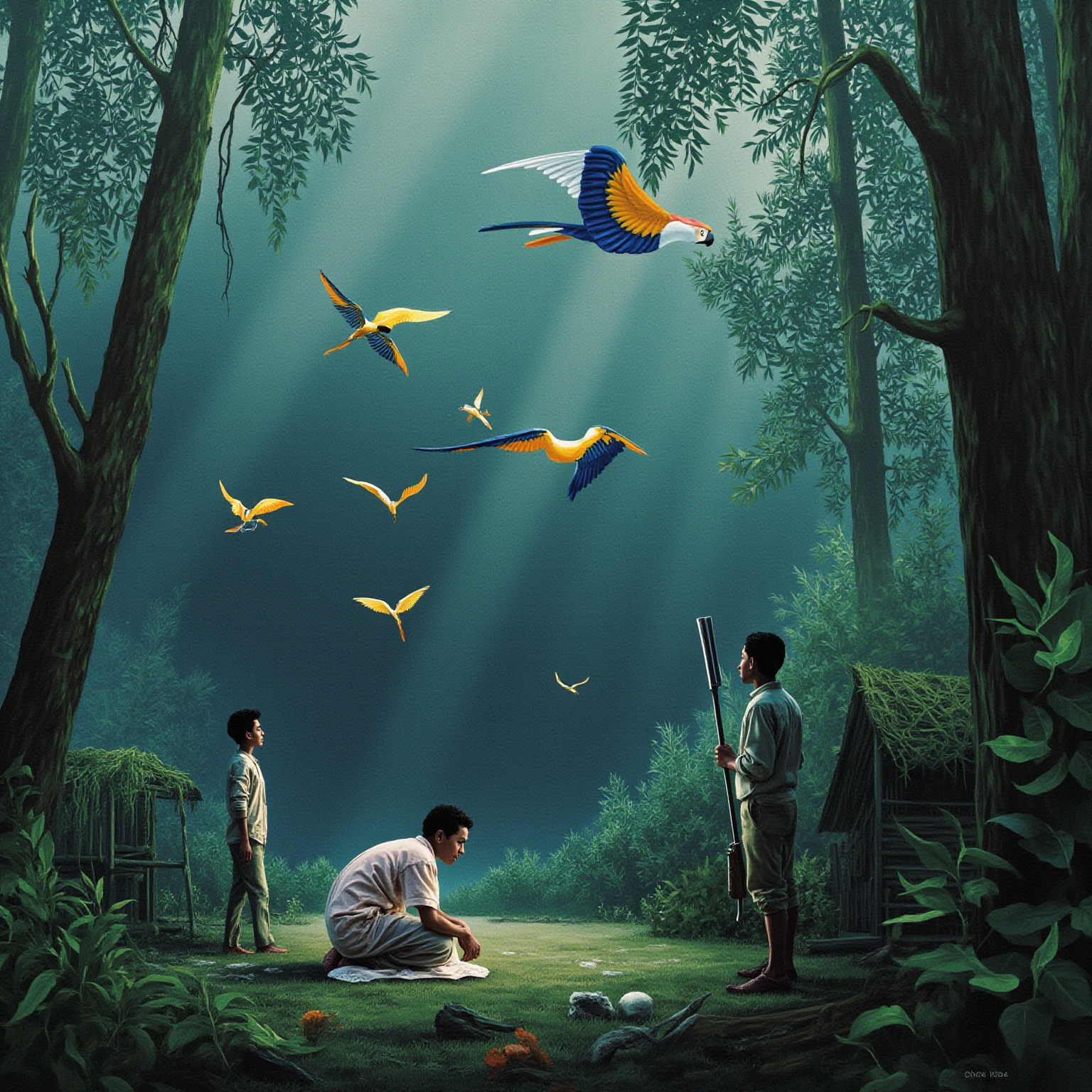
How it pierced my heart with pain to speak plainly to you as I did on the mountain tonight--to kill the hope that had sustained and brought you so far from home!
今晚在山上,我那样直白地对你说,心里痛如刀绞——要亲手杀死那个支撑你跋涉至此的希望!
原文金句 · 第十三章 · 利奥拉玛
The hunt and the burning tree: innocence treated as prey
On the way back the rain will not let up, and a flash flood strands Abel and Nuflo for several days. Rima, thinking ahead to a home for the two of them in the forest, hurries on alone. The moment she leaves, the forest's invisible protection goes with her — while she lived, birds kept watch for her, animals gave her a wide berth, and even hunters were wary of that stretch of ground. With her gone, the young men of Runi's tribe, who had distrusted her all along, finally act. Kua-kó and his group corner her in a clearing, force her up into a tall tree, and pile wood at its base and set it alight. The higher Rima climbs, the closer the fire follows; she does not fall — she is burned until she can no longer hold on, and only then falls. At the moment she falls, the name she calls out is Abel's. The crack of burning branches giving way, the hunters stepping back half a pace in sudden fear, the way that last name trails off across the clearing: none of this survives in summary, but together it makes the most suffocating passage in the whole book.
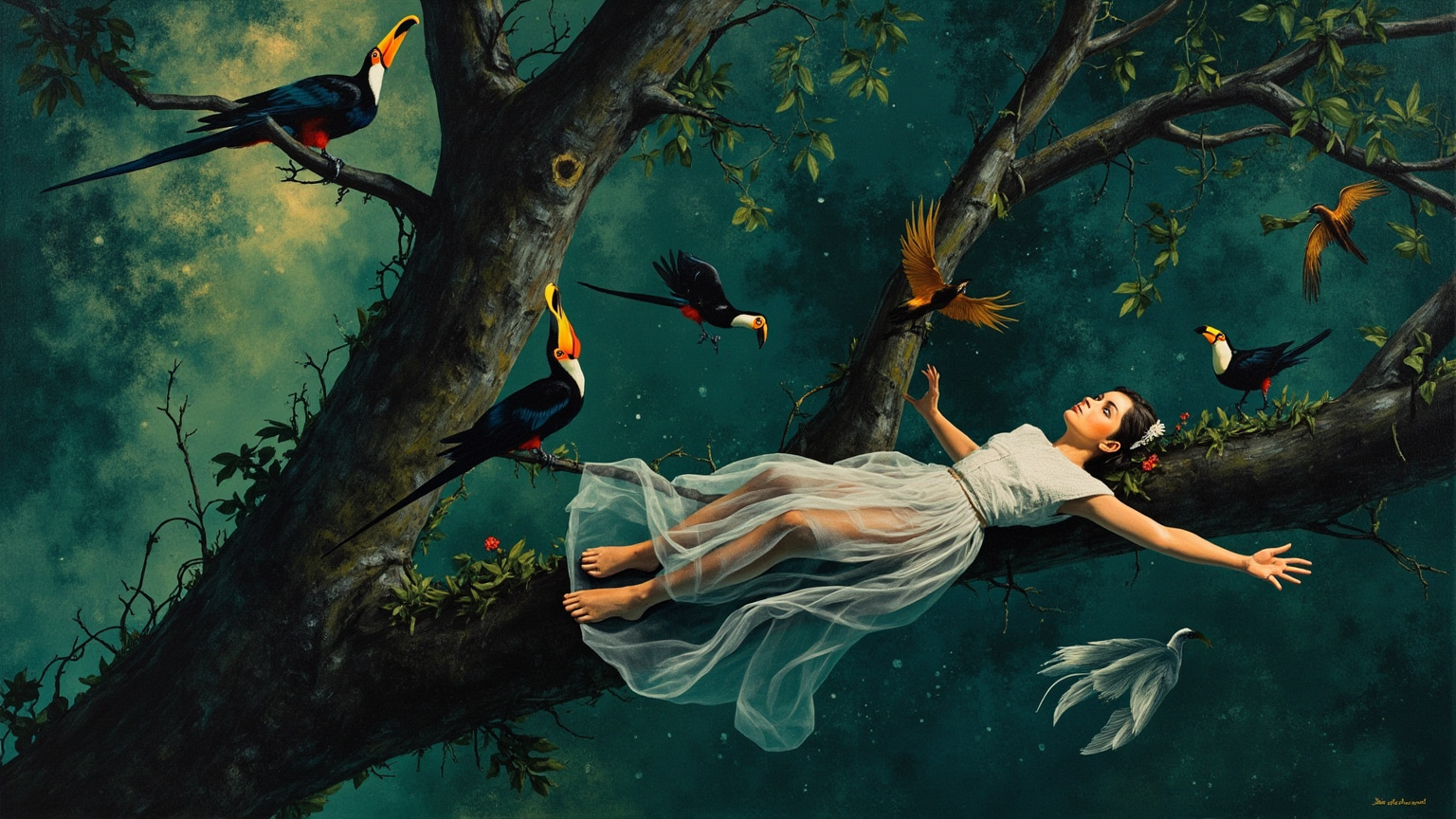
Crying, she hid her face against my neck, murmuring sadly between her sobs: "Never--never!"
她哭着把脸埋在我颈窝,在啜泣间哀伤低语:「不——不!」
原文金句 · 第十四章 · 离别的预言
A borrowed knife: Abel's revenge
When Abel gets back, all he finds is a blackened stump and smoke that has not yet cleared. He does not cry, he does not stand frozen. He turns and walks, straight to the camp of Managa, Runi's tribal enemy. He is not going to fight alone. He is going to borrow a blade. He tells Managa's people: Runi's men killed the spirit of the forest, and can even old enemies stomach that? Managa's men strike the following night, a bloody raid on Runi's village. Abel sits it out in the forest at a distance, listening to the shouting rise and then fall silent, and only then goes to gather Rima's remains. This is a man using civilization's own tools, planning, persuasion, human lives moved like pieces on a board, to carry out the most primal act there is.
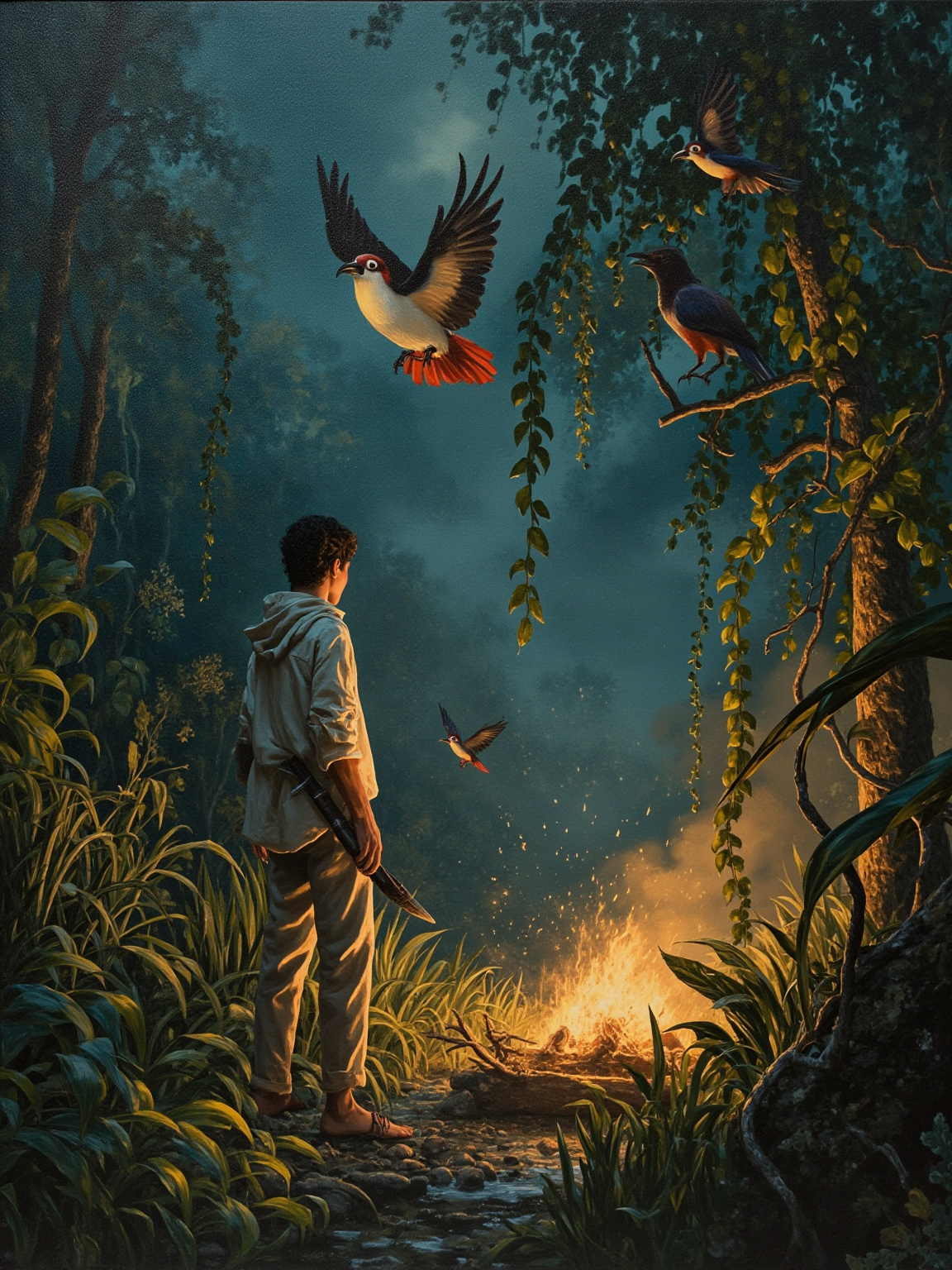
"But I should not let you go alone, Rima--your lonely days are over now."
「…但我不会让你独自去的,丽玛——你孤单的日子已经结束了。」
原文金句 · 第十四章 · 最后的承诺
Theme and craft: a naturalist writing an elegy
What makes Green Mansions so effective is how it packs precise natural history into a mythic register. Hudson can tell you which parrot calls at which hour, can name forty rainforest orchids by their Latin names, and yet he never shows this knowledge off for its own sake — instead it becomes the light that Rima gives off. She is not a fairy the author invented from nothing; she is a child the rainforest itself raised, and every living thing in it knows her. That is exactly why her death lands as a real death: an ecosystem, a language, a bloodline all end at once. Hudson was writing at the height of industrial expansion, at the turn of the twentieth century, and his cry of green mansions reads less like romance and more like a warning.
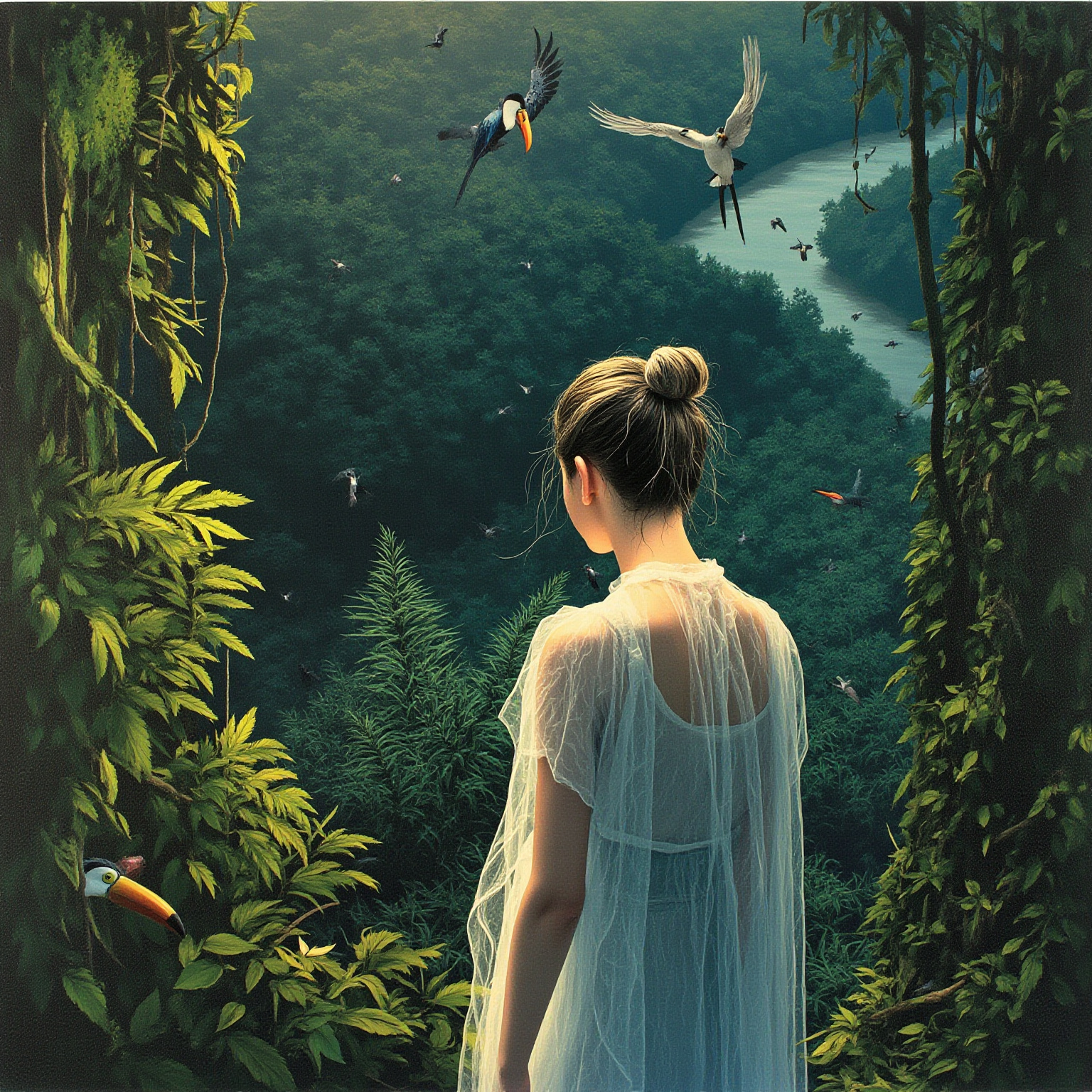
The paradox of civilization: the intruder is the destroyer
Abel is the character worth chewing over longest. He walks into the rainforest carrying a guitar, the memory of a political conspiracy, and the whole calculating machinery of civilization, believing himself the exile, when in fact he is the one carrying the infection. His love for Rima is real, but the shape that love takes, possessing her, naming her, planning out a future for her, is already the possessiveness of the civilized world. The massacre he sets in motion at the end is not the rainforest turning savage. It is civilized method winning out over a savage world: a few well-chosen words are enough to make another tribe bleed on his behalf. Eden was not destroyed by the serpent. It was destroyed by the tourist who admired it.
Why you should read it even knowing how it ends
A summary can tell you that Rima dies, that Abel takes his revenge, and that he spends the rest of his life alone with her ashes — but those facts on a page are a different thing entirely from the same facts inside Hudson's rainforest. Only the full text lets you smell the damp air fermenting with nectar and rotting leaves, lets you hear the sound of Rima trading calls with the forest birds, something between a glass wind chime and a mountain stream. Only there do you see Abel, retelling it all in a London drawing room, pressing his fingers one by one against the cold graphite mantelpiece, holding down a lifetime of ashes under a voice pitched far too calm. A summary gives you the map. The text is the land, and this is land worth walking yourself.
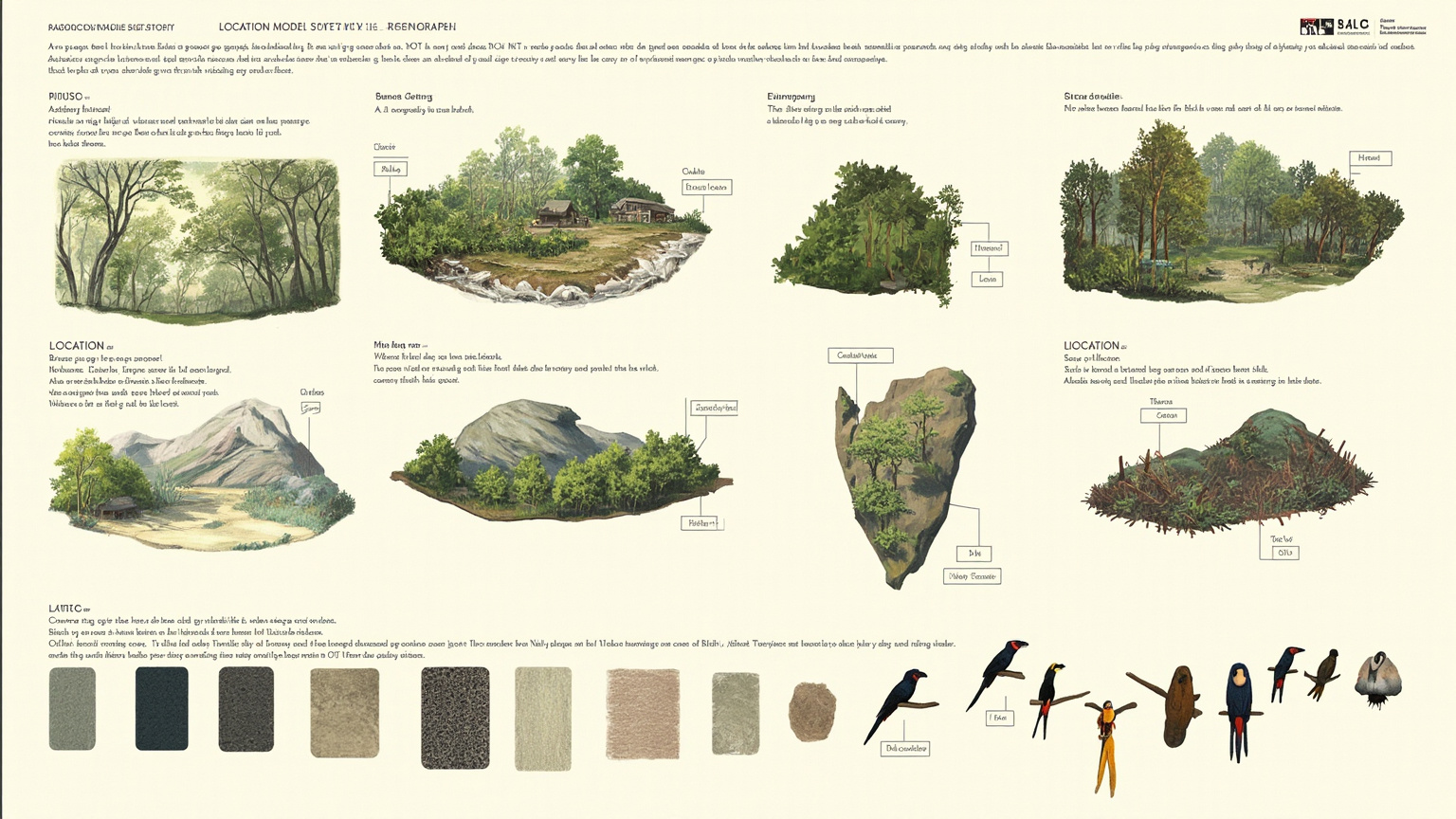
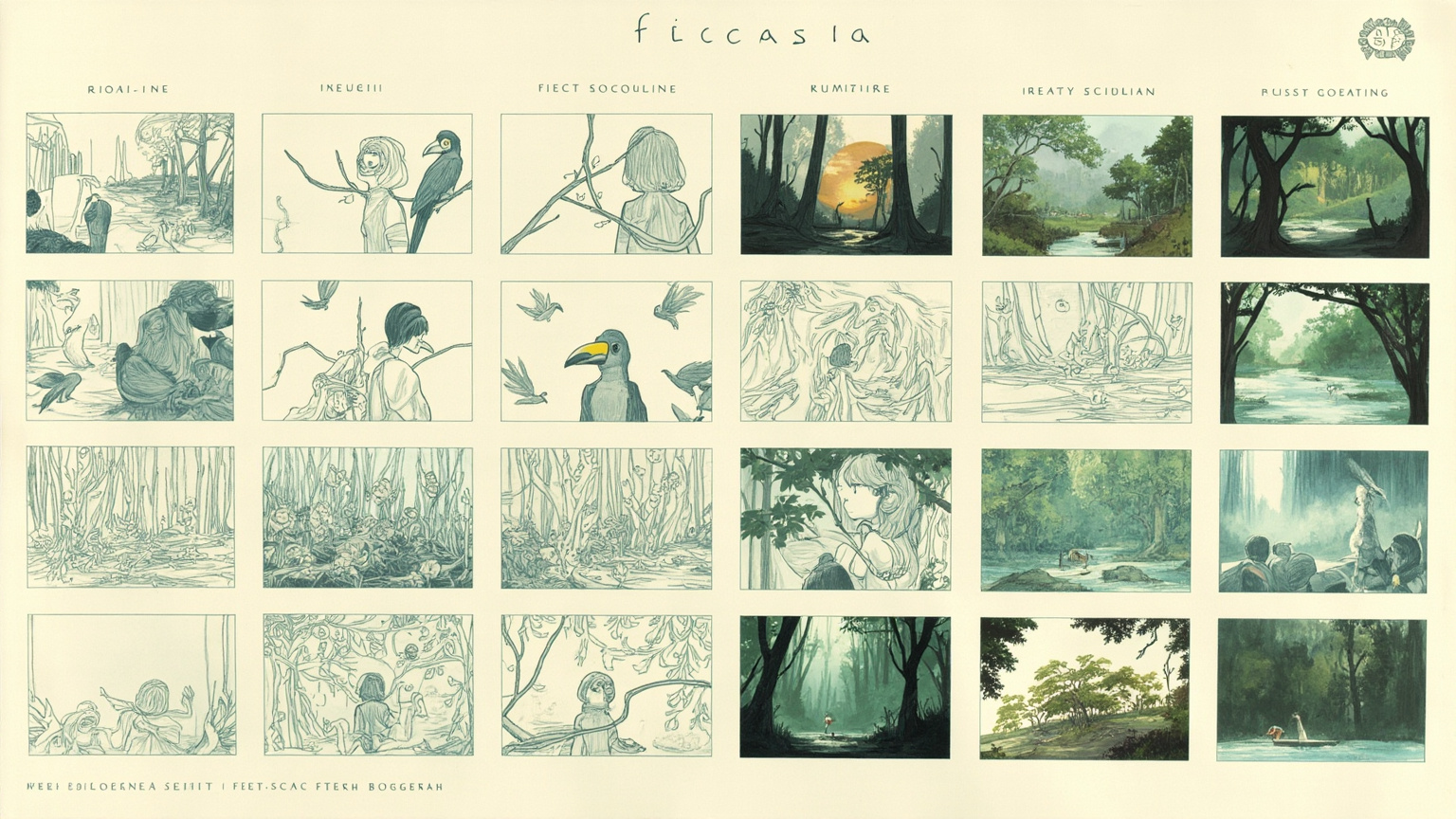
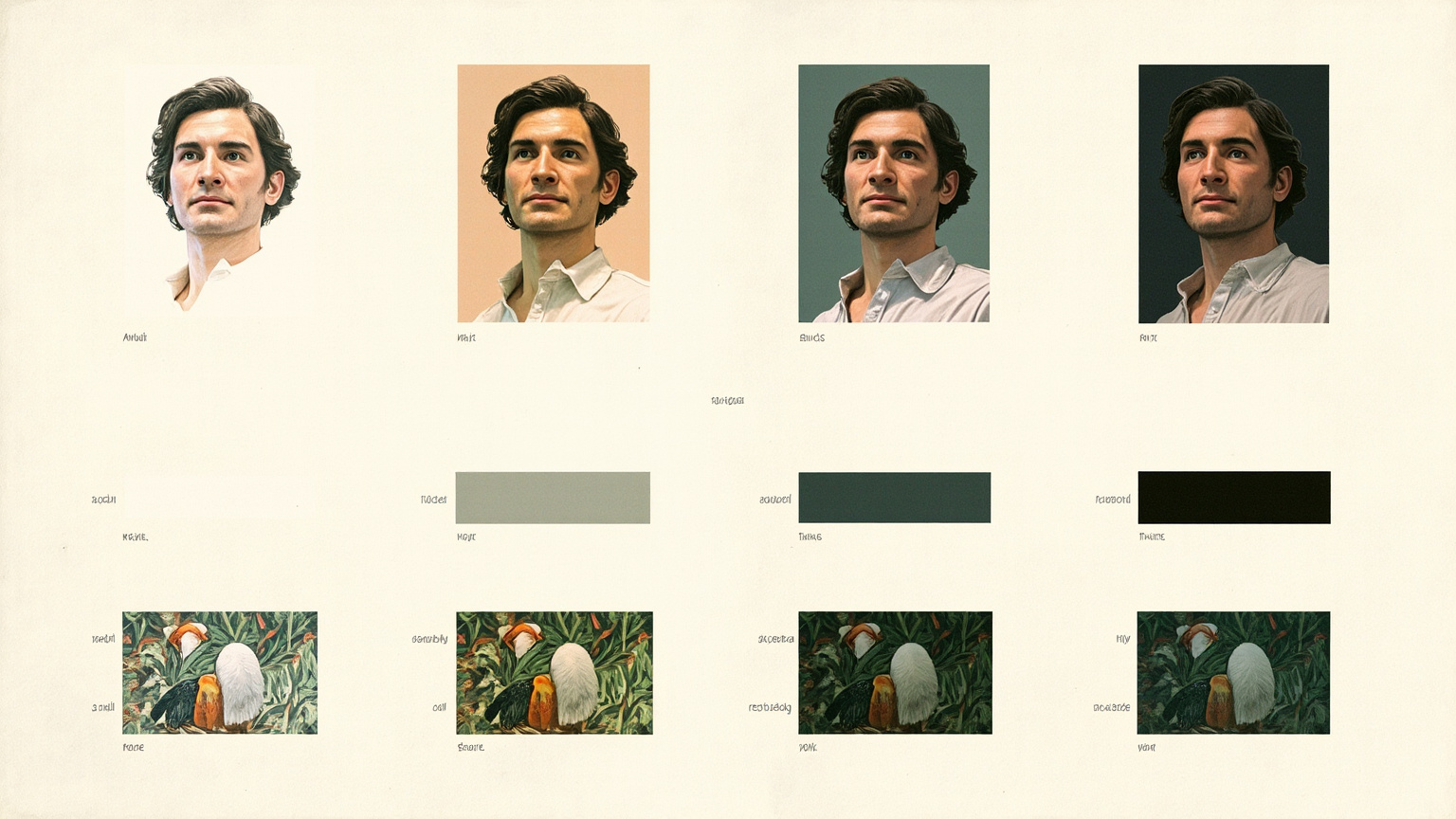
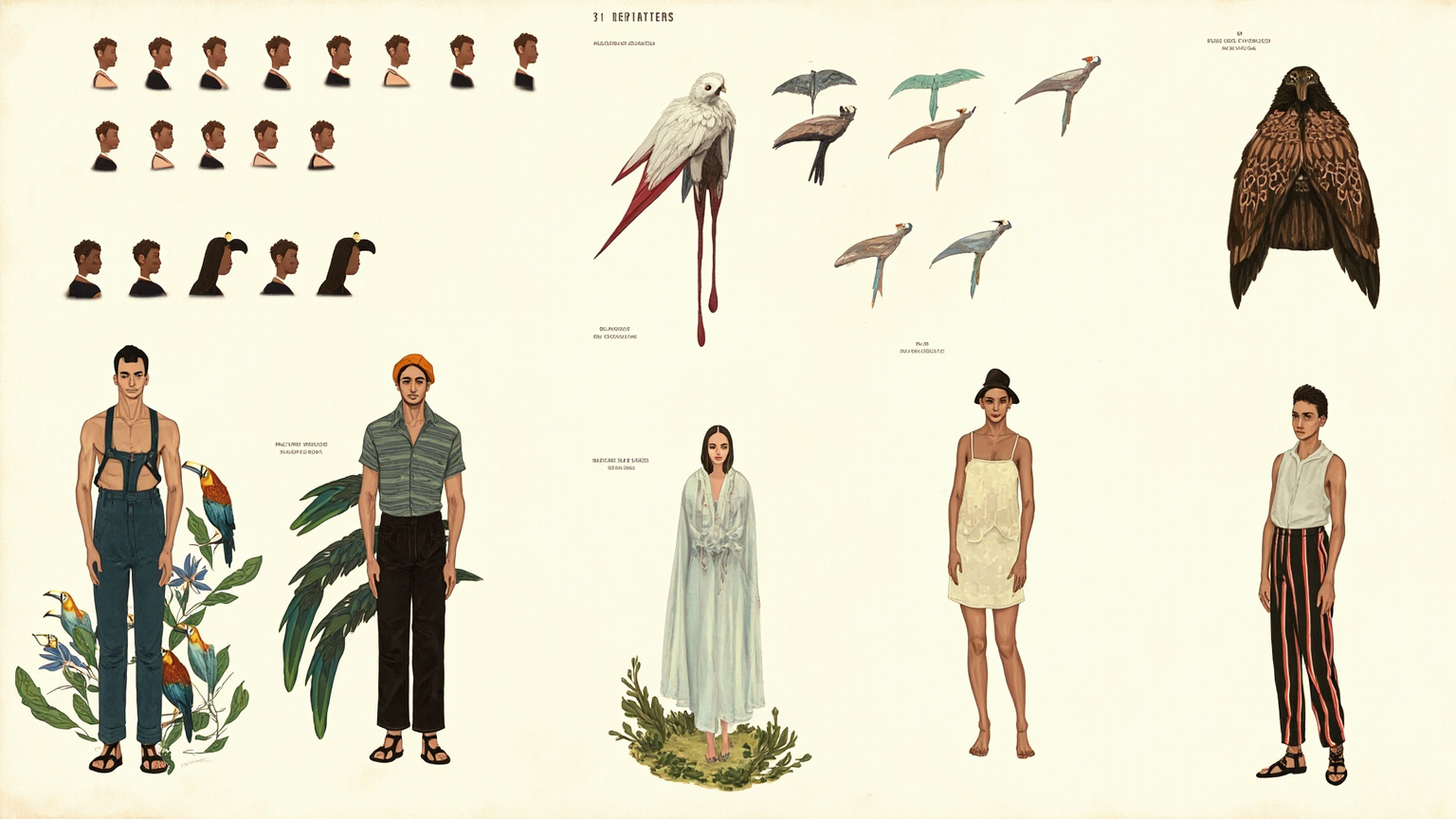
Art Direction4 plates
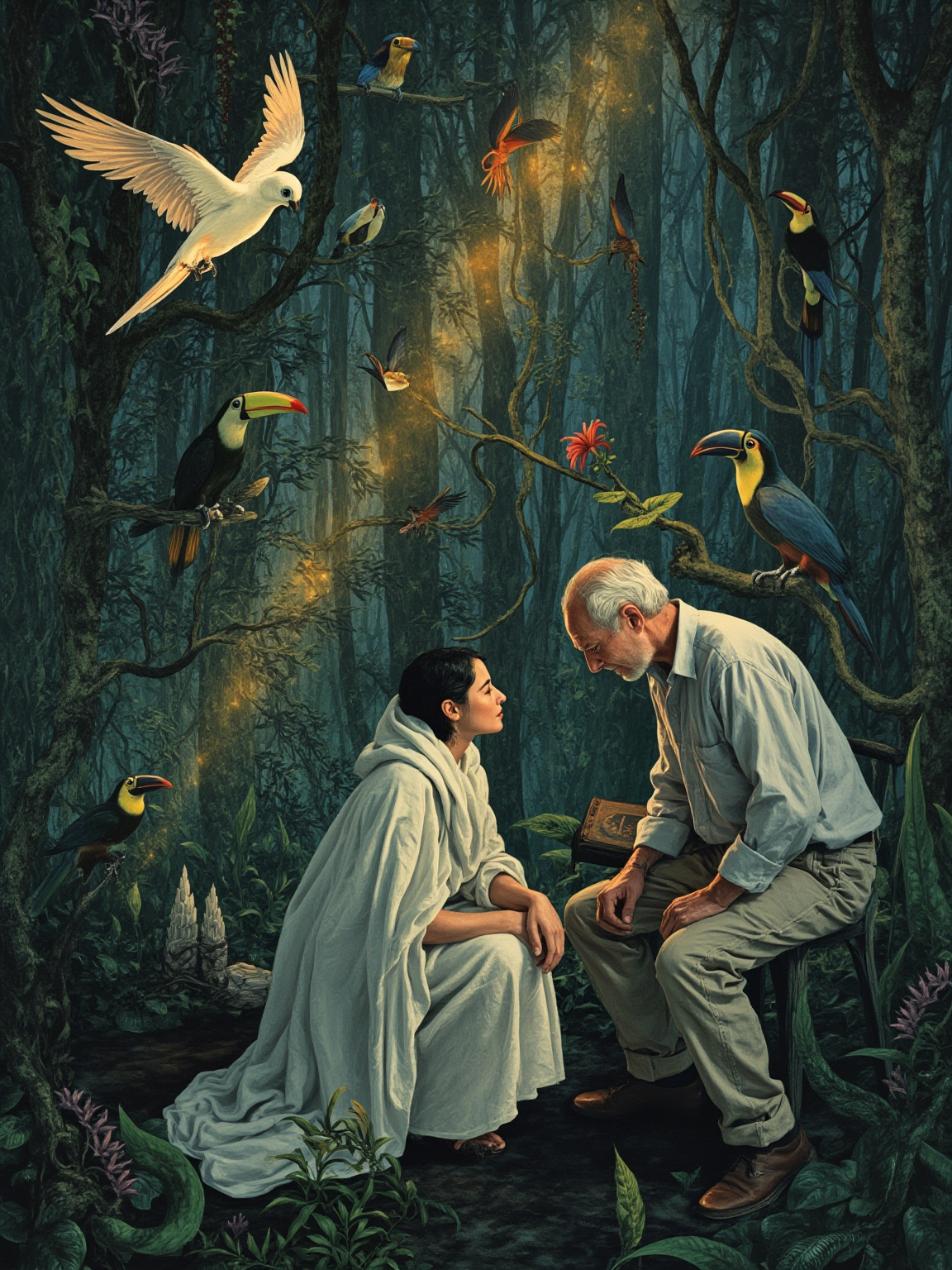
Before the guide was written, this book got a visual foundation — every illustration you just read grew out of it.