Grettir's Saga (Grettis saga Ásmundarsonar) · Companion Guide
格雷蒂尔萨迦
一个被宣告法律之外之人,三重宿命叠加后,在冰岛孤岛上走向终局——这是英美哥特文学漏掉的更早那条根
Opening: A Walking Corpse, Older Than the Vampire
In a Yule-tide blizzard, a shepherd dies in the snow of Miðfjörður. By rights he should have stayed buried. Instead he gets up, eyes glowing a dead white, and carries a cracked lantern back to his master's farm, where he snuffs out the fire and presses down on the sleepers' chests. This is the draugr of the Norse sagas — centuries older than any vampire out of an English or American castle. Grettir Ásmundarson goes out to meet him, wrestles him bare-handed, and cuts the walking corpse down in the snow. With its last breath, the corpse lays a curse on him: he will never again be able to share a roof with another living soul.
One sentence, and a living man's fate is sealed.
What Kind of Book This Is
Grettir's Saga is the thickest, darkest, coldest of the Icelandic sagas. It was written down around the thirteenth century by an author who left no name, though the events it tells happened two centuries earlier, from the late tenth century into the eleventh. Grettir himself is said to have been born around the end of the tenth century and to have lived to thirty-five. From the moment scholars first assembled the manuscripts to now, this saga has stood as the model for Iceland's outlaw stories. It is remembered because it did something no English or French literature of its era attempted: it put a living man out in the wilderness, set him face to face with a walking corpse, and then let the law itself drive him onto an island, to die in the one place where no one could share a room with him.
It is another root of the Gothic tradition — not an English castle, not a German or French monastery, but Iceland's turf houses, lava wastes, and an island pressed against black cliffs. Every article on the shelf tracing the vampire back to its origins circles Stoker and Anne Rice; this older Norse line gets left out.
People and World: A Man Exiled Three Times Over
Grettir Ásmundarson was a big man, violent-tempered and sharp-witted, and his crime as a young man was killing someone in Norway. His father Ásmund had been falsely accused years earlier over an old family feud and forced to flee to Norway himself; blood was already written into this family's ledger. After Grettir came back to Iceland, old feuds and rumors of an evil eye running in his blood got him accused again and again, until the þing, the assembly of Iceland's Commonwealth era, declared him útlagi — outside the law, a man anyone could kill without penalty.
Two men stayed with him to the end. Thorgeir came from a prominent family and was outlawed alongside him for standing as his ally. Illugi Ásmundarson, Grettir's youngest brother, was gentle, loyal, and steeped in tragedy. The three of them crowded into turf houses around Miðfjörður and kept each other alive, then retreated together to the island and died together there. It is the cleanest portrait of an exile alliance that the Icelandic sagas have to offer.
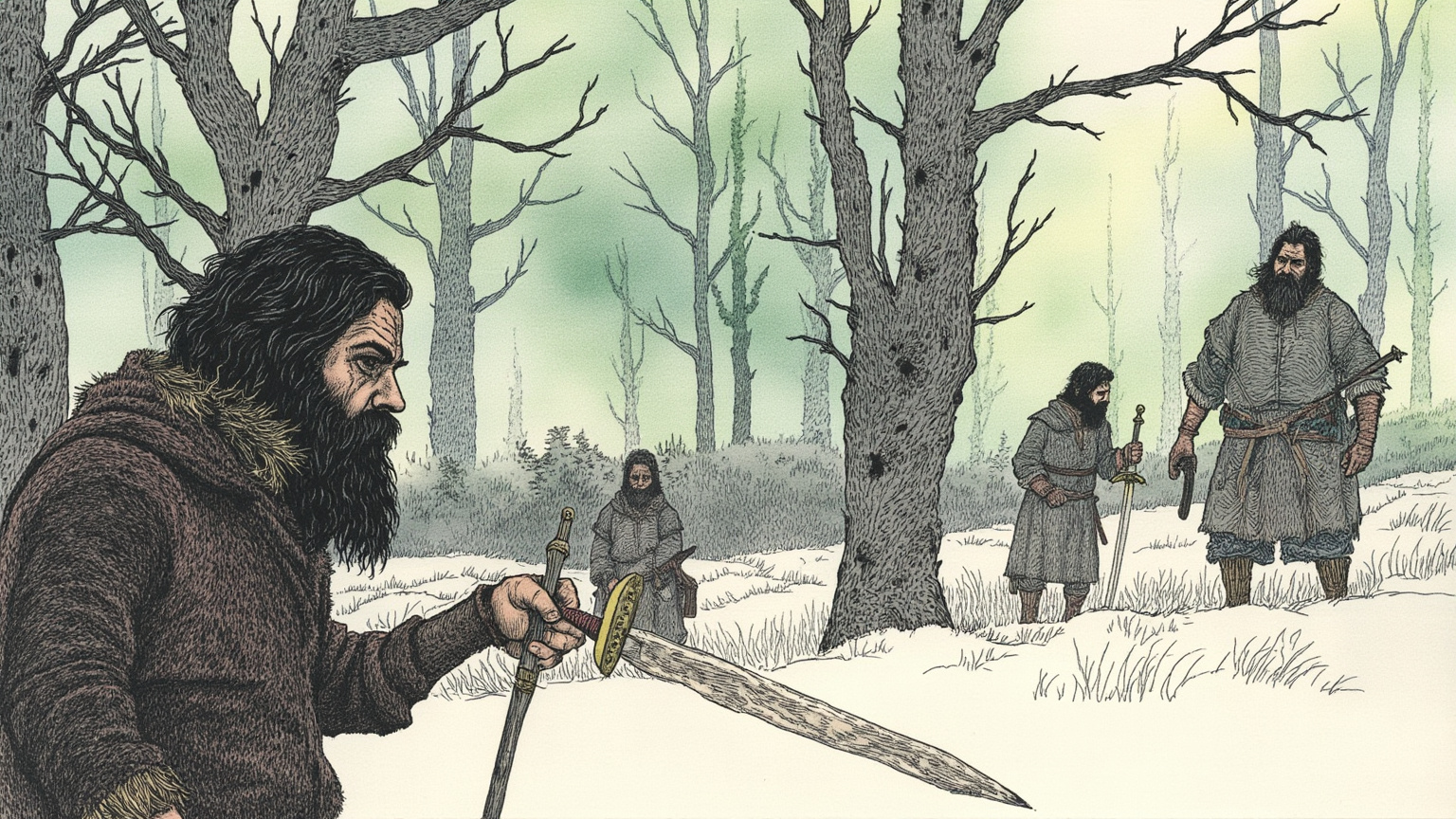
From his father's side a strain of the unsettled blood was in him, and from his mother a strain of the ill-eyed.
父系流着不安分的血,母系带着那双凶眼。
金句 · 格雷蒂尔家族与早期血仇
The world of the story has no king, only goðar — local chieftains — presiding over the assembly and carrying out its verdicts of exile. Blood feud, false accusation, legal banishment, then blood feud again: no institution in this world can break the cycle. Grettir does not die at the hands of one villain. He dies inside the structure itself.
The Plot: From the Root of the Feud to the Island's End
The story opens in Grettir's home district in north Iceland. As a young man he goes to sea with his father, and once they reach Norway a killing gets him banished by the king — blood is written into his fate from here on. The saga tells this part with restraint: no lingering on gore, just a boy carrying his first blood debt for the first time.
Back in Iceland, he drifts between Borgarfjörður and Miðfjörður. Old feuds, the family's cursed blood, and false accusations from local chieftains pile on layer after layer, until the assembly declares him outside the law. From this moment he is no longer a man who might get caught — he is a man anyone may lawfully kill. That fall in status is the coldest cut in the whole saga.
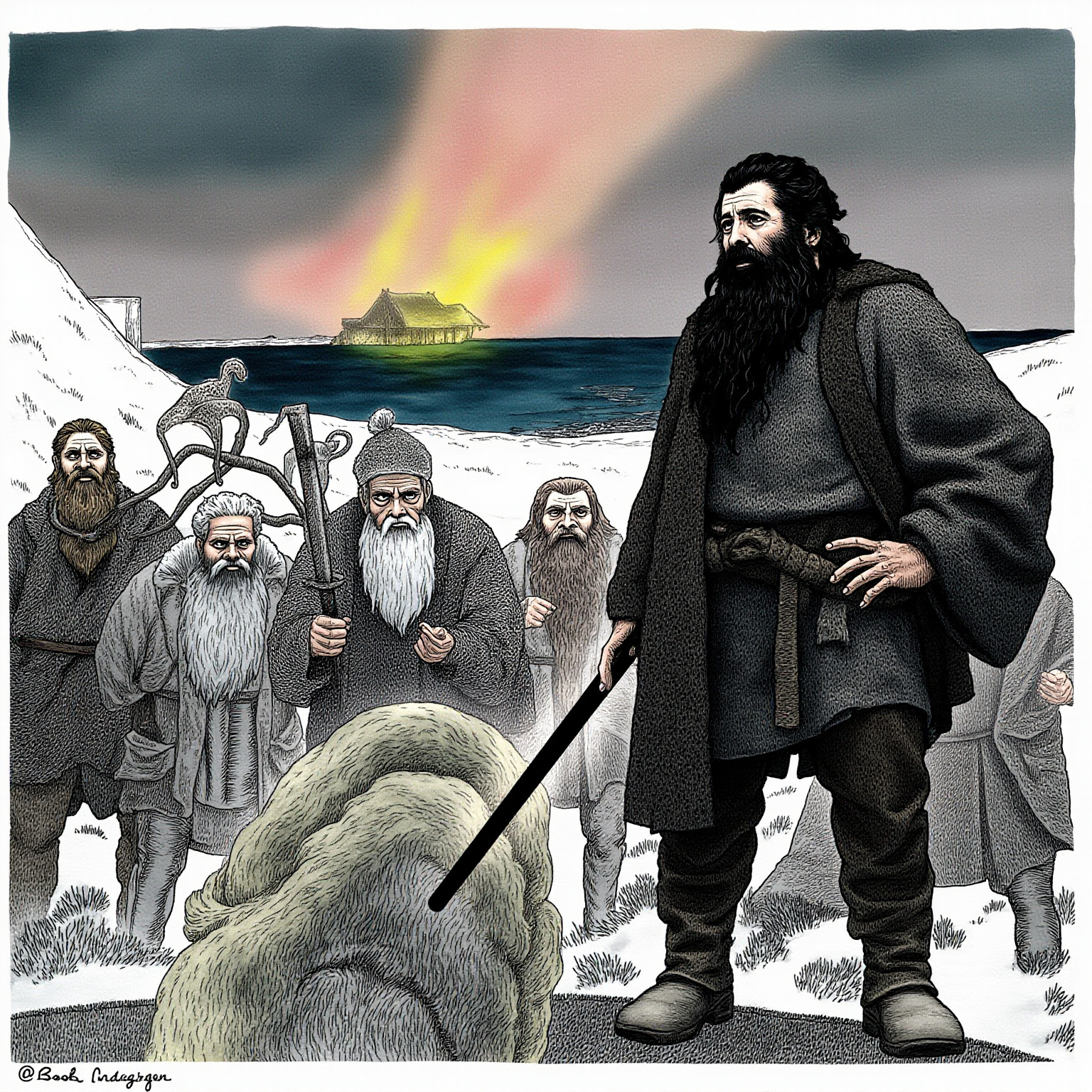
Now Grettir was made an outlaw; he might be slain wheresoever he was found, and no man should answer for it.
格雷蒂尔被宣告为法律之外之人——无论何处被见,皆可杀之,无人受罚。
金句 · 部族大会宣告放逐
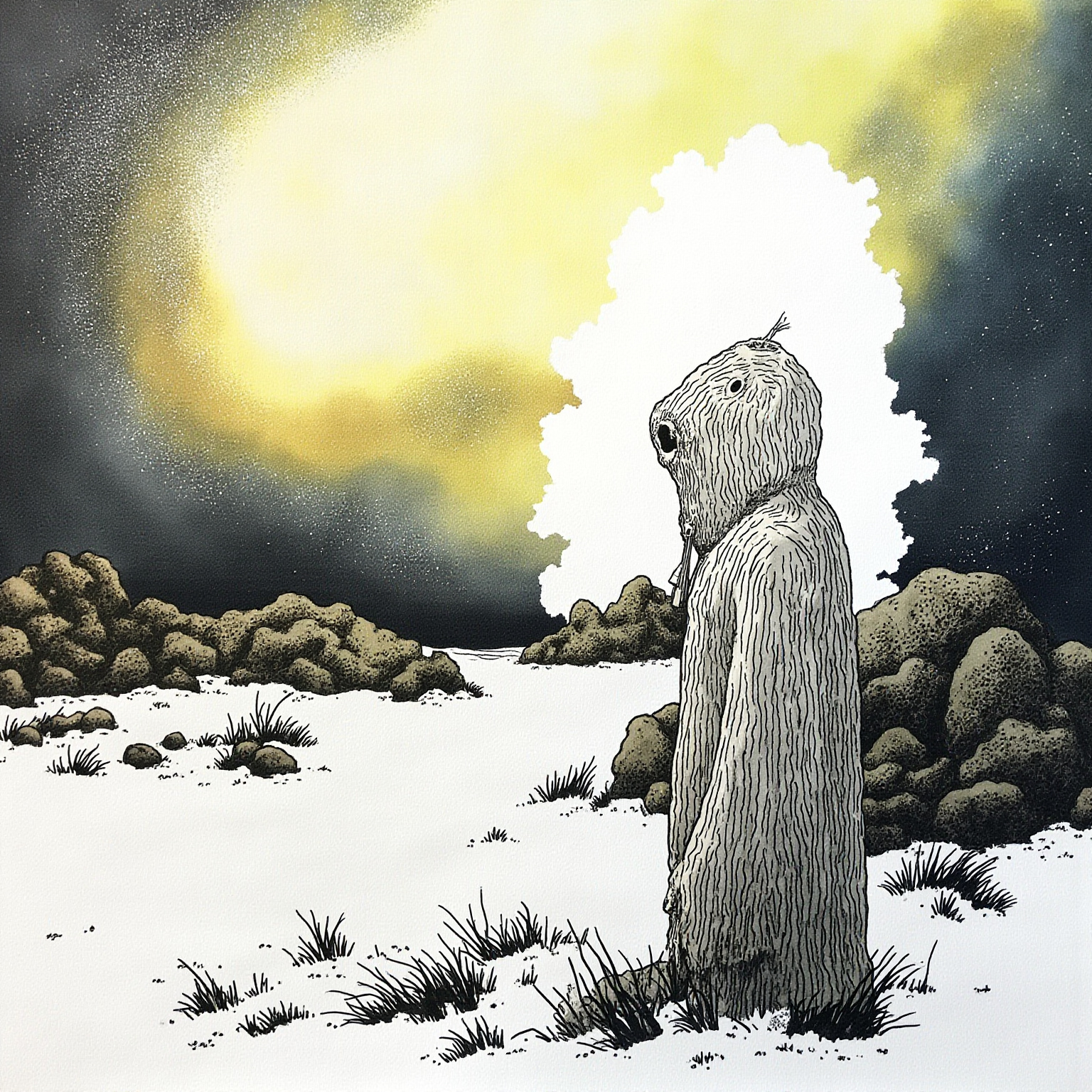
Once outlawed, he hides out in the pastures and wastes around Miðfjörður. On a Yule-tide night, Thorhall's shepherd Glám dies in the snow, then rises as a walking corpse and returns to his master's farm to snuff the fires and press down on the chests of the living. This scene is among the earliest in literary history to write the walking dead as a terrifying opponent with a personality of his own — centuries before the vampire lineage of the English and American Gothic tradition.
Grettir goes out to face him. A blizzard, Miðfjörður, a corpse with white eyes and frost on its skin, carrying a cracked lantern — this is the image that surfaces first whenever I think of this saga. The author gives the fight no heroic shine, only a cold, isolated sense of doom.
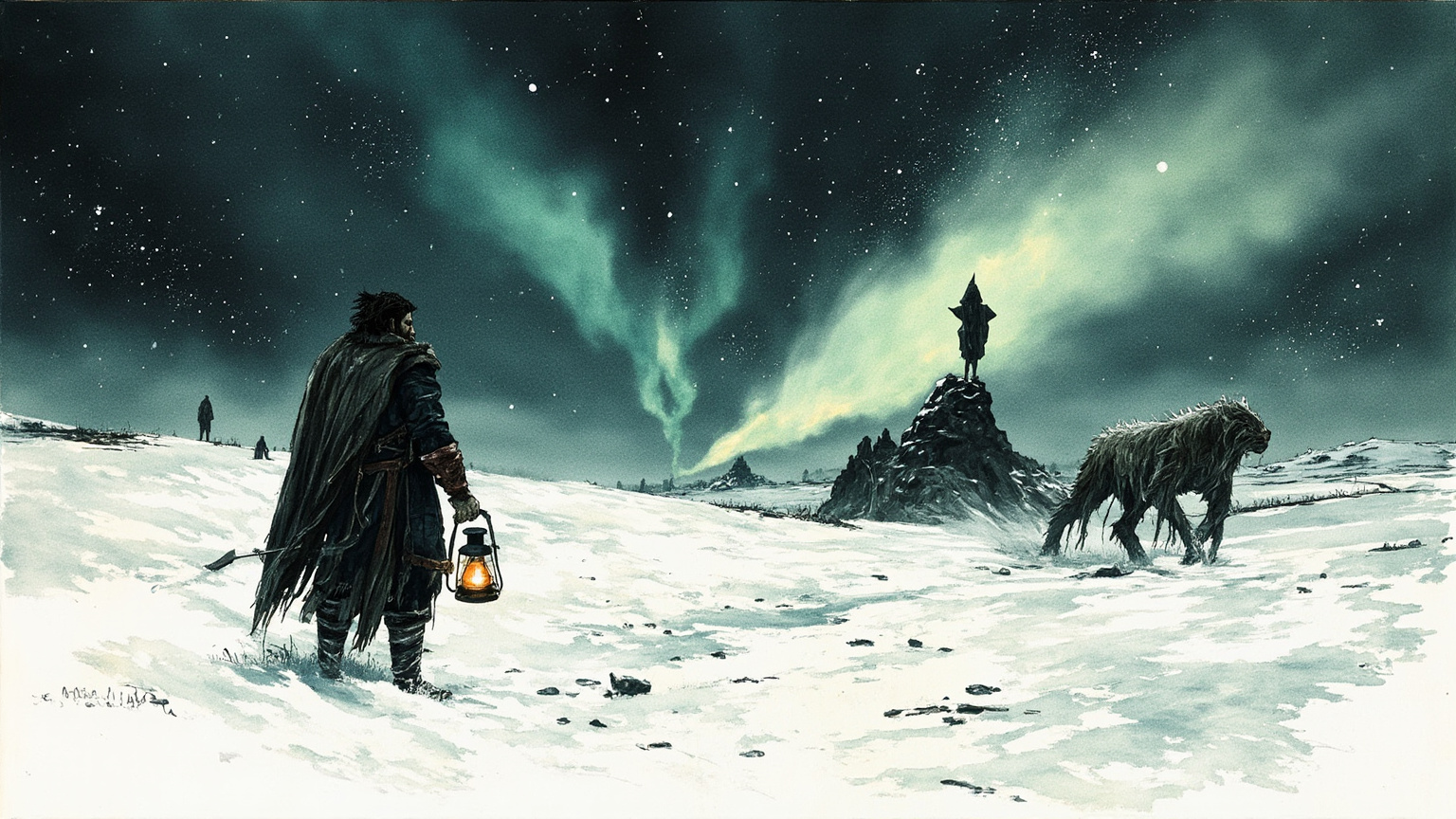
Glámr grinned horribly when he felt the blow, and it was the last smile that came upon his face.
格拉姆在那一击之下,露出骇人的狞笑——那是他脸上最后一次笑容。
金句 · 米湖冬夜搏斗亡灵
Grettir cuts Glám down in the snow. With his last breath, the corpse lays the curse: never again will Grettir share a room with another person, and disaster will follow whoever lays eyes on him. This is where three fates lock together — the curse in his blood, his status as an outlaw, and now a dead man's curse on top of it, all bearing down on one man.
The curse takes hold at once. Wherever Grettir hides, his presence alone brings death or misfortune to whoever is nearby. His steadfast companion Thorgeir and his younger brother Illugi go into exile with him, and even they cannot escape the bad luck. The three crowd into turf houses near Miðfjörður, and the longer it goes on, the further the world drifts from them. The first time I read this passage, I went back and reread the page before it. The rhythm here isn't like a novel's; it reads more like a hanging, tightening slowly.
With supplies running out, they fall back to Drangey — an island pressed against black cliffs, out in the sea off Miðfjörður. From then on, the island is the wall between him and the world, and it cannot be crossed.
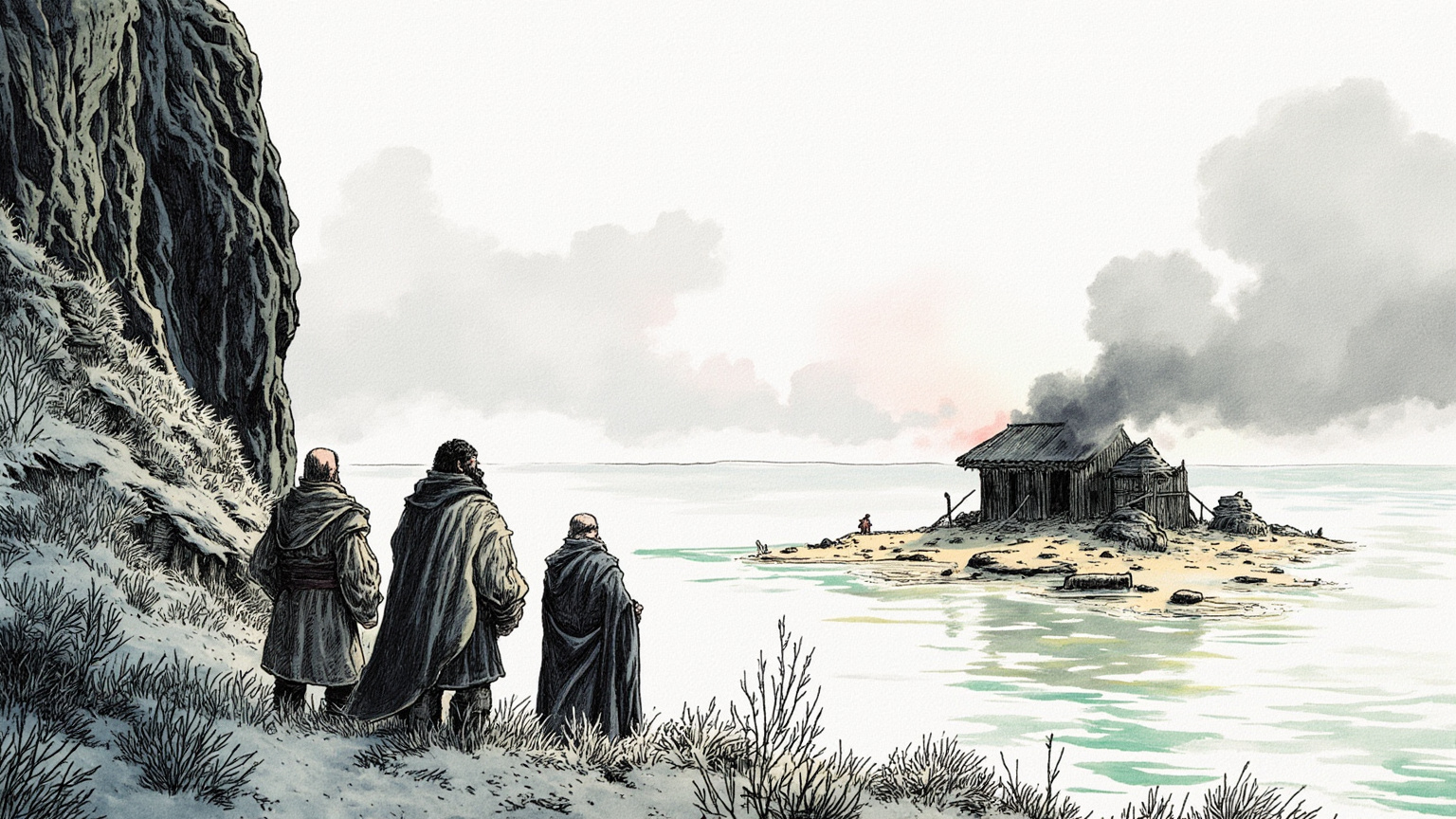
There was no horse to be had, and no way of escape; they must abide the onset where they stood.
无马可乘,无路可逃——他们只能立在原处,承受那一击。
金句 · 德朗基岛围猎前夕
The local chieftains decide to finish him for good. They put together an armed party and land on the island while the winter seas still allow it, hunting the outlaws down. Outnumbered, the three make their last stand, and all of them die. Grettir's head is displayed at the foot of the cliffs off the island. The saga ends here — no elegy, no uplift, just the word outlaw made literally true.
Grettir was taken and slain; and his head was set up on a stake against the cliff.
格雷蒂尔被擒,被杀;他的头颅被插在木桩上,立于崖下。
金句 · 萨迦尾声 · 德朗基岛之死
Theme and Craft: The Fall of Fate, the Source of the Walking Dead
What the book is really about is how fate gets sealed shut, layer by layer. The curse in his blood, his status as an outlaw, and the dying curse of a revenant stack on top of one another and press Grettir down from a man who might be punished into a man not even permitted to live. Norse literature has colder ways of writing doom than a lightning bolt or a god's abandonment: exile from the law, from other people, and from the dead, all three at once.
It is also the root the English and American Gothic tradition left out. Nearly every vampire-origin piece on the shelf circles back to Stoker and Anne Rice, but the walking corpse as an image, and the shape of a confrontation with one, were already here in this saga — and written colder, and more ordinary, than anything that came after. Glám is no caped aristocrat with fangs. He is a dead shepherd from Miðfjörður, come back with a cracked lantern to settle accounts with the living.
The saga's real craft move is turning Iceland's geography itself into a character. Turf houses, lava fields (hraun), black basalt coastlines, fjords that never stop with the wind, the aurora over the polar night — none of this is backdrop. It is the antagonist. The island, Drangey, and the wilderness around it stand for the wall between Grettir and the world, a wall he can never cross. There is no such thing as scenery in this book. Geography is fate.
The walking-corpse confrontation that took English and American Gothic eight hundred years to catch up to was already finished in this thirteenth-century Icelandic saga — and written colder than anything that came after.
Why Read the Text Itself: The Map Is Drawn, but You Still Have to Walk the Ground
What this guide gives you is a map. How Grettir actually dies, how that final battle on the island really unfolds, what color Glám's eyes actually were — only the text itself can give you that. I left out most of the section on the three of them wintering on the island, because once you start reading it you won't want to put the book down. Living through that snow yourself is worth more than seeing the plot laid out.
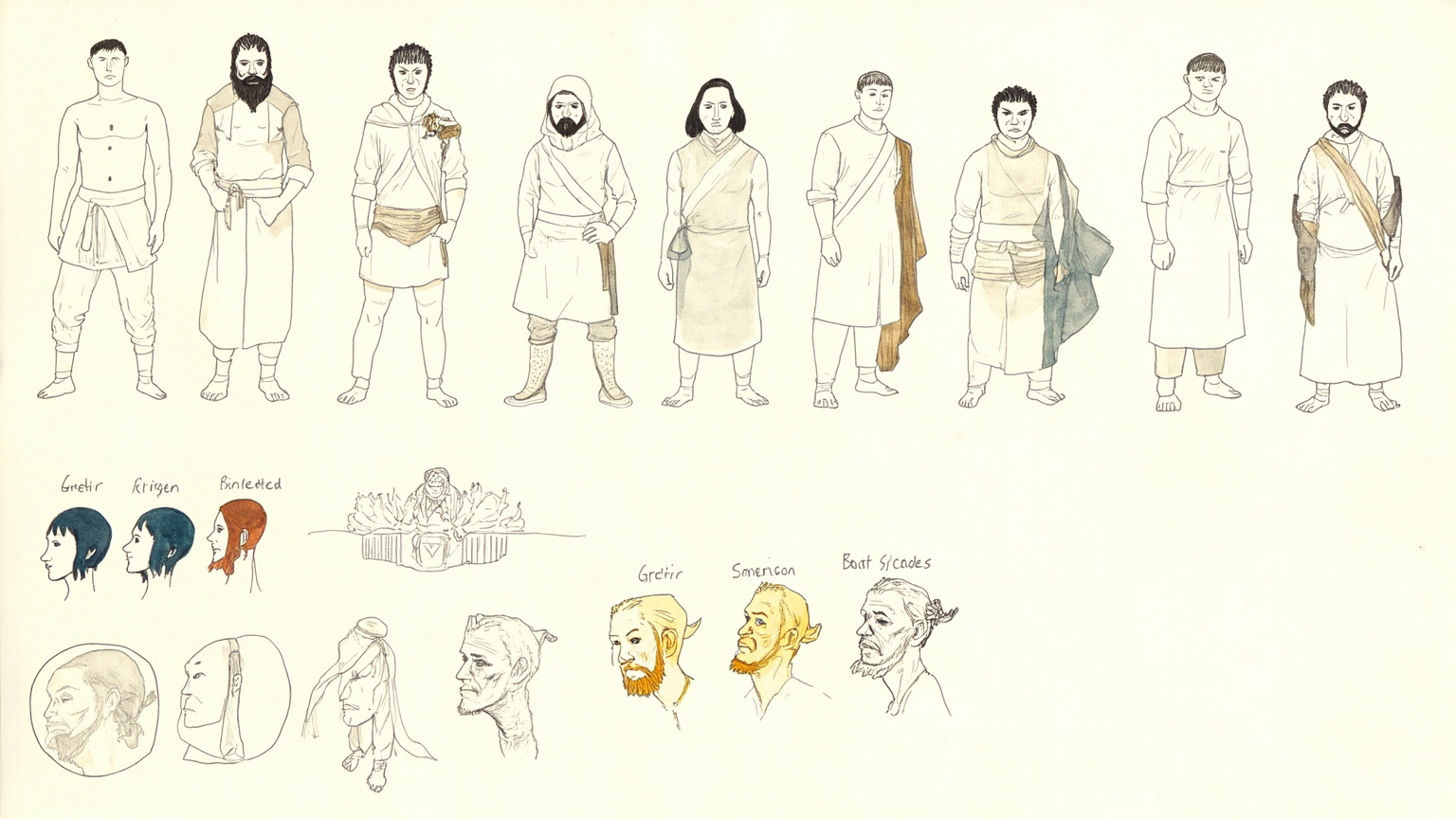
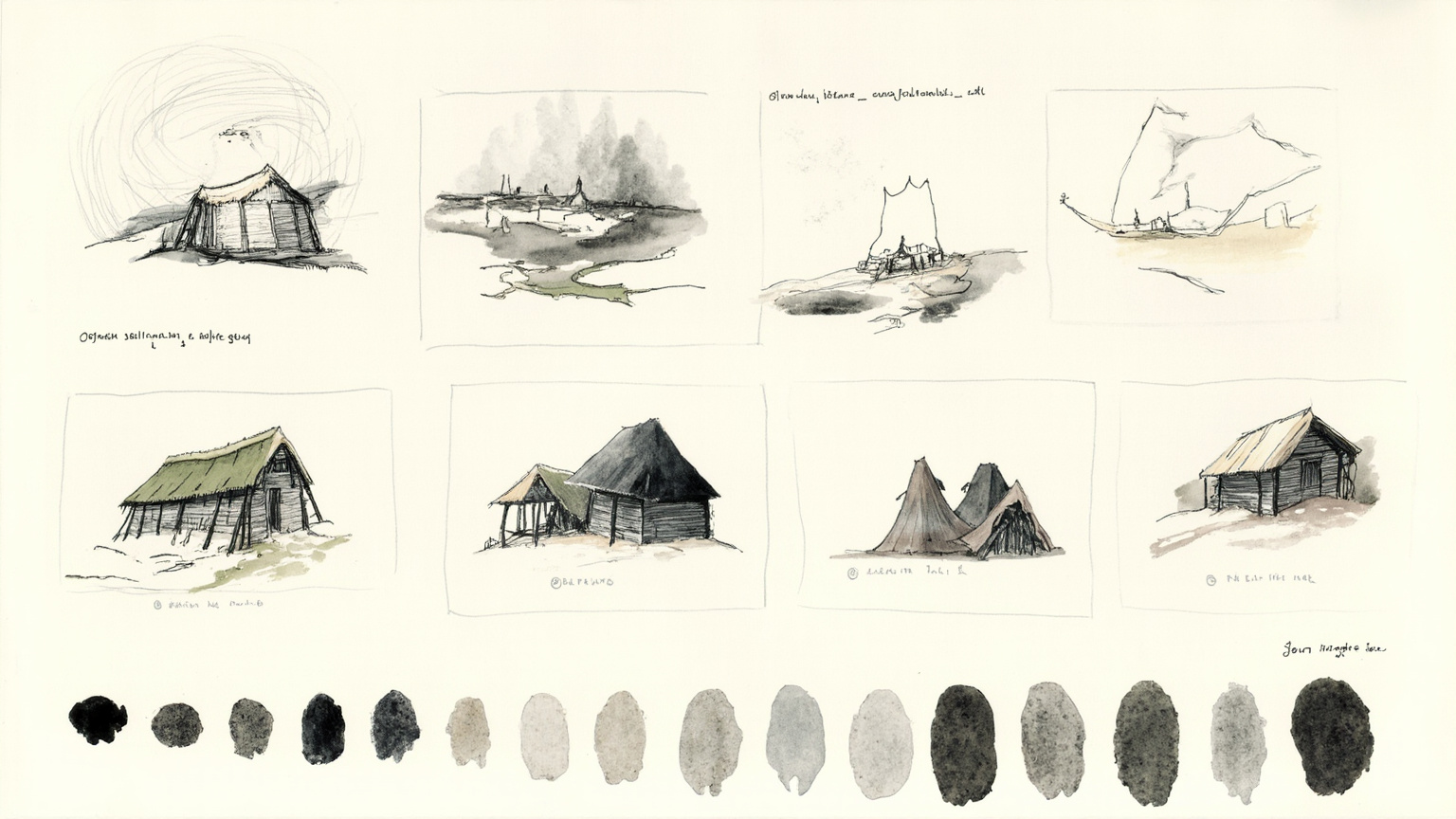
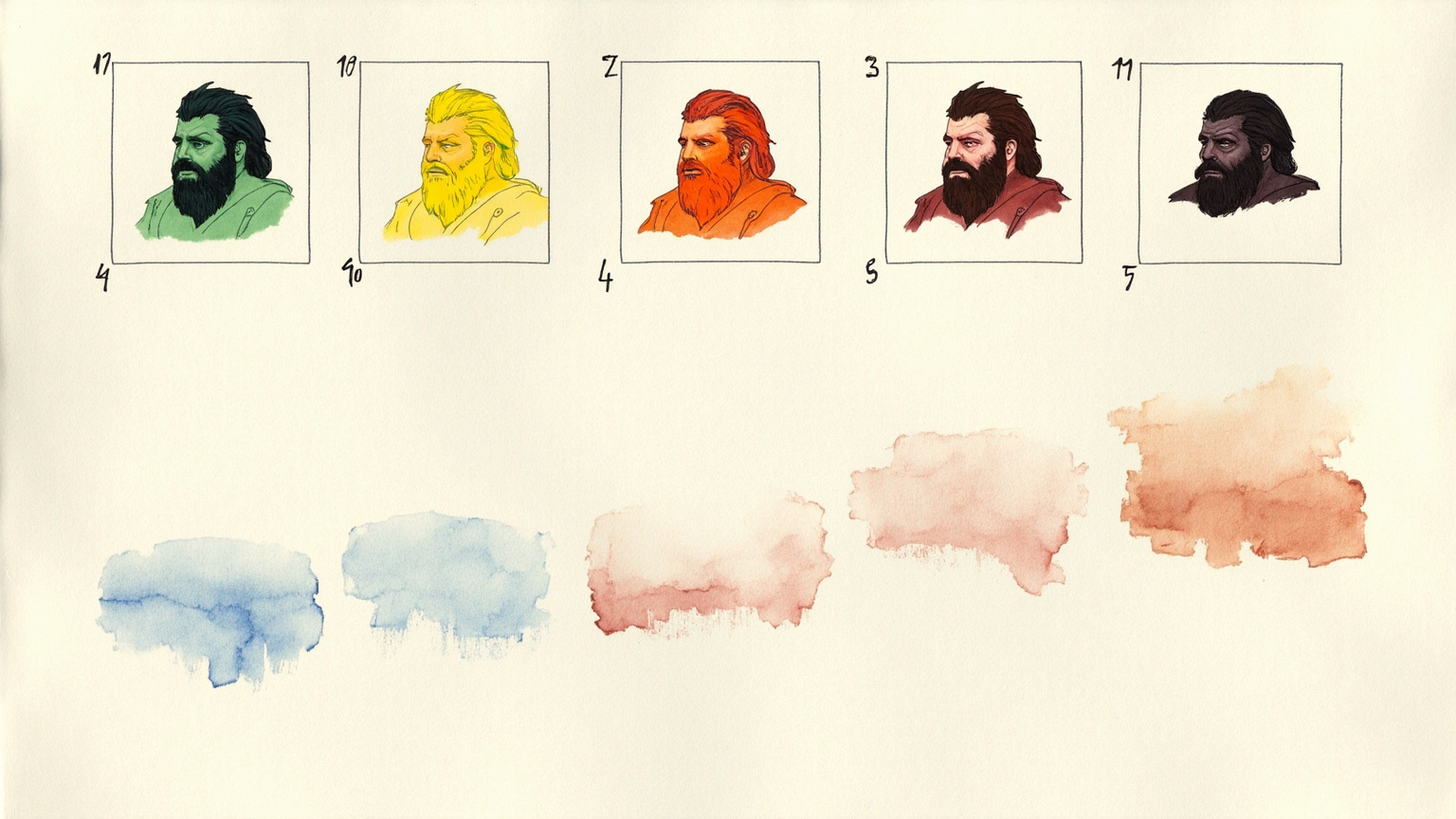
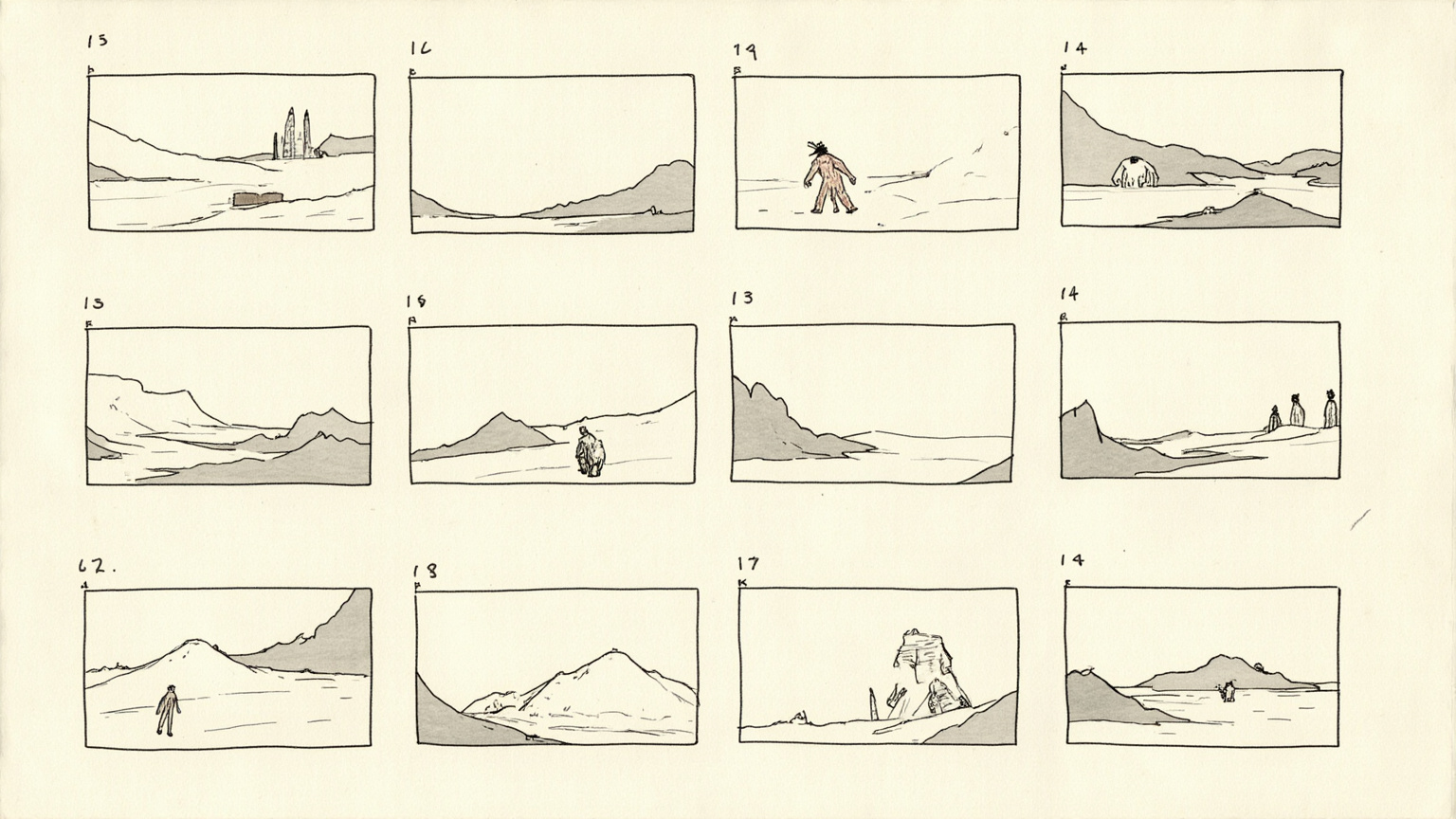
Art Direction4 plates
Before the guide was written, this book got a visual foundation — every illustration you just read grew out of it.