Eileen Chang's only complete novel: a Republican-era household, two sisters, a love missed and then found again too late.
Text and illustrations produced by the pipeline
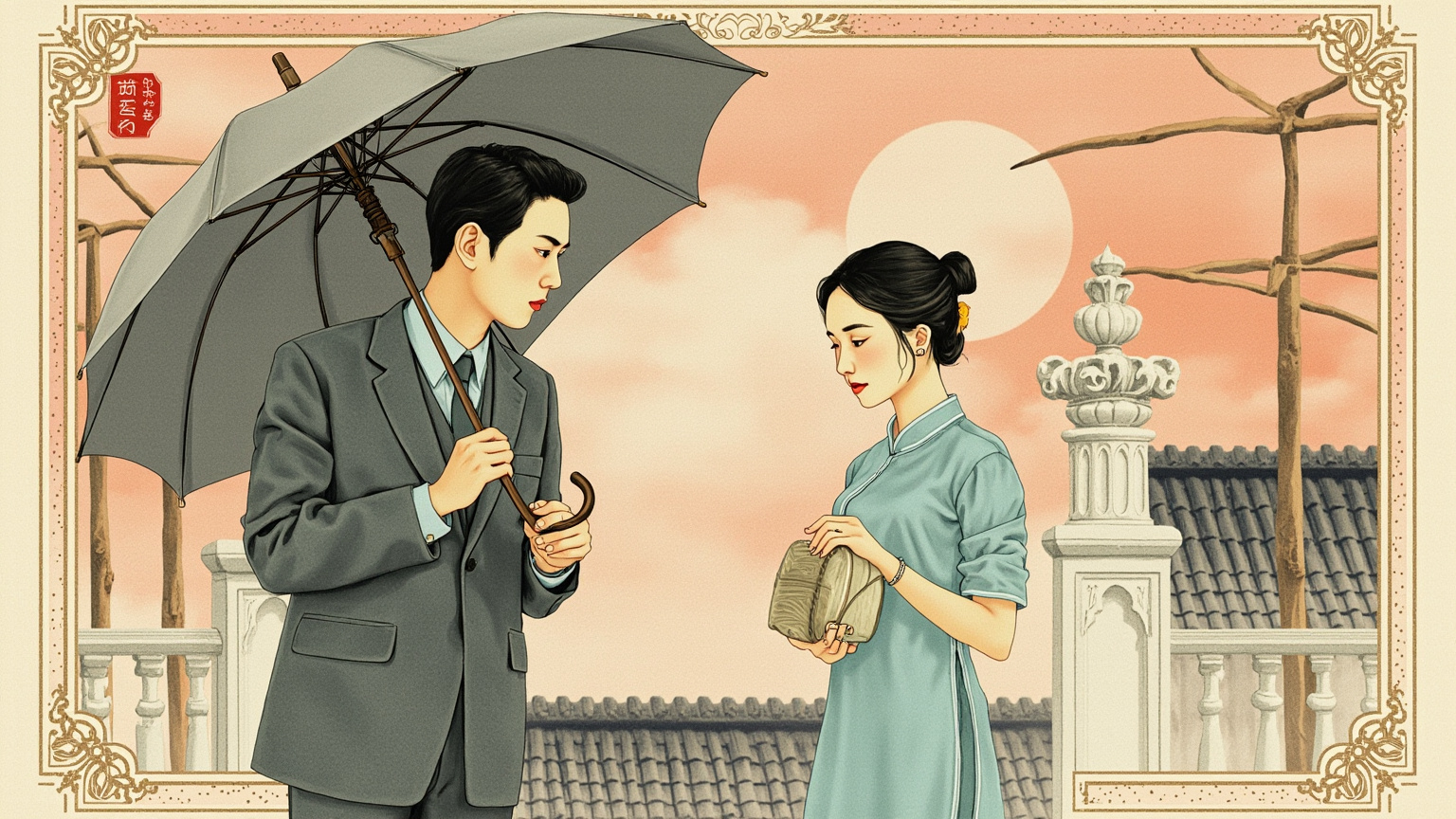
On a rainy day in Shanghai, Gu Manzhen was leaving the factory after her shift, and Shen Shijun tilted the umbrella so it covered her more than him. Under that lopsided umbrella, a small ruby ring slid onto her finger. Manzhen was holding up a household back then — the money her sister Manlu had earned years earlier as a dance hostess was long since spent, and Manzhen spent her days at the factory and her evenings looking after her mother and younger brother. Shijun was the son of a wealthy Nanjing family, yet he had gone to work as an engineer in a small Shanghai factory, mild-mannered, a little clumsy with his hands, his eyes creasing when he smiled. Two people who had no business meeting collided anyway.
Eileen Chang writes this first love with almost no adjectives — only action: he tilts the umbrella, she tucks the ring into her handbag, rain slides off the eaves and lands on her shoulder. What makes the novel so powerful is that it convinces the reader this was their own love once, nothing world-shaking, just unforgettable. Not that it was sweet. That it was true.
Half a Lifelong Romance is Eileen Chang's only full-length novel, and widely considered her most mature work. It is set in old Shanghai across the 1930s and 40s. She first published it as Eighteen Springs, serialized in a small Shanghai paper under the pen name Liang Jing in 1950 and 1951. Chang later revised it repeatedly, cut the politically tinged ending, and retitled it Half a Lifelong Romance; it was serialized again in 1968 and published as a book in 1969, the version read today. Across her career, from Love in a Fallen City through to Half a Lifelong Romance, Chang kept writing ordinary people in old Shanghai, men and women ground down by family standing and the cost of living, her prose growing colder while her eye pressed closer to the bone. Ann Hui made it into a film in 1997, and a mainland television series followed in 2003, but readers who go looking always find that no adaptation, however polished, can hold the novel's psychological detail, restrained to the point of cruelty.
The story pulls mainly at four people. Manzhen, the clerk holding her family together, tough in a way that aches to watch. Shijun, kind but indecisive, always stepping half a pace back when it matters. Manlu, Manzhen's older sister, who once worked as a dance hostess to feed the family, and who, married now to the social climber Zhu Hongcai and still childless in middle age, is wound tight and then let go like a string pulled past its limit. Zhu Hongcai, who clawed his way up and stayed greedy and lecherous the whole way, is the hand that turns Manlu's private panic into an actual crime. Two subplots run alongside: Shijun's friend from the factory, Xu Shuhui, and Shi Cuizhi, a young woman from a wealthy Nanjing family, miss each other because the gap between their families is too wide, and each ends up married, by accident of circumstance, to someone they do not love. It mirrors the main story's wrong marriage and makes clear that Manzhen and Shijun are not the only pair who miss each other here.
Chang's view of the world is to place people inside a net woven from family, social standing, face, siblings, the cost of living, and marriage. She does not write the sweep of great historical events. She writes one lane, one small office, a few meals around one dining table — and generations of fate turn over right there.
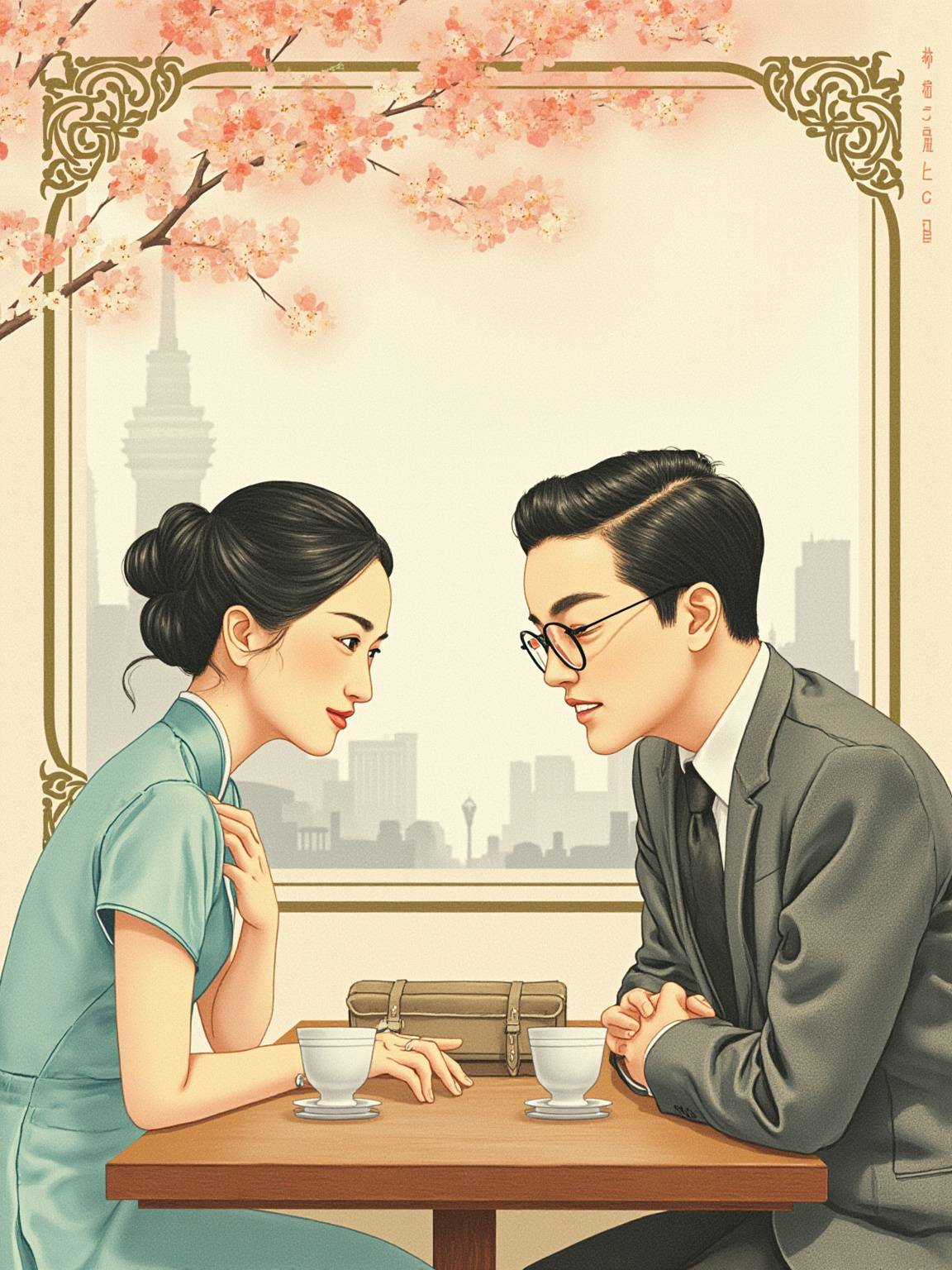
By the end of the story, more than ten years have passed. Shijun and Manzhen run into each other by chance at a small restaurant in Shanghai. He is a husband and father now; fine lines have appeared at the corners of her eyes. They sit down and work through the old misunderstandings, piece by piece — it turns out she never stopped loving him, it turns out he never stopped loving her either, it turns out the whole thing was torn apart by family, by rumor, by her sister, by the times. When they finish talking, Manzhen looks at him and says, quietly, 'Shijun, we can't go back.'
That line is one of the most famous reunion lines in Chinese literature. It offers no forgiveness, no closure, not even a goodbye. It simply admits that the years have passed, that the people who loved each other have scattered, that the rain in the lane, the ruby ring, the shoulder under a tilted umbrella — all of it has been carried off by time. There is not even any bitterness in it, only the quiet that comes after seeing clearly. This is where Chang's aesthetic of desolation truly comes into its own: no shouting, no crying, just two people who missed their chance sitting at a table for an afternoon, and then going home, each alone.
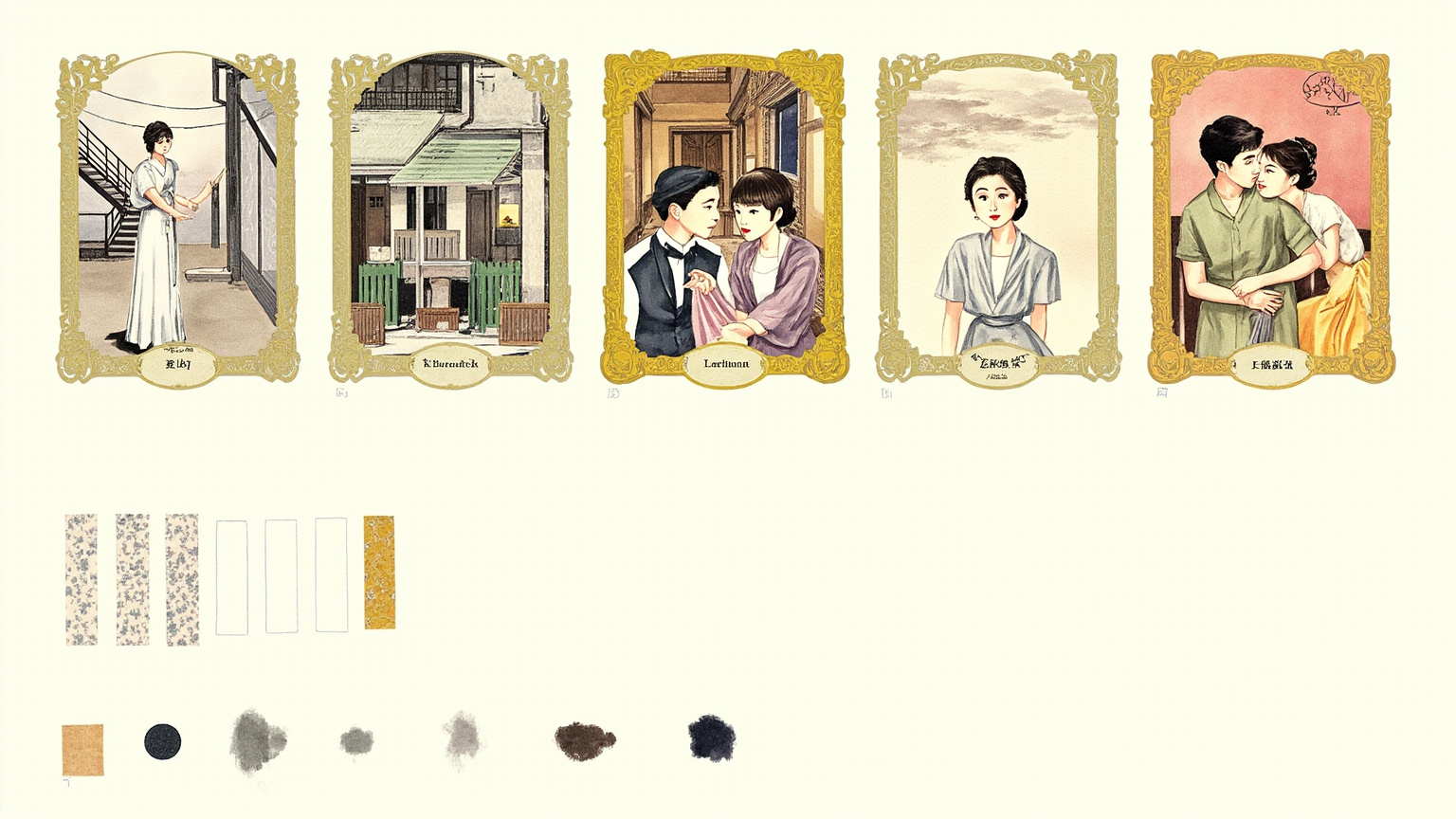
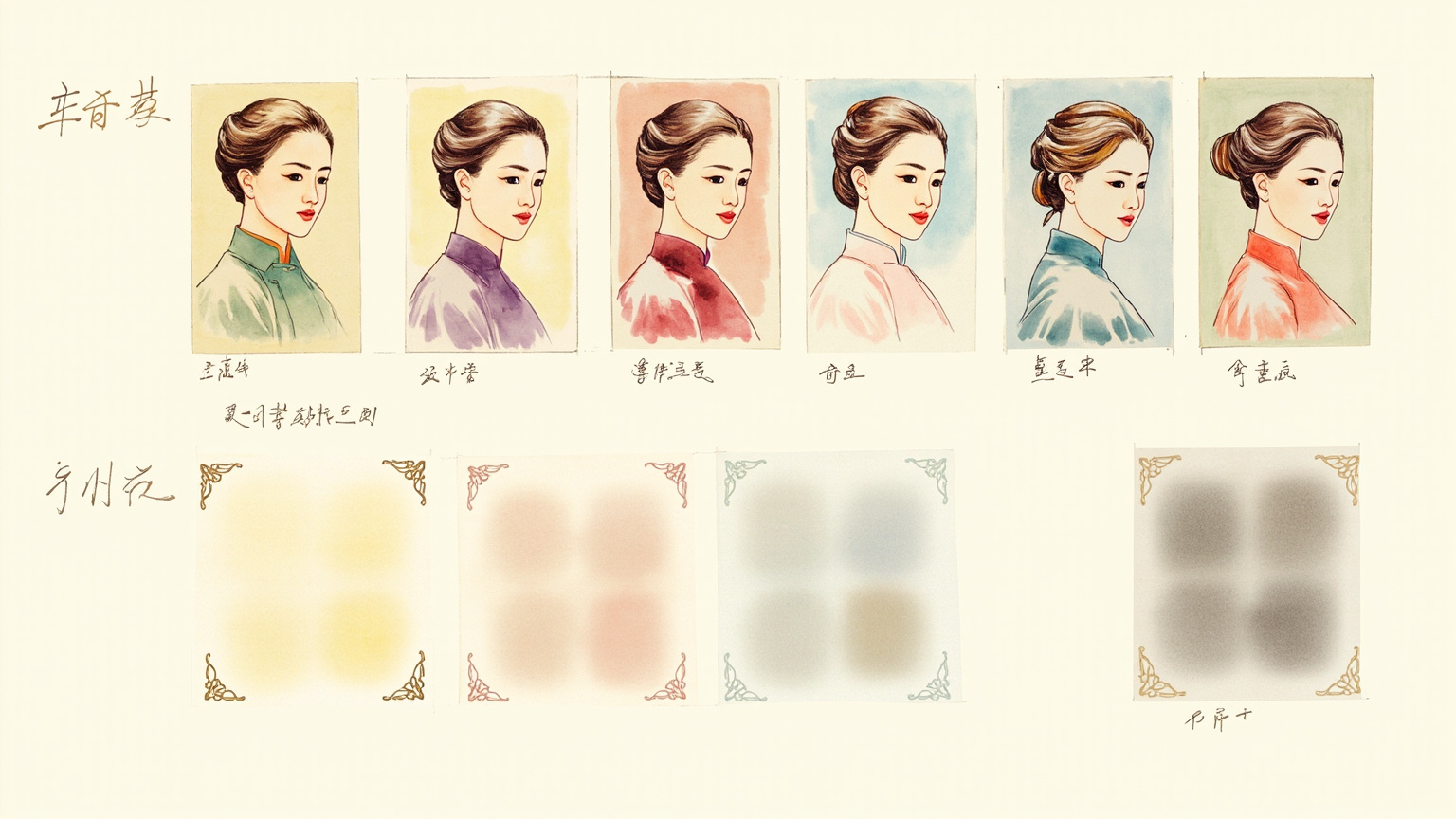
Before the guide was written, this book got a visual foundation — every illustration you just read grew out of it.
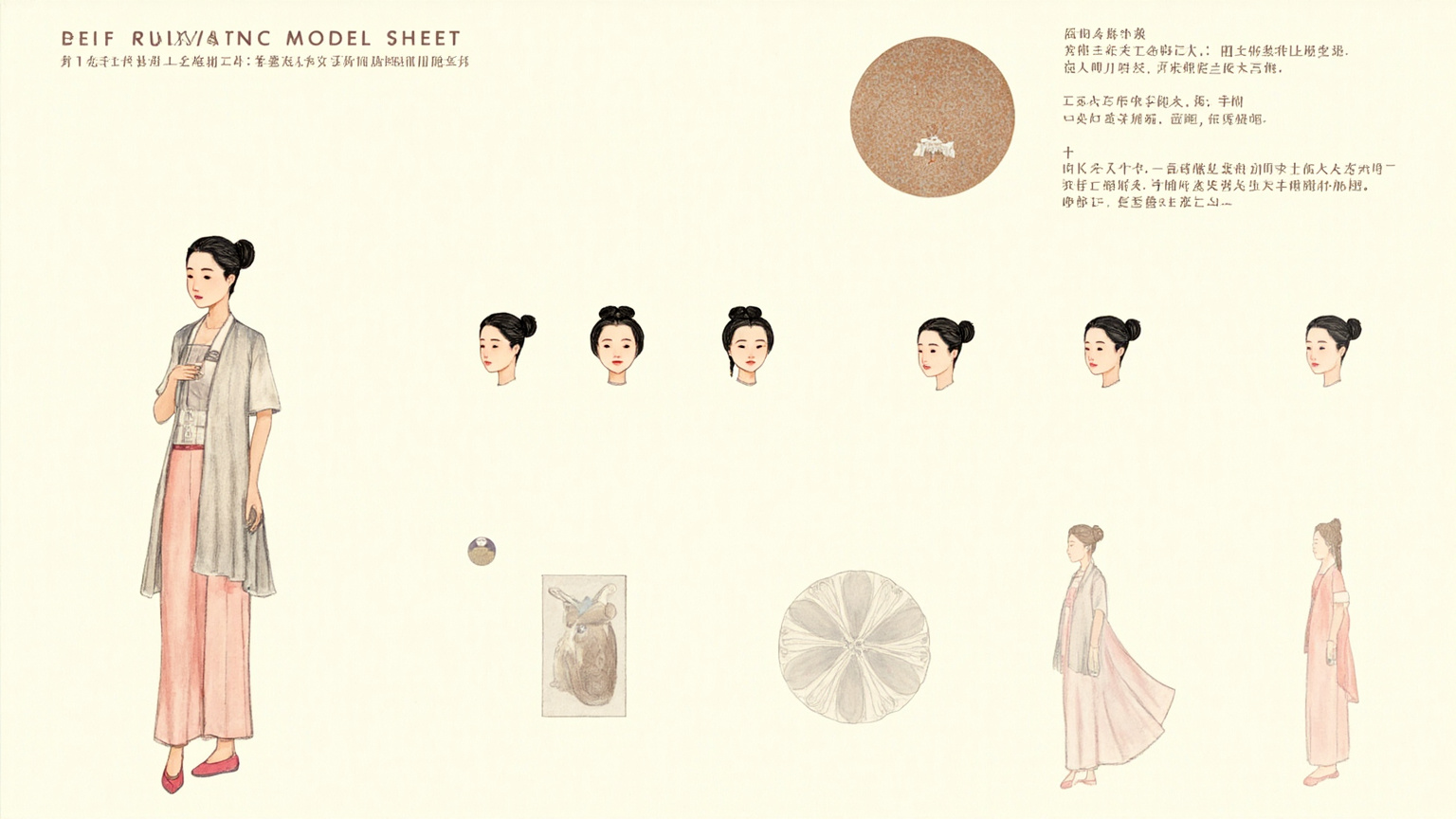
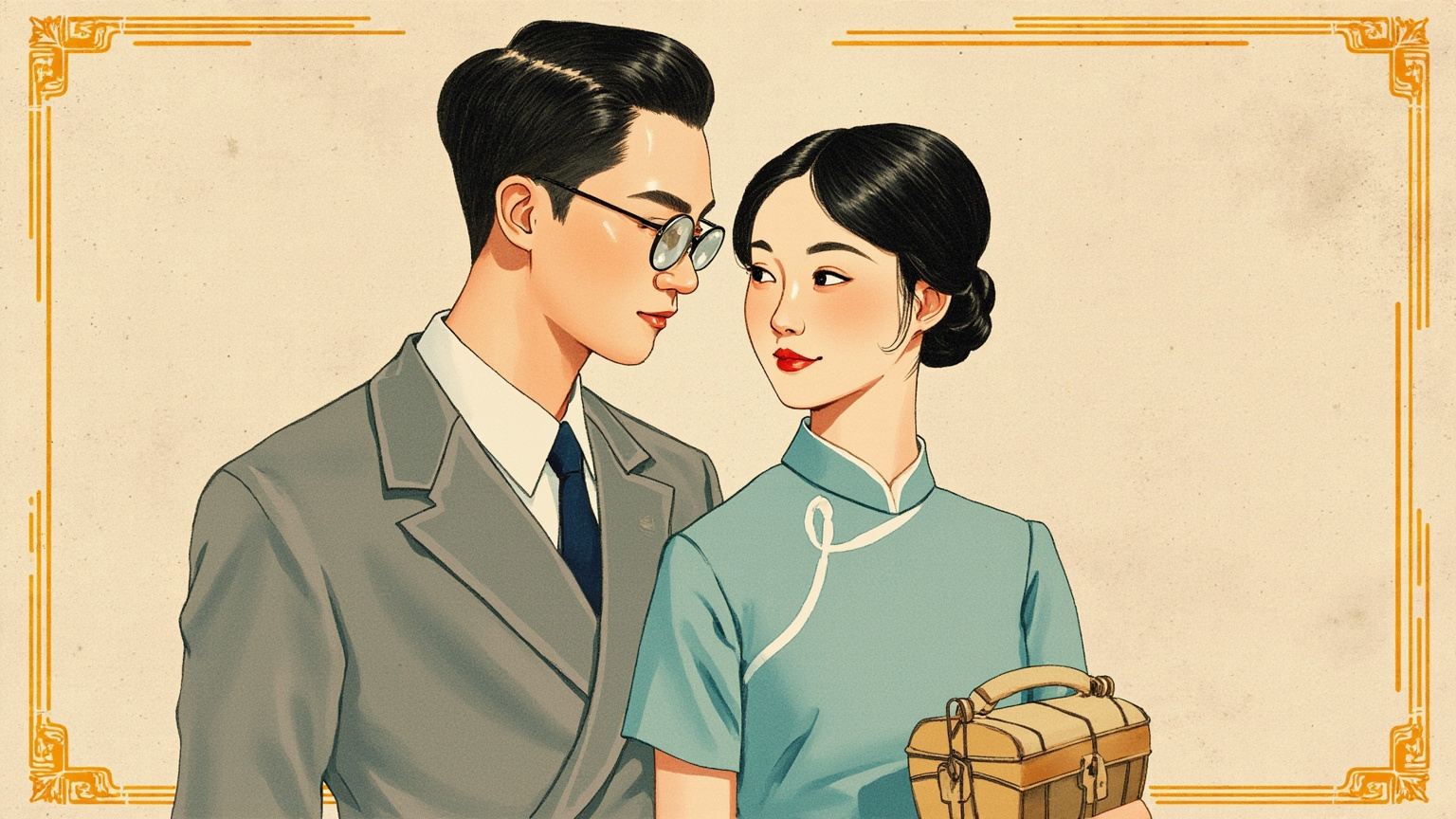
Manzhen and Shijun work at the same small factory. She types, he draws engineering plans, and they walk out together after their shift, shoulders touching under one umbrella. When Shijun goes home to Nanjing to see his mother, Mrs. Shen's brow tightens: 'What does Manzhen's family do?' A sister who once worked as a dance hostess is a secret that holds in Shanghai but not among Nanjing's merchant families. His mother has her heart set on Shi Cuizhi, a match of equal standing, and Shijun says yes with his mouth while his mind stays back in a Shanghai lane, with the woman who tucked a ring into her handbag on a rainy day.
Chang never raises her voice about class. She simply has Mrs. Shen ask, offhand, over dinner, 'And her sister — how is she these days?' Shijun lowers his head, his chopsticks pause at the edge of his bowl, and he says nothing back. One weightless sentence is enough to chill two people in love. I stopped short the first time I read this passage — a family's disapproval, it turns out, never needs a smashed teacup. It happens entirely under the dinner table.
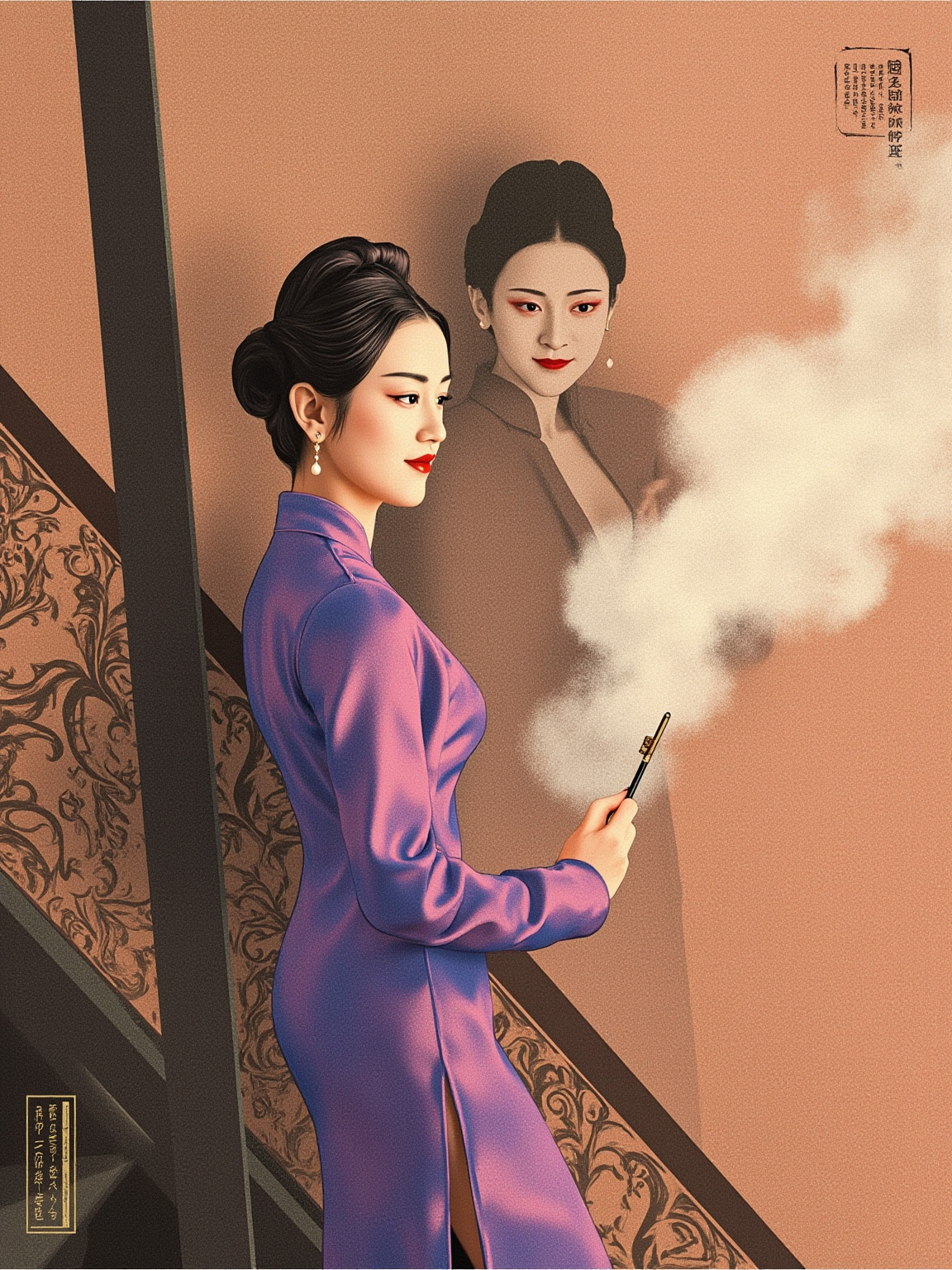
The real turn comes from Manlu, the older sister. She had worked as a dance hostess years earlier to keep the family alive; now she is married to Zhu Hongcai, dressed well and fed well, and still, in middle age, without a child. Childless and married to a man she cannot trust, she runs as if something were chasing her, veering further off course with every step. One day she catches sight of her younger sister Manzhen walking with Shijun, and something in her snaps — she is afraid her husband will stray, afraid of being discarded, afraid her sister's life will turn out so much better than hers. Late one night, she and Zhu Hongcai conspire together, and she locks her own sister Manzhen in the back rooms of their house.
Chang writes this passage, the darkest page in the book, with total composure. No one shouts. No tear falls. She writes only that the curtains in the back room are drawn, and that Manzhen hears her sister's footsteps stop on the stairs, then turn back. What chilled me reading it wasn't the plot — it was Chang's coolness, the sense that even a sister could be calculated against. And what Manlu actually hates, underneath it all, is not her sister. It is the fate that drove her to this.
The most painful moment in the whole book isn't the night of the imprisonment — it's years later, when Manzhen tells Shijun, calmly, we can't go back. By then she has already cried every tear inside her, where no one could see.
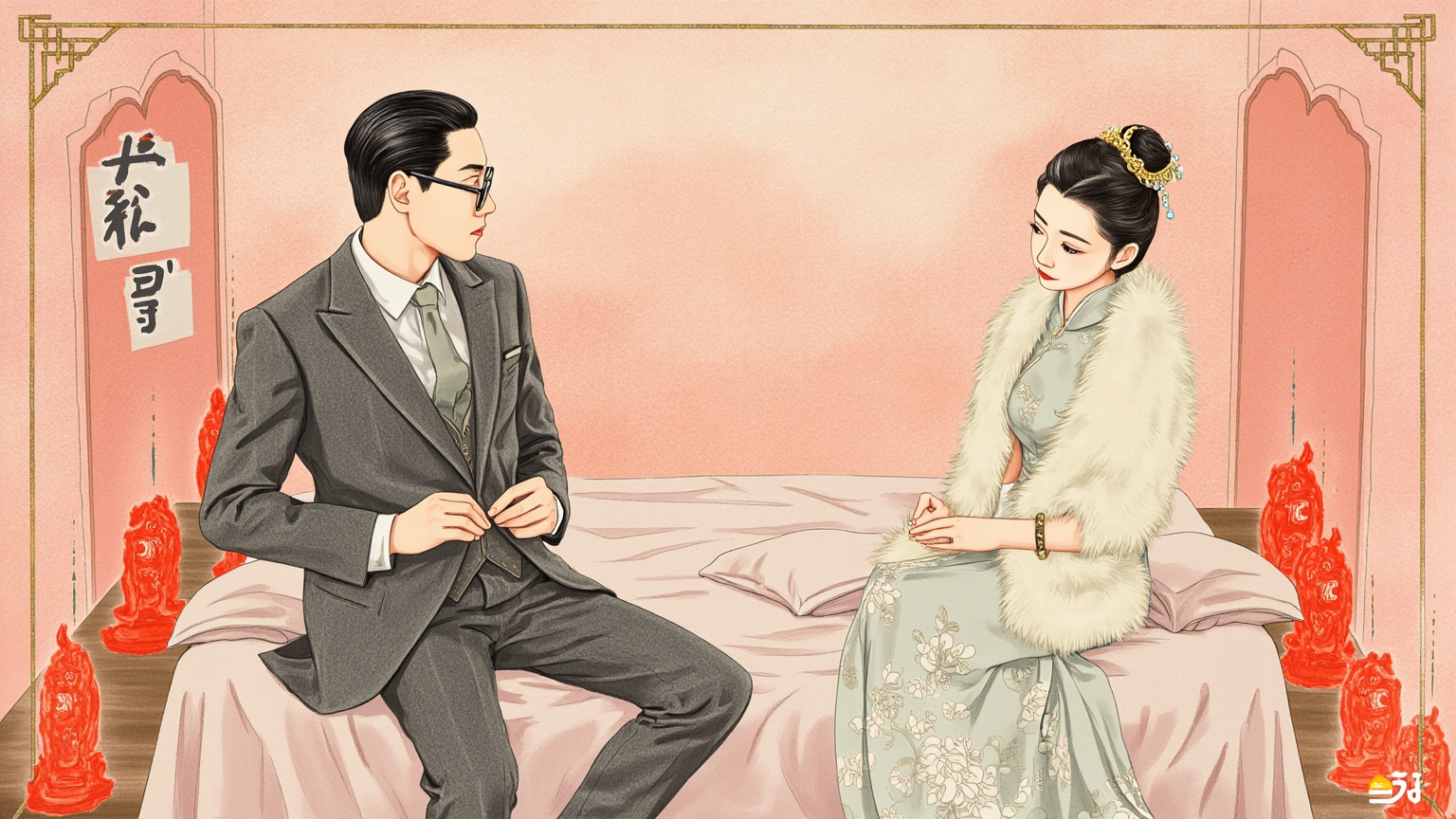
During the year and more that Manzhen is held captive, Shijun knows nothing of the truth. All he hears are rumors — Manzhen and so-and-so, this and that — lies that Manlu has been spreading. A gentle person is the easiest to break with a lie like this, because he will not go and check, will not go and ask, only withdraw further into himself. Shijun goes back to Nanjing, low in spirits, and marries Shi Cuizhi, the woman his mother picked out. On their wedding night, the two of them are as polite with each other as strangers. Around the same time, Xu Shuhui leaves for America to study. On the day he leaves he glances back once — the book does not say whether he cries, only that the suitcase in his hand knocks against the threshold, one dull thud.
I have always felt that Chang's cruelest cut lands not on Manzhen but on Xu Shuhui and Shi Cuizhi — two people who clearly cared for each other, torn apart simply because one came from a poor family and the other from a rich one, each married off in the end to someone they do not love. It is the other side of the novel's wrong-marriage theme: it is not only the main couple who miss their chance. An entire generation does.
Manzhen later escapes from Manlu's house with a baby in her arms — the child she bore during her captivity. Years afterward, so that her son can have a father, she forces herself to marry Zhu Hongcai, the very man who wronged her. There is not a trace of sweetness in this marriage, only endurance, calculation, more endurance. Until one day she has saved up enough strength, divorces him, and moves out with her child.
Chang never turns Manzhen's strength into some kind of heroine's triumph. She lets her cry, lets her wear out, lets her lie awake at night staring at the ceiling, lets her still stop dead on the street when an old song plays somewhere. Readers ache for her not because she is flawless, but because her exhaustion is so real.
Chang wrote and rewrote Half a Lifelong Romance, and its earlier form Eighteen Springs, from her twenties into middle age — it is the work she polished hardest and longest, her defining novel. It succeeds on three counts. First, it renders the marriages, survival, and sisterhood of ordinary old Shanghai as though under a magnifying glass, down to the seating order at a dinner table. Second, its psychology is restrained to the point of cruelty, relying not on grand grief or shouting but on a sentence left unsaid, chopsticks that pause mid-air, eyes that lower. Third, it takes the idea of missing your chance and pushes it as far as it will go — not fate playing a trick, but family, class, rumor, weakness, and the cost of living, closing in layer by layer, until the day of the reunion arrives and the two people find an entire river has come to run between them.
Read the novel today and you find it is not only about old Shanghai. It describes a situation still happening now: marriages arranged by parents, the divide of class, the debts owed silently between sisters, what families demand of their daughters, a person at a dinner table who gathers the courage to say something and then swallows it back down. Seventy or eighty years on, almost none of it has changed clothes. That is why Half a Lifelong Romance keeps being read, generation after generation.
What a companion guide can give you is a map: here is the lane, here is Nanjing, here is the back room, here is the restaurant. What it cannot give you is Chang's gift for polishing a sentence until it shines. She writes rain so that you hear it hitting the black roof tiles. She writes a ring so that you feel the small circle of metal warming against skin. She writes Manzhen escaping after a year of captivity, worn down to bone, without wasting a single adjective on it. That craft you have to read for yourself. And the scene where Manzhen and Shijun finally talk in the restaurant, ten or fifteen minutes of dialogue stretched long on the page, every pause, every glance, every swallowed sentence carrying weight — a summary can tell you what they said, but it cannot give you the airless feeling of words that reach the edge of the mouth and go no further. That feeling only comes from opening the book and reading it yourself.