Han Feizi · Companion Guide
韩非子
战国竹简里那套绕过德性直达治理的法术势,看尽人间自欺,再教君王以冷手拧天下。
Opening: a rabbit that ran into a stump
A farmer in the state of Song was hoeing weeds in his field when a panicked rabbit bolted into a stump, snapped its neck, and dropped dead. The farmer got a free meal and stopped hoeing the next day. He dragged a stool over to the stump, fixed his eyes on the far end of the field, and waited for the next rabbit. The image has stuck in the history of Chinese fable. Han Fei put it in "The Five Vermin," and not to make you laugh — he wants the laugh to curdle a little afterward. People naturally mistake coincidence for law, and government exists to cut that self-deception off at the root.
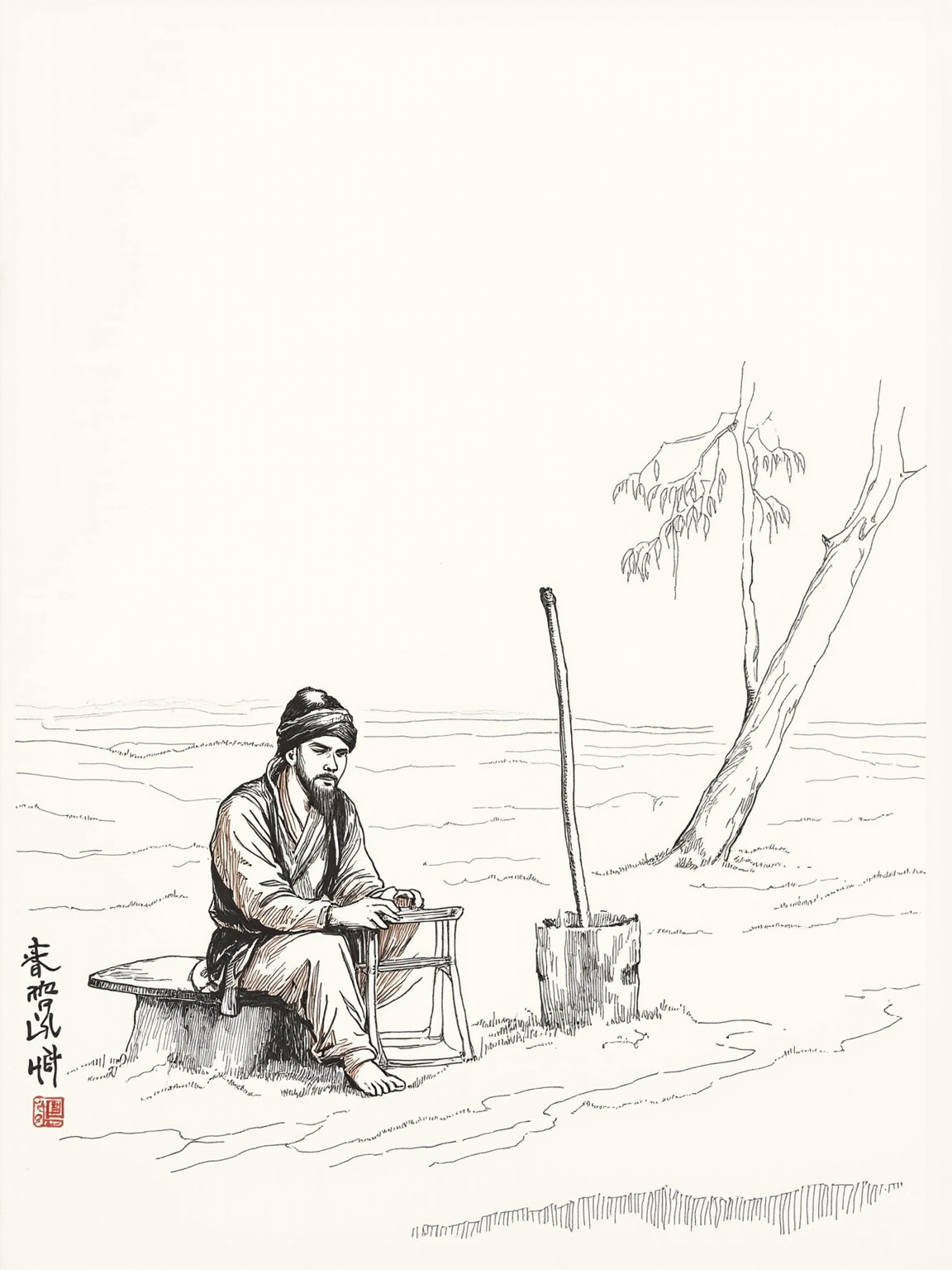
A hare, in its fright, dashed headlong against a tree-stump in the field and broke its neck; the man took it home for meat.
田中有株,兔走触株,折颈而死;因释其耒而守株,冀复得兔。
金句 · 五蠹篇 · 守株待兔
What kind of book is this
The Han Feizi is not a novel. It is a stack of late Warring States political treatises, bound into twenty scrolls and fifty-five chapters, written by Han Fei, a prince of the state of Han, a student of Xunzi, and a classmate of Li Si, who later became Qin's chief minister. By the time he wrote it, Qin's conquest was already unstoppable, and the old states of Han, Wei, Chu, and Qi were wilting one by one for lack of Legalist reform. What Han Fei did was take the statecraft that had been scattered across three men, Shang Yang, Shen Buhai, and Shen Dao, and twist it into one complete operating system. Qin Shi Huang really did put that system to work — the policy of burning the classics and clarifying the laws carries his fingerprints. Its place in literary history is a little strange: half philosophical treatise, half book of fables, the two fitted together like mortise and tenon.
People and world
The book has no protagonist. Han Fei himself plays something like a stone-faced narrator, opening line after line with "Your servant has heard" or "There was a man who once presented an elixir of immortality to the King of Jing," laying one fable after another on the table and then pulling the political skeleton out of it. The people he lays out are a mixed bag: a farmer hoeing his field in Song, a peddler in a Chu marketplace hawking spears and shields, a pedant in Zheng who insists on measuring his shoe against a ruler he left at home, a bewildered traveler in Chu who carves a notch in his boat to mark where his sword fell, Duke Huan of Qi thrown off course by a fondness for purple robes, and Duke Huan of Cai, whose refusal to listen made the physician Bian Que sigh four times over. They all share one world: the late Warring States, iron tools spreading, bronze still common, oil lamps lit in the halls of the feudal lords, bamboo strips spread across writing tables, field paths and marketplaces as the everyday backdrop. These are not Han Fei's contemporaries — they are pieces he moves around at will to make an argument.
Four fables, four kinds of self-deception
To read the Han Feizi well, start with the fables that textbooks keep quoting out of context — Han Fei never wrote them to end up in a textbook. The rabbit and the stump has already come up. It punctures the superstition of mistaking coincidence for cause: a rabbit dying once against a stump does not mean it will happen again. But people are fragile enough that one stroke of luck is enough to cost them the rest of their lives.
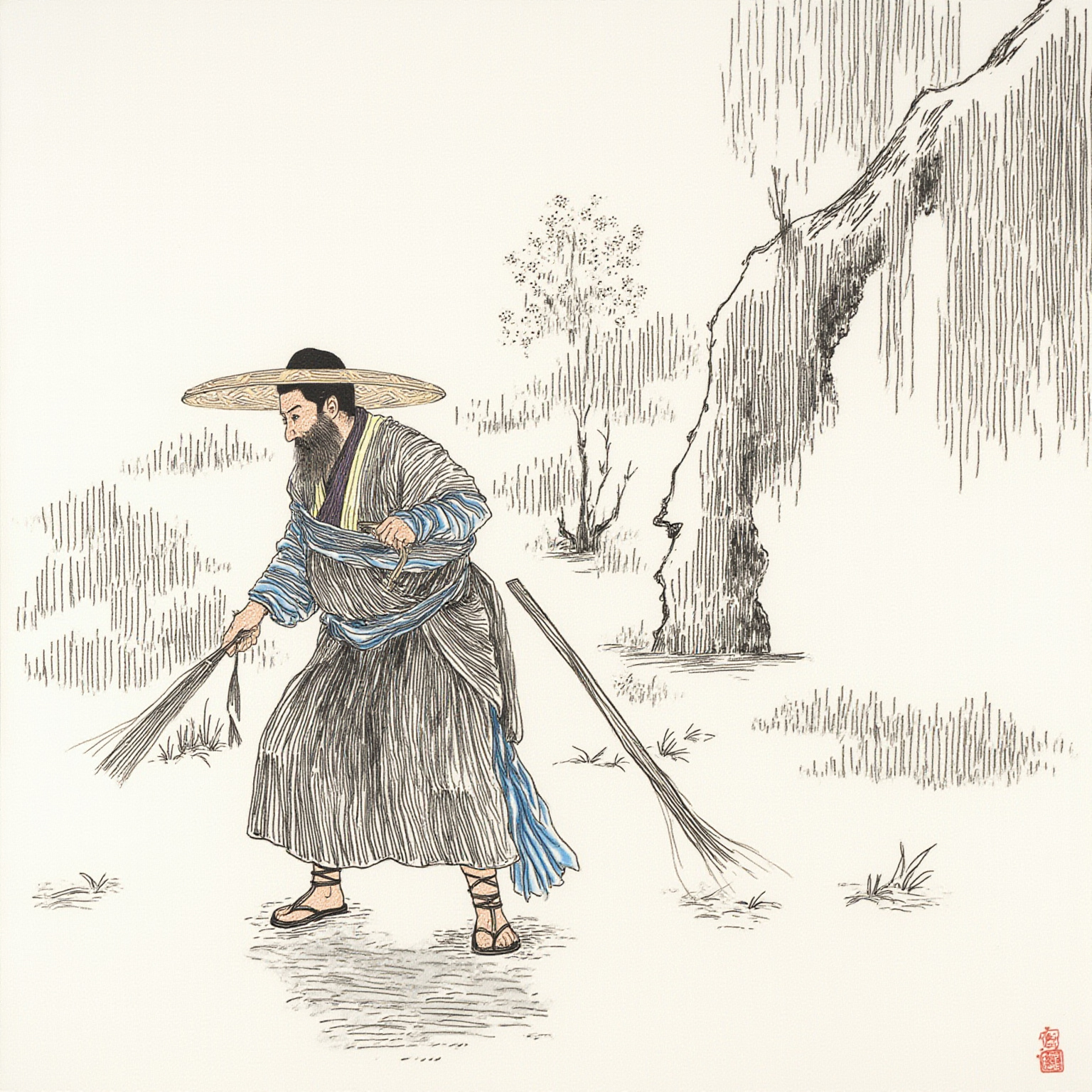
Any man who relies on chance for his livelihood will sooner or later be punished by the very chance he trusted.
兔不可复得,而身为宋国笑。今欲以先王之政,治当世之民,皆守株之类也。
金句 · 五蠹篇 · 因果之误
The peddler in the Chu marketplace is more interesting. He held up his spear and announced that it could pierce anything, then held up his shield and announced that nothing could pierce it. Someone in the crowd asked the obvious question: what happens if you stab your shield with your spear? The peddler had no answer. Han Fei uses this one to puncture the illusion of logical consistency. People assume their own two claims line up with each other, but the assumption rarely survives a third question.
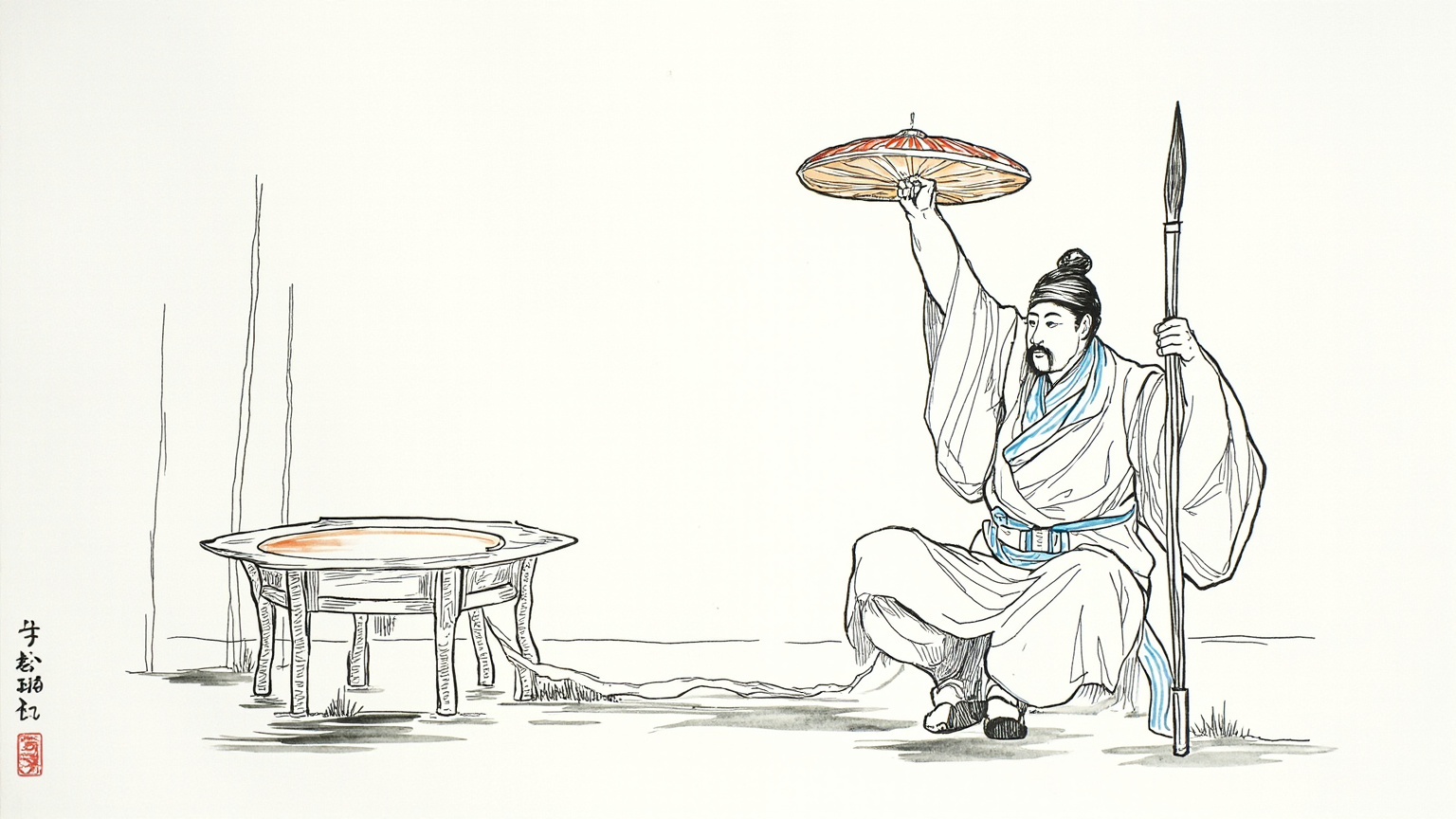
No spear can pierce my shield, no shield can withstand my spear—alas, what shall one do with such wares?
吾矛之利,物无不陷也;以陷人之盾,如无不陷之矛乎?——其人弗能应也。
金句 · 难一/难势 · 自相矛盾
The man from Zheng who bought shoes is meaner still. Rather than simply try the new shoes on his own feet at the market, he insisted on running home for the measurements he had written down, because, in his words, he trusted the ruler more than his feet. By the time he ran back with the measurements, the market had closed. Han Fei's target here is dead orthodoxy: trusting a fixed rule further than you trust the living organ built for the job.
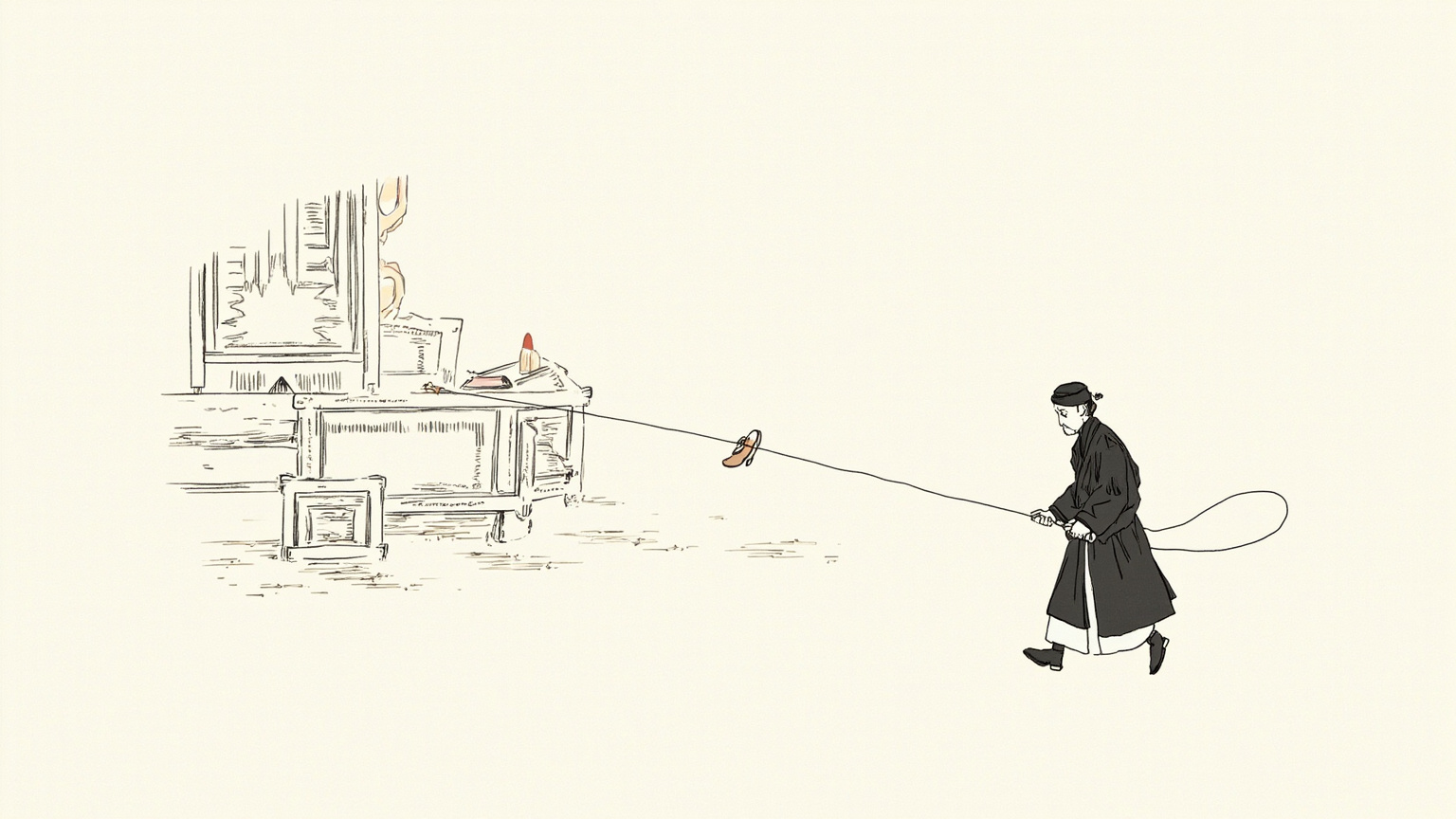
He trusted the measure in his drawer more than the living foot upon his flesh; the market dispersed before he came back.
宁信度,无自信也。及反,市罢,遂不得履。
金句 · 外储说左上 · 郑人买履
The fourth is the man who notched the boat to find his sword. Crossing a river in Chu, he dropped his sword overboard, and instead of diving in after it, he carved a notch on the side of the boat where it had fallen, planning to search the water below that mark once the boat reached shore. The boat kept moving; the water did not. He assumed the notch would still mark the spot. This one punctures the failure to notice that the ground has shifted: change the frame of reference, and a mark carved into the old one is worthless. Four fables, four ways of getting it wrong — mistaking coincidence for cause, mistaking a broken argument for a sound one, mistaking a dead rule for a living judgment, mistaking a moving world for a still one — and all four point at the same sentence: people naturally deceive themselves through the narrow slit of what they happen to see.
Law, technique, position: twisting the kingdom into one rope
With the fables laid out, Han Fei turns to making his case directly. He splits the statecraft of the Warring States into three legs: law, technique, and position. Law comes down from Shang Yang: written statutes, clear rewards and punishments, subjects who obey because they fear the penalty. Done right, nobody has to guess what anyone else is thinking — the code itself tells you what to do. Technique comes from Shen Buhai's line: held close by the ruler, reading faces and gestures, steering the ministers without ever being read in return. Position is Shen Dao's legacy: the ruler occupies a height that carries its own irresistible force, the way water runs downhill or a crossbow bolt flies far, on the strength of location rather than character. Han Fei's real move is welding the three legs into a single stool: law governs the subjects, hidden technique governs the ministers, and absolute position holds the whole thing up. He even states the shocking part outright: a ruler need not be virtuous, and the state need not fall into chaos, because a good enough system keeps even a mediocre man on the throne from wrecking the kingdom.
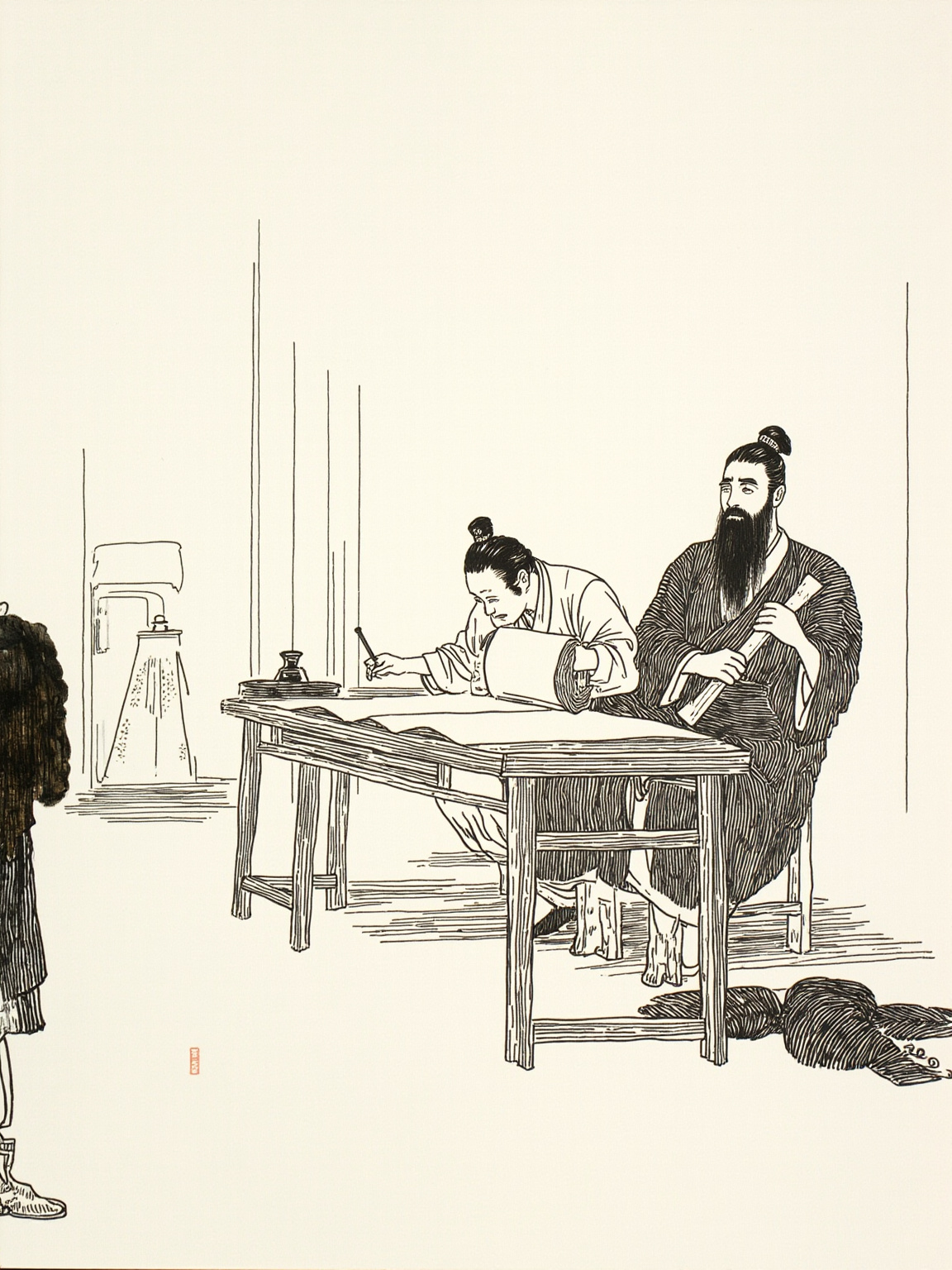
Let the law be plain, that the loyal may be spurred; let the reward be sure, that the false may be stayed.
法明则忠臣劝,赏必行则奸臣止。
金句 · 说疑 · 法术之核
Punishment to end punishment: a logic cold enough to make you squirm
What the top does, the bottom copies: you think you're choosing, but someone chose for you
People are shaped by a ruler's habits far more deeply than they realize. Duke Huan of Qi liked to wear purple, and soon it took five plain robes to trade for one purple one anywhere in Qi — the price had gone absurd, and the whole court kept wearing it anyway. In the chapter known as Wai Chu Shuo Zuo Shang, Han Fei uses the story to argue that custom itself has no fixed beauty; it is neutral until power stains it a color, and then the whole society adopts that color as taste. The ruler of Zou's wardrobe makes the same point: once someone at the top models a fashion or a habit, everyone below falls in line like a reflex. This is Han Fei writing about manipulability, the single most powerful, and most unsettling, tool in the Legalist kit.
Bian Que and Duke Huan of Cai: the same crack running through medicine and statecraft
The story of the physician Bian Que and Duke Huan of Cai, told in the chapter Yu Lao, is one of the longest and best known fables in the whole book. Bian Que came to court four times. Each visit the disease had advanced further — under the skin, then in the flesh, then in the stomach and intestines, then finally in the marrow of the bones. Each time he said so, and each time the duke refused to believe him. By the fourth visit the disease had reached the marrow, and Bian Que simply turned and left. There was nothing left to treat. Han Fei borrows the story from a passage on Laozi's teachings about self-cultivation and rewrites it as a lesson in statecraft: trouble is easiest to cure while it is still small, and no ruler, however brilliant, can save a kingdom once the disease has spread through it. Which is why a ruler needs someone at court willing to deliver bad news, like Bian Que — and why that person is usually the first one driven out.
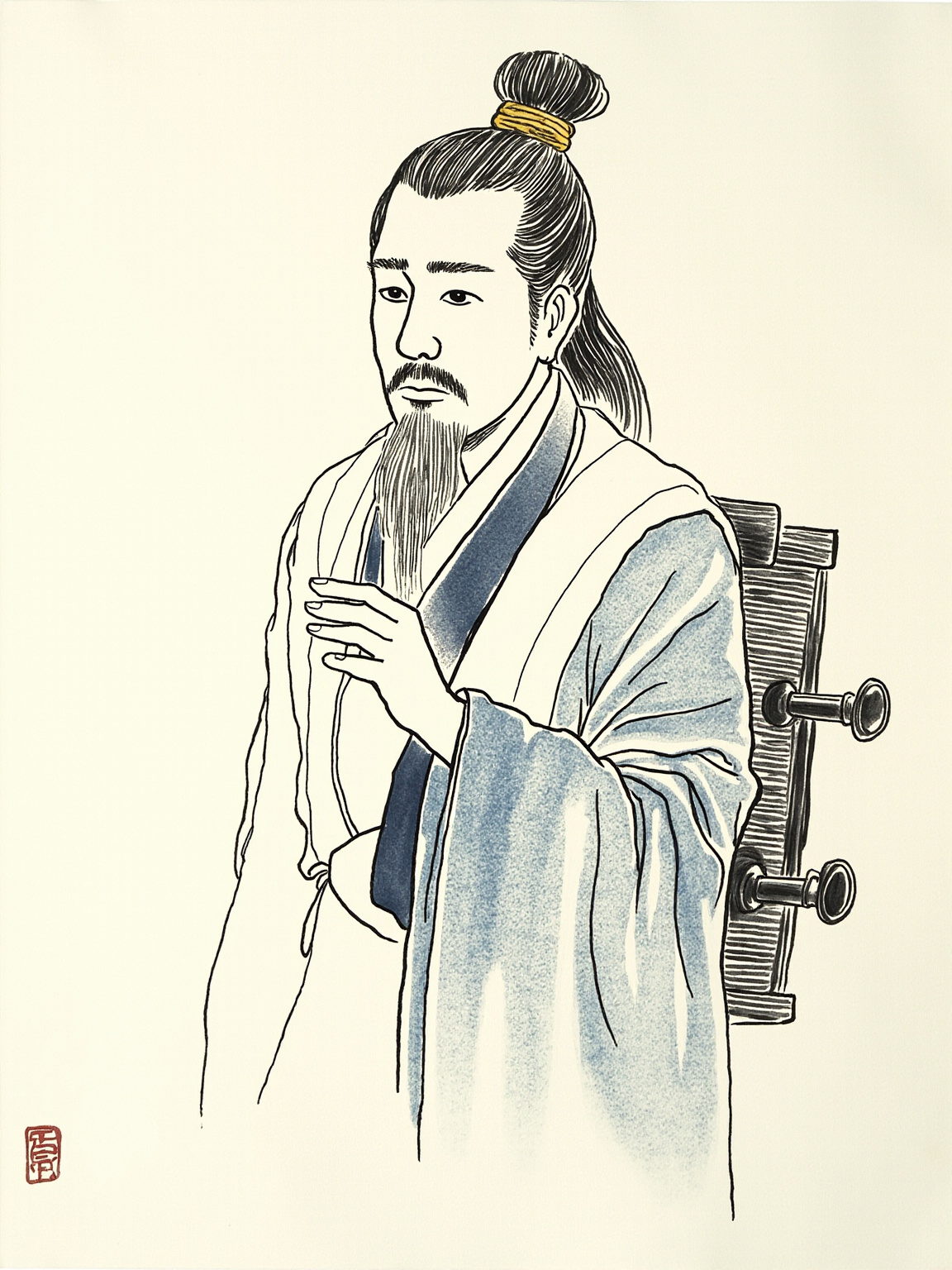
The sickness has entered the marrow; between us, nothing more is to be asked. So saying, he fled.
疾在腠理,汤熨之所及也;在肌肤,针石之所及也;在肠胃,火齐之所及也;在骨髓,司命之所属,无奈何也。今在骨髓,臣是以无请也。
金句 · 喻老 · 扁鹊见蔡桓公
This stack of bamboo strips does not keep you up at night for teaching a ruler to be ruthless. It keeps you up because it starts by admitting that everyone deceives themselves through the narrow slit of what they see, then hands the ruler a way to get the fruits of good government without the virtue.
Theme: the high-water mark of political realism in Chinese
The place the Han Feizi holds in Chinese intellectual history matches the place it holds in world political thought: a book that looks at human nature from its coldest angle. It answers Machiavelli's The Prince across the centuries: unvarnished realism about power on both sides, both running on pure instrumental reason. But the props are entirely different — one is Florentine palace intrigue, the other is bamboo strips, official ledgers, collective punishment, reward and penalty. That Warring States furniture is still what gives this book its particular flavor, two thousand years on. There is another reason it has lasted. Every ridiculous scene doubles as a precise philosophical counterexample. The fables are not decoration for the theory; they are the argument itself, a design rare in Chinese philosophical prose. Finish the story of the rabbit and the stump and you will not just laugh at a lazy farmer — you will start to suspect every moment in your own life when you are waiting for one more stroke of luck.
The tragic arc outside the text
Han Fei himself is the coldest story that sits outside this book. He finished this whole system for running a state, and his own state of Han had no use for it. The king of Qin, though, read it obsessively, and reportedly ordered an attack on Han with the words that he wanted this man alive. Han Fei was sent to Qin on a diplomatic mission, where his old classmate Li Si turned the king against him. He was thrown in prison and eventually sent a cup of poisoned wine, by Li Si's own order. He was a little past forty. A man who taught rulers how to control their ministers through hidden technique died by exactly that technique, designed against him by a former classmate, one of the coldest ironies in Chinese intellectual history. The book itself is an open-ended collection of arguments; its author never lived to see a single one of them adopted. The text of the Han Feizi does not resolve into this tragedy. It just stops, argument after argument, growing colder as it goes. But once you know the story behind it, the voice that keeps opening with "Your servant has heard" carries a little more weight.
Reasons to read the text itself
An explainer can tell you what a fable says and where the moral lands. What it cannot give you is two things. The first is the precision of the fit between fable and argument. Han Fei's method is to tell a ridiculous little story all the way through, then, without warning, pull a political thorn out of it. The turn from a dead rabbit to a theory of legislation is a piece of literary craft you only feel by reading the original. The second is the density of the dark comedy. Cold, controlled, and every so often dropping a line that makes you want to laugh and object in the same breath, a register rare in a two-thousand-year-old text and one that does not survive being summarized. The rabbit still twitching by the stump, the peddler with no answer, the pedant measuring his shoe: Han Fei writes every one of them with his mouth held in a thin, private smile. The explainer hands you a map. The text itself is that bleak, funny stretch of Warring States field — whether you walk out into it is up to you.
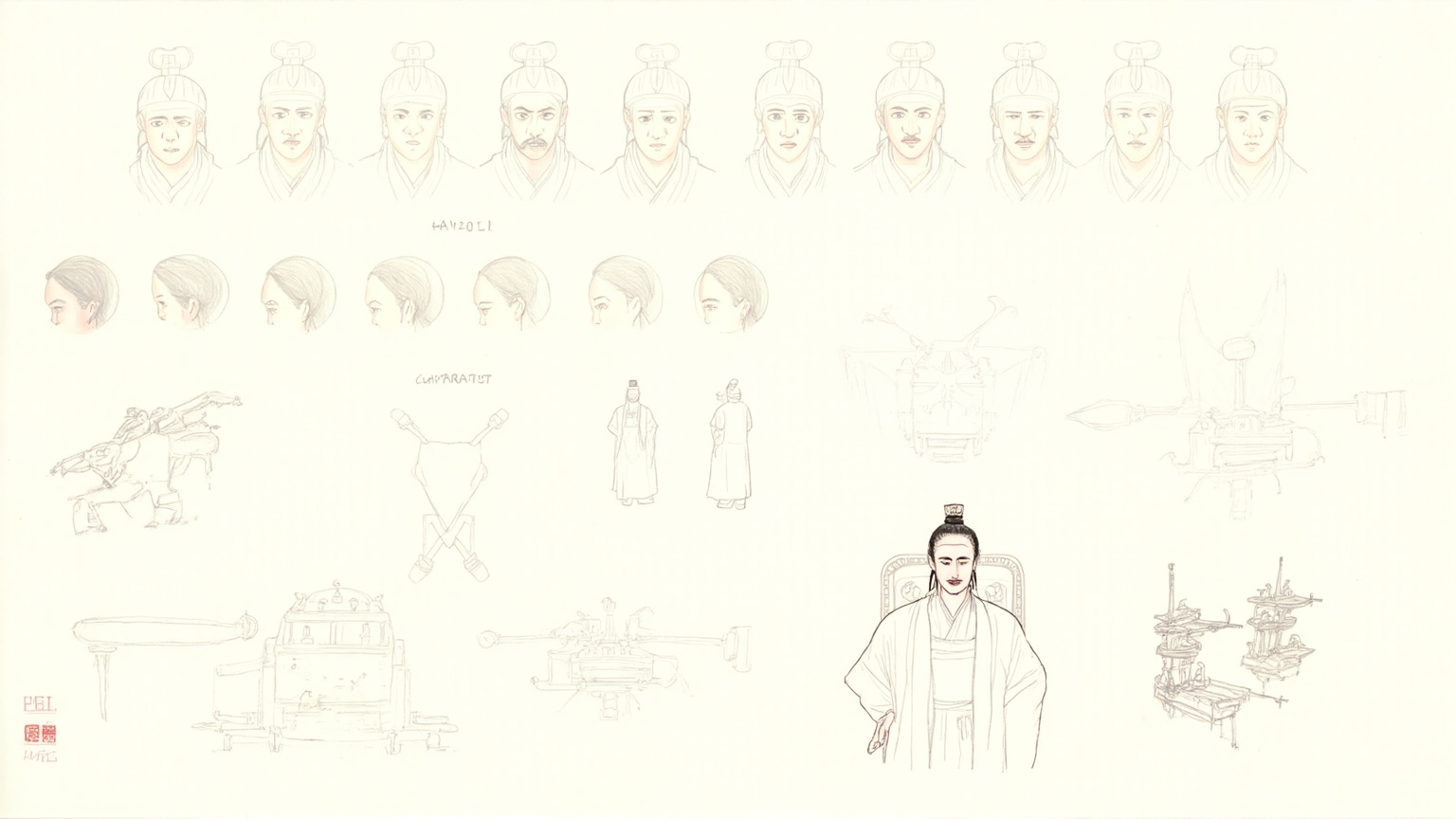
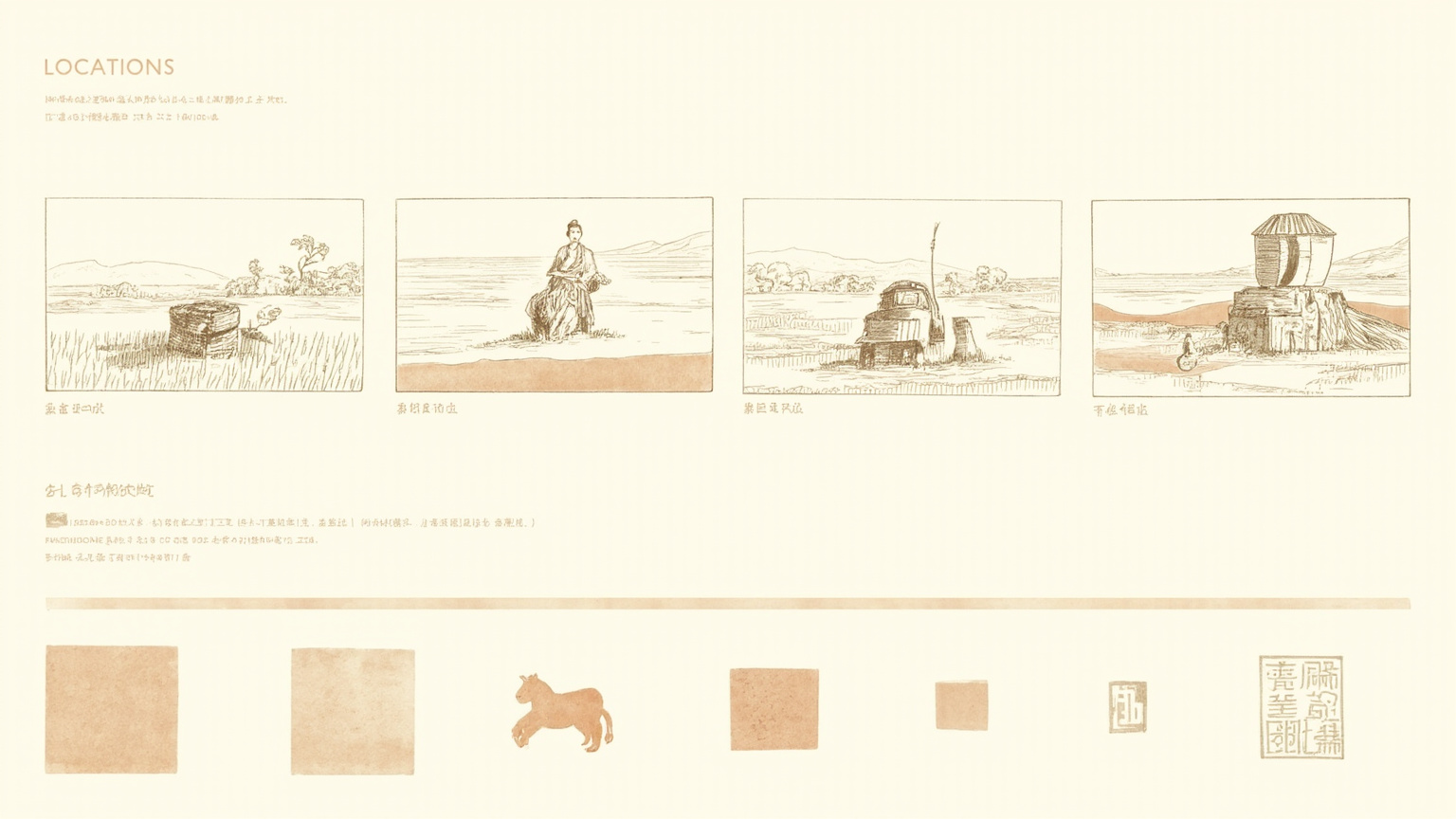
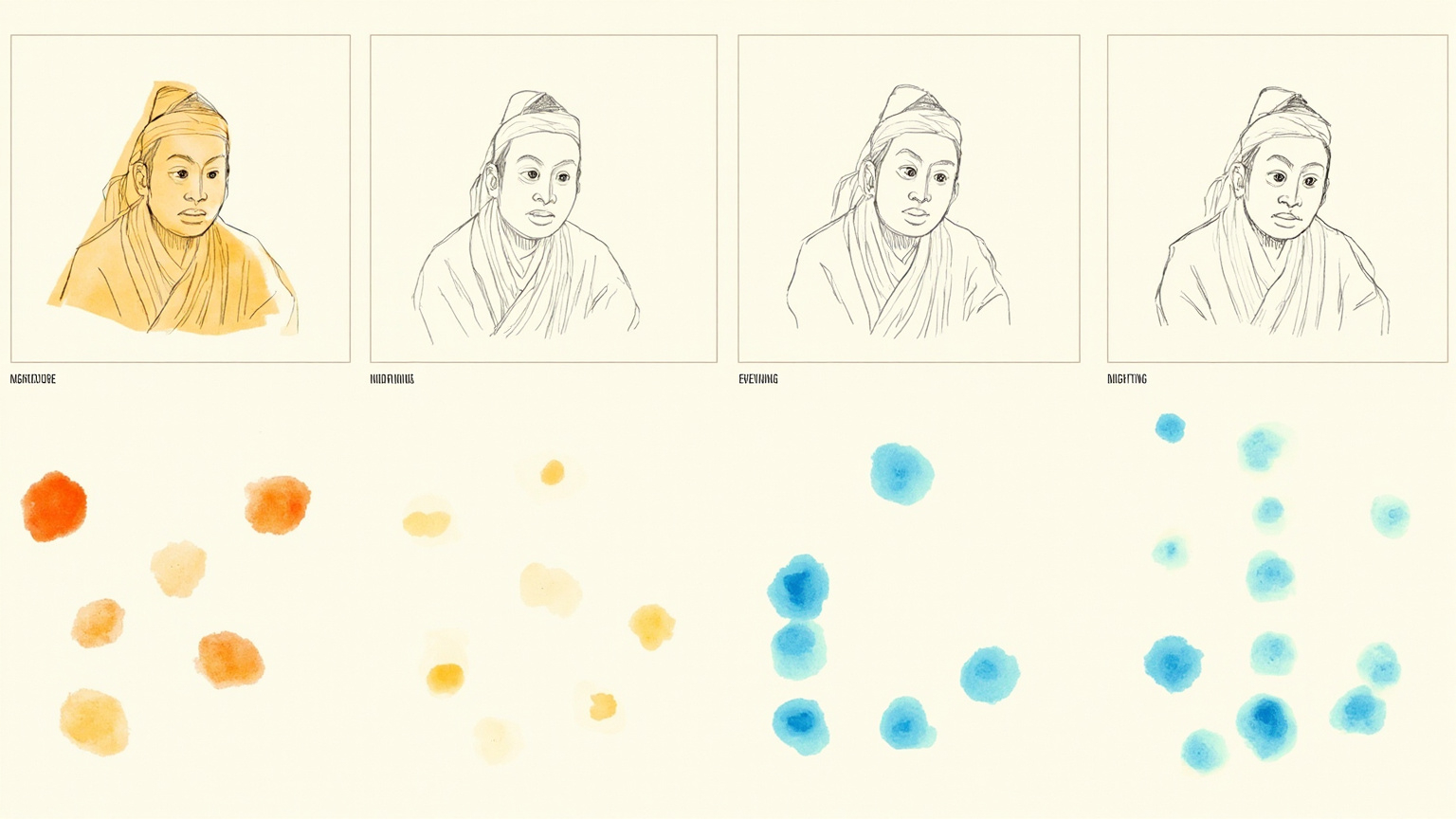
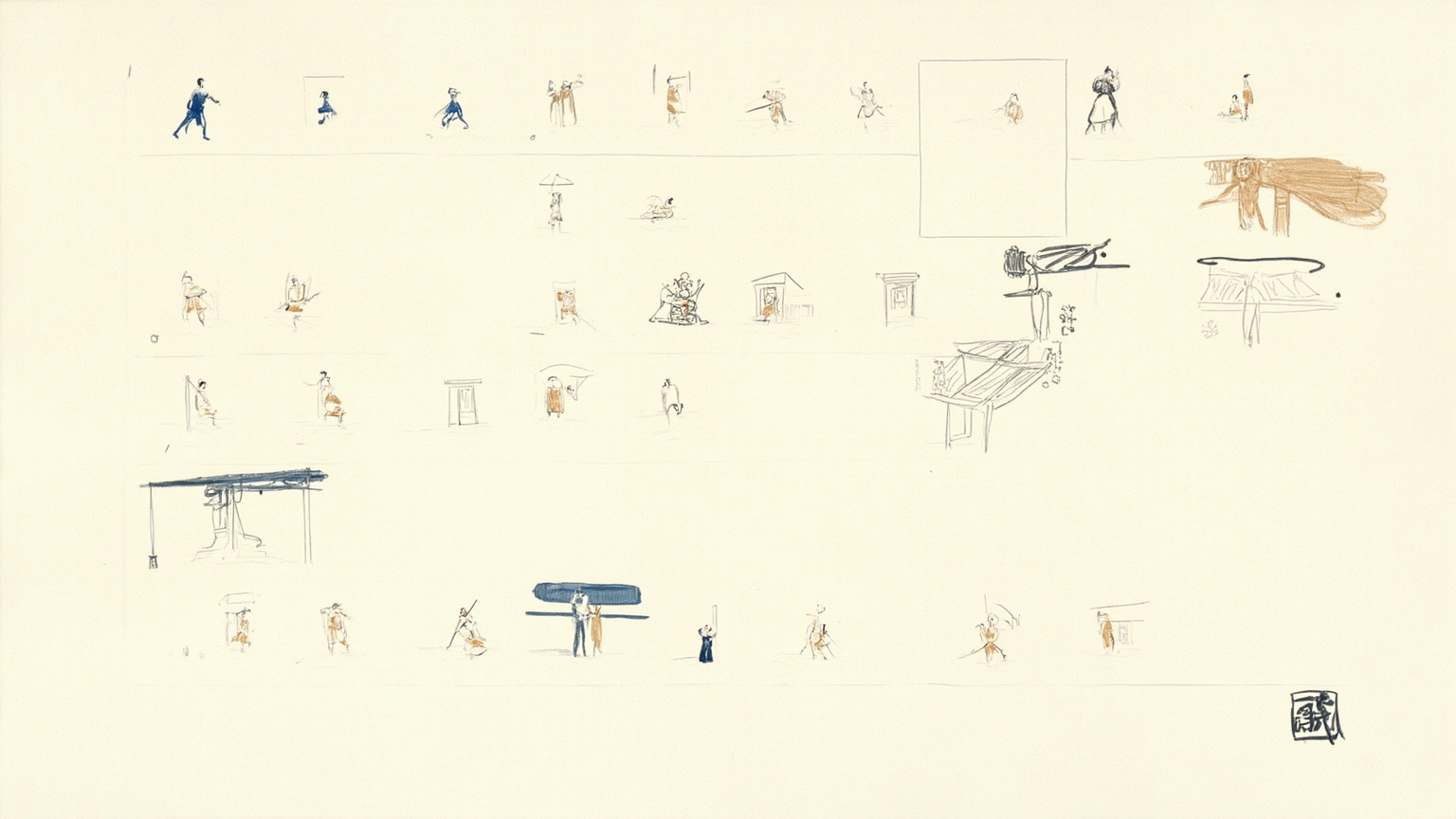
Art Direction4 plates
Before the guide was written, this book got a visual foundation — every illustration you just read grew out of it.