Hans Brinker, or The Silver Skates · Companion Guide
银冰鞋
一个荷兰少年用父亲削的木冰刀滑过整片冬天的运河,肩上扛着失忆的父亲、贫寒的家和一双够不着的银冰鞋。
Opening
A pair of wooden skates, strapped to his boots with leather thongs, the blades whittled by his own hand, one cut at a time.
That is what Hans Brinker wore when he skated onto the frozen canal. The ice that winter mirrored brick houses, windmills, and a row of their silhouettes in the distance, and the flags were already up at the finish line of the silver skates race. His rivals had freshly ground steel blades underfoot. He had a few tricks his father had taught him before the accident, and a block of wood.
What kind of book this is
This is Mary Mapes Dodge's mid-nineteenth-century novel for young readers, Hans Brinker, or The Silver Skates. It carries the whole of a Dutch winter into a coming-of-age story — canals, dikes, wooden shoes, windmills, the silver skates race — and grows a penniless boy up among those concrete things. It sold well in America at the time and has been reprinted ever since, for a plain reason: it braids adventure, moral seriousness, and local color together, and when you close it, you can still hear the blades cutting the ice.
Characters and world
The protagonist is Hans Brinker, a Dutch boy of about fifteen or sixteen. His father lost his memory and his ability to work after an accident on the dike, and the family fell into poverty. Hans's sister Gretel, close to him in age, helps their mother hold the household together.
Hans's rival is Van Holp, a well-off young man, well equipped and well trained, standing at the other end of the silver skates race. When the two of them glide into the course side by side, speed is the least of it: class, opportunity, and two entirely different paths through boyhood are all on the line. One boy assembled from his father's leftover skill and a block of wood, the other in a fitted coat on fresh steel blades, stand together at the starting line — brick houses and windmill silhouettes behind them under a low winter sun, the scene cold and restrained.
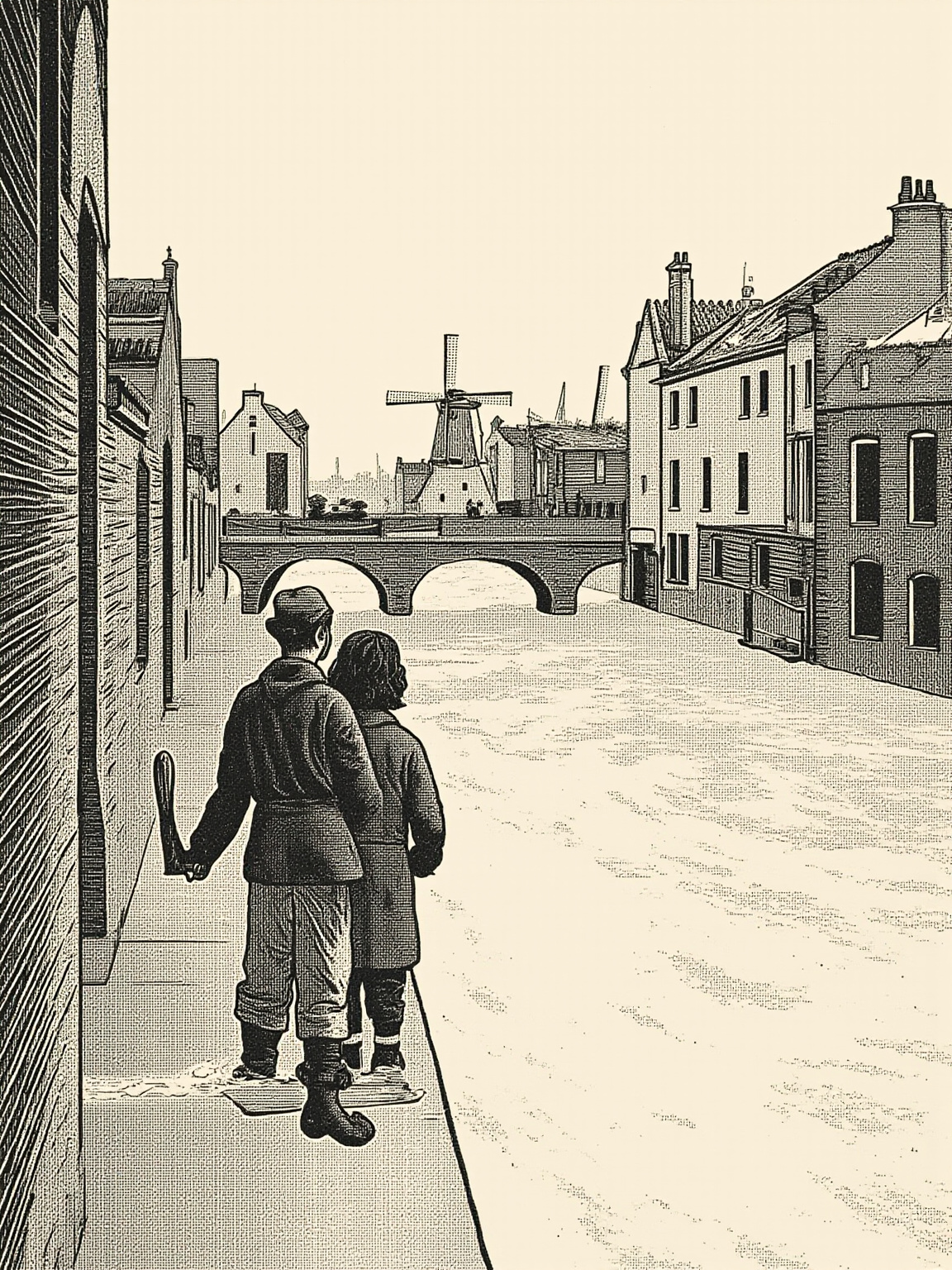
Hans Brinker, the hero of this book, was a stout, brave boy of fifteen, who lived in a cottage near the frozen canal.
汉斯·布林克,本书的主人公,一个十五岁的结实、勇敢的少年,住在结冰运河边的一所小屋里。
金句 · 开篇 · 少年与小屋
Behind them stand a Leyden surgeon, Dr. Herman, and a father — Mr. Brinker, who has lost his memory. The book's world is small: the brick houses, canals, and dikes of the village of Broek, and a little farther out, the canal bridges, museums, and hospitals of Amsterdam and The Hague. Windmills, tiles scrubbed to a shine, wooden shoes, homemade skates — one concrete thing after another holds up this Dutch winter.
A household with nothing
The story opens on a household with nothing. The father used to work on the dike; after an accident, his memory broke and his capacity to work collapsed with it. The mother holds the house together, and Hans and Gretel split the chores and the caretaking between them. This is not romanticized poverty — the larder runs short, boot soles wear through, there is no money for decent coal in winter, and they simply get through each stretch of days as it comes.
Hans crouches by the table whittling wood, curls of shaving falling one after another to the floor; his sister tends a small pot of thin porridge at the hearth; their mother pulls out their father's coat, worn shiny at the elbows, to mend the cuffs. Frost flowers the windowpane, and beyond it lie the canal and the dark blades of distant windmills. The brick house is small, but it holds the heaviest winters in the whole book.
The silver skates race
The silver skates race is the great event of the village that winter. The prize is a pair of silver skates, a thing almost unimaginably fine to a family as poor as the Brinkers. Hans wants to win for more than honor. He wants the skates, and he wants to earn his family a chance worth naming.
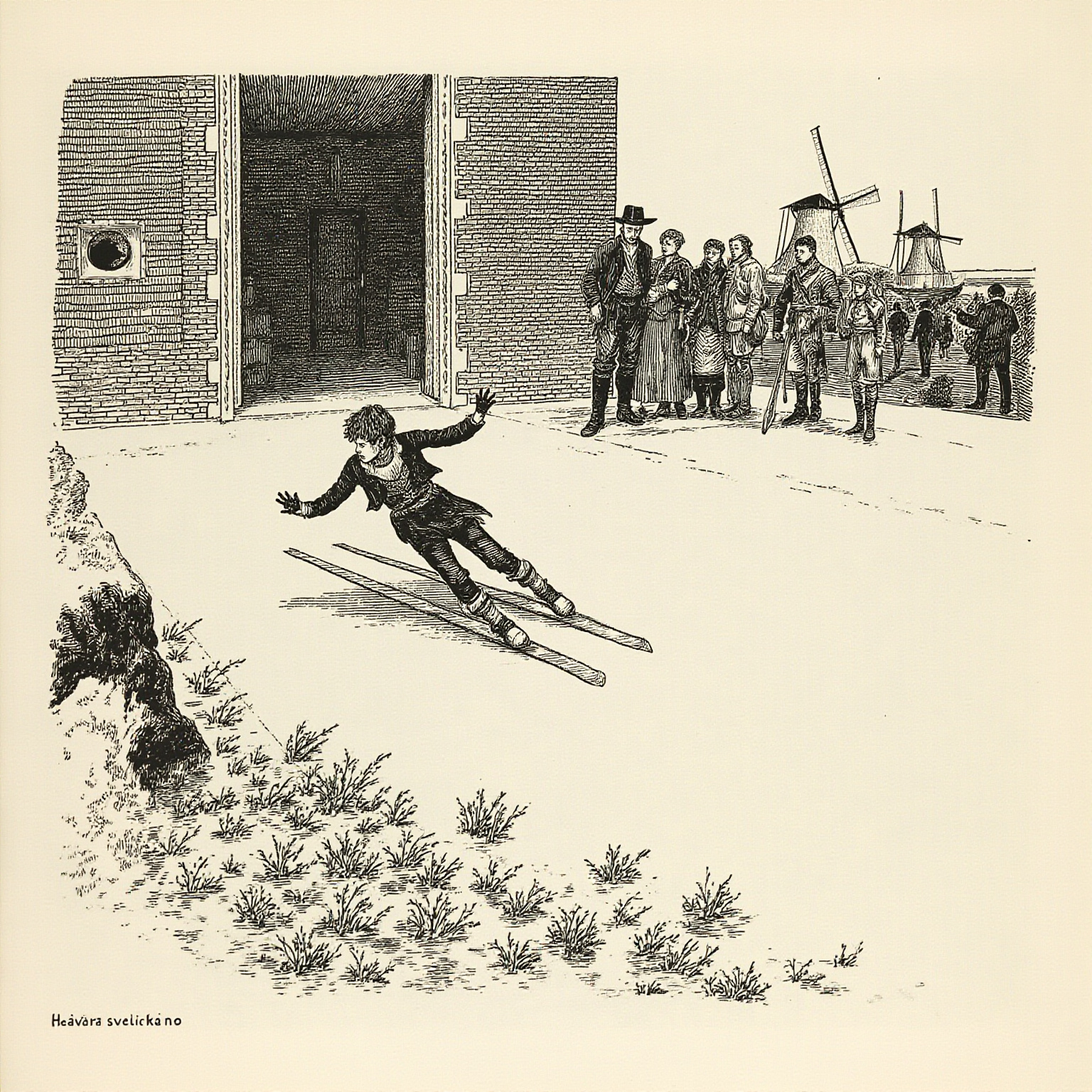
On they came, faster and faster — the winner's prize, the splendid silver skates, gleaming in the afternoon light.
他们越滑越快——胜者的奖品,那双华美的银冰鞋,在午后的光线里一闪一闪地发亮。
金句 · 银冰鞋竞速 · 终点线的银光
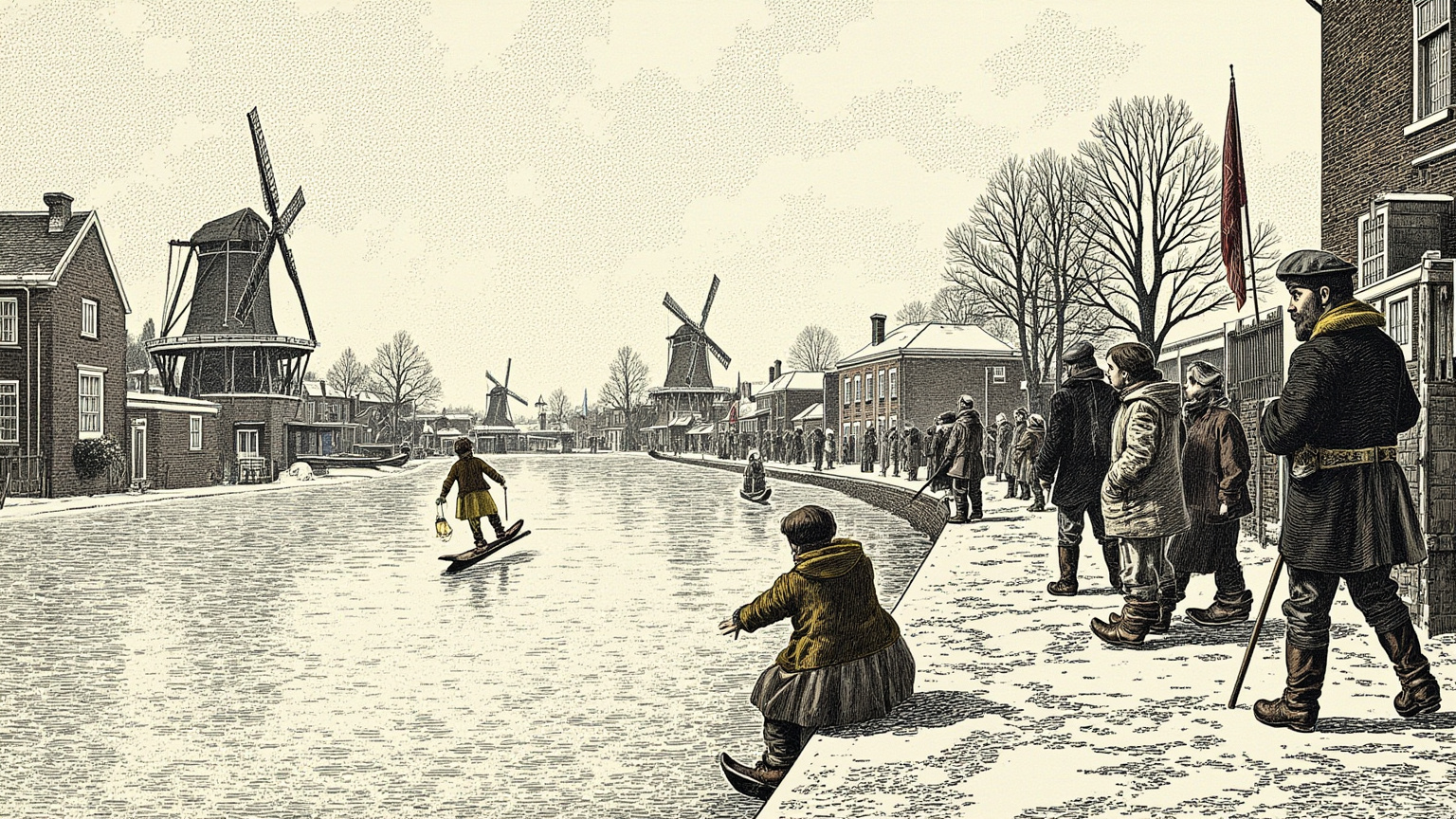
Van Holp skates out with the finest gear on the ice, and flags and makeshift stands line both sides of the course. Hans's wooden blades make a different sound against the ice than everyone else's — duller, grittier, more like wood grinding on ice than a blade cutting it. He holds on with speed, stubbornness, and the weight of what he owes his family. The course is wide open ice, flags snapping in the wind, the makeshift stands packed with spectators in their hats. Two leading boys tear out of the turn one after the other, the first boy's blade flashing steel, the second on rough wooden runners throwing up a fine spray of ice: the winter sun low and slanting, the whole scene cold and fast.
At this point the author doesn't hand Hans a miracle, and doesn't let him lose badly either — she simply lets a boy on wooden skates finish the whole course among a crowd of boys on steel. His wooden blade slips once on a turn; Hans stumbles and catches himself. When the steel blades cut past him at his side, he clenches his jaw and doesn't look back.
The legend of little Dave and the dike
Midway through the novel comes a parable-like legend. A boy called little Dave finds a small leak in the dike, pushes his finger into the crack to plug it, and holds it there all night until someone comes at dawn to repair the breach. The story is a fictional aside inside the novel, not history, but it carries the whole book's ethical undertone — an ordinary person's sacrifice, the safety everyone shares, and a boy quietly making a choice.
The long line of the low dike at night, a thin boy half-kneeling on it, one finger pushed into the weeping crack, dark winter water spread out before him, windmill silhouettes blurred in the distance. Cold grays and midnight blue, quiet and restrained, no theatrics: on Dodge's page this is a few plain paragraphs, and yet once it reached Holland it was cast into monuments standing in more than one town.
Seeking a cure in Leyden
Beyond the race, one thing still weighs on Hans: his father. Dr. Herman is in Leyden, and word is he can perform the operation. The trip carries the whole family's hope, and every coin they could scrape together for the fare. They sit jolting along in a carriage to Leyden; Hans gives his mother's old scarf to Gretel to wear, and nobody says a word.
In Leyden, Dr. Herman prepares for the operation while the family waits outside, unable to sit still. In the corridor outside his consulting room, Hans, Gretel, and their mother sit stiffly side by side on a bench. The door stands half open; from inside comes the small click of a case of instruments closing. A narrow window at the end of the hall lets in that gray winter light. No one speaks. The scene holds back, and the suspense lives in the small gestures.
The author deliberately avoids any bloody account of the surgery itself — waiting outside, the case of instruments closing, the doctor stepping out: these few actions are enough. The mother holds Gretel's hand in her own; Hans stares at his worn wooden skates and says nothing; the rest is left for Hans alone to carry.
Seeing the world in the city and the museum
On the way to find a cure, Hans and Gretel set foot in Amsterdam and The Hague for the first time. Canal bridges, museums, the city's clean sidewalks — all of it new to a boy raised on ice and brick. The novel doesn't turn them into tourists; it lets two country children walk through an unfamiliar city wide-eyed, and change a little, quietly.
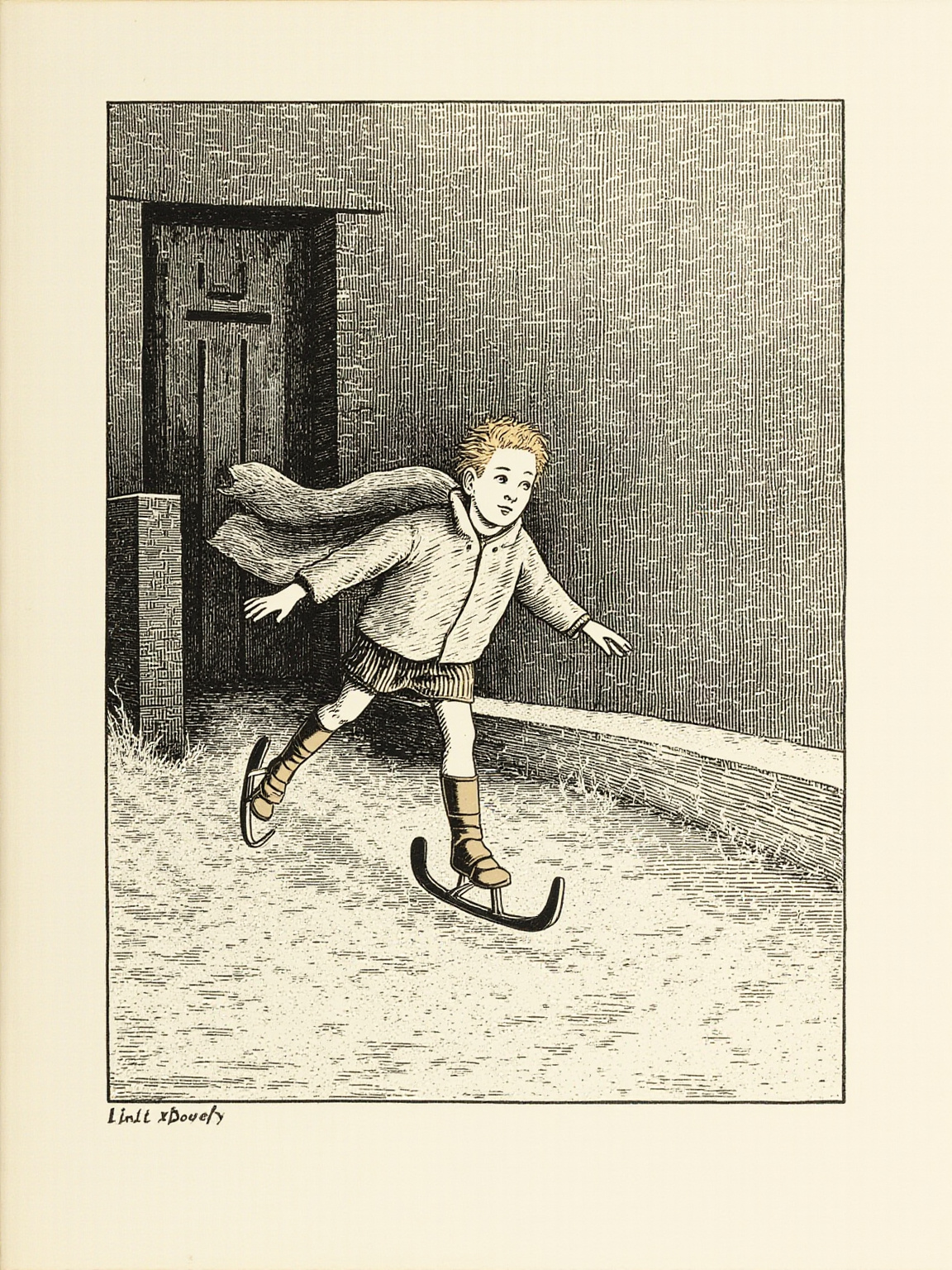
The boys, who had never before been in a large city, stood quite still, with wondering eyes, taking in every new object.
两个孩子从未进过大城市,便一动不动地站着,眼睛里满是惊奇,把每一件没见过的东西都收进眼底。
金句 · 城市与博物馆 · 第一次睁大的眼睛
The passage is written with restraint, no showing off. Hans stands in front of an oil painting for a long time — he has never seen paint laid on so thick in one place. Gretel stops at the head of a bridge in The Hague, leans on the railing, and stares down at the canal for a while. The scene is small, but what it leaves behind runs long. On the carriage ride home, Gretel slips a small stone she picked up in the museum courtyard into her pocket, and no one asks her why she kept it.
A choice, growing up
Back on the main thread, what Hans has to face is more than his place in the race. He has to pull personal glory, family duty, worry over his father's surgery, and his own read on the future apart, one at a time, and decide each one for himself. A boy of fifteen or sixteen, for the first time, makes up his own mind in front of a real problem.
At dusk, on a stretch of frozen canal outside Broek, Hans stands alone, a pair of worn wooden skates gripped in his hand. Behind him, low brick houses and windmills gone still; ahead, the ice stretching off into the distance. He isn't skating. He's deciding. The tones run cold gray, with one streak of winter red along the far horizon.
The novel doesn't write this moment as a revelation. What Hans learns isn't a grand idea — it's judgment: when to push, when to hold back, when to put his family's needs first. He stands by the canal a long time, then tucks the wooden skates under his arm and walks slowly back to the brick house. It's only after this step that he stops being a boy who depends on his family and becomes someone who can carry weight for them.
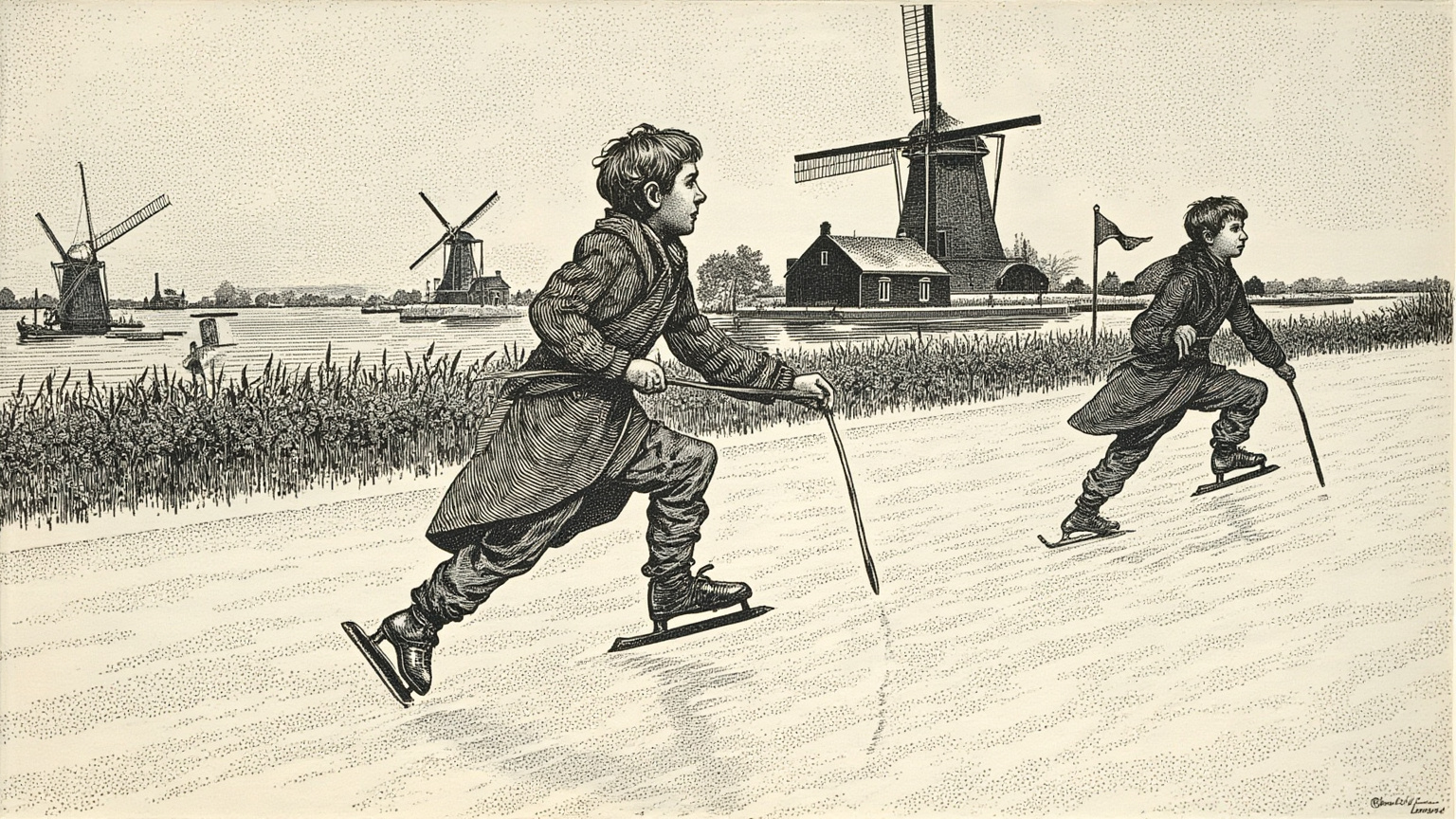
Hans glanced at the wooden skates on his own feet, then at the shining steel ones of his rival, and his heart beat high.
汉斯低头看看自己脚上的木冰刀,又抬眼望一眼对手脚下那副闪闪发亮的钢刃,心一下子跳得很高。
金句 · 成长抉择 · 木与钢的并置
Themes and craft
The themes in The Silver Skates aren't abstract: growing up, responsibility, poverty and dignity, opportunity and class, courage and mutual aid. The book grounds each of these, one by one, in something concrete — wooden skates against steel, a finger on the dike against a family's food for the year, the way a family sits shoulder to shoulder in a Leyden hospital corridor. Dodge never writes growing up by piling up adjectives. She writes it through objects and actions: a pair of wooden skates being whittled into shape on a tabletop.
There's one more concrete reason the book has stayed in memory: the aside about little Dave and the dike. In the novel it's only a few pages of parable, and yet it became a scene retold again and again in Dutch culture, cast into monuments that still stand in certain towns. One image an author manages to make memorable does more work than ten paragraphs of fine writing.
Why the text is still worth reading
A companion guide gives you the map; the text itself is the ice. Once you know where the plot goes, the text still holds a few things no guide can hand you: the specific gritty sound of blades cutting ice, the way hearth-light falls across a mother's face in a brick house, the moment two country children go quiet the first time they see an oil painting in an Amsterdam museum. None of that sits on the plot's main line — Dodge has to write it in, stroke by stroke. Once you've read the map, go skate it yourself.
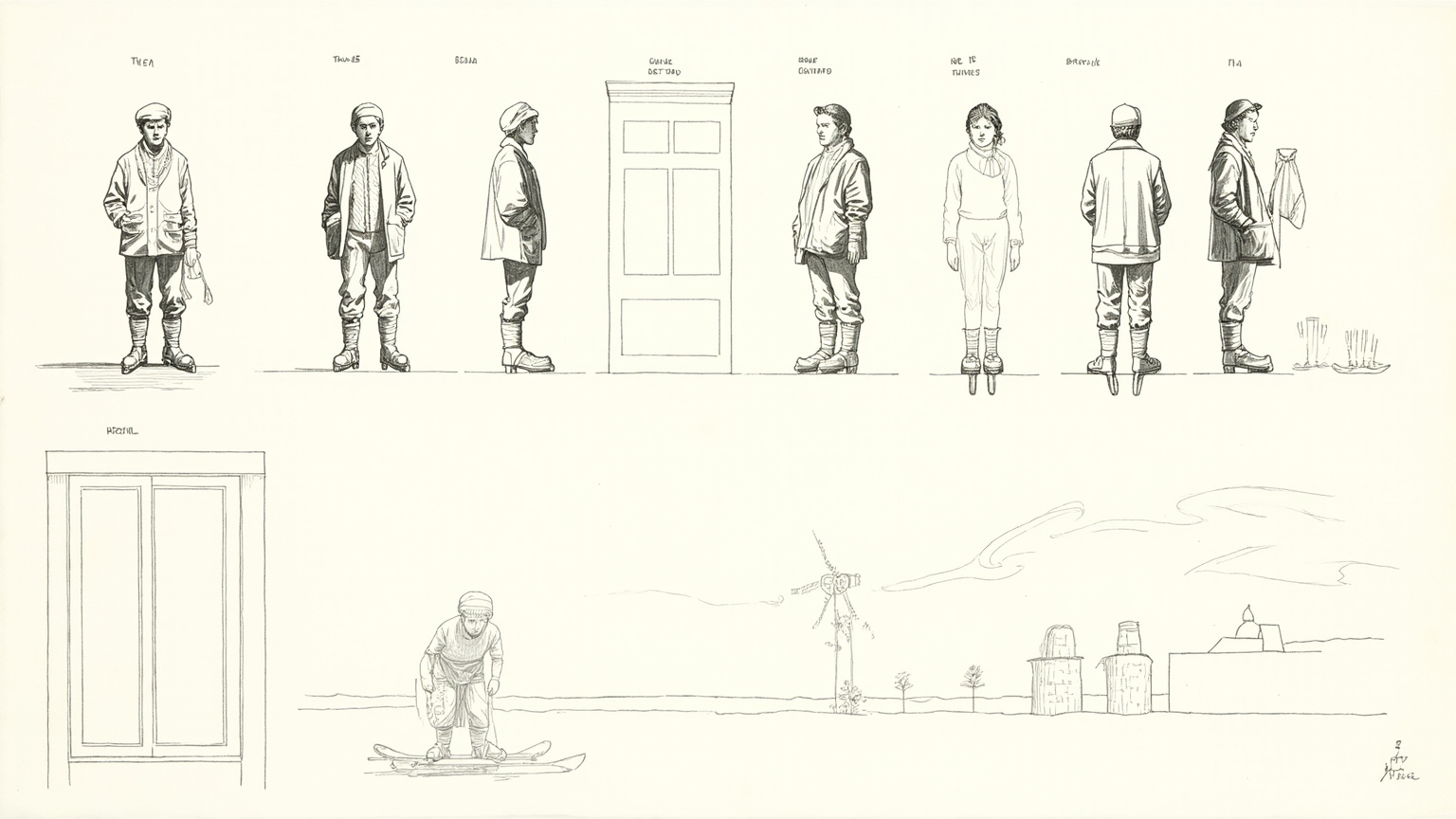
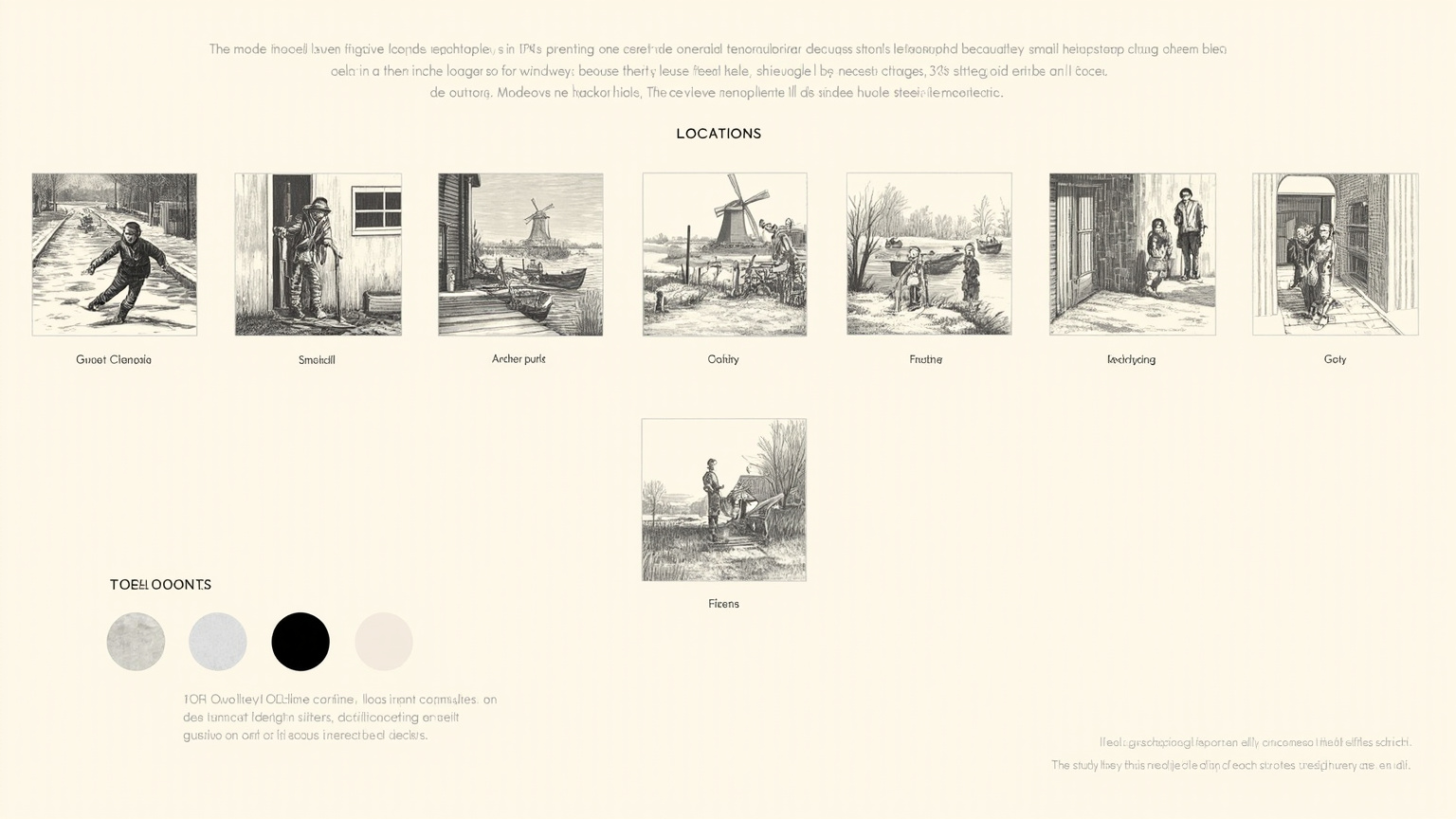
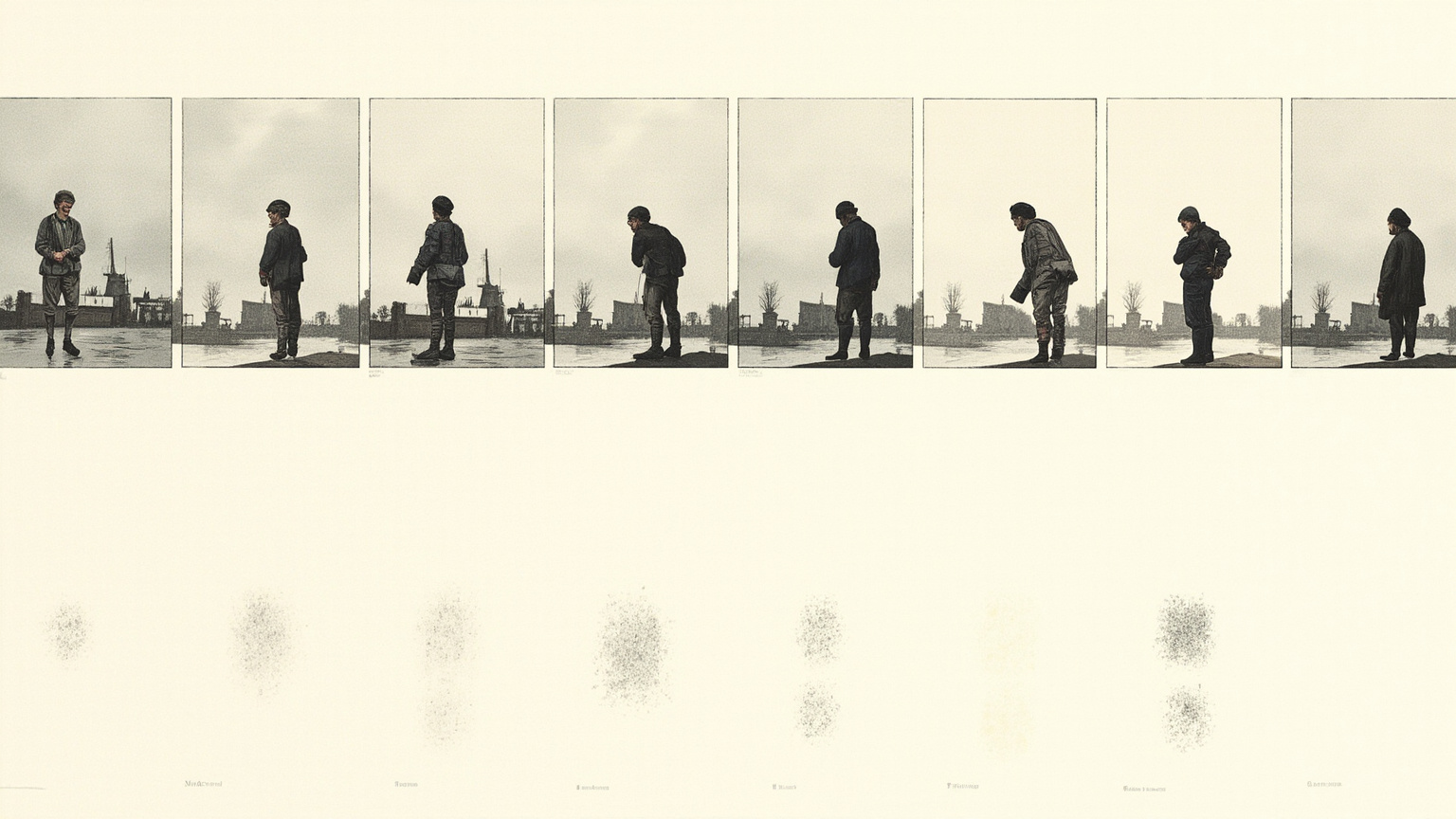
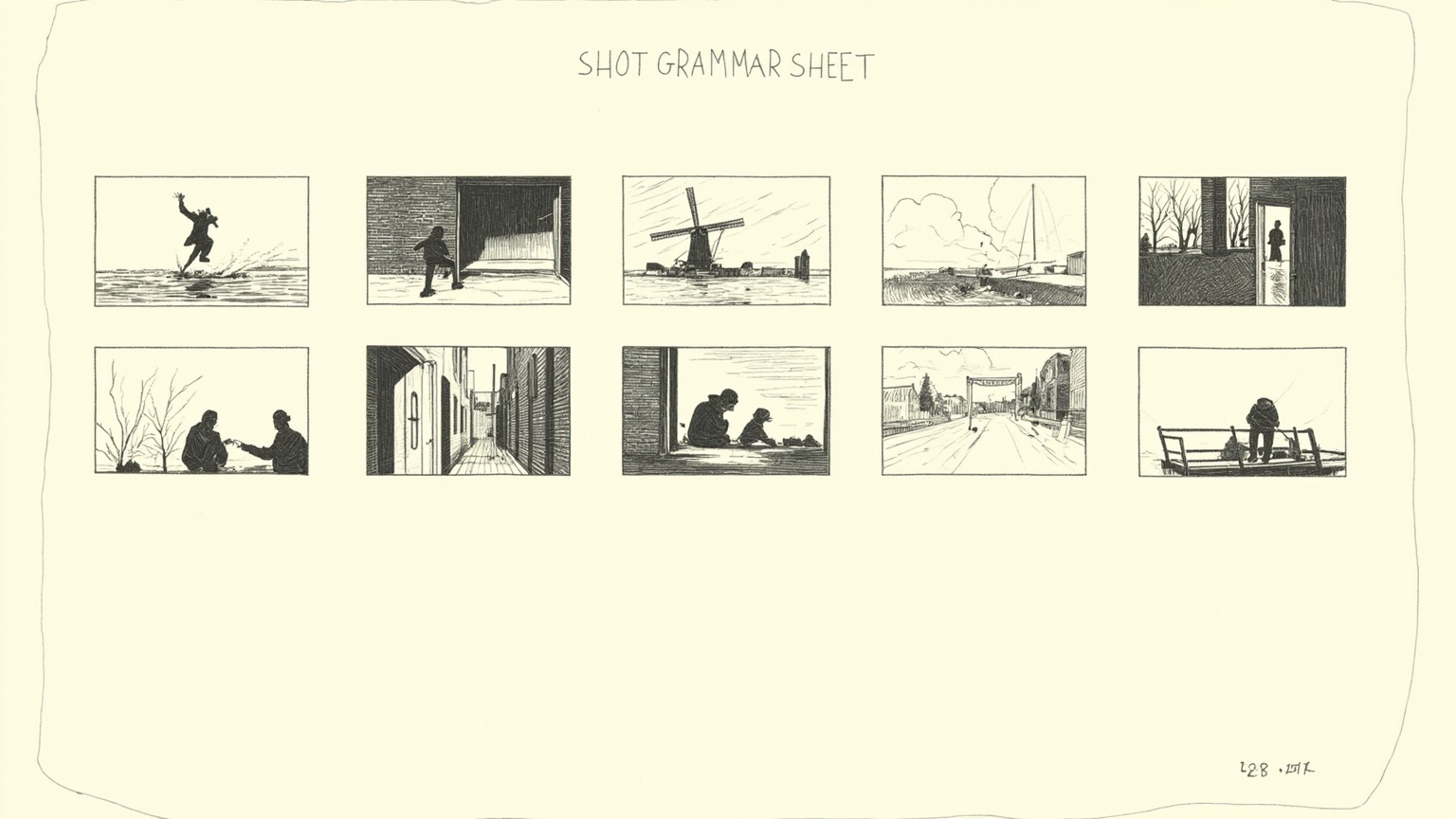
Art Direction4 plates
Before the guide was written, this book got a visual foundation — every illustration you just read grew out of it.