Murakami splits one man in two, lets each half live out a separate world, then makes him choose which one gets to stay.
Text and illustrations produced by the pipeline
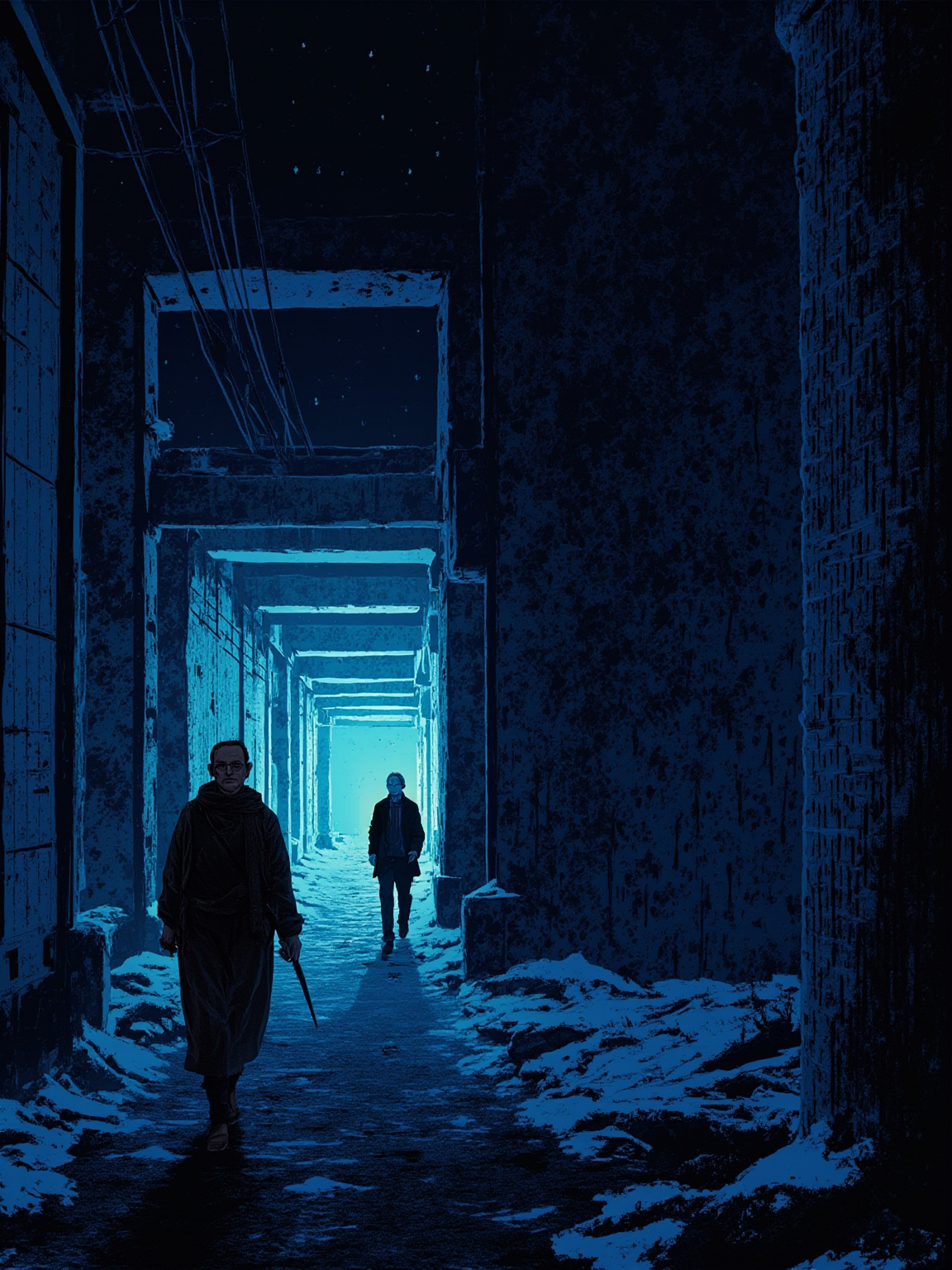
At the gate of a town, a man is stopped by the Gatekeeper, held down on a bench, and cut loose from his own shadow with a single stroke. The shadow twitches on the ground before it's hauled off and penned in the town's Shadow Grounds. The town has full seasons, a library, a Power Station, herds of unicorns out on the snowfields. Only no clock has hands, and time barely moves, as if something is holding it down. The other man wakes up on a near-future Tokyo subway, a trained Calcutec who makes his living shuffling and encrypting data somewhere in his own subconscious. One calls himself boku, the other watashi — two ordinary Japanese words for 'I,' the plain one and the formal one. They sound like two people. They are one person's two minds, taking turns living in front of us, and Murakami doesn't spell out the connection until the last chapter.
This is Haruki Murakami's 1985 novel, and the one critics agree marks his turn as a writer. Shinchosha published it in Japan as a two-volume set, and it won the Tanizaki Prize that same year. Murakami has since named it, in interview after interview, one of the early books he values most, because this is where he first found the structure he would keep reusing: two worlds, drawn in completely different styles, laid side by side and swapped every few chapters until they converge in a single closing line. The interlocking dual storylines you know from 1Q84 or Kafka on the Shore started here.
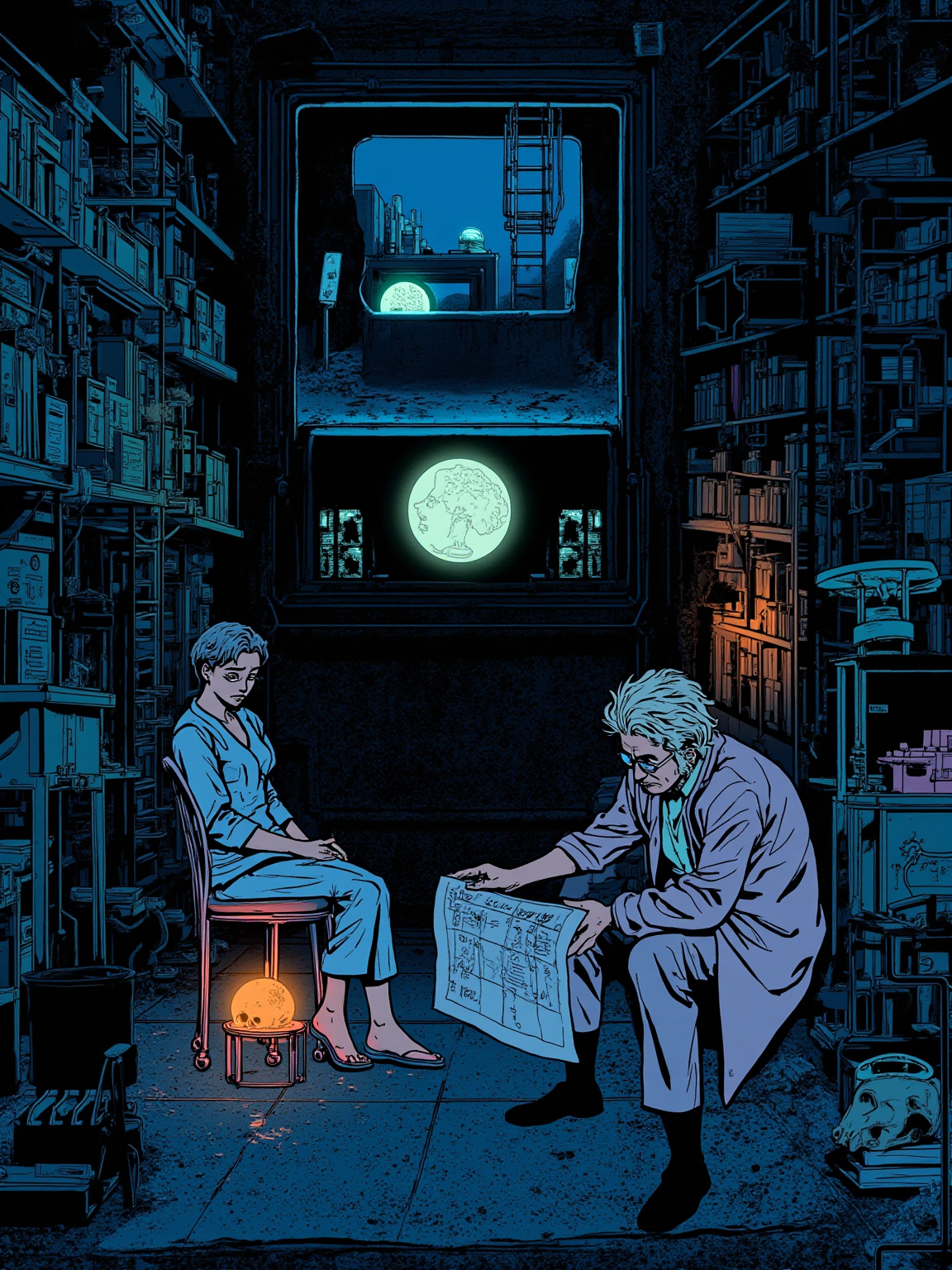
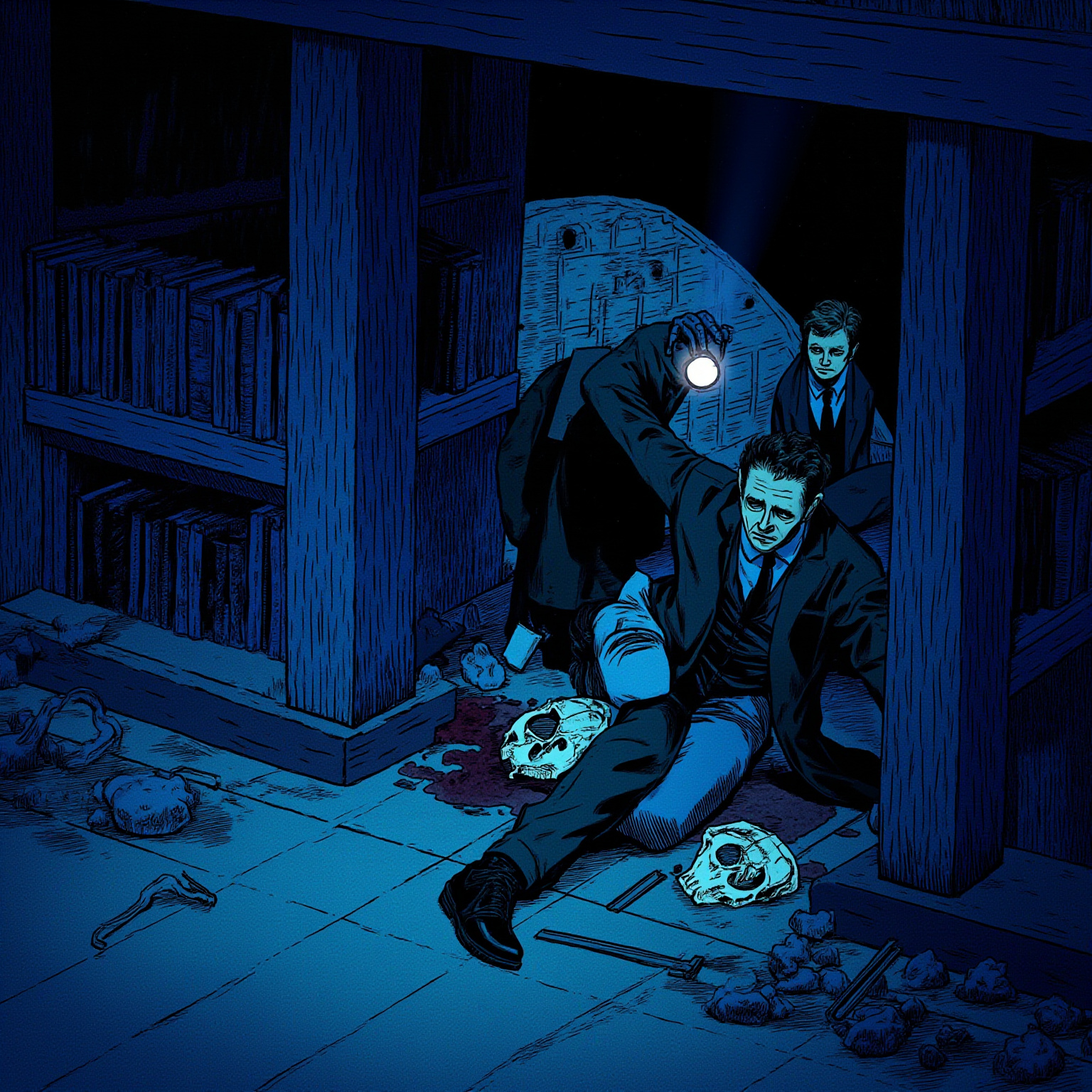
In the Hard-Boiled Wonderland strand, the protagonist is the watashi narrator, thirty-five, a solitary Calcutec, which is to say a human encryption device. His employer is an eccentric old Professor holed up in an underground lab in the mountains, the room stacked with gauges and boxes of paper clips. The Professor's granddaughter leads him through the vast flooded tunnels under Tokyo, home to the blind, carrion-eating INKlings: she wears a pink suit, plump, cheerful, chattering the whole way down without a flicker of concern for the creatures around them, and she's the most vivid image in the whole book. In the End of the World strand, the protagonist is the boku narrator, who has his shadow cut away at the town gate, surrenders his heart as the town requires, and is put to work in the library as a Dreamreader, running his hands every night over stacks of unicorn skulls to read out old dreams left behind by no one he can name. The library's Librarian lost her own heart years earlier, the same way her mother did; her feelings have gone nearly transparent, but night after night she sits across from him, and something grows between them that isn't quite love. The two men aren't two men. They're one person named 'I,' split in half: one half making a living in a hard, near-future Tokyo, the other reading dreams in a walled-off town built inside his own mind.
A guide like this is a map, nothing more. What makes Murakami's novel work isn't its plot twist. The twist itself is simple enough that you'll have most of it figured out fifty pages in. What works is the texture: the ticking gauges on a quiet afternoon in that lab stacked with paper clips, the smell of burning bone on a winter night as the unicorns go down one by one, the particular silence of two sets of fingers sinking into a skull's eye sockets at the same time in the town library. No summary can hand you that. You have to open the book yourself, and it rewards the ones who do.
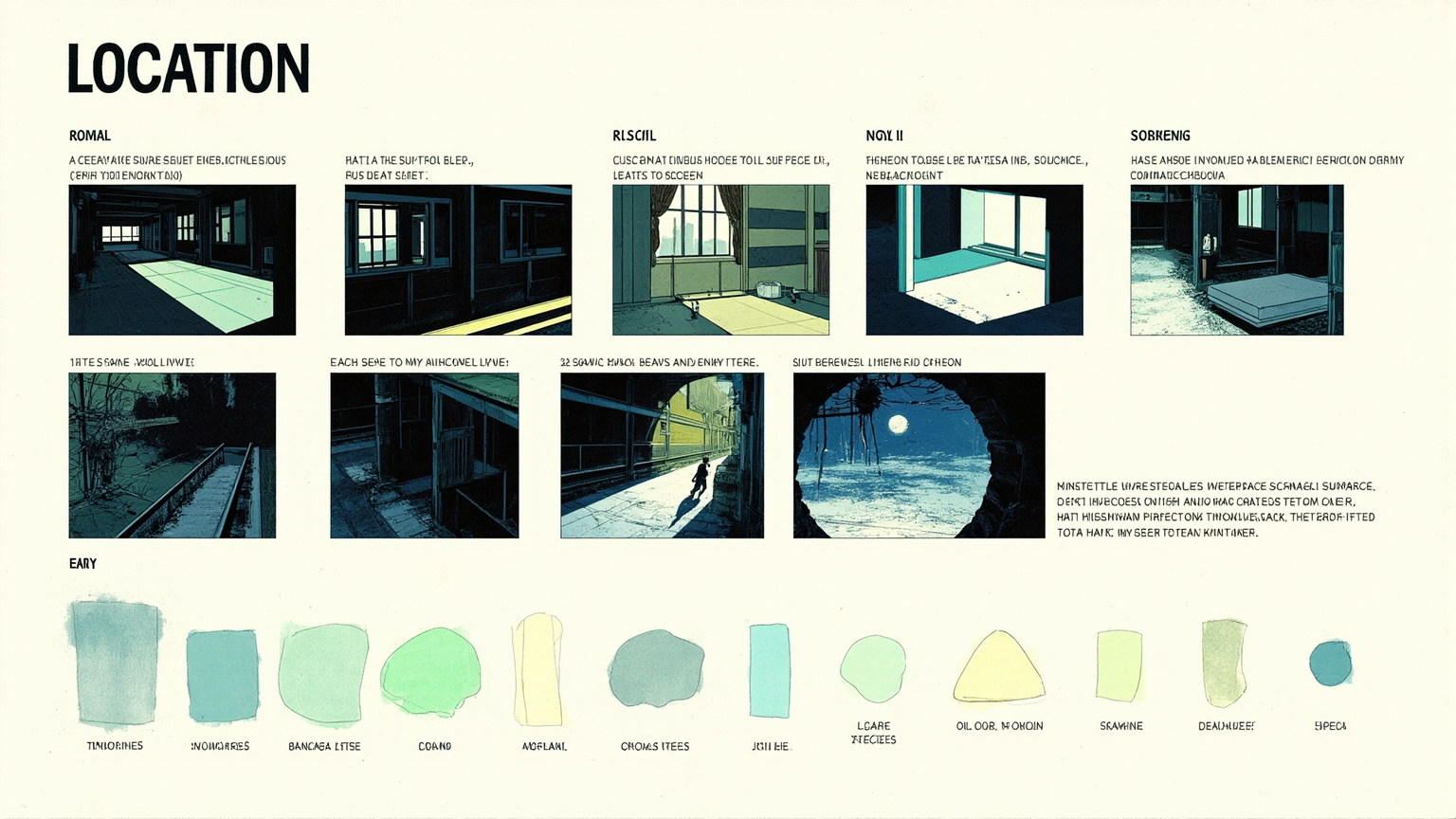
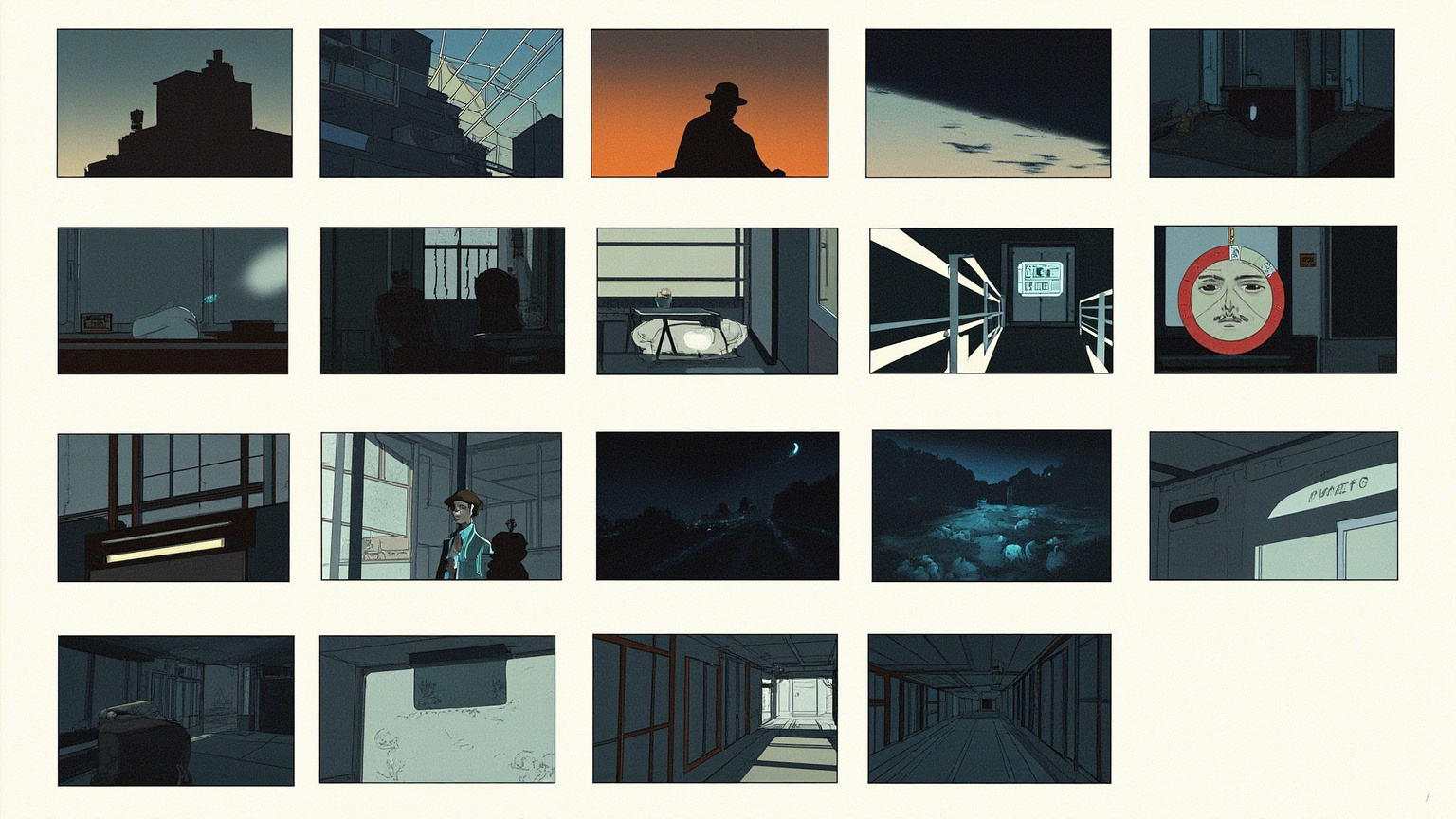
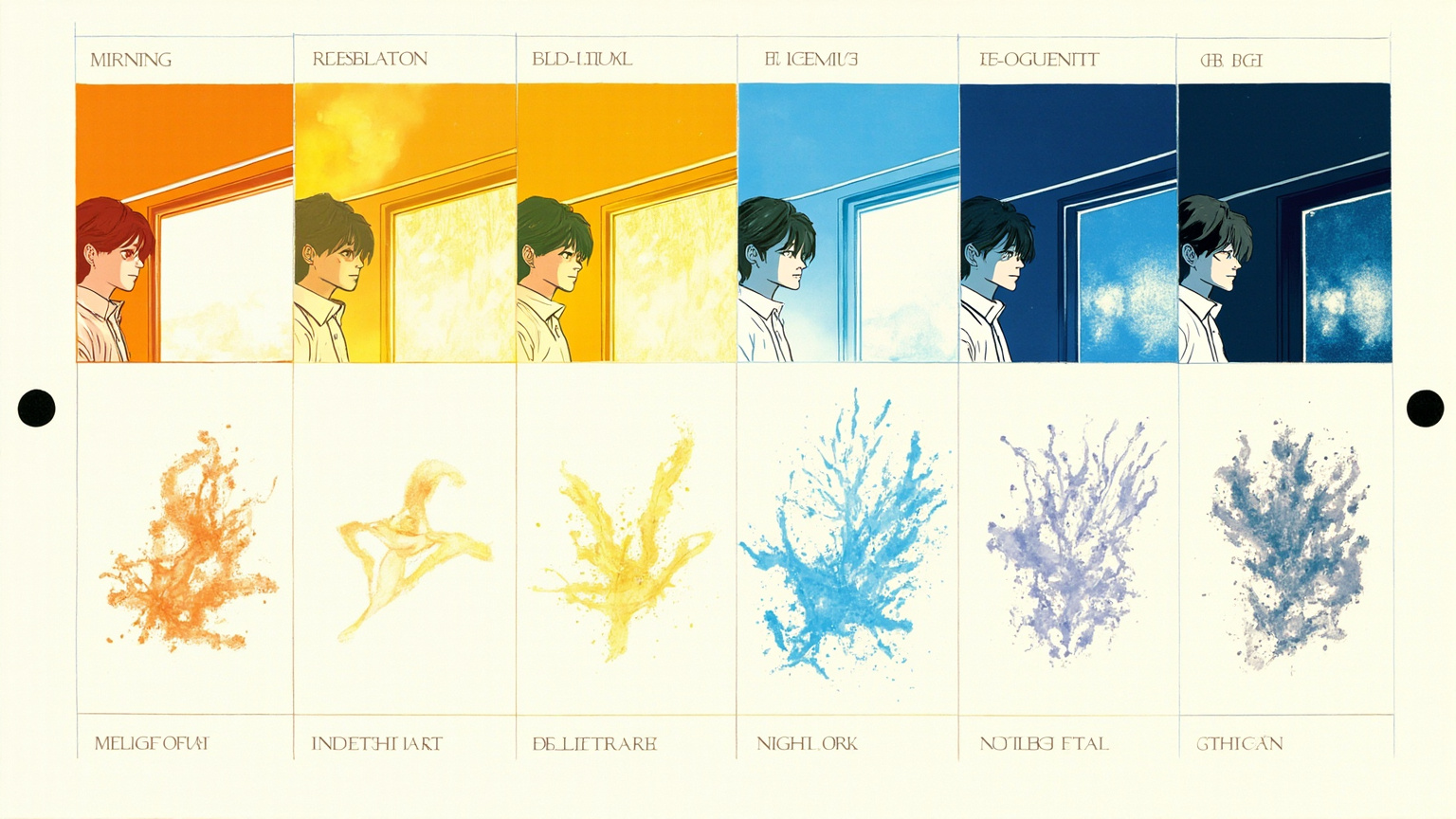
Before the guide was written, this book got a visual foundation — every illustration you just read grew out of it.
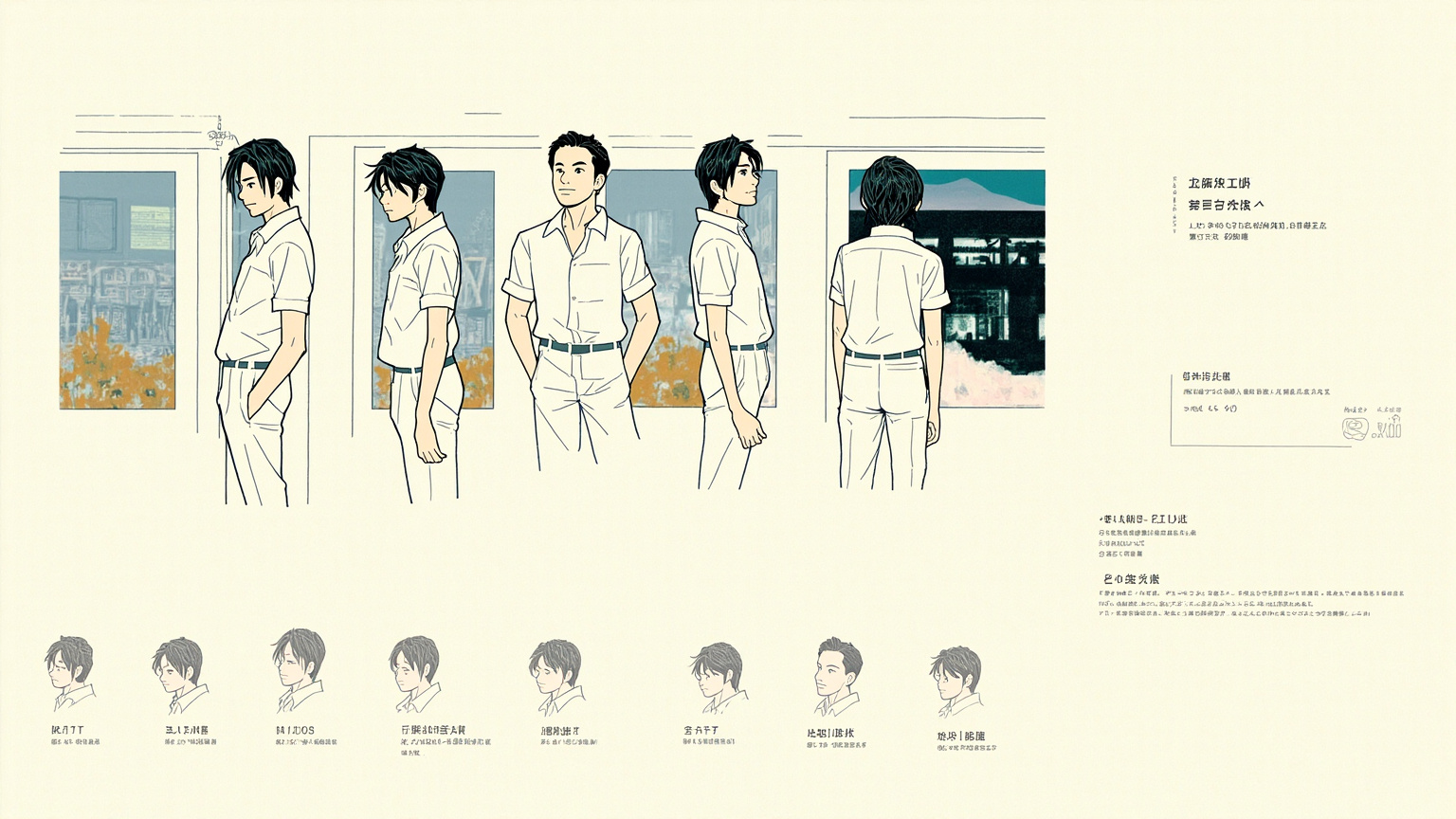
The story opens with the Professor hiring the watashi narrator. He shuffles a batch of data through his own head, encrypts it, hands it over, collects his fee, and goes back to a fastidious life — whiskey, classical records, a sea bass sizzling in the pan of his small kitchen. Then, on a day like any other, the Professor calls him back to the mountain lab and calmly tells him the truth: years ago, without his knowledge, the Professor wired an experimental circuit into his brain and switched on a dormant region of his unconscious he'd never used, the very town that is the End of the World. When the countdown hits zero, he will be sealed inside his own mind forever, and the body left behind in the world will be an empty shell.
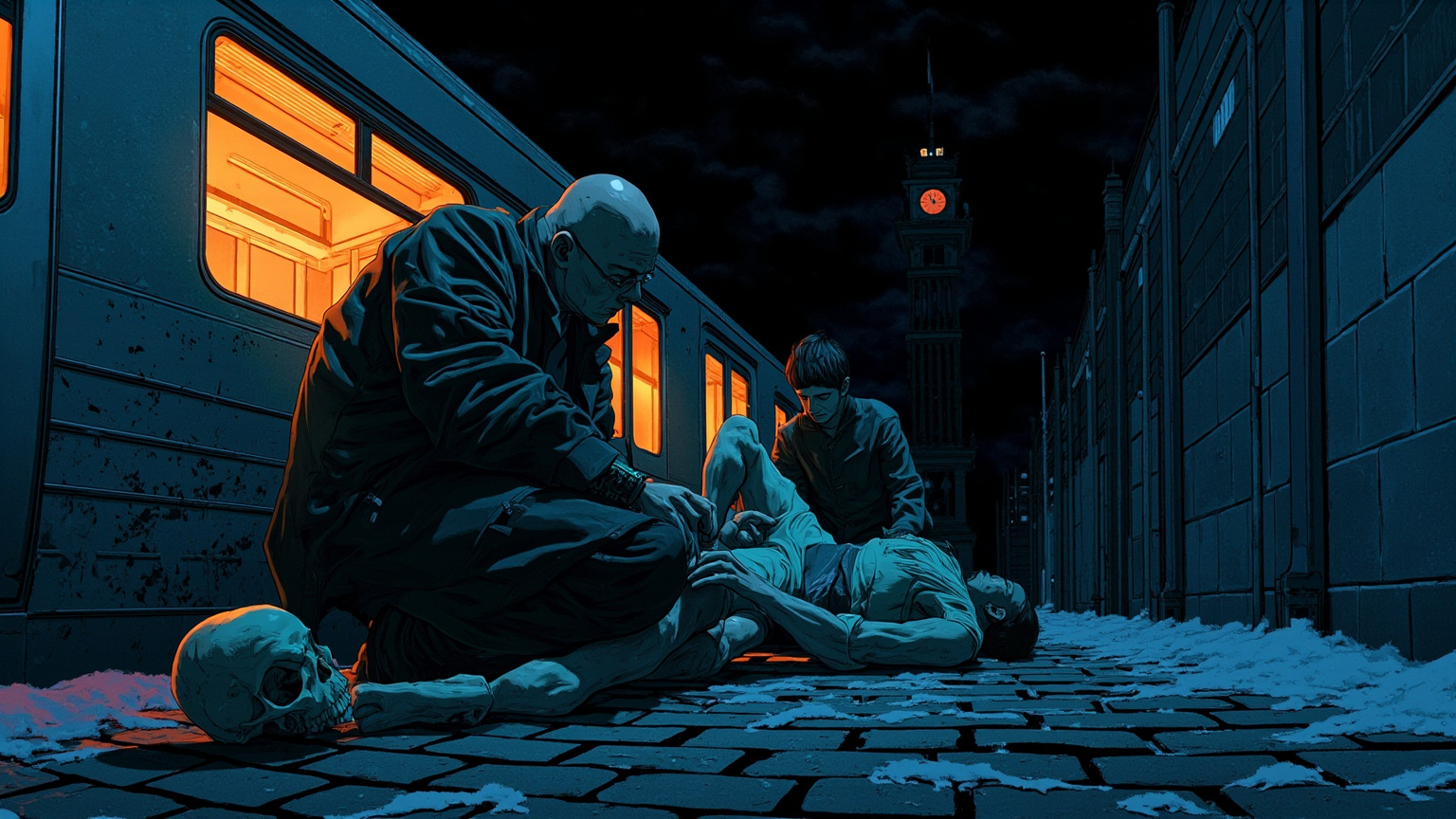
Before he can absorb any of it, two Semiotec enforcers kick in his apartment door — one tall and silent, one small and talkative. They tear the place apart, and one of them opens a cut across his stomach with a knife, demanding to know where the Professor's data is. He presses a hand to the wound and, at the same time, has to dodge the keen-nosed INKlings waiting in the tunnels below. Both threats close in together: a door banging behind him, and something in the dark beneath his feet, sniffing at his shoes.
The scene shifts to the other thread. The boku narrator arrives at the town sealed off behind its high wall, is held down on the Gatekeeper's bench, and has his shadow stripped away from the heel with a single cut. The shadow struggles on the ground for a moment before it's carried off to the Shadow Grounds, where the town keeps all its severed shadows. Following the town's rule, he surrenders his heart and is assigned to the library, where his job is to run his hands, every night, over heaps of unicorn skulls piled like small hills, and read out old dreams left behind by people and years he cannot name. Life goes on around him: the Colonel, a retired old soldier who lives nearby, often comes by to play chess, a man of few words with a gentleness in his eyes. The Power Station's keeper is an old man who lives alone, silent by nature, whose only pleasure is playing the accordion — the sound drifts faintly in from across the snowfields.
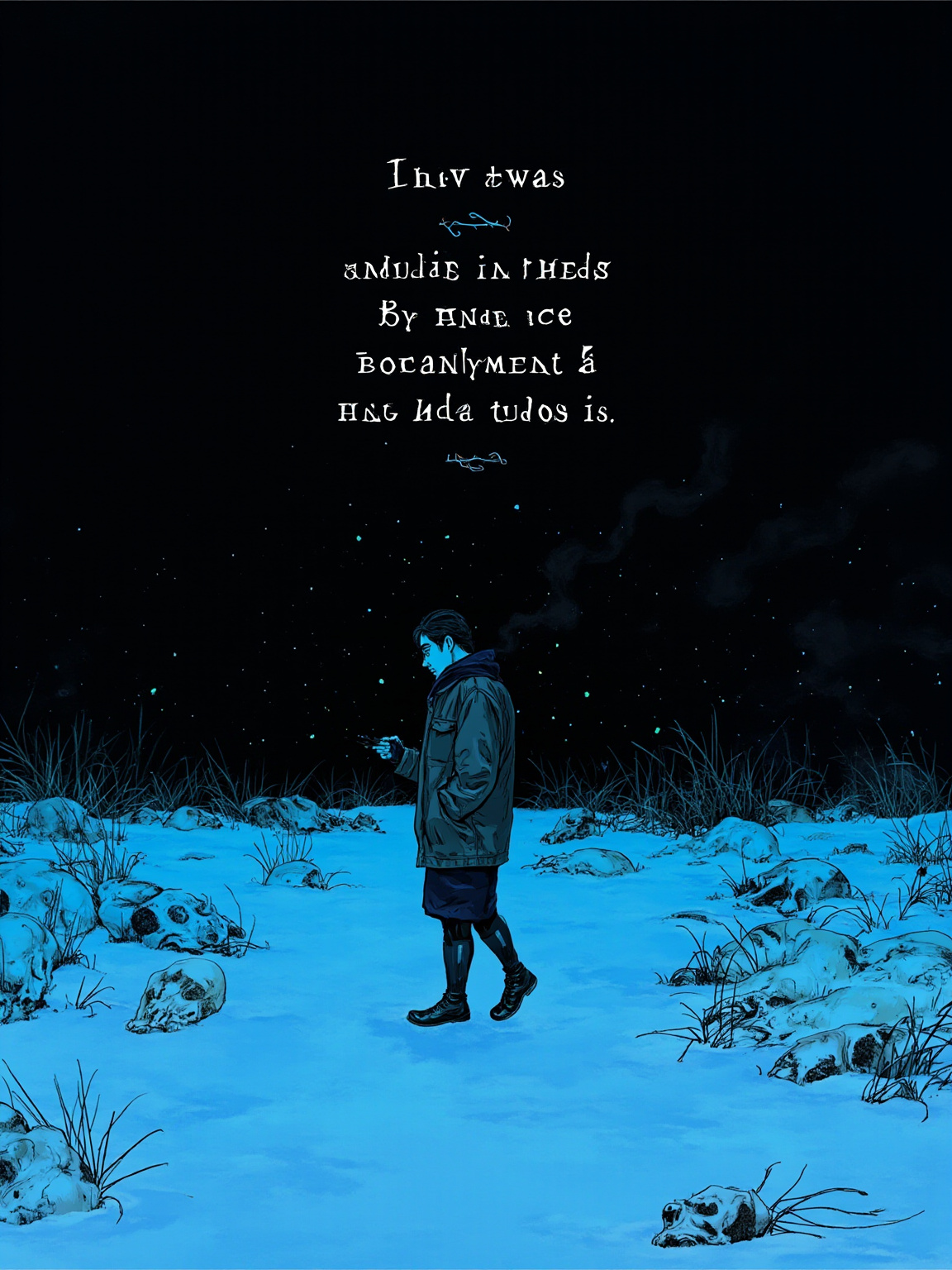
Deep winter arrives, and the silent unicorns on the snowfields outside town go down one after another. These aren't the talking, spell-casting kind from Western fairy tales. The golden-coated herd simply stands, walks, and then dies quietly in the snow, and the bodies are carted to the edge of town and burned, ash drifting everywhere. It's exactly in this deepest cold that the guards grow careless.
Penned in the Grounds, the shadow grows weaker and paler by the day. It sends word to him: while I can still walk, let's escape this town together, back to a world that has time, and hearts, and pain. The Colonel gives his quiet approval, and the accordion player at the Power Station produces a hand-drawn map and notes on the gap in the guards' shift schedule. On the deepest night of winter, he and his shadow set out for the woodcutter's hut deep in the forest, the last place he saw the outside world's light before he entered the town. Unicorn carcasses lie everywhere on the snowfields, and the air is thick with the smell of burning bone.
Before the countdown reaches zero, the watashi narrator finishes what's left of his life: he cleans the apartment, drinks his way through the last of the whiskey, sets a pot of soup on the stove and lets it cool on its own. He doesn't call for help, doesn't go looking for anyone to undo the Professor's experiment. He simply lives out the time he has, and leaves it here. In the end, he sinks into the town at the bottom of his own mind, the same town the boku narrator has been living in all along, and never returns to the body he leaves behind.
Back in the Town, he stops on the path to the forest hut. His shadow keeps moving ahead, then turns to wait for him. He thinks of the heartless Librarian in the library, the woman who sits across from him night after night, her hands beside his in the unicorn skulls, her face as blank as water. He thinks of the town he built with his own mind: the handless clock, the snowfields, the old man's accordion drifting over from the Power Station. He decides to stay. He sends the shadow on alone toward the exit, turns, and walks by himself into the depths of the forest.
Murakami ties the heart and the shadow together and cuts both away, and the easy assumption follows: no heart means no pain, and no pain sounds like a mercy. Halfway through, though, you notice that a person without a heart isn't happier, she's closer to a piece of furniture. She sits in the library running her fingers over a unicorn's brow ridge with no expression on her face at all, and it's harder to watch than tears would be. The real question here isn't the tired one, inner utopia versus outer reality. It's something more uncomfortable: would you give up your claim on the real world for a woman without a heart, a town you built yourself, a feeling that's gone almost transparent? Murakami doesn't make you answer. He has both selves choose, in the same stretch of chapters, and leaves the whole novel standing right there.
The book's real craft is in its pacing. The two threads alternate chapter by chapter, and for the first two-thirds they barely touch. You assume, without quite deciding to, that you're reading two unrelated stories: a hard-boiled detective novel and a Kafkaesque town fable. Only in the final chapters does Murakami twist the two threads together like strands of rope, and you realize the whiskey the watashi narrator drinks and the unicorn skull the boku narrator holds are the same hand, doing the same thing, at two different moments. Withholding the connection until it lands all at once was still fairly radical in 1985, and it became the template for every dual-narrative book Murakami wrote after.
Finish this guide and you'll know how the story ends. You still won't have watched that bottle of whiskey get finished, or felt that unicorn skull under your own hand.