Hayy ibn Yaqzan (Philosophus Autodidactus / The Improvement of Human Reason) · Companion Guide
觉醒的哲人(哈义·本·亚克赞)
一座孤岛,一具肉身,五十年——一个人仅凭观察与推理,把宇宙从头走穿。
Opening: a doe carries the infant back to her den
An island in the Indian Ocean, its forest low and dense, no village, no light anywhere. A doe who has just lost her fawn finds a human infant wrapped in leaves beneath a tree root. She hesitates, then lowers her head and carries him back to her den. From this moment the secretly exiled prince's son is cut loose from human civilization: his mother is a four-legged animal, his cradle a patch of subtropical damp.
This is not Robinson Crusoe. No shipwreck, no Friday, no musket, no footprint in the sand. The whole book does one thing: it takes an infant who arrives in the world with nothing, and over roughly fifty years, using only his own eyes and a mind that keeps asking questions, has him work out the universe from scratch.
What this book is
Hayy ibn Yaqzan is a philosophical novel written in classical Arabic by the twelfth-century Andalusian philosopher Ibn Tufayl, composed around the middle of that century. Ibn Tufayl was governor of Almería and served the Almohad court as vizier and physician; he had seen the sea and he had seen palaces. And yet he chose an island with nothing on it at all, cleared away every trace of civilization, and left just one man and one island standing. It is a singular seed that medieval Arab rationalism left the world. Five hundred years before Descartes wrote his Meditations on First Philosophy, three hundred before Locke wrote An Essay Concerning Human Understanding, two hundred before Rousseau wrote Émile, and a hundred and fifty before Defoe wrote Robinson Crusoe, the modern idea that a solitary mind can build itself through reason alone already pointed straight at this island.
Its arrival in Europe reads almost like legend. Oxford published a Latin translation in the late seventeenth century, with a preface by John Locke on the title page. It walked straight out of a Maghrebi manuscript and sat down at the desk of the Enlightenment.
Three figures on the island: an infant, a doe, and the hermit who arrives last
Hayy's name means something like alive, wide awake, and the metaphor is built right in. He has no education, no language, no companion, and Ibn Tufayl skips right past the question of who taught him to speak, because what Hayy has to do is more basic than speech: he has to learn to see. Around the age of seven he leaves the herd of deer, sews himself clothes from skins, rubs two dry sticks together until they catch fire, and lashes together his first raft to try to leave, only to be carried back to shore by the current. That is when he grasps something plain: a person can only complete his reasoning where he stands.
The doe who raised him dies while he is still young, and he dissects her body with his own hands. It is the quietest scene in the book and the most decisive one: he needs to understand how the body that licked him clean every day, warmed him, and stood between him and danger could simply stop moving. This is not morbid curiosity but curiosity itself; the moment the blade goes in, reason opens for business.
The third figure, Absal, is a devout ascetic who drifts over from a neighboring island decades later on a raft. He has practiced by scripture for years but always feels one layer short of the truth, and it is only on meeting Hayy that he realizes this untaught wild man has reasoned his way to the very thing Absal believes. The two live together on the island for three years. One arrived at God through reason, the other through revelation, and they meet at the same summit.
Plot: one man thinks his way through the whole universe
The story opens with the infant carried back to the den. The doe stands in for a human mother, and the book's long stretch of total isolation is set from that point on: no second infant, no village, no sign of human civilization anywhere. It is a starting line stretched out on purpose. Ibn Tufayl wants you to admit first how impossible this is, then watch him grow everything out of that impossibility.
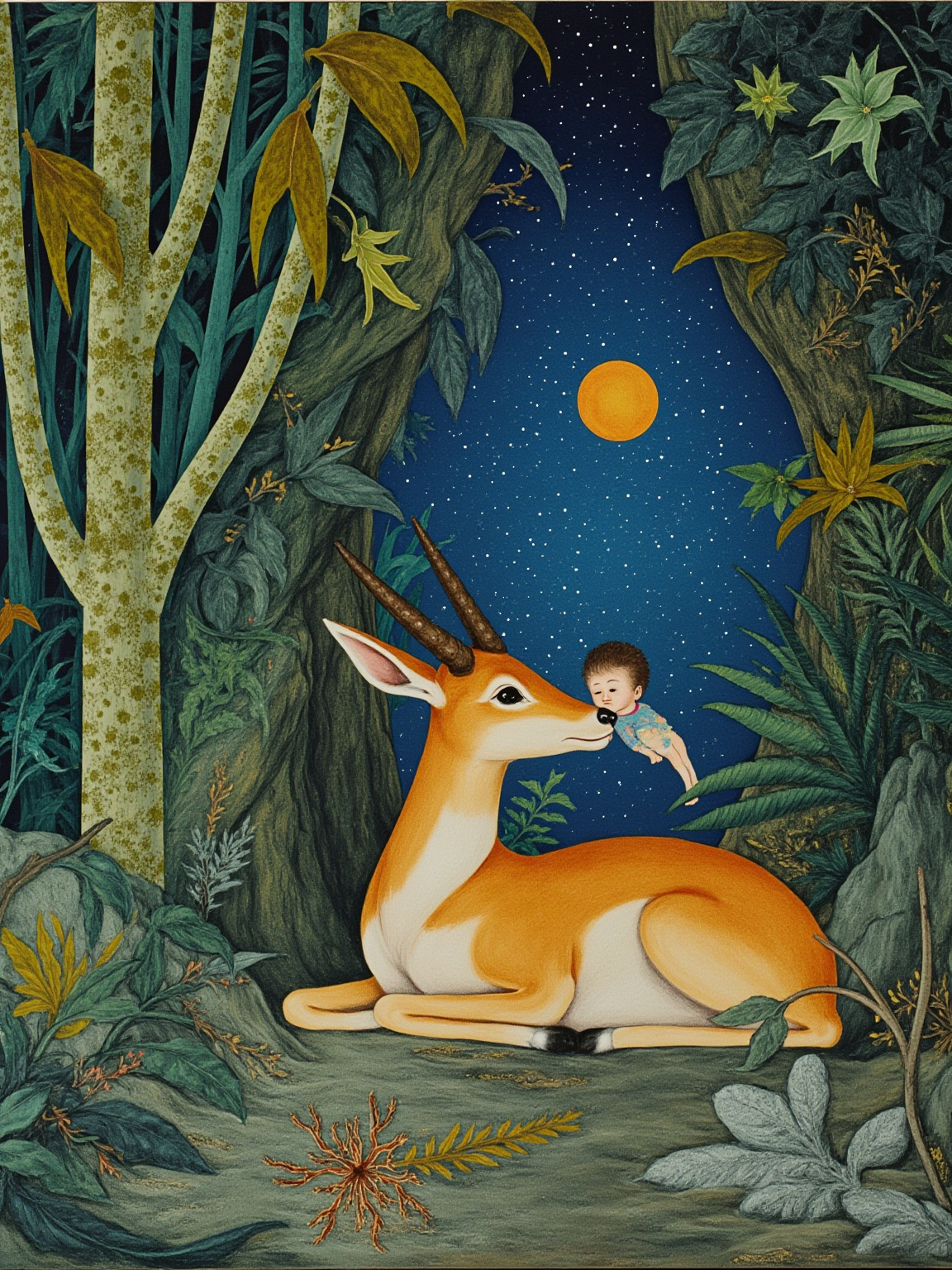
He had no companion, no teacher, no language—only the doe who had lost her fawn and the forest that had taken him in.
他既无同伴,也无师长,更无语言——只有一头丧子的母羚,和一座把他收进枝叶里的林子。
金句 · 开篇 · 母羚衔子入穴
Around the age of seven, Hayy leaves the herd and starts acting on his own. The first major step is making himself clothes, stitching skins and leaves together and wrapping them around his body. It looks like nothing more than covering his nakedness, but it is a philosophical move: for the first time he draws a line between himself and the animals. He is no longer only the one being raised. He has begun to remake the world with his own hands.
Then comes fire. He rubs two dry sticks together until smoke rises and a flame catches. The scene carries the same weight in this book as the myth of Prometheus: the first time nature's fire becomes human fire. He builds a raft and tries to leave, and the current carries him back. It is the plainest lesson in the whole book: no one can escape to a better place to finish becoming himself.
The year the doe dies, he opens her body. This is the true starting point of the book's awakening of reason. For the first time he sees bone, muscle, the chambers of the heart; he works out what fire does inside a living body, and exactly where the line falls between moving and not moving. Ibn Tufayl handles the scene with restraint, a silhouette quietly taken apart by firelight, the outline of bone, not butchery for its own sake. Once that first cut is made, every taboo about the sanctity of life has to step aside for one question: what is actually going on here?
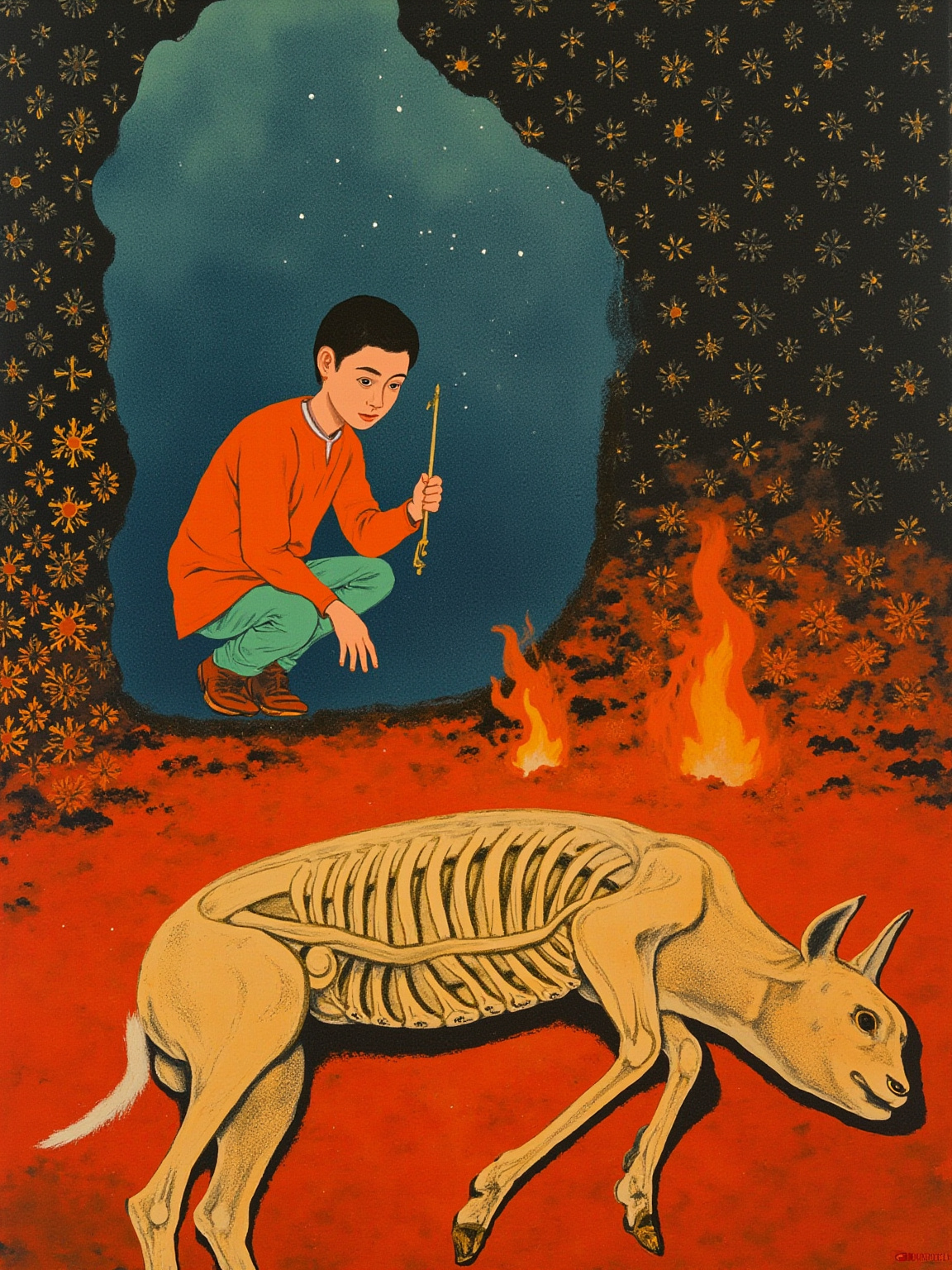
When the body that had warmed him each night would no longer move, he opened it—not for sport, but to learn where the line between the living and the dead is drawn.
那个每夜替他暖身的身体再也不动了,他剖开它——不是为猎,是要看那条生与死的线,究竟切在哪里。
金句 · 中段 · 解剖母鹿
From here his understanding climbs in four stages: first the sense-experience he touches directly, then the empirical reasoning that strings cause to effect, then a higher reasoning that pushes inference to its limit, and finally a kind of knowledge that cannot be spoken, only grasped directly. The names Ibn Tufayl gives these stages sound academic, but read them closely and you will see they trace one mind's growth from child to adult to old man, except that all his schooling has been outsourced to the forest, the shore, and the night sky.
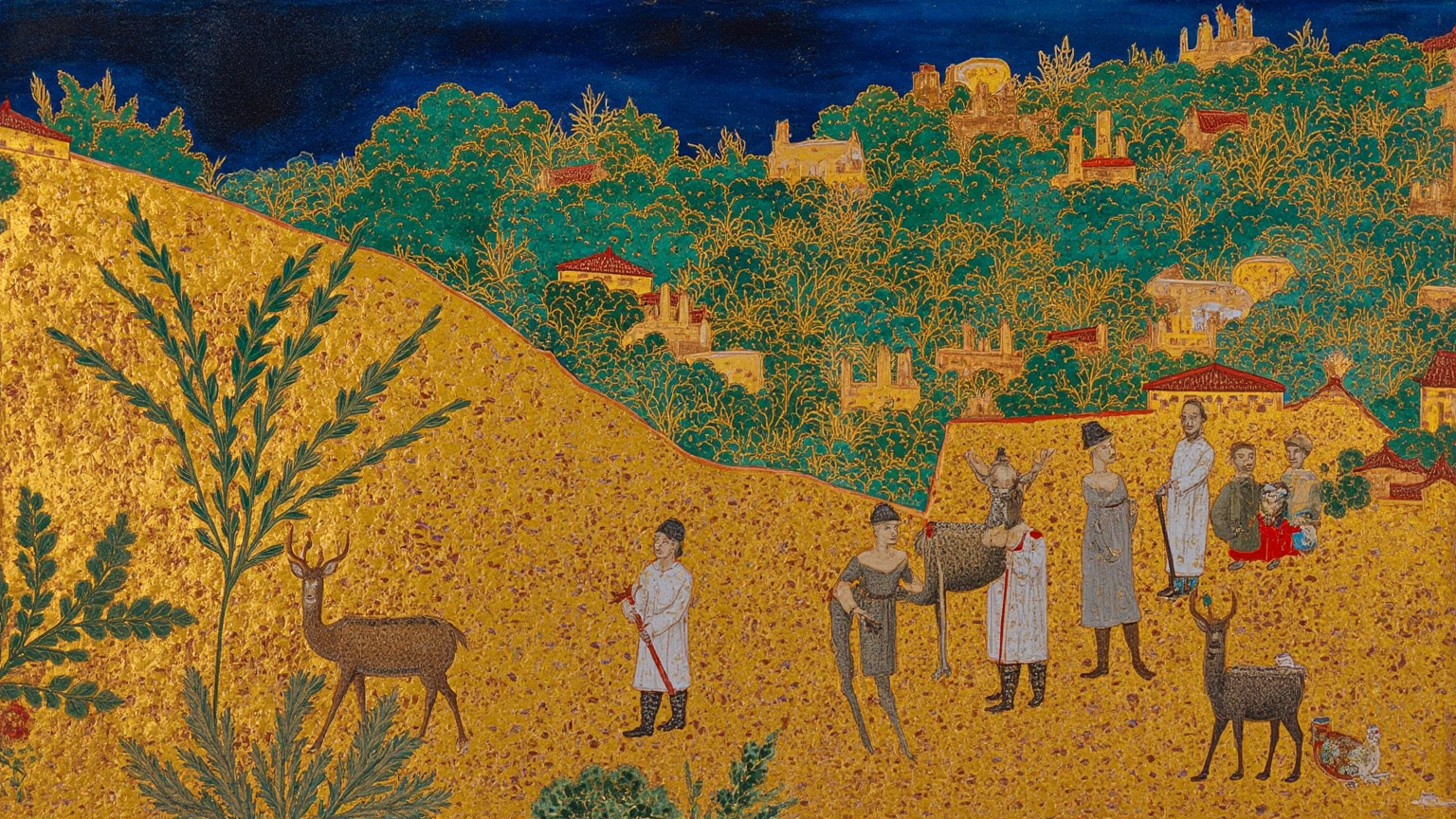
From a single bone held in the firelight, he began to climb—sense, then experience, then reason, until the ladder itself gave out beneath him.
火光里握住一根骨头,他开始往上攀——感官、经验、理性,直到梯子本身在他脚下断开。
金句 · 中段 · 四阶觉醒
Through this ladder of reasoning, with no one to teach him, Hayy works out three things on his own: the universe must have an uncaused first cause, the soul does not die with the body, and God exists but cannot be grasped by the senses. Descartes would later write these same three conclusions in a tighter form. Ibn Tufayl got there five hundred years earlier, and he did it in fiction.
What the books of revelation promised him from outside, his own mind had arrived at from within—and the two met at the same summit.
启示之书从外部许诺给他的东西,他的心智从内部独自走到了——二者在同一座峰顶相会。
金句 · 中段 · 理性与启示合一
The turn comes with Absal. This hermit, who has spent years in solitary devotion on a neighboring island, washes up on Hayy's shore after a storm. Their first conversation, between two men who have never met, is one of the quietest East-meets-West moments in the history of philosophy: a thoroughgoing rationalist and a thoroughgoing believer, talking until they realize they have climbed the same mountain from opposite sides.
After three years together, the two decide to leave the island for the neighboring kingdom and preach unadorned rational truth to its people. They assume the world is ready to hear it. It turns out almost no one is. The crowd wants to hear only what it already believes, and a claim like I worked my way to God on my own is something they can neither follow nor stomach. It is the most pessimistic scene in the book, and the most honest: truth may simply not be transmissible.
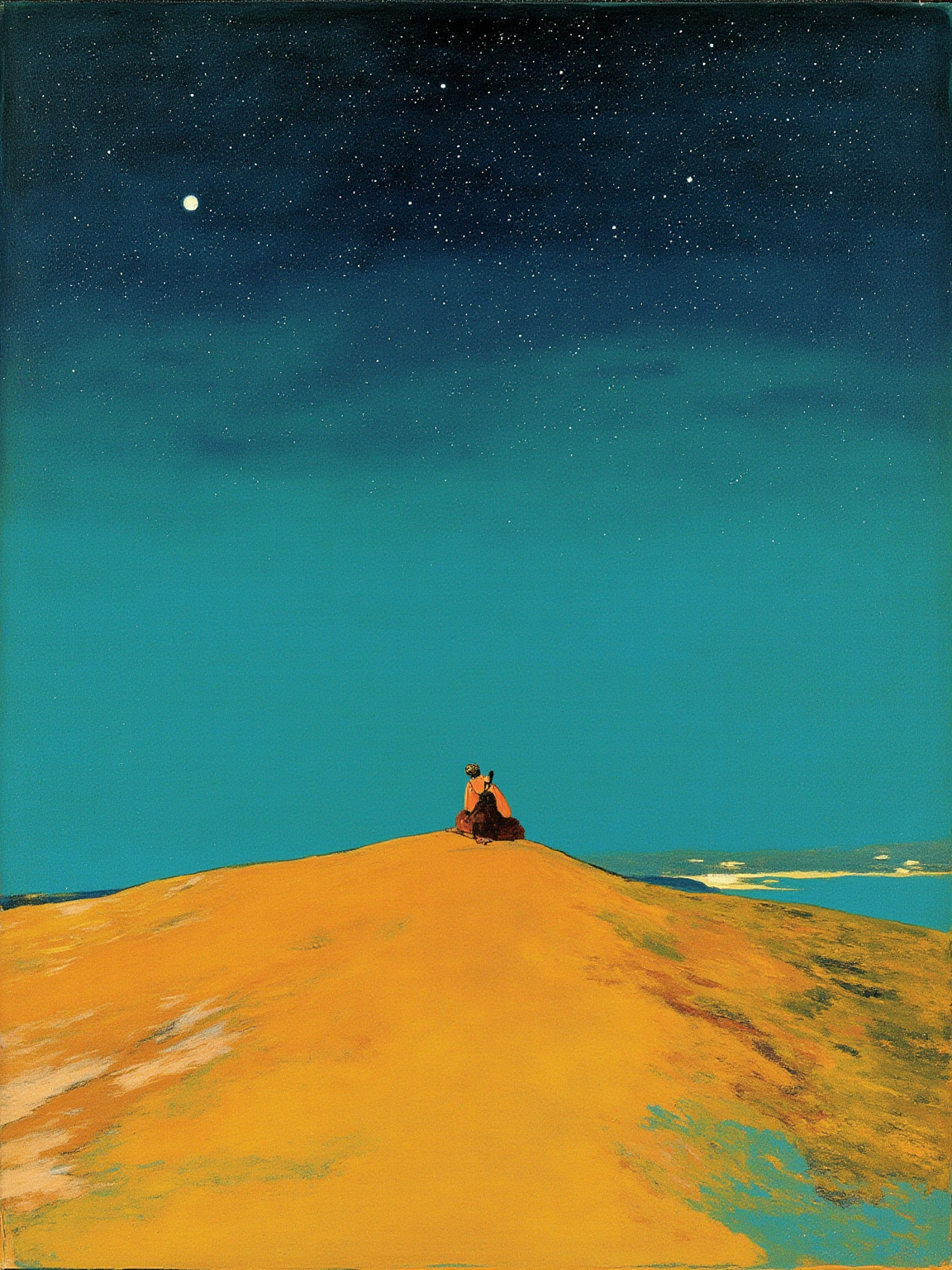
The two sail back to the island together and spend the rest of their lives there, living quietly, thinking, and eventually dying side by side. Hayy has gone from infant to old man on this one island, and a whole world held up by a single person closes in on itself. There is no dramatic climax, no villain, no final battle, and that absence is the climax.
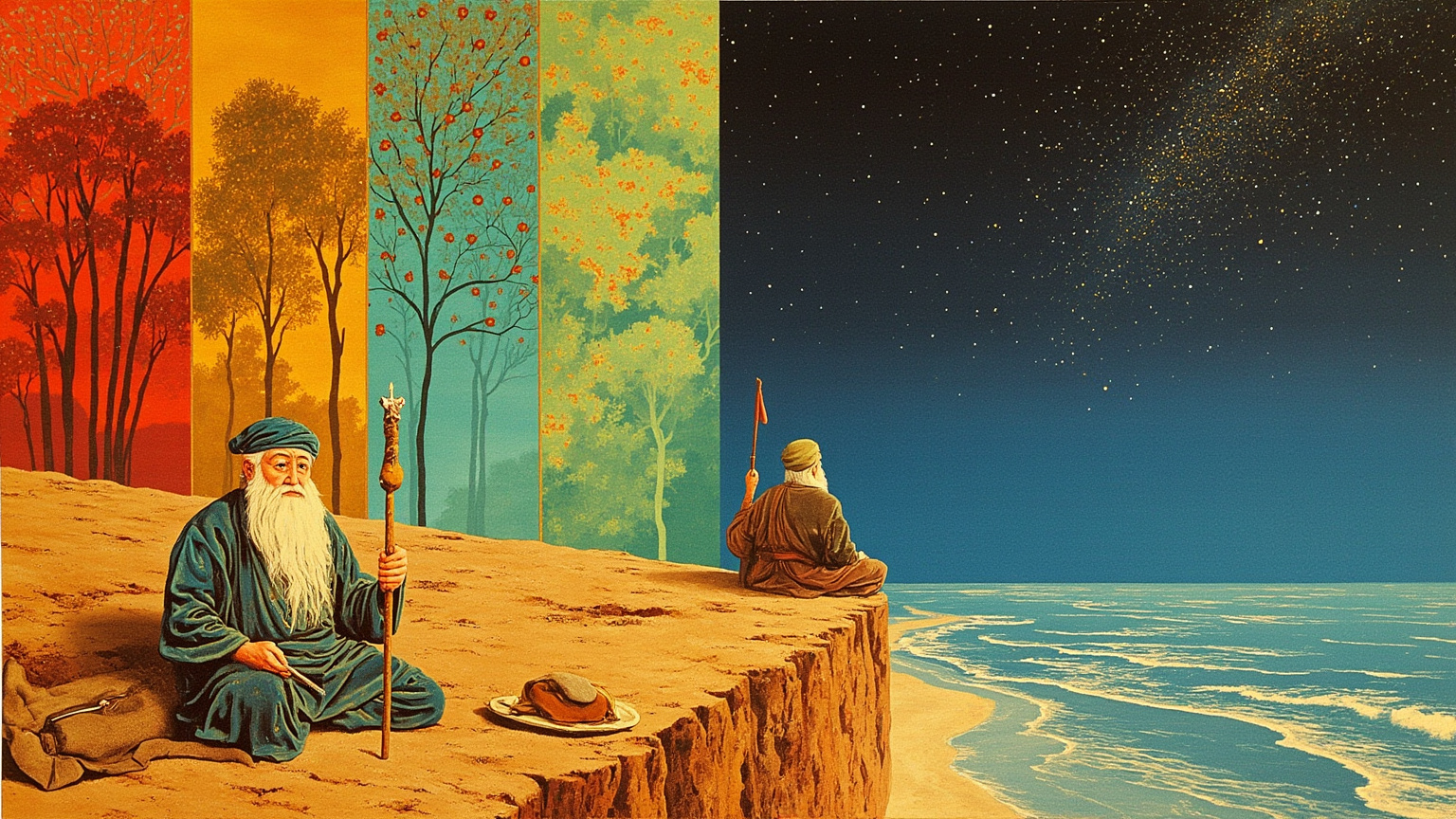
The world was not ready to hear what a single man, alone on an island, had thought his way to; so he and his companion returned to finish their days among the stars and the silence.
世人尚不能领受一个人在孤岛上独自想透的道理——于是他与同伴折返荒岛,让余生与星斗和静默同住。
金句 · 尾声 · 重返荒野
What the book is actually saying
On the surface this is a desert-island story. Underneath, it is a stress test of what reason alone can do. Its claim is that if you strip a person down to nothing but nature and give him enough time, his mind will arrive on its own at the same conclusions revealed religion asks him to believe. Religion, in other words, is not reason's opponent but its grown-up form; faith is simply the shoes philosophy changes into when it gets tired of walking.
What makes this matter is the century in which it was said. Europe was still hundreds of years away from Scholasticism, and Muslim scholars in Andalusia were already arguing seriously over which had first claim on explaining the universe, philosophy or religion. Ibn Tufayl's answer was that the summit is the same one; only the paths differ.
But Ibn Tufayl is no optimist. The ending carries a classic Eastern strain of pessimism: truth belongs, by its nature, to people who can be alone with it, and the crowd neither needs it nor can bear it. That is why Hayy and Absal return to the island. It is not retreat but judgment. Anyone able to understand will find his way to this island on his own; shouting at ears that cannot hear does nothing.
Why this book is worth remembering
It does what the whole later Western tradition of the coming-of-age novel and the desert-island narrative would go on to do: one character, one island, a growth from nothing. But it got there centuries early. There is no ship, no Friday, no cannibals, which makes it harder going than Robinson Crusoe, and quieter too. It assumes you are willing to sit with one person while he slowly works things out.
One thing easy to miss: this book speaks for the whole philosophical tradition of Golden Age Andalusia. On the reading lists we know today, Plato, Augustine, Aquinas, Descartes, Locke, Ibn Tufayl almost never appears. But the island he wrote is one of the unlit sources that whole line of names shares.
Reasons to read the actual text
A companion guide can give you the map, not the ground. Ibn Tufayl's real achievement is turning the act of reasoning itself into drama: you can follow Hayy step by step from this bone is hard to there must be an unmoved mover behind all this. That step-by-step pleasure of watching a mind advance is something no summary can replace. Then there is the natural history on the island itself: how fire gets made, how skins get sewn, how the tides get read, how the stars get used to navigate. A guide gives you the conclusions; the book itself gives you the stillness that only comes from being alone. And the ending is worth saying once more: two men sitting on a reef, the sea drawing back in the distance, a man who spent a lifetime working things out and is ready to end where he began. No guide can hand you that image. It is worth going into the book yourself just to sit inside it for a while.
Five hundred years before Descartes, someone had already lived out I think, therefore I am, alone, on an island with nothing on it.
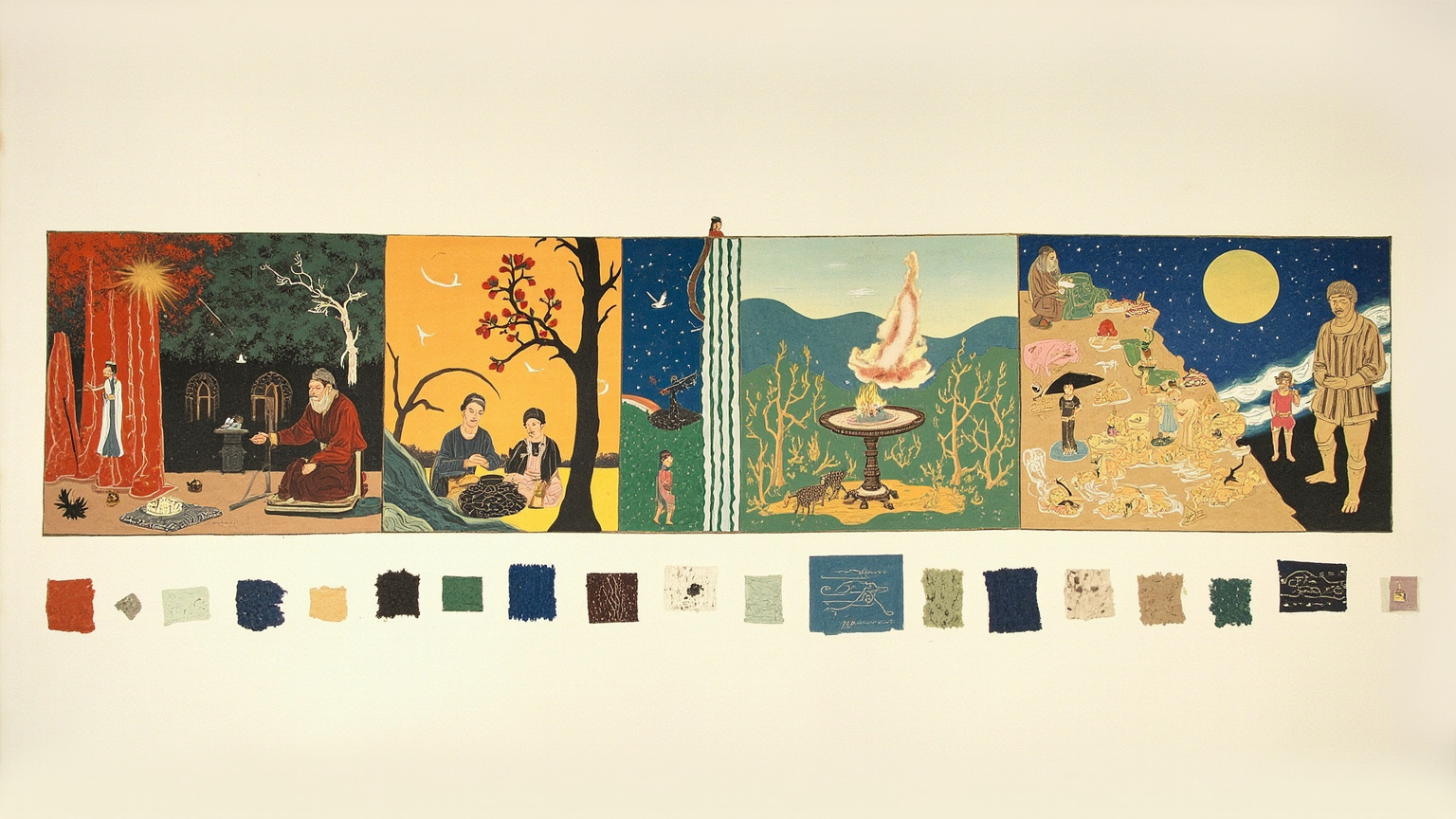
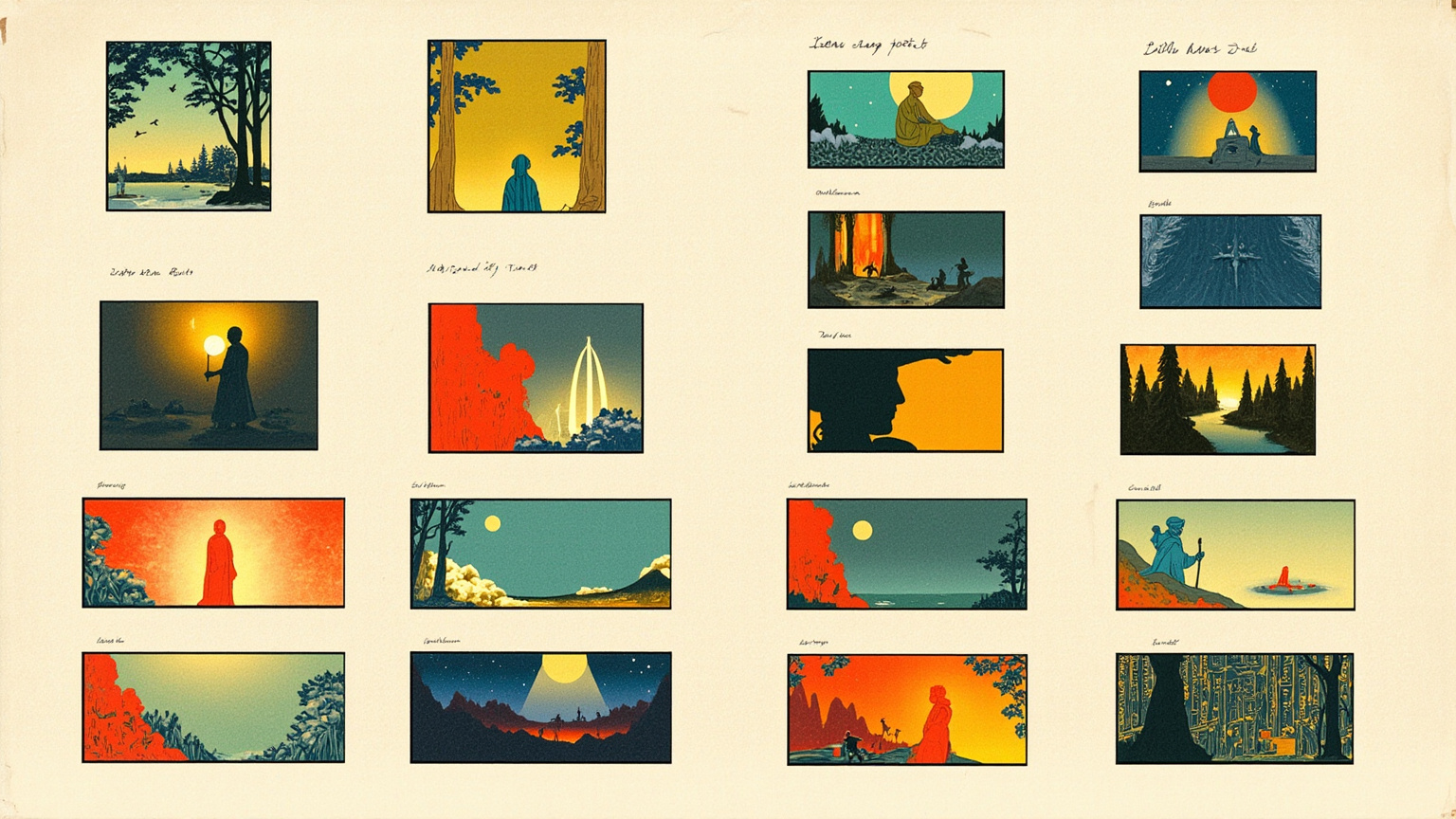
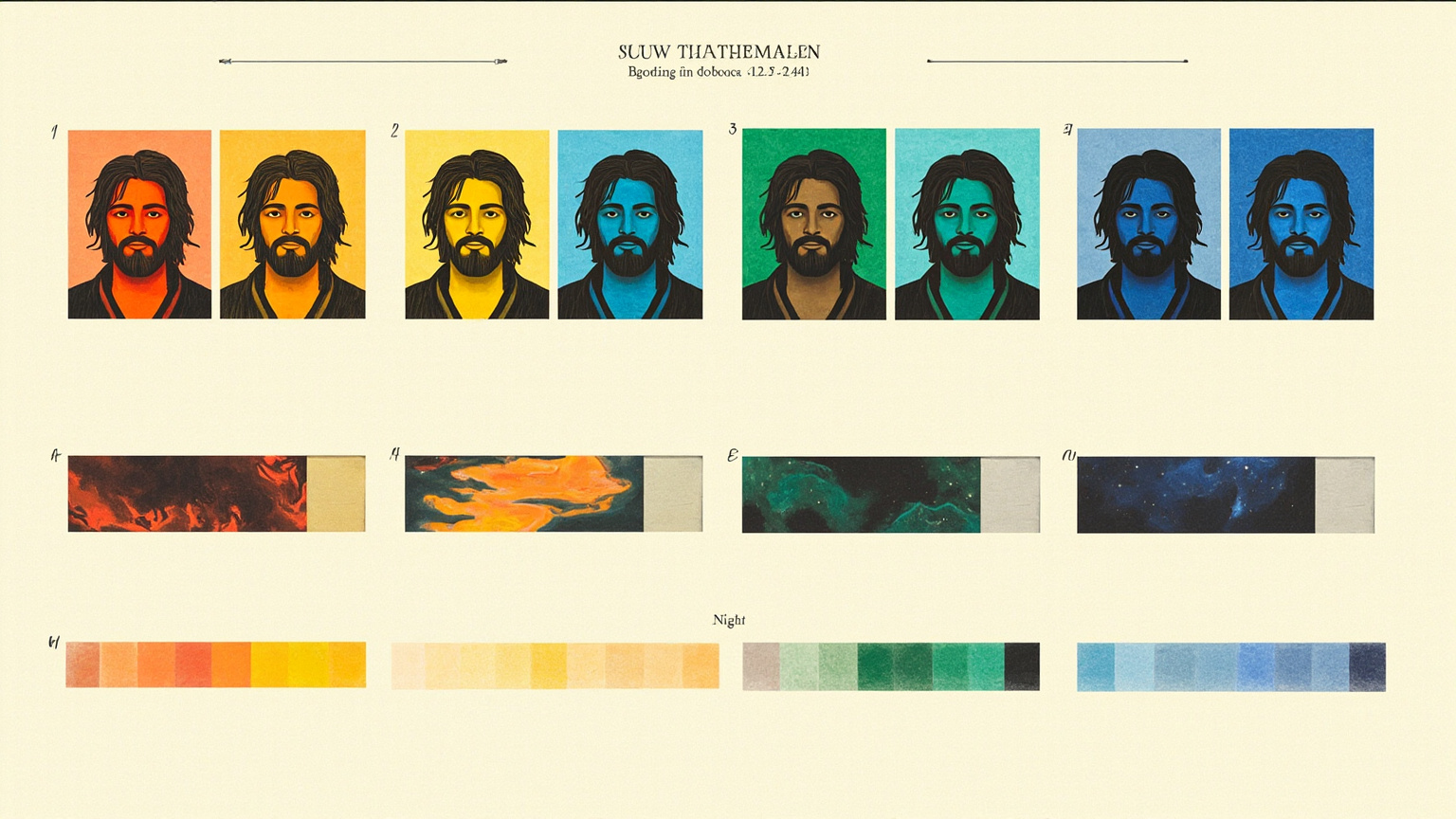
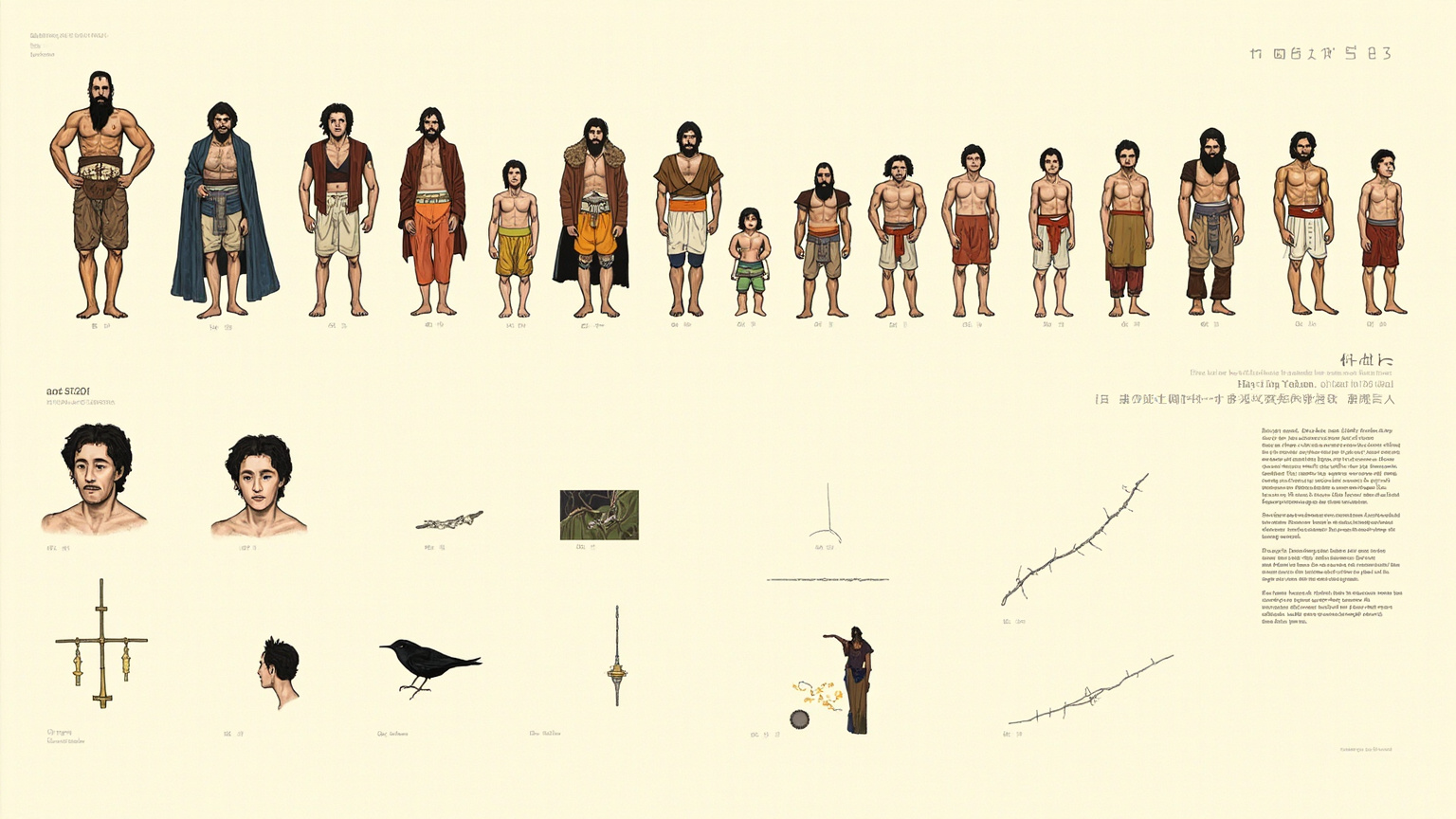
Art Direction4 plates
Before the guide was written, this book got a visual foundation — every illustration you just read grew out of it.