Heer Ranjha (Heer by Waris Shah) · Companion Guide
希尔与兰杰
一支笛子越过奇纳布河边的芥黄花田,把游牧少年与大户人家女儿的命运拴在一起,却被父权、毛拉维与村社礼俗一寸寸收紧——直到毒食入喉,两人以死作归途。
One Flute, Two Fates, Blown Together
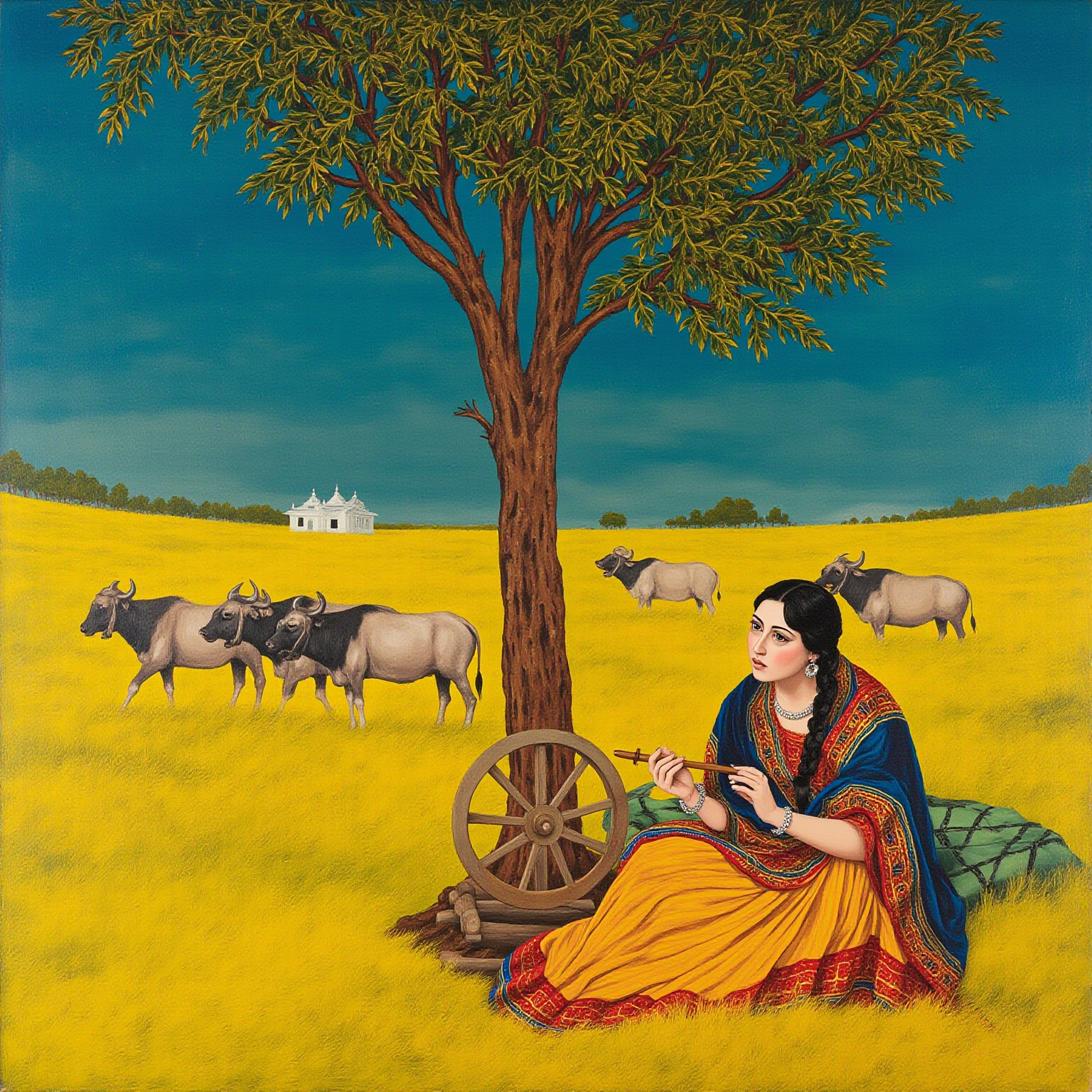
Mustard fields the color of dull gold run down to the Chenab, past mud-walled houses where spinning wheels turn and women bend over their embroidery. Ranjha lifts the flute to his lips, and the sound carries over the buffalo herds and the fields, straight into Heer's heart.
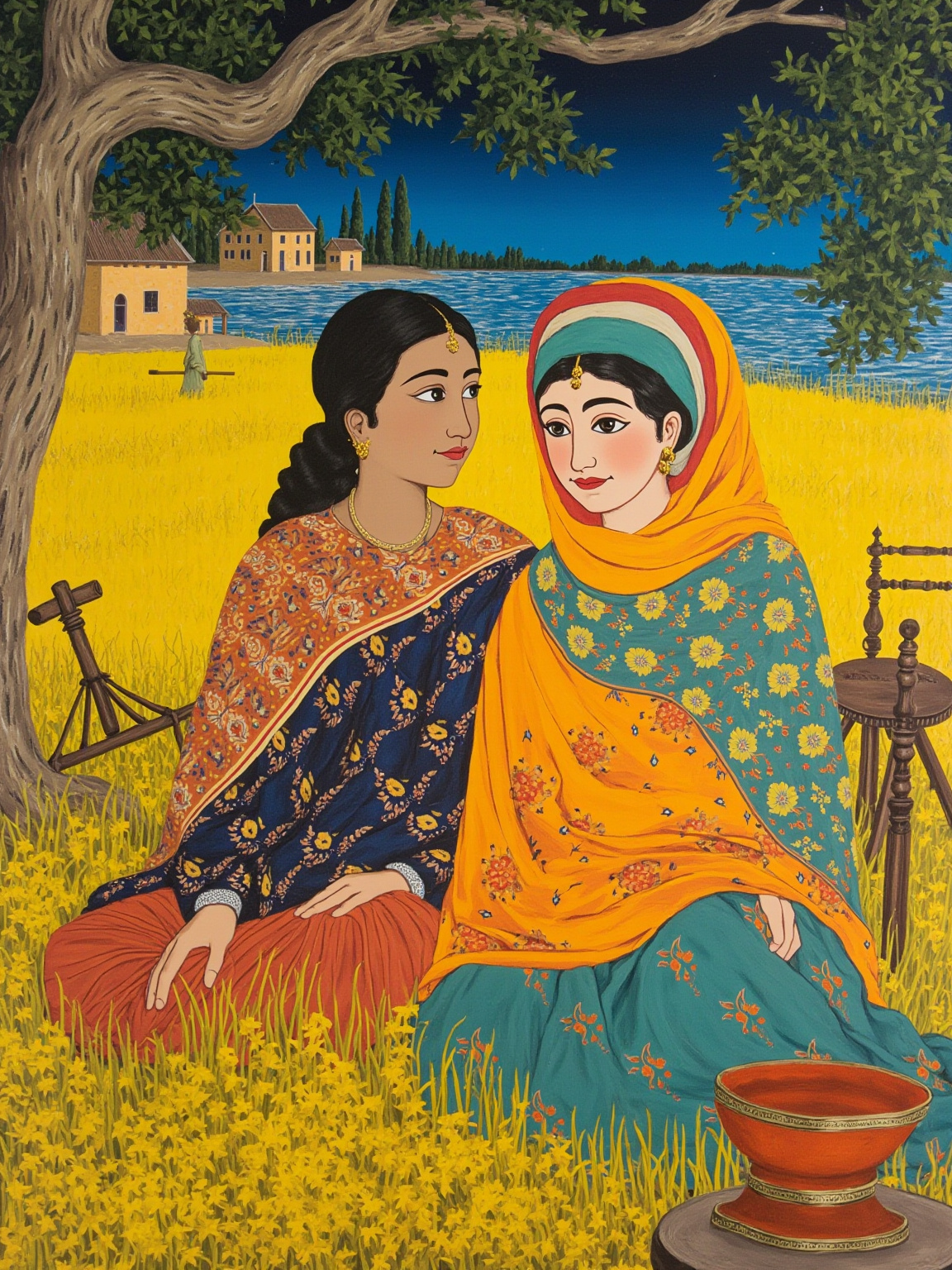
The flute was never mere music; from Ranjha's lip it became Heer's summons, and the whole countryside listened without knowing what it heard.
笛声越过水牛群和田野,钻进她的心里——那不是一支只管撩人的笛子,它也叫兰杰一路离开、寻找,再回到她身旁。
金句 · 开篇序章 · 一支笛子
The flute is not just there to stir feeling. It calls Ranjha too, out of the village, into the search, and back to Heer again. The sound grows out of the ordinary world first, and only later carries weight beyond a village romance.
The calls that move us most are heard long before they are understood.
Not Your Ordinary Romeo and Juliet
Heer Ranjha is a long narrative poem written in 1766 by the Punjabi poet Waris Shah, composed in Punjabi in the rhymed couplets of the Persian masnavi tradition. It is the best-known verse telling of a folk story, and it has also been set to kafi and vaar melodies, sung to crowds by wandering minstrels with the rabab and the hand drum.
It is called the first of Punjab's four great tragic romances, and often gets called our Romeo and Juliet. But the two families are not locked in some generations-old blood feud. What actually bears down on the lovers is patriarchal kinship, the local mullah, and the customs of the village. That is where the book earns its keep: the more fiercely the love burns, the more concrete the order standing against it becomes.
Between Two Villages, a River Nobody Can Skirt
Heer is the daughter of a leading Sial family, living near the Chenab in the Jhang region. She is famously beautiful, and her family's standing and land hold her fast to the village. Ranjha is the youngest son of Takht Hazara, doted on by his father Mauju Chaudhry, given to playing the flute and not much taken with farm work. One is looked after by her clan, the other sheltered under his father's wing, and yet their own birth is what pushes each of them out of place.
After his father dies, Ranjha's brothers and their wives refuse to feed him, and he storms out of the house and wanders until he reaches Heer's village, where her father Chuchak hires him to herd cattle. The poem does not write this as some breezy elopement: Ranjha is exiled first, and Heer is later hemmed in by a betrothal and village gossip. Every step these two take toward each other lands on some concrete rule.
The Flute Carries Across the Fields, and They Love in Secret for Years
Ranjha plays his flute in the fields, and Heer falls under its spell. Waris Shah is in no hurry to show us how they actually declare themselves. He lets the fields, the herds, the banyan tree, and the village gatherings carry the message instead. The love hides in plain sight, and gives itself away in every burst of flute music.
For years they hid their love before every eye, and the flute betrayed them with every breath it took.
秘密相恋多年——爱情在众人眼前藏起来,却又在每一阵笛声里暴露。
金句 · 相恋章 · 笛声传情
After years of secrecy, Heer's uncle Kaido and her parents Chuchak and Malki catch on. Chuchak first recognizes Ranjha at a village gathering and even keeps the young man on to work in the house, but once the local mullah applies pressure, the family orders Heer married off to Saida Khera instead. None of these people is a checklist of villains, and the mullah does not stand in for any one religious community. Together they are simply the order that hands the individual over to arrangement.
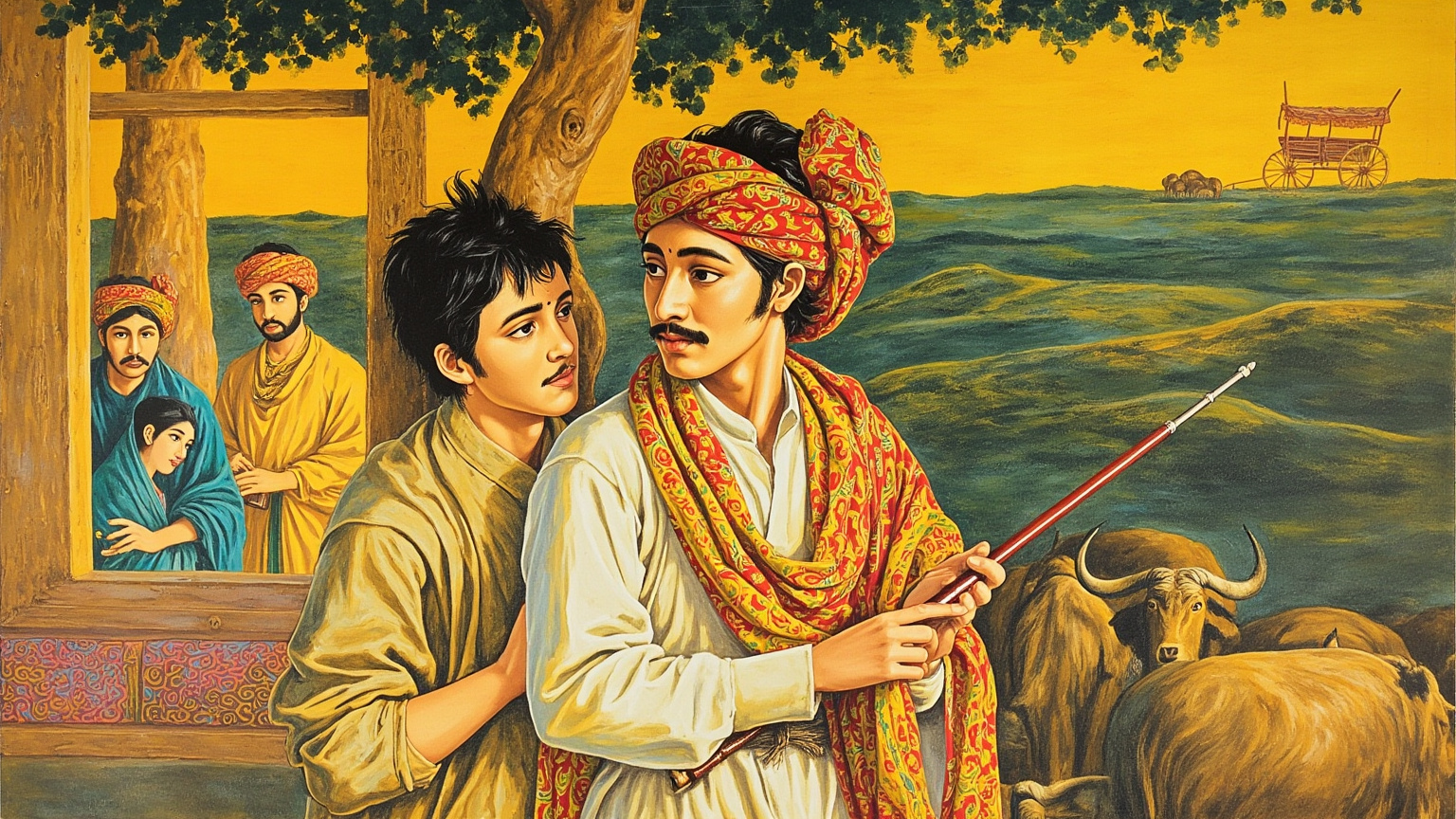
No one in the qissa is painted as a single villain — a meal withheld, a gathering's whisper, the maulvi's frown suffice to sever two lives.
家里的一顿饭、村人的一次闲话、毛拉维一次皱眉,就足够把两个人推向各自的路。
金句 · 拆散章 · 村社之压
Torn Apart, Ranjha Sets Off Down a Longer Road
Heer is forced into the marriage, and Ranjha leaves heartbroken, wandering alone across Punjab. The story does not let heartbreak sit still in tears and memory. Ranjha goes from a pampered youngest son to a man with no home, and his wandering body becomes the outward shape of an inward journey.
There is a fine turn in the writing here: what has driven the plot so far is a man and a woman seeking each other out, and now what drives it is a young man learning, alone, to carry loss. What Ranjha leaves behind is Heer's village, and also the self he used to be.
The Ferry Crossing Is Not Scenery, It Is a Passage
Dusk settles over the Chenab crossing as Luddan rows Ranjha across the water. Ranjha turns his back on the familiar southern bank, and the river wipes his reflection away, stroke by stroke.
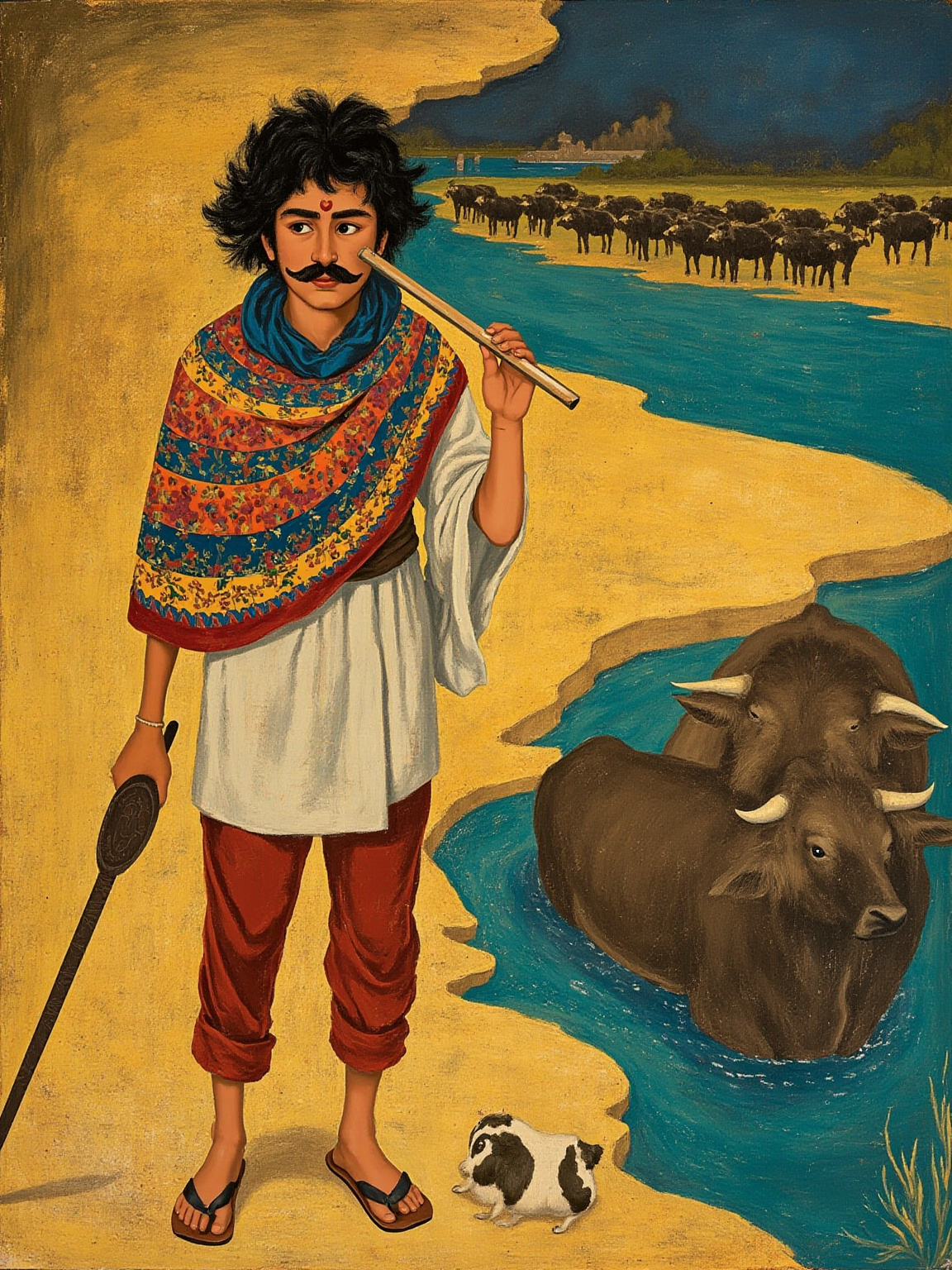
At the Chenab ford, Ludda's oar erased the southern bank reflection by reflection; only after that crossing could the return find its weight.
暮色里鲁丹一桨一桨,把南岸的家门、婚约和旧名字一道道抹掉——没有这一摆渡,山上的归来就没有重量。
金句 · 渡口章 · 奇纳布夜渡
Waris Shah does not linger at the ferry. With every stroke of the oar, the door of home, the betrothal, and the old name on the south bank all fall further behind. Without this crossing, the return that comes later on Tilla Jogian would carry none of its weight.
On Tilla Jogian, the Flute Becomes a Different Kind of Call
In the north, on Tilla Jogian, Ranjha meets Gorakhnath, who initiates him as a Kanphata yogi: ears slit, the world renounced, wandering Punjab chanting the name of God. This identity is not a borrowing from any single existing sect; in the poem it works as the concentrated figure of the teacher, the guide, and the turn toward the spirit.
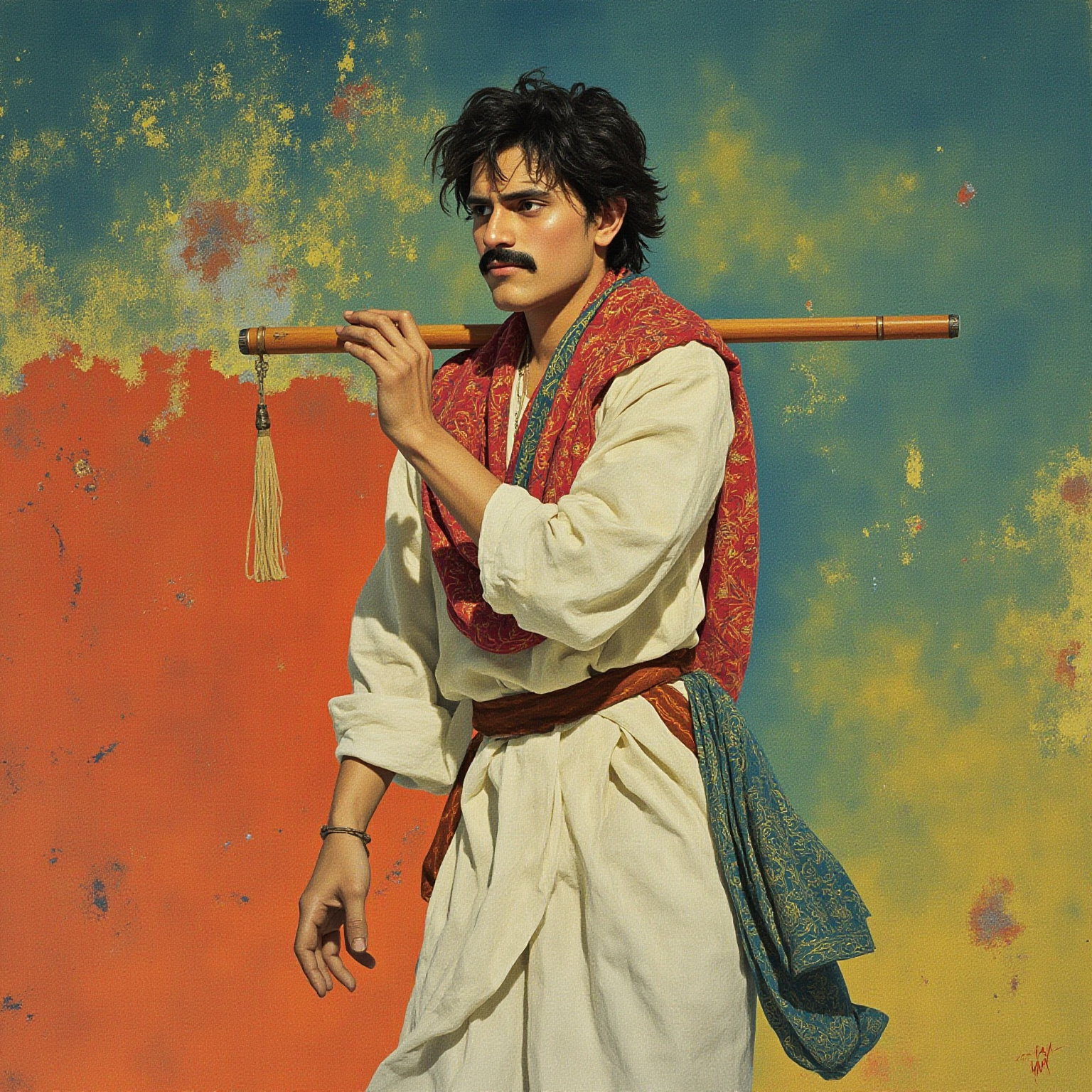
At Tilla Jogian, Gorakhnath split his ear-lobes and taught him the name of the Lord — only then did the flute turn from love-longing into remembrance.
戈勒克纳特刺穿他的耳垂,把主名交给他——从此笛声不再只是相思,而成了记念。
金句 · 提拉焦吉安章 · 出走—寻师
Even as a renunciant, he goes looking for Heer. The growth here is not forgetting love. Ranjha instead sets his private loss inside a larger quest: leaving, finding a teacher, and returning. The familiar Sufi arc of departure, guidance, and homecoming is pressed directly onto the separation of two village lovers.
Only After the Return Does the Story Reach Its Core
Ranjha eventually finds the village Heer was married into, and the two of them make their way back to Heer's home. In the standard telling, her parents finally consent to the marriage. At this point the obstacles seem to give way, and then, on the wedding day, her uncle Kaido poisons Heer's food.
Sufi readings do not dwell on the poisoning itself. Waris Shah sets it inside a spiritual frame: Heer and Ranjha die together in their grief, and love's ending is written as the soul's union with God, in love. Death recedes in this reading, and what stays in the foreground is that the two of them were never, in the end, fully torn apart, not from each other, not from the world.
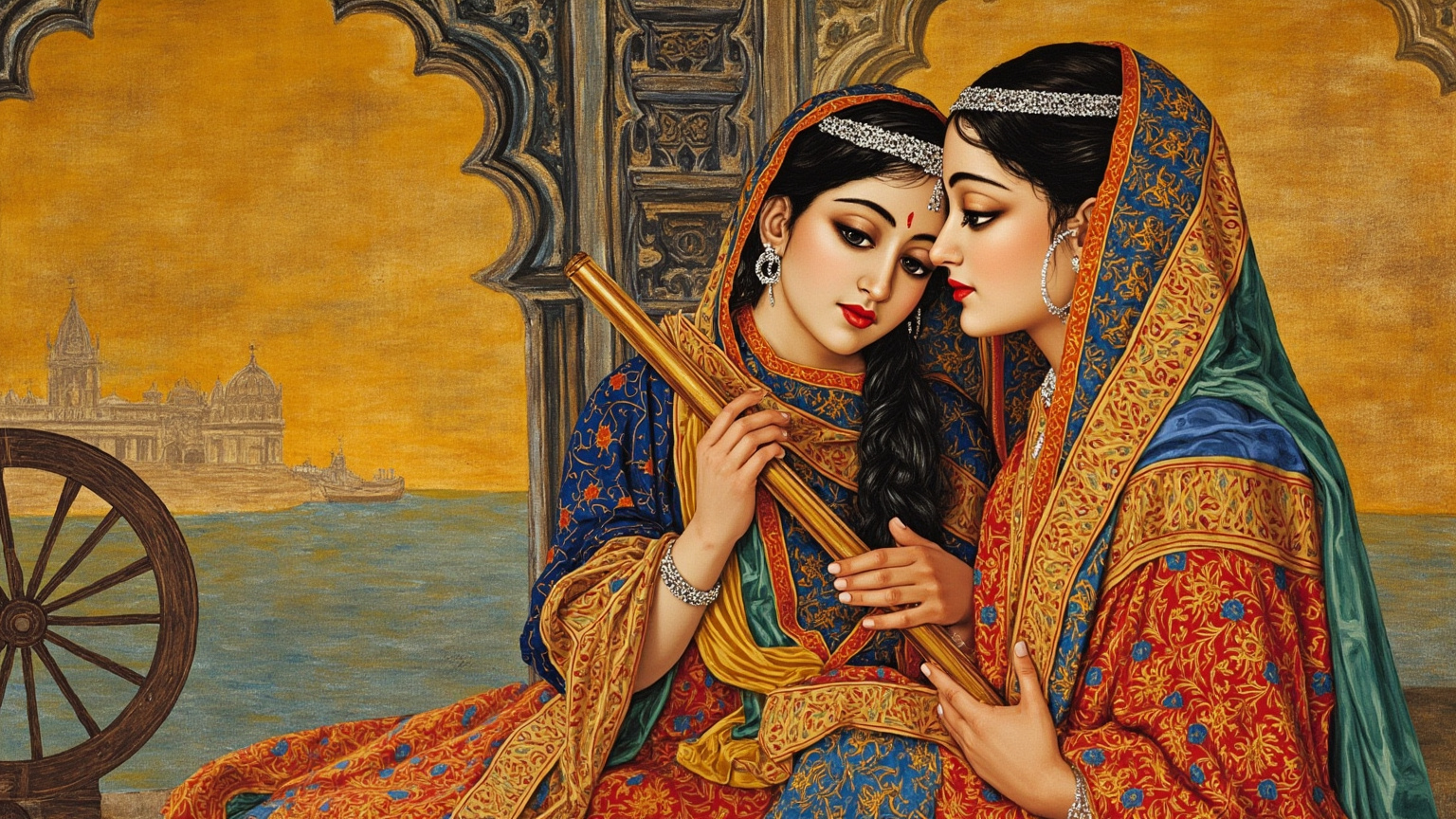
What the world tore apart, Heer and Ranjha joined in dying — Waris Shah writes their union as the soul's meeting with the Beloved.
世界所拆散的,二人在归真中重聚——瓦利斯·沙阿把他们的死写成灵魂与真主在爱中合一。
金句 · 终章 · 同时归真
It Writes Love as a Path Back to God
Waris Shah himself said the story carries a deeper meaning: the soul's unstoppable longing for God. When Heer's father recognizes her at the village gathering, she is a Sial daughter about to be married off. When Ranjha plays his flute through the mustard fields, he is a wanderer whose own brothers would not feed him. On the day the uncle poisons her, they are a bride and groom at a wedding. They remain these particular people even as, inside these particular refusals and separations, they become shadows of the soul, the seeker, and the obstacle in its way.
It also writes out a very specific predicament of youth: land, kinship, marriage, and local authority together decide who gets to be with whom. Ranjha's wandering and Heer's betrothal are not some abstract bad luck. A single meal withheld at home, one gathering in the village, one crossing at the ferry, each of these pushes the two of them into the roles waiting for them.
Why It Is Still Worth Reading Today
What this book pulls off best is turning a familiar folk tragedy into a long poem that can be sung and reinterpreted at once. The couplet rhythm of the masnavi lets the story move into kafi and vaar melodies, and once the rabab and the hand drum start, the characters stop being names on a page. For a reader today, the sound, color, and order of rural Punjab become something you can feel: mustard yellow against blue, the flowering fields, the banyan tree, the spinning wheel, the embroidered shawl, and the Chenab, forever carrying people away and back again.
It has also crossed the border that later divided India and Pakistan, sung by Punjabis of different faiths alike. What survives is not a single shrine but a living oral memory, something people still sing, rewrite, and listen to today.
Turns You Only Find in the Text Itself
A guide like this one can tell you who plays the flute, who crosses the river, who meets a teacher on the mountain path, and it can lay out the whole map of the Sufi reading. What it cannot give you is the rhythm, the texture, the physical feel of the text itself: the way the flute in the fields sounds first like a love song and later like a call to remember God's name; the way a pampered youngest son walks from the riverbank to the mountain path and comes back wearing a different self; the way, when Heer and Ranjha die together, the tragedy refuses to stop in the shadow of the wedding day.
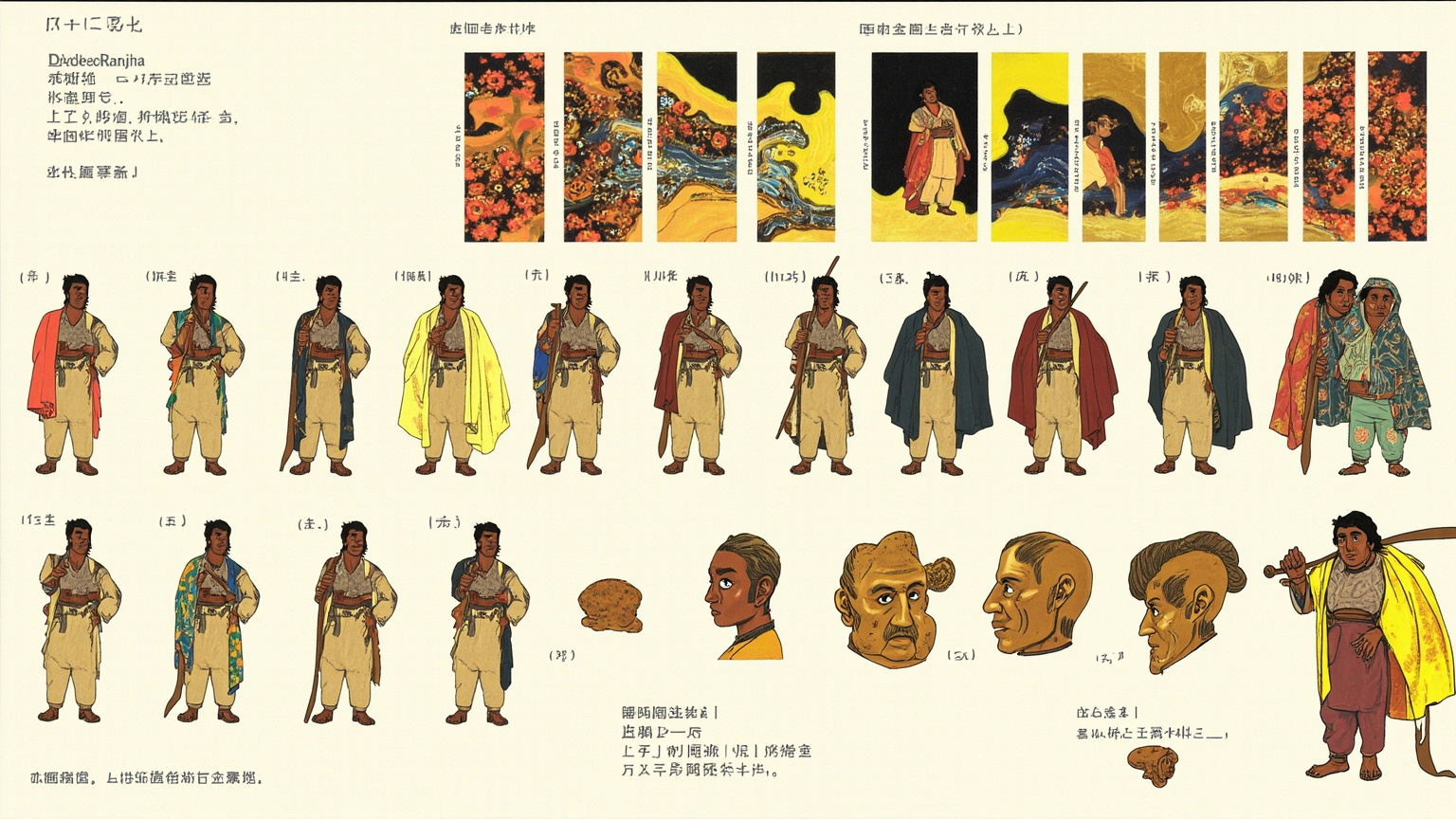
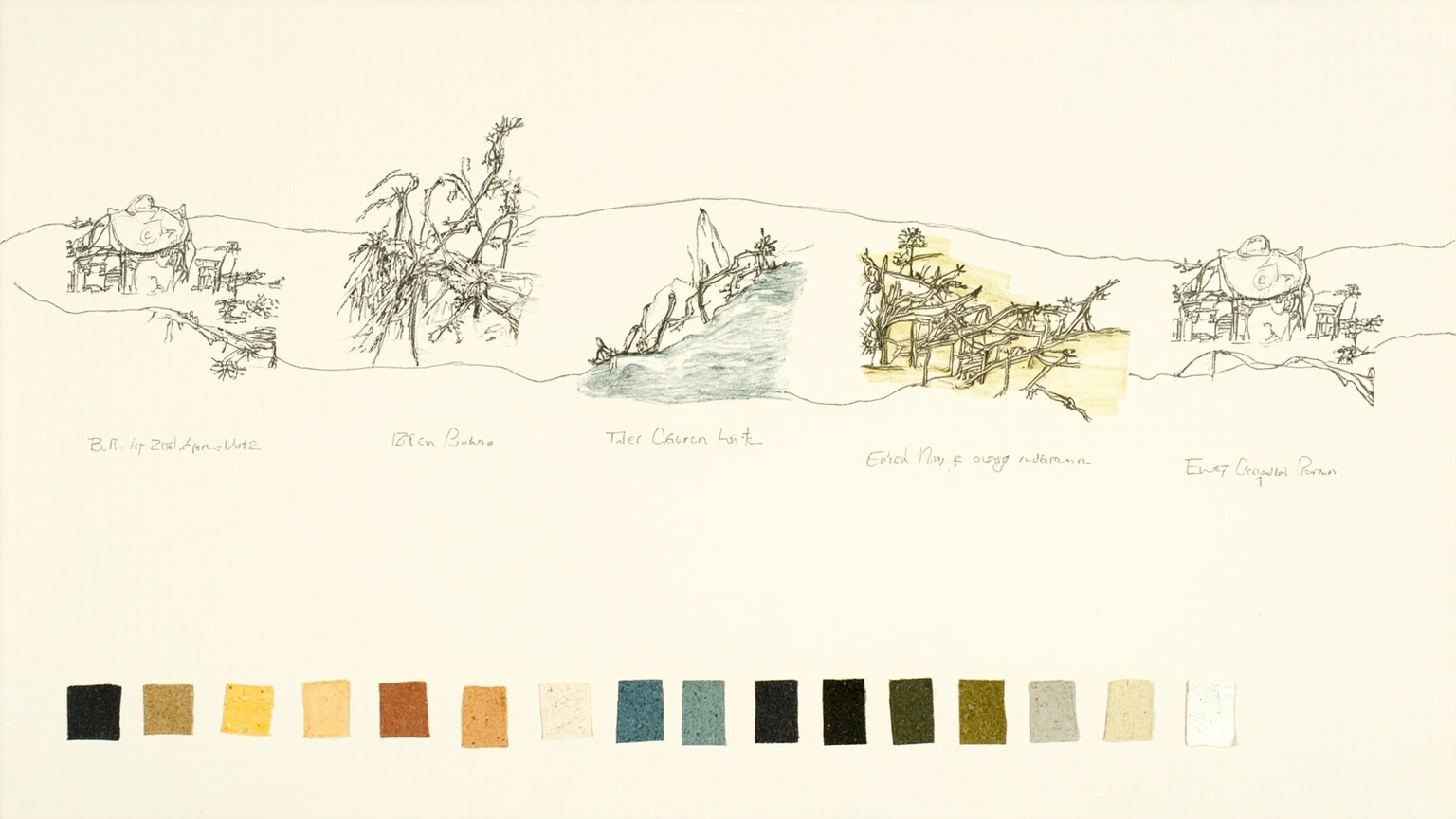
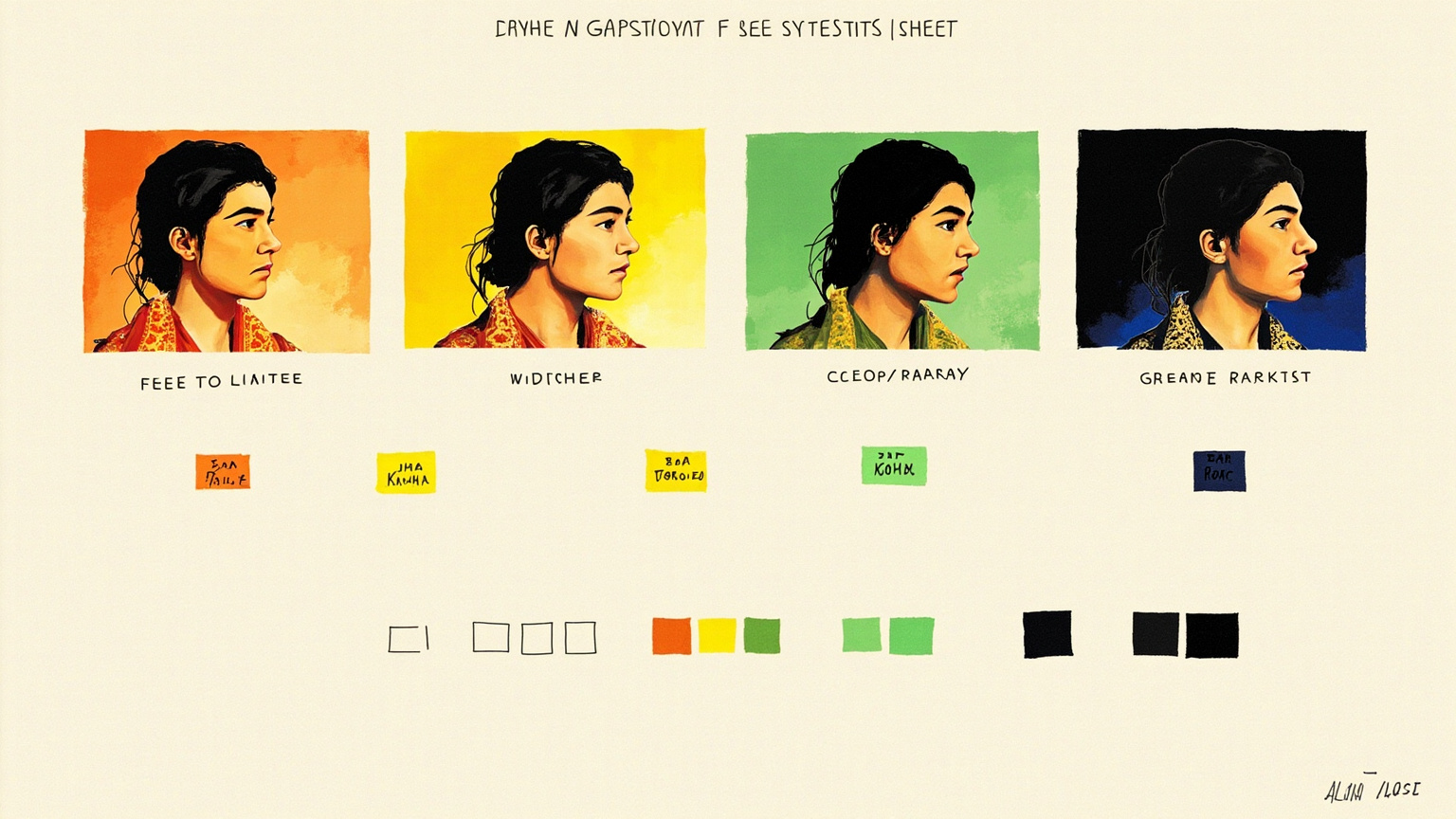
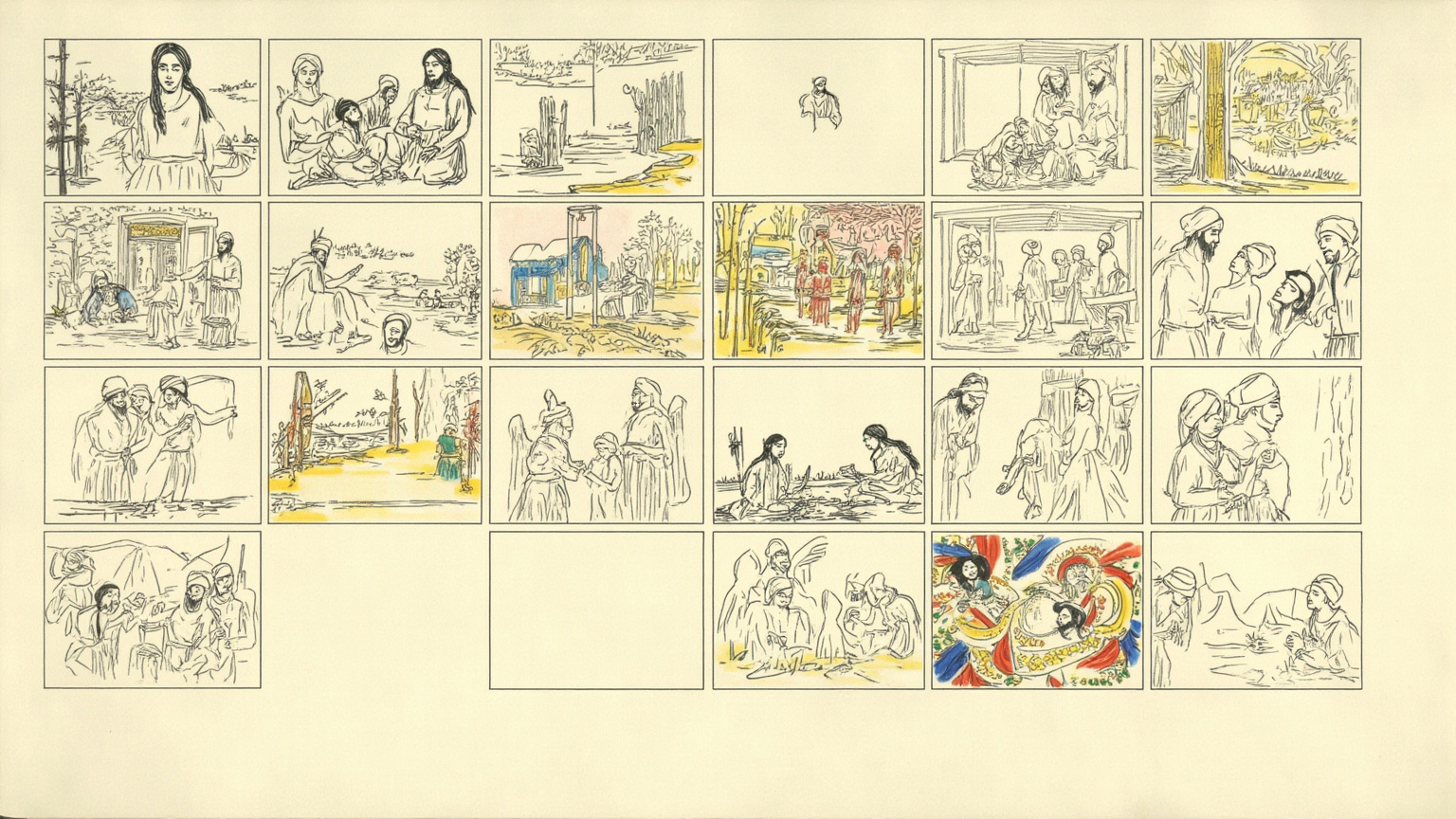
Art Direction4 plates
Before the guide was written, this book got a visual foundation — every illustration you just read grew out of it.