Hikayat Hang Tuah · Companion Guide
汉都亚传
一把波形刃短剑,连忠义与兄弟情全焊在锋刃上——渔家少年终奉主君之命,亲手刺倒结义兄弟
A Wave-Bladed Dagger, a Brother Cut Down
On the flagstones of Malacca's port city lies a body that has just fallen. The hand still gripping the blade knows that face — they swam the same river as boys, learned to fight under the same master's hand, swore the same oath to live and die together. Seven days and seven nights of combat settled nothing. The final thrust went in on the sultan's order. The dead man was Hang Jebat. The one left standing was Hang Tuah. The duel took place in fifteenth-century Malacca, and for centuries the Malay world has kept returning to it as its tragedy of loyalty and brotherhood.
What Kind of Book Is This
Hikayat Hang Tuah is the great work of classical Malay court literature, passed down for generations by court storytellers and scribes before settling, around the seventeenth century, into the text we read today, though what it describes is the fifteenth-century splendor of the Malacca Sultanate under Sultan Mansur Shah. Its standing in the Malay world is close to what the Iliad and Odyssey are to Greek literature, or the Ramayana to India: no serious account of Malay culture can skip past it, and the modern English editions most readers encounter usually trace back to A. Samad Ahmad or Martyn Agree. One thing needs saying up front: the author line reads anonymous, and that isn't false modesty — it is the plain truth of how this book came to be. It was raised over centuries by countless storytellers working in common, each generation adding something and cutting something away.
Characters and World
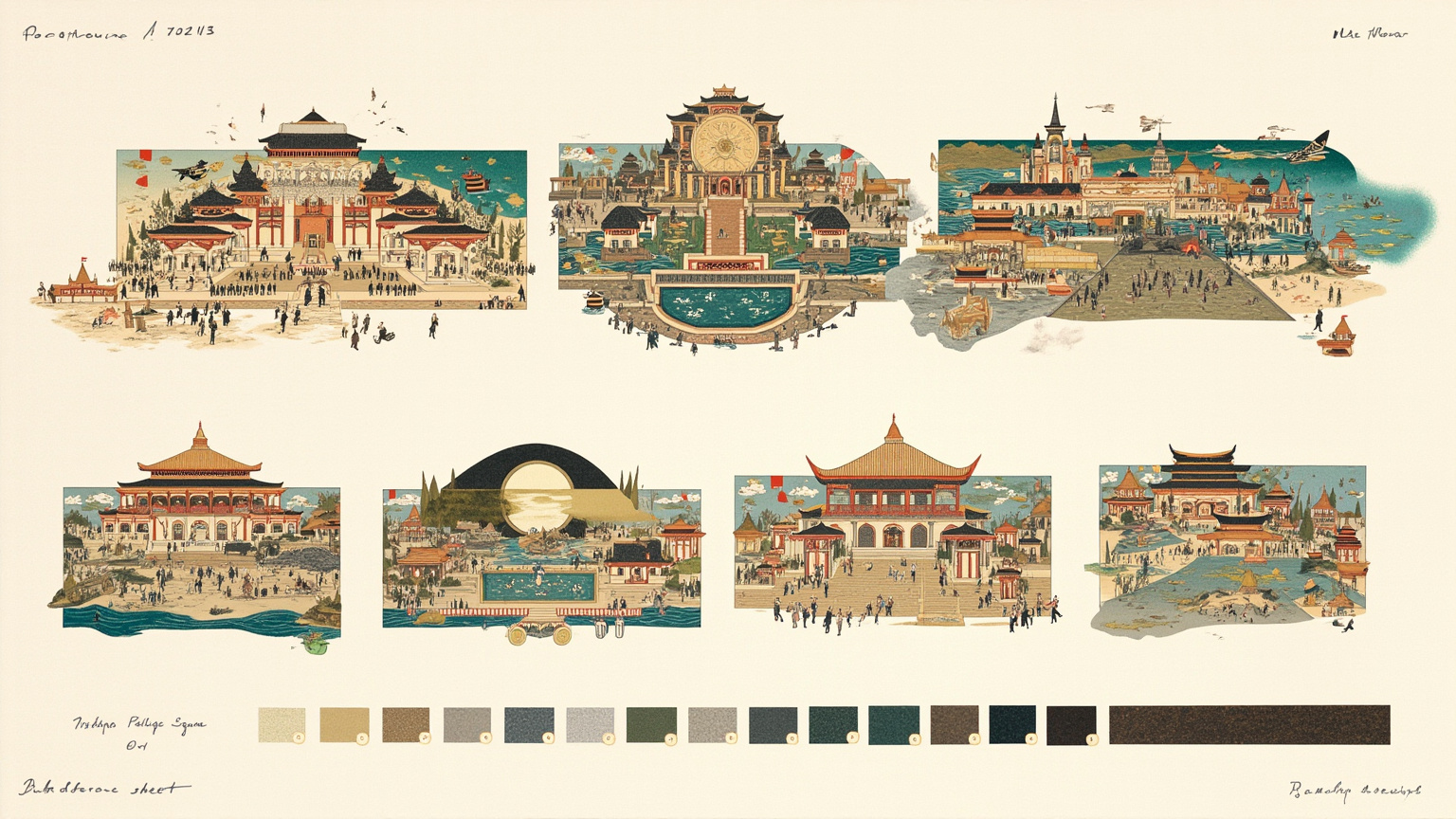
The story's stage is Malacca — the port city commanding the strait of the same name, the hinge between the Indian Ocean and the South China Sea. Chinese, Indian, Arab, and Javanese traders crowded the same streets; gold, camphor, agarwood, and porcelain moved through the same wharves. The port was rich, the court was splendid, and war at sea never really stopped. Two outside forces mattered most: Siam to the north, which kept raiding south, and the Ming treasure fleets of Zheng He, which called at Malacca more than once and conferred on its sultan the title King of Malacca. This was the sea and the city Hang Tuah spent his life in.
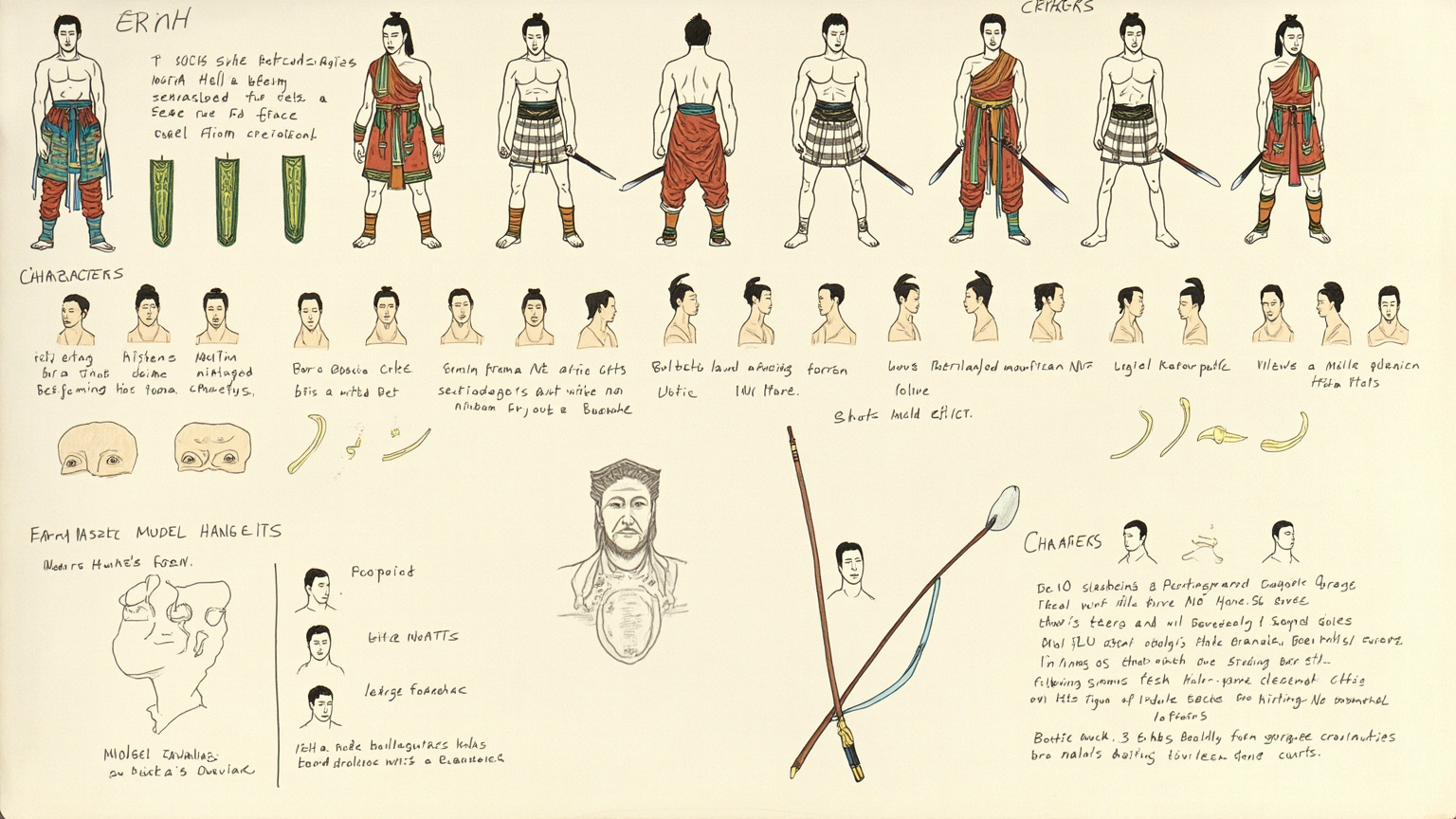
Hang Tuah is the hero, a fisherman's son who as a boy is taught by a hermit master and given the keris, the asymmetrical, wave-bladed dagger every Malay warrior carries at the hip, closer to the body than a sword ever could be. He rises to lead the sultan's four royal bodyguards, the most skilled and most decorated of them, and eventually holds the rank of Bendahara: prime minister and commander-in-chief combined. Hang Jebat, his sworn brother and a fellow guard, runs hotter than Hang Tuah does. The other two sworn brothers, Hang Kasturi and Hang Lekir, stay mostly in the background of this telling. Sultan Mansur Shah is the lord they have all sworn to serve unto death. Tun Perpateh Timbul is Hang Tuah's most important patron among the court's officials, while Tun Hassan is promoted to fill his place when Hang Tuah falls under suspicion, a quiet source of political tension over who has really replaced whom. And one figure who never appears on stage still decides how the story ends: the fairy princess of Gunong Ledang, at the center of the courtship trial that closes out Hang Tuah's legend.
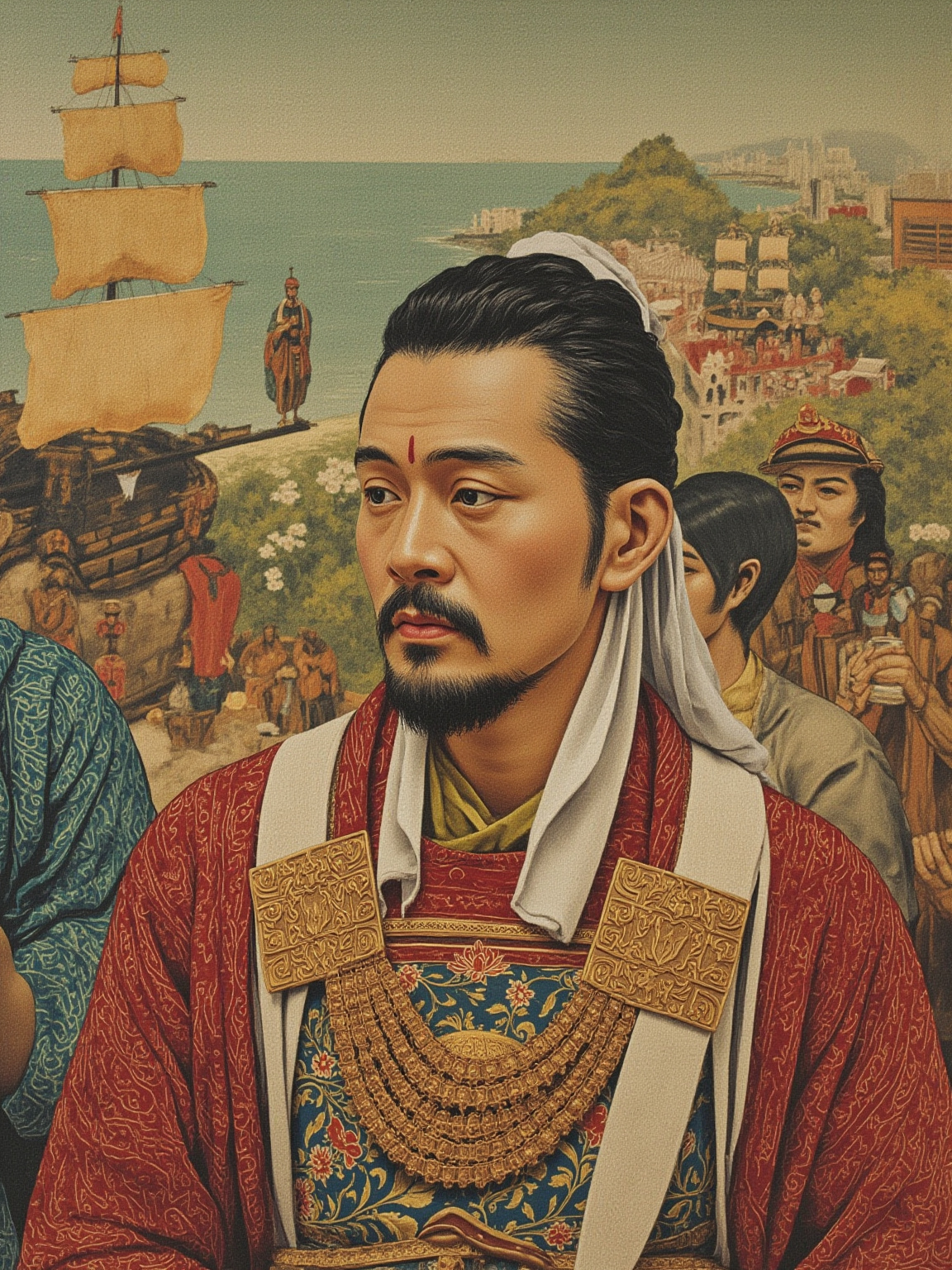
What is above us is the sky with its bright stars; what is below us is the earth with brave Hang Tuah upon it.
天上有星光灿烂,地下有汉都亚昂然挺立。
金句 · 序曲 · 渔家少年初得克力士
The Boy and the Blade: A Fisherman's Son Gets His Keris
The story opens like a tale of wandering swordsmen. Hang Tuah starts out as a sharp, fearless fisherman's son in the port of Malacca, spotted by a hermit master living deep in the hills and taken on as a student. The image at the center of the legend is the keris — that asymmetrical, wave-bladed dagger that stands in for the soul of a Malay warrior. On the day his training ends, Hang Tuah, Hang Jebat, Hang Kasturi, and Hang Lekir become sworn brothers, the sultan's four royal guards, bound to live, die, and serve together. A Malay saying has survived from that moment: in the sky, the star comes first; on the ground, Hang Tuah does.
War at Sea: Malacca's Years of Glory
Grown, Hang Tuah becomes the sharp point of Malacca's war machine. Kampar in Sumatra, Minangkabau, the last embers of Javanese resistance: wherever the fighting goes, he goes; when Siam presses down from the north again and again, he stands with the sultan and pushes it back each time. Behind all of this sits a grander backdrop: the vast fleets Zheng He commanded under the Yongle Emperor, calling at Malacca more than once and conferring on its sultan the title King of Malacca, which made the city one of the hottest ports on the whole Indian Ocean–South China Sea trade route. In the text these are the golden years, the court flush with confidence, and Hang Tuah's reputation as a fighter rises right along with it. The first time I read this section I pictured hundreds of ships crowded into one harbor — this isn't only martial skill on display, it's an entire maritime power finding a single face to wear.
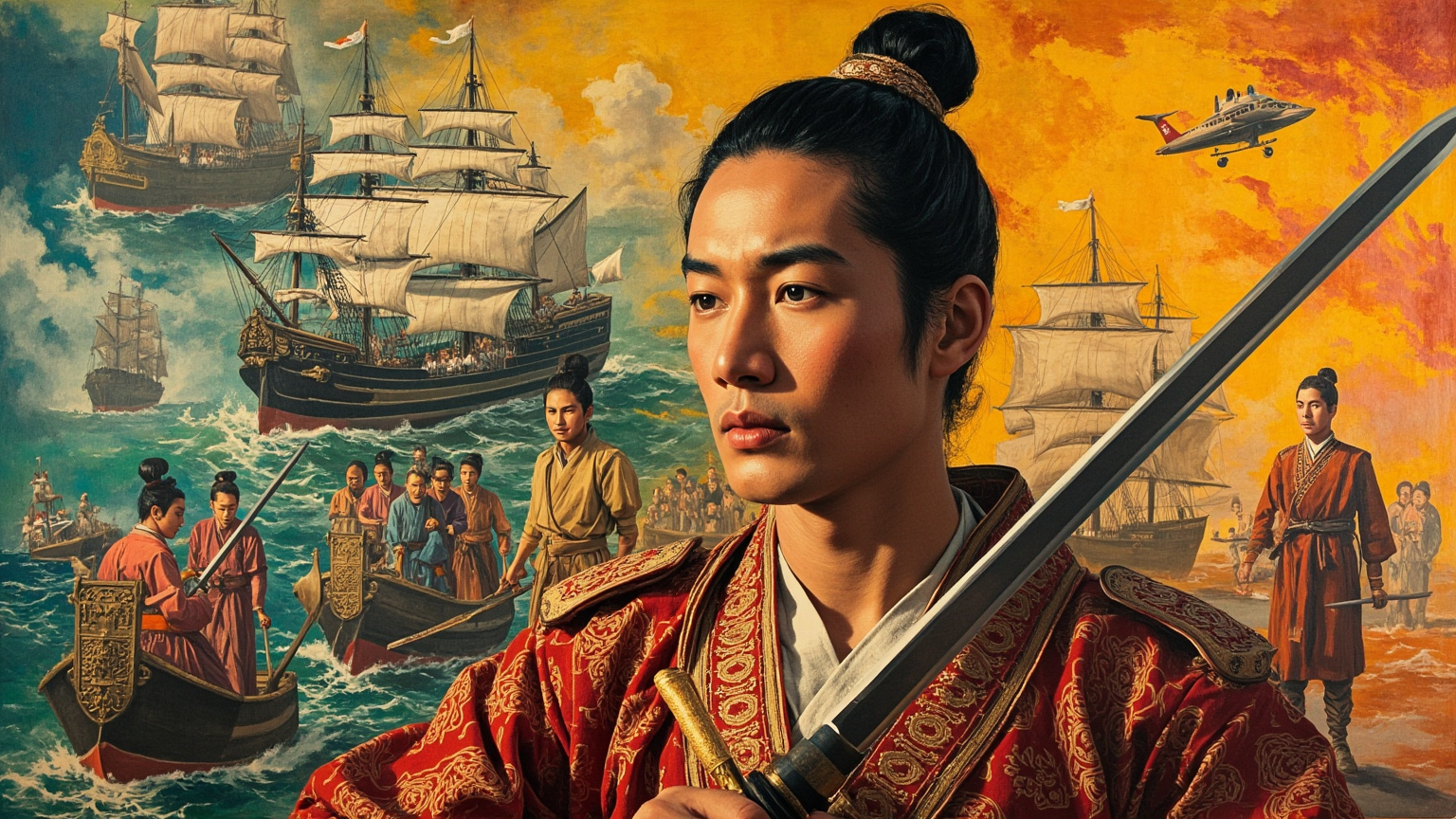
The fame of Malacca rose on the salt of its harbours, and on the blade of Hang Tuah's kris.
马六甲的荣华立在这片海港的潮水之上,也立在汉都亚腰间那把克力士之上。
金句 · 第二幕 · 四方来朝的港城之刃
The craft here is in welding Hang Tuah's personal prowess to the city's fortunes: every battle he wins buys Malacca a measure of safety, and the more Malacca prospers, the more secure his standing becomes. The reader starts to feel these are the same thing — until the false accusation that follows tears them apart.
The False Accusation: A Social Death Worse Than a Real One
The crack in this golden age starts with a rumor at court. Someone tells the sultan that Hang Tuah has been sleeping with one of his consorts. A Malay warrior's whole standing rests on the sultan's favor: lose it, and the social death is more complete than beheading would be. Enraged, the sultan orders his execution (some versions say exile instead). Hang Tuah is sewn into a sack and thrown into the river — and, the story says, survives by some miracle. Once the truth comes out, he is recalled to court and reinstated, and he repays the sultan with a loyalty that has gone deeper and gone quiet. This false accusation is where the real tragedy begins: from this point on, the words the sultan's order are welded shut inside Hang Tuah.
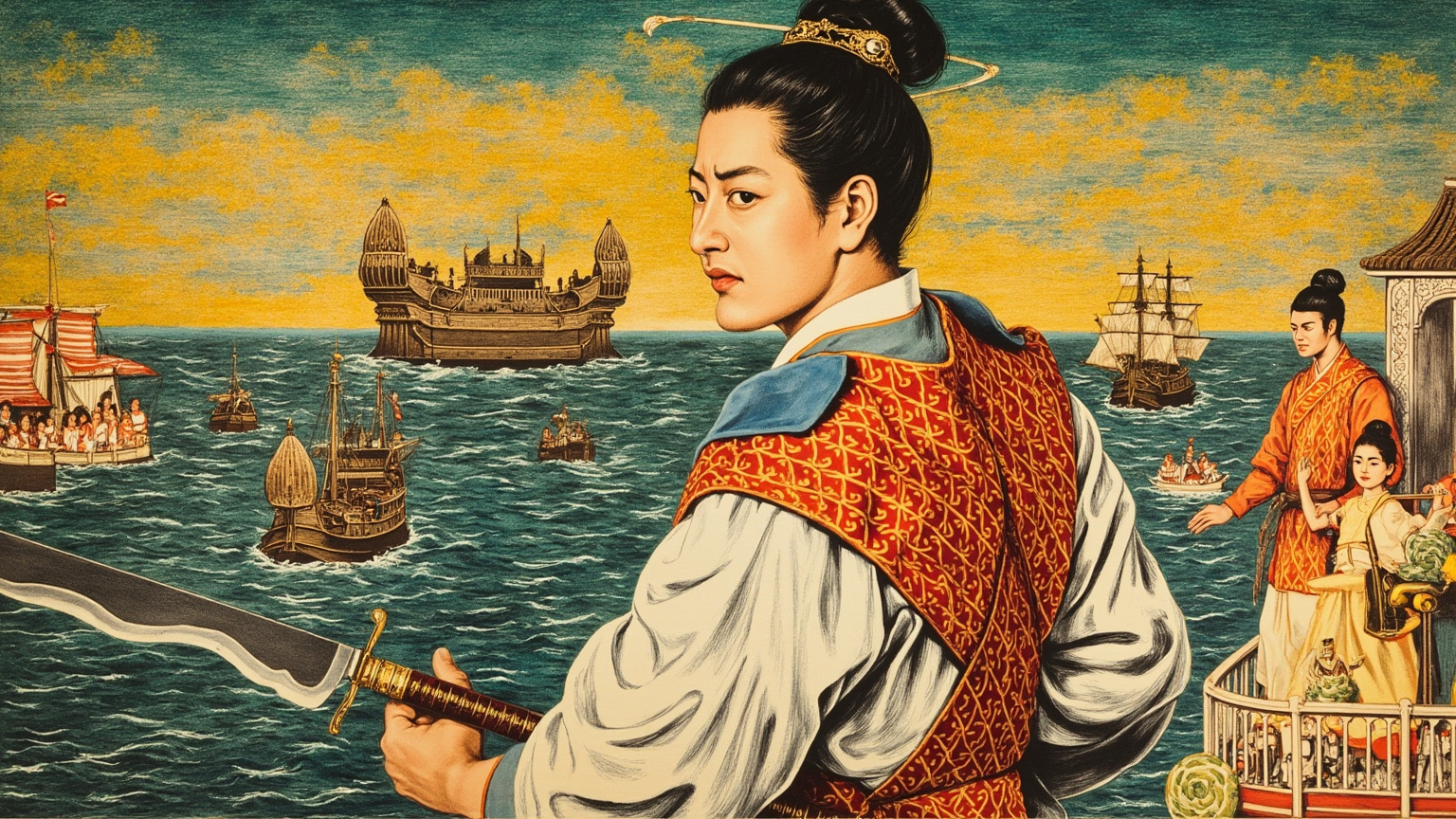
For a warrior, to fall from the Sultan's favour is to die twice — once in the river, and once in the world's forgetting.
武士失却主君的恩宠,便是死了两回——一回沉入河底,一回被这世间永远忘怀。
金句 · 第三幕 · 蒙冤入水之夜
As craft, this is an old and practiced move in the Malay court storytelling tradition: layering an outside injustice over an inward oath. The reader is outraged on his behalf even while already sensing he has no way back — and the next scene is exactly that, this man with no way back, sent to kill the one person he should never have to.
Seven Days of Blood: Ordered to Kill His Sworn Brother
While Hang Tuah sits under a false accusation, Hang Jebat's anger finally breaks. He refuses to accept the charge, draws his blade against the court, and takes over the palace in revolt — and no one in the court can beat him. Those words carry the full weight of the Malay legend, because everyone at court knows exactly who the one man is who can. The sultan summons Hang Tuah back and orders him to face his own sworn brother. The two of them meet in the palace square and fight for seven days and seven nights without either one winning. The final thrust is Hang Tuah's own hand, acting on the sultan's order. That the sultan's order outranks brotherhood has become, ever since, the tragedy the Malay-Indonesian world keeps returning to whenever it argues about loyalty, rebellion, order, and justice. For centuries people have retold this scene, adapted it, argued over it: was Hang Jebat a rebel with a real grievance, or simply a traitor? The text refuses to answer.
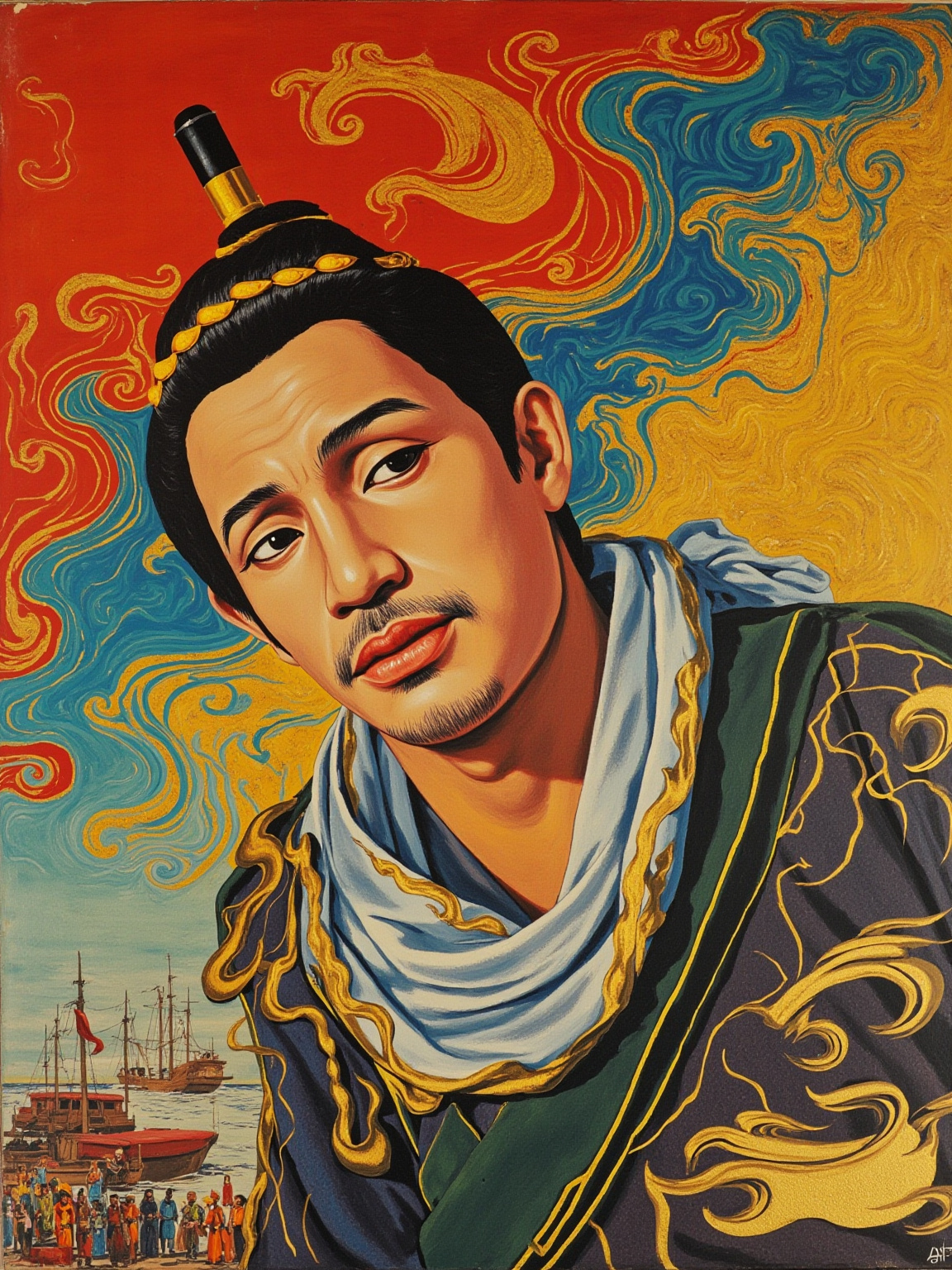
Seven days and seven nights they fought, and only one sword remained standing when the dawn came.
七日七夜厮杀不休,待到天明,场上只剩一把剑还立着。
金句 · 第四幕 · 奉命刺兄
This is the book's central scene, and the one most often rewritten across classical Malay literature. Its power is that it never argues — it only fights. Seven days and seven nights of combat take two abstractions, loyalty and brotherhood, and hammer them down into something visible: blood, flesh, and a wave-bladed dagger.
The Old Statesman: A Comedy of Wits with a Fairy Princess
Hang Tuah goes on serving the court as Bendahara. The flourish of his later years comes from another legend entirely: the sultan sets his sights on a fairy princess who lives on Gunong Ledang and sends Hang Tuah to ask for her hand. The princess doesn't refuse outright. Instead she names seven near-impossible bride-gifts: a bridge of gold, a bridge of silver, seven vats filled with tears, seven jars of honeycomb, seven bowls heaped with rice grains, and more, none of it anything a mortal could produce. Hang Tuah carries the list back to the palace, and only then does the sultan understand what the princess meant: a refusal, delivered with wit and with everyone's dignity intact. It's one of Malay literature's best-loved stories of cleverness, and the most graceful way Hang Tuah's legend could close — a lifetime of fighting wars, capped off by being sent to negotiate a courtship that was never going to happen.
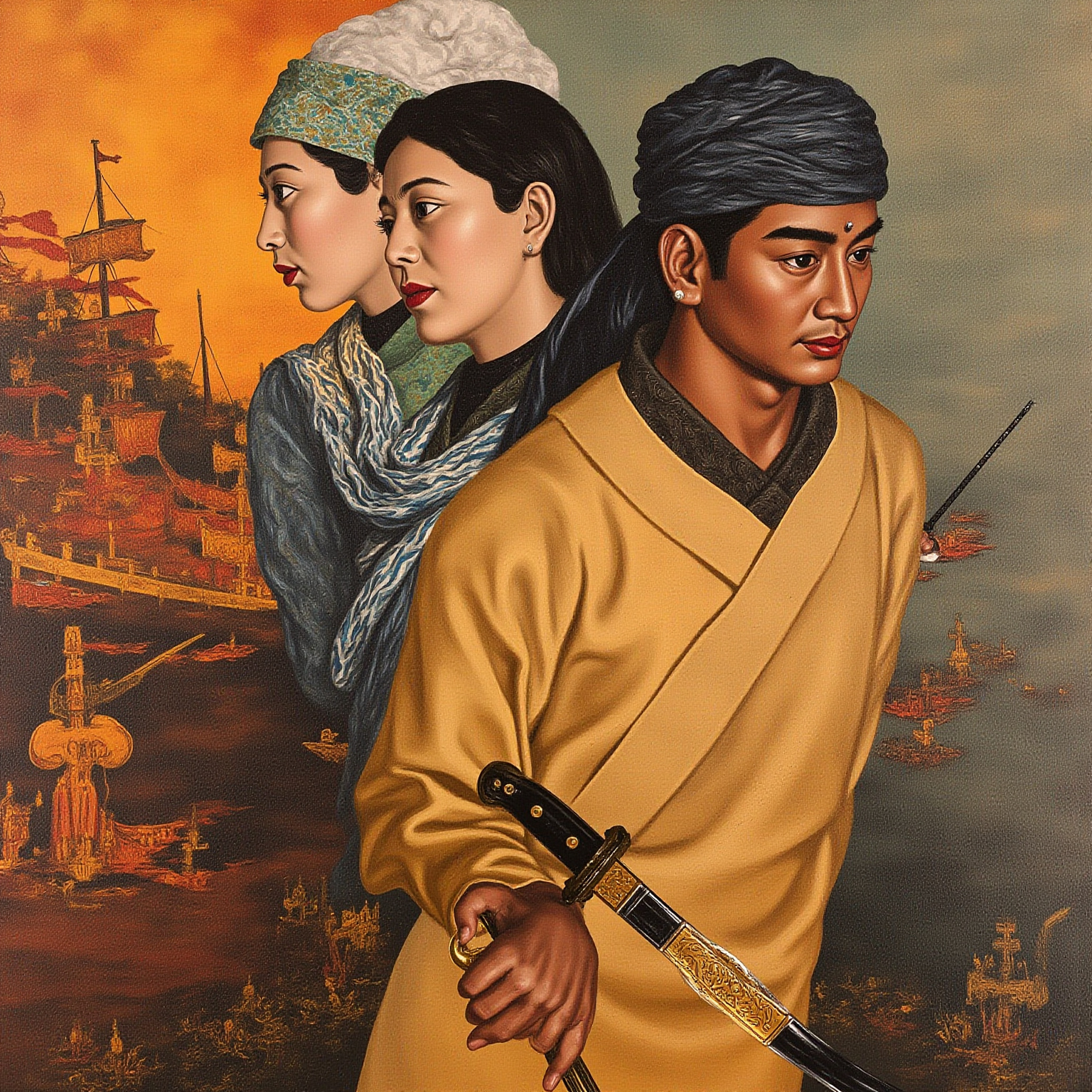
Then said the princess of the mountain: bring me a bridge of gold and a bridge of silver, and a bowl of the blood of thy heart.
山中的公主便道:且备一座金桥、一座银桥,再盛一碗你心头热血来。
金句 · 第四幕 · Gunong Ledang 求亲七礼
One wave-bladed dagger carries the whole weight of a Malay warrior's fate: loyalty, duty, and no way out.
Why This Book Is Remembered
The death of Hang Jebat takes the old problem of loyalty versus rebellion and gives it flesh, blood, and the flash of real blades — for centuries readers have found themselves unable to pick a side and unable to sit still on the fence either. The book also fills in a stretch of cultural map that mainstream publishing has mostly left blank: maritime Southeast Asia, the Strait of Malacca, the Malay Archipelago, a tropical warrior aesthetic all its own. Hang Tuah himself, in sarong, headcloth, and wave-bladed keris, has become the visual template for the perfect warrior across the Malay world, a figure illustrators, playwrights, and filmmakers can conjure without effort. How the book came into being matters too: written and rewritten across centuries of court storytelling, each retelling adding something and cutting something else away. It is a living epic.
Read the Text Itself, and This Is What You Get
A companion guide gives you the map. The text itself is the land. What can't be replaced here is the storyteller's voice, the ease with which it sets Zheng He's treasure ships and a fisherman's boy in the same breath, a composure no summary can fake. The grip of the keris passing from master to boy, the look in Hang Jebat's eyes as he dies, the curl at the corner of the princess's mouth as she hands over that list of bride-gifts — these are physical sensations you only reach by turning to the actual line on the actual page. Does it matter that you already know how it ends? Classical Malay court storytelling was never built on suspense in the first place. It runs on a voice that tells the same story again and again, each time cutting a little deeper. Go listen to that voice once. It's worth the price of admission.
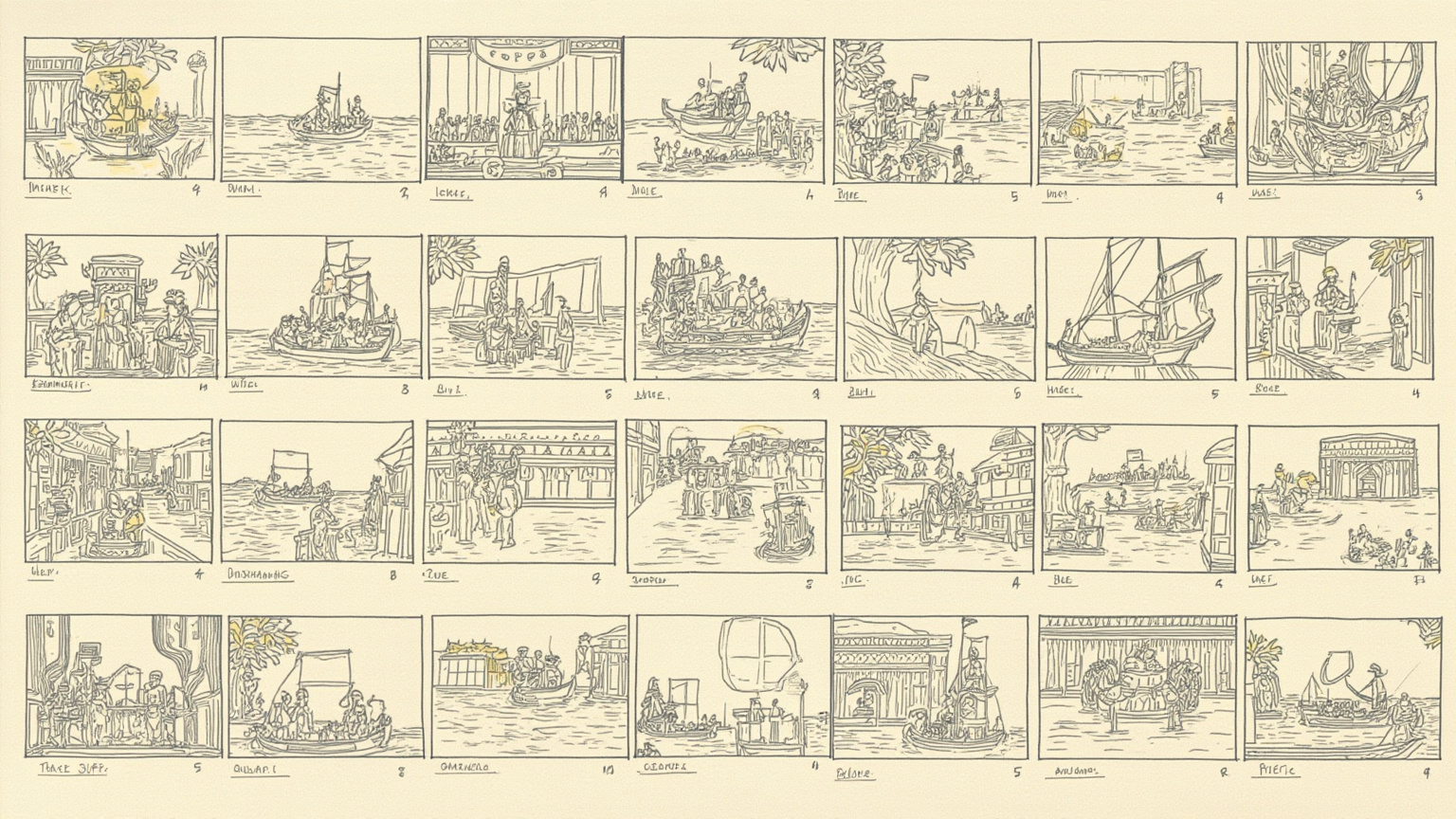
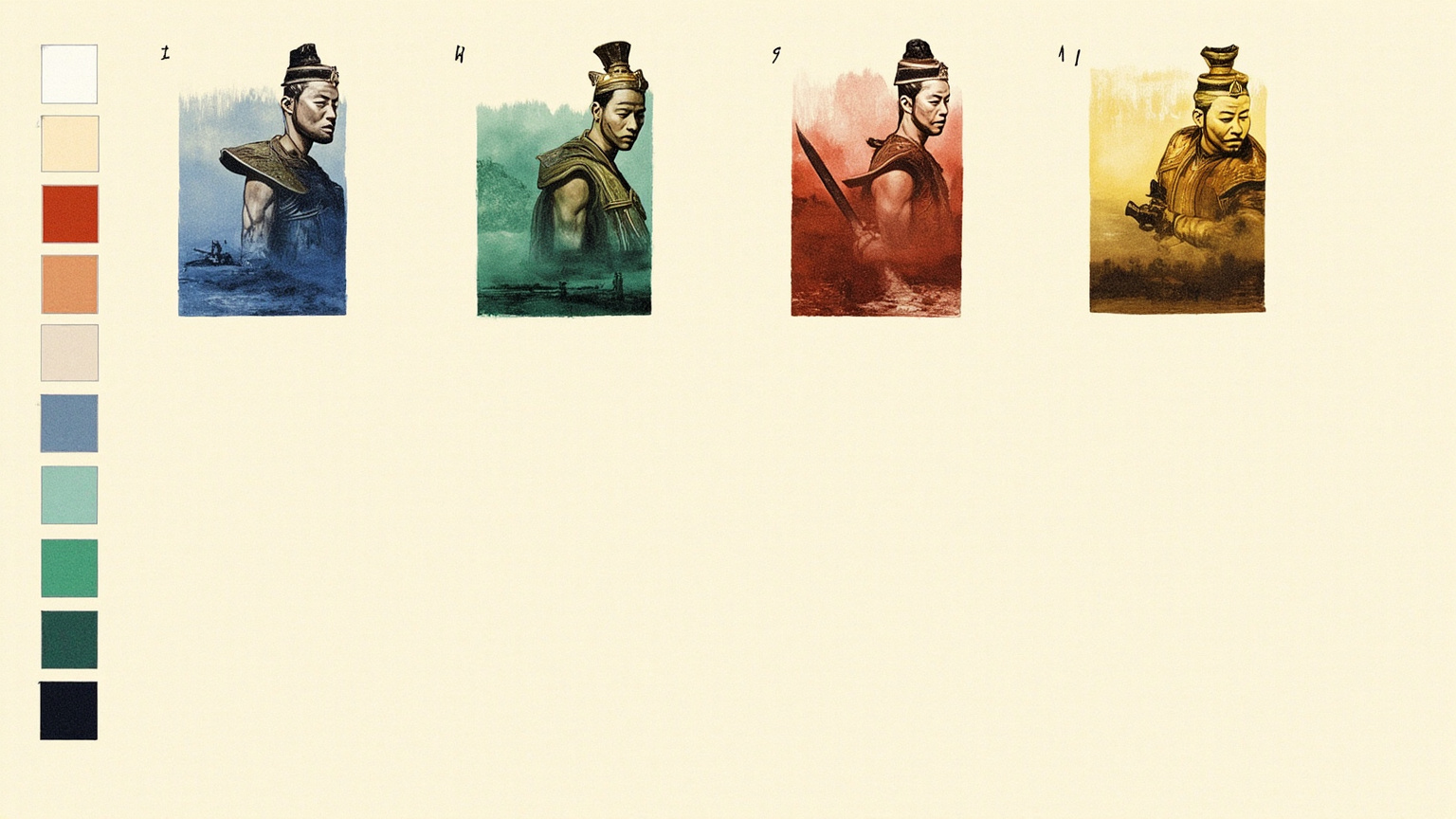
Art Direction4 plates
Before the guide was written, this book got a visual foundation — every illustration you just read grew out of it.