Hojoki: An Account of My Hut (方丈記) · Companion Guide
方丈记
一间一丈见方的草庵,装着京都千年的无常与放下
Opening: A Thatched Hut One Jō Square
In a small hut on the slopes of Mount Hino outside Kyoto, an old man sits cross-legged with a sutra spread open across his knees. Outside the door, a stream winds through bamboo. The hut is just one jō square — roughly three meters by three — with bamboo walls and thatched roof, so close you can touch the opposite wall from the doorway. His name is Kamo no Chōmei, born into a family of shrine priests, a man who could write waka, compose music, and have held a respectable position at court. Yet after fifty, he moved into this thatched hut and lived there alone. Why did he leave? What did he see when he walked in? This thin book, written over eight hundred years ago, answers exactly those two questions.
What Kind of Book Is This
Hōjōki is the signature work of medieval Japanese prose, written in the early thirteenth century by Kamo no Chōmei, a real historical figure. The book runs just over ten thousand characters, yet alongside Sei Shōnagon's The Pillow Book and Yoshida Kenkō's Tsurezuregusa, it forms Japan's three great essays. Its most famous passage — about flowing water and foam — is recited by virtually every Japanese person, and its influence stretches from hermit literature to tea ceremony and garden aesthetics. A reclusion notebook of just over a thousand characters has endured this long not because of any story, but because it articulates a fundamental way of viewing human life.
Character and World
The book has only one protagonist: the author himself, Kamo no Chōmei. In the first half he is a man of letters in the city, born into a shrine-priest family, skilled in poetry and music, making a living in the shadow of the court. In the second half he is a recluse on Mount Hino, dressed in plain clothes, drinking coarse tea and eating simple food, accompanied by Buddhist sutras and the mountain moon. Between these two halves there is no hero saving a maiden, no earth-shaking reversal — just one person walking from the secular world into the mountains.
The world he inhabits is Kyoto from the late Heian to the early Kamakura period. On the surface it remains the ancient capital of aristocratic gatherings, music and dance, elegant refinement. Beneath that surface, catastrophe follows catastrophe — great fires, whirlwinds, famine, massive earthquakes, striking every few years, burning red gates to white ground, reducing splendor to rubble. Kamo no Chōmei's early life was spent in the midst of these ruins, watching familiar neighborhoods turn to ash, then rebuilding shelters beside the ash, only to watch them burn again. This book is about a person who, in a world repeatedly reset to zero, finally chose to walk into the mountains.
The Floating Foam on the Vanishing River: The Opening Sets the Tone
The first sentence of the book pins you down — it's about water. River water flows ceaselessly, yet the water arriving is no longer the water from a moment ago. The bubbles that rise and burst on the surface don't linger even half a breath. The author uses these two things — flowing water and floating foam — to drive the word "impermanence" straight into the reader's eye. This passage has no ornate language at all, just water and foam. Yet after reading it, when you look at the streams of cars and people outside the window, your heart catches — those things that seem unchanging have in fact never stopped.
The writing's power lies in a single sentence with two surfaces: on the surface it's speaking of river water, but essentially it's speaking of human affairs. Impermanence appears frequently in Japanese literature, yet few writers can make you stop in your tracks with a single image like Kamo no Chōmei. Later, Zen temple tea rooms would hang scrolls of "flowing water" and temple gardens would feature raked gravel patterns — all borrowing from this.
Disaster after disaster: Kyoto reduced to ashes
The author then shifts focus from the water's surface to the ground, cataloging each disaster in turn: how the Angen fire burned half of Kyoto to flat earth; how the Jishō cyclone hurled houses into the air only to smash them to pieces; how the Yōwa famine left corpses scattered everywhere, with even the act of going out to beg requiring a queue; and how the Genriki earthquake turned the ground upside down. The author is not an observer of these calamities — he lived through them. He walked between the burned and collapsed beams after the fire, and made his way home across the cracked ground after the quake. These passages read not like entries in a historical record, but like someone who has just crawled out of the wreckage, still catching their breath.
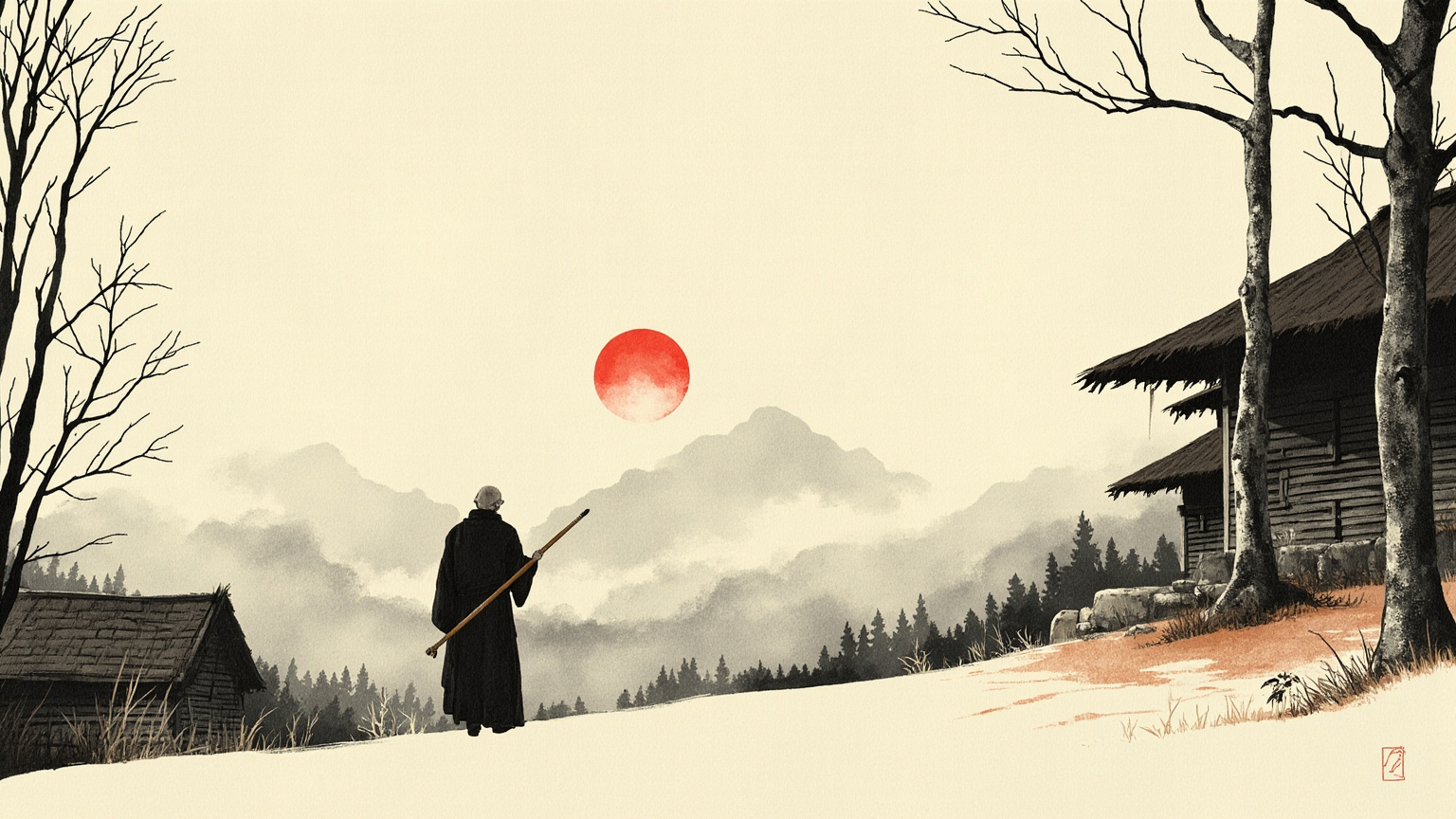
The running water of the river never stops, yet the water that passes is never the same; the bubbles on the surface form and burst, and none endure even for an instant.
逝川流水不绝,而水非原样之水;浮沫时消时生,竟无片刻常驻于人目。
金句 · 序段 · 逝川浮沫
The subtlety lies in the author's refusal to amplify the gruesome scenes. The book almost never depicts victims crying out — it only describes burned-through pillars, collapsed roofs, and cracks opening in the ground. This restraint makes the reader's skin crawl instead: the less someone cries out in pain, the more you feel it. The "mono no aware" that later critics use to describe Japanese aesthetics was first embedded in Kamo no Chōmei's restrained prose.
Abandoning the world: nothing to cling to, so he departs
Having tallied the disasters, the author writes of the thought that led him to become a monk — that nothing in this world can be clung to. To put it plainly: a home can burn, an official position can be lost, a life can end, and even the security you hold today may cease to exist the next. Since nothing can be grasped, he lets go. He first lived for a time at Ōhara, a deeper mountain forest temple, then moved to Hinoyama, where he built his own small hut with his own hands.
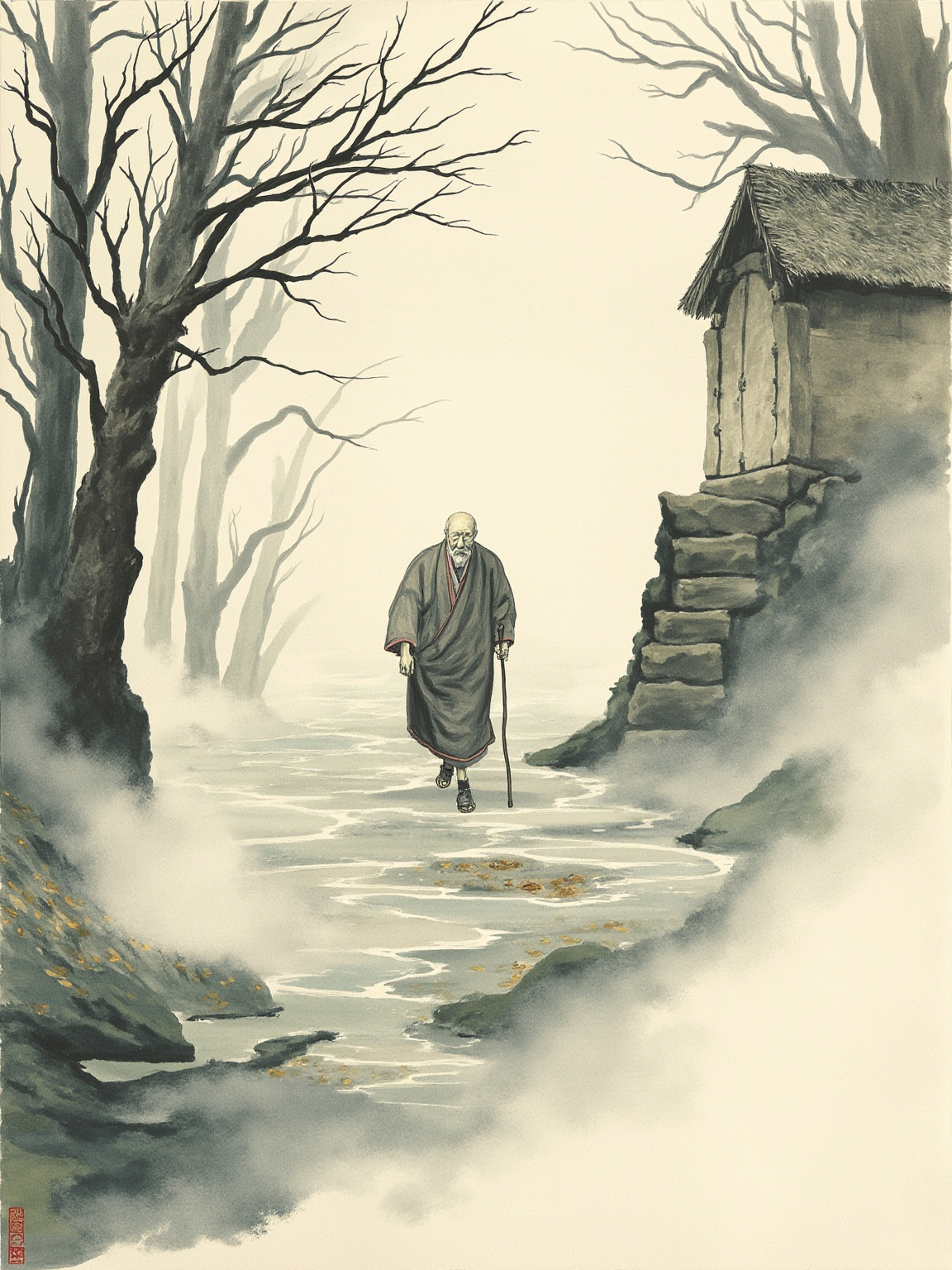
There is nothing in this world upon which one may rely. The heart too is changeable.
世间万物,皆不可凭恃;人心亦是迁流不住之物。
金句 · 离尘段 · 无可凭恃
This passage is extremely brief in the book, but it carries real weight. The author doesn't write about his struggles, his reluctance, or his goodbyes to family and friends — he simply turns and enters the mountains. This "no explanation" is also a tradition in Japanese prose: not preparing all the emotions for the reader, but leaving space for them to fill in themselves.
The Grass Hut: Bamboo Walls, Thatched Roof, a Place to Rest Body and Mind
The most famous image in the whole book is this "grass hut." A zhàngfáng is a space one zhang square — a small thatched cottage roughly three meters by three meters. The walls are woven from bamboo, the roof is thatched straw; step over the threshold and you're either inside or out. The author lists what's in the hut one by one: a Buddha statue, sutras, a qin, a stove, firewood. Not much — just enough for one person to get by.
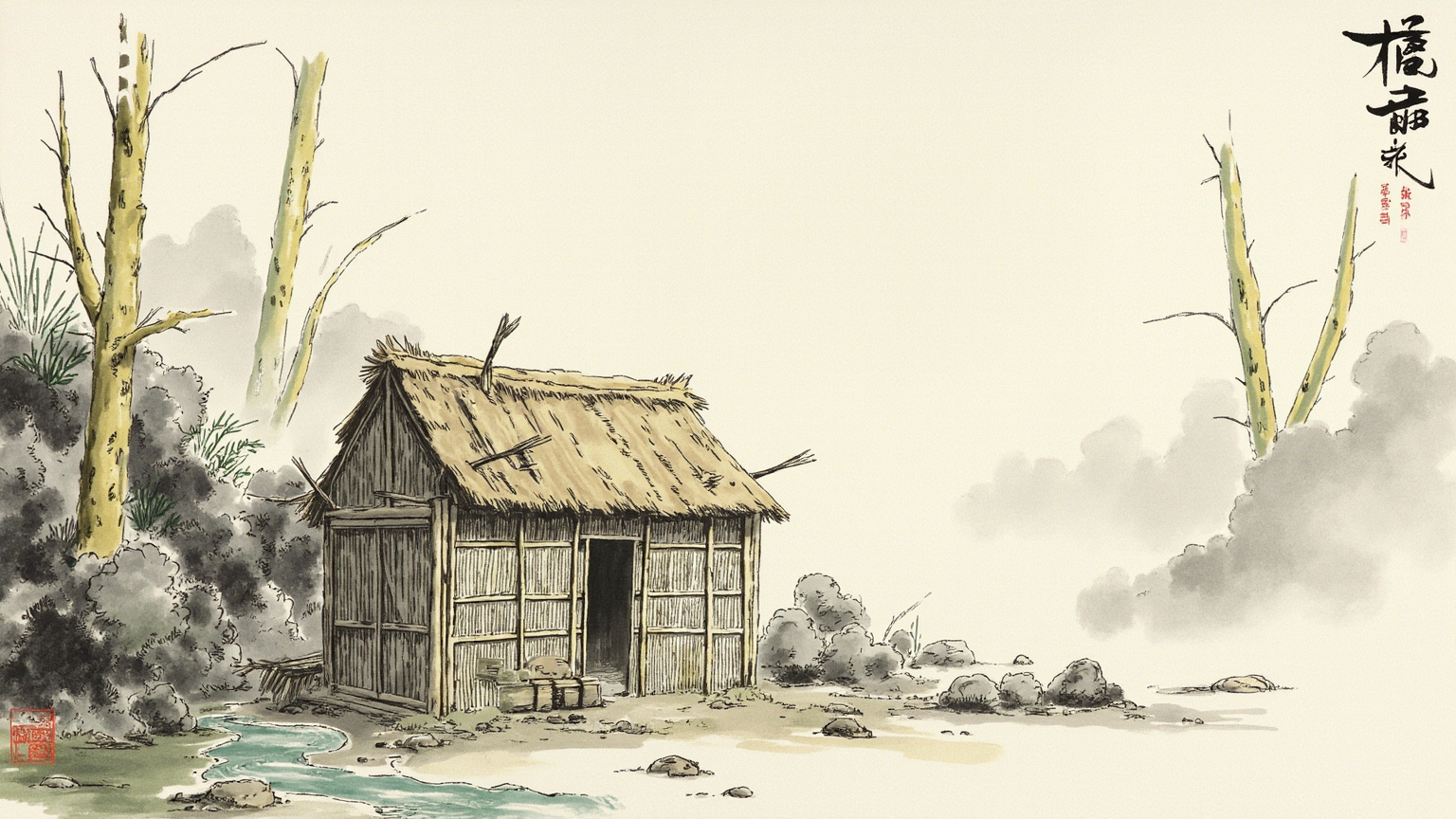
A hut one ken square—bamboo walls, a thatched roof—and within it a Buddha-image, a sutra, a koto. To lean against the pillow and listen to the wind in the bamboo: this too is a small pleasure.
方丈竹墙茅顶,置佛像一尊、经卷数卷、琴一张。枕上听风穿竹过,此亦小小清欢。
金句 · 方丈段 · 草庵小乐
The beauty here is the contrast. Those aristocratic mansions in Kyoto had dozens of rooms, hundreds of servants. Kamo no Chōmei spent his whole life moving through places like that, and the dwelling he finally chose for himself was just one zhang square. The smaller the hut, the clearer the world outside becomes — wind threads through the bamboo gaps, rain on the thatched roof lets you count the drops, and at night a glance upward shows the mountain moon. Buddhist teaching says "less is gain," and he made this idea lived reality in a small hut.
Observing the Four Seasons: Alone with the Stream Moon, Reading and Playing the Qin
After moving into the grass hut, the author begins describing the four seasons. Spring brings scattered wildflowers along the stream; summer fills the mountain with cicada song; autumn, red leaves drifting across the water; winter nights, snow weighing on the thatched roof, moonlight reflected on the ground. These scenes are rendered extremely briefly, extremely lightly — a few sentences cover a whole year — yet he doesn't miss the physical sensation of "being within it": when he plays the qin at night, the moon moves from the east wall to the west; when snow seals the mountain, he reads by its light until dawn.
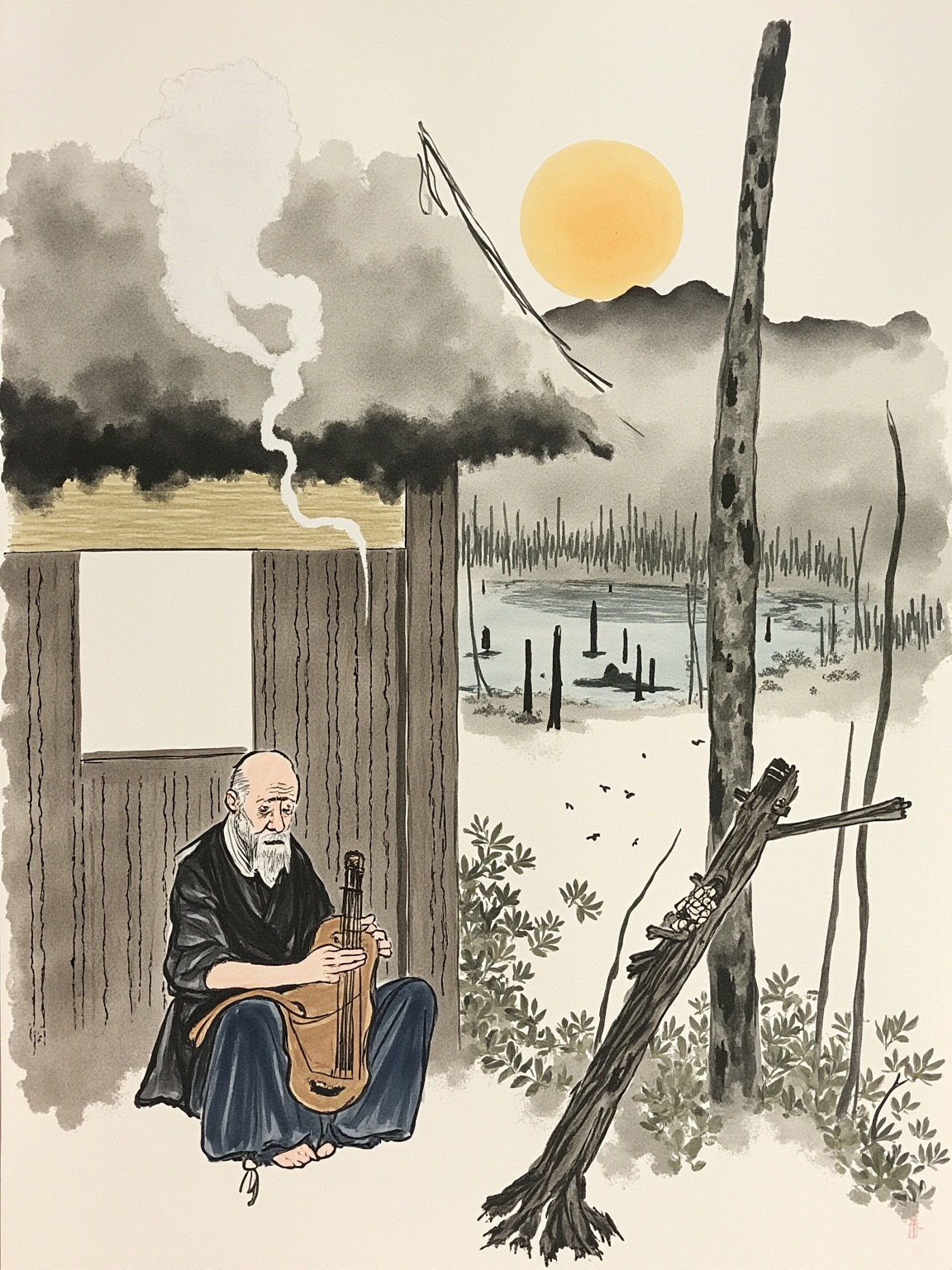
My body remains in the hut of one ken, yet my heart ranges through the heavens and the earth.
身在方丈一丈之内,心已游于天地之间。
金句 · 四时段 · 心游天地
This section has a quiet line that gets quoted often: the body is in the grass hut, but the heart is between heaven and earth. A person lives in a three-meter square hut, yet because he's released his attachment to size, the hut becomes heaven and earth. The writing reads calmly, but the work behind it runs deep.
Even the Hut is Attachment: Even Reclusion Must Be Let Go
In the book's final section, Kamo no Chōmei suddenly turns and asks himself: I'm now living in this small hut, playing the qin, reading, watching the moon — I look carefree, but is my heart really free of attachment? Or have I made "escaping the world" itself a new kind of attachment — attachment to purity, attachment to solitude, attachment to the zhàngfáng? This question raises the book's entire scope a level higher. Earlier writers on reclusion mostly stopped at "then he withdrew to the mountains and finally found peace." Chōmei won't stop. He asks further: must even peace itself be let go?
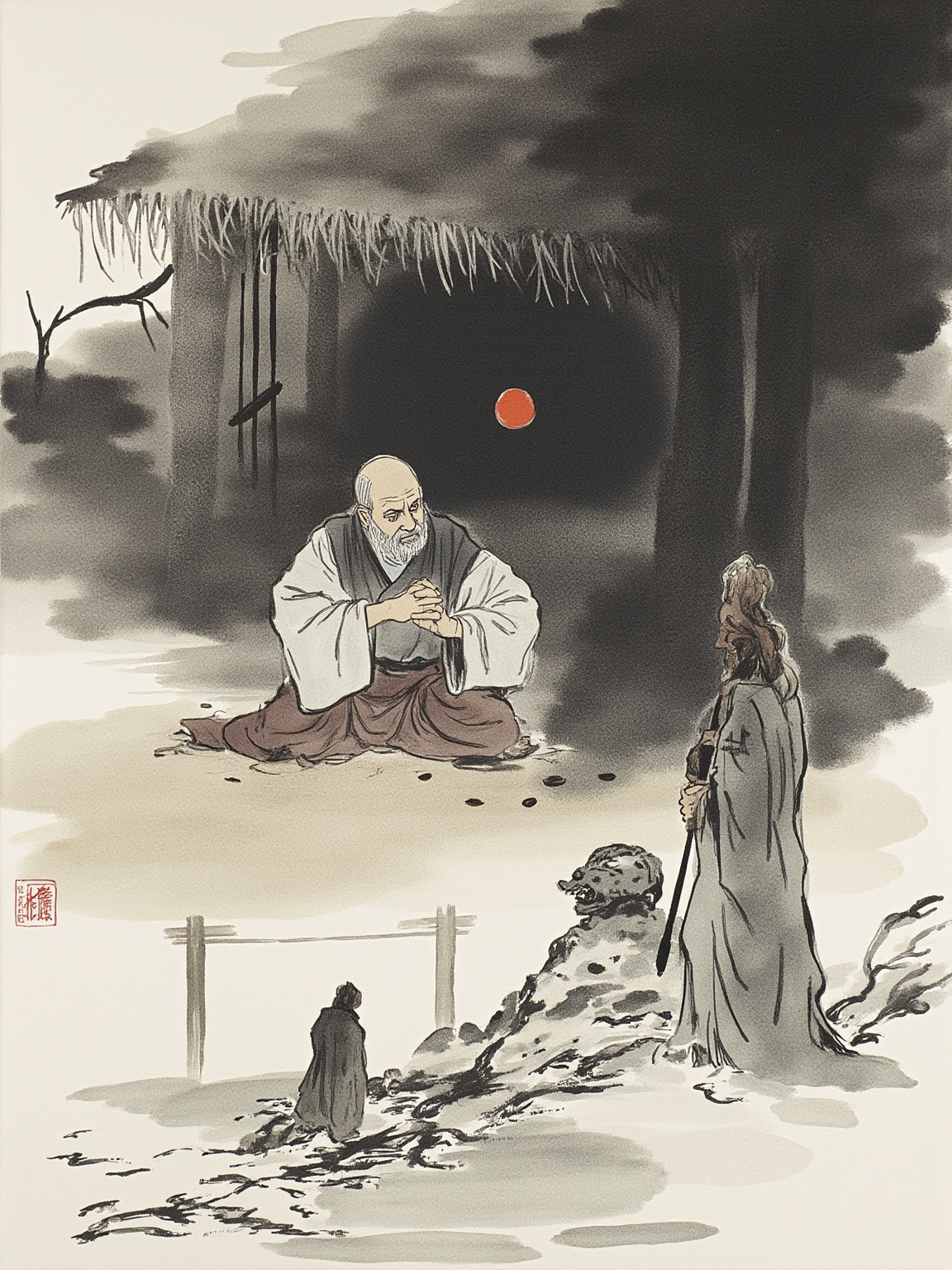
Even this thatched hut of one ken—this retreat itself—has the heart grown attached to it?
便是这一丈茅庵、这份逃世之心,人又安知不曾执著于中?
金句 · 末段 · 方丈亦执
This single stroke lifts Hōjōki beyond ordinary hermit literature. It's no longer just about "where to place your body" but about "where to place your mind"—and the endpoint of that peace is where even the word "peace" itself loses its grip. The sharpness of this reflection, read more than eight hundred years later, still makes one sweat.
What This Book Really Says
On the surface it's talking about impermanence—everything in the world is changing, nothing can be relied on. But what it really says is what you do after impermanence. Kamo no Chōmei's answer is neither pessimistic nor is it about giving up. It's a series of "letting go": letting go of attachment to prosperity, letting go of attachment to security, letting go of attachment to reclusion, and finally letting go of letting go itself. This layered onion-peeling approach turns a slim book into a spiritual manual on how to live.
For today's readers, Hōjōki happens to arrive in an anxious age: industries are changing, cities are changing, relationships are changing, nothing called "stable" can be trusted. Kamo no Chōmei, eight hundred years ago, gave us no solutions, but he demonstrated a stance—when everything is flowing, you don't have to flow with it, nor do you have to cling to anything. You can stand at the door of a small hut, watch the water pass, and ask yourself: right now, how much have I actually let go?
The hardest thing is not moving into a one-tatami hut, but admitting that even this hut is just another kind of attachment.
Why You Should Still Read the Main Text
The commentary gives you a map, but the main text is the land. Hōjōki is only about ten thousand characters, a thin volume, but once you read it you'll find the commentary can't capture the spaces between the words—that restrained, unadorned, almost sketch-like style is itself an experience you need to feel personally. The opening passage about flowing water and foam, hearing someone else describe it is one thing, turning to it yourself late at night is quite another. And in the Kyoto catastrophe section, the author doesn't write about the suffering, only about the remains—that sense of "not saying matters more than saying," that delicate touch, can only truly move you in the original text.
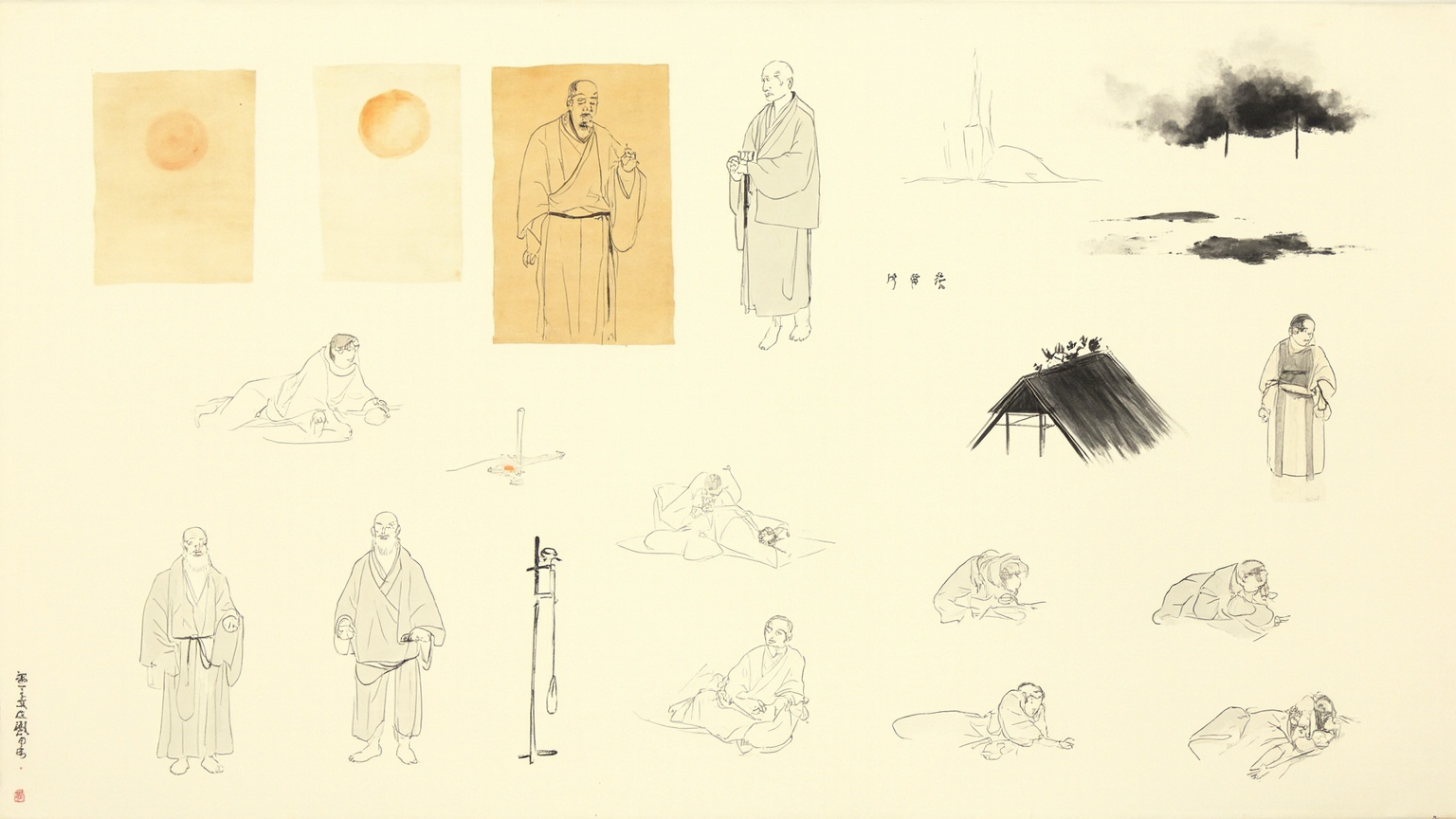
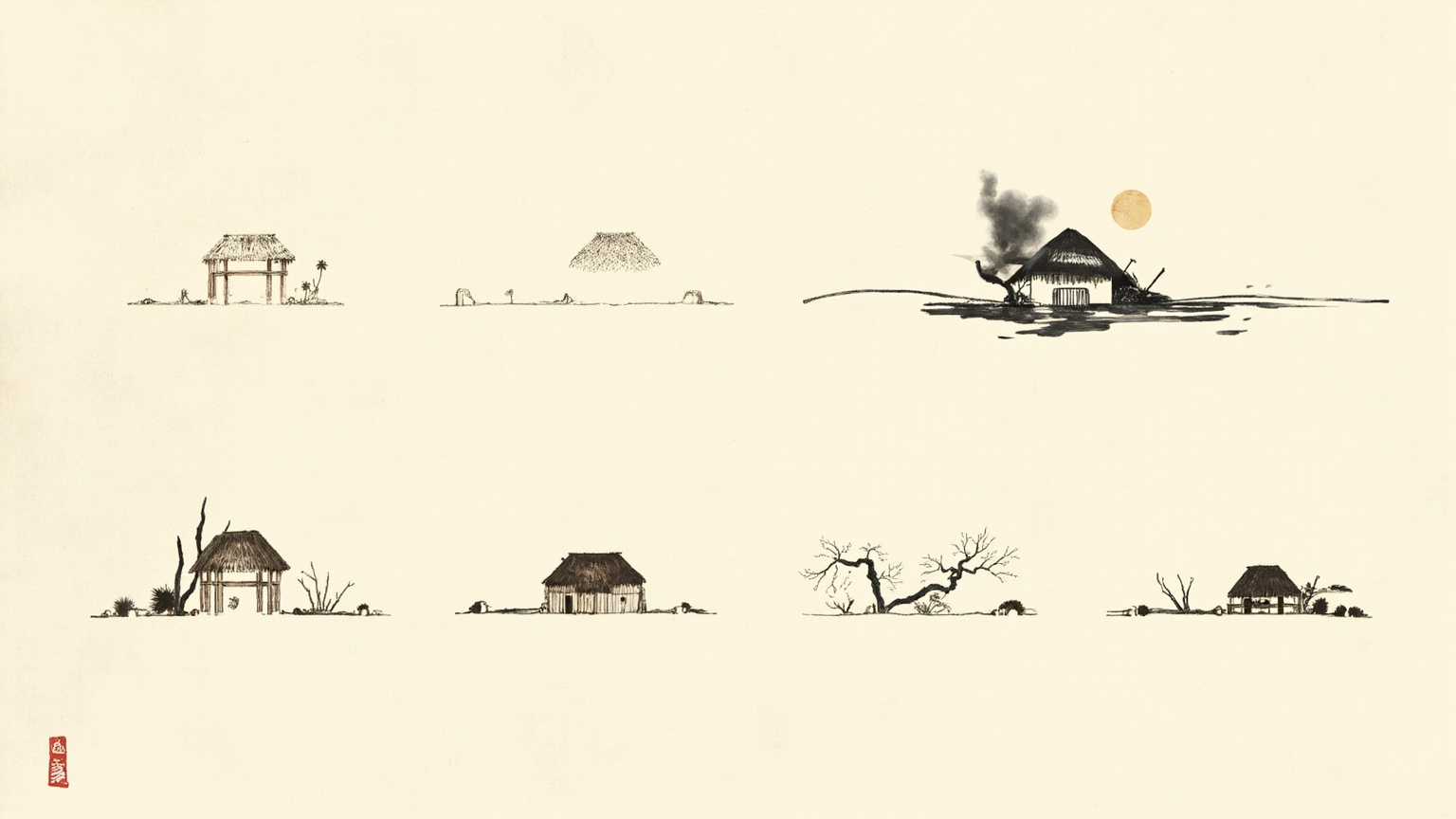
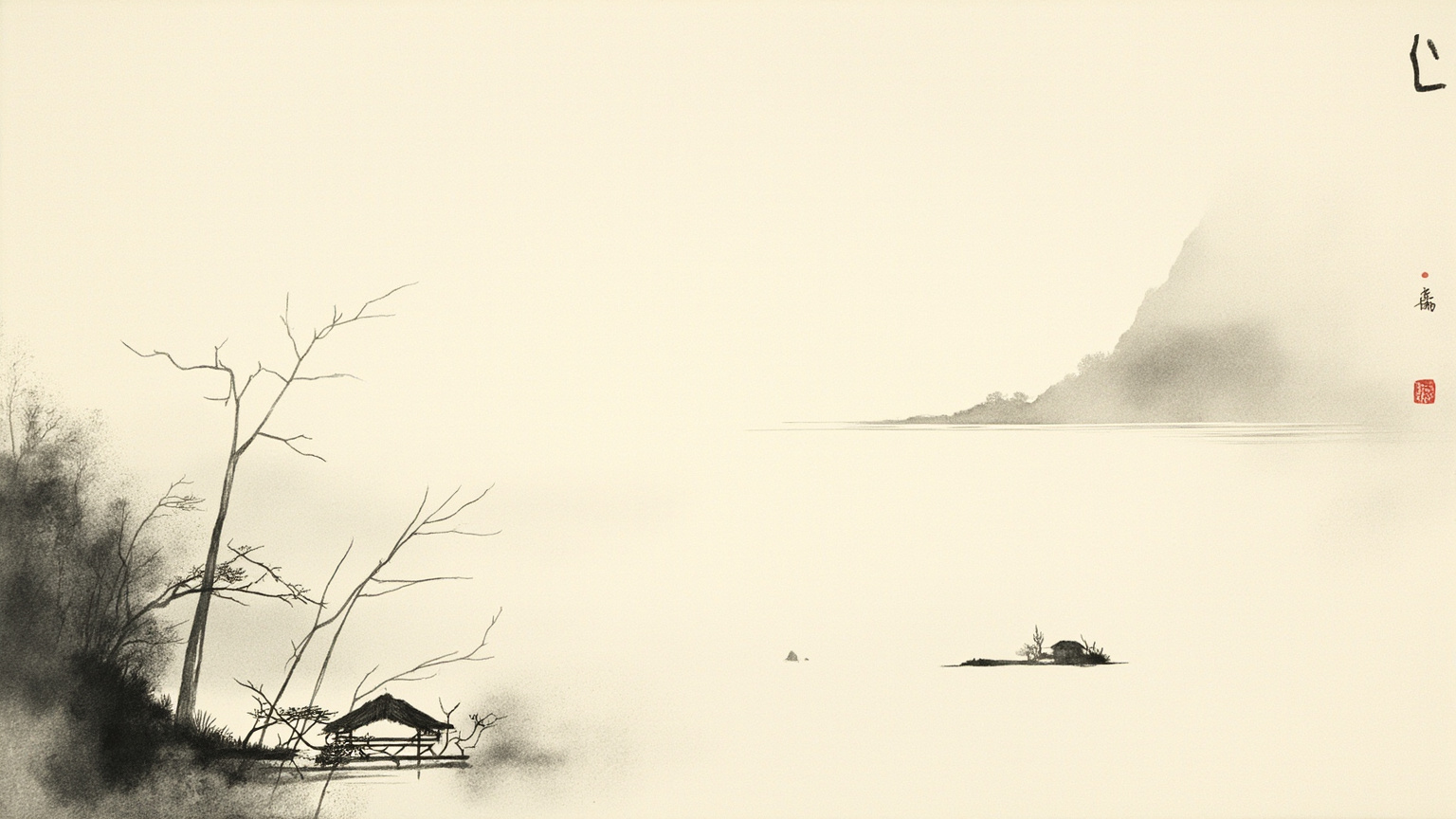
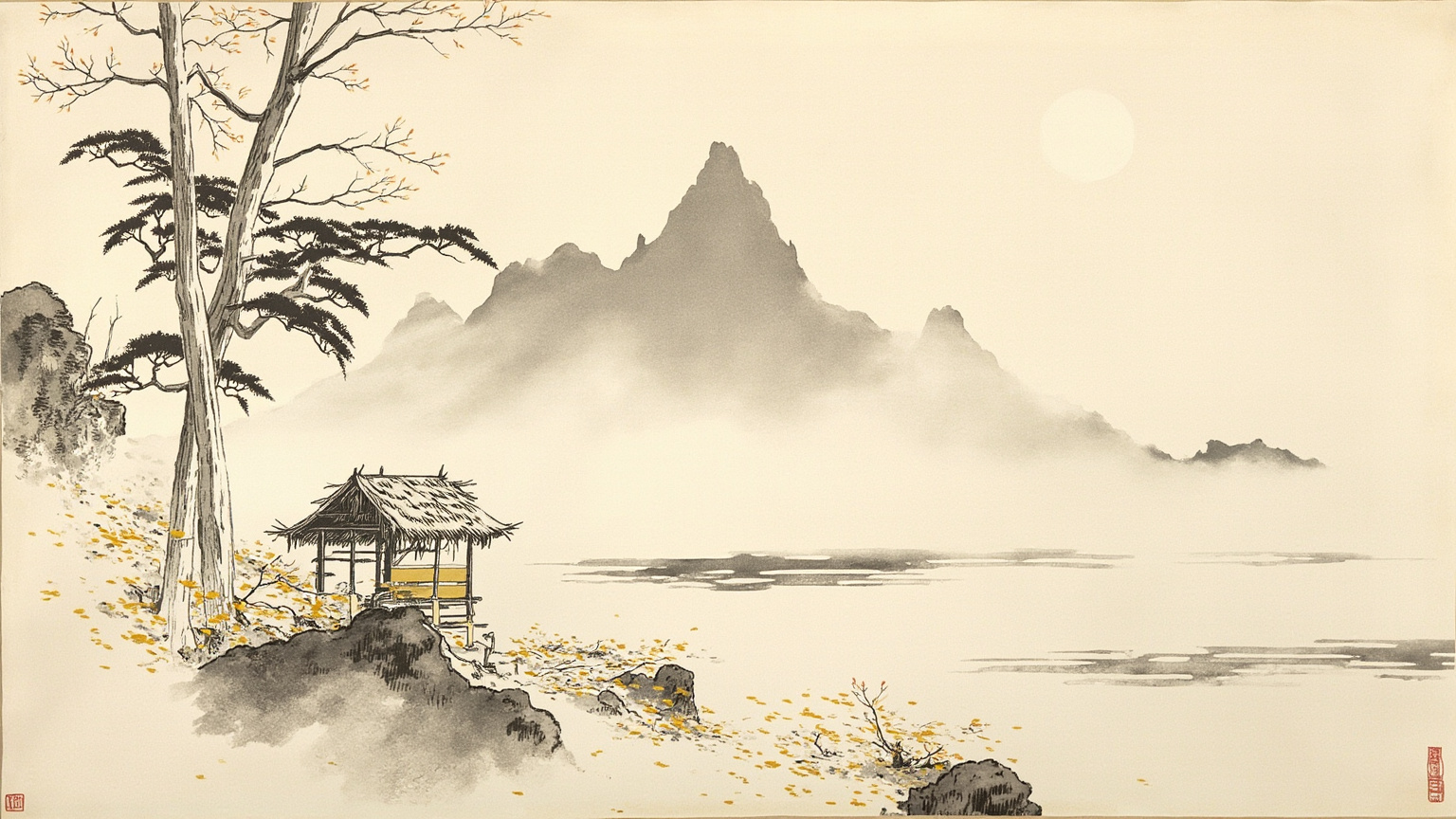
Art Direction4 plates
Before the guide was written, this book got a visual foundation — every illustration you just read grew out of it.