Adventures of Huckleberry Finn · Companion Guide
The Adventures of Huckleberry Finn
A thirteen-year-old wild boy and a runaway slave drift down the Mississippi on a raft, deeper into slave country — everyone he knows has taught him that helping Jim escape means hell; he thinks it over, and tears up the letter that would turn Jim in.
The Opening: A Boy's Dilemma
A letter sits in your pocket, already written. You're thirteen, you've never really been to school, and the one lesson drilled into you is that helping a slave escape means going to hell. Hand the letter over, and you're back in that respectable, safe world. But your companion is dozing against the raft, certain you're the only friend he has on earth. You hold the paper, look at it a while — and tear it up. This is the novel's most famous scene. For more than a hundred years it has stood as the moment America's conscience wakes up, yet when it happened there was no heroic narration, just a gust of wind off the river and a boy's conscience, moving.
What Kind of Book Is This
It's a novel by Mark Twain, published in 1885, billed as the sequel to The Adventures of Tom Sawyer, though at heart it's nothing like it. Hemingway's famous verdict — that all modern American literature comes from one book — was about this one, not the Tom Sawyer book. Told entirely in the first person, in the vernacular of a white boy from the backwoods, it was the first time American literature spoke in a genuinely American voice. It has also become, thanks to its unsparing satire of slavery, one of the most frequently banned and most frequently taught books in American classrooms. To read it right, you first have to accept one thing: this is not a lighthearted childhood adventure.
Characters and World
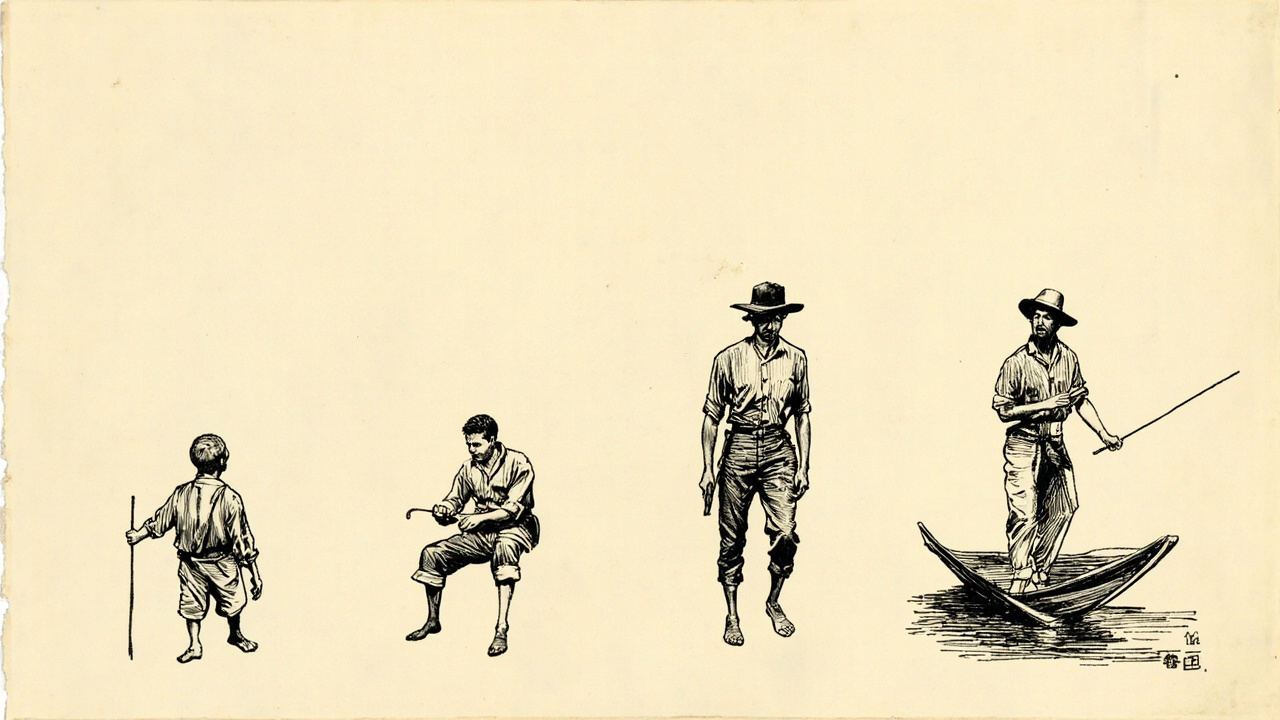
The narrator is Huckleberry Finn, thirteen or fourteen, the son of the town drunk, ragged and untaught, taken in by the Widow Douglas and civilized, as she calls it, by her strict, slaveholding sister, Miss Watson. At the other pole of the book is Jim, Miss Watson's grown slave, who runs off to escape being sold downriver and torn from his wife and children. A handful of other figures matter: Huck's drunken father, Pap, who comes back for the six thousand dollars and locks his own son in a cabin by the river to beat and starve him; Tom Sawyer, whose head is stuffed with the romance of adventure books; and two drifting confidence men who commandeer the raft midway through and style themselves fallen aristocracy — known only as the duke and the king.
The story is set before the Civil War — the 1830s and '40s — along the Mississippi, where slavery is still the law of the land, and the river is the story's central stage: an artery of freedom, of flight, of loneliness, and also the current that carries the two of them deeper and deeper into slave territory. On shore wait blood feuds, lynch mobs, con men, and fake nobility; on the water there's a raft, the stars, and the occasional campfire. Twain builds the whole book on that contrast between the two banks.
The Plot
The novel picks up where the last one left off. Huck, now six thousand dollars richer from Tom Sawyer's cave treasure, has been taken in by the Widow Douglas, where the rules are grace before meals, clean clothes, and lessons. He can't stand it. But escaping that civilizing only lands him in a worse pit: his father, Pap, comes back to town for the money, locks Huck in a cabin in the woods, beats him, and keeps him filthy and confined. Huck stages his own murder — smashes up the cabin to look like a robbery gone bloody — then slips out the window and hides on Jackson's Island. Craft note: Twain's opening only looks like the leftover noise of the last book. From the very first paragraph it's already locking in Huck's voice — colloquial, stubborn, impatient. He isn't a hero; he's a boy, and every ounce of drama in this novel has to pass through his eyes.
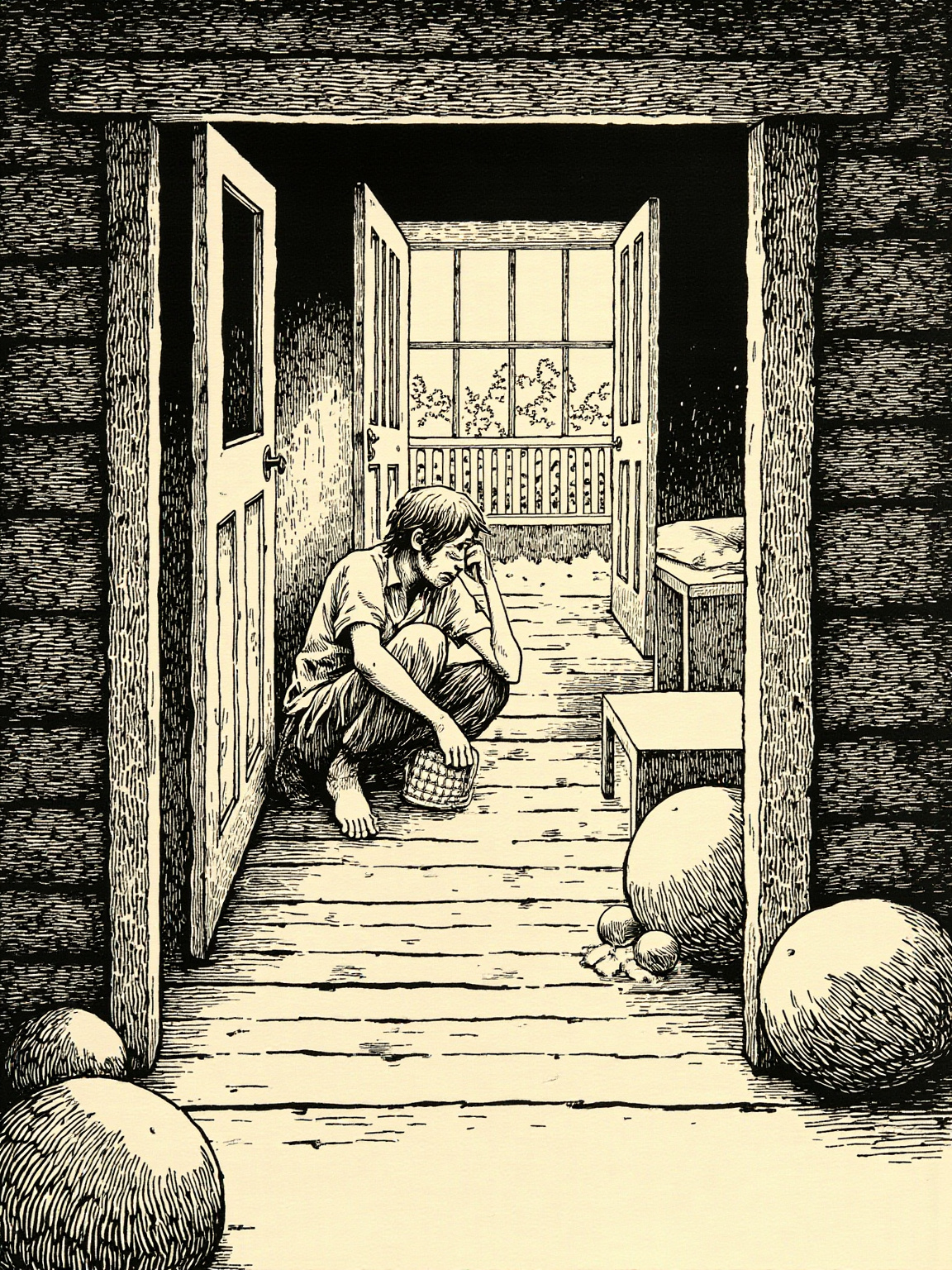
The Widow Douglas she took me for her son, and allowed she would sivilize me; but it was rough living in the house all the time
道格拉斯寡妇认我做她的儿子,说是要把我教化成文明人;可整天憋在那屋里过日子,实在难受。
Original line · Chapter 1 · "Civilizing" at the widow's house
Jackson's Island sits next to a swamp, and by rights there should be nothing on it but wild berries and snakes — but the next morning Huck wakes up to find someone sitting across from him: Jim. Jim has run off in the night after overhearing that Miss Watson means to sell him downriver, away from his wife and children forever. The two of them are wary of each other at first — Jim is afraid Huck will turn him in, and Huck's head is still churning with the lesson that helping a slave means damnation. But soon they're eating together, hiding together, watching the far shore together. Jim rarely complains; he comes across more like an adult than anyone else in the book — steady, devoted to his family, almost painfully good.
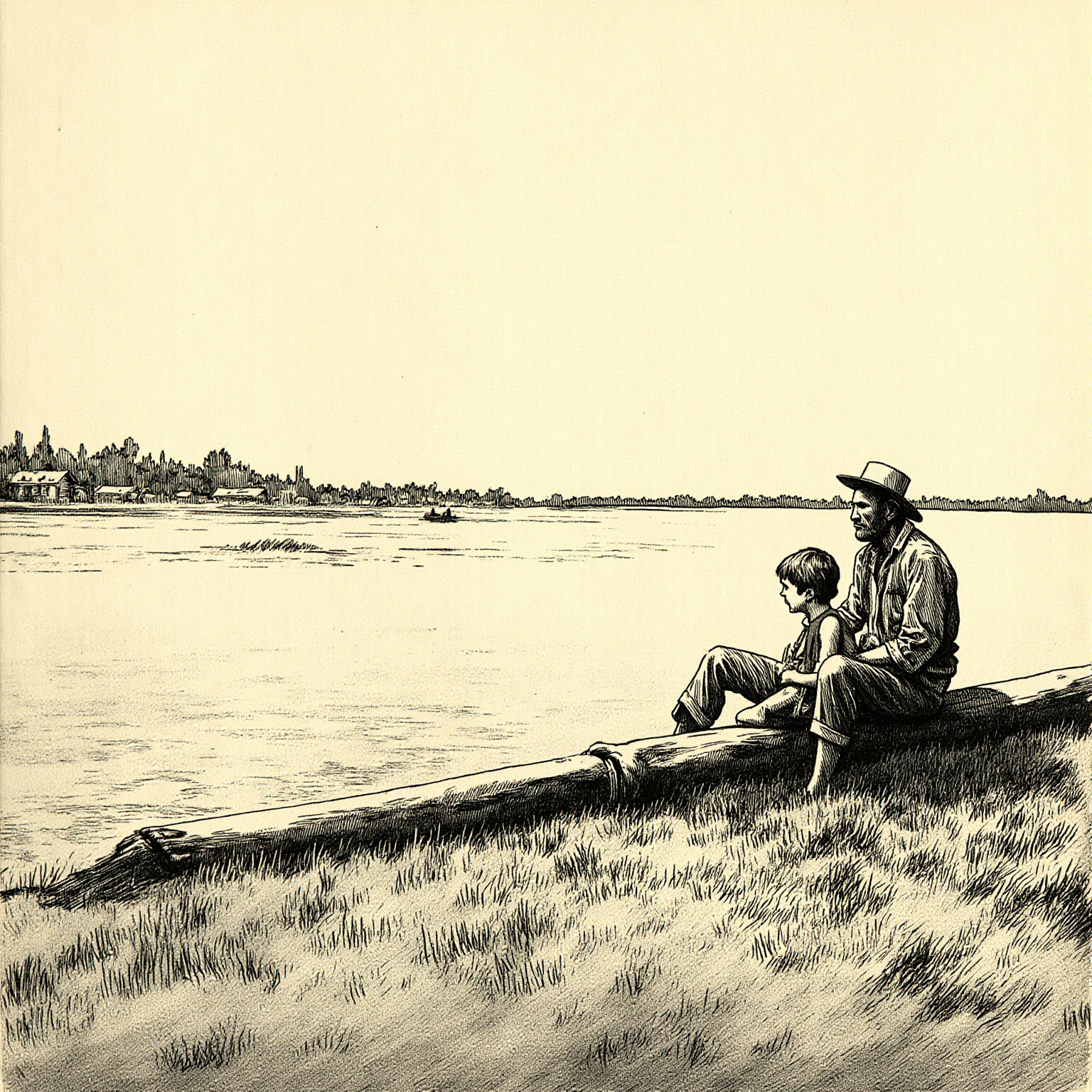
I owns mysef, en I's wuth eight hund'd dollars.
我如今归我自己了,我值八百块钱哪。
Original line · Chapter 8 · Jackson's Island, Jim reckons his own worth
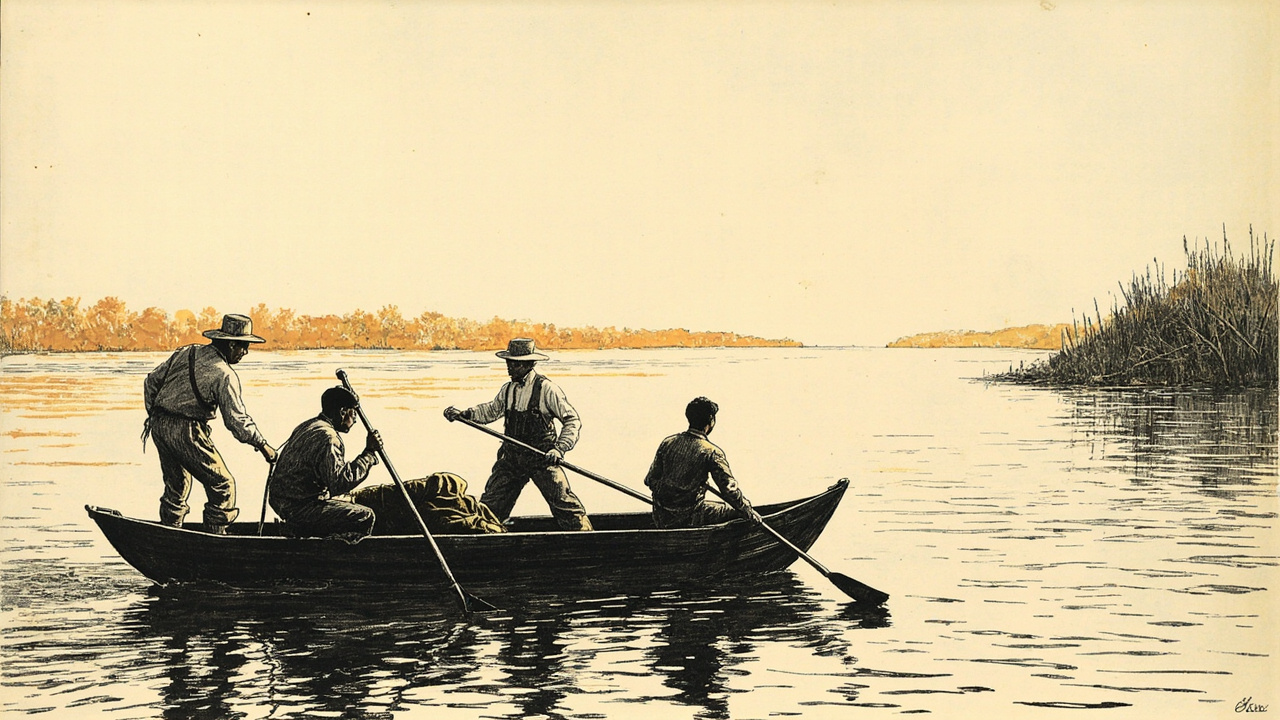
A few days later they decide to build a raft and run it down the Mississippi to Cairo, the town at the mouth of the Ohio River, and from there make their way into free territory. This is the loveliest stretch in the whole book: lying flat on the raft watching the sky by day, watching the lights of riverside towns slide past by night, Jim talking about his family, Huck cracking jokes, the current carrying them steadily north. For the first time, two runaways get to enjoy days when they don't have to bow to anyone.
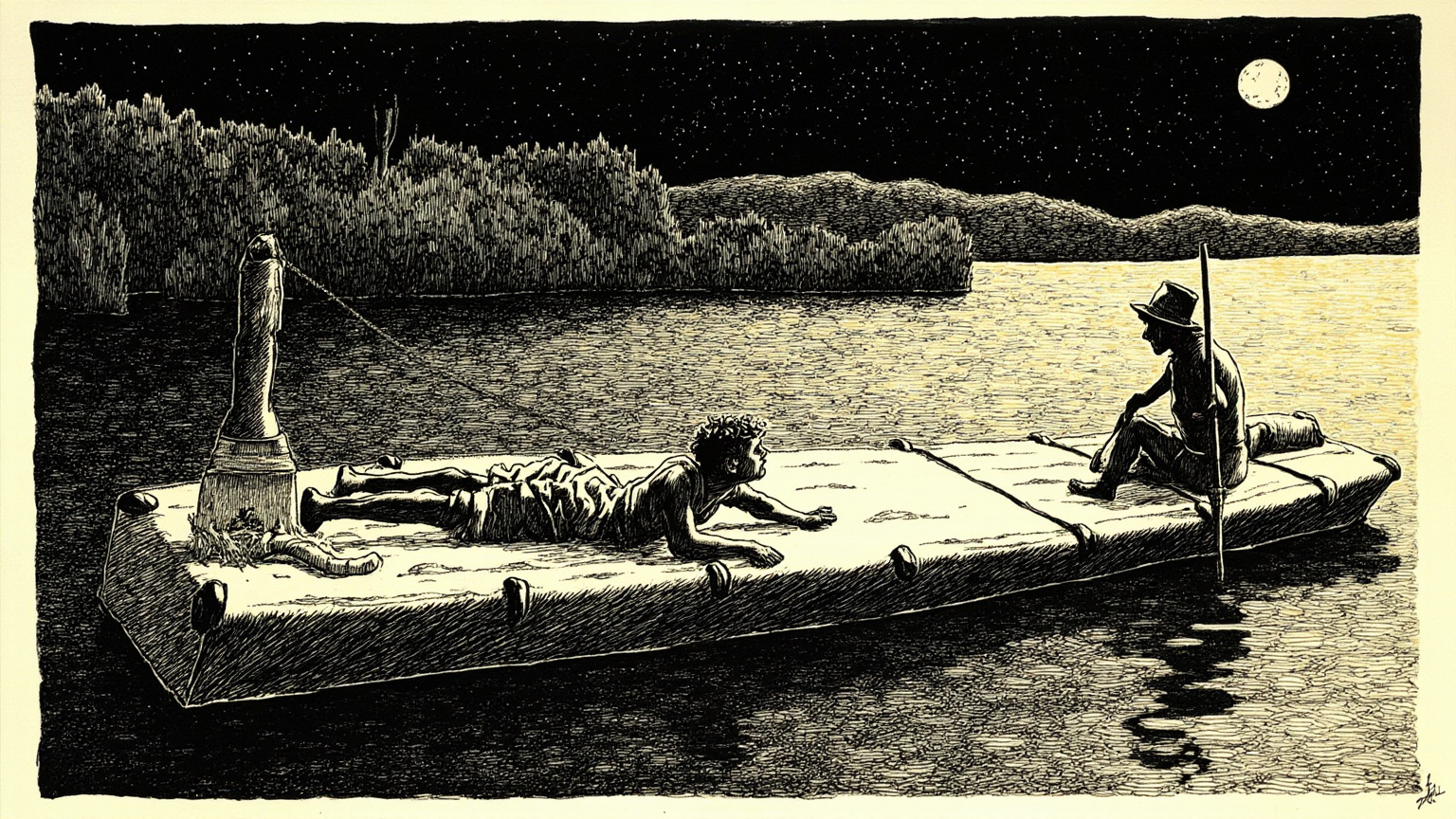
We had the sky up there, all speckled with stars, and we used to lay on our backs and look up at them, and discuss about whether they was made or only just happened.
头顶那片天缀满了星星,我们常仰面躺着看,争论它们到底是被造出来的,还是碰巧就有了。
Original line · Chapter 19 · The starry sky over the raft
Missing Cairo: The Irony of Freedom
Then fate plays a cruel joke on them. On a foggy night, Huck takes the canoe out to find the rope for tying up the raft, and by the time he feels his way back, Jim is gone and so is the raft — the fog has split them apart, and the two of them spend the whole night searching for each other on a black, silent river. By the time they're reunited, Cairo is behind them. This is the novel's most decisive turn in geography: the raft has in fact been drifting south the whole time, and once they pass the mouth of the Ohio, far from leaving slave country, they're being carried deeper into it, with less and less way back. Craft note: Twain lets his two heroes win the means and lose the end — the reader and the boys both assumed north meant safety, and it turns out their sense of direction was backwards. The whole book's tragic tension gets quietly buried in that one night.
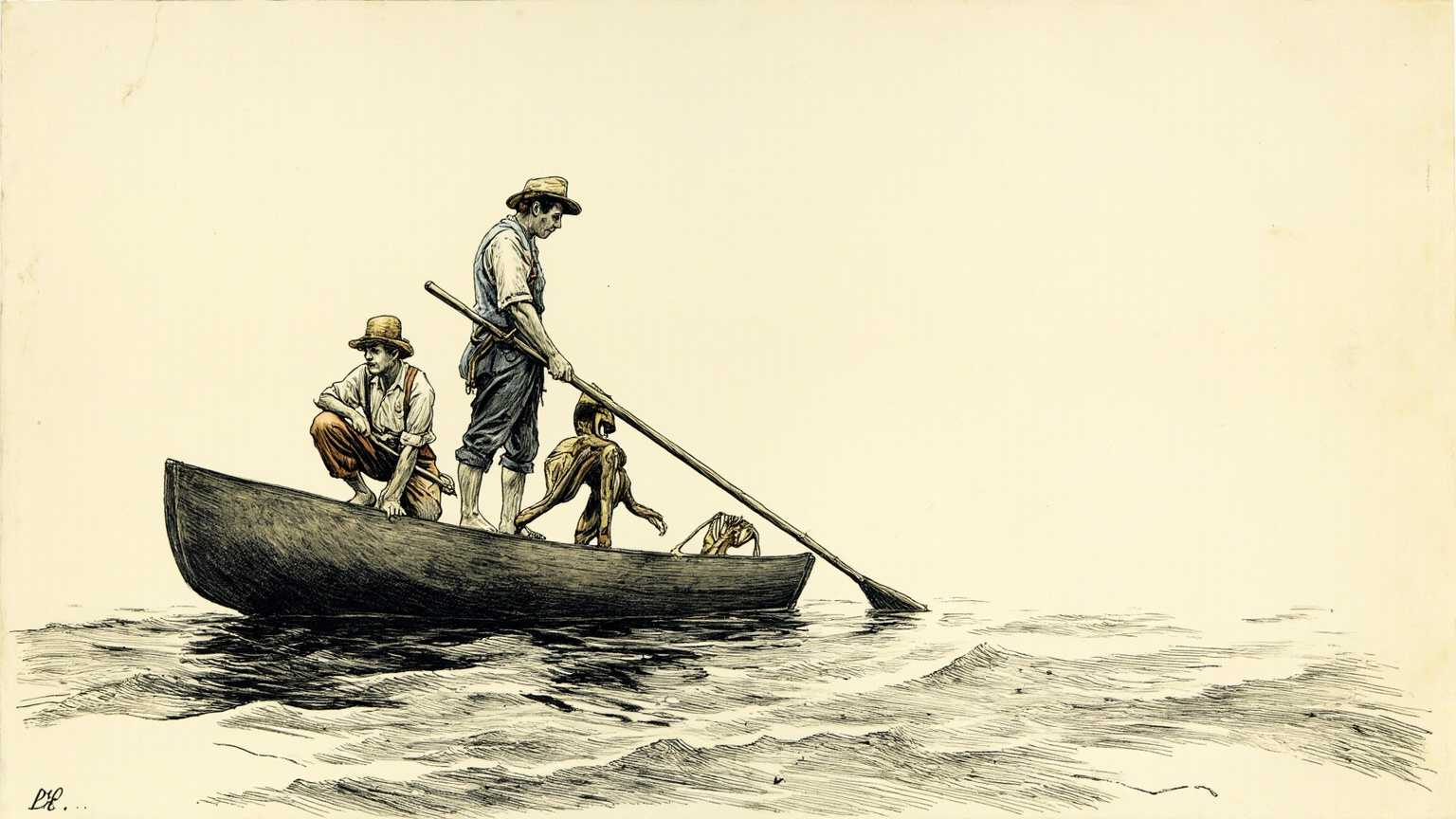
I shot out into the solid white fog, and hadn't no more idea which way I was going than a dead man.
我一头冲进白茫茫的浓雾里,往哪儿漂心里没半点数,跟个死人一样。
Original line · Chapter 15 · The foggy night, lost from Jim on the river
The Civilization on Shore
From here on they're forced ashore for supplies and raft repairs, and the world on land grows in, patch by patch. First comes the Grangerfords — a respectable Southern family with oil paintings, a library, and a boy Huck's age, Buck, who carries a gun wherever he goes. Respectable as they look, the family has a generations-old blood feud with the Shepherdsons across the river — nobody even remembers why anymore, they just shoot on sight. Huck watches Buck die on the boards of his own porch. There's no heroic vengeance in the scene, only senselessness. Right after comes another set piece in a river town: a drunk named Boggs mouths off at a colonel in the street and is dead on the ground a moment later; the town works itself up for a lynching, but Colonel Sherburn stands alone on his porch steps and tells the mob, in effect, that they're nothing but a pack of gutless cowards. The mob just dissolves. Craft note: putting these two scenes side by side is Twain at his most ruthless. You'd expect savagery to live with the runaway-slave story, and instead he tells you: the backbone of shore-bound civilization — honor, family, mob justice — is hollow all the way through. The real savagery is on land, not on the river.
All Right, Then, I'll Go to Hell
Now comes the moral centerpiece. A notice goes up offering a reward for the runaway, and Huck's instinct is to show it to Jim — except this is the same Jim who's been family to him on the river all these days. That night he sits with two arguments fighting it out in his head: on one side, the lesson drilled into him that helping a slave is a crime worth hell; on the other, the image of Jim on the raft, the tenderness in his voice whenever he talks about his family. In the end Huck picks up his pen and carefully writes out a letter turning Jim in — looks at Jim once more — and tears it up. All right, then, he tells himself, I'll go to hell. Craft note: there's no speech here, no tears, just a boy at a candle wrestling with a piece of paper. And yet it comes as close as anything in American literature to defining individual conscience overruling the law of society — the very reason Hemingway called this the source of all modern American writing.
But the show isn't over. Two drifting con men — the duke and the king — get picked up by Huck along the way and simply never leave, working every scam they can think of. First they stage a ridiculous show called The Royal Nonesuch in a river town, take the audience's money, and skip town; then they pose as the English uncles of two orphaned sisters, trying to swindle away the girls' inheritance. Huck sees through it but can't fully stop it in time — at the last moment he hides the stolen money inside a coffin so the con men can't find it. Their filthiest act comes last: for a little cash, they sell Jim off, in secret, to a farm downriver. By the time Huck discovers the raft empty and Jim gone, it's already too late — all he can do is chase them down to a place called the Phelps farm to find Jim.
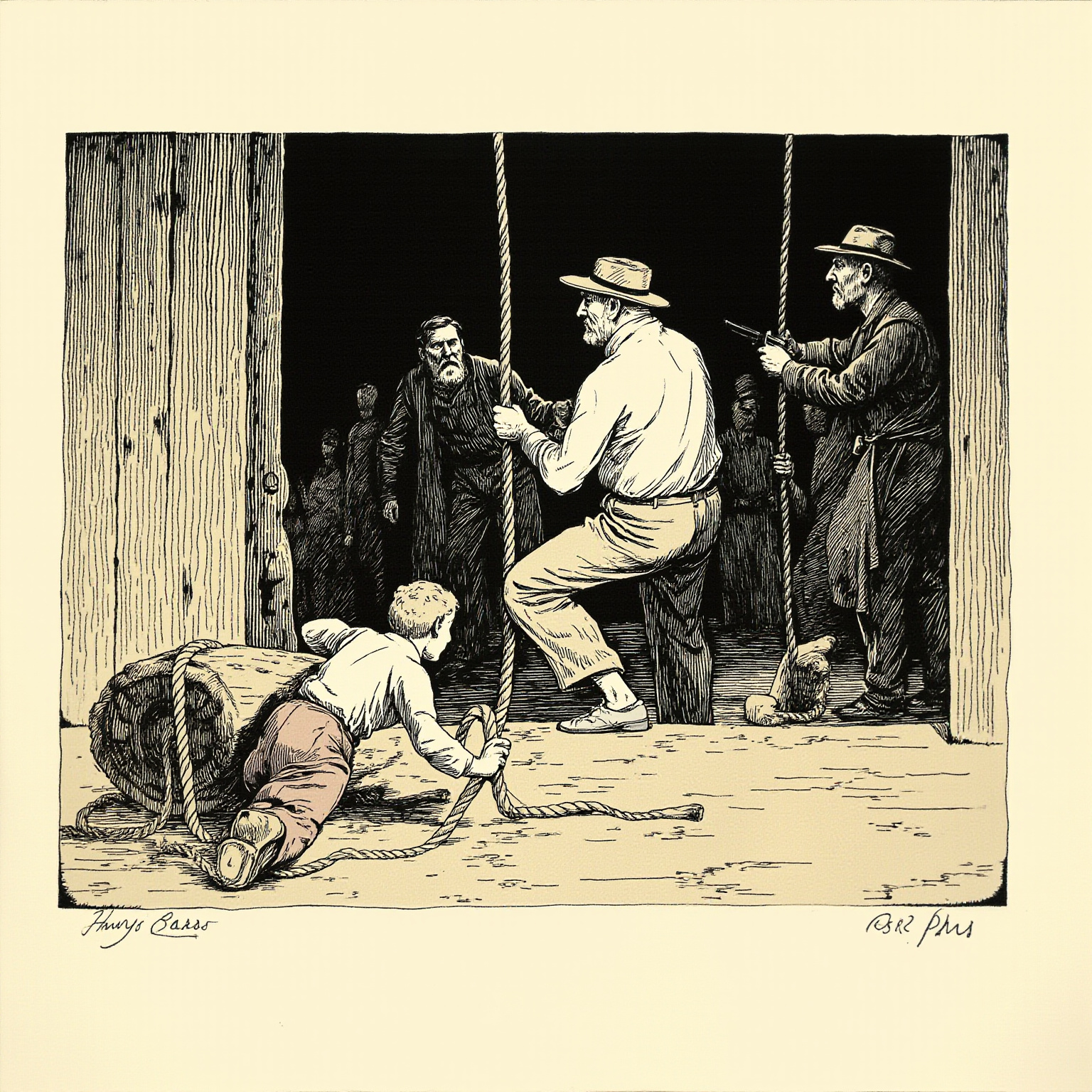
It didn't take me long to make up my mind that these liars warn't no kings nor dukes at all, but just low-down humbugs and frauds.
我没花多久就断定:这两个撒谎精根本不是什么国王和公爵,不过是下三滥的骗子和冒牌货。
Original line · Chapter 19 · Seeing through the "king" and the "duke"
The Absurd Evasion and the Novel's Closing Irony
Huck tracks Jim to the Phelps farm and is mistaken for Tom Sawyer, who's expected any day — so he simply plays along as Tom, enjoying a few dozen hours of not being beaten under a borrowed name. The real Tom Sawyer arrives soon after, and the first thing he learns is that Jim was actually freed months ago in Miss Watson's will. So what does Tom do? His eyes light up — this is the perfect chance for a grand escape. Working entirely from the romantic adventure novels he's read, he turns what should have been a quiet, quick release into an elaborate medieval-knight jailbreak: tunneling, rope ladders, coded messages, a hunger strike, until the whole business makes enough noise that neighboring farms come out just to watch.
Just before the escape, Tom takes a bullet in the leg, and Jim gives up his own hard-won freedom to stay and nurse him — for which the whole household takes him for a madman. What nobody in the house knows yet is two things: Jim has been a free man all along, and Pap, the father who once beat his own son half to death in a cabin by the river, has already turned up dead in a house drifting downstream. In the end, Huck is once again facing the Widow Douglas's plans to civilize him — but this time he doesn't wait for her to start. He speaks first: he means to light out for the Territory.
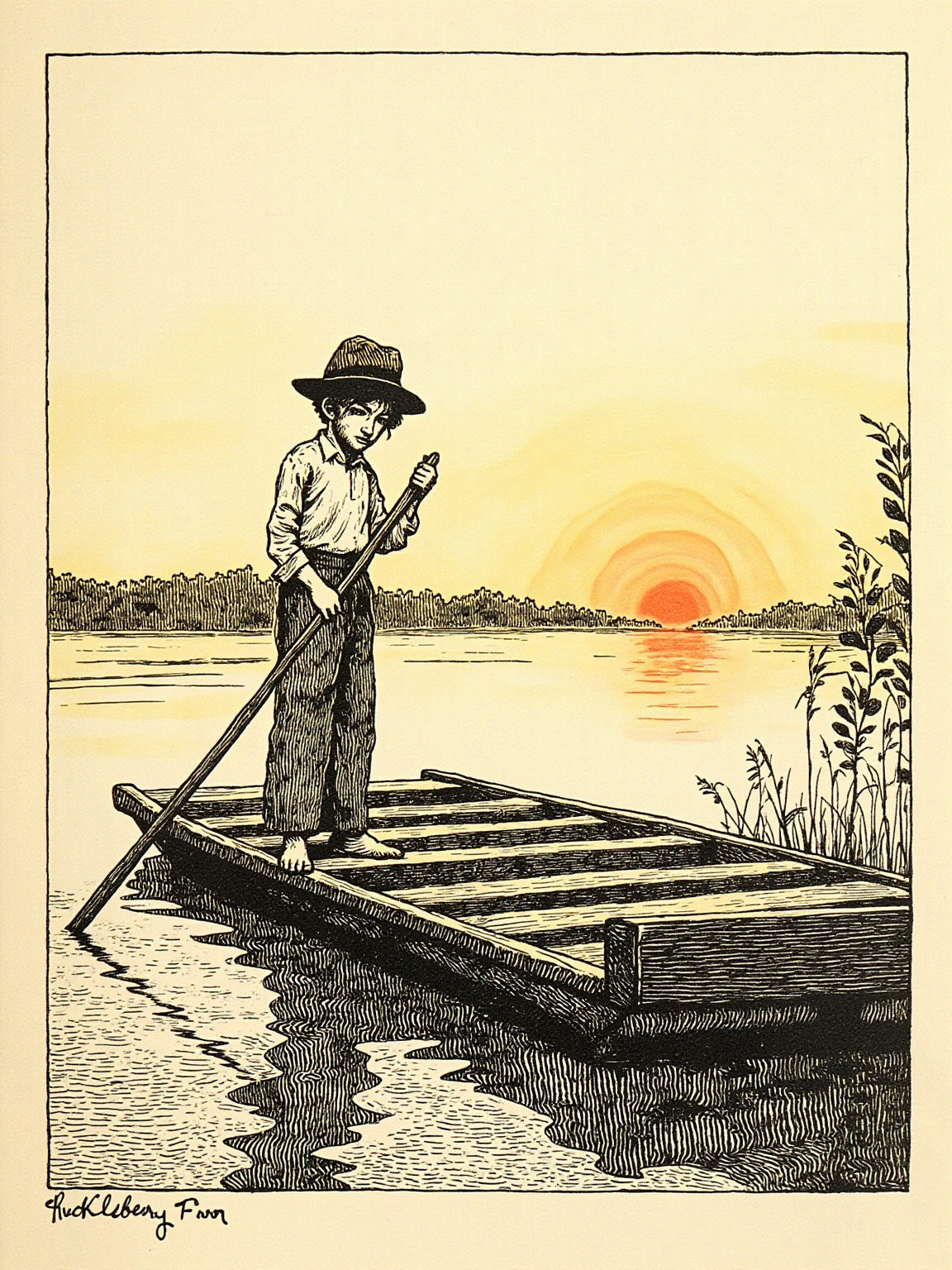
But I reckon I got to light out for the Territory ahead of the rest, because Aunt Sally she's going to adopt me and sivilize me, and I can't stand it. I been there before.
我琢磨着,我得赶在他们前头溜到印第安地界去——萨莉阿姨要收养我,还要把我教化成文明人,这我可受不了。我早领教过了。
Original line · The novel's final line · Huck decides to light out for the Territory
Themes and Craft
So what is this book actually about? At least three things. First, conscience: an uneducated boy makes, on instinct, the one choice an entire slaveholding society could not bring itself to make. Second, race: through comedy, it gives Jim — a man treated as property — more dignity and more heart than any respectable white person on shore. Third, civilization: the river stands for freedom, the shore for civilization's hypocrisy — blood feuds, lynch mobs, con men, fake nobility, all of it shore-bound. The writing itself is a fourth layer: Huck speaks throughout in the vernacular of a poor Southern white boy, and Twain opens the book with a note on the dialects, warning readers that the odd spellings aren't mistakes — they're sound. That single decision opened up the voice of an entire tradition of modern American storytelling; Hemingway, Faulkner, and everyone who came after inherited that same voice.
It puts freedom on the river and civilization on the shore — then leaves you to decide which one is really savage.
Go Read the Book
This companion has given you a map, but the novel is the water itself. There are at least three reasons to go there. First, the moonlight, the fog, the insects on that raft can only be done in prose — every comma on the page carries the humidity of the South. Second, the exact tone between those two — a white boy and an enslaved man — talking to each other has never been managed by any other pair; you may go through several more books before you hear conversation this natural again. Third, you'll hear an American boy, for the first time, shake off every adult's voice and tell a nation's childhood in his own. That voice is something no film has ever managed to fake — it only sounds, on the page.
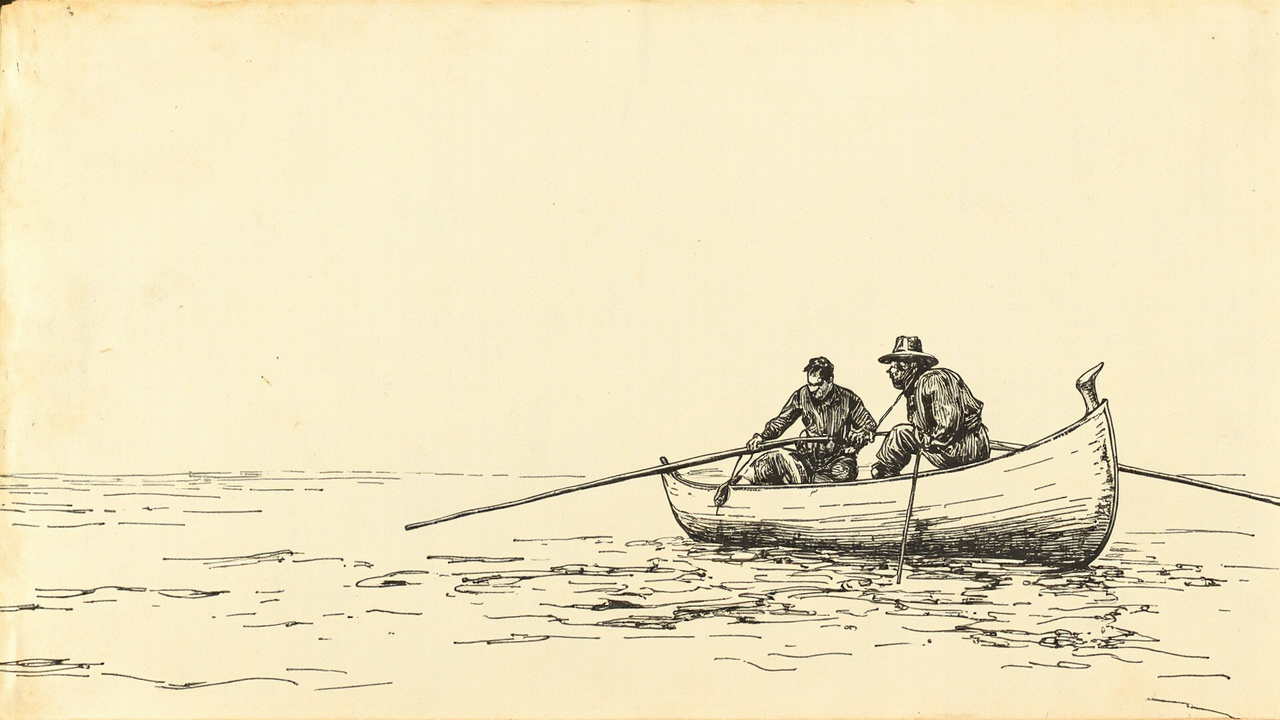
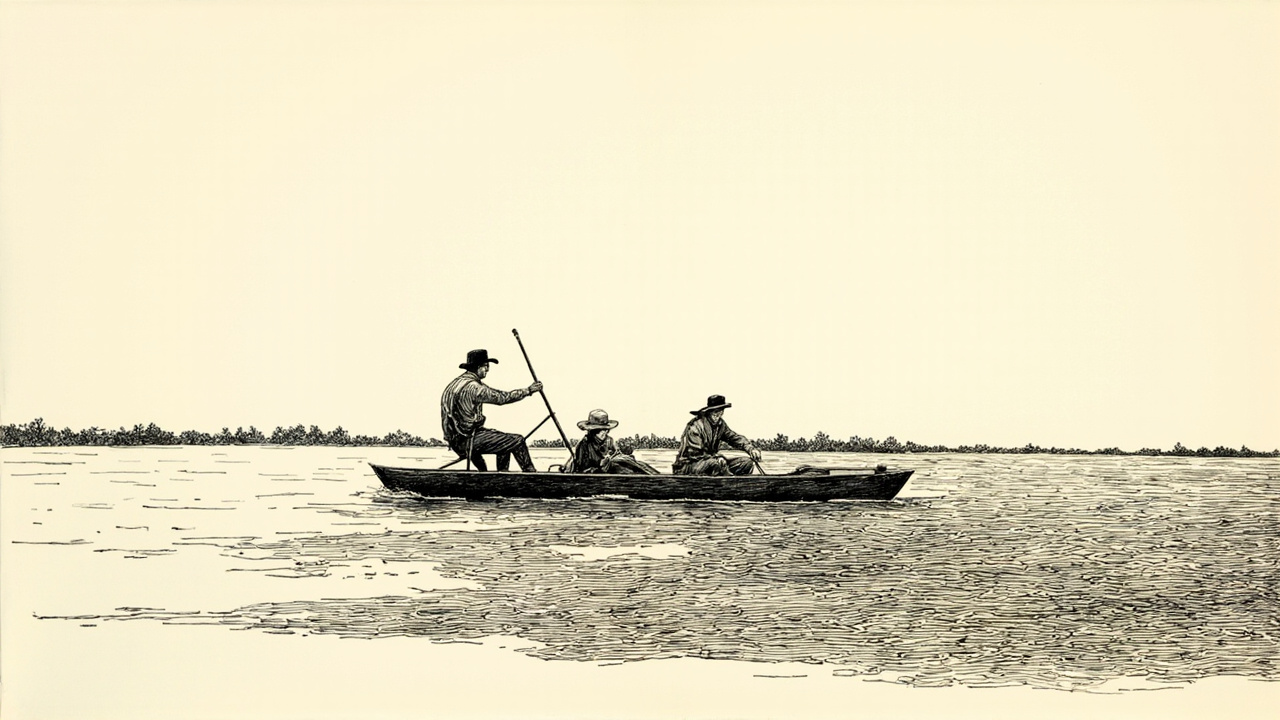
Art Direction4 plates
Before the guide was written, this book got a visual foundation — every illustration you just read grew out of it.