Risālat Ibn Faḍlān / Mission to the Volga · Companion Guide
伊本·法德兰游记
一个巴格达教法学者,被派去北方的冻河宣讲教法;任务落空,他留下了一份至今仍在被改写的目击报告。
Opening
A crowd of tall, fair-haired, ruddy-skinned men stood naked on the muddy bank of the Volga, tattooed from fingernail to neck in dark blue and dark green tree patterns — a jurist from Baghdad set this sight down exactly as he saw it, in an official report. Starting in 921 CE, he left Baghdad, capital of the Abbasid Caliphate, and traveled roughly four thousand kilometers north, crossing the Ural River and threading through Turkic encampments, until he stopped for several months on a riverbank just north of the Samara Bend on the Volga. What he brought home was not a diplomatic success but a report on the north that every later imagining of the Vikings would have to reckon with.
What kind of book this is
The book is known as Ibn Fadlan's Risala, sometimes translated as Mission to the Volga. Its author, Ahmad ibn Fadlan, was a jurist at the tenth-century Abbasid court. He wrote it during the embassy itself, between 921 and 922 CE, and it is the earliest surviving first-person Arabic travel narrative — centuries before Marco Polo. For a long stretch it survived only in scattered fragments, until a complete manuscript turned up in 1923 in a museum in Mashhad, Iran. An eyewitness account a thousand years old had gone missing for hundreds of years, and when it resurfaced, three separate fields — Viking studies, Nordic history, medieval Islamic history — all began citing it as a contemporary primary source.
People and world
The actual head of the embassy was the eunuch Susan al-Rassi. Ibn Fadlan himself was only the secretary and religious adviser, keeping the record for a diplomatic party led by a court eunuch. Out in the world beyond Baghdad, he and this eunuch ambassador had to talk their way through one situation after another — which was strange enough on its own. Behind the mission stood its real authority, Caliph al-Muqtadir back in Baghdad, who issued the letters, the gifts, the titles. Waiting at the far end was King Almish of Volga Bulgaria, nominally a vassal enthroned by the Khazar Khaganate and a recent convert to Islam — he wanted money, he wanted the embassy, he wanted the visible trappings of a capital, but he would not switch from the Maliki school to the Hanafi.
The world this story moves through spans two entirely different climates: the civilized court of Baghdad, the caravan stops of Khwarazm and Gorgan, the nomadic grazing grounds of Turkic peoples like the Oghuz and the Pechenegs, and finally a sparsely settled stretch of the Volga bank. Living there together were the local Bulgars and a group of Viking traders who had come down from the north — Ibn Fadlan calls them the Rūsiyyah. Two terms are worth keeping apart here: these were not the later Russians, and the Bulgars were not the Bulgarians who eventually settled in the Balkans and converted to Christianity. The embassy's destination was an Islamic vassal state on the middle Volga in the tenth century.
Setting out: a Central Asian winter and Oghuz bandits
In June of 921, the embassy left Baghdad and followed the established Silk Road routes east to Bukhara, then turned north to Khwarazm on the southern shore of the Aral Sea, then swung toward Gorgan in northern Iran to wait out the winter. That winter turned out to be brutal, and the cold Ibn Fadlan describes became one of the most quoted passages in Arabic geographical writing. Before winter had even ended, things got worse: the embassy was ambushed by bandits in Oghuz Turkic territory. They got out because they could pay — safety the jurist bought with money. It cost them their route: the planned southern path gave way to a northern one, across the Ural River, through the hard-to-pronounce territories of the Pechenegs and the Bashkirs, until at last, on the final stretch, the Volga came into view.
The craft here is easy to spot: he refuses to turn this into a heroic tale. How the bandits blocked the road, how money bought their release, how many extra miles the northern detour cost — all of it comes through in the tone of an administrative report. A style that insists on accounting for every detail has no business being this readable, and yet it is: the cold is written cold enough to make you shiver, the ambush tense enough to make you worry for them.
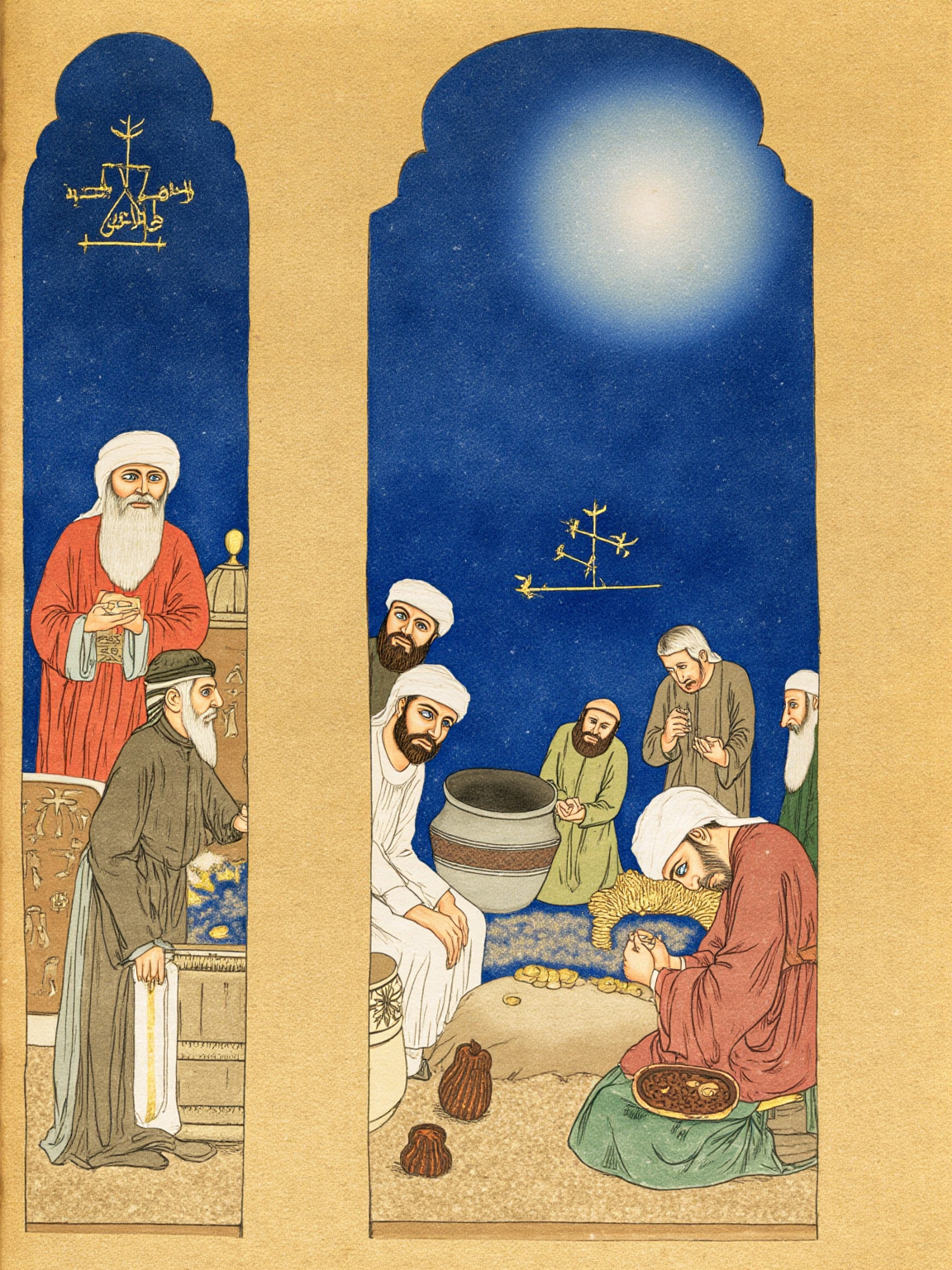
I saw the Rūs as they had come on their merchant voyages and had disembarked on the Itil.
我亲眼见到了那些鲁西人——他们从商船下来,登上了这片伏尔加河岸。
金句 · 启程章 · 寒路与乌古斯匪徒
Arrival: a bitter end to the diplomacy
On May 12, 922, the embassy finally entered the capital of Volga Bulgaria. There was ceremony: they read the caliph's letter aloud to Almish in person and presented the gifts, the sort of occasion Arab courtiers knew how to stage. The trouble started after the ceremony ended. Almish would not change schools — the move from Maliki to Hanafi was where he drew the line. Worse, the funds he had been counting on, the money to build a proper wall around his newly converted capital, never arrived. His warmth cooled faster than the Volga winter.
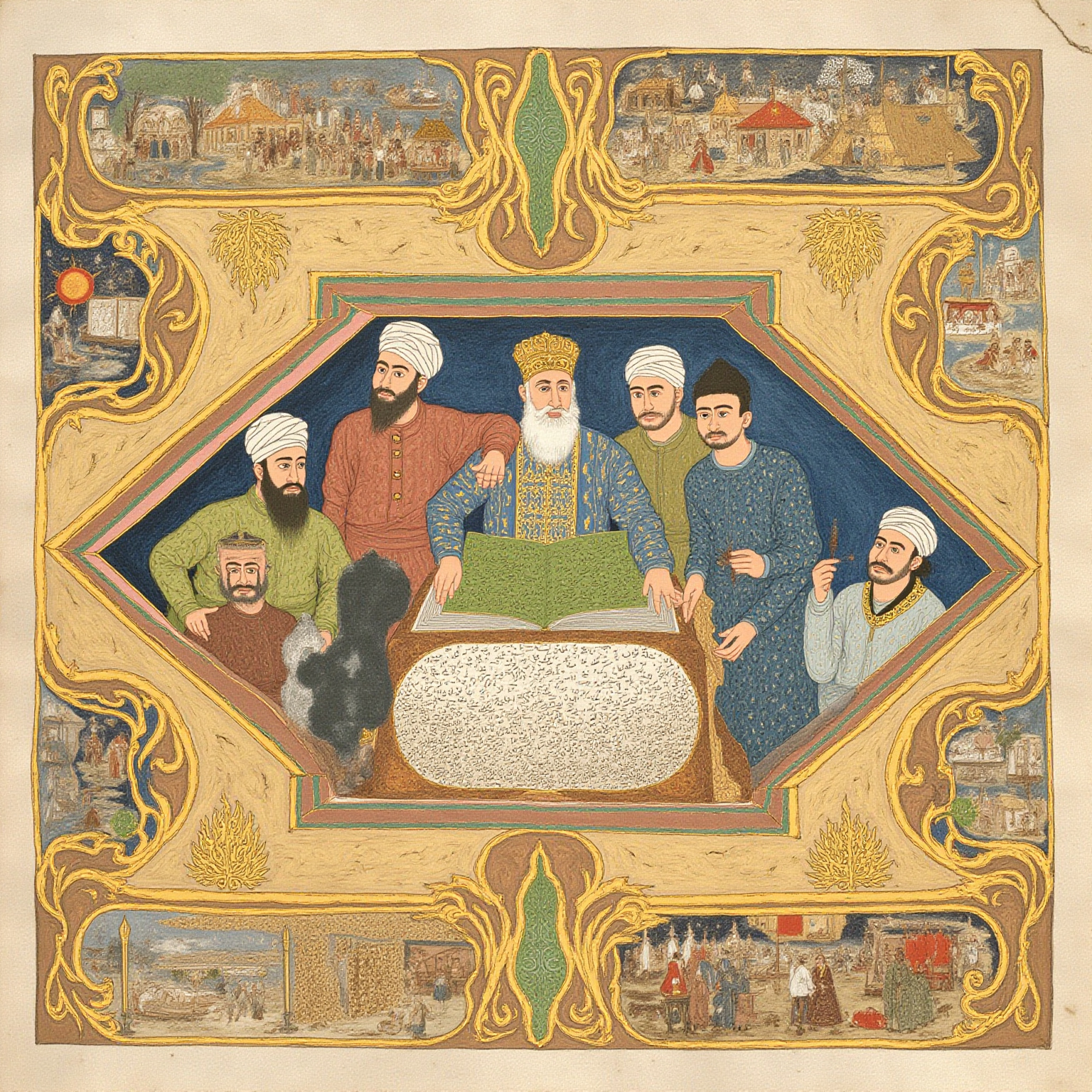
I read the letter of the Commander of the Faithful to the king, but he would not change from the Mālikī school.
我把信义之主的国书当面念给国王听,可他不肯换教派。
金句 · 抵达章 · 阿勒米什的冷脸
The embassy had a mission, and it came home having accomplished none of its core objectives. That is the book's real temperament: not a triumphant account of a successful mission, but an honest record of diplomatic failure. Ibn Fadlan does not hide the bitterness — he writes plainly about the coldness that set in, the embarrassment of the money that never came, the stalemate over doctrine that neither side would give up on. A writer with any self-respect does not paint over the ending just because it looks bad.
On the Volga bank: Viking traders
With diplomacy going nowhere, the embassy ended up with time on its hands, camped on the Volga bank for months. This is the heaviest section of the book. Ibn Fadlan turns the same rigor he brought to legal reports on the traders called the Rūsiyyah, describing them head to toe: tall as palm trees, fair-haired, ruddy-skinned, tattooed from fingernail to neck in dark blue or dark green trees and other patterns, every man carrying an axe and a long knife; the women lean, high-cheekboned. Their hygiene disgusted him, though he was struck that they combed their hair every single day. A market sprang up along the bank, trading furs and other goods — a full picture of a northern people running the river as a trade route.
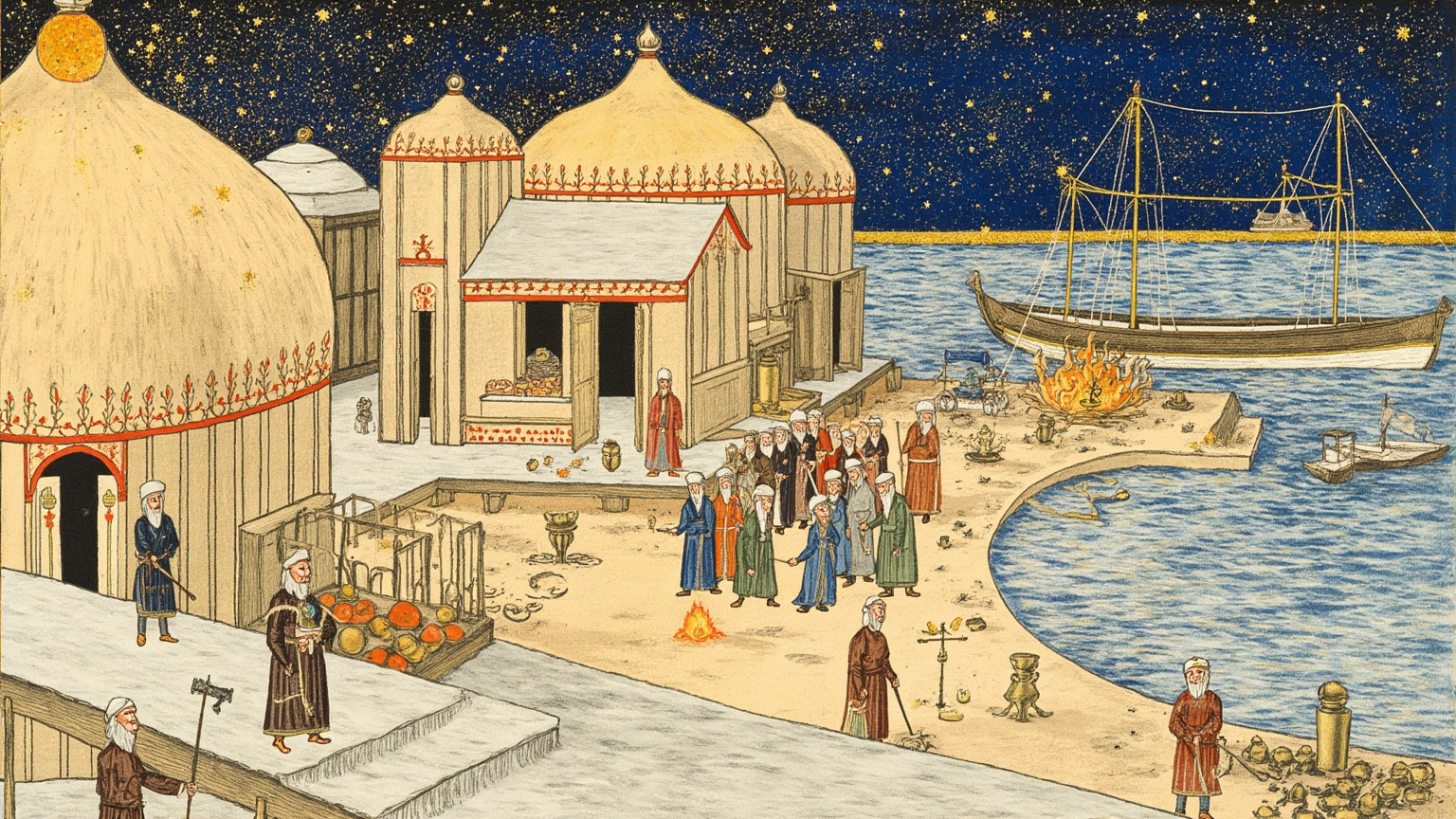
I have never seen taller men than they, like date-palms, with ruddy complexions and hair that runs from red to black.
我再没见过比他们更高大的人——像棕榈,皮肤红润,头发自红到黑。
金句 · 伏尔加河岸章 · 鲁西人
The craft here is that describing the foreign pulls us back to ourselves. A Baghdad jurist raised in the full manners of an Islamic city, seeing for the first time this head-to-toe patterning, this daily ritual of combing hair, looks the Rūsiyyah over with equal parts disdain and curiosity — and the reader, following his eye, sees for the first time that clean and dirty were never fixed points, only lines a civilization happens to draw. He never spells the comparison out. It doesn't need spelling out; any reader gets there on their own.
Two wonders of the far north
During this same stretch, Ibn Fadlan recorded two things he would never have seen in a lifetime in Baghdad: the white nights of the far north, when the sky never fully goes dark, and the aurora, a shifting, colored light across the heavens. Here too his writing never loosens into lyricism — he simply notes, without fuss, what the phenomenon is, when it appears, what it looks like. These passages have since become primary evidence for tenth-century high-latitude observation and for how the Abbasids understood the natural phenomena of the Arctic circle. A southerner encountering these things for the first time, a thousand years ago, wrote down not wonder but a carefully held-in confusion.
The ship burial: the event, undramatized
One more thing from this stretch has earned the book its lasting place with later readers: the embassy witnessed a chieftain's funeral, held according to the customs of his own people, on the Volga bank. This Rūs chieftain had died. By custom, the body lay in state for ten days, was placed in a ship along with those who accompanied him in death, and the ship was finally burned — nearly every image later generations have of the Vikings traces back to this moment. It is the most charged scene in the whole report, and yet Ibn Fadlan gives it surprisingly little room: the original is an account of events, not an unfolding of the process, and certainly not of the cruelty in it. The reader gets the shape of what happened, not every stroke of the ritual.
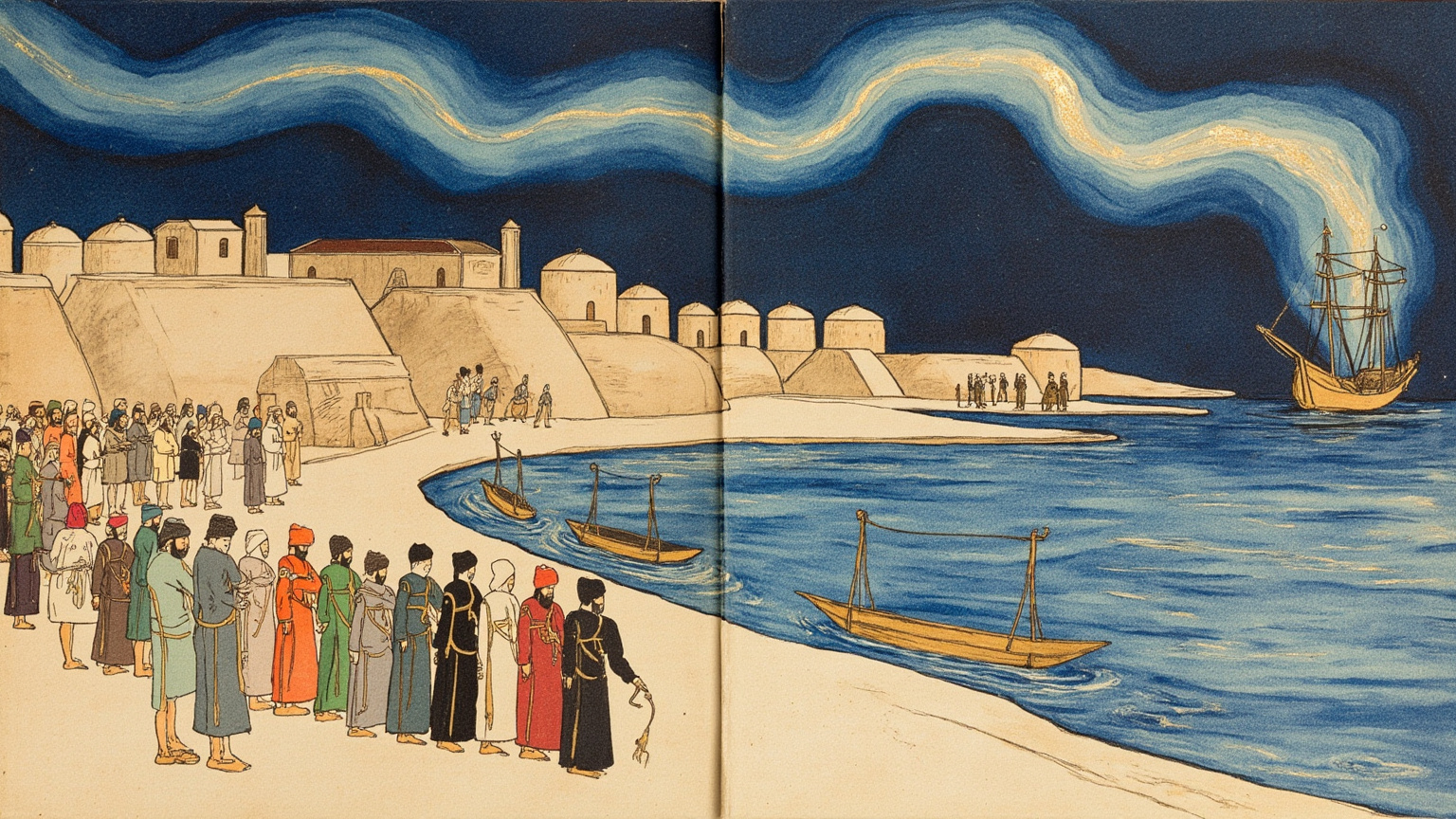
They placed her beside the dead chief, and with her they laid two women, one on each side; then the ship was set alight.
他们把她安置在那位死去首领的身侧,两旁各再放一名女子,随后点火烧船。
金句 · 伏尔加河岸章 · 船葬
It is remembered because nearly every image of the Viking longship, a thousand years running, traces back to this one page of Ibn Fadlan. At least one layer of the Viking we picture today was colored in by this Baghdad scholar's cool, unprejudiced eyewitnessing. Adding drama, adding gore, adding monsters to this account misdirects its actual power — which lives precisely in that restraint, the refusal to linger even while remembering every detail with total precision.
What the book records, and why it is remembered
Why do later generations keep coming back to it? One fact is enough: it is a contemporary eyewitness account. The Rūs of the Viking Age left almost no first-person written record of their own, and what written material exists mostly comes from their adversaries. Ibn Fadlan's account is different — he was an educated outsider with no stake in flattering them or vilifying them, and he wrote down what he saw. Persian travelers like Ibn Rustah belong on the same shelf within the Arabic geographical tradition, but Ibn Fadlan's is the longest of them, and the one three separate fields — medieval history, Nordic history, Islamic history — keep citing at once.
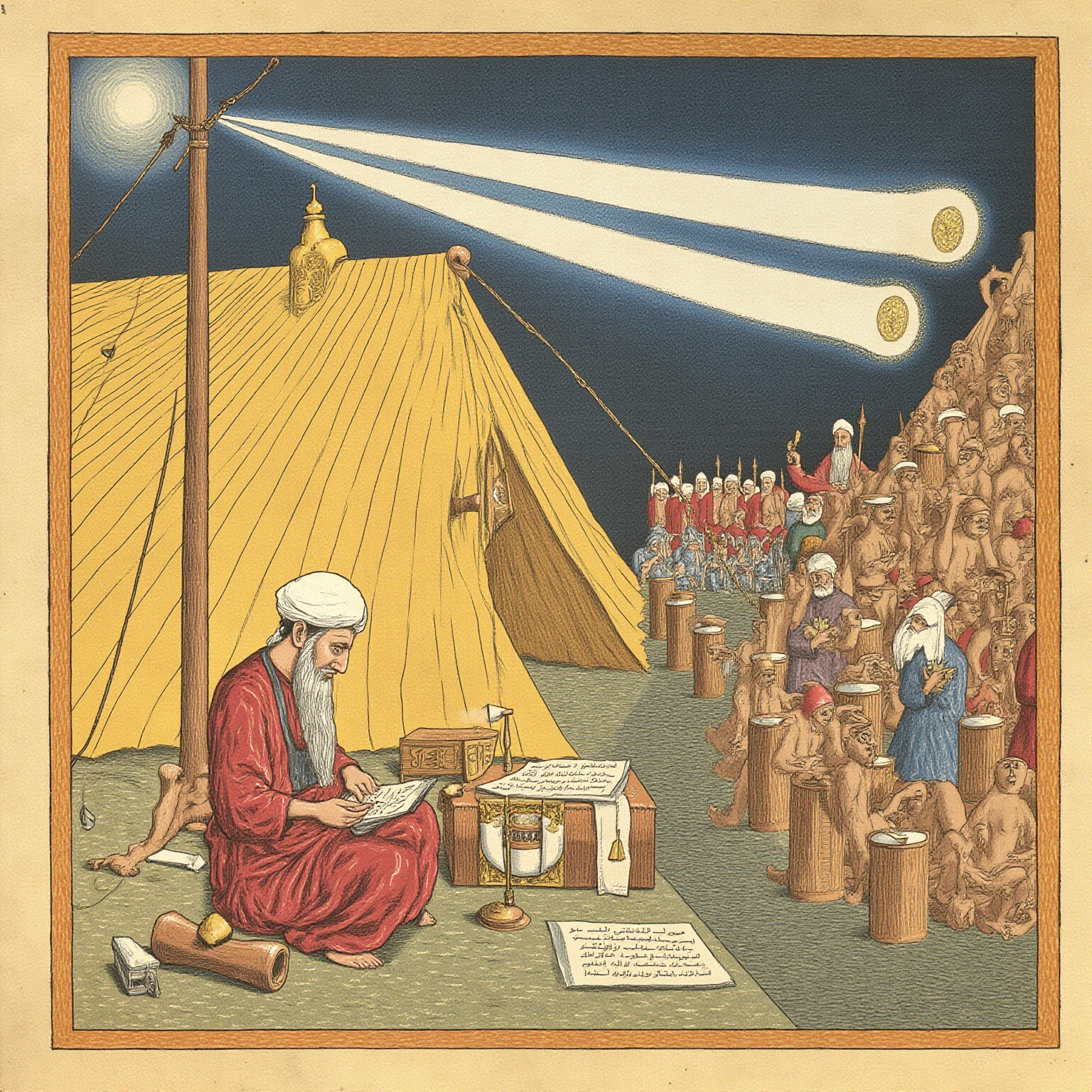
I was sent with an embassy by the Commander of the Faithful in the year three hundred and nine, and I returned in the year three hundred and ten.
我奉信义之主之命出使,于三〇九年启程,三一〇年返回。
金句 · 开篇章 · 一份不肯漏项的报告
There is also a sense of where the boundary sits. Michael Crichton's 1976 novel Eaters of the Dead and the 1999 film The 13th Warrior both borrowed people and events from this text, then layered on monsters, sorcery, and knightly adventure — none of which Ibn Fadlan wrote. What he wrote was always a diplomat's field report: no magic, no rescued damsel, and he himself was never a warrior. He was a man with a reed pen, ready at any moment to report back to Baghdad, who remembered the color of the tattoos, the number of days the body lay in state, when the white nights came and what shape the aurora took. That refusal to write himself a bigger part is exactly what makes a thousand-year-old report outlast every adaptation that followed it.
Reasons to read the text itself
Knowing the plot in advance does not spend down the value of reading it yourself. That value sits in the physical sensation. Ibn Fadlan writes cold that makes you shiver in a warm room, filth that makes you rub your arm without thinking, tall as palm trees that makes you picture it and check the image against your own. However accurate a summary is, it can only tell you what he saw — it cannot carry the smell of thousand-year-old ink across the page. Then there is the restraint itself: right where everyone expects the ship burial to become the climax, he hands you only the outline of the event, and that discipline is a kind of craft you only register once you've read the whole thing. And there is one more thing this kind of embassy log can do that a summary cannot: it lets you walk a serious man's four-thousand-kilometer road to the end and hear him admit the mission failed, instead of handing you a manufactured happy ending on his behalf. Reading it feels like reading an unfiltered summary of an ancient business trip, and it is exactly that lack of filter that has kept it standing for a thousand years.
This is a report that refuses to skip a detail — no hero, no magic, not even a completed mission — and it is exactly because it never wrote itself a bigger part that people are still turning back to it a thousand years later.
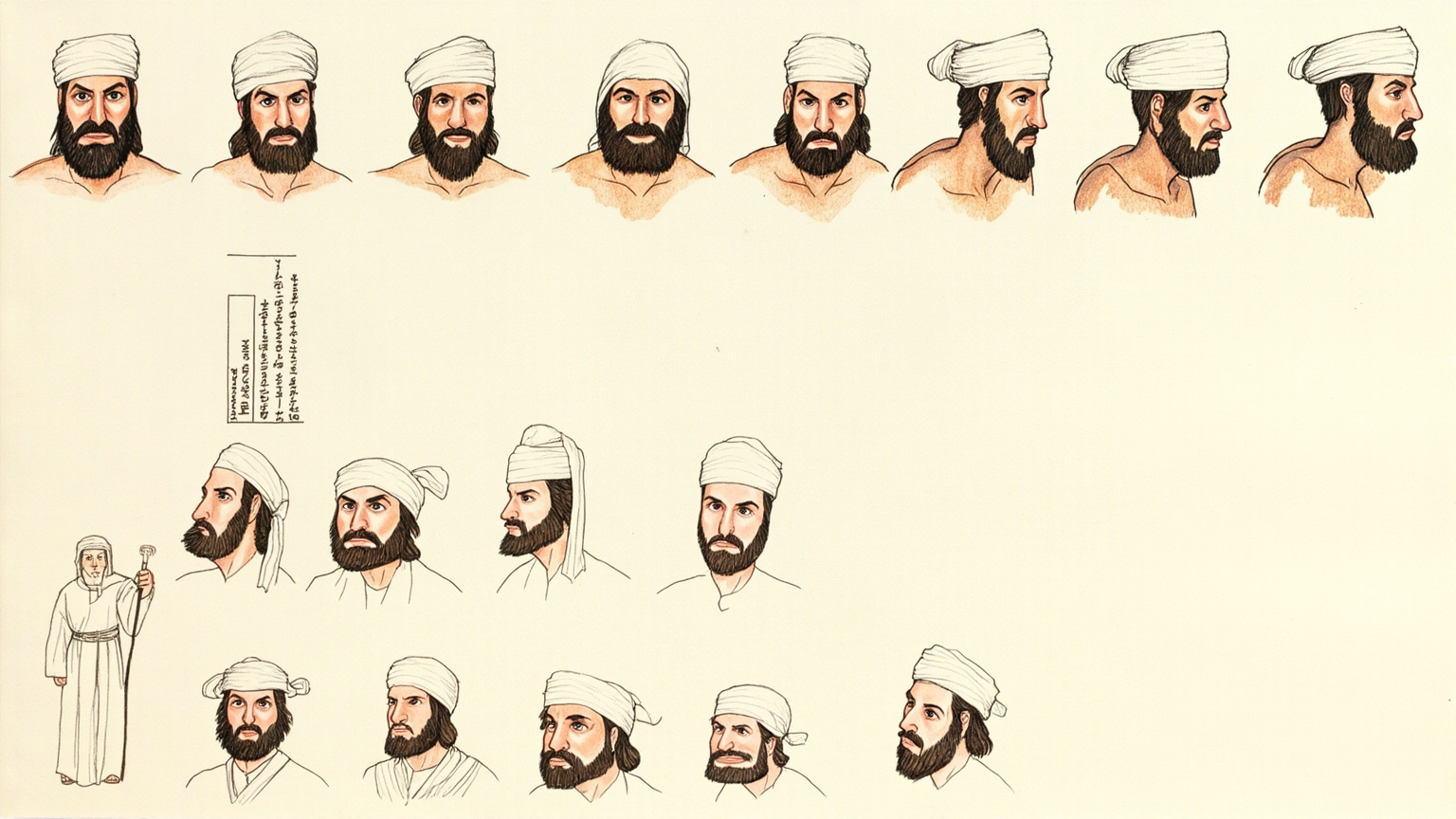
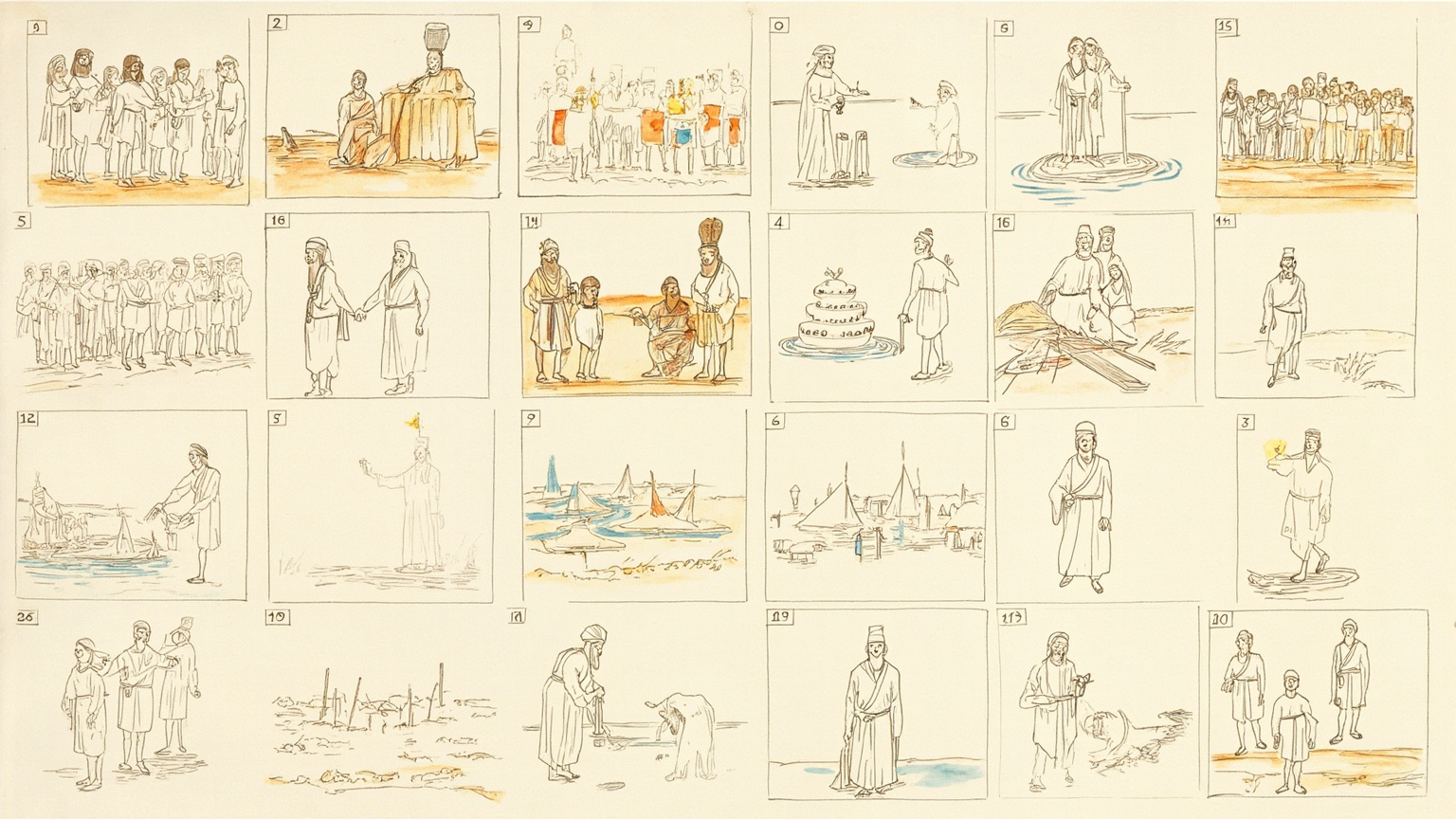
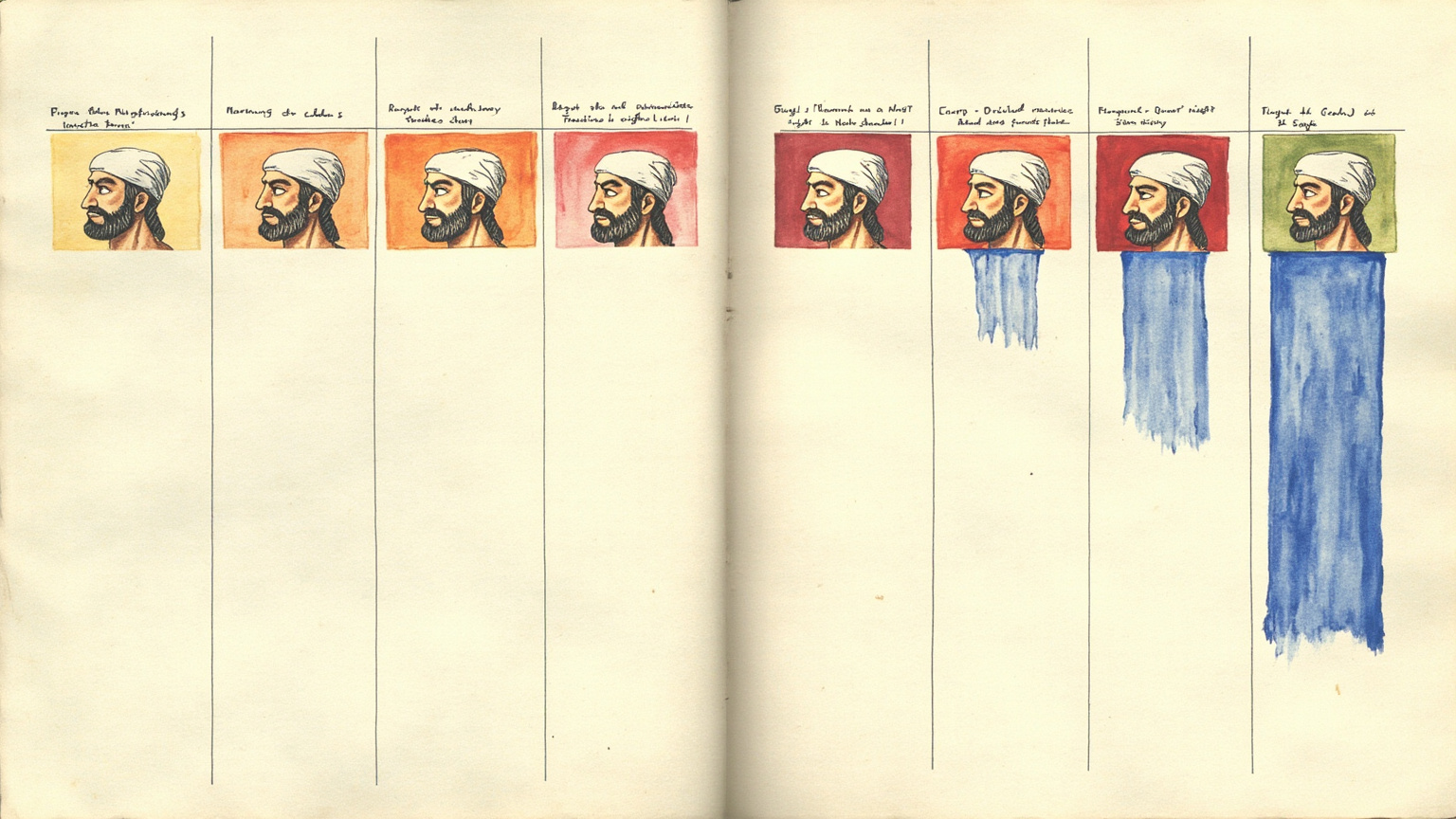
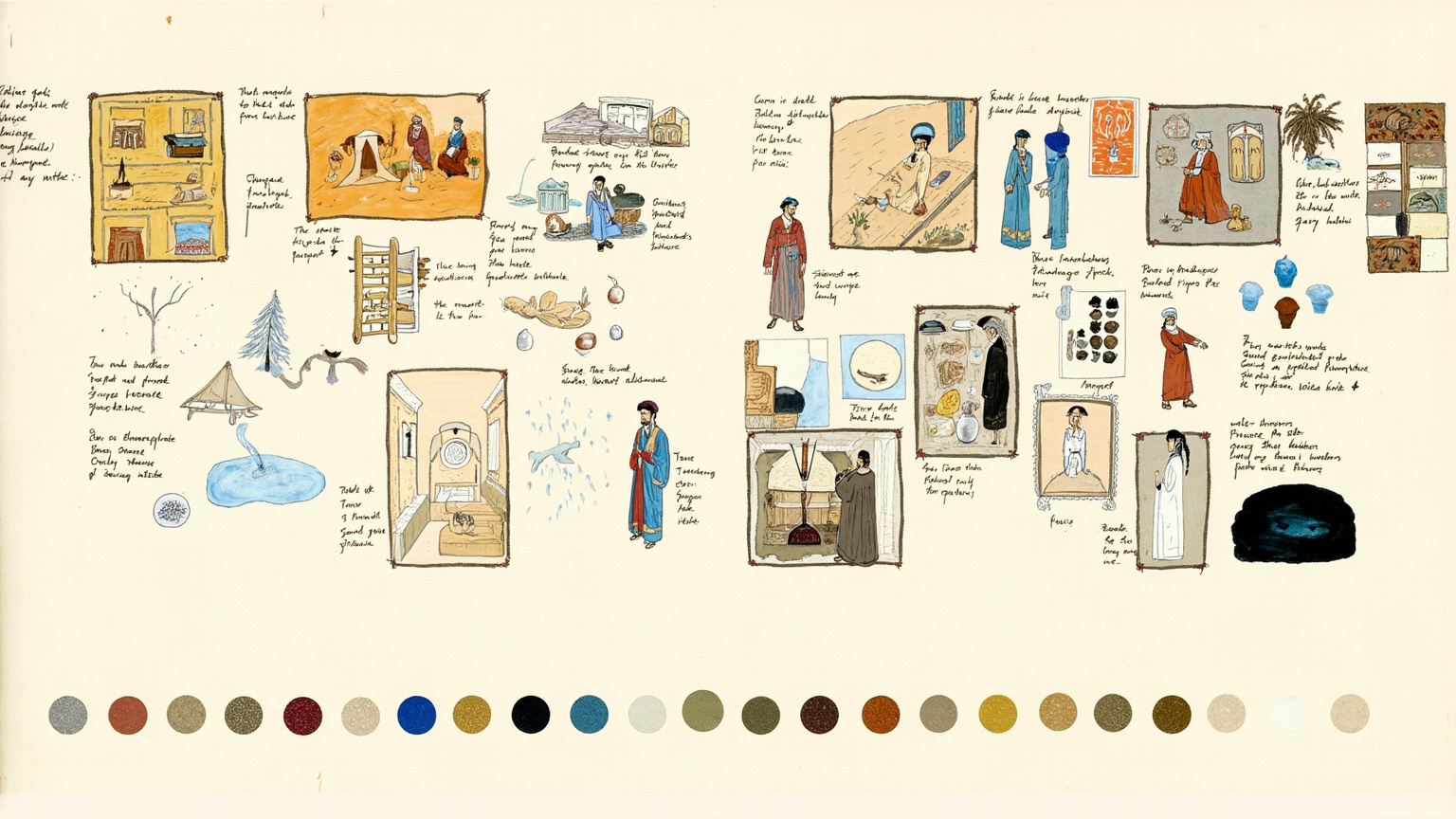
Art Direction4 plates
Before the guide was written, this book got a visual foundation — every illustration you just read grew out of it.